
Trinity Doyle's Blog, page 2
October 2, 2014
Everyone Is My Friend – Owls
Hello neglected blog!
Here’s something from the nostalgia files for you. Been relying heavily on all the Feelings of my early twenties these tracks bring up to push through my last days before deadline. Kinsella everything yes always. Always.
The post Everyone Is My Friend – Owls appeared first on Trin In The Wind.


August 20, 2014
Book News!
Hello, hello, hello…I have news. News that I have literally been sitting on for months and bursting from the seams to shout everywhere!
Ahem…
I sold my book.
*cue screaming*
Lucy in the Sky–the story of 15YO competitive swimmer, Lucy Taylor, who develops a fear of the water after her older brother drowns–has sold in a 2 book deal to Allen & Unwin, publishing extraordinaire, and is scheduled for June 2015. MY BOOK IS GONNA BE A BOOK. And then I’m even going to have another book–coming out roughly 12 months later! Holy crap!!! I can’t believe you guys are going to get to read Lucy, I just can’t *dies*. I’m even revising right now and I have an actual deadline! It’s all so real. !!
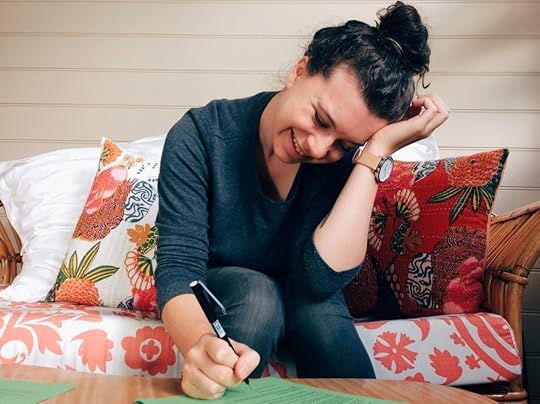
Here’s a picture of me signing my contract and internally screaming.
The post Book News! appeared first on Trin In The Wind.
August 13, 2014
Modern Baseball – Your Graduation
From the revision cave xx
The post Modern Baseball – Your Graduation appeared first on Trin In The Wind.
July 13, 2014
Radio Silence
A post to promise there will be more posts. Currently in decompression mode after my three weeks in the US and have misplaced my blogging hat. Hope to find it very soon!
The post Radio Silence appeared first on Trin In The Wind.
May 29, 2014
May 19, 2014
Writing With Non Pratt
Do you have a writing ritual or routine?
Despite being a creature of habit in all other aspects of my life (I’m not overly adventurous and familiarity is my friend), all my attempts to impose something vaguely representing a routine on my writing have failed miserably. So… my routine is not to have one. I write what I like when I feel like it, from scribbling notes in a book on the train, to staying up until two in the morning typing at my computer.
How long does it generally take you to complete a first draft?
Umm… a long time? Trouble started brewing something like October 2009 and was sent out to agents March of 2012! I reached the end of the story mid-2011, I think, which is what I’d consider to be the first draft. Book 2 appears to have taken a similar trajectory (18 months-ish), but it didn’t really get much attention in the early stages, so it feels like it’s taken more like six months to sculpt a first draft.
Do you have a clear idea in mind when you begin or do you let it develop as you write?
I start with a premise, a beginning and an end – then I do a spot of character work before plunging in and getting to know my characters allowing whatever story there is to emerge from them.
What kinds of things inspire your stories?
Music. I like American pop punk – it’s what I’ve been listening to ever since I started to write, and it’s still the thing that pulls me back to whatever story I’m writing. I’m also heavily influenced by TV and film, seeing characters onscreen make me want to put my own on the page.
What kinds of details do you consider when you’re creating a character?
Everything – I like to have my own image of them in my head, so I do the usual of jotting down what colour hair and eyes and whatnot about them, although these rarely manifest themselves in the book once I start writing, since it’s up to the reader who they see. Then I think about what their family and friends are like, how they’ve grown up, how they feel about school… how people behave in any situation depends on what’s happened to them in the past. And then I think about what they’re into, what music, films, TV… what hobbies. The things people care about and choose to define themselves by will inform how they talk and give them a filter as they look out at the world around them. And most importantly, I hang out with them on the page, typing it out until I know them. No writing is ever wasted, even if you’re the only one who reads it.
What kinds of stakes do your characters face and how do you raise them in a realistic way?
Well, Hannah finds out that she’s pregnant at fifteen, which is pretty high stakes already, but this is a story, so I raised the stakes by giving her a reputation, a baby-daddy she can’t name, a difficult family situation and a frenemy of the highest order. Her stakes get piled on pretty heavily, pretty quickly! Aaron’s are different and are much more slow-burn, he starts his story with believing he has nothing to lose, but slowly begins to accumulate the kind of emotional attachments he wanted to avoid, with Hannah and with Neville, who he visits in an old people’s home. As he gathers friends, he gathers things to lose. I like to think that everything that happens around my characters is realistic, but I’ll be the first to confess that having Aaron volunteer to pretend to be the father of Hannah’s baby doesn’t instantly seem plausible… but it’s my job in telling their stories to make you believe it is.
Do you come to a point where you feel your book is done?
I guess. With Trouble I wouldn’t let anyone read it until it was good enough for me to have considered commissioning it myself (I was working as an editor for an independent children’s publishing house called Catnip at the time). But there was a lot more work after that. Once I started working with my (amazing) editors, I adopted the attitude of working at it until they told me to stop.
Are you able to let go of your stories once they’re published?
Yes. I love books so much as a reader because they are intensely personal and private – I want anyone who’s reading the book I’ve written to form their own relationship with it. It’s not mine any more. (Having said that, I adore hearing people’s interpretations of it… especially when they interpret the characters the way I hoped!)
Which books inspired you to be a writer?
None. I started writing when I was fourteen because there weren’t enough books about the things I wanted to read about – real teenagers doing the sorts of things I was most curious about doing myself. Don’t get me wrong, I am a book-lover of the highest order and always have been, but I didn’t start writing in order to create books similar to the authors I loved reading, like Robin Jarvis and Dick Francis, I wanted to write my own.
Why do you write? (feel free to wax poetic)
I write for a million and one reasons… Reading is a wonderful luxury, but writing is the ultimate freedom – I can create anything I want however I want. I can live any number of different lives in different worlds (OK, at the moment I’m mostly just living in a perpetual state of teenagdom, but I’m fine with that!). My characters can do things I never would/could and I get to do it too – imagination is an amazing and exciting thing if you give in to it and a lifetime of reading has given me plenty of practice giving myself over to the fictional. I write because I can’t not – if I go too long without writing, I go a bit twitchy and a lot unpleasant. My number one piece of advice has always been for people to write for the love of it alone – it is a lonely occupation, an awkward one, and if you write only to get published, well… the odds aren’t in your favour, lots of people want that and there are only so many readers and even fewer publishers. But if you write because you love it then that is its own reward, it will keep you going and make you better. I wrote for half my life without really worrying about getting published and if I never get published again, I’ll still carry on writing.
 Non Pratt is a young adult writer from the UK. Trouble is her debut novel. Read it now because it’s awesome. Follow Non on twitter.
The post Writing With Non Pratt appeared first on Trin In The Wind.
April 23, 2014
On Receiving Compliments
You know the drill: on occasion some lovely person might say to you hey, nice hair/shoes/pants/bag/that book you wrote totally blew my mind and you blush profusely while mumbling thank you. Or you might shrug it off OR you might latch onto some other point they made in conversation and ignore the compliment completely.
Because it feels strange, right? This person saying such nice things about you and for you to somehow own what they’re saying seems a bit wrong or like you might be up yourself. The latter is certainly true in Aussie culture with that heavy dose of tall poppy syndrome we’re constantly butting our heads against. Thank you for saying such nice things but I’m no better than anybody else *runs away*
Here’s the thing though: when you’re the one complimenting someone, because you must, because that book they wrote totally blew your mind, if they run away/dismiss/mumble leaving you there with your praise on your shoes…well that doesn’t feel very nice.
When I think of the kind of author I want to be I think about how I want to be generous like Courtney Summers*. Courtney is amazing in her gratitude, responding to praise in a way that’s both validating and humble. You should go find her and say something nice just to see what I mean (and because she’s awesome.)
So I’m working on this whole ‘receiving compliments’ thing** but the simplest thing to do is just say thank you…and try not to mumble it.
*also be generous like Trish Doller, cool like Simmone Howell, arty like Vikki Wakefield and Maggie Stiefvater, wise like Susan Dennard and Nova Ren Suma and just be like so many other fantastic authors but also just be me…and try not to stress out about it.
**and being like Courtney Summers
The post On Receiving Compliments appeared first on Trin In The Wind.
April 15, 2014
My Writing Process
I was tagged by two lovely ladies: Elle Blair and Vikki Wakefield, to take part in the ‘My Writing Process’ blog hop, tour, meme thing. Be sure to go check out their posts!*
What am I working on?
I’ve just started revisions on my WIP, Hungry Sun. It’s got lots of my favourite things in it: art, music, blue hair, country towns, angry old people, oranges and kissing.
This is the MS where I used an outline! And I think as a result I’m not finding as much stuff that needs the chop instead I’m working on layering, picking up dropped plot threads and getting the setting right. (I just found out it barely ever rains where I’ve set it and now need to cut the thunderstorm – my favourite part – out of favourite chapter.)
How does my work differ from others of its genre?
I’m not sure that it does. I love my genre – realistic or contemporary YA – and I try to put what I love about it into my work: friendships, identity, family, love, obsessiveness, EMOTIONS, honesty.
Why do I write what I do?
Short answer: because that’s what I like to read.
Longer answer: I’m addicted to that good book feeling, that glow sitting under your chest when you can’t part from what you’re reading, and I’ve found that in writing – only longer and more concentrated and it’s like falling in love all the time. (Except when it’s like bashing your head against the wall.)
When I began devouring young adult books I had this amazing week where I read Melina Marchetta, Kirsty Eagar and Vikki Wakefield and I thought, well, damn. These ladies manage to write their characters from this raw, stripped back and real place and I knew, if I could pull it off, that was how I wanted to write.
How does my writing process work?
Right now it looks like a lot of house work. On good days I’ll walk to my favourite cafe, sit in my favourite chair, order a latte and write for hours. Sometimes I’ll plan my scene before hand and sometimes I’ll wing it and sometimes I’ll stare blankly at my screen and wait for someone to send me cat gifs. I like to think that if there weren’t any interruptions I could bash a draft out in a couple of months but sometimes life makes you move house and it’ll be weeks before you can find your way back into your story; so I write when I can (but sometimes I binge TV instead).
Next on the My Writing Process hopping meme be sure to check out these three talented writers!
 Emily Marquart is a freelance writer and editor. She’s also my critique partner who forgot to send me her bio so I’m making it up. Emily is obsessed with the Gilmore Girls and tea and writes the kind of prose that hurts your heart in the best possible way. Check out her blog and follow her on twitter.
 Bethany Smith is a young adult writer from Newcastle, Australia. By day she works at a detective agency and by night she writes mysteries and thrillers about the strange characters she meets there. She lives with her ever-patient husband and their rambunctious Labrador puppy in a house that is falling down around their ears. Bethany is represented by Ammi-Joan Paquette at the Erin Murphy Literary Agency. Check out her blog and follow her on twitter.
 Carly Cornish is a 25-year old Adelaidean who once dreamed of becoming a pilot, or a ballerina, but studied applied linguistics instead and now works in an NGO with young asylum seekers and refugees. She has written two contemporary YA manuscripts and is working on a third with the wonderful Vikki Wakefield as her mentor. Carly considers herself a champion of Australian YA (because it is the best kind of YA), and you can find her gushing about all her latest faves on her blog carlycornish.wordpress.com, and on twitter @CarlyCornish.
* I appear to have posted my thing before Vikki! Not sure what happened there.
The post My Writing Process appeared first on Trin In The Wind.
April 13, 2014
Reading Habits – Courtney Summers

What are you reading at the moment?
I’m re-reading Imaginary Girls by Nova Ren Suma at the moment. I was having a hard time falling into a new novel, though I’ve got plenty to read (and that’s totally because of me and not the books!) so I decided to return to one I know I love and that I can lose myself in. So I’ve just been taking it in a few pages a night, appreciating how beautifully constructed it is. That book is so incredible.
What draws you to a book?
VOICE! A book can be about anything, as long as the voice is compelling. I can usually tell within the first chapter whether or not a book will draw me in.
What do you love and what do you not so much love in a story?
That’s hard for me to define because it all comes down to execution. I might say I don’t like books that do XYZ and then I’l read a book that does it SPECTACULARLY and it will change my mind. I think certain things only become a problem for me, as a reader, when something larger is lacking in the execution. But if I had to pick – I always dislike when the author’s voice is louder than the story. It’s hard to describe. Most authors have certain style hallmarks so you can tell when you’re reading a book by them, so it’s not that. It’s when they let themselves get in the way of the text at the expense of it. So I don’t love when an author gets in the way of a story, and I love when they step out of the way for the story!
When and where do you read?
Wherever! There’s no one place or time I have to do it. If I have a book on me and time, I’ll read it, no matter.
How long does it take you to finish a book?
I’m a really, really slow reader. I want to say no more than a month, though? I used to be faster but not anymore.
Do you hi light, scribble in the margins, take notes?
I don’t write in my books. Not because I feel like one shouldn’t, just because I’ve never felt compelled to.
What’s your favourite quote?
Oh, man. That’s hard. My favourite quotes are sort of fleeting. I get attached to them depending on how relevant they are to my life. Right now, I love this one:
This will be hellish, but I will learn something from it.
Andrew Solomon
Which books have had the most impact on your writing?
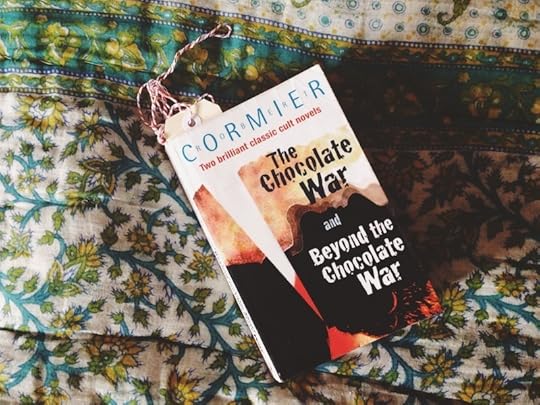
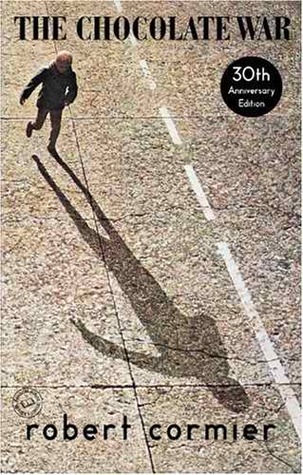
Robert Cormier has had such an impact on my writing because he wasn’t afraid to make his endings difficult and open and messy. Before I read The Chocolate War, I always thought books had to end on a happy note. He was the first author to show me that they don’t–that they don’t even have to really feel like they END. It was a wonderful revelation.
Which book do you wish you could’ve written?
That’s tough but I think Battle Royale by Koushun Takami, because it was just so relentless and fantastic and hard-hitting and shocking.
Do you lend or give your books away when you’re finished? After a long and tragic history of lending beloved books and not getting them back–I keep them. I also have this thing where I think I won’t read a book again and then months down the line I’m like I NEED TO READ THAT BOOK AGAIN. So my books are stuck with me. I like to gift books I’ve loved to people I love, though.
Where do you keep your books?
They are in shelves all over. And because I don’t have enough shelves, my closet.
What should I be reading?
The Chocolate War by Robert Cormier, if you haven’t. I can’t just say he’s had the greatest impact on me and then not tell you that you should be reading him. :)
 Courtney Summers
lives and writes in Canada. She is the author of several novels for young adults including CRACKED UP TO BE, THIS IS NOT A TEST and the forthcoming ALL THE RAGE. Find her online at courtneysummers.ca and @courtney_s
Courtney Summers
lives and writes in Canada. She is the author of several novels for young adults including CRACKED UP TO BE, THIS IS NOT A TEST and the forthcoming ALL THE RAGE. Find her online at courtneysummers.ca and @courtney_s
The post Reading Habits – Courtney Summers appeared first on Trin In The Wind.
April 8, 2014
Review – The Strange and Beautiful Sorrows of Ava Lavender by Leslye Walton
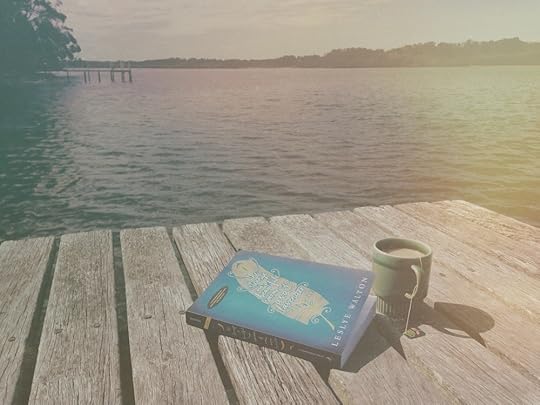
Foolish love appears to be a Roux family birthright. And for Ava Lavender, a girl born with the wings of a bird, it is an ominous thing to inherit. In her quest to understand her peculiar disposition and a growing desire to join her peers, sixteen-year-old Ava ventures into the wider world. But it is a dangerous world for a naive girl… goodreads
Finishing The Strange and Beautiful Sorrows of Ava Lavender is like emerging from a strange and beautiful dream. The first couple of chapters serve to poke holes in the reader’s perceptions and invite you into this, I think I’ll use the word a lot, strange other world – where the wall between reality and the fantastical is smudged and a character can turn into a canary.
I didn’t know what to make of this story at the beginning and wondered if I’d even continue but I soon found myself wrapped up in the strange goings ons and the beautiful writing and before I knew it I was turning the last page.
The Strange and Beautiful Sorrows of Ava Lavender is narrated by Ava Lavender – a girl born with wings – but as she recounts the history of her family the feel is more third person than first – even when she catches up to her own timeline. This distancing is part of why it took me a while to fall into the story.
At the beginning of the story Emilienne explains to her younger sibling that, ‘Love can make us such fools’ and this line echoes through the life of each family member as they are all irrevocably changed by the love in their lives verging into the dramatic and foolishness that love brings.
The writing is gorgeous and clever and delivers the Gondryesque feel of the story perfectly. At times I felt disconnected, due to narration and the windy plot, from the story but by the end of the book my heart was so full of each love that was lost, scorned, yearned and shared that even with slight disconnection this story still impacted me.
Thanks to Walker Books for my review copy.
The post Review – The Strange and Beautiful Sorrows of Ava Lavender by Leslye Walton appeared first on Trin In The Wind.
Trinity Doyle's Blog

- Trinity Doyle's profile
- 140 followers

