Michael Stephen Daigle's Blog, page 6
July 2, 2024
Maybe where we are today; right and wrong
I wrote this in part as a joke response to a conversation about an anthology call for a story that “writes a wrong.” So I pitched an idea to write something wrong: Ideas, language, structure —everything breaking down.
And then over the last few days I had the feeling that this was about more than just word play. Maybe it described where we actually are.
Maybe we are, as the last line says, dumb kids with a fire and a gas can.
Read on:
Aw, it was wrong.
Oh, doggit, was it wrong.
Stealing a little kid’s lunch money wrong.
Sending tourists to the darkest, deadendingist wrong direction where they was gonna have to K-turn in the woods wrong.
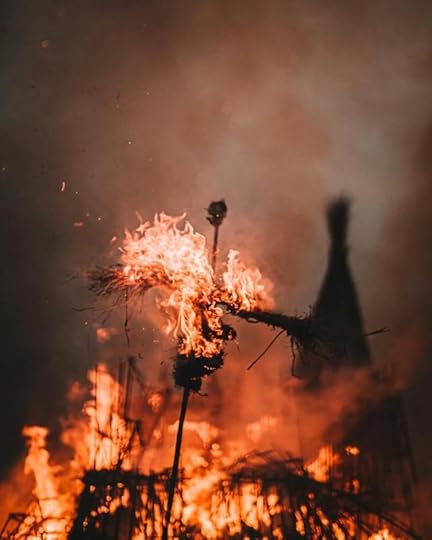
Where there was, like, bears.
So wrong there want no definition in Webster’s for it. Ya coun’t look it up.
Where people said “gunn-nu” when they meant “going to” and you had to ask someone else the question because every time you axed a question they looked at ya like ya was from Mars.
Then someone would point in a direction and you’d follow the finger because ya was choosing between being upset or embarrassed because ya did’t know how to get from Point A to Point B in a place ya’d never been and end up in the woods with bears.
That’s how wrong it was.
Deliberately, purposefully, not accidentally, no roll of the dice wrong.
Plain wrong. Irretrievably wrong.
****
It happened.
That day.
That day it happened.
And we was all Billy Joel, you know, We didn’t start the fire.
Because it was supposed to have a start, you know, a place to start, like an idea, which is why it never stopped because no one knew how it started.
It was just wrong.
Way wrong. Wronger than the Charlie Finley Oakland A’s gold uniforms. Wronger than the Trail of Tears.
Like leaving her at the front door with a broken heart and blaming her for it wrong.
Like hate is wrong, betrayal. Like the wrongest thing that ever could be wrong. The most wrongest thing that ever was wrong.
And it was.
Because it got hard to explain, like because the words, did’t stick, maybe like the vowels and the nouns and the verbs stopped matching and it was likened to a notion that we didn’t want to explain it because we forgot how when all the pleasantries of language dribbled into a collection of sounds, train, box, thing, hand, flower, do-be-do-be-do, one, five, twenty, thirteen, like Voyager coughing the last of its electronic beeps and doops that reads like sumpin written by a bad typist without spell-check.
That’s how wrong it was.
And we stood like dumb kids with a campfire and a gas can wondering how fast we could run.
The post Maybe where we are today; right and wrong appeared first on Michael Stephen Daigle.


June 7, 2024
A thousand words of Dan
I was attempting to write an apocalyptic time travel story for an entry to an anthology with the theme of time travel. I missed the time travel aspect, but ended up with this story about a stolen aircraft carrier.
It’s called “A THOUSAND WORDS OF DAN.”
Here goes:
We were ping pong balls bouncing across the International Date Line.
A day older.
A day younger.
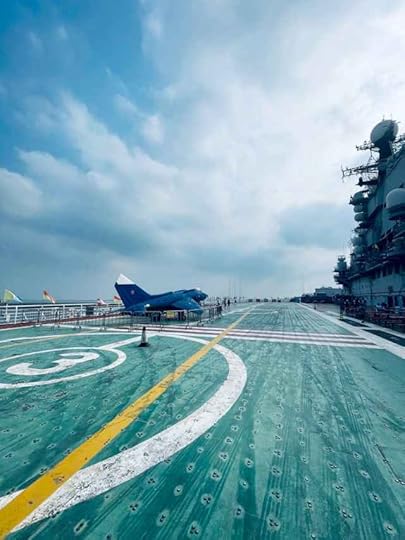
The Earth was dying.
Everything dies but time.
My name is Dan.
I guessed I had about a thousand words left, how I counted the end.
There were twelve of us, strangers stumbling together.
We had stolen an aircraft carrier from San Diego when the Navy pulled out; they had taken all the jets.
Where they were going to land we had no idea.
Someone asked me if I knew where the gas tank was.
We smashed a few docks on our way to the Pacific.
The Canadian forest fires has been blown south by demon Arctic winds. Cities exploded; fire rolled down the mountains. Rivers boiled.
We had been running out of the burning hills.
We started as three when our stolen Jeep was crushed by a flaming semi sliding down I-90.
I felt like Tom Joad piled in the back of an empty Fed-Ex van; it was the third one we found. I imagined a pack of stunned van drivers marching through a cornfield each with a sack of packages, searching for a GPS signal.
The Navy yard seemed safe and probably had food and water. No one closed the doors when they ran.
A hundred miles out to sea someone appeared on the command deck with binoculars and scanned the black boiling sky like Bull Halsey chasing Admiral Yamamoto after Pearl Harbor.
“Due west, twelve knots,” he commanded.
Finally someone said, “Aye, Aye,” and pushed a button or two and a hundred thousand tons of steel lurched forward.
“Where are we going,” I asked.
“To the date line,” Halsey said. “I want to enter a new day before all this ends.”
“Do you know how to run this thing?” I asked.
“It’s a big ocean,” Halsey said. “We’ll figure it out. Besides there’s nothing out here to hit.”
We assigned ourselves tasks.
No one it seemed knew how to cook.
No one asked names, because, well, no one did.
On the third day there were only ten of us.
“It’s a big ship,” Halsey said.
I imagined them wandering below deck trying to decipher the numbers and letters painted above steps and on walls and bulkheads, repeating their steps, turning, sighing. Maybe they were huddled in a bunk with five gallons of chocolate ice cream and a spoon.
Maybe. It was easy to lose track.
We slept on the command deck, folded into chairs.
One of us typed SOS into every email address she could think of; when they came back undelivered, she cried.
Some kid at a comm desk called into a radio, “This is the USS…. What’s the name of this ship?…”
“Who knows?” someone yelled back. “Does it matter?”
“This is the USS Does it Matter. Come in Pearl Harbor. This is the USS Does it Matter. Come in Guam. Come in Perth. Come in Tokyo. Beijing. Juneau. Come in…”
He sounded like Gary Sinise in “Apollo 13.”
“Odyssey, this is Houston. Do you read?”
Wait.
“Odyssey, this is Houston. Do you read?”
But they came back.
When darkness fell the first night we all looked like aliens with the reflected dots of red, green and yellow lights flashing from consoles on our faces.
“Where’s the light switch?” someone yelled.
It should have been funny.
I wondered where the gas tank was and what would happen when it was empty.
At dawn I sat on the flight deck and imagined the ungodly push of a catapult tossing a F-35 off the deck, into the air, and me as cool as shit pinned to my seat, calling back to the flight crew, “10-4, Roger Dodger, see you on the other side,” or whatever hotshot Navy pilots said as they took their billion dollar joyride.
At dusk we sailed into a sun as broad as the horizon.
And watched the earth swallow it.
I stood on the bow.
The ship seemed a hundred miles long.
I could no longer see California burning.
Halsey had learned how to control the rudder and the ship took a lurching, circular turn to port.
“Where are we going?” I asked.
He pointed.
“This way. Maybe we’ll hit an island.”
Someone on the flight deck was jumping and pointing at a jet ten miles above us.
I wondered if the pilots could land that thing on an aircraft carrier.
After a week, no one talked.
Even Halsey gave up the act.
And the kid at the radio console held his head in his hands.
Before he dropped the fancy Navy binoculars on a desk, Halsey said he thought he saw smoke.
And it sounded like hope.
“But it might just be a cloud bank,” he said.
He wandered away, somewhere on the vast, metallic, endless floating space of what was left of everything we knew, every face, every voice, every name, street, town, ballpark, library, graveyard, can of paint, Beatles record, mismatched sock, cold beer, tongues twirling in soft mouths, everything we had seen and touched and wanted, gave away, stole as a kid, everything we loved, everything we hated, broke and fixed.
I stopped talking, too.
I figured I’d save some words in case that black blot on the setting, orange sun might have been smoke after all.
The post A thousand words of Dan appeared first on Michael Stephen Daigle.
In the end, we stole an aircraft carrier
I was attempting to write an apocalyptic time travel story for an entry to an anthology with the theme of time travel. I missed the time travel aspect, but ended up with this story about a stolen aircraft carrier.
It’s called “A THOUSAND WORDS OF DAN.”
Here goes:
We were ping pong balls bouncing across the International Date Line.
A day older.
A day younger.
The Earth was dying.
Everything dies but time.
My name is Dan.
I guessed I had about a thousand words left, how I counted the end.
There were twelve of us, strangers stumbling together.
We had stolen an aircraft carrier from San Diego when the Navy pulled out; they had taken all the jets.
Where they were going to land we had no idea.
Someone asked me if I knew where the gas tank was.
We smashed a few docks on our way to the Pacific.
The Canadian forest fires has been blown south by demon Arctic winds. Cities exploded; fire rolled down the mountains. Rivers boiled.
We had been running out of the burning hills.
We started as three when our stolen Jeep was crushed by a flaming semi sliding down I-90.
I felt like Tom Joad piled in the back of an empty Fed-Ex van; it was the third one we found. I imagined a pack of stunned van drivers marching through a cornfield each with a sack of packages, searching for a GPS signal.
The Navy yard seemed safe and probably had food and water. No one closed the doors when they ran.
A hundred miles out to sea someone appeared on the command deck with binoculars and scanned the black boiling sky like Bull Halsey chasing Admiral Yamamoto after Pearl Harbor.
“Due west, twelve knots,” he commanded.
Finally someone said, “Aye, Aye,” and pushed a button or two and a hundred thousand tons of steel lurched forward.
“Where are we going,” I asked.
“To the date line,” Halsey said. “I want to enter a new day before all this ends.”
“Do you know how to run this thing?” I asked.
“It’s a big ocean,” Halsey said. “We’ll figure it out. Besides there’s nothing out here to hit.”
We assigned ourselves tasks.
No one it seemed knew how to cook.
No one asked names, because, well, no one did.
On the third day there were only ten of us.
“It’s a big ship,” Halsey said.
I imagined them wandering below deck trying to decipher the numbers and letters painted above steps and on walls and bulkheads, repeating their steps, turning, sighing. Maybe they were huddled in a bunk with five gallons of chocolate ice cream and a spoon.
Maybe. It was easy to lose track.
We slept on the command deck, folded into chairs.
One of us typed SOS into every email address she could think of; when they came back undelivered, she cried.
Some kid at a comm desk called into a radio, “This is the USS…. What’s the name of this ship?…”
“Who knows?” someone yelled back. “Does it matter?”
“This is the USS Does it Matter. Come in Pearl Harbor. This is the USS Does it Matter. Come in Guam. Come in Perth. Come in Tokyo. Beijing. Juneau. Come in…”
He sounded like Gary Sinise in “Apollo 13.”
“Odyssey, this is Houston. Do you read?”
Wait.
“Odyssey, this is Houston. Do you read?”
But they came back.
When darkness fell the first night we all looked like aliens with the reflected dots of red, green and yellow lights flashing from consoles on our faces.
“Where’s the light switch?” someone yelled.
It should have been funny.
I wondered where the gas tank was and what would happen when it was empty.
At dawn I sat on the flight deck and imagined the ungodly push of a catapult tossing a F-35 off the deck, into the air, and me as cool as shit pinned to my seat, calling back to the flight crew, “10-4, Roger Dodger, see you on the other side,” or whatever hotshot Navy pilots said as they took their billion dollar joyride.
At dusk we sailed into a sun as broad as the horizon.
And watched the earth swallow it.
I stood on the bow.
The ship seemed a hundred miles long.
I could no longer see California burning.
Halsey had learned how to control the rudder and the ship took a lurching, circular turn to port.
“Where are we going?” I asked.
He pointed.
“This way. Maybe we’ll hit an island.”
Someone on the flight deck was jumping and pointing at a jet ten miles above us.
I wondered if the pilots could land that thing on an aircraft carrier.
After a week, no one talked.
Even Halsey gave up the act.
And the kid at the radio console held his head in his hands.
Before he dropped the fancy Navy binoculars on a desk, Halsey said he thought he saw smoke.
And it sounded like hope.
“But it might just be a cloud bank,” he said.
He wandered away, somewhere on the vast, metallic, endless floating space of what was left of everything we knew, every face, every voice, every name, street, town, ballpark, library, graveyard, can of paint, Beatles record, mismatched sock, cold beer, tongues twirling in soft mouths, everything we had seen and touched and wanted, gave away, stole as a kid, everything we loved, everything we hated, broke and fixed.
I stopped talking, too.
I figured I’d save some words in case that black blot on the setting, orange sun might have been smoke after all.
The post In the end, we stole an aircraft carrier appeared first on Michael Stephen Daigle.
May 9, 2024
Talking about DRAGONY RISING with Steven Miletto
Please take a few minutes to listen to this fun interview with podcaster/educator Steven Miletto of Geogia.
We discussed how the Frank Nagler Mysteries evolved, about techniques used to create lively, interesting characters, and how I paced the story so he would stay up at night reading, unable to put it down.
DRAGONY RISING asks the question: What happens when Det. Frank Nagler discovers that the explosion that levels two block of downtown Ironton, N.J. is not the worst thing that happened?
 OLYMPUS DIGITAL CAMERA
The Frank Nagler Mysteries are collectively a saga about an American city with Det. Frank Nagler at the center. They tell the tale of the city and its citizens and about the varied crimes Nagler must solve, often an personal cost.
To obtain a copy, contact me at michaelstephendaigle@hotmail.com.
Steven and talked a few years ago about another Nagler mystery, THE RED HAND.
It was wonderful to catch up over DRAGONY RISING.
Thanks so much for the chance to chat, Steven.
The podcast can be found here: https://stevenmiletto.com/677
The post Talking about DRAGONY RISING with Steven Miletto appeared first on Michael Stephen Daigle.
May 8, 2024
Eating pie
Hands are good.
Fingers are better
Sticky stuff licked by tongues better yet.
Syrupy thick, melted cream

Dripping down palms
nothing to waste.
The joy of messy pie love.
Hands are good.
Fingers better.
Forks are too formal.
The post Eating pie appeared first on Michael Stephen Daigle.
April 20, 2024
The thing is gone. I’m alive
The moment wants noise, screaming
Running leaping, rolling after falling
laying in wetness back to the ground face to the sky
shouting Yes! Yes! Yes!

The thing is gone.
Grey and white in the photos; fitting.
That thing they found and cut out leaving a hole
It was dead.
I no longer feel dead.
It is a time for color. And rain, And one long screaming, obnoxious running fucking celebration because it is, it is, it is.
Roses offer life, open wet with dew and turn to the sun.
The pollen sticky on your fingers.
This taste of life, red and yellow petals
Drip on tanned shoulders.
.
The post The thing is gone. I’m alive appeared first on Michael Stephen Daigle.
April 6, 2024
For hire: Free agent mystery writer
Baseball fans will understand the term: Designated for assignment.
That makes me, Mystery Writer, free agent.
But I don’t have to pass through waivers. The want ad says: Open to right offer.
This came about because the publisher of my five Frank Nagler Mysteries, Imzadi Publishing of Tulsa, Ok., is shutting down after than more than decade in business.
Thank you, Janice and Anita and Kay, their sharp-eyed copyeditor who mostly kept me on the straight and narrow.

You called up the rookie from the obscurity of nowhere in 2013 and let me play on the big stage. (And other sports cliches.)
So what’s in the duffle bag as I start over?
A saga of the city of Ironton, N.J. and it’s hero cop Detective Frank Nagler, called by Kirkus Review as “One of modern fiction’s expertly drawn detectives.”
Also, Book 6, of the series, NAGLER’S SECRET, which asks: What did Nagler do in 1995 that has come back to life in 2020 in a way that could threaten his reputation, and possibly his life?”
The Nagler books are available at Book & Puppet Shop in downtown Easton, Pa.
The Frank Nagler Mysteries:
The Frank Nagler Mysteries tell the story of Ironton, N.J. Detective Frank Nagler and his changing hometown,
They are a uniquely American saga.
The stories start with his first case, finding a serial killer named Charlie Adams, to a running confrontation with The Dragony, a shady and established gang of the thugs whose beginning harkens back to Ironton’s mining days.
Frank Nagler is an everyman, a creature of Ironton’s workers ghetto and changing economy. He grows and changes as the stories progress, aging from a kid to a man in his fifties, adding layers of personal grief and what seems like wisdom.
Ironton also changes, from a failed industrial city to one making a transition to a modern economy, one adding dimensions as the city takes the role as a character, not mere background.
The stories are filled out with memorable and important secondary characters integral to the tale-telling and the plot.
A reader’s thought, from an Amazon review: “I find myself bored easily with most of the new books erupting daily, but Michael Stephen Daigle knows what he is doing and is up to the task. His stories capture me, entertain and challenge me, and leave me wanting just one more of his books each time I finish one.”
The Books:
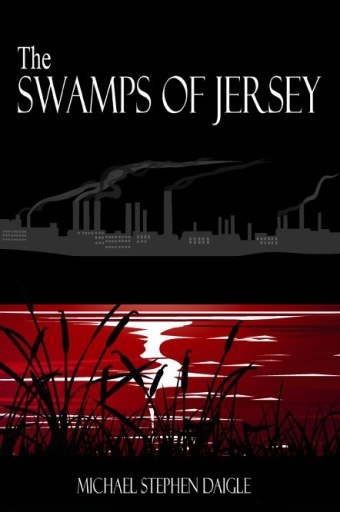
THE SWAMPS OF JERSEY: Frank Nagler called to the Old Iron Bog where the body of a young woman was found after a weeklong tropical storm flooded the City of Ironton. A gold ring suggests that Nagler’s estranged girlfriend Lauren Fox might be a victim in this sprawling, disturbing case.
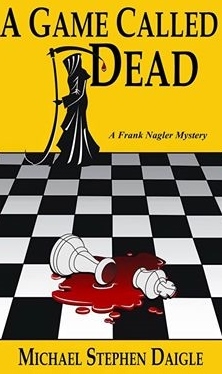
A GAME CALLED DEAD: The story introduces #Armageddon, a self-styled Internet terrorist who transforms an old-style video game into a real-life game that threatens the lives of students at the New Jersey State College of Ironton, the friends of Detective Frank Nagler, and Nagler himself. The story is structured like a game, with rules that change and spin-on-a-dime twists.
“A Game Called Dead” was named a Runner-Up in the Shelf Unbound 2016 Best Indie Book contest.
THE WEIGHT OF LIVING: Who is this young girl found standing in a Dumpster in a cold night wearing summer clothes? Finding the answer to that question leads Detective Frank Nagler down a dark path to deeply hidden secret held by a family, the revelation of which hatches modern threats. A reviewer said: “The narrative is a stunning and engrossing meditation of grief and survival.”
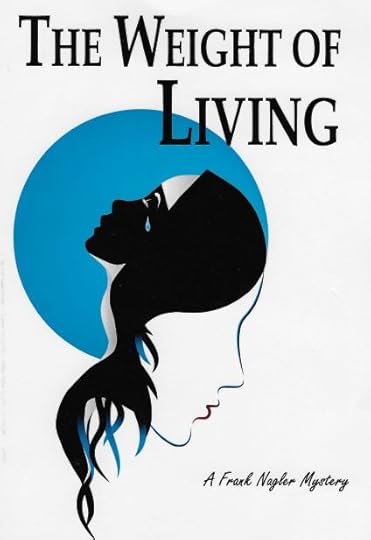
“The Weight of Living” was awarded First Place for Mysteries in the 2017 Royal Dragonfly Book Awards; Named a Notable Indie in the 2018 Shelf Unbound Book Awards; Named a Distinguished Favorite, 2018 Independent Press Awards; Named a Distinguished Favorite in the 2018 Big NYC Book Contest. Named a Finalist in the 2019 Book Excellence Awards; Named A Gold Star Award winner in the 2020 Elite Choice Book Awards; Named a Book Award Winner in 2021 by Maincraft Media Fiction Book Awards
THE RED HAND: This is the prequel to the Frank Nagler series. He’s rookie detective assigned to the most series cases of murder in the history of the City of Ironton. Nine women are dead, their deaths spread over months, some with few clues. This is also the story of Martha, Nagler’s wife, whose illness hangs over every action taken by the young detective. The book weaves terror and grief in equal measure.
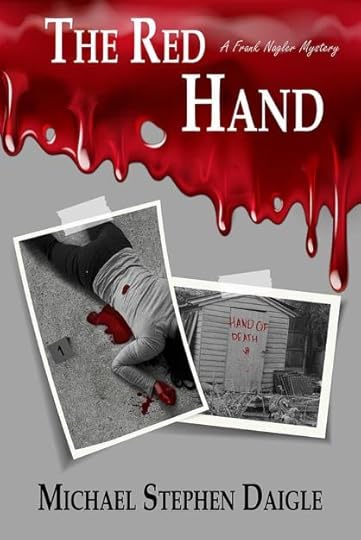
“The Red Hand” was named a Distinguished Favorite in the 2019 Big NYC Book Contest; Named Second Place winner for mysteries in the 2019 Royal Dragonfly Book Awards; Named a Notable 100 Book in the 2019 Shelf Unbound Indie Book Awards; Named a Distinguished Favorite in the 2020 Independent Press Awards;A Nominee in the 2020 TopShelf Book Awards; Named A Gold Star Award winner in the 2020 Elite Choice Book Awards.
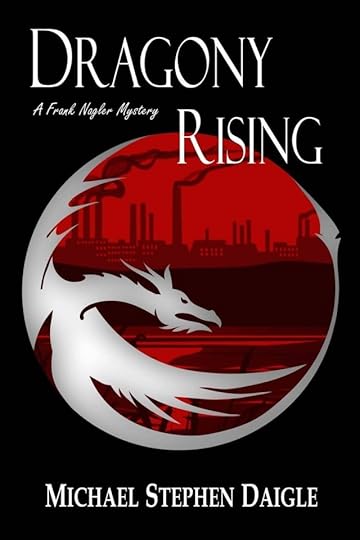
DRAGONY RISING: The explosion that levels two blocks of downtown Ironton, N.J. is not the worst thing that Detective Frank Nagler investigates in this thrilling, wide-ranging and challenging story. The story introduced the Dragony, a sinister, shadow bunch of thugs whose beginnings range back to the mining days of Ironton and whose founders had issues with Nagler’s family back then, even as modern members challenge Nagler in their own times.
Dragony Rising was awarded First Place for Mysteries in the 2022 Royal Dragonyfly Book Awards; named a Notable 100 Indie Book in the 2022 Shelf Unbound Indie Book Awards; A Distingished Favorite in the 2023 Independent Press Awards; A Distinguished Favorite in the 2023 Big NYC Book Awards
For information:
Michael Stephen Daigle
Phillipsburg, NJ 08865
908-619-6393
michaelstephendaigle@hotmail.com
http://www.michaelstephendaigle.com
The post For hire: Free agent mystery writer appeared first on Michael Stephen Daigle.
February 24, 2024
Nagler 6: Does she know Nagler’s secret?
In Book 6 of the Frank Nagler Mysteries, NAGLER’S SECRET, a work in progress, there was an event in September 1994 that is at the heart of the secret that left Detective Frank Nagler shaken.
There is also a young woman who reappeared in Ironton, N.J. many years later.
Does she know the secret?
Detective Frank Nagler’s friends try to recall her:
“She had brown hair, cut short,” said Barry, the diner owner. “She’d come in after the first rush, order tea and unbuttered toast with jam. She always seemed to be looking for somebody. Never connected her to that thing on Bastion. You’d look and she’d be gone, couple bucks on the counter.”
“How old do you think she was?” Dawson asked.
Barry squinted, thinking, and scratched his chin. “Just a kid, early twenties. Something about her face. It would have been beautiful if her eyes weren’t so hard.”
“Ever see her with Nagler, or did she say anything?”
“No,” Barry said. “Other than ordering tea and toast, she said nothing. Had a soft, scratchy voice.”
Calista Knox said she’d change her appearance depending on what she was trying to get.
“I have some experience with that, becoming someone else depending on what hustle I was running. Because that’s what she was, Jimmy, a hustler. Sometimes she was a blonde with dark streaks and her hair was untamed, wispy, shoulder length. A red head, a shag cut, a ponytail, a 70’s bouffant.”

“And a scarf, I noticed that,” Barry said. “Sometimes silk and sort of stylish, maybe fine cotton or wool wrapped around her neck once then draped all artsy over a shoulder.” Barry flipped his hand over his right shoulder to demonstrate how the girl wore her scarf. “But always a scarf.”
Leonard could only recall her voice. That’s how a blind man remembers everyone, that and sound of their footsteps.
“Barry was right, Her voice was soft and scratchy, but full. Sometimes whimsical, and I’d imagine her face as round and soft with full mouth. But then it would change and become hard and threatening. She’d be in the middle of a story about her childhood in a light, happy voice, then something would rise up, probably a stray memory, and her voice would grow dark and she’s stop telling it, and walk away. There was some hollowness in her voice that made me think those childhood stories were not of her childhood, but of someone else’s, or were completely made up. I often wondered what she was trying to tell me.”
Calista said, “She presented to each person what they wanted to see. That’s what survivors do. She was a survivor.”
In the end, the only thing that they could agree on was that she was a small woman with an athletic figure.
Dawson flipped through his notebooks. His own description: “She was wearing a sleeveless flowered dress, with a wrist full of bangles. Her shoulders were tanned and toned and arms rippled with strength resulting from hard work. She had a piercing dark stare that drilled through you from a pixie face; she never took her eyes off yours. probing, daring, inviting, blocking, all at the same time. Her eyes never softened, even when she laughed, because the laugh was not mirthful, but knowing. When she laughed she was telling you that you had work to do to get to know her. Her laugh was not a response to something funny or casually entertaining, but was itself a question.”
They had met in odd places, at odd times. It was like arranging the release of an American spy from the Russians. Agreements had been made. Secrets would not be told.
Five meetings over a year.
He never expected to see her again.
The award-winning Frank Nagler Mysteries are: THE SWAMPS OF JERSEY; A GAME CALLED DEAD; THE WEIGHT OF LIVING; THE RED HAND; and DRAGONY RISING.
They are available online at Amazon, Barnes and Noble, Kobo and Walmart.com. Also at Book and Puppet in downtown Easton, Pa.
The post Nagler 6: Does she know Nagler’s secret? appeared first on Michael Stephen Daigle.
February 14, 2024
Arthur Turfa’s EPIPHANIES: Seemingly calm stories rife with change. A review
The lives presented in Arthur Turfa’s short story collection, Epiphanies, appear calm, measured, routine, even. Teachers, students, ministers, soldiers, characters leading recognizable existences.
Until something changes: The characters are just minding their own business when a question emerges, a new circumstance, or even an old circumstance, surfaces. A thing that presents a challenge that in most of these stories the character had not foreseen, thus the title.
In his introduction, Turfa wrote, “The main character sees the way he or she is to proceed in life instead of the way they or others expected them to. A sense of affirmation follows the epiphany.

None of the main characters has “earned” this epiphany; I believe that is impossible, but some would differ with me. Rather the epiphany presents itself at the right time, a time of kairos, which people cannot bring about themselves. When it occurs, they know it and proceed ahead.”
Turfa is a retired teacher, a soldier, and ordained Lutheran minister, and these stories are drawn from that life. He has published several collections of poetry and one novel,THE BOTLEYS OF BEAUMONT COUNTY, which tells the tale of the changing circumstances of deeply Southern family.
Full disclosure: I read and commented upon early versions of the novel.
In Epiphanies, the stories are drawn from the details of American lives filled with routine, family and broken families, tradition and change.
The details matter: Parents marshaling kids through breakfast and off to school, favorite coffee shops, the mundane pieces of one’s job, seemingly minor work tensions, missing lovers, break-ups, road trips and favorite songs, the happenstance of a meeting, an announcement on a bulletin board; woven into all of these common circumstances are the seeds of change, doubt, confrontation, and deliverance.
Don’t be fooled: Within their simplicity, calmness and commonness, these stories hold a mirror to modern American life and expose the silent and at times ignored squirming forces of division and suspicion, power and authority.
Turfa looks under the hood of these seemingly calm lives and exposes some bit of unrest that could – that is the key word –could—foster a new direction.
There are no violent blow-ups, no shouting matches, no dramatic end-of-life soliloquies, just characters weighing their futures and acting on the idea that has presented itself.
The lack of drama in most of these stories is what makes them so compelling because there are no conclusions, just possibilities. The characters take the fork in the road, or ponder taking the path less traveled. Nothing is promised, just the action taken.
There are choices presented to these characters that we can all share.
The collection is published by Alien Buddha.
https://alienbuddhapress.wordpress.com
The post Arthur Turfa’s EPIPHANIES: Seemingly calm stories rife with change. A review appeared first on Michael Stephen Daigle.
January 26, 2024
Finding the hole at the bottom of NAGLER’S SECRET
Sometimes writing a story is like walking in a dark room blindfolded. You bump into walls a lot until you find the door.
That’s what I was doing with the sixth Frank Nagler Mystery, “NAGLER’S SECRET.”
I was writing fun scenes with Nagler chasing people around Ironton, N.J. and people chasing Nagler, especially a red head, who sometimes was not a red head, but who seemed to know a lot about our cop hero.
It was fun, and beginning to make sense.
Then I wrote this sentence — “Every story has a hole at the bottom, something that doesn’t fit, doesn’t make sense, but you write it anyway because that’s what plays out.” – and I found the door.
So, the question is: Can I write a mystery about that premise, which is not just about the characters’ search for knowledge, but about the writer’s process in a story that survives on two levels?
We’ll see what plays out.
The award winning Frank Nagler Mysteries, published by Imzadi Publishing, are available in ebook, paperback and audio book on Amazon and Barnes and Noble, and in paperback at Book & Puppet in downtown Easton, Pa.
Kirkus Reviews called Nagler, “One of modern fiction expertly drawn detectives.”
The scene:
“Every story has a hole at the bottom, something that doesn’t fit, doesn’t make sense, but you write it anyway because that’s what plays out. Sometimes what’s missing is bigger than the whole story.”

Jimmy Dawson offered a wheezing chuckle that ripped into a deep cough. The kid journalist opposite him in the bar booth with a spiderweb of cracked green vinyl stared uncomfortably as the old reporter with eyes closed hacked a cough into a handkerchief. It wasn’t the first time.
Dawson leaned back in the booth to calm himself with a few deep breaths. The meds weren’t working. Something by Tom Petty rattled out of hidden speakers, swirled around a patron or two mouthing the words and settled into the aimless density of a dead-end bar, a place so old you could never scrape from the walls the voices, the faces, the pieces of a thousand lives because you wouldn’t know what to do with them if you did.
A place Dawson chose to tell the one story that had crawled up and down his back for decades, a story that never shook out of his notebooks. A story so filled with misdirection that after you followed the turns, cut away the weeds of lies and smirking self-satisfaction, you found yourself where you started because it was filled with everything that needed to be told, and nothing that made sense.
“Nothin’ squared, kid,” Dawson said, his voice like cracked concrete rolling in a drum. “Everything was round pegs and square holes, ephemera. Sometimes on a story if you dig deep enough the lies that you were told on Monday cleared by Sunday because someone else told the same lie with a little less shade. But not on this one.” Dawson squinted into the bar’s darkness, uncertain why the place seems so dark, uncertain if it was his eyes or the weight of everything he knew pressing down.
I want to feel light, Dawson thought. But if I dump it on this kid, it’s gonna sink him.
“You okay, Mr. Dawson?” the kid asked.
“It’s Jimmy. No one calls me Mr. Dawson.”
Dawson stopped because he couldn’t recall the kid’s name because maybe he wasn’t paying attention. Where did he come from? Right, an intern from Ironton State’s media program.
“You really want to know this, kid?” Such a young pasty face.
“Yeah.” He pinned his eyes to the table. “I heard stuff.”
“Not pretty.”
“Not sure it’s supposed to be.”
Dawson rubbed his face and sucked a breath through the moss of his damaged lungs.
“We weren’t sure he’d ever survive it, and all this time later, I can’t say that he did.”
“That’s Detective Frank Nagler, right? So, what’s the secret?”
“Ain’t that easy.” Dawson liked the kid’s spunk. “You’ll have to figure it out yourself. Maybe you will.”
The kid grinned, confident as a rope walker with no wind or net, knowing that if he fell, none of that mattered.
“Where do I start?”
Dawson passed his secret, one he had kept for years. He sat straight, lighter.
“Bastion Street, September 1994.”
The post Finding the hole at the bottom of NAGLER’S SECRET appeared first on Michael Stephen Daigle.