Chris Fox's Blog, page 16
July 29, 2017
Worldbuilding #2- Let’s Create the Umbral Depths
In this week’s video, Chris discusses the importance of travel and communication in storytelling. He talks about how these aspects influence his own world building and walks through the creation of something he created for his upcoming novel, Tech Mage, called the Umbral Depths. Sound cool? Check out more information in the video below!


July 21, 2017
How to Make Names That Don’t Suck
In today’s video, Chris begins a world building video series, starting with how to create names for your characters that readers will like. More specifically, he gives some tips about what to avoid and some easy techniques to use when naming your characters. Check out the video below for more details!
July 14, 2017
The Product Family Map
In today’s video, Chris talks about a concept from Relaunch Your Novel that he calls the Product Family Map. The Product Family Map is a map of your backlist of books showing links between books and how this affects sales. Check out the video below for more details.
July 8, 2017
The Power of Your Backlist
In this week’s video, Chris talks about how having a backlist of published books can help should you need to take a break from writing. He also discusses his income so far in 2017 and how it has been affected by his backlist. Interested to hear more? Check out the video below!
July 3, 2017
The Author Biz Podcast #121: Making the Most of Your Backlist, with Chris Fox
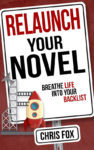
Chris was recently interviewed on The Author Biz Podcast about his most recent book for writers, Relaunch Your Novel. Stephen Campbell talks to Chris about when, how, and why should an author take steps to relaunch their backlist.
Chris lists six different ways of relaunching in the book and we’ll talk about some of those, as well as some nitty gritty specifics of his own series relaunches. We also delve into the importance author branding and even get into marketing audiobooks.
Listen to the full interview on the The Author Biz Podcast!
July 2, 2017
Hold the Line Audiobook Released on Audible
Hold the Line, book two in the Ganog Wars series (a new Void Wraith series), has been released on Audible. Continue the Ganog Wars story, following the adventures of Fizgig, Nolan, Khar, and more, that began with Behind the Lines!

Listen now on Audible!
July 1, 2017
Quick Tip: How to Write Faster and More Consistently
In this week’s video, Chris gives another quick tip to improve your writing. The trick to consistent writing isn’t just discipline. It’s understanding flow state and learning to go into it on command. To learn more about how to write faster and more consistently, check out the video below!
June 30, 2017
Relaunch Your Novel: Breathe Life Into Your Backlist
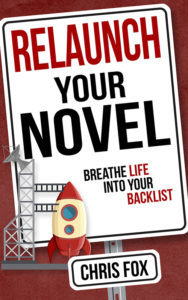
Have you launched a novel, or many novels, only to have them land with a whimper? Have you had a great selling book or series slowly fade away to obscurity? What if you could relaunch those books, turning your backlist into a great source of income?
You can. Chris Fox’s latest book in the Write Faster, Write Smarter series, Relaunch Your Novel will teach you:
How to analyze your previous launches to determine failure points.
How to turn your backlist into an automated system that feeds readers back into your other books.
What types of relaunches exist, and which is right for your book.
How other authors have successfully relaunched. What worked, and what didn’t.
June 28, 2017
Writing to Market Does Not Mean Writing Crap
In February of 2016 I wrote a book called Write To Market. That book teaches authors how to choose stories in genres more likely to sell books. The premise is very straight forward:
#1- Pick a genre that you absolutely love (mine include fantasy, SF, horror, and thrillers)
#2- Determine that the genre has enough readership to earn you a living
#3- Write great books in that genre, which requires you to have excellent craft. Get those books out quickly.
The concept of writing to market was around long, long before me. Long before the United States. Long before Christ. Shakespeare used it. Asimov used it. These writers / playwrights needed to make a living, and this was how they earned their daily bread. Note that both also produced masterpieces, in addition to the entertainment they wrote to pay the bills.
Unfortunately, my name is now synonymous with writing to market, and wherever that flag is raised I am the rally cry. It leads to people like John G. Hartness writing articles like this.
Most of what he wrote I’m okay with. I even agree with the parts about the people with the get rich quick mindset being in for a rude awakening. What I am not okay with is John spreading false information to get his point across. One of the most common ways used to discredit me is saying that I can’t really sell fiction. Otherwise, why would I need to write books for writers?
I do it because I enjoy it, and because there’s a serious need for modernized education for authors. This industry is changing daily, and I do what I can to help authors grow with it. I will continue to do that, year after year. Non-fiction is less than 20% of my income, less with every passing year. People are often skeptical, as John clearly is. Fortunately, because I run into authors like John often, I have proof.
I recorded the 21 Day Novel Challenge to show that I could write books as quickly as I said I could.
Then I recorded a 2016 Income report to prove that my money came primarily from fiction.
So, John, this rebuttal is for you. The written to market book that I put out the very next month after Write to Market sold enough copies to get me on the NYT bestseller list (had they been at multiple outlets), and has many millions of page reads in Kindle Unlimited. It’s a book I’m proud of, despite having written it quickly.
You say in your article that writing to market doesn’t make a good foundation for a lasting career. Are you sure? Because the money I made from Destroyer and the sequels has kept me afloat in the year since, time I’ve used to hone my craft and to continue to put out better books. Time I’ve used to get better at both writing, and selling books. It didn’t prevent me from becoming a better writer. Quite the opposite. Writing to market helps me improve my writing.
Practice makes you better. Deliberate practice makes you vastly better. I use writing to market to pay the bills, so that I can one day I will be worthy of writing the fantasy epic I’ve been dreaming of since I was a kid. You act like writing to market is a quick sell out, and that the people who do it can’t adapt, learn, or grow. You couldn’t be more wrong. People who write to market can always aim at another market, and every time they finish a story they are a better writer. Isaac Asimov followed that methodology closely, and had 3 typewriters set up in his house so he could write multiple stories at the same time.
I’m no Asimov, but I’ve written twelve novels as of this writing. My first book came out in October of 2014. I write fast, I write well, and I turn out entertaining books. In your article you wondered if people who write to market will be here in ten years? Definitely. See you then. I’ll still be selling books, and writing stories I love. I’ll also be a far better writer, because I’ll have turned out dozens of novels across a broad range of genres.
You can believe whatever you want about writing to market, but if you’re going to offer up your opinions, please check your facts first.
Writing To Market does not mean Writing Crap
In February of 2016 I wrote a book called Write To Market. That book teaches authors how to choose stories in genres more likely to sell books. The premise is very straight forward:
#1- Pick a genre that you absolutely love (mine include fantasy, SF, horror, and thrillers)
#2- Determine that the genre has enough readership to earn you a living
#3- Write great books in that genre, which requires you to have excellent craft. Get those books out quickly.
The concept of writing to market was around long, long before me. Long before the United States. Long before Christ. Shakespeare used it. Asimov used it. These writers / playwrights needed to make a living, and this was how they earned their daily bread. Note that both also produced masterpieces, in addition to the entertainment they wrote to pay the bills.
Unfortunately, my name is now synonymous with writing to market, and wherever that flag is raised I am the rally cry. It leads to people like John G. Hartness writing articles like this.
Most of what he wrote I’m okay with. I even agree with the parts about the people with the get rich quick mindset being in for a rude awakening. What I am not okay with is John spreading false information to get his point across. One of the most common ways used to discredit me is saying that I can’t really sell fiction. Otherwise, why would I need to write books for writers?
I do it because I enjoy it, and because there’s a serious need for modernized education for authors. This industry is changing daily, and I do what I can to help authors grow with it. I will continue to do that, year after year. Non-fiction is less than 20% of my income, less with every passing year. People are often skeptical, as John clearly is. Fortunately, because I run into authors like John often, I have proof.
I recorded the 21 Day Novel Challenge to show that I could write books as quickly as I said I could.
Then I recorded a 2016 Income report to prove that my money came primarily from fiction.
So, John, this rebuttal is for you. The written to market book that I put out the very next month after Write to Market sold enough copies to get me on the NYT bestseller list (had they been at multiple outlets), and has many millions of page reads in Kindle Unlimited. It’s a book I’m proud of, despite having written it quickly.
You say in your article that writing to market doesn’t make a good foundation for a lasting career. Are you sure? Because the money I made from Destroyer and the sequels has kept me afloat in the year since, time I’ve used to hone my craft and to continue to put out better books. Time I’ve used to get better at both writing, and selling books. It didn’t prevent me from becoming a better writer. Quite the opposite. Writing to market helps me improve my writing.
Practice makes you better. Deliberate practice makes you vastly better. I use writing to market to pay the bills, so that I can one day I will be worthy of writing the fantasy epic I’ve been dreaming of since I was a kid. You act like writing to market is a quick sell out, and that the people who do it can’t adapt, learn, or grow. You couldn’t be more wrong. People who write to market can always aim at another market, and every time they finish a story they are a better writer. Isaac Asimov followed that methodology closely, and had 3 typewriters set up in his house so he could write multiple stories at the same time.
I’m no Asimov, but I’ve written twelve novels as of this writing. My first book came out in October of 2014. I write fast, I write well, and I turn out entertaining books. In your article you wondered if people who write to market will be here in ten years? Definitely. See you then. I’ll still be selling books, and writing stories I love. I’ll also be a far better writer, because I’ll have turned out dozens of novels across a broad range of genres.
You can believe whatever you want about writing to market, but if you’re going to offer up your opinions, please check your facts first.