
A.M. Balasubramaniam's Blog, page 2
May 15, 2022
A Few Pictures of Sunrise and Sunset Over The Himalayas
Sunrises and Sunsets are mythical, but the hope and calm they bring into our lives cannot be denied. Here are some pics that I did click reasonably well.


May 14, 2022
The Road To The Pinnacle Is Not Easy
The road to the pinnacle is never easy. The climb is steep. It has its own trappings of distractions in the form of charming scenarios which want you to cease the journey. In a moment of distraction, if you slip, the cascading fall will take you back to where you began with a lot of collateral damage.


May 13, 2022



May 12, 2022


May 11, 2022
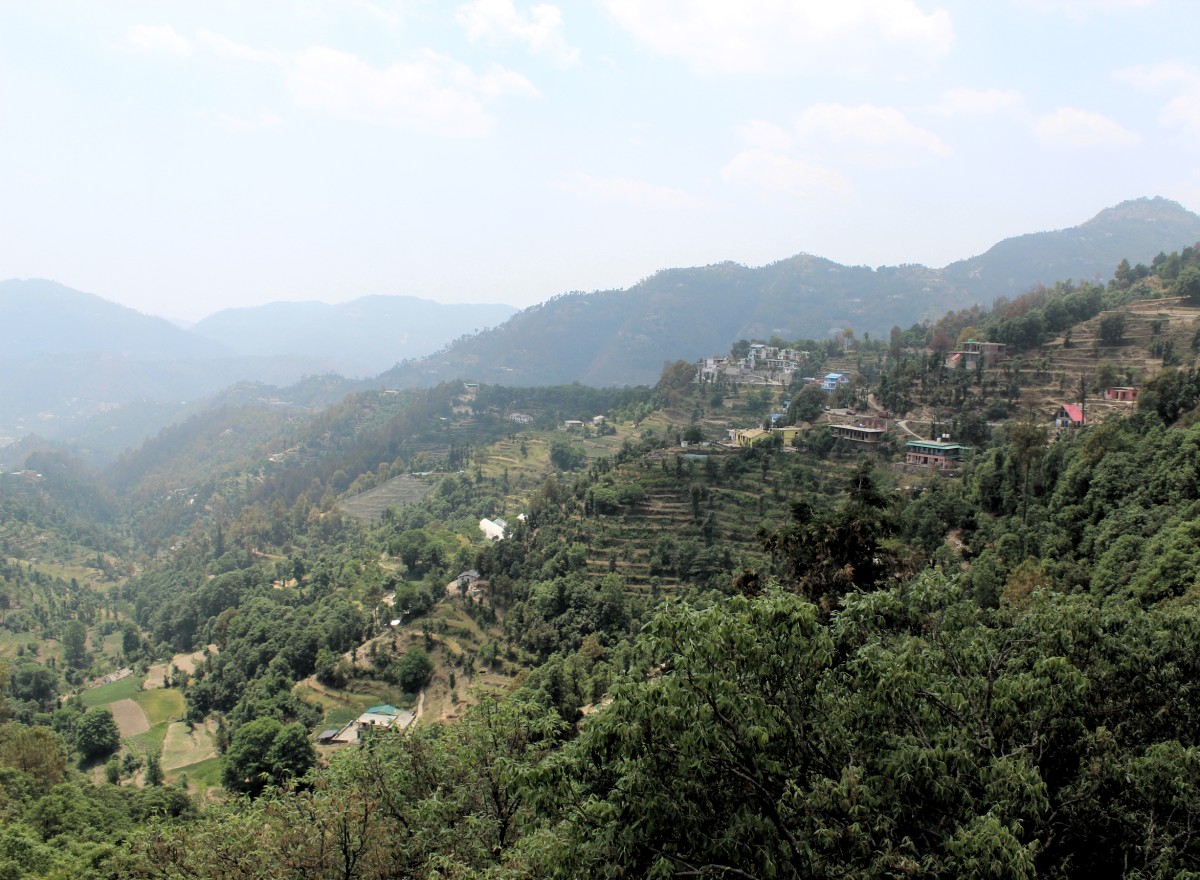
Snow Capped Himalayas As Seen From Munsiyari
The pictures could have been better, but for me being an average photographer. Giving me a good cover for my mediocre skills was the fact that there were forest fires in and around Munsiyari that clouded the scenario.


February 21, 2022
Ashoka The Great By Wytze Keuning (Transalated by JE Steur) Is A Treatise On The Greatest King Of India
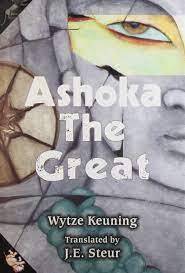
A few years ago, lamenting the fall in the standards of journalism, I wrote a spoof blog on how the press would have made mincemeat of Ashoka for converting to Buddhism after the Kalinga war, to escape accountability for causing loss of human life and property. In 2018, I decided to know more about Ashoka, The Great and browsed the net. Shockingly, I saw some search results that described him as `Ashoka, The Not So Great’. Coming from this tribe surprised me and made me more curious to know about this greatest king of India apart from Akbar. I decided to read the best book on him to get the right picture. More than one source pointed to `Ashoka, The Great’ by Wytze Keuning. I purchased the book on my Kindle, and it took me four years to read it.
Wytze Keuning was a Dutch scholar, and he wrote this book in Dutch. He never visited India. Nobody knows where his interest in Ashoka came from. But there must have been some significant affinity towards this king from India, that a Dutch teacher gave up his job in 1937, lived on a modest pension, and wrote a thousand-page book on Ashoka, The Great. This book was translated into English by J.E. Steur in 2010.
Coming to the people who call `Ashoka, The Great’ as `Ashoka, The Not So Great’, the contents of this book made me connect the dots in `The Myth of The Holy Cow by DN Jha’. This book also answered my questions on why he is called `Ashoka, The Great’. And why some people are enraged with him even after ages.
As per the book, Ashoka had to brave it all. He was blessed with ugly looks and a mother who was not the preferred wife of Bindusra, his father. He had an elder brother who was a debauchee and yet wanted to rule the Mauryan throne, and he was backed by the avaricious priests. Obviously, Ashoka’s elder brother believed in the priests and the sacrifices they demanded, more than on a well trained and equipped army. Ashoka despised the priests and never believed in any of their customs. He believed actions and not prayers yield results. The priests hound him throughout his life and try to assassinate him at various stages. Somebody is still carrying on their agenda.
As per this book, Ashoka was against customs like Sati and saved ladies literally from the burning fire. He respected all customs and religions, taking deep interest in them. Ashoka believed in science, medicine and despised superstitions. He had a razor sharp intellect and the strength of an elephant. He despised war and usually won over his rivals with a lot of tact and deliberations. He was a great soldier and strategist on the battlefield. He was against the caste system, and many of his trusted lieutenants were from the downtrodden class.
Ashoka was always inspired by Buddha, and not just after the Kalinga war. He was recceing the religion for a long time, and one of his wives was a Buddhist. The king was polemical about animal sacrifice and hunting. As explained in the book, the Kalinga war was the last thing he wanted. After that, it is documented popularly, his last battle. But much later, he doesn’t mind using force to quell a revolt in Taxila. Buddhism owes its existence to Ashoka, The Great. This man emptied his treasury to spread the philosophy of Tataghata.
This is a great book to learn about the great king from India. However, I want to read more books about him. For its content, detailed description, and language, this book from my side gets a five star.
May 22, 2021
The Unflinching Belief In Allopathy Is Part Of My Genes

For any ailment, my first instinct is to consult an allopathic doctor. During 2007, I had depression. Instead of turning to a witch doctor, or some naturopathy, I decided to visit a psychiatrist. He prescribed allopathic drugs to handle the initial situation and subsequently other methods. Other methods did not include the one that involves twisting your body in various angles. I could have messed up my life had I not thought from a scientific angle.
Recently, when I was affected with COVID, I got tested when the first symptom became too obvious to ignore. On being tested positive, I got myself treated through Allopathy. I just wondered why I never get influenced by any other system of medicine in any illness, and I traced it back to the influence of my Father.
He was not a highly educated person. But had a great mind to understand that only Allopathic medicine treatment is based on an examination, testing and researched medicines. When he had a partial paralysis, he trusted only Allopathy. When I had a severe problem with liver jaundice, he did not rely on native medicine but only on Allopathy, and for this, he sold whatever little assets he had. The same was the case when my eldest brother (late) had a kidney failure. He decided to go in for dialysis and understood by reading what a cadaver transplant was. He believed only Allopathy could cure. We would be taken to the corporation dispensary or to a private doctor even for common fever, but no other form of medicine was given.
I came to know about Ayurveda and Allopathy only after the age of 15. By that time, I had learned about X-rays, blood reports, surgery, great leaders of the World/India, systems of governance, fundamental rights, etc. Influenced by my Father, till she breathed her last, my mother too relied only on Allopathy.
I learned the importance of reading books from my Father. Similarly, the genuineness of Allopathy was drilled into my mind and heart by him. Thus, when I write `Allopathy is the only form of medicine that can be proved/disproved with facts, based on results of an experiment, and these results can be validated across the world', it is something that has been imbibed into me from the cradle you could say.
April 13, 2021
Dr BR Ambedkar's 130th Birth Anniversary
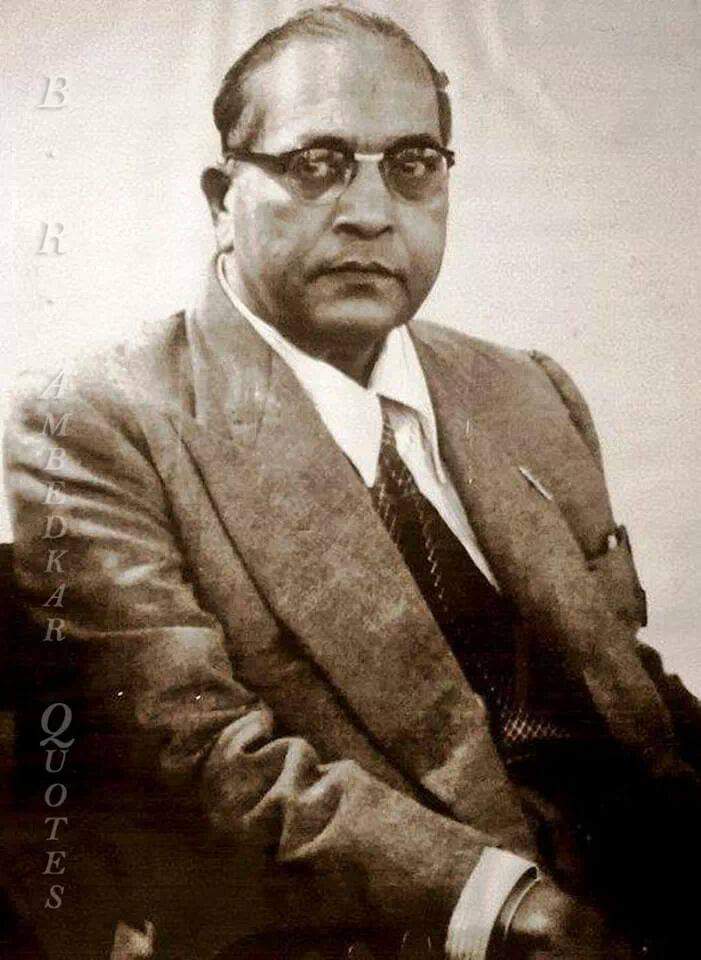
Today is Dr BR Ambedkar's 130th Birth Anniversary.
April 14th is my new year, and it is the day on which every festival occurs for me.
It is the day that made August 15th and January 26th more applicable to me.
It is the day that ensured that Dalits too get educated.
Today opened up respectable jobs to us other than manual scavenging, skinning dead buffaloes, and such mean positions.
His fight against caste discrimination ensured that some of my brethren got to pray gods that they were denied access to for centuries. That too it is not universal, but this itself has satisfied the hungry.
Babasaheb Ambedkar came to ensure that Dalits are also recognised as human beings.
March 29, 2021
A Study On The Plastic Bag And Indian Family
`Don't be plastic' is a cliche monotonously being used for someone who is emotionally cold. However, something plastic conveyed a lot of emotions in an Indian family, and it was the now scorned `plastic bags'. The meme below is a true representative of that fact.

Image obtained from internet and does not belong to me.
Each household worth its salt had a panoply of plastic bags. Bags were stored in different plastic bags, as per their genre. Bags used to be held under beds, in almirahs and most of them in a big bag and hung to the kitchen's hinges. There were the lucky bags, stylish bags, the sturdy ones, and the cheap ones. Needless to say, the bag from a foreign country in which the stray relative brought some gift was the pride of the family.
The bag from the luckiest shop used to be the vault for the precious documents of the household. Clothes purchase from big brands was stored in the same cover, just to enhance the family prestige and as a seal of authenticity. And it hardly mattered that nobody got to see the cover in which the garment was stored. I have seen people pleading with a salesman for an extra bag.
In families prone to confabulations, job-seekers in the households got the bag from a prominent brand to carry their testimonials to an interview. It was believed that such an act ennobled the individual, his education, and also his family.
The sturdy bags were reserved for buying vegetables from the market. Usually, these bags came along with the footwear you brought. They were also used to carry a lunch box to school and offices. Few of them who could not afford school bags used plastic bags instead. There was always a plastic bag in every office/ school goers lunch box, carrying bag to double up as a rain cap to counter the omnipresent rains in Bangalore.
The cheap ones found their purpose to dispose of garbage or give it to visitors to carry stuff. If a visitor was given a precious plastic bag, it indicated their propinquity to the family.
Today plastic bags have given way to the more dangerous `polypropylene bags'. Like our beliefs, we have jumped from the scorching desert into the mouth of a volcano.
What is your take?


