Loren Rhoads's Blog, page 31
July 30, 2018
5 Questions for Mercedes M. Yardley
[image error]Mercedes M. Yardley is a dark fantasist who wears poisonous flowers in her hair. She is the author of Beautiful Sorrows, the Stabby Award-winning Apocalyptic Montessa and Nuclear Lulu: A Tale of Atomic Love, Pretty Little Dead Girls, and Detritus in Love. She recently won the prestigious Bram Stoker Award for her novella Little Dead Red and was a Bram-Stoker nominee for her short story “Loving You Darkly.” Mercedes lives and creates in Las Vegas. You can reach her at http://www.abrokenlaptop.com.
She describes Pretty Little Dead Girls: Bryony Adams is destined to be murdered, but fortunately Fate has terrible marksmanship. In order to survive, she must run as far and as fast as she can. After arriving in Seattle, Bryony befriends a tortured musician, a market fish-thrower, and a starry-eyed hero who is secretly a serial killer bent on fulfilling Bryony’s dark destiny.
As a member of the Horror Writers Association, I’ve followed her work and we’re cohorts in Ladies in Horror.
[image error]
Did something in the real world inspire Pretty Little Dead Girls?
Absolutely. It was truly an eerie thing. I was at a bank in Seattle with my friend when a strange man came up to me, took my hand, and said tearfully, “You’re the type of girl who gets murdered.” Obviously, that stuck with me. The first line of Pretty Little Dead Girls is “Bryony Adams was the type of girl who got murdered.” But I’m grateful for that experience, because this book was such a joy to write.
What is your favorite scene in the book?
There’s a scene where Bryony runs after a morose musician, Eddie, with a bouquet of jonquils and demands to know why he hates her so badly. It takes place in a Seattle shopping area that I used to frequent. While they’re talking, a shooting occurs. Blood, glass, and yellow flowers go flying everywhere. It’s my favorite scene because Eddie has to make a big decision in a short amount of time, and his decision is pivotal to the book. It’s a dark, sweet scene.
What was your writing process like as you wrote Pretty Little Dead Girls?
Oh my goodness, it was wild abandon! I had written my first (and still unpublished) novel and was planning to write the sequel, but I wasn’t feeling it. I didn’t want to do it at all. This crazy, creative novel of murder and whimsy was my rebellion. I sat down at the computer with the first line of the story and absolutely no idea what would happen after that. I ate, slept, and breathed this book. I wrote the entire novel in about three weeks, which hasn’t happened for something of this length since. Pretty Little Dead Girls was freedom.
What was the best thing that happened during your promotion of the book?
Pretty Little Dead Girls was quite tough to sell. We had quite a few interested parties, but ultimately the answer would always be, “We want something easy to market, like a thriller, and don’t know how to sell this thrilling magical surrealism romantic horror novel that you have here.” When I eventually decided to go small press, which can take more chances than large press, I was in a fairly dismal place. Then I started reading some of the reviews and receiving emails written by readers who said this book found a special place in their heart. It was so worthwhile. Having something dear to me become dear to someone else was definitely the best part. It was like we shared a joyful secret.
What do you have planned next?
I actually have some amazing upcoming news about Pretty Little Dead Girls! Orion Zangara and I have partnered up and are working hard to bring this book out in a different medium. I can’t wait! We’ll be launching a funding campaign in October and will have the announcement and some samples before then. It’s a dream project.
You can pick up a copy of Pretty Little Dead Girls here: https://amzn.to/2uFwG87 You can also check out her other books here: https://amzn.to/2NBKisi


July 27, 2018
Behind “Sakura Time”
Miriku, one of the ball-jointed porcelain dolls made by Shizuka.
The original story about Alondra DeCourval in Japan (The Fox & the Foreigner) was meant to stand alone. Then the second time Mason and I went to Japan, we met a spectrum of Japanese artists who made dolls – some of whom even taught doll-making. Many of the things I learned from the doll-makers inspired me to write “Sakura Time.”
Also inspired by real life was Alondra’s breakfast in the Japanese coffeehouse. I adore Japanese ‘fat toast’: pillowy slices of white bread slathered with strawberry jam. I really was the gaijin woman bumping into the tables in a Tokyo coffeehouse.
The final inspiration for my story “Sakura Time” is obviously Japanese horror movies, especially The Ring (Ringu), Dark Water (Honogurai Mizu no soko kara), and even Kwaidan. Japanese ghosts are terrifying because they are implacable. There’s nothing you can do to distract or assuage them until their vengeance is carried out. At the risk of spoiling the story, I’ll admit that I wanted Alondra to face a ghost she couldn’t outwit.
Oh, and a final note, when I hear the voice of the gruff priest at the Kiyomizu Kannondo shrine in my head, he speaks with the voice of Takayuku Sugo, the actor who played Wanjudo in the Hell Girl anime.
“Sakura Time” was written for an anthology of doll stories to be edited by Ellen Datlow, who also happens to collect creepy dolls. When it didn’t make the cut, the story was accepted by Billie Sue Mosiman for her anthology Fright Mare: Women Write Horror, which was published for Women in Horror Month in February 2016.
After that anthology’s publication, the story made Ellen’s list of Honorable Mentions in the Best Horror of the Year #9, published by Night Shade Books in 2016.
Now it appears in the 3rd Alondra chapbook, Alondra’s Adventures, which is available now on Amazon: https://amzn.to/2LquxHc.
[image error]
July 23, 2018
5 Questions for Rie Sheridan Rose
[image error]Rie Sheridan Rose multitasks. Her short stories appear in numerous anthologies, including On Fire, Hides the Dark Tower, and Killing It Softly volumes 1 and 2. She has authored ten novels, six poetry chapbooks, and lyrics for dozens of songs. More info on www.riewriter.com. She tweets as @RieSheridanRose.
Here’s the summary of her newest book, Skellyman:
Brenda Barnett is trying to cope with raising her four-year-old daughter all alone after an accident tore her family in half. As she and Daisy go for a much-needed treat, the little girl spots a Skellyman on the corner. This pivotal encounter leads to a wave of mounting terror as Brenda’s life begins to come undone around her. Who is the Skellyman? Why does he keep appearing? Can the sympathetic policeman Brenda turns to stop the madness before it is too late?
And why does Daisy insist that her dead brother is trying to tell them something important?
Rie is another of my Ladies of Horror connections. I just love her book cover, don’t you?
[image error]
Did something in the real world inspire Skellyman?
I hope not! It’s the story of a really nasty serial killer terrorizing a widow and her child. All kidding aside, no. I just wanted to reach outside my comfort zone and try something new. Even so, Daisy is a composite of all the little girls I’ve known in my family, in her speech and mannerisms.
What is your favorite scene in the book?
Several scenes I really like—most of them dealing with the five-year-old. It was fun to write a precocious child. Daisy has most of the best lines in the book. My very favorite scene is probably when she and her ghostly brother are making pancakes for her mother.
What was your writing process like as you wrote Skellyman?
The original draft was started for NaNoWriMo one year, but it petered out before it was finished. I workshopped the first few chapters, then it got put on the shelf for other projects. So I used it as another year’s NaNoWriMo book and finished it. I guess you can say it was a stop and start process as far as the actual writing went. Then came the edits. I believed in this project, so I kept at it until it was polished and sent to its publisher.
What was the best thing that happened during your promotion of the book?
To be honest, the book came out at the end of last year and I haven’t been able to travel to conventions this year, so there hasn’t been a lot of opportunity for promotion. I do love the review that my father left for the book. To me, that’s the best thing that’s happened altogether.
What do you have planned next?
Hoping to feature the book at the only convention I get to go to this year: ArmadilloCon 40 here in Austin. I’ve been collecting skeletons for years to decorate my table. 
July 21, 2018
Behind “The Fox & the Foreigner”
[image error]In 1994, my husband Mason and I went to Japan. It was my first time there – and his third. At the time, he was an electronic guitarist who traveled from show to show. I was a farmgirl who’d never dreamed of going so far from home.
On our second night in Japan, Mason played a show in a basement club in Tokyo. I was sick with jet lag, afraid to wander far in a country where I didn’t speak more than a handful of words. Still, the only thing that made my stomach feel better was roaming the neighborhood around the club. That worked pretty well until it started to get dark. Alondra’s experience being accosted by drunken salarymen mirrors my own.
One of the things that amazed me about Tokyo was the way few of the streets met at right angles. Even people who lived in Tokyo navigated with the help of hand-drawn maps faxed from their destinations on request. No one used street names and directions to turn left or right. They navigated by landmarks.
The Japanese who hosted us on that first trip were amazingly generous. Mayuko, with whom we stayed in Yokohama, gave me a kimono, because, she said, “Every woman should have one.” I was fascinated by the rules of wearing it.
The rules for gift-giving charmed me, too. Mason and I really did roam the halls of the Seibu department store in Shibuya, marveling over the perfectly matched strawberries and lovely melons. Most of all, though, I was impressed by the jellyfish in the tall columnar tank in the pet department.
The character of Hiroshi Hiroshige combined the names of two of our friends in Japan: Hiroshi Hasegawa of the band C.C.C.C. and Jojo Hiroshige of Hijokaidan. Both men were noise musicians who played with Mason during his Japanese tours. The character of the New York Times stringer was an invention of my own, although his fondness for cowboy boots is a nod to Jojo’s obsession with American baseball cards.
The kitsune shrine Alondra visits does stand in Tokyo, not far from Shinjuku Station. I don’t know the shrine’s name, but it calls back to ancient rural Japan in the shadow of high-rise apartment buildings. Mason and I walked past the vermillion tori, admiring the stone foxes with their red-painted ears and the red silk bows around their necks, but we didn’t meet the temple denizens.
I didn’t get a chance to explore Ueno Park until my third trip to Japan in 2014, years after this story was published for the first time. I was disappointed to discover that Ueno Park Zoo did not, in fact, have foxes.
This story was initially published in the long-running science fiction and fantasy zine Not One of Us in October 2007. I had originally titled it “The Fox’s Revenge,” but John Benson, the editor, felt that gave too much away too soon. I liked the fairy tale tone of the new title.
Thanks to John’s editing, the story made the long list for the British Science Fiction Association Award in January the following year.
It’s reprinted now in Alondra’s Adventures, available for the kindle: https://amzn.to/2LquxHc
[image error]
July 16, 2018
5 Questions for Larissa Glasser
[image error]Larissa Glasser is another of my Ladies of Horror friends and a fellow member of Broad Universe, which advocates for female-identified writers of genre fiction. She’s a librarian, genre writer, and queer trans woman from Boston. Her short fiction has appeared in Wicked Haunted (New England Horror Writers), Tragedy Queens: Stories inspired by Lana Del Rey and Sylvia Plath (Clash Books), Procyon Science Fiction Anthology 2016 (Tayen Lane Publishing), and The Healing Monsters Volume One (Despumation Press). Larissa co-edited Resilience: a collection of stories by trans writers (Heartspark Press), a nominee of The 2017 Lambda Literary Award for Transgender Fiction. Her debut novella F4 is available from Eraserhead Press. She is on twitter @larissaeglasser and blogs at https://larissaglasser.com/.
[image error]She describes her novel F4 like this: A cruise ship on the back of a sleeping kaiju. A transgender bartender trying to come terms with who she is. A rift in dimensions known as The Sway. A cruel captain. A storm of turmoil, insanity and magic is coming together and taking the ship deep into the unknown. What will Carol the bartender learn in this maddening non-place that changes bodies and minds alike into bizarre terrors? What is the sleeping monster who holds up the ship trying to tell her? What do Carol’s fractured sense of self and a community of internet trolls have to do with the sudden pull of The Sway?
Did something in the real world inspire F4?
I was inspired by cruise ship disasters. Everyone thinks of the Titanic (1912), but I was definitely more inspired by the Costa Concordia disaster (2012), where the captain abandoned the sinking ship before making sure his passengers made it out safely. Other disasters include the MS Estonia (1994), which resulted in a huge number of casualties. William Langewiesche wrote an amazing account of the Estonia sinking, which inspired a number of action scenes in my book, as did the film The Poseidon Adventure (1971). And of course I was also inspired by Kaiju films such as Godzilla and King Ghidorah.
What is your favorite scene in the book?
I like the opening porn-camming scene, actually, because it shows how conflicted Carol is about her gender dysphoria and her latent lesbian crush on Chloe, her mentor. Plus I thought it was hot as fuck.
What was your writing process like as you wrote the book?
I did research on the day-to-day routine of cruise ships and worked on an outline with character sketches. Due to the word count limit, I had to pare down a lot of plot elements. When I outline, I approach the story from many different angles which have to be discarded eventually or repurposed for something else. When I met my developmental editor Fiona Maeve Geist, she helped me finish the manuscript by contributing ideas and fixing up chapters.
What was the best thing that happened during your promotion of the book?
[image error]Caleb Wilson, the author of Polymer, which is also part of the New Bizarro Author Series from Eraserhead Press, made an illustration of one of the kaiju featured in my book. He also sent me a black-and-white version that people could color in. I thought that was so cool, because he’s a great writer and game designer. Definitely check out Caleb’s work.
What do you have planned next?
I’m working on a few things: short stories and a new book about fairy mounds and celebrity. It won’t be a bizarro book but rather a trans lesbian romance with a twinge of Arthur Machen and Clark Ashton Smith influences.
You can check out F4 on Amazon here: https://amzn.to/2urre8Z.
July 13, 2018
Author Fest
[image error]
Tomorrow I’ll be joining some of my favorite local authors for Author Fest at the San Mateo Public Library. We’ll be reading short excerpts from our work and talking — and selling — books from noon to 3 pm. Admission is free.
I’m in the mood to read some space opera. I think I’ll read from No More Heroes.
Hope to see you there!
July 6, 2018
Behind “The Drowning City”
Chiesa dell’Assunta ai Gesuiti in Venice’s Cannaregio is where the story begins.
I’ve only been to Italy once. The owner of our penzione in Florence told us she hoped we would arrive in Venice during the day because it rose from the water like something from a dream. This proved to be true. The train from the modern city skated over a narrow causeway, as if floating across the lagoon to the fabled city of canals.
The old city itself was marvelous. It was too easy to get lost, which only made it seem more magical.
After we’d checked into a hotel room with a ludicrous glass chandelier, my husband Mason and I went to look for the vaporetto to San Michele in Isola, the cemetery island. On our way, we passed the Church of Santa Maria Assunta detta Gesuiti, which looked just as Alondra describes it, except for the shadows gathered behind the choir rail. Instead, the sun-filled church was bright and all its marble adornments were amusing and cheerful. The stone balcony with its marble draperies really did make me laugh.
[image error]
It’s all stone: even the tassels, even the drapery.
The Siren was inspired by Renee Fleming, who I saw perform as Salome with the San Francisco Opera. At the beginning of the second act, someone pulled the fire alarm by accident. Strobe lights started to blink at the edges of the stage. It could have been a disaster as three thousand people, many of them elderly, hurried down the slick marble steps to escape the Opera House.
Fleming tried to continue singing, but the audience was restive in the dark. Even the orchestra got distracted.
She could have gone backstage, hidden in her dressing room or escaped the theater altogether—both of which would have been completely understandable—but instead she remained on stage, apparently very calm. She flounced exaggeratedly over to the armchair at the front of the stage, flopped down into it, propped her fancy shoes up on the ottoman, and arranged her brocaded skirts. As someone who suffered from debilitating stage fright, it was a revelation for me to see someone so calm in a potentially life-threatening situation. Fleming was so self-possessed in the face of the audience’s worry, I fell in love with her.
That’s another favorite, but you get the idea.
Cassio, the brilliant sound engineer in my story, was named for the mass-produced plastic keyboards of my youth. It’s a stage name he chose as a joke. His sonic wizardry was inspired by talking with my musician husband, whom I would love to see perform in Venice.
I’m prone to ear infections. The first time I punctured both eardrums as an adult was just as painful as Alondra describes it. In fact, I took notes the next ear infection I got, with the intention of putting it into a story.
“The Drowning City” was originally published in nEvermore: Stories of Murder, Mystery, and the Macabre, edited by Nancy Kilpatrick and Caro Soles. I was a Kickstarter backer for the project, buying in at a level that allowed me to submit to the anthology without any guarantee my story would be accepted. As it turned out, that was the best $50 I’ve ever spent! I was thrilled to appear in the table of contents alongside Tanith Lee (one of my childhood heroes), Margaret Atwood, and Christopher Rice.
In 2016, the book won Best Anthology of the Year at the Paris Book Festival and was nominated for the Bram Stoker Award for Superior Achievement in an Anthology.
After its initial publication, the story was reprinted in Best New Horror #27, edited by Stephen Jones. That was my first appearance in a “best of” anthology, my first experience with signing a signature sheet to appear in the front of the book, the first time my fiction appeared in a hardcover book—and the first time I shared a table of contents with Neil Gaiman: one of my life goals.
You can read the story in the newest collection of my Alondra stories, now available for your kindle on Amazon: https://amzn.to/2KTqwr2.
[image error]
July 2, 2018
5 Questions for John Palisano
[image error]John Palisano is someone I’ve known so long that I can’t remember when we met. We’ve run into each other over the years at World Horror Conventions, but the night that sticks in my mind is when John met me for dinner after I came down to LA for the first Death Salon. Over enchiladas and beer, we had an amazing conversation about what horror means to us and how writing saved our lives.
Author John Palisano has a pair of books with Samhain Publishing, DUST OF THE DEAD, and GHOST HEART. NERVES is available through Bad Moon. STARLIGHT DRIVE: FOUR HALLOWEEN TALES was released in time for Halloween, and his first short fiction collection ALL THAT WITHERS is available from Cycatrix press, celebrating over a decade of short story highlights. His latest book, NIGHT OF 1,000 BEASTS, is now available.
John won the Bram Stoker Award in short fiction in 2016 for “Happy Joe’s Rest Stop.” More short stories have appeared in anthologies from Cemetery Dance, PS Publishing, Independent Legions, DarkFuse, Crystal Lake, Terror Tales, Lovecraft eZine, Horror Library, Bizarro Pulp, Written Backwards, Dark Continents, Big Time Books, McFarland Press, Darkscribe, Dark House, Omnium Gatherum, and more. Nonfiction pieces have appeared in BLUMHOUSE, FANGORIA and DARK DISCOVERIES magazines. He currently serves as the Vice President of the Horror Writers Association.
Say ‘hi’ at: www.johnpalisano.com and http://www.amazon.com/author/johnpalisano or www.facebook.com/johnpalisano and www.twitter.com/johnpalisano.
[image error]Did something in the real world inspire Night of 1000 Beasts?
We were traveling on a train up the side of Pike’s Peak in Colorado when the idea formed. Looking out at the vast, untouched snow-covered vistas, it wasn’t hard to imagine how fast it’d be for nature to overcome people. I thought about my work in animal rights and how just it would be if animals hunted us and made us go through some of the awful things we do to them.
What is your favorite scene in the book?
There’s a few scenes where a man who runs a dog-fighting ring finds himself hunted by pit bull things. That felt extremely healing, in a way, to see such a person get theirs. That’s my second-favorite scene. The first favorite is one I don’t want to ruin, as it puts the entire book in a different light near the end.
What was your writing process like as you wrote the book?
Night of 1000 Beasts was written in a frenzy. Most of it happened during a few trips to Colorado with my partner Fawn as we visited her family. The room I was in had this great little desk and lamp, and the book poured out in record time.
What was the best thing that happened during your promotion of the book?
So far, things have just started in that regard, but I’ve most surprised at how many people enjoyed the discussion around animal rights that the story brings up.
What do you have planned next?
I’ve been working on LOST CANYON for nearly two years. I’ve had to stop twice and do serious research. It warranted my doing so and was a lot of fun to embark upon. It should be done and out for submission by month’s end. Hoping to find a new home.
Thank you so much for having me!
SUMMARY of Night of 1000 Beasts:
During the longest night of the century in Deer Springs, Colorado, native creatures turn into the hunters, targeting a group of vacationers and turning their winter vacation into a living hell. For the ones who lurk in shadow, anxious to even the score, tonight’s the longest night of the century. The night of a thousand beasts. The night when they rise up and get to do to us what we do to them. It only happens once every seventy years. The night smells like blood and fear and sweat. The night smells of death.
You can get a copy for your kindle here: https://amzn.to/2IKJazw or pick up the paperback: https://amzn.to/2tNqP0e. Check out all of John’s books on Amazon here: https://amzn.to/2NkiU2j.
Follow John’s work at www.johnpalisano.com.
June 26, 2018
Alondra’s Adventures
[image error]
The newest collection of Alondra stories will be available later this week, but you can preorder a copy for your kindle now on Amazon. Here’s the link: https://amzn.to/2ItsVXs
This time, Alondra travels to Tokyo and to Venice. She meets a Shinto nature spirit, finds herself in the middle of an ancient vendetta, and walks into a Japanese ghost story. The stories made the long list for the British Science Fiction Association Award and Ellen Datlow’s Honorable Mentions in Best Horror of the Year #9. One was published in Best New Horror #27, edited by Stephen Jones.
Nancy Kilpatrick, one of my idols, says the collection is a must-read. Please check it out: https://amzn.to/2ItsVXs
June 18, 2018
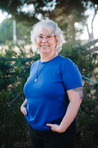
5 Questions for Anne Born
[image error]I’ve never met Anne Born in person. We met years ago online, when both of us were writing on a blogging site called The Red Room. Anne wrote a beautiful, spooky piece about looking for family graves in Ireland. I was thrilled to be able to reprint it on Cemetery Travel. You can check it out here.
Anne Born is an award-winning New York-based writer who has been writing stories and poetry since childhood. She blogs on The Backpack Press and Tumbleweed Pilgrim and her writing focuses on family and life in a big city after growing up in a small one. She is the author of A Marshmallow on the Bus, Prayer Beads on the Train, Waiting on a Platform, Turnstiles, and a contributor to the 2015 anthology, Love Her, Love Her Not: The Hillary Paradox, edited by Joanne Bamberger. She is also curator of The Late Orphan Project.
Anne is also a pilgrim on the Camino de Santiago. Her latest book is Buen Camino! Tips from an American Pilgrim, published by The Backpack Press in December 2017.
What inspired Buen Camino?
[image error]I’d been working on the book for about four years, off and on. I had the idea of writing about my experience walking the pilgrimage road, what it was like to become a pilgrim, what I had learned, but I couldn’t even get myself really interested in that spin. My spiritual journey? Nope. Too hippie for me – and I needed to write something that would be a book I would look at and buy. The solution actually came to me about a year ago while I was in Spain, on the very difficult Camino Primitivo, the original route to the Cathedral of Santiago de Compostela. I needed to give potential pilgrims the practical things I had learned. What good is it for me to learn how to do this if I can’t help other people? So it became tips. Tips for American pilgrims from a veteran American pilgrim. Well, and stories too because at heart, I am a storyteller. I figured it would make reading tips less dry.
What is your favorite scene in the book?
I have a very dear friend who lives in Spain. He writes wonderful, thorough, thoughtful travel guides to the various routes across Spain and he suggested I write a letter. A letter directed to my target audience of American pilgrims. So I added it last. It’s honest, it asks people not to be fearful about undertaking this adventure, and I tell people flat out why I wrote the book. I wrote the book I wished I’d had when I walked my first pilgrimage in 2009.
What was your writing process like as you wrote the book?
It was anguish and heartache and frustration – I guess like anything that’s worth doing. I would sketch out an outline and walk away from it for weeks. When I got back to it, I’d start in another notebook from scratch, never revisiting the one I’d done earlier. And I got nowhere fast. That’s really what took so long. I had this giant big huge idea of a book and couldn’t really get into the writing of it because I wanted to do it all. Then, I was having dinner with two friends up by Columbia University and I whined that I wasn’t getting any real writing done and the book was starting to languish. If only I had a place I could go, like a cabin in the woods out in the middle of bust-ass Pennsylvania or something. I wanted a place where I had nothing else to do but write – and my friend gave me her house for a weekend. I rented a car, drove to bust-ass, which is beautiful by the way, and I wrote 70% of the book over three days of nothing else to do. I sent a draft out to four readers a week later.
What was the best thing that happened during your promotion of the book?
I had never done travel writing of any kind before. I suppose it could be called my “Duh” moment, but it never occurred to me to do it. I have such tremendous respect for travel writers and I know some of the really good ones, so I never felt up to their level. Now I have this little guide and it really is geared toward the travel industry, meaning if you are planning to go to Spain to walk the Camino, this is the book you want to read. So I wrote to my friend who is a premier travel agent in Spain and I sent her a pdf of the book. She read it and wrote about it on her business website, she Tweeted about it, mentioned it on Facebook, and I was blown away.
I spent one whole Saturday night writing to a half-dozen more travel agents – all of whom offered tours of the camino or self-guided walk on the camino and I met some really lovely people – virtually – including one lovely woman who interviewed me and translated the English conversation into Spanish and then published them both. And when I was in Spain in April, I told the hotel I was staying at that I had mentioned them in the book as being “pilgrim-friendly” and they had a note on Facebook ten minutes later with a link to that Spanish interview. I never set out to advertise or promote to the travel industry, but the response I have gotten so far has been overwhelming.
What do you have planned next?
I am always writing poems and essays, journal entries, chronicles of life in the big city, but yes, I want to do more travel writing. I always like to write as if I am bringing you, the reader, along to the physical geographic place I am in right now. I love describing people and places so you, the reader, feel like you can see it too. I go lots of places by myself now that my children are grown and it’s a way to have some company. That’s my “Duh” moment. Why haven’t I been writing travel books all along? Well, I guess in many ways I have. Most of my work has been written on the subway or the NYC bus system.
Summary of Buen Camino: Tips from an American Pilgrim:
This is just the story of timid Anne from Niles, Michigan: a young girl who fell for the Camino, and the older lady who finally experienced it. The book is full of Camino de Santiago preparation essentials and the perfect companion to your walk! Not a guide book, no maps, not a step-by-step, no long-winded history — just lots of fun little stories and helpful tips from a veteran American pilgrim. Ideal for first-time pilgrims and anyone interested in traveling on The Way of Saint James. How to plan, where to stay, how to pack, what not to miss, and how to have a Buen Camino from the #littleoldladywalking!
You can get your own copy of the book here: https://amzn.to/2M2s2qS
Check out all of Anne’s books on her Amazon Author Page: https://amzn.to/2M3jzEe