
Janice Shefelman's Blog, page 4
July 3, 2011
An Illustration from Rough Sketch to Final Painting
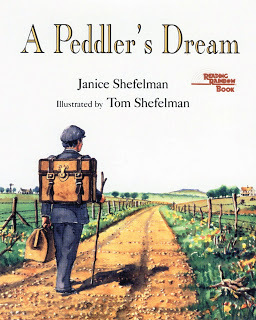
TOM: Our picture book, A Peddler's Dream, is the story of Solomon Joseph Azar who comes to Texas from Lebanon in the early 1900s to seek his fortune. He starts out as a peddler, traveling the country roads with items that farm families need, such as calico, ribbon, thread, lace, suspenders, and spices. But Solomon's dream is to have a store of his own in Austin.
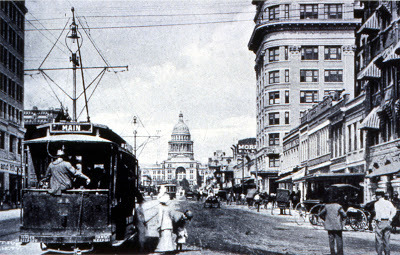
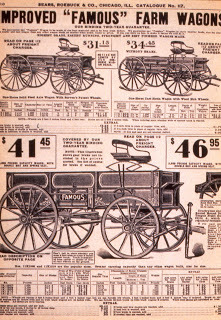
In order to draw I need visual references like these two, one of Congress Avenue in 1910, the other of a farm wagon out of a 1908 Sears Roebuck catalog.
Before beginning a full size sketch, I make a storyboard of thumbnail sketches of every scene in the book. This helps me see how illustrations flow from page to page.
Below is my first full size sketch of Solomon riding into Austin with a farmer who has befriended him.
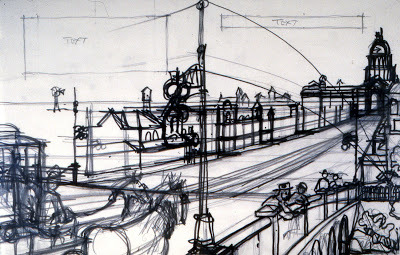 The next step is to tape this sketch to the glass top of my light table and lay another sheet of paper over it. Then I can make changes in the lines I can see through the paper, like this one.
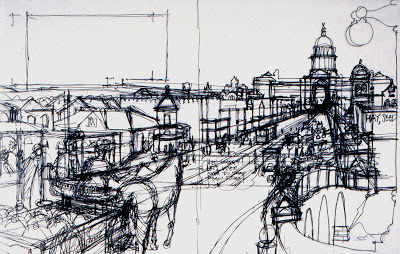 Here you can see that I changed the perspective angle and brought the farm wagon more into the picture.
Now a third drawing.
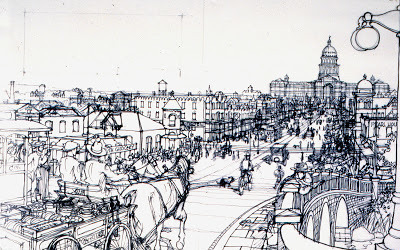 I have added more detail in this one. Since I like it, I go over the lines in ink. Then I lay a sheet of watercolor paper over this drawing. Even though it is thick the ink lines show through. I trace those lines in pencil, get out my watercolors and paint.
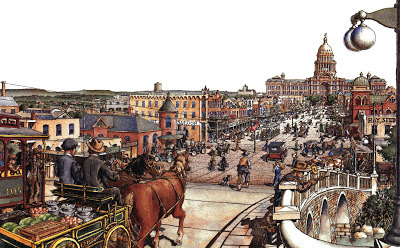

In order to draw I need visual references like these two, one of Congress Avenue in 1910, the other of a farm wagon out of a 1908 Sears Roebuck catalog.


Before beginning a full size sketch, I make a storyboard of thumbnail sketches of every scene in the book. This helps me see how illustrations flow from page to page.
Below is my first full size sketch of Solomon riding into Austin with a farmer who has befriended him.
 The next step is to tape this sketch to the glass top of my light table and lay another sheet of paper over it. Then I can make changes in the lines I can see through the paper, like this one.
 Here you can see that I changed the perspective angle and brought the farm wagon more into the picture.
Now a third drawing.
 I have added more detail in this one. Since I like it, I go over the lines in ink. Then I lay a sheet of watercolor paper over this drawing. Even though it is thick the ink lines show through. I trace those lines in pencil, get out my watercolors and paint.


June 1, 2011
Why I Write for Children
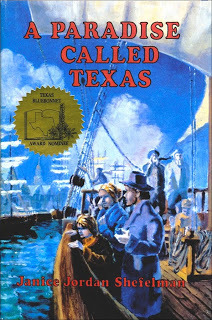
JANICE: Ever since I took a course in children's literature at Southern Methodist University, I have been in love with children's books. As a teacher my favorite part of the day was reading aloud to my fourth graders. Later, as a mother, I took joy in introducing our sons to all the best books. And finally I decided to try writing one myself, which became A Paradise Called Texas, a Texas Bluebonnet Award nominee.
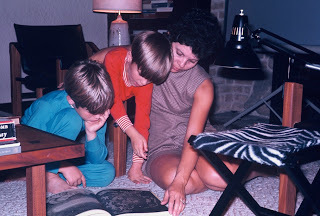
I write for children because their minds are open, willing to embrace new ideas. Thus a children's author bears the huge responsibility to be true to life experiences of love and loss, joy and sorrow, the past and present, and the cultures of the world. I love the challenge to get it right for young readers. They deserve our best which requires thorough research and careful rewriting. Here I am reading one of the best to my sons Karl and Daniel. Because of this book, D'Aulaires' Book of Greek Myths, they grew up loving Greek myths and still do. So do I.
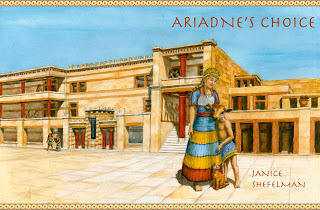
My latest novel, Ariadne's Choice, is based on the myth of the minotaur. While it is being considered at several publishing houses, Tom painted this proposed wraparound cover. May it be an editor's choice too!

I write for children because their minds are open, willing to embrace new ideas. Thus a children's author bears the huge responsibility to be true to life experiences of love and loss, joy and sorrow, the past and present, and the cultures of the world. I love the challenge to get it right for young readers. They deserve our best which requires thorough research and careful rewriting. Here I am reading one of the best to my sons Karl and Daniel. Because of this book, D'Aulaires' Book of Greek Myths, they grew up loving Greek myths and still do. So do I.

My latest novel, Ariadne's Choice, is based on the myth of the minotaur. While it is being considered at several publishing houses, Tom painted this proposed wraparound cover. May it be an editor's choice too!
April 9, 2011
Write What You DON'T Know . . .
BUT ARE PASSIONATE TO LEARN.
JANICE: The oldest advice for writers is to write what you know. Don't let yourself be limited by this advice. You can learn what you don't know. You can live other lives in other places in other times. How? By doing research, by reading about another time, another place, by visiting the place, by becoming another person. But you must be passionate.
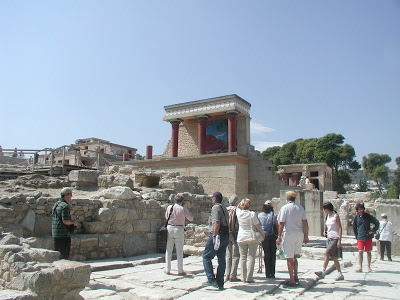
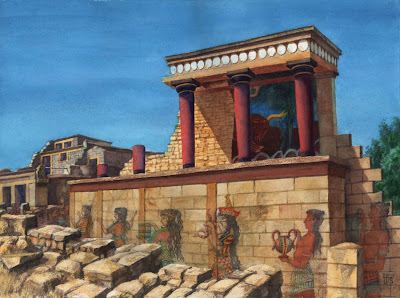
My work-in-progress, Ariadne's Choice, is mythical fiction set in Knossos three thousand years ago when King Minos, Queen Pasiphae, and Princess Ariadne lived in this palace. I have always written about the past, striving to make it come alive for young readers. But never have I tried to go this far back in time. The only way to connect to Knossos and the ancient Minoans is to go to Crete. And so Tom and I flew to Athens and took the night ferry to Heraklion, the major port and only a few miles from Knossos. Tom took this photograph of the north gate to the palace, and later made a watercolor painting he calls "Knossos Vision."
JANICE: The oldest advice for writers is to write what you know. Don't let yourself be limited by this advice. You can learn what you don't know. You can live other lives in other places in other times. How? By doing research, by reading about another time, another place, by visiting the place, by becoming another person. But you must be passionate.

My work-in-progress, Ariadne's Choice, is mythical fiction set in Knossos three thousand years ago when King Minos, Queen Pasiphae, and Princess Ariadne lived in this palace. I have always written about the past, striving to make it come alive for young readers. But never have I tried to go this far back in time. The only way to connect to Knossos and the ancient Minoans is to go to Crete. And so Tom and I flew to Athens and took the night ferry to Heraklion, the major port and only a few miles from Knossos. Tom took this photograph of the north gate to the palace, and later made a watercolor painting he calls "Knossos Vision."

March 18, 2011
Viva Picture Book Biographies!
JANICE: The March/April issue of Horn Book, "Fact, Fiction, and In Between," grabbed my attention and did not let go until I read it through. The combination of fact and fiction is my beloved territory for both reading and writing.
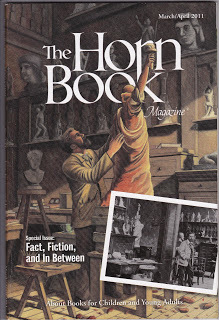
The article, "What Makes a Good Picture Book Biography?" by Viki Ash and Thom Barthelmess was of special interest to me. Admittedly I am disappointed that our picture book, I, Vivaldi, was not one of the examples. However, I am consoled by the fact that 12,500 children chose it as a 2008 International Reading Association Children's Choices book. Like Margarita Engle in Summer Birds, I told the story in first person which enabled me to express my passion for the music Vivaldi wrote.
Meanwhile Tom studied Canaletto's paintings among others in his research. Thus, when a Kirkus reviewer said, "Giving Canaletto a run for his money, the illustrator sets expressive, natural-looking figures against golden-toned backdrops of 17th-century Venice's rich interiors, splendid vistas, opulent churches and serene canals," Tom was wowed.
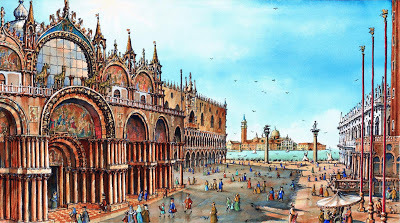
** Basilica San Marco, Venice, by Tom Shefelman — From I, Vivaldi **

The article, "What Makes a Good Picture Book Biography?" by Viki Ash and Thom Barthelmess was of special interest to me. Admittedly I am disappointed that our picture book, I, Vivaldi, was not one of the examples. However, I am consoled by the fact that 12,500 children chose it as a 2008 International Reading Association Children's Choices book. Like Margarita Engle in Summer Birds, I told the story in first person which enabled me to express my passion for the music Vivaldi wrote.
Meanwhile Tom studied Canaletto's paintings among others in his research. Thus, when a Kirkus reviewer said, "Giving Canaletto a run for his money, the illustrator sets expressive, natural-looking figures against golden-toned backdrops of 17th-century Venice's rich interiors, splendid vistas, opulent churches and serene canals," Tom was wowed.

** Basilica San Marco, Venice, by Tom Shefelman — From I, Vivaldi **
January 2, 2011
Home and Work Are Here
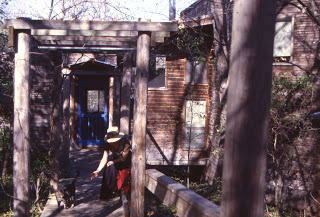
JANICE: We live in a playful tree house designed by my architect, Tom. It is made of cedar and glass and perches on the edge of a bluff overlooking Shoal Creek greenbelt, thus the name Shoal Creek Studios. Even though our house is in central Austin, it feels like we are in the country. Here is the garden gate entrance, and I am welcoming you to come in.
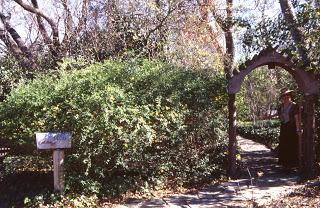
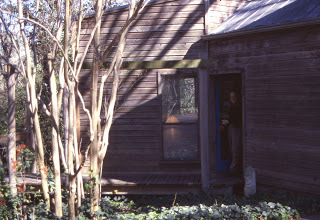
We walk down a brick path to Tom's studio. Our house is in two parts, the Little House and the Big House. Tom's studio is in the Little House. Here he is inviting us inside.
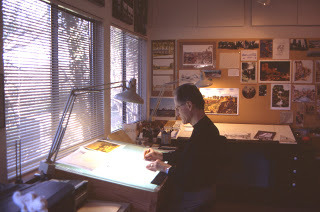
Then we watch him working at his light table. He makes a first rough sketch of an illustration, lays another sheet of paper over it and makes a more detailed drawing over the lines he can see through the paper.
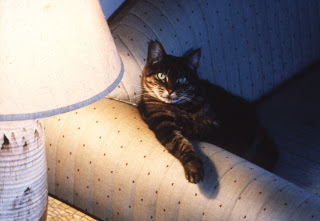
Our cat Sally used to watch him and sometimes sat on his illustrations!
Now let's walk across the bridge to the Big House where we live and I have my studio.
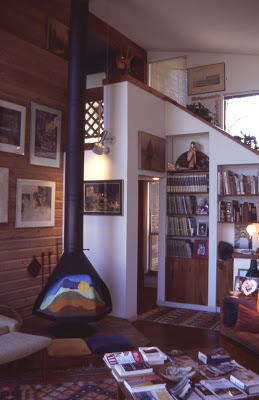
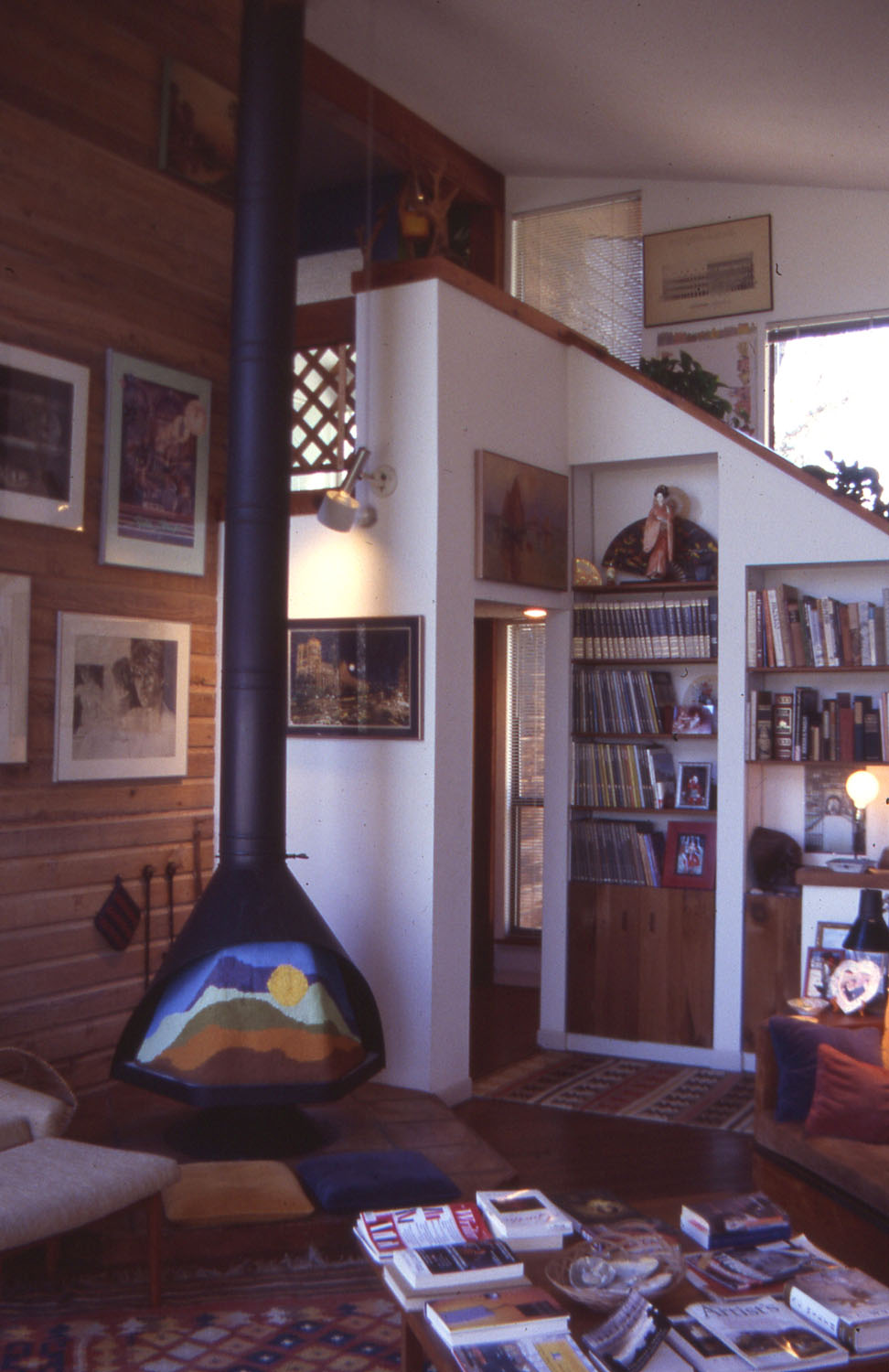
We go through the blue door into the living room. There are many windows, especially in this two-story space. When the moon is full, we can watch it rise from the horizon to the top of the night sky. The walls are covered with paintings by family members, Tom, our sons Karl and Daniel, and Tom's mother Madolene. I am the only one who paints with words.
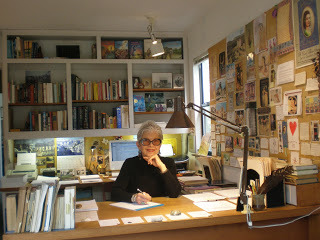
I love my studio. It is sunny and spacious and holds three desks plus a couch. The walls are lined with bookshelves except for one that is covered with images I gather during research. These help me visualize as I write.
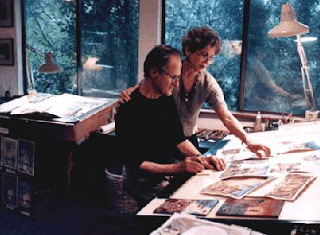
We have always worked together and find it stimulating and occasionally maddening! We bounce ideas back and forth and come up with concepts that neither would have thought of by ourselves. I have mental images of scenes and often make stick figure drawings that Tom turns into something alive. And sometimes I change my words to reflect his illustration because he has a better idea. We wouldn't have it any other way.

We walk down a brick path to Tom's studio. Our house is in two parts, the Little House and the Big House. Tom's studio is in the Little House. Here he is inviting us inside.

Then we watch him working at his light table. He makes a first rough sketch of an illustration, lays another sheet of paper over it and makes a more detailed drawing over the lines he can see through the paper.

Our cat Sally used to watch him and sometimes sat on his illustrations!

Now let's walk across the bridge to the Big House where we live and I have my studio.

We go through the blue door into the living room. There are many windows, especially in this two-story space. When the moon is full, we can watch it rise from the horizon to the top of the night sky. The walls are covered with paintings by family members, Tom, our sons Karl and Daniel, and Tom's mother Madolene. I am the only one who paints with words.
I love my studio. It is sunny and spacious and holds three desks plus a couch. The walls are lined with bookshelves except for one that is covered with images I gather during research. These help me visualize as I write.

We have always worked together and find it stimulating and occasionally maddening! We bounce ideas back and forth and come up with concepts that neither would have thought of by ourselves. I have mental images of scenes and often make stick figure drawings that Tom turns into something alive. And sometimes I change my words to reflect his illustration because he has a better idea. We wouldn't have it any other way.

October 29, 2010
Embrace E-Books
JANICE: The new world of reading is going to be okay. After all, we humans made the transition from scrolls and palm leaves. Yet there is a difference this time. With scrolls and palm leaves we gave them up for another tactile object — a bound book. I am not willing to give up books that I can feel, but I embrace another way to read as well. There is a time and place for both.
Two experiences lately warmed my heart to the new medium. Last month at a concert of baroque music I sat next to a woman reading Patti LuPone's memoir on a Kindle while we waited for the concert to begin. She was savoring the past and the future in a lovely way, and it gave me heart. We don't have to abandon the past to embrace the future.
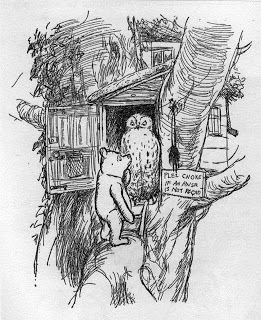
A few days ago I was sitting in a dentist's chair fearing the possible pain. While the novocain took effect, my lovable (yes) dentist distracted me with his new iPad. He showed me one of the free books that came with it, Winnie the Pooh — in the original version illustrated by Ernest Shepard! The book that set me on the path of writing for children. I fell in love with e-readers and felt no pain.
— Illustration by Ernest Shepard from Winnie the Pooh —
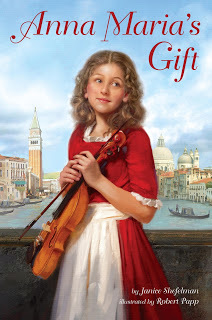
And now Anna Maria's Gift, my latest, is available as a bound book or an e-book. Read whichever one you please. Just read!
Two experiences lately warmed my heart to the new medium. Last month at a concert of baroque music I sat next to a woman reading Patti LuPone's memoir on a Kindle while we waited for the concert to begin. She was savoring the past and the future in a lovely way, and it gave me heart. We don't have to abandon the past to embrace the future.
A few days ago I was sitting in a dentist's chair fearing the possible pain. While the novocain took effect, my lovable (yes) dentist distracted me with his new iPad. He showed me one of the free books that came with it, Winnie the Pooh — in the original version illustrated by Ernest Shepard! The book that set me on the path of writing for children. I fell in love with e-readers and felt no pain.

— Illustration by Ernest Shepard from Winnie the Pooh —
And now Anna Maria's Gift, my latest, is available as a bound book or an e-book. Read whichever one you please. Just read!

October 26, 2010
Picture Books vs. Chapter Books
Dear Parents,
Let's not give up picture books in favor of word books. Children need glorious images that go with printed words. Those images will make the words unforgettable. Ideally, we want to raise children who are both verbally and visually educated, and picture books do both. Here are some examples of why picture books are a vital way to learn about the world.
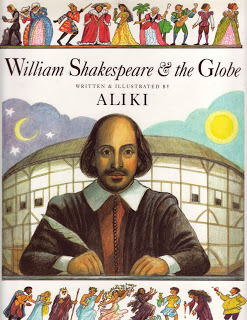
Do you want your child to be interested in Shakespeare? Then you need this book. Even parents will learn something.
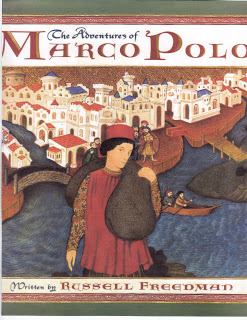
How about Marco Polo and his journey? This book has lots of words with illustrations both new and ancient that you and your child will never forget.
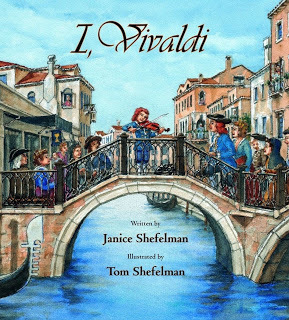
And finally, I cannot resist our own picture book biography of Antonio Vivaldi. This book along with a CD of Vivaldi's music make the composer come to life.
Happy reading and looking,
Janice
Let's not give up picture books in favor of word books. Children need glorious images that go with printed words. Those images will make the words unforgettable. Ideally, we want to raise children who are both verbally and visually educated, and picture books do both. Here are some examples of why picture books are a vital way to learn about the world.
Do you want your child to be interested in Shakespeare? Then you need this book. Even parents will learn something.

How about Marco Polo and his journey? This book has lots of words with illustrations both new and ancient that you and your child will never forget.

And finally, I cannot resist our own picture book biography of Antonio Vivaldi. This book along with a CD of Vivaldi's music make the composer come to life.

Happy reading and looking,
Janice
September 10, 2010
Our Favorite Children's Books
JANICE: These are books that I love to read over and over and that teach me how to write. You will notice that all are historical novels or adaptations of ancient tales, because that is what I love to write. The best way to learn how to write is to read what you want to write.
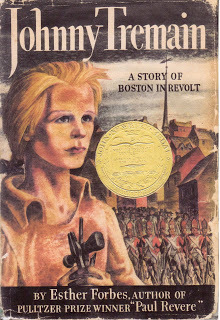
In Johnny Tremain Esther Forbes' characters leap off the page and into your life. Even the baby in the cradle and the horse Johnny rides have character. How does the author do it? By both showing and telling and by giving each one a backstory, including the baby and the horse. Johnny is an apprentice silversmith living in the home of his master with two other apprentices. In the opening scene the mistress of the house has called the boys to get up in the morning. Here is how Esther Forbes introduces him:"Johnny Tremain was on his feet. He did not bother to answer his mistress. He turned to the fat, pale, almost white-haired boy still wallowing in bed.'Hear that, Dove?'"
Already we know that Johnny is an energetic, bossy boy who knows his own worth.
As for backstory, Forbes lets Johnny tell his master's daughter after she says:
"'You never speak of your mother, Johnny. She hadn't been dead more'n a few weeks when you first came here.'"
There follows a heartfelt story of his mother and how he came to be an apprentice.
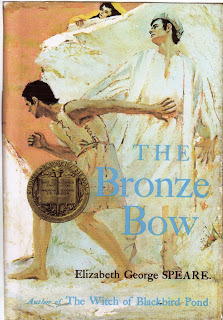
The Bronze Bow has the most magnificent ending of any book, either for children or adults, that I have ever read. Daniel Bar Jamin wants only to rid Israel of the Romans to revenge the death of his parents and the resulting illness of his sister. His hatred consumes him and he joins an outlaw band. At that time there was a Rabbi in Capernaum teaching love. Daniel resists until Jesus heals his sister and opens his eyes. Much to Daniel's rage, she had fallen in love with a Roman soldier who was being sent back to Rome. Here, in part, is the final scene:"(Daniel) flung himself out the doorway - and stopped.
Across the street the Roman soldier stood alone under the broiling sun.
Haltingly, Daniel walked, not after Jesus, but across the road, till he stood before the boy. He had to try twice before the words would come. "My sister will get well," he said, his voice harsh. "The fever has left her...I think she would want to say good-bye to you...Will you come into our house?"
Here is total character transformation. Thrilling!
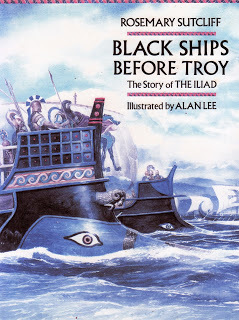
Rosemary Sutcliff adapted The Iliad and The Odyssey, and, in my opinion, outdid Homer, with lots of help from the illustrator, Alan Lee, who is also an inspiration to Tom. Sutcliff is best known for her historical novels set in Roman Britain, notably Eagle of the Ninth, another favorite of mine. In all her writing she brings ancient times to full life.
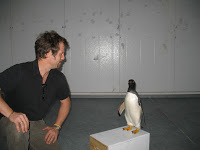
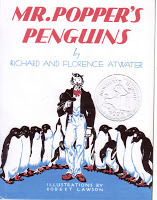
TOM: Mr. Popper's Penguins is my current favorite. I just read it for the first time because our son Karl is the storyboard artist for a film that starts shooting in October, starring Jim Carey as Mr. Popper and many penguins. W.C. Fields once said, "Never work with children or animals," but he didn't know Jim Carey! Here's Karl, meeting the talent.
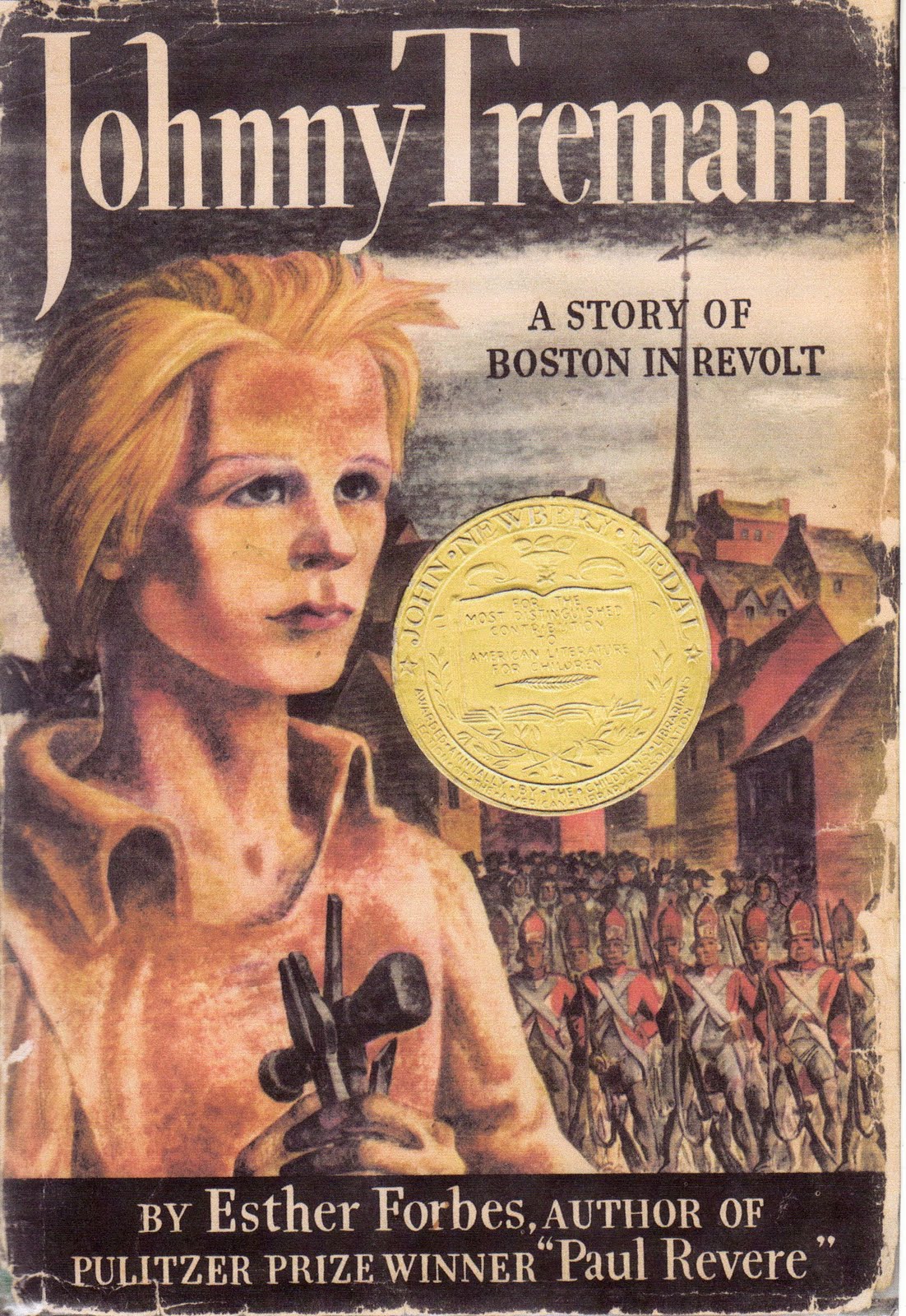
In Johnny Tremain Esther Forbes' characters leap off the page and into your life. Even the baby in the cradle and the horse Johnny rides have character. How does the author do it? By both showing and telling and by giving each one a backstory, including the baby and the horse. Johnny is an apprentice silversmith living in the home of his master with two other apprentices. In the opening scene the mistress of the house has called the boys to get up in the morning. Here is how Esther Forbes introduces him:"Johnny Tremain was on his feet. He did not bother to answer his mistress. He turned to the fat, pale, almost white-haired boy still wallowing in bed.'Hear that, Dove?'"
Already we know that Johnny is an energetic, bossy boy who knows his own worth.
As for backstory, Forbes lets Johnny tell his master's daughter after she says:
"'You never speak of your mother, Johnny. She hadn't been dead more'n a few weeks when you first came here.'"
There follows a heartfelt story of his mother and how he came to be an apprentice.

The Bronze Bow has the most magnificent ending of any book, either for children or adults, that I have ever read. Daniel Bar Jamin wants only to rid Israel of the Romans to revenge the death of his parents and the resulting illness of his sister. His hatred consumes him and he joins an outlaw band. At that time there was a Rabbi in Capernaum teaching love. Daniel resists until Jesus heals his sister and opens his eyes. Much to Daniel's rage, she had fallen in love with a Roman soldier who was being sent back to Rome. Here, in part, is the final scene:"(Daniel) flung himself out the doorway - and stopped.
Across the street the Roman soldier stood alone under the broiling sun.
Haltingly, Daniel walked, not after Jesus, but across the road, till he stood before the boy. He had to try twice before the words would come. "My sister will get well," he said, his voice harsh. "The fever has left her...I think she would want to say good-bye to you...Will you come into our house?"
Here is total character transformation. Thrilling!
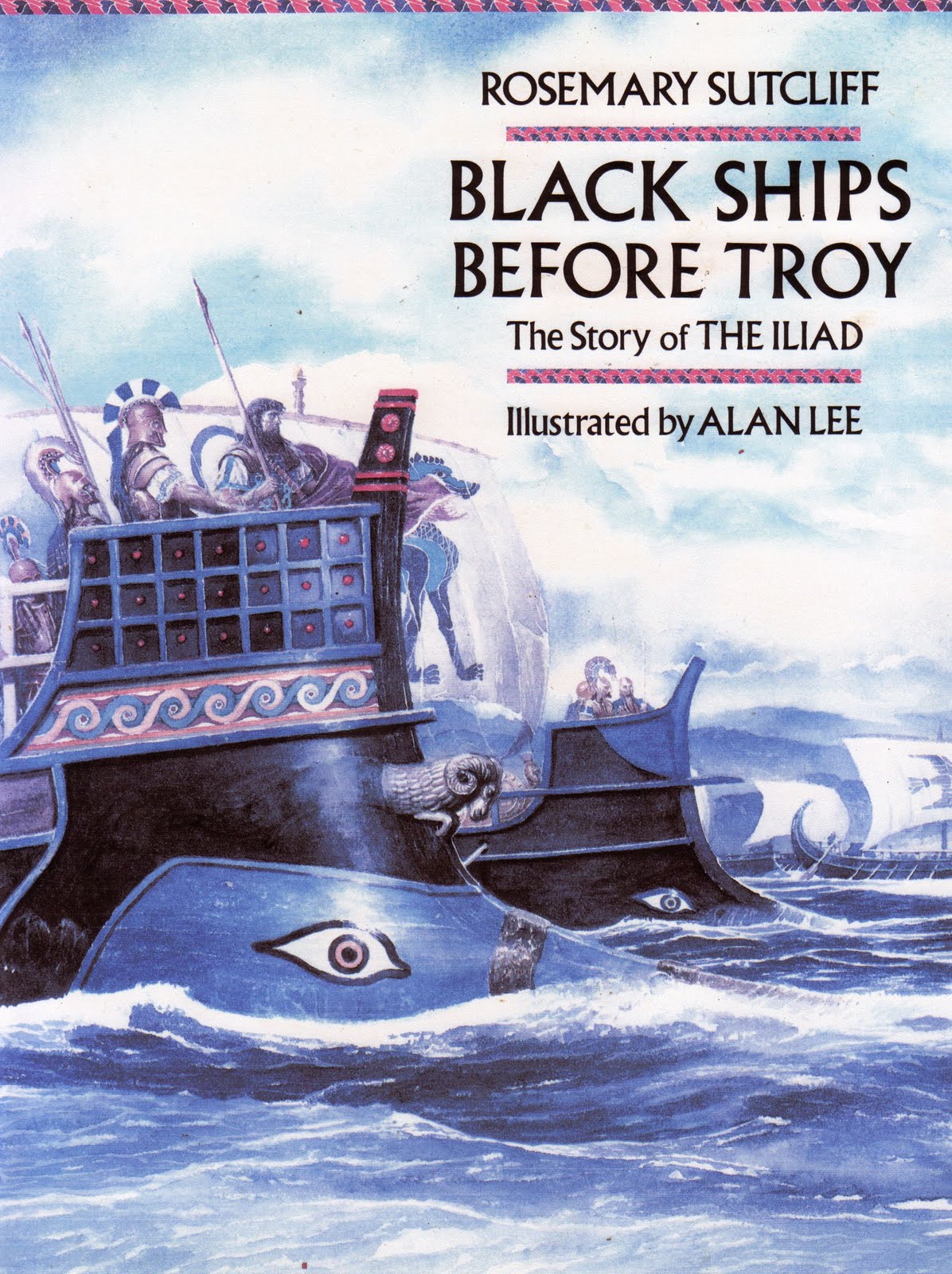
Rosemary Sutcliff adapted The Iliad and The Odyssey, and, in my opinion, outdid Homer, with lots of help from the illustrator, Alan Lee, who is also an inspiration to Tom. Sutcliff is best known for her historical novels set in Roman Britain, notably Eagle of the Ninth, another favorite of mine. In all her writing she brings ancient times to full life.


TOM: Mr. Popper's Penguins is my current favorite. I just read it for the first time because our son Karl is the storyboard artist for a film that starts shooting in October, starring Jim Carey as Mr. Popper and many penguins. W.C. Fields once said, "Never work with children or animals," but he didn't know Jim Carey! Here's Karl, meeting the talent.
September 5, 2010
How Shakespeare's Arrow Pierced the Heart of a Comanche Boy
JANICE: If you want to know how Shakespeare shot an arrow that pierced the heart of a young Comanche boy in Texas, then read Comanche Song (Eakin Press). This story was born out of our sons' love for finding arrowheads on my father's Blue Mountain Ranch in central Texas. Doing some research, I discovered that the Indians who once lived there were Penateka Comanches, the band involved in the Council House Massacre and the Battle of Plum Creek during 1840. Since these two clashes between Texans and Comanches had never been told from the Comanche point of view, I wanted to tell it through the eyes of Tsena, son of a peace chief who was killed in the massacre.
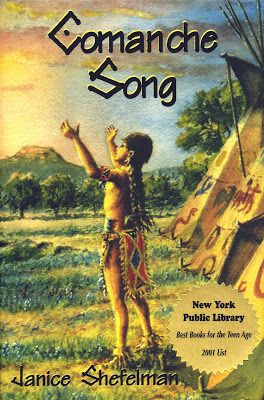
Here is Tom's beautiful cover.
My habit when looking for a good book is to read the first paragraph. Am I hooked or not? So here is the first paragraph of the novel:
"It was white man's year of 1840. Tsena ducked out of his lodge and stood looking across the ravine to the hills beyond. He could not know that it was also the year white man would change his life forever. No one in the village could know."
Are you hooked? I hope so. This book was chosen by the New York Public Library for its list of Best Books for the Teen Age.
Now about Shakespeare's arrow: When Tsena accompanies his father and other chiefs to a council with Texans in San Antonio, the negotiations turn violent. He is suddenly cast into white man's world where he learns about a new way of life and glimpses the power of the written word, especially Shakespeare's words. To learn more, visit your local library or our website: shefelmanbooks.com
Here is Tom's beautiful cover.

My habit when looking for a good book is to read the first paragraph. Am I hooked or not? So here is the first paragraph of the novel:
"It was white man's year of 1840. Tsena ducked out of his lodge and stood looking across the ravine to the hills beyond. He could not know that it was also the year white man would change his life forever. No one in the village could know."
Are you hooked? I hope so. This book was chosen by the New York Public Library for its list of Best Books for the Teen Age.
Now about Shakespeare's arrow: When Tsena accompanies his father and other chiefs to a council with Texans in San Antonio, the negotiations turn violent. He is suddenly cast into white man's world where he learns about a new way of life and glimpses the power of the written word, especially Shakespeare's words. To learn more, visit your local library or our website: shefelmanbooks.com


