Mark Sarvas's Blog, page 13
October 12, 2010
NOTA BENE: A SPORT AND A PASTIME
"Autun, still as a churchyard. Tile roofs, dark with moss. The amphitheatre. The great, central square: the Champ de Mars. Now, in the blue of autumn, it reappears, this old town, provincial autumn that touches the bone. The summer has ended. The garden withers. The mornings become chill. I am thirty, I am thirty-four - the years tune dry as leaves."
- A Sport and A Pastime, James Salter
(Merci a Lauren C.)


October 11, 2010
"I SHALL LEAVE THE SUBJECT THERE"
Regular readers of this site know that I'm utterly addicted to writers' letters (so much so that I've just added a new category - Writers' Letters). I find them endlessly fascinating, even when the author's work is especially well known to me. I'm not sure what it is - perhaps the universality of the struggle to write; the idea that the blank page could undo even the giants; or perhaps it's simply the mundane business of being a writer, something that helpfully disabuses me of any notions of the "glamor" of the creative act.
At any rate, it's early Christmas here at TEV as two superb-looking collections hit my doorstep. The first one - Elizabeth Bishop and The New Yorker: The Complete Correspondence - isn't going to be published until February, so it seems a bit unfair to talk too much about it now. Though I will say I am struck by how much of the early back and forth is taken up with numerous rejections of Bishop's poems, this despite her having been regularly asked to send new material. The frustration is expressed on both sides - the editors' and Bishop's - but the persistance obviously paid off in the end. I'll excerpt some of these as the publication date nears.
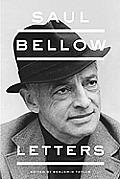 The other volume is Saul Bellow: Letters, published next month by Viking. The collection represents two-fifths of his correspondence and Bellow pretty well wrote to everyone, as you can imagine. I'm spending my Sunday (and probably much of my Monday and Tuesday and Wednesday) with Bellow, but here's an early eye-catcher:
To Bernard Malamud, May 10, 1959, Minneapolis
Dear Bern,
I shy away from all writers' organizations. The PEN is about my limit, and I have doubts about that. No doubt the [Authors] League is fine, but the publisher and the agent aren't the enemy. The enemy (and I'm not horribly hostile towards them, either) is a hundred and sixty million people who read nothing. What's the League going to do about them, about Orville Prescott, about TV and Hollywood? It may increase my income by six hundred per annun. I don't care about increasing my income by six hundred per annum. It is isn't worth joining an organization for. [ ...]
And this is an excerpt from a 1996 letter to James Wood, thanking him for various kind reviews in The New Republic:
I had, as a fanatical or enrage reader, studies over many decades gallery after gallery of old men in novels and plays and I thought I knew all about them. But to be one is full of surprises. Let me see: There is Oedipus at Colonus, there is the old sculptor of Ibsen's When We Dead Awaken, there is, of course, King Lear, and also Duncanin Macbeth and Polonius in Hamlet, and there are Jonathan Swift's Struldbruggs - the repulsive and unkillable old, there is old Prince Bolkonsky in War and Peace, there is Father Zossima in The Brothers K, there is Gerontion, and Yeats in his final years. But all of this business about crabbed age and youth tells you absolutely nothing about your own self. I shall leave the subject there. I can't even begin to say what it's really like.
More excerpts to follow, if I can tear myself away ...
October 8, 2010
CELL STORIES
Cellstories.net is a new venture which delivers a new story daily to your mobile device. It's the first site I know of that is exclusively intended for handheld use. If you visit with your computer browser, all you will see is this fine introduction, but if you point your iPhone, Blackberry, Droid or other mobile browser there, you will get a new story daily.
This Monday, they will be running an essay of mine that I originally contributed last year to the journal of the Nexus Institute. The essay was translated into Dutch, so this is the first time it appears in English. The contributors were all asked to describe "My Arcadia," and my entry began thus:
I write these words looking out across the Monterey Bay from my vantage point in the sitting room of a small inn in Pacific Grove, a tiny American town best known as the winter home of the Monarch Butterfly (Danaus plexippus), which migrates here in the tens of thousands in late autumn, and which it is illegal to kill or capture, a crime punishable by a fine of $1,000. This bay, with its rocky promontories and crisp sea air, has been a favorite escape of mine since I first visited here in the 1980s. It is, in many ways, a cliché of small town America – the downtown area (which stretches about a half-dozen blocks across Lighthouse Avenue) allows no chain stores, there's not a Starbucks in sight. A single movie theatre serves Pacific Grove's 15,000 residents. I drive up here often to write, to think, to escape the pell-mell dissonance of Los Angeles, and never fail to leave invigorated, inspired, ready to get to work.
You will be able to reader the entire essay, which includes references to John Steinbeck, Poussin and Barack Obama, on Monday at Cellstories.net. From your phone, of course.
IMAGINE THAT
Google jumps the gun by one day, but it's worth pausing to note that John Lennon would have been 70 tomorrow.
L.A. EVENT - JOSEPH O'NEILL **RECOMMENDED**
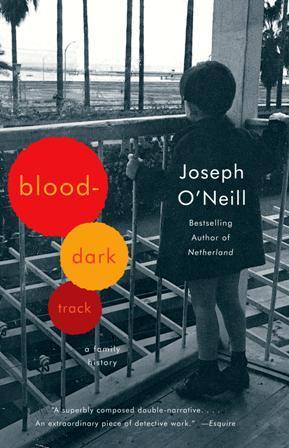 Joseph O'Neill's first two novels are very much works in progress, a writer on his way to finding his voice. But his memoir Blood-Dark Track - which has just been reissued by Viking - is identifiably the work of the author of Netherland. This marvelous author - previously interviewed here at length - will be in L.A. next week to discuss his memoir as part of the LAPL Aloud Series. He'll be in conversation with the estimable David Kipen, who is always good at this sort of thing. Highly recommended.
October 7, 2010
NOBEL PRIZE ANNOUNCED
The Nobel Prize for Literature has gone to Mario Vargas Llosa. (MOTEV will be pleased.)
The prize is the first for a writer in the Spanish language in two decades, after Mexico's Octavio Paz won the Nobel in 1990, and focuses new attention on the Latin American writers who gained renown in the 1960s, like Julio Cortazar of Argentina and Carlos Fuentes of Mexico, who formed the region's literary "boom generation."
In an interview with The Times in 2002, Mr. Vargas Llosa said that it was the novelist's obligation to question real life. "I don't think there is a great fiction that is not an essential contradiction of the world as it is," he said. "The Inquisition forbade the novel for 300 years in Latin America. I think they understood very well the seditious consequence that fiction can have on the human spirit.'"
Seriously - has Ladbroke's ever gotten this call right? They haven't since I've been paying attention.
October 6, 2010
L.A. EVENT - PARIS REVIEW AT BOOK SOUP **RECOMMENDED**
Lorin Stein, the new editor of the Paris Review, will be chatting with David Ulin Saturday night at Book Soup. Sounds fun. Hope to see you there. Details here.
October 4, 2010
GIVE 'EM WHAT THEY WANT?
I found Michael Cunningham's Sunday essay, "Found in Translation", an oddly incoherent and disjointed affair. At a minimum, the metaphor of translation - stretched to include, in Cunningham's view, a compact between reader and writer - feels strained to the breaking point. The whole thing reads very much as though Cunningham had two separate pieces in mind - one on the finer points of translation, and one on the writer's audience - and lumped them together, conjoined uneasily like Siamese twins of different parents. Here's where he stitches them together:
A translator is also translating a work in progress, one that has a beginning, middle and end but is not exactly finished, even though it's being published. A novel, any novel, if it's any good, is not only a slightly disappointing translation of the novelist's grandest intentions, it is also the most finished draft he could come up with before he collapsed from exhaustion. It's all I can do not to go from bookstore to bookstore with a pen, grabbing my books from the shelves, crossing out certain lines I've come to regret and inserting better ones. For many of us, there is not what you could call a "definitive text."
This brings us to the question of the relationship between writers and their readers, where another act of translation occurs.
It doesn't actually bring us to any question of the kind, other than Cunningham's assuring us that it does. But if awkward transition was the worst of the essay's sins, it wouldn't merit mention here. My real problems with the piece are found in its second half, which reads like an all-too-familiar anti-intellectual broadside, which is surprising considering the source. I'm not deeply familiar with his work, but from what I have read, Cunningham can be artful and subtle. Hence my disquiet.
He relates the tale of a former co-worker, a Laguna Beach restaurant hostess named Helen whom he describes as an avid reader. He goes on to say:
She was, when we met, reading a trashy murder mystery, and I, as only the young and pretentious might do, suggested that she try Dostoyevsky's "Crime and Punishment," since she liked detective stories.
I find this kind of condescension breathtaking. I think the implication that because a reader enjoys genre reading, the likes of Dostoyevsky might be beyond her and it's "pretentious" to recommend it, is a repugnant one. Cunningham's essay is essentially a plea to "give the reader what she wants" but he seems intent on keeping readers within the narrow bands of their existing interests, giving them very little credit.
There's more inverted snobbery in the next paragraph, where Cunningham says, "I did like, very much, that Helen had no school-inspired sense of what she was supposed to enjoy more, and what less." Again, Cunningham seems to suggest that one would only prefer Dostoyevsky to Turow if some mean-spirited English professor somewhere brainwashed that preference into the helpless student intent on a good yarn. But, if we accept that literature is work that stands the test of time, does Cunningham imagine Turow will still be read a hundred years from now? And that Dostoyevsky will not? He goes on to say:
Helen was, clearly, not reading the same "Crime and Punishment" I was. She wasn't looking for an existential work of genius. She was looking for a good mystery, and she read Dostoyevsky with that thought in mind.
That may be, but must what she was "looking for" stand in the way of what she might find? Does Cunningham really believe that there's no need to reach beyond "give 'em what they want"? Everyone who reads so-called "serious" fiction has made just such a leap at a key moment in their lives, when their taste evolved beyond the consolations of narrative, when a special book showed them just what great writing could do. Why does he seem to begrudge Helen this moment? (For that matter, who actually looks for "an existential work of genius"?)
But what finally strikes me as most foolish and wrong-headed about this essay is this:
... She simply needed what any good reader needs: absorption, emotion, momentum and the sense of being transported from the world in which she lived and transplanted into another one.
I began to think of myself as trying to write a book that would matter to Helen.
This is troubling on a few fronts. First, to chase an imagined reader seems to me a fool's errand. People today read less, and less carefully, than ever before - Helen's tastes are clearly of her time - and if a future writer decides to write for a Helen twenty years from now, isn't it entirely possible said author would surrender in despair? This is, I suppose, where reasonable minds can disagree, but I think given the choice of attempting to write for the ages or attempting to write for Oprah, I will pick the ages, though I'm aware that represents its own kind of snobbery.
But the real false dichotomy here is the implication throughout that novels can't do both. And to present this argument that there's a Helen Book, which is somehow distinct in its potential from any great piece of literature, feels like a shallow proposition to me. It's the same kind of false either/or that Zadie Smith has made the case for, that novels can apparently only do one thing. I think it borders on willful naivete to say that a great and lasting work can be written to fit the demands of a Scott Turow fan. But a literary novel can provide all the consolations that Cunningham says Helen seeks - while it slips the bonds of convention and offers something greater still.
Anyway, as I tell my students, you must, can only, write for yourself. It doesn't mean you give license to your every self-indulgent impulse; but the moment you begin to write to someone else's expectation, the work is stillborn. Readers will know. They always do. That's my story, and I'm sticking to it.
Michael Cunningham will be at Vromans Bookstore in Pasadena on October 11 to discuss his new novel, By Nightfall.
October 2, 2010
THE WILDING
I quite concur with David Abrams' warm assessment of Benjamin Percy's debut novel The Wilding. Writing for the Barnes and Noble review, Abrams says:
The Wilding wraps its arms around some big themes: the vanishing wilderness, a dissolving marriage, and the shell-shocked re-adjustment to domestic life after combat. It's a lot to pack into 250 pages, but Percy manages to do it with remarkable ease. His sentences have the simplicity and beauty of Shaker furniture, but he also writes meaty action scenes that never feel like they depart from the book's emotional core. No matter if we're facing danger in the jungles of Manhattan or the deep woods of Oregon, life really boils down to two questions: Will we live? and Will it hurt when I die? Percy takes his characters right up to the edge and forces them to stare, hard, into the maw of the mystery any attempt to answer them reveals.
I met Percy, after corresponding with him on and off for years, when we both taught in Nebraska earlier this year. I read his book prior to meeting him, hopeful I would like it, which I did (thankfully). I was also struck - as was Abrams - by Percy's quiet authority writing about the natural world, being as much a creature of cities as I am, both in life and in my reading. He also writes with real insight about fathers and sons, a subject of more than passing interest these days ...
The Wilding is excerpted in the current issue of Tin House, but sadly not online.
October 1, 2010
COMPARE AND CONTRAST: FREEDOM
The reckoning begins at home. Just as the complacent upright parents in Philip Roth's "American Pastoral" see their world capsized by their own children, who become militant leftists, so the Berglunds inadvertently have bred a native rebel, their son, Joey. Bright, handsome, personable, preternaturally adept at getting his way, all thanks to his doting mother, he defies her by moving next door to live with the enemy, the disheveled right-wing household where the chainsaw tree-murderer cohabits with a blowzy single mother and her blameless teenage daughter, who worships Joey and showers love on Patty — or would if only Patty didn't coldly rebuff her.
This idyll, related with brilliant economy, establishes the themes explored over the course of a narrative that moves at once backward, forward, inward and outward — with hypnotic force and with none of the literary flourishes that faintly marred "The Corrections." The Berglunds, introduced as caricatures, gradually assume the gravity of fully formed people, not "rounded characters," in the awful phrase, but misshapen and lopsided, like actual humans.
One opens a new novel and is promptly introduced to some dull minor characters. Tiring of them, one skims ahead to meet the leads, only to realize: those minor characters are the leads. A common experience for even the occasional reader of contemporary fiction, it never fails to make the heart sink. The problem is not only one of craft or execution. Characters are now conceived as if the whole point of literature were to create plausible likenesses of the folks next door. They have their little worries, but so what? Do writers really believe that every unhappy family is special? If so, Tolstoy has a lot to answer for—including Freedom, Jonathan Franzen's latest. A suburban comedy-drama about the relationship between cookie-baking Patty, who describes herself as "relatively dumber" than her siblings; red-faced husband Walter, "whose most salient quality … was his niceness"; and Walter's womanizing college friend, Richard, who plays in an indie band called Walnut Surprise, the novel is a 576-page monument to insignificance.
Granted, nonentities are people too, and a good storyteller can interest us in just about anybody, as Madame Bovary demonstrates. But although the narrator of Freedom tells us on the first page, "There had always been something not quite right about the Berglunds," one need read only that the local school "sucked" and that Patty was "very into" her teenage son, who in turn was "fucking" the girl next door, to know that whatever is wrong with these people does not matter. The language a writer uses to create a world is that world, and Franzen's strenuously contemporary and therefore juvenile language is a world in which nothing important can happen. Madame Bovary's marriage sucked, Heathcliff was into Catherine: these words fail the context not just because they are of our own time. There is no import in things that "suck," no drama in someone's being "into" someone else. As for the F word, Anthony Burgess once criticized the notion that to use it in matter-of-fact prose is to hark back to "a golden age of Anglo-Saxon candour"; the word was taboo from the start, because it stands for brutal or at best impersonal sex. "A man can fuck a whore but, unless his wife is a whore, he cannot fuck his wife … There is no love in it." A writer like Franzen, who describes two lovers as "fucking," trivializes their relationship accordingly. The result is boredom.
Obviously, Freedom was the dominant point of literary conversation during my hiatus. Despite my having been mentioned in the tediously predictable Weiner/Picoult cage match, I found nothing in that debate sufficiently new or interesting enough to require comment. (Although if Jennifer Weiner really thinks In Her Shoes merits the kind of critical attention Freedom has received, I'm not the idiot.) Meghan O'Rourke offered the smartest and most elegant closing word on that front.
As for the book itself, I can only offer this. I read the first 50 pages of a galley on an LA/NY flight, lost interest, and set it aside. I actually managed to leave it behind on the flight. It felt (at the outset) like another unpleasant tour of yuppie entitlement. I've never much cared for Franzen's characters, but more seriously, I'm left feeling he doesn't care very much for them either. Having read The Corrections once, I wasn't feeling compelled to read it again, and had more or less dismissed the book from my attention, until the thoughtful Tanenhaus review, which gave me enough reasons to decide to go back and try again. Oddly, the Myers review doesn't change that impulse for me - any book that can produce such wildly divergent opinions is, I think, something that still merits attention. So I will try again and let you know where it goes.
Any readers who have already read Freedom should feel free to weigh in below.