Dan Lord's Blog, page 3
August 4, 2014
Music and Books, Like Unto Peanut Butter and Jelly
Things go well with theme music: movies, sports events, movies about sports events, romantic dates, meals in restaurants, the Catholic Mass, and…believe it or not…books! You all may remember the book trailer music I wrote for my last tome, Choosing Joy. In fact, some of you have asked if I plan to make that catchy little ditty available as an MP3, and guess what? No…go ahead…guess! Hey, that’s RIGHT! It is now available as an MP3! Even better, it’s FREE! That will be my latest mail-out this Thursday. If you are on the Dan Lord Mailing List, that is. And, if you’re not, then get on it! It’s right there on the sidebar, ladies and gents.
Book trailer music is on my mind, of course, because in just a little over three short weeks my NEW novel, By the Downward Way, will at last be available for purchase and, naturellement, it shall be preceded by an exciting new book trailer with original music by moi designed to flambé your appétit for mind-blowing fiction! I don’t know why I’m peppering all this with so many French words. The novel will not be available in French. At least, not until after the French people DEMAND A COPY of this latest magnum opus in their own language, and then I will gladly arrange for a French version. Anyway, keep your eyes peeled next week for when I unveil the official By the Downward Way book trailer! You’re going to love it!


July 30, 2014
You’ll Feel A Little Better After You Watch This
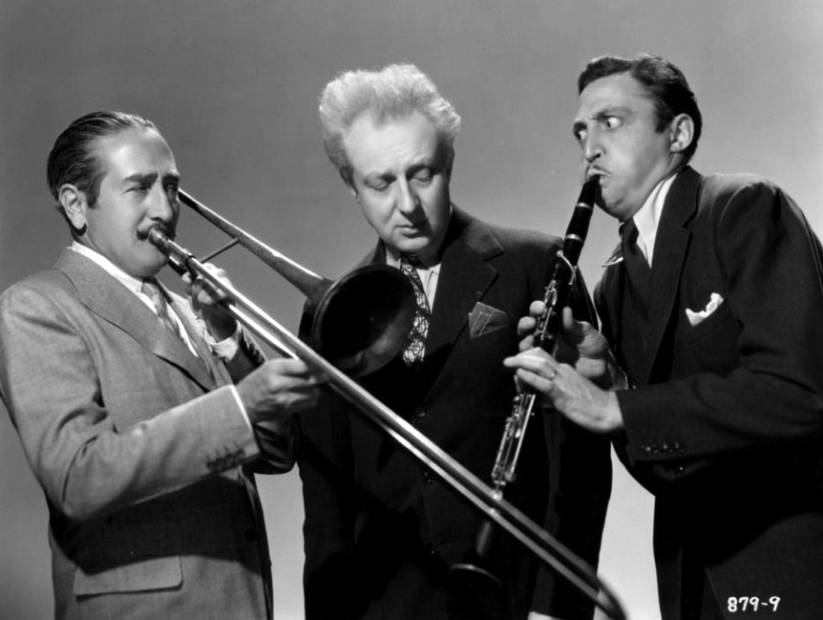
Even if you were already feeling fine…you’ll feel a little better. And do NOT stop watching before the bass player demonstrates why he was hired to be the bass player for Reg Kehoe and his Marimba Queens.
July 7, 2014
Do Stories Matter? A Summer Reading Appetizer
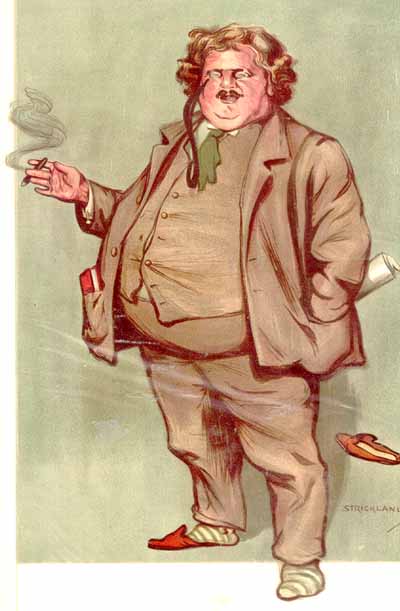
A lot of creativity in that belly…
Once upon a time not very long ago the civilized world eagerly read excellent stories by Catholic writers. The stories were everything that great literature is: captivating, intelligent, poignant, universal, liberating, but also imbued with a deeply Catholic sensibility.
The early and mid-twentieth century is the era I’m thinking of here. My personal list of favorites is topped by Flannery O’Connor, Graham Greene, J.R.R. Tolkien and G.K. Chesterton, but I know that you, TSOW reader, could add many more: A.J. Cronin, for instance, Evelyn Waugh…who am I missing?
And here’s something important to note about their books: they were read by everybody. There was no such thing as the “Christian fiction” section in bookstores. Readers were (and are) people of all faith backgrounds, or with no faith at all—they were simply lovers of fiction, and they considered the books of the above writers to be enriching and relevant, important as well as entertaining.
Another thing to note: the truth and goodness being conveyed by these novelists wasn’t ever saccharine or trite. Because truth and goodness aren’t saccharine and trite. In O’Connor and Green stories, in particular, we meet awful people doing terrible things; we discover hatred and prejudice and lust and murder. The great truth that Catholics want to transmit to the world includes (and doesn’t exclude) an encounter with all of that terrible stuff. If you prefer more modern fiction, check out Dean Koontz’s books—What the Night Knows, for instance. That’s a terrifying book, with evil characters committing atrocities, but Koontz, as usual, keeps the flame of hope and good burning at the heart of it, and it’s unmistakably Catholic (he even invents a new sacrament, only instead of the grace-giving vehicle being bread or wine or oil, it’s…Legos! Very nice.)
So, I don’t know what your summer reading is. No doubt there is plenty of non-fiction on your To-Read List, which is great. But don’t forget to include a good novel or novella. Other than prayer, there is no faster, more gut-level way to encounter truth, beauty and goodness.
The TSOW Recommended Reading List:
3 By Flannery O’Connor. IMPORTANT! There are plenty of Flannery O’Connor collections out there, but I link to this one because it is one of the few that has “A Good Man Is Hard to Find” WITH the St. Cyril of Jerusalem quote at the beginning. For some weird reason, a lot of versions omit the St. Cyril quote*, and I don’t know why because it provides a nice key for better understanding the story.
The Quiet American, by Graham Greene. The Power and the Glory is Greene’s best, but this one is no slacker. It’s gritty, passionate, and desperate, and all the characters turn out to be completely different than what you think at the beginning. Mrs. Moxie Wife didn’t like it, but I’m officially overruling her.
What the Night Knows, by Dean Koontz. I know his Odd Thomas series is really popular, but if you just want one really frightening, self-contained horror story, I liked this one a lot.
The Man Who Was Thursday, by G.K. Chesterton. I read this roughly once a year. It is a tremendously clever, funny, dark tale that will nearly take your breath away at the end with a pile of profound revelations. This Ignatius Press version has great annotations and original artwork by Chesterton himself!
And, of course, if you can wait until August 24, you can check out By the Downward Way by Yours Truly. As we speak, the TSOW gnomes are hard at work gluing the pages together. Soon I’ll even have a fabulous cover to show you AND a book trailer! Stay tuned, and happy reading!
Dan’s right! Come on, fellas–let’s go read some novels!
*The full quote by St. Cyril: “The dragon is by the side of the road, watching those who pass. Beware lest he devour you. We go to the Father of souls, but it is necessary to pass by the dragon.”
June 26, 2014
A Cool Lullaby
As you may or may not know, our house is a House of Many Humans, and our latest one year-old, Charlie, combines very nicely with this charming classic by Paul Simon. Whether you know this one yet or not, enjoy! (And it’s a nice bonus for those of you who might happen to have your own male Weeble Wobbles currently keeping you awake. It also just seems to go well with all this warm summer weather):
By the way, I did write my own lullaby for Charlie–something far, far inferior to Paul Simon’s tune, of course, but enjoyable, nonetheless! Look for it in your inbox this weekend, and if you haven’t signed up for the Dan Lord Mailing List then do it now, yo!
June 14, 2014
Spike Jonze’s Her and Me
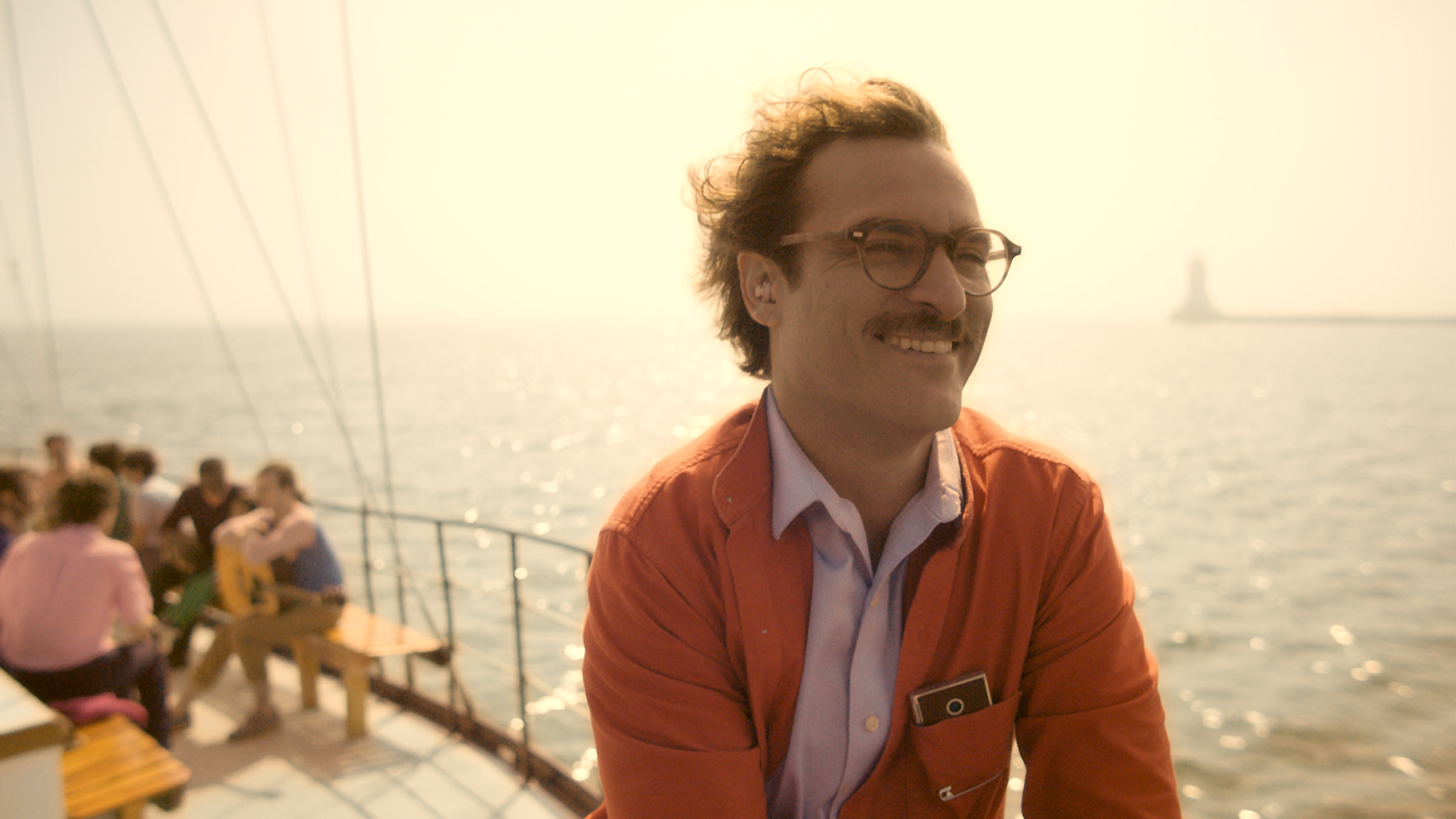
Theodore and Samantha (in front pocket)
Did you share my disappointment at the end of Spike Jonze’s Where the Wild Things Are when little Max is told definitively that there is no King, nor is there any real destiny waiting for him? And all the longings of his heart don’t really point to anything? But, hey kid, at least you’ve got a mom who loves you. You can be glad about that! But ultimately your life is meaningless.
I remember just making a low snorting sound and mumbling something like “well, that’s dumb.” And I went on with my evening.
That disappointment is nothing at all compared to the disappointment you’ll feel after seeing Spike Jonze’s latest, Her. Frankly, I recommend not watching it at all and finding a good way to use your valuable time, and so to encourage you, here’s a quick critique.
In Her, Theodore (played to perfection by the always marvelous Joaquin Phoenix) falls in love with Samantha, an OS (Operating System) he’s installed on his computer. She’s basically an incredibly sophisticated App, who can learn from her experiences (and at an exponential rate), and she in turn falls in love with Theodore.
It would have been interesting to follow Spike Jonze’s exploration of their relationship, except for the premise that is clearly established towards the beginning of the movie: what we call a person, whether human or OS, is nothing more than received DNA and whatever experiences he or she may have throughout life. That’s it. That is the sum total of a person. The movie’s philosophy ipso facto rejects the soul, God, transcendence, and ultimate meaning; persons do nothing other than wander around trying to satisfy personal needs, and what the director seems to think is love is mostly just self-gratification.
It’s depressing. As Samantha quickly increases in experience, she becomes more complex. Somehow, this complexity means that she doesn’t have to love Theodore exclusively anymore, and Theodore is presented as an immature baby for resenting it. She ends up being in a “love” relationship with over 8,000 people, yet she assures him that fact doesn’t mean she loves him any less—in fact, she says, she loves him even more. Yay!
So, ready to not watch Her now? Great. Get going, you crazy kids, and have a great night!
June 10, 2014
Why 2015 will be the Year of Wall-Blasting Ecstatic Jocundity
The Legend of Zelda is the Official Lord Family Video Game of This Century or Any Century, so perhaps you can imagine the wall-blasting ecstatic jocundity that overcame our tiny, subterranean residence when this very cool video hit YouTube:
May 12, 2014
A Great Priest You’ve Never Heard Of

Cool hair. Kind of Eddie Vedder.
After reading my crummy poem from a few days ago, you’re probably ready to meet a truly good poet. So, allow me to introduce Father Abram Ryan (1838-1886), known as “the Poet-Priest of the South.”
He was a charitable, lovable fellow by all accounts, but also kind of otherworldly (Catholic Encyclopedia offers this quaint description: “He inherited from his parents, in its most poetic and religious form, the strange witchery of the Irish temper.” Ha!)
He loyally served the people of the South, both during the war and in the sad aftermath when many areas were struck with yellow fever and pestilence (from an 1866 letter: “Tomorrow evening I must go on horseback 26 miles to baptize two babies. And after my return I must go by Rail-Road 132 miles to Bristol in Virginia to say Mass and preach on Sunday…Times are very hard. Crops have failed–there is scarce any money–Many are suffering great want–and there the country is becoming again very troubled–robberies– murders–riots are again the order of the day.”).
Throughout it all he wrote poems, and became famous for them. His best-known poem is a moving ode to the fallen Confederacy, entitled “The Conquered Banner.” It’s melancholy, of course, but noble, and I’ve always really liked it.
Not long ago I asked my good friend and fellow Pain member, the extremely talented Adam Guthrie (watch this great performance by him), to help me write some instrumental music for The Conquered Banner. It originally appeared on Film Music’s Film & Television Music Compilation Volume Nine (read: buried among heaps of other compositions by the moaning zombie hordes of aspiring musicians on a CD that probably no one on planet Earth ever even took out of its case). It’s all live instruments, with a strong Irish/Southern feel, but it has a little more hopefulness in it than the original poem. I will be sending out a cool little re-mix of it tomorrow via the Dan Lord Mailing List, so if you haven’t signed up yet, now’s your chance (it’s there on the right)!
Thanks for stopping by, and God bless!
May 1, 2014
Farewell, My Beard

My Van Der Hagen Shave Set couldn’t be more excited
We’ve shared some good times, Beard. And some not-so-good times. We’ve been together since…what? The beginning of Lent? That’s a long time, Beard.
But the time has come at last. I’m hereby removing you from the lower part of my face, and I won’t be reattaching you. Not anytime soon, anyway. Please don’t take this personally, Beard. It’s not you. It’s me.
Just to show you there are no hard feelings, I’ve reached into my literary vault and pulled out “I Have a Beard.” I’ll post it here. For you, Beard. Peace.
I Have A Beard by Dan Lord
I have a beard. It is coarse to the touch.
I grew it ‘cause I don’t like shaving so much.
Its shape is not trendy, is not avante-garde
I like that it makes me resemble a bard
It isn’t so thick that my lunch ends up in it
It isn’t so thin that my chin shows within it
It isn’t so long that a pygmy could bite it
It isn’t so itchy I cannot abide it
More professorial now, do I look,
A beard to go with my eyeglasses and book
A filter to trap my cigar smoke, how nice!
A sop for a drop from my whiskey on ice!
A something to tug while I’m deeply in thought
On historical battles and why they were fought
And whether the soldiers were bearded or not
If so, then what length? Did they make them feel hot?
I’d shave mine if I were at war, to stay cool
A beard I may wear but I’m not a damn fool
Au contraire! With this hair, that resides on my face
I’m respected, ask anyone here in this place
They’ll tell you: “That man, with the black-and-white beard
Is a gentleman-scholar whose mind should be feared!”
Not feared like a ghost; they don’t mean that, I’m sure.
“Feared”’s the wrong word, really, don’t you concur?
Why did they tell you that? I am not scary.
“Brilliant” is better, because I’m so hairy.
Though many wore beards who were very much feared:
The dad in The Amityville Horror had a beard
Charles Manson did, too, he was really a freak
And the Unabomber lived in the woods by a creek
I made up the “creek” part, in fact, I don’t know
But he sure had a beard, man he let that thing grow!
The point, you can see, is that I’m not like him
Anyone here would concur, just ask them.
A beard I do have! It is coarse to the touch.
I grew it ‘cause I don’t like shaving so much.
April 29, 2014
Something Other Than God
My friend Jen Fulwiler, author of Conversion Diary and star of that most unique of reality shows, Minor Revisions, has at last released upon the world her epic autobiography, Something Other Than God. Because I’m so special and cool and “in with the right people” and “unselfconscious about begging for gifts from people who eventually bestow them upon me just to make me go away,” I got to read an advance copy several weeks before it became available to the unwashed masses.
It’s a masterpiece, people. As far as conversion stories go or any “journey of faith” kind of book, it’s nearly in a league of its own. It’s up there with Augustine’s Confessions, and I’m truly not exaggerating. Do yourself a big favor and read it. Jen used to be a diehard atheist, and I know there are a few readers here at TSOW who have their own struggles with the idea of God. Read Jen’s book, friends! It’s intelligent, engaging, and funny.
Here’s a cool book trailer for it, comprised of many people reading short excerpts via Skype–and I got to be in it!! I’m the one with the suave zebra shirt and the scary beard–not the one in the Banana Suit (though I wish I was):
December 2, 2013
The Mentalist “Red John” Review!
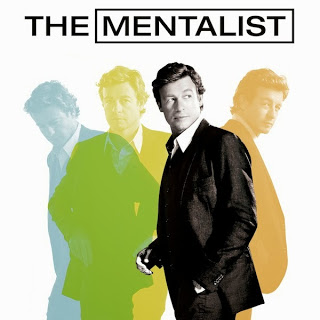 It happened, in case you didn’t know. Patrick Jane, the protagonist of one of my all-time fave T.V. shows The Mentalist, finally defeated Red John, the serial killer who murdered Jane’s wife and daughter.
Many were unhappy with the episode. They thought it was a big let-down. James Hibberd over at Entertainment Weekly did a great review that echoed that opinion.
Interestingly, he referenced Seven, a deranged film from the ancient 1990s about another serial killer named John Doe (which I suspect is a completely falsified name). Anyway, in Seven, Morgan Freeman’s character states that John Doe cannot possibly live up to their expectations and that (according to Mr. Hibberd) is part of what’s wrong with the Red John episode: after so many years of build-up, Red John can’t live up to our expectations.
But consider: for people who buy into the romantic mythos of the Serial Killer, Seven’s John Doe does live up to the expectations that director David Fincher creates. John Doe is unstoppably brilliant, and transcendentally amazing. He is every bit the unearthly avenging angel of death that he wants everyone to believe he is. And he wins. The good guys lose. They are outsmarted, out maneuvered, and in the end goodness and innocence are destroyed and the supernaturally evil villain carries out his plan exactly the way he wanted.
And this is how our culture has come to regard serial killers. There is an entire movie genre for them now. They are profoundly evil, and we love them. We are thrilled by them. They seem to us almost pure in their horrifying vileness, and in possession of a power that seems to have few limits.
What the h-e-double-hockey-sticks is wrong with us?
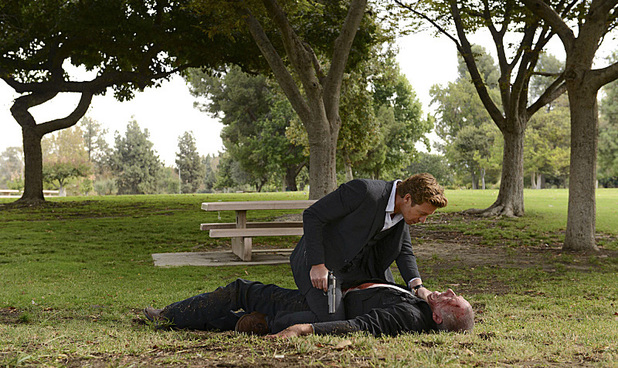 That’s what I found so fascinating about Patrick Jane’s final confrontation with Red John. People called it ‘boring’—but it’s only boring if you’ve come to accept the lie that Serial Killers are super-powered wraiths like John Doe and Hannibal Lecter.
In the end, though, we see that evil is repulsively…mundane. Red John isn’t Darth Vader. He’s “just a deranged, sexually perverted sociopath with delusions of grandeur” (that’s a slightly paraphrased quote). When Jane finally kills him, it’s in a beautiful park, with green grass and a gentle breeze blowing and unsuspecting families playing nearby.
I don’t know about you guys, but that says a lot to me. In the end, the Mythic Evil Fiend is just a freak who wants attention. He’s a blot, a temporary aberration. Beauty and goodness are what is real and lasting. When Red John finally gets hunted down, he just lies there, helpless, bleeding, pathetically begging to be spared. Jane finishes him off, and then leaves him there to rot away and be forgotten. That’s important for us to remember. I appreciate a great villain as much as anyone, maybe more so—but villains shouldn’t become our heroes, and I’m afraid for many of us they kind of…have.
Anyway, those are my thoughts, and I’m sure we can all agree that I’ve spent far too much time expressing them here. I’d love to hear what you wonderful people thought!