Claire Fayers's Blog, page 2
May 6, 2021
How To Start a Quest
Hello all!
I’ve been filming some short pieces about myths, legends and fairy tales and how to write them. It was so much fun, I thought I’d share some of my thoughts here.
This week, I’m looking at how to set your story in motion. As my example, I’ve taken a classic quest story – The Leaves that Hung but Never Grew from my book of Welsh Fairy Tales.
You might not know the story, but you’ll recognise some of the patterns in it. It begins like this.
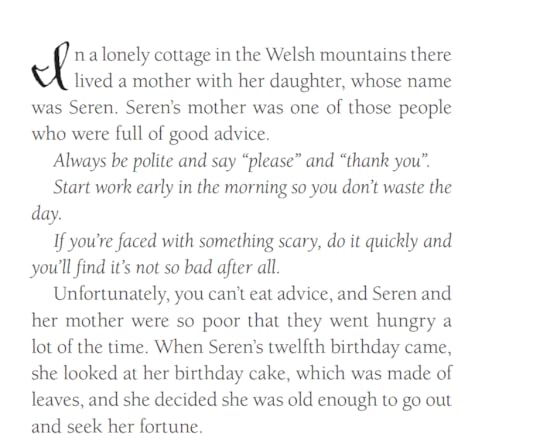
Quests always begin in the same way:A PlaceA PersonA Problem
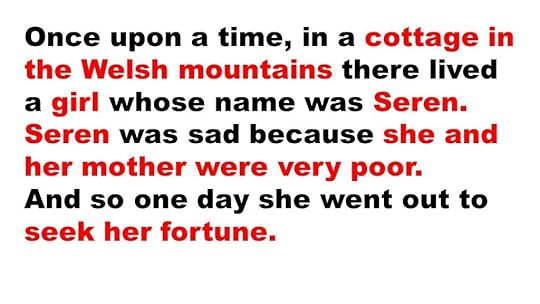
Once upon a time, in a magnificent palace, there lived a King called Gilgamesh. Gilgamesh was sad because his best friend had died. And so one day he went out to find a way to defeat death. (That’s the legend of Gilgamesh, by the way, the oldest written story in the world.)
Or how about:
Once upon a time, in a miserable kitchen, there lived a girl called Cinderella. Cinderella was sad because her step-mother and step-sisters were horrible to her and so one day she went out to become a pirate. (Cinderella isn’t really a quest story but there’s no reason it can’t be. Cinders doesn’t have to sit about waiting to be rescued.)
That’s the start of your quest. Easy, isn’t it? See how many variations you can come up with and next time we’ll find out what happens to Seren in The Leaves the Hung but Never Grew and how that can help us plan the middle of our stories.
Please take a look at my books, and check out my schools page for details of workshops and fun things to do.


April 8, 2021
YA For Birds
An epic YA love story is unfolding in our garden. It is the story of blackbirds.
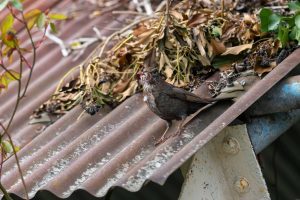
The lady blackbird, we’ve decided is the heroine of the story. Focussed and determined, she’s built a nest in the roof of our derelict shed. She’s happy to live there quietly, but she will defend her home with an aggressive rage if it is threatened. I’ve called her Rhiannon after the princess from the Mabinogion.
One princess does not make a story, but luckily we have a hero in the form of the quirky black and white albino blackbird. He is indifferent to his rakish good looks, which makes him all the more devastatingly handsome. He’s probably an enchanted prince. The garden is his territory and he spends the days patrolling and gathering worms, most of which he will lay in the nest of Blackbird Rhiannon.

Now we must complete the love triangle. Two other blackbirds visit the garden every day. Both are male with glossy black feathers and bright orange beaks. One is probably Rhiannon’s best friend. They might even have hatched from the same clutch of eggs and known each other since they were chicks. He secretly loves Rhiannon and longs to be with her, but he knows he is not hero boyfriend material and so he will content himself with living in the shadows. Maybe if he’s lucky he’ll get an interesting death scene and Rhiannon will mourn him briefly before forgetting all about him. Or maybe he’ll do something heroic towards the end of the last chapter of the story and Rhiannon will realise she’s loved him all along.

Never forget, however, there is one more blackbird left. This one has to be the villain. He’s charismatic and clever, always ready with a musical quip. For a while, Rhiannon might even believe that she’s in love with him. Certainly, the reader will hope that he and Rhiannon will end up together. But this blackbird only loves himself. He wants to rule the whole garden, and he will destroy anything that stands in his way.
Rhiannon stands in his way. Who will stand with her.
Any ideas for a title? I’m thinking something like ‘The Darkling Feather’ or ‘Shadow Wings’.
February 26, 2021
Tell a Fairy Tale Day
Today is national Tell a Fairy Tale Day.
Yes, it was a surprise to me too. But here’s a chance for me to talk about my favourite fairytales retellings.
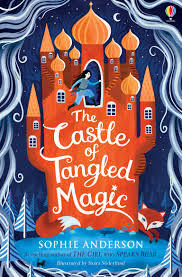


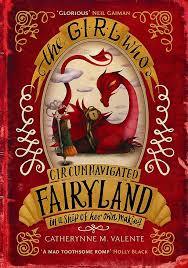

And, of course, if you haven’t read my own book of Welsh fairy tales yet, it’s available from all bookshops.
What are your favourite fairytale books?
February 3, 2021
Welsh Myths, Legends, Fairytales
I love Welsh legends. They’re full of larger than life characters, unexpected flashes of humour and half the time they don’t even try to make sense. So when, last March, I was offered the chance to write a whole book of them for the Scholastic Classics series, I leaped at them with the enthusiasm of a Welsh sheep spotting a nice patch of grass. Or something like that.
It was a great confidence boost to have a new contract and it came at just the right time, as the first lockdown of 2020 was starting and all my author events were cancelled. I spent an enjoyable few months reading all the stories I could get my hands on and selecting my favourites to retell. I’ve made a few tweaks here and there, and put my own spin on them.
It’s hard to pick my favourite from the book. Maybe the story of Blodeuwedd (Flower Face), which features the silliest murder plot in the history of literature. Or The Leaves that Hung but Never Grew, which oozes strangeness. Or My Brother the Fairy, which tells you exactly what to do if someone in your family is kidnapped and replaced by a fairy.
The cover, by David Wardle, is full of images from the stories, so after you’ve read them you can try to match them up. And there’s some very pretty art inside, too.
Here’s a sneaky look.
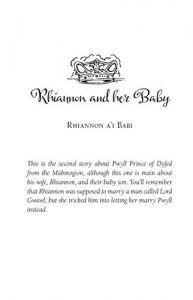
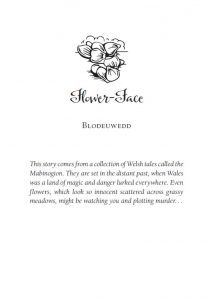
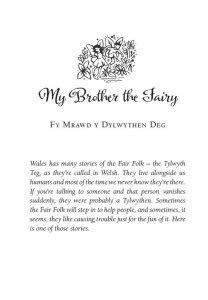
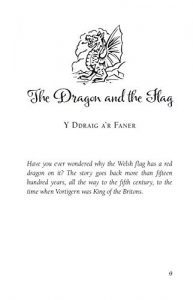
Welsh Fairy Tales Myths and Legends is available in all the usual places. If you’re ordering online, please consider using www.hive.co.uk or www.bookshop.org, which both support independent bookshops. Or order straight from your local bookshop of course!
October 5, 2020
Express Your Shelf
It’s Libraries Week!
Along with lots of other authors this week, I’ve made a short video to give you a look at my bookshelves and the books that have inspired me. Do take a look.
If you go to the hashtag #ExpressYourShelf on twitter you’ll be able to find lots more. What are you reading this week?
July 29, 2020
The Mabinogion And Why We Need More Stories.
The evolution of stories has always fascinated me.
Long before anything was written down, stories were told in groups, around fires at night. Nobody knows who started it or why, but stories were very much a community effort. Each new storyteller would put something of themselves into the tale. Bits were added and taken away. There are some stories which stretch on for hours with episode after episode, and others where it seems the storyteller suddenly remembered they had to be somewhere else, and the action ends in a rush.
As people travelled from place to place, they took their stories with them. Take Cinderella, as a well-known example. The glass-slippered version we know best comes from Charles Perrault in 1697, but the hunt for footwear first appears in an ancient Greek tale of a slave girl who married a king. Then there’s the English tale of Tattercoat, the Chinese story of a girl who receives supernatural help and gold shoes from the bones of a dead fish, and the Brothers Grimm version in which the ugly sisters’ eyes are pecked out by birds as punishment. And hundreds more.
Over time, many of these stories were written down and took the step out of the oral tradition into literature. Which brings me to the Mabinogion and Lady Charlotte Guest. Born in 1812, she was a keen student of language and literature and when she married the MP for Merthyr Tydfil and moved to Wales, she became fascinated with a collection of Welsh tales, which she called the Mabinogion. Her translation became the definitive English-language version for over a century.
The Mabinogion itself is a strange beast. There are four main ‘branches’ – collections of tales which weaved in and out of one another. Following these, are four independent tales, and three romances.
Over the years, there have been many translations, retellings and spin-off stories, the most famous probably being Lloyd Alexander’s Chronicles of Prydain, which draws from a lot of Welsh myth including elements of the Mabinogion, and Alex Garner’s The Owl Service, which uses the story of Blodeuwydd. There’s also a wonderful reworking in verse by Matthew Frances and a series: New Stories from the Mabinogion from Welsh publisher Seren, which bring the stories up to date with contemporary and futuristic settings. And there are many, many more.
Surely we don’t need any more versions, you might say. I find myself oddly split here, because I have a livid dislike of screen adaptations that mess with my favourite books. But the ancient tales collected in the Mabinogion were in the public domain long before they were ever pinned to a single version on the page. They draw us back to a time when storytelling was a community effort, when anyone and everyone could throw in an idea and see what happened.
So I was delighted when the hilarious Matt Brown asked if I’d be interested in taking part in a new, collaborative version of the Mabinogion for children. I’d already rewritten several of the stories for my book of Welsh folktales coming out next year (available for pre-order now, shameless plug) and I was keen to do more. The more I learned about The Mab project, the more excited I became. Eloise Williams was co-editing. PG Bell and Sophie Anderson were also contributing, along with a load more huge names in Welsh literature. Each story would be told in English and Welsh. And the whole thing would be illustrated by Max Low, who is funny and generous and altogether awesome. If you don’t believe me, look at this cover.
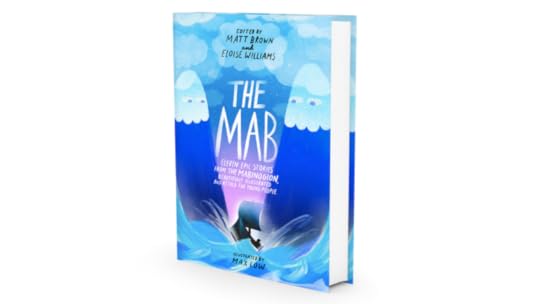
But the best thing of all? This is a community effort. Publication will depend on the support of readers. Pop along to Unbound and see the range of rewards on offer. You can get anything from a single copy to a school or bookshop package including an author visit. All supporters will have their name listed in the book, because without you the book will not exist.
To quote myself from The Accidental Pirates – there are three kinds of people in the world: those who listen to stories, those who tell them and those who make them. Be a story maker. Let’s bring this book to life.
July 6, 2020
In Which I Have Written a Book
Well, I have had an exciting weekend. On Friday evening, Storm Hound was announced as the winner of the Welsh Books Council Tir na n’Og award in English language category. I am so happy about this. I’ve been following the Tir na n-Og for ages and I’m always slightly in awe of the authors who win so to be among them feels slightly surreal.
There was a common theme this year of magical things waiting to be discovered and I’ve been inspired to seek out the extraordinary in everyday life. If you haven’t read the whole shortlist yet, I thoroughly recommend them. I am terrifically grateful to the Welsh Books Council. They are a lovely bunch of people, so enthusiastic, and great to work with. Diolch yn fawr iawn i chi gyd.
Here’s the press release in the Wales Arts Review.
You can hear my interview on the Radio Wales Arts Show, available via BBC Sounds.
And you can read all about the award, including some very interesting stats on the nominees and winners, on the Family Bookworms website.
Along with the prize money, I received this amazing award, written by the current Welsh children’s laureate, Eloise Williams. I feel another story coming on, just looking at it.
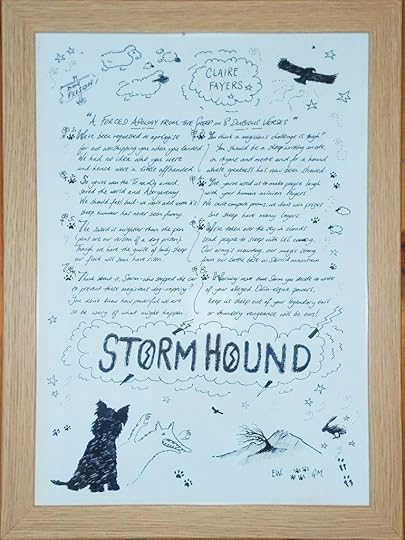
Storm Hound is on the libraries’ Summer Reading Challenge this year so if you haven’t read it yet, this summer will be a good time.
That is not all the good news, however, because I am delighted to be able to share details of my next book. In a wonderful twist of serendipity, it is a collection of Welsh stories, part of the Scholastic Classics series.
Here’s a look at the beautiful cover by David Wardle.
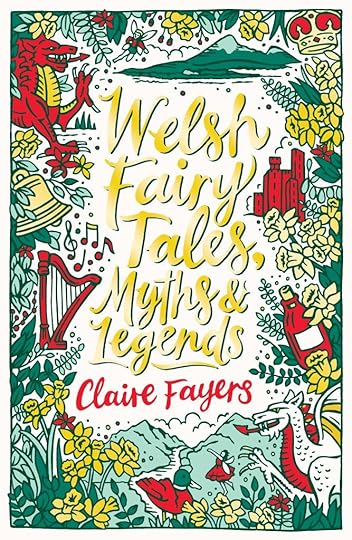
Enjoy Wales’s rich heritage of myth and fairy tales, re-told for young readers.
From magical Welsh dragons that destroy a castle night after night, to a princess made out of flowers and a fairy changeling brother; from loyal hunting hound Gelert, to a boy who asks questions and goes on to become the greatest Welsh bard ever known… This book includes traditional favourites and classic myths and legends from Welsh folklore.
I had such a great time writing this book. I spent many. many hours researching Welsh folklore when I wrote Storm Hound and all those stories were still knocking about in my head. It’s been a joy to put some of them on paper to share with you.
Welsh Fairy Tales, Myths and legends will be published on February 4th 2021, and you can find it on Amazon to pre-order.
June 26, 2020
The Week of Heat
It is hot.
It is slightly less hot today but after a week of absorbing heat – that’s what it felt like, anyway – I am radiating so much warmth I could hire myself out as a radiator.
Thank goodness I can escape to somewhere colder in my head.
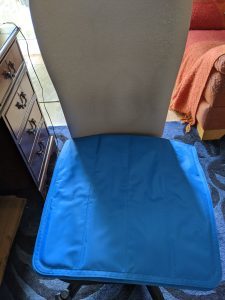
The cats were so miserable that I bought them a cool mat to lie on. Naturally, they have rejected it and so I’m sitting on it. It is very comfortable and keeps the backs of my legs cold.
I also had a go at a standing desk. You can buy desks that go up and down (my husband has just ordered one for his home office), but I like my desk so I will look for a desk topper. But first I wanted to make sure I’d actually use one, so I spent a morning standing up like this.
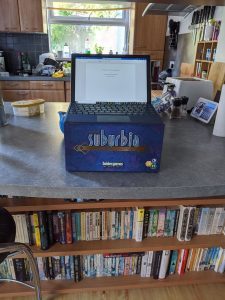
Being that close to the kitchen was a big dangerous as it was far too easy to go for snacks, but the combination of breakfast bar and boardgame made for a good height, and I wrote 800 words in less than an hour, so I was pleased. It’s strange how just changing your usual writing posture can give you an extra burst of mental energy.
Lockdown is easing but we’re still spending a lot of time at home. If you haven’t seen my Write Where You Are series, I’ve put all five episodes in one place. In them, I work my way around the house, enlisting the help of some author friends to find story ideas in every room.
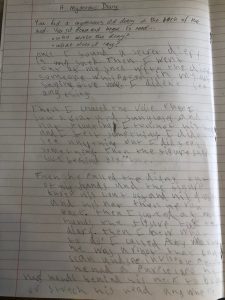
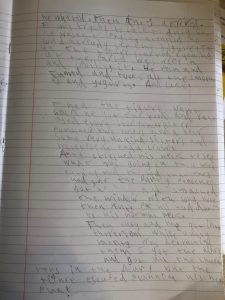
Here are two fantastic pieces of work I’ve received from Harry, age 6, and Oliver, age 8, based on the garden episode with Lexi Rees. Well done, both of you. That was a hard challenge and you both did fantastically.
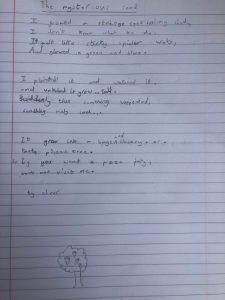
Take care everyone. 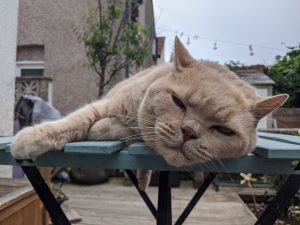
June 12, 2020
Write Where You Are Episode 5
We’ve come to the last episode of Write Where You Are. I’ve had a lot of fun creating this series and I hope you’ve had fun watching. Today, we’re stepping outdoors into the garden where I am joined by the fantastic Lexi Rees, author of the Relic Hunters series.
Here is the challenge sheet for episode 5. As always, if you want to share your stories or pictures, you can email them to me and I’ll display them on my website. Contact me.
Write Where You Are Challenge Sheet 5
The whole series will stay up on my website so you can watch the videos and download the challenge sheets whenever you want. Who knows, maybe I’ll do a second series some time. Until then, take care and happy writing!
A big thank you to all the authors who took part this week – Sibeal Pounder, PG Bell, Sarah Todd Taylor and Lexi Rees. Thank you to Jackie Evans at Jacs Little Welsh Studio for creating the artwork for the series. And thank you Literature Wales for supporting this series.
June 11, 2020
Write Where You Are Episode 4
It’s day four of Write Where You Are.
We were becoming a lot more proficient with the filming by this episode. It was a blisteringly hot day and I couldn’t bear to change out of my sundress. Rather than stick to a single room for this episode, I wanted to do something different and talk about animal stories. My cats had already made some surprise appearances in the previous episodes, after all.
So, here I am, talking about why animal stories are so much fun to write. There’s a special appearance from Sarah Todd Taylor, author of Max the Detective Cat, and lots of ideas for writing your own stories.
Here’s the link to the challenge sheet to go with today’s video.
Write Where You Are Challenge Sheet 4
If you’re doing any of these challenges and you’d like to share your work, please do send it to me. You can find my email address on my contacts page.
A big thank you once again to all the authors who took part in this series, to Jackie Evans for the artwork and Literature Wales for supporting the whole project.