
Mike Burrows's Blog, page 23
November 2, 2020
Agile Uprising discusses Agendashift’s Leading with Outcomes workshop
On Sunday evening I got a very nice surprise – Twitter alerted me to this new episode from the Agile Uprising Podcast additional to my interview with Jay only a few weeks ago:
Join @mcaddell94 and @backdooragile as they discuss the @Agendashift workshop "Leading With Outcomes", taught by @asplake. SPOILER ALERT: take this course! https://t.co/rrnx1asGvV
— Agile Uprising (@AgileUprising) November 1, 2020
Listen here. SPOILER ALERT (per their tweet): take this course!
Slightly embarrassingly, when this went out on Sunday I had only this month’s Deep Dive workshop in the calendar. Naturally, this includes a deeper version of Leading with Outcomes, but still! So in gratitude to Jay and Mike the first public Agendashift workshop of 2021 will be Leading with Outcomes, scheduled late enough in the my (UK) afternoon for folks based in the Americas to join.
All the usual discounts apply: repeat visits (not uncommon), partners, gov, edu, non-profit, country, un- or under-employment, bulk orders. If you think that one might apply to you, do please ask.
17-20 November, 8 online sessions (2 per day over 4 days) of 120 minutes each, EMEA-friendly timing:
Agendashift Deep Dive: Coaching and leading continuous transformation
19-20 January, two 2½-hour sessions (1 per day), Americas-friendly timing:
Leading with Outcomes (Americas)
And I’ll mention this just this once: discount code UPRISING for 15% off either/both events.
[image error]
Agendashift , the wholehearted engagement model
Links: Home |
About
|
Our mission: Wholehearted
|
Become an Agendashift partner
|
Assessments
| Books | Resources | Media | Events | Contact | Mike | Subscribe
Workshops: Transformation strategy | Outside-in strategy | Short training
Blog: Monthly roundups | Classic posts
Community: Slack | LinkedIn group | Twitter


October 30, 2020
Agendashift roundup, October 2020
In this edition: Media – recordings, articles, etc; November Deep Dive; Updates to Celebration-5W; Progress on the 2nd edition; Top posts
Media – recordings, articles, etc
Released this month:
Webinar recording: Good obstacle, bad obstacle: The recording
Podcast: Agile Uprising Podcast: Right to Left with Mike Burrows (agileuprising.libsyn.com)
Article: Outside-in and Right-to-Left: 2 Perspectives on Strategy Deployment (cutter.com)
I’ve taken the opportunity to gather these and similar resources from the past year or more on a new media page, agendashift.com/media. Over time I’ll add dig out some Agendashift-era conference recordings etc also. If you have any favourites you think I should add, let me know!
Thanks for those I’ve added so far go to the Cutter Consortium, Jay Hrcsko (Agile Uprising podcast), Martin Aziz & team (SquirrelNorth), Joe Auslander & Jakub Jurkiewicz (Joekub podcast), Ben Linders (InfoQ), Rahul Bhattacharya (Agile Atelier podcast), Mo Hagar (Agile on the Edge podcast), John Rouda (A Geek Leader podcast), Paul Klipp & Justyna Pindel (Agile Book Club podcast).
November Deep Dive
17th-20th November: Agendashift Deep Dive: Coaching and leading continuous transformation – eight 2-hour sessions over four days, EMEA-friendly timing. A practical, hands-on experience of Agendashift, the wholehearted outcome-oriented, engagement model.
All the usual discounts apply: repeat visits (not uncommon), partners, gov, edu, non-profit, country, un- or under-employment, bulk orders. If you think that one might apply to you, do please ask. We have a quorum already but the more the merrier.
Updates to Celebration-5W
There is a new version 4 deck for our workshop kickoff exercise Celebration-5W. Like most of our exercises, games, templates etc it is Creative Commons (CC-BY-SA) and you can obtain it via its resource page agendashift.com/celebration-5w.
The main changes:
I’ve tweaked a key slide – see the image below – to suggest some initial iteration between When and What; the discussion (if not its later presentation) begins here
Unhiding the initial slides for facilitators – they weren’t showing up in Dropbox
In those initial slides for facilitators, the quote from Agendashift is now from the pending 2nd edition (more on that in a moment)
[image error]
Progress on the 2nd edition
A couple of blog posts this month flow from (among other things) work on the 2nd edition of Agendashift:
How I choose my models
Still not a fan of the PDCA cycle or the continuous improvement initiative
From the second of those, nearly 3 weeks old now:
I’ll be pulling out all the stops, integrating (as Agendashift has done consistently for a long time) ideas and experience from Lean-Agile, organisation development, and strategy
Glad to report that this work on the 5th and final chapter is not only well underway, I can see the light at the end of the tunnel now! Just a few more sections and I’ll have a first complete draft and I’ll be at the “90% done and still half the work to do” stage. I’m not yet quoting dates yet but quarter 1 of 2021 seems very doable.
Top posts
Recent:
How I choose my models
Still not a fan of the PDCA cycle or the continuous improvement initiative
Good obstacle, bad obstacle: The recording
15-minute FOTO, latest v9 deck
What I really think about Scrum
Classic:
My favourite Clean Language question (January 2019)
The language of outcomes: 2. Framing obstacles (January 2020)
The language of outcomes: 1. Identifying the adaptive challenge (January 2020)
The language of outcomes: 4. Organising outcomes (February 2020)
Stringing it together with Reverse Wardley (February 2019)
Agendashift, the wholehearted engagement model
Links: Home |
About
|
Our mission: Wholehearted
|
Become an Agendashift partner
|
Assessments
| Books | Resources | Media | Events | Contact | Mike | Subscribe
Workshops: Transformation strategy | Transformation strategy | Short training
Blog: Monthly roundups | Classic posts
Community: Slack | LinkedIn group | Twitter
October 27, 2020
How I choose my models
As demonstrated by the models-sources-inspirations picture below, I like my models. If you’ve read my third book Right to Left, you’ll know also that I have little time for the idea that there is one best model – one best Agile framework, for example. And the fun isn’t in choosing between them, not even in recognising what each of them can bring, but in integrating them. And it doesn’t stop there: this is not a one-shot process design exercise, but a process of continuous transformation. In short, I’m a pluralist, and I love to see what happens when models and their underlying patterns are allowed to combine.
Believe it or not, I am a picky though. In one of our weekly community Zoom sessions (see #community in Slack), that pickiness resulted in a conversation that was outside our usual norms (if the truth be told I was abrupt to the point of rudeness) and I reflected afterwards on what happened. Happily, we cleared things up quickly and had a much healthier conversation the following week after I had the chance to turn something heartfelt into something more articulate. What follows is a summary.
If Agendashift has taught me anything, it is to be very careful with assumptions. Credit for this goes to Clean Language, which turns the dial up to 11 on the discipline of its practitioners to minimise the influence of their private assumptions (which are SO not the point) on their conversations. This discipline applies most to their explicitly Clean conversations but it rubs off elsewhere in ways that need not mean “coachiness” when that is not called for. Practicing it subtly trains your brain to recognise when you are imposing yourself in ways that aren’t helpful.
You see that attention to assumptions in Agendashift’s outside-in strategy review. The way we make explicit its carefully minimal assumptions is of great help to the facilitator. See my recent Cutter paper for details (announcement included in my post last week); they’re also in Right to Left (chapter 5) and there will be brief coverage in the forthcoming 2nd edition of Agendashift also.
I tend to avoid models that encourage me to make assumptions about what is going in someone’s mind, how they will behave, how they will develop, and so on. The same at team level and organisation level, and I have come to be particularly sceptical of extrapolations from one of those levels to another. The replication crisis (en.wikipedia.org) gives me pause also. For better or for worse therefore, you won’t see Agendashift depending on many “popular” models of psychology, development, or maturity. This is not to say that they are valueless, rather that they make potentially unreliable foundations.
What I do appreciate:
Challenges to my own assumptions
Ways to moderate the impact of unsafe assumptions
Ways to bring assumptions and misalignments to the surface at the right time
Ways to encourage people to find their own solutions in the pursuit of outcomes (authentically shared outcomes most especially)
Ways to sustain all of the above – engines of transformation
And supporting those:
Models that have withstood scrutiny over a length of time
Models that treats the individual’s agency, creativity, and problem-solving ability with the utmost respect (you’ll permit me some personal values and base assumptions there I trust)
Models that help to scale up the preceding
Thankfully, the list of helpful and reliable models compatible with my outlook of optimistic pluralism outlook is long, a fact to which my Models, Source, and Inspirations picture attests. And please do not take the omission of a favourite model of yours as a snub; if I don’t have time to throw yours into the Great Model Collider in the hope that something interesting will fly out, perhaps you (or someone else) will.
Opinions mine, strongly held it would seem. Thank you Andrea Chiou and Tom Ayerst for putting up with me – we got there in the end 
October 21, 2020
Good obstacle, bad obstacle: The recording
The recording of yesterday’s webinar Good Obstacle, Bad Obstacle is now live on Youtube. You can find it and all the links mentioned in it gathered together here:
Webinar: Good Obstacle, Bad Obstacle (agendashift.com/gobo)
I’ve added the deck to the Agendashift Assets Dropbox and you can request access to it via the above page. It’s CC-BY-SA, so feel free to have some fun with it.
While we’re here, let me repeat Monday’s updates, starting with the November Deep Dive:
17-20 November, 8 online sessions (2 per day over 4 days) of 120 minutes each, EMEA-friendly timing:
Agendashift Deep Dive: Coaching and leading continuous transformation
Don’t hesitate to ask for a discount code if you think you might qualify on grounds of country, non-profit, government, educational, etc. Also if you’d be a repeat participant, of which there have been a good number!
Jay Hrcsko interviewed me the other day for the Agile Uprising podcast and you can listen to the recording at the link below. Thanks Jay, that was a lot of fun!
Agile Uprising Podcast: Right to Left with Mike Burrows (agileuprising.libsyn.com)
Also in the “just happened” category, Cutter Consortium has just published an article of mine in the form of an Executive Update. It’s a little dense compared to my books but it was fun rehearsing that particular chain of thought for the Agendashift 2nd edition. Grab it here:
Outside-in and Right-to-Left: 2 Perspectives on Strategy Deployment (cutter.com)
Agendashift, the wholehearted engagement model
Links: Home |
About
|
Our mission: Wholehearted
|
Become an Agendashift partner
|
Assessments
| Books | Resources | Events | Contact | Mike | Subscribe
Workshops: Transformation strategy | Transformation strategy | Short training
Blog: Monthly roundups | Classic posts
Community: Slack | LinkedIn group | Twitter
 From: Good Obstacle, Bad Obstacle
October 19, 2020
Happening (or just happened)
Happening: Good Obstacle, Bad Obstacle; Agendashift Deep Dive. Just happened: Agile Uprising podcast; Cutter Consortium paper
Tomorrow’s free webinar is sailing close to the 100 participant limit (to the point that I’ve asked anyone who can’t attend to cancel) but there are at the time of writing a single-digit number of tickets available. Get yours here:
20 October, Online, 10:00BST (GMT+1), 11:00CEST:
Free webinar: Good obstacle, bad obstacle (EMEA)
After that, the next big event is the November Deep Dive:
17-20 November, 8 online sessions (2 per day over 4 days) of 120 minutes each, EMEA-friendly timing:
Agendashift Deep Dive: Coaching and leading continuous transformation
Re that one, don’t hesitate to ask for a discount if you think you might qualify on grounds of country, non-profit, government, educational, etc. Also if you’d be a repeat participant, of which there have been a good number!
Meanwhile, Jay Hrcsko interviewed me the other day for the Agile Uprising podcast and you can listen to the recording at the link below. Thanks Jay, that was a lot of fun!
Agile Uprising Podcast: Right to Left with Mike Burrows (agileuprising.libsyn.com)
Also in the “just happened” category, Cutter Consortium has just published an article of mine in the form of an Executive Update. It’s a little dense compared to my books but it was fun rehearsing that particular chain of thought for the Agendashift 2nd edition. Grab it here:
Outside-in and Right-to-Left: 2 Perspectives on Strategy Deployment (cutter.com)
And thank you Andrea Chiou, Jonathan Sibley, and Jon Cashmore for your help – very gratefully received!
Agendashift, the wholehearted engagement model
Links: Home |
About
|
Our mission: Wholehearted
|
Become an Agendashift partner
|
Assessments
| Books | Resources | Events | Contact | Mike | Subscribe
Workshops: Transformation strategy | Transformation strategy | Short training
Blog: Monthly roundups | Classic posts
Community: Slack | LinkedIn group | Twitter
From: Good Obstacle, Bad Obstacle
October 8, 2020
Still not a fan of the PDCA cycle or the continuous improvement initiative
I’ve just finished the first decent draft of chapter 3 of the Agendashift 2nd edition and its segue into the more operational part of the book. Choosing my words here quite carefully: you can take this post as warning that I won’t be praising the PDCA cycle or the continuous improvement initiative. There, I said it. Heresy?
Last week I posted this question on LinkedIn:
Ask LinkedIn: Why does Lean Startup’s build-measure-learn loop seem often to sustain itself but the continuous improvement loop (PDCA) that inspired it typically run out of steam quickly? I’ve written on the PDCA problem more than once before and I have plans to do so again but I’m curious to know what people think [source]
36 comments and several good answers later, the one that best gets to the issue is this from my friend Patrick Hoverstadt:
My suspicion Mike is that this is structural – PDCA works ON the process, whereas build-measure-learn IS the process. If you stop doing PDCA, the work still goes on, product still gets produced and shipped and paid for, but it just stops improving. If you stop doing build-measure-learn, then the build part stops, so no product, and the business stops. PDCA shouldn’t be, but often is seen as an extra. [source]
The Agendashift book’s strapline is Outcome oriented change and continuous transformation, so I do need to get beyond just identifying the issue. Here’s how the new chapter 3 begins to tackle it (and for context, here first is the patterns picture):
[image error]
The […] myth is that change happens naturally in cycles. You plan an experiment. You do the work of the experiment. You check the results of the experiment. You act on those results. Rinse and repeat, one experiment leading to the next. The PDCA cycle () in other words.
Replace PDCA with another improvement cycle and the brutal fact remains: one experiment does not inevitably launch another. Improvement cycles are not perpetual motion machines; they do not sustain themselves. If ever you have wondered why continuous improvement initiatives seem to run out of steam so quickly, perhaps instead you should be wondering how they last any time at all.
Let’s look at two places where experimentation does seem widespread:
At the high tech startup
At Toyota, the inspiration for LeanSize-wise, they’re at opposite ends of the scale. So what do they have in common? It can’t be the technology – many of Toyota’s experiments are remarkably low-tech. Common (and I would say glib) answers such as “leadership”, “sponsorship”, or “culture” don’t help much because their respective cultures are so different. There is a grain of truth to them though, and I believe the lesson is this:
Experimentation is sustained where these two things are true:
The learning that it generates matters to people
When that learning isn’t happening, it gets noticedIf you’re not a startup it would be inauthentic to pretend that your situations are equivalent. Even if genuinely you’re in a fight for survival, your organisation most likely has (or at least had) some viable business at its core; the startup lacks even that anchor. And don’t expect to magic up Toyota’s kaizen culture overnight – it took them generations after all.
Agendashift’s answer:
Experiments flow from meaningful outcomes and their measures of success (not rationalised the other way round), each experiment framed to ensure that learning will happen regardless of how it turns out
Experimentation is conducted in the full knowledge that multiple levels of learning will be accounted for in forums that matterMy advice is to abandon the notion of the cycle and to keep separate the framing of individual experiments, the day-to-day management of your active experiments, and the harvesting of learning. Of the three, the last is by far the most important; with the right focus on it, the other two fall into line behind it.
Hence the pattern Right to left strategy deployment, the right to left part signifying the working backwards from meaningful outcomes, the strategy deployment part a reminder (among other things) of the importance and relevance of the work. Solving problems just because they are there will no longer do.
A reminder of those three aspects to keep separate:
Framing experiments
Managing your portfolio of active experiments
Harvesting the learning
They’re covered across the final two chapters. The first two of those are well understood and the 1st edition covers them well. For the last one, which really means building a learning organisation, I’ll be pulling out all the stops, integrating (as Agendashift has done consistently for a long time) ideas and experience from Lean-Agile, organisation development, and strategy. Chapter 5 won’t be just the wrap-up chapter, it will be the climax, and I’m really excited about it. Happy to report that doing a 2nd edition is no drag
September 30, 2020
Agendashift roundup, September 2020
In this edition: Good obstacle, bad obstacle; The quality that now has a name; 15-minute FOTO update; Agendashift #community Zoom; Upcoming events; Top posts
Good obstacle, bad obstacle
Important dates coming soon: a free October webinar ahead of a November Deep Dive workshop. Details of both here:
Good obstacle, bad obstacle
The quality that now has a name
I’m hard at work on the 2nd edition of the Agendashift book (not far short of a rewrite if I’m honest) and I’m now on chapter 3 (of 5). In my head I’m a couple of chapters ahead and in this blog post you can see some of what’s going on up there!
15-minute FOTO update
I’ve done some work on the deck for 15-minute FOTO, aligning it with how I have been facilitating our Clean Language-inspired coaching game over recent weeks. Also, I’ve made it both easier for me to maintain and more flexible: hide/show slides according to format (Lite or Classic) and medium (in-room or online). More here:
15-minute FOTO, latest v9 deck
Agendashift #community Zoom
On Wednesdays I like to put out a reminder on Slack that tomorrow (ie every Thursday) it’s the Agendashift #community Lean Coffee Zoom at 14:00 BST, 15:00 CEST, 9am EDT. I can’t include the Zoom link in this post so ping me for details or check the #community channel in Slack.
Upcoming events
06 October, one 2-hour session, EMEA-friendly timing:
Probe! Stories, Hypotheses, Challenges, and Experiments (EMEA)
20 October, Online, 10:00BST, 11:00CEST:
Free webinar: Good obstacle, bad obstacle (EMEA)
17-20 November, 8 online sessions (2 per day over 4 days) of 120 minutes each, EMEA-friendly timing:
Agendashift Deep Dive: Coaching and leading continuous transformation
I might yet add some December dates but that will very definitely be the last Deep Dive of the year. If you’re holding out for one in a different time zone in early 2021, let me know.
I get asked about discounts based on country or similar factors. Typically answer is yes, also for non-profit, government, educational, etc, or if you’ve done one of the bigger workshops before – several people have attended multiple times. And Agendashift partners of course. Again, ping me.
Top posts
Recent:
What I really think about Scrum (August)
15-minute FOTO, latest v9 deck
Good obstacle, bad obstacle
#2MBM: Meaning before Metric, Measure before Method (July)
Classic:
My favourite Clean Language question (January 2019)
What kind of Organisational Development (OD)? (And a book recommendation) (May 2019)
From Reverse STATIK to a ‘Pathway’ for continuous transformation (October 2019)
Stringing it together with Reverse Wardley (February 2019)
‘Right to Left’ works for Scrum too (July 2018)
Agendashift, the wholehearted engagement model
Links: Home |
About
|
Our mission: Wholehearted
|
Become an Agendashift partner
|
Assessments
| Books | Resources | Events | Contact | Mike | Subscribe
Workshops: Transformation strategy | Transformation strategy | Short training
Blog: Monthly roundups | Classic posts
Community: Slack | LinkedIn group | Twitter
[image error]
September 28, 2020
15-minute FOTO, latest v9 deck
In the latest v9 deck for our Clean Language-inspired coaching game 15-minute FOTO, I’ve done a better job of integrating its Lite and Classic formats, reflecting how I’ve been facilitating both over recent weeks.
The word ‘formats’ is a big part of the change; after extracting what differs between the two and tidying up a bit, I’ve been able to combine the two sets of slides and remove the duplication. A refactoring!
So what is the same? Objectives, rules, and tips, two of each:
Overall objectives:
To grow a list of outcomes, as many as you can in the time allowed
Familiarisation with a curated subset of Clean Language questions
Rules:
With an obstacle in play, ask only questions from the cue card
For the placeholder X’s, use words captured previously, verbatim – your initial obstacles, responses, or fragments thereof
Tips:
Be generous in the outcomes you accept – if it sounds like it might be an outcome, write it down
If a minute passes without an outcome being captured, something is wrong – fishing for solutions, digging into obstacles, meta conversations
To give a little emphasis to that last tip: the “no wrong answers” principle applies, but mind your intent in your questioning. In this game, fishing for solutions and digging deep into obstacles are to be avoided.
The Lite and Classic formats, online and offline
In several workshops – notably Leading with Outcomes, Deep Dive (November!), Wholehearted:OKR, and Core – we play the game twice, and in this order:
Lite format: Exploratory familiarisation in an inclusive, minimally-structured table group exercise
Classic format: Structured exercise, rotating the roles of client, coach, scribe, observer in rounds of 3-5 minutes
Both formats work both offline (in room) and online. Some tips:
Offline (in room): Always give everyone their own printed cue card (A5 size works well) and never show the full set of questions on screen.
Online, and especially if you’re running multiple breakout rooms, everyone will need online access to everything they might need. I use a Google Doc workbook per breakout room; partners have access to my master copies for each online workshop.
The debrief
For both formats, the post-exercise debrief is the same. We start with what worked well:
When the outcomes are flowing well and you’re the client – answering the questions – what’s that like?
When the outcomes are flowing well and you’re the – asking the questions – what’s that like?
When the outcomes are flowing well and you’re the scribe or an observer – watching and listening to the conversation from the outside – what’s that like? And what do you notice?
[image error]
Afterwards: What went less well? What was difficult? Any other observations?
Customisation
15-minute FOTO is released under a Creative Commons CC-BY-SA licence and customisations, adaptations, translations etc are warmly encouraged. The deck includes some notes on how to do that and remain in compliance with the licence, thereby encouraging others to experiment and contribute too.
More…
Check out the 15-minute FOTO page, agendashift.com/15-minute-foto, where you’ll find:
A video
How to obtain the materials
Facilitation tips
Upcoming events
06 October, one 2-hour session, EMEA-friendly timing:
Probe! Stories, Hypotheses, Challenges, and Experiments (EMEA)
20 October, Online, 10:00BST, 11:00CEST:
Free webinar: Good obstacle, bad obstacle (EMEA)
17-20 November, 8 online sessions (2 per day over 4 days) of 120 minutes each, EMEA-friendly timing:
Agendashift Deep Dive: Coaching and leading continuous transformation
Agendashift, the wholehearted engagement model
Links: Home |
About
|
Our mission: Wholehearted
|
Become an Agendashift partner
|
Assessments
| Books | Resources | Events | Contact | Mike | Subscribe
Workshops: Transformation strategy | Transformation strategy | Short training
Blog: Monthly roundups | Classic posts
Community: Slack | LinkedIn group | Twitter
September 24, 2020
The quality that now has a name
The term quality without a name comes from a favourite book of mine, Christopher Alexander’s The Timeless Way of Building [1]. I discovered only today in my research for this article that 20 years after writing that wonderful book he did in fact give this intriguing thing a name: wholeness [2].
My ignorance aside, that’s almost spooky! Wholehearted is the concept in my book Right to Left [3] that was directly inspired by Alexander. It was quickly embraced by the Agendashift community, and later it gave its name to our mission statement [4].
What prompted today’s post was the realisation that repeatedly, people have cited wholehearted as the thing that attracted them to Agendashift. Fascinatingly, many of them were members of the community even before wholehearted was a thing! In other words, it seems to give a name to something that people somehow perceived already.
I’m working now on the 2nd edition of the Agendashift book [5] and it affords me a valuable opportunity say more about wholehearted than I could at the time of Right to Left. I am determined however not to over-specify it. Much of its power comes from the way that it resonates with different people in different ways, and while that’s happening, it’s a source of both creativity and energy. I make a point therefore of starting not with a definition, but with the word itself and what it tends to evoke.
As written here previously [6], it evokes two clusters of qualities:
Engagement, commitment, and purposefulness
Alignment, integration, integrity, and wholeness
(And yes, that’s Alexander’s wholeness again.)
Beyond that almost gut reaction, it’s fair to ask what it means to me personally, and in more concrete and perhaps practical terms. Inevitably, I relate it to things that interest, influence, and motivate me:
Generativity – generative conversations [7], generative patterns [8] and so on, energisers of emergent and adaptive thinking and the focus of much that is exciting in modern organisation development
Viability – the science of how organisations (at every level) maintain their independence and integrity, explaining much about their vulnerabilities and dysfunctions also
Outcome-orientation – ends before means, outcomes before solutions – both as a deliberate stance, and as demonstrated in Right to Left, a way to understand and integrate – a way to approach Lean, Agile, and Lean-Agile for example
Across all three of those: purpose, participation, and pluralism, making it all very human when done well.
The later chapters of the significantly updated Agendashift will put a little flesh on those bones, enough to make it practical in a non-prescriptive way, prescription bringing only contradiction in a book that describes an engagement model [9]. Wholehearted meanwhile is not a process or a framework. It’s barely even a model, and I’m happy to keep it that way!
References
[1] The Timeless Way of Building, Christopher Alexander, (OUP USA, 1980)
[2] (wiki.c2.com)
[3] Right to Left: The digital leader’s guide to Lean and Agile, Mike Burrows (New Generation Publishing, 2019; audiobook 2020)
[4] Our mission: Wholehearted (agendashift.com)
[5] Agendashift: Outcome-oriented change and continuous transformation, Mike Burrows (New Generation Publishing, 2019; audiobook 2020)
[6] Revisiting ‘wholehearted’ (blog.agendashift.com)
[7] See for example our Clean Language-inspired coaching game, 15-minute FOTO (agendashift.com)
[8] Agendashift’s Generative Patterns (agendashift.com)
[9] Engagement model (agendashift.com)
Upcoming events
06 October, one 2-hour session, EMEA-friendly timing:
Probe! Stories, Hypotheses, Challenges, and Experiments (EMEA)
20 October, Online, 10:00BST, 11:00CEST:
Free webinar: Good obstacle, bad obstacle (EMEA)
17-20 November, 8 online sessions (2 per day over 4 days) of 120 minutes each, EMEA-friendly timing:
Agendashift Deep Dive: Coaching and leading continuous transformation
Agendashift, the wholehearted engagement model
Links: Home |
About
|
Our mission: Wholehearted
|
Become an Agendashift partner
|
Assessments
| Books | Resources | Events | Contact | Mike | Subscribe
Workshops: Transformation strategy | Transformation strategy | Short training
Blog: Monthly roundups | Classic posts
Community: Slack | LinkedIn group | Twitter
[image error]
September 10, 2020
Good obstacle, bad obstacle
Some important diary updates since last month’s end-of-month roundup:
Free webinar: Good obstacle, bad obstacle (EMEA)
Agendashift Deep Dive workshop (EMEA)
5 hours for the price of 4 at the next Leading with Outcomes workshop (Americas)
Free webinar: Good obstacle, bad obstacle
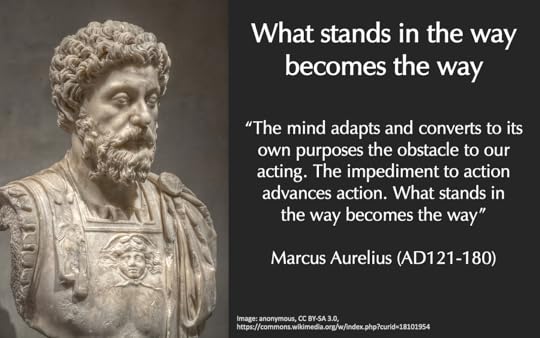
If, as the old saying goes, “what stands in the way becomes the way”, it pays to choose the right obstacles! And we’ve found it to be true: with agreement on outcomes as the most powerful basis for change that we know, it’s important to start with obstacles that are real, relevant, and that don’t constrain solutions unduly.
Book your place here:
20 October, Online, 10:00BST, 11:00CEST:
Free webinar: Good obstacle, bad obstacle (EMEA)
It will be recorded, but if I sense enough demand to run this for other timezones I will add future dates in due course.
Agendashift Deep Dive workshop (EMEA)
By the power of Zoom we last held our Deep Dive workshop – our flagship – for the Americas; it returns to the EMEA timezone in November. Details here:
17-20 November, 8 online sessions (2 per day over 4 days) of 120 minutes each, EMEA-friendly timing:
Agendashift Deep Dive: Coaching and leading continuous transformation
Although scheduled for EMEA it will be early enough in the day for some folks from APAC to attend. Ping me for discounts based on country, non-profit, educational, government, etc. Also bulk discounts – I’ve had enquiries already!
Upcoming workshops
The full list, the next one as soon as next week:
17 September, one 2-hour session, EMEA-friendly timing:
Strategic Mapping with Outcomes (EMEA)
22-23 September, two 2-hour sessions (1 per day), Americas-friendly timing:
Leading with Outcomes (Americas)
06 October, one 2-hour session, EMEA-friendly timing:
Probe! Stories, Hypotheses, Challenges, and Experiments (EMEA)
17-20 November, 8 online sessions (2 per day over 4 days) of 120 minutes each, EMEA-friendly timing:
Agendashift Deep Dive: Coaching and leading continuous transformation
[image error]
Agendashift, the wholehearted engagement model
Links: Home |
About
|
Our mission: Wholehearted
|
Become an Agendashift partner
|
Assessments
| Books | Resources | Events | Contact | Mike | Subscribe
Workshops: Transformation strategy | Transformation strategy | Short training
Blog: Monthly roundups | Classic posts
Community: Slack | LinkedIn group | Twitter


