
Benjamin J. Denen's Blog: ThatReviewGuy.com, page 2
June 3, 2015
Mistborn: The Final Empire by Brandon Sanderson
Writing Style – 4.5/5Brandon Sanderson is an incredibly imaginative and entertaining writer. The world he created in Mistborn is both engaging and mysterious at the same time. As a reader who is not typically drawn to stories of “magic”, I fell in love with the outside-the-box concept of allomancy—a fascinating take on “powers”. This creative approach combined with Sanderson’s witty style of writing made for a quite enjoyable read. The only negative was that I found the mix of eras (clothing styles, language, technology) present in the book to be somewhat confusing, and at times it took me out of the story.
The Characters – 4/5The characters in Mistborn are a bit of a dichotomy. The protagonists shine while the antagonists leave a lot to be desired. On the plus side, the cast of protagonists is large and varied. Vin and Kelsior, the primary characters, are well-developed. In many ways, the ragtag band of villains-turned-heroes are a lot of fun and often reminded me of the movie Ocean’s Eleven. On the negative side, antagonists are not nearly as well developed, often acting rather one-dimensional. Still, the cast of Mistborn is strong and left me eager to see how they would develop throughout the series.
The Plot – 5/5The numerous branching storylines, sub-plots, and political intrigues were the strongest aspects of Mistborn. The twists are what hooked me the most. There were definitely a few “I did not see that coming” moments for me. The story started fast and never really let up until the climactic ending that left me almost breathless.
Overall – 4.5It is safe to say that this plot was one of the most enjoyable that I have read in a long, long time. It starts fast and never really lets up. From beginning to end, Mistborn had me hooked making it one of those rare books that I truly had a very hard time putting down. Sanderson’s creativity shines throughout this novel. I highly recommend it to anyone looking for a fresh take on fantasy literature.
Overview
 Mistborn: The Final Empire by Brandon Sanderson is a fantasy thrill ride that mixes elements normally found in AAA video games, Marvel comics, and heist movies. It features a large cast of very likable characters. Though it follows the common theme of an underdog rebel faction trying to overthrow an oppressive government entity, it goes about it in a rather unique way. As a fantasy novel, it truly stands out in that it brings an entirely unique perspective to the use of “magic” or “special powers.”
In the interest of full disclosure, I have to admit that this book is one of my favorite all-time reads. As I mentioned in a previous post, I recently asked friends and fans to give me suggestions of their favorite reads in the world of fantasy literature. Two of the top “vote getters” were and the Mistborn Trilogy. While I really enjoyed The Name of the Wind, I absolutely loved Mistborn. Some reviewers have criticized the novel as a “YA masquerading as an adult fantasy” title. Yes, it features a female protagonist who is a young adult. Yes, it is devoid of the type of graphic content typically found in contemporary fantasy. That said, I think to label it YA is inaccurate. (Of course, I certainly don’t subscribe to the theory that a YA title can’t also be considered a great work of fiction either.)
Writing Style – 4.5
I found Sanderson to be an excellent and entertaining writer. Mistborn: The Final Empire was my first foray into his writing, and I became a quick fan. He allows his characters to possess real personality, the kind I rarely see in fantasy. For example, in other fantasy titles I have read there might be a supporting character that brings a touch of humor to the book, but rarely do you see the kind of ironic, sarcastic personalities that many of the leading characters in Mistborn feature. I found it refreshing to see humor and wit balance the darker, heavier themes of oppression, abuse, and suffering.
Perhaps Sanderson’s greatest strength is his willingness to think outside the box. Again, I can’t say this enough, I am not the most “experienced” reader of fantasy novels. Outside of C.S. Lewis and J.R.R. Tolkien I haven’t spent a ton of time in the genre. Still, just a few pages into Mistborn, I found myself fascinated by a world that seemed incredibly fresh and unique.
Allomancy
The Mistborn Trilogy takes place in a world where certain people possess the ability to manipulate metals. These people are called “allomancers.” Sanderson created a rather complex system of varying abilities that different allomancers can utilize based on the different “metals” they can “burn.” This is not a simple process to explain in a quick paragraph description. I see that as a good thing. Sanderson has managed to reinvent the idea of “magic” in a way that I have found to be rather believable (in the sense that I am able to suspend my disbelief due to the enjoyable nature of the book). His ability to think so far outside the box with this idea of allomancy is why I decided to place this under “writing style” instead of “plot.” Really good authors take a common idea and put a new spin on it. Great authors bring something brand new to the table. Sanderson did just that.
Some critics, notably Sara Sklaroff of the Washington Post, didn’t seem to enjoy allomancy quite as much as I did. Sklaroff wrote,
“…the allomancy sometimes feels a little like a video game trick (press X-Y-X-X to burn steel!)”
From what I was able to tell from her review, she did not see this as a positive. I don’t know anything about Sara Sklaroff so I have no way of knowing her “gaming” habits, but I do know that I love video games. As a fan of the fantasy elements that video games bring to “life”, I can honestly say that I agree with her that there is a video game feel to allomancy, but I see that as a really good thing! I read Mistborn long before I read her review, and I can remember thinking how awesome it would be to be able to play as a Sanderson-styled Mistborn video game.
I think that this speaks to something really important about Sanderson’s writing. When I finish reading a book or walk out of a movie theater, one of my internal tests that I run is what I call the “if only” test. What is this completely contrived and somewhat nonsensical test, you ask? I know I have fallen in love with a story if, after I have finished reading or watching it, I find myself thinking, “If only I could be or do that.” I remember feeling that way after seeing for the first time the Michael Keaton Batman and the first Toby McGuire Spider Man. I feel that way every time I watch the original Star Wars Trilogy. Who doesn’t wish they could be Batman, Spider Man, or a Jedi? Much in the same way, when I finished Mistborn I found myself really wishing I could wield Allomantic powers. It’s that cool. Kudos to you, Brandon Sanderson, for thinking so creatively that you formed a concept that passed my “if only” test (and you thought the various awards you have won were a big deal!).
The Negative
If you read , you might have noticed that I gave it a higher rating (5/5) than I did Mistborn (4.5/5)—this, after I have raved about Sanderson’s creativity. My issue is that Sanderson chose to greatly mix technologies. Though much of the feel of the book is almost medieval in nature, the clothing, language, and even some technologies are from other eras. This is, of course, entirely the author’s prerogative. He created the world. He sets the rules. Still, I found it rather distracting at times. Though I came to understand his reasoning for mixing eras as I read further into the series, I feel that by giving a very brief explanation earlier in the fist book, it could have helped me avoid some confusion.
Writing Style Conclusion
Sanderson is an imaginative and fun author. Though some have criticized the Mistborn series as written at a Young Adult reading level, I disagree. He is creative and his words are poured out onto the page in smooth, enjoyable chapters that kept me wanting more. I cannot overstate how much I enjoyed the incredibly unique Allomantic powers. The only downside to his writing is that I felt that his mixed eras took me out of the story from time-to-time. Other than that personal preference, Mistborn is an excellently written novel.
The Characters – 4/5
Rating the characters in Mistborn presented me with an almost dichotomous view of Sanderson’s writing. Naturally, the bulk of the spotlight in the books is placed on the protagonists (of which there are several). They are memorable and quite enjoyable. In fact, if I stopped at the protagonists, I would have easily given The Characters a 5/5. However, the antagonists left something to be desired, dropping the rating for this category.
Protagonists
Early I cited a review written by Sara Sklaroff. While she didn’t appear to love the “video game-esque” allomancy, she certainly made her opinions clear on the characters. She wrote,
“Sanderson’s characters aren’t particularly well-developed.”
Simple and to the point. Again, I find myself strongly disagreeing with her review. Giving her the full benefit of the doubt, her review was written at a time when only the first book had been released. I, on the other hand, had the advantage of knowing that the trilogy had already been completed and released. Because of this, I approached the first book with the understanding that it was simply part one of a three-part saga. That makes a difference. When an author creates a cast of characters, especially one as large as Sanderson’s, he/she often chooses to develop them differently when given multiple books in a series to do so. Why give everything away at once? I found this to be the case with the Mistborn trilogy.
Vin, on of the lead protagonists, is a prime example of this. In many ways, the first book ends with the reader only seeing a partial picture of her character development. With this small picture alone, I still feel like I gained insight into the woman she was growing into, but I could see how someone who reads only this book might see her growth as somewhat shallow compared to other similar titles. Still, knowing that there were two more to come, I gave Sanderson the benefit of the doubt, and he didn’t disappoint.
As I have said a few times, there is a relatively large cast in this book. I don’t want to risk spoiling the wonderfully intricate plot, so I will err on the side of caution and sum up the cast by saying that if you liked Ocean’s Eleven you will probably like this ensemble. There are two primary protagonists in Vin and the mysterious (and legendary) Kelsior, but they are supported by a ragtag bunch of villains-turned-heroes that provide a great deal of entertainment. Some of their interactions left me laughing out loud to the point that I think I annoyed my wife more than a few times. They are rich characters with obvious strengths and flaws, yet they surprised me many times throughout the book.
Antagonists
To be completely honest, I didn’t connect with the antagonists. They left me wanting more, and not necessarily in a good way. I don’t want to risk spoiling the plot so I will avoid details, but there are a few “villains” that emerge throughout the book that are rather one-dimensional. (To be fair, at least two of them get further treatment in the sequels which gives the reader a much better understanding of their depth, but this review is of the first book only.)
It seems to me that a common issue in contemporary fiction is that the antagonists are lacking in true depth. One of the aspects of The Three Musketeers that I raved so much about in my first review was how intricate the villains were. I really felt like they were complete people. When I read a new book, I am always looking for a villain that acts in a way that I can at least somewhat understand. True psychopathy is very rare. Very few individuals truly lack empathy or the capacity to understand the vast difference between good and evil. Despite this, there sure seems to be an abundance of psychopaths littered throughout modern fiction.
The Characters Conclusion
I found the characters in Mistborn to be quite enjoyable. There was a lot of depth to the protagonists. Though the antagonists left something to be desired, the vast majority of my attention was drawn to the protagonists so it didn’t completely detract from the quality of the writing.
The Plot – 5/5
Unquestionably, the shining star of Mistborn is the plot. There are so many elements of the story that I love. There are numerous twists, intriguing sub-plots, and satisfying climactic moments—the twists being what got me the most. There were definitely a few “I did not see that coming” moments for me. This plot is so thick with intrigue that I dare not detail it too much in this review. It is safe to say that this plot was one of the most enjoyable that I have read in a long, long time. It starts fast and never really lets up. The rest of the trilogy had a hard time living up to the first book which was truly a thrill ride throughout.


Mistborn: The Final Empire
Writing Style – 4.5/5Brandon Sanderson is an incredibly imaginative and entertaining writer. The world he created in Mistborn is both engaging and mysterious at the same time. As a reader who is not typically drawn to stories of “magic”, I fell in love with the outside-the-box concept of allomancy—a fascinating take on “powers”. This creative approach combined with Sanderson’s witty style of writing made for a quite enjoyable read. The only negative was that I found the mix of eras (clothing styles, language, technology) present in the book to be somewhat confusing, and at times it took me out of the story.
The Characters – 4/5The characters in Mistborn are a bit of a dichotomy. The protagonists shine while the antagonists leave a lot to be desired. On the plus side, the cast of protagonists is large and varied. Vin and Kelsior, the primary characters, are well-developed. In many ways, the ragtag band of villains-turned-heroes are a lot of fun and often reminded me of the movie Ocean’s Eleven. On the negative side, antagonists are not nearly as well developed, often acting rather one-dimensional. Still, the cast of Mistborn is strong and left me eager to see how they would develop throughout the series.
The Plot – 5/5The numerous branching storylines, sub-plots, and political intrigues were the strongest aspects of Mistborn. The twists are what hooked me the most. There were definitely a few “I did not see that coming” moments for me. The story started fast and never really let up until the climactic ending that left me almost breathless.
Overall – 4.5It is safe to say that this plot was one of the most enjoyable that I have read in a long, long time. It starts fast and never really lets up. From beginning to end, Mistborn had me hooked making it one of those rare books that I truly had a very hard time putting down. Sanderson’s creativity shines throughout this novel. I highly recommend it to anyone looking for a fresh take on fantasy literature.
Overview
Mistborn: The Final Empire by Brandon Sanderson is a fantasy thrill ride that mixes elements normally found in AAA video games, Marvel comics, and heist movies. It features a large cast of very likable characters. Though it follows the common theme of an underdog rebel faction trying to overthrow an oppressive government entity, it goes about it in a rather unique way. As a fantasy novel, it truly stands out in that it brings an entirely unique perspective to the use of “magic” or “special powers.”
In the interest of full disclosure, I have to admit that this book is one of my favorite all-time reads. As I mentioned in a previous post, I recently asked friends and fans to give me suggestions of their favorite reads in the world of fantasy literature. Two of the top “vote getters” were and the Mistborn Trilogy. While I really enjoyed The Name of the Wind, I absolutely loved Mistborn. Some reviewers have criticized the novel as a “YA masquerading as an adult fantasy” title. Yes, it features a female protagonist who is a young adult. Yes, it is devoid of the type of graphic content typically found in contemporary fantasy. That said, I think to label it YA is inaccurate. (Of course, I certainly don’t subscribe to the theory that a YA title can’t also be considered a great work of fiction either.)
Writing Style – 4.5
I found Sanderson to be an excellent and entertaining writer. Mistborn: The Final Empire was my first foray into his writing, and I became a quick fan. He allows his characters to possess real personality, the kind I rarely see in fantasy. For example, in other fantasy titles I have read there might be a supporting character that brings a touch of humor to the book, but rarely do you see the kind of ironic, sarcastic personalities that many of the leading characters in Mistborn feature. I found it refreshing to see humor and wit balance the darker, heavier themes of oppression, abuse, and suffering.
Perhaps Sanderson’s greatest strength is his willingness to think outside the box. Again, I can’t say this enough, I am not the most “experienced” reader of fantasy novels. Outside of C.S. Lewis and J.R.R. Tolkien I haven’t spent a ton of time in the genre. Still, just a few pages into Mistborn, I found myself fascinated by a world that seemed incredibly fresh and unique.
Allomancy
The Mistborn Trilogy takes place in a world where certain people possess the ability to manipulate metals. These people are called “allomancers.” Sanderson created a rather complex system of varying abilities that different allomancers can utilize based on the different “metals” they can “burn.” This is not a simple process to explain in a quick paragraph description. I see that as a good thing. Sanderson has managed to reinvent the idea of “magic” in a way that I have found to be rather believable (in the sense that I am able to suspend my disbelief due to the enjoyable nature of the book). His ability to think so far outside the box with this idea of allomancy is why I decided to place this under “writing style” instead of “plot.” Really good authors take a common idea and put a new spin on it. Great authors bring something brand new to the table. Sanderson did just that.
Some critics, notably Sara Sklaroff of the Washington Post, didn’t seem to enjoy allomancy quite as much as I did. Sklaroff wrote,
“…the allomancy sometimes feels a little like a video game trick (press X-Y-X-X to burn steel!)”
From what I was able to tell from her review, she did not see this as a positive. I don’t know anything about Sara Sklaroff so I have no way of knowing her “gaming” habits, but I do know that I love video games. As a fan of the fantasy elements that video games bring to “life”, I can honestly say that I agree with her that there is a video game feel to allomancy, but I see that as a really good thing! I read Mistborn long before I read her review, and I can remember thinking how awesome it would be to be able to play as a Sanderson-styled Mistborn video game.
I think that this speaks to something really important about Sanderson’s writing. When I finish reading a book or walk out of a movie theater, one of my internal tests that I run is what I call the “if only” test. What is this completely contrived and somewhat nonsensical test, you ask? I know I have fallen in love with a story if, after I have finished reading or watching it, I find myself thinking, “If only I could be or do that.” I remember feeling that way after seeing for the first time the Michael Keaton Batman and the first Toby McGuire Spider Man. I feel that way every time I watch the original Star Wars Trilogy. Who doesn’t wish they could be Batman, Spider Man, or a Jedi? Much in the same way, when I finished Mistborn I found myself really wishing I could wield Allomantic powers. It’s that cool. Kudos to you, Brandon Sanderson, for thinking so creatively that you formed a concept that passed my “if only” test (and you thought the various awards you have won were a big deal!).
The Negative
If you read , you might have noticed that I gave it a higher rating (5/5) than I did Mistborn (4.5/5)—this, after I have raved about Sanderson’s creativity. My issue is that Sanderson chose to greatly mix technologies. Though much of the feel of the book is almost medieval in nature, the clothing, language, and even some technologies are from other eras. This is, of course, entirely the author’s prerogative. He created the world. He sets the rules. Still, I found it rather distracting at times. Though I came to understand his reasoning for mixing eras as I read further into the series, I feel that by giving a very brief explanation earlier in the fist book, it could have helped me avoid some confusion.
Writing Style Conclusion
Sanderson is an imaginative and fun author. Though some have criticized the Mistborn series as written at a Young Adult reading level, I disagree. He is creative and his words are poured out onto the page in smooth, enjoyable chapters that kept me wanting more. I cannot overstate how much I enjoyed the incredibly unique Allomantic powers. The only downside to his writing is that I felt that his mixed eras took me out of the story from time-to-time. Other than that personal preference, Mistborn is an excellently written novel.
The Characters – 4/5
Rating the characters in Mistborn presented me with an almost dichotomous view of Sanderson’s writing. Naturally, the bulk of the spotlight in the books is placed on the protagonists (of which there are several). They are memorable and quite enjoyable. In fact, if I stopped at the protagonists, I would have easily given The Characters a 5/5. However, the antagonists left something to be desired, dropping the rating for this category.
Protagonists
Early I cited a review written by Sara Sklaroff. While she didn’t appear to love the “video game-esque” allomancy, she certainly made her opinions clear on the characters. She wrote,
“Sanderson’s characters aren’t particularly well-developed.”
Simple and to the point. Again, I find myself strongly disagreeing with her review. Giving her the full benefit of the doubt, her review was written at a time when only the first book had been released. I, on the other hand, had the advantage of knowing that the trilogy had already been completed and released. Because of this, I approached the first book with the understanding that it was simply part one of a three-part saga. That makes a difference. When an author creates a cast of characters, especially one as large as Sanderson’s, he/she often chooses to develop them differently when given multiple books in a series to do so. Why give everything away at once? I found this to be the case with the Mistborn trilogy.
Vin, on of the lead protagonists, is a prime example of this. In many ways, the first book ends with the reader only seeing a partial picture of her character development. With this small picture alone, I still feel like I gained insight into the woman she was growing into, but I could see how someone who reads only this book might see her growth as somewhat shallow compared to other similar titles. Still, knowing that there were two more to come, I gave Sanderson the benefit of the doubt, and he didn’t disappoint.
As I have said a few times, there is a relatively large cast in this book. I don’t want to risk spoiling the wonderfully intricate plot, so I will err on the side of caution and sum up the cast by saying that if you liked Ocean’s Eleven you will probably like this ensemble. There are two primary protagonists in Vin and the mysterious (and legendary) Kelsior, but they are supported by a ragtag bunch of villains-turned-heroes that provide a great deal of entertainment. Some of their interactions left me laughing out loud to the point that I think I annoyed my wife more than a few times. They are rich characters with obvious strengths and flaws, yet they surprised me many times throughout the book.
Antagonists
To be completely honest, I didn’t connect with the antagonists. They left me wanting more, and not necessarily in a good way. I don’t want to risk spoiling the plot so I will avoid details, but there are a few “villains” that emerge throughout the book that are rather one-dimensional. (To be fair, at least two of them get further treatment in the sequels which gives the reader a much better understanding of their depth, but this review is of the first book only.)
It seems to me that a common issue in contemporary fiction is that the antagonists are lacking in true depth. One of the aspects of The Three Musketeers that I raved so much about in my first review was how intricate the villains were. I really felt like they were complete people. When I read a new book, I am always looking for a villain that acts in a way that I can at least somewhat understand. True psychopathy is very rare. Very few individuals truly lack empathy or the capacity to understand the vast difference between good and evil. Despite this, there sure seems to be an abundance of psychopaths littered throughout modern fiction.
The Characters Conclusion
I found the characters in Mistborn to be quite enjoyable. There was a lot of depth to the protagonists. Though the antagonists left something to be desired, the vast majority of my attention was drawn to the protagonists so it didn’t completely detract from the quality of the writing.
The Plot – 5/5
Unquestionably, the shining star of Mistborn is the plot. There are so many elements of the story that I love. There are numerous twists, intriguing sub-plots, and satisfying climactic moments—the twists being what got me the most. There were definitely a few “I did not see that coming” moments for me. This plot is so thick with intrigue that I dare not detail it too much in this review. It is safe to say that this plot was one of the most enjoyable that I have read in a long, long time. It starts fast and never really lets up. The rest of the trilogy had a hard time living up to the first book which was truly a thrill ride throughout.
June 1, 2015
The Name of the Wind by Patrick Rothfuss
Writing Style – 5/5Patrick Rothfuss’s writing is really what makes this book shine. In many ways, he harkensback to the great authors of the past. I found myself having to slow down to truly appreciate the depth and richness of his word smithing.
The Characters – 3.5/5I found myself having a hard time warming up to main characters of this book. Though I do not find the protagonist to be shallow, he is sometimes a difficult character for me to identify with. The antagonists are a bit one-dimensional for my liking.
The Plot – 4.5/5The slow pace of the plot’s beginning took a while to draw me in. This is the only reason it did not receive a 5/5. Once I was drawn in I was completely hooked. The reader is left wondering where the storyline will go over the rest of the series. Containing numerous threads and stories within the story, The Name of the Wind is a very entertaining read.
Overall – 4.3/5I came into the reading of this book with high expectations due to the enthusiastic recommendations from my friends. It did not disappoint me. The Name of the Wind is incredibly well-written. Though the character development in the first book leaves a little to be desired, I was more than hooked by the plot and eager for the rest of the Kingkiller Chronicle.
Before I dive into this review I feel that it is worth mentioning that I am not a hardcore reader of fantasy. It’s not that I do not enjoy fantasy, it has just never been my primary “go to” genre. Because of this, I do not have the breadth of other reading experiences in this genre that other reviewers might. I have, of course, read the Lord of the Rings trilogy as well as the Chronicles of Narnia. Add to that some Stephen Lawhead, the Harry Potter books, and the Inheritance Cycle and that about summed up my fantasy reading until I read I see that as a good thing. Because there are many elements of fantasy that seem to find their way into most books in the genre, I feel that many reviewers who are well-read in fantasy tend to approach new books a little bit tired and perhaps even jaded. As the newbie that I am, I benefit from “fresh eyes.” These will inevitably effect my review.
Overview
When I write a novel, I like to spend time reading other books in the genre that I am writing in. As I began work in late 2014 on my second novel in The Keeper Chronicles, I asked my friends and fans to suggest their favorite fantasy novels. By far, the most consistent response I got was that I absolutely had to read The Name of the Wind. It was talked about almost reverently by its readers. Many couldn’t believe I hadn’t read it yet. The sad truth is that I hadn’t even heard of it (which further illustrates the fact that fantasy isn’t my go-to reading genre). When I finally bought a copy for my Kindle, I began reading and quickly lost myself in the story.
The Name of the Wind was written by Patrick Rothfuss. Released in 2008, the sequel and a novella have been released in the Kingkiller Chronicle. It is the tale of Kvothe, a man of many names and a history that is the stuff of legends. Amazon.com was quite right to file this book under Epic Fantasy. There is nothing small about it. Weighing in at a stunning 722 pages, the reader is not cheated when it comes to value for the price. For this alone, I applaud Rothfuss and his publisher. As a fellow author, I find it rather tiresome to hear the industry drone on about word count limits. Great books tell great stories. Sometimes they need 60,000 words. Sometimes they need 400,000. The number of words should be the last thing an author is worried about when crafting a story, especially in this booming age of the ebook. But, enough of that soapbox. What follows is my personal review of this novel.
Writing Style – 5/5
As you may have gathered from above, I am hardly daunted as a reader by a large word count. In fact, I tend to seek out longer books when I am looking for something new to read. Since I pretty much only read ebooks, the length doesn’t effect portability, and in my experience, longer books tend to allow the plot and character development to marinate more. This is certainly the case with The Name of the Wind. Rothfuss created a complicated and in-depth world populated by a mixture of realism and magic that kept me intrigued from digital cover-to-cover.
Without a doubt, Rothfuss is a word smith in the truest sense. Compared to other authors that I have read, even in this genre that has a tendency for more intricate writing styles, he stands out as an author from a different age. The first book that I reviewed for this site was written in the nineteenth century. Needless to say, it didn’t read like any of the books currently on the best seller’s list. Even going back just a handful of decades to J.R.R. Tolkien and C.S. Lewis will reveal a more refined, richer style of writing. I don’t mean to make it sound like authors today are simpler or capable of less quality, it is just a fact that the English language has changed as has the consumption habits of those looking for entertainment. Most of my favorite novels have been written in the last decade so I am very much still a fan of the developments literature has taken, but at times I do miss reading books that force me to slow down and even re-read pages to catch what I missed by going too fast. The Name of the Wind is one of those books. Rothfuss writes in a style that is eloquent without falling prey to sounding as if he is trying to show the world how smart he is by how he turns a phrase. (In case you’ve never read a book like that, let me tell you that reading an author that is rather fond of hearing himself speak is not the most pleasant read. Rothfuss is most certainly not that kind of author). In short, his intricate writing style comes off as effortless and adds a great deal of depth to his writing.
As I will talk a bit more about in the “Plot” section, Rothfuss really sells this story by the depth of its plot. In truth, it is a story within a story. The reader is following multiple storylines at the same despite the fact that the “cast” is somewhat small compared to other fantasy novels that I have read. I thoroughly enjoyed his writing style and have no qualms giving it a perfect rating.
One Critique
If I were to force myself to find one critique in his writing style, it would have to be in his usage of certain words when having a character curse. I do not have a problem with an author using moderately “foul” language (i.e. using “swear” words in moderation). In some genres it adds a high degree of believability. That said, fantasy set in a time period of swords and magic has always seemed to me as a time before the usage of the common “four letter words.” I admit that this is entirely a personal preference thing. The book was in no way “foul” to me, but whenever a character would swear I would find myself taken a little out of the setting. This is probably due to my relative lack of experience reading this genre. Not every author should be bound by a Tolkien set of rules. Obviously, this small critique was not enough of an issue for me to warrant a lower rating, but I thought it worth mentioning.
Writing Style Conclusion
Rothfuss, in many ways, hearkens back to authors of decades past. He writes with a certain richness that is often lacking in best sellers. In this reviewer’s opinion, it is in his writing style that this book most shines.
Characters – 3.5/5
One of my greatest challenges as a reviewer is when I am reviewing the first book of a series after already having read other books that follow. In this case, I am trying to force myself to focus solely on my impressions of The Name of the Wind without taking into account of the sequels. Because of this, I find it necessary to give his characters the lowest grade of the review.
Protaganists
Quite frankly, I had a very difficult time warming up to the main character (known throughout the book mostly as Kvothe or Kote). After reading further into the series I get the sense that this was part of the author’s intent. Kvothe defies many stereotypes. He is arrogant to the point of being annoying at times. He is brash to the point of making silly mistakes. But he is brave and mostly good. Because the story that resides “within the story” is somewhat of a coming of age tale, I felt that Rothfuss did a very good job of portraying this interesting and difficult age.
I have read other reviews that have criticized Rothfuss for having shallow characters. I couldn’t disagree with this more. Each character stands apart and, in my opinion, has a solid amount of depth. Though I don’t find myself particularly drawn to Kvothe, he is a fascinating character.
There are other protagonists introduced throughout the story. Oddly enough, my two favorite characters receive a relatively small amount of attention. Bast, a very interesting and mysterious character, is my personal favorite from the story. Were Kvothe a bit more “likable” (in my opinion) I might not have latched on to him as much, but as it were, I found myself wishing for more time spent with him. There is a lot that is left unknown, which isn’t a bad thing at all. In fact, it was one of the primary hooks that kept me digging for more. For fear of giving too much of the plot away, I will refrain from talking about my other favorite character.
Antagonists
Here is where I find myself giving The Characters the lowest grade. The protagonists in this books were rather one-dimensional. I found myself not liking them because they were obviously bad. My favorite novels are ones that give me pause when considering the “villain.” Perhaps it was Rothfuss’s decision to sort of “spread out” the antagonists to a number of characters, there just doesn’t seem to be a whole lot of depth to them. The great antagonists of my favorite books all give me reason to like them as well. In my opinion, a great villain is a real person. Even the most evil person in human history had friends. Why? Because there was something about them that was likable. Many will disagree with me on this, but I am always looking for at least one antagonist in a novel to have aspects of his/her character that draws me to him/her. I couldn’t find that in this novel which is primarily why I gave it a 3.5/5.
The Characters Conclusion
I struggled at times to warm up to the protagonist. While I don’t see the characters as “shallow” as some critics have said, I don’t find them as relateable or likable as some of my favorite novels. The antagonists, in particular, feel a little one dimensional. All that said, these personal preferences do not get in the way of my enjoyment this book.
Plot – 4/5
This one was the hardest for me to rate. When I really dug into the meat of this book I found myself completely hooked in the plot. The second book really reveals the depth of the overarching storylines. The primary reason I couldn’t bring myself to give the plot a 5/5 is because it had a rather slow start. It honestly took me a while to really get into the story. Rothfuss’s writing style kept me interested, but Kvothe (Kote at the beginning) was somewhat stiff (intentionally). None of the characters really grabbed me, nor did the pace of the plot early on. Luckily, it is a 722 behemoth of a book. Rothfuss had plenty of time to grab my attention. When he did, he really did.
Some reviewers that I have read have criticized the book for having a predictable plot. Maybe I haven’t read enough fantasy, but I couldn’t disagree more with this thought. Even after reading the subsequent books I am still very much lost in the mystery of where it is going.
Another common critique is that the plot is not all that original. In a sense this is true. It is a coming of age story that deals with themes of unrequited love and revenge for the death of loved ones. That said, I have absolutely no problems with that. When you get right down to it, the human experience is rarely original. We all deal with a variety of the same struggles. That is what draws us all together, gives us commonality. I think that Rothfuss does a great job of tackling these themes in a fresh and often energetic way.
The Plot Conclusion
For me, the book was a bit of a slow start. Once I was drawn into the plot, it grabbed me with its convoluted twists and turns. I feel that Rothfuss did a great job of toeing the line between being mysterious and overly vague. Even after reading the sequel I find myself itching to get the next book so I can know what is going on and where it is going.


The Name of the Wind
Writing Style – 5/5Patrick Rothfuss’s writing is really what makes this book shine. In many ways, he harkensback to the great authors of the past. I found myself having to slow down to truly appreciate the depth and richness of his word smithing.
The Characters – 3.5/5I found myself having a hard time warming up to main characters of this book. Though I do not find the protagonist to be shallow, he is sometimes a difficult character for me to identify with. The antagonists are a bit one-dimensional for my liking.
The Plot – 4.5/5The slow pace of the plot’s beginning took a while to draw me in. This is the only reason it did not receive a 5/5. Once I was drawn in I was completely hooked. The reader is left wondering where the storyline will go over the rest of the series. Containing numerous threads and stories within the story, The Name of the Wind is a very entertaining read.
Overall – 4.3/5I came into the reading of this book with high expectations due to the enthusiastic recommendations from my friends. It did not disappoint me. The Name of the Wind is incredibly well-written. Though the character development in the first book leaves a little to be desired, I was more than hooked by the plot and eager for the rest of the Kingkiller Chronicle.
Before I dive into this review I feel that it is worth mentioning that I am not a hardcore reader of fantasy. It’s not that I do not enjoy fantasy, it has just never been my primary “go to” genre. Because of this, I do not have the breadth of other reading experiences in this genre that other reviewers might. I have, of course, read the Lord of the Rings trilogy as well as the Chronicles of Narnia. Add to that some Stephen Lawhead, the Harry Potter books, and the Inheritance Cycle and that about summed up my fantasy reading until I read I see that as a good thing. Because there are many elements of fantasy that seem to find their way into most books in the genre, I feel that many reviewers who are well-read in fantasy tend to approach new books a little bit tired and perhaps even jaded. As the newbie that I am, I benefit from “fresh eyes.” These will inevitably effect my review.
Overview
When I write a novel, I like to spend time reading other books in the genre that I am writing in. As I began work in late 2014 on my second novel in The Keeper Chronicles, I asked my friends and fans to suggest their favorite fantasy novels. By far, the most consistent response I got was that I absolutely had to read The Name of the Wind. It was talked about almost reverently by its readers. Many couldn’t believe I hadn’t read it yet. The sad truth is that I hadn’t even heard of it (which further illustrates the fact that fantasy isn’t my go-to reading genre). When I finally bought a copy for my Kindle, I began reading and quickly lost myself in the story.
The Name of the Wind was written by Patrick Rothfuss. Released in 2008, the sequel and a novella have been released in the Kingkiller Chronicle. It is the tale of Kvothe, a man of many names and a history that is the stuff of legends. Amazon.com was quite right to file this book under Epic Fantasy. There is nothing small about it. Weighing in at a stunning 722 pages, the reader is not cheated when it comes to value for the price. For this alone, I applaud Rothfuss and his publisher. As a fellow author, I find it rather tiresome to hear the industry drone on about word count limits. Great books tell great stories. Sometimes they need 60,000 words. Sometimes they need 400,000. The number of words should be the last thing an author is worried about when crafting a story, especially in this booming age of the ebook. But, enough of that soapbox. What follows is my personal review of this novel.
Writing Style – 5/5
As you may have gathered from above, I am hardly daunted as a reader by a large word count. In fact, I tend to seek out longer books when I am looking for something new to read. Since I pretty much only read ebooks, the length doesn’t effect portability, and in my experience, longer books tend to allow the plot and character development to marinate more. This is certainly the case with The Name of the Wind. Rothfuss created a complicated and in-depth world populated by a mixture of realism and magic that kept me intrigued from digital cover-to-cover.
Without a doubt, Rothfuss is a word smith in the truest sense. Compared to other authors that I have read, even in this genre that has a tendency for more intricate writing styles, he stands out as an author from a different age. The first book that I reviewed for this site was written in the nineteenth century. Needless to say, it didn’t read like any of the books currently on the best seller’s list. Even going back just a handful of decades to J.R.R. Tolkien and C.S. Lewis will reveal a more refined, richer style of writing. I don’t mean to make it sound like authors today are simpler or capable of less quality, it is just a fact that the English language has changed as has the consumption habits of those looking for entertainment. Most of my favorite novels have been written in the last decade so I am very much still a fan of the developments literature has taken, but at times I do miss reading books that force me to slow down and even re-read pages to catch what I missed by going too fast. The Name of the Wind is one of those books. Rothfuss writes in a style that is eloquent without falling prey to sounding as if he is trying to show the world how smart he is by how he turns a phrase. (In case you’ve never read a book like that, let me tell you that reading an author that is rather fond of hearing himself speak is not the most pleasant read. Rothfuss is most certainly not that kind of author). In short, his intricate writing style comes off as effortless and adds a great deal of depth to his writing.
As I will talk a bit more about in the “Plot” section, Rothfuss really sells this story by the depth of its plot. In truth, it is a story within a story. The reader is following multiple storylines at the same despite the fact that the “cast” is somewhat small compared to other fantasy novels that I have read. I thoroughly enjoyed his writing style and have no qualms giving it a perfect rating.
One Critique
If I were to force myself to find one critique in his writing style, it would have to be in his usage of certain words when having a character curse. I do not have a problem with an author using moderately “foul” language (i.e. using “swear” words in moderation). In some genres it adds a high degree of believability. That said, fantasy set in a time period of swords and magic has always seemed to me as a time before the usage of the common “four letter words.” I admit that this is entirely a personal preference thing. The book was in no way “foul” to me, but whenever a character would swear I would find myself taken a little out of the setting. This is probably due to my relative lack of experience reading this genre. Not every author should be bound by a Tolkien set of rules. Obviously, this small critique was not enough of an issue for me to warrant a lower rating, but I thought it worth mentioning.
Writing Style Conclusion
Rothfuss, in many ways, hearkens back to authors of decades past. He writes with a certain richness that is often lacking in best sellers. In this reviewer’s opinion, it is in his writing style that this book most shines.
Characters – 3.5/5
One of my greatest challenges as a reviewer is when I am reviewing the first book of a series after already having read other books that follow. In this case, I am trying to force myself to focus solely on my impressions of The Name of the Wind without taking into account of the sequels. Because of this, I find it necessary to give his characters the lowest grade of the review.
Protaganists
Quite frankly, I had a very difficult time warming up to the main character (known throughout the book mostly as Kvothe or Kote). After reading further into the series I get the sense that this was part of the author’s intent. Kvothe defies many stereotypes. He is arrogant to the point of being annoying at times. He is brash to the point of making silly mistakes. But he is brave and mostly good. Because the story that resides “within the story” is somewhat of a coming of age tale, I felt that Rothfuss did a very good job of portraying this interesting and difficult age.
I have read other reviews that have criticized Rothfuss for having shallow characters. I couldn’t disagree with this more. Each character stands apart and, in my opinion, has a solid amount of depth. Though I don’t find myself particularly drawn to Kvothe, he is a fascinating character.
There are other protagonists introduced throughout the story. Oddly enough, my two favorite characters receive a relatively small amount of attention. Bast, a very interesting and mysterious character, is my personal favorite from the story. Were Kvothe a bit more “likable” (in my opinion) I might not have latched on to him as much, but as it were, I found myself wishing for more time spent with him. There is a lot that is left unknown, which isn’t a bad thing at all. In fact, it was one of the primary hooks that kept me digging for more. For fear of giving too much of the plot away, I will refrain from talking about my other favorite character.
Antagonists
Here is where I find myself giving The Characters the lowest grade. The protagonists in this books were rather one-dimensional. I found myself not liking them because they were obviously bad. My favorite novels are ones that give me pause when considering the “villain.” Perhaps it was Rothfuss’s decision to sort of “spread out” the antagonists to a number of characters, there just doesn’t seem to be a whole lot of depth to them. The great antagonists of my favorite books all give me reason to like them as well. In my opinion, a great villain is a real person. Even the most evil person in human history had friends. Why? Because there was something about them that was likable. Many will disagree with me on this, but I am always looking for at least one antagonist in a novel to have aspects of his/her character that draws me to him/her. I couldn’t find that in this novel which is primarily why I gave it a 3.5/5.
The Characters Conclusion
I struggled at times to warm up to the protagonist. While I don’t see the characters as “shallow” as some critics have said, I don’t find them as relateable or likable as some of my favorite novels. The antagonists, in particular, feel a little one dimensional. All that said, these personal preferences do not get in the way of my enjoyment this book.
Plot – 4/5
This one was the hardest for me to rate. When I really dug into the meat of this book I found myself completely hooked in the plot. The second book really reveals the depth of the overarching storylines. The primary reason I couldn’t bring myself to give the plot a 5/5 is because it had a rather slow start. It honestly took me a while to really get into the story. Rothfuss’s writing style kept me interested, but Kvothe (Kote at the beginning) was somewhat stiff (intentionally). None of the characters really grabbed me, nor did the pace of the plot early on. Luckily, it is a 722 behemoth of a book. Rothfuss had plenty of time to grab my attention. When he did, he really did.
Some reviewers that I have read have criticized the book for having a predictable plot. Maybe I haven’t read enough fantasy, but I couldn’t disagree more with this thought. Even after reading the subsequent books I am still very much lost in the mystery of where it is going.
Another common critique is that the plot is not all that original. In a sense this is true. It is a coming of age story that deals with themes of unrequited love and revenge for the death of loved ones. That said, I have absolutely no problems with that. When you get right down to it, the human experience is rarely original. We all deal with a variety of the same struggles. That is what draws us all together, gives us commonality. I think that Rothfuss does a great job of tackling these themes in a fresh and often energetic way.
The Plot Conclusion
For me, the book was a bit of a slow start. Once I was drawn into the plot, it grabbed me with its convoluted twists and turns. I feel that Rothfuss did a great job of toeing the line between being mysterious and overly vague. Even after reading the sequel I find myself itching to get the next book so I can know what is going on and where it is going.
May 21, 2015
The Three Musketeers by Alexandre Dumas
Writing Style – 4/5Because The Three Musketeers was written in the nineteenth century (and originally in French) some readers may have a hard time following the writing style. Dumas is at times a bit wordy and the abundance of foreign words and confusing names/titles can make for a slightly more difficult read than some may be used to.
The Characters – 5/5This is where the book absolutely shines. d’Artagnan and his three friends–Athos, Porthos, and Aramis–are brilliantly created. They provide the reader with a rich reading experience. The antagonists are equally well-rounded.
The Plot – 5/5The plot is very nuanced and contains many layers. This book is, by no means, a quick read, but the reader will find quite a bit of intrigue and enjoyment in this multifaceted storyline.
Overall – 4.7/5This is one of my all-time favorite books. If you are an avid reader of classic literature then you would be right to change the “writing style” score to 5/5 making this a perfect score review. I thoroughly enjoyed the reading experience, and I can’t recommend it highly enough.
Overview
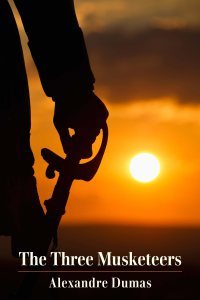 The Three Musketeers was originally published as a serial in 18844-1845. As was the case with many of Dumas’s works, it was written in collaboration with French historian and author Auguste Maquet. The novel is set in seventeenth century France. It is a swashbuckling thriller filled with romance and political intrigue. Though it can be difficult to read at times for the modern reader, it possesses rich characters and deeply entangled plot. I highly recommend this for experienced readers. Though I first read it when I was in middle school, I did not truly appreciate the depth of writing until I was an adult.
Writing Style – 4/5
As I mentioned in the opening dialogue, this book is a classic and was written for a time long since passed. When I sat down to write this review I realized I had to make a choice. Do I review this book as a “modern” reader or as a member of its intended target audience? This is important because to many “modern” readers this book may be seen as unreadable. Ultimately, I chose to review it as I read it—as a fan of the book who was aware of the fact that it is very difficult to read at times.
Alexandre Dumas’s writing style is not for the faint of heart if contemporary fiction is your primary go-to. Though I often read “classics” I would say that I typically read books with publishing dates later than the nineteenth century. That said, this is one of my favorite books of all time. Despite this, the Writing Style received my lowest grade. The following are a couple of examples why.
A bit wordy
According to Feedbooks.com The Three Musketeers runs 228,402 words. In modern fiction that is a very large number, though it is not unheard of (The Kingkiller Chronicle, Harry Potter, and Eragon to name a few have books in the series that run much longer). I made the choice to review this book as the “modern” reader that I am so I have to be honest and admit that, at times, the writing felt a bit “ramble-ish” (yep, I made that word up).
For an example, I chose—at random—the following passage. It is the description of the main character, d’Artagnan.
“Imagine to yourself a Don Quixote of eighteen; a Don Quixote without his corselet, without his coat of mail, without his cuisses; a Don Quixote clothed in a woolen doublet, the blue color of which had faded into a nameless shade between lees of wine and a heavenly azure; face long and brown; high cheek bones, a sign of sagacity; the maxillary muscles enormously developed, an infallible sign by which a Gascon may always be detected, even without his cap— and our young man wore a cap set off with a sort of feather; the eye open and intelligent; the nose hooked, but finely chiseled.”
This is all one sentence and not at all the longest in the book. Does it describe him well? Yes. Does the rambling nature of the sentence structure come across as hard to read for a modern consumer? Probably.
Difficult to remember names
Okay, again, I recognize that I am outside the original, intended audience. I do not speak French. I have never been to France. This means that what may seem common and memorable to someone who has is very much the opposite for me. Simply put, I had a hard time keeping up with all the “messieurs” and the like.
Writing Style Conclusion
Some readers of this review will crucify me for this point, but my goal was to give an honest opinion of my specific reading experience. As a reader, I try to immerse myself in the world that the author creates. When that “world” includes names I can’t pronounce and locations that I cannot picture because they are real places I have never been, I have a harder time immersing myself. When the writing style is wordy to the point that my mind risks drifting to other thoughts, I am taken out of the story. That is just my reality. Some would argue that this reflects the sad state of our education system. I would posit that it simply reflects the evolution of our language which is neither good nor bad. If you intend to read this book (which I strongly recommend that you do) you should be at least somewhat aware of this.
The Characters – 5/5
In my humble opinion, this is where The Three Musketeers shines. The primary protagonist, a young man named d’Artagnan, sets out to find fame and fortune. Along the way he first inadvertently makes enemies of three Musketeers named Athos, Porthos, and Aramis. They, of course, become best of friends (all for one and one for all!). Each of these characters is incredibly rich with evident flaws and strengths. On the flip side, Dumas creates a number of antagonists that contain equal depth.
Protagonists
As stated above, Dumas centers this story on d’Artagnan and his three Musketeer compatriots. Throughout the book, the reader encounters numerous opportunities to laugh at their often-bumbling ways. When I read this book again just a few months ago, I was surprised at how often I found myself laughing out loud. It is a genuinely funny tale.
d’Artagnan is the perfectly crafted character for a “coming of age” story. He grows from an arrogant young man to a hero in the truest sense of the word. I particularly loved the way Dumas portrayed him as a fool at love. He falls madly head over heels more than once throughout the story. He couldn’t have nailed a teenager better, in my opinion.
Each of the four main characters learns through flawed personalities and poor choices. Even at the conclusion of the story there are still many unanswered questions about each leaving the reader desiring more (good thing there’s more books that follow).
Antagonists
Dumas does a wonderful job of crafting antagonists that are likable and easy to hate at the same time. The Cardinal, the most consistent villain, is so much more than any Hollywood adaptation has portrayed him. He is cunning, wise, conflicted, and somehow respectable while being altogether despicable. I really enjoyed him.
Without giving too much away, d’Artgnan in his often hot-headed manner manages to scrounge up a good number of enemies throughout the book, each more colorful than the last.
The Characters Conclusion
Though the characters (especially the supporting cast) can be hard to tell apart due to their confusing names and titles, I felt that the entire cast was well-developed and stood apart from each other. By the end of the story, I really felt like I came to know d’Artagnan, Athos, Porthos, and Aramis and their unfortunate lackeys. Dumas includes a generous amount of humor to go along with the serious tone of the conflict and suffering that was present in the historical setting in which The Three Musketeers resides.
The Plot – 5/5
The Three Musketeers contains one of the most complex plots I have read in recent memory. There are storylines that are woven masterfully throughout the story. Unlike many modern tales, there is not just one storyline that the protagonists doggedly pursue to its conclusion. There are numerous side-elements that influence the overarching plot. In many ways, it felt like a full season of a favorite TV show. Each “episode” throughout the story reached a conclusion that fed into the over-arching story. Knowing that the story was originally released as a serial makes absolute sense.
Some might find the weaving plot-lines difficult to follow. In truth, they were, but that is not a negative. Quite the opposite. There’s no question, following this book took some effort, but I think that is a good thing. I like the simple, easy to digest story as much as the next guy. Those kinds of books are like desert. I LOVE ice cream at a disturbing level, but I have to eat more than just that. Sometimes I even have to eat foods that are difficult to prepare and take time to get through. I appreciate it as I am eating, but it can’t be enjoyed in a quick, fifteen-minute sitting. That is what The Three Musketeers is like. You have to really invest yourself in the process of reading it, but it is more than worth it.
The Plot Conclusion
Not surprisingly, this is the shortest section of the review (and always will be) because I want to give very little away. My suggestion to potential readers of the book is to read it slowly and carefully. It is a complicated plot with numerous sub-plots that take an effort to keep up with. If you are prepared for it and ready to enjoy the work it will take, you will thoroughly enjoy this book.


The Three Musketeers
Writing Style – 4/5Because The Three Musketeers was written in the nineteenth century (and originally in French) some readers may have a hard time following the writing style. Dumas is at times a bit wordy and the abundance of foreign words and confusing names/titles can make for a slightly more difficult read than some may be used to.
The Characters – 5/5This is where the book absolutely shines. d’Artagnan and his three friends–Athos, Porthos, and Aramis–are brilliantly created. They provide the reader with a rich reading experience. The antagonists are equally well-rounded.
The Plot – 5/5The plot is very nuanced and contains many layers. This book is, by no means, a quick read, but the reader will find quite a bit of intrigue and enjoyment in this multifaceted storyline.
Overall – 4.7/5This is one of my all-time favorite books. If you are an avid reader of classic literature then you would be right to change the “writing style” score to 5/5 making this a perfect score review. I thoroughly enjoyed the reading experience, and I can’t recommend it highly enough.
Overview
The Three Musketeers was originally published as a serial in 18844-1845. As was the case with many of Dumas’s works, it was written in collaboration with French historian and author Auguste Maquet. The novel is set in seventeenth century France. It is a swashbuckling thriller filled with romance and political intrigue. Though it can be difficult to read at times for the modern reader, it possesses rich characters and deeply entangled plot. I highly recommend this for experienced readers. Though I first read it when I was in middle school, I did not truly appreciate the depth of writing until I was an adult.
Writing Style – 4/5
As I mentioned in the opening dialogue, this book is a classic and was written for a time long since passed. When I sat down to write this review I realized I had to make a choice. Do I review this book as a “modern” reader or as a member of its intended target audience? This is important because to many “modern” readers this book may be seen as unreadable. Ultimately, I chose to review it as I read it—as a fan of the book who was aware of the fact that it is very difficult to read at times.
Alexandre Dumas’s writing style is not for the faint of heart if contemporary fiction is your primary go-to. Though I often read “classics” I would say that I typically read books with publishing dates later than the nineteenth century. That said, this is one of my favorite books of all time. Despite this, the Writing Style received my lowest grade. The following are a couple of examples why.
A bit wordy
According to Feedbooks.com The Three Musketeers runs 228,402 words. In modern fiction that is a very large number, though it is not unheard of (The Kingkiller Chronicle, Harry Potter, and Eragon to name a few have books in the series that run much longer). I made the choice to review this book as the “modern” reader that I am so I have to be honest and admit that, at times, the writing felt a bit “ramble-ish” (yep, I made that word up).
For an example, I chose—at random—the following passage. It is the description of the main character, d’Artagnan.
“Imagine to yourself a Don Quixote of eighteen; a Don Quixote without his corselet, without his coat of mail, without his cuisses; a Don Quixote clothed in a woolen doublet, the blue color of which had faded into a nameless shade between lees of wine and a heavenly azure; face long and brown; high cheek bones, a sign of sagacity; the maxillary muscles enormously developed, an infallible sign by which a Gascon may always be detected, even without his cap— and our young man wore a cap set off with a sort of feather; the eye open and intelligent; the nose hooked, but finely chiseled.”
This is all one sentence and not at all the longest in the book. Does it describe him well? Yes. Does the rambling nature of the sentence structure come across as hard to read for a modern consumer? Probably.
Difficult to remember names
Okay, again, I recognize that I am outside the original, intended audience. I do not speak French. I have never been to France. This means that what may seem common and memorable to someone who has is very much the opposite for me. Simply put, I had a hard time keeping up with all the “messieurs” and the like.
Writing Style Conclusion
Some readers of this review will crucify me for this point, but my goal was to give an honest opinion of my specific reading experience. As a reader, I try to immerse myself in the world that the author creates. When that “world” includes names I can’t pronounce and locations that I cannot picture because they are real places I have never been, I have a harder time immersing myself. When the writing style is wordy to the point that my mind risks drifting to other thoughts, I am taken out of the story. That is just my reality. Some would argue that this reflects the sad state of our education system. I would posit that it simply reflects the evolution of our language which is neither good nor bad. If you intend to read this book (which I strongly recommend that you do) you should be at least somewhat aware of this.
The Characters – 5/5
In my humble opinion, this is where The Three Musketeers shines. The primary protagonist, a young man named d’Artagnan, sets out to find fame and fortune. Along the way he first inadvertently makes enemies of three Musketeers named Athos, Porthos, and Aramis. They, of course, become best of friends (all for one and one for all!). Each of these characters is incredibly rich with evident flaws and strengths. On the flip side, Dumas creates a number of antagonists that contain equal depth.
Protagonists
As stated above, Dumas centers this story on d’Artagnan and his three Musketeer compatriots. Throughout the book, the reader encounters numerous opportunities to laugh at their often-bumbling ways. When I read this book again just a few months ago, I was surprised at how often I found myself laughing out loud. It is a genuinely funny tale.
d’Artagnan is the perfectly crafted character for a “coming of age” story. He grows from an arrogant young man to a hero in the truest sense of the word. I particularly loved the way Dumas portrayed him as a fool at love. He falls madly head over heels more than once throughout the story. He couldn’t have nailed a teenager better, in my opinion.
Each of the four main characters learns through flawed personalities and poor choices. Even at the conclusion of the story there are still many unanswered questions about each leaving the reader desiring more (good thing there’s more books that follow).
Antagonists
Dumas does a wonderful job of crafting antagonists that are likable and easy to hate at the same time. The Cardinal, the most consistent villain, is so much more than any Hollywood adaptation has portrayed him. He is cunning, wise, conflicted, and somehow respectable while being altogether despicable. I really enjoyed him.
Without giving too much away, d’Artgnan in his often hot-headed manner manages to scrounge up a good number of enemies throughout the book, each more colorful than the last.
The Characters Conclusion
Though the characters (especially the supporting cast) can be hard to tell apart due to their confusing names and titles, I felt that the entire cast was well-developed and stood apart from each other. By the end of the story, I really felt like I came to know d’Artagnan, Athos, Porthos, and Aramis and their unfortunate lackeys. Dumas includes a generous amount of humor to go along with the serious tone of the conflict and suffering that was present in the historical setting in which The Three Musketeers resides.
The Plot – 5/5
The Three Musketeers contains one of the most complex plots I have read in recent memory. There are storylines that are woven masterfully throughout the story. Unlike many modern tales, there is not just one storyline that the protagonists doggedly pursue to its conclusion. There are numerous side-elements that influence the overarching plot. In many ways, it felt like a full season of a favorite TV show. Each “episode” throughout the story reached a conclusion that fed into the over-arching story. Knowing that the story was originally released as a serial makes absolute sense.
Some might find the weaving plot-lines difficult to follow. In truth, they were, but that is not a negative. Quite the opposite. There’s no question, following this book took some effort, but I think that is a good thing. I like the simple, easy to digest story as much as the next guy. Those kinds of books are like desert. I LOVE ice cream at a disturbing level, but I have to eat more than just that. Sometimes I even have to eat foods that are difficult to prepare and take time to get through. I appreciate it as I am eating, but it can’t be enjoyed in a quick, fifteen-minute sitting. That is what The Three Musketeers is like. You have to really invest yourself in the process of reading it, but it is more than worth it.
The Plot Conclusion
Not surprisingly, this is the shortest section of the review (and always will be) because I want to give very little away. My suggestion to potential readers of the book is to read it slowly and carefully. It is a complicated plot with numerous sub-plots that take an effort to keep up with. If you are prepared for it and ready to enjoy the work it will take, you will thoroughly enjoy this book.
ThatReviewGuy.com

- Benjamin J. Denen's profile
- 38 followers

