
P.H. Solomon's Blog, page 330
October 4, 2014
REVIEW: The Black Bag by PH Solomon
 PHS:
PHS:
Re-blogging on Archer’s Aim: a Review of my short fiction – The Black Bag
 Originally posted on Indie Book Reviews:
 ‘The Black Bag’by P.H. Solomon is a short story that has a feel of a full-length novel. The reading experience is akin to starting in the middle of the story and couldn’t wait to tear through to the end. And yet you also want to know more of the backstory of Coryss and how the curse of the witches came about. It’s truly engaging with fascinating character interaction and dynamics.
It is graphic in its presentation, with imagery that sets the scenes so vividly, making the story more intriguing. It’s such a delightful short read with highly imaginative storytelling.

You can purchase it on Amazon:
Follow author P.H. Solomonon twitter.
Filed under: Uncategorized








Author Feature: Rayne Hall
PHS:
I’ve got a few of Rayne’s books for writers and I find the very helpful. Re-blogging on Archer’s Aim.
 Originally posted on Nicholas C. Rossis:

Rayne Hall
You may have met Rayne Hall on Twitter, her preferred medium. She has literally written the book on the best ways to use Twitter – it’s called “Twitter for Writers” and is part of her celebrated Writer’s Craft series.
I met her almost a year ago, when I first started using Twitter. After tweeting with her for a couple of months and pestering her for advice and help – which she was always happy to provide – I began to grasp the most basic tenant of her philosophy, and what’s possibly a one-line summary of her book: “just be real.” Readers of this blog have read many of my posts urging you to stop promoting and start engaging, so it is only fitting that you now find out where this advice originally came from.
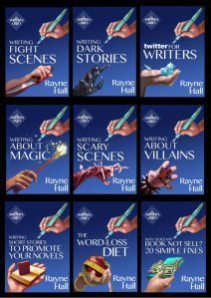 But Rayne has done much more for me. Her book “The…
View original 1,744 more words
Filed under: Uncategorized







October 3, 2014
Project Management Pt 3: Balancing Projects and Tasks

Clip Art Image Copyright by Microsoft. Clip Art Used by Permission of Microsoft
This is an ongoing series about managing writing-related projects. In this edition I want to get deeper into analyzing time. The original post is here and part 2 is here.
Here’s what I wrote from the previous post on this subject regarding
Analyze your projects and tasks: This seems straightforward but take time to really think this through. Perhaps you have a novel with a deadline, a short story or two that should be completed soon, blogs to post, social media to manage and any number of other writing-related jobs to address in a week. Assign priority to the items on your list at a monthly, weekly and daily level. Assign goals to your projects and be specific about what you expect – without specificity you only have good intentions. How many hours will your project take to complete? On what are you basing your criteria for priorities? Time? Immediate income? Long-term income? How much time do you need to spend on writing-related tasks? Once you understand this proceed to the next tip.
As I wrote in the previous post about analyzing time, you next need to be able to schedule your time. But to schedule you need to understand what to schedule and when. As mentioned above, you need to consider priorities and goals. Let’s examine these in some detail in order to fit the pieces together.
I also previously noted that we writers are a busy lot these days, often changing hats several times during a day – and not only in regard to writing. Gaining a firm notion of what needs to be done next along with the details is important. However, due to time constraints, we tend to rush from activity to activity without any clear vision of where we’re headed. It’s time to take a deep breath, step back some and take it all in – not to stress out but to observe, organize and take action. This doesn’t mean throwing your muse to the curb but merely gaining clarity so you can tap into that muse. The clutter often prevents creative traction.

Clip Art Image Copyright by Microsoft. Clip Art Used by Permission of Microsoft
Let’s take a moment and clarify goals and priorities. Goals are what you strive to accomplish. These may be long-term or short-term in nature as well as ongoing, such as social media. You may have a long-term goal of building your writer platform and publishing a novel but have short-term goals for funding your writing. I would see the writer platform as an ongoing goal where you need to blog, update social media and grow your online tribe each day while aiming for longer-term goals for an upgraded website using various means. A novel or series of them would be a long-term goal. Funding your writing in some way would be a shorter-term goal that needs attention to a series of projects you hope will pay-off enough to fund some longer-term goals. This is where priorities come into play. You must decide what is most important to your time in such a way as to balance long-term and short-term goals. You may need to complete some short projects to clear a path for novel-writing. Regardless of what your goals are if you don’t set priorities for scheduling you are apt to become entangled with lots of good intentions and little accomplished through inefficiency.
List all your goals and regular writing duties. You may forget a few but you can add them later.
Decide what’s most important based on your criteria – what’s long-term and what’s short-term.
Now compare these prioritized goals with your available time.
Attach the time-value, that is how long it takes to complete an activity, to each goal.
Now you begin to see the whole picture of all that you are trying to accomplish. Your set of goals are much more than a murky set of notions. You begin to see what it will take to reach your goals. This leads us to the next blog about perspective in project management.
Do you have a set of goals that are clearly defined? Do you have your goals organized by priority? I’d love to hear from you so won’t you leave a question, idea or strategy in the comment section. I’d also love to connect with you over social media so check my contact page for that information. See the News page for announcements and remember to sign-up to receive news and posts by email. I’ve added a new sign-up tab on my FaceBook page to simplify the process. New followers can download The Black Bag via free coupon today!
Thanks for visiting!
PHS
Clip Art Image Copyright by Microsoft. Clip Art Used by Permission of Microsoft
[contact-form]
Filed under: Blogging, Indie Publishing, Planning, Self-publishing, Social Media, The Black Bag, Tips, Twitter, Writing Tagged: creativity, Facebook, Goals, Indie Publishing, P. H. Solomon, Planning, Social Media, The Black Bag, Tips, Twitter, writing







October 2, 2014
Viewpoint Writing is Certified Organic
PHS:
I’m reblogging this on Archer’s Aim where I’ve been sharing about deep POV like this. Thx for the great article and examples, MTM!
 Originally posted on Storiform.com:
 The first fiction I read as an adult was Zen and the Art of Motorcycle Maintenance. I was drawn in by a mysterious guy, Phaedrus, whom the viewpoint character kept veiled in his faulty memory. (Incidentally, this is different from an author playing games and holding back information that the VP character knows.) As the book jumped from story to philosophy and back, a bit more of Phaedrus emerged, making me finish the book before I learned the disturbing truth about who he was. I felt kind of sick.
Even so, I loved the book, especially the philosophical sections.
A few years later when I was learning to write fiction I ran into a “viewpoint” discussion and remembered how the author of Zen had used a strictly limited viewpoint to suck me in and string me along.
The opposite of a strictly limited viewpoint is an “omniscient” viewpoint. The terms have evolved over…
View original 792 more words
Filed under: Uncategorized





Project Management Pt. 2: Analyzing Time

Clip Art Image Copyright by Microsoft. Clip Art Used by Permission of Microsoft
This is an ongoing series about managing writing-related projects. In this edition I want to get deeper into analyzing time. The original post is here.
Here’s what I wrote from the previous post on this subject regarding analyzing time:
Analyze your time : Most writers these days are making a go of being a professional on the side. However, if you are unaware of how much time you have during the week you may be expecting too much or too little of yourself. Take a few minutes to calculate how much time you have in a regular week to use for writing. It is important not to be honest with yourself about your available time so you can apply the following tips. Over-estimating how much time you have may mean being frustrated that you are not completing writing projects and tasks as expected so be reasonable.
So, to expand on this idea, there are two tasks you need to accomplish:
Analyze your available time: You may need to take an average week and survey what time you have free to work on anything writing related. In doing so, you may find you have more or less time than you thought. Either way you have a solid idea of your availability and what you can do to schedule that time as well as manage that availability from week to week and day to day. If you have a family you can communicate when you will be busy with writing in order to work undisturbed. Regardless, you have a block of time and it’s like a container which you can fill your with your flexible schedule.

Clip Art Image Copyright by Microsoft. Clip Art Used by Permission of Microsoft
Next, track how long it takes to work through a task. If you are editing, how long with it take to do the type of editing you are on for each chapter? How long does it take you to update social media? How long does it take to write a blog? Be as specific as possible with each type of activity while understanding sometimes a chapter or blog takes longer to work on than others might – it’s just an average but be as accurate as you can. Once you have these identified you have an idea of how much of how much time it will take to complete a project or activity so you can approach your schedule with a sense of accuracy and focus.
The importance of all this is that once you know your actual availability you know how to schedule. That’s like the foundation of managing your projects. Next I will hit on approaching your schedule with a sense of priority.
Have you ever checked how much time have to write? Do you know how much time it takes to do specific writing activities? Please leave a question, idea or strategy in the comment section because I’d love to hear from you. I’d also love to connect with you over social media so check my contact page for that information. See the News page for announcements and remember to sign-up to receive news and posts by email. I’ve added a new sign-up tab on my FaceBook page to simplify the process. New followers can download The Black Bag via free coupon today!
Thanks for visiting!
PHS
Clip Art Image Copyright by Microsoft. Clip Art Used by Permission of Microsoft
[contact-form]
Filed under: Blogging, Creativity, Editing, Fiction, Indie Publishing, Planning, Self-publishing, Social Media, The Black Bag, Tips, Twitter, Writing Tagged: creativity, Indie Publishing, P. H. Solomon, Planning, Social Media, The Black Bag, Tips, Twitter, writing







October 1, 2014
5 Ways I Use My Journal
NOTE: This is an updated version of my blog on why I journal regularly which was posted several months ago. I’ve added some content to share more on the subject.

Clip Art Image Copyright by Microsoft. Clip Art Used by Permission of Microsoft
I never considered writing a daily journal until a few years ago. At the time I wanted to see how much I could write per day on a consistent basis. After a month I was surprised by how many words I could churn out. It gave me a baseline for how much I could expect to write daily, weekly and monthly. I even realized I could write most of a rough draft in thirty days – here I come NanoWriMo.
But as I used a daily journal I discovered a few more reasons to continue. I’ve since read Julia Cameron’s book The Artist’s Way and found that she emphasizes using “Daily Pages” (essentially a journal) to write three pages in the morning. I don’t always write that much since I’d rather spend as much time as possible on projects but the notion and reasons discussed in the book are great for gaining creative traction.
I could use it to prime the pump. You want to get started writing but how? Sometimes you need a warm-up and writing about anything can be just the trick to clear the mind. Also, I found that I could set the scene in my mind with a few notes on what I expected to accomplish and how dialogue might flow. I might even return to the journal to further nail down additional scenes depending on what I accomplish.
I can track what I need to do during the day. Yesterday I wrote about how I work with goals but I find that putting them in my journal keeps them in my sites throughout the day. I use the Strikethrough button in Word to mark off goals achieved. I can also easily “re-heat” goals that roll over to the next day for whatever reason.
I also use a journal to create a loose, fluid schedule of what I’m doing – everything. This way I know how I’m progressing through goals and other activities throughout the day. Now you might wish to use a calendar for this function but I find using the journal is one less thing to update than a calendar. Besides, I find a calendar is better for reminders about events and appointments in advance.
A journal can also be used for project development. It’s a great place to explore creative ideas. Once you’ve written these concepts they are easily transferred into other apps or files you use for development such as Scrivener, Evernote, your blog or anything else.
A cure for “writer’s block”. I don’t believe in “writer’s block”. I view this problem as something which is troubling me in some way. I journal to discover what the problem is. It could be personal or something in a project that I intuitively understand is a problem. If the issue is something personal it could also be the seed for for a writing idea to be used in some way which actually becomes a creative opportunity. But either way I work the problem out through my journal.

Clip Art Image Copyright by Microsoft. Clip Art Used by Permission of Microsoft
What can you use to journal? I mainly use Word and update it during the day but I only keep a monthly file and transfer developmental ideas to other files and apps. You could use Evernote as a purely developmental journal and tack in links or pictures. You could also use Instagram as a visual journal. While Scrivener would not directly serve this purpose, research containers could be used as a developmental journal as well.
Do you journal? If so, what do you use? I love to receive comments so feel free to leave one. See the News page for announcements and remember to sign-up to receive news and posts by email. I’ve added a new sign-up tab on my FaceBook page to simplify the process. New followers can download The Black Bag via free coupon today!
Thanks for reading and have a great weekend but don’t spend too much time writing in the journal.
PHS
Clip Art Image Copyright by Microsoft. Clip Art Used by Permission of Microsoft
[contact-form]
Filed under: Blogging, Creativity, Fiction, Indie Publishing, Planning, Self-publishing, Social Media, The Black Bag, The Bow of Destiny, Tips, Twitter, Writing Tagged: creativity, Facebook, Goals, Indie Publishing, Journal, P. H. Solomon, Scrivener, The Black Bag, The Bow of Destiny, Tips, Twitter, What is Needed, writing







The Key to GOOD Writing is BAD Writing
PHS:
Thx for the encouraging post. I’m reblogging on Archer’s Aim!
 Originally posted on Joshua M Swenson:
That’s right. The key to good writing is bad writing.
You’ve heard of Thomas Edison? That guy knew how to succeed. He also knew how to fail. Probably a cliché example but it’s a dang good one. We’ve all heard about how Edison was asked: “How did it feel to fail 1,000 times on the lightbulb?” And Edison replied: “I didn’t fail 1,000 times. The light bulb was an invention with 1,000 steps.”
View original 586 more words
Filed under: Uncategorized







September 30, 2014
Tech for Writers: 7 Thoughts about Web Presence

Clip Art Image Copyright by Microsoft. Clip Art Used by Permission of Microsoft
In this tech tips post, I’m covering more than just how to approach technical aspects of being a writer in todays world. A web presence is essential for a writer since the web is now Main Street where people do much of their business and, essentially, window-shop. For this reason, it’s important for a writer to consider how to build a platform on the internet. It’s easy to simply rush into the process and make a site and use any old email address. But careful consideration should be made in order to present yourself, the author, and your writing products as a consistent brand.
Today’s writer must have both a comprehensive and cohesive web presence. A web site is necessary, preferably with a blog (more on this later), and social media.
Regarding a website, a writer must choose how to create a site which needs some forethought. First, you must consider your needs and tops on that list is a domain name that fits your name. Why? Because this is the sign for your business and the domain to where your readers will email you which is the second need. You need to have at least one email address where you can be contacted at a professional level. Take care to plan these aspects first since they will be the foundation of the site.
Next you need hosting. There are numerous hosting services available on the web. Shop around for what meets your needs for budget and control. Research what the offerings and services are available for each hosting service as well as the add-ons. Personally, since I didn’t want to initially sink a large sum of money into a long-term hosting contract, I went with a free hosting service and purchased my domain and got my email hosted over Google. However, I plan to move into paid hosting services in the future. Why? I will need more control than the basic services now allow me – such as custom themes and forms.
You also need a cohesive set of themes when you can afford it. At the moment, I am working with a cover artist on the cover of my first novel. As part of what I’m having designed there will be banners and themes based on my cover art that I can use on Twitter, Facebook and other forms of social media. This will lead to consistent branding for the entire platform. I would rather have done this from the beginning but there were budgetary concerns so I decided to grow into this. Consistent branding is an important goal and will be a major milestone for my writing platform when reached.

Clip Art Image Copyright by Microsoft. Clip Art Used by Permission of Microsoft
You need to be prepared to blog. Why blog at all? There are several reasons. First you can offer additional/parallel content to your main content (novels or books) via your blog. In my case, I’ve posted a serial prequel, “What is Needed“, for my novel. Additionally, you can blog about writing-related topics that interest you such as responding to opinions expressed by other writers. Bottom-line, a blog is a great way to gain traffic to your site and your products.
Social media presence serves to funnel interested readers to your site which represents your products. In this way you can grow your email list which will serve as a core of prospective readers who will be your word of mouth advertising. As noted above, when you have the means try to present a consistent brand across all formats that make up your web presence just like any other business.
Finally, you must update your web presence regularly. Most writers just want to write and put out their products. However, you must attract readers. To do this you must offer updated information on a regular basis. You need regular traffic to your site to sell books. Schedule the time to build to maintain your web-based writer platform so you’re not distracted into wasting time. Have goals when updating your web presence so that you set limits on both what and how much you will update.
Clip Art Image Copyright by Microsoft. Clip Art Used by Permission of Microsoft
What are your thoughts on a web presence? Have you hesitated to build a platform? In the near future I’ll re-visit the topic by discussing the nuts and bolts of what I’ve done and why, as well as where I’m going with it. Share your thoughts, strategy and platform-building ideas in the comments section. See the News page for announcements and remember to sign-up to receive news and posts by email. I’ve added a new sign-up tab on my FaceBook page to simplify the process. New followers can download The Black Bag via free coupon today!
Thanks for reading!
PHS
Clip Art Image Copyright by Microsoft. Clip Art Used by Permission of Microsoft
[contact-form]
Filed under: Blogging, Creativity, Fiction, Indie Publishing, Marketing, Planning, Self-publishing, Social Media, Tech Tips, Tips, Twitter, What is Needed, Writing Tagged: Coverart, Goals, Indie Publishing, Marketing, P. H. Solomon, Planning, Platform, Short Stories, Social Media, The Black Bag, The Bow of Destiny, Tips, Twitter, What is Needed, writing




The 3 Dimensions of Character
PHS:
Reblogging on Archer’s Aim – great discussion about character development!
Originally posted on Joshua M Swenson:
Have you ever walked out of a theater or finished reading a story and thought “Wow that character was so one dimensional?” If so, you probably left it at that and decided not to recommended the movie or novel to a friend. And if it was a movie, it would have likely gotten a “Rotten” score on RottenTomatoes (which should have warned you to not see it in the first place!). But I digress. The point is that Characters need to be like real people: they need to be multi-dimensional in order to grab our attention and guarantee a great story.
But what are those dimensions?
View original 480 more words
Filed under: Uncategorized




September 29, 2014
Tech Tips for Writers – Scrivener

Screenshot of My Novel WIP – The Bow of Destiny
Many writers are using Scrivener to develop projects ranging from fiction to non-fiction varying in length from articles, blogs, short stories to books. So understanding that usage is high for this software, I wanted to share insights on usage in a short post.
Why you should use Scrivener if you aren’t already? Isn’t is just another writing editor with some tools geared toward writers? Is it a waste of money? The main reason you should put it in the budget or at least give it a try for free is one word: development (and here are additional reasons). Scrivener is a great tool to use for developing almost any kind of writing project. It is organized so that you can store all kinds of information related to the project all in one location. Likewise, you no longer need an outline since you can use the folders in the software as the outline. Using this method you can easily move pieces of your work around until you are satisfied. I’ve been using it for just this kind of structural re-organization of my novel, The Bow of Destiny, duing my current revision. Michael Sullivan discusses how he realized he could make use of Scrivener and even further developed his fantasy world. Troll River Publications posted a useful video for using Scrivener’s tools for outlining.

Editing for Deep POV
I especially like using this software for developing shorter projects like a blog post, article, paper, or even a short story. I used Scrivener to develop my blog serial – What is Needed and will use it in developing my longer projects. It has helped me re-organize my current novel but I’m still learning all the features for editing purposes. If I have trouble editing I get around this by doing a copy/paste from my novel into a temporary file in Microsoft Word to do my heavy editing and then copy/past back into Scrivener. Why do this? Because the whole book is organized in Scrivener which also allows you to compile the manuscript into a single Word document, PDF document or even an e-book. I look forward to expanding my skill with Scrivener and sharing more details about the features as I do. Regardless, I done with organizing and editing the “old-fashioned way” – perhaps you should consider doing the same if you haven’t already.
If you aren’t using Scrivener, why haven’t you tried it? If you are using it, please share your tips and ideas in the comments section. See the News page for announcements and remember to sign-up to receive news and posts by email. I’ve added a new sign-up tab on my FaceBook page to simplify the process. New followers can download The Black Bag via free coupon today!
Thanks for reading!
PHS
[contact-form]
Filed under: Blogging, Editing, Fiction, Indie Publishing, Planning, Self-publishing, Social Media, Tech Tips, The Black Bag, The Bow of Destiny, Tips, Twitter, What is Needed, Writing Tagged: Facebook, Formatting, Indie Publishing, P. H. Solomon, Planning, Scrivener, Short Stories, Smashwords, Social Media, The Black Bag, The Bow of Destiny, Tips, Twitter, What is Needed, writing

 [image error]


