Kimberly Wenzler's Blog, page 10
March 16, 2014
Much Ado About Love
Last month, Lit Ladies (book club no.1) decided to take a trip into NYC to see Much Ado About Nothing, an off, off (take the A train downtown), off broadway play.
I am only slightly familiar with Shakespeare’s work, thanks to Mel Gibson’s movie, Hamlet, back when Mel Gibson was hot. And I recall, vaguely, reading King Lear in high school. That’s pretty much the extent of my Shakespeare knowledge.
Much Ado About Nothing was a comedy, I was told, which was perfect. I needed a good laugh.
For the purposes of keeping this reasonably short, I’ll bypass the pre-play festivities, which include the debacle of trying to get nine naive, suburban girls into the subway. A story for another day (and a funny one, too. I promise).
As we settled into the theatre, the lights dimmed, the audience hushed, and the actors walked onto the stage dressed in contemporary clothing. My earlier ambivalence about seeing the play diminished, and my hopes lifted.
Until one actor opened his mouth and spoke ye olde English.
During the initial dialogue, all nine of us glanced back and forth to each other, to see if anyone understood. Sure enough, no one did. When the rest of the audience laughed, we shrugged. How could we be so lost? How did everyone else understand what was going on?
I needed subtitles. Or an interpretor. Or a nap. (We had just enjoyed dinner down the street and of course, this book club doesn’t call themselves Lit Ladies because they like to eat).
I closed my eyes briefly, blaming the vodka, and not the fact that my brain hurt trying to understand what these people were saying. I was grateful to have paid only $22. for my ticket (Groupon). Small gifts.
We were well into the second half when I finally caught on to the story. It must be similar to watching an Opera sung in Italian; how eventually you get the gist of a story by facial expressions and reactions. From what I could surmise, MAAN was about the courtship of two couples, one of whom is tricked into confessing their love for each other. As I laughed with the rest of the audience, I felt really good to be involved in something that was written 500 years before I was born.
Overall, Lit Ladies agreed, though slow to start (for us), it was not bad.
I didn’t give William much thought after that night, until a few days later.
I was watching an old rerun of Mad About You and during a tender scene, Jamie happened to quote Juliet, from Romeo and Juliet. Maybe it was the way she said it, or the circumstance under which it was whispered (Paul was having an operation), but I understood, with such clarity, every word. It stayed with me for days.
It was about love. This was the quote:
“When he shall die,
Take him and cut him out in little stars,
And he will make the face of heaven so fine
That all the world will be in love with night
And pay no worship to the garish sun.”
― William Shakespeare, Romeo and Juliet
Well, I started looking for other Shakespeare quotes and found this:
Doubt thou the stars are fire;
Doubt thou the sun doth move;
Doubt truth to be a liar;
But never doubt I love.
(Hamlet, 2.2)
And this:
When Love speaks, the voice of all the gods
Makes heaven drowsy with the harmony.
(Love’s Labour’s Lost, 4.3)
There are so many stirring quotes written by this man (that I actually understand), but I won’t list them here. Suffice it to say, I spent an afternoon falling in love with his words. If you haven’t had the pleasure, take a gander at Romeo and Juliet. It’s a wonderfully romantic, lyrical experience.
Shakespeare may speak in circles, and I may not understand most of what he wrote, but the man knew love.


February 25, 2014
To Russia, With Love

Hi there. It’s me.
Let’s talk books.
If I love a book, I shout it from the rooftop (figuratively speaking): I mention it to everyone I know, blog it’s wonderfulness, email the author, rate it on Goodreads, tweet my rating, and (try to) get all of my friends to read it.
I’ve read a few books this year, and until now, have not had the desire to shout about any . So, I thought I’d give a quick synopsis of what I’ve read the past month, what I’m reading now, and how I feel about them.
Just in case you were wondering.
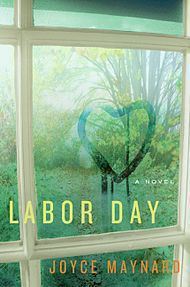
I read Labor Day by Joyce Maynard for my Wine Not Read book club. It’s about a lonely boy and his lonely mother who take an injured escaped convict home from a store and spend five days with him at their house. With the movie out, all the press, the author being interviewed by Matt Lauer, I figured it would be great. It wasn’t. It never grabbed me emotionally and I was disappointed. Perhaps if the story was told from the woman’s point of view instead of from a thirteen-year-old boy, I might have enjoyed it more. Perhaps not. This one is not worth shouting.
I also read The Girl You Left Behind, by JoJo Moyes, a dual timeframe story set in WWI and modern day. I loved the beginning of this book: the story about Sophie and Edouard during WWI, and the decision Sophie’s forced to make while waiting for her beloved Edouard to return safely from war. It was really well done and hooked me immediately. However, I didn’t connect with the modern day story of Liv and Paul and that changed my feeling for the book from “love” to “like.”
I admire this author, who blew my mind last year with Me Before You. Moyes’ The Last Letter From Your Lover was also truly enjoyable. The Girl You Left Behind does not hold a candle to either of those. It was good. Not great. But good. No shouting. No rooftops. Okay, maybe a fourth third floor balcony.
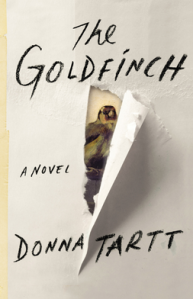
I am in the middle of The GoldFinch, by Donna Tartt, a 771 page story about a young boy in NYC who survives an accident that kills his mother. The writing is beautiful, but the details are exhausting and I need to take breaks, which is something I don’t ordinarily do. I never cheat on one book with another. Each story gets my full attention until completion. I just can’t do it with this one. I will finish it. Eventually. But I need a few moments to breathe.
This leads me to the other book I’m currently reading, and the reason for this message. I’m talking about Six Days in Leningrad, written by none other than my most favorite author, Paullina Simons. In this memoir of her first visit back to Leningrad (now St. Petersburg) in 25 years, Simons describes beautifully how she feels returning to her childhood home, in order to do research for her book The Bronze Horseman. Yep, that’s right. This is the story of how she got the information and inspiration to write THE story.

Reading Simon’s poignant account of her visit with her father, I realize just how much of herself and her own Russian life she put into her beloved trilogy. This one is a keeper.
I’m heading for the roof.
Enjoy!