Allen Levine's Blog, page 9
September 15, 2014
Notes from an Ultra Marathon Pacer
We've all seen countless pictures of trail races where sweaty, dirt-encrusted men and women emerge from a tree-line to sprint (or more usually, trudge quickly) to the finish line. I write this because, as much as I enjoyed participating in the Hawk 100 event over the weekend, I did not take any pictures. So you'll have to use your imaginations (unless you've been on the Clinton North Shore trails where the race is held), and simply picture everyone as sweaty, dirty, and tired.
After helping lay out the course's Bunker Hill and Goodwin Loop sections (the only adjoining open, grassy, hilly expanses in the run), on Friday, I returned to the race at 1 a.m. on Sunday to pace a buddy who was running the full 100 miles (there were 50 and 26.2 mile races occurring simultaneously as well). I had agreed to meet him for the fourth 25 mile loop of his run and make sure he finished with a good time.
My friend, Paul, is pretty good at undertaking major challenges, having sailed the Pacific (and Atlantic) solo on may occasions in a 26' boat, and having hiked alone across the Himalayas. He has also run many 50 mile and 100 kilometer ultras. So I wasn't too worried about his ability to finish the Hawk 100. We are both members of the club that was putting on the event. He had also been training on the course for over a month - knocking out 30 mile runs on a regular basis.
So I showed up at the start/finish line to wait his arrival as he completed his third 25 mile lap. Around 3:30 am, he came in. He looked better than most (and slightly worse than some) of the other runners who still had a lap to go. After an unusually long break of 15 minutes (he changed shoes and socks, and ate a veggie burger and a cup of bean soup), we took off into the darkness.
He and I had both completed a marathon on the same course last year, and we both have run the trails many times. So it wasn't an unknown entity. Still, running trails at night is an interesting experience - as the world around you shrinks down to only that which is visible in the beam of your headlamp. I had brought a Petzl headlamp. I also had grabbed the ridiculously bright, rechargeable Light And Motion headlight from my mountain bike. I clamped the lightweight dynamo around my index finger and used it whenever I really needed to see what was coming up.
The hours of running in darkness were spent in easy conversation. Paul was lucid even though he'd been up and running for just over 20 hours. We chugged into the aid station at Land's End (4-5-ish miles in), filled our bottles and hydration packs, and had more soup - a potato chili made by ultra-runner, Gary Henry. We then set off for a 6.5 mile segment that traced the edge of the lake and then took us to a switchback-filled hilly section of the course called Cactus Ridge (yes - there are nopale cactus on the ridge). The sky lightened before we arrived at the West End aid station, situated near the far end of the course. Paul was a bit tired - as one could imagine he would be.
Food now became the only fuel he had. All other stores seemed to be gone. I had him take grapes, crackers, and gel packs from the station so that he could eat whenever his energy flagged. We hit Bunker Hill and the Goodwin Loop and cruised through the two sections at one of the faster paces of the day, Paul led, and seemed to get his mojo back, with the food intake and the light of day lifting his spirits. Since I hadn't been racing for 24 + hours at that point, I was able to really enjoy the vistas of the lake and countryside that Bunker Hill provided. The air was cool and the sun shone bright in a cloudless sky. Bunker Hill and Goodwin were my favorite portions of the run. I felt lucky to be outside running in such a beautiful place.
After passing the aid station that serves as the entrance and exit to Bunker Hill again, we got down to the business of finding a way to finish the final 12 miles of the Hawk 100 mile race. The plan was to run/jog/walk 2-3 miles until Paul's food energy depleted, and then stop for 2-3 minutes while he ate and recharged for the next round. I let him lead when he was moving at a good pace. When he wasn't, I led and talked him on - pointing out easy places on the rocky, hilly trail to pick up speed.
When we arrived back at the Land's End aid station (which is situated at a junction of the 2 trails we were running - one longer and one shorter), it signified that there were only 6.5 miles left to go. We took a little longer than we had at West End (around 7 minutes), and then set off for the final push.
It wasn't exactly a slog. We ran a bit (actually we had one of the fastest miles of the day between mile 95-96), and I talked to Paul about how close we were getting. I offered calculations that would put us in way under the time limit. I kept all talk positive and upbeat - as I had for the whole run. It was a pretty good, but short-lived, portion of the run.
After taking a break with just under 4 miles to go, Paul announced that the food he was ingesting had stopped giving him any noticeable energy. He felt entirely depleted. I told him to take a GU gel shot (we'd been using Hammer Nutrition's banana-flavor, but had run out), which he did. After about five more minutes he still had no energy. I was leading - walking/jogging as quickly as I could to keep him going.
I could tell he wanted to stop for a break, but told him that if food wasn't going to work, stopping to rest would end up being a negative as his muscles and joints would stiffen (which they had been doing each time we stopped). This made starting up more difficult each time as he needed to walk a hundred yards or so before his legs gained enough range-of motion to run. I knew I had to now turn to the Well of Cliche. I told him that the mental and physical place he was in was where 100 mile-finishers are made. If it was easy, everyone would do it. When food no longer works, guts are all you have left to run on.
I said all this with conviction. While I have no idea how someone runs 100 miles (I have not done it myself), I do know that I have finished my (much shorter) ultra runs with nothing left in the tank but sheer will and determination to reach the end. And you know what? Paul seemed to agree with my assessment. I led. He followed - going to some depth in his mind and body that I did not want to contemplate.
As we approached the end of the trail, I stopped and told him that I wanted him to take the lead and run across the final field to the finish. And he did. Watching from the sideline as I peeled off, I actually had tears in my eyes. We had just run slightly less than a marathon together on a difficult course. I had done my job as pacer, and he had gotten his 100 miles.
Afterwards, as we sat eating veggie burgers, Paul paid me a couple of ultimate compliments for a pacer. He said that he couldn't have done it without me - certainly not in the time that we completed the last circuit. And lastly, he said that he thought the Hawk 100 was less 'his race' than it was 'our race'. Not at all true. But I really have to say that I appreciate the sentiment.
After helping lay out the course's Bunker Hill and Goodwin Loop sections (the only adjoining open, grassy, hilly expanses in the run), on Friday, I returned to the race at 1 a.m. on Sunday to pace a buddy who was running the full 100 miles (there were 50 and 26.2 mile races occurring simultaneously as well). I had agreed to meet him for the fourth 25 mile loop of his run and make sure he finished with a good time.
My friend, Paul, is pretty good at undertaking major challenges, having sailed the Pacific (and Atlantic) solo on may occasions in a 26' boat, and having hiked alone across the Himalayas. He has also run many 50 mile and 100 kilometer ultras. So I wasn't too worried about his ability to finish the Hawk 100. We are both members of the club that was putting on the event. He had also been training on the course for over a month - knocking out 30 mile runs on a regular basis.
So I showed up at the start/finish line to wait his arrival as he completed his third 25 mile lap. Around 3:30 am, he came in. He looked better than most (and slightly worse than some) of the other runners who still had a lap to go. After an unusually long break of 15 minutes (he changed shoes and socks, and ate a veggie burger and a cup of bean soup), we took off into the darkness.
He and I had both completed a marathon on the same course last year, and we both have run the trails many times. So it wasn't an unknown entity. Still, running trails at night is an interesting experience - as the world around you shrinks down to only that which is visible in the beam of your headlamp. I had brought a Petzl headlamp. I also had grabbed the ridiculously bright, rechargeable Light And Motion headlight from my mountain bike. I clamped the lightweight dynamo around my index finger and used it whenever I really needed to see what was coming up.
The hours of running in darkness were spent in easy conversation. Paul was lucid even though he'd been up and running for just over 20 hours. We chugged into the aid station at Land's End (4-5-ish miles in), filled our bottles and hydration packs, and had more soup - a potato chili made by ultra-runner, Gary Henry. We then set off for a 6.5 mile segment that traced the edge of the lake and then took us to a switchback-filled hilly section of the course called Cactus Ridge (yes - there are nopale cactus on the ridge). The sky lightened before we arrived at the West End aid station, situated near the far end of the course. Paul was a bit tired - as one could imagine he would be.
Food now became the only fuel he had. All other stores seemed to be gone. I had him take grapes, crackers, and gel packs from the station so that he could eat whenever his energy flagged. We hit Bunker Hill and the Goodwin Loop and cruised through the two sections at one of the faster paces of the day, Paul led, and seemed to get his mojo back, with the food intake and the light of day lifting his spirits. Since I hadn't been racing for 24 + hours at that point, I was able to really enjoy the vistas of the lake and countryside that Bunker Hill provided. The air was cool and the sun shone bright in a cloudless sky. Bunker Hill and Goodwin were my favorite portions of the run. I felt lucky to be outside running in such a beautiful place.
After passing the aid station that serves as the entrance and exit to Bunker Hill again, we got down to the business of finding a way to finish the final 12 miles of the Hawk 100 mile race. The plan was to run/jog/walk 2-3 miles until Paul's food energy depleted, and then stop for 2-3 minutes while he ate and recharged for the next round. I let him lead when he was moving at a good pace. When he wasn't, I led and talked him on - pointing out easy places on the rocky, hilly trail to pick up speed.
When we arrived back at the Land's End aid station (which is situated at a junction of the 2 trails we were running - one longer and one shorter), it signified that there were only 6.5 miles left to go. We took a little longer than we had at West End (around 7 minutes), and then set off for the final push.
It wasn't exactly a slog. We ran a bit (actually we had one of the fastest miles of the day between mile 95-96), and I talked to Paul about how close we were getting. I offered calculations that would put us in way under the time limit. I kept all talk positive and upbeat - as I had for the whole run. It was a pretty good, but short-lived, portion of the run.
After taking a break with just under 4 miles to go, Paul announced that the food he was ingesting had stopped giving him any noticeable energy. He felt entirely depleted. I told him to take a GU gel shot (we'd been using Hammer Nutrition's banana-flavor, but had run out), which he did. After about five more minutes he still had no energy. I was leading - walking/jogging as quickly as I could to keep him going.
I could tell he wanted to stop for a break, but told him that if food wasn't going to work, stopping to rest would end up being a negative as his muscles and joints would stiffen (which they had been doing each time we stopped). This made starting up more difficult each time as he needed to walk a hundred yards or so before his legs gained enough range-of motion to run. I knew I had to now turn to the Well of Cliche. I told him that the mental and physical place he was in was where 100 mile-finishers are made. If it was easy, everyone would do it. When food no longer works, guts are all you have left to run on.
I said all this with conviction. While I have no idea how someone runs 100 miles (I have not done it myself), I do know that I have finished my (much shorter) ultra runs with nothing left in the tank but sheer will and determination to reach the end. And you know what? Paul seemed to agree with my assessment. I led. He followed - going to some depth in his mind and body that I did not want to contemplate.
As we approached the end of the trail, I stopped and told him that I wanted him to take the lead and run across the final field to the finish. And he did. Watching from the sideline as I peeled off, I actually had tears in my eyes. We had just run slightly less than a marathon together on a difficult course. I had done my job as pacer, and he had gotten his 100 miles.
Afterwards, as we sat eating veggie burgers, Paul paid me a couple of ultimate compliments for a pacer. He said that he couldn't have done it without me - certainly not in the time that we completed the last circuit. And lastly, he said that he thought the Hawk 100 was less 'his race' than it was 'our race'. Not at all true. But I really have to say that I appreciate the sentiment.


September 3, 2014
Ethno-botany - It's more interesting than it sounds
In the past month I have become very interested in ethno-botany and related anthropological fields. I have been reading about little else (except, of course, for running). The study of plants and their medicinal/curative uses in the Amazon as well as shamanic practices that accompany them (the uses) make for an interesting read. Perhaps as interesting as the uses of the plants are the lengths to which the researchers must go in order to bring the indigenous people's knowledge back to the western world. Logistical travel issues, multiple languages needed, permissions from chiefs, shamans, and governments to take samples, and even cataloging different names and uses for the same plant (in some instances) from tribe to tribe, all account for how difficult it is to access meaningful information about the plants in the region.
The first book I read was Mark Plotkin's, Tales of a Shaman's Apprentice. I believe that I have already written about the book in this blog as well as on Goodreads.com, so I won't go into much detail other than to say that Tales is where one should begin, if there is an interest in learning more about the field of study.
William S. Burroughs' and Allen Ginsberg's, The Yage Letters, makes for an oddly appropriate read after Plotkin - in part because Burroughs mentions that he ran into Dr. Schultes (who is described by Plotkin, as a legend in the field in Tales) somewhere in South America in the 1950's. It is, perhaps, most fun to read as an account of what it was like to travel in the region in the mid part of the last century.
The next book I got (through inter-library loan - thank you KU), was Jeremy Narby's, The Cosmic Serpent: DNA and the Origins of Knowledge. Again, the book is tremendously interesting. Instead of coming at the field from the plant angle, Narby looks at the shamanic side of the healing and plant-knowledge equation. He makes the argument that knowledge of the plants, their healing powers, and even the world around us cannot be understood when only looked at through our rational viewpoint. Narby writes that knowledge is gained equally (certainly by the indigenous people he studied) through use of hallucinogenics like ayahuasca, or even ritual drumming. He believes that what is seen and experienced in these states is equally valid to the acquisition of knowledge as what we see before us in the 'real world.' (quotes are mine). I don't know that I fully agree with all of the conclusions he draws, but the case he makes is compelling. It is also illuminating in many other ways - in terms of real science and how our bodies, cells, and DNA function. I would highly recommend this book as well as the others listed above.
I am now onto another book by Narby, and will write about it, I'm sure, in the future.
_________
Quick note re running: Wow, just wow. The weather has started to break a bit. There were some hot runs this week, but most were pleasant. I was able to knock out a long run day and then some good and hilly 5-6-ish mile runs. I'm preparing to be a pacer for the final 25 miles of the Hawk 100 trail race. A friend entered and I thought, why not? I'm not too worried about being able to keep up after he's already plugged through 75 miles. I think my job will mainly be encouragement and guidance on the trails through the late night/early morning hours. I'm really looking forward to it. I ran the marathon on the same course last year and had a great time.
The first book I read was Mark Plotkin's, Tales of a Shaman's Apprentice. I believe that I have already written about the book in this blog as well as on Goodreads.com, so I won't go into much detail other than to say that Tales is where one should begin, if there is an interest in learning more about the field of study.
William S. Burroughs' and Allen Ginsberg's, The Yage Letters, makes for an oddly appropriate read after Plotkin - in part because Burroughs mentions that he ran into Dr. Schultes (who is described by Plotkin, as a legend in the field in Tales) somewhere in South America in the 1950's. It is, perhaps, most fun to read as an account of what it was like to travel in the region in the mid part of the last century.
The next book I got (through inter-library loan - thank you KU), was Jeremy Narby's, The Cosmic Serpent: DNA and the Origins of Knowledge. Again, the book is tremendously interesting. Instead of coming at the field from the plant angle, Narby looks at the shamanic side of the healing and plant-knowledge equation. He makes the argument that knowledge of the plants, their healing powers, and even the world around us cannot be understood when only looked at through our rational viewpoint. Narby writes that knowledge is gained equally (certainly by the indigenous people he studied) through use of hallucinogenics like ayahuasca, or even ritual drumming. He believes that what is seen and experienced in these states is equally valid to the acquisition of knowledge as what we see before us in the 'real world.' (quotes are mine). I don't know that I fully agree with all of the conclusions he draws, but the case he makes is compelling. It is also illuminating in many other ways - in terms of real science and how our bodies, cells, and DNA function. I would highly recommend this book as well as the others listed above.
I am now onto another book by Narby, and will write about it, I'm sure, in the future.
_________
Quick note re running: Wow, just wow. The weather has started to break a bit. There were some hot runs this week, but most were pleasant. I was able to knock out a long run day and then some good and hilly 5-6-ish mile runs. I'm preparing to be a pacer for the final 25 miles of the Hawk 100 trail race. A friend entered and I thought, why not? I'm not too worried about being able to keep up after he's already plugged through 75 miles. I think my job will mainly be encouragement and guidance on the trails through the late night/early morning hours. I'm really looking forward to it. I ran the marathon on the same course last year and had a great time.
August 24, 2014
Wilting in the Weather and Worthwhile Upcoming Races
I'm hoping that the proximate cause of sketchy runs this past week is humidity. Running outside has been akin to running in a steam room. Even a couple of longer outings were more of a struggle than they should have been. This morning, on a relatively easy 5 mi. run, I went into oxygen debt on the only monster hill on the course and had to walk a couple of hundred yards on the flat after the summit in order to catch my breath. Granted, it is always a taxing hill. But somehow the leg and lung combination needed to push through the task just wasn't available today. I'm supposed to pace a friend for 25 mi. in an ultra in a couple of weeks. If the weather remains like this, he may be pacing me. I have a 12.5 mi trail run planned for Wednesday (it is supposed to be about 10 deg cooler then). I am hoping to find that my weariness of late is simply weather-induced. Time will tell...
Speaking of the ultra; if you are looking for a great and challenging trail marathon, 50 mi., or 100 mi. race, the Hawk 100 is the group of races for you. In its 4th year, the Hawk brings trail and ultra runners in from around the world to run the Clinton North Shore loop. The loop is roughly 25 miles with approximately 90% of it under canopy. The 50 and 100 mile runners do the loop 2 and 4 times, respectively. The marathoners have a bit of a run added onto the front of the race and then run the loop as well. The Lawrence Trail Hawks are some of the friendliest people you will ever meet. The aid stations (and bag drop locations) are well-staffed (many with ultra runners who have done the race in the past) and loaded with food (including a great selection of vegan options - something you don't find at all races). To find out more, go here: http://www.lawrencetrailhawks.com/races/2014/sep/13/hawk-100-mile-50-mile-marathon-fourth-annual/
OK - Since I'm talking about ultras, I don't want to neglect another fantastic local series of races put on by Eric Steele and his company, Epic Ultras. Last year I ran the Hawk 100 marathon and then ran an Epic Ultra 50k a few weeks later. Epic has race planning and staffing down. They are very well-run events. The people behind the scenes are very responsive and enthusiastic. When I ran the race, it seemed that they made special efforts to get to know each runner. Epic strictly limits the number of competitors for each event. That makes for a very pleasant experience, although some of their races sell out quickly. If you want to run in the upcoming Flat Rock, for instance, you'll have to wait until next year. There is the Prairie Spirit 50 mi. and 50k coming up. These two are done on rails-to-trails, and are fun, flat, and fast. For more info go here: http://epicultras.com/our-events/
One more OK - Since I'm talking about running, I don't want to leave out a great local race for those who prefer to spend a bit less time running and who may prefer asphalt and concrete to dirt, rocks, and gravel. The Kansas Half Marathon is coming up November 2. It is a fun event and raises money for a good cause. Put on by Silverback Enterprises, a respected race/event company, the race is the largest of those I've mentioned in this blog. And, since it's a shorter length and occurs later than the others listed above, there is still a bit of time to get some solid training in before November. You can find out more about it here: http://www.kansashalfmarathon.com/
Finally, I got asked a couple of times this week why my book, RUN, is selling at a higher used price on Amazon than a new price. My answer: I have no idea. To get it new, used, or in Kindle version, go here: www.amazon.com/author/allenlevine
Speaking of the ultra; if you are looking for a great and challenging trail marathon, 50 mi., or 100 mi. race, the Hawk 100 is the group of races for you. In its 4th year, the Hawk brings trail and ultra runners in from around the world to run the Clinton North Shore loop. The loop is roughly 25 miles with approximately 90% of it under canopy. The 50 and 100 mile runners do the loop 2 and 4 times, respectively. The marathoners have a bit of a run added onto the front of the race and then run the loop as well. The Lawrence Trail Hawks are some of the friendliest people you will ever meet. The aid stations (and bag drop locations) are well-staffed (many with ultra runners who have done the race in the past) and loaded with food (including a great selection of vegan options - something you don't find at all races). To find out more, go here: http://www.lawrencetrailhawks.com/races/2014/sep/13/hawk-100-mile-50-mile-marathon-fourth-annual/
OK - Since I'm talking about ultras, I don't want to neglect another fantastic local series of races put on by Eric Steele and his company, Epic Ultras. Last year I ran the Hawk 100 marathon and then ran an Epic Ultra 50k a few weeks later. Epic has race planning and staffing down. They are very well-run events. The people behind the scenes are very responsive and enthusiastic. When I ran the race, it seemed that they made special efforts to get to know each runner. Epic strictly limits the number of competitors for each event. That makes for a very pleasant experience, although some of their races sell out quickly. If you want to run in the upcoming Flat Rock, for instance, you'll have to wait until next year. There is the Prairie Spirit 50 mi. and 50k coming up. These two are done on rails-to-trails, and are fun, flat, and fast. For more info go here: http://epicultras.com/our-events/
One more OK - Since I'm talking about running, I don't want to leave out a great local race for those who prefer to spend a bit less time running and who may prefer asphalt and concrete to dirt, rocks, and gravel. The Kansas Half Marathon is coming up November 2. It is a fun event and raises money for a good cause. Put on by Silverback Enterprises, a respected race/event company, the race is the largest of those I've mentioned in this blog. And, since it's a shorter length and occurs later than the others listed above, there is still a bit of time to get some solid training in before November. You can find out more about it here: http://www.kansashalfmarathon.com/
Finally, I got asked a couple of times this week why my book, RUN, is selling at a higher used price on Amazon than a new price. My answer: I have no idea. To get it new, used, or in Kindle version, go here: www.amazon.com/author/allenlevine
August 17, 2014
Personal Run Report, Movies You Should See, And Running Articles You Will Enjoy
What a great week. The runs I ran felt good (with one exception), were fast (with a couple of exceptions), and were satisfying (with no exceptions). In a week chock (choc?) full of heat and humidity, I managed to knock out just over 30 miles. Though I've been moving into the 40s for some time, this wasn't the week to push it.
I had a few runs with my buddy, Adrian, who can knock out 5-10 miles faster than I can, so there were some challenges. The biggest challenge came during a midweek, midday, death run in ridiculous heat and humidity. With 2.5 miles to go I told him to take off. I was tired of trying to stay on his pace. When I arrived at the finish looking like I'd gone for a swim in the river, it turns out he had only beaten me by a few minutes, having wilted in the weather as well.
My best run was on Saturday. It was overcast, so I popped out on the levee and did the 9.3-ish out and back run from the Mass Street Bridge to its eastern terminus and back. It started out a bit hard to breathe. I had to fight the urge to pack it in for the first couple of miles and concentrate on my breathing, and finding a pace that would allow a pleasant run without going into oxygen debt. What happened over the next 7 miles was that I found a pace and was able to run negative splits the rest of the distance. Mile 8 - 9.3 was the fastest of all. And, while I only had momentary episodes of going into the zone, the repetition of the flat expanse of levee coupled with the solitude (there were very few bikers or runners out) still served to create moments of mental relaxation that I always seek when doing runs of 10 or more miles.
Disc golf was also good. I managed three rounds on Lawrence and Perry, KS courses. Perry is always special, because it may just be the finest course in Kansas. I've waxed poetic about it before, so I'll hold off here. But my partner and I (we played in 3 teams of 2) were able to knock out 4 birdies, each one a frisson, on the very tough and beautiful course.
In literature,I'm in the final few pages of Mark Plotkin's brilliant, Tales of A Shaman's Apprentice. It is a wonderful exploration of ethno-botany in Suriname and Brazil in the 1980s. I'd been meaning to read it for years. The book was one William Burroughs read and told me about, but I had never given it a thought until I had a discussion with someone who had been in South America recently to meet with shamans and experience their use of plant-based medicines. I would highly recommend it.
The next book in my queue is Intelligence in Nature, by the well-known anthropologist, Jeremy Narby.
This week I also saw a couple of outstanding films. Boyhood is worth seeing at the theater. If you can find a bad review of this movie you should run out and buy a lottery ticket.
The Second film is The Trip. It is available on DVD and from Netflix. You can read about it here http://www.ifcfilms.com/films/the-trip It is an absolutely hilarious and understated movie about two British actors (who play themselves), taking a week to travel around Norther England sampling food. Doesn't sound great? It is. So much so that there is a sequel coming to art theaters shortly called A Trip to Italy. The trailer for that looks great as well.
Finally, there are a couple of items related to running that you should read if you have time. The first is a short piece from the SFGate about a guy who just set the record for running the PCT (Pacific Coast Trail) - basically from Mexico to Canada. He averaged 45 miles each day. If you dig deeper into what a PCT hike entails (let alone running it), you should be impressed with the athleticism, will, and sheer madness that it takes to accomplish a feat like this. See link -
http://blog.sfgate.com/stienstra/2014/08/16/new-pct-record-2660-miles-in-53-days-with-pics/#25873101=0
The second is from a blog I follow called the Science of Running. It is written by Steve Magness, one of the country's premier coaches who is also the author of the new running bible that share the its name with the blog. The article in this case deals with bias in coaching and training. I found it to be an enlightening read because it made me question the way(s) in which I run and train. http://www.scienceofrunning.com/2014/08/whats-your-bias.html?utm_source=feedburner&utm_medium=feed&utm_campaign=Feed%3A+stevemagness+%28Science+of+Running%29
I hope your coming week is filled with the three Rs - reading, 'riting, and running.
I had a few runs with my buddy, Adrian, who can knock out 5-10 miles faster than I can, so there were some challenges. The biggest challenge came during a midweek, midday, death run in ridiculous heat and humidity. With 2.5 miles to go I told him to take off. I was tired of trying to stay on his pace. When I arrived at the finish looking like I'd gone for a swim in the river, it turns out he had only beaten me by a few minutes, having wilted in the weather as well.
My best run was on Saturday. It was overcast, so I popped out on the levee and did the 9.3-ish out and back run from the Mass Street Bridge to its eastern terminus and back. It started out a bit hard to breathe. I had to fight the urge to pack it in for the first couple of miles and concentrate on my breathing, and finding a pace that would allow a pleasant run without going into oxygen debt. What happened over the next 7 miles was that I found a pace and was able to run negative splits the rest of the distance. Mile 8 - 9.3 was the fastest of all. And, while I only had momentary episodes of going into the zone, the repetition of the flat expanse of levee coupled with the solitude (there were very few bikers or runners out) still served to create moments of mental relaxation that I always seek when doing runs of 10 or more miles.
Disc golf was also good. I managed three rounds on Lawrence and Perry, KS courses. Perry is always special, because it may just be the finest course in Kansas. I've waxed poetic about it before, so I'll hold off here. But my partner and I (we played in 3 teams of 2) were able to knock out 4 birdies, each one a frisson, on the very tough and beautiful course.
In literature,I'm in the final few pages of Mark Plotkin's brilliant, Tales of A Shaman's Apprentice. It is a wonderful exploration of ethno-botany in Suriname and Brazil in the 1980s. I'd been meaning to read it for years. The book was one William Burroughs read and told me about, but I had never given it a thought until I had a discussion with someone who had been in South America recently to meet with shamans and experience their use of plant-based medicines. I would highly recommend it.
The next book in my queue is Intelligence in Nature, by the well-known anthropologist, Jeremy Narby.
This week I also saw a couple of outstanding films. Boyhood is worth seeing at the theater. If you can find a bad review of this movie you should run out and buy a lottery ticket.
The Second film is The Trip. It is available on DVD and from Netflix. You can read about it here http://www.ifcfilms.com/films/the-trip It is an absolutely hilarious and understated movie about two British actors (who play themselves), taking a week to travel around Norther England sampling food. Doesn't sound great? It is. So much so that there is a sequel coming to art theaters shortly called A Trip to Italy. The trailer for that looks great as well.
Finally, there are a couple of items related to running that you should read if you have time. The first is a short piece from the SFGate about a guy who just set the record for running the PCT (Pacific Coast Trail) - basically from Mexico to Canada. He averaged 45 miles each day. If you dig deeper into what a PCT hike entails (let alone running it), you should be impressed with the athleticism, will, and sheer madness that it takes to accomplish a feat like this. See link -
http://blog.sfgate.com/stienstra/2014/08/16/new-pct-record-2660-miles-in-53-days-with-pics/#25873101=0
The second is from a blog I follow called the Science of Running. It is written by Steve Magness, one of the country's premier coaches who is also the author of the new running bible that share the its name with the blog. The article in this case deals with bias in coaching and training. I found it to be an enlightening read because it made me question the way(s) in which I run and train. http://www.scienceofrunning.com/2014/08/whats-your-bias.html?utm_source=feedburner&utm_medium=feed&utm_campaign=Feed%3A+stevemagness+%28Science+of+Running%29
I hope your coming week is filled with the three Rs - reading, 'riting, and running.
August 10, 2014
Pride Cometh(ing) After a Fail
Today was one of those running days that makes one appreciate the good running days. I popped out for a 4-7 mi run - nothing major, just recovery. About 2 miles into the excursion, instead of falling into a pace, I fell out of one. I wasn't too tired to run - not too sore or stiff from yesterday's much longer trail run. I simply couldn't find my groove (to use a technical term).
I figured I'd take a moment to walk and see if I couldn't get some focus back on form. While walking I noticed that sweat was pouring off the bill of my cap in a manner akin to Niagara. After such a short time? That couldn't be good. I got a bit concerned about dehydration.
I can easily lose 4-7 lbs on a long run in heat. It seems crazy, but it is true. Yesterday I would estimate that I dropped about 5 on the trail run, and probably another lb playing 2 hours of disc golf in the afternoon. While I did drink a lot of water and electrolyte bevs yesterday, it is completely likely that the hydrate/dehydrate repetition of the previous 24 hours had thrown my body into a bit of turmoil.
I had one of those ridiculous moments while I walked for a couple of hundred yards. A guy out running passed me going the other direction. For a second I was embarrassed to be seen walking. But then I thought, I am wearing a 2010 KS Marathon cap. He'll obviously notice that and know that I'm a runner. And then I thought, OMG! Am I really that guy!?! Do I really give a crap?!? Seriously?!? And I pondered that for a while as I walked and then ran the rest of the way home.
And the answer is... maybe. In all honesty, I don't want to be the guy who cares if people think he's a runner, a walker, a jogger, a dabbler in fitness, etc... But then I think about how much running (and to a lesser extent biking, swimming, tennis, hiking, and disc golf) plays a part of my day to day life. And I guess I do want to be known (at least a bit) for living an active lifestyle. Does that make me shallow? Well, it certainly doesn't help. But taking a bit of pride in anything one does - whether it is craft, career, fitness or anything else - really can't be all bad. Can it?
I figured I'd take a moment to walk and see if I couldn't get some focus back on form. While walking I noticed that sweat was pouring off the bill of my cap in a manner akin to Niagara. After such a short time? That couldn't be good. I got a bit concerned about dehydration.
I can easily lose 4-7 lbs on a long run in heat. It seems crazy, but it is true. Yesterday I would estimate that I dropped about 5 on the trail run, and probably another lb playing 2 hours of disc golf in the afternoon. While I did drink a lot of water and electrolyte bevs yesterday, it is completely likely that the hydrate/dehydrate repetition of the previous 24 hours had thrown my body into a bit of turmoil.
I had one of those ridiculous moments while I walked for a couple of hundred yards. A guy out running passed me going the other direction. For a second I was embarrassed to be seen walking. But then I thought, I am wearing a 2010 KS Marathon cap. He'll obviously notice that and know that I'm a runner. And then I thought, OMG! Am I really that guy!?! Do I really give a crap?!? Seriously?!? And I pondered that for a while as I walked and then ran the rest of the way home.
And the answer is... maybe. In all honesty, I don't want to be the guy who cares if people think he's a runner, a walker, a jogger, a dabbler in fitness, etc... But then I think about how much running (and to a lesser extent biking, swimming, tennis, hiking, and disc golf) plays a part of my day to day life. And I guess I do want to be known (at least a bit) for living an active lifestyle. Does that make me shallow? Well, it certainly doesn't help. But taking a bit of pride in anything one does - whether it is craft, career, fitness or anything else - really can't be all bad. Can it?
August 1, 2014
My Top 10 List - Fiction
So a few days ago someone asked, "Who are your favorite authors? And what are your favorite books?" ...hmmm... Well f*ck!... That stumped me. I actually didn't have any real idea. I mean, I had some stock answers. But nothing that was thoughtful about why I like certain books and authors more than others. So for the past week I've thought about it every time I've run - always a good time to ponder a question.
I'd actually like to make a couple of lists. The first, which I'll cover today is a list of my favorite works of fiction. The second, for a later date, will be for non-fiction. I'll have some comments after the list of top 10 books.
1) The First Man - Albert Camus
2) What We Do Is Secret - Thorn Kief Hillsbery
3) The Sun Also Rises - Ernest Hemingway
4) At Swim Two Boys - Jamie O'Neill
5) Call Me By Your Name - Andre Aciman
6) The Swimming Pool Library - Allan Hollinghurst
7) The Moon Is Down - John Steinbeck
8) Things Fall Apart - Chinua Achebe
9) A Separate Peace - John Knowles
10) I'm Losing You - Bruce Wagner
Honorable Mention - The Amazing Adventures of Kavalier and Clay - Michael Chabon, The Beautiful Room is Empty - Edmund White, The City and the Pillar - Gore Vidal, Look Back in Anger - John Osborne, A Single Man - Christopher Isherwood, To Kill a Mockingbird - Harper Lee, The Chosen - Chaim Potok, Dawn - Elie Weisel, Death In Venice - Thomas Mann, A Day in The Life of Ivan Denisovich - Alexander Solzhenitsyn, The Shipping News - Annie Proulx, Side Effects - Woody Allen, Dirty Havana Trilogy - Pedro Juan Gutierrez, Memoirs of a Geisha - Arthur Golden, Music for Chameleons - Truman Capote, And the Ass saw the Angel - Nick Cave, Daughter of Fortune - Isabelle Allende
OK - I could continue with the honorable mentions for quite a while, but I will stop where I am. For those who now know my favorite novels you can close this page. For those who want a more in-depth discussion, please keep reading.
For Camus and Hemingway, I could've picked almost any work by either author. I love their entire collections. I chose the most personal and autobiographical of the works by Camus. It was what he was working on when he died. It somehow affected me more than any other work he ever did. The Plague and The Outsider/Stranger both certainly could've been my pick as well. As for Hemingway, I nearly picked a volume of short stories. But really, his mastery of Europe between the wars (an interesting period), is best summed up in a full-length novel.
My number two choice could easily have been my number one if he published a bit more. What We Do Is Secret follows a relationship between Darby Crash (yes THE Darby Crash of The Germs) and a fan. Hillsbery is a phenomenal writer. He writes in such an appealing manner that I never want his books to end - a very rare occurrence for me. Hillsbery's other novel, War Boy, covers the story of a deaf kid running away from an abusive dad and follows him through the west coast drug and post-punk scene. It is as riveting as WWDIS. Hillsbery is supposed to have another novel out soon (his third, I believe). I continue to wait with anticipation.
My fourth choice was interesting (to me, at least). I think Jamie O'Neill is a fantastic writer who not only captures characters, but is also places them in a very difficult historical context in this work. I had thought of listing something by Brendan Behan - another Irish writer who I greatly admire. But, I'm almost surprised to write, that I think O'Neill gives the reader the immediacy of what was happening in Ireland just at the outset of WWII in a way that no one else I can think of has done.
Call Me By Your Name, a work by Andre Aciman is elegantly written. It is a coming-of-age story set alongside the Mediterranean. While I haven't come out with my non-fiction list yet, it is very likely that Aciman will also have a work mentioned there as well. If Aciman keeps writing, he seems to be the type who will one day win a Nobel - seriously.
The Swimming Pool Library is a work by an author who may be the best living writer, Allan Hollinghurst. Hollinghursts books sell very well around the world, but I worry that he is considered a writer of gay fiction, rather than a writer of fiction/literature. He is another writer where I could've chosen any of his works and felt justified in doing so. I simply picked the work that launched him. All are worth reading, however. And, in some ways, I would list his latest work, The Stranger's Child, to be his most ambitious and also his most accessible.
John Steinbeck's, The Moon is Down, is the novel I've read more often than any other. It is about what happens in a Norwegian town during the course of an occupation. Though a lesser-known novel, it is short and powerful. It was also made into a play.
Chinua Achebe is the only African writer on the list. And he certainly deserves to be included. Things Fall Apart is told in beautiful prose. But the story, about loss of culture as colonization occurs, is anything but light reading. You will laugh, cry, and, in the process, come to understand Africa a bit better.
A Separate Peace is possibly the best coming-of-age novel ever written. John Knowles is able to convey what it is to be a boy on the cusp of becoming a man - in this case preparing to leave boarding school and head off to war. Knowles understands the dynamics of teenage interaction and friendships, and he effectively communicates the (sometimes overwrought) ways in which this demographic views the world around them. The novel is an absolute classic that will remain with you.
Finally comes Bruce Wagner's I'm Losing You. The 10th choice was difficult. I think there are certainly better writers than Wagner, though I love (make that adore) his work. For me, he certainly is worthy of a top 10 author. Wagner is the quintessential California writer - much as Diebenkorn or Thiebaud could be described as quintessential California painters. He tells stories of modern day California and both the shared humanity and disconnection that seem to accompany any description of the state. All of his novels are worth reading.
Now the takeaway: Once this is posted, I am certain that I will think of many other novels and writers who I would rather have placed on top of the list than those who appear on it (ie: Carlos Fuentes). But for now, for this day, this is a snapshot of who and what I like to read in fiction.
The glaring problem with the list that I can plainly see is the dearth of female authors. I do read works by women, but perhaps I don't read them in such a way that they stick with me. I plan to remedy that shortly. If there are suggestions, I will gladly welcome them.
Feel free to write and comment on what would should be added or omitted. I would love to hear from you. Please feel free to post your own list(s) as well.
Until later - Happy Running and Reading.
I'd actually like to make a couple of lists. The first, which I'll cover today is a list of my favorite works of fiction. The second, for a later date, will be for non-fiction. I'll have some comments after the list of top 10 books.
1) The First Man - Albert Camus
2) What We Do Is Secret - Thorn Kief Hillsbery
3) The Sun Also Rises - Ernest Hemingway
4) At Swim Two Boys - Jamie O'Neill
5) Call Me By Your Name - Andre Aciman
6) The Swimming Pool Library - Allan Hollinghurst
7) The Moon Is Down - John Steinbeck
8) Things Fall Apart - Chinua Achebe
9) A Separate Peace - John Knowles
10) I'm Losing You - Bruce Wagner
Honorable Mention - The Amazing Adventures of Kavalier and Clay - Michael Chabon, The Beautiful Room is Empty - Edmund White, The City and the Pillar - Gore Vidal, Look Back in Anger - John Osborne, A Single Man - Christopher Isherwood, To Kill a Mockingbird - Harper Lee, The Chosen - Chaim Potok, Dawn - Elie Weisel, Death In Venice - Thomas Mann, A Day in The Life of Ivan Denisovich - Alexander Solzhenitsyn, The Shipping News - Annie Proulx, Side Effects - Woody Allen, Dirty Havana Trilogy - Pedro Juan Gutierrez, Memoirs of a Geisha - Arthur Golden, Music for Chameleons - Truman Capote, And the Ass saw the Angel - Nick Cave, Daughter of Fortune - Isabelle Allende
OK - I could continue with the honorable mentions for quite a while, but I will stop where I am. For those who now know my favorite novels you can close this page. For those who want a more in-depth discussion, please keep reading.
For Camus and Hemingway, I could've picked almost any work by either author. I love their entire collections. I chose the most personal and autobiographical of the works by Camus. It was what he was working on when he died. It somehow affected me more than any other work he ever did. The Plague and The Outsider/Stranger both certainly could've been my pick as well. As for Hemingway, I nearly picked a volume of short stories. But really, his mastery of Europe between the wars (an interesting period), is best summed up in a full-length novel.
My number two choice could easily have been my number one if he published a bit more. What We Do Is Secret follows a relationship between Darby Crash (yes THE Darby Crash of The Germs) and a fan. Hillsbery is a phenomenal writer. He writes in such an appealing manner that I never want his books to end - a very rare occurrence for me. Hillsbery's other novel, War Boy, covers the story of a deaf kid running away from an abusive dad and follows him through the west coast drug and post-punk scene. It is as riveting as WWDIS. Hillsbery is supposed to have another novel out soon (his third, I believe). I continue to wait with anticipation.
My fourth choice was interesting (to me, at least). I think Jamie O'Neill is a fantastic writer who not only captures characters, but is also places them in a very difficult historical context in this work. I had thought of listing something by Brendan Behan - another Irish writer who I greatly admire. But, I'm almost surprised to write, that I think O'Neill gives the reader the immediacy of what was happening in Ireland just at the outset of WWII in a way that no one else I can think of has done.
Call Me By Your Name, a work by Andre Aciman is elegantly written. It is a coming-of-age story set alongside the Mediterranean. While I haven't come out with my non-fiction list yet, it is very likely that Aciman will also have a work mentioned there as well. If Aciman keeps writing, he seems to be the type who will one day win a Nobel - seriously.
The Swimming Pool Library is a work by an author who may be the best living writer, Allan Hollinghurst. Hollinghursts books sell very well around the world, but I worry that he is considered a writer of gay fiction, rather than a writer of fiction/literature. He is another writer where I could've chosen any of his works and felt justified in doing so. I simply picked the work that launched him. All are worth reading, however. And, in some ways, I would list his latest work, The Stranger's Child, to be his most ambitious and also his most accessible.
John Steinbeck's, The Moon is Down, is the novel I've read more often than any other. It is about what happens in a Norwegian town during the course of an occupation. Though a lesser-known novel, it is short and powerful. It was also made into a play.
Chinua Achebe is the only African writer on the list. And he certainly deserves to be included. Things Fall Apart is told in beautiful prose. But the story, about loss of culture as colonization occurs, is anything but light reading. You will laugh, cry, and, in the process, come to understand Africa a bit better.
A Separate Peace is possibly the best coming-of-age novel ever written. John Knowles is able to convey what it is to be a boy on the cusp of becoming a man - in this case preparing to leave boarding school and head off to war. Knowles understands the dynamics of teenage interaction and friendships, and he effectively communicates the (sometimes overwrought) ways in which this demographic views the world around them. The novel is an absolute classic that will remain with you.
Finally comes Bruce Wagner's I'm Losing You. The 10th choice was difficult. I think there are certainly better writers than Wagner, though I love (make that adore) his work. For me, he certainly is worthy of a top 10 author. Wagner is the quintessential California writer - much as Diebenkorn or Thiebaud could be described as quintessential California painters. He tells stories of modern day California and both the shared humanity and disconnection that seem to accompany any description of the state. All of his novels are worth reading.
Now the takeaway: Once this is posted, I am certain that I will think of many other novels and writers who I would rather have placed on top of the list than those who appear on it (ie: Carlos Fuentes). But for now, for this day, this is a snapshot of who and what I like to read in fiction.
The glaring problem with the list that I can plainly see is the dearth of female authors. I do read works by women, but perhaps I don't read them in such a way that they stick with me. I plan to remedy that shortly. If there are suggestions, I will gladly welcome them.
Feel free to write and comment on what would should be added or omitted. I would love to hear from you. Please feel free to post your own list(s) as well.
Until later - Happy Running and Reading.
July 28, 2014
Levine/Robison Safari 2014
I spent 10 days on the road going to national parks, as well as biking and running im places I had always wanted to visit. My friend, Mark Robison, went with me as far as Reno, Nevada. I dropped him there, and spent two days working at the farm animal sanctuary he runs with his wife, Dianne.
On the way out, Mark and I visited Arches National Park, Colorado National Monument, Canyonlands National Park, and Bryce Canyon. Each was beautiful and wonderful in its own way. After a couple of exhausting, but fun-filled days at Cockadoodlemoo Farm Animal Sanctuary, I started the drive home via Park City, UT so that I could get in more mountain biking - this time downhill.
The trip also gave me a chance to try out some new and older equipment that I use in very different types of settings than Kansas. I will have product updates in future blogs.
Here are just a few of the 50 or so photos I took on the trip.
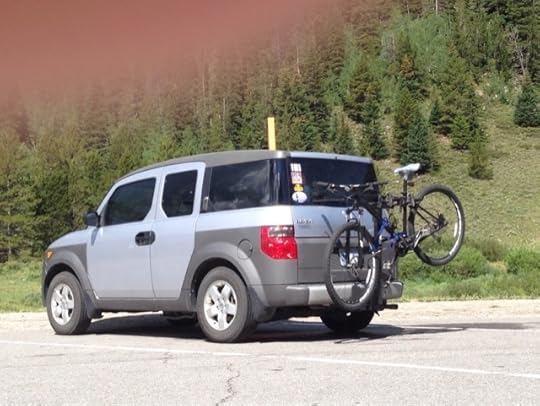 Our trusty transport looks good even with my finger obscuring a portion of the Colorado mountain side.
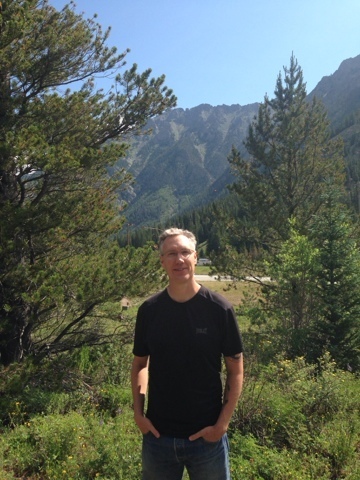 Friend and editor of RUN, Mark Robison, outside of Frisco, CO.
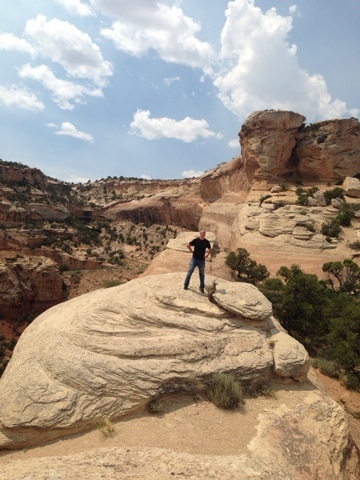 At Colorado National Monument - super place.
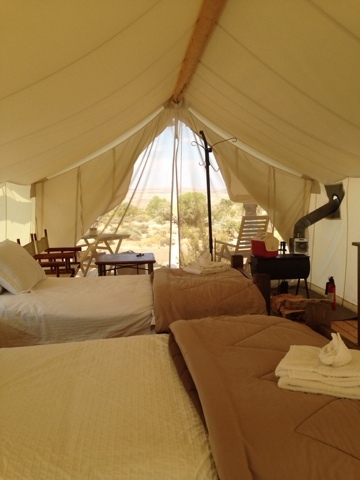 Our tent on day 2 at Moab Under Canvas - Moab, Ut. (Aka glamping).
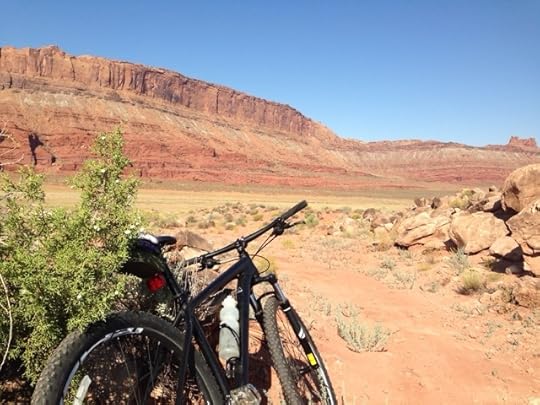 My Rockhopper 29 taking a rest outside Moab.
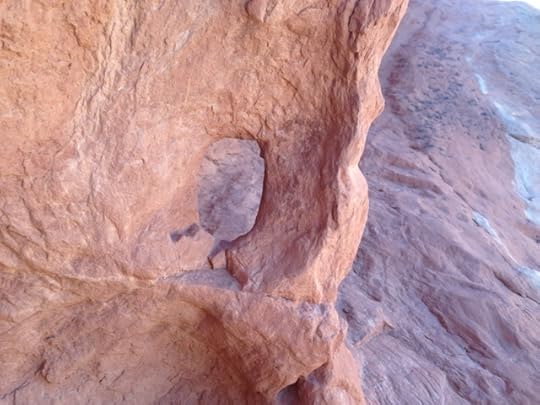 Arches National Park. The majesty!!!
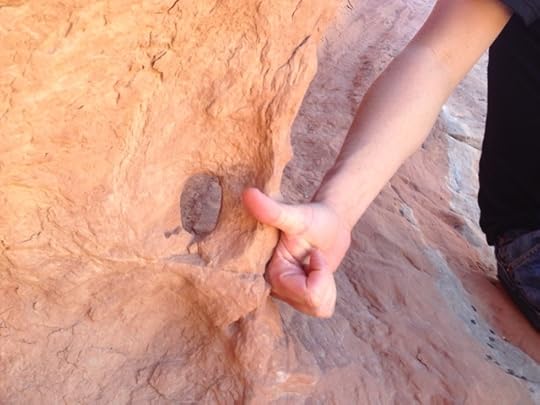 Psych!
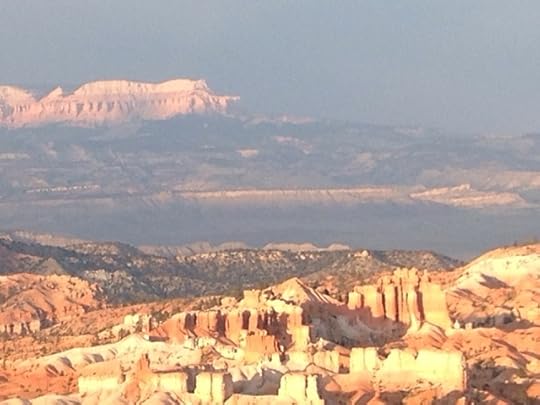 My fave for beauty, hiking and trail running, Bryce Canyon.
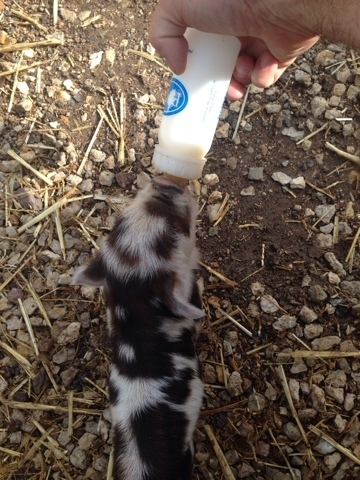 Feeding a friend at Cockadoodlemoo Farm Animal Sanctuary just outside of Reno, NV.
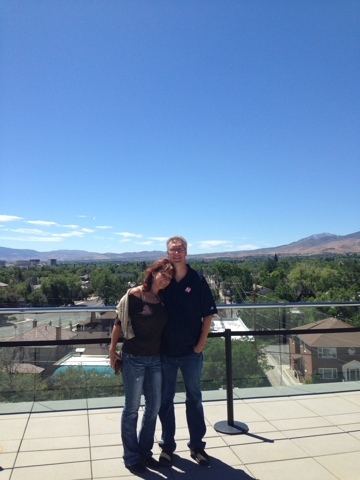 On top of the Reno Museum of Art roof.
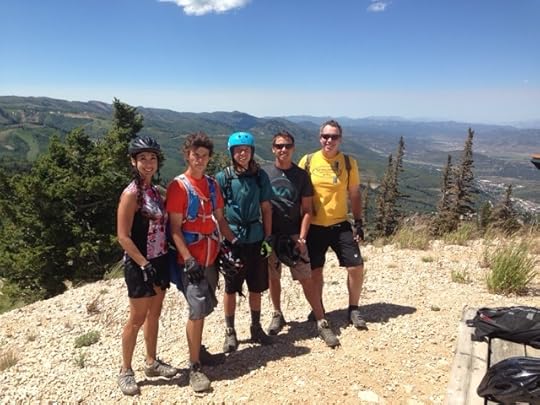 Quick photo break with friends between downhill mountain bike runs at Deer Valley/Park City, Utah.
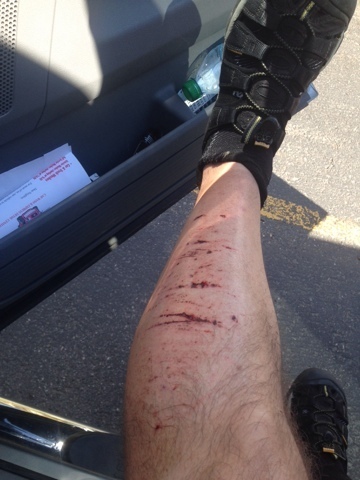 I missed a turn somewhere on our fourth downhill run.
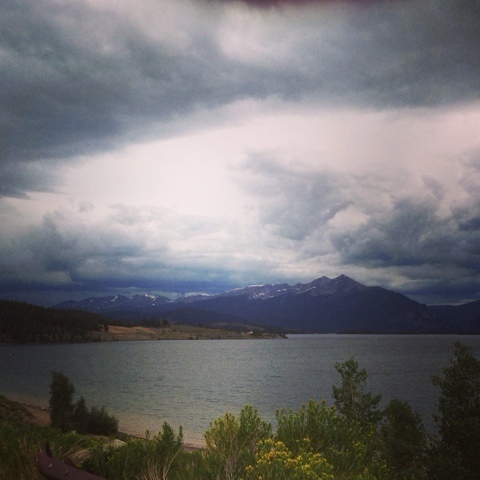 Last day in Colorado I took a quick ride around Dillon Lake before the rain set in.
On the way out, Mark and I visited Arches National Park, Colorado National Monument, Canyonlands National Park, and Bryce Canyon. Each was beautiful and wonderful in its own way. After a couple of exhausting, but fun-filled days at Cockadoodlemoo Farm Animal Sanctuary, I started the drive home via Park City, UT so that I could get in more mountain biking - this time downhill.
The trip also gave me a chance to try out some new and older equipment that I use in very different types of settings than Kansas. I will have product updates in future blogs.
Here are just a few of the 50 or so photos I took on the trip.
 Our trusty transport looks good even with my finger obscuring a portion of the Colorado mountain side.Friend and editor of RUN, Mark Robison, outside of Frisco, CO.
  At Colorado National Monument - super place.
  Our tent on day 2 at Moab Under Canvas - Moab, Ut. (Aka glamping).
  My Rockhopper 29 taking a rest outside Moab.
  Arches National Park. The majesty!!!
 Psych!
 My fave for beauty, hiking and trail running, Bryce Canyon.
  Feeding a friend at Cockadoodlemoo Farm Animal Sanctuary just outside of Reno, NV.
  On top of the Reno Museum of Art roof.
  Quick photo break with friends between downhill mountain bike runs at Deer Valley/Park City, Utah.
  I missed a turn somewhere on our fourth downhill run.
 Last day in Colorado I took a quick ride around Dillon Lake before the rain set in.
 July 12, 2014
New Salomon's Maiden Voyage
When it comes to running, there is only one company whose shoes I would trust to take straight out of the box and go for a 10+ mile trail run. Salomon's SpeedCross 3 shoes arrived this morning. I put them on and hit the trails. They performed as I knew they would. I don't think I've ever would have picked a color scheme of. green, white, and black, but they were on huge closeout sale at Running Warehouse. I also was able to get my Lawrence Trailhawk's club discount.
So the new pair joins my solid black pair that I have come to love. I hope to have many fun miles in these great shoes. Below are before and after pictures. I think the after looks a lot better.
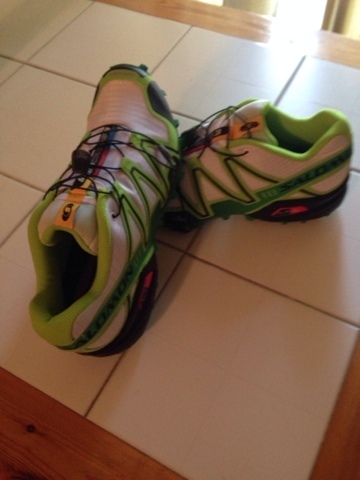
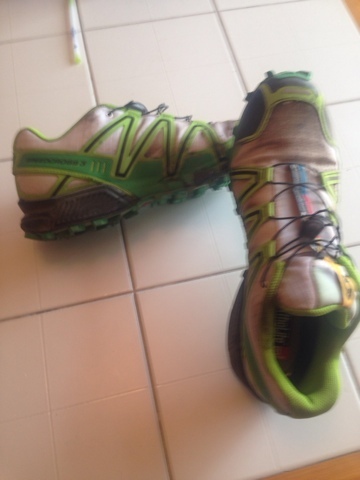
So the new pair joins my solid black pair that I have come to love. I hope to have many fun miles in these great shoes. Below are before and after pictures. I think the after looks a lot better.


July 11, 2014
RUN Kindle Ed on Sale Through End of July
As the headline reads, my novel, RUN, is on sale for US$2.99 through the end of July. If you are an Amazon Prime member, you can always borrow it for free as well.
For an indie author, reviews (even a couple of sentences) posted on Goodreads, Amazon, or any other reading/review site are hugely appreciated.
Have a great July.
For an indie author, reviews (even a couple of sentences) posted on Goodreads, Amazon, or any other reading/review site are hugely appreciated.
Have a great July.
July 5, 2014
William S. Burroughs, Yage, and Bicycle Racing
Last week during the Tour of Lawrence bike races, I happened to be talking with an acquaintance and very accomplished rider (he'd finished 2nd in the sprints a couple of days earlier) about why he had pulled out of the crit. He had a good place and was cruising along, and the next time I saw him, he was sitting on the bleachers watching as the peleton passed by.
He mentioned that there had been something going on with his bike - a mechanical issue, or a tire inflation problem that was making the bike feel too lose to safely continue in the close quarters of the peleton. It was all pretty benign until he mentioned that it was just as well because he was out of shape from spending 12 days in Peru recently.
That comment struck me as odd, and I said as much. If he had been hanging out in the mountains of Peru, that would almost be like a natural version of blood doping. He should've come back ready to rumble.
But no. As it turns out he went to Peru to do something that 99% of tourists going to that country don't do. He went to the Amazon instead. He had flown into Lima, gone on to Iquitos, taken a bus to a boat, a boat to a path, and then walked for an hour up the path in the wilderness. What he (and his accompanying grandpa) were seeking was a traditional healing retreat that focuses on purifying mind and body through ritual and the use of Ayahuasca. His story actually blew me away.
Having worked for William S. Burroughs some years ago, I thought I was well-acquainted with what was written about the plant. The Yage Letters - the famous series of notes sent between Ginsberg and Burroughs as they searched the Amazon for the psychotropic substance - was all about Ayahuasca/Yage. For my whole life, I thought that pretty much the Beats and native people were the only ones who had actually tried Yage. I thought that knowledge of the plant was probably lost in time.
As it turns out, that is not at all the case. There are many people worldwide who know of and travel to experience the effects and (potential) healing properties of Ayahuasca.
I am reading up on more recent writings about it as well as other medicinal plants that ethnobotanists have been looking to identify in the Amazon (and other climatically similar places).
I never thought a discussion at a bike race would circle back to Burroughs and Yage. It is a strange wonderful world.
He mentioned that there had been something going on with his bike - a mechanical issue, or a tire inflation problem that was making the bike feel too lose to safely continue in the close quarters of the peleton. It was all pretty benign until he mentioned that it was just as well because he was out of shape from spending 12 days in Peru recently.
That comment struck me as odd, and I said as much. If he had been hanging out in the mountains of Peru, that would almost be like a natural version of blood doping. He should've come back ready to rumble.
But no. As it turns out he went to Peru to do something that 99% of tourists going to that country don't do. He went to the Amazon instead. He had flown into Lima, gone on to Iquitos, taken a bus to a boat, a boat to a path, and then walked for an hour up the path in the wilderness. What he (and his accompanying grandpa) were seeking was a traditional healing retreat that focuses on purifying mind and body through ritual and the use of Ayahuasca. His story actually blew me away.
Having worked for William S. Burroughs some years ago, I thought I was well-acquainted with what was written about the plant. The Yage Letters - the famous series of notes sent between Ginsberg and Burroughs as they searched the Amazon for the psychotropic substance - was all about Ayahuasca/Yage. For my whole life, I thought that pretty much the Beats and native people were the only ones who had actually tried Yage. I thought that knowledge of the plant was probably lost in time.
As it turns out, that is not at all the case. There are many people worldwide who know of and travel to experience the effects and (potential) healing properties of Ayahuasca.
I am reading up on more recent writings about it as well as other medicinal plants that ethnobotanists have been looking to identify in the Amazon (and other climatically similar places).
I never thought a discussion at a bike race would circle back to Burroughs and Yage. It is a strange wonderful world.