Patrick Kelly's Blog, page 2
March 25, 2021
Once in a while, I want to read a happy story
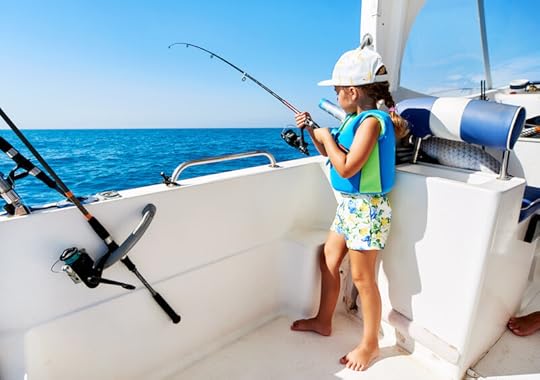
There are some days, some weeks, some months, when I just want to read a happy story. Maybe you do, too.
The Sheila Stories are not all happy. Some are exciting adventures. Some are sad—my daughter told me one story made her cry. But some are happy stories. I’ve included one here. It’s a story of children playing on a beach in the summer and taking a fishing trip with an old man. I hope it lives up to the promise.
PatienceFive years later, on a hot July morning, Sheila and Freddie, Flossie’s twelve-year-old son, rode bikes to the Surf Shop on Beach Avenue. Freddie had watched Sheila surf for years, nagged at her to teach him again and again, and now he was old enough to give it a try.
The summer after buying the board at the souvenir shop, Sheila had discovered that there was latent demand for surfing in Cape May. A kid had spotted her surfing at the beach. He had watched patiently from the dunes and then begged her to teach him how. A week later, that kid had brought a friend who also wanted to learn. Then another friend showed up, and another. She had opened the Surf Shop the next summer and hired the surfer kids for workers. The store stocked beach necessities—toys, bathing suits, and chairs—but also rented surfboards and offered lessons.
At first, Sheila had taught the lessons herself, but the surfer kids had grown, and they taught the lessons now. Nevertheless, Freddie lacked the natural coordination some boys had, so Sheila would teach him herself.
Thirty minutes later, she took Freddie through the land drills. Soon they walked into the water. For an hour they practiced paddling and kneeling on the board. Then she had him try getting up in the shallow waves. She held the board for Freddie until a good wave approached, then she gave the board a shove, and he scrambled.
On the first try, he splashed instantly. He fell as fast on the second wave and the third and many more waves. But then one time, he got to his knees before falling. And then he stood on the board and stayed upright for a full second. He began to regress soon after that, so she brought him in.
“That’s enough for today,” she said. “You did great.”
“It’s harder than I thought.” He shook his head. “I’m terrible.”
“Just takes time. You’ll do better tomorrow. I promise.”
He was like any twelve-year-old: part angel, part devil, and all confused. She had known Freddie for nine years but saw him only for a couple weeks each summer. With each visit, he grew taller and bigger. She had studied his progress and found him to be remarkably average. Sometimes, he played the bratty oldest child and picked on his sisters. But if one of them got in trouble, he would protect them as fiercely as any soldier. Yes, Freddie Parker would make a fine man one day.
#
After three days of lessons at the beginner’s beach, Freddie learned to ride a wave all the way to shore. Every time he succeeded his face lit like the spotlights at a night sports game. He’d never win a competition, but he could have a fabulous time.
On the other hand, his sisters, Abby (ten) and Peggy (eight), felt left out. The two girls sat on the porch with Sheila and their mother, Flossie, after dinner.
“Why does Freddie get to have all the fun?” Abby asked. “He thinks he’s such a big shot.”
From the next rocker over, Flossie said, “We’re going to Wildwood Friday. We’ll play the boardwalk games.”
Abby shrugged, showing faint interest in Wildwood. They went every year, and Sheila guessed she wanted to try something new.
“What about fishing?” Sheila asked. “Have you girls ever been fishing?”
“No,” said Abby.
The little one, Peggy, shook her head, her eyes wide.
“All right. Tomorrow we fish.”
#
Tony Santucci, one of the year-rounders, took Sheila and her crew—Freddie, Abby, and Peggy—on a fishing adventure into the back bays between Wildwood and Cape May. Sheila played chaperone, allowing Flossie and her husband, Jimmy, a rare day alone as a couple.
Tony owned a small cabin cruiser, slow, sturdy, twenty-five feet long, and ten feet across the beam. He had a dark complexion and gray hair sprouting from his shirt collar. Once they had cleared the marina and headed into the harbor, Tony stood at the wheel and taught the children how to read the channel markers.
“Red right returning. Have you heard that saying?” he asked Abby.
“No.” She stood next to him in shorts and an orange life jacket. On Tony’s orders, they all wore life jackets.
“When you return from the seaside, you must keep the red marker on your right and vice versa.”
“What about the green markers?” she said. “Do they go on the left?”
“You’re a smart cookie.”
Freddie climbed outside the wheelhouse to the bow, and Peggy sat next to the rail and stared at the passing water. Her blond hair was tucked under a white sailor’s cap.
A towboat cut in front of them, trailing a big wake. The wake caused their bow to rise high and dip down, and Peggy white-knuckled the rail. Sheila sat beside her and pulled her in close.
“It’s all right. This is a sturdy boat, and Tony is a fine captain.”
But Peggy’s eyes remained wide, so Sheila distracted her with a story about when she learned to fish. She had used crab for bait.
“But we’ll use minnows today,” said Sheila.
“What’s a minnow?”
“A tiny fish. We’ll use a tiny fish to catch a big fish.”
They approached the bridge from the mainland to Wildwood. A man in work clothes watched them from overhead.
“Quick, Peggy! Wave.”
Peggy stood and waved with both hands.
Their boat motored into Jarvis Sound. White herons stood patiently in the flats. Four pelicans glided past in formation. A school of small fish caused ripples to the left, and a seagull dove into their midst.
After following channel markers a while, Tony turned the boat starboard toward a creek. They passed near a smaller boat, and he slowed his engine to holler at the fisherman on board.
“How they biting, Greg?”
“Slow. Couple puffers.”
“Thanks, buddy.” Tony turned the wheel and said, “We’ll try another place I know.”
Ten minutes later, he slowed the boat near the mouth of a small creek and cut the engine. They drifted silently until coming to a stop. Pine trees grew onshore. A woodpecker drilled at a tree in the woods.
Tony said to Sheila, “If you get the rigs ready, I’ll see to the bait.”
“Come on, kids,” she said. “I’ll show you how to fish.” She pulled poles from the cabin, and the children gathered around. “Freddie, you take this black pole. Abby, you’ll get the red one, and Peggy gets the green one.” She attached rigs to the end of each line and gave the kids a quick lesson on the basics.
By then Tony was ready, and he baited each rig with two minnows.
Peggy’s fishing pole was the smallest of the three.
“You’ll never catch a big fish with that pole,” said Freddie. “It takes a big pole to catch a big fish.”
“Don’t be so sure,” said Tony, and he winked at Peggy. “It’s not the pole that catches fish. It’s the fisherman . . . or woman.”
Freddie dropped his line off the port side, Abby fished from the stern, and Peggy stayed where she was.
Within a minute, the tip of Freddie’s pole bobbed.
“I got a nibble,” he yelled.
“Set the hook,” said Tony. “Lift the pole!”
“I caught a fish! I caught a fish!” Freddie’s pole bent and jerked left and right.
Tony grabbed the net. “Reel him in easy.”
A flash of white swam in the water.
“There he is,” yelled Freddie.
“Easy,” said Tony. “A little closer.”
Tony scooped with the net and dumped the fish into the boat. The fish flipped and flopped. Abby squealed, Peggy stared, and Freddie shouted, “I caught the first fish! I caught the first fish!”
“A nice weakfish,” said Tony.
The fish was brown on the head and back, silvery and shiny on the side, and about twelve inches long.
Tony unhooked it and said, “Okay, the fish are here. Get to work.”
Abby caught the next fish, another weakfish. Then Freddie caught a small croaker.
“Listen to him,” said Tony. “He sounds like his name.”
Then Abby caught another weakfish. Then Freddie caught two croakers at once. Peggy stared at the end of her stagnant pole as if willing it to move.
“Reel in your line to check the bait,” said Sheila.
But the minnows were fine, wiggling away with a hook through their lips.
Then Abby caught another fish, and then Freddie.
Then Peggy did catch a fish. She reeled it in easily, but Tony said it wasn’t big enough. The fish fell off the hook and flopped on the boat deck, ugly, brown, and five inches long. Tony called it a sea robin.
“I told you,” said Freddie. “You’ll never catch a big fish.”
Then Freddie’s pole tipped, and he reeled in another one.
Peggy’s eyes grew big and watery.
Sheila knelt beside her. “Don’t worry. You caught one fish. You can catch more. Keep trying.”
The girl’s jaw set hard; she nodded and widened her stance to prepare herself for a long wait.
Freddie’s hot streak continued for the next half hour. He caught eight fish, and Abby nabbed six, but Peggy only reeled in the one. Then the fish went away, and no one caught anything. Tony moved the boat to another place, but they had no luck there, either.
Sheila brought out sandwiches, and everyone stopped fishing to eat on paper plates, except Peggy, who nibbled her sandwich from one hand while she held her pole with the other.
“Won’t make any difference,” said Freddie. “You can fish all day, but you won’t catch fish like me.”
Tony glared at the boy but didn’t say anything.
“Shut up, Freddie,” said Abby. “You were lucky.”
“Luck had nothing to do with it. It was all skill.”
Peggy chewed silently, staring at the tip of her fishing pole. The girl reminded Sheila of someone, someone from her past. Who?
The tip of Peggy’s pole dipped for an instant. Then it dipped again. She dropped her sandwich and lifted the rod. The tip bent like an upside down U and twitched all around.
“Hold on,” Sheila shouted.
“I can’t. I can’t hold it. It’s too heavy.”
With her heart pounding like a jackhammer, Sheila rushed to Peggy’s side. “Tony, get the net!”
The rod jostled in Peggy’s hands, but she held on.
Sheila knelt close. “Reel him in a bit at a time.”
The rod tip bent until it touched the water. Abby and Freddie crowded in.
Sheila pushed them back. “Give her room now. Give her room.”
Peggy struggled so reeling the line, Sheila feared the little girl might wear out. Tony came with the net and leaned over the side. A brown shadow moved through the water beneath the surface.
“Jeez,” said Tony. “Look at that thing.”
Sheila held Peggy around the middle to keep her rooted to the deck. Peggy’s left hand was white where she gripped the pole. Her little fingers turned the handle again.
Tony leaned farther, one hand on the rail and the other on the net. The brown shadow came close, and Tony scooped.
And then the fish was in the boat. It bounced in the air and landed on Freddie’s foot. Freddie jumped back.
“Flounder,” yelled Tony. “A fat flounder. Must be four pounds. I’ve never seen one so big.”
Peggy stood still and stared, her chest heaving. She took her hat off and let the sun shine on her face.
Abby jumped up and down. “You caught the biggest fish, Peggy! You caught the biggest fish.”
On the ride back to the marina, the kids kept lifting the lid of the cooler to examine it. The flounder was flat, brown on its back and white on its belly, with two eyes together near its mouth. The fish was so big it couldn’t lay flat in the cooler; its mouth curled against one side and the tail against the other.
Freddie stood next to Peggy, both of them hunched as they stared at the flounder. He draped an arm across her shoulder.
“He’s a beauty,” Freddie said. “You caught a beautiful fish.”
END OF EXCERPT
Excerpt from The Sheila Stories
JOIN MY NEWSLETTER TO GET A FREE NOVEL
NEWSLETTER SIGNUP

March 15, 2021
Murder of the Month - The Unexpected Inheritance of Inspector Chopra by Vaseem Khan

Every month I read four or five mysteries and select the best of those for my Murder of the Month review.
The Unexpected Inheritance of Inspector Chopra by Vaseem Khan was selected as a monthly location-based read by my Goodreads Crimes, Mysteries, and Thrillers group. I was drawn in by the title, the location (Mumbai), and the delightful cover. Who can resist a baby elephant? This is the first in a series of five novels thus far.

The author was unfamiliar to me, and I did not know what to expect. It came across a bit like a cozy, but instead of a cat or a dog, there was literally an elephant in the room.
I enjoyed the novel a great deal for three reasons:
The setting: I don’t know Mumbai, so I can’t vouch for the accuracy of the description, but the city portrayed in the novel is absolutely fascinating, teeming with people who may be poor in material possessions but are rich in culture and personality. Once Chopra identifies his prime suspect, he follows him relentlessly, at first on foot and then later on a motorbike, through colorful settings that vary from a modern multi-storied mall to an abandoned newspaper shop to a fishing wharf. This part of the journey was a real thrill for me.
The hero: Inspector Chopra is an incredibly likable hero. Forced into early retirement for health reasons, he learns that his replacement plans to ignore the suspicious death of a poor young man. Despite the danger to himself, Chopra doggedly tracks the suspects through sweltering heat and torrential rain. I love this guy.
Baby Ganesha: Chopra’s uncle bequeaths him a young elephant, and in an accompanying note, proclaims: This is no ordinary elephant. So true. The author takes advantage of this circumstance to weave some fun into the story. The scene where Chopra is forced to lead Ganesha onto an escalator in the aforementioned mall is priceless. As is the scene where Ganesha recuperates in Chopra’s living room to the dismay of Chopra’s wife. Though initially furious, Ganesha wins over the wife with his charm and his newfound passion for soap operas.
As I said at the start, the novel resembled a typical cozy mystery. I knew early on that I could relax and enjoy the ride. If you like cozy mysteries and fancy taking a trip to an exotic locale, I recommend you try The Unexpected Inheritance of Inspector Chopra.
Buy on AmazonJOIN MY NEWSLETTER AND GET A FREE JOE ROBBINS NOVEL!!! NEWSLETTER SIGNUP
The black and white image above is called The murder of William the Silent from The Story of Mankind by Hendrik Willem Van Loon, 1921.
The Unexpected Inheritance of Inspector Chopra by Vaseem Khan
Every month I read four or five mysteries and select the best of those for my Murder of the Month review.
The Unexpected Inheritance of Inspector Chopra by Vaseem Khan was selected as a monthly location-based read by my Goodreads Crimes, Mysteries, and Thrillers group. I was drawn in by the title, the location (Mumbai), and the delightful cover. Who can resist a baby elephant? This is the first in a series of five novels thus far.
The author was unfamiliar to me, and I did not know what to expect. It came across a bit like a cozy, but instead of a cat or a dog, there was literally an elephant in the room.
I enjoyed the novel a great deal for three reasons:
The setting: I don’t know Mumbai, so I can’t vouch for the accuracy of the description, but the city portrayed in the novel is absolutely fascinating, teeming with people who may be poor in material possessions but are rich in culture and personality. Once Chopra identifies his prime suspect, he follows him relentlessly, at first on foot and then later on a motorbike, through colorful settings that vary from a modern multi-storied mall to an abandoned newspaper shop to a fishing wharf. This part of the journey was a real thrill for me.
The hero: Inspector Chopra is an incredibly likable hero. Forced into early retirement for health reasons, he learns that his replacement plans to ignore the suspicious death of a poor young man. Despite the danger to himself, Chopra doggedly tracks the suspects through sweltering heat and torrential rain. I love this guy.
Baby Ganesha: Chopra’s uncle bequeaths him a young elephant, and in an accompanying note, proclaims: This is no ordinary elephant. So true. The author takes advantage of this circumstance to weave some fun into the story. The scene where Chopra is forced to lead Ganesha onto an escalator in the aforementioned mall is priceless. As is the scene where Ganesha recuperates in Chopra’s living room to the dismay of Chopra’s wife. Though initially furious, Ganesha wins over the wife with his charm and his newfound passion for soap operas.
As I said at the start, the novel resembled a typical cozy mystery. I knew early on that I could relax and enjoy the ride. If you like cozy mysteries and fancy taking a trip to an exotic locale, I recommend you try The Unexpected Inheritance of Inspector Chopra.
Buy on AmazonJOIN MY NEWSLETTER AND GET A FREE JOE ROBBINS NOVEL!!! NEWSLETTER SIGNUP
The black and white image above is called The murder of William the Silent from The Story of Mankind by Hendrik Willem Van Loon, 1921.
February 28, 2021
The Siege of Tobruk

In 1942, Sheila Wright married an Australian named Colin McKechnie. Colin had enlisted in the Australian Army in 1939 and went on to fight in the Middle East and on the Papuan coast.
In the short story Lazy, Colin tells Sheila about the Siege of Tobruk.
LazySheila McKechnie felt lazy.
She lay in a big bed with white sheets and a white comforter. A breeze billowed the sheer curtains. Seagulls squawked nearby. She stretched her arms and rolled on her side.
The smell of rich coffee drifted from the table, where Colin sat reading the newspaper.
She stuck her nose in the sheets and breathed deeply. Colin was home. They had married four days earlier in a civil ceremony. A small group of family members had attended: both sets of parents, her brother Tim and his wife, and Colin’s sister. Tom and Hazel and their children had come too.
Colin’s butter knife scraped against toast.
“Come back to bed,” she said. “I want to lounge and sleep all day.”
“We’ll have none of that,” he said. “You promised to teach me to surf. After all, this is Surfers Paradise.”
“The waves will wait till this afternoon. Come back to bed.”
“Your eggs will get cold,” he said.
“Oh, all right.”
She slipped on a robe but didn’t bother to tie it. At the table, she placed a hand on his shoulder. As usual, the headlines were about the war, but she ignored them.
“Look.” She pointed. “Wool prices are climbing again. We’ll make a fortune this year.”
“Wartime pricing,” he said.
The war invaded every aspect of everyone’s life; it was a greedy, insatiable phenomenon.
“Sit,” he said. “This marmalade is the best I’ve ever had.”
She pulled her chair closer to him.
“Coffee?” he asked.
“If you insist.”
“I do. It’s ten o’clock already. No more slouching. You’re in the AWAS, for Pete’s sake.”
“Don’t remind me.”
He had wrangled a ten-day furlough. They spent the first three days organizing the wedding in Brisbane, celebrated with family for a day, and then drove south to the beach for their honeymoon.
After breakfast, they took second cups of coffee out to the balcony. The breeze lifted her hair from the back of her neck. A lone seagull hovered nearby, hoping for a free meal, but he soon wandered elsewhere. From the beach a hundred yards away, the waves crashed and rolled like thunder.
They had tried surfing the prior two days, but the wind had stirred the sea into a frothy mess. She had hardly been able to ride herself, much less teach him, so they walked the beach in the mornings and napped under an umbrella in the afternoon. He was so tired he had slept for hours the previous day. She had watched him breathe, his back moving as his lungs filled. His face had gone slack, but his hands twitched while he slept. It made her uneasy, watching his hands, the jerking fingers. She had wanted to wake him, to hold his hands still, but he needed the rest, so she had watched the sea instead.
Standing on the balcony, he watched the fronds wave from the palm trees. “It’s beautiful here.”
He had wanted to go inland for a few days, but she had convinced him to stay at the beach. If they had gone to Darling Downs, he would have wanted to spend time with Tom and the boys touring the farms, and she was selfish. She wanted him all to herself.
“Maybe we could buy a cottage here after the war,” she said.
“In Brisbane?” he said.
“No, here in Surfers Paradise. Nothing fancy. A small place for holidays. We could come down a couple times a year.”
He touched her cheek. “You miss the sea.”
“I don’t want to live here,” she said, which was not entirely true. She missed sailing and the smell and the constant breeze. An idea had come to her the day before. She could open a surf shop for people on holiday, offer lessons and sell bathing suits and sunglasses.
“Darling Downs is beautiful,” she said, “and I’ll happily work with you on the farms for the rest of our lives, but I also want to visit the sea, and it’s only a couple hours by train.”
“Of course,” he said. “We must buy a place here.”
“And when we have children we can teach them to swim . . . and surf.”
He chuckled.
“What?” she asked.
“You always have dreams.”
“A person has to dream. What’s the point of life if you don’t dream?”
He nodded again, silent, a simple man, and she was sorry she had mentioned dreams. He was not a dreamer. Work was all he needed. Thinking through problems and then working to solve them with his muscles and his hands was enough for Colin. She loved him for that. She could dream enough for both of them.
He didn’t object to her dream of buying a cottage at the shore. He might have before the war, in jest, joked with her about being a fish, but he was quieter since returning from the Middle East. After his nap the day before, he had sat and stared at the ocean, not saying anything. Perhaps he hadn’t seen the crashing waves at all. After several minutes, he had closed his eyes, as if he couldn’t stand to watch any longer.
“Tell me about it,” she said.
“About what?”
“The fighting. Tobruk. It must have been awful.”
He shrugged. “Not much to say. A bunch of men playing games with fireworks.”
“No, it’s not,” she said.
He winced. “I don’t like to talk about it.”
She waited for him until the silence lingered into awkwardness; surely, the tough-guy thing would crack.
“Most of the time it’s boring,” he said. He licked his lips, his eyes on the ground below. “You pack your stuff, wait for a ride, wait in line, and unpack your stuff. You work on small tasks, pitch a tent, dig a hole, haul some stuff, and clean your gun. Always clean your gun, they say—no worse way to lose the fight than a jammed gun.”
He spit off the railing. She’d never seen him spit like that, right in the open, but it seemed as if he was no longer there, not with her. He’d slipped away.
“The worst part is waiting for the battle to begin,” he said. “You know they will attack, or you will attack. Everyone knows, but nobody knows when. The minutes pass like hours. Sweat slides into your eyes. You wipe it away and it stings. You blink so you can see. Is someone moving over there? Is that a gun? No.
“You wait and wait and wait. With each minute you grow more afraid until your hands tremble. Don’t show the other guys. Fear spreads like the smell of fire. The officers try to calm the men, but their voices sound shaky, as if they know someone will die today. Everyone knows someone will die. Someone always dies. But you never know who, or how many.”
He gnawed the inside of his mouth. He snorted, his eyes on the dunes.
“That’s the worst part,” he said, “the waiting. But then it starts. When it starts, everything is happening at once—the gunfire, men running, mortar blasts. Instinct takes over, your training. The fear flees—gone in an instant. You move and move and move, fire the gun until it’s empty, reload, sight your target, fire again, watch him fall. Is he dead? No time to think. Move. Move. Fire again. Two guys over there, maybe three. Can I heave my grenade that far? How long to wait? Throw it too soon, and they’ll lob it back. One second, two seconds, oh my God, throw the damn thing. Boom. Fire again. Reload. Move. Stop. God, I’m thirsty. Who’s screaming? Is that Thompson? Someone’s moving out there. They’re retreating. Oh, God. I know what happens now.
“The lieutenant shouted, ‘Move. Move. Move!’
“I’m up. I’m running. A mortar blast to the left. Someone’s ahead, hiding. Fire my gun. Jump for cover. Bullets pinging off the rock. Wait. God, I’m thirsty. Up. Fire again. Keep firing until the gun’s empty. Other guys run up. Jones. Drucker. Thompson. I thought he was hit. Get up and run to the next rock, firing the whole way. They’re retreating again. I see them. Two fall. I shot them. I think I shot them. Or maybe it was Thompson.”
Colin stopped rambling, and she touched his arm. He sniffled.
“It’s loud noises,” he said, “and dust . . . and stuff flying everywhere. The air moves like a solid wall. It knocks you down. And then there’s blood. Everywhere you turn there’s blood. Thompson’s blood. So much of it. More than possible, and then it stops and he’s dead. No way to save him.”
He shook his head, kept jerking it.
“Thompson,” he said. “That day it was Thompson.”
“Shush,” she said. “I’ve heard enough now.” She wrapped her arms around his neck and pulled him close, pulled him tight. His breath came in gasps. She held his face and kissed his lips, his cheeks, and his tears.
“Come now,” she said. “Back to bed.”
#
They snuggled on top of the sheets, Colin behind her with his arm curled over her side, their fingers entwined. He brushed against her back, and she flinched. A sharp pain spread from the rope burn to her neck and scalp.
“Sorry,” he said, pulling away. “So stupid . . . I forgot.”
“No, don’t back away. I want you close. Hold me tight. It doesn’t hurt much. We only have a few days left. I want to spend all of our time like this, close together. I want to memorize your smell, the bristle of your beard. I want to know the sight of your face as well as my own. We may be apart for months and months. This moment has to last us a long time.”
Of course, they didn’t spend all their time in bed. Soon their tummies grumbled with hunger, and they went downstairs for lunch. In the afternoon, they tried surfing again, and he began to get the hang of it. She took him out to a shallow flat where the waves rolled long and slow. She pushed the board for him, and he stood, and she watched him ride unsteadily toward the shore.
END OF EXCERPT
Excerpt from The Sheila Stories Get the full novel on Amazon.
(Note: the rope burn Sheila references was incurred by her during the story Storms when she encounters a woman stranded on a flooded bridge.)
JOIN MY NEWSLETTER TO GET A FREE JOE ROBBINS NOVEL!!!
NEWSLETTER SIGNUPFebruary 22, 2021
Murder of the Month - Fer de Lance by Rex Stout (A Nero Wolfe Mystery)

Every month I read four or five mysteries and select the best of those for my Murder of the Month review.
Fer-de-Lance--the first Nero Wolfe mystery by Rex Stout--was published by Farrar & Rinehart way back in 1934.
What in the world is a Fer-de-Lance? Good question. I looked it up. A Fer-de-Lance is a highly venomous pit viper from Mexico/South America. It has a broad triangular head and is usually about 4 to 7 feet long. (credit Britannica.com) Best of all, the Fer-de-Lance plays a pivotal role in the mystery.

But there is much to love about this novel. Rex Stout went on to write a total of seventy-four Nero Wolfe novels, novellas, and short stories from 1934 to 1975. After reading Fer-de-Lance, I know why readers flocked to buy each new story in the series.
In Fer-de-Lance, a woman hires Nero Wolfe to find out what happened to her missing brother. This case, which is of mild interest to Nero at first, soon leads to a much larger mystery that involves the murders of the missing brother and a highly prominent educator.
As a hero, Nero Wolfe is endlessly fascinating--articulate, eccentric, obese, and a self-proclaimed genius. He drinks six quarts of beer a day, employs a full-time gardener to tend to his exotic flowers, and occasionally loses all interest in the case before him.
This is perhaps the best part: Wolfe solves the case without ever leaving his brownstone on West 35th Street, New York City.
Of course, Nero needs a leg man, and this part is played by his loyal but at times skeptical employee, Archie Goodwin. At Nero’s direction, Archie drives around in his roadster to carry out errands, interview persons of interest, and threaten the District Attorney of White Plains. Along with the tension, there’s plenty of humor in this mystery.
Wolfe’s lifestyle is not cheap, and it is satisfying to watch him parlay the small case that begins the story into a victory for justice and a large monetary award for himself.
I consumed this book in a few days and will be tempted to reach for another in the series anytime my TBR list grows short. If you care to stretch your mind a bit with your next mystery, I highly recommend Fer-de-Lance by Rex Stout. Read it right now.
Buy on AmazonJOIN MY NEWSLETTER AND GET A FREE JOE ROBBINS NOVEL!!! NEWSLETTER SIGNUP
The black and white image above is called The murder of William the Silent from The Story of Mankind by Hendrik Willem Van Loon, 1921.
January 27, 2021
The Best Way to Kill a Giant
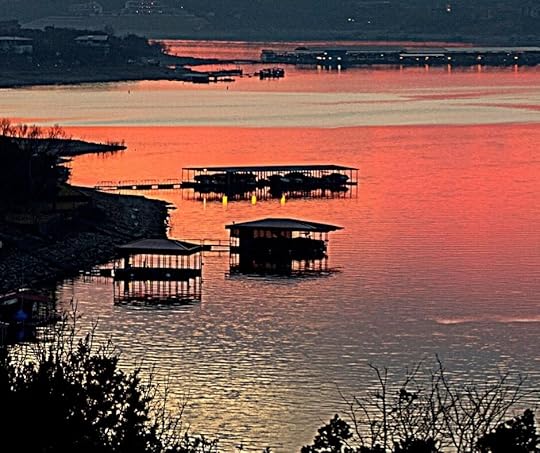
In The Cartel Banker, Joe is forced to fight a giant bodyguard three times. The first time he loses and is saved by bouncers. The second time he loses and is saved by a man with a shovel. The third time, he has no savior.
This excerpt from The Cartel Banker portrays Joe’s third battle with the giant.
Give a Man a RopeSanjay had little experience with boats. I gave him a crash course and forced him to take the wheel for practice. The still air kept the waters calm. A storm front was on the way but had not yet arrived. We cruised with running lights on for three miles. On the right side of the lake, a mix of modest and opulent homes rested atop the cliffs. I changed into the wet suit and dipped my hand in the water, not much over sixty.
We came to a half mile from Kenji’s place, and I asked Sanjay to steer closer to the shore. Lifting the binoculars, I searched the cliff. There it was! I recognized the mansion from the stairs zigzagging down to the boathouse. I reached to switch off the running lights, and then studied the dock.
I put the binoculars back in the dry bag and rolled it tight. My eyes darted to the house and the dock and the water around us. We were seventy yards away, and I doubted anyone from the house could see us. My heart thumped like I’d been running a race.
“Shift into neutral.”
Sanjay pulled the lever back, and we slowed to a drift.
In the dark, I couldn’t see his facial features clearly, only his head and body against the ambient light.
“Thanks,” I said.
I slipped over the side. A film of shockingly cold water crept next to my skin, but my body soon created a layer of warmth inside the wet suit.
He lowered the dry bag, and I pushed off. When I had drifted ten feet, he engaged the motor and the boat slowly receded into darkness. Within seconds he was gone.
I maneuvered the bag to my back, slipped the handle around my neck, and used small breaststrokes to move forward. Water splashed in my mouth—fresh, cold and earthy.
I kept the mansion in sight, watching the staircase for any sign of detection. Most of the windows were dark, but bright light shone from the great room. Water lapped against my ears, and I tried to keep my breathing steady.
Inside of a hundred feet, I recognized the forms of a boat and two Jet Skis in the boathouse. Once inside, I hoisted the dry bag onto the decking and pulled myself out of the water. I walked to the open doorway and scanned the staircase and patio but saw no one.
Stepping back from the door, I considered next steps. Put on dry clothes, load up weapons and gear, and haul-ass up the staircase. It would take less than a minute to ascend. What had I missed? I scanned the room. In the darkness of the far corner, a tiny green light flickered. What was that? I walked closer but couldn’t see it clearly, some sort of small box.
Back at the doorway, I glanced up at the patio and saw them in the lamplight. Two men stood at the top of the stairs: one normal-size man and one giant. The normal-size man pointed to the dock. The giant turned toward the stairs and began descending the first section.
Damn! The green light must be a motion detector.
Rafael reached the bottom of the first section of stairs. He plodded slowly, deliberately.
I tore at the dry bag. I would shoot it out with Rafael. The guns lay at the bottom. Out came the jeans, the shoes, and the penlight.
Rafael reached the next landing, only two more to go.
I grabbed the pistol, pressed a magazine into the grip, and racked the slide. Stepping outside, I pointed the gun at Rafael, who was still a hundred feet away, too far for a clear shot.
He passed through the lamplight at the next turn. He appeared bigger than ever, taking the stairs one at a time, his massive shoulders swaying from side to side with each step. His arms hung loose, but I didn’t see a gun.
Rafael reached the last section of stairs, clearly visible now, with his dark mop of hair, thick mustache, and brown polo shirt. He reached the bottom and turned to face me, unarmed. When he moved, I raised the gun.
I’m going to shoot you dead.
I waited. He was forty feet away and had to see the gun raised in his direction. Still he came, thirty feet now.
With feet shoulder-width apart, I lined up the sight and waited two more steps.
Boom! Boom!
Sounds of explosions bounced off the limestone cliff. My shots tore into his chest.
The giant staggered, and I waited for him to fall. He swayed like a tree but then stood straight again, took a step forward, and another, only fifteen feet away now.
No. No one could take two bullets in the chest. He was a mountain of a man, invincible, and ten feet away.
Boom! Boom!
Taking two steps back, he almost fell, swaying again. Then he smiled and started running.
Of course—the added size—he wore body armor.
I dropped the gun, crouched, and lunged at his knees like a tackler. His arms closed on open air above me, but the impact of his thighs and legs pulled me backward, and we rolled on the deck. We came apart and I scrambled to my feet.
He rose to his full height and roared, an inhuman sound. Rafael glanced at the water to the side, and edged a step closer to the boathouse. He smiled and charged a second time, arms opened wide.
I feinted left and stepped right, outside of his arm. His fist swung by, and I landed a right hook against his shoulder. Useless.
He stepped toward me. I edged into his range, and he swiped a massive fist. I rocked out of the way and landed a straight right to his cheek. His head snapped back and his weight shifted. I moved to my right again.
Instead of circling, as he should have, he looked at the water and stayed put. I moved closer, and he lunged at me with both fists in front, his legs churning. His fists hit my chest and sent me sprawling. At the end of his charge Rafael stumbled and fell.
I rose to my knees. He clambered to get up. I punched at his face, landing two decent shots, and he shouted in pain.
He pivoted on his knees and swept his left arm across, grabbing me. He hauled me in and stood. We faced each other, my belly at his chest. I swatted at his shoulders as he squeezed me with both arms. I had no leverage to hit him. I kicked my feet at his legs and twisted from side to side. He lifted me higher, my head rising to eight feet. I scratched his face and tried to tear off his ear. He yelled and set me on my feet.
It startled me, but then he leaned to one side, crossed his arms, and grabbed me around the middle again. Straightening, he lifted me with ease and flipped me upside down. I held his knees for purchase, but then he dropped me on the deck.
I tucked my head and crashed onto my right shoulder, the rest of my body falling, my back slamming into the wood. My head settled onto the hard surface, stunned, my muscles unresponsive.
He turned me onto my stomach, arranged my arms to my sides, and reached to lift me again. Full awareness returned. I faced away from him, legs down and a foot off the deck. He squeezed me like a vise. I tried to twist my torso without success. He breathed heavily and grunted with each step.
Think now, think. Not much time.
Rafael did a side shuffle to get closer to the boathouse. Why did he walk so close to the wall when the deck was so wide? Suddenly I remembered Rafael eyeing the water, nervous. Then I realized he couldn’t swim.
Immobile from the waist up, I could swing my legs from side to side. I performed a test by swinging them together to the left. He grunted and made an adjustment. When I swung them back to the right, he shifted again. The lateral force of my legs swinging created a torque that challenged his grip. We neared the end of the dock. A coiled rope lay on the deck ahead. Quick now.
I pointed my toes straight down, tightened my core muscles, and swung my legs hard to the left. When he shifted, I swung them back with everything I had. The force turned him to the right until he faced the boathouse two feet away. I bent my knees to bring my feet against the wall and then shoved hard to push us both backward. He stumbled and began to fall. To keep his balance, he had to let me go. I hit the deck, and he took steps backward, closer to the edge of the dock. I landed on my side and reached for the rope. As I stepped toward him, he regained his balance and stood straight.
Standing with my left leg forward, I brought my right leg up in the chambered position, toes pointed straight, and focused on the target: the sciatic nerve in the back of Rafael’s thigh. I rotated my hips and kicked through the target, my leg accelerating and snapping at the last moment. A solid smack sounded when my instep crashed into his thigh.
He groaned, staggered, and nearly fell, his face contorted. He stood a mere foot from the edge of the dock. Now!
I breathed deeply to expand my lungs. His eyes cleared, and his lips screwed into a snarl. He threw his shoulders back and held his arms up, ready. I committed fully to the charge, my knees bent to keep me low, my legs springing from the deck to maximize power, my mind fueled by fury. He put his arms out, but I had momentum, and we crashed over the deck to fall in the water.
We landed with a grand splash and tumbled below the surface. The cold attacked the skin on my head, neck, and feet.
Rafael went crazy. He thrashed under the water with his mighty arms, desperate to find a hold. His hand smacked my face randomly and then came back to grab at my shoulder, but the wet suit offered no hold. I swam under, then out and away.
I came to the surface. He was like a large animal caught in quicksand, turning this way and that. He swatted at the water, trying to make it solid. His eyes were terrified, and he shouted a ghastly cry.
“¡Auxilio! ¡Me ahogo! ¡Auxilio!”
He went under and then resurfaced. The sight of the deck, ten feet away, gave him new life.
He yelped, “Ayyy ayyy oooo . . .”
Water flooded his mouth. He sputtered and coughed, but the thrashing brought him closer to the dock. He uttered a cry of hope; the dock was his savior if he could only reach it.
He couldn’t have noticed me approach from behind. I treaded water toward him, working the rope at the same time. I made a loop and wrapped the line around itself and through to make a simple noose. He struggled three feet from the dock. In a few more seconds, he would reach safety.
I flipped the loop around his head and tightened the noose, then inhaled and dived under, the rope feeding through my hand. Once down six feet, I kicked toward the dock, still letting out line and feeling in front of me with my free hand. The floating barrels were somewhere in the cold dark water. I kicked hard again and my hand struck something plastic, a barrel. I felt under it and found a metal crossbar. I looped the rope around the metal support and brought it back to my hand. Wiggling my way under the barrel, I placed my feet against the crossbar, the rope in my hands, and then I shoved away from the bar to pull the rope taut.
The rope fought me, spastically jerking, as if there were a huge and angry fish on the other end. I took up the slack and pushed with my legs once more, taking out another foot of slack. The line continued to fight. I pushed one last time to make sure. My body screamed for oxygen. Not yet. Not yet. I looped the line around the crossbar twice, tucked it back under itself, and then pushed off from the beam, desperate to reach the surface. At the top, I gulped at the air and watched.
His lower body and torso thrashed at the water, making a terrifying noise, desperate, primitive. His legs banged into the dock. A huge hand flailed above the surface, grabbed the deck and pulled, but it was hopeless. His hand let go and shot back under.
I swam to the ladder and climbed onto the dock. The sounds of Rafael’s struggle grew softer. I picked up the Beretta, stepped toward the boathouse, and heard a rifle crack. A hole appeared in the wall two feet away. A second shot followed, and a bullet tore into the decking at my feet.
I stopped and stared, my mind fuzzy, my whole body tingling.
Move. Move now.
Rushing toward the boathouse, I glanced at the mansion. A man stood at the top of the stairs, sighting down a barrel. The muzzle flashed, and another hole appeared in the boathouse wall. I stayed inside for only a second, then stepped out and aimed toward the man. It was too far to hit him, but I could make a racket.
He held the rifle to the side as if to examine it, and I emptied the magazine in a few seconds. The explosions in my ear would be noisy pops on the patio, like throwing baseballs at an elephant, but I must have hit something, the stairs or a pot or a window, because the man jumped back.
Someone shouted in Spanish from the mansion, and the rifleman slinked away.
Rafael continued his worldly struggles, nearly done. I walked to the edge and watched, mesmerized. His legs kicked weakly a few more times and then stopped. His waist slid beneath the surface and slowly dragged his legs down. The water rippled in all directions, but quickly settled, and after a few more seconds, the surface was perfectly smooth.
Excerpt from The Cartel Banker (Joe Robbins Book Two) Get the full novel on Amazon.
JOIN MY NEWSLETTER TO GET A FREE NOVEL AND MORE!!! NEWSLETTER SIGNUPDon't read this scene before you try to sleep
In The Cartel Banker, Joe is forced to fight a giant bodyguard three times. The first time he loses and is saved by bouncers. The second time he loses and is saved by a man with a shovel. The third time, he has no savior.
This excerpt from The Cartel Banker portrays Joe’s third battle with the giant.
Give a Man a RopeSanjay had little experience with boats. I gave him a crash course and forced him to take the wheel for practice. The still air kept the waters calm. A storm front was on the way but had not yet arrived. We cruised with running lights on for three miles. On the right side of the lake, a mix of modest and opulent homes rested atop the cliffs. I changed into the wet suit and dipped my hand in the water, not much over sixty.
We came to a half mile from Kenji’s place, and I asked Sanjay to steer closer to the shore. Lifting the binoculars, I searched the cliff. There it was! I recognized the mansion from the stairs zigzagging down to the boathouse. I reached to switch off the running lights, and then studied the dock.
I put the binoculars back in the dry bag and rolled it tight. My eyes darted to the house and the dock and the water around us. We were seventy yards away, and I doubted anyone from the house could see us. My heart thumped like I’d been running a race.
“Shift into neutral.”
Sanjay pulled the lever back, and we slowed to a drift.
In the dark, I couldn’t see his facial features clearly, only his head and body against the ambient light.
“Thanks,” I said.
I slipped over the side. A film of shockingly cold water crept next to my skin, but my body soon created a layer of warmth inside the wet suit.
He lowered the dry bag, and I pushed off. When I had drifted ten feet, he engaged the motor and the boat slowly receded into darkness. Within seconds he was gone.
I maneuvered the bag to my back, slipped the handle around my neck, and used small breaststrokes to move forward. Water splashed in my mouth—fresh, cold and earthy.
I kept the mansion in sight, watching the staircase for any sign of detection. Most of the windows were dark, but bright light shone from the great room. Water lapped against my ears, and I tried to keep my breathing steady.
Inside of a hundred feet, I recognized the forms of a boat and two Jet Skis in the boathouse. Once inside, I hoisted the dry bag onto the decking and pulled myself out of the water. I walked to the open doorway and scanned the staircase and patio but saw no one.
Stepping back from the door, I considered next steps. Put on dry clothes, load up weapons and gear, and haul-ass up the staircase. It would take less than a minute to ascend. What had I missed? I scanned the room. In the darkness of the far corner, a tiny green light flickered. What was that? I walked closer but couldn’t see it clearly, some sort of small box.
Back at the doorway, I glanced up at the patio and saw them in the lamplight. Two men stood at the top of the stairs: one normal-size man and one giant. The normal-size man pointed to the dock. The giant turned toward the stairs and began descending the first section.
Damn! The green light must be a motion detector.
Rafael reached the bottom of the first section of stairs. He plodded slowly, deliberately.
I tore at the dry bag. I would shoot it out with Rafael. The guns lay at the bottom. Out came the jeans, the shoes, and the penlight.
Rafael reached the next landing, only two more to go.
I grabbed the pistol, pressed a magazine into the grip, and racked the slide. Stepping outside, I pointed the gun at Rafael, who was still a hundred feet away, too far for a clear shot.
He passed through the lamplight at the next turn. He appeared bigger than ever, taking the stairs one at a time, his massive shoulders swaying from side to side with each step. His arms hung loose, but I didn’t see a gun.
Rafael reached the last section of stairs, clearly visible now, with his dark mop of hair, thick mustache, and brown polo shirt. He reached the bottom and turned to face me, unarmed. When he moved, I raised the gun.
I’m going to shoot you dead.
I waited. He was forty feet away and had to see the gun raised in his direction. Still he came, thirty feet now.
With feet shoulder-width apart, I lined up the sight and waited two more steps.
Boom! Boom!
Sounds of explosions bounced off the limestone cliff. My shots tore into his chest.
The giant staggered, and I waited for him to fall. He swayed like a tree but then stood straight again, took a step forward, and another, only fifteen feet away now.
No. No one could take two bullets in the chest. He was a mountain of a man, invincible, and ten feet away.
Boom! Boom!
Taking two steps back, he almost fell, swaying again. Then he smiled and started running.
Of course—the added size—he wore body armor.
I dropped the gun, crouched, and lunged at his knees like a tackler. His arms closed on open air above me, but the impact of his thighs and legs pulled me backward, and we rolled on the deck. We came apart and I scrambled to my feet.
He rose to his full height and roared, an inhuman sound. Rafael glanced at the water to the side, and edged a step closer to the boathouse. He smiled and charged a second time, arms opened wide.
I feinted left and stepped right, outside of his arm. His fist swung by, and I landed a right hook against his shoulder. Useless.
He stepped toward me. I edged into his range, and he swiped a massive fist. I rocked out of the way and landed a straight right to his cheek. His head snapped back and his weight shifted. I moved to my right again.
Instead of circling, as he should have, he looked at the water and stayed put. I moved closer, and he lunged at me with both fists in front, his legs churning. His fists hit my chest and sent me sprawling. At the end of his charge Rafael stumbled and fell.
I rose to my knees. He clambered to get up. I punched at his face, landing two decent shots, and he shouted in pain.
He pivoted on his knees and swept his left arm across, grabbing me. He hauled me in and stood. We faced each other, my belly at his chest. I swatted at his shoulders as he squeezed me with both arms. I had no leverage to hit him. I kicked my feet at his legs and twisted from side to side. He lifted me higher, my head rising to eight feet. I scratched his face and tried to tear off his ear. He yelled and set me on my feet.
It startled me, but then he leaned to one side, crossed his arms, and grabbed me around the middle again. Straightening, he lifted me with ease and flipped me upside down. I held his knees for purchase, but then he dropped me on the deck.
I tucked my head and crashed onto my right shoulder, the rest of my body falling, my back slamming into the wood. My head settled onto the hard surface, stunned, my muscles unresponsive.
He turned me onto my stomach, arranged my arms to my sides, and reached to lift me again. Full awareness returned. I faced away from him, legs down and a foot off the deck. He squeezed me like a vise. I tried to twist my torso without success. He breathed heavily and grunted with each step.
Think now, think. Not much time.
Rafael did a side shuffle to get closer to the boathouse. Why did he walk so close to the wall when the deck was so wide? Suddenly I remembered Rafael eyeing the water, nervous. Then I realized he couldn’t swim.
Immobile from the waist up, I could swing my legs from side to side. I performed a test by swinging them together to the left. He grunted and made an adjustment. When I swung them back to the right, he shifted again. The lateral force of my legs swinging created a torque that challenged his grip. We neared the end of the dock. A coiled rope lay on the deck ahead. Quick now.
I pointed my toes straight down, tightened my core muscles, and swung my legs hard to the left. When he shifted, I swung them back with everything I had. The force turned him to the right until he faced the boathouse two feet away. I bent my knees to bring my feet against the wall and then shoved hard to push us both backward. He stumbled and began to fall. To keep his balance, he had to let me go. I hit the deck, and he took steps backward, closer to the edge of the dock. I landed on my side and reached for the rope. As I stepped toward him, he regained his balance and stood straight.
Standing with my left leg forward, I brought my right leg up in the chambered position, toes pointed straight, and focused on the target: the sciatic nerve in the back of Rafael’s thigh. I rotated my hips and kicked through the target, my leg accelerating and snapping at the last moment. A solid smack sounded when my instep crashed into his thigh.
He groaned, staggered, and nearly fell, his face contorted. He stood a mere foot from the edge of the dock. Now!
I breathed deeply to expand my lungs. His eyes cleared, and his lips screwed into a snarl. He threw his shoulders back and held his arms up, ready. I committed fully to the charge, my knees bent to keep me low, my legs springing from the deck to maximize power, my mind fueled by fury. He put his arms out, but I had momentum, and we crashed over the deck to fall in the water.
We landed with a grand splash and tumbled below the surface. The cold attacked the skin on my head, neck, and feet.
Rafael went crazy. He thrashed under the water with his mighty arms, desperate to find a hold. His hand smacked my face randomly and then came back to grab at my shoulder, but the wet suit offered no hold. I swam under, then out and away.
I came to the surface. He was like a large animal caught in quicksand, turning this way and that. He swatted at the water, trying to make it solid. His eyes were terrified, and he shouted a ghastly cry.
“¡Auxilio! ¡Me ahogo! ¡Auxilio!”
He went under and then resurfaced. The sight of the deck, ten feet away, gave him new life.
He yelped, “Ayyy ayyy oooo . . .”
Water flooded his mouth. He sputtered and coughed, but the thrashing brought him closer to the dock. He uttered a cry of hope; the dock was his savior if he could only reach it.
He couldn’t have noticed me approach from behind. I treaded water toward him, working the rope at the same time. I made a loop and wrapped the line around itself and through to make a simple noose. He struggled three feet from the dock. In a few more seconds, he would reach safety.
I flipped the loop around his head and tightened the noose, then inhaled and dived under, the rope feeding through my hand. Once down six feet, I kicked toward the dock, still letting out line and feeling in front of me with my free hand. The floating barrels were somewhere in the cold dark water. I kicked hard again and my hand struck something plastic, a barrel. I felt under it and found a metal crossbar. I looped the rope around the metal support and brought it back to my hand. Wiggling my way under the barrel, I placed my feet against the crossbar, the rope in my hands, and then I shoved away from the bar to pull the rope taut.
The rope fought me, spastically jerking, as if there were a huge and angry fish on the other end. I took up the slack and pushed with my legs once more, taking out another foot of slack. The line continued to fight. I pushed one last time to make sure. My body screamed for oxygen. Not yet. Not yet. I looped the line around the crossbar twice, tucked it back under itself, and then pushed off from the beam, desperate to reach the surface. At the top, I gulped at the air and watched.
His lower body and torso thrashed at the water, making a terrifying noise, desperate, primitive. His legs banged into the dock. A huge hand flailed above the surface, grabbed the deck and pulled, but it was hopeless. His hand let go and shot back under.
I swam to the ladder and climbed onto the dock. The sounds of Rafael’s struggle grew softer. I picked up the Beretta, stepped toward the boathouse, and heard a rifle crack. A hole appeared in the wall two feet away. A second shot followed, and a bullet tore into the decking at my feet.
I stopped and stared, my mind fuzzy, my whole body tingling.
Move. Move now.
Rushing toward the boathouse, I glanced at the mansion. A man stood at the top of the stairs, sighting down a barrel. The muzzle flashed, and another hole appeared in the boathouse wall. I stayed inside for only a second, then stepped out and aimed toward the man. It was too far to hit him, but I could make a racket.
He held the rifle to the side as if to examine it, and I emptied the magazine in a few seconds. The explosions in my ear would be noisy pops on the patio, like throwing baseballs at an elephant, but I must have hit something, the stairs or a pot or a window, because the man jumped back.
Someone shouted in Spanish from the mansion, and the rifleman slinked away.
Rafael continued his worldly struggles, nearly done. I walked to the edge and watched, mesmerized. His legs kicked weakly a few more times and then stopped. His waist slid beneath the surface and slowly dragged his legs down. The water rippled in all directions, but quickly settled, and after a few more seconds, the surface was perfectly smooth.
Excerpt from The Cartel Banker (Joe Robbins Book Two) Get the full novel on Amazon.
JOIN MY NEWSLETTER TO GET A FREE NOVEL AND MORE!!! NEWSLETTER SIGNUPJanuary 19, 2021
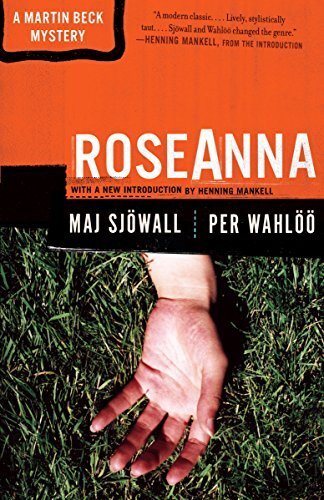
Murder of the Month - Roseanna by Maj Sjowall and Per Wahloo

Every month I read four or five mysteries and select the best of those for my Murder of the Month review.
Those of you who read a lot of mysteries have likely come across Martin Beck, the Swedish police detective of the series by the same name. Martin’s been around a long while. The authors Maj Sjowall and Per Wahloo wrote Roseanna, the first in the series, in the sixties (published in Stockholm in 1965). Roseanna met with great success, and the authors went on to write a total of ten novels in the series.
In my youth, I first read the mysteries of Sir Arthur Conan Doyle and Agatha Christie. But by the time I got to high school, I was distracted by other genres and never got around to Martin Beck. Oh my gosh. How could I have ever missed such a great character. And the setting? Holy high seas--it’s perfect.
The naked corpse of a murdered woman is discovered when a dredging operation pulls her freshly killed body from a harbor. With so little to go on, it takes the police months to discover the identity of the victim--a free-spirited American on an European holiday.
I found several aspects of this novel fascinating. First, it is a police procedural of the highest order. Discovering the identity of the victim and tracking down suspects requires the coordination of multiple Swedish and International police organizations.
Second, the setting. I’ve never been to Sweden, but apparently, it is covered with lakes and fjords and bays and other bodies of water I can’t recall. I must go there someday. I got the distinct impression from this novel that it is absolutely beautiful.
Third, and most importantly, Martin Beck is an awesome hero. The authors sculpted a masterpiece with their words, for Martin is at times patient, intelligent, witty, articulate, depressed, and above all determined to find his murderer.
I sped through this book and am so glad I have nine more to read in the series. If you have in mind reading an engaging mystery that can transport you to a different place and time, I highly recommend Roseanna. Read it right now.
Buy on AmazonJOIN MY NEWSLETTER TO GET A FREE NOVEL AND MORE!!! NEWSLETTER SIGNUP
The black and white image above is called The murder of William the Silent from The Story of Mankind by Hendrik Willem Van Loon, 1921.
January 11, 2021
What happens in Vegas . . . Joe's Lost Week

When I published my first novel--The Entrepreneurs--it was 360 pages. Three years later, I decided the book was too long, and I re-edited it to reduce the length. In the process, I deleted a minor character altogether. Her name was Elsie Summers—an exotic dancer Joe met in Vegas on an ill-fated trip.
For your reading pleasure, I have resurrected Elsie. This excerpt reads a lot like a short story. At the beginning, Joe has recently discovered his wife, Rose, was sleeping with his ex-boss. He is angry but also ashamed, for he cheated on Rose first. Not knowing what else to do, he escapes to Las Vegas to meet up with an old friend.
The Lost Week in VegasAt ten a.m. my flight touched down. Elsie Summers met me in the terminal with a monster hug and a kiss on the lips. She wore jeans and sneakers and a burnt-orange, deep-vee cashmere sweater.
On the way to the garage she kept her arm around me, with her hand in my rear pocket. In the car on the way to the Bellagio she leaned over to give me a wet kiss and put her hand on my leg. She continued to play those games while we checked into the hotel, working her, and me, into a near frenzy. As soon as the door to our suite closed she pulled at my shirt and belt.
The first time we did it was fast.
Her breasts were as I remembered: large and natural. She was in shape from all the dancing, but not so lean that she didn’t have a full curve to her hips.
Elsie started on top, wanting to control the pace, and pressed down on my chest with her hands, her breasts swinging free. She laughed about it, making it funny and fun at the same time. She reached back to slap her ass and giggled.
It went as long as it did, and then we both fell asleep.
When we woke up, I ordered champagne, and the party started. Over the next forty-eight hours we consumed Vegas. We went to a Hard Rock show, a circus show, and a comedy show. We bought a vacation wardrobe for me and party clothes for Elsie. We gorged ourselves on food and wine. At Club Paradiso, Elsie had lap dances from all her friends.
All the while I drank: beers in the sports book, margaritas on the strip, cocktails before dinner, and plenty of wine. We played the silly, fun games of roulette and Pai Gow, and we bet the ponies, Elsie cheering like crazy whenever our horse had a chance.
Money meant nothing to me. I couldn’t reason why it should. I made stupid bets based on hunches and generally lost. I stayed away from games requiring calculation, which was good, because after the first few hours I was in a permanent state of fuzziness.
On Monday at noon we ventured down to the buffet.
“You should try the barbecue spare ribs,” she said, taking a bite from a full plate. “They’re delicious.”
I was drinking a Bloody Mary. Elsie had champagne.
“Maybe after I finish my juice.”
She wore her hair up in a high pony and was bright-eyed after six hours of sleep and a morning romp. She wore a long-sleeved teal T-shirt, with dangling earrings and a bright red Swatch. Elsie was twenty-eight but could pass for early twenties.
The waitress came by and topped off the coffee.
“Another Bloody, sir?”
“Please.”
Elsie finished chewing a mouthful of green beans amandine. “You know,” she said, “I don’t plan to stay in Vegas forever.”
“That sounds wise. This town runs some people into the ground.” My stomach rumbled. I glanced at the spare ribs on her plate; they were beginning to spur my appetite.
“I’ve been dancing for six years now. I figure I’m good for another three years, four at most, and then I’m out.”
Elsie sipped the champagne and buttered a roll.
“What will you do then?”
This was a side of Elsie I had not seen before. Most everyone spends time thinking about the future, but up until then, Elsie had lived only for the moment.
“By then I’ll be thirty-one or thirty-two and ready to get married. It’s best not to marry too soon . . . before you’ve run the wildness out. When I stop dancing, I’ll move to San Diego, marry the best man I can find, and start having babies.”
It was hard for me to picture. I could see Elsie dancing on the pole or doing Jell-O shots at the Hard Rock, but I couldn’t see her pushing a stroller around the neighborhood.
“Really?”
“Oh, yeah. Don’t get me wrong. This is great.” She twirled her fork in the air to indicate the entire room. Around us were a hundred people, sitting at tables of two, three, and four, eating their fill, sipping on their first drink, laughing and smiling as they began another day in the land of the endless party.
“But I have a plan,” she said.
“What’s the plan?”
“Every year I save fifty thousand from my dancing income. The rest goes to living expenses and partying, and there is plenty left over for partying. By the time I’m done, I’ll have five or six hundred thousand to start the family.”
She went on to explain that a hardworking stripper in the right club could make a hundred and fifty a year. It was a tough job, but if you stayed away from the coke, and other temptations, you could save a bundle.
She drained the champagne and looked at her watch.
“You need to get some food so we can check out.”
“Where are we going?”
“We’re moving to my apartment. Tomorrow’s Halloween. I’m throwing the party this year and I need your help to get ready.”
#
I inspected her bar and found it lacking. I drove her Maxima to the liquor store and picked up six bottles of booze, a mixed case of wine, and three cases of beer. Elsie focused on food, decorations, and tidying up the apartment.
She had a one-bedroom in an old-style complex on Driftwood Street. The building was U-shaped with two floors and twenty total units. It was secured by a bougainvillea-draped wall and gate that faced the street. Elsie had lived there for years and was friends with most of the tenants.
She invited an eclectic group of casino dealers, waitresses, bouncers, and strippers. They wore outrageous costumes. Bush and Gore were both in attendance, dressed as Siegfried and Roy. Two dancers came as Elvis, shirts unbuttoned to their navels. Elsie was Madonna, complete with black stockings and the cone bra. I was a pirate, with eye patch, headscarf, purple bloomers, and a plastic sword.
Everyone brought a contribution, and soon there was a wide assortment of recreational drugs to match the booze in the kitchen. I was invited to try this and that but politely declined. Alcohol was the only medicine I required, provided it was consumed in the proper quantities.
A bouncer named Tim and I decided the party was too slow, so we doled out tequila shots, making sure we got our fair share. It was Gran Patrón Platinum. Soon after, things started moving right along.
About midnight a contingent removed their clothes and headed to the hot tub. A few others went into the bedroom and closed the door. Elsie had disappeared, and a thin friend of hers, wearing a sheer black blouse with no bra, sat down and gave me an openmouthed kiss. She invited me upstairs to her apartment for a special massage. I declined, and she immediately went after a baccarat croupier sitting across the room.
I called a cab. I wanted to go downtown to gamble with the regular folk. He let me out on Fremont Street during the middle of the light show. I wandered into Binion’s to try craps but had a hard time focusing on the dice. Up the street I found a Cajun-style slot parlor that sold hurricane smoothies in the shape of a football. For two dollars more they gave me extra shots of Everclear. I walked around downtown for a while, a pirate, football in hand, indestructible and indecipherable.
I turned down one street and vaguely noticed there were only three of us, me and the two guys asking politely for money. I put the football down, intending to negotiate, and remember only white flashes. Sometime later a policeman nudged me awake with his foot and suggested it was time to move on. The polite bandits had left my wallet and credit cards behind; maybe they figured the three hundred in cash was fair enough. I caught a cab back to Elsie’s place and passed out on the sofa, the party long since over.
Six hours later I awoke with a hangover to win the prize. It hurt the most right behind my eyes, and for ten minutes I didn’t dare open them. When I did it was agony. I shut them immediately and tried to go back to sleep. No success. With eyes as slits I felt my way to the kitchen and drank two glasses of water. There was a soreness in my right ear that didn’t fit; it wasn’t standard-issue hangover. The guest bathroom mirror showed a thin trail of dried blood down to my collarbone, a good-size knot on my forehead, and a small cut above the eyebrow. With a wet washcloth I started to clean up.
A cute blonde with long hair walked in wearing a pair of Elsie’s gym shorts and nothing else. She had pointy boobs, tattoos on her feet, and sat on the toilet while smoking a cigarette. She looked at me briefly, without interest. When finished she hopped up and walked out.
I am too weak to be an alcoholic; I cannot stand the physical pain and the psychological trauma.
#
That afternoon Elsie and I sat on the couch and compared notes from the party. She thought my little altercation downtown was hilarious.
She nibbled on dry Cheerios and drank coffee, wearing an oversize Washington Football sweatshirt.
“I don’t think you’re cut out for this lifestyle,” she said.
“What makes you say that?”
For the first time in days I held a Diet Coke that wasn’t bolstered with Jack Daniel’s.
“Well, for one thing, you have no sense of balance. For example, last night you should have stopped drinking and gone upstairs with Linda when I sent her your way. If you had done that, you’d be sober enough to party again today.”
“Linda?”
“The skinny girl . . . you know . . . with the see-through blouse? From what I understand she could show you a few tricks.”
“My loss.”
Elsie sipped her coffee and continued with her appraisal. “The other big problem is you have kids. I know you and your wife are at war right now, but that does not let you off the hook as a dad.”
She sat with bare legs folded up and under the sweatshirt. The stragglers from the party were gone, and the place was spotless. Elsie’s eyes were clear and unwavering. It felt like I was back in school, and the professor was trying to convey important knowledge.
“You really are going to have a family in San Diego, aren’t you?” I asked.
“Yes, I am, and I’ll tell you another thing: I don’t know exactly what you’re looking for, but it’s not here in Vegas. Don’t get me wrong. This has been a blast, and you are welcome anytime, but right now you need to get back to Austin.”
Elsie was a stripper with a plan and knew more about her future than I knew about mine. That was Wednesday, November first. We agreed I would fly home on Friday, which gave us two more nights.
#
The next morning I was awakened by a call on my cell. All that week I had ignored Austin. It was time for reentry, so I answered the phone.
“Where are you?” Zola asked.
“Vegas.”
“Great. You need to get back to Austin right away.”
“What is it? The kids?”
“No. It’s Mike Franzinni. He’s dead. He jumped off the penthouse balcony of the Bank of Texas building.”
It had happened the day before. Zola filled me in on what she knew from the Connection network, which wasn’t much.
In the afternoon Rico Carrillo called.
“What the hell are you doing in Vegas?”
“Uh, gambling?”
“Damn it. I told you to call me if you left town.”
I could see him staring at me, the black flaw sparkling in his almond iris. I didn’t like it. “Something came up.”
“It certainly did. Another one of your directors is dead. How soon can you get your butt back here?”
“I have a flight in the morning.”
“Meet me at the Radisson . . . two o’clock.”
That night I grilled mahimahi out by the pool, and we split a bottle of chardonnay. We spent a quiet, peaceful evening together, a pair of lovers, both comfortable that we were separating in the morning.
Elsie took me to the airport. She leaned up for a kiss, and with a devilish grin reached around to grab my ass.
Excerpt from The Entrepreneurs (Joe Robbins Book One) Get the full novel on Amazon for 99 cents.
JOIN MY NEWSLETTER TO GET A FREE NOVEL AND MORE!!! NEWSLETTER SIGNUPDecember 21, 2020
Murder of the Month - The Air Raid Killer by Frank Goldammer
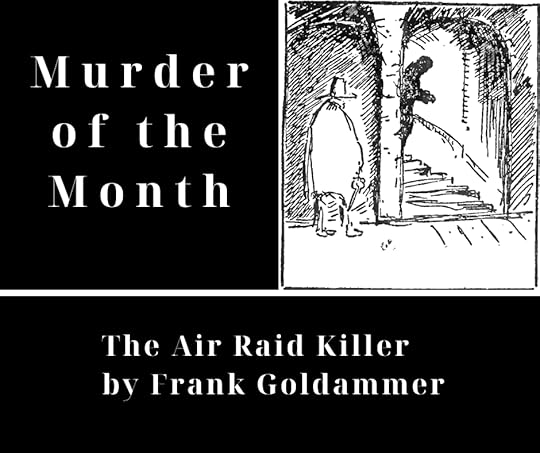
Every month I read four or five mysteries and select the best of those for my Murder of the Month series.
I had never heard of Frank Goldammer or his hero Max Heller until I stumbled onto them in a Goodreads group. Holy headshot, it’s like I found money on the sidewalk.
The novel is The Air Raid Killer, and I love it for two reasons:
First, Max Heller is an awesome character. A police detective in Dresden during World War Two, Max is tracking down a serial killer. The killer tortures and kills young women and leaves their mutilated corpses to be discovered. The city is on the verge of a nervous breakdown, and rumors soon swirl of The Fright Man, a monster who roams the streets at night. With a starved infrastructure that grows more chaotic as the Russians close in, Max is nevertheless determined to find the murderer. People are dying by the thousands. He has no food. His wife is fraught with worry over the plight of their two sons. And yet Max stubbornly pursues justice in the midst of a nightmarish hell. You have to love him.
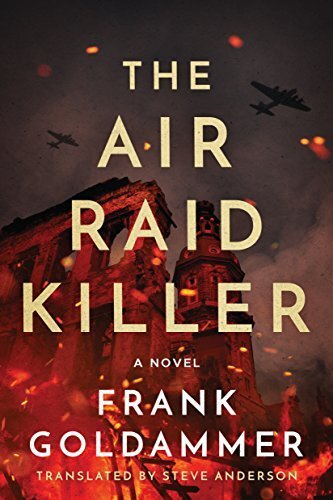
Second, the setting is absolutely fantastic. Jeez. No one could dream this up. The first murder occurs in late 1944. Everyone knows the war is approaching an end, but no one dares speak the words out loud, for the Nazis are still in control. Step out of line and you could easily wind up dead. The story continues through the firebombing of Dresden in February of 1945, the official end of hostilities, and on into the Russian occupation. As an aside, Max is on the street hunting his killer when the first firebombing raid begins. He stumbles from one spot to the next as the city burns around him. This is one of the most harrowing scenes I have ever read.
The writing is solid, the characters are credible, the conflict is constant, and the ending is satisfying.
Books 2 through 5 in the Max Heller series have been published in German. Book two--A Thousand Devils--is available in English.
The Air Raid Killer is a great murder mystery. I predict Frank Goldammer will go on to write and sell many books. Read his first one right now.
Buy on Amazon
JOIN MY NEWSLETTER TO GET A FREE NOVEL AND MORE!!!
NEWSLETTER SIGNUP
The black and white image above is called The murder of William the Silent from The Story of Mankind by Hendrik Willem Van Loon, 1921.