Patrick Locke's Blog, page 2
January 25, 2016
Coming out… as an atheist
Not long ago I was told by a well-intended acquaintance that it was impossible for a person who did not believe in god or his scripture to be a moral and ethical person. He had a very low opinion of atheists in general and had been shocked when I told him that I was one.
But he really seemed interested in why I was not a criminal. I smiled kindly, muttered a choice phrase, sighed, and once again began to express my opinions.
I did this knowing full well that this particular individual most likely could not or would not see my arguments. About an hour later I left and felt as if I had failed in getting my points across in a clear and precise manner. After that I decided that I should write my thoughts out so that next time I found myself in this all too familiar situation, they would be easier to regurgitate.
So here I go: Why I think that an atheist can be the most moral and ethical type of person and why I believe that religion does not have the moral authority over these endeavors. And, how we can change the way atheists are perceived.
In many ways I am a behaviorist. Meaning that I believe that a person’s family, friends, community, society, and culture all have a dramatic effect on people, and especially children, as they are growing up. We can say that these groups of people are someone’s sphere of influence. Behaviors, attitudes and ideals are learned behaviors in that they are copied from what they see around them. For children and young adults, behavior modification begins when they mimic the attitudes and actions of parents, siblings, peers, and other adults around them like their teachers. This mimicking is strengthened with the inclusion of either positive or negative social and cultural influences.
All too often we see these ideas presented in everyday scenarios. If a father beats his wife it is far more likely that his son will do the same when he is an adult. He learned at a young age that it was acceptable to do so by seeing his father do so. It would not matter what his father’s religious beliefs were.
We see this conundrum all over the world every day—the caustic and harmful attitudes people have learned that are in direct conflict with their stated religious stance.
Why is this, if one believes that their faith has such an important and unwavering effect on their lives?
Why do they not live their religious teachings? Why is unethical and immoral behavior not stopped by one’s faith?
Theists are always saying that their beliefs are one of the most important things about them, but I believe that it has far less actual effect on their lives.
Following this line of thought it is important to know that the first five or so years of life are the most important in determining how someone will turn out. And often times religious people put too much emphasis on the power of their chosen religious dogma to teach their children right from wrong.
But I believe that if a child does not see and experience the wished societal moral and ethical practices being performed by everyone in their sphere of influence most of the time, then the dogma of a religion will not be able to help them.
It would seem that a societal system based on unseen and unprovable dogma will no more create a perfect person than one based on the belief in Santa Clause. These flawed systems are based on teachings in which most people can see that it is flawed but they choose not to discuss it.
This is a dangerous learned behavior and it is called willful ignorance. But even more damaging is that even though they know deep down that it’s flawed they keep teaching it to their children anyway.
This is neither a moral or ethical course of action.
In truth I do not believe that you can shape a better person using the flawed and unrealistic beliefs of religion as the main guide. And therefore, unproven and unseen ideals, based on faith will never be the full test of whether a person’s morality is good. A person’s learned behavior is far more influential in how they will turn out than one’s learned faith. Thus I believe that the learned behaviors one gets from their sphere of influence and the behaviorists age-old, time proven processes of child rearing has a far more definitive effect.
So why don’t religious individuals always act morally and ethically? I believe it is quite simply that religion takes the power and effect of “one’s self” and conveniently passes it on to their god.
Religion lets you off the hook. There’s confession and atonement and Hail Marys and being able to have your sins washed away. Technically, if you really think about it, there’s less accountability.
We see this manifest in many ways. I don’t have to try not being prejudice and sexist because my religion teaches these qualities. I don’t have to believe that humans have an effect on climate change because my god has a plan and will fix everything anyway. Therefore, I can neither do harm to the planet nor can I do anything about it if I did. I don’t have to have a plan, because my god has one for me. I don’t have to change the world for the better because I cannot change his plan.
Without those beliefs, atheists view things much differently.
In absence of someone else’s plan in which you have no control, atheists carry a much stronger weight on their shoulders. There is no opportunity for complacency.
Instead, they believe their actions do matter. That other people’s actions matter. They feel a responsibility for their actions and the consequences of them. And that others carry a responsibility as well. That humanity, and our individual and collective actions, affect and help decide the fate of the planet.
To me this viewpoint breeds a pretty darn strong, case for morality, don’t you think?
Now, I know that for things to change we must act for ourselves. But what can I do? Through my sphere of influence, I like to think that I have learned to be a moral and ethical person. And through my continued learning I have learned how to be so, all without having been influenced by a god and his unknowable plan.
Let’s face it without god these problems become real and as an atheist I believe that all of these problems are up to us to fix. And I believe that for the continuation and improvement of humanity, fix them we must. But how do we mobilize action on issues when a large portion of the world’s populous believes that a god controls everything and they are powerless in his plan.
Let us remember that to them god=good and without god=bad. Therefore, anyone who does not believe in their version of god is bad. We see this in the way that many theists use the word atheist. It is spat out with the same venomous tone that they use when they talk about their omnipresent and altogether evil being, Satan.
They cannot see how anyone without god could be a good person. To theists it often comes as a shock when they find out that a moral and ethical person that they admire does not believe in their god. They deny that it is possible to have ethics and morality without god. If it was true it would only point out their religion’s faults. They do not want to be reminded of their willful ignorance. So they try to prove that their god is the only moral and ethical authority. They ask questions in an attempt to soil your reasoning. If you do not believe in teachings like the ten commandments, then what is stopping you from just going out and stealing or murdering someone?
They scoff when we tell them that it’s quite simple. We do not want people to do those things to us or the people we care about so we don’t treat others this way. They try to discredit us when we tell them that as an atheist we do not have to be told by a higher power how we should act. That we have learned moral and ethical behavior from our own sphere of influence and that as we get older we extrapolate these learned behaviors using our ability to reason.
But none of this will change the way they look at us.
So how can we change the way atheists are perceived and treated?
First I would like to say that I commend the groups who have been pushing forward our shared concepts out into the public. I believe that we atheists have allowed religion to have far too much power and for far too long. We have allowed them too much control over the conversation. They vilify us in the media, try to deny our right of equality, and our freedom from religion around the country.
However, I believe that we have been too quiet, too careful, and too worried about offending. Meanwhile theists have been behaving in that way that bullies do while in an argument—the concept that the louder person is always the most correct.
I think we atheists need to continue and push out of the shadows and out from under the stigma that religion has placed on us. We must unite and organize our base into a social and political force. Atheism is not a religion but it’s about time we organize like one. The truth is that there are far more atheists and agnostic people than is ever reported in our country.
We must decide on how we want to be perceived in our world and to what aim we as a group are working towards. And with shared goals become a force for good, and of reason.
By,
Patrick Locke


January 16, 2016
Sci-Fi and Fantasy: These often grouped together genre are not truly related.
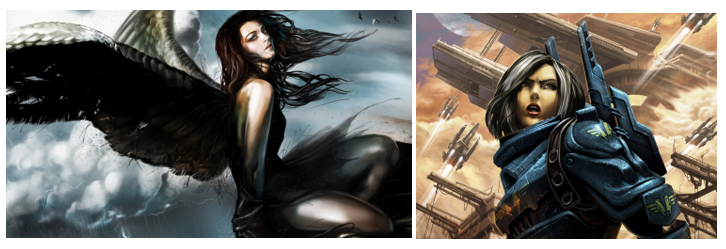
As a jack of at least several trades and an always writer, I tend to rant a lot. And my editor, unfortunately for her, always has to listen to my tedious and sometimes bombastic sermons.
One of my favorite verbal assaults is based on how annoyed I get with the accepted reasoning of why we always seem to place Fantasy and Science Fiction in the same category. I love both genres of literature, but they are innately different and I always seem to bellow my annoyance in the same way.
Fantasy is based on unproven or undiscovered magic. And while I wish we lived in a world where magic existed and we could all use it to fulfill our dreams and aspirations, we do not. Nor, does it seem, can we. At this point it is a faith-based wish or belief, and until I see actual magic with my own eyes it will remain so. When I see a poor person who is able to feed their family, or an amputee grow their limb back, through spells, I will change my stance.
Science fiction however is based on a much more reason-based set of universally known scientific rules. But I like to break my opinion down into two different categories: the possible and the probable.
The Possible are ideas that we can firmly base on the scientific knowledge that we have at this time. Stem cell research seems to be leading towards cures for certain diseases.
The Probable are ideas that we extrapolate based on reason and science-based assumptions that we can make based on what we know about the laws of science at this time. In the future, gravity-driven pulpolsion might be possible.
Or in other words, fantasy is true fiction, and science fiction is often at least in part, possible non-fiction. And as tight as sci-fi and fantasy might have become over the years, brothers from another mother will just never have the same connection as blood brothers.
So, what do you think? Does anyone else feel this way too or am I way overthinking this?
January 4, 2016
Why the new CRISPR gene editing system could dramatically change humanity as we know it… and maybe not for the better.
I’m all for endeavors in science but I believe that messing with nature in this way is potentially dangerous. And while it may have positive outcomes for the patients the writer continues on in the article to address possible ethical questions like:
Why would that be a problem?
“Dana Carroll, a biochemist at the University of Utah, says there are several issues with using CRISPR — or any other gene-editing technology — to alter human embryos. For example, an attempt to correct one gene could lead to an unexpected alteration in another.
Also, depending on when that change is made, it could be transmitted to that child’s offspring. So if a mistake is made, multiple generations could be stuck with the consequences. It is also possible that parents who make edits to their child’s genome may be making decisions that the child herself would not have chosen. Some bioethicists consider this unfair.”
It seems to me that because we, as humans are prone to mistakes, we could really mess this up!
April 17, 2015
Why writers make horrible restaurant owners

Some late night musings from a sci-fi insomniac
I went to see my friend Robert who worked at a big chain bank about a loan.
“Hey Robert,” I say with a handshake. “How’s my old childhood chum?”
“Ugh, has it really been that long?” Robert laughs.
“Yup, and since you are my friend, I wanted come to you first … to offer your bank the opportunity to invest in my new restaurant.”
He was sitting in his worn leather chair behind his dark-stained desk looking rather amused. “But you’re a writer. What do you know about the restaurant industry?” He shakes his head and laughs.
This is where he always shook his head and laughed. This wasn’t the first time I had approached him with a harebrained idea.
“And besides,” he says, “why would you want to run a restaurant anyway … my family has owned the Spotted Cack since before I was born and I hated working there as a kid. That’s why I became an investment banker.”
This is where I really needed to sell my idea to him.
“Well,” I say, “because last night as I tried to get to sleep I came up with some really great ideas.”.
“Really great ideas?” He laughs again.
“Yes, I believe that my ideas are good enough that it will almost guarantee success,” I say seriously.
“A restaurant takes a lot of hard work, not just great ideas,” he scoffs. “Tell me some of these groundbreaking ideas.”
“Okay, well, I think it’s all in the name of things,” I say.
“The name of the restaurant?”
“No, it’s in the name of the items on your menu, like your burgers and such,” I reply.
“Okay, I’ll bite … like what,” he asks.
“Well for instance, you could have a salad with vegetables, jalapenos and jasmine.”
“Vegetables, jalapenos and jasmine?” He laughs. “And what will you call it?”
“We would call it the Vajayjay,” I reply.
He busts out laughing, sloshing a few sips of his coffee onto his desktop. “You can’t call a salad Vajayjay,” he gasps.
He obviously did not notice my seriousness.
“And why not,” I ask.
“Because no one is going to eat … oh, no way, that will never work.” He says this more business-like.
“But it will … the beauty comes in the pricing of it,” I retort.
“No, I don’t think so, but what would the other items be named,” he asks. His curiosity was getting the better of him.
“Well, we could have a spicy chicken sandwich called The Pecker.”
He bursts out laughing again, spraying coffee forward in a Seattle-like mist. “The Pecker!” he bellows.
“Yeah, you know, chickens are always running around pecking at things, The Pecker,” I say.
“It takes more than a few clever names to make a restaurant work,” he says.
“But there’s more to it,” I say insistently. I am really trying to convince him at this point.
“It’s not just the names of the items, but the names of the portion sizes,” I continue.
“How is that,” he asks.
“All of the items will come in two sizes,” I explain. “Little and humongous, and you have to have the portion sizes vastly different.”
“That is the dumbest idea I have ever heard,” he laughs.
“No, it’s quite brilliant,” I say. “The success all comes down to when the waitress brings the customer the bill to make sure that it’s correct before she runs their card … let me explain.”
“Please do,” he chortled.
“Okay… the waitress walks over to a booth where there are two couples on a double date … while they are still eating … and in a loud voice she asks the first woman if she has the Humongous Vajayjay…”
At this point Robert is almost out of breath he’s laughing so hard.
“Now the woman is on the spot… you know even if she did, she is going to lie and announce that she has a Little Vajayjay.”
“Yeah, and therefore you lose money because she lied,” Robert manages to choke out.
“But that’s okay,” I insist, “because you never really make money on salads anyway, right?”
“Well at least you have that part right,” he says.
“If I understand it right, you make most of your money on drinks and the meat-related menu items, correct,” I ask.
“You do,” he says.
“So… when the waitress turns to the first guy at the table and asks, ‘okay sir, did you have the little…’ he is going to bellow out, ‘I have the Humongous Pecker.’”
Robert’s face was red from lack of oxygen at this point, tears streaming down his face.
“You see Robert, we would make money because we would always get the Humongous Pecker price, even if he had had a Little Pecker,” I finish sincerely.
I didn’t get the loan.
December 27, 2014
Survivors: the second book of The Off World Trilogy!
Hey everyone! I’m excited to share the news that Book 2 of The Off World Trilogy has arrived! It is now available on Kindle, Nook and Smashwords in both e-book and print. It will be up on the iTunes soon. Cheers!
![Pageflex Persona [document: PRS0000446_00069]](http://www.authorpatricklocke.com/wp-content/uploads/2014/12/Survivors-Ebook.jpg)
November 20, 2014
Daydream believer: the secret to great storytelling
The world is full of advice on writing. Especially during the month of November, when hundreds of thousands of people take to their laptops and chairs and challenge themselves to write 50,000 words for National Novel Writing Month.
There is so much advice out there—how to outline your novel, how to structures sentences for pacing, should you or shouldn’t you have a prologue (I say yes)—that honestly it can be overwhelming.
Which isn’t to say that a lot of this advice isn’t helpful and valid. Because it is certainly the case that good writing aids storytelling. But before you ever get to the writing part, there’s the story development process which I find just as important.
Without a completely developed idea, and an interesting one, no matter how great the writing is, it’s still going to fall flat.
So, what’s the secret to great storytelling?
I personally think, first and foremost, and above everything, that daydreaming is the best tool to becoming a great fiction, science fiction or fantasy writer. And I don’t see it talked about much. Or maybe I’m spending too much time daydreaming instead of reading advice articles.
So, do you daydream? Of course you do, everyone does. But the question should be, how do you daydream? Are you the type that just lets your mind wander, to wherever it wants? Or are you one of those others. Those constant daydreamers. The ones who have a cool idea come to mind, but then you play with it, change it, and morph it until it is better? Do you dream up a cool situation, storyline, or technology and focus daydream on it until it is more complex, more complete? Do you daydream about your gem multiple times? Until it is more in-depth, more intriguing?
If you do the later, then congratulations. I think you’re on to something.
Now, I’m certainly not claiming I’m an expert on daydreaming or the science behind it (although based on what I know, it’s pretty interesting). But I’m a firm believer in the power of it.
Some of my ideas and concepts took years to fully develop enough that I wanted to put them down on paper. The result of controlled daydreaming is that your characters, concepts and ideas are much more three-dimensional. Your ideas are more clear and understandable, and your story all the richer for it. Then when you sit down to write, you write from a well thought-out position and with lively detail.
Here are my tips for controlled daydreaming.
• Find a place where there are no external distractions.
• Free your mind of other thoughts and ideas.
• Focus on the idea or storyline that you would like to develop.
• Include goals and challenges for your characters.
• Try to break up each concept into manageable and controllable pieces.
• Try and integrate some conflict or tension and suspense into each so everyone, you included, wants to know what happens next.
• Do not make decisions after just one time thinking on it; do the same thing several days in a row. I find this really helps in the creative process.
Perhaps we should make the month before NaNoWriMo the official month of daydreaming and storymaking. It is, after all, the month of mischief, magic and make-believe.
Happy daydreaming and happy storytelling!
Cheers.