H.M. Clarke's Blog, page 24
April 17, 2014
What is Anthropology?
By Owen Jarus
Anthropology is the study of humans, early hominids and primates, such as chimpanzees.
Anthropologists study human language, culture, societies, biological and material remains, the biology and behavior of primates, and even our own buying habits. It’s a broad discipline that constantly incorporates new technologies and ideas. As technologies are developed that allow exoplanets to be detected and studied in greater detail, anthropology may eventually expand to include the study of non-human civilizations.
“Historically, anthropologists in the United States have been trained in one of four areas: sociocultural anthropology, biological/physical anthropology, archaeology, and linguistics,” writes the American Anthropological Association on its website. “Anthropologists often integrate the perspectives of several of these areas into their research, teaching, and professional lives.”
To an anthropologist, “anything is available to inspection, including the most ordinary, mundane items and events such as a McDonald’s hamburger, a pair of blue jeans, a cell phone, a birthday or New Year’s Eve, and so forth,” writes Carol Delaney, a professor emeritus at Stanford University, in her book “An Experiential Introduction to Anthropology” (Wiley-Blackwell, 2011). “Each of them provides a window into a much larger set of beliefs, power relations, and values,” she writes.
In thinking about ordinary things from our culture, we can help understand those of others. “For example what would you make of a community that celebrates death days rather than birthdays? How might that fact relate to other facets of that society? What other kinds of questions would you need to ask to begin to understand not just that practice but also the culture in which it occurs?”
Sociocultural anthropology
“Sociocultural anthropologists examine social patterns and practices across cultures, with a special interest in how people live in particular places and how they organize, govern, and create meaning,” writes the American Anthropological Association.
It’s a broad discipline that explores human behavior in all its diversity, from hunter-gatherer societies to the habits of shopping mall visitors.
For instance, Richard Lee, a professor emeritus at the University of Toronto, is known for his studies of the !Kung people that live in several countries in southern Africa (the ! represents a sound). The !Kung are one of a small number of modern-day societies that live as hunter-gatherers, providing a window into how ancient hunter-gatherers lived.
On the other side of the coin is the growing field of business anthropology where anthropologists study consumer behavior, including how people act in shopping malls. It’s something that can help companies produce and market products to meet their needs and desires.
“Business anthropologists have influenced market research by pointing out that, to be successful, marketers must understand people — what they do and how they live,” writes Shirley Fedorak, of the University of Saskatchewan, in her book “Anthropology Matters” (University of Toronto Press, 2013).
Archaeology
Archaeology is the study of humanity through the materials — the stuff — we leave behind. This can be in the distant past, such as the pyramids at Giza, or very recent times, such as a 21st-century marriage proposal carved near a closed quarantine station.
Many archaeologists do not call themselves anthropologists, and archaeology’s relationship to anthropology is a matter of debate. Archaeologists examine past societies using some of the methods and theories that sociocultural anthropologists work with. Additionally, physical anthropologists work closely with archaeologists to investigate human remains.
Physical anthropology
Physical or biological anthropologists study the remains of human beings and hominids using a variety of techniques to investigate human disease, diet, genetics and lifestyle.
Some, such as Jane Goodall, specialize in the study of primates, such as chimpanzees. By studying these creatures, which are closely related to us, we can learn much about ourselves and how we came to be.
Another important sub-branch is forensic anthropology, which tends to focus on helping authorities solve crimes and identify human remains found at crime and disaster scenes.
A 2008 article published in the magazine Chico Statements tells the story of Ben Figura, who “worked in the foul waters of New Orleans following Hurricane Katrina and in Thailand in the aftermath of the 2005 tsunami that killed some 230,000 people.” He also led “a small team of experts from New York City’s Office of the Chief Medical Examiner working to put names to the thousands of human remains still being found at Ground Zero. Most of the remains at this stage are bone fragments, some very small.”
It’s a tough field to work in. “Working at the site of a historic tragedy and in such intimate contact with its victims, as well as its survivors — Figura often calls family members when his team identifies remains — can be emotionally wrenching,” the article notes.
Linguistic anthropology
In some ways, linguistic anthropology can be the hardest branch of anthropology to identify.
The American Anthropological Association states that it “is the comparative study of ways in which language reflects and influences social life. It explores the many ways in which language practices define patterns of communication, formulate categories of social identity and group membership, organize large-scale cultural beliefs and ideologies, and, in conjunction with other forms of meaning-making, equip people with common cultural representations of their natural and social worlds.”
Linguistic anthropologists can be found analyzing languages, both verbal and non-verbal, around the world. They do things like study American presidential debates to determine how candidates use non-verbal hand gestures to communicate with voters. They can also be found analyzing the books and movies read by young teenagers (the “Twilight” series, for instance) to determine how they affect the teenage mind.
By studying the usage of language, these anthropologists can determine what cultures value.
“The everyday language of North Americans, for example, includes a number of slang words, such as dough, greenback, dust, loot, cash, bucks, change and bread, to identify what an indigenous native of Papua-New Guinea would recognize only as money,” writes William Haviland, a professor emeritus at the University of Vermont, in his book “Anthropology” (Harcourt College Publishers, 2000).
“Such phenomena help identify things that are considered of special importance to a culture.”
How do you become an anthropologist?
Anthropologists tend to have either a master’s or doctoral degree. There are many universities in the United States, Canada and Europe that teach the discipline. Often those studying anthropology will specialize in a specific area. Fieldwork is often required to complete a degree.
Where do anthropologists work?
Anthropologists can be found working for a wide variety of employers. These include museums, police departments, marketing companies, cultural resource management firms, government agencies and research institutes.
How much do anthropologists earn?
It is hard to give a salary range for anthropologists. A junior anthropologist doing fieldwork on contract may earn a low amount of money, perhaps not much more than minimum wage. On the higher end, a tenured professor at a large university may earn over $100,000, while those in senior positions at large private companies may earn considerably more.
How did anthropology get its start?
In some ways anthropology is in itself an ancient discipline. Writers in the ancient world often analyzed the cultures of various peoples in an attempt to understand their practices.
For instance, in A.D. 43, the writer, Pomponius Mela, examined the Druid religious beliefs of the Gauls and noted how it prepared them for the many wars they fought. “And yet, they have both their own eloquence and their own teachers of wisdom, the Druids. These men claim to know the size and shape of the Earth and of the universe, the movements of the sky and of the stars, and what the gods intend…” he wrote. “One of the precepts they teach — obviously to make them better for war — has [become] common knowledge, namely that their souls are eternal and there is a second life for the dead.” (Translation by E.F Romer)
As the Enlightenment and Scientific Revolution spawned new technologies and ideas, anthropology grew as a discipline. For example, Charles Darwin’s theory of evolution paved the way for the skeletal remains of hominids to be better understood, allowing for a new understanding of how humans came into existence.
Click Here for the link to the article
Sign up for Hayley’s Newsletter here!



April 9, 2014
Language structure … you’re born with it
Humans are unique in their ability to acquire language. But how? A new study published in the Proceeding of the National Academy of Sciences shows that we are in fact born with the basic fundamental knowledge of language, thus shedding light on the age-old linguistic “nature vs. nurture” debate.
THE STUDY
While languages differ from each other in many ways, certain aspects appear to be shared across languages. These aspects might stem from linguistic principles that are active in all human brains. A natural question then arises: are infants born with knowledge of how the human words might sound like? Are infants biased to consider certain sound sequences as more word-like than others? “The results of this new study suggest that, the sound patterns of human languages are the product of an inborn biological instinct, very much like birdsong” said Prof. Iris Berent of Northeastern University in Boston, who co-authored the study with a research team from the International School of Advanced Studies in Italy, headed by Dr. Jacques Mehler. The study’s first author is Dr. David Gómez.
BLA, ShBA, LBA
Consider, for instance, the sound-combinations that occur at the beginning of words. While many languages have words that begin by bl (e.g., blando in Italian, blink in English, and blusa in Spanish), few languages have words that begin with lb. Russian is such a language (e.g., lbu, a word related to lob, “forehead”), but even in Russian such words are extremely rare and outnumbered by words starting with bl. Linguists have suggested that such patterns occur because human brains are biased to favor syllables such as bla over lba. In line with this possibility, past experimental research from Dr. Berent’s lab has shown that adult speakers display such preferences, even if their native language has no words resembling either bla or lba. But where does this knowledge stem from? Is it due to some universal linguistic principle, or to adults’ lifelong experience with listening and producing their native language?
THE EXPERIMENT
These questions motivated our team to look carefully at how young babies perceive different types of words. We used near-infrared spectroscopy, a silent and non-invasive technique that tells us how the oxygenation of the brain cortex (those very first centimeters of gray matter just below the scalp) changes in time, to look at the brain reactions of Italian newborn babies when listening to good and bad word candidates as described above (e.g., blif, lbif).
Working with Italian newborn infants and their families, we observed that newborns react differently to good and bad word candidates, similar to what adults do. Young infants have not learned any words yet, they do not even babble yet, and still they share with us a sense of how words should sound. This finding shows that we are born with the basic, foundational knowledge about the sound pattern of human languages.
It is hard to imagine how differently languages would sound if humans did not share such type of knowledge. We are fortunate that we do, and so our babies can come to the world with the certainty that they will readily recognize the sound patterns of words–no matter the language they will grow up with.
###
Article title: Language universals at birth – Published in the Proceedings of the National Academy of Sciences of the USA (PNAS)
Article link from PNAS
Authors: David M. Gómez, Iris Berent, Silvia Benavides-Varela, Ricardo Bion, Luigi Cattarossi, Marina Nespor, & Jacques Mehler
The research leading to these results has received funding from the European Research Council under the European Union’s Seventh Framework Programme (FP7/2007-2013) / ERC grant agreement n° 269502 (PASCAL) to Jacques Mehler.


April 8, 2014
New Short story posted
Just a note to say that I’ve added a new short story to my scriblings page.
Click Here to read it.
I hope you enjoy it :)
-HMC


Mars alignment tonight!
Mars will be exactly opposite the sun in the sky in a rare cosmic alignment set to take place Tonight (April 8 2014).
Called an opposition, this happens with Mars from Earth’s perspective every 778 days, or 2 years, 1 month and 18 days. Think of Earth and Mars as two cars racing on circular tracks. Because Earth is closer to the sun, it travels faster, completing a circuit in 365 days. Mars is farther from the sun and takes longer, 687 days. By the time Mars has completed one circuit, Earth has a lot of catching up to do to get to a point between the Red Planet and the sun.
This is complicated by the fact that the two racetracks are not exact circles. As Johannes Kepler discovered in the 16th century, the planets follow slightly elliptical paths around the sun, sometimes closer to the Sun (perihelion), sometimes farther away (aphelion).
Some planets, like Venus and Earth, follow paths that are almost perfect circles. Other planets, like Mercury and Mars, follow more elliptical orbits, which are described as being more eccentric, or differing from a circle.
On the day of opposition, Mars, Earth and the sun fall on a straight line. Six days later, both planets will have moved a little along their orbits, but, because of the eccentricity of its orbit, Mars will be slightly closer to Earth than it was before.
If you look at the complete orbits of the four inner planets, you can see how Venus and Earth follow almost perfect circles centered on the sun. The orbits of Mercury and Mars are slightly askew.
From a practical point of view, Mars appears as a very tiny object in most amateur telescopes, almost always a disappointment to a beginner looking at it. The detailed images you see online are almost always made by combining hundreds of individual frames by a process called stacking, which minimizes the “noise” caused by the turbulence in Earth’s atmosphere.
To see that sort of detail at the eyepiece requires tremendous patience, waiting for the rare instants when the Earth’s atmosphere steadies, allowing the fine detail to pop into view. At those instants of clarity, you will see Mars’ polar cap and traces of its subtle differences in terrain.
From The Weather Channel – If you have a telescope it might pay to go out and see Mars :)


March 28, 2014
Howling Vengeance Giveaway
Hello Everyone!
I am having a giveaway on Goodreads, where I am putting two copies of Howling Vengeance up for grabs.
Just click on the link below to enter. Good luck to everyone who enters :)
Goodreads Book Giveaway

Howling Vengeance
by H.M. Clarke
Giveaway ends April 28, 2014.
See the giveaway details
at Goodreads.


March 24, 2014
Howling Vengeance E-Book
Good morning everyone
I had come to my attention that there were some formatting errors in the Kindle version of Howling Vengeance.
These have now been corrected. (It seems that my Map and its legend had mucked everything up, so I had to take these out.)
I apologize for any inconvenience that this may have caused readers.
-HMC


March 21, 2014
New Picture Gallery!
I have added a picture Gallery and a links page to the site! Go take a look :)
-HMC


March 19, 2014
Help Create a Story Ending
I am creating a page to hold all my short stories and I thought I might start it off with an activity that can get everyone involved.
I have a short story called ‘The Book’ but it is in desperate need of a good ending.
I am going to place ‘The Book’ on my new short story page and what I would like you to do is post comments on how you would like to see it end. I will then post the most popular endings on a poll. People can then vote for the actual ending for me to write to finish off the story.
I will have the comments for story endings open for two weeks and then the poll will run for two weeks after that.
So, what are you still doing here? Go and read the story and make a suggestion for how you want it to end!
-HMC


March 18, 2014
The Kalarthri on Kindle Countdown
Now is your chance to get the Kindle version of The Kalarthri as it is now on a Kindle count down deal.
Get in early to get it at the best price! Deal finishes on 21st March 2014.
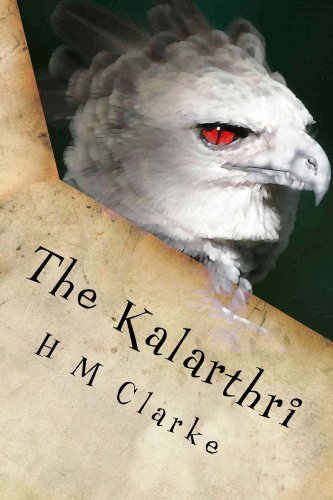
The Kalarthri (The Way to Freedom)

March 16, 2014
Howling Vengeance is here!
Howling Vengeance is now available for purchase!
Get it now on Amazon.com at the link below