
Sandra Warren's Blog, page 5
January 2, 2016
Book Trailers Made Easy
The word is out—books with book trailers, like movies with movie trailers, get more attention than those without. So how do you go about getting one made? Where do you start? It's not as hard as you may think.
When the concept of using book trailers to market books first came about several years ago, I created one for my children’s picture book, Arlie the Alligator. It’s still on my website but it’s full of errors, the number one being, it's way too long. (An updated version is in process.)
I am no expert, but I thought the process I went through to create a book trailer for my latest book, We Bought A WWII Bomber, might help those thinking about making one.
Begin by clicking the link below. If you like what you see, if it holds your interest and tweaks your curiosity, continue reading. http://tinyurl.com/nfdd9xs
Here are the things I’ve learned about making a book trailer:
Do your homework! The size of your wallet will not necessarily determine the quality of the end product. Knowledge will.
Research book trailers and you will find the full gamut in length and format; a simple book cover with text super-imposed to music, to full productions featuring actors performing on elaborate sets with music and sound effects. Don’t be intimidated.
Take a webinar on the subject. When you Google “book trailer webinars” you’ll find multiple choices. Many experts will whet your appetite with a FREE session which almost always is followed by a pitch for more in-depth sessions for a fee. The FREE sessions, however, usually contain great basic information.
Google “book trailers” to find multiple links designed to help you create your own. Most folks will hire a production company but for those who are tech savvy, directions for how to do them yourself are also available. I hired a production company called, PhotosInMotion.
Study basic information and various opinions on what to include and what to avoid.
Here is a link I found particularly helpful:
http://library.conroeisd.net/book_tra...
It, not only gives rational for having a book trailer, the basics about them and how educators can use them in the classroom, it also includes multiple examples to view. Take a look at the book trailers for The Spider and The Flyand Where The Wild Things Are, given at the end of the above link.
1. Study the use of illustrations/photographs/setting2. Study the use of camera angle and motion3. Study the use of voice over or mix of text and voice4. Study the use of music and sound effects 5. Study their length7. Study the use of text: scrolling in from one side or another, boxed on its own, or superimposed over illustrations8. Study the text itself. Did it come directly from the book? Was it more like a pitch? Did it reveal too much of the story or just enough to entice? Did it ask a question? Did it hold your interest? Did it make you want to read the book?
Analyze the above items and make note of techniques you like. Also analyze other book trailers with the above items in mind. Try to figure out why the book trailers you like hold your interest and why others fall short?
Preparing to make your book trailer:
Have a clear vision or concept of what you want your book trailer to look like but be open to suggestions. A good producer will be able to take your basic information and weave it into something to be proud of. For the above book trailer about the bomber book, I gave the producer a jpg of the book cover, 10 photographs and 14 lines of text. He did the rest.
Time is money. The more detailed your concept, visuals and script, the easier, faster and cheaper it will be to produce.
Gather visuals to enhance your trailer. They might be illustrations from the book or photographs of people, places or things or an object related to your story. Text will dictate the visuals. For my 1 minute 12 second book trailer, I sent 10 photographs taken from the book and the book cover. My producer, Doug, from PhotosInMotion, added 5 more graphics.
Instead of illustrations or photographs, you may prefer to use locations and actors. If so, you’ll need to know who, what, where and when?
Writing the text – tell about your book in as few words as possible! Use the one sentence pitch idea. Ask a question. Write out what you want to say and then cut, cut, cut into couple second sound bites.
I started with this synopsis: This is the story of students in 1943 who during WWII raised $375,000 by selling US War Bonds and War Loan Stamps and bought a B-17 Bomber. It was flown into their home town where they had a dedication ceremony after naming it The Spirit of South High and watched as it flew off to war never to be seen again. Seventy-two years later they found it had crashed in Meadows of Dan, Virginia. Now the rest of the story can be told.
I ended up with this: 1. Can a group of students change the course of history?2. They could and did in 1943 during WWII.3. They sold US War Bonds & War Loan stamps4. $375,000 worth5. And bought a B-17 bomber6. Etc., etc.
Fourteen (14) very short sentences or partial sentences, equal to approximately 45 seconds spoken, were used in the book trailer. According to The Writer's Digest Guide to Manuscript Formats, 130 words of text will take approximately 60 seconds spoken. The exact word count for the bomber book trailer is 93 words, equal to approximately 45 seconds spoken. The remainder of the 72 seconds (1 minute 12 seconds) is filled with book cover images, purchase information and company identification.
The type of font selected can detract or enhance your book trailer. Does your story dictate a swirly romantic font or something more formal? Will the font look better regular, bolded or italicized? A consistent font throughout is best. My producer presented four fonts embedded within the sample trailer so I could actually see which ones I preferred. Make sure the font used enhances your book, matches the flavor of the story and what you want to say? How will text be used? Will it scroll across each page or frame, be spoken or both? If you want the text spoken, you will need to either hire someone or do the voice-over yourself. Make sure the person who does the voice-over understands the concept of the “smile.” You can hear a smile. If the voice-over person speaks without smiling, the dialogue or spoken text will sound flat.
Before hiring a voice-over person, I was shown a book trailer where the text slid smoothly across each frame backed by music and powerful images. The movement of the text forced me to interact with what I was watching as it captured my attention. Reading the text myself was so powerful, I knew that’s what I wanted my audience to feel as they watched my book trailer.
I had no idea what music to use. I left that up to my producer. The company, PhotosInMotion, as would most production companies, owns the rights to hundreds of royalty free music samples in any style and tempo. My producer edited four different pieces of music into four versions of the trailer and let me choose which I liked best. The particular piece in the final bomber book trailer was the only one of the four that crescendos to the end.
The production company you hire doesn’t have to be in your town. Most if not all of your communication can and will be done electronically. PhotosInMotion, the company I used, is in Michigan. I live in North Carolina.
If you're wondering how to approach a production company, what to say, what to ask (?) read on: What follows is a list of questions to get you started.
1. What does your basic cost cover for a 1 minute book trailer? 2. What information do you need before you can begin?3. Do you have royalty free music to use? If so, will you give me options to choose from? 4. Do you have someone who does voice-overs? 5. Is voice-over talent included in your basic cost? If not, how much extra will it cost?6. What additional hidden costs are likely to occur?7. Once I hand in all the requested information, how long will it take? 8. Do you require a down payment? 9. What is my recourse if I’m unsatisfied with the final product?
The above information was compiled from my personal experience. I in no way claim to be an expert on this topic.
I hope this post tweaked your interest in making a book trailer.
Have you done a book trailer? How does my experience compare to yours? What else would you recommend? I’d love to hear from you.
Sandra Warren is the author of Arlie the Alligator and other books for children and adults.
We Bought a WWII Bomber: The Untold Story of a Michigan High School, a B-17 Bomber & The Blue Ridge Parkway! "This bit of local history is a reminder of unheralded resolve and determination by students during WWII" Publishers Weekly/BookLife Available: Amazon.com - www.arliebooks.com – Ingram - Road Park Books, Charlotte
www.sandrawarren.com www.arliebooks.com
http://sandrawarrenwrites.blogspot.com
http://twitter.com/SandraWarrenNC
When the concept of using book trailers to market books first came about several years ago, I created one for my children’s picture book, Arlie the Alligator. It’s still on my website but it’s full of errors, the number one being, it's way too long. (An updated version is in process.)
I am no expert, but I thought the process I went through to create a book trailer for my latest book, We Bought A WWII Bomber, might help those thinking about making one.
Begin by clicking the link below. If you like what you see, if it holds your interest and tweaks your curiosity, continue reading. http://tinyurl.com/nfdd9xs
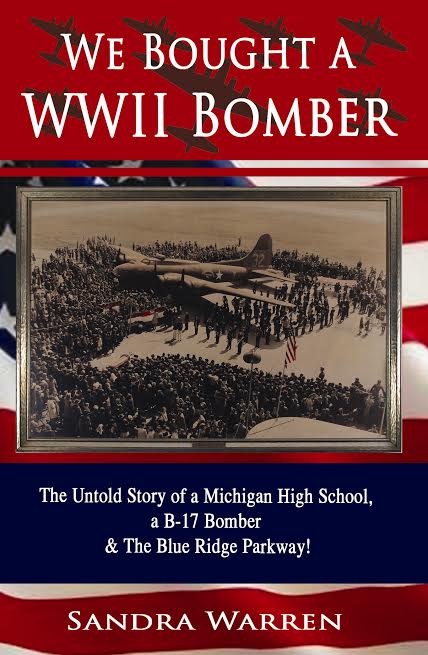
Here are the things I’ve learned about making a book trailer:
Do your homework! The size of your wallet will not necessarily determine the quality of the end product. Knowledge will.
Research book trailers and you will find the full gamut in length and format; a simple book cover with text super-imposed to music, to full productions featuring actors performing on elaborate sets with music and sound effects. Don’t be intimidated.
Take a webinar on the subject. When you Google “book trailer webinars” you’ll find multiple choices. Many experts will whet your appetite with a FREE session which almost always is followed by a pitch for more in-depth sessions for a fee. The FREE sessions, however, usually contain great basic information.
Google “book trailers” to find multiple links designed to help you create your own. Most folks will hire a production company but for those who are tech savvy, directions for how to do them yourself are also available. I hired a production company called, PhotosInMotion.
Study basic information and various opinions on what to include and what to avoid.
Here is a link I found particularly helpful:
http://library.conroeisd.net/book_tra...
It, not only gives rational for having a book trailer, the basics about them and how educators can use them in the classroom, it also includes multiple examples to view. Take a look at the book trailers for The Spider and The Flyand Where The Wild Things Are, given at the end of the above link.
1. Study the use of illustrations/photographs/setting2. Study the use of camera angle and motion3. Study the use of voice over or mix of text and voice4. Study the use of music and sound effects 5. Study their length7. Study the use of text: scrolling in from one side or another, boxed on its own, or superimposed over illustrations8. Study the text itself. Did it come directly from the book? Was it more like a pitch? Did it reveal too much of the story or just enough to entice? Did it ask a question? Did it hold your interest? Did it make you want to read the book?
Analyze the above items and make note of techniques you like. Also analyze other book trailers with the above items in mind. Try to figure out why the book trailers you like hold your interest and why others fall short?
Preparing to make your book trailer:
Have a clear vision or concept of what you want your book trailer to look like but be open to suggestions. A good producer will be able to take your basic information and weave it into something to be proud of. For the above book trailer about the bomber book, I gave the producer a jpg of the book cover, 10 photographs and 14 lines of text. He did the rest.
Time is money. The more detailed your concept, visuals and script, the easier, faster and cheaper it will be to produce.
Gather visuals to enhance your trailer. They might be illustrations from the book or photographs of people, places or things or an object related to your story. Text will dictate the visuals. For my 1 minute 12 second book trailer, I sent 10 photographs taken from the book and the book cover. My producer, Doug, from PhotosInMotion, added 5 more graphics.
Instead of illustrations or photographs, you may prefer to use locations and actors. If so, you’ll need to know who, what, where and when?
Writing the text – tell about your book in as few words as possible! Use the one sentence pitch idea. Ask a question. Write out what you want to say and then cut, cut, cut into couple second sound bites.
I started with this synopsis: This is the story of students in 1943 who during WWII raised $375,000 by selling US War Bonds and War Loan Stamps and bought a B-17 Bomber. It was flown into their home town where they had a dedication ceremony after naming it The Spirit of South High and watched as it flew off to war never to be seen again. Seventy-two years later they found it had crashed in Meadows of Dan, Virginia. Now the rest of the story can be told.
I ended up with this: 1. Can a group of students change the course of history?2. They could and did in 1943 during WWII.3. They sold US War Bonds & War Loan stamps4. $375,000 worth5. And bought a B-17 bomber6. Etc., etc.
Fourteen (14) very short sentences or partial sentences, equal to approximately 45 seconds spoken, were used in the book trailer. According to The Writer's Digest Guide to Manuscript Formats, 130 words of text will take approximately 60 seconds spoken. The exact word count for the bomber book trailer is 93 words, equal to approximately 45 seconds spoken. The remainder of the 72 seconds (1 minute 12 seconds) is filled with book cover images, purchase information and company identification.
The type of font selected can detract or enhance your book trailer. Does your story dictate a swirly romantic font or something more formal? Will the font look better regular, bolded or italicized? A consistent font throughout is best. My producer presented four fonts embedded within the sample trailer so I could actually see which ones I preferred. Make sure the font used enhances your book, matches the flavor of the story and what you want to say? How will text be used? Will it scroll across each page or frame, be spoken or both? If you want the text spoken, you will need to either hire someone or do the voice-over yourself. Make sure the person who does the voice-over understands the concept of the “smile.” You can hear a smile. If the voice-over person speaks without smiling, the dialogue or spoken text will sound flat.
Before hiring a voice-over person, I was shown a book trailer where the text slid smoothly across each frame backed by music and powerful images. The movement of the text forced me to interact with what I was watching as it captured my attention. Reading the text myself was so powerful, I knew that’s what I wanted my audience to feel as they watched my book trailer.
I had no idea what music to use. I left that up to my producer. The company, PhotosInMotion, as would most production companies, owns the rights to hundreds of royalty free music samples in any style and tempo. My producer edited four different pieces of music into four versions of the trailer and let me choose which I liked best. The particular piece in the final bomber book trailer was the only one of the four that crescendos to the end.
The production company you hire doesn’t have to be in your town. Most if not all of your communication can and will be done electronically. PhotosInMotion, the company I used, is in Michigan. I live in North Carolina.
If you're wondering how to approach a production company, what to say, what to ask (?) read on: What follows is a list of questions to get you started.
1. What does your basic cost cover for a 1 minute book trailer? 2. What information do you need before you can begin?3. Do you have royalty free music to use? If so, will you give me options to choose from? 4. Do you have someone who does voice-overs? 5. Is voice-over talent included in your basic cost? If not, how much extra will it cost?6. What additional hidden costs are likely to occur?7. Once I hand in all the requested information, how long will it take? 8. Do you require a down payment? 9. What is my recourse if I’m unsatisfied with the final product?
The above information was compiled from my personal experience. I in no way claim to be an expert on this topic.
I hope this post tweaked your interest in making a book trailer.
Have you done a book trailer? How does my experience compare to yours? What else would you recommend? I’d love to hear from you.
Sandra Warren is the author of Arlie the Alligator and other books for children and adults.
We Bought a WWII Bomber: The Untold Story of a Michigan High School, a B-17 Bomber & The Blue Ridge Parkway! "This bit of local history is a reminder of unheralded resolve and determination by students during WWII" Publishers Weekly/BookLife Available: Amazon.com - www.arliebooks.com – Ingram - Road Park Books, Charlotte
www.sandrawarren.com www.arliebooks.com
http://sandrawarrenwrites.blogspot.com
http://twitter.com/SandraWarrenNC


December 2, 2015
When Christmas Feels Like Home!
Christmas, more than any other season, finds our minds
wandering back to our growing up years and special Christmas memories with family and friends. It happens no matter your years or the miles that now separate you from your loved ones. It's a time when a picture or a song or a smell can transport you to grandma's kitchen where you helped bake cinnamon cut-out cookies or the whiff of pine needles transports you to the farm where you'd tromp through the snow to find and cut the perfect tree.
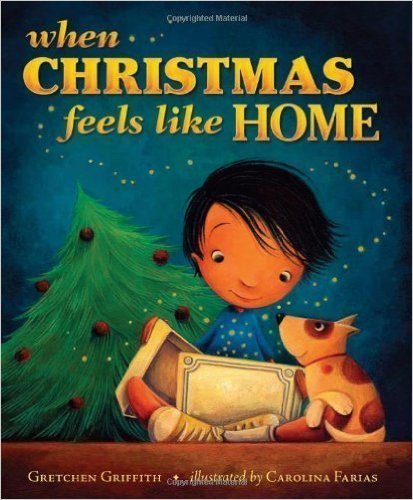
Creating new memories from the old is not always an easy task when you're an adult. It has to be doubly hard and confusing for a child. That's why the wonderful story book by Gretchen Griffith, When Christmas Feels Like Home, is a must read for children and grandchildren who have been uprooted and moved away from all things familiar. This important book will open the door to conversations about those feelings children have difficulty expressing.
A Goodreads review puts it this way: "When Christmas Feels Like Home is more than a Christmas book. Children who have moved to a new home, across the street, across town, from town to town or country to county, will relate to Eduardo as he attempts to understand the unfamiliar, find new friends and make his new house or apartment feel like home. Ms. Griffith's use of language is both beautiful as well as visual. Children will delight in trees that stand like skeletons, pumpkins that smile, words that float on clouds and trees that ride on cars. The cute illustrations are guaranteed to capture a child's attention. When Christmas Feels Like home will surely open up communication between parents who have moved their family from place to place, and the children they love."
Nine years ago my husband and I moved to the mountains of North Carolina. Each year since, we've tried to recreate the spirit of the season in our log home. It will never been the same as the years we spent in Ohio rearing our children, but now, after nine years, we've established new memories and transported our traditions to a new location. This was something that evolved over the years until finally, in our new location, Christmas does feel like home. Still, to our daughters, now married with their own families and scattered to Alaska, Rhode Island and Pennsylvania, their idea of home for the holidays will never be the same. But, with the decorations they grew up with, now hanging on the tree in our log home, they get a small sense of that feeling of home when they visit.
What do you do to make Christmas feel like home?
******************
For more books by Gretchen Griffith
http:www.gretchengriffith.com
http://www.gretchengriffith.com/blog.htm
October 27, 2015
The Ebb & Flow of Writing
The mountains are back. They disappear every spring when tall trees explode with foliage, then reappear in the fall, slowly, day by day as leaves, tired from months waving in the hot summer sun, cascade down quilting the ground with reds, yellows, and browns.
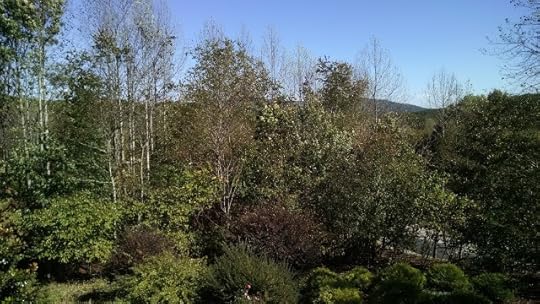 October South Mountains ViewWhile watching this daily transformation from my office window in my log home in the North Carolina Mountains, I’m reminded of the ebb and flow of all living things, even the ebb and flow of my writing life. One minute my mind bursts forth with ideas coming at me so fast my fingers stumble over the keys, while other times I sit and stare wondering if I’ll ever have an original thought again. One moment my current WIP consumes me. It’s all I can think about. When it’s done, finished and ready to submit, there’s a let-down that often affects my ability to move forward to the next project, at least for a little while.
It's the letting go, somewhat akin to sending your baby off to kindergarten or to college, that puts you in a tailspin. Perhaps that’s a little melodramatic but if you’re a writer you understand that when you spend hours upon hours with certain characters in certain locations, close ties develop. These characters become real, are real, at least to you.
The same is true when writing nonfiction. You become close to certain researchers or interviewees or people important to helping get the information straight, the story right. The almost daily contact fosters relationships beyond the facts of the story as conversation drifts to more personal subjects, family and daily struggles. You don't intend it but friendships develop after days of contact. When the manuscript is finished, the book out, daily contact ceases.
I'm feeling a little of that right now--the separation from daily contact. My nonfiction is out and I'm missing multiple folks who helped me along the way; folks from my high school (the book is about an event that happened there) and folks from Virginia, where my story ends; folks I've known for years and those who are new but feel as if they've been friends for years.
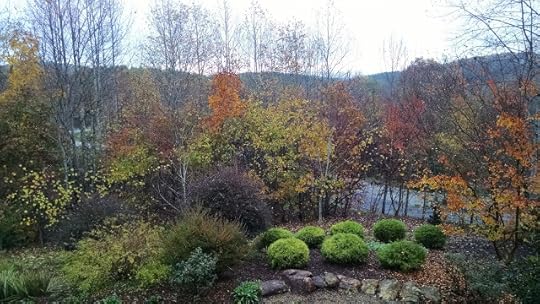 November South Mountains ViewLetting go is hard. But just as trees release the leaves with the changing seasons, so to we must release our work, at first to the agent or editor or publisher and then to the world so our book can do its job inspiring, teaching, influencing and entertaining readers.
That's what being a writer is all about.
Have you ever had trouble letting go when you've finished a manuscript or a book? I'd love to hear your story.
********************
Website: www.arliebooks.comBlog: http://sandrawarrenwrites.blogspot.comTwitter: http://twitter.com/SandraWarrenNC
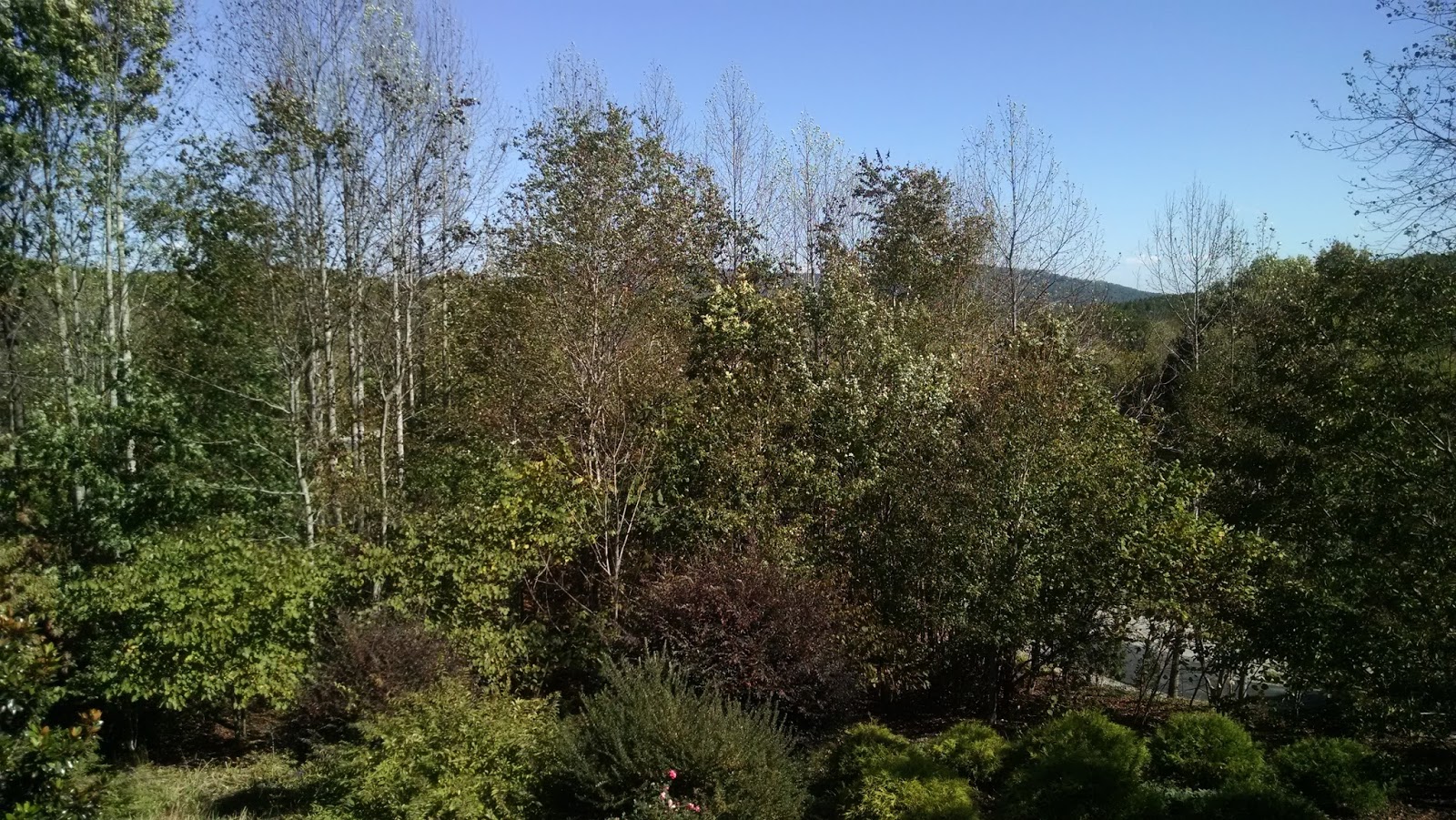 October South Mountains ViewWhile watching this daily transformation from my office window in my log home in the North Carolina Mountains, I’m reminded of the ebb and flow of all living things, even the ebb and flow of my writing life. One minute my mind bursts forth with ideas coming at me so fast my fingers stumble over the keys, while other times I sit and stare wondering if I’ll ever have an original thought again. One moment my current WIP consumes me. It’s all I can think about. When it’s done, finished and ready to submit, there’s a let-down that often affects my ability to move forward to the next project, at least for a little while.
 It's the letting go, somewhat akin to sending your baby off to kindergarten or to college, that puts you in a tailspin. Perhaps that’s a little melodramatic but if you’re a writer you understand that when you spend hours upon hours with certain characters in certain locations, close ties develop. These characters become real, are real, at least to you.
The same is true when writing nonfiction. You become close to certain researchers or interviewees or people important to helping get the information straight, the story right. The almost daily contact fosters relationships beyond the facts of the story as conversation drifts to more personal subjects, family and daily struggles. You don't intend it but friendships develop after days of contact. When the manuscript is finished, the book out, daily contact ceases.
I'm feeling a little of that right now--the separation from daily contact. My nonfiction is out and I'm missing multiple folks who helped me along the way; folks from my high school (the book is about an event that happened there) and folks from Virginia, where my story ends; folks I've known for years and those who are new but feel as if they've been friends for years.
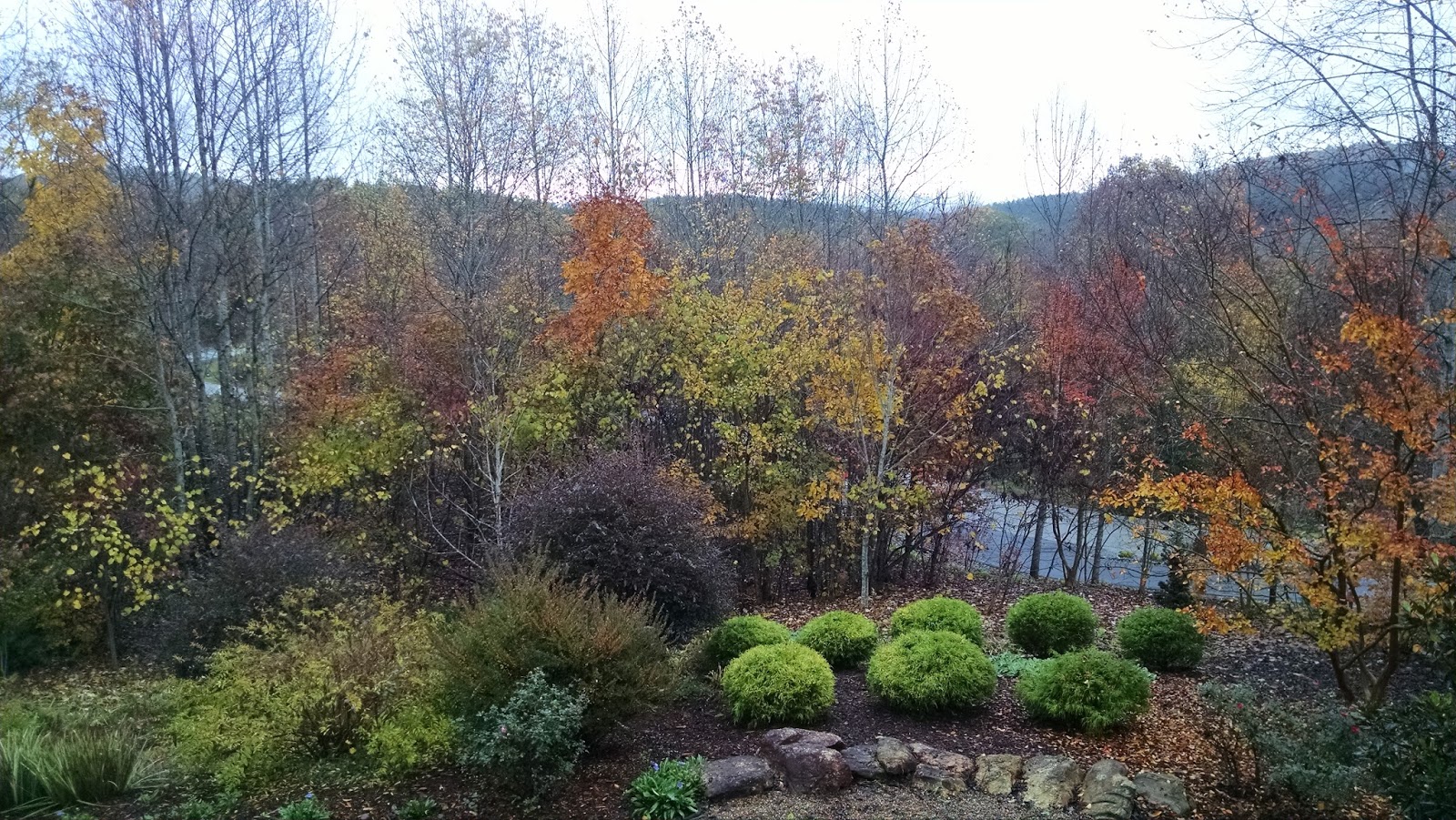 November South Mountains ViewLetting go is hard. But just as trees release the leaves with the changing seasons, so to we must release our work, at first to the agent or editor or publisher and then to the world so our book can do its job inspiring, teaching, influencing and entertaining readers.
That's what being a writer is all about.
Have you ever had trouble letting go when you've finished a manuscript or a book? I'd love to hear your story.
********************
Website: www.arliebooks.comBlog: http://sandrawarrenwrites.blogspot.comTwitter: http://twitter.com/SandraWarrenNC
October 24, 2015
The Perfect Venue
Is there a "perfect" venue for holding a book launch or autograph signing? I don't think so. But you can find a unique place if you think outside the box.
Gone are the days when a bookstore is where you go to sign books. Today, authors need to be creative, right from the start, when getting the word out. I'm not talking to the 1/2 of 1% of author folks who are published with huge advances and publicists at their disposal. I'm talking about the rest of us, the 99% who have to be creative to keep our books bringing in the sales numbers.
So think outside the box.
The location that comes to mind first and foremost is a bookstore or a library. For your particular book those choices might just be the best, but maybe not.
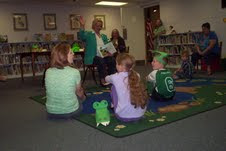 McDowell Public Library I had my previous book signing in a library. Their meeting room is downstairs in the back of the children's room. It should have been a perfect spot because of the children's section, but on the day of my signing only a couple of families came to the library. If it hadn't been for a group of friends and neighbors, it would have been a total disaster.
My best book signings have been in a donut shop in Michigan, Marge's Donut Den. Yes, you heard me right. A donut shop. I've been privileged to have held three there. The first one was for my children's book, Arlie the Alligator. That day I sold $1500 in books & CD's in about three hours time.
The next book signing held at Marge's Donut Den, was for two biographies. I didn't sell $1500 but sales did come close.
In September I held my third book launch/book signing at Marge's. We Bought a WWII Bomber. Approximately sixty people attended the presentation but well over a hundred came and went throughout the launch. They all bought at least one book, with some buying more than one.
The proprietor of Marge's Donut Den in Wyoming, Michigan is a book lover as well as an exceptional donut baker. She has two large events rooms where she holds poetry readings, book discussions, writing and art classes as well as other events. It's safe to say there are few donut shops around like hers.
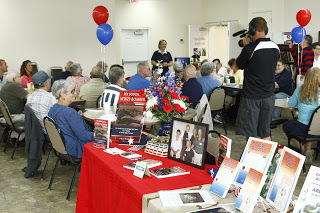 Marge's Donut Den Events Room - Wyoming, MILast week, I held a North Carolina book launch for We Bought a WWII Bomber, at a local arts association that has a storefront presence right on Main Street in the town near where I live. From the street it appears to be a store that sells local crafts from talented artists, but inside is a large space for small receptions and a theater that seats about one hundred people.
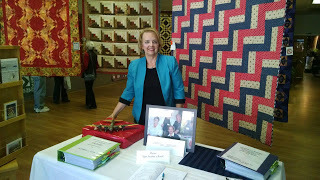 MACA - McDowell Arts Council AssociationI was quite taken aback when I arrived and saw about a dozen hand-crafted, beautifully made quilts hanging from the ceiling in the very room I thought I had contracted to use. At that point there was nothing I could do but setup as best I could on the tables that I had requested in advance. As it turned out, the quilts provided an interesting backdrop for the event. Folks off the street could come in, vote for a quilt, look at the crafts and buy a book. It turned out to be okay even though numbers in attendance could have been much, much better. It was noted that everyone who attended bought a book and several bought more than one, so the percentages associated with sales vs attendance were high.
We tend to measure the success of a book launch or autograph signing by the numbers in attendance and numbers of books sold. Of course we want to be able to autograph many, but success doesn't always come that way. The poorest attended just might be the most successful because you never know if that one person who comes and loves what you've got to say has the connections or means to get the word out or offer you an opportunity to speak at a much larger venue. That one person might have the connections to make your book and your career soar.
So think outside the box. What is your book about? Is there a location in it you might capitalize on? A famous place? A farm or park? One writer friend wrote about an historic school that had been renovated, so her book signing was in that school. Think about organizations that may tie into something that happens in the book. Offer to give a percentage of sales as a donation.
Also, consider the location and the type of room. Is it off the beaten path or in an area that might draw walk-in or walk-by traffic? Will the room accommodate a crowd comfortably?
Think also about doing a presentation. People are curious about writers. They love to hear about the process more than having your read a section out of your book--where your ideas come from and how you put the story together. Did you have to do research? How long did it take you? That kind of stuff. Presentations excite readers to purchase.
There are many places to hold a book launch so think outside the box and find a unique venue to show your book off to its finest.
What is the most unique place you've hosted a book launch or been to a book launch? I'd love to know.
Share your unique place in the COMMENT box and I'll put your name into a hat for a copy of We Bought a WWII Bomber: The Untold Story of a Michigan High School, a B-17 bomber & The Blue Ridge Parkway.
www.arliebooks.com
Gone are the days when a bookstore is where you go to sign books. Today, authors need to be creative, right from the start, when getting the word out. I'm not talking to the 1/2 of 1% of author folks who are published with huge advances and publicists at their disposal. I'm talking about the rest of us, the 99% who have to be creative to keep our books bringing in the sales numbers.
So think outside the box.
The location that comes to mind first and foremost is a bookstore or a library. For your particular book those choices might just be the best, but maybe not.
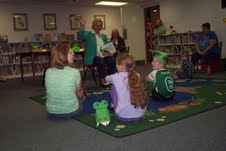 McDowell Public Library I had my previous book signing in a library. Their meeting room is downstairs in the back of the children's room. It should have been a perfect spot because of the children's section, but on the day of my signing only a couple of families came to the library. If it hadn't been for a group of friends and neighbors, it would have been a total disaster.
My best book signings have been in a donut shop in Michigan, Marge's Donut Den. Yes, you heard me right. A donut shop. I've been privileged to have held three there. The first one was for my children's book, Arlie the Alligator. That day I sold $1500 in books & CD's in about three hours time.
The next book signing held at Marge's Donut Den, was for two biographies. I didn't sell $1500 but sales did come close.
In September I held my third book launch/book signing at Marge's. We Bought a WWII Bomber. Approximately sixty people attended the presentation but well over a hundred came and went throughout the launch. They all bought at least one book, with some buying more than one.
The proprietor of Marge's Donut Den in Wyoming, Michigan is a book lover as well as an exceptional donut baker. She has two large events rooms where she holds poetry readings, book discussions, writing and art classes as well as other events. It's safe to say there are few donut shops around like hers.
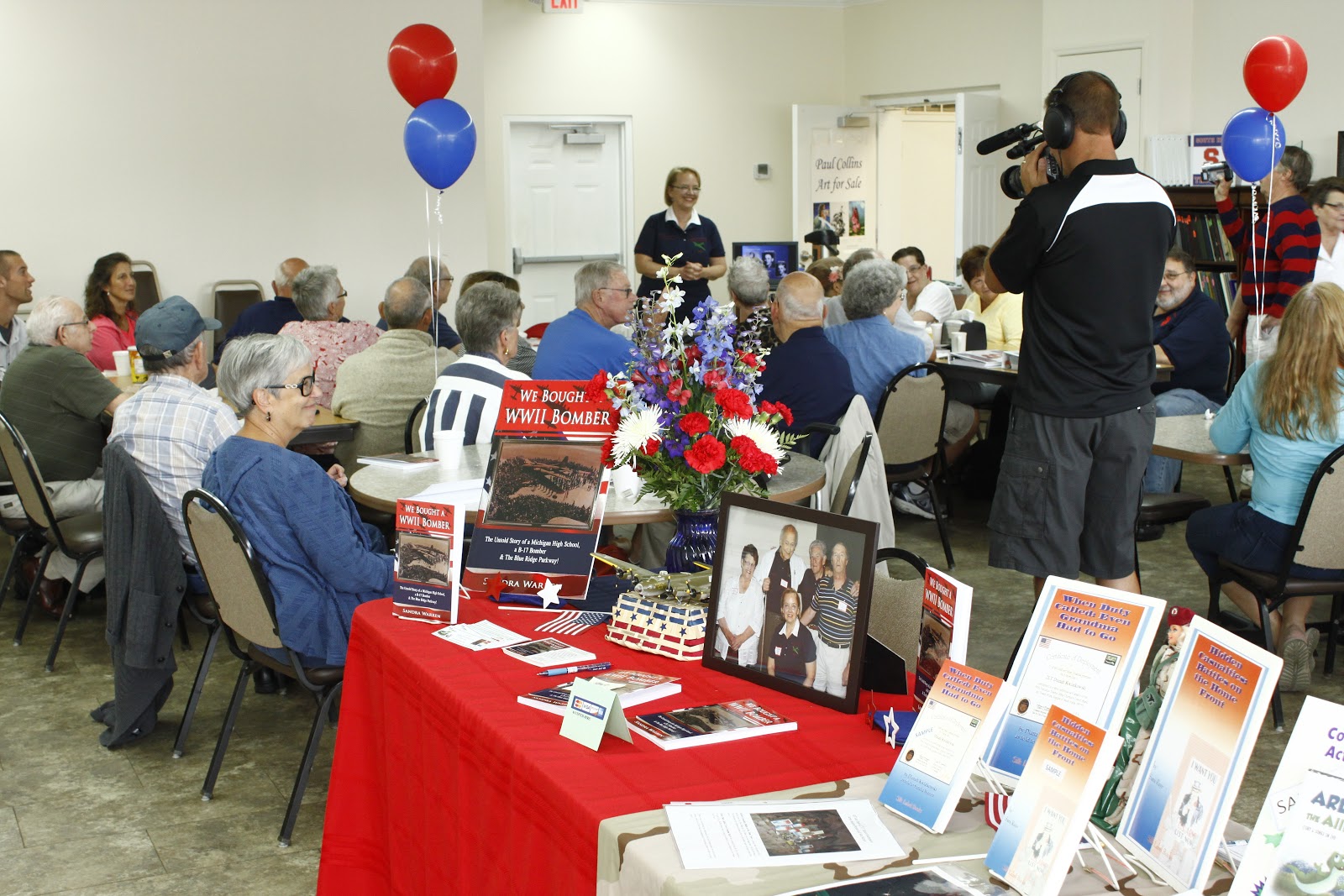 Marge's Donut Den Events Room - Wyoming, MILast week, I held a North Carolina book launch for We Bought a WWII Bomber, at a local arts association that has a storefront presence right on Main Street in the town near where I live. From the street it appears to be a store that sells local crafts from talented artists, but inside is a large space for small receptions and a theater that seats about one hundred people.
 MACA - McDowell Arts Council AssociationI was quite taken aback when I arrived and saw about a dozen hand-crafted, beautifully made quilts hanging from the ceiling in the very room I thought I had contracted to use. At that point there was nothing I could do but setup as best I could on the tables that I had requested in advance. As it turned out, the quilts provided an interesting backdrop for the event. Folks off the street could come in, vote for a quilt, look at the crafts and buy a book. It turned out to be okay even though numbers in attendance could have been much, much better. It was noted that everyone who attended bought a book and several bought more than one, so the percentages associated with sales vs attendance were high.
We tend to measure the success of a book launch or autograph signing by the numbers in attendance and numbers of books sold. Of course we want to be able to autograph many, but success doesn't always come that way. The poorest attended just might be the most successful because you never know if that one person who comes and loves what you've got to say has the connections or means to get the word out or offer you an opportunity to speak at a much larger venue. That one person might have the connections to make your book and your career soar.
So think outside the box. What is your book about? Is there a location in it you might capitalize on? A famous place? A farm or park? One writer friend wrote about an historic school that had been renovated, so her book signing was in that school. Think about organizations that may tie into something that happens in the book. Offer to give a percentage of sales as a donation.
Also, consider the location and the type of room. Is it off the beaten path or in an area that might draw walk-in or walk-by traffic? Will the room accommodate a crowd comfortably?
Think also about doing a presentation. People are curious about writers. They love to hear about the process more than having your read a section out of your book--where your ideas come from and how you put the story together. Did you have to do research? How long did it take you? That kind of stuff. Presentations excite readers to purchase.
There are many places to hold a book launch so think outside the box and find a unique venue to show your book off to its finest.
What is the most unique place you've hosted a book launch or been to a book launch? I'd love to know.
Share your unique place in the COMMENT box and I'll put your name into a hat for a copy of We Bought a WWII Bomber: The Untold Story of a Michigan High School, a B-17 bomber & The Blue Ridge Parkway.
www.arliebooks.com
October 13, 2015
Book Launch: The New Autograph Party
"When is your Book Launch? You're having one aren't you?"
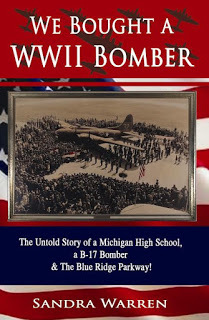
That is the question I was continually asked after the arrival of my latest book, an adult non-fiction about students in a Michigan high school who sold War Bonds and War Loan Stamps and bought a B-17 bomber during World War II. The book generated a great deal of interest and multiple events in Michigan and Virginia, places pertinent to the story, so I wasn't going to do anything else in North Carolina, where I live...until the question kept coming up.
Self-promotion, especially of my own books, doesn't come easy and I suspect I'm not alone. Hand me someone else's book and I can sell it without blinking an eye. But my own, well, that's another story.
In my mind there's a fine line between promoting your work, as in getting the word out, and selling it or pushing people to buy. It takes skill to know the difference and to master the art of promoting without seeming pushy. For some this comes naturally. For me, not so much. In my mind, a Book Launch balances on that fine line.
The very idea of a Book Launch, today's word for an Autograph Party, is to get the word out so that people will want to purchase your book, after all what will you sign if not your book? It would be crazy to hold a Book Launch without having copies to sell on-hand. And that's the problem I have with them. I don't want people to feel obligated to purchase. I want them to come and listen to the presentation and then decide whether or not they are interested enough to make a purchase.
I've given in to the idea and planned a Book Launch. To celebrate the launch and my birthday, I'm offering the Kindle version of the book for FREE on Amazon, all day Saturday, October 17th and Sunday the 18th. So you don't have to purchase the book. You can get it for FREE.
Here are the particulars if you'd like to attend in-person:
"We Bought A WWII Bomber" Book Launch
Saturday - October 17th
Time: 1:00 pm - 3:00 pm (Presentation at 1:30 pm)
Where: MACA (McDowell Arts Council Association)
50 South Main Street
Marion, NC 28752
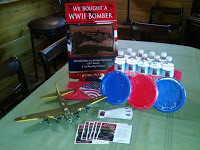
I've made plans;
Bookmarks & postcards to hand out. Check!
Signs and letters sent. Check!
Refreshments ordered. Check!
Water bottle labels made and taped on bottles. Check!
Color coordinated plates, napkins & forks. Check!
Cake ordered with a B-17 bomber &a book cover on it. Check!
PowerPoint Presentation ready. Check!
Digital projector packed. Check!
Multiple copies of the book ordered. Check!
All seems to be ready.
So come if you can. I'd love to share this amazing story of patriotism and support of our American troops during WWII, with you.
**************************
FREE on Kindle - October 17th & 18th!
We Bought A WWII Bomber: The Untold Story of a Michigan High School, a B-17 Bomber & The Blue Ridge Parkway
www.arliebooks.com
That is the question I was continually asked after the arrival of my latest book, an adult non-fiction about students in a Michigan high school who sold War Bonds and War Loan Stamps and bought a B-17 bomber during World War II. The book generated a great deal of interest and multiple events in Michigan and Virginia, places pertinent to the story, so I wasn't going to do anything else in North Carolina, where I live...until the question kept coming up.

Self-promotion, especially of my own books, doesn't come easy and I suspect I'm not alone. Hand me someone else's book and I can sell it without blinking an eye. But my own, well, that's another story.
In my mind there's a fine line between promoting your work, as in getting the word out, and selling it or pushing people to buy. It takes skill to know the difference and to master the art of promoting without seeming pushy. For some this comes naturally. For me, not so much. In my mind, a Book Launch balances on that fine line.
The very idea of a Book Launch, today's word for an Autograph Party, is to get the word out so that people will want to purchase your book, after all what will you sign if not your book? It would be crazy to hold a Book Launch without having copies to sell on-hand. And that's the problem I have with them. I don't want people to feel obligated to purchase. I want them to come and listen to the presentation and then decide whether or not they are interested enough to make a purchase.
I've given in to the idea and planned a Book Launch. To celebrate the launch and my birthday, I'm offering the Kindle version of the book for FREE on Amazon, all day Saturday, October 17th and Sunday the 18th. So you don't have to purchase the book. You can get it for FREE.
Here are the particulars if you'd like to attend in-person:
"We Bought A WWII Bomber" Book Launch
Saturday - October 17th
Time: 1:00 pm - 3:00 pm (Presentation at 1:30 pm)
Where: MACA (McDowell Arts Council Association)
50 South Main Street
Marion, NC 28752

I've made plans;
Bookmarks & postcards to hand out. Check!
Signs and letters sent. Check!
Refreshments ordered. Check!
Water bottle labels made and taped on bottles. Check!
Color coordinated plates, napkins & forks. Check!
Cake ordered with a B-17 bomber &a book cover on it. Check!
PowerPoint Presentation ready. Check!
Digital projector packed. Check!
Multiple copies of the book ordered. Check!
All seems to be ready.
So come if you can. I'd love to share this amazing story of patriotism and support of our American troops during WWII, with you.
**************************
FREE on Kindle - October 17th & 18th!
We Bought A WWII Bomber: The Untold Story of a Michigan High School, a B-17 Bomber & The Blue Ridge Parkway
www.arliebooks.com
August 25, 2015
Go Where Your Writing Takes You!
Recently, I finished a book that took me places I never thought I'd go. It made me think about writing advice I was given early on in my writing career, advice that I've since thrown out the window. It went like this:
WRITE WHAT YOU KNOW!
At first glance, this advice would seem appropriate, true and good. Writing about a subject in which you have knowledge and experience only adds to the credibility of your words. In fact, your credentials may be the very thing that gets your work picked up by a publisher.
But, if you adopt this advice as your mantra, eventually your writing will stagnate as it revolves around your limited knowledge level.
Years ago, I was approached by two different Army Reserve nurses who wanted their Persian Gulf War experiences told. At first I hesitated. My publications at the time were open-ended stories used in classrooms, not biographies. In addition, I had no experience with the military or war or the political elements that lead up to war or for that matter anything to do with nursing. My knowledge level of all these things was zip, nada, nothing.
Something deep within told me to do it! Actually, one of the nurses told me that God had sent her to me and I had to do it! How could I turn down that kind of request?
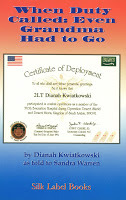
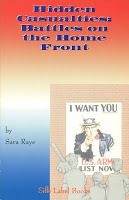 I jumped in full-force and boy did I learn. It was exhilarating!
I learned so much I feel as if I served side-by-side with these women fighting vipers and sand storms and Scud missile attacks, administering to Iraqi POW's who didn't want help and battling their own personal demons in an isolated war zone.
Awhile ago, one of my critique partners was approached to write a book about fly fishing, of all things. As a children's writer, she knew nothing about fly fishing.
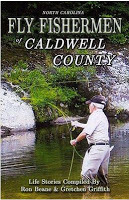 Like me, she hesitated but eventually agreed to do it and now she has more knowledge about fly fishing than most fishermen. Following the publication of her book, Fly Fishermen of Caldwell County, she was asked to write an article for Trout magazine!
http://www.southerntrout.com/mag/archive/Aug-Sept_2015/#114-115
These marvelous experiences would have been missed if she subscribed to
WRITE WHAT YOU KNOW!
Although my latest book, We Bought A WWII Bomber, was written about an event that took place in my high school in 1943, many years before I attended, I began the project knowing nothing about WWII, patriotism on the home front, the war's effect on schools, families, and homes, and funding campaigns to pay for the war. I knew nothing about the B-17 Flying Fortress Bomber, WWII
navigational systems, the Norden Bomb sight, Commander training on the B-17, aviation terms and crew responsibilities. I'd never been to Mabry's Mill, the most photographed spot on the Blue Ridge Parkway, Meadows of Dan, Virginia nor knew anyone who had.
All of these wonderful experiences and opportunities to learn new things and meet wonderful, exciting, interesting people would have been missed if I had listened, all those years ago, to the advice
WRITE WHAT YOU KNOW!
Whether writing fiction or non-fiction, you need to mentally free yourself of the chains of your limited knowledge base and be open to learning new things as the facts or your characters take you places you never thought you'd go.
Where has your writing taken you? What marvelous experiences came your way because you allowed yourself to
WRITE WHAT YOU DIDN'T KNOW?
*********
Congratulations to Joan Y. Edwards! She was one of six folks who entered my last contest to WIN a copy of We Bought A WWII Bomber: The Untold Story of a Michigan High School, a B-17 Bomber and The Blue Ridge Parkway! Joan, please contact me by email and I'll send you your book!
www.arliebooks.com
arliebooks@gmail.com
WRITE WHAT YOU KNOW!
At first glance, this advice would seem appropriate, true and good. Writing about a subject in which you have knowledge and experience only adds to the credibility of your words. In fact, your credentials may be the very thing that gets your work picked up by a publisher.
But, if you adopt this advice as your mantra, eventually your writing will stagnate as it revolves around your limited knowledge level.
Years ago, I was approached by two different Army Reserve nurses who wanted their Persian Gulf War experiences told. At first I hesitated. My publications at the time were open-ended stories used in classrooms, not biographies. In addition, I had no experience with the military or war or the political elements that lead up to war or for that matter anything to do with nursing. My knowledge level of all these things was zip, nada, nothing.
Something deep within told me to do it! Actually, one of the nurses told me that God had sent her to me and I had to do it! How could I turn down that kind of request?

 I jumped in full-force and boy did I learn. It was exhilarating!
 I learned so much I feel as if I served side-by-side with these women fighting vipers and sand storms and Scud missile attacks, administering to Iraqi POW's who didn't want help and battling their own personal demons in an isolated war zone.
Awhile ago, one of my critique partners was approached to write a book about fly fishing, of all things. As a children's writer, she knew nothing about fly fishing.
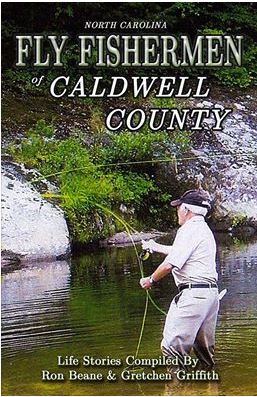 Like me, she hesitated but eventually agreed to do it and now she has more knowledge about fly fishing than most fishermen. Following the publication of her book, Fly Fishermen of Caldwell County, she was asked to write an article for Trout magazine!
http://www.southerntrout.com/mag/archive/Aug-Sept_2015/#114-115
These marvelous experiences would have been missed if she subscribed to
WRITE WHAT YOU KNOW!
Although my latest book, We Bought A WWII Bomber, was written about an event that took place in my high school in 1943, many years before I attended, I began the project knowing nothing about WWII, patriotism on the home front, the war's effect on schools, families, and homes, and funding campaigns to pay for the war. I knew nothing about the B-17 Flying Fortress Bomber, WWII
navigational systems, the Norden Bomb sight, Commander training on the B-17, aviation terms and crew responsibilities. I'd never been to Mabry's Mill, the most photographed spot on the Blue Ridge Parkway, Meadows of Dan, Virginia nor knew anyone who had.
All of these wonderful experiences and opportunities to learn new things and meet wonderful, exciting, interesting people would have been missed if I had listened, all those years ago, to the advice
WRITE WHAT YOU KNOW!
Whether writing fiction or non-fiction, you need to mentally free yourself of the chains of your limited knowledge base and be open to learning new things as the facts or your characters take you places you never thought you'd go.
Where has your writing taken you? What marvelous experiences came your way because you allowed yourself to
WRITE WHAT YOU DIDN'T KNOW?
*********
Congratulations to Joan Y. Edwards! She was one of six folks who entered my last contest to WIN a copy of We Bought A WWII Bomber: The Untold Story of a Michigan High School, a B-17 Bomber and The Blue Ridge Parkway! Joan, please contact me by email and I'll send you your book!
www.arliebooks.com
arliebooks@gmail.com
July 27, 2015
WHEN A STORY WRITES ITSELF!
When an author says, “the book wrote itself,” it’s one of those things that’s hard to believe, until it happens to you. At least I was always skeptical, until now. My latest project made a believer out of me.
While attending junior high and senior high in Grand Rapids, Michigan, I’d always heard bits and pieces of a story about the South High class of 1943 and the $375,000 they had raised selling War Bonds and War Loan Stamps to help support WWII, that bought a B-17 Flying Fortress Bomber they christened The Spirit of South High, but I never really thought much about it. When you’re a kid, if it doesn’t pertain to you and your friends or your immediate school or home life, it just isn’t important.
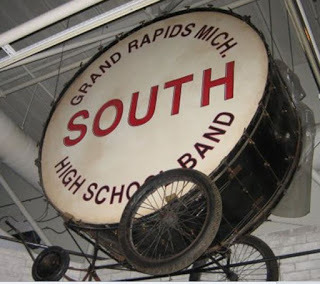
Years later, correction, many years later, while putting together a history of my high school for a class reunion, the extraordinary story re-emerged. It wasn’t, however, the focal point of my presentation. There were many other notable accomplishments to speak about like the world’s biggest drum, that was made for the school after the band director won a challenge with the School Superintendent by bringing home the 1925 Class A State Band title or President Gerald R. Ford, the school’s most famous graduate. (The big bass drum, by the way, hangs in the Gerald R. Ford Presidential Museum.)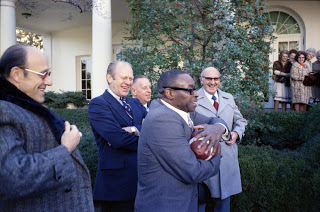
 The story of the bomber ended after the christening on April 6, 1943, when it flew off to war and was never heard from again, until one of my classmates took it upon himself to find the bomber and shared it with me.
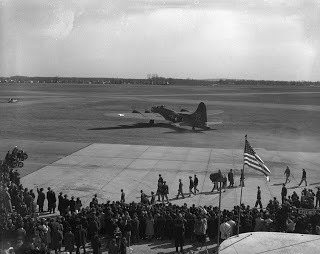
When I discovered South High School’s bomber met its demise in the mountains of Virginia, a mere 3-hours away from where I live in North Carolina, I had to write the story; the complete and total story solving the mystery of what happened to The Spirit of South High. Once wheels were set in motion, the research I needed, the information and anecdotes fell into my lap.
From then on the story took over practically writing itself.
Since I already had information about the Grand Rapids side of the story, I decided to begin with the Virginia part. A call to the Patrick County Historical Society in Meadows of Dan, Virginia, revealed no information about the crash. Unbelievably, they had no knowledge of a crash of a WWII bomber in their community but the locals who were children at the time, remembered. They generously stepped forward to share their memories of the morning the ground shook and a great ball of fire rose into the sky. A couple even took me to the very spot where the B-17 bomber came down.
The bomber crashed on property now owned by the National Parks System on the Blue Ridge Parkway, behind the most photographed spot on the parkway, Mabry’s Mill. I called the Blue Ridge Parkway Historians and like the Patrick County historians, they knew nothing of the crash.
From there the momentum of my research took off. One-by-one facts I needed revealed themselves. Inch-by-inch the stack of sheet protectors holding tidbits of information grew, filling first one three inch binder, then two, then three.
 As I started to pull the facts together in an organized fashion, the writing took off. It wasn’t smooth sailing all the way but with each frustration, each stop gap along the way, a new fact would emerge important to the telling of the tale. It was if I was stymied so that the new fact or idea or item could reveal itself. This pattern continued up until the very last day; the point where the book was ready to print, except for one photograph I had ordered. The photograph was delayed in the mail for five days. On the morning of the fourth day, I awoke with the idea of a critical piece of information that needed to be in the book. As soon as I added the information, the item I had been waiting for arrived in the mail.
This writing experience reminded me of something I had learned earlier in my writing career but had forgotten.
"Embrace Delays! They always serve a purpose, whether in a new fact revealed, a twist imagined, a problem fixed or the rearranging of what you've already written. Your story will be better for the delays."
 Through one revision after another, I felt as if someone else were writing this book. At the same time, nothing I've ever written has given me such pleasure. There were so many "aha" and "wow" moments. And now I get to share them with you.
During WWII, to help fund the war effort, junior high and senior high students at South High School in Grand Rapids, Michigan took part in the “Buy a Bomber” program raising over $375,000 selling War Bonds and Defense Loan Stamps and bought a B-17 Bomber. They christened the bomber, The Spirit of South High, after which it flew off never to be heard from again, until now.
Read the extraordinary tale of how students were able to raise so much money and the incredible “spirit” that led alumni, seventy-two years later, to solve the mystery of what happened to the bomber.
This little book exemplifies home front support given to service men and women fighting in WWII.
**********
Have you ever felt as if someone else was writing your story? Please share.
Add a comment and I'll enter you in a drawing to WIN a copy of We Bought a WWII Bomber: The Untold Story of a Michigan High School, a B-17 Bomber & The Blue Ridge Parkway. Coming soon at Amazon.com.
While attending junior high and senior high in Grand Rapids, Michigan, I’d always heard bits and pieces of a story about the South High class of 1943 and the $375,000 they had raised selling War Bonds and War Loan Stamps to help support WWII, that bought a B-17 Flying Fortress Bomber they christened The Spirit of South High, but I never really thought much about it. When you’re a kid, if it doesn’t pertain to you and your friends or your immediate school or home life, it just isn’t important.
Years later, correction, many years later, while putting together a history of my high school for a class reunion, the extraordinary story re-emerged. It wasn’t, however, the focal point of my presentation. There were many other notable accomplishments to speak about like the world’s biggest drum, that was made for the school after the band director won a challenge with the School Superintendent by bringing home the 1925 Class A State Band title or President Gerald R. Ford, the school’s most famous graduate. (The big bass drum, by the way, hangs in the Gerald R. Ford Presidential Museum.)
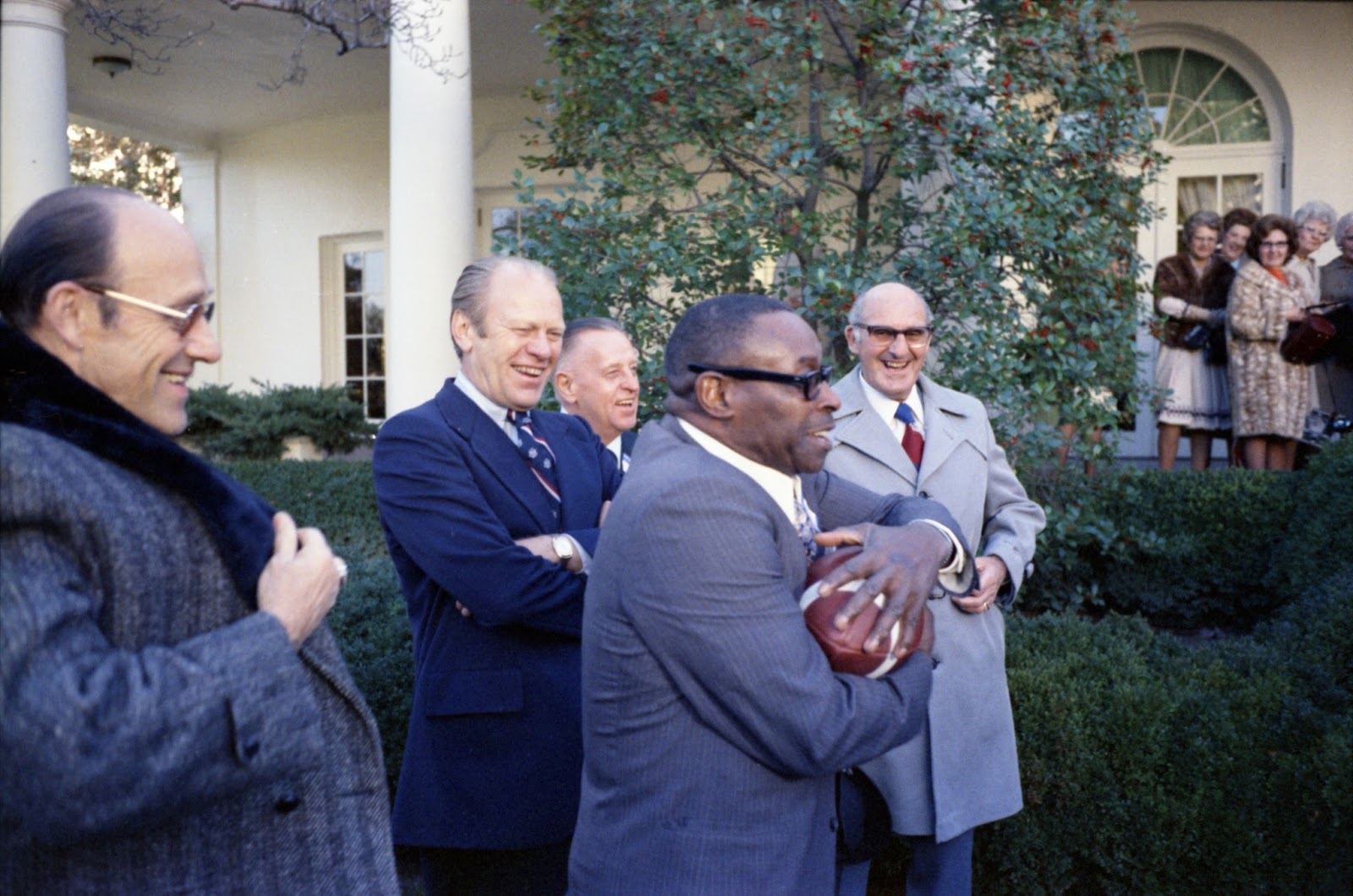
 The story of the bomber ended after the christening on April 6, 1943, when it flew off to war and was never heard from again, until one of my classmates took it upon himself to find the bomber and shared it with me.
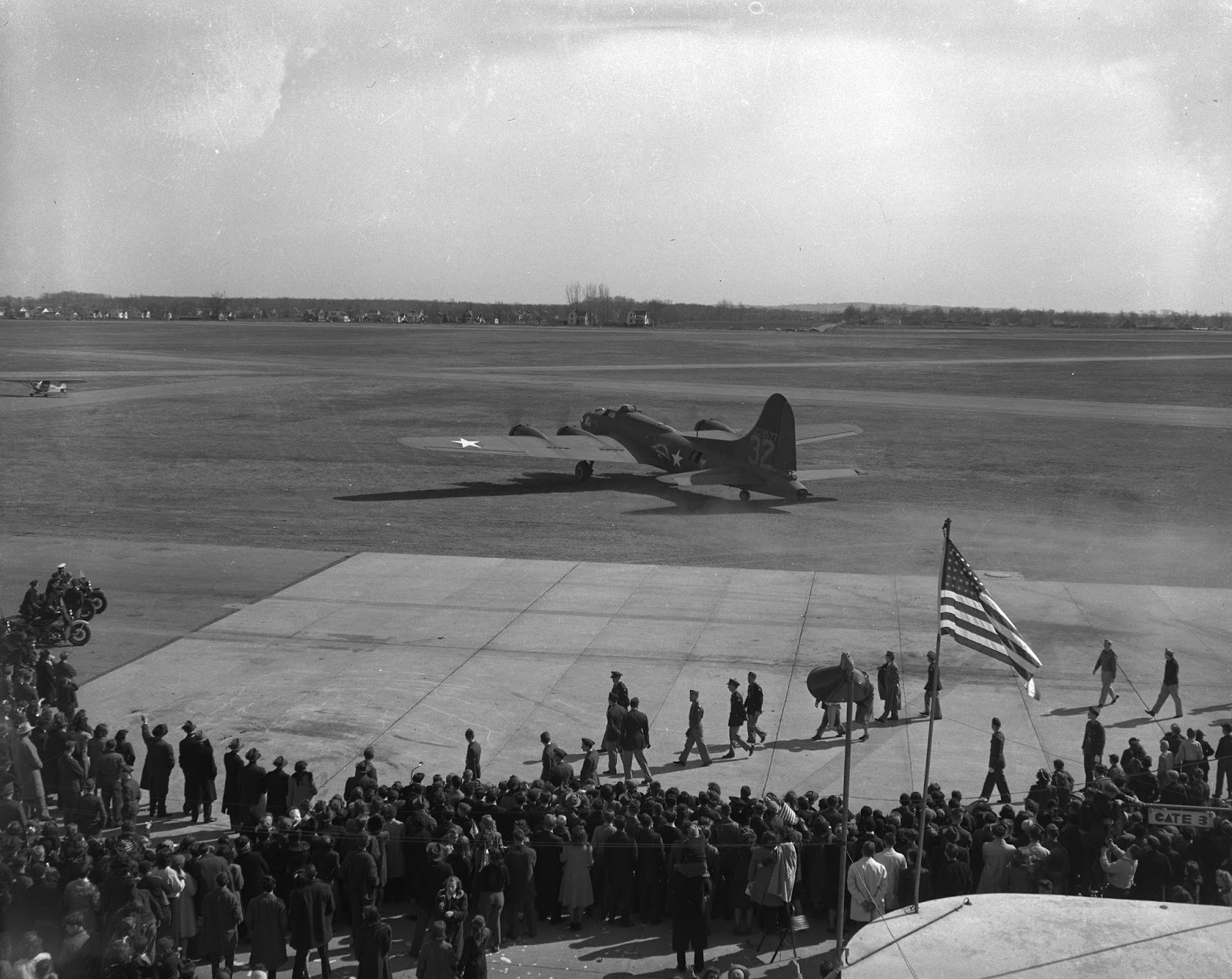
When I discovered South High School’s bomber met its demise in the mountains of Virginia, a mere 3-hours away from where I live in North Carolina, I had to write the story; the complete and total story solving the mystery of what happened to The Spirit of South High. Once wheels were set in motion, the research I needed, the information and anecdotes fell into my lap.
From then on the story took over practically writing itself.
Since I already had information about the Grand Rapids side of the story, I decided to begin with the Virginia part. A call to the Patrick County Historical Society in Meadows of Dan, Virginia, revealed no information about the crash. Unbelievably, they had no knowledge of a crash of a WWII bomber in their community but the locals who were children at the time, remembered. They generously stepped forward to share their memories of the morning the ground shook and a great ball of fire rose into the sky. A couple even took me to the very spot where the B-17 bomber came down.
The bomber crashed on property now owned by the National Parks System on the Blue Ridge Parkway, behind the most photographed spot on the parkway, Mabry’s Mill. I called the Blue Ridge Parkway Historians and like the Patrick County historians, they knew nothing of the crash.
From there the momentum of my research took off. One-by-one facts I needed revealed themselves. Inch-by-inch the stack of sheet protectors holding tidbits of information grew, filling first one three inch binder, then two, then three.
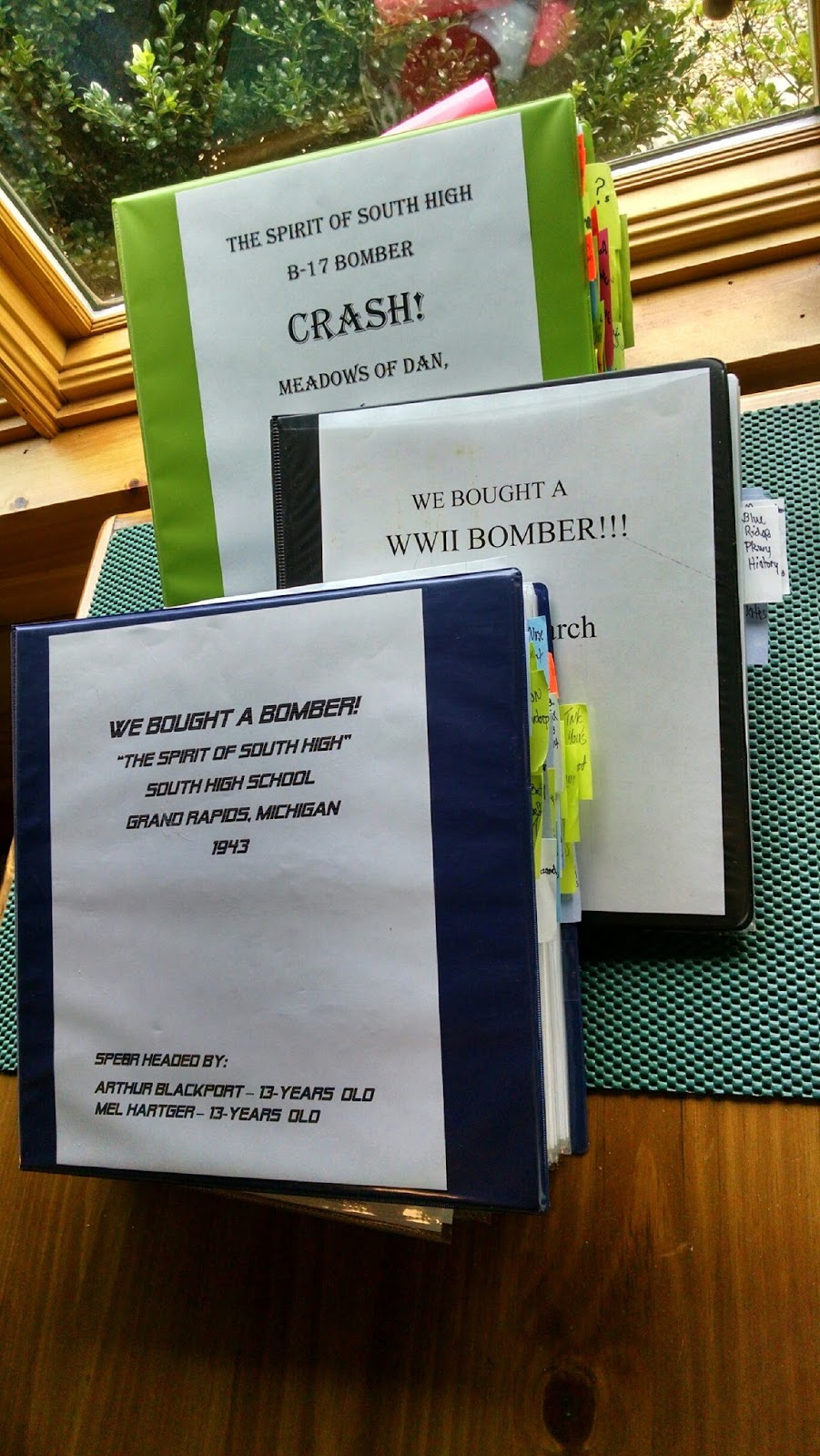 As I started to pull the facts together in an organized fashion, the writing took off. It wasn’t smooth sailing all the way but with each frustration, each stop gap along the way, a new fact would emerge important to the telling of the tale. It was if I was stymied so that the new fact or idea or item could reveal itself. This pattern continued up until the very last day; the point where the book was ready to print, except for one photograph I had ordered. The photograph was delayed in the mail for five days. On the morning of the fourth day, I awoke with the idea of a critical piece of information that needed to be in the book. As soon as I added the information, the item I had been waiting for arrived in the mail.
 This writing experience reminded me of something I had learned earlier in my writing career but had forgotten.
"Embrace Delays! They always serve a purpose, whether in a new fact revealed, a twist imagined, a problem fixed or the rearranging of what you've already written. Your story will be better for the delays."
 Through one revision after another, I felt as if someone else were writing this book. At the same time, nothing I've ever written has given me such pleasure. There were so many "aha" and "wow" moments. And now I get to share them with you.
 During WWII, to help fund the war effort, junior high and senior high students at South High School in Grand Rapids, Michigan took part in the “Buy a Bomber” program raising over $375,000 selling War Bonds and Defense Loan Stamps and bought a B-17 Bomber. They christened the bomber, The Spirit of South High, after which it flew off never to be heard from again, until now.
Read the extraordinary tale of how students were able to raise so much money and the incredible “spirit” that led alumni, seventy-two years later, to solve the mystery of what happened to the bomber.
This little book exemplifies home front support given to service men and women fighting in WWII.
**********
Have you ever felt as if someone else was writing your story? Please share.
Add a comment and I'll enter you in a drawing to WIN a copy of We Bought a WWII Bomber: The Untold Story of a Michigan High School, a B-17 Bomber & The Blue Ridge Parkway. Coming soon at Amazon.com.
April 15, 2015
Critique Group: It's Not Just About Critiques
Does your critique group do more than critique? Has your writing improved since you've been a member? If you answered "no" to both of these questions then maybe your group ought to consider taking a class together.
"Too expensive," you say? It doesn't have to be. Let me explain.
The gals in my critique group and I are very serious about our writing. We welcome what we laughingly call "brutal" critiques, not because we like to be cruel, but because we all want our ability to craft a good story to grow, so we're honest, straight-forward and we don't mince words.
Three years ago we decided to enrich our group beyond critiques. Instead of one critique partner sharing a great book on craft, we decided to learn together. We all purchased copies of Ursula LeGuin's book, Steering the Craft: Exercises and Discussions on Story Writing for the Lone Naviagator or Mutinous Crew, read it chapter by chapter, and completed and discussed the exercises.
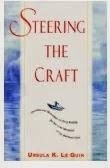
I must admit, I was not happy with the suggestion of studying the book, at first, but as we worked our way though the lessons, I could tell that my writing improved. We all felt it. So it was only logical that we would find another book or class or workshop to study when we finished Steering the Craft.
We were intrigued when one of the partners found a course available on DVD from www.greatcourses.com called, Building Great Sentences: Exploring the Writer's Craft, given by Professor Brooks Landon, Professor of English, Collegiate Fellow and Director of the General Education Literature Program at the University of Iowa.
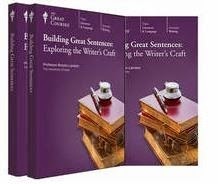
Could it really be true? Twenty four lectures with activities on building sentences? Sounds boring, right? Well it might have been if we hadn't done it together. Even so, one critique partner read the lecture each week unable to endure the DVD.
Professor Landon loves long sentences. He points out that many feel long sentences are bad, but in his opinion, "a long sentence isn't bad because it's long, it's bad because it's bad." He lectured about cumulative sentences in all forms, the rhythm of cumulative syntax, coordinate cumulative sentences, subordinate and mixed cumulatives, cumulative syntax to create suspense, balanced sentences and balanced forms, just to mention a few.
We painstakingly went through each exercise stretching the course out over a two year span and little by little the quality of our sentences grew. Whether cumulative sentences eventually show up in our writing remains to be seen. But it's safe to say, that after 24 lectures on building great sentences, we're all much more aware of how we write and what we write.
Will we find something else to study? Most likely, because our critique group is about more than critiques.
How does your critique group study the craft of writing?
Read more about critique groups in Kristin Lamb's latest post, Franken-Novel, Perfectionism & The Dark Side of Critique Groups, http://tinyurl.com/o2jpa4q
******************
"Too expensive," you say? It doesn't have to be. Let me explain.
The gals in my critique group and I are very serious about our writing. We welcome what we laughingly call "brutal" critiques, not because we like to be cruel, but because we all want our ability to craft a good story to grow, so we're honest, straight-forward and we don't mince words.
Three years ago we decided to enrich our group beyond critiques. Instead of one critique partner sharing a great book on craft, we decided to learn together. We all purchased copies of Ursula LeGuin's book, Steering the Craft: Exercises and Discussions on Story Writing for the Lone Naviagator or Mutinous Crew, read it chapter by chapter, and completed and discussed the exercises.
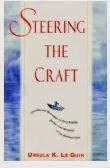
I must admit, I was not happy with the suggestion of studying the book, at first, but as we worked our way though the lessons, I could tell that my writing improved. We all felt it. So it was only logical that we would find another book or class or workshop to study when we finished Steering the Craft.
We were intrigued when one of the partners found a course available on DVD from www.greatcourses.com called, Building Great Sentences: Exploring the Writer's Craft, given by Professor Brooks Landon, Professor of English, Collegiate Fellow and Director of the General Education Literature Program at the University of Iowa.
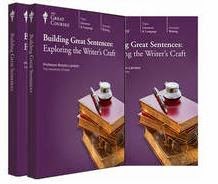
Could it really be true? Twenty four lectures with activities on building sentences? Sounds boring, right? Well it might have been if we hadn't done it together. Even so, one critique partner read the lecture each week unable to endure the DVD.
Professor Landon loves long sentences. He points out that many feel long sentences are bad, but in his opinion, "a long sentence isn't bad because it's long, it's bad because it's bad." He lectured about cumulative sentences in all forms, the rhythm of cumulative syntax, coordinate cumulative sentences, subordinate and mixed cumulatives, cumulative syntax to create suspense, balanced sentences and balanced forms, just to mention a few.
We painstakingly went through each exercise stretching the course out over a two year span and little by little the quality of our sentences grew. Whether cumulative sentences eventually show up in our writing remains to be seen. But it's safe to say, that after 24 lectures on building great sentences, we're all much more aware of how we write and what we write.
Will we find something else to study? Most likely, because our critique group is about more than critiques.
How does your critique group study the craft of writing?
Read more about critique groups in Kristin Lamb's latest post, Franken-Novel, Perfectionism & The Dark Side of Critique Groups, http://tinyurl.com/o2jpa4q
******************
April 8, 2015
MEMOIRS: Why Every Writer Should Write One!
A recent blog by one of my critique partners, Gretchen Griffith, prompted me to finish this blog, something I started writing a few weeks ago. In her blog, Gretchen talks about old cards found while cleaning out her great-grandfather’s house. Check it out here
http://tinyurl.com/nxh22mc.
Gretchen's blog made me wonder what, if anything, will our great-grandchildren discover about our lives? In this tear-them-down, throw-away world will there even be a house to go through? Or worse yet, will those discs were putting all our photos on even be viewable on the technology of the day? Surely the technology we used to save them all will be a laughable joke, obsolete in our great-grandchildren’s lives.
This is why I think it’s important for ALL writers to hunker down and write a memoir. Capture all those family stories that you've been told; interview those great aunts, grandparents and great-grandparents, if you’re fortunate enough to still have them in your life. Sit down with that one family member who holds all the stories in their head. You know--the one you always turn to when trying to figure out who belongs to whom.
My mother was that person in our family. But, I didn't realize it until she was gone. Suddenly, my go-to person for family lore and information was no longer with me. Gone were the stories and family connections of near and distant relations.
"Why do you have to write it?" you ask. Because if you’re a writer, you have all the skills to get it done. In addition, your descendants will be fascinated with the idea that you were a writer. Trust me. They will be, even if that novel you've written never hits the Best Seller List, or even gets published. I guarantee that at least one of your descendants will want to know more, wish they knew more about who you were, what and why you wrote?
Memoirs come in all shapes and sizes. They can be about one event in your life or a relative’s life or a total life history. They can be general or specific. They might be a collection of stories from different relatives. You’re the writer. You get to decide.
You don’t have to stop your other writing to write a memoir. Just start collecting, capturing if you will, some thoughts and ideas
Print out your thoughts and file in a folder, a real hands-on manila folder that fits in a file cabinet someone can open later.Each holiday, write down what happened, the funny stuff and even the not so funny things.Ask questions and begin to collect the gems you’re told. Record your personal memories of school, entertainment, daily lives back when you were a child. When a memory surfaces, jot a few notes, names and places, and file it. Remember to include feelings, especially with your own memories. Capture stories of life-altering events such as War and depression and death and disease. Show the courage exhibited by those who lived it. Get a digital recorder and sit down with your elderly relatives before it’s too late. Once they’re gone, the stories are lost forever. You think you’ll remember the specifics of events and you might, but details fade with time. Jot them down now so you have them later when you’re ready to put something together.
I had the pleasure of writing two memoirs of Army Reserve nurses who served in the Persian Gulf War. For both of these gals, the experience was life-altering, but I can guarantee you they would not be able to remember the day-to-day struggle they experienced if it hadn't been captured in their books.
I believe a memoir should be true and honest capturing the ups and downs of life. You don’t want to upset family members by dwelling on he-said she-said things, but it will be important for those who come after to know that you persevered and grew and survived the challenges of life.
As much as technology and daily life will change in the future, one thing will not change; people will continue to have joys and sorrows, life-altering experiences and challenges to over-come. And knowing that relations in the past, great-grandparents or great aunts and uncles, struggled and overcame despite enormous odds, will inspire future generations to never give up.
So capture those memoirs that only you can write. You’re a writer. Do it for your family. Write the memoir only you can write!
PS: No, I haven't written my own yet, but I've been collecting stories and memories to pull out of a file when I'm ready.
What stories do you have to tell?
****************
Two memoirs written by Sandra Warren for others are: When Duty Called: Even Grandma Had To Go and Hidden Casualties: Battles On The Home Front.
Check out all Sandra Warren's books at www.arliebooks.com
Gretchen's blog made me wonder what, if anything, will our great-grandchildren discover about our lives? In this tear-them-down, throw-away world will there even be a house to go through? Or worse yet, will those discs were putting all our photos on even be viewable on the technology of the day? Surely the technology we used to save them all will be a laughable joke, obsolete in our great-grandchildren’s lives.
This is why I think it’s important for ALL writers to hunker down and write a memoir. Capture all those family stories that you've been told; interview those great aunts, grandparents and great-grandparents, if you’re fortunate enough to still have them in your life. Sit down with that one family member who holds all the stories in their head. You know--the one you always turn to when trying to figure out who belongs to whom.
My mother was that person in our family. But, I didn't realize it until she was gone. Suddenly, my go-to person for family lore and information was no longer with me. Gone were the stories and family connections of near and distant relations.
"Why do you have to write it?" you ask. Because if you’re a writer, you have all the skills to get it done. In addition, your descendants will be fascinated with the idea that you were a writer. Trust me. They will be, even if that novel you've written never hits the Best Seller List, or even gets published. I guarantee that at least one of your descendants will want to know more, wish they knew more about who you were, what and why you wrote?
Memoirs come in all shapes and sizes. They can be about one event in your life or a relative’s life or a total life history. They can be general or specific. They might be a collection of stories from different relatives. You’re the writer. You get to decide.
You don’t have to stop your other writing to write a memoir. Just start collecting, capturing if you will, some thoughts and ideas
Print out your thoughts and file in a folder, a real hands-on manila folder that fits in a file cabinet someone can open later.Each holiday, write down what happened, the funny stuff and even the not so funny things.Ask questions and begin to collect the gems you’re told. Record your personal memories of school, entertainment, daily lives back when you were a child. When a memory surfaces, jot a few notes, names and places, and file it. Remember to include feelings, especially with your own memories. Capture stories of life-altering events such as War and depression and death and disease. Show the courage exhibited by those who lived it. Get a digital recorder and sit down with your elderly relatives before it’s too late. Once they’re gone, the stories are lost forever. You think you’ll remember the specifics of events and you might, but details fade with time. Jot them down now so you have them later when you’re ready to put something together.
I had the pleasure of writing two memoirs of Army Reserve nurses who served in the Persian Gulf War. For both of these gals, the experience was life-altering, but I can guarantee you they would not be able to remember the day-to-day struggle they experienced if it hadn't been captured in their books.
I believe a memoir should be true and honest capturing the ups and downs of life. You don’t want to upset family members by dwelling on he-said she-said things, but it will be important for those who come after to know that you persevered and grew and survived the challenges of life.
As much as technology and daily life will change in the future, one thing will not change; people will continue to have joys and sorrows, life-altering experiences and challenges to over-come. And knowing that relations in the past, great-grandparents or great aunts and uncles, struggled and overcame despite enormous odds, will inspire future generations to never give up.
So capture those memoirs that only you can write. You’re a writer. Do it for your family. Write the memoir only you can write!
PS: No, I haven't written my own yet, but I've been collecting stories and memories to pull out of a file when I'm ready.
What stories do you have to tell?
****************
Two memoirs written by Sandra Warren for others are: When Duty Called: Even Grandma Had To Go and Hidden Casualties: Battles On The Home Front.
Check out all Sandra Warren's books at www.arliebooks.com
April 1, 2015
Does Your Critique Group Coddle or Mentor?
Is your critique group helping you become a better writer or just patting you on the back?
Each of us has to decide what we want from a critique group but attending one that doesn't allow negative comments, only positives, seems counter-productive.
If you want folks to love your manuscript, call your relatives.
If you want to grow in your craft, find writers who you admire and ask them for a "brutal" analysis of your work. Yes, I did say "brutal."
Perhaps it will help if I define a few things. Let me start with some definitions from Webster's New World Dictionary:
Critique: a critical analysis or evaluation of a subject, situation, literary work, etc.
Criticize: to analyze and judge as a critic.
Criticism: the act of making judgements; analysis of qualities and evaluation of comparative worth; esp. the critical consideration and judgement of literary or artistic work.
Brutal: plain and direct although distressing in effect. I would add, honest, painfully honest to this definition.
Nowhere in the definitions did you find the word, coddle or pat-on-the back or ego stroking. That's not to say we don't need to hear what inspired or tickled someones funny bone or delighted one of our critique partners. Of course we do. Analyzing and evaluating do have a positive side.
It may just be the delivery of the negative aspects of the above words that get us off track; the act of disapproval, censure, finding fault. Rare is the person who can deliver a negative comment in a positive way, but that's what we as writers need.
WE NEED NEGATIVE COMMENTS DELIVERED
IN POSITIVE WAYS!
We need to know where the holes are, what doesn't make sense, when we've used the same word too many times, when were telling not showing, when point-of-view changes mid-stream, when we've used too many adjectives, when the story doesn't flow, when the character gets off track, when situations don't advance the story. And we need examples for clarification of suggestions.
Positive comments alone cannot address these needs. Only an honest, straight-forward, pick-it-apart analysis and discussion can.
Writers should welcome honest, brutal critiques with open arms. I'd be lying if I said it wouldn't hurt or make you stop writing for a day or two. It might. But in the long run, you'll be able to discern the things that need changing and the things you want to keep the same and you'll see your manuscript improve.
I am in a brutal critique group and I love it. Thanks to my SOUP SISTERS, I've eliminated whole chapters because, "although written well, it didn't advance the story." I've changed titles and character actions because, "your character wouldn't do that, that way." There were days I've had to put the critique aside until I could take the emotion out of it and look at it intellectually for the gems, the suggestions that would make my story better.
Here are some suggestions for making your critique group critique:
1. Find writers you admire.
2. Brainstorm critique goals and expectations.
3. Study the Craft of writing:
4. For large meeting size critique groups: Make a poster of the Key Components of a Good Story; maybe 4 points to look for in each story. and use this as a guide for each critique.
a.What is the story arc?
b. Too many adjectives?
c. Over use of a word?
d. Does the story flow?
e. Does the child solve the problem?
f. Does the child fail a couple of times before solving the problem?
g. Is each failure worse than the last?
5. Give suggestions for improvement.
If your critique group loves everything you write, then maybe it's not the group for you. Even great writers get edited before publication. Keep in mind that the harder your critique group is on the elements in your manuscript now, the easier it will be when the publication edits come through. It might even make the difference between a rejection and an acceptance.
A good critique group can make your manuscript shine and make you a better writer.
How does your critique group stack up?
*****************
Congratulations to Carol Baldwin for winning a copy of If I Were A Table, for commenting on my last blog.
*****************
For publications by Sandra Warren visit www.sandrawarren.com or www.arliebooks.com
Each of us has to decide what we want from a critique group but attending one that doesn't allow negative comments, only positives, seems counter-productive.
If you want folks to love your manuscript, call your relatives.
If you want to grow in your craft, find writers who you admire and ask them for a "brutal" analysis of your work. Yes, I did say "brutal."
Perhaps it will help if I define a few things. Let me start with some definitions from Webster's New World Dictionary:
Critique: a critical analysis or evaluation of a subject, situation, literary work, etc.
Criticize: to analyze and judge as a critic.
Criticism: the act of making judgements; analysis of qualities and evaluation of comparative worth; esp. the critical consideration and judgement of literary or artistic work.
Brutal: plain and direct although distressing in effect. I would add, honest, painfully honest to this definition.
Nowhere in the definitions did you find the word, coddle or pat-on-the back or ego stroking. That's not to say we don't need to hear what inspired or tickled someones funny bone or delighted one of our critique partners. Of course we do. Analyzing and evaluating do have a positive side.
It may just be the delivery of the negative aspects of the above words that get us off track; the act of disapproval, censure, finding fault. Rare is the person who can deliver a negative comment in a positive way, but that's what we as writers need.
WE NEED NEGATIVE COMMENTS DELIVERED
IN POSITIVE WAYS!
We need to know where the holes are, what doesn't make sense, when we've used the same word too many times, when were telling not showing, when point-of-view changes mid-stream, when we've used too many adjectives, when the story doesn't flow, when the character gets off track, when situations don't advance the story. And we need examples for clarification of suggestions.
Positive comments alone cannot address these needs. Only an honest, straight-forward, pick-it-apart analysis and discussion can.
Writers should welcome honest, brutal critiques with open arms. I'd be lying if I said it wouldn't hurt or make you stop writing for a day or two. It might. But in the long run, you'll be able to discern the things that need changing and the things you want to keep the same and you'll see your manuscript improve.
I am in a brutal critique group and I love it. Thanks to my SOUP SISTERS, I've eliminated whole chapters because, "although written well, it didn't advance the story." I've changed titles and character actions because, "your character wouldn't do that, that way." There were days I've had to put the critique aside until I could take the emotion out of it and look at it intellectually for the gems, the suggestions that would make my story better.
Here are some suggestions for making your critique group critique:
1. Find writers you admire.
2. Brainstorm critique goals and expectations.
3. Study the Craft of writing:
4. For large meeting size critique groups: Make a poster of the Key Components of a Good Story; maybe 4 points to look for in each story. and use this as a guide for each critique.
a.What is the story arc?
b. Too many adjectives?
c. Over use of a word?
d. Does the story flow?
e. Does the child solve the problem?
f. Does the child fail a couple of times before solving the problem?
g. Is each failure worse than the last?
5. Give suggestions for improvement.
If your critique group loves everything you write, then maybe it's not the group for you. Even great writers get edited before publication. Keep in mind that the harder your critique group is on the elements in your manuscript now, the easier it will be when the publication edits come through. It might even make the difference between a rejection and an acceptance.
A good critique group can make your manuscript shine and make you a better writer.
How does your critique group stack up?
*****************
Congratulations to Carol Baldwin for winning a copy of If I Were A Table, for commenting on my last blog.
*****************
For publications by Sandra Warren visit www.sandrawarren.com or www.arliebooks.com


