Rich Marcello's Blog, page 12
November 25, 2015
The Big Wide Calm on Goodreads Lists
Hi all,
The Big Wide Calm in on a number of lists as detailed below. If you have a Goodreads as detailed below. If you have a Goodreads account and are interested in voting for the book on one or more of the lists, that would be greatly appreciated.
Happy Thanksgiving.
Rich

The Big Wide Calm > Lists
by Rich Marcello (Goodreads Author) 


Little Known Romances that are Great
32nd out of 158 books — 261 voters


959th out of 3,321 books — 7,262 voters
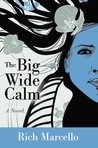

1st out of 26 books — 9 voters



Books I wish will turn into movies
173rd out of 547 books — 548 voters



2853rd out of 10,163 books — 66,480 voters



1881st out of 6,051 books — 21,412 voters


520th out of 1,092 books — 7,155 voters


637th out of 1,990 books — 6,002 voters


926th out of 3,675 books — 4,637 voters



2nd out of 16 books — 9 voters

Fabulous Reads for Upper Teens and New Adult
40th out of 157 books — 146 voters
7th out of 62 books — 36 voters


Best Ever Contemporary Romance Books
931st out of 2,994 books — 6,404 voters


Original Stories . . . a Breath of Fresh Air
987th out of 3,780 books — 6,423 voters


Character You Most Want to Sleep With
1044th out of 3,235 books — 4,527 voters


Books That Should Be Made Into Movies
4628th out of 21,629 books — 57,104 voters


180th out of 842 books — 1,026 voters — you voted for 1 book


523rd out of 1,981 books — 3,097 voters

Best Page-Turners with Redeeming Social Value
506th out of 1,442 books — 3,612 voters


177th out of 276 books — 1,614 voters



Favourite Books of All Time and Ages
25th out of 70 books — 1 voter

Books of Inspiration…Inspired by God
37th out of 39 books — 3 voters





November 24, 2015
Two Poems
No One Left
Let the need to purge
those without a clue go
Replace it with
curiosity
kindness
love
Otherwise there will be
no one left.
Thick
If you choose me
If I am your chosen
If our blood thickens to brother, sister
Then know this: The world will heal


November 21, 2015
David Mitchell Advice to a Young Writer
BRILLIANTLY BAD ORIGINALITY IS BETTER THAN COMPETENT MIMICRY
David Mitchell’s new novel Slade House, was just published by Random House. Mitchell’s previous books include Cloud Atlas, Bone Clocks, and The Thousand Autumns of Jacob de Zoet. He recently spoke with the novelist Irina Reyn, as well as students in the University of Pittsburgh’s Writing Program.
http://lithub.com/david-mitchells-writing-advice/


November 18, 2015
New Don DeLillo Novel
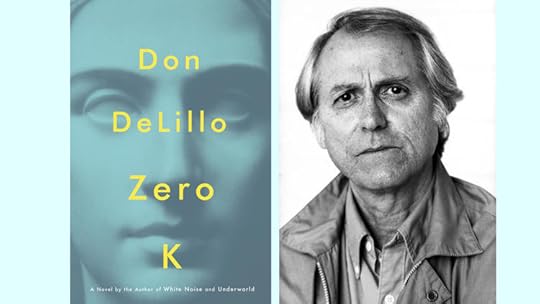
Don DeLillo’s forthcoming novel, “Zero K,” will be released in May 2016.
(Joyce Ravid / Scribner)

http://www.latimes.com/books/jacketcopy/la-et-jc-don-delillo-novel-zero-k-20151116-story.html


November 17, 2015
25 Books Guaranteed to Make You a Better Writer
BY EMILY TEMPLE NOVEMBER 16, 2015 12:00 PM
SHARE
TWEET
[image error]
Everyone has a story to tell. And pretty much everyone (at least everyone of a certain variety) has dreamed about writing that story down and sharing it with the world. But, er, how?
Whether you’re a fledgling scribbler or a seasoned one, there are a ton of books out there that will inspire you, guide you, and offer you sage advice that might just pop into your mind one cold November afternoon when you’re writing your novel and wondering why you can’t get this character to actually walk down the stairs. To help you sift through the masses, here are some of the best writers’ guide books, from collections of craft essays to nuts-and-bolts how-tos to collage/memoir/odes to creativity — all guaranteed to make you a better writer of fiction, nonfiction, poetry, or whatever hybrid form you may choose. Check them out, and get inspired.
http://flavorwire.com/547750/25-books-guaranteed-to-make-you-a-better-writer/view-all


November 16, 2015
Holiday Offer
Hi,
Between now and December 1st, 2015, I’ll send you a free copy of The Color of Home or The Big wide Calm (or both). Just send me your address in an email and I’ll put the book in the mail right away. All I ask is that you review the book on Goodreads and Amazon (or a book purchasing site of your choice) when you are done.
Happy Holiday!
Rich


November 14, 2015
Where I write my novels
Each day, I spent a good six hours in my writing studio working on my current project. Here’s what it looks like.
Rich




November 12, 2015
A Recent Interview with Seven Bridges’ Writers Collaborative
Rich Marcello is a poet, musician, and creative writing teacher, and is the author of three critically acclaimed novels. The first, The Color of Home, was published in 2013 by Langdon Street Press, and melds together honest generative dialogue, poetic sensory detail, and “unforgettable characters who seem to know the complete song catalog of Lennon or Cohen.” The second, The Big Wide Calm, was published in 2014, also by Langdon Street Press. The US Review of Books stated, “Marcello’s novel has a lot going for it. Well-written, thought-provoking, and filled with flawed characters, it meets all of the basic requirements of best-of-show in the literary fiction category.” The third, The Beauty of the Fall, will be published in 2016. Faulkner Award Winner Mark Spencer commented, “Few novels are as intelligent and relevant as The Beauty of the Fall. Almost none is as eloquent, compelling, heartbreaking, and ultimately, uplifting.”
You came to writing after a career in high-tech. Can you tell us a little about becoming a working writer? What inspired the transition? And how did you approach learning the craft?
In a way, I’ve always been a writer. I’ve written songs for over thirty years and poetry, as well. When I was in college, I was writing short stories and even had the resident novelist at Notre Dame offer to mentor me. But I was broke and in debt at the time, so I made a decision to go into hi-tech.
About five years ago, after a lot of soul-searching, I realized I’d accomplished what I wanted to in hi-tech and decided to come back to writing. For the first couple of years, I took as many classes as I could to help perfect my craft. I also was fortunate to be mentored by Mark Spencer, who won the Faulkner Award a number of years ago. I’ve probably learned the most about writing a novel through my interactions with him.
You are a musician as well as a novelist. Do the two creative impulses come from the same place? In what ways do composing and playing music compliment your work as a storyteller? How conscious are you of sound on the page?
I do think the creative impulses come from the same place though they manifest themselves in different ways. For me, music is more of a short-form medium. Creativity in a song is about the riff, the verse, the chorus, the bridge, the clever lyric. The novel is more of a long-form medium. There, creativity is about the story, the character, the plot turn, and the voice of the POV character or the narrator.
In general, I believe the best fiction is sensual, so I’m aware of sound on the page in addition to all of the other senses. I try to work as many senses as I can into any given scene.
Your second novel, The Big Wide Calm, is a coming of age story about a young musician searching for both the music within and her place in the world. What were some of your formative experiences as an artist, and how did you draw on them in creating your protagonist and her story?
When I was younger, I put out a number of albums and wrote about fifty songs. Mostly, what carried through to TBWC was the process of creating a song. When the protagonist, Paige Plant, writes a song in the book, she uses a process similar to the one I used when I wrote my songs.
Most writers begin as avid readers. Which authors particularly inspire you? Are there writers you consider teachers? Who are you currently reading?
I love to read and am constantly doing so. When I was younger, I was particularly drawn to Gabriel Garcia Marquez, Don Delillo, Milan Kundera, Kurt Vonnegut, Thomas Pynchon, and Walker Percy. I consider all of them teachers. More recently, I’ve loved novels by Lauren Groff, Jonathan Franzen, Alexandra Kleeman, Jessamyn Hope, Elena Ferrante, Jenni Fagan, Jennifer Offill, and Peter Heller.
Could you describe your typical writing day?
I write for five or six hours in the morning. I get up around five and go right to work. I’m one of those writers who believes in the idea of a fictive dream, so in a way I like to go immediately from one kind of dreaming (during sleep) to another (writing fiction in the morning). I also believe that it’s important to write every day, so for the most part, I write seven days a week.
You have two published novels, The Color of Home, and The Big Wide Calm, and a third novel is on the way. How do you compare the experience of writing your third novel with writing your first? Are there things that come more easily? Does your approach change with the material?
In general, things comes easier now. I find that my first draft of any given scene is much closer to the final product than when I started writing years ago. With that said, my third novel, The Beauty of the Fall, is longer than the first two, and it incorporates some dense technology into the narrative, so it has its own challenges. It seems that the more I learn my craft, the more I take on bigger and more difficult topics in my books. That way, each new book is a challenge in its own right.
How do you handle research?
I either travel to the location, or I research on the Internet. For example, my fourth novel, The Latecomers, is set in Sweden and Santa Fe. I’m planning trips to both locations to help me properly place the novel.
You write poetry as well as novels. Do the skills of a poet help in writing prose? How does writing narrative inspire you as a poet?
Writing poetry helps in two ways. First, it helps me write concise sentences that do a lot of work. Second, sometimes I’ll spend an hour on a sentence to make sure it’s poetic enough. I find that placing a poetic sentence here and there in the narrative significantly enhances the reading experience.
Writing narrative inspires me as poet mostly from the perspectives of ideas and stories. I ask myself what idea I want to get across or what story I want to tell in the poem. When I’m done with a piece, I check what I produced against what I intended to produce. I’ve found that using this process hones the emotional content of the poems down to its essence.
You teach fiction workshops and classes. How do you approach teaching creative writing? How does teaching novel or short story writing support your own work?
I like to combine short lectures with workshops on student’s individual pieces. I find that combination works best. The lectures are important because they give the students the necessary tools to create good fiction. The workshops are important because so much of writing is about rewriting a piece to show a more sensual and detailed picture of what happened.
What was the best advice you ever received about writing?
To write the first pass of any scene quickly with the goal of capturing all of the critical emotions, then to rewrite the scene over and over again until you get it right.
Writing is solitary. How do you feed your creative work? What role, if any, does community play in sustaining and nurturing you as an artist?
Yes, it is solitary. I feed my work by connecting with other writers, by teaching, and by spending time with loved ones, including my two Newfoundlands, Ani and Shaman. One of the things I would recommend to every writer is to get a dog or two. They really help with being alone all the time.
Overall, community is very important to me. In fact, the main theme of The Beauty of the Fall is how to create and sustain community in our world. There are many ways to connect in a given community, but I’m mostly trying to connect through the arts these days.
Can you talk a little about any upcoming projects?
I hope to have The Beauty of the Fall out in 2016. I’ve also started work on my fourth novel, The Latecomers. If all goes well, that will be out in 2018.
What encouragement or direction would you give aspiring writers?
First, to learn their craft fully. Many writers I work with have good ideas, but they haven’t put in the time to learn how to write a novel well. Second, to be patient. It takes years to learn how to write a good story. Third, to define success not by financial gain, but by creating a piece of art that makes a difference to at least one other person in the world.
http://sevenbridgewriters.blogspot.com/2015/10/bridging-writers-interview-with-rich.html


November 11, 2015
Colum McCann’s Letter to a Young Writer
In the 24th in a series of posts on 2015 books entered for The Story Prize, Colum McCann, author of Thirteen Ways of Looking (Random House), shares some advice.

Do the things that do not compute. Be earnest. Be devoted. Be subversive of ease. Read aloud. Risk yourself. Do not be afraid of sentiment even when others call it sentimentality. Be ready to get ripped to pieces: It happens. Permit yourself anger. Fail. Take pause. Accept the rejections. Be vivified by collapse. Try resuscitation. Have wonder. Bear your portion of the world. Find a reader you trust. Trust them back. Be a student, not a teacher, even when you teach. Don’t bullshit yourself. If you believe the good reviews, you must believe the bad. Still, don’t hammer yourself. Do not allow your heart to harden. Face it, the cynics have better one-liners than we do. Take heart: they can never finish their stories. Have trust in the staying power of what is good. Enjoy difficulty. Embrace mystery. Find the universal in the local. Put your faith in language—character will follow and plot, too, will eventually emerge. Push yourself further. Do not tread water. It is possible to survive that way, but impossible to write. Transcend the personal. Prove that you are alive. We get our voice from the voices of others. Read promiscuously. Imitate. Become your own voice. Sing. Write about that which you want to know. Better still, write towards that which you don’t know. The best work comes from outside yourself. Only then will it reach within. Restore what has been devalued by others. Write beyond despair. Make justice from reality. Make vision from the dark. The considered grief is so much better than the unconsidered. Be suspicious of that which gives you too much consolation. Hope and belief and faith will fail you often. So what? Share your rage. Resist. Denounce. Have stamina. Have courage. Have perseverance. The quiet lines matter as much as those which make noise. Trust your blue pen, but don’t forget the red one. Allow your fear. Don’t be didactic. Make an argument for the imagined. Begin with doubt. Be an explorer, not a tourist. Go somewhere nobody else has gone, preferably towards beauty, hard beauty. Fight for repair. Believe in detail. Unique your language. A story begins long before its first word. It ends long after its last. Don’t panic. Trust your reader. Reveal a truth that isn’t yet there. At the same time, entertain. Satisfy the appetite for seriousness and joy. Dilate your nostrils. Fill your lungs with language. A lot can be taken from you—even your life—but not your stories about your life. So this, then, is a word, not without love, to a young writer: Write.

http://thestoryprize.blogspot.com/2015/11/colum-mccanns-letter-to-young-writer.html