Vicki Lane's Blog, page 548
December 6, 2010
FAQ- Something New
 It snowed most of the day yesterday. There was a break around ten when the sun actually made an appearance and I crept down the steep and icy road to bring warm water and feed to the chickens.
In spite of the cold, which is intense, I'm feeling pretty cheerful as I finally got my proposal for the next book together and emailed it off to my agent for her thoughts before it gets sent on to my editor.
Approval is not, alas, automatic. Herself has rejected my ideas before, telling me I could do better. And I have.
This time though, instead of focusing on Elizabeth or characters I already know, I'm riffing on an idea that Herself and I discussed back in October. It's a bit of a departure. Though it's still set in familiar territory -- Marshall County -- there is a whole new cast of characters -- and that's where the FAQ part of this post comes in.

Q: Do you find that once having established the locale and characters, that writing additional books in the series is easier/quicker or not?
A: When Darla sent me this question some weeks ago, I pretty much ignored it, not having considered it one way or another. But now, having spent quite a lot of time constructing family trees and back stories for a bunch of new characters who may or may not turn into characters in a book, it's quite obvious that I'm basically reinventing a world -- or at least the people in it. And it's a LOT of work!
Once I'd written a couple of Elizabeth books, I was on firm ground --I knew these people and how they were likely to act. It was just a matter of bringing this familiar cast to a new situation and turning them loose.
But here, in this proposal for a new book, I'm just getting to know these folks. Rachel and her great aunt Mim, Leonie and John Standingdeer are still nebulous figures in my mind. And yes, it would have been easier to go back to the old familiar gang. But there's always the danger of things growing stale or even preposterous -- how many murders can a fifty-something herb farmer reasonably expect to find herself involved in anyhow?
I hope Herself like this idea -- or at least most of it. I'm already getting attached to these folks. And of course I'll keep you updated.


December 5, 2010
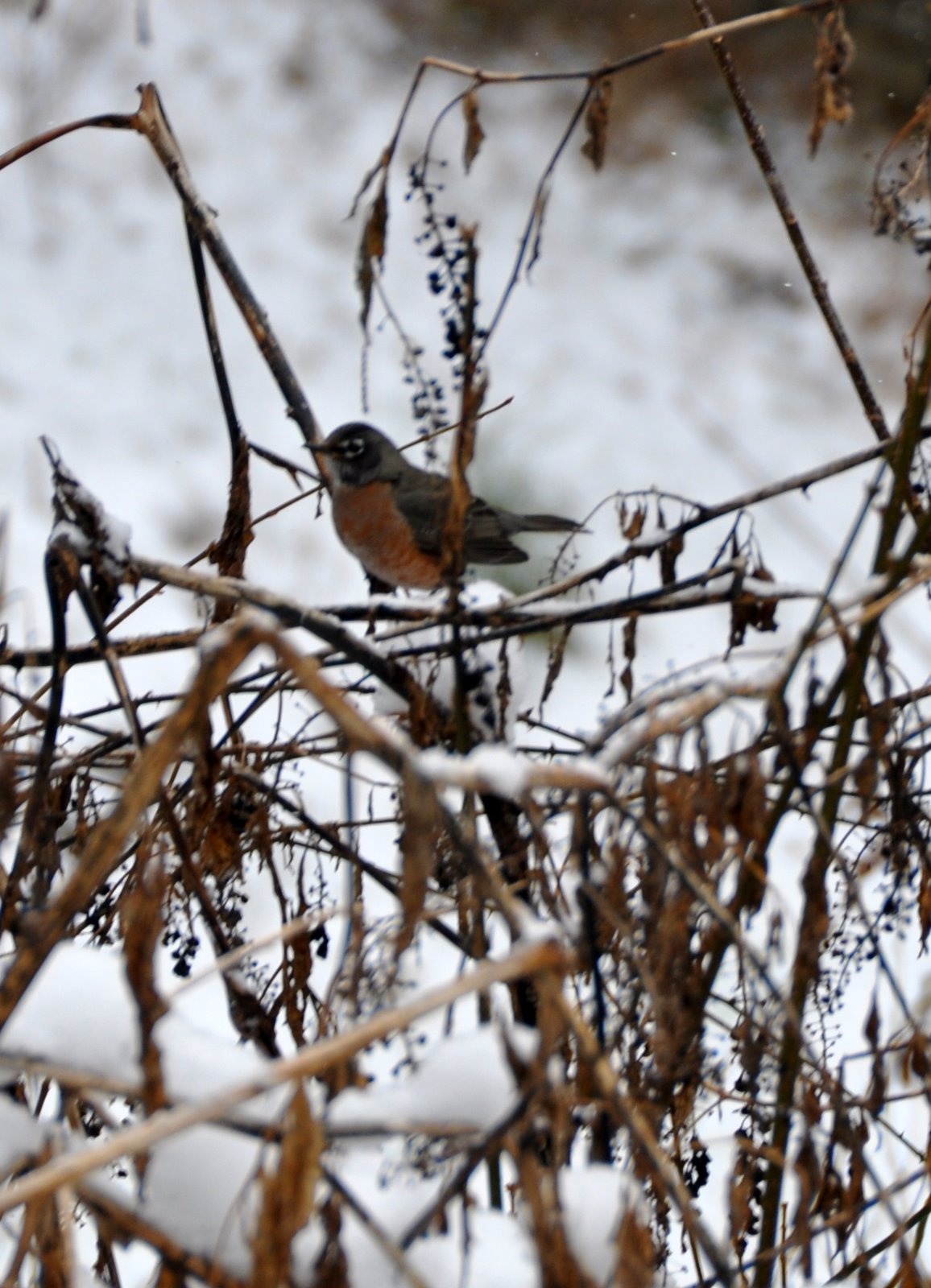
All Day Snow .. and the Winners!
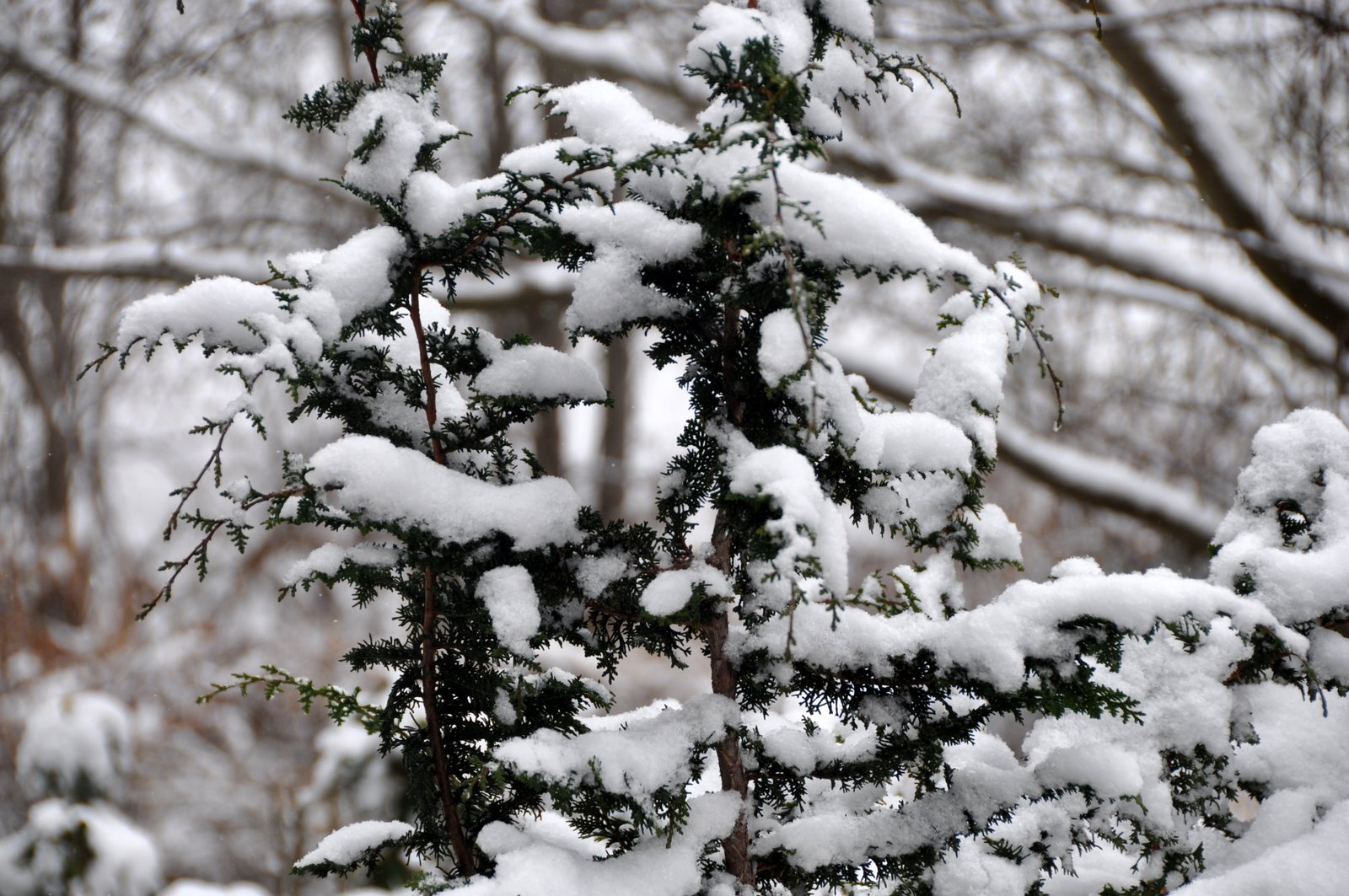
 It's been snowing all day long and I've been up in my workroom, watching the flakes swirling outside the windows and trying to organize a proposal for the next novel to send to my agent and thence, perhaps, to Herself.
 It's not easy. But more of that later...
 I am emerging just to say that I've drawn two winners for the fairy crosses -- Helen T in GA and Victoria in CA! If you all will email me your addresses, I'll put the goodies in the mail -- as soon as I can get out...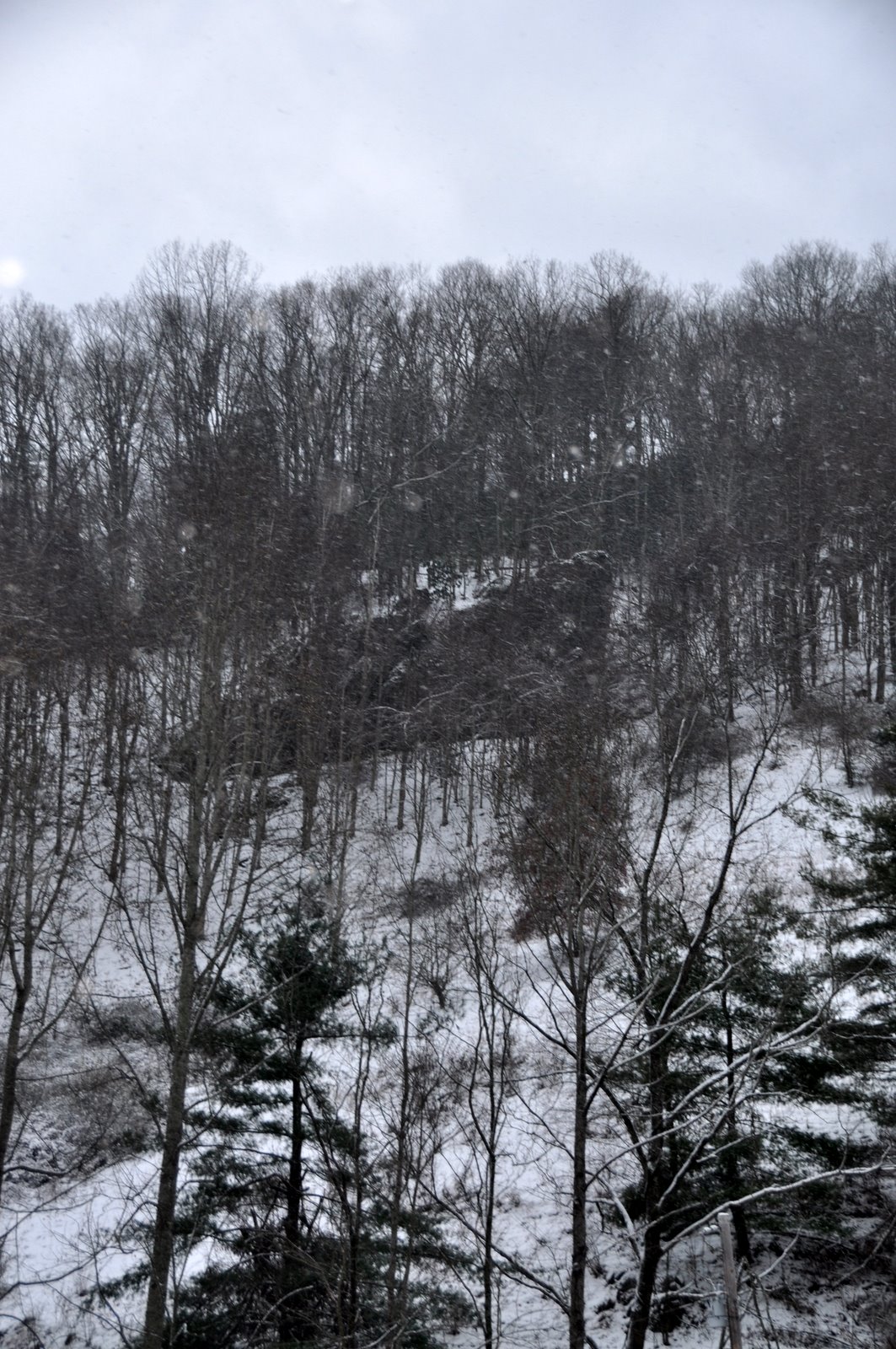

December 4, 2010
Deduction Theology - Suitable for Sunday

"There is nothing in which deduction is so necessary as in religion," said he, leaning with his back against the shutters. "It can be built up as an exact science by the reasoner. Our highest assurance of the goodness of Providence seems to me to rest in the flowers. All other things, our powers, our desires, our food, are really necessary for our existence in the first instance. But this rose is an extra. Its smell and its colour are an embellishment of life, not a condition of it. It is only goodness which gives extras, and so I say again that we have much to hope from the flowers."
From Arthur Conan Doyle's "The Adventure of the Naval Treaty" -- Sherlock Holmes examines a flower and deduces the goodness of God.
In the case of this odorless orchid, however, I personally would deduce a sense of humor. (are those large insectoid eyes on the white protuberance at the center? Mouse over the picture and click for a close-up of Divine Humor. )
Another re-post from the beginnings of this blog.

December 3, 2010
Cockatoo
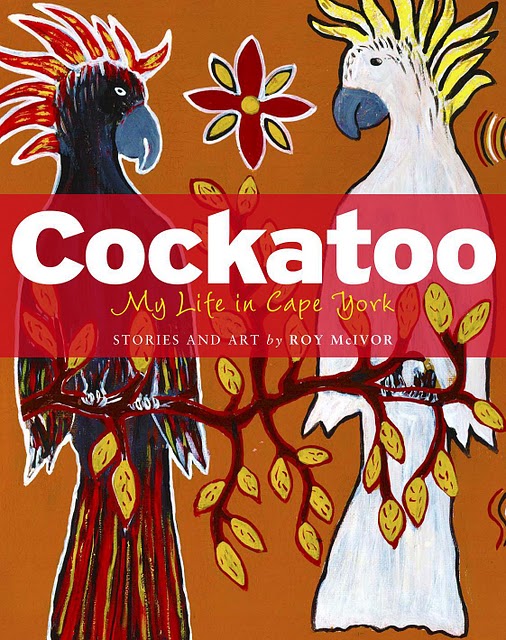 This fascinating book is the story of Roy McIvor, a noted artist of the aboriginal people of Australia. Told in his own words, Cockatoo recounts the unexplained removal of his Guugu Yimithirr people from their homeland during World War II, the years of exile during which almost a third of their number perished, and their eventual return to rebuild their community.
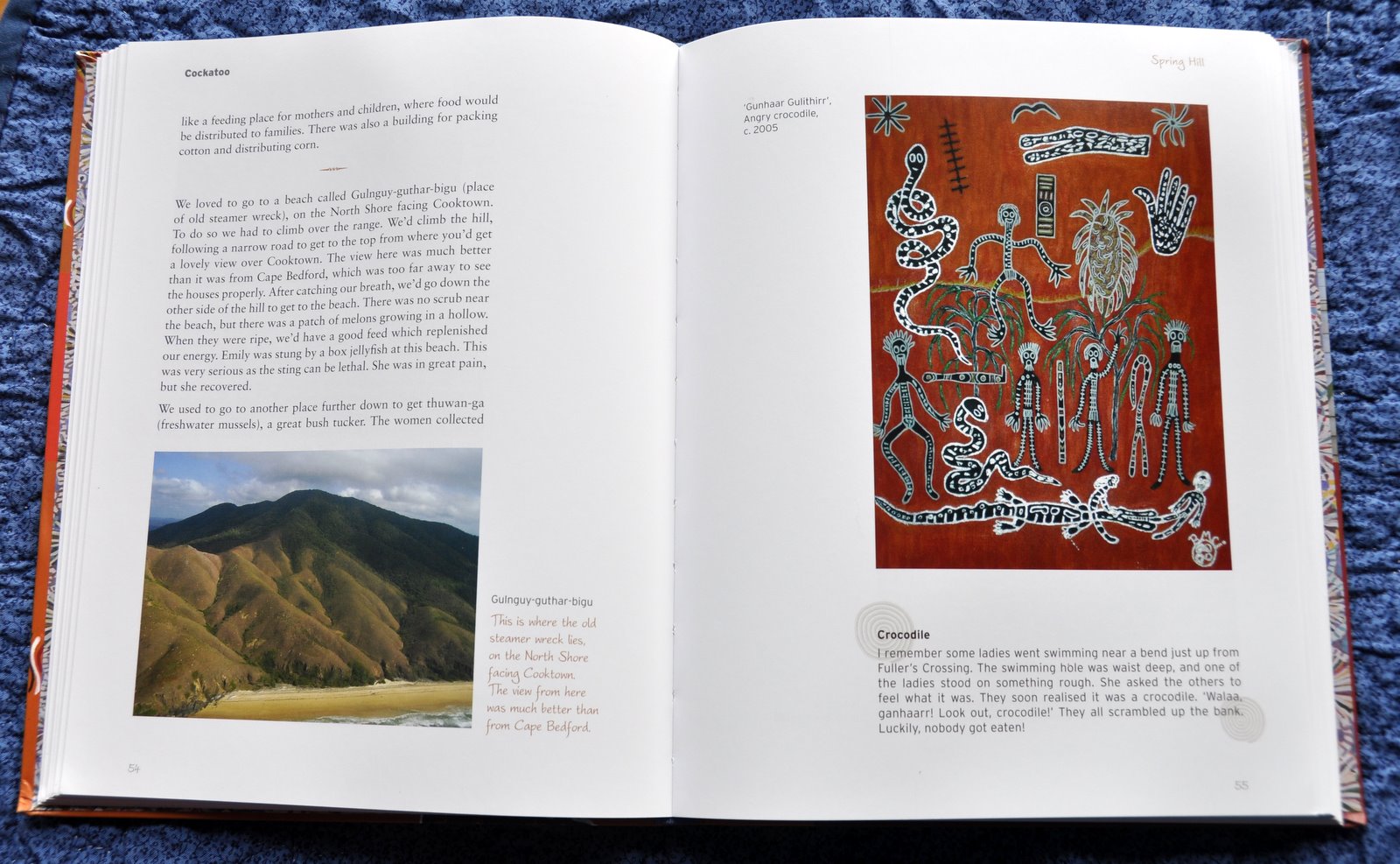
 The book is richly illustrated with Roy McIvor's paintings and is full of stories of everyday life as well as the legends and lore of his people.
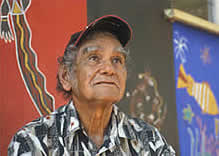 Reader Wil in the Netherlands sent me this book, saying that she thought I'd like it because of my interest in indigenous peoples. Indeed, I'm reminded of the shameful treatment of the Native Americans -- especially the Removal of the Cherokees and the Trail of Tears.
 (Reader Wil's daughter, who lives in Australia, was instrumental in the making of this book. It was she who interviewed Mr. McIvor (her ex-father-in-law) and wrote down his stories with such loving care.)
 As Martin H. commented yesterday, "This is really what blogging should always aim to do...lead us by the hand into a different world. Wonderful!"
Wonderful, indeed! Thank you, Reader Wil, for leading me into Roy McIvor's world!

December 2, 2010
Yunwi Tsundi and a Drawing!
I'm recycling two older posts and having a drawing today. Read on . . .
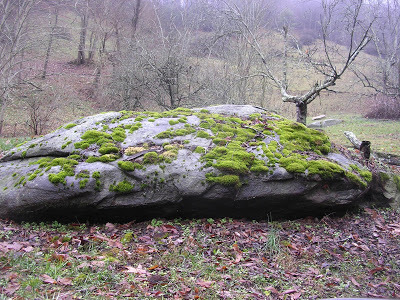 This gorgeous boulder lies at the edge of our orchard and things live under it. Possibly a groundhog or two, maybe some rabbits or there could be snakes. But whenever I see that long dark opening, I think of Little People -- not the Munchkins of Oz but the really little people - Shakespeare's English fairies small enough to use a shed snake-skin as a wrap and his elves who make jackets of bats' wings. Or maybe the Yunwi Tsunsdi.
It was the Cherokees who once hunted in this area that told of the Yunwi Tsunsdi - a race of Little People living in caves of rock here in the mountains. Handsome and well-formed, with flowing hair reaching almost to the ground, they were reckoned to be kind, helping lost people and especially children to find the way home. But, the old legends warn, the Little People value their privacy and if any traveler attempts to follow the sounds of their drumming to their dwelling-place, the Little People will cast a spell that will send the wanderer even further astray, turning him around and around and bewildering him forever.
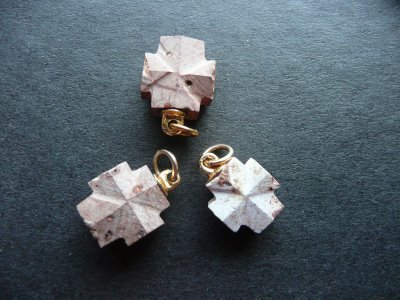
Fairy crosses or fairy stones are formed from staurolite, a combination of iron, silica, and aluminum that often crystallizes into cross-like shapes. Traditionally carried for luck, fairy crosses are said to protect against witchcraft, disease, and disaster.
Cherokee legend says that the Little People, the Yunwi Tsunsdi - a race of tiny reclusive beings known for their ability to find lost people -- were dancing and drumming and singing at a location near today's Brasstown, NC when a messenger arrived, bringing news of the Crucifixion. The terrible story made the Little People cry and when their tears hit the earth, they turned into the tiny crosses that can still be found in the area today. The fairy crosses in the picture are very small -- about the size of my little fingernail. (No, I didn't find them myself -- they came from the Silver Armadillo in Asheville.) And come Monday, I'll draw two names from all the comments on this post to receive one of these little treasures.
The section below in italics is from THE DAY OF SMALL THINGS -- where Least is given a fairy cross.
She was like a half-tamed woods creature -- poked her head out the bushes a little ways and waited. Big blue eyes in a dirty sun-brown face, hair a greasy snarl, and a dress no better than a feed sack with holes in it.
I can do something about that, I thought and I felt in my skirt pocket for my charm.
'Come up here, honey,' I called and she inched out of the bushes and up the steps, her feet a-dragging.
But when she got close, she looked me in the eyes even afore she looked to see what was in my hand and that was when I knew.
'Oh, honey,' I said, feeling as if I might bust out crying, 'they's so many things I have to teach you and likely not much time. But we'll make a beginning with the story of the fairy crosses and how they came to be.'
When I put the little cross in her hand, she studied it close, running her finger up and down over its ridges. Then she looked up and whispered, 'This is from the little things, ain't it?'
Law, they was a catch in my heart at them words.

 This gorgeous boulder lies at the edge of our orchard and things live under it. Possibly a groundhog or two, maybe some rabbits or there could be snakes. But whenever I see that long dark opening, I think of Little People -- not the Munchkins of Oz but the really little people - Shakespeare's English fairies small enough to use a shed snake-skin as a wrap and his elves who make jackets of bats' wings. Or maybe the Yunwi Tsunsdi.
It was the Cherokees who once hunted in this area that told of the Yunwi Tsunsdi - a race of Little People living in caves of rock here in the mountains. Handsome and well-formed, with flowing hair reaching almost to the ground, they were reckoned to be kind, helping lost people and especially children to find the way home. But, the old legends warn, the Little People value their privacy and if any traveler attempts to follow the sounds of their drumming to their dwelling-place, the Little People will cast a spell that will send the wanderer even further astray, turning him around and around and bewildering him forever.

Fairy crosses or fairy stones are formed from staurolite, a combination of iron, silica, and aluminum that often crystallizes into cross-like shapes. Traditionally carried for luck, fairy crosses are said to protect against witchcraft, disease, and disaster.
Cherokee legend says that the Little People, the Yunwi Tsunsdi - a race of tiny reclusive beings known for their ability to find lost people -- were dancing and drumming and singing at a location near today's Brasstown, NC when a messenger arrived, bringing news of the Crucifixion. The terrible story made the Little People cry and when their tears hit the earth, they turned into the tiny crosses that can still be found in the area today. The fairy crosses in the picture are very small -- about the size of my little fingernail. (No, I didn't find them myself -- they came from the Silver Armadillo in Asheville.) And come Monday, I'll draw two names from all the comments on this post to receive one of these little treasures.
The section below in italics is from THE DAY OF SMALL THINGS -- where Least is given a fairy cross.

She was like a half-tamed woods creature -- poked her head out the bushes a little ways and waited. Big blue eyes in a dirty sun-brown face, hair a greasy snarl, and a dress no better than a feed sack with holes in it.
I can do something about that, I thought and I felt in my skirt pocket for my charm.
'Come up here, honey,' I called and she inched out of the bushes and up the steps, her feet a-dragging.
But when she got close, she looked me in the eyes even afore she looked to see what was in my hand and that was when I knew.
'Oh, honey,' I said, feeling as if I might bust out crying, 'they's so many things I have to teach you and likely not much time. But we'll make a beginning with the story of the fairy crosses and how they came to be.'
When I put the little cross in her hand, she studied it close, running her finger up and down over its ridges. Then she looked up and whispered, 'This is from the little things, ain't it?'
Law, they was a catch in my heart at them words.
December 1, 2010
And Then There Was Snow . . .
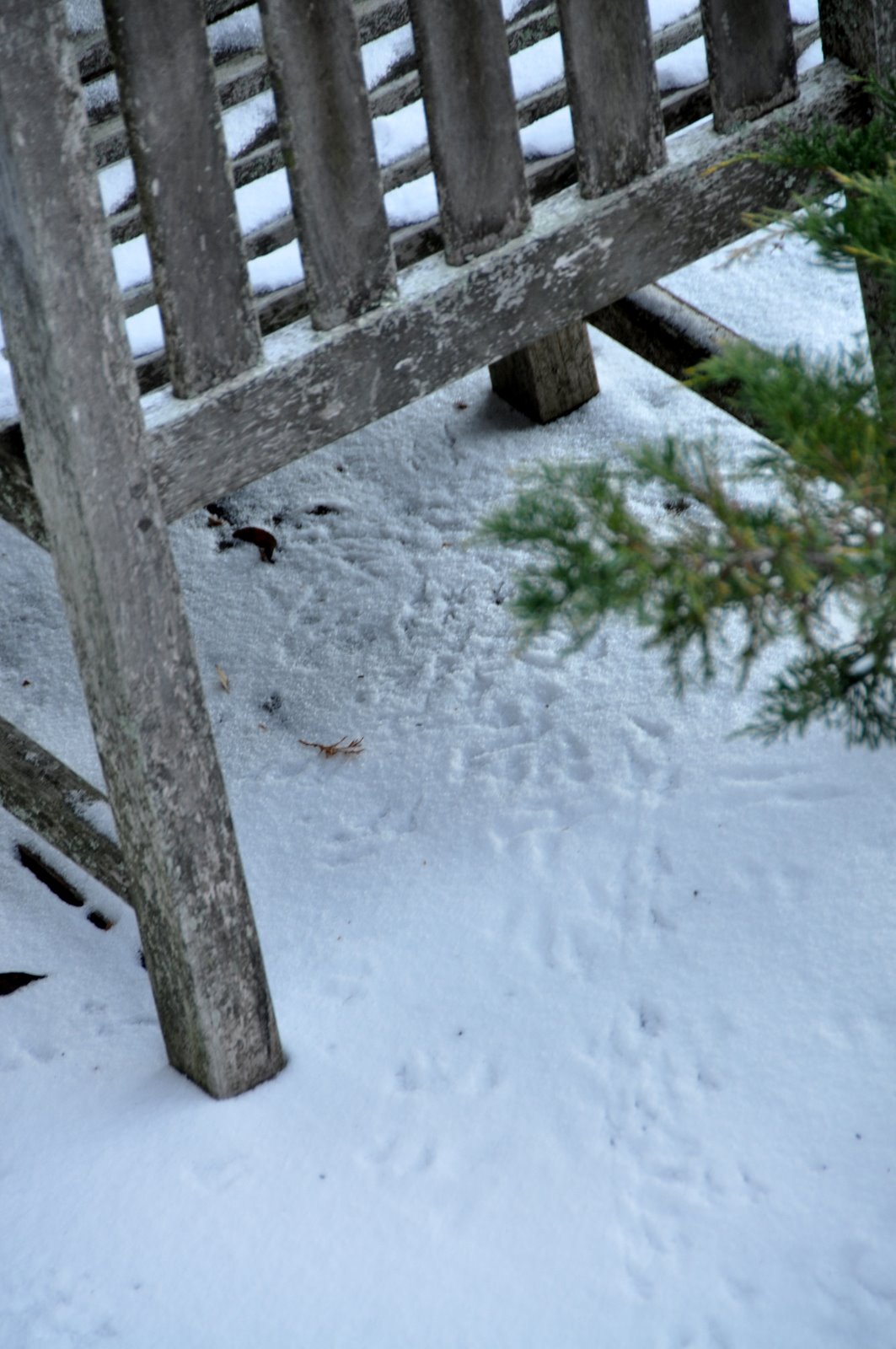 Afer a night of heavy rain we awoke to snow yesterday. By afternoon the decks had seen heavy traffic from the birds.
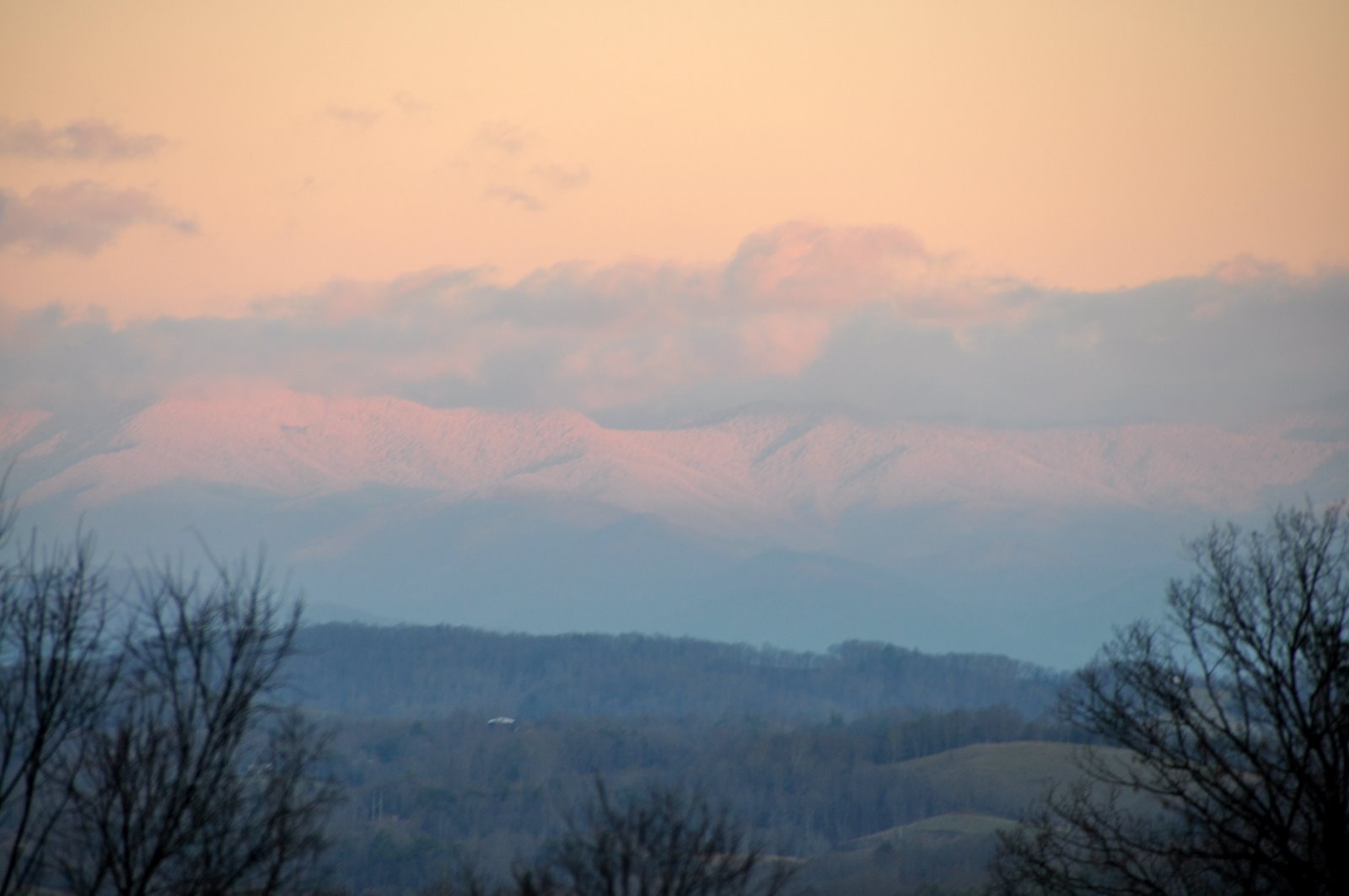
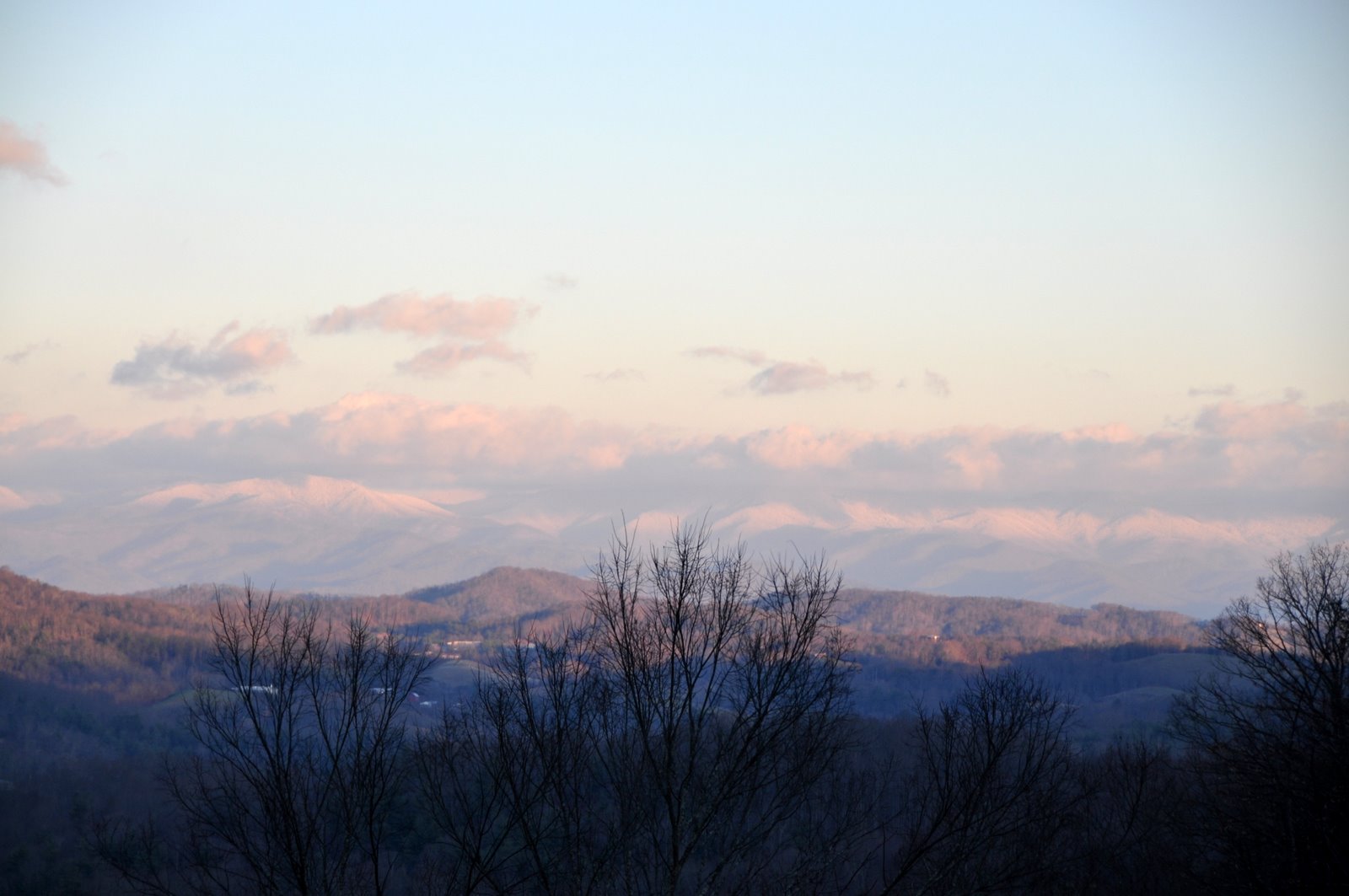 And much of the light snow had melted. But to the east, the distant Blue Ridge was still frosted and shone pink in the setting sun.
  Our north-facing slopes get little sun at this time of year and they too still wore a drift of snow.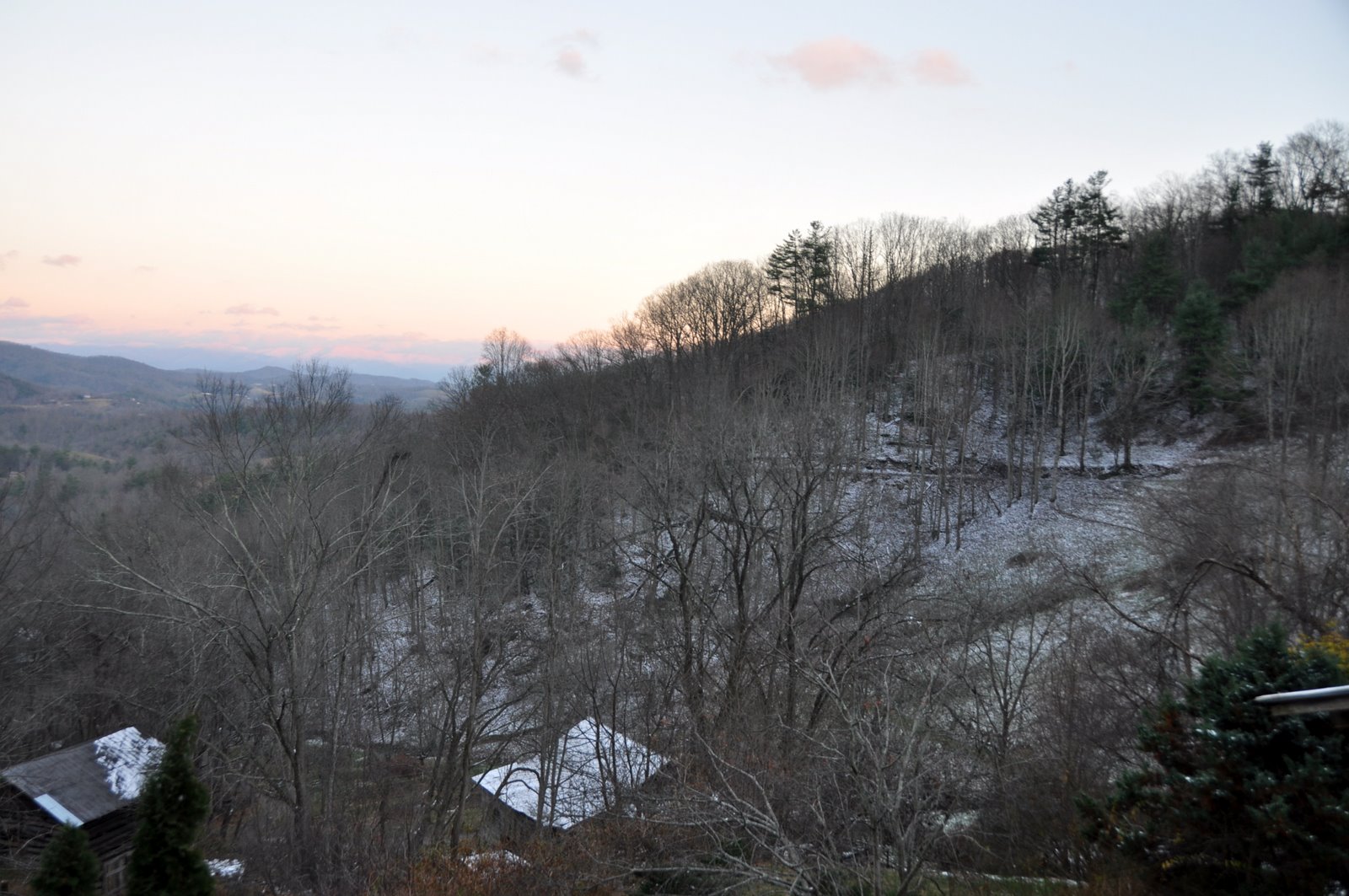

November 30, 2010
Gray Day
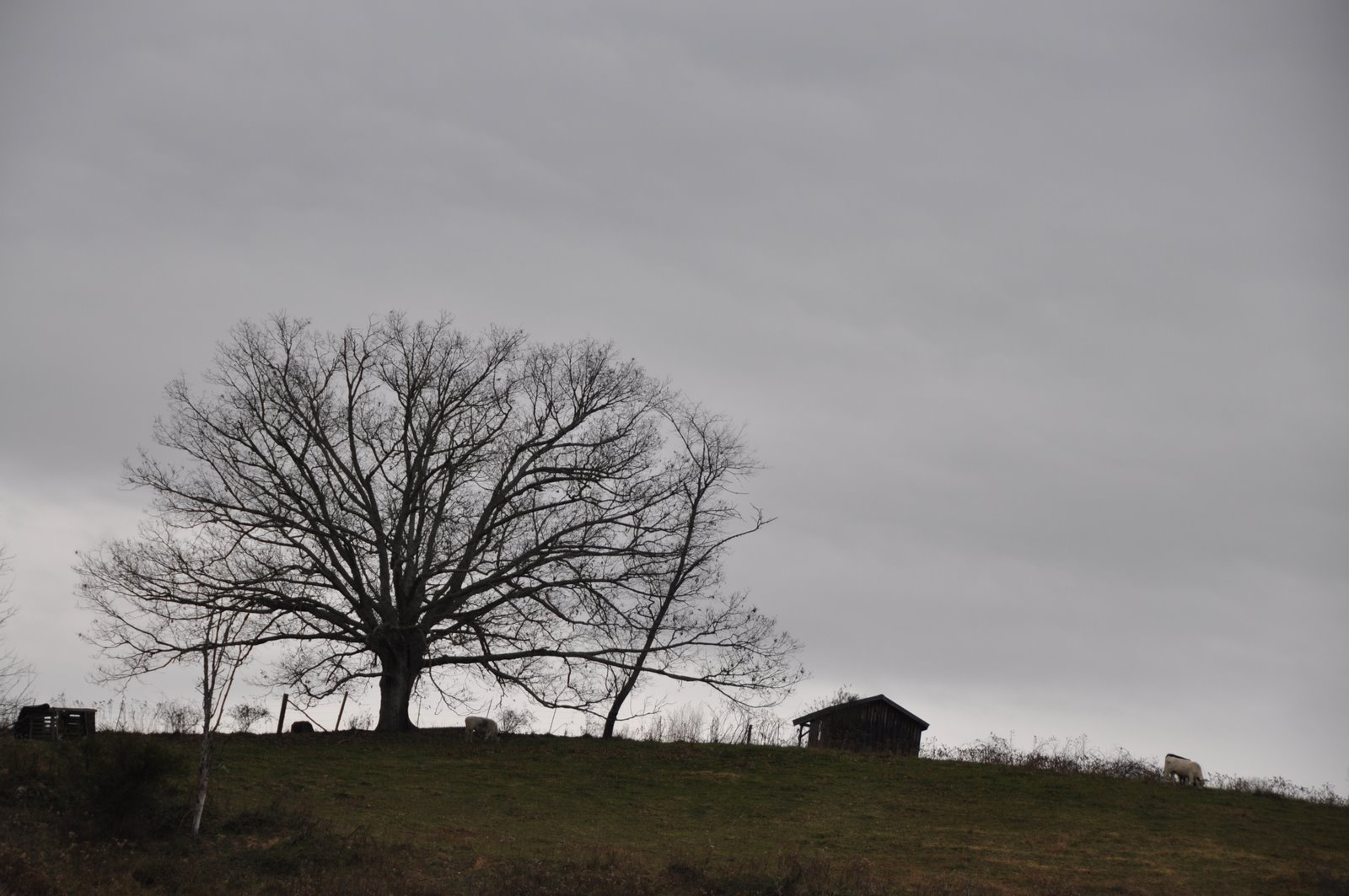
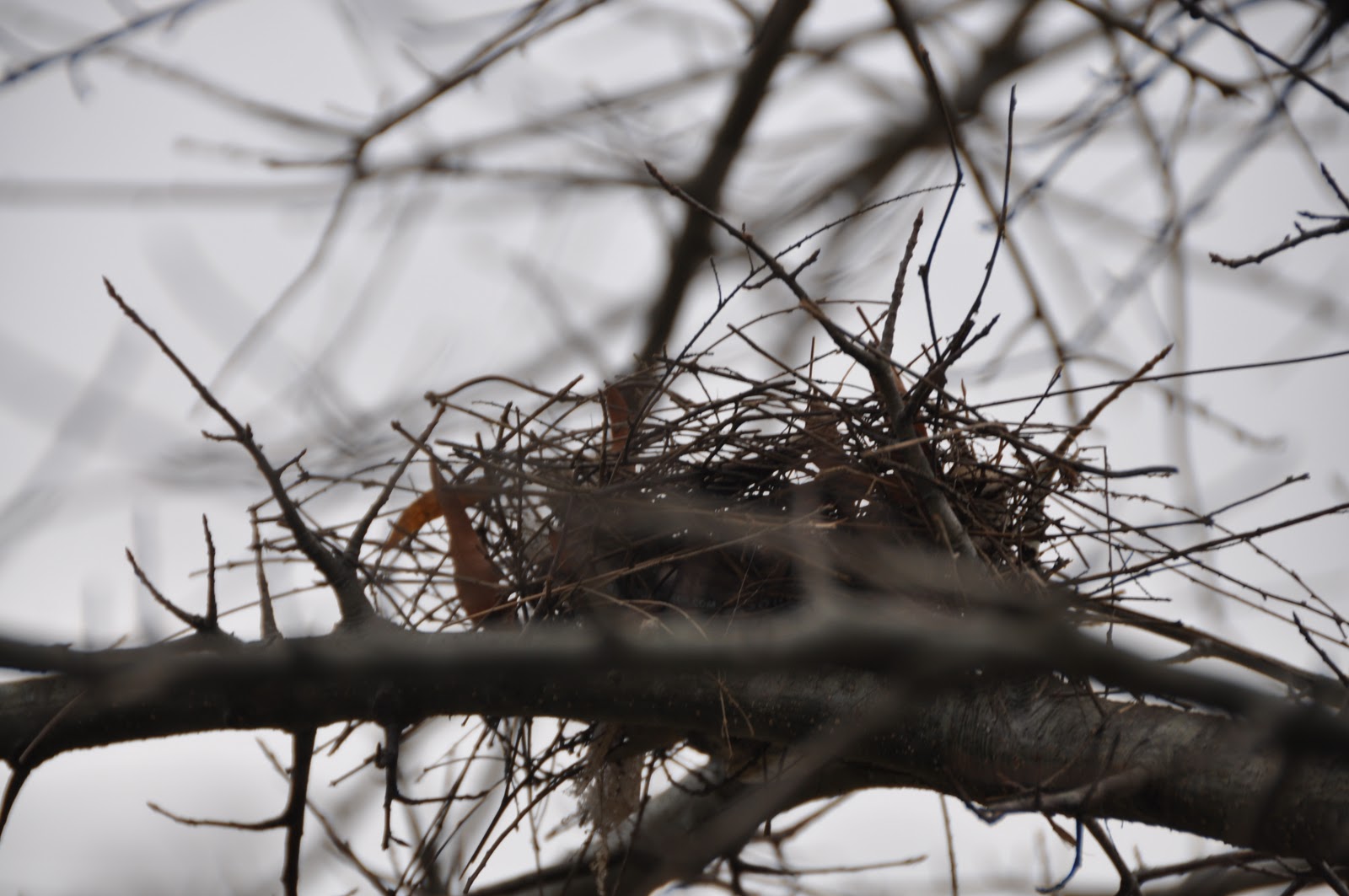
We're entering the time of year when I have to learn again to appreciate the beauty of dark skeletal branches against a gray sky . . . the orderly confusion of an abandoned nest . . .
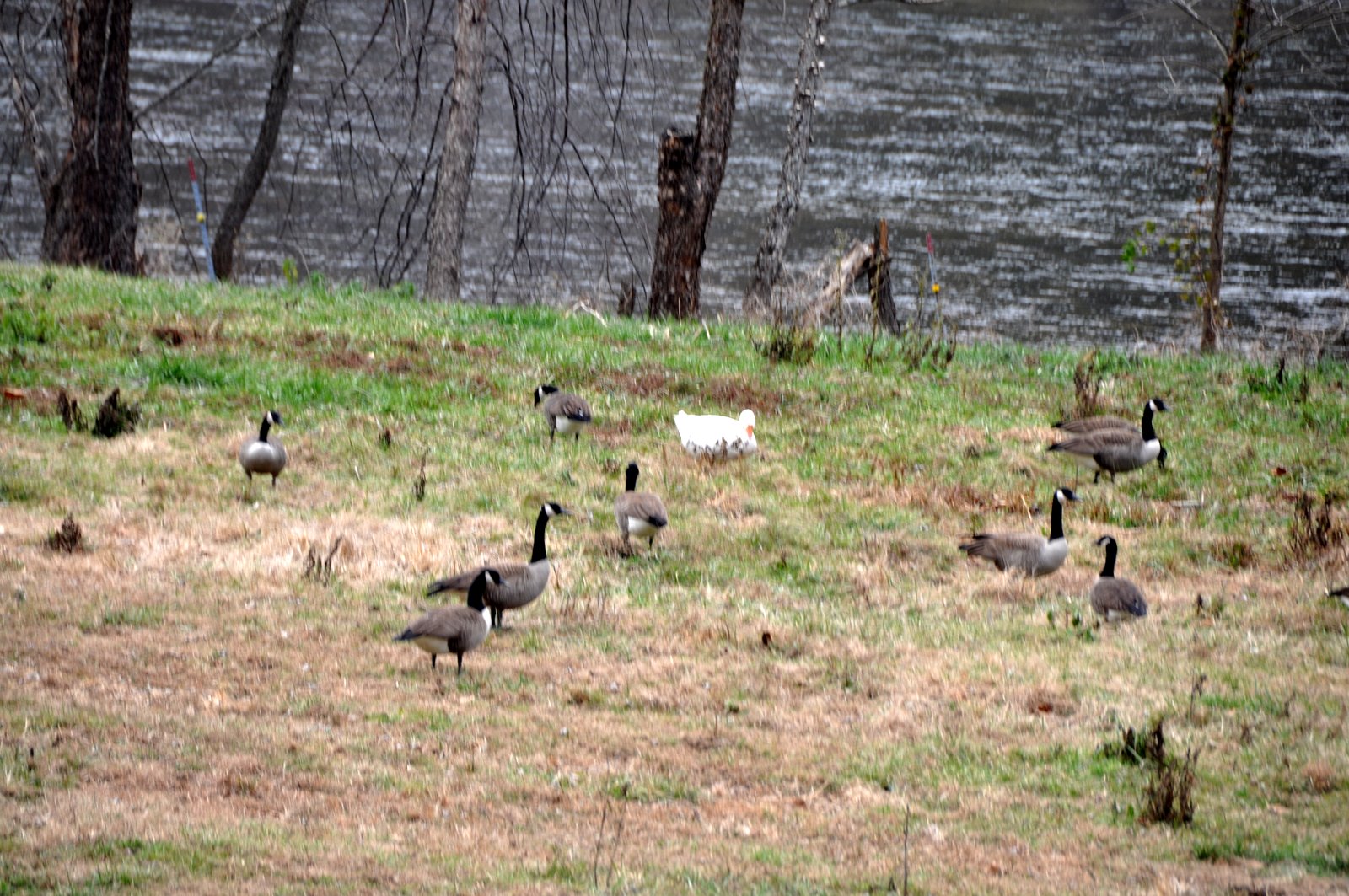
 And to wonder about this all white addition to the Canada Goose flock by the river. He or she has been with them for a month or more -- seemingly accepted as a part of the group. Has the interloper found a mate? I can't tell. But I wonder what the others make of it.
 In the past, the geese have stayed there all winter. I hope they continue to do so because I suspect this domestic bird wouldn't be capable of flying long distances.
It's almost a Little Mermaid in reverse story.

November 29, 2010
FAQ - How Do You Choose a Title?
The title of a book, along with its cover, is the writer's first chance to grab a reader's attention and tempt him to pick up the book. As I've mentioned before, the cover is pretty much out of my hands -- the Art Department and the Marketing Department at Random House deal with that. As for the title, I send in my idea for a title and so far, except in one case which I'll talk about later, the titles have been accepted.
In choosing a title, I look for something a bit tantalizing that, in some ways, reflects the content and tone of the book. And I usually check on Amazon to make sure that title hasn't been used recently. Titles can't be copyrighted so I'm free, if I want, to call a book Gone with the Wind or The House at Pooh Corner. But instead, I rack my brains, trying to come up with something semi-original.
It's not easy.
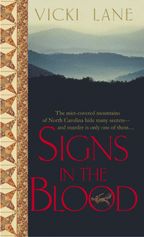 People often ask what me a particular title of mine "means." In the case of my first novel, Signs in the Blood, the answer is that I'm not exactly sure. I usually ask what they think it means and have gotten some terrific explanations, often involving horoscopes and/or planting by the signs as recommended by The Old Farmers' Almanac.
Alas, it's nothing that clever. As I recall, while I was writing Signs, I was researching the snake-handling Holiness religion that plays a large part in this novel and came across the phrase 'signs in the blood.' That sounds like a good title, I thought and made a note of it.
Unfortunately, I neglected to make a note of what it meant. And though I've looked, I've never found that passage again. But what I think it means comes from the fact that folks of the Holiness church call themselves "signs-following believers." (These aren't horoscope signs but the signs mentioned in the Bible -- "And these signs shall follow them that believe; In my name shall they cast out devils; they shall speak with new tongues; They shall take up serpents; and if they drink any deadly thing, it shall not hurt them; they shall lay hands on the sick, and they shall recover," (Mark 16:17-18).)
So I suspect that 'signs in the blood,' refers to the fact that these beliefs tend to be passed down in families. Really, not much at all to do with the story I was telling. But nonetheless a mysterious sounding title.
 Art's Blood was a mistake. I had the idea that I might try to use the word 'blood' in all my titles and, since this book had to do with art and artists, I came up with this rather lame pun -- art's blood -- heart's blood. It was meant as a working title, something to be replaced when I thought of a better one but my editor liked it so there it is. I don't like it because punning titles tend to suggest a cozy, humorous mystery -- which this isn't. Ah, well . . .
 By my third book, I'd abandoned the idea of always having the word blood in the title. For one thing, a friend told me that the titles suggested slasher-type stories and for another thing, when I made a list of titles including blood, everyone of them had already been used recently, sometimes several times.
 Besides, for once I had a great idea! I wanted to call this book The Booger Dance. That's the name of a Cherokee dance that plays an important part in this book, both actually and symbolically. And it's certainly memorable.
Unfortunately, both my agent and my editor reacted with horror to this proposal, feeling that such a title would have buyers hurrying away with averted eyes.
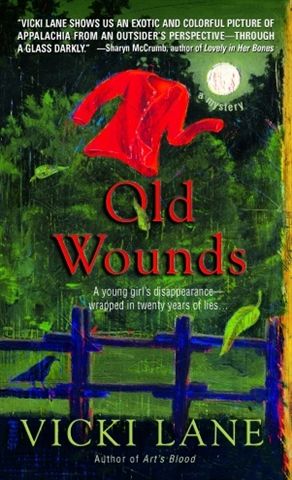
So, since my editor had suggested that this might be a good time to explore Elizabeth's past and perhaps uncover some old wounds . . .
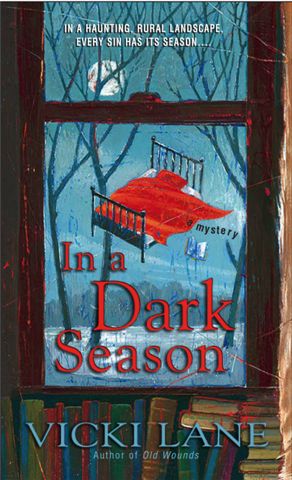
In a Dark Season is pretty straightforward. It's set in November and a pivotal scene is on the Winter Solstice -- a dark season for sure. And the tone is rather dark as well.
The Day of Small Things came from a Bible verse -- I was skimming through Bartlett's Quotations, looking for inspiration and came across it. Not the most inspired choice but I liked the sound.
 Next year's book, Under the Skin, deals with Elizabeth and her very different sister. The title comes from a poem by Kipling which contains the lines, "But the colonel's lady an' Judy O'Brady are sisters under the skin."
Here's an article about the original titles of ten famous novels.
Trimalchio on West Egg ? Really?

November 28, 2010
Still Thankful for Little Things
 A sturdy little steer . . .
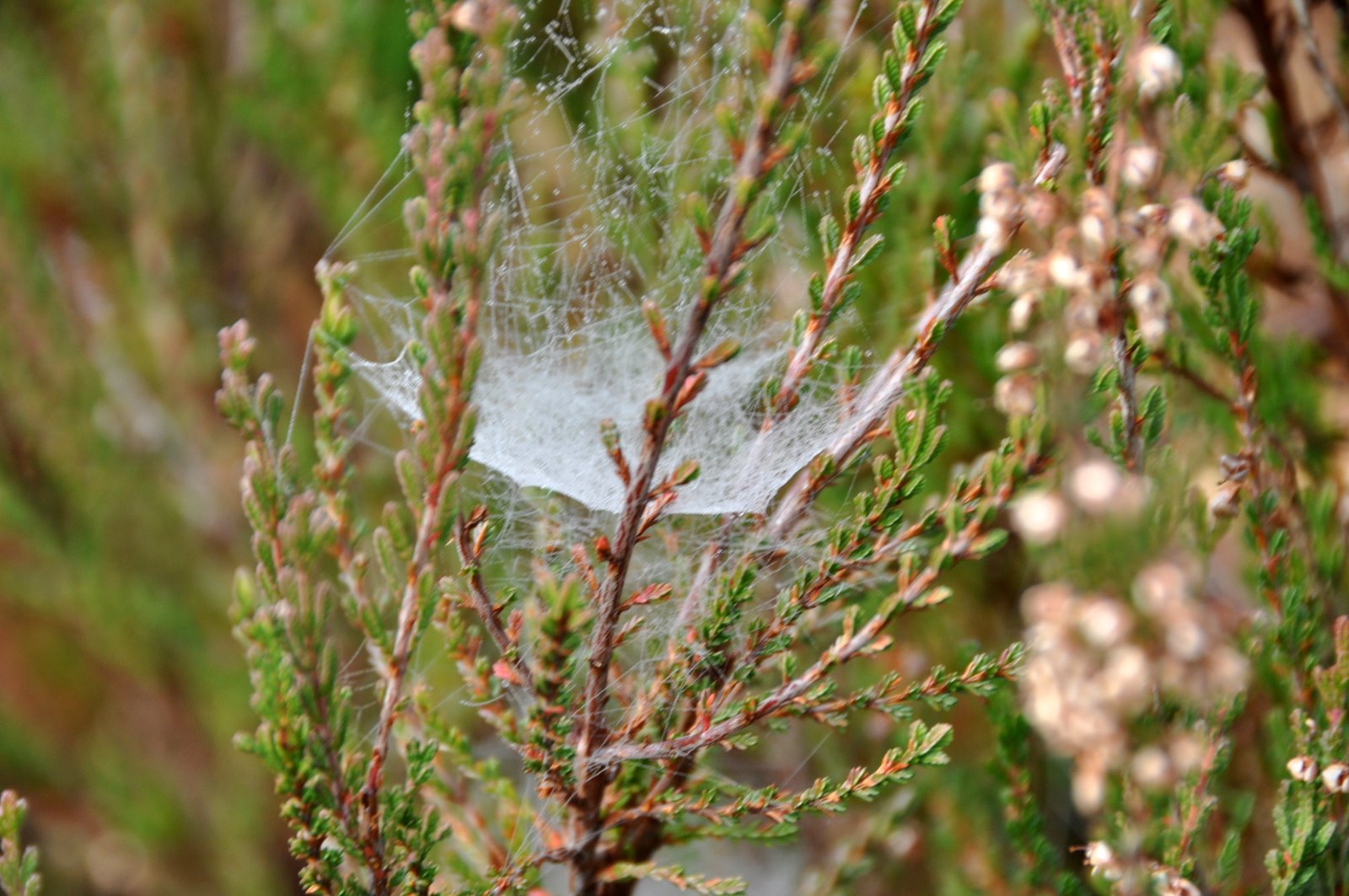 A tiny spider web. . .
 Raindrops on a pansy . . .And a gentle mist on the world outside.

November 27, 2010
Pumpkin Chiffon Pie
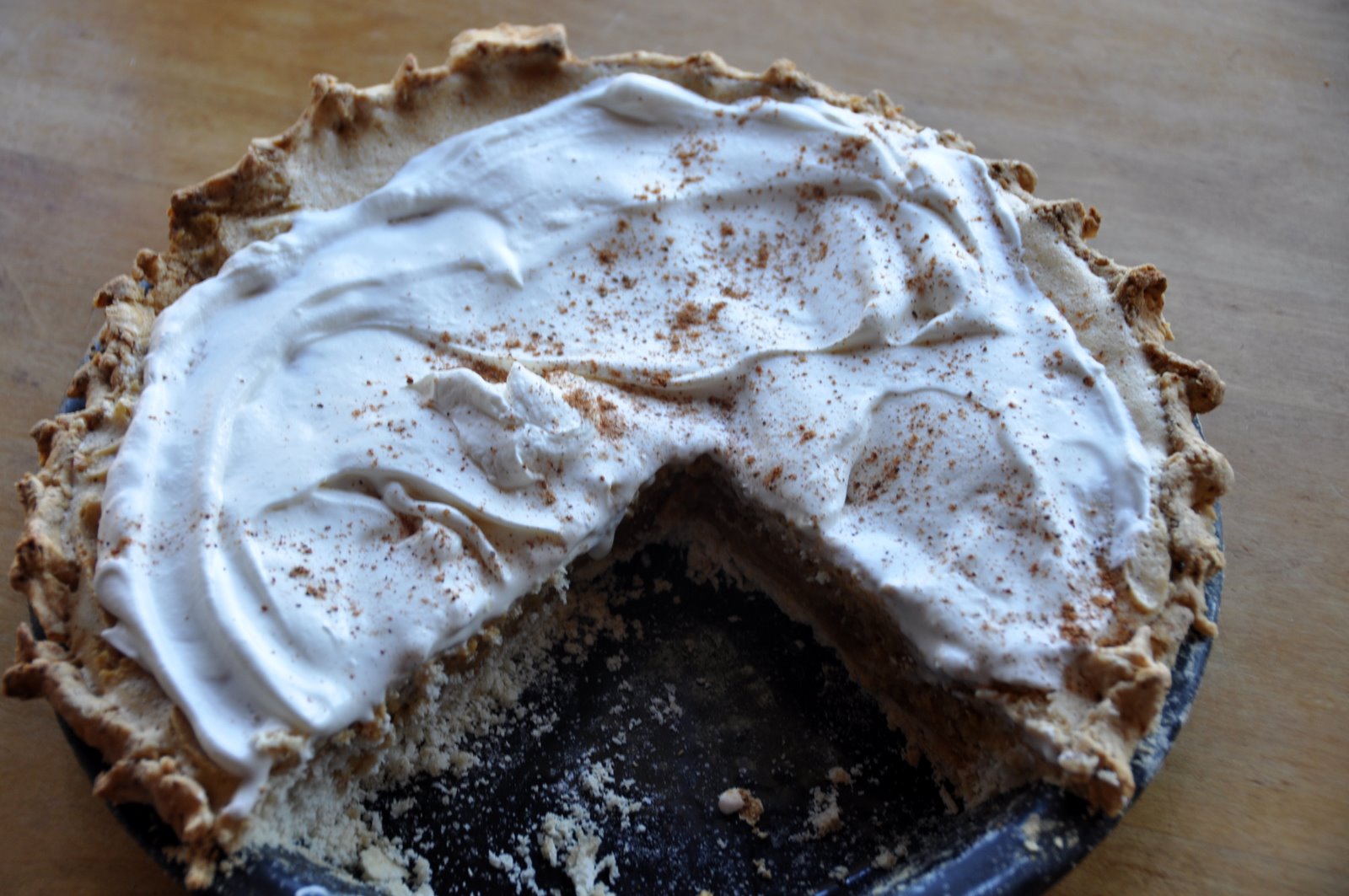 You might want to make a note of this for next Thanksgiving. Or indeed, for any time. This is pumpkin pie for people who aren't all that crazy about pumpkin pie. This is fantastically good pie. And here's the recipe, from my much used Southern Junior League Cookbook.
2 baked pie shells ( I think it's worth the trouble to make them yourself)
3/4 cups milk
2 cups canned pumpkin
1 1/2 cup brown sugar
1/ 8 teaspoon salt
3/4 teaspoon ground ginger
1/3 teaspoon nutmeg
1/2 teaspoon cinnamon
5 egg yolks
2 envelopes unflavored gelatin
1/3 cup cold water
5 egg whites
1 1/2 cups heavy cream
1/3 cup sugar
Caramelized almonds (see below)
Whipped cream and grated nutmeg for topping
Heat milk with pumpkin, brown sugar, salt, and spices. Beat egg yolks slightly and slowly add hot mixture to yolks. Mix well and cook in double boiler till thick, stirring constantly.
Soften gelatin in cold water. Add to hot custard and stir till dissolved. Cool till it begins to thicken.
Beat egg whites till stiff but not dry. Fold into custard and cool a little bit but not till set. Whip 1 1/2 cups heavy cream, adding 1/3 cup sugar and then folding into pumpkin mixture. Chill till very thick and pour into pie shell. Chill (overnight) till set.
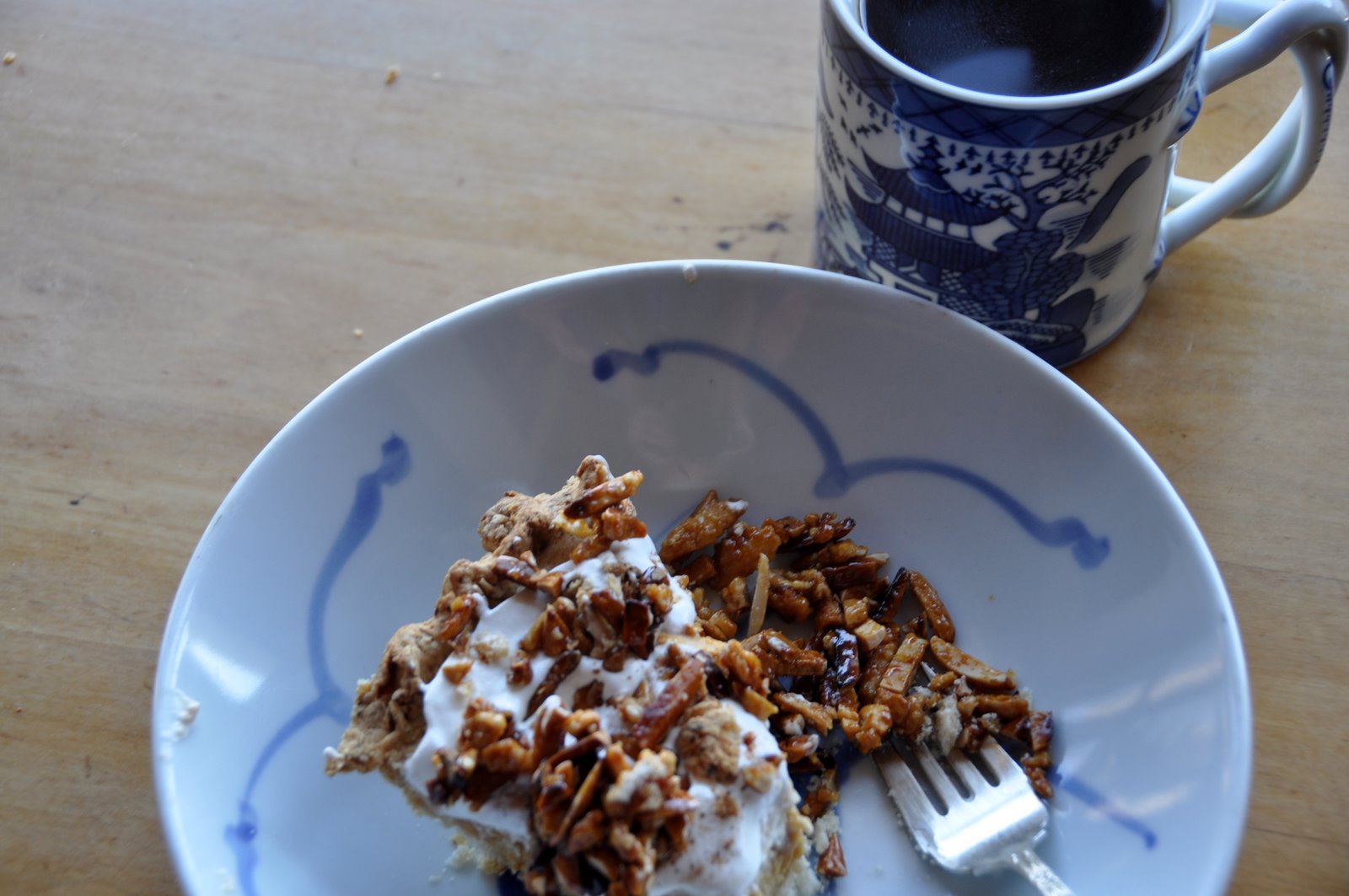
Top with more whipped cream, a sprinkle of grated nutmeg, and the caramelized almonds.
(The original recipe called for butterscotch sauce as well but I don't know, that just seemed excessive. So this is practically a diet version.
The pie can be frozen and is quite good that way. Also, the filling alone is a nice dessert, frozen or otherwise. )
Caramelized almonds
1/2 cup sugar
1 cup slivered blanched almonds
Stir sugar and almonds in heavy skillet over medium high heat till light brown. Spread on greased cookie sheet. Break apart when crisp and store in airtight container. Also really good on ice cream.