Sarah E. Smith's Blog, page 3
April 20, 2014
Radio Interview: End of the Pier Affair
From the website
 Originally posted on Writer's Blog:
You can find me on
Phoenix FM
– tomorrow – about 1pm. I shall be talking about the Secret of Aldwych Strand Triology and dropping a few hints about the upcoming Symington Byrd Mysteries . Do listen via T’internet. After all what else would you do on a bank holiday?
Click to view slideshow.


April 15, 2014
Emperor Valentinian I
Emperor Valentinian is known as the last of the Warrior Emperors. He was born in AD 321 in Cibalis (Vinkovci). His father, Gratian, rose through the ranks of the army ending up as Comes Britanniae (Companion of Britain), before coming under a cloud and being stripped of his power and estates for his support of Magnentius.
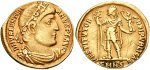

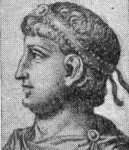
Valentinian followed his father into the army, but he too was stripped of power by the Emperor Constantius, before returning to active service under the Emperor Jovian. When Jovian died on the 17th February 364 AD, Valentinian’s name was put forward as a potential replacement – although not as the first choice. He won the support of the army (who had marched to Nicaea) as the original candidates Aequitius and Januarius were dismissed as either too brutal (Aequitius) or too far away (Januarius).
Valentinian arrived in Nicaea on 24 February 364, the bisextile day (the Roman equivalent of a leap year), and – as it was considered unlucky to consider new business on this twice counted day – Valentinian held off until the 25th of February before accepting the Emperorship. He made his acceptance speech on the 26th, in which he calmed the army’s fear as to where his loyalties lie.
In a stunningly clever move, and in order to prevent a repeat of the chaos which followed the deaths of Julian (the last Neo-Flavian) and Jovian , Valentinian named a co-augustus (his brother Valens) on the 24th March, giving him day to day control over the eastern empire.
In 365 the Alamanni invaded Gaul and Procopius began his revolt against Valens. However, instead of going to his brother’s aid, Valentinian remained in Gaul; a move which cemented his support in the region.
It also set his reputation as a warrior; an emperor not afraid of conflict. It had to. There were conflicts in Britain, Africa and amongst the Quadi in Germany – all of which were dealt with successfully. Not surprisingly during this time, the senate lost power to the army and the Imperial Court became more of a military tribunal and vehicle for social mobility, than at any previous point in its history.
The jury is out on the reputation of Emperor Valentinian. On the plus side the fragmentation of the empire halted but on the down side, under his rule the empire fractured; society polarised and regionalism intensified. However, Valentinian is generally regarded as an exceptionally able emperor, who assumed the mantle of imperial rule with boldness. Certainly, he was an emperor determined not only to be in charge but be seen to be in charge.
Married twice: his first wife, Severa died in childbirth in 359 (his son Gratian survived), Valentinian, who died from a strokein 375AD, was survived by his second wife, Justina, mother of his other three children – Valentinian II and two daughters Galla and Justa.
Part of me can’t quite believe that Valentinian died after losing his temper. It’s too mundane for this lesser known, warrior emperor.
As for why is his post here and not on the other blog? Oh that would be telling :-)


April 13, 2014
It’s all in the Clothes
if you didn’t see it on the other blog; here it is for your delectation
Originally posted on More than a Cat:
OH and I have been thinking a lot about Emily and her relationship with Symington. She’s an East End girl of genteel stock; he was part of the late King Edward’s crowd. . He has been asked to look after her, she has contacts in the East End that are vital to a criminologist; but she is feisty and independent. She will not accept help easily but – if she doesn’t – the work house is the only alternative. However, she’s a girl who doesn’t trust easily (she suspects him of having designs upon her personage; a bit like Liza Doolittle did of Henry Higgins) – well with her father, do you blame her?
Let me explain:
Emily’s mother was a rural vicar’s daughter who ran off with an artist with a roving eye. Our heroine passed the 11 plus but never went to grammar school because after her mother…
View original 266 more words


April 12, 2014
Help wanted
Just a short post. I would consider it a great honour if you could pop over and have a look at this site for me sarahesmith.info and give some feedback before it goes really live :-)
cheers


April 3, 2014
Enter the “Gentleman” Detective
Crime Fiction would be lost without the detective, whether it be the hard-nosed kind found in American crime novels – like Mike Hammer and Philip Marlowe, or their British counterparts – Sherlock Holmes, Lord Peter Whimsey and Hercule Poirot.
European fiction tends to favour a gentleman detective; who comes from the educated classes; is at home in a world that we like to think existed in the years prior to the Great War and ended just after the Second World War, and who has an unusual (if not downright eccentric) manner. They are gentleman if not by birth, certainly in the way they behave; and they are members of what the Georgian world called the Ton (the top 100 families). Their detecting takes place in a cozy world – known as the locked room; their suspects are all flawed and ( for the Marxist among you) degenerate representatives of a dying and parasitic class. Not only does the detective battle against a closed society, they also clash with the professional police, who are presented as dim witted; lower class fools. This is apparently a backlash against the bungled investigation into the Ripper Murders of 1888, and the popular misconception that the police were incapable of detecting crime because they were not intelligent or educated enough.
Each detective is accompanied by a companion – usually male – who acts as a sounding board. They are not always from the same social class, but their skills complement or even augment the central character.
Bizarrely the first Gentleman detective was not British – but French – and created by an American, albeit an anglophile. This detective was Edgar Allen Poe’s C. Auguste Dupin. Making his appearance in 1841, in the Murders in the Rue Morgue (the first of three cases) Dupin was not an immediate success and underwent quite a few changes in his modus operandi. But he was a Chevalier in the Legion D’honneur, and he was obsessed with collecting books. He started out as an amateur detective who would visit the crime scene and take an active part in the investigation – but only when called upon by the authorities. In book two, he had become introverted rarely leaving his rooms – the epitome of the armchair detective, and only after appalling reviews (for this second book – The Mystery of Marie Roget -1842) did Poe make the changes allowing Dupin to become what readers would now recognise as the gentleman detective (The Purloined letter (1844).
Intriguingly, Poe did not believe his character to be successful and moved away from crime fiction. Yet, Poe’s initial concept blossomed in English literature. The first English Amateur detective (Franklin Blake) appeared in 1866 – in what aficionados of this genre regard as the first English Crime Story - The Moonstone. He was followed by a character whose name is synonymous with crime fiction: Sherlock Holmes. And should you care to compare Dupin and Holmes closely, you will see why it is possible to argue that Doyle did not create his detective, he simply lifted him from Paris and planted him in London. In temperament, intelligence and bravery he is the equal if not the mirror image of Dupin.
After that the floodgates open: Wimsey, Campion, Alleyn, Poirot and Marple (from the Golden Age); with Dalgleish, Lynley, Makepeace (of Dempsy and Makepeace fame) Jonathon Creek and even -possibly - Professor Layton representing the modern era.
Until Marple – society would have us believe that women detectives were conspicuous by their absence, and yet, the first female detective, Mrs Gladden, appeared in 1864 some 23 years before Holmes. In many respects her techniques are those of Holmes. She is an active detective: visiting the crime scene, using disguise to protect herself from discovery by the criminal classes; as well as treating the police with the correct level of disdain.
Given the public’s insatiable appetite for the detective it is probably that had she been male her fame would have been equal to (if not greater than that of Holmes). But female detectives – while not isolated – were not the staple of popular fiction.
Why?
According to Dorothy L Sayers it is because they are so “irritatingly intuitive as to destroy that quiet enjoyment of the logical which we look for in our detective reading.” Sayer’s main complaint, however, is that the female detective “tends to be too young, too beautiful and too interested in marriage.” In addition, her “propensity” to “walk” into “dangerous situations” interrupts the male ability to “solve crimes.” She may have a point: until Marple – female detectives were 40 or younger. Mrs Paschell who works for Colonel Warner is 40 and in need of a job; Hilda Serene is 25 while Kate Goelet is only 23.
Perhaps another reason for the failure of the female detective is the fact that they were all created by male writers. Indeed, it was not until 1897 that Amelia Butterworth was created by Anna Katharine Green.
The development of the proto feminist movement of the 1890′s with its focus on the idea that women could be financially independent of men allowed more female detectives to come to the fore. Dora Myrl, the Lady Detective (1900) is the daughter of a Cambridge Don; Joan Mar, Detective (1910) created by Marie Connor Leighton is the first female for whom marriage is not a consideration. However, even at this time these female detectives were expected to conform to the stereotype. Indeed Molly Kingsley in Hazel Campbell’s Olga Knaresbrook, Detective (1933) eschews the life of the detective upon marriage.
And so to Miss Marple – who first appeared in 1930 – a woman who remained 65 for the fifty years she appeared in print. Returning to Sayer’s condemnation of the female detective ( intriguingly forgotten when she came to write about Harriet Vane), it is possible to argue that Miss Marple’s success resulted not from her age, but from the fact that she while she had a phenomenal intelligence, it came from the observation of the world around her – in a homespun, almost absent minded way.


April 1, 2014
Branching Out
Lucy and Mark’s adventures are nearing their end as I begin the research for the final tale. Provisionally titled the Cut Throat Alley Affair and set in the summer of 1888, our heroes (once again) have to stop the Armstrong Brothers from Killing Lloyd George. But this time there is a greater danger – Jack the Ripper is after Lucy.
And as this trilogy draws to a close, I started to think about the blog. What do I do with it? Where does it go next?
Because, I think I have caught this writing bug – big time.
You see, Mark and Lucy are not the only characters gossiping away inside my head. Symington Byrd a gentleman detective from the Golden Age of Crime Fiction is joined by a plucky east end side kick, Emily Davies; and they are regaling me with murders and puzzles galore. Not only do they have three books of their own to fill, but the research for their world needs to go somewhere.
Thus, the revamp. I hope you like it. As always it’s a work in progress, so do let me know if you think there’s anything I can add/change/ do.


March 30, 2014
1949 Affair
As I were going up the stairs
I met a man – who shouldn’t be there!
Well, finally Lucy and Mark’s second adventure is with the publisher…
I worry – will he like it?
How much will he chop from it? What will he say needs changing?
Oh well – only time will tell :-)
Catch up with Lucy and Mark’s first adventure by clicking here


February 9, 2014
Post without a title. Further musings from: The 1949 Affair
I’ve been having quite a lot of problems with this book. One scene has been bugging me, causing me sleepless nights. And the difficult thing to explain is that it’s a scene that’s never going to be published. You see, while it’s relevant to the characters; it’s not relevant to the story.
Lucy is falling in love with the enigmatic Von Schmidt. It was always on the cards; indeed some might say from the moment he tells her they’re husband and wife, it was a forgone conclusion. She wants to take it further – well when you’re 18 hormones take over - but he seems reluctant, determined to remain her avuncular. He has his reasons. And at this point in the tale, he does not want them revealed.
But Lucy has stopped functioning. She refuses to cooperate with the re-writes, explain how she found out about the second entrance to the underground facility.
Something has to be sorted out between the two. But how to do it?
What to say?
And how as an author to hint and yet not show, nor even tell?
Perhaps, if Mark had been around and not a prisoner, there would have been a different solution. But Lucy has no best friend in which to confide her woes. She can’t ask the Madman of Leytonstone, and she can’t even ask Frances Stephenson ( a woman who should know how to go about these things) because Frances is dead.
Help comes from an unlikely source. Two throw away lines – chapters apart; and honour is satisfied.


January 12, 2014
Mark and Lucy’s London
see what London was like in 1927 – rare colour film, uncovered by the BFI
Originally posted on More than a Cat:
Uncovered recently by the BFI, this footage was taken in 1927. 18 years earlier the dresses were longer; and probably less cars. But this was the London, Lucy Pevensea and Mark Birch (two 21st kids) found themselves in. Different isn’t it? Find out more of a world of danger, intrigue and timetravelling teenagers…..
http://myBook.to/EndOfThePierAffair


Mark and Lucy's London
 Reblogged from More than a Cat:
http://www.youtube.com/watch?v=Qgxki8...
Uncovered recently by the BFI, this footage was taken in 1927. 18 years earlier the dresses were longer; and probably less cars. But this was the London, Lucy Pevensea and Mark Birch (two 21st kids) found themselves in. Different isn't it? Find out more of a world of danger, intrigue and timetravelling teenagers.....
http://myBook.to/EndOfThePierAffair
see what London was like in 1927 - rare colour film, uncovered by the BFI