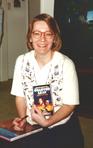
Carol Davis's Blog, page 9
February 1, 2014
And the road continues…

Back when I started this merry dance, all I needed was a pen and a sheet of tablet paper. For years, that was enough — and it was also enough that I was the only one who read my stories.
Fast-forward through time: the manual typewriter my dad bought at a yard sale. Then, a little electric typewriter. Word processors ranging from useful to brain-killing. And, finally, a computer. And the World Wide Web.
“Simple” is no longer good enough. These days, writing brings with it the need for a professional-grade cover. A website, a Twitter feed, a Facebook page. A mailing list (which, at present, has no members). I’ve gone from a readership of one, to a readership several hundred strong, from something like 20 countries around the world — yet by many people’s standards, I’m not a success. Those people tell me I have a long way to go, and that I need to work my butt off for every inch I gain.
But the storytelling is still the same. It’s me, in a quiet room, listening to my imagination.


October 5, 2013
In the spotlight: Will Swardstrom
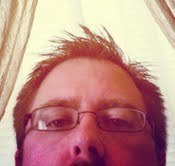
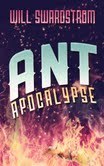
Back with another author spotlight, featuring the authors of the Silo Saga fanfic - as well as a wide spectrum of original work! This time: Will Swardstrom, whose Ant Apocalypse is climbing the Kindle charts. You can find his author page right here.
1. Here at LiveJournal I’ve met people who’ve gotten into writing fairly recently, while others have been at it since they were first able to pick up a pencil. What’s your background?
Well, I was born at a very early age…
Okay, seriously…I’ve loved writing for a long time and have always had dreams of being an author. After college I worked over six years at the local newspaper. I definitely was able to improve my writing chops during the time, but writing thousands of words each day about school boards, tax laws, high school football, and many other topics really takes it out of you. Coming home in the evening and writing more was really daunting. It wasn’t until after I went back to school to become a teacher that I was even in the position to have time to devote to writing. Once I’d gotten my bearings as a teacher, I was able to spend time each day last year writing a book, my debut novel, Dead Sleep.
2. Now that we’ve met you… how about introducing us to your favorite character, out of all the fictional people you’ve brought to life? Did he or she pop into your head, carrying the story along with them, or did you have the story first and create the character to make the story happen?
My favorite character? Wow…to some it may seem a bit of a cop-out because it’s my fan-fiction story, but Mary, the protagonist (antagonist?) from The Veil is probably my favorite. The story may be set in Hugh Howey’s world, but Mary and all her faults are entirely my own. I knew I wanted to write a WOOL story after I’d seen WJ Davies have Hugh’s blessing on The Runner. But, the story stewed in my mind for a while until my novel was done. That really gave Mary a chance to develop before I put her on paper.
3. Do you have an in-house beta reader? A spouse, parent, best friend? Is it tough for you to find people to read and help shape your story?
My first beta readers are some of my fellow teachers, who just so happen to be English teachers. There are three fellow teachers that I really relied on for my first book. In fact, I had tried to go with some other friends of mine that I knew loved books, but when it came down to actually getting feedback from them, it was like pulling teeth, but I work with some great people at my school and they were fantastic. Then, since I’ve gotten into the LOOW (League of Original Woolwriters), I’ve been able to use some of them for beta readers as well. It hasn’t been tough so far, but I may be the exception to the rule.
4. Stephen King has a lot of writer protagonists, while John Grisham writes about lawyers. Are many of your characters a reflection of you, or of people you know? Do you stick “close to home” with your stories, or venture as far out into the universe as you can get?
So far, my main protagonists have been Jackson Ellis (Dead Sleep) who is a newspaper reporter, Rick Waters (Ant Apocalypse) who is a teacher, and Mary Welcher, a resident of the silo. So, yeah…I have followed King’s lead on that. I think once I get more comfortable in my writing, I probably will venture further out.
5. Do you have a favorite theme, or favorite kind of dilemma to throw your characters into, or would you rather blaze new ground with each new story?
I would really like to explore new ground and new ideas with each of my stories. Some major questions I’ve explored are: What does it really mean to be human? (Dead Sleep), How far would you go to protect your family? (Ant Apocalypse), and Are there mistakes that are unforgivable? (The Veil). Certainly there are more themes and questions I ask and readers may even be more aware of them than I am.
6. Many of the Silo Saga entries, and much of the original fiction inspired by Hugh Howey’s Wool novels, are multi-part stories, prompting readers to keep buying each new entry. For the people reading this who are most familiar (and comfortable) with reading a complete work – how would you encourage them to buy a piece at a time, with the promise that more will follow?
Well, my work, The Veil, is a stand-alone piece. But, as I was finishing it, I had some fantastic (I hope) ideas for a sequel. Does the story stand on its own? It sure does and that’s what I intended. But…is there a place I can go in a sequel? Oh yeah.
I think, ultimately, authors need to make sure the story works by itself. Readers can deal with cliffhangers, but tell a story in the process. For me, as I’m writing my two sequels to The Veil, I plan on having a cliffhanger of sorts at the end of Part 2, but the main story I’m telling in that book will be finished at the end, leaving another complete story to be told in Part 3.
7. Be honest: did you have any clue what fanfiction was before Hugh Howey started talking about it? If you did, had you read any fanfic, or written any yourself?
OK…I knew very little about fanfiction. I had a high school student a couple of years ago that liked to write Harry Potter and Naruto fanfiction and she took a lot of flak from her classmates for it. Then, when I found out 50 Shades of Gray was originally Twilight fanfic, I really had a bad viewpoint of it. It took reading WJ Davies’ The Runner and then Greatfall by Jason Gurley before I could really embrace it.
8. A lot of the people who’ll read this are fanfiction writers themselves, but they’ve only been able to publish their work not-for-profit, at Live Journal, AO3, or Fanfiction.net (all of which can be an excellent training ground, and a great way to gather feedback on your stories). Since you publish at Amazon, what’s the advantage for you as a writer, and how would you encourage other good writers to consider taking the leap to Kindle publication? (Aside from the money, since none of us has been raking in any serious cash just yet.)
I really am not familiar with a lot of fanfiction sites, but I would say that being able to say, “I’m a published author through Amazon,” goes a long way when I’m talking to family and friends. I have made so many great friends in the process as well. Just like Hugh Howey says, writers don’t need to be antagonistic towards each other, we can cooperate. Luckily, I stumbled into a great group of writers that I can bounce ideas off and gain support along the way. It isn’t just publishing on Kindle, but it is finding other authors that you can trust along the way. If that comes through a fanfiction site, great.
9. Here’s a typical interview question: what’s your usual “I’m putting on my Writer hat now” scenario? Early morning or late evening? A long stretch of uninterrupted time, or a few minutes grabbed here and there? A quiet room? Music playing?
Whenever I have time, but it is usually about 9 or 10 p.m. when my daughter has gone to bed and I have a few moments to myself. There are so many distractions that I have a hard time focusing on writing until after my family is in bed.
Actually, my favorite place to write so far is the dining room table at my in-laws’ home. I don’t know why – it just is.
10. Go ahead: ramble! About writing, meeting other writers, the publication experience.
Wow. This has been an amazing journey. I published my first short story on Amazon in late May and now have four works in total for sale. I have a lot of things I want to do and finding time to write and read is the biggest thing.
The most important thing I learned was to just keep writing. It wasn’t something anybody told me – you really have to learn for yourself (so why are you listening to me?) but when I was writing Dead Sleep, I took three weeks off to help my wife with something at school. Starting back up was hard, but I knew if I didn’t I’d regret it forever.
Get out there and write!
If you'd like to follow me on my journey, I'm on Twitter -- @wswardstrom and my blog is willswardstrom.wordpress.com and my Facebook page is www.facebook.com/wswardstrom.
If it feels right... I do it. (And vice versa.)
When I was in high school, we received a little freebie magazine every so often. I can't remember the title of it, or what most of the content was, but I do remember there being an article called "How to Write for Television." Should you desire to do that, it said, after you'd written your very best effort at a teleplay, you should scan the credits of your favorite TV show and look for someone whose job title had something to do with "script" or "story" - then send them your script.
I chuckle now at the image of all those unsuspecting script supervisors and story editors receiving big manila envelopes from students around the country. The magazine article included a single page of a sample script, reformatted to be pretty on the page. Not a good example, but it worked for me, and giving this a try felt right. I wrote a script for The Partridge Family (my favorite show), packed it up, and mailed it off to a stranger named Dale McRaven.
Surely, I thought -- since I've been known to elevate cluelessness to a fine art -- I'd hear back from this person right away.
I waited. And I waited. And I waited. Eventually, I gave up.
Then, several months later, I got a phone call. From Hollywood. From Dale McRaven.
I've certainly tried to do that. What I've also done is try things that felt right, when they felt right. Some of those moves had a lot to do with my enduring cluelessness, but others have been well-considered, well-thought-out. I listen to a lot of the "You need to..." advice and weigh it against what feels right. What seems to point in the direction I want to go, at the time I want to go there. I've had a couple of doors open for me just wide enough for me to step through... but I didn't. I didn't want to go on writing tie-in novels. Didn't want to do the colossal amount of networking and butt-kissing and surrendering to the whims of other people that would have been necessary for me to work in television. Instead, I wrote fanfic. WROTE MY FACE OFF. Published a truckload of stories, fine-tuned my craft, and got acquainted with a lot of very nice people.
Now it's time to explore something new, because it feels right. I can write on my own schedule, following any path that looks interesting. I'm not dependent on other people's whims. It's not up to anyone else to say "Yes, you can publish this," or "Go away, kid." I'm my own boss.
I'm reading blogs and articles that say, "To attract the attention of mainstream publishers, you need to..." That's great advice for someone else. But for me? Where I am right now, sitting in my favorite chair with my laptop in my lap, writing what tickles me and publishing it when I can say, "Okay, we're good to go"... that's exactly where I want to be.
Now, we'll see what happens next.
October 1, 2013
The story... or the personality?
Have a blog. Open a Twitter account and tweet your butt off. Have a Facebook author page. Post videos of yourself expounding on Matters of Importance on YouTube. Have a mailing list. Chat with people. Be all over the place.
The advice-givers seem to agree, "Your books will not sell if you don't do these things."
Okay, then. I've been jabbering with people on LiveJournal for almost 7 years now. I have a Facebook page, though it's available only to a limited group of people. I have a Twitter account that's available to everybody. But... videos on YouTube?
Oh, no. No, no, no. So many times no.
I'm a fan. I'll admit that readily. I've done a lot of silly, overenthusiastic things in the name of fandom over the years, and I'll probably go on doing them. But my fangirl side is generally focused on television. When it comes to writers, I'm a reader. Period. Let me list my ten favorite authors for you (in no particular order): Stephen King, Wally Lamb, Douglas Preston/Lincoln Child, Richard Russo, Maeve Binchy, Jack Finney, Pat Conroy, Anna Quindlen, Betty Smith, and John Grisham. And I can't tell you more than two or three random facts about any of them. I don't follow them on Twitter or Facebook, I don't search out interviews with them, and it doesn't much matter to me if I ever meet any of them. It's the stories I'm interested in, not the personalities. If Amazon sends me an e-mail saying there's a new book available, I'm all over it. Beyond that? Go about your lives, nice people who are good with words. (Those of you who are still alive; several of my favorites have passed on.)
Sure, things are a bit different for indie authors, particularly newbies. We have no established reader base, or if we do, it's small. We need to find ways to get the word out, because Amazon's not sending e-mails on our behalf. Still... I'm pretty much thinking, if anybody's buying my work, it's because they want to read the story, not because they want to become my New Best Friend. (Or, God forbid, because they want to find a way to show up on my front lawn.)
There's another wrinkle: there's just not enough time in the day to do all of this fan club building. Blogging, tweeting, FB-ing, and reading other people's blogs, tweets and Facebook posts. I have a full-time job, and the last time I checked, the elves weren't doing my laundry or my grocery shopping. With the bit of "free" time available to me, I'd rather write.
So how do we -- how do I -- juggle this situation? How do I build that much-lauded "platform" while still managing to write the stories? And really... do I want to build it, in the World of Social Media way?
See? Now I've used up half an hour I could have spent with the stories.
In the Spotlight: Patrice Fitzgerald
1. Here at LiveJournal I’ve met people who’ve gotten into writing fairly recently, while others have been at it since they were first able to pick up a pencil. What’s your background?
Like many writers, I started making up stories as soon as I heard them, and I was a great reader from an early age. But I didn't start writing novels until I was in my middle thirties. I was trying to be realistic! I went to college and then to law school, and practiced intellectual property law for about a decade until I got serious about trying a novel.
I'd have to choose Catherine, the main character from RUNNING. She's the Vice President and Democratic nominee for POTUS. I definitely had the situation in my mind first. I thought of all the male politicians who have gotten into difficulty because of extracurricular… activities, and I wondered… what would happen if we had a woman candidate who had a dalliance in her past?
3. Do you have an in-house beta reader? A spouse, parent, best friend? Is it tough for you to find people to read and help shape your story?
Well, you have to train them! I have a great first reader in my husband, and my daughter is a very savvy analyst of stories. I also have another multiply-published friend along with other indie authors that are kind enough to give me their opinions. I find I have to push a bit to get real feedback… which either means they are generous, or everything I write is brilliant! Hmm…
4. Stephen King has a lot of writer protagonists, while John Grisham writes about lawyers. Are many of your characters a reflection of you, or of people you know? Do you stick “close to home” with your stories, or venture as far out into the universe as you can get?
My first book was all about lawyers… women lawyers, at that! But I've never run for President (yet) and I've never lived in a Silo. I enjoy writing a lot of diverse characters, though I'm sure they all have a bit of me in them.
5. Do you have a favorite theme, or favorite kind of dilemma to throw your characters into, or would you rather blaze new ground with each new story?
I think I like to surprise the characters (and surprise the reader) or even surprise myself! In the Silo stories, I seem to have quite a lot of blood. And explosions. Then again, they can't go horseback riding…
6. Many of the Silo Saga entries, and much of the original fiction inspired by Hugh Howey’s Wool novels, are multi-part stories, prompting readers to keep buying each new entry. For the people reading this who are most familiar (and comfortable) with reading a complete work – how would you encourage them to buy a piece at a time, with the promise that more will follow?
I would simply tell them that it's a great deal… not only do they get to sample 10% for free via Amazon, they can buy a slice of the entire "big" book for, typically, 99¢. And then decide if it's worth a larger investment of time and money. What's to lose? Of course, it can try a reader's patience… but they can always wait until a series is complete to start reading. That way, you can parse it out over time or indulge in a big bookfest, like when you binge on a TV series all at once. Love that!
7. Be honest: did you have any clue what fanfiction was before Hugh Howey started talking about it? If you did, had you read any fanfic, or written any yourself?
My daughter, now an adult, was into fanfic (Harry Potter, specifically) for years, and so I knew the phenomenon existed. I didn't read any nor did I understand exactly what it was. Which is why I didn't invent a new character, but took a very minor one and followed her trajectory into my own notion of her future in the Silo.
8. A lot of the people who’ll read this are fanfiction writers themselves, but they’ve only been able to publish their work not-for-profit, at Live Journal, AO3, or Fanfiction.net (all of which can be an excellent training ground, and a great way to gather feedback on your stories). Since you publish at Amazon, what’s the advantage for you as a writer, and how would you encourage other good writers to consider taking the leap to Kindle publication? (Aside from the money, since none of us has been raking in any serious cash just yet.)
I would say do it, without reservation. There is very little to lose. If you've been writing for a while, and particularly if you're getting feedback that's useful, you're probably a pretty good writer. Or if you're not, the market will let you know, and then you can go back and write more and get better. Writers get better as they stretch that muscle. Even very good writers continue to improve—at least, until they get tired of their characters or genre. That's more likely to happen in traditional publishing, where a writer is hemmed in, sometimes, by the demand to produce the same kind of stories year after year.
9. Here’s a typical interview question: what’s your usual “I’m putting on my Writer hat now” scenario? Early morning or late evening? A long stretch of uninterrupted time, or a few minutes grabbed here and there? A quiet room? Music playing?
I put on my Writer hat and proceed to procrastinate. One more check of my email, a bout on Facebook, the need to see how many books I've sold in the last hour… and then I finally settle down and write. Until I hit a tricky part, and then I do one more visit to my email inbox, Facebook, ad nauseum…. I am not a good model for this!
10. Go ahead: ramble! About writing, meeting other writers, the publication experience.
This has been a BLAST. The whole self-publishing phenomenon has allowed me to live a dream I've had since I was a kid. And it's made up for all the rejection slips I got from traditional publishers while learning to write (and, admittedly, getting some major attention from a couple of agents, along with a buyer for a TV network) but not quite selling a book. I came very close.
What's fabulous is the freedom of living through the exciting beginning times for self-publishers. Sure, you have to be in charge of everything from covers to tweets, but you also get to make your own decisions and use your own instincts to further your career. I love that aspect.
And the community is generous, and open, and encouraging. We really do feel like people on the frontier of something new. And like pioneers, we help each other get a leg-up. At least, that's how it feels to me.
As many folks have said before, this is a fantastic time to be a writer. It's a brave new indie world.
September 20, 2013
In the Spotlight: Fredric Shernoff
1. Here at LiveJournal I’ve met people who’ve gotten into writing fairly recently, while others have been at it since they were first able to pick up a pencil. What’s your background?
I wrote my first story (a sci-fi short) in second grade. It became a big deal and was presented at a school board meeting as an example of what children should be encouraged to do. Unfortunately, many teachers didn't take the hint and my creative writing was discouraged more and more each year after that.
I wrote Batman fan fiction in a notebook while I was away at overnight camp and a short story for an assignment in 11th grade English but that was it. This year, I had some free time and decided to try to write something to satisfy myself and all the family and friends who had been on my case about it for years. That became Atlantic Island. During the writing process I researched self-publishing on Amazon. That's how I learned about Hugh Howey and Wool and the fan fiction that was starting to pop up around it. I took a brief break from Atlantic Island and wrote a Silo story called Angels of the Earth. At that point I decided I'd found my calling and I was in this for good.
I have many favorites for different reasons, but I will say that Sam Lucas, the mayor in Atlantic Island, was my favorite to write. He's a man who was born in to a challenging life but overcame it in a big way. Through those early struggles and the impossible circumstances of the book, Mayor Lucas remains steady, focused and a good man. Of course, things don't often go well for genuinely good people in stories.
3. Do you have an in-house beta reader? A spouse, parent, best friend? Is it tough for you to find people to read and help shape your story?
I relied mostly on family and a few fans I picked up through my fan fiction. It's become easier to get feedback as I've become more established.
4. Stephen King has a lot of writer protagonists, while John Grisham writes about lawyers. Are many of your characters a reflection of you, or of people you know? Do you stick “close to home” with your stories, or venture as far out into the universe as you can get?
The characters in my stories are all different types of people from all walks of life, but my protagonists are often extensions of myself. I do believe that it's challenging for a person to get into the headspace of someone very different than himself (or herself). Theo (Atlantic Island) is the idealized version of me in high school. He's lost and confused like I was at that time, but events conspired to drag out of him the person he always had the potential to be. On the flipside, Uriel (Angels of the Earth) is the hopeless romantic I was at a point in my life, but seen through the critical lens of someone who looks back on those years and says, "what was I thinking?" I had one "true love" obsession during my teenage years and that provided framework for the story, but I also pined after and dated other girls throughout that time. I also eventually moved on. Uriel has his one girl and that's never going to change for him.
5. Do you have a favorite theme, or favorite kind of dilemma to throw your characters into, or would you rather blaze new ground with each new story?
I'd much rather explore new situations. I keep my focus on the characters and I love to figure out how they will get themselves out of a new predicament. My current project is a time travel novel and that provides so much room for unexpected dilemmas. My concept of the time stream is just littered with pitfalls and traps and my protagonist keeps meddling with the past even though he's constantly trying to avoid doing just that.
6. Many of the Silo Saga entries, and much of the original fiction inspired by Hugh Howey’s Wool novels, are multi-part stories, prompting readers to keep buying each new entry. For the people reading this who are most familiar (and comfortable) with reading a complete work – how would you encourage them to buy a piece at a time, with the promise that more will follow?
I'm not the most experienced with multi-part stories, but I think if the pricing makes sense and the first part really hooks the reader, it can be a great way to go.
7. Be honest: did you have any clue what fanfiction was before Hugh Howey started talking about it? If you did, had you read any fanfic, or written any yourself?
I knew what it was but I hadn't read too much. I like alternative takes on famous comic book characters (currently loving DC's Injustice story) and I enjoyed the Wicked series which was based on Wizard of Oz. I've learned since that there are so many different types of fan-fiction and that the Internet is full of some great work just waiting to be discovered.
8. A lot of the people who’ll read this are fanfiction writers themselves, but they’ve only been able to publish their work not-for-profit, at Live Journal, AO3, or Fanfiction.net (all of which can be an excellent training ground, and a great way to gather feedback on your stories). Since you publish at Amazon, what’s the advantage for you as a writer, and how would you encourage other good writers to consider taking the leap to Kindle publication? (Aside from the money, since none of us has been raking in any serious cash just yet.)
I hope that publishing through Amazon gives a little credibility, though the work still has to deliver on its promise or people will demand a refund. The best thing about it (though still a major challenge) is that Amazon's system rewards success. You have to scratch and claw your way into the spotlight but once that happens Amazon will often help move an author the next rung or two up the ladder.
9. Here’s a typical interview question: what’s your usual “I’m putting on my Writer hat now” scenario? Early morning or late evening? A long stretch of uninterrupted time, or a few minutes grabbed here and there? A quiet room? Music playing?
Depends on the book or the scene. I write sad scenes at night, in the dark, with mood music playing. Action or fun scenes I write any time of day and usually I prefer to be in Barnes and Noble or Starbucks, out among the people.
10. Go ahead: ramble! About writing, meeting other writers, the publication experience.
I've been a published author for about half a year. It's been one of the most exciting, confusing, educational times of my life. I've met great people who do so much to help one another succeed. Fan fiction writing as part of Kindle Worlds connected me with people at Amazon who have been supportive and encouraging. I've become a better writer throughout this process and I'm able to write faster than before while still (I hope) preserving quality. The biggest challenge, which probably exists no matter where you publish, is to take a very big, macro view of your success. I have had days where I sold over thirty books with no effort on my part to advertise, and thought that I should probably clear my schedule for the meetings with publishers, agents and interviewers that would surely follow. Then I had days where I sold absolutely nothing and thought, "I'm completely done in this industry." Those days are outliers and if there's one thing to remember in this business it's this: do not base anything on the performance of outliers!
September 18, 2013
Under the spotlight: author David Adams
First up: David Adams, whose Amazon author page is right over here.
1. Here at LiveJournal I’ve met people who’ve gotten into writing fairly recently, while others have been at it since they were first able to pick up a pencil. What’s your background?
Hello, I'm David Adams, author of the Lacuna series, the Insufficient Wool-fanfiction series and the Kobolds series, and I hope that the beginning my answer is identical to the one everyone reading this will eventually give.
I started with fanfiction.
I've been writing all kinds of things, though, going back further than that. I've been writing stories since I don't even remember when. As soon as I could. But that's where it all started, really. Combine that with an adolescence wildly misspent playing Dungeons & Dragons and every video game under the sun, and you have me.
2. Now that we’ve met you… how about introducing us to your favorite character, out of all the fictional people you’ve brought to life? Did he or she pop into your head, carrying the story along with them, or did you have the story first and create the character to make the story happen?
"So I see you have many beautiful children," she says, "tell me, which one is your favourite?"
Oh God.
The answer to that question is that, well, my favourite changes depending on my mood, what I'm writing at the moment, what I haven't touched in a while, and so many other factors and variables that giving a consistent answer is... difficult. But here goes.
At the moment, my favourite character is probably Ren, from Ren of Atikala. Next month it might be Turner from Insufficient, then back to Captain Liao for a spell.
How I make characters, though, is strange. Some come into the world with everything they need; backstories, personalities, favourite colours, etc. Others need time to grow. I find it depends a lot on the perspective used. Third person tends to be more about the world and the things in it, while first person is more about a character's personal journey. Of course, Insufficient breaks that rule pretty hard, but that's what rules are there for; to be broken. Assuming, of course, you know the rule exists in the first place and why you're breaking it.
3. Do you have an in-house beta reader? A spouse, parent, best friend? Is it tough for you to find people to read and help shape your story?
Yes I do, my long time mate Shane Michael Murray, author of the frankly awesome The Orc of Many Questions. He's living in Japan now, but that doesn't stop me throwing books at him non-stop. Somehow he keeps up.
Poor bastard.
4. Stephen King has a lot of writer protagonists, while John Grisham writes about lawyers. Are many of your characters a reflection of you, or of people you know? Do you stick “close to home” with your stories, or venture as far out into the universe as you can get?
Often characters are the anti-me. I'm male, but I have exactly one male protagonist. Either way, everyone I write tends to be warriors, fighters, military personnel. Strong characters. I'm a civilian. I cry during romance films. Jeez.
Magnet, aka Mike Williams, is probably the closest to me. I wanted to be a fighter pilot when I was a kid, and his goof-ball, self-deprecating, 'fiction is stranger than life' attitude is remarkably similar to my own. I'd like to think I'm prettier than he is, but how he looks on the outside is probably indicative of how I see myself, so eh.
5. Do you have a favorite theme, or favorite kind of dilemma to throw your characters into, or would you rather blaze new ground with each new story?
My modus operandi regarding writing is to try to create likable, relatable, interesting characters and then do horrible things to them.
When I die and go to Hell, I'll be punished by being a character in one of my own novels.
That said, I've noticed with a hint of uncomfortable realisation that I tend to focus on matters of sex and reproduction a fair amount. Magnet debates marrying his girlfriend, Liao gets pregnant, Ren shuns her people's ruthlessly pragmatic 'organised reproduction' and Turner is one of only a dozen or so females inside a Silo. It's rarely the focus of the story (Turner being an exception), but it's certainly present.
Not sure what that says about me (probably that I got started in fanfiction... hyuk, hyuk, hyuk) but there you go. Now you all know my dark secret.
6. Many of the Silo Saga entries, and much of the original fiction inspired by Hugh Howey’s Wool novels, are multi-part stories, prompting readers to keep buying each new entry. For the people reading this who are most familiar (and comfortable) with reading a complete work – how would you encourage them to buy a piece at a time, with the promise that more will follow?
I make an implicit promise at the end of the story that the series is going somewhere.
Liao gets pregnant at the end of Lacuna and James is missing in action. Insufficient ends with Turner and the other females hiding out with their supporters in the depths of their Silo. Ren of Atikala ends with Ren being betrayed and turned over to an evil dragon. These things (I hope!) tell the reader that, no, things are not done yet. We're just starting. The best is yet to come.
7. Be honest: did you have any clue what fanfiction was before Hugh Howey started talking about it? If you did, had you read any fanfic, or written any yourself?
As outlined above, yeah. For all my life. Star Trek is the birthplace of fanfiction -- and the smutty kind, too. I grew up around slashfic of all kinds, to the point I just kind of consider it normal.
8. A lot of the people who’ll read this are fanfiction writers themselves, but they’ve only been able to publish their work not-for-profit, at Live Journal, AO3, or Fanfiction.net (all of which can be an excellent training ground, and a great way to gather feedback on your stories). Since you publish at Amazon, what’s the advantage for you as a writer, and how would you encourage other good writers to consider taking the leap to Kindle publication? (Aside from the money, since none of us has been raking in any serious cash just yet.)
Our biggest advantage is our biggest disadvantage. The expectation of quality.
If someone sees a story for sale on Amazon, there's certain expectations that the story will be good. It'll be a decent length, relatively free of typos and errors, and will be entertaining. This is good: it reassures people that the couple of bucks they're going to spent will be worth it, and that they'll be entertained. If not, there's Amazon's no-questions-asked refunds policy and that dreaded, ego-crushing 1-star button.
The only problem with that, of course, is that your story has to be good. It has to be professionally edited and well formatted, it has to be compatible with a wide range of devices and readers, and it has to be priced competitively. It has to have a super professional cover. It should have a print edition available. Etc.
If someone doesn't like your Fanfiction.net story, they'll stop reading and that's it. If someone doesn't like your paid, Amazon story, well... they're more likely to leave bad reviews, or seek a refund, which is essentially a "bad review". There are lots of reasons for returns, but when you see them for yourself, that's just how they're seen.
But that desire for quality pushes you. It makes you a better writer. Getting a 1-star hurts, it does, but I read all my negative reviews. I read them far more often and with more care than I do my 5-stars, which I read once, smile, and move on. I learn what people didn't like. What made them dislike the story, and I fix it; either in a new edition of the same story (rarely), or in a sequel (more commonly). I learn. I adapt. I grow.
When you're charging for a service you have to make it good. It's the best motivator for quality I have; making sure that what I write is good enough to sell.
9. Here’s a typical interview question: what’s your usual “I’m putting on my Writer hat now” scenario? Early morning or late evening? A long stretch of uninterrupted time, or a few minutes grabbed here and there? A quiet room? Music playing?
Long stretches, either in bed with my laptop or in my office on my Mac. I need to be away from distractions and I need to be warm, fed and caffeinated. Sometimes it works, sometimes it doesn't. That's just the nature of it.
Don't rush if the words aren't coming out. Let them come at their own pace. A late book will eventually be good, but a rushed book will be bad forever.
10. Go ahead: ramble! About writing, meeting other writers, the publication experience.
Oh God, what a journey.
I've been living off my book royalties for a year now. It's not quite sustainable; I saved up a bit of cash to do so, and it's now clear that it's time I went back and got myself a real job. But what a year.
I met Hugh Howey in person when he was on the Gold Coast earlier this year, and it was a blast. I loved it. If he comes back, I'm definitely getting him pizza like we planned. :D
The e-publishing scene is just beginning. Just beginning. We're on the precipice of something really great here, and now's the time to get publishing.
Technically it was a couple of years ago, but never mind that. Now's as good a time as any.
Go. Write. Publish. Enjoy. Life's too short and too awesome to be spent kicking yourself because you never got to tell that story that you always wanted to tell.
You know the one.
September 14, 2013
September 13, 2013
It's what I am -- it's what I do.
I thanked her, then sat down to read the article. The workshop was local, which was a plus. Coming up soon – another plus.
To participate, you must have been published in four literary journals.
Oops.
Sorry, world. I’ve never been published in a literary journal – haven’t even been considered by one. I don’t read them, or even ponder them as I pass them by. Me? I’m a literary lowbrow, and a fanfiction writer. My Kindle is full of showbiz biographies, Fringe and Psych tie-in novels, the memoirs of escapees from polygamist colonies, histories of the Hatfield-McCoy feud and the doctor who popularized lobotomies and the Johnstown Flood, John Grisham and Dean Koontz novels, the musings of Bill Maher and William Shatner, Wool fanfiction, and… oh yeah. Stephen King.
Don’t I want to read to learn something? Be enlightened? Sure I do. (Ask me for some random facts about the Johnstown Flood.)
Don’t I want to be enriched?
I’ve been writing fanfiction since I was ten years old, because my mind has never been able to accept That’s all there is. I wanted more stories about my favorite characters, so I wrote them, starting off with a ballpoint pen and a spiral notebook. I wrote until my hand ached. After my dad invested $20 in a manual typewriter (the bounty of someone’s yard sale) and insisted that I learn to type “so you’ll have something to fall back on,” I hammered out stories until my family begged me to stop. Through word processors with three lines of memory and fancier word processors that froze dead in the middle of revisions, through four generations of computers, I wrote and I wrote and I wrote.
And I write.
At a rough guess: ten novels, a couple of dozen novellas, sixty teleplays, two screenplays, and eight hundred short stories. Some of it a struggle, most of it a joy.
Most of it fanfiction.
Most of it, as Stephen King likes to say, “the literary equivalent of a Big Mac and fries.”
Which isn’t to say I rival The Master of the Macabre in talent, or persistence, or even sheer word count. I’ll dare to say, though, that I might rival him in the sheer joy I take in what I do. My stories will never make me financially rich, though they’ve earned me some remarkable perks over the years. The unlikelihood of ever earning a fortune from what I do doesn’t make it any less worth doing – or make me any less proud of having produced that enormous pile of work.
Literary journals? You can keep those, and that “better than” attitude.
I’ll be over here with my sack of fries, pounding out my fanfiction.