
Ray Stone's Blog: A blog for everyone, page 23
November 18, 2014
Day 18 and the November Mystery Book Tour is hotting up.
Mystery Book Tour Day 18 #MysteryNovember Jamie’s Gamble by Gregg Bell
Posted on November 18, 2014 by Rosie Amber

Today our guest on the mystery book tour is Gregg Bell with his book Jamie’s Gamble

Where is your home town?
Itasca, Village of Iris, Illinois (6000 people, 6 miles west of Chicago)
How long have you been writing?
Thirty years.
What is your favourite sub-genre of mystery?
Psychological
Where is your book set?
Jamie’s Gamble starts in an affluent suburb of Chicago, but the majority of the story takes place in a turbulent, dangerous, violent Texas border town called Langston.
Why does Jamie feel the need to escape?
Jamie needs to escape because she’s done all she could to satisfy her incredibly demanding, perfectionist father and it’s still not good enough. She needs to strike out for an independent life or she will suffocate under her father’s control.
What are the good and the bad things that Jamie discovers in her new home?
Jamie discovers that there is a very different world out there than the world of privilege she’s just left. People are no longer of the country club, gentile set she’s been accustomed to. Some are jealous of her. Some lust for her. Some want to hurt her. But the flip-side is her new home is real and it’s hers – and she finds love there.
Introduce us to Ricky Benson.
Ricky Benson is a twenty-something who has stood at the pinnacle as a flame-throwing baseball pitcher headed for major league stardom, and yet a tragic boating accident has crushed his hopes for a career in baseball, and the dodgy circumstances of the accident (some witnesses say he was drunk and fell into the boat’s propeller) had the townspeople of Langston gossiping about him. Ricky subsequently has lived the party life: getting drunk, chasing the wrong kind of women, basically pursuing a slow suicide, his mind befuddled to help ease the pain and shame that his life has become. This all, until he meets Jamie. When his hopes for a better life, albeit better in a way different than baseball stardom, are rekindled.
What is the mystery element in the book?
The mystery element is that prostitutes are being systematically murdered in and around Langston, Texas, and law enforcement is doing nothing to stop it ( and many townspeople believe that the local sheriff is tacitly encouraging the murders, seeing prostitutes’ deaths as “good riddance”) The mystery element comes closer to Jamie when a fellow waitress is mistaken for a prostitute and killed – and Jamie thinks she might be next. Also, later, Ricky is unjustly accused of murder.
What are you working on at the moment?
I am working on a novel about a nanny who abducts a billionaire’s’ baby son
Where can readers find out more about you and your books?

Website: http://www.gregbell.net
Blog: http://greggbell.blogspot.com
Twitter: @Greggbell1
Amazon (US): http://www.amazon.com/Jamies-Gamble-Suspense-Novel-Gregg-ebook/dp/B00DH4KP9C
Amazon (UK): http://www.amazon.co.uk/Jamies-Gamble-Suspense-Novel-Gregg-ebook/dp/B00DH4KP9C
iBookstore: https://itunes.apple.com/ca/book/jamies-gamble/id664003348?mt=11
Barnes & Noble: http://www.barnesandnoble.com/w/jamies-gamble-gregg-bell/1115749735?ean=2940148990581
Smashwords: https://www.smashwords.com/books/view/333105


November 17, 2014
Dan Oliver – The Infection

THE INFECTION
It has been five long years since the Amazon Event and now over nineteen months since the last known victim of Infection died.
I live in Tampa, Florida. The city still reeks of death and decay. Like most places, almost half of our inhabitants are dead from Infection. Those of us alive don’t know if it is good fortune, or following the ‘extreme isolation and zero exposure’ process that we were prescribed, to which we owe our retention of vitality.
I’ve seen a lot of things in my life, but the sight of a meteor slamming into Brazil is indelibly etched into my mind. The sheer size of the rock was unfathomable, it should have wiped out life altogether. But something in the atmosphere caused it to soften on entry and the impact, though devastating, did far less tectonic damage than expected. South America will never be the same again, most of the population there is dead and the landscape is changed forever. The consequences did not stop there however.
The dust from the impact – that is the deadly danger. Something in the dust causes Infection and the air currents carried it across the globe. Once ingested, the body transforms rapidly. Any mammal can be infected. It starts with swelling and angry red sores across the abdomen. Within forty-eight hours the victim starts to have feverish bouts and unbearable itching across the torso. Amazingly that’s only the beginning. We call it the Hundred Hour Infection, or HHI, but everyone knows what you mean if you just say Infection.
Whatever it is, it is clearly alive. For years the entertainment industry told us far more exotic stories of what our first encounter with extra-terrestrial life would be like. Our first space invaders are just microscopic bugs – who would have thought?
Now the daily broadcasts remind us that Infection seems to be over. Scientists have isolated the organism that causes Infection, or so they say. Antidotes are being developed. Finally a semblance of normality is returning, if it can be called that. But something tells me we are not free of our torment yet because this morning I woke up and saw that which I have expected to see these past five years.
The rules are that I must hand myself in. Now that it comes to it, I’m not so sure I can or will. What will they do to me? Is there actually a cure yet?
I’m scared. Why? My stomach is covered in the red swelling. The first case in nineteen months. It is so surreal to think I have alien bugs infecting my body.
I have less than four days to live and no one to turn to. My friends and family are dead. I live in the government provided accommodation like everyone else and I barely remember how to relate to humans.
With nothing better to do, and wanting to hold onto anything familiar, I decide to go to my daily Allocated Labour while I ponder this predicament.
http://www.thestorymint.com/serials/infection#serial-book-chapter
C.M. Albrecht – Day 17 Mystery Book Tour
Mystery Tour Day 17 #MysteryNovember The Sand Bluff Murders by C.M Albrecht
Posted on November 17, 2014 by Rosie Amber
Today our guest on the Mystery Book Tour is Carl Albrecht and his book The Sand Bluff Murders.
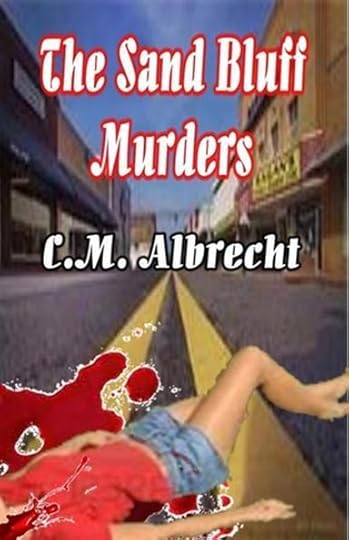
Where is your home town?
I write under the name, C. M. Albrecht, but my friends call me Carl. Lord knows what my enemies might call me, but fortunately I don’t believe I really have any.
Although I sometimes talk tough when I write, I’m really a pretty meek mild-mannered fellow. I’m not a thrill-seeker. I don’t go sky-diving, base-jumping and I don’t take any of those wonder drugs they peddle on TV (the ones that are clinically tested and so miraculous but carry along with them life-threatening side-effects).
Save for a stint in the army, I spent most of my formative years in Portland, Oregon. I loved it there, partially because, from my reading, I felt it must be a lot like London. Old bridges over a wide river. Dark narrow streets, cloudy skies and drizzling rain over cobblestone streets lit at night by the pale light that glowed from fog-clouded streetlamps. That was my Doyle and Dickens stage. Most, if not all, the cobblestone streets are long-gone now and sometimes, visiting, I scarcely recognize the Portland of my youth.
After a lot of travel and moves and the discovery of my soul mate, Irma, we ended up in Sacramento, California. We’ve been here for about thirty years now, not because we’re so enamored with the capital, but rather because we’ve grown used to it and it’s probably as good a place as any.
How long have you been writing?
I’ve always loved mysteries, starting with Emil and the Detectives and then Sherlock Holmes and that has been a fascination that has never gone away. I loved mysteries so much that, as a still callow youth, I went to work for a private detective agency. It was a good job in many ways, but sadly, nothing like in the books. No guns, no violence, no beautiful blondes in distress; just stuff like going into stores undercover to catch thieves; mundane stuff like that, and personally, although I have no sympathy for thieves, etc., I still don’t feel capable of befriending one just to betray his trust later on.
What is your favourite sub-genre of mystery?
I love all sorts of mysteries. I love Jane Marple and Hercule Poirot as well as Tommy and Tuppence. I love Ngaio Marsh tales, Lord Peter and Ellery Queen and Philo Vance, Nero Wolfe, Perry Mason, Donald Lam, and I love darker mysteries with characters like Marlowe, Archer, and Sam Spade. These are the detectives I grew up with. I’m less familiar with more modern authors mostly because I spend more time writing now than reading.
Where si your book set?
I set The Sand Bluff Murders in a small town because I’ve always located my stories in cities, and when re-reading an old Marple tale, Something she said struck a chord in me: “Human nature is much the same in a village as anywhere else, only one has opportunities and leisure for seeing it at closer quarters.”
I thought how neat it would be to write a story set in a small village. Unfortunately, out here in the Wild West where I live, we don’t have villages quite like St. Mary Meade, so I settled for the small town of Sand Bluff in Northern California. Sand Bluff is a wide spot in the road, long ago bypassed by the freeway, a little town where, according to one elderly local, “Most excitement we ever seen here was that time back in sixty-two whenever that Elvis tour had to stop in town to fix a flat.”
The visitors who do take the trouble to pass through Sand Bluff come mostly to stop at the Blu Lite Lounge to raise an elbow and pass an hour in air-conditioned comfort.
Tell us about the Police officers in Sand Bluff.
Sand Bluff has a very tiny police force with very light duties. An occasional speeder, the rare shoplifter (usually a hitchhiker wandering through town), or maybe they have to break up a minor brawl at the Blu Lite. There’s complacent Chief Raymond Castillo, a paunchy, somewhat garrulous man with a sweet wife and a couple of kids ready for college, there’s Harold Ackers, the new cop, somewhat naïve, even gullible. Carson Mohr on the other hand is the cop everybody naturally hates. He’s cocky, arrogant, puffed with his own hubris, and he loves to show that he’s in charge of the situation, no matter how petty, standing with legs apart, hands on his hips and that cop stare as he implies that his poor victim is a born liar, no matter what the occasion.
Introduce us to Jonas McCleary.
Jonas McCleary, the new guy, is a non-assuming young man who has always been interested in law-enforcement. A few years earlier he took an exam in a medium-size city and got on the force. However, wearing a uniform, busting up domestic disputes, arresting drunks and hauling in shoplifters didn’t turn out to be the nice job he expected. When Jonas learns the town of Sand Bluff is taking applications for a detective, he dives right in, not even stopping to wonder why a town with a three-man police force would want to hire a detective. Being good at tests, Jonas gets in and finds himself Sand Bluff’s only detective. He gets to pack iron and a badge, wear plain clothes and Chief Castillo even allows him to use his own ’72 Chevy pickup to cruise around in. What a deal! Now only one item remains on Jonas’ wish list; he’s nearly thirty years old and he’d really like to find Miss Right, get married and settle down.
On his second day in Sand Bluff, Jonas already has his eye on Roxie Hathaway. Roxie runs the town’s printing shop and weekly newspaper. Jonas likes her looks immediately and promises himself he’s going to get to know her better. But on his third day, trouble.
Before dawn, Officer Ackers comes upon a man lying in the alley behind the Blu Lite. Okay, the light isn’t good, and Ackers thinks the man is just a drunk. He drags the man to the cruiser and takes him to headquarters. Once there someone points out to Ackers that his uniform has blood stains down the front and the drunk is dead. Turns out someone gave him a double tap.
Being Sand Bluff’s one and only detective, Jonas is assigned the case. But before he can even get off to a good start, the body of Twyla Peters, Sand Bluff’s registered hussy, is found lying in a pool of blood.
Now Jonas really has his hands full. Who is the first victim? Is there somehow a connection between the two murders, or it is all a nasty coincidence?
Tell us about some of the other quirky characters in your book.
As Jonas begins his investigation he runs into Jessica aka Lester, a cross-dressing “little person” whose significant other is a huge weight-lifting black man named Terrence. Together they run the Bide-A-Bit Trailer Park and on the side, Jessica trains dogs.
Out at Oak Park, there’s ex-Beverly Hills cop and wannabe cowboy named Randolph Whitlock who, with his sister runs the horse ranch they inherited a few years back. He still thinks he’s the movie star he wanted to be but never was, and the list goes on.
Jonas and Roxie hit it off pretty well, despite the fact that she has a young son who wants to be like Yoda when he grows up. Jonas and Yoda even hit it off and soon Roxie is right in there helping Jonas as another corpse turns up and the mystery becomes more confusing than ever.
Is Jonas helped or hindered in his search by the town residents?
Before this duo can hope to bring this case to a conclusion, they both walk down some dark alleys and face grave danger — and they can’t expect much help from anyone else.
“The Sand Bluff Murders is a really good read, with plain and refreshing dialog and believable, sincere characters. C.M. Albrecht has presented the reader with a real-life detective who is impossible not to like and respect. I really enjoyed reading The Sand Bluff Murders as there were just enough twists and turns to make it exciting and keep me reading until I found out “who done it.” I highly recommend this book to all mystery/detective fans. The Sand Bluff Murders has all of the makings for a weekly TV show. This is the first in a series and happily there will be lots more of Jonas McCleary and his detective prowess to look forward to.” — Trudi LoPreto for Readers’ Favorite.
(Speaking of looking forward, Jonas already has a new mystery called The Morgenstern Murders. He may just have a future in the detecting business.)
Tell us what you are working on at the moment.
At the moment, I’m working on another Jonas McCleary mystery involving a famous painter and big TV personality. I think it’s going to be okay.
Where can readers find out more about you and your books?

My books are available through my publisher, Cambridge Books, http://writewordsinc.com, amazon, nook and all reputable (and perhaps some unreputable) sites, at least in the USA and the UK.
I have a blog at http://cmalbrecht.wordpress.com I don’t keep it up as well as I should, but I do try to add a little something of interest whenever I can.
I have my website as well at http://theinvestigators.webs.com where you can see my books and a few things.
November 16, 2014
Day 16 The Mystery Book Tour
Mystery Book Tour Day 16 #MysteryNovember Counteract by Tracy Lawson
Posted on November 16, 2014 by Rosie Amber
Today’s guest on the mystery book tour is Tracy Lawson and her book Counteract.
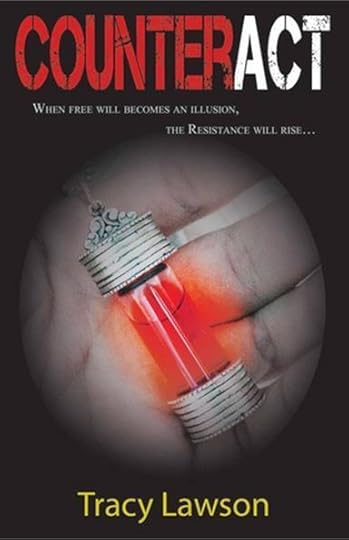
Where is your home town?
I grew up in Cincinnati, then we moved around a bit after college, but spent most of our daughter’s growing up years in Columbus, Ohio. Currently I live with my husband and daughter in Dallas, Texas.
How long have you been writing?
Almost since I learned to read. My first book was historical nonfiction, and took me 20 years to research and complete—I didn’t work on it steadily, and I probably could’ve completed the research in five years if I’d had the internet when I started! The finished book, Fips, Bots, Doggeries, and More, Explorations of Henry Rogers’ 1838 Journal of Travel from Southwestern Ohio to New York City, was published in 2012. Shortly after I secured a publishing contract for that book, I began to work on my current book, Counteract.
Describe Counteract‘s mystery genre?
Counteract is a dystopian thriller. The teen-age protagonists uncover a conspiracy surrounding a purported terrorist attack against the United States, and join forces to expose the truth about a corrupt government agency which threatens to usurp even the president’s powers.
Where is your book set?
It starts in 2034—about twenty years in the future—in the United States. Well, it’s still the United States, albeit a very different United States.
Tell us about The Office of Civilian Safety and Defense.
The OCSD was created in 2019, in response to rampant terrorism against the United States. Over time, the OCSD has absorbed all the other safety and security agencies, and instituted a comprehensive program of Civilian Restrictions, meant to protect the population from harm. The OCSD constantly reminds the people that the Civilian Restrictions are “a small price to pay for safety.”
Can you tell us about your two main characters?
Careen survived a terrorist’s bomb when she was a kid, and now with the threat of a chemical weapons attacks literally hanging over everyone’s head, she willingly takes the antidote offered by the government but is unprepared for the side effects. Her erratic behavior attracts the attention of a young law enforcement officer, who mistakenly pegs her as a dissident and follows her, hoping she’ll make contact with a known resistance group. On the day of the attack, he meets Careen, who just might be the girl of his dreams, and tries to save her by sharing his last dose with her, even though doing so could potentially hasten his own death.
Tommy, recuperating from injuries sustained in a recent auto accident, is unaware that there’s a link between the accident that killed his parents, and the current threat of an impending chemical weapons attack. The antidote plagues him with hallucinations of tragedy and loss, and sends him spiraling into despair. When he discovers that working out before he takes his dose helps him feel more like himself, he defies the OCSD rules.
What is the new threat to the country?
The OCSD announces that terrorists have released latent toxins into the atmosphere that can be activated at any time and used to poison the population.
How do the authorities believe they will counteract the threat? The OCSD assures the public that they’ve been aware of the mounting threat, and have developed a Counteractive System of Defense antidote to the poison, which will must be taken daily.
Tell us what you are working on at the moment.
Counteract is the first book in The Resistance Series. The second, Resist, is nearly completed, and I’ve begun work on Revolt, the third instalment in Tommy and Careen’s story.
Where can readers find out more about you?

Readers can find me on my website: http://tracylawsonbooks.com or Counteract‘s website: http://counteractbook.com.
They can also follow The Resistance Series on Twitter @tommyandcareen, or visit my publisher’s website: http://buddhapussink.com, or their blog at http://buddhapussink.blogspot.com/.
Find a copy of the book here;
http://www.amazon.com/dp/1941523013
Or Amazon.co.uk
http://www.barnesandnoble.com/w/counteract-tracy-lawson/1120081568?ean=9781941523018
Are we all numbered?
by Ata Yavuz Özdemir
In a quantitative world – Alice is in Examland (Türkiye)- we seem to have lost the concepts of mercy, love, weakness, tolerance, altruism etc.
According to Neil Postman, author of Technopoly: The Surrender of Culture to Technology “…the first instance of grading students’ papers occurred at Cambridge University in 1792 at the suggestion of a tutor named William Farish.” According to Postman, Farish’s idea that a quantitative value could be attributed to a person’s thinking played a significant part in Western’s societies’ “…constructing a mathematical concept of reality.” He later states, “To say that someone should be doing better work because he has an IQ of 134, or that someone is a 7.2 on a sensitivity scale, or that this man’s essay on the rise of capitalism is an A- and that man’s is a C+ would have sounded like gibberish to Galileo or
Shakespeare or Thomas Jefferson.”
– See more at: http://www.thestorymint.com/writers-pad/smilingodessa/titles/are-we-all-numbered-ata-yavuz-%C3%B6zdemir#sthash.btyfWFxf.dpuf
Day 15 – Mystery Book Tour
Please welcome Patrick Brigham to the Mystery November Tour with his book Abduction: An Angel Over Rimini
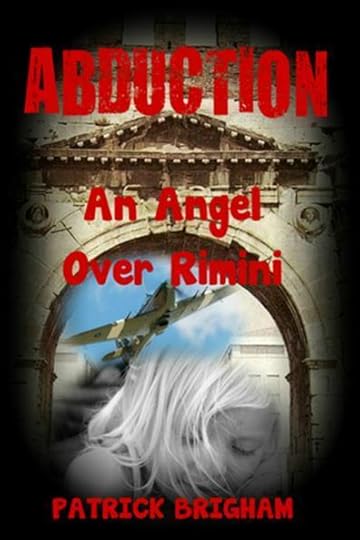
Where is your hometown?
I was borne on a small farm near Reading in Berkshire UK. My mother was a widow and she brought up her two unruly children single handed with the aid of a small market garden, loads of chicken, ducks and a nanny goat.
How long have you been writing?
I was given the unenviable task of editing my college magazine, which I discovered was quite compelling and from there onwards whenever anyone wanted me to write anything, I did so with relish. Although, it did not become a serious option until the late 80s, when unemployment reared its ugly head and I had more time on my hands.
What is your favorite sub-genre of mystery?
I like a little romance with my crime and in Abduction: An Angel over Rimini, DCI Mike Lambert, having experienced the indignities of an acrimonious divorce, he meets Countess Beatrix in Italy, who he believes might be a future companion. Whilst he is in Italy, he also finds out about his own father’s wartime exploits in Italy and a skeleton in the cupboard. What kind of sub-genre would you call that?
Where is Abduction: An Angel Over Rimini set?
In Italy on the Adriatic coast. Most of my stories involve travelling, and this is no exception and DCI Lambert – recently appointed to Europol the pan European police force – goes to Rimini to reopen a case involving the kidnapping of a little English girl called Penelope Scratchford.
Who has been abducted?
Penelope has disappeared from a smart Italian campsite, under the noses of her parents, who left to the whims of the Italian Civil Police – who point the finger of blame at her parents – are accused of murder.
Introduce us to Detective Chief Inspector Mike Lambert
DCI Mike Lambert is a thoughtful old school detective who previously was a senior British Army officer. On retirement from the army, he has worked his way up through the ranks of the London Metropolitan Police force and is a senior detective with Thames Valley Police in Reading. Having become disenchanted with his job in Reading – mainly due to to his divorce – he is seconded to Europol. They are established in the Hague of Holland.
Where else in Europe does the mystery trail lead our Chief Inspector?
The trail leads him into Greece, where he discovers organized people trafficking and illegal immigration across the River Evros from Turkey to Greece and also Bulgaria. With the help of certain members of the Orthodox Church in Greece and the Greek border police in Orestiada he finds new clues, which lead him to a crooked lawyer in Sofia.
Tell us about Europol and its differences from other agencies.
Europol is the unsung hero of the EU, serves all the national, European police forces, pays for and provides additional policemen to fight international crime and rarely takes any credit for it.
Tell us what you are working on at the moment.
I am working very hard at promoting the three books which I have written during the last eighteen months. My first book was about useless diplomats plus a murder, the second was about arms dealing, plus a murder and my third book is about child abduction and a murder. I thought it was about time that someone tried to murder DCI Mike Lambert himself – for a change – but I wonder why, and who it might be?
Where can readers find out more about you?

All my information is on my website www.patrickbrigham.co.uk in which you can also find information about my Twitter, Facebook and Blog accounts
Abduction: An Angel Over Rimini, find a copy here from Amazon.co.uk or Amazon.com
Share this:
November 14, 2014
Prologue – Amber, Amber on the Wall
 After finishing my present work, the last in the Enda Osin Mystery series, Glassfrogs & Chameleons, I am going to finish Amber, Amber…. I have finished writing it but editing will take a while before it is published so no apologies for mistakes. This book is the second book I wrote and a sequel to The Trojan Towers. These two books are written in third person while the Osin books are written in both third and present tense. Whilst writing the Enda series was a new direction style-wise for me I think it will be the last time I write a novel in present and past tense. The final decision will be influenced a little by the reader. I would love to hear from anyone reading this sample what they think, apart from the unfinished editing.
PROLOGUE
1952: tTiny white flakes of snow began to gently float down in the half-light of dawn. Some were almost invisible to the naked eye. They fell in amongst the tall dark evergreen trees of the Sachsen-Anhalt district, disappearing the moment they landed on branches or the forest floor. As the dawning continued the flakes became larger, dancing wildly but silently down in a frenzied flurry from the overcast sky. They continued to multiply until the air was so thick with them that they began covering everything, creating a thin white delicate mantle. By full light, or what there was of it, a light wind had begun to blow through the trees making the branches shiver, shaking the thin layer of white from the green canopy back into the air. Apart from the winds faint song, nothing else stirred in the forest, for winter had come and this was the first snow, turning Broken Mountain and the surrounding landscape from green, brown and yellow into an all-enveloping white that would cocoon everything until the spring.
***
In the quietness there came a distant roar that rumbled and whined with a high pitched note, invading the eerie silence of the forest. For over half an hour the big ten wheel Studebaker carried its load slowly, lumbering along the track until it reached the Wernigerode Road where it turned northeast towards Magdeburg, some sixty kilometers away. The truck’s big thick studded tires spat large lumps of mud in all directions across the tarmac as the driver wrestled noisily with the gearbox and pushed his foot hard down on the accelerator.
Anatoly Medetsky wiped his forehead with the back of one hand then realized he hadn’t just wiped the sweat from his face. There was blood as well, but not his. Swallowing nervously, he was relieved to be away from the place. He gripped the wheel to stop his hands shaking and looked sideways at the American tapping the bottom of a bloodstained pack of Camels. They exchanged glances but said nothing. By the time they had reached the outskirts of Magdeburg, Anatoly felt better. He was pleased Joe preferred to try and sleep, rather than talk about what he was going to do when he got back to Idaho. Joe would go on and on for hours at a time, talking about how he was going to build the new headquarters and repeating speeches made by their late leader, word for word, analyzing and putting his point of view whether it was wanted or not. It wasn’t that Anatoly disagreed with the man, quite the opposite. Their aims and ideals were the same and soon they would be part of a victorious army wielding the sword of justice at all those who had opposed them. It was just that he got bored listening to the same things time and again.
The truck’s engine roared as it climbed a hill, passing several attractively carved wooden fronted houses that stood back from the road. Anatoly peered through the screen at the white carpet in front of him and then at his watch. They had to be through Magdeburg by noon or they would be behind schedule. The train left Litchenberg, bound for Kostrzyn on the Polish boarder at eighteen hundred hours precisely. They had to have the shipment loaded and checked thirty minutes before then. Their contact was the shipping manager in the Eastern Territories Office, Otto Kruger. The wipers flapped back and forth as Anatoly changed gear.
“Where are we, Ivan?” Joe Wesley yawned and rubbed his unshaven jaw.
“We are now into Magdeburg and I am Anatoly, you understand, Yank?” replied Anatoly in his thick guttural accent.
“Okay, okay, I’d better get ready.”
Joe Wesley was a big man with short cropped dark hair, a weather beaten face and large calloused hands that were used to heavy manual work. His nose, which had been broken several times in barroom brawls, was crooked and squashed to one side. Together with a disfigured lip and small pig-like blue eyes, he was a fearsome sight when angry. Despite the man’s quick temper and overbearing personality, Anatoly got on well with him.
The circumstances surrounding their first meeting were fortuitous, to say the least. Anatoly had been drinking in a small bar, a favorite place for the Russian and American troops; even though there were agreements between the occupying forces that off duty drinking would take place in their respective zones of Berlin. In the Berliner, a black market in just about anything and everything operated nonstop. Americans had nylons, cigarettes, soap, and candy. The Russians had Vodka and women. There were lots of women in the Russian army and many of them happy to meet a nice American boy bearing gifts. The bar, in the Russian zone, did a roaring trade particularly at the weekends. And so did the Russian women, which meant there were lots of fights, some of them nasty. It was not as one might suppose between the men over the women but quite the reverse. The women fought over the men.
Anatoly sat in one corner of the crowded bar on one such Saturday night, his first two day pass in three weeks. He’d been steadily drinking all evening and making eyes at one particular girl. She was a busty brunette and plain with it, but most of the Russian women were. She was also a lot younger than himself and despite flirting with several Americans, had got nowhere and ended up sitting between two other women at the bar. Both these women had Americans buying them drinks. Anatoly made his move and was soon whispering sweet nothings in her ear. That’s when Joe Had crashed through the door, already drunk, wearing a pair of nylons around his neck like a scarf.
Joe staggered across the bar and grabbed Anatoly’s girl by the arm, pulling her off her stool and putting his arms around her. Anatoly kicked Joe and before anyone could get out of the way, the two men were rolling across the floor thumping and kicking each other. The place erupted into a mass brawl with the women joining in. Anatoly found himself outside the bar, dragged along by Joe as the military police began blowing their whistles. Ten minutes later they sat in an alleyway some two blocks away with their backs to the wall, laughing and complementing each other on having good taste in women and being good fighters. Joe produced a half drunk bottle of Brandy and they finished it together.
Later, as Anatoly helped Joe to his feet, he noticed a small photo had fallen from Joe’s wallet. Picking it up, he gave it to Joe and commented that Hitler had been a great ideologist and could have become the leader of a new order. Joe had looked at him suspiciously and then told him there would be a new order and if he were interested he should meet one of his friends the next time they had leave together. Anatoly accepted the invitation but warned Joe that should his secret ever come to light, he faced a firing squad. Joe assured him everything would be alright. Joe had friends in high places and one of them was an America captain in intelligence, another, a Russian colonel. That’s how it had all started and from that moment on, despite their frequent arguments, they became close comrades, or as Joe called all the members, brothers.
The Studebaker bumped across the corner of a curb and slid sideways, briefly out of control as Anatoly turned into the main street through Magdeburg.
“For crying out loud, you stupid spud farmer, look where you’re going.” Joe dropped the clipboard on the floor as he reached forward to grab hold of the dashboard.
“All right, all right,” replied Anatoly through gritted teeth. “Don’t lose your temper, Joe. The checkpoint is coming up. Leave the guard to me and look as though you’re asleep.”
The truck joined a queue of other vehicles waiting for release. Up ahead, a pole barrier and two guards stood between them and a clear run to Berlin. Joe had put the Russian tunic and greatcoat on. Folding his huge arms, he rested his chin onto his chest and closed his eyes. When they got to the barrier, Anatoly opened the door and jumped down to the ground. He stamped his feet as he opened the large tool chest attached to the back of the cab. Withdrawing a small wooden box, he slammed the chest shut and walked quickly back to the front of the truck as one of the guards approached. He handed the guard the paperwork.
“Will this take long?” he asked, clapping his hands together. “I’ve got a date tonight.” He winked. “You know how it is. Any chance you could stamp my freight through on the quick?”
The guard eyed the small box in Anatoly’s hand, frowned, and then said, “Johnny Walker?”
“Johnny Walker.”
The Russian grinned as he took the box and handed back the papers after scribbling a signature on them. “Give her one from me too.”
Anatoly climbed back inside the cab and shivered. He pulled away and waved as they passed through the barrier. He looked at his watch again. They just had enough time as long as the snow didn’t hold them up. He looked sideways at Joe. The man was taking a big risk. He had to be back in Berlin by 6 p.m. If they caught in the Russian occupied zone he would see the inside of a Russian cell, or worse.
At Lichtenberg, Anatoly went to find Otto Kruger while Joe slept. When the two returned, they all set out to the other side of the marshaling yard where a long line of boxcars waited to be loaded. Pulling up alongside one marked with the number twenty-one stenciled in large white figures on the sliding doors, Joe climbed from the cab and opened them. Anatoly backed the truck up.
“Let’s get this done quickly,” said Joe. He climbed into the back of the truck as Otto Kruger came back with a wad of tickets in his hand.
Otto Kruger was a little man, dressed in a dark brown uniform and peaked cap that looked a size too big for him, giving him a comical appearance. If he was aware of this he didn’t seem to care.
“Make sure each crate has one of these on it,” he said officiously. He walked away without saying a word.
Joe pushed each crate into the boxcar while Anatoly attached a large buff colored label to them. The label gave the contents as cutlery and cooking utensils, destination Warsaw via Kostrzyn. They were pushing the last crate into place when Otto came back and climbed into the boxcar. He inspected the crates and ticked each one with a chalk cross. Satisfied, he looked at Anatoly and then pulled the doors shut.
Anatoly’s ears hurt as the first shot rang out in the confined space. He didn’t hear the second.
An hour later just after the train had passed through Keitz it trundled over an old iron bridge spanning the river Odra. The doors of boxcar twenty-one opened and two bodies rolled over the side and down into the icy waters below.
***
In the evergreen forest, below the mist covered Broken Mountain, the tyre tracks that marked the Studebaker’s presence vanished quickly, covered as a strengthening wind blew more and more snow down onto the thick blanket on the ground.
In a small clearing, some two hundred yards from the rough track that ran through the center of the forest, the snow had begun to fill a deep pit that was surrounded by several mounds of earth, each over six feet high. At the bottom of the pit, which measured twenty by ten feet, the snow lay eighteen inches to one side and two feet on the other. Six shovels propped against one wall of the pit and two scaffold boards thrown down haphazardly on top of one another gave the impression of unfinished work. The tops of the boards were covered in snow and, to one side of them, sticking up through the snow was a hand.
The hand belonged to Sergeant Frederick McClusky, late of the First Battalion, Corp of Engineers, and United States Army. The lower half of his body, beneath the boards, had been sheltered from the snow. A gaping wound in his chest had bled and dried well before the snow began to fall. In Joe’s hand was a small cardboard tag with the number 247 printed neatly on it. At the other end of the pit were another five bodies, all lying face down.
CHAPTER ONE
2013: The Valerie Nintz ploughed into a huge grey wall of white capped water and yawed to port. Another smashed into her straining hull amidships. Dropping to the bottom of a deep trough, she shuddered under the impact and listed heavily. Twin screws and a rusted rudder appeared momentarily as her broad stern lifted clear of the churning sea. Wearily, she rose from the depths and broke surface, riding up into the freezing maelstrom like a breaching whale blowing sheets of water high into the air. With a roar they came crashing back down across her foredeck.
The ship’s hull and derricks were rusting as were other parts of her superstructure, particularly around the windows of the once white bridge. She looked to be around twenty or so years old but she left the shipyard in Norway just ten years earlier. The Valerie Nintz was a one hundred and twenty foot trawler-processor with a crew of fifteen men that had worked out of Seward since her commissioning in 2003.
Pierre Maurier sat in a fixed highchair on the bridge, drinking coffee from a blue enamel mug whilst gripping the large chromium wheel. His booted feet sat firmly anchored under the foot rail so that despite the ever changing position of the Valerie Nintz his eyes focused through the spray drenched bridge windows at the horizon each time the ship rose above the waves.
Ten miles to the northwest lay the Fox Islands, part of the Aleutian chain and his normal route through to the Bering Sea. This time however, he was working his way west along the southern passage to one of the furthest in the chain, Agattu. If the Department of Natural Resources boarded the catch would be enough to avoid suspicion despite two days less in the fishing grounds.
The horizon came into view again and Maurier’s eyes flickered. There was a faint smudge of black smoke, just visible against the dark sky. He judged the distance around five miles and wondered why his Mate hadn’t seen a blip on the radar or the lookout hadn’t alerted him. He was about to curse them when their combined warning made him jump.
“Coasties.”
Maurier looked sideways at the young lookout, Johansson, a big surly Swede dressed in oilskins and a watch cap that covered a shaved head. Johansson was leaning across the chart table, his huge hands training binoculars on the distant smoke.
The Mate, Eric Nunn, came up behind Pierre and instinctively grabbed the back of the chair as the ship started to roll downward into another trough. He was half the size of Johansson with a full head of dark curly hair that poked out from beneath an old battered peaked cap. His duffel coat and jeans were filthy and crumpled and looked as though he had slept in them for more than a few watches. At sea for most of his fifty years, there wasn’t much anyone could teach him about trawlers, the Pacific Ocean or the Bering Sea – or vodka, the later in particular. He scratched the black stubble on his chin and patted Pierre on the shoulder.
“What the hell are they doin’ around here?” He shouted above the roar of the sea and spray lashing the bridge windows.
“They’re protecting us from the baddies,” replied Johansson sarcastically without putting the binoculars down. He grinned. “Maybe they heard we were coming.”
“That isn’t funny,” growled Pierre, rubbing his eyes. Sleep had evaded them all for two days and this was the last thing he needed. If the coastguard boarded there might be a search, or hopefully he might have to do no more than show his papers. He didn’t doubt for a moment they would board if they wanted to. The sea was rough but not rough enough to stop a determined team of Coast Guards.
Johansson put the binoculars down and stood up uneasily. “Two miles and we’ll be past the twelve mile limit.” He looked in Nunn’s direction.
Nunn shook his head. “You know, sometimes I wonder how you ever put to sea.” He shook his head. “If we change course now they’ll wonder what the hell we’re doing going south into the Pacific when they know we’re supposed to be north in the Bering, fishing with the fleet. In two miles they’ll catch us for sure and then we’ll have them climbing all over us. The best thing to do is carry on like nothing’s happening.”
Pierre knew the man was right and said nothing. They might get away with a call to make sure everything was all right. Maybe they wouldn’t get a call at all. There was a worsening storm to the north of the Aleutians and his decision to try and circumnavigate bad weather by taking the southern route was barely believable, considering no self-respecting captain would consider losing two days unless he was faced with nothing less than a typhoon.
“US Coastguard calling trawler south of Cape Sedanka, respond please.”
“Shit.” Pierre threw his mug across the bridge and jumped from the chair. He waved a hand at Johansson. “Take over, Tug.”
For a man his size, Pierre could move quickly. Five foot six tall, his rotund figure suggested his occupation was anything but a fisherman. He was quiet and normally soft spoken but for all that, his reputation was one of being tough if need be with his crew and a man not afraid to speak his mind.
“US Coast Guard calling trawler south of Cape Sedanka, respond please.”
Pierre sat on the Mate’s chair. He rubbed his large nose and ran a hand through his mop of greasy white hair, trying to think of an appropriate response. He picked up the handset. “US Coast Guard, this is the Valerie Nintz out of Seward, over.”
“US Coast Guard to Valerie Nintz, your course and destination please.”
Pierre took a deep breath. “Sou’west to Amatignak, northwest to Cape Wrangell and then north into the Bering fishing grounds, over.”
“US Coast Guard to Valerie Nintz. Close with us and make ready for inspection, captain.”
“Confirm inspection, over.”
Nunn pulled an oilskin from the overhead locker and put it on. “I’ll go and check the cargo,” he shouted. He slid the bridge door open. Icy rain stung his face and blew past him across the deck.
“Go and tell our guest to hide,” ordered Pierre. He took the wheel from Johansson. Picking up a handset, he spoke to the crew. “All crew stand by for a Coast Guard inspection.”
Johansson grabbed at the door as the ship rose up a mountainous wave. He fell heavily against the bulkhead. Cursing loudly, he regained his balance and stepped outside into the biting wind. More spray flew across the bridge, showering the chart table and deck before the door slammed shut.
Pierre hauled himself up onto the highchair. A cursory inspection would reveal nothing and in the weather conditions that prevailed anything more detailed would be impossible to carry out. He was reassured anyway. The men were all handpicked and knew what was required of them. He watched the distant cutter, a one hundred and ten foot Island class craft with a top speed of thirty knots, changing course and closing on him. She carried a twenty-five millimeter Bush Master mounted on the foredeck and a crew of eighteen men. He was familiar with the cutter – she came from at Seward.
An inspection might take a couple of hours. Agattu was still three days away, a total of six days from Seward provided they maintained an average speed of ten knots. Meeting the Nicholas on time was essential. More than four hours late and they would have to dump the cargo overboard with loss of pay, something the men wouldn’t be too happy about. There would be a problem with their guest too who would have to be returned to Seward. If the weather stayed foul then the inspection would be quick.
Nunn and Johansson came back in to the bridge, their oilskins dripping water onto the deck. Nunn crossed to the chart table and began rolling the chart. Directly underneath lay another, a copy of the first but with a different course plot confirming the information Pierre had radioed to the Coast Guard.
“They’re not going to find anything they shouldn’t,” said Johansson. “Our guest is tucked up in his little hole.”
“The cargo is okay and it’ll take a full inspection to find anythin’ aft. They’ll only wanna’ check the papers, you’ll see.” Nunn picked up the binoculars and looked out of the window. “The men will be ready as soon as the Coasties come alongside.”
Pierre sat, looking straight ahead, feeding the wheel through his fingers. He rang for half speed and settled back, watching the bow dip. Within a few minutes a Zodiac would draw alongside carrying one officer and three crew.
***
At 23.50 hours a bright Aldis lamp flashed three times across the bay from Cape Sabak, the southernmost peninsular on Agattu Island. Pierre, his face bathed in the harsh green light coming from the control panel in front of him, breathed a sigh of relief.
He was good at convincing the Coast Guards the trawler avoided bad weather, particularly when the latest weather forecast warned of increased gale force winds in the Pribilof Islands area west of the fishing grounds, an area he normally set a course through.
Pierre nodded in Johansson’s direction. “Return the signal, Tug.” He turned to Nunn. “Get all hands on deck. I want this finished as soon as possible.”
Nunn left the bridge.
Pierre judged they were no more than a mile from the anchorage. If things went to plan, with the shipment transferred inside two hours, they would be on their way shortly after. The German would also be gone. He didn’t like the aggressive attitude of the man or the way he issued orders. If it hadn’t been for Wesley’s call the day before the shipment arrived in Seward’s rail terminal he would never have taken the man in the first place.
It was true there were limited funds available for the movement but he questioned the fact that only one pipeline existed. They were taking bigger risks now, more than ever before, especially with this latest consignment. At the meeting he argued for a new route. They could be compromised at any time. The rest of the board had disagreed, pointing out that setting up a new route might be a good idea but it would be too expensive. Consequently, the vote went against him.
Ninety minutes later, as the last crates swung up onto the Nicholas, the bridge door opened and Nunn stepped in, followed closely by Alexsander Kralj. He said he was Yugoslav but Pierre knew he was German. Tall and thin, he was dressed in a long leather coat over a navy suit and wore a trilby that masked half his face. Green light glinting off his rimless spectacles gave him a mysterious if not menacing appearance.
“Well, Captain, all has gone well apart from the abominable food your so called cook has served up during the last six days.” He handed Pierre a large brown envelope. “From your head executive. I have counted the money myself so I hope there is no need to stay while you check it?”
Pierre wanted to say yes but bit his tongue. “No, I’m sure if it’s wrong, Wesley will be in touch with him.”
Kralj left without a word, followed by Johansson.
“Perhaps I could arrange an accident for the bastard, skipper?”
Pierre grinned at Nunn and opened the envelope. “No, let’s be well shot of him. Anyway, we’ve got something to be cheerful about.” He handed Nunn the envelope after removing two thousand dollars. “Pay the lads and let’s get under way. We’re late as it is and we’ve got time to make up if we’re to look healthy going home.”
“You want me to burn these, by the way?”
Pierre looked down at the handful of freight notes in Nunn’s hand. On each one, his name appeared; the shippers, a company called Griggs & West – Hydraulic Engineers – from Edmonton – Alberta – Canada. The contents of each crate appeared on the labels, some as derrick spares and others as parts for the ice breaker hydraulics.
Pierre nodded. Labels told stories which if checked would prove a lie. The crates sat hidden inside ice boxes, bound for Moscow via the Siberian railroad from Vladivostok.
Two hours later the Valerie Nintz was several miles north of Agattu, making slow passage through the merciless waves of the Bering Sea. With ice forming on cables and winches, her crew worked in the numbing cold, balancing on the tilting slippery deck.
Pierre sat on the highchair and watched the chaotic scene. Every man worked at a specific task, often carried out in appalling conditions – conditions that could easily sweep a man overboard in an instant.
Down in the confined space of the hot engine room engineer Eric Jepson fell sideways as the ship listed. Picking himself up, he rubbed a sore shoulder. It was then he noticed something wrong. The engine sounded right. He would have known if it missed a heartbeat. There was something out of place. He hadn’t noticed it before because he never really looked at the engines, just listened to the rhythmic beat. There were two thin electrical wires, one red and the other blue, taped together and laying half hidden across the top of one of the engines. He followed the route taken by the wires. As realization sunk in, his noisy mechanical world went black and silent.
Pierre sat sipping coffee when the Valerie Nintz shook. Apart from the thunderous roar of the sea, the crazy corkscrew motion of the ship and the squeak of an enamel mug that swung on a hook above the wheel, he knew instantly that something was wrong. He gripped the sides of the chair. The ship rolled onto her side. Terrified, he watched a deck hand fly through the air past the bridge and into the sea. Tons of water smashed through the screen with a horrendous crash. Pierre took a deep breath and closed his eyes, praying for salvation, but the instant the icy water enveloped him he breathed out with shock and gulped water.
Within seven seconds the Valerie Nintz and her crew had disappeared, leaving nothing to mark their passing.
Tour Day 14 – Adrian Churchward
Mystery Tour Day 14 #MysteryNovember Moscow Bound by Adrian Churchward
Posted on November 14, 2014 by Rosie Amber
Today’s guest and book on the Mystery Book Tour is Moscow Bound by Adrian Churchward.

Where is your home town?
London UK. My apartment overlooks the River Thames, with the O2 Arena in the near distance.
How long have you been writing?
On and off for 15 years
What is your favourite sub-genre of mystery?
I am concerned with the ever-growing abuses of power committed by politicians and the “power elite”, so I am trying to reveal the extent to which these people will go to pursue their agendas – lawful or unlawful. Scott Mitchell, my fictionalised idealistic human rights lawyer, is the messenger.
Where is Moscow Bound set?
Primarily in Moscow, but with scenes in Suzdal (about 220km north east of the capital) and Sarov/Arzamas (about 515km east of the capital)
Can you introduce us to Ekaterina Romanova?
Ekaterina is the beautiful 30-something estranged wife of Russia’s richest oligarch, who is 25+ years her senior. But she is no “trophy bimbo”. She has two economics degrees, is ice cool, assertive and doesn’t tolerate fools.
Tell us about the character of General Pravda
General Pravda of Russian military intelligence (GRU) is fiercely devoted to his Motherland, though he realises that things must change in the way Russia treats its people, if it is to become a transparent and more civilised society.
Can you tempt us with hints at what Ekaterina and Scott must run from?
I don’t want to spoil it for new readers, but the pair discover a brutally murdered body while searching for Ekaterina’s father. Scott is convinced that they will be arrested for the crime, so they decide to get out of Moscow for a while.
Scott is a human rights lawyer, why do his beliefs change during his search for Ekaterina’s father?
He is idealistic, just turned 30 and believes that most issues are “black and white”; especially after winning his Strasburg Court case against the Russian government for Chechen war crimes. However, his adventures with Ekaterina and General Pravda persuade him that geopolitical matters aren’t so clear cut after all, and even the people he seeks to protect may not share his views on human rights.
Tell us what you are working on at the moment.
Apart from working “25″ hours a day trying to promote Moscow Bound, I am writing the second novel of the Puppet Meisters Trilogy. It brings Scott back to London and immerses him in even more Machiavellian dealings by our Puppet Meisters than he was subjected to in Russia. Again, it is fact mixed with fiction.
Where can readers find out more about you?

My social media links are as follows;
www.facebook.com/puppetmeisters1
https://twitter.com/abchurchward
www.facebook.com/adrianchurchward
You can find reviews on:
https://www.goodreads.com/book/show/22130087-moscow-bound
http://www.madhatterreviews.co.uk/books–e-books.html
http://nblo.gs/106jjz (Book Reader’s Heaven)
Readers can catch up with my own review of Moscow Bound here on the blog tomorrow.


 Share this:
Twitter64
Facebook12
Tumblr
LinkedIn7
Like this:
Like Loading…
Related
Good Deeds Challenge Year 2, Week 28In “books”
Mystery Book Tour Day 6 #MysteryNovember Nobody’s Fault by Terry TylerIn “books”
Mystery Book Tour Day 13 #MysteryNovember The Dream by Maria SavvaIn “books”
Posted in books, Mystery November | Tagged Adrian Churchward, books, Moscow Bound, mystery, Mystery November, Russia
4 thoughts on “Mystery Tour Day 14 #MysteryNovember Moscow Bound by Adrian Churchward”
 judithbarrow1
Reblogged this on Barrow Blogs.
 Georgia Rose
I’ve just read the reviews and this sounds like a terrific thriller filled with espionage and intrigue that is definitely going on my TBR list. I’m delighted to meet you on the tour Adrian and wish you all the best with your next book as well. 
 Maria Savva
Ha,ha! I can relate to the 25 hours a day promotion! I envy you having an apartment by the Thames. You must have glorious views! Good luck with the book, sounds thrilling!
November 13, 2014
The Verdict – Chapter One
Written by: Ray Stone
Jenna felt her heart beating faster as the court remained silent. The judge wrote slowly on his pad before looking back at her. She felt an invisible force of guilt and shame. She knew her mother’s life was saved but her father’s taken. With glazed eyes she looked down at her feet, unable to look anywhere else.
After calling for an ambulance and the police…that’s when she had found it. It must have been the cause but she was not certain although four ripped parts thrown across the kitchen floor showed someone’s anger. It was her secret and one she could not share.
“Ms. Shields, how do you plead to the charge of manslaughter?” The old judge’s soft voice broke into her thoughts and made her look up.
“Not guilty, your honour.” She choked the on the words and began to tremble.
The judge looked over the top of his glasses and across at the prosecutor. “Are you ready to proceed, Mr. Alfredson?”
***
Jenna sat holding her mother’s hand gently, wishing she could feel a slight twitch of a finger or a flickering eyelid. Still swathed heavily in thick white bandages about the swollen head and face, her mother remained in a coma and on a life support system that clicked softly each time the pump pushed air into her lungs. The old judge granted bail as long as Jenna remained with her grandparents but he gave her permission to visit her mother at the end of the first gruelling day of the trial.
“It will be another forty-eight hours before we can say how bad the brain damage is and we will not know how it will affect her definitely until she wakes.”
The doctor smiled nicely and raised his hands as if to say ‘who knows.’
Jenna leaned forward over her mother. She whispered, “I found it, Mother. I wish you would wake up and explain. I can’t tell anyone until I know.”
She sighed deeply and closed her tired eyes for a moment. Looking back to her childhood she could remember the happy times she spent with her mother during school holidays. The park, the zoo, the beach; all memories of her beautiful mother and father swinging her around and making her scream and giggle with joy and-. Her jaw dropped. She opened her eyes and realized who else was with them. He drove them in his big blue and white convertible Ford. She felt a sudden chill.
“Jen…”
Jenna gasped with joy and grabbed her mother tightly. “Mother, it’s me… Jenna. Can you hear me?”
Jenna called for the nurse.
“She spoke my name,” explained Jenna tearfully. Looking down at her mother she pleaded, “Oh, mother, please wake up. I need you so badly.”
She fingered the pieces of the old black and white photograph in her pocket. The second time she looked she recognized the young man with a small baby in his arms standing next to her mother. Her uncle Nick.
http://www.thestorymint.com/serials/verdict Keep looking in as this serial progresses
Day 13 Mystery Book Tour – Maria Savva
Mystery Book Tour Day 13 #MysteryNovember The Dream by Maria Savva
Posted on November 13, 2014 by Rosie Amber

Today’s guest on the mystery book tour is Maria Savva with her book The Dream

Where is your home town?
London, England
How long have you been writing?
I started writing my first novel, Coincidences, in 1997, but I had been writing short stories for a few years before that. Creative writing was always one of my favourite subjects at school.
What is your favourite sub-genre of mystery?
I love all types of mystery. I’m the type of reader who reads all genres. Probably because of that I also write in all genres. If I had to choose a favourite sub-genre of mystery it would probably be paranormal or fantasy.
Can you introduce us to Lynne and Adam, tell us about their lives.
Adam works for a bank and has a very successful career. Lynne works as a secretary in an accountancy firm, but she loses her job due to the recession.
At the beginning of the novel, Lynne realises she is still a bit hung up over her ex-boyfriend Steve, and wonders if this is why she is getting cold feet in the run up to her wedding to Adam. However, the dreams that Lynne is having make her wonder if it’s much more than just cold feet.
Lynne and Adam are a thirty-something couple who have lived together for three years. Adam is hiding a secret. Lynne is having weird dreams warning her not to marry Adam.
What are their plans for the future?
When we first meet them they are planning to get married and live happily ever after. The question is, will that happen?
What is the element of mystery in your book?
The main mystery element is: who is the man that Lynne has been dreaming about? She does go on a search to find out and this has life-changing results. Lynne also finds herself 6 months back in time, adding a further mystery to the novel.
Does Lynne have the dream once or several times?
A few times in the weeks leading up to her wedding.
What is the turning point that makes Lynne question what is real and what isn’t?
When she finds out Adam’s secret and subsequently finds herself 6 months back in time. The chance is then presented to her to change the past and potentially the future.
Tell us what you are working on at the moment.
A Few Things:
1. A second edition of my second novel, A Time to Tell, which is a family saga. I am at the final editing stage.
2. A couple of new short stories for Book 3 in The Mind’s Eye Series. This series of books features short stories by various authors inspired by photography. Book 1 was Perspectives, and Book 2, Reflections.
3. A new novel, “In the web of dreams and lies”, which is a contemporary fiction novel with elements of horror, romance, and comedy. That’s also at the editing stage.
Where can readers find out more about you?

My website: http:www.mariasavva.com has links to all my social networking sites, as well as excerpts, book trailers, and purchase links for my books. I’m usually on Twitter and Facebook.
Buy links are: Amazon US: http://www.amazon.com/Dream-Maria-Savva-ebook/dp/B005D5J0D0/
Amazon UK: http://www.amazon.co.uk/Dream-Maria-Savva-ebook/dp/B005D5J0D0/
Smashwords: http://www.smashwords.com/books/view/74436
A blog for everyone

- Ray Stone's profile
- 17 followers

