
Sharon Joss's Blog, page 3
March 22, 2020
Small Blessings
Sharon Joss Writes
 We blessed, not caged. We choose to participate in saving the the world by the mere act of sitting this one out. For a few weeks. Or months.
Our admiration and hopes are for the awe-inspiring health care professionals and scientists who care for the sick and develop the vaccine to deliver to an anxious world.
We help where we can; where we are able. We offer kindness. A trip to the grocery store for a neighbor. A word of encouragement, a wave of recognition, a smile at a stranger.
And we count our blessings, even the small ones:
Sitting out on the balcony in the middle of the afternoon, enjoying the warmth of a spring day.
The no-commute commute to work
Shorter work schedule because of the no-commute commute
A smaller gas bill
Social media, which has (in the past) been snerkked at by one and all, is now a nifty way to join distant friends and family for coffee–> or wine–> any time. It’s not incompatible with Social Distancing.
Guilt-Tree retail therapy via the internet –> no need to get dressed –> or even buy(!)
Reading a book at lunchtime
Snuggled in a quilt
On my couch
With the dog
Simply knowing we will get through this
Whatever it takes. We are all in this together.
The post Small Blessings appeared first on Sharon Joss Writes.


February 29, 2020
Rainforest: A Working Vacation
Sharon Joss Writes
 I am back from five (not exactly fun-filled, but definitely enjoyable) days at the Rainforest Writers Retreat. A working vacation, if you will; the first writer’s retreat I’ve attended. No, I didn’t finish my current work-in-progress; I didn’t even write a short story. But I wrote words every day. And the rhythm of the day was delightful: wake, eat, write, learn, eat, write, walk or nap, learn, eat, mingle, write, and sleep. At the end of the day (and the workshop), I felt proud of what I’d accomplished. Everyone there was unfailingly kind, polite, and interesting.
Of course, it’s a lot easier to write when you’re at a retreat. No responsibilities. No worries. No noise, no traffic, no schedules, no problems. We had an entire restaurant to ourselves (it was off-off-off season), and so the atmosphere was more like a library with a killer view than anything else. Add to that a nearly palatable vibe of creativity from 30-plus writers, all supporting each other in proximity whilst each of us lived and breathed in the private worlds we’d created and pounded into various keyboards. Someday, we will release these various tales to our readers, but for now, they live only within the writer.
There was a whiteboard where we posted our word counts each day. I am not a fast writer (never have been), but I was truly inspired at the daily word counts posted. I’m talking 30,000 words in 5 days by the top 3 or 4 authors. Not surprisingly, the highest word counts belonged to the pros–every one there a multiple best-selling author. It was pretty obvious to me that the biggest difference between their writing speed and the rest of us is largely confidence. They know how to write a story and no doubt were accustomed to writing to deadlines. I’ll get there someday…
Until then, I’ll treasure the sense of renewed commitment to my craft, and take some of the terrific lessons I learned from other writers there (“It’s not a marathon, it’s a sprint!”) and apply them to my own work.
And look forward to next year…
The post Rainforest: A Working Vacation appeared first on Sharon Joss Writes.
December 21, 2019
Solstice 2019: As Darkness Fades?
Sharon Joss Writes
 Solstice is upon us; a return of the sun, the light, and better days ahead. An annual event so important to humankind, it’s been marked and celebrated globally since before the written word: it’s practically instinctive.
It’s a time to rejoice, reboot, and renew hopes and dreams for the future. A time to remember our blessings, forget the past, and celebrate the birth of a new year. For me, the last few years have been particularly tough, but as with the return of the sun each year, life moves on. A dear mentor once said to me, “We must change or we will be changed.”
To say the world is changing is an understatement, in my view. Whether it’s weather, politics, ecology, economics, or what have you, this Earth is not the planet our parents or grandparents knew. Will we dig in and deny or ignore the signs? Or will we heed the warnings and evolve? Will the coming light enlighten us and bring us together to solve our global problems or will we bicker over resources while the darkness spreads?
I am only one person, but in my world, I am the only person who can decide to make a change. My personal resolutions this year involve doing more for the planet – a smaller carbon footprint, for one. Less trash, less waste, more reuse, more repair. For me, less is the new more. And I’m not the only one who thinks this way. School kids are protesting the state of our planet. There is a whole new generation of activists making their voices and actions known. These children are our future leaders.
My observance this solstice is not only to celebrate the annual return of the light, but to also set my hopes on the return of a more enlightened age of humankind. We have done it before (the Renaissance; the industrial revolution), surely we can do it again, lest the approaching darkness continue unabated.
Wishing a thoughtful and peaceful solstice to you all.
The post Solstice 2019: As Darkness Fades? appeared first on Sharon Joss Writes.
November 24, 2019
Sunday Puppy Pix Fix & The Puppy Love Paradox
Sharon Joss Writes
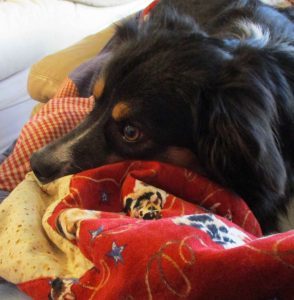 The pup I adopted in June is now 16 months old. Merlin has adjusted pretty well to his new life, as have I. We have a regular schedule that he can depend on, regular meals, daily playtime, walkies, games, baths, and grooming every Sunday. He has transformed from a scrawny, fearful, un-socialized puppy into a handsome, cautious (but curious!) teenager who is becoming less shy every day. I love him and he loves me. Unreservedly.
As it should be.
I have previously recounted the story of Piggy (akaFirst Toy), describing how Merlin came to me having never had a toy to play with. It took him a while to figure out that Piggy was his, and it took him even longer to figure out what a squeaker was. But that was then, this is now.
Merlin has acquired quite a few toys, over the past few months. He accompanies me to the pet store now (having bravely conquered his fear of the double-automatic doors and myriad of people and dogs in PetCo), and has even been able to pick out his own.
In the beginning, all toys were sacred. He dragged them ALL to his bed and lay them, when he wasn’t actually playing with them. He delighted in doing this, and it warmed my heart to observe him ‘herding’ his toys.
Recently, I have noticed a difference in how he treats some of his toys. This is different from the behavior of my previous dogs and their toys. My previous dogs (all Australian Shepherds and a Corgi) preferred to disembowel every and any toy they could sink their teeth into. Rowan did have one stuffed animal (Pony Puppy) that she carried around for years, and would let none of the other dogs near it. But I think that was because Pony had a pressure sensor inside it that neighed every time it was picked up. I think Rowan thought of the ‘neigh’ as a puppy squeal, because she carried it around like a puppy. Over the years, the neigh began to sound more like a moan, and then disappeared altogether, but by that time, she’d lost her hearing (along with her interest).
 Anyway, back to my point. Some of Merlin’s toys get the exact same disembowelment treatment that my previous pack bestowed on their new toys. You can see from the picture, that (from left to right) Foxy, Big Dub, and Wubbie all seem to have met a similar fate. Big Dub and Wubbie (actually, Big Dub and Wubbie are the same toy, but in two different sizes) in particular, have each had all 6 of their legs chewed off in the first week. But they are extremely popular, mostly because their squeakers are still functional, and are still presented to me regularly in anticipation of a good came of catch.
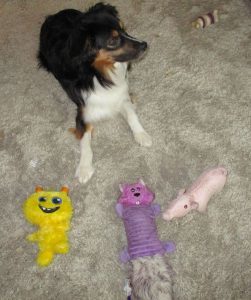 However, there are three toys that, while they are played with every bit as much as the um, mutilated toys, they are in nearly pristine condition. The are (from left to right), Beastie, Purple Squirrel, and the now legendary Piggy (aka First Toy).
Note the near pristine (if somewhat grimy) condition of Piggy in particular, who sleeps in Merlin’s crate every night. And Beastie was the first toy Merlin ever picked out at PetCo. Purple Squirrel, who has 3 (count ’em THREE squeekies inside) is by far the MOST played with toy in Merlin’s flock, with Big Dub holding tough in second place.
I don’t know if Merlin has ‘favorite’ toys or not, but it seems to me that he has two categories of toys: those he chews on and those he doesn’t. I couldn’t figure out why. All the toys have squeekies. All are mouthable and small enough for him to carry around. But after taking pictures of the toys this morning, I was struck by something I hadn’t noticed before–none of the chewed up toys have faces. Oh, foxy had a face for about 20 minutes when he first arrived, but it was a toothy growly face. Wubby and Big Dub don’t have faces at all.
But Beasty, Purple Squirrel, and Piggy all have smiley faces.
And thus is my theory of the Puppy Love Paradox.
Have you smiled at your dog lately?
The post Sunday Puppy Pix Fix & The Puppy Love Paradox appeared first on Sharon Joss Writes.
October 13, 2019
Old Habits Die Hard: Remembering Good Old Days
Sharon Joss Writes
 A friend of mine reposted about a writing contest sponsored by Dream Foundry the other day. As I always do, I pulled up the link to see if the theme parameters were something that matched a story I’d already written or if it was something intriguing enough that I wanted to write a new story for.
Everything looked good. Any speculative fiction considered, check. No entry fees, check. Entrants retain all publication rights, check. Anonymous submission to ensure fairness, check.
The wheels were churning until I caught the eligibility clause: “A beginner is somebody who has not yet demonstrated professional-level proficiency as determined by the market wherein they work.” SFWA members specifically excluded.
Aah. I’m out, then.
An odd, mixed-up realization flooded through me.
I’m not a beginner anymore. No way, no how. I’ve got a SFWA card and everything, so it must be true. Those days of looking for writing contests are over. I’ve critiqued writers workshop submissions. I even ghost-copyedited a major speculative fiction e-zine for a few months.
 But I don’t feel like a pro.
I’m not making my living as a full-time writer, I say. I haven’t been nominated for a World Fantasy Award, or even invited to the Hugo Loser’s Party. I’m not on anyone’s best-seller list or pushed in any “Year’s Best” anthology. I’m not a ‘name’, like King, LeGuin, Martin, Norton or Simmons. And the thing is, that stuff may never happen for me.
It doesn’t matter. I yam what I yam, and that’s a pro. Gotta keep writing. keep learning, keep growing. This is the real deal. This is the dream I wanted, manifested.
This post is not meant to be self-aggandization or a poke about turning pro or feeling sorry for anyone. This is an observation that beginning writers do have legitimate publication opportunities that are targeted exclusively toward them. Keep writing and take advantage of them whenever you can, because after a certain point, your writing will progress, and you won’t be a beginner anymore.
And you may find that you’ll think of these days of angst and striving to get ‘good enough’ never really end. They just become the good old days.
The post Old Habits Die Hard: Remembering Good Old Days appeared first on Sharon Joss Writes.
July 28, 2019
Your Sunday Puppy Pix Fix
Sharon Joss Writes
 In the seven weeks he’s been living with me, young Merlin has gone from 20.5 pounds (per the vet’s scale) to a whopping 23.6 pounds. He’s filling in and his bones no longer stand out, but he’s still ‘quite lean’, according to the vet. She says a good weight for him will be around 25 lbs, so we still have a ways to go.
Clearly, in addition to not getting enough to eat, he did not have much in the way of toys. In his first few days with me, he could not bring himself to pick up or show any interest in the toys I’d gotten for him. In particular, there was a little pink pig that caught his eye. He would not look directly at it, but I could tell he wanted it. I tried to give it to him, but he wouldn’t take it. It wasn’t until I gave him an old sock with a knot in it that he realized that he could have something to do with as he wished.
For a week, that sock was (and still is) the best thing since eating twice a day. The other toys remained ignored, but the little pink stuffed piggy called to him, in that secret language that only coveted things know. I was pretty sure he wanted it, but he wouldn’t take it from me.
So I gave him a box.
The simple joy of shredding a cardboard box into tiny bits of flotsam cannot be overstated. It rocked his world.
 I think the action broke something open inside him–gave him permission to embrace his inner puppy. It took him about 30 minutes to destroy the box, and when he was done, he made a bee-line to the pink piggy and claimed it for his own.
I thought he would disembowel the creature within minutes (all my previous Aussies were experts at stuffed animal disembowelment), but Merlin does nothing but carry it around and mouthe it.
We play a game. He brings Piggy to me and I give it back. That’s it. That’s the game. Sometimes, he brings me the sock AND Piggy. The purple squirrel with the three squeekies is also included at times, but that’s another story.
Piggy is his pride and joy.
The post Your Sunday Puppy Pix Fix appeared first on Sharon Joss Writes.
June 22, 2019
Dog Days of Summer Return
Sharon Joss Writes
 Behold!
Introducing Merlin the light-footed, or He of the Beguiling Eyes. Also known as Prince Snugglepup, and That’s Not For You.
Once again, I have a dog at my side. A miniature version of my favorite breed, the Australian Shepherd. He is 11 months old, born on the same day as my dearly departed Mia, almost the same day my dear Rowan crossed the rainbow bridge.
 For most of this past year, I’d been looking for a dog; the adoption websites, rescue organizations, you name it. I knew I would know him when I saw him, and I did. When I went to look at him, he was emaciated, smelled something awful, and his coat was so badly matted, it took me a week to clean it up enough to give him a bath–and it was clear to me he’d never had a bath before. Never been to a vet, either. The first week I had him, he wouldn’t make eye contact, but he’s coming out of it.
We are taking things slow; hanging out, playing gentle games, and taking long walks. He’s returning to a playful, happy, loving version of himself. And so am I.
Oh, the joyful dog days of summer!
Happy Solstice.
The post Dog Days of Summer Return appeared first on Sharon Joss Writes.
May 5, 2019
Carpe Diem: Take a Hike
Sharon Joss Writes
 Great day for a hike this weekend. Temps in the 70s, and birds are everywhere you look; the gorgeous greens of Oregon are at their lushest best in the springtime.
I went out to Cooper Mountain Nature Park this morning for a lovely (if a bit steep in some places–after all, Cooper Mountain is, well, a mountain) hike. It was the first time I’d been out there, but it was a perfect day, and there were a lot of folks enjoying the scenery as well. The trail I chose offers sweeping vistas of the Tualatin Valley and Chehalem Mountains, as well as passing through woodlands of oak, madrone & cedar and even a small prairie.
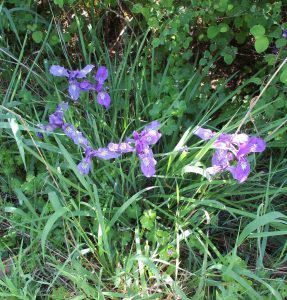 I didn’t see much in the way of wildlife, other than a bit of rustling in the underbrush and couple of Steller’s Jays (I’d hoped to see deer or fox). Next time, I think I’ll go earlier in the morning. However, the wild iris was in bloom and beautiful.
So get out there and seize the day. Even writers need to get some fresh air, sometime.
Carpe Diem.
The post Carpe Diem: Take a Hike appeared first on Sharon Joss Writes.
April 20, 2019
Earworm Day
Sharon Joss Writes
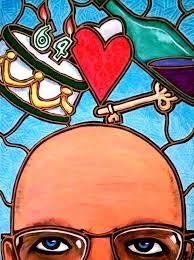 Sigh. Paul McCartney was right, all those years ago.
I never believed it would actually happen, but there it is, and I just can’t get that music out of my head.
To celebrate, here’s a story I wrote on my birthday 5 years ago. It’s about chocolate. And pangolins.
Enjoy.
THE ORDER OF THE GOLDEN GRAPEFRUIT
By Sharon Joss
The year was 1871; the Treaty of Frankfurt had been signed that spring, and the war was over. A Prussian airship, the Flegeinde Fledermaus, set us down in the middle of the Grand Place; a magnificent square surrounded by five-story guildhalls and presided over by the splendid Bruxelles City Hall, which our captain had taken particular care to steer clear of, since it towered more than 90 meters high and was topped with a golden statue of Saint Michael slaying a demon.
It was the autumn of my ninth year. Young as I was, I was no stranger to air travel; but as the groundsmen pulled the lines, lowering us to the ground, I could hardly contain my excitement. After living rough on the battlefields of Sedan, Orleans, and Lisaine, Father and I had finally landed in the city destined to become our home.
But there was no time to stop and explore our surroundings. Father started across the uneven cobblestones as soon as we touched down, and I had to run to keep up. Even so, I couldn’t help but notice flowers blooming in every window-box; a riot of bright colors rivaled only by the carnival colors of the bird market; the marketplace was filled with the raucous sounds of exotic bird calls. Sidewalk cafes ringed the square, and the jovial music of songs and laughter added to the general din.
Looking neither to the right nor left, Father crossed the Place and entered a narrow lane, called the Rue de Bonbons, a charming thoroughfare lined with confectioner shops. The heavy smell of chocolate wafted from every storefront. My mouth watered. I remember thinking, that after all the vile smells of war, this must be what heaven smells like.
Father stopped so suddenly, I nearly ran into him. He checked the address on the outside of the envelope against the number painted above the door.
“This is it.”
The Bouchée Sucrée looked similar to many of the other chocolate shops on the street. Smaller perhaps, but the lilac exterior had been freshly painted, and the beveled glass windows sparkled like diamonds.
Father removed his flight goggles and combed his fingers through his hair. He straightened his tie, and smoothed the front of his Inverness travel coat. I could tell his nerves were bothering him.
A silver bell tinkled above the door as we entered the shop. Worn wooden floors protested beneath our feet, but display cabinets welcomed us with an astonishing array of chocolates, pralines, jellies, and all-day suckers.
A moment later, the owner appeared to greet us. Madame Lavender was a tall woman; in her high boots, taller even than Father. The familiar black ribbon at her breast identified her as a widow, but she was dressed fashionably in the style of the day, although with a somber palette. She wore a long, form-fitting black skirt with a modest bustle, high-necked black blouse, and a severe, nickel-plated corset, inset with ebony cabochons. Her black hair had been pulled up tight into a topknot, to which a bit of fine black netting had been attached. Silver-rimmed spectacles with dark, blue-tinted lenses masked her eyes. Only her long, aquiline nose and stern lips revealed her expression, which did not seem pleased to see us in the least.
Altogether a most intimidating woman. I am not embarrassed to say I inched closer to my father and slipped my hand in his.
“André Hébert at your service, Madame.” Father handed her the envelope with Otto von Bismarck’s personal seal.
She barely glanced at the note. The very rigidity of the corset imbued her with a rather precise, military posture. “Have you ever worked in a sweet shop?” Her tone was as imperious as any general in the field; her skin gleamed as cold and hard as the white marble countertops of her shop.
Father began to tremble, a symptom I recognized immediately. He would not be able to answer. The horrors of the battlefield often revisited him in stressful situations. I knew how much this job meant to him. After the war, there weren’t many opportunities for men like him. He’d spent the last of his severance pay to bring us to Belgium. If she turned us away, we would be sleeping in the streets tonight.
“No, Madame. My father was the Minister’s chief re-animator. He designed and built arms and legs for the fallen conscripts and then re-animated them so they could return to the front lines to fight.”
“I knowwhat a re-animator is. What’s wrong with him, boy?”
Father’s shaking had progressed to the point where his whole body shook. I stroked his arm to soothe him. He spoke before I could answer.
“H-h-his name is Fritz. He is my ap-prent-tice.” Father took a deep breath and through sheer will managed to pull himself together. “We have come a long ways, Madame Lavender, but if you have no need of my services, we will seek employment elsewhere. Perhaps one of your competitors will be more agreeable.”
She gave a tiny gasp at Father’s remark, her lips pursed unhappily at his impertinence. “Very well. Have you any knowledge of L’ordre de la Pamplemousse D’or?”
“Excuse me?”
“The Order of the Golden Grapefruit is awarded by the guildmasters annually to the chocolate shop with the most appealing window display. It’s a very prestigious and famous award. The publicity brings thousands of customers from all over Europe to the city for the season, and they all flock to the winning shop. So tell me, what is on display in the front window of this shop?”
Father gave me a helpless look before answering. “Chocolates, I presume. In my haste, I didn’t look–.”
“Exactement! My chocolate is the best in the city. I make a custom blend, using the finest ingredients. I employ the best artisans; and yet, look around you. No customers. While there is nothing unappealing about my shop, there is certainly nothing memorable about it either. Bruxelles is famous for its fine confectioners, yet if I cannot find a way to attract customers….” She shrugged. “This will be our last season.”
Father straightened his shoulders. “I repeat myself Madame. How may I be of service?”
She paused, as if to consider his offer. “Every year, Rococo Lux wins the Pamplemousse D’or. At present, Rococo Lux and Le Fleur Chocolat are the only real contenders for the award, and coincidently the only shops in the city employing animators for their window displays. This year, with your help, I intend to win.”
***
She showed us the kitchen, a long, pale blue room with black and white tile floors a half-story below street level. Clerestory windows near the ceiling kept the room from feeling claustrophobic, something which I’m certain Father appreciated.
There were tall cooling racks, a massive soapstone sink, and in one corner, a copper and brass automatron in the shape of a barber pole with nickel-plated arms stood at the white enameled stove stirring a chocolate mixture with a wooden spoon.
We met Madame’s young Congolese chocolatier, Laḃou Lumumba, who used one of the two long library tables running down the center of the room as a production line for Madame’s chocolates. Laḃou would remove the tempered chocolate and fillings from the stove and pour them into the molds before placing them on the racks to cool. At the second table, the final decorations would be applied by Marie, a girl with a steady hand; able to sculpt and paint the exquisite designs which gave Madame Lavender’s chocolates their unique signature.
In the opposite corner, a mountain of a man with a fine walrus moustache, Dietrich, stood at the copper vat at a stove dedicated to boiling sugar and making caramel. Dietrich had lost both his forearms in the war, and his hands had been replaced with hooks, which he used to great effect in the rolling and manipulating the hot sugar and caramel mixtures in pralines and a variety of colorful lollipops.
“You’ll be working closely with Dietrich,” Madame said. “Before my husband’s accident, they shared the sugar stove. Dietrich, please show Monsieur Hébert Le Mix.”
Le Mix was what they called the animation mixture. Dietrich rolled a wheeled elevator platform with a massive copper soup pot sitting on top of it. Inside the pot, a black, glass-like substance filled the container more than half full.
“Ve didn’t know what to do vis it,” Dietrich apologized. “It hardens visout the heat.”
Father frowned. “This is very bad. I’m afraid it won’t do at all.”
Madame stiffened; her fists clenched. “What are you talking about? My husband made it. It’s perfectly good.”
Father took out his pocket knife and scraped a few slivers of black glass from the surface. Using the knife, he dropped the shards onto the white marble top of the work table. Laḃou and Marie stopped their work and moved in for a better view.
When Father placed his hand flat on the marble surface, the animated black slivers attacked; slicing his fingers with their razor-sharp edges. “I cannot use this.” He scraped the shards from his fingers back into the pot. “There is evil intent here.”
Madame burst into tears and buried her head in Dietrich’s meaty chest.
“What did I say?” Father dabbed his bloody fingers on his handkerchief.
Dietrich made a placating gesture. “Ach. Monsieur Lavender found the animation recipe in an old book, and thought to use it. The mixture exploded during the boiling process; killing him, and injuring Madame. You must understand, it is a very sensitive subject for her.”
“I see. My apologies, Madame. I will need four hundred kilos of sugar to begin.”
“Holle!That is a lot of sugar.”
Madame’s jaw shot forward. “Impossible! Have you any idea how expensive sugar is? The war may be over, Monsieur, but sugar is more valuable than gold right now.”
I could see that working for Madame Lavender was not going to be easy.
Father dabbed at his still-bleeding fingers. “Two hundred kilos then. Surely you don’t want your window display to attack your customers, do you?”
Madame’s lips stretched into a thin line. “The window displays are not for eating. When the season is over, they go back into Le Mix. One hundred kilos.”
He sighed, and I heard the defeat in his voice. “Very well. What kind of animation do you have in mind?”
“Originality is everything! It must be grand. Epic. Legend. Something which allows us to demonstrate our artistry with the chocolate. Something which will stop people in their tracks. As to the subject, I leave it up to you. Laḃou, Dietrich and Marie will follow your lead.”
“Very well.”
The competition is less than four weeks away. I suggest you begin immediately. You will work nights. Secrecy is everything.” She pointed to the windows. “Keep the curtains closed. Once word gets out that we have an animator, our competitors will try to discover our design is and beat us to it.”
***
Over the course of the next few days and nights, we settled into our new life in Madame Lavender’s employ. Father was given a tiny room under the stairs, and I had an alcove in the pantry across the hall, which was handy, as Father often awoke with nightmares of the war.
Although we worked through the night, taking to our beds only when the shop opened, the lamp in his room was always lit in the hopes that the nightmares would not return, but of course they always did. I would read to him then. Moby Dickwas a favorite, but there was also a translation of Dickens serial, Great Expectations. During those earliest days, reading didn’t always keep the demons at bay. I tried to distract him.
I wiped his sweaty forehead with a damp towel from the kitchen. “Did you see her limp? Marie says Madame’s husband tried to kill her with Le Mix. He threw the boiling cauldron at her, but slipped and the hot liquid spilled all over him. She was splashed on the leg, and they had to amputate.”
His eyes began to focus. As an animator, Father was fascinated by prosthetics. He believed that one day, the perfect soldier could be built from nothing more than empty armor; thus eliminating the stark horrors, suffering, and lives lost on the battlefield.
“And Marie says she hasn’t come down to the kitchen more than a couple of times since it happened. The first was when she hired Laḃou as her new chocolatier two years ago, and the second was when we arrived.”
He frowned and I saw him come back to himself.
“Marie says that she is in love with Laḃou, but he wants a Congolese wife. She is very beautiful, don’t you think?”
“I think perhaps you have already grown rather too fond of young Marie. Gossip does not become you.”
Ashamed, I bowed my head over his hand. “She is very kind to me. She is teaching me how to make chocolate flower petals.”
He cupped his hand gently against my cheek. “Do you like it here, Fritzi?”
Such displays of affection were rare from him; I never wanted the moment to end. “Well, Madame israther frightful, but Marie says that’s only because she’s so worried about money. And her leg bothers her. I could fix it, Father. You know I could.”
He’d found me on the battlefield at Frœschwiller; out of my head with fever, dying from the gangrene in my wounds. The first set of needle-fingered hands he made for me allowed me to stay on with him as his apprentice, as the dexterity of my mechanical digits was far superior to that of human hands. I could no longer remember my life without them.
Or him.
He patted my shoulder and fell back against the pillow. “We’ll have to wait and see how it goes.”
***
It took several days for Father and Deitrich to properly dilute Le Mix with the new sugar and imbue the elixir with Father’s animation magic. Father had a great deal of experience re-animating flesh and integrating it with bits of metal for military re-use, but very little in animating sugar and creating structures strong enough to support a figure’s weight as well as a layer of chocolate coating. It took several tries to get it right.
Once Le Mix reached the perfect consistency, Dietrich would pour it out onto the table, and using his hooks, snip off tiny pieces for me to shape into the proper pieces. My needle-tipped brass fingers allowed me to shape the sugar candy while as it cooled, and form it into the precise components necessary.
Once cool, we assembled the hard candy components into the whole, and Laḃou covered them with fondant or Marie painted them with melted chocolate to complete the sculpture.
The resulting creation, our Medusa, was a marvel of our combined ingenuity. Laḃou had designed a diorama of her island temple, and Marie painted the snakes in her hair every color of the rainbow. Each snake held a lollipop in its mouth, and each in turn brought the lollipop close enough for her to lick. Every few moments, a soldier would rise from the sea, walk up the sand to see her, and be turned to stone, then gradually dissolve into the sand as more gladiators strode out of the sea to take their place. Finally, Perseus appeared, using the shiny surface of his shield as a mirror, he cut off her head.
Marie loved Medusa’s long hair, and ached to comb it properly, but the snakes were testy, and could deliver a nasty bite. Laḃou, in particular, had been bitten several times.
We couldn’t wait to show it to Madame.
***
“Oh dear.”
Madame Lavender wrung her hands. “No, no, no. What have you done? This is impossible!” She wiped a loose strand of hair from her face. “You don’t understand. It’s all wrong.”
Father stiffened. “Excuse me, Madame. I believe we have done exactly as you asked. You wanted something grand; something legendary. Each of the snakes in her hair has been created from dozens of individual segments, joined together. The granules of sand have been individually shaped; look at the silken texture of Perseus’ skin.”
“No human figures are permitted. If for no other reason than customers don’t want to think that the chocolate they’re eating is made of people!”
“Eeep-eep!” screamed Medusa. Using her eyes to point the direction, her headless body pointed toward the window, where a mechanical pair of legs attached only to a pair of eyeballs had been staring at us through a gap in the curtains. Abruptly, the legs stood up and rapidly walked out of view.
“Spies! This is terrible,” Madame grabbed Father’s arm. “Come with me.” She glared at me. “You too, Fritz. I want both of you to see this.”
We followed her out of the shop. Her limp got progressively worse, the further we got from the shop. When Father took her elbow, she leaned into him. At the Grand Place, she turned right and stopped in front of a chocolate shop where customers streamed in a long line out the door. The storefront was a deep raspberry color, with black trim and awnings, and heavy gold flourishes around the door and windows.
“This is Rococo Lux. Every year, their ladybug orchestra wins the Pamplemousse D’or, and this is why. This is what I am talking about.”
I followed Father as he edged through the crush of people standing in front of the display window. Children crowded around us, their noses pressed to the glass, their eyes wide with wonder. What we saw made our mouths drop open in awe.
The diorama was a flower-box, just like those hanging from every window in the square, filled with ladybugs; each playing a musical instrument with great vigor. There were ladybugs with drums and cymbals and horns and violins, and even harps. They sat on leaves and under flower petals, playing a waltz for pair of snails. Each petal and leaf of each colorful flower had been hand-shaped into the thinnest possible surface. And although each red-and-black ladybug looked nearly identical in shape, each wore a different and vivid expression on its face as it performed. The snails, a bride and groom, danced slowly with their tentacles entwined in the most charming and affectionate manner. There was so much to see, one could hardly see it all.
“Not only are ladybugs part of the display, they are also the product.” She pointed to the beveled glass shelves above the display, where an assortment of truffles, decorated as the ladybugs, were labeled. “The ladybugs with the cymbals are filled with mocha ganache; those with horns are filled with hazelnut, the drums coconut, and so on. Their very shape cries out to be bitten into, don’t you think?”
She was right. They were adorable and oh so tempting.
Three doors down from Rococo Lux was Le Fleur Chocolat; a painted brown exterior with pink and brown striped window canopies. The crowds here, while not as large as those at Rococo Lux, where nonetheless impressive.
Their window display recreated one of the many sidewalk cafes along the plaza. In this one, chocolate crickets sat at charming bistro tables, eating and drinking and singing the national song of Belgium, the Brabançonne. Hanging from every windowsill of the guildhouse windows above the café were the black, yellow, and red striped flags of Belgium. Everything in the tableau was made of either chocolate or molded fondant; from the cobblestones in the street to the delicate legs of the crickets themselves. The cricket waitresses wore white frilled aprons, and the guildhouse of each cricket patron could be easily recognized by the tiny feather worn in his cap.
“Hey! They stole our idea!” I pointed to the upright piano, where every few minutes, the top opened and a snake, almost exactly like Medusa’s tried to crawl out, only to be slapped back inside by the cricket piano player.
The display shelves above the scene were filled with cricket-shaped chocolates filled with a variety of liqueurs; everything from apple to peach brandy; even a cherry kirsch and champagne.
“Good heavens,” Father murmured. “This is incredible. I had no idea.”
We walked slowly back to the Bouchée Sucrée. Now that we had feasted our eyes on the wares of Rococo Lux and Le Fleur Chocolat, Madame Lavender’s windows looked dull and unappetizing.
“I need more sugar, Madame. Le Mix is still too dark. The appeal of your competitors designs is influenced to a great degree by the composition of their animation elixir. If you want cheerful animation, we must dilute Le Mix further.”
Madame’s leg was obviously causing her great pain, but her conviction was unwavering. “As I explained earlier, Monsieur Hébert, sugar is very expensive these days. If I give you any more, we will not have enough to stay open through the season.”
“I understand. Look, I don’t want to offend you, but I couldn’t help but notice your leg seems to be bothering you. With a few adjustments, I believe Fritz and I can alleviate your discomfort….”
***
Three days and fifty pounds of sugar later, Dietrich rolled out the diluted Le Mix onto the wooden work surface and we went to work. The mixture was significantly lighter than before, especially since Marie convinced Father not to send Medusa’s head or her snakes back into Le Mix. Although still nippy, Marie had taught the snakes to fetch the proper spices from the spice cabinet, and they seemed much happier now that they had a job to do. The only person they still tried to bite was Laḃou.
Father had had a grand vision for the window design, one we all were very excited about. Bruxelles was famous for its love of circuses, and our circus was certainly shaping to be every bit as fantastic as the window box lady bugs and cricket cafe. The work was painstaking and extremely detailed; requiring hours of delicate handwork. Marie praised my ability to form the hard candy base while it was still hot, and sculpt the chocolate with the finest details. My needle-sharp fingers were never so well used on the battlefield.
Every morning, just before the shop opened, I would accompany Father and Madame Lavender as they strolled the Grand Place, checking out the windows of the competition. Madame had sold her fine, jewel-encrusted, nickel-plated corset to pay for more sugar, and exchanged her mourning costume for a sedate grey outfit trimmed in purple lace and a striped lavender and white ruffled underskirt. She wore a sprig of violets pinned to her breast instead of the black ribbon, and when she walked, her bustle swayed as elegantly as any of the other fine ladies parading the square.
It took us nearly a week to complete every detail of the circus. There was a ringmaster, and acrobats, and clowns, and even a magnificent steam calliope made entirely of crystallized hard candy. The date of the judging was nearly upon us. We were confident that we had created a masterpiece.
#
“Oh dear.”
Madame Lavender lowered her glasses for just a moment to inspect our work. She had surprisingly long eyelashes.
“Dear oh dear, what have you done?” She’d begun wearing her hair a little looser these days. And the whalebone corset gave her a softer silhouette and less rigid posture. “You still don’t understand. It’s all wrong.”
We all stared at her in disbelief, but let Father do the talking.
“Excuse me, Madame. I believe we have done exactly as you asked. We have created an absolute marvel here! It has everything the window displays at Rococo Lux and Le Fleur Chocolat have and more! Look at the artistry! Look at the detail! And just look at the line of chocolate coins engraved with scorpions! It has everything!”
“It has scorpions.”
“Of course. They’re bugs. No different from ladybugs or crickets.”
“But they’re scorpions. Nasty things. No one would want to eat a scorpion.”
None of us could believe what we were hearing. We had scorpions riding bicycles, swinging from trapezes, even sitting in the bleachers, applauding the show.
“But Madame,” Marie pointed out the scorpion ringmaster, with his little black top hat. “Aren’t they adorable?”
“No one will want to eat a scorpion. And I will not have them in my shop.”
Madame sounded very certain.
Father tried again. “I admit, they do tend to sting a bit, but look at this.” He picked up the ringmaster, turned him over and began to rub his belly. After a few ticklish kicks, the scorpion relaxed completely. “See? Completely harmless!”
She looked at over her glasses at all of us. She really did have the loveliest sleepy brown eyes. “I say ick. Yes, the tuba players and the clowns with their big silly shoes are admittedly somewhat charming, but no one, I repeat, NO ONE will want to put one of those in their mouth. Ladybugs and crickets are acceptable. Scorpions are not.”
“The ladybugs are nothing! Just a blob of chocolate. He held up the sleeping ringmaster scorpion. Examine the precision of the body segmentation! Look at the gleam of their dark chocolate shells. Madame I beg you to reconsider. They are fantastique!”
Her lips began to tremble. “The judging begins in less than a week. We have nothing! I will be forced to close the shop.”
She clapped her hand to her mouth and fled the kitchen.
***
There was no more sugar. We rounded up the scorpions and the circus diorama and dumped it all back into Le Mix, although Marie begged us to let her keep the ringmaster and one of the clown scorpions, even as they stung her repeatedly. She finally put them in a matchbox and kept it in the pocket of her apron.
Days passed. Everything Father created, Madame refuted. No spiders. No praying mantises. No lizards. Father even tried shrews, but their bites were even more painful than the snakes, and their fur was very difficult to do properly in chocolate.
“What are we going to do, Father?”
His hands were trembling again. “I am convinced we are on the right track. All we need to do is to find another animal. Something sweet and gentle which will allow the artistry to shine through. Of course, the current nature of Le Mix is still a problem. Anything we make with it won’t be very nice.”
Laḃou, who rarely ever said anything, set a tattered alphabet picture book on the work table. “This is what we want. From the jungles of my country. This is Pangolin. They eat ants with their tongue. No teeth to bite with.”
We all crowded around the picture of a most peculiar creature.
Father nodded thoughtfully. “I like the armor plating. We could do that with the hard candy mixture.”
“And look at those claws,” marveled Dietrich. “He has hooks, just like mine!”
“Painting the scales with chocolate will work very well, I think.” Marie traced her finger down the creature’s long prehensile tail. “And look, no stinger!”
“He’s very cute,” I said. “If he were chocolate, I would eat him right up.”
“Yes,” agreed Laḃou. “With raspberry filling. I’d better start making new molds.”
We all plunged into action.
***
Madame Lavender must have known something was up, because she came down to the kitchen well before sunrise, wearing a soft peach-colored robe; her cheeks rosy with sleep. She wasn’t wearing her dark spectacles, and her long black hair was loose; soft and shiny as a raven’s wing. She looked beautiful.
“I couldn’t sleep,” she apologized. “Show me what you’ve got.”
It had taken us all night and several unsuccessful attempts before we got it right, but when father breathed life into the chocolate pangolin, we all oohed at once.
“He looks like Dietrich!”
“No he doesn’t!”
“Make one that looks like me!”
The little pangolin shook himself, then clattered across the marble-topped work table to the dish of melted chocolate Marie had used to paint his scales. His long pink tongue flickered in and out. When he’d had enough, he smacked his lips and clacked over to Madame. Using his hook-like claws, he clambered up into her open palm, where he curled up into a sweet little ball and went to sleep.
“He’s perfect, André. Thank you.” She looked at each of us. “All of you.”
When she smiled, she had dimples.
“Eeep-eep!” Bald Medusa’s eyes pointed at the ceiling above our heads. Hovering above us, on a pair of mechanical moth wings, was a single eyeball and a pair of hands, holding a thimble.
“Oh dear,” said Madame.
I grabbed a mop and swung at it, but it was too quick. It swooped over to Le Mix and scooped up a thimbleful of the animation mixture, then slipped out one of the windows which had been mistakenly left open a crack.
“Oh no; he’s taken some of Le Mix! André this can’t be happening! What are we going to do?”
Father closed and locked the window. “It will be alright, Minette. The design isn’t final yet. We still have much work to do.”
Her lovely eyes widened. “But the judges will be here tomorrow!” Without all her imperious armor, she looked like a frightened young woman.
“Have no fear, Lady; we will be ready.”
Madame closed the shop in order to help with the preparations for the display. If she was reluctant to spend time in the kitchen, it didn’t show. She and Laḃou developed the new medallion molds and even designed new fillings for the Pangolin: strawberry, raspberry, and grapefruit.
Dietrich and I made the scales. With his big hooks, Dietrich shaved off slivers of the quickly hardening Le Mix and I used my needle fingers to trim and shape them into graduating sizes and insert them into the fondant forms Marie modeled. After the scales and claws had been applied, I threaded the pink tongue and gave the inert pangolin to Marie to paint the eyes and scales with chocolate. Once complete, Father blew the animator’s breath into their long snout and they awoke. Each pangolin took hours to make, but we could only hope the results would be worth the effort.
***
The judging began the next morning at ten o’clock precisely. In addition to the chocolate guildmeister, the international delegation included master chocolatiers from all over Europe, five in all.
I wore my lederhosen and my best shirt. Father wore his uniform; cleaned and pressed for the occasion, and I even polished up his medals. Madame wore a lavender and white striped dress with a froth of good Belgian lace at the throat and a jaunty purple top hat with a sprig of lavender at the brim. I used one of her silver spoons to create a breast pin for her; a silver tree branch where the test pangolin (which she refused to send back to Le Mix) could perch while he slept. Everyone else would be staying at the shop, working feverishly to finish the window diorama and fill the display cases with our new product line.
The delegation began at Rococo Lux, where the judges examined the window displays, sampled the chocolates, and marked their scorecards. From there, they proceeded to visit every chocolate chop on the Grand Place before visiting the lesser shops on the side streets around the square. Madame’s shop would be one of the last visited.
The morning passed slowly; at each shop, the crowd grew, so that by the time we reached Rue de Bonbons, we had a mob of hundreds following us.
Father and I each held tight to Madame Lavender’s hands as the judges peeked into the windows. But we needn’t have worried; Laḃou and Dietrich and Marie had seen to everything.
The diorama was an exact replica of the candy kitchen downstairs. Everything had been duplicated in exquisite detail in chocolate; from the copper boiling kettles, to the drying racks, to the automatons tempering the chocolate at the stove. Everything one would expect to find in a chocolate kitchen.
And working in the kitchen, making the chocolates and rolling out the caramel and applying the decorations, and yes, even performing the animation tasks were pangolins. The biggest pangolin was Dietrich, with his massive shoulders; and there was Laḃou, made of darkest chocolate, and petite Marie with her paintbrush. And Father was up on the stepladder, stirring Le Mix. I was there too, shaping the scales with my brass fingers. At the center of it all, stood Lady Pangolin in her lavender-colored scales, making up a serving tray of medallions stamped in the shape of sleeping pangolins, pausing every moment or two to blow a kiss to Father.
And there were even more pangolins. Children squealed at the antics of the smaller, naughty little pangolins as they taunted the helpless Medusa head, or dug in the spice drawers, or hunted for the tiny licorice ants which ran along the baseboards of the checkered chocolate floor. There were pangolins, pangolins and more pangolins everywhere.
The crowd surged forward, shoving the judges out of the way. Marie came outside with the sample trays, and without Dietrich to hold back the crowd, there would have been nothing left for the judges to sample.
***
In the end, and to no one’s surprise, Rococo Lux won L’ordre de la Pamplemousse D’or that year, as they do every year, since long before anyone could remember. But Lady Pangolin’s chocolaterie became the darling of Bruxelles. The shop was so busy, we moved into a much larger location on the Grand Place after the wedding. The new shop is called Pangolin.
Deitrich is still with us. Father offered to make him some thumbs, but he politely declined, saying he had become very used to his hooks, and if they were good enough for the pangolins, they were good enough for him. Laḃou married a woman from the Sudan, and together they run the Bouchée Sucrée. Marie ran off with a painter she met at the bird market. They live in France now; we get a post from her every year at Michaelmas.
The twins are three now and into everything; Anne-Marie and Mignon are every bit as naughty as the pangolins. I go to school and help father and mother in the shop in the afternoons.
Medusa’s head still sits on the top of the spice cabinet. She sleeps most of the time, and I think Mother would like to add her back to Le Mix, but the twins love her, and she’s sort of like family.
The pangolins all work the window display, except for that first one; mother’s favorite. He only rarely comes out of the cinnamon drawer anymore; but when he does, he sits on his usual perch on her silver branch pin and sticks his tongue out at anyone who comes too near to his mistress.
Like all pangolins, he is very naughty.
END
Copyright 2014, all rights reserved. This is a work of fiction. All characters and events portrayed in this work are fictional, and any similarity to real persons, living or dead, or incidents or events is coincidental and not intended by the author. This book, or parts thereof, may not be reproduced, distributed, or transmitted in any form or by any means, or stored in a database or retrieval system, without prior written permission of the author. Please do not participate in or encourage piracy of copyrighted materials in violation of the author’s rights. Purchase only authorized editions.
The post Earworm Day appeared first on Sharon Joss Writes.
March 3, 2019
Let ‘er Rip: The Archer’s Paradox and Writing
Sharon Joss Writes
 There’s a term in archery called Archer’s Paradox, which refers the effect produced by an arrow flexing as it leaves the bow. To my mind, it’s an expression that also aptly describes story as it is loosed from the author’s mind onto the page. Whether you’re a pantser or a plotter, the story flexes from what you planned to write before the words show up on the page.
At various writers workshops over the years, I have listened eagerly to different best-selling authors describe the point where they know they are ready to begin writing (their new novel). Some said they did all their research first. Others shared that they covered the walls of their writing studios with scene outlines. Even avowed pantsers confessed to starting out by sketching a few plot lines or writing out-of-sequence scenes. There seems to be no single method practiced by the masters in this business–nevertheless, it’s all fascinating stuff.
 It was Tim Powers who confessed that he puts off the actual writing (of the novel) until the last possible moment. At a writer’s workshop several years ago, he mentioned that he spends most of the time allotted to his novel, not writing; building up the story in his head until the tension of the pent-up story is so compelling that when he does finally let fly the words, they burst forth in a torrent, and he writes as fast as he can to get them on the page. Like a taut bowstring, the story is loosed. It doesn’t always exactly match the story originally envisioned, but it follows the path planned, flexing (with inspiration) as it travels rapidly toward completion. When I first heard him describe this process, it seemed like a rather unorthodox method to me. Something that worked for him, not something for my writer’s toolbox; but I never forgot what he said.
As I struggled to meet a daily word quota on my latest work in progress, I eventually became discouraged and then totally blocked. I tried a number of strategies to get the story to come alive again, but it always died after I wrote the first chapter. After eight different Chapter Ones ended up in the trash, I finally decided to try the Tim Powers approach; no words on the page until the words themselves could not be stopped. Instead of writing chapters (plotter that I am), I went back to square one and worked on (a brand new) outline, not writing until story tension built up inside me.
 It worked.
After a year of trying to force words to a story I didn’t care about onto the page, I stopped caring about word count and stopped writing for a while. I didn’t stop plotting or researching, or making notes or outlining, I just stopped trying to write anything that could be called a draft or chapter. After months of trying to force words onto the page, suddenly, I couldn’t hold them back anymore. Today, I let my story fly.
It feels good. Sometimes, not writing is the key. Let ‘er rip.
The post Let ‘er Rip: The Archer’s Paradox and Writing appeared first on Sharon Joss Writes.


