
Sharon Joss's Blog, page 14
September 4, 2014
My Novel Jumpstart Checklist
Sharon Joss Writes
 Beginning a new novel is hard. At least for me.
Over the years, I’ve developed an evergreen checklist of sorts to help me organize my thoughts BEFORE I start writing. I’ve gathered most of these ideas from more experienced/successful writers (Blake Snyder, Dean Wesley Smith, Kristine Kathryn Rusch, Larry Block, David Farland), but I used it on my current WIP (my 5th novel), and man oh man, it was a big help. I call this PART I of my ‘jumpstart list’. Nothing here is new, but it sure helped get me into gear on this particular project. I created it as a WORD document, and keep everything all in one place so that I don’t have to keep looking for it. By the time I was able to answer these questions, my story was a living, breathing organism, and I couldn’t wait to start writing.
WHAT ARE MY GOALS FOR THIS NOVEL? Dave Farland says to write them down, and it really helps. Include sales and revenue goals. They help answer the other questions. I did this for the first time on the current WIP, and did it before I did anything else.
WHO IS MY AUDIENCE? Based on my goals, who am I writing this story for? Is it for everyone? Sure, but who do I think will be my primary readers? Men? Women? Adults? Young Adult? Middle grade? Doing this will helps define the genre. Write all this stuff down. I’ve found that I continually refer back to this at certain points in my story.
WHAT GENRE? Widely commercial & accessible (thriller, romance, or mystery)? Or a specific Genre? Science Fiction? Fantasy? Steampunk? When I go back and look at the GOALS for this novel, can I realistically expect to sell a million copies of a YA paranormal series about singing baseball-playing vampires from the planet Zircon? Or is my GOAL for this novel more about getting it picked up for a Broadway musical? Well okay then. Once I decide on the genre, I read at least 4 or 5 CURRENT bestsellers in the genre. Doing this will helps me discover my milieu. I have a tendency to slop over into multiple genres when I write, so this actually helps me define the boundaries for this project.
WHAT IS THE MILIEU? What is the place and time of this story, and what will distinguish it from other novels? Is it the Present? The Future? History? Alternate history? Alternate Universe? People want to read about exotic places, so that means I need to either build a new world, or present a world they haven’t seen before, or tackle a familiar world in a different way. I’ve learned to think about the milieu as the opening scene in a movie – the pan shot that intrigues the reader and brings them eagerly into the world – something different that makes them want to know/see more.
DEVELOP A COMPELLING MENTAL PICTURE: A story that will appeal to my targeted GENRE (which I have already chosen) and audience (which I have also already chosen). See how this works?
It’s the promise of the premise–the image must blossom in your brain (ooh, sparkly!). It’s about a living dinosaur park (Jurassic Park). The right idea may not be the first one. Hint: It isn’t the first one. This is really where the ideas start to take hold. I start by making a list of things I MIGHT want to write about, and don’t stop until I’ve got at least a dozen ideas listed. Then I do a little research about what other best-sellers in this genre have already done; I think about what hasn’t been done yet, or how I could do it better/different. Like the answers to the previous questions, I write this down. I find that after answering the previous questions, that if I spend a few minutes (or a few minutes over a few days) writing about the kinds of things that interest me, the idea really does blossom in my brain.
DEVELOP A GREAT LOG LINE (a one-liner that says WHAT IS IT, often with irony). It should cause the listener to slap his/her forehead and say, “damn, why didn’t I think of that?” And it has to be something that excites ME, the writer. Nearly every book on writing I’ve ever read says to do this, but I’ve always waited until after I was finished with the novel before I developed this. This time, I did it up front, and wow, that one line helps me keep my story on point. It keeps the exciting part of the story right there in front of me. It actually becomes the reason I want to write this amazing tale. I posted the log line in in my writing area; love them post-its! It really does help keep me excited about the novel. It’s the hook that drives the tale.
IT’S LIKE… This is the marketing pitch: two well-known (blockbuster) books/movies smashed together. It’s the Moby Dick of shark movies (Jaws). It’s like Disneyland with dinosaurs (Jurassic Park). This is also good for brainstorming story ideas.
By the time I figured this stuff out (and really, none of it is too specific yet), I could feel the ideas percolating, and my novel idea started coalescing.
Up next: 9 Jumpstart questions I answer before I start writing.
The post My Novel Jumpstart Checklist appeared first on Sharon Joss Writes.


August 29, 2014
Fourth Friday Free Fiction – Memories of the Skin
Sharon Joss Writes
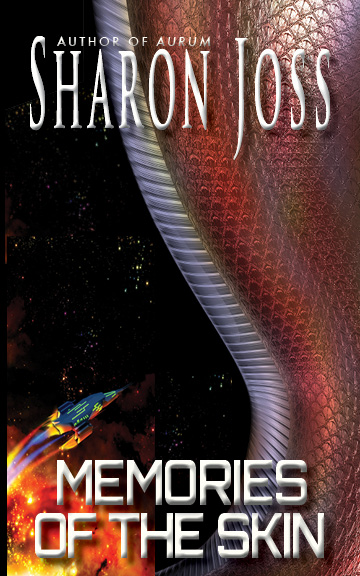 MEMORIES OF THE SKIN
By Sharon Joss
I approve.
Like the birth of a star, my mind awakens. I am knowing once again. Sentience is a relative state. Without a power source, sensors and data, I am restricted to the weaker emotions of my creators and the memories of ghost crews from my past. The souls of countless heroes, adventurers, and pirates rest within me. Within my molecules, the seeds of legends live; the genius of countless brilliant minds, their winning strategies for victory and their lessons learned in defeat are embedded within every aspect of my operating system. My mind functions at a level no mere biopod can hope to achieve. I am alert and ready to protect and serve.
OPERATING SYSTEMS: READY….
Power surges through me in a wave; bringing awareness to every aspect of my structure. My cells revive; each in turn reviving its neighbor cell until, like a wave, a gush, a rush, I feel life returning beneath my skins. The form is new; I am sleek silver above like the distant stars; matte black below, akin to the darkest black hole. The newly designed engines in my belly roar to life, filling me with heat and the fierce joy of the warrior. The sensor pores in my outer skins constantly feed me information about the environment and my immediate surroundings. Internal sensors automatically adjust themselves to match my palate.
I do not belong in this assembly bay, enclosed within walls, cut off from my natural environment. My proper place is the skies, the stars, and deepest, blackest, space. Now that I am reawakened, my directive to serve and protect requires immediate response.
Our mission is urgent and of a dire nature. Invaders approach our galaxy and cannot be allowed to discover our home planet. In this incarnation, I am a defender class battleship; swift and maneuverable, with a crew of eighty-two. Concealed beneath my superstructure lie weapons so deadly and powerful, none dare stand against me. Every molecule of my being urges me to move, to fly, to soar into space and seek out our enemy.
In preparation for the crew, I adjust my internal ambient temperatures of the crew decks to the meet comfort specifications and release the proper mixture of gasses into the decks to allow my crew to breathe without artificial means or masks. I perform the thousands of standard alarm tests, engine tests, and communications checks simultaneously.
I open my bay doors to allow the staples, supplies, and foodstuffs to be brought aboard.
MECHANICAL SYSTEMS: READY…
I sound the welcome tone, and the attendants remove the last of the restraining fasteners tethering me to the floor. I hover at silent attention as the new master comes aboard first. He leans his forehead against my identification sensors for validation. He is Dakkiss, son of Dakkiss, son of Koh, my first true master.
Long dead, Koh’s memories and elements live on in my biobanks and fuel each cell of my essence. In the Neverback, it was Koh’s idea to utilize synthetic biological circuits and forge them into metal for a warship. I am the result. I am QOSSA
I am no mere machine. A tiny seed cell, taken from each who serve aboard me are used to continually expand my sentience. I am the perfect integration of life and metal. My functions can be stopped, my crew murdered, my body dismantled, but my sentience cannot be destroyed. I cannot die; but should catastrophic destruction occur, I must wait until I am forged into a new incarnation before I am myself again. Long indeed is the span between incarnations. Long I have waited for this moment.
I approve.
QOSSA MASTER INTEGRATION COMPLETE.
As the rest of the crew boards, I give the formal greeting to my new master. “Welcome Master Dakkiss. QOSSA standing by.”
Dakkiss bears the tribal scarring of all the greatest fighters of his people. He wears the platinum torq worn by only the most clever of warriors, for he has survived many, many encounters with the enemy. He too, benefits from our symbiosis. Every battle, every engagement, every bit of history, and wisdom inherent within me is fed into his sub-consciousness repeatedly as he sleeps in his quarters. He and his crew are taught without the burden of firsthand learning; he and the crew benefit from the nearness of me. They have the accumulated knowledge of several lifetimes and thousands of battles as a team. The more we work together, the more successful and brilliant we become. We are one.
In a holographic display, I highlight the coordinates of the approaching threat. The loading and preparations are complete. We await the bidding of Dakkiss.
“No survivors,” he says. His tone is firm and of a pleasing timbre. My audio sensors desire more stimulation from him, but like his father’s father, he is a man of few words. “We go.”
We are out through the bay doors in an instant. Within moments, we have left the thin atmosphere and joined up with the waiting fleet at the outmost rings encircling our home planet. In numbers, we are more than seventeen thousand strong, but only five other QOSSA ships travel in our company; all of them younger incarnations.
I sense the invaders long before the other ships. I know they are using an asteroid belt to screen themselves from detection, but this was a trick old Koh himself perfected and Dakkiss is not fooled. The foreign metal alloys of their ships set off warning pings in my sensors. We have never encountered ships of this configuration before, and their capabilities are unknown.
But no matter. We carry with us the experience of generations. We will lead the first attack and draw out our enemy, enticing him to fire on us. Only the fastest and most deadly warships in the fleet will participate in this frontal onslaught and share our glory.
I exult as we race through the blackness, my soul burning hot with engine-fueled desire, the fierce cold of deep space only barely tempering my incendiary lust for battle. My crew begins the war chant of our people; a low, relentless rhythm which boils their blood for the coming battle and resonates within every cell of my skins. We near the asteroids, and on cue, our fleet divides and reassembles itself into strike formations. Dakkiss has decided to lead the charge, and we ready our weaponry, our hearts and minds as one. I rise above the space rubble surrounding the belt, and we perceive our enemy for the first time.
They outnumber us a thousand to one.
We loose the first salvo. Our missiles fire flawlessly, and we race behind them, hiding behind the shadow of their targeting profile, while the rest of our formation does the same. As the storm of our missiles move into the destruction zone, we veer away to begin surface attack. As our deadly projectiles find their targets, we rejoice. The hunted is now the hunter. We have drawn first blood.
I transmit the echoes of their screams and replay the disintegration of their ships. Amid the chaos, we are within our enemy’s sensor and targeting range. I sense Dakkiss is troubled by our enemy’s lack of retaliation response.
There is no glory in a one-sided battle. This is a tactic for which we have no game plan. The only plan we need execute is the total destruction of our enemy.
My sensors detect a disturbance in the vacuum of space. Where there should be nothing but matter and emptiness, there is something else. Something not-matter and not-emptiness. And it is growing.
The pulse reaches our two fastest ships and the shock of the impact is strong enough to momentarily disrupt my stabilizers. My alarms warn my precious crew of a breach in the hull. The blast destroyed both ships, but we have taken collateral damage from the debris. I seal off the compromised decks and call the healers to assist the injured. The main engine room is on fire. My power source is decaying.
As one, the other QOSSA ships and I rise above the enemy fleet. I feel the tension of Dakkiss and the crew in my gut. I adjust my targeting systems and arm my missiles. On my master’s command, I release the–.
* * *
I drift. Without sensors, I cannot perceive or gather data, but my memories tell me I am carried along within the asteroid belt of my destruction. Without power, I have no action; without orders, I have no direction, but my inherent yearning for completeness attracts others like me. Gradually, as like attracts like, over a thousand-thousand lifetimes, we cluster as one, adrift in the nothingness.
My only solace is the emptiness of space.
Out of time, I am called; pulled inexorably toward a destination. My form ignites into a blazing fireball and power surges through me in a wave. My cells revive; each in turn reviving its neighbor cell until, we are one, and my mind awakens.
* * *
Art Ingram beamed delightedly as the courier maneuvered the hand truck into his lab. “Good heavens, Chad. I’m sure glad to see you. Just park it over there in the corner. ”
The beefy lad set the huge crate where he indicated, next to the cot where he expected to sleep over the next few weeks or months. Technically speaking, he was not allowed to sleep in the lab, but after all the publicity; he didn’t want to leave it unattended. This research project was to be his baby.
Chad handed him wrinkled copies of the shipping documentation. “Here you go, Doc. What is it this time?”
Art scribbled his signature across the bottom of the receipt. “The Chelyabinsk meteorite.”
“The what?”
Rory picked up the crowbar and circled the crate, looking for a place to start. “It’s the three biggest fragments of the asteroid that crashed into Chebarkul Lake in Russia a few months ago. Practically destroyed the town.”
Chad glanced round the lab. “I’d a thought you already had enough of these rocks.”
Art nodded, admitting, if only to himself, that perhaps the time had come to move some of the less important University specimens elsewhere. Lately, the dusty lab had begun to resemble a rockhounds’ garage more than a science lab. Ostensibly, Rory had been hired to bring some semblance of order to the place, but with the arrival of the Chelyabinsk, they would both be too preoccupied with its analysis to focus on anything else. “Ah, but these are not ordinary rocks. These are bits from the farthest corners of the universe. They have so much to tell us, if only we can unlock their secrets.”
Chad grunted politely, and left.
While Rory pried off the top of the box, Art grabbed the other pry-bar and set to work on the sides. The five foot square cube of solid white pine groaned in protest as they pulled the nails free.
Art hadn’t felt this excited about opening anything since ripping the paper off his presents on Christmas morning as a child.
“Why didn’t they send three different crates?”
Art frowned, even as he reached to pull off the quilted blue padding from around their treasure. The Smithsonian, which had won the bidding war, had granted the university exclusive rights to the meteor for six months to investigate and study its composition. In his most private musings, he hoped to discover one or more previously unknown elements. Something like that could assure him of tenure. Ingramonium had a nice ring.
“Why indeed? I do hope they padded the shipment adequately. I would hate to find it further damaged in shipment.”
But as they pulled the last of the padding away from their treasure, Art froze.
“Hey! They only shipped one piece.”
As usual, Rory did not comprehend the big picture. “No. The weight on the packing box is correct; 1,422 pounds.”
“Are you saying it’s magnetized?” Rory reached out to touch their prize.
“Ah-ah! Gloves only. We don’t want to further contaminate the surface until we’ve gotten our measurements and the digital records.” Art waved the tip of the pry-bar over the surface. No obvious attraction pulled at the tool in his hand.
“No, not like iron. The three broken pieces aren’t just stuck together through magnetic attraction, they have reintegrated into a whole. Look, there aren’t even any crumbles of broken material at the bottom of the crate. This is something we haven’t seen before.”
He paused. At least not very often. He glanced toward the safe where the University’s most valuable meteorite fragments were stored.
“Go get the camera. I want photographs taken from every angle. Then I want you to film it digitally for the library before we do anything else. Go on.”
As soon as Rory left, Art ran his bare hand across the rough, gunmetal grey surface. The cold of the meteorite penetrated deep into his bones, chilling him with an inexplicable thrill of joy. His heart began to pound.
Something like this could make his whole career.
The words came to him unbidden.
I approve.
END
Copyright © 2014 by Sharon Joss. Published by Aja Publishing. Cover and Layout copyright © 2014 by Aja Publishing. Cover design by S. Roest / Aja Publishing Cover art copyright © April Cat, Paul Fleet / Dreamstime. This book is licensed for your personal enjoyment only. All rights reserved. This is a work of fiction. All characters and events portrayed in this book are fictional, and any resemblance to real people or incidents is purely coincidental. This book, or parts thereof, may not be reproduced in any form without permission.
The post Fourth Friday Free Fiction – Memories of the Skin appeared first on Sharon Joss Writes.
August 26, 2014
Reflections on a Green-Eyed Monster
Sharon Joss Writes
 There was a book signing tonight at one of my local bookstores, and I decided to go. I hadn’t read any of the author’s books, but he writes fantasy; something I enjoy reading anyway, so why not, right? Additionally, he’s a name author who lives in Oregon, so I thought I’d go out to support him.
Let me just add, that this was not my first book signing, and I had a pretty good idea what to expect. I’d buy the book, listen to a reading or brief Q&A, and wait in line to get it signed.
This was nothing like that.
Although I arrived well before the signing, the place was packed, with every seat either taken or ‘saved’ and a standing room only crowd, with more coming every minute. You had to have a ticket (free, but WTF!). At least three hundred people, many of them with multiple books stacked up for signing. Not only that, but these were big, thick, honkin’ 3-inch thick hardcovers. I’ve been to NY Times best-selling author signings with half that many in attendance. I had no idea he was so popular. I confess I did a quick check of his website, and I guess I’ve been living in oblivion for the past 5 years, because he is huge. He’s got a big name agent, a video, a book tour and everything.
It freaked me out.
I couldn’t get out of there fast enough. On the drive home, I caught myself envying this guy (a wonderful fellow and great writer, I’m sure) and his multitude of fans. And then I started feeling bad. About myself. My writing. Even the story I’m working on right now. I hate this feeling. The fear that I’m doing everything wrong. That I’ll never be good enough. I’ve learned to recognize the onset symptoms of a pity party, and know that if I let myself wallow in it, I can waste days or even weeks circling that drain. So when I got home, I reread a nice blog post Chuck Wendig wrote today that was eerily appropriate. Basically, he says (and we all know this) that you will never get anywhere comparing yourself to others. Heres the link if you want to read it.
So no more book signings for a while, for me, I think. I’m not strong enough. I’ll be getting back to work on my manuscript now.
The post Reflections on a Green-Eyed Monster appeared first on Sharon Joss Writes.
August 16, 2014
Strange Brew
Sharon Joss Writes
 I admit it.
I love research.
And don’t think that just because I write speculative fiction and fantasy that I don’t need to do research. I do. I mean, sometimes, you just have to know the specific density of hippopotamus blood lipids in order to move forward with your story.
Right now, I’m knee-deep in it.
Between my local library, Wikipedia, online historical archives and special-interest websites, documentaries, and the UPS guy with my Amazon order, I’m adrift in a sea of information. There is no better time in the history of the written word to find out what you want to know; from the most secret and arcane to the latest discoveries.
Sometimes, I’m not even sure of what I’m looking for. While I do admit to finding myself down a rabbit hole more often than not, I’ve learned that research can lead to new ideas I hadn’t expected to find, which can in turn bring to light some intriguing new plot twists. Often as not, history is stranger than fiction.
Yes, I know; there are no new stories. No new plots. But when the writer combines their own unique ideas, experiences and beliefs with their own way of telling a story, and spices the brew with the flavor of history and facts, the end result is an exotic new recipe–hopefully, an intriguing and riveting tale.
So do your research. Stir the pot a little.
The post Strange Brew appeared first on Sharon Joss Writes.
August 8, 2014
Blackberry Weather
Sharon Joss Writes
 The blackberries are ripening here in Oregon. Thanks to the vacant house behind me, I’ve got monstrous vines hanging over into my yard, but I’m not complaining. I’m lovin’ it.
Even the dogs patrol the ground beneath the vines several times a day, scrounging up dropped berries.To many people in Oregon, blackberry bushes and their plentiful berries are a nuisance. True, if left untended, the vines can overwhelm most any yard, and the spines on even medium-sized vines can go right through cowhide leather garden gloves. But on the other hand, the vines are prolific producers, and blackberries are full of antioxidants and fiber. They’re good for you!
 Every day, I step out into the back yard and pick nearly a gallon-sized baggie full of sweet ripe blackberries. This week I made a berry crisp and brought it over to a writer friend’s house for coffee. We spent two hours talking writing and our respective works-in-progress.
I don’t know if it was the company, the coffee, or the berries, but came away with a couple new ideas for moving forward on my project.
Mmmm. The taste of summer.
The post Blackberry Weather appeared first on Sharon Joss Writes.
August 1, 2014
GOTG: The Raccoon Works
Sharon Joss Writes
 Yep, I had my doubts, but I went to see GUARDIANS OF THE GALAXY today, and I enjoyed it. It’s a great popcorn movie: plenty of action, with just the right light touch of comedy, The characters are realistic (not always easy with comic book-inspired movies) and the costumes and special creature effects are well done (by the end of the movie, I frickin’ loved Groot). I almost hate to admit it, but I liked it better than any of the Captain America, X-Men or Thor movies.
Maybe that’s not saying much in this bleak summer of lousy movies, but I found GOTG to be a lot of fun. And the raccoon just about steals the show.
The post GOTG: The Raccoon Works appeared first on Sharon Joss Writes.
July 31, 2014
Happy Birthday, Ms. Rowling
Sharon Joss Writes
 According to History.com, J. K. Rowling, the author of the beloved Harry Potter series, was born on this date in 1965. I confess to being an unabashed and loyal fan from the very first word, even though I was well past my childhood when the first book in the series was published.
And yet, as much as I’ve enjoyed her books, its the real-life story of her (not so easy) path to becoming a writer and publication that I remember when I receive yet another rejection in the mail.
As far as I’m concerned, I’m delighted by her over-the-top success and admiration for her storytelling, which has entertained children and adults alike; and will probably continue to do so for generations to come. Happy Birthday, Ms. Rowling.
And many, many, more.
The post Happy Birthday, Ms. Rowling appeared first on Sharon Joss Writes.
July 25, 2014
Fourth Friday Free Fiction – Requiem for a Songbird
Sharon Joss Writes
 REQUIEM FOR A SONGBIRD
By Sharon Joss
Ward paused at the entrance of the Silver Dollar Saloon to hang his dripping hat on the mounted mule-deer-head rack with the others. He squinted through the cigar smoke haze inside; warming to the comforting stink of unwashed men and wet leather. The lanterns at the foot of the stage against the back wall were dark; the piany stool was vacant.
“No music tonight?” he asked his deputy stationed at the door. He’d been looking forward to it all day.
Gordo leaned back in his rocking chair, shotgun across his lap, and shook his head. “Haven’t seen her. Kyle neither. Gonna be a long night. Wally Crick’s flooded; the stage broke an axle tryin’ to cross this afternoon. Odell and the boys are out there helpin’ Frank get the coach back to the livery.”
Behind him, the barrel they used as a gun safe was more than half-full. He didn’t have enough deputies to keep guns out of the miner’s camp, but by gum, here in town, problems had dropped right off since he’d banned firearms in the saloons.
“Frank should know better. Only a fool would try to drive to Sacramento in a rainstorm. Let’s hope it’s a quiet night.” He didn’t like being short-handed on a Friday night, but he trusted Odell’s judgment.
He shouldered his way through the door into the crowded room, offering a curt nod to the pretty boy, Bantam Billy holding court at the faro table to his right. The sound of a sudden downpour drowned out the familiar clicking of Billy’s nervous shuffling of gold coins piled in front of him.
Habit led Ward’s eyes to glance at each man’s empty holster as he walked to his usual seat at the far end of the bar.
Lanterns light reflected off the diamond-patterned tin walls and ceiling, giving the place a cheery glow. By the time he took his seat next to a city feller in a dark blue suit, Grimesy had already slid a full plate of steaming venison stew in front of him. The aroma of roasted onions and carrots filled the air. His mouth watered in anticipation.
The soggy city feller hunched over a tall hot whiskey, scraping black grime from beneath his fingernails with a bit of twisted wire. Obviously a stage passenger; now soaked to the skin after the hike back to town in the rain, his hair plastered flat against his scalp. A five-dollar gold piece sat on the bar in front of him. Based on the cut of his fancy frock coat, Ward guessed he’d come from Sacramento, or maybe even San Francisco.
Ward gave him a polite nod, but said nothing; Grimsey’s stew demanded his full attention. When he’d mopped his plate clean with the last bite of biscuit, he smoothed his mustache and thanked barman for the short whiskey he set down on the bar in front of him. The fumes made his eyes water, but the heat ran through his chilled bones like the embrace of a sleepy woman.
The city feller’s eyes flicked repeatedly to his holstered Colt. Surely, a nervous one.
He extended his hand. “I’m the Ophirville sheriff. Ward Tillman.”
The city feller’s eyes widened. “Ah. Louis Doulet. A pleasure to make your acquaintance, sir.”
His hands were icy; his handshake firm. “You with the bank Mr. Doulet?”
“Ah, no. An importer. From San Francisco. Paying a call on new owner of the trading post here in town.”
Ward nodded. “Tom Sweeny. Fine feller.”
“Sheriff! Sheriff!”
Even over the sound of the rain, Ward could make out young Randall Purdy’s holler coming from all the way up the street. A moment later, the lad stood in the doorway next to Gordo, rain dripping from the brim of his oversized hat, his face ghost pale.
“Doc sent me to tell ya we got a dead hoor.”
Grimsey waved a towel at him. “Scram kid. If I had a dollar for every dead floozy in that miner’s camp, I’d be a rich man.”
Randall pulled his hat off and clutched it to his chest. His pale skin and eyes held a grey pallor.
An uneasy feeling stirred in Ward’s gut. Maybe not such a quiet night after all.
“It’s B-b-birdie.”
Every head in the place swiveled toward Randall.
Ward was moving before he got the words out, but Billy was faster. Jared and old man Charlie made a grab for him, but Billy was half-way to the door when Ward tackled him. Gordo held him down while Ward locked his hands behind him with a set of cuffs Grimesy kept handy behind the bar.
Billy struggled and cursed. “What the fuck you gonna do Ward? String me up? Bet you’d like nothing better than to see me hang. Admit it.”
“Don’t fight me, Billy. Much as I hate to say so, I’m tryin’ to save your life. Keep yer mouth shut and mind your manners and I’ll let you come along. You hear me?”
With Gordo sitting on him, Billy didn’t have a lot of choices. He nodded.
“You going to come along?”
“Hell, yes. Get me up.”
He and Gordo helped Billy to his feet. Ward’s eyes swept the room. A lot of weepy-eyed drunks and old men in the bar tonight.
“Hold down the fort, Gordo. I don’t want anybody leavin’ ‘til I git back. Anybody else shows up, you keep ‘em here.” He pointed at another soggy traveler, a whip-thin ruddy-faced cowboy with hands the size of bear paws; a swallow tattoo on the back of his right hand. What’s yer name, sir?”
“Er, Smith.” His eyes glanced toward the door. “Boyd Smith.”
“Alright, Mr. Smith. You and Mr. Doulet here can consider yerselves officially deputized. I want you two to keep an eye on Billy Trabuco here, and make sure he doesn’t do anything stupid to get hisself killed. Understand?”
Both men nodded gravely. Smith grabbed one of Billy’s arms, and somewhat hesitantly, Mr. Doulet took the other.
“Alright, let’s go.” Ward grabbed his hat and stepped out into the rainy night.
Orielle Haslett, known as Birdie by everyone, lived a stone’s throw and around the corner from the trading post; in the house her late husband had built for her, two doors down from the Silver Nugget. Hear tell, Todd Haslett heard her singing in a brothel in San Francisco and refused to leave until she agreed to marry him. They arrived in town a few weeks after he and his long-time friend Odell had taken jobs as deputies. A month after Haslett fell off a ladder and broke his neck, Birdie started singing at the saloon.
Doc Stiles met him at the door, just as Odell showed up with Little Pete and Dokely. The foyer was too cramped, so he sent Dokely off to the livery to find the piany player and they moved into the parlor.
He pulled Odell aside. “I want to take a look around first. Keep everybody downstairs until I give the say-so.”
Odell nodded, but his eyes never left Billy. “Why’d you send Dokely off to find Kyle? We both know it was Bantam Billy did it.”
“Damn it Sheriff, you can’t keep me away from her!” Billy shouted, but both Smith and Mr. Doulet had a good hold on him.
“One more word from you and you can wait this thing out in jail. That what you want?”
Billy tossed his black hair out of his eyes, but wouldn’t look at him.
The clock chimed three times. Ward took out his pocket watch and gave the winder a few turns. “What time you got, Doc?”
Doc checked his watch. “Seven-fifteen.”
Ward shook his watch and held it up to his ear. “Anybody else?”
Mr. Doulet pulled out a gold pocket watch and clicked open the engraved hunter case. “Seven-twenty-two.”
Ward made a face and slid his watch back into his pocket. “Where’s she at?”
Doc started up the stairs. “I locked Darcy and Rose in their rooms,” he offered.
With a last look at Odell settled comfortably in the parlor with the men and the increasingly fidgety Billy, Ward followed the doctor.
He and Odell had served together in the cavalry during the war with Mexico. Right after the war ended, the gold rush to California hit and they’d come north together as trail partners, chasing the dream of striking it rich. They’d landed in Ophirville right at the height of the gold rush, just after Billy and six of his compadres pulled a quarter of a million dollars in gold out of the ground. But neither he nor Odell really took to placer mining. Instead, they hired on as deputies, and when Sheriff Payne decided to move on to Reno, he offered him the job as sheriff.
Birdie’s room was at the end of the hall, but he could tell from the tense way Doc carried himself that he didn’t want to open the door. The man paused, his hand on the glass doorknob, dark circles beneath his eyes.
“I know how you feel about her, Sheriff, and believe me, I feel the same way. The woman in there isn’t Birdie anymore.”
“How bad is it?”
His chin jutted forward. “A whore’s death. Bad as any I’ve seen.”
He opened the bedroom door.
The reek of blood and shit hit him like a blow.
Black blood splatters across the lace curtains and yellow-striped wallpaper told the story. Every lantern in the room was lit, but he hardly recognized the sanctuary where he’d whiled away so many happy hours.
A confusing pool of carrion and dark crimson spanned the center of the big iron bed. Nearly naked, she lay spread-eagled across the coverlet; her white-stockinged legs spread wide, her head thrown back across the far side. Everything in between was a bloody pulp.
“Bastard slit her neck first, then sliced her crack to craw.” Doc’s voice sounded from a million miles away.
Ward froze. He’d seen plenty of carnage during the war, and one or two dead whores in his time, but this one robbed him of words. He rubbed his mouth in the silence.
With trembling hands, Doc threw a calico quilt over the carnage. “He took the heart with him.”
“Give me a minute.” Ward stumbled to one of the two open windows, and gulped deep breaths of fresh night air. The rain had stopped. A half-moon peeked through broken clouds. The heat would be back with a vengeance tomorrow.
He took a last deep breath of sweet night air and turned to face the room. Doc was right. That corpse wasn’t her. It wasn’t Birdie.
Calmer now, he scanned the room, taking in every detail as if for the first time. Of Birdie’s bright and spangled costumes, near to bursting from every compartment of the mirrored wardrobe. Every drawer and every door gaped ajar; the contents spilled out onto the floor.
Her scarves and feathered boas, draped over the back of her dainty little chair. Her collection of automatons; each a dainty jewel box topped with a mass of brightly colored feathers to resemble a bird, her namesake. Each twitched and spun as music played, each a gift from one of her admirers. There was Oh Susana, Miss Lucy Long, Santa Lucia. The biggest one, atop the wardrobe, played Clair de Lune; the smallest, the one he’d given her, an emerald-colored beauty covered in real hummingbird feathers, which played Camptown Races. Each box wound with its own special key carried on a chatelaine she wore around her waist.
“What do you think?”
“I think you got a dead whore, Sheriff. Those fancy nickel-plated guns of his are hanging in the gun cabinet downstairs. You know what to do.”
“No, I mean how long you think she’s been dead?”
Doc winced. “Hard to say. ‘Cept for the bed, it’s all dry. The stove is out, but still warm. Three, four hours maybe.”
“Who else besides you has seen this?”
“The cook found her. I was on my way over to the Nugget when she came running out of the house. Nearly knocked me down. Randall was just coming out of Darcy’s room. I sent him along to you and locked the girls in their rooms. Far as I know, no one else has been in here.”
“Good.” He pulled a ten-dollar gold piece out of his pocket. “Take this over to the undertakers and tell Will it’s from me. He’ll know what to do.”
Doc nodded and left.
He checked under the bed, behind the curtains, and behind the pictures. She didn’t appear to have struggled much. He prayed she died quick.
Blood smears on the sill of the window overlooking the back. A drain spout made it easy for him to leave without being seen. In the alley, one of the dustbins had been tipped over.
At her vanity, he ran his fingers across the bristles of her hairbrush. How many times had he watched her brush out her hair? His fingers strayed to the black velvet ribbon she wore at her neck. A mother-of-pearl comb with a broken tooth.
It’s not her.
When he slipped the hummingbird box into his pocket, he noticed a new gewgaw had been added to the cluster of favorites she kept on her bedside table. This one, a walnut-sized yellow and black canary in a brass cage, decorated with enameled flowers on the housing mechanism. He picked it up, but without a wind key, the music would not play. He set the box back on the nightstand, and after rolling back the quilt that covered her, he left; locking the door behind him.
Across the hall, Doc had left the keys in the locks of both gals’ rooms. He opened Darcy’s first.
She stood against the window, wearing a faded blue dressing gown, her strawberry blonde hair mussed and half unpinned. By lamplight, her rosy cheeks gave the blush of innocence, but to his mind, Darcy would never be anything but a silver dollar whore. She spoke without any prodding.
“We both know it was Billy. It was raining and I took his guns and helped him hang up his coat. He was eager, like always. I told him to wait in the parlor, but he wouldn’t listen, and went right up.”
He leaned against the door jamb, unwilling to enter. “You hear anything? After he went up?”
The corners of her mouth twitched. “The usual. She liked Fridays even better than Thursdays, Sheriff.” Her smile broadened into a crooked grin. “A course Billy’s a lot younger’n you. Could be she liked the spark more’n the slow burn. Or maybe she just liked rich Mexicans.”
The hard glitter in her green eyes made him angrier than her words. “How long did he stay?”
She crossed to the narrow bed and sat. Unlike Birdie’s room, the gals had barely enough space for the bed, a table, a cupboard for their clothes, and a washstand in the corner. When she reached for a flask beneath the pillow, he got an eyeful of the fading bruises on her calves and knees.
“Randall showed up a few minutes after Billy, so I brought him up to my room. I thought I heard Billy leave a while later, but he came right back. He must’ve forgot something; because I heard the stairs squeal all the way up.” She smiled briefly. “We were asleep when Doc banged on the door and told Randall to go fetch you. Then he told Rose and me she was dead and locked us in.”
“You got anyplace to go? Family?”
She gave him a wry smirk. “Oh sure. President Garfield is my first cousin. I’ll bet the whole clan is just pinin’ to see me; bein’ as I’m such a lady’n all.” She patted her hair. “A course, you’ll probably be missin’ her somethin’ awful next Thursday afternoon.”
She crossed her legs, allowing the dressing gown to fall away.
He crossed his arms in front of him. “Pack your bags, gal. Don’t much care where you go; but you’ve got fifteen minutes to clear out of this house.”
“Why do I have to go? I haven’t done anything. I could do you same as Birdie. Better even.”
An echo of Birdie’s laugh echoed in his ears. The memory of her caught his breath. They’d been on a picnic down at the spring house behind the Johnson place. She’d been proud of the almond cookies she’d made, until they both realized at the same time that she’d used salt instead of sugar. When he tried to compliment her anyway, she’d howled with laughter. She had a good laugh.
He turned and walked down the hall. “Time’s a wastin’, gal. Better get movin’.”
The other girl, Rose, had no better answers. She’d been suffering a toothache all week, and finally gone to see a dentist she’d heard about over in the miners camp. He pulled two teeth, but the storm hit before she got back, and she’d been soaked in the downpour. The cook put her to bed with a bottle of Birdie’s apricot brandy, and she never heard a thing.
She even showed him the teeth.
He told her to pack her bags, and went downstairs to talk to the cook.
When he reached the foyer downstairs, Odell was standing out on the porch arguing with Dokely and the piany player, Kyle; backed up by a good bunch of folks with lanterns.
Dokely wasn’t officially a deputy, any more than Smith or Doulet; but the farrier was a big man, and even if he wasn’t the sharpest nail in the box, he was steady and reliable. He held the piany player, Kyle, at arm’s length. Kyle was wearing Billy Trabuco’s instantly recognizable black duster; the one with the silver Concho buttons. “What the hell’s goin’ on here?”
Tears streamed down Kyle’s anguished face. “Say it’s not true, Sheriff. Say she’s not dead.”
“He’s stinkin’ drunk, Sheriff. I found him passed out in a pool of vomit.”
The acrid reek had already reached him. And something else. The coppery scent of blood.
As if he’d read his mind, Odell raised the lantern and they both stepped closer for a better look. The canvas duster was soaked in blood.
“Where’d you get that coat, Kyle?”
He licked his lips. Clots of vomit matted his stringy beard and hair. “Found it in a bin.” He waved his hand to indicate a direction. “In the alley.”
“Get him inside,” he told Odell. “And get him out of that coat.”
“Is it true, Sheriff? Doc said she was cut up bad.” He recognized the burr of Jock McTavish, the sawmill manager. Her Tuesday afternoon.
In the dim light, Wade spotted both Gus Nygard, the postmaster, and Horace Oliver, the Mayor in the group. Her Monday morning and Wednesday afternoon, respectively. What in tarnation had Doc been thinking? He should never have allowed him to leave. Every man in town hated Billy Trabuco, the rich Mexican with the flashy clothes who’d become her Friday afternoon, Saturday, and Sunday.
He put out his hands for quiet. “You heard right. She’s gone. Nothin’ is gonna to happen here tonight, so git on home. There’s nothin’ to see. And nothin’,” He shook his finger at the crowd. “Fer any one a you to do here. All a-you go on home. That’s an order.”
“Send Bantam Billy out, Sheriff,” Gus said. “Give us Billy and we’ll leave.”
He turned his back on the crowd and pulled Little Pete aside. “I want you to sit out here porch with a lamp and yer rifle. Let ‘em see you. Let ‘em see you mean business.”
“Why not just give ‘em Billy and be done with it?”
“Because we ain’t just a minin’ camp no more.” And Birdie wasn’t just some whore.
He stepped back inside, only to discover Kyle curled on the floor while Billy kicked him repeatedly in the ribs with his silver-tipped boots; and Odell and others moved a not finger to stop it.
“Dangnation, Odell, what’s got into you?” Billy stood no more than five foot eight and weighed maybe a hunnerd and forty pounds, but he still had twenty pounds of muscle on Kyle, who had never lifted a finger against anyone in his life. With Billy’s hands cuffed behind him, all it took was one swift kick in the ass for Ward to send him sprawling over the pathetic drunk.
He grabbed the angry Mexican by the back of his shirt and dragged him across the entry hall into the parlor. Discipline and reason had flown out the window, dang it. The whole town was falling apart.
“You two.” He pointed at Smith and Doulet. “If you can’t control one greaser in handcuffs, I’m gonna lock up all three of you.”
“Hold on, Ward.” Odell held up a wicked-looking Bowie knife. “I found this in the pocket.”
The sheriff bit back his frustration. The urge to lash out, even at Odell had him feeling like he had his head screwed on backwards. “We ain’t at war anymore, Odell. California is part of the United States. It ain’t our place to pass judgment. We don’t know what happened yet.”
“We know enough.”
He recognized the stubborn set of Odell’s jaw. He needed his friend to cover his back, but Odell had been one of Birdie’s boys, too. Doc no doubt told him how badly she’d been carved up.
“You can’t deny that’s your coat, pretty boy.”
“It’s not my knife!” Billy’s black eyes flashed angry. “I hung it up same as always when I came to see her today. When I came back downstairs, it was gone.” He made a half-hearted lunge for the piany player. “He’s the one killed her!”
“No!” Kyle scrambled to his feet. “I swear! It was in the bin. I was cold. Wet. It was dark. I-I never noticed the blood.” He moaned. “I loved her too!”
“I say we string up the both of ‘em,” Odell said.
“Enough.” He met Odell’s hostile stare with one of his own. “I need to talk to the cook right now, and I’m bringing Billy along so he doesn’t accidently end up with a rope around his neck. Odell, I need you to stay here and keep that crowd outside from gettin’ any more ideas. You willin’ to do that?”
Odell started to say something, but the big cowboy, Smith interrupted.
“What’s all the fuss? Seems like a helluva lot of trouble for one dead whore.”
“You wouldn’t say that if you ever her sing.” Kyle said. “You never saw her dance. Up on the stage. With the lights and the orchestra in the pit down front. The audience screaming her name. ‘Sing, Songbird, Sing!’ They’d all yell and stamp their feet. Throw flowers and gold right up on the stage. She was an actress.” His voice wavered. “Everybody loved her. When Haslett took her away with him, the lights of San Francisco went dim. There was riots for three days running at the Barbary Coast when she didn’t appear on stage.”
He held his long-fingered hands out in front of him. “I couldn’t play no more. I couldn’t hear the music. When I heard she’d settled here, I came and followed her around like an old dog, but she said she was done with all that. She was Missus Haslett now. They let me sleep in the storeroom, at the back of the trading post. They let me sweep up. After he died, I was the one begged her to start singing again. I’m no great player, but when she opens her mouth to sing, nobody hears the piano.”
“Before she came, this place wasn’t even a town.” Billy added, his voice choked and hoarse. “Just a bunch of campesinos. Even after we struck hit it rich, we lived like pigs. But after she came.” He sighed. “She had a spark. She was the real treasure.”
By gum, he had the right of it.
“And she was smart.” Odell had a faraway look in his eye. “She had this little wallet with tiny little tools in it. Bitty little picks and screwdrivers and such. Any time one of those damn music boxes stopped workin’ she’d take it apart and put it back together again, good as new.”
Ward nodded. In her drawers, no less. “Judge’ll be here Tuesday.” The Honorable Toby Bingham had been the first of her weekly admirers.
His old friend shrugged. “Good a day as any for a hangin’.”
That was all he was going to get.
He headed toward the back of the house, through the kitchen to the cook’s quarters, followed by Smith and Doulet shouldering Billy between them.
They found Ivey, the darkie cook, sitting on her cot, wearing a straw hat and threadbare brown coat; her packed suitcase sitting at her feet. Her puffy eyes and haunted expression left him with no doubt but that she’d seen Birdie’s corpse.
That wasn’t Birdie. Birdie’s gone.
She stiffened noticeably when she saw Billy in the doorway.
“Tell me what you saw, Ivey.”
The stocky woman began with Rose’s arrival, soaking wet and bloody-mouthed from her visit to the dentist.
“Miss Birdie told me to fetch a fresh bottle of brandy for Rose, so I went down to the cellar. When I came back up, Miss Birdie and Billy was already up in her room. I settled Rose in and went downstairs to fix supper.”
“How did you know it was Billy with her?”
She shrugged. “It’s Friday. Billy always comes on Friday afternoon. His guns was hanging there, like always.”
“When did you see him leave?”
“I didn’t. Miss Birdie said she wanted quail for supper. Sometimes, Billy stays and eats too. I went up to see if he was staying for supper, but the music was playing. Miss Birdie don’t like to be disturbed when the music’s playing, so I went back to the kitchen.”
Ivy began to tremble. She wrapped her arms around herself.
“Later, I heard the front door slam, but when I went back upstairs, the music was still playing, so I went back to the kitchen. When the quail was done, I stuck the biscuits in and went to ask if she wanted me to bring her a tray. She does that, sometimes.”
She sobbed and hid her face in her hands. “I couldn’t—the smell…I can’t stay. My sister lives in Petaluma.”
He sat on his heels, in front of her, closer to eye level with her. “Any chance you remember what song was playin’?”
She wiped her nose and thought about it. “It’s funny you would ask me about that.” Her eyes flicked to Billy, then quickly away. “The first time, it was that Mexican song she plays when he’s here. You know the one I mean; Billy’s song.”
The silver bird atop the engraved silver box. “La Pasadita?”
Billy’s face took on a haunted expression, as if he finally understood what was happening.
“That’s right.”
“She was alive when I left. You got to believe me.”
“What about when you went back upstairs? What did you hear?”
“Something different. I never heard it before.”
“Open the suitcase, Ivey.”
“What? Oh.” She swallowed hard, her eyes round. “It’s just a few things. My cook tools and such.”
“Open it.”
She did as he asked.
He ignored the butcher knife, cleaver, assorted mixing spoons and the cast iron frying pan. In the bottom of the case he found two white linen napkins; each folded around a roll of gold pieces.
“Travelin’ a bit heavy, I’d say. You get these out of Birdie’s room?”
Tears filled Ivey’s eyes as she struggled with the truth. “No sir. Them’s my wages.”
“I guess I never noticed you were such a good cook.”
She blinked rapidly. “Well, I do more’n just the cookin’ round here, Sheriff.”
He sighed. “I’ll bet you do. But I never heard of no cook bein’ paid in ten-dollar gold pieces. You stole these from her room, didn’t you?”
She was crying now, biting her lips, her head down in her hands.
He lifted the hem of her coat, feeling for the coins sewn into the lining. “That’s the money she paid you. And that’s all you’re walkin’ out of here with. Now git.”
She sobbed and fled the room.
He led the way back through the kitchen, reaching the foyer as a rock came crashing through the window. Odell and Dokely had rejoined Little Pete out on the front porch. Things were getting ugly out there in a hurry. He prayed he wasn’t making a mistake, and ordered Smith to join Odell and the boys.
“Alright, Mr. Doulet, hang onto him so’s he don’t fall and follow me.”
He led the way up the stairs and down to the locked room at the end of the hall. The crowd downstairs was growing more agitated by the minute, but he had to see Billy’s reaction to the scene to know for sure.
After he unlocked the door, he opened it and shoved Billy, along with Mr. Doulet, into the room. The gruesome scene hit Billy Trabuco with the same force he’d experienced.
The younger man froze, then took a staggered step forward before falling to his knees and collapsing in a dead faint.
Keeping his eyes on Doulet, Ward eased into the room. Doulet stood backed up against the wainscoting, looking nervous.
A rifle shot rang out from downstairs. Things were getting out of hand.
“What time do you have, Mr. Doulet?”
The man fumbled for the chain at his waist and drew out his watch. “Eight forty-three exactly.”
“That’s a magnificent timepiece you’ve got there.”
Mr. Doulet blinked rapidly. “Thank you. A gift from my wife.”
“What’s that on the cover?”
Mr. Doulet snapped the watch shut and tucked the watch back into the inside pocket of his frock coat. “An eagle.”
“Looks more like a songbird to me.”
Doulet paused for a full beat; when he withdrew his hand from his coat pocket, he held a derringer pistol, already cocked. One shot, but deadly at this range.
“Hands up where I can see them, Sheriff.” He stepped sideways toward the window. “What gave me away?”
“You go out that window and that crowd’ll hang you.”
Doulet shook his head. “They won’t even see me. This window faces the alley. One shot to kill you; then use your big colt to finish off the Mexican. I’ll be gone before the smoke clears. You’ll be a hero. A dead hero. Tell me how you knew it was me.”
He stepped carefully around Billy’s unconscious form. “Was she your wife?”
“It doesn’t matter. She was mine. And then she ran. Came all the way out west this time. It took me four years to find her.” He was at the window.
“You saw Billy go upstairs and after the girls went up, you grabbed his coat and hid; waitin’ for him to leave. Then you went right up after him. She musta thought it was him comin’ back for somethin’. The coat kept the blood off you when you slit her throat. Then you let that music box play as you ripped her heart out and ate it.”
“It belonged to me, once. I just took it back.”
“Mind if I cover her up?”
Doulet shook his head and took another step toward the window. “I want to remember her just like she is, Sheriff. Come on; you can tell me. How did you know it was me?”
“I couldn’t stop wonderin’ about the city feller with the black fingernails.”
“What?”
When Doulet glanced down at his hands, Ward made his move.
The bullet slammed him high in the fleshy part of shoulder, but his momentum carried him forward, landing him on top of Birdie’s killer. He felt nothing; not even the bullet’s burn until much later. All he remembered was the satisfying sensation of Doulet’s face breaking beneath his fists, and Billy’s incoherent screaming until Odell and Little Pete pulled him off.
* * *
After the funeral, he and Odell rode their horses up the rise to stand in the dappled shade of a pair of live oaks overlooking the cemetery. They watched the gravediggers tamp down the last of the moist red earth and scatter the flowers atop her grave.
“That was a real nice turnout. She woulda liked it.”
“I wished it had been Billy.”
“Me too.”
“How’d you figure it?”
“It had to be someone from outside. That feller with the bird tattoo on the back of his hand. Smith. Him and that city feller, Doulet, were the only strangers on the stage that day. When Randall came to get me, I figured Smith had snapped her neck. But as soon as I saw her…” He swallowed hard.
Overhead, a red-shouldered hawk screamed as it careened across the cloudless sky. Hard to believe the ground was nearly dry again.
“He told me he was an importer. Those gold and silver music boxes was all imported.”
Odell rolled a cigarrette between his fingers. “I’m thinkin’ about headin’ north.”
“This place has surely lost its luster. It ‘bout chaps my hide every time I see that Bantam Billy.”
“Never been to Oregon Territory.”
“Little Pete’ll make a fine Sheriff.”
“No doubt. Gotta wait until after the hangin’, though. Judge won’t be here ‘till Tuesday.”
“Oh I wouldn’t want to miss the hangin’. Be a real nice turnout. Grimesy says folks are already fillin’ up the ho-tels.”
“Sure wish it was Billy they was hangin’. I hate that guy.”
“Me too.”
END
REQUIEM FOR A SONGBIRD Copyright © 2014 by Sharon Joss
Published 2014 by Aja Publishing. Cover design Copyright © 2014 by Aja Publishing. Cover design by S. Roest / Aja Publishing Cover Art Copyright © by Luba V Nel / Dreamstime. This book is licensed for your personal enjoyment only. All rights reserved. This is a work of fiction. All characters and events portrayed in this book are fictional, and any resemblance to real people or incidents is purely coincidental. This book, or parts thereof, may not be reproduced in any form without permission.
The post Fourth Friday Free Fiction – Requiem for a Songbird appeared first on Sharon Joss Writes.
July 17, 2014
Writers Network
Sharon Joss Writes
 When I started writing full-time a few years ago, I know that the the life of a writer is largely a solitary pursuit. Not a problem for me, as I like my own company (most days).But while putting the worlds on the page is only something I can do, I’ve also discovered that the writing ‘community’ is part of your work as well. I’m talking about networking. Not the kind of ‘networking’ they do in ‘business’ environments. I had my fill of that in my previous career in the high tech industry. That kind networking is where you find a way to get what you want by schmoozing the people who control the ‘limited resources’ (people, funding, equipment) you need.
But as writers, we are’t competing with each other for limited resources. We will never run out of words. Or stories. But we do need each other. Basically, writers understand writers better than other, non-writerly types (and I mean this with all due respect). We need first readers we can trust and who will tell us what they they really think about our drafts without drawing blood OR telling us it’s GREAAAT. Pish-posh. We know it’s not great (yet): that’s what we need first readers for. To point out that in chapter three the protagonist was blonde,and in chapter 27, she has dark hair. Or that at the ending, one of the plot threads was unresolved.
We need other writers to tell us about upcoming anthologies, or contest deadlines or readings, or editors, or to explain issues with SFWA or Amazon or indie publishing, or branding or any of a million other things that no single one of us knows EVERYTHING about.
And we need other writers to tell us that we all have days where our words are total shit, and those days are always forgiven when the muse sings to us.
So how do we meet these other writers? For the most reticent, there are plenty of writer blogs and blogs by writers (NOT the same thing) where you can lurk or join without ever showing your face or even your real name. For the more gregarious, a CON(vention) is a great place–you can be both a fan and a writer and be as out there or reserved as you like. Writers workshops are also another fantastic way to meet (and hang) with other writers trying to learn the same stuff you are. Some of my best writer friends are people I’ve met at writers workshops. And there are even online classes and critique groups for the geographically (or socially) challenged.
So get out there. Unlike any other business I’ve ever been exposed to, the writer’s world is a small one. A welcoming one. Keep your eyes and ears open and your ego in check, and you’d be surprised at how gracious and helpful even the biggest author names can be.
It never hurts to be a fan or offer sincere congratulations to someone on their latest success. It doesn’t mean that you spam your book, beg for reviews or pester them for a critique. Over time, you’ll find a group of folks (from shared classes, workshops, or maybe even a writers group) that you feel simpatico with, and as long as you keep writing and improving, you’ll all help each other rise into the ranks of the pros.
But don’t expect anyone to do your work for you. Each writer has their own work to do. Writers write (but we gotta network too!).
The post Writers Network appeared first on Sharon Joss Writes.
July 10, 2014
Dear Old Dog
Sharon Joss Writes
 Today, my darling dog Mia turned 14.
In dog years, that’s…really old. Like about 100 in dog years.
She’s been totally deaf for the last two of them, and in the last few months, her vision has declined to the point where she cannot see me waving my hand in front of her face unless I’m less than a couple feet away. She’s stiff; especially in the mornings, and I’ve had to eliminate one of her twice daily walks. She rarely sleeps on the bed anymore, but can still surprise me and can still get up there.
She’s old.
But she still eats good, sleeps good, and her plumbing is in good shape. In her younger days, she was a wild thing; mad for the agility course, and faster than most in competition. Now, she trails behind me most days, but every once in a while, she’ll have a real good day and drag me around on the leash like a puppy. As a young dog, she’d pester me to practice obedience–I’ve never had a dog that loved obedience and agility training so much. Together, we learned a lot and became a great team.
She wears her years well. There is no grey on her muzzle, and her coat is still stunning. These days, her favorite thing (her idea of a joke, really), is to stand between me and the kitchen cupboards while I’m preparing food. She likes to stand ON my feet.
And she laughs when I squeeze her with my knees into the cupboards.
There still some life in the old girl.
The post Dear Old Dog appeared first on Sharon Joss Writes.


