Mason Cross's Blog, page 17
December 21, 2015
The Samaritan - UK paperback
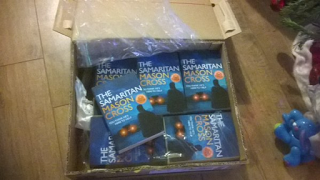
I don't think I'm ever going to get tired of receiving a box of new books; it's one of my absolute favourite things about being a writer.
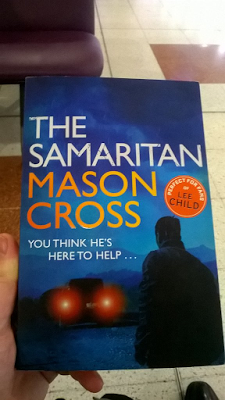
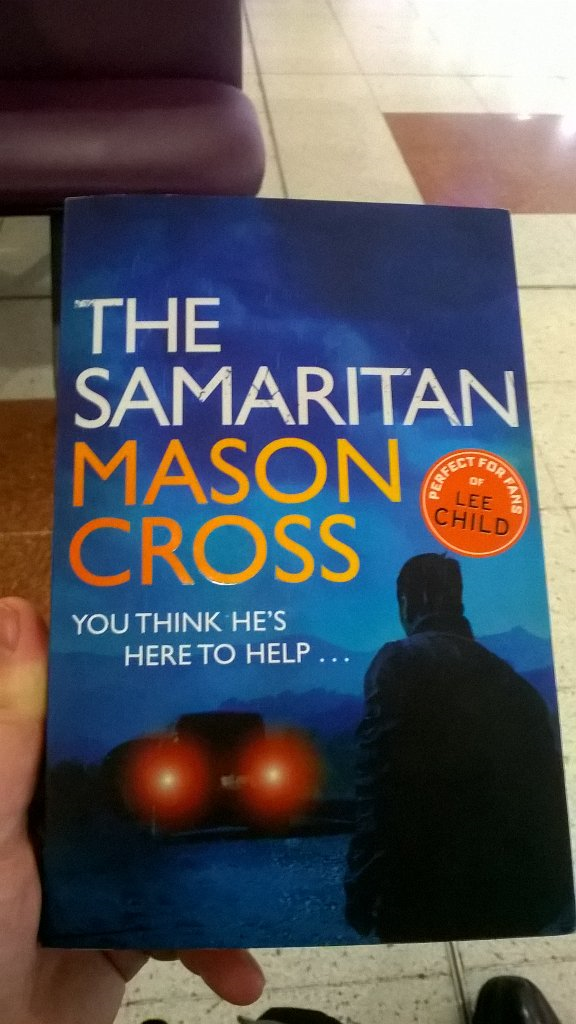
These are the UK paperbacks of The Samaritan, with an awesome new cover.
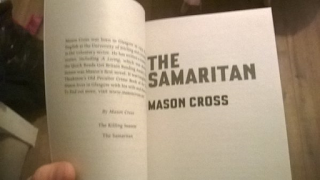
...and there's even a sneak preview of the third Carter Blake book in the back!
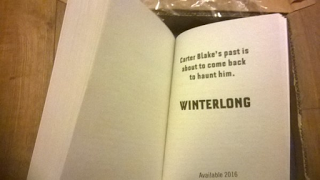
The Samaritan is out in paperback on 31st December - so if you're looking for a new book for the new year, you can preorder here:
WHSmith
Waterstones
Amazon
These are the UK paperbacks of The Samaritan, with an awesome new cover.

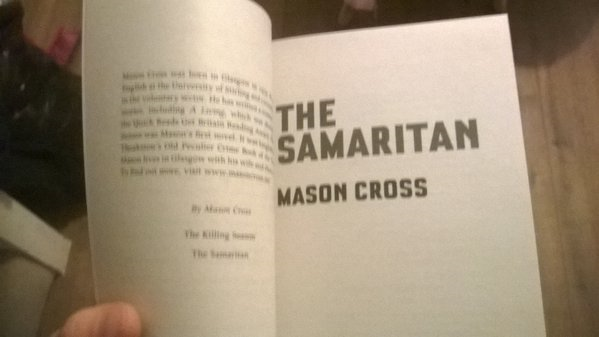
...and there's even a sneak preview of the third Carter Blake book in the back!
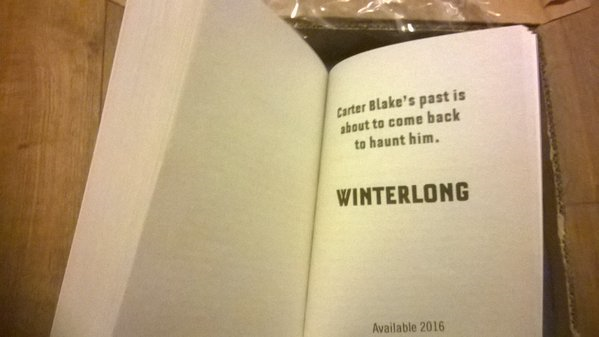
The Samaritan is out in paperback on 31st December - so if you're looking for a new book for the new year, you can preorder here:
WHSmith
Waterstones
Amazon


December 6, 2015
Killing Season - Turkish edition
I've been fairly impressed with the quality of my foreign edition covers so far, but this new Turkish edition is a strong contender for best of the bunch...
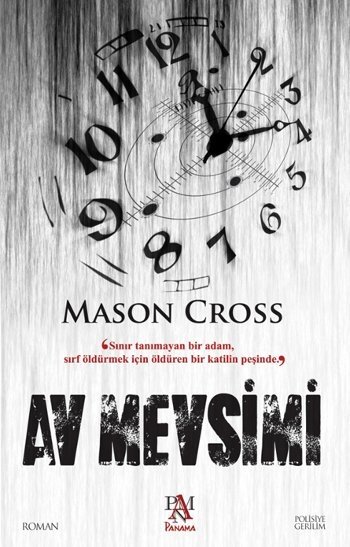
Love it.
Av Mevsimi (The Hunting Season) is out now from Panama. If you read Turkish (or are handy with Google Translate), there's a nice review here.
I suspect Turkish may not be Google Translate's strong point, if only because it's given Caleb Wardell the terrifying new moniker 'The Chicago Typewriter'.
November 18, 2015
Book Week Scotland
Blogging has taken a back seat to edits on book 3 and plotting book 4, but I'm just sticking my head above the parapet to say I have some library events coming up to tie in with Book Week Scotland:
Lanark Library | Friday 20 November, 2:30pm
East Kilbride St Leonards Library | Tuesday 24 November, 7:00pm
Cambuslang Library | Thursday 26 November, 3:15pm
Helensburgh Library | Friday 27 November, 7:00pm
These are all free events and I'll be reading from one of the books (maybe even the next book) talking about writing, publishing and general book stuff. As always, the best part is the questions - I'm looking forward to a grilling.
Hoping to add some more events soon, and they'll be on my events page as soon as I confirm the details.
The other cool news is the first American review of The Samaritan is in - it's in Kirkus and it's a great one:
"Fans of Jeffery Deaver—that other thrill-master who can’t resist piling on the climactic twists even as the lights are coming up and you’re looking for your umbrella—should be enthralled."
Click here to see the whole review. The Samaritan is out in the States in February, published by Pegasus, but if you're in the UK you can get it right now from all good bookshops.
Lanark Library | Friday 20 November, 2:30pm
East Kilbride St Leonards Library | Tuesday 24 November, 7:00pm
Cambuslang Library | Thursday 26 November, 3:15pm
Helensburgh Library | Friday 27 November, 7:00pm
These are all free events and I'll be reading from one of the books (maybe even the next book) talking about writing, publishing and general book stuff. As always, the best part is the questions - I'm looking forward to a grilling.
Hoping to add some more events soon, and they'll be on my events page as soon as I confirm the details.
The other cool news is the first American review of The Samaritan is in - it's in Kirkus and it's a great one:
"Fans of Jeffery Deaver—that other thrill-master who can’t resist piling on the climactic twists even as the lights are coming up and you’re looking for your umbrella—should be enthralled."
Click here to see the whole review. The Samaritan is out in the States in February, published by Pegasus, but if you're in the UK you can get it right now from all good bookshops.

October 24, 2015
The Samaritan - paperback cover
The mass-market UK paperback cover for The Samaritan is visible on all of the online book sites, so I guess it's okay for me to officially unveil it: ta-dah:
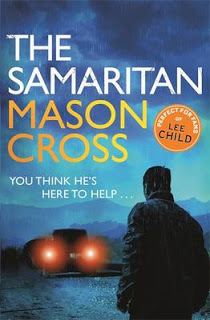
I really love it. Once again, as with the Killing Season mmpb, it's a slightly more overtly commercial design than that of the hardback cover, because this is the version that (hopefully) will be in newsagents and supermarkets and airports.
I think the whole design is great, from the font to the image, which really gets across what the book is about. Once again, I'm particularly pleased at the use of colour. As a new(ish) writer, it's still a huge buzz to find your book on the shelves, and the distinctive green cover of Killing Season made it a very easy book to find. I think this will do just as good a job. Fist-bumps all round for the design and marketing bods at Orion,
You can pre-order the paperback of The Samaritan now, or if you're happy with the equally-awesome trade cover, you can get it in hardback, trade paperback, ebook or audio right now.
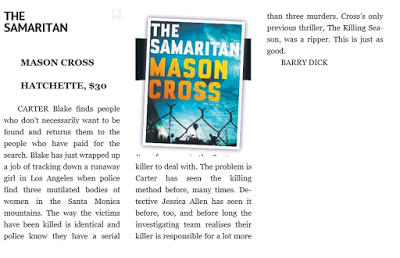
Lastly, here's a great review from the Sydney Daily Telegraph:
"The Killing Season was a ripper. This is just as good."

I really love it. Once again, as with the Killing Season mmpb, it's a slightly more overtly commercial design than that of the hardback cover, because this is the version that (hopefully) will be in newsagents and supermarkets and airports.
I think the whole design is great, from the font to the image, which really gets across what the book is about. Once again, I'm particularly pleased at the use of colour. As a new(ish) writer, it's still a huge buzz to find your book on the shelves, and the distinctive green cover of Killing Season made it a very easy book to find. I think this will do just as good a job. Fist-bumps all round for the design and marketing bods at Orion,
You can pre-order the paperback of The Samaritan now, or if you're happy with the equally-awesome trade cover, you can get it in hardback, trade paperback, ebook or audio right now.
Lastly, here's a great review from the Sydney Daily Telegraph:
"The Killing Season was a ripper. This is just as good."

October 22, 2015
The Dutch edition

I'm delighted that The Killing Season is published in the Netherlands today by Luitingh-Sijthoff, translated as Het Jachtseizoen (The Hunting Season).
Looks like I'm in good company; they also publish Stephen King, Dan Brown, Patricia Cornwell, Lee Child, George RR Martin, Jill Mansell and Danielle Steel.
Here's the blurb in Dutch, followed by an English translation. I always love the bizarre literal translations Google Translate throws up, and this one doesn't disappoint - I'm quite fond of the description 'blood exciting', but I love the fact that it's a strong, addictive new series - sounds like really good coffee, or a new type of heroin...
Het jachtseizoen - Mason Cross
Voor de liefhebbers van Lee Child: eerste deel van een ijzersterke, verslavende nieuwe serie
Het jachtseizoen is het eerste deel van de bloedspannende Carter Blake-serie van Mason Cross. Lee Child, bekend van de Jack Reacher-serie, noemt het 'mijn soort boek': spanning, avontuur, corruptie, complotten en een vleugje romantiek.
Het jachtseizoen is geopend: een ontsnapte, ter dood veroordeelde seriemoordenaar trekt een spoor van dood en verderf door de VS en een onconventionele FBI-huurling is de enige die hem nog kan stoppen. Hij krijgt daarbij hulp van een ambitieuze FBI-agente die worstelt om haar bestaan als alleenstaande moeder en carrièrevrouw met elkaar te verenigen. Samen leggen ze een web van leugens en corruptie bloot dat het hele land op zijn grondvesten kan doen schudden.
'Mason Cross legt een scherpe felheid in deze debuutthriller die leidt tot de komst van een van de interessantste helden uit de afgelopen jaren... Snel en krachtig verteld door een schrijver die een natuurlijke aanleg voor thrillers lijkt te hebben: het is niet te missen.' - Daily Mail
'Bloedstollend. Mason Cross combineert behendig een door adrenaline gedreven plot met een van de beste nieuwe seriepersonages sinds Jack Reacher. Bereid je voor om de hele nacht te lezen.' - Lisa Gardner
€ 16,99 Paperback / softback
The Hunting Season - Mason Cross
For fans of Lee Child: first part of a strong, addictive new series
The hunting season is the first part of the blood exciting Carter Blake series of Mason Cross. Lee Child, known for the Jack Reacher series, calls it "my kind of book: excitement, adventure, corruption, collusion and a touch of romance.
The hunting season is open: an escaped serial killer sentenced to death draws a trail of death and destruction by the US and an unconventional FBI mercenary is the only one who can stop him. He is assisted by an ambitious FBI agent who struggles to reconcile her life as a single mother and career woman together. Together they uncover a web of lies and corruption that the entire country to its foundations to shake.
"Mason Cross puts a sharp fierceness in this debut thriller that leads to the arrival of one of the most interesting heroes of the past few years ... Quickly and powerfully told by a writer who seems to have a natural talent for thrillers: it is not to be missed." - Daily Mail
"Blood-curdling. Mason Cross deftly combines an adrenaline-driven plot with one of the best new series of characters since Jack Reacher. Prepare to read the whole night." - Lisa Gardner
October 10, 2015
Structuring a novel in Word

Nerd alert: if format, structure and the intricacies of Microsoft Word bore you, probably best to skip this one.
Recently, I was chatting to some other writers, comparing notes on how we write our novels. Being writers, we weren't talking about the ephemeral, arty stuff that you tend to get asked about at events... What inspires you? Do you base any of your characters on real people? and the ever popular Where do you get your ideas? (I always liked Harlan Ellison's response to that one: he simply explained to people that he orders them from a company in Schenectady, New York.) No, we were talking about the nuts and bolts: how we structure our books as we're writing and how we alter that structure when we're revising and editing. It can be a major pain to restructure your book during edits, particularly when you have to move one chapter to a different place, or insert a whole new chapter. Either way, you're going to have to go through and renumber all of your chapters, and hope that this will be the last time you'll decide to mess with the running order (it usually isn't). Quite a few of the writers I know use Scrivener, because along with many other cool features, it lets you do stuff like this automatically. However the problem is you still need to get the novel back into Word when you start the back-and-forth process with your editor. It occurred to me that Word might be able to do some of this stuff by itself. Microsoft is great at including all sorts of advanced functionality and then not really telling people about it. After a spot of Googling, I discovered that I was right. Disclaimer: this is how I do it, not necessarily How It Should Be Done. Also, this works on standard versions of Microsoft Word for PC, but I've been told the same technique doesn't work on Word for Mac, presumably because Apple revels in making life difficult for deviants who like to experiment. However I'm sure someone out there will have a Mac-hack. Using Headings to structure the document First of all, use the Heading format to structure your document. This only takes seconds, and will save you a ton of time later. To do this, click on your chapter name, whether it's 'Chapter 1', or simply '1', and format it as a Heading. Word lets you have a hierarchy of headings, but I only ever use H1, because in my book(s), all chapters are created equal:
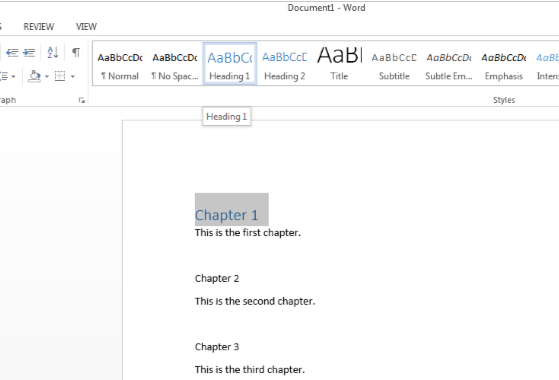
(My chapters are normally longer than this, by the way. Although sometimes not by much.) If you keep formatting each chapter title as a heading, you'll quickly notice that each one appears in the navigation pane (usually on the left hand side of the document). If you can't see the navigation pane, Hit CTRL+F as though you were trying to find a word or phrase in the document, and then click on HEADINGS:
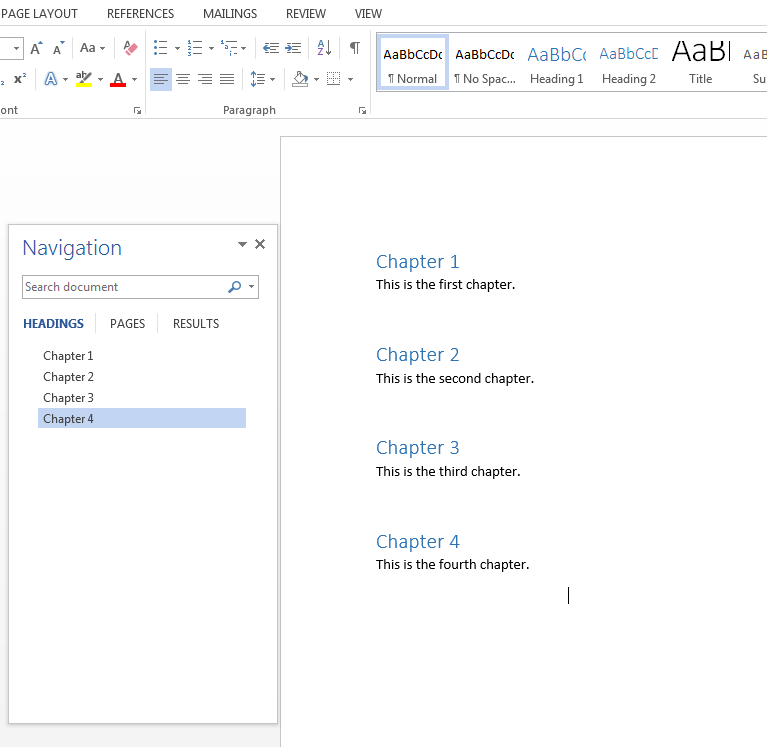 You'll notice an immediate benefit: if you click on any of these chapter numbers formatted as a heading in the navigation pane, you'll jump straight to that part of the book - no interminable scrolling required.
Using a sequencing field to automatically renumber chapters The next tip is a little more advanced, but only a little. It involves using a field instead of text to number your chapters. This means you can tell it to number each chapter in sequential order. 1. To insert the field, delete the chapter number, leave the cursor in the same place, and press CTRL+F9 to insert curly field brackets:
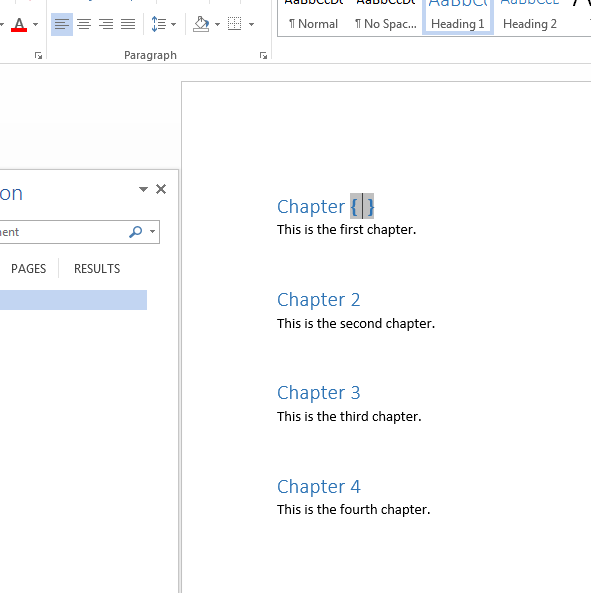 2. Then, type the phrase "seq NumList" (without the quotes) between the curly brackets 3. Repeat for all chapters:
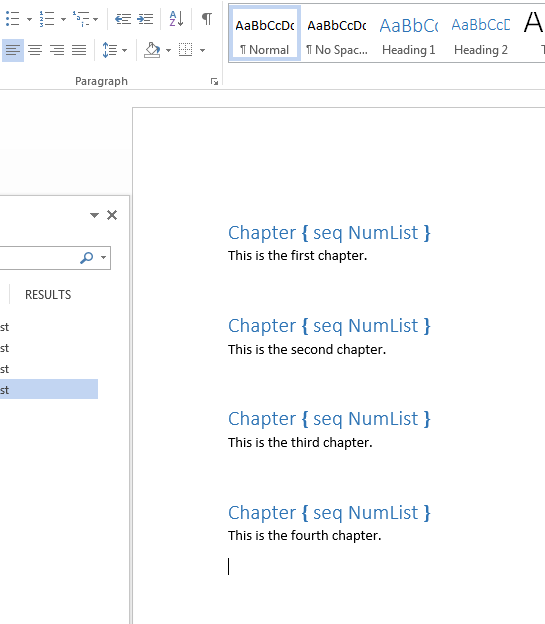 4. Select All and press F9. The chapter numbers will automatically update sequentially (both in the document and on the navigation pane):
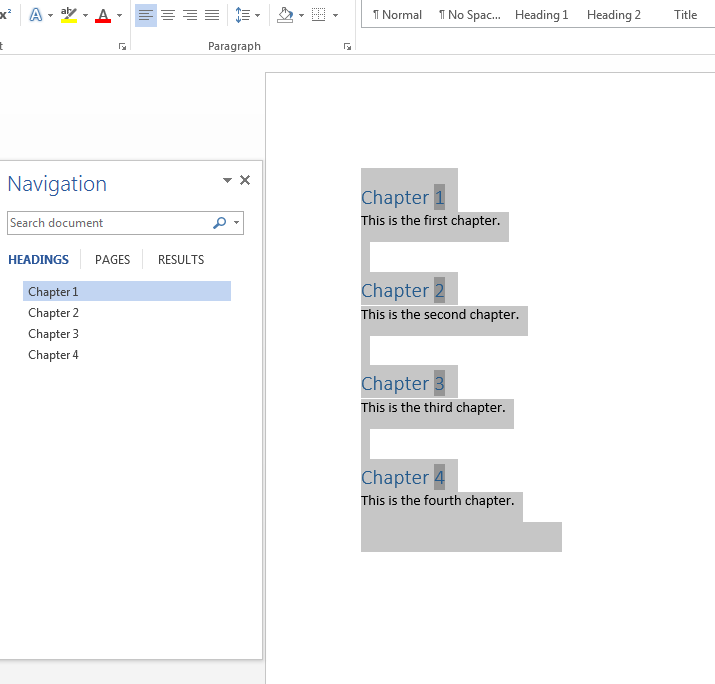
The great thing about this is, you're not forced to give any chapter a number. So if, like me, you have occasional interlude chapters outside of the regularly-numbered chapters, you can make them part of the chapter structure with the Heading format, but you don't have to include them in the numbering sequence. So you can have 1, 2, 3, FIVE YEARS AGO, 4, 5, 6...
Here's the cool part.
5. If you decide Chapter 4 should really be Chapter 2, just click and drag in the navigation pane, and the entire chapter will move position in the document:
 6. Select All, hit F9, and because you've used fields for the chapter numbers, the chapters automatically renumber in sequence, as if by magic: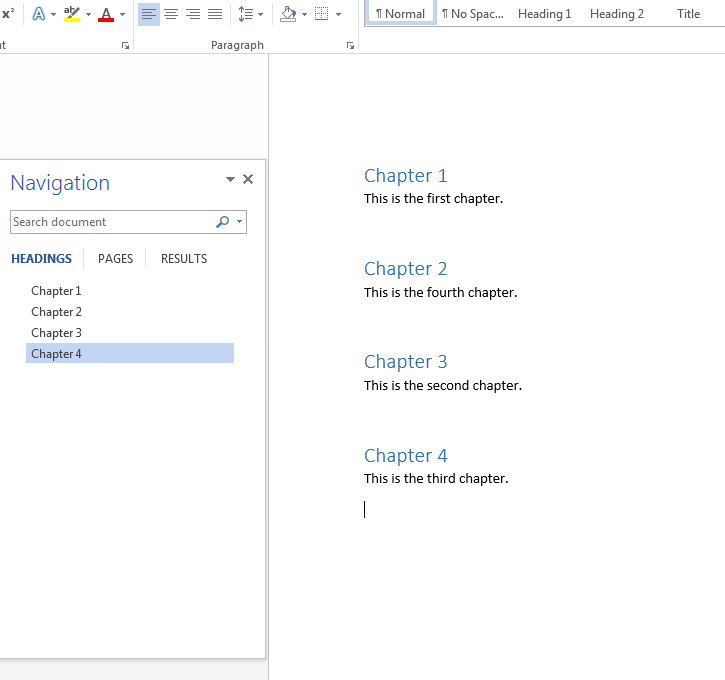
Important: don't do what I did a few weeks ago and accidentally delete your entire 100,000 word novel while in Select All. Thank God for backups. Final thought: does any of this actually help, other than the obvious time saved copying and pasting things around and renumbering chapters? Yes, I think it does, because it lets me sit down and look at the book from a god's eye view. I can have a chapter breakdown on hand and immediately jump straight to the chapter I'm interested in. If I decide the prologue should really go at the end, I can do it in a couple of seconds, click and drag. It gives me a bit more of the illusion that I'm in control, and if you ask any writer, they'll tell you that you can't put a price on that.
October 5, 2015
Bloody Scotland 2015
Belatedly posting about this year's Bloody Scotland festival, which was my third time at BS, and possibly the best yet.
The weekend got off to a good start with the reception at the old town hospital, where I chatted to some familiar faces like Steve Mosby, Craig Robertson and Neil Broadfoot. After a quick dinner, I caught up with Jon Wood, Orion's fiction publisher and fellow thriller scribe Steve Cavanagh, and we adjourned to shoot some pool.
I quickly realised why Jon had suggested this particular activity, and was backed up by one of his more noted authors.
Saturday was busy. After checking out the display in the bookshop...
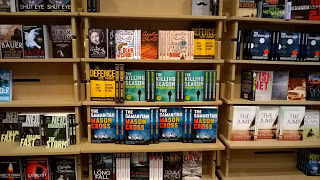
...I realised I had left it too late to get a ticket for either Denise Mina or the New Blood event, but managed to get to see Chris Brookmyre, who was brilliant value as usual. I spent most of the day in the bar (it was work, remember?) catching up with the rapidly-growing list of cool writer and bookish types I know, including Eva Dolan, Helen Giltrow, Susi Holiday, Steph Broadribb, Liz Barnsley, Sarah Pinborough, Simon Kernick, Ian Rankin, Tom Wood, Douglas Skelton, Craig Robertson, Alexandra Sokoloff, GJ Brown and James Oswald.
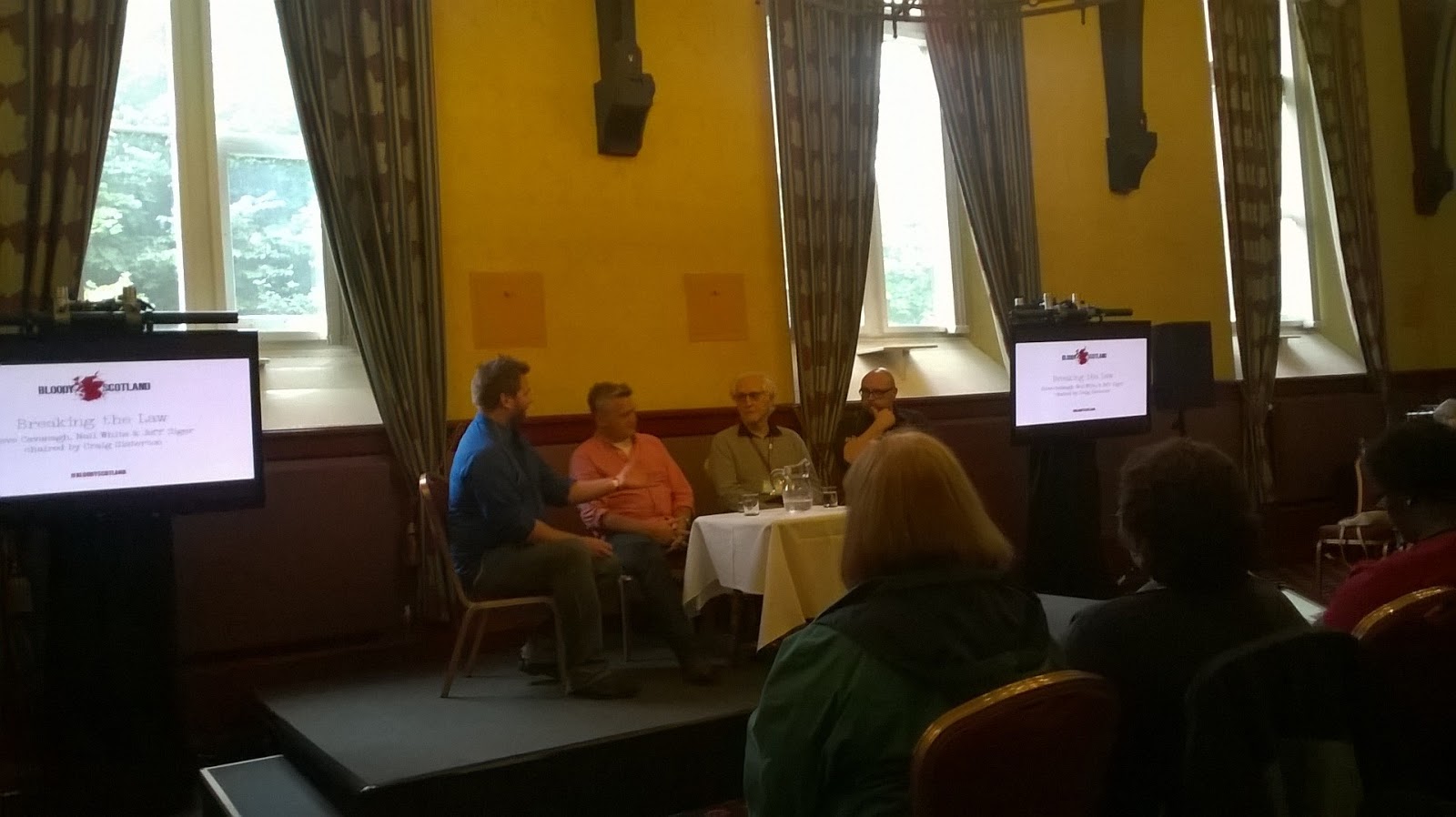
I caught Steve's Breaking the Law event late in the day, which was good fun as expected. With a Yorkshireman, a Belfaster and a New Yorker moderated by a Kiwi, it had the distinction of being, as Angela McMahon pointed out, the most strongly-accented panel of the festival.
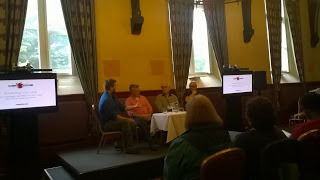
After an excellent dinner in the Maharajah with Jon and Angela from Orion, we headed along to Stirling's cutely-named Curly Coo pub for one of the newest fixtures in the Bloody Scotland calendar: Crime at the Coo. This was a fringe event to the main awards dinner, but as it became clear whenever I asked anyone, it was the place to be on Saturday.
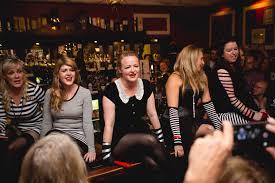
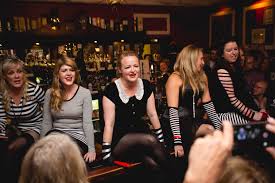
A stellar lineup of crime writers took a spot to do - as the incredibly-detailed brief had it - "something different". So among many, many other things we had Doug Johnstone accompanying Val McDermid on guitar, Chris Brookmyre reading a story, Steve Cavanagh doing poetry, and one of the high points of the weekend, the Slice Girls performing 'Cell Block Tango': an appropriately murderous number from Chicago.
I pitched in with my own "something different" - reading the classic one-star review The Killing Season got a few weeks ago, which also doubles as a handy summary of the book. Once again, I felt an awesome sense of pride that something I wrote could inspire such a fantastic hatchet job.
Sunday morning, and I suddenly remembered I still had a panel to do. Before that, I dropped in on Pitch Perfect - an annual event where half a dozen hopefuls each have three minutes to pitch their novels to a panel of publishers. All of the books sounded intriguing, and in the end there was a three-way tie for the winning entries. It all made me feel very glad that I didn't have to go through that terrifying experience.
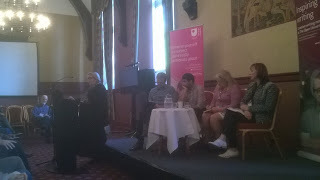
I caught up with my co-panelists in the bar ahead of our thriller panel, and then it was time for Tom Wood, Gordon Brown, Simon Kernick and yours truly to take the stage. Once again, I was the newbie on the panel: Tom had four books under his belt, Gordon five and Simon an impressive fourteen.
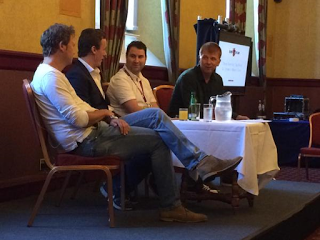
It was a lively discussion, ranging from how we carry out our research to how we got published. Between us, we seemed to have been rejected by just about everyone in the business before finally landing a deal, and I was left awestruck at Simon's determination in particular: he spoke about shrugging off literally hundreds of rejections before finally getting a yes. It's certainly paid off for him. All of us were rejected a lot but refused to give up, so the message seemed to be it's important to be a stubborn bastard. There were some great questions on research and the benefits of a cover quote from Lee Child.
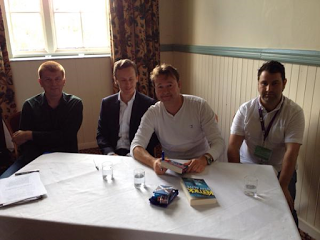
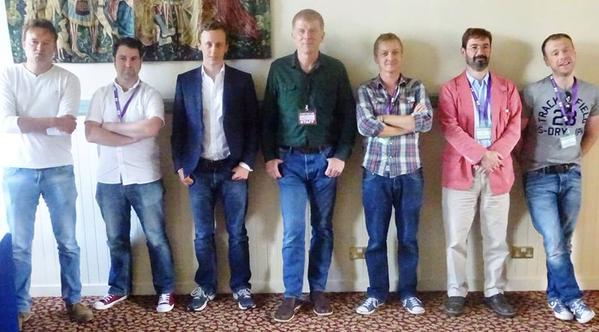
After that, we signed some books, posed for a Usual Suspects-esque lineup with the concurrent Edinburgh crime panel of Neil Broadfoot, James Oswald and Doug Johnstone.
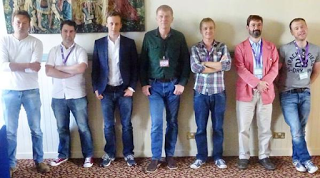
A ticking clock on the babysitter meant I missed the big football match (I'm told it was a hard-fought draw this year), and just like that, Bloody Scotland was over for another year...
The weekend got off to a good start with the reception at the old town hospital, where I chatted to some familiar faces like Steve Mosby, Craig Robertson and Neil Broadfoot. After a quick dinner, I caught up with Jon Wood, Orion's fiction publisher and fellow thriller scribe Steve Cavanagh, and we adjourned to shoot some pool.
I quickly realised why Jon had suggested this particular activity, and was backed up by one of his more noted authors.
@MasonCrossBooks @JontWood @SSCav My editor is a pool *shark*...— Ian Rankin (@Beathhigh) September 11, 2015Steve held up creditably, I remembered why I don't play pool.
Saturday was busy. After checking out the display in the bookshop...

...I realised I had left it too late to get a ticket for either Denise Mina or the New Blood event, but managed to get to see Chris Brookmyre, who was brilliant value as usual. I spent most of the day in the bar (it was work, remember?) catching up with the rapidly-growing list of cool writer and bookish types I know, including Eva Dolan, Helen Giltrow, Susi Holiday, Steph Broadribb, Liz Barnsley, Sarah Pinborough, Simon Kernick, Ian Rankin, Tom Wood, Douglas Skelton, Craig Robertson, Alexandra Sokoloff, GJ Brown and James Oswald.
I caught Steve's Breaking the Law event late in the day, which was good fun as expected. With a Yorkshireman, a Belfaster and a New Yorker moderated by a Kiwi, it had the distinction of being, as Angela McMahon pointed out, the most strongly-accented panel of the festival.
After an excellent dinner in the Maharajah with Jon and Angela from Orion, we headed along to Stirling's cutely-named Curly Coo pub for one of the newest fixtures in the Bloody Scotland calendar: Crime at the Coo. This was a fringe event to the main awards dinner, but as it became clear whenever I asked anyone, it was the place to be on Saturday.
A stellar lineup of crime writers took a spot to do - as the incredibly-detailed brief had it - "something different". So among many, many other things we had Doug Johnstone accompanying Val McDermid on guitar, Chris Brookmyre reading a story, Steve Cavanagh doing poetry, and one of the high points of the weekend, the Slice Girls performing 'Cell Block Tango': an appropriately murderous number from Chicago.
I pitched in with my own "something different" - reading the classic one-star review The Killing Season got a few weeks ago, which also doubles as a handy summary of the book. Once again, I felt an awesome sense of pride that something I wrote could inspire such a fantastic hatchet job.
Sunday morning, and I suddenly remembered I still had a panel to do. Before that, I dropped in on Pitch Perfect - an annual event where half a dozen hopefuls each have three minutes to pitch their novels to a panel of publishers. All of the books sounded intriguing, and in the end there was a three-way tie for the winning entries. It all made me feel very glad that I didn't have to go through that terrifying experience.

I caught up with my co-panelists in the bar ahead of our thriller panel, and then it was time for Tom Wood, Gordon Brown, Simon Kernick and yours truly to take the stage. Once again, I was the newbie on the panel: Tom had four books under his belt, Gordon five and Simon an impressive fourteen.

It was a lively discussion, ranging from how we carry out our research to how we got published. Between us, we seemed to have been rejected by just about everyone in the business before finally landing a deal, and I was left awestruck at Simon's determination in particular: he spoke about shrugging off literally hundreds of rejections before finally getting a yes. It's certainly paid off for him. All of us were rejected a lot but refused to give up, so the message seemed to be it's important to be a stubborn bastard. There were some great questions on research and the benefits of a cover quote from Lee Child.
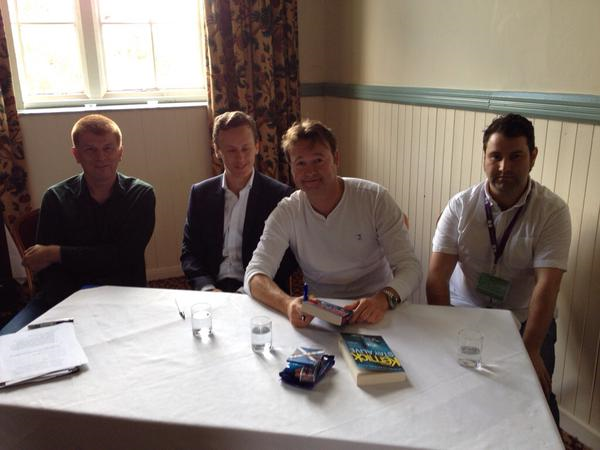
After that, we signed some books, posed for a Usual Suspects-esque lineup with the concurrent Edinburgh crime panel of Neil Broadfoot, James Oswald and Doug Johnstone.
A ticking clock on the babysitter meant I missed the big football match (I'm told it was a hard-fought draw this year), and just like that, Bloody Scotland was over for another year...
September 12, 2015
Dashiell Hammett's The Maltese Falcon
Time for another one I made earlier - an article I was honoured to be asked to write for the Murder Room on one of the absolute classics of crime fiction.
If you're a fan of The Maltese Falcon (and why wouldn't you be?) there are a bunch of other great articles in this series, from Lawrence Block, Steve Cavanagh and Barry Forshaw. Go check them out.
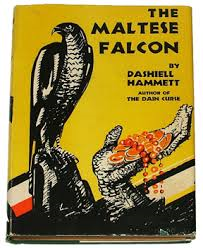
Original and Best: Mason Cross on The Maltese Falcon The Murder Room , March 2015
Before Philip Marlowe, there was Sam Spade. Before Sam Spade? Well, before Dashiell Hammett came up with Spade, this particular cultural archetype simply didn’t exist.
Spade made his only appearance in a full-length novel in The Maltese Falcon, one of the set texts in the crime fiction curriculum. There had been other gumshoes in the pulps before, of course, but none quite like this. Spade’s quick wit and moral complexity set him apart from all other comers. The verisimilitude of Hammett’s writing helped a lot too, drawing on his experience of working for the Pinkerton Detective Agency. In Hammett’s own words, from his introduction to the 1934 edition of his masterpiece, The Maltese Falcon:
Spade has no original. He is a dream man in the sense that he is what most of the private detectives I worked with would like to have been and in their cockier moments thought they approached . . . a hard and shifty fellow, able to take care of himself in any situation, able to get the best of anybody he comes in contact with, whether criminal, innocent by-stander or client.
I first read the novel while at university, and although I gravitated more towards Raymond Chandler’s prose, Hammett’s writing also had much to teach me, both in its economy of language and the moral ambiguity of the characters. There are two main characters in the book: Spade and the femme fatale, a woman who goes by many names, but eventually settles on Brigid O’Shaughnessy. Neither is quite what they seem. Although Spade is the protagonist, Hammett keeps his character’s thoughts from us, merely hinting at them in the way he answers a phone call, or rolls a cigarette.
The Maltese Falcon has been so referenced, pastiched and ripped off over the years that it almost reads like an extremely well-executed pastiche itself. All of the classic tropes of the noir thriller are here: the convoluted murder mystery, the McGuffin everybody’s after, the scheming femme fatale, the murdered partner, the exasperated cops, and, of course, Hammett’s prototype tough-talking PI.
But Hammett’s book rises above the sea of imitators for two notable reasons. First, it’s just so well written. Hammett was perhaps less poetic than Chandler (no bishops kicking holes in any stained-glass windows here), but he managed to make the genre his own with his understated observations and terse dialogue, such as when the cops bluster that Spade can’t stay just ahead of trouble for ever, and he coolly shoots back, ‘Stop me when you can’. Or when Spade sums up a moral code that even he does not fully understand with the simple statement: ‘When a man’s partner is killed he’s supposed to do something about it’.
The second reason is the ending. Without giving anything away, the book’s climax seems to be settling into a satisfactory, old-fashioned denouement where the characters sit in a room and talk the mystery to a conclusion. Then, in the last few pages, Hammett hits us with a doozy of a reversal. Suffice to say, the real mystery of the piece is Sam Spade, not the falcon or the whodunit.
The climax is an emotional gut punch for Spade and the reader alike. You close the book realising that you never really knew the man in whose company you’ve spent the previous two hundred pages. And you realise why The Maltese Falcon has endured as a classic of crime fiction.
If you're a fan of The Maltese Falcon (and why wouldn't you be?) there are a bunch of other great articles in this series, from Lawrence Block, Steve Cavanagh and Barry Forshaw. Go check them out.

Original and Best: Mason Cross on The Maltese Falcon The Murder Room , March 2015
Before Philip Marlowe, there was Sam Spade. Before Sam Spade? Well, before Dashiell Hammett came up with Spade, this particular cultural archetype simply didn’t exist.
Spade made his only appearance in a full-length novel in The Maltese Falcon, one of the set texts in the crime fiction curriculum. There had been other gumshoes in the pulps before, of course, but none quite like this. Spade’s quick wit and moral complexity set him apart from all other comers. The verisimilitude of Hammett’s writing helped a lot too, drawing on his experience of working for the Pinkerton Detective Agency. In Hammett’s own words, from his introduction to the 1934 edition of his masterpiece, The Maltese Falcon:
Spade has no original. He is a dream man in the sense that he is what most of the private detectives I worked with would like to have been and in their cockier moments thought they approached . . . a hard and shifty fellow, able to take care of himself in any situation, able to get the best of anybody he comes in contact with, whether criminal, innocent by-stander or client.
I first read the novel while at university, and although I gravitated more towards Raymond Chandler’s prose, Hammett’s writing also had much to teach me, both in its economy of language and the moral ambiguity of the characters. There are two main characters in the book: Spade and the femme fatale, a woman who goes by many names, but eventually settles on Brigid O’Shaughnessy. Neither is quite what they seem. Although Spade is the protagonist, Hammett keeps his character’s thoughts from us, merely hinting at them in the way he answers a phone call, or rolls a cigarette.
The Maltese Falcon has been so referenced, pastiched and ripped off over the years that it almost reads like an extremely well-executed pastiche itself. All of the classic tropes of the noir thriller are here: the convoluted murder mystery, the McGuffin everybody’s after, the scheming femme fatale, the murdered partner, the exasperated cops, and, of course, Hammett’s prototype tough-talking PI.
But Hammett’s book rises above the sea of imitators for two notable reasons. First, it’s just so well written. Hammett was perhaps less poetic than Chandler (no bishops kicking holes in any stained-glass windows here), but he managed to make the genre his own with his understated observations and terse dialogue, such as when the cops bluster that Spade can’t stay just ahead of trouble for ever, and he coolly shoots back, ‘Stop me when you can’. Or when Spade sums up a moral code that even he does not fully understand with the simple statement: ‘When a man’s partner is killed he’s supposed to do something about it’.
The second reason is the ending. Without giving anything away, the book’s climax seems to be settling into a satisfactory, old-fashioned denouement where the characters sit in a room and talk the mystery to a conclusion. Then, in the last few pages, Hammett hits us with a doozy of a reversal. Suffice to say, the real mystery of the piece is Sam Spade, not the falcon or the whodunit.
The climax is an emotional gut punch for Spade and the reader alike. You close the book realising that you never really knew the man in whose company you’ve spent the previous two hundred pages. And you realise why The Maltese Falcon has endured as a classic of crime fiction.
September 5, 2015
Samaritan reviews and upcoming events
Some more excellent blog reviews of The Samaritan - click through to read the full reviews:
Crime Fiction Lover - "It really is a difficult novel to put down. The characterisation is strong, the sense of place powerful and Cross’s scenic descriptions vivid and compelling. This is a very well written crime thriller and Carter Blake deserves many more outings."
The Crime Warp - "The Samaritan has a plot you can stick your teeth into. Cross keeps us guessing and throws a few curve balls in to keep us on our toes."
The Book Blonde - "A breathtaking and adrenalin-soaked ride. The Samaritan is immensely readable, with shocks and twists along the way, before reaching a thrilling conclusion."
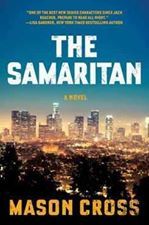
The Samaritan isn't out in the United States until February, but I've already had American readers getting in touch to say they can't wait. In the meantime, here's a preview of Pegasus's American cover, which is very cool:
I'll be at Bloody Scotland with Simon Kernick, Tom Wood and GJ Brown next weekend, so if you're going along to this excellent festival (and why wouldn't you?) please come talk to me.
I've added a few library dates as well, including three for Book Week Scotland. The library dates are all free, so there's no excuse not to come and heckle.
Crime Fiction Lover - "It really is a difficult novel to put down. The characterisation is strong, the sense of place powerful and Cross’s scenic descriptions vivid and compelling. This is a very well written crime thriller and Carter Blake deserves many more outings."
The Crime Warp - "The Samaritan has a plot you can stick your teeth into. Cross keeps us guessing and throws a few curve balls in to keep us on our toes."
The Book Blonde - "A breathtaking and adrenalin-soaked ride. The Samaritan is immensely readable, with shocks and twists along the way, before reaching a thrilling conclusion."
The Samaritan isn't out in the United States until February, but I've already had American readers getting in touch to say they can't wait. In the meantime, here's a preview of Pegasus's American cover, which is very cool:
I'll be at Bloody Scotland with Simon Kernick, Tom Wood and GJ Brown next weekend, so if you're going along to this excellent festival (and why wouldn't you?) please come talk to me.
I've added a few library dates as well, including three for Book Week Scotland. The library dates are all free, so there's no excuse not to come and heckle.
August 31, 2015
Edinburgh International Book Festival 2015
I was delighted to be asked back to the Edinburgh International Book Festival for a second year running. This year by luck or design I was sharing an event with my fellow Orion (relative) newbie Steve Cavanagh, who was talking about his excellent debut novel The Defence. He's up for the festival's First Book Award, so if you loved The Defence as much as I did, click here to vote for it.
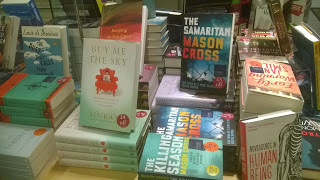
First of all I stopped by Blackwell's bookshop on South Bridge Street and signed some copies of The Samaritan and Killing Season. It's a great shop with an excellent crime section, which I heartily recommend if you're in the neighbourhood.
I headed over to the book festival, hosted as always in the magnificent Charlotte square, checked into the author's yurt and caught up with Steve. We met up with our interviewer, fellow crime author Russel D Mclean and talked about the format. Shortly before game time, we were mic-d up and escorted to the theatre.
This was an unusual event for me because for once I wasn't the sole American crime fiction writer on the bill. Steve writes New York-set legal thrillers and hails from Belfast, so we both got to talk about the benefits and challenges of writing US-based books, our transatlantic influences, and how we do our research. Steve spoke about the differences between the American and British legal systems, and why the UK system doesn't lend itself particularly well to the genre.
We covered a multitude of other topics, from how we got an agent and published, to who we would cast in the movie. I discovered that Steve's authenticity in fight scenes comes from his boxing days, and that the first novel has a carefully-designed Alice in Wonderland subtext.
After the main event, we met some readers, signed some copies and then retreated to the festival grounds to drink a few beers under the stars. For some reason a pair of F-16s performed a flyby. I suspect it wasn't related to our event, but I wouldn't discount it: this is a book festival that knows how to make its authors feel welcome.
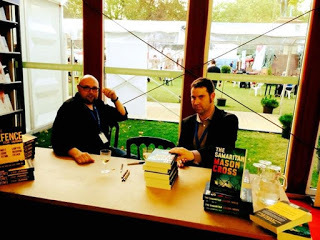
First of all I stopped by Blackwell's bookshop on South Bridge Street and signed some copies of The Samaritan and Killing Season. It's a great shop with an excellent crime section, which I heartily recommend if you're in the neighbourhood.

I headed over to the book festival, hosted as always in the magnificent Charlotte square, checked into the author's yurt and caught up with Steve. We met up with our interviewer, fellow crime author Russel D Mclean and talked about the format. Shortly before game time, we were mic-d up and escorted to the theatre.
This was an unusual event for me because for once I wasn't the sole American crime fiction writer on the bill. Steve writes New York-set legal thrillers and hails from Belfast, so we both got to talk about the benefits and challenges of writing US-based books, our transatlantic influences, and how we do our research. Steve spoke about the differences between the American and British legal systems, and why the UK system doesn't lend itself particularly well to the genre.
We covered a multitude of other topics, from how we got an agent and published, to who we would cast in the movie. I discovered that Steve's authenticity in fight scenes comes from his boxing days, and that the first novel has a carefully-designed Alice in Wonderland subtext.
After the main event, we met some readers, signed some copies and then retreated to the festival grounds to drink a few beers under the stars. For some reason a pair of F-16s performed a flyby. I suspect it wasn't related to our event, but I wouldn't discount it: this is a book festival that knows how to make its authors feel welcome.