M.L. Nichols's Blog, page 3
July 23, 2013
The Parent Backpack Released!

It’s here!
The Parent Backpack for Kindergarten through Grade 5 is now available wherever books are sold – in print or ebook.
Here’s what other authors of parenting books are saying:
“This is a smart, wise, and practical book every parent of a young child should own. Read this beautifully composed trove of well sorted advice and enjoy with confidence your child’s elementary education.”
–Edward Hallowell, MD, best selling author of Driven to Distraction and The Childhood Roots of Adult Happiness
“ML Nichols has given parents a long-overdue map through the ‘minefield’ of elementary education: where to turn and what to say and do (in and out of school) to become an effective advocate for your child.”
–Jim Trelease, best selling author of The Read-Aloud Handbook
“The Parent Backpack is full of concrete strategies that empower you to build strong partnerships with teachers and tap your child’s natural motivation to learn. As a psychologist and parent of three elementary-age children, I highly recommend this book!”
–Dr. Donna Pincus, author of Growing Up Brave
If you’ve ever wondered . . .
What your child learns at each grade level. . . you’ll find the answers on pages 11-18
What your child’s temperament and learning style are . . . see pages 20-22
How to advocate effectively for what your kids need . . . pages 90-99
How to get your child ready for Kindergarten . . . pages 85-88
How classes are really formed and how to get the best teacher for your child . . . page 142 – 143
What to do when your child needs more support . . . pages 168 – 174
What it takes to get your kids to love reading . . . pages 112 -123
Why praising effort instead of grades makes a difference . . . page 159
And more – including Top Ten Takeaways at the end of each chapter.
I wrote this book to share what I’ve learned over the past decade so other parents don’t have to figure it all out themselves.
Can you help me spread the word – especially with parents who have elementary or pre-school age kids – that there’s now a book to help parents navigate schools and education?
And if you bought the book, I’d be even more thrilled! You’ll find it at your favorite bookstore – or order a copy at one of these outlets for yourself or someone you know.
I’ll be launching a book tour from Boston to Cape Cod in the next couple months and hope you can join me at one of these locations:
 Westwinds Bookshop in Duxbury, MA on Friday August 9th at 7:00pm – Launch Party!
The Atheneum, in Nantucket MA on August 23rd at 6:30pm
Storybook Cove in Hanover, MA on September 12th at 4:00pm
Buttonwood Books in Cohasset, MA on September 16th at 7:00pm
Mansfield Public Library in Mansfield, MA on September 23rd at 6:30pm
Titcombs Bookshop in Sandwich, MA on Sept 26th at 7:00pm
The Book Shack in Kingston, MA on October 1st 6:30pm
Harvard Bookstore in Cambridge, MA on October 7th at 7:00pm
Barnes and Noble in Hingham, MA on October 16th at 6:30pm
Cary Memorial Library in Lexington, MA on October 21st at 7:00pm
Wishing you and your kids a great journey through their elementary years. And thank you for all your support throughout my journey to getting published!


July 16, 2013
Countdown to Launch Date

The countdown is on! Seven days until The Parent Backpack for Kindergarten through Grade 5 is released. The books have shipped . . . and mine just arrived.
I still have to pinch myself when I think that I’ll be a published author next week. It’s been an amazing journey and I have so many people to thank for helping me get to this point. And, I’ll start with you. Thank you for following this blog and passing it on to those you know who may benefit from it. I started this endeavor specifically for parents like us. Parents who had questions and weren’t always sure where to get the answers.
So, if you’ve ever asked yourself . . .
- What should my kids be learning when?
- How do we talk to the teacher about this?
- How do they figure out classroom placement?
- What do we do if we think he needs more challenge?
- How do I know if she’s ready for Kindergarten?
- What can we do at home to support him?
- Should we go to the principal?
. . . you’ll find the answers — to these questions and many more — in The Parent Backpack. It’s available in paperback or e-book and you can pre-order right here guaranteed to arrive by July 23rd.
 If you’re a South Shore Boston parent – save the date: The Duxbury Library and Westwinds Bookshop will be hosting a public book launch party for The Parent Backpack on Friday, August 9th at 7:00pm. It will be held at Westwinds Bookshop, 35 Depot Street in Duxbury. There will be a brief reading, wine, eats, Q&A, and books on hand. Please come by if you can.
Next week, I’ll announce the places I’ll be giving book talks throughout Boston and the Cape from August through November. I’d love to see you in my travels!
July 2, 2013
It’s Summer – Let Them Slide…
 …and swing and ride and build. Then play some more.
More than anything else, kids need time to play, especially in the summer months when unstructured time is abundant. Play is how children learn. How they process, discover, and master life skills.
But many educators worry about the “summer slide.” Not the shiny metal trough you find on the playground – but the one most kids experience over the summer. Research tells us that during the summer months children lose about 22% of what they learned in the school year – even more in lower income communities. And the greatest loses tend to be in math. So teachers are forced to review and reteach previously learned material for about a month when kids return in the fall.
To prevent this brain drain, articles and marketers urge parents to keep the learning going thought-out July and August. Drill flashcards, enroll your kids in enrichment programs, hire tutors, and buy games that reinforce their needs. And if your child struggled though the year in a particular subject, try out a math or reading camp where children get a heavy daily dose of one subject.

But is all this really necessary?
I’m a big believer that kids need a break. They need time to unwind from school and over scheduled days. Time to recharge themselves, not just their screens. Time to play with friends and family. To be who they are and discover what they can do. And that’s difficult to do when numbers, letters and schedules are in full force. It gets harder and harder to tap the imagination and just be.
When kids do have time to play, to go outside and romp with friends, to throw a ball, roll on the grass, read under a tree, swing really high, build a fort, create fairy houses, or make a lemonade stand – they are learning. They learn important life skills like negotiating who goes first.
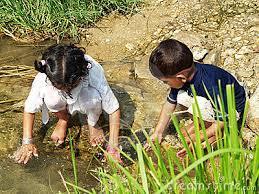 Prioritizing what steps need to happen when. They learn how to be alone and get lost in a book. They learn the wonders of nature. They learn about money. They learn perseverance when they try again and again to get it right.
Another way kids learn in the summer months is through volunteering. Helping out at a soup kitchen, in a senior home, at church, or by opening up your home to a child from a different culture. Kids learn a lot when they help a friend, a disadvantaged child or a senior citizen. They learn tolerance. They learn how to teach. They learn who they are. For a number of years, our family has hosted a Fresh Air Fund child named Evi.
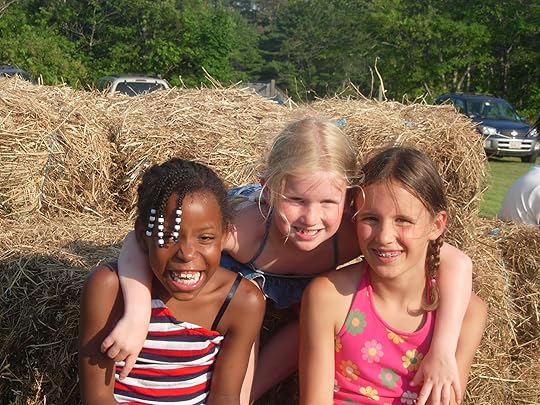 I wrote about Evi and what my kids learned from her last summer. What they teach each other amazes me every summer.
Here’s a great top ten list of how to ensure kids have fun over the summer yet keep the learning going from Marina Koestler Ruben, author of “How to Tutor Your Own Child: Boost Grades and Inspire a Lifelong Love of Learning — Without Paying for a Professional Tutor.” And Annie Murphy Paul, author of “Brilliant, The Science of Smart,” has simple ideas on preventing the summer slide and how relating to others makes us smarter.
From everything I’ve read on the best ways to balance out the “summer slide,” I conclude there are four important to-do’s for elementary age children during the summer:

Let them play – by themselves, with other kids – indoors and outdoors – without a screen.
Read with them, to them, and next to them everyday. Visit the library weekly.
Play games that use a dice, play store, or let them bake and cook with you so their math skills stay fresh.
Volunteer in any way your family can, when you can.
So if they’re not out playing, remember to keep the reading, baking and game playing FUN. Summertime fun is full of learning.
June 10, 2013
School Buses & Seat Belts
 It’s the question new parents with incoming kindergartners ask more than any other. And one that I’m hearing a lot now as pre-K parents and kids get ready for kindergarten.
“Why aren’t there seat belts on school buses? Is my child safe?”
It’s a logical question. The American Academy of Pediatrics (AAP) recommends – and many states now require – booster seats in cars until a child is 4 ft. 9 in. and at least eight years old. That’s third grade for most kids. So why aren’t seat belts required on school buses?
The answer lies in some interesting numbers:
 • Federal law does require seat belts in buses that weigh less than 10,000 lbs. – like the 6-12 seat small bus/vans used for smaller schools or transporting special needs students.
• By comparison, the average family car weighs 4,000 lbs., with an SUV closer to 6,000 lbs.
• A typical 38 ft. yellow school bus weighs an average of 20,000 lbs. without passengers, or up to 27,000 lbs. loaded.
• The National Safety Council (NSC) claims schools bus transportation is actually 40 times safer than the family car. It also takes an average of 36 cars off the road per bus, minimizing fuel costs and congestion.
• Every year, 440,000 school buses carry 24 million kids to and from school for a total of 4.3 billion miles.
• On average, six children die each year in a school bus accident compared to 800 children who are killed by walking, biking, or being driven to school in cars annually.
• That’s a 1% fatality rate for buses vs. 23% by adult drivers in cars and 58% by teen drivers.
So in theory, school buses are safe because they’re heavier and designed to keep kids safe. A strategy  called “compartmentalization” is used to build school buses, meaning the seats are purposely spaced tightly together with high cushioned backs to form a protective bubble. A bubble that sits up higher and absorbs impact if necessary. If you ever tried to sit in a school bus seat for a field trip, it’s worse than an airplane ride.
While compartmentalization doesn’t help side crashes or roll overs, the NSC claims that seat belts can actually cause more injury. Many children, especially the youngest kids, often misuse seat belts and can’t correctly fit them to their bodies, particularly when they ride the bus after “the big kids” on the last bus run. And, most people agree that requiring bus drivers to monitor seat belt buckling is unrealistic.
Out of concern for maximizing safety – feeling that six deaths per year is six too many – some districts have lobbied for seat belts in buses. About 200 school districts have installed them (or 1% of the 14,000 districts in the U.S.) at a cost of about $8,000 per bus. At a time when 30% of schools have  cut or plan to cut transportation costs, finding the money to install seat belts that help marginally is a tough call when weighed against more critical needs of hiring teachers to keep class size down.
It turns out that getting your child on and off the bus – approaching and leaving the school bus pick up and drop off area – is a higher risk than a bus accident. Here are a few thoughts on how to minimize that risk:
• If you’re driving and you see that yellow 20,000 lb icon coming your way, slow down immediately. Watch for children playing nearby. Be aware of the flashing lights on the bus.
• A yellow flashing light means the bus is preparing to stop. So brake and prepare to come to a stop yourself.
 • A red flashing light means the bus is stopped, the arm is extended and children are getting on or off the bus. By law, you must wait until the lights stop flashing before you can drive again.
• If you’re waiting for a bus with your kids, be sure they stand back at least 10 ft. off the curb and have them wait until the arm is fully extended to proceed to the bus. Often times, bus drivers will signal children when it’s safe to go.
One point the numbers don’t tell you. Its a good idea to get to know your child’s bus driver. Introduce yourself, show your appreciation, and encourage your child to build a relationship, too. And keep the phone number of the bus company in your cell phone, just in case. All this will help to keep your child safe and comfortable riding to and from school.
May 31, 2013
First Book Reviews In
There’s nothing more nerve wracking as an author than waiting for reviews and endorsements of your book to come in. It’s a grueling, stressful roller-coaster ride of the worst kind.
You write and research for over a year hoping at least a few people will find your book worthy of reading. Then a couple months before your book comes out, your publisher sends the almost finished “pages” to the reviewers – and other authors who may want to read it – or not. And then once they read it, they decide if they want to provide a few words about the book – a “blurb” as they call it in the business.
Then you wait. Holding your breath.
And I’m relieved to report that the initital endorsements and reviews are in — and I’m thrilled! You can see them scrolling on my website home page and on the book page.
I’m grateful to Ned Hallowell,

best selling author of many books on parenting – and one of my all-time favorites - The Childhood Roots of Adult Happiness. He’s also written many books on ADD, including Driven to Distraction.
I also want to thank author Jim Trelease who wrote the

best selling “bible” on why reading to children is so important – The Read Aloud Handbook.Jim’s retirement and 7th edition will be published later this month. A must read if you have kids aged 10 or under. And finally, to Dr. Donna Pincus, a psychologist and mother of three elementary age kids who wrote a great book about helping children deal with anxiety, Growing Up Brave. I am honored and humbled by their words.
Finally, Publishers Weekly is the premier reviewer of non-fiction books in the publishing world. They read The Parent Backpack for Kindergarten through Grade 5 (apparently they pick and choose which books they deem worthy of review). I feel lucky to get reviewed because many book stores and libraries decide if they will purchase your book based on this review.
Here’s the review on The Parent Backpack for Kindergarten through Grade 5 from Publishers Weekly:
In this approachable guide, Nichols offers practical advice to parents on everything from how to select a kindergarten program to how to write appropriate e-mails to your child’s teacher. Nichols, the director of the Parent Connection, a nonprofit parent education group, has extensive knowledge of the ins and outs of the early years of a child’s education.
All parents will benefit from the early chapters providing specifics about the current generation of elementary schools, and suggestions for what parents can do to ensure their children’s success within the changing system. Nichols is well versed in both the budgetary and curricular strains on the system and current best practices in various subjects and classroom management. The final chapters run the gamut of parenting and education topics, from bullying to technology and even health, but each feels important and contributes to the larger framework.
“Top Ten Takeaways” at the end of each chapter are provided for easy reference, and sample scripts for how to interact with teachers are particularly useful. Throughout, Nichols successfully balances her frustration with the system with heartfelt optimism regarding the role that parents can play in making their children’s school experience positive, claiming that “there’s never been a more challenging or more exciting time to do this.” Agent: Mollie Glick, Foundry Literary & Media. (July)
So thank you Publishers Weekly for a great review. And thank you to all the parents and educators for your support of my work and The Parent Backpack. The book will be available on July 23rd at most book stores and in e-book It can also be pre-ordered here.
Stay tuned for some sneak previews of what’s to come in The Parent Backpack for Kindergarten through Grade 5.
May 20, 2013
Thanking Teachers
If you haven’t had a chance to thank your children’s teachers yet, but would like to – no worries. It’s never too late.

In fact, sending a simple, genuine note of thanks to your child’s teacher means more that any gift could ever buy. If your child has had a terrific year, or has a teacher who’s made a positive impact in some way, thanking that teacher has a lasting effect.
Elementary teachers do far more than we know or see. They supervise two dozen squirmy kids for more than six hours five days a week. They blow noses, comfort tummy aches and listen to our kids’ endless stories. They sculpt minds. They re-teach a lesson in the front of the room and know exactly what’s going on in the back. They use their own money to buy classroom books and supplies. They stay up late correcting tests. They worry about the students they’re not reaching. They care and connect with each of “their kids” 180 days a year.
 Three teachers that my children had – and many others I know – keep a special drawer of thank you notes. Notes from families of kids they taught five years ago. From students they still remember 12 years later. From kids in their classroom today. Thank you notes and emails from parents who recognized the simple things a teacher did to inspire their child. Families who took the time to acknowledge a teacher’s hard work and say “thank you.”
Teachers are human and they have bad days too – just like parents do. Days when the kids couldn’t focus. The math lesson didn’t go as planned. The fire drill ruined the day’s rhythm. The projector died. The kids needed more. A parent email felt like a stab in the heart. On days like these, teachers can’t hide in the bathroom, close their office door or take a long lunch. They still have to be there for all their kids until the bell rings.
It’s at the end of those days when teachers take a breath, open their special drawer of notes and read them again, one by one. Often with tears in their eyes, they remember how much they love teaching. How much good they are doing. How much kids love them. How much parents need them. How much they are appreciated on those good days.
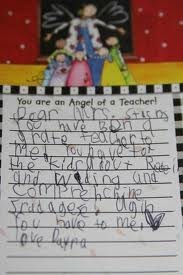 So take a few minutes before the end of the school year to write a note of thanks – or an email – to your children’s teachers. It doesn’t have to be long. A short note acknowledging a great year, a hurdle reached or a lesson that sparked your child is all it takes. Copy the principal on your email if you want. Even better . . . have your child write a thank you note. For ideas on what that note might look like, check out this article from schoolfamily.com
Teachers appreciate thank you notes more than you’ll ever know. And it only takes a piece of paper, a pen and a few minutes.
May 10, 2013
Dodging Hatred & Prejudice
 If your middle or high school kids haven’t seen the movie 42 yet – make sure they do. And see it yourself, too.
Predictable it is. But the historical film of Jackie Robinson’s journey to become the world’s first African American major league baseball player has a fabulous message for older kids – and adults. Some schools are making it a year end field trip for social studies or history class.
I saw 42 yesterday with about 242 high school juniors. Their American History teacher wanted to make sure his students got a taste of an era that they are too young to remember. Then we took my younger daughter and some cousins to see it last night. I asked a few of them what they thought about the movie. Their comments were interesting:
 “It’s an amazing story.”
“He was so brave.”
“They were so mean to him.”
“I liked it when his team mates stood up for him.”
“Hard to believe this actually happened like 60 years ago, when grandpa was my age.”
“That still goes on – it just looks different.”
The movie 42 is rated PG-13. If you’re wondering if it’s appropriate for your own kids, check out this Common Sense media review on 42. They suggest it’s a great movie for families with kids 11 and up. And it might be ok for baseball buffs who are younger than 12 or 13, if they are sensitized to some of the language before they see it.

Thank you to all the teachers and schools out there giving their students the opportunity to experience this film and it’s powerful message. And thank you to Major League Baseball Hall of Fame and sports writers for making #42 the only number retired in baseball history. A legend indeed.
What a great way to teach empathy and tolerance in a world that still needs it.
April 26, 2013
Common Core = Common Sense
A decade ago, if you asked an educator in this country if we would ever get to a “national curriculum,” 90% of them would say, “not in my lifetime.”
This fall, for the first time in our nation’s history, 90% of our public schools will begin using the same standards for math and literacy. Forty-five out of fifty states (all but Alaska, Minnesota, Nebraska, Texas, and Virginia) have adopted what’s referred to as the “Common Core State Standards Initiative.” These standards define what our kids are expected to learn from kindergarten through grade twelve so they’re ready for college and future careers.
 I look at the Common Core as a giant cart of groceries for each grade level. The recipes a school or teacher uses with these ingredients—the actual books or materials they use to teach – will vary across districts. But nine year-olds like, Teddy, in New Jersey, and, Bridgette, in Illinois, will both be introduced to fractions in third grade. Teachers will have the flexibility to bring their own style and creativity to the lessons. The timing of when standards are taught during the year will differ across districts, but what teachers teach and what students learn, in theory, will now be the same across most states.
This coast-to-coast curriculum is not technically national because it was adopted state by state and is implemented by the National Governors Association. It provides higher standards and much needed continuity across states, districts, schools and, most importantly, each classroom within your child’s grade. The higher standards will keep our kids competitive worldwide. And the consistency makes moving from school to school or state to state easier, eliminating gaps in your child’s education.
The Common Core’s expectations translate to a more rigorous curriculum in many states – making the next few years a challenge for many teachers, students and families. In states where standards were already high, like Massachusetts, New Jersey, and Maryland, changes will be minimal. But no matter where you live, the Common Core brings some needed changes to your child’s school day.

In math, you will see more spiraling curriculum (the same subject taught at different levels of depth from grade to grade) and a greater focus on understanding the math concept. This means your kids will be introduced to algebraic thinking in third grade and continue to build on it through high school. Your children will be asked to explain how they got their answers. There will also be more focus on practicing and memorizing math facts. What can you do to help your kids manage these new expectations? The next time you eat a pizza – quiz your kids on what percent they ate and how they know that. Dig out Monopoly and let them practice mental math as the banker. Use those frequent car rides to review math facts. Despite our digital world, kids still need to know how to make change, multiply and divide.
In literacy, your child will read more non-fiction, which usually means more difficult text. They will be required to write more opinion papers using evidence from challenging text to support their views. The curriculum will also be more integrated across subjects so – in theory – your child will read a non-fiction book for reading that links to what they are doing in science. The best thing you  can do to support your children’s efforts in literacy is read with them and to them as much as possible. Read nonfiction books on topics they’re interested in. And ask questions that help them understand the subject matter on a deeper level.
In short, the Common Core requires higher standards and more thinking and understanding from our kids. And that’s a good thing. New standardized tests (given via computer) to support the Common Core will be introduced in 2014-2015. But this time they won’t be run by 50 different states with big discrepancies in difficulty. If you live in one of the Common Core states, your child will either take the PARCC test or Smarter Balanced test. As long as these new standardized tests(PARCC or Smarter Balanced) capture this higher quality thinking, the Common Core initiative will serve our children well.
Now if we could just agree on those history standards.


April 16, 2013
The Tragedy Talk…Again
My 13-year-old has a lot to say about the Boston Marathon tragedy. Boston is our home. Frightening how close that word Marathon is to Massacre.
“Why does this keep happening to our country?” she said to me when she first heard about the explosions.
“What sick person would do this?”
 She was barely two-years-old when 9/11 rocked our world. Now she reads about terrorists in history books. And in the past 18 months, she has witnessed far too many horrific events unfold in the media, on Twitter and Instagram.
“I’m scared mom,” she said to me last night. “First it’s Iraq and Iran. Then it’s New York. Then Connecticut. Now Boston. It’s getting closer. I know people who were there, who got hurt, who are in the hospital. I’m scared it will be our house next.”
She is part of a generation of tweens and teens who have grown up seeing tragedy and terrorism as part of life. Many know airports to be security cages. They’ve learned locked-down procedures at school. This year, they will probably remember their 4th of July celebration by the high level of security guards, police, and dogs – instead of the fireworks.
Less than a year ago, I wrote about talking to kids about tragedy. Begin by reassuring them that they are safe with you. Keep media exposure to a minimum, if at all for kids under 7. It also helps to remind kids that there is mostly good in the world, even when bad things happen. Lots of experts out there provide perspective and detailed tips on talking with kids of all ages:
The National Association of School Psychologists “A National Tragedy: Helping Children Cope,” Tips for Parents and Teachers
Resources from the National Traumatic Child Stress Network gives a range of articles for different ages and tragedy related topics,
Open Circle, a Social Emotional Learning program of Wellesley Centers for Women, published a resource “Helping Children Deal with Traumatic Events”.
 Despite the bright blue sky in Boston today, a heavy, ugly cloud hangs overhead. We’ll pray for the victims, their families and friends, and our heroic first responders. We’ll hug our kids tighter, attend our community vigil,
and wish we could do more.
April 12, 2013
Getting Kids Organized
I’ve been there. Maybe you have too.
You walk into a neighbor or friend’s home and think, “Ugh. How can this house look immaculate when she has three kids and works full time!?”
What keeps that home so together is a trait called “executive functioning.” It’s a skill – planning, organizing and completing simple or complex tasks – that some of us have more DNA for than others. It’s also a trait that our children inherit that either wrecks havoc on schoolwork, desks, and backpacks – or propels them straight to the exemplary column.
My DNA for executive functioning (EF) trailed far behind my sister’s – who inherited enough for three of us. So I had to compensate for this missing link. I’ve taken courses, hired coaches, and sat in conferences to learn the magic of getting and staying organized – two very different animals. I’ve learned a lot.
First, your kids are either born with strong EF skills or they’re not. If they lined up their shoes and toys when they were toddlers or intuitively knew how to put toys back, their brain is wired for organization. You won’t have to do too much to help them along in the homework, desk patrol, and clean-out-the-backpack arena. A simple reminder will usually work – or a set day of the week to do it. Until they become teens and their EF skills hibernate.
If they didn’t get that EF trait, it’s our job as parents to help those adorable but disheveled and disorganized  children build skills so they can still thrive in school. The good news is that all the frustration, effort, and patience it takes you is an investment in their future. Your kids will need these skills in college, in future jobs, and yes, to coach their own kids.
Sarah’s STOP
One of the organizational resources I tapped is an executive function expert named Sarah Ward. She gives an amazing talk about EF skills and how to acquire them. One of her flagship ideas is called STOP. It’s a great technique for kids who struggle reading social and spatial cues – and the precursor to getting more organized.
STOP stands for Space, Time, Objects, and People. Use it to coach your kids on how to better orientate themselves (situational intelligence): Stop – Where am I, what do I need to have with me here?; Time – What is happening now? Later?; Objects – How is the room organized?; People -What are people’s facial expressions and body language telling me? Once they master STOP, they will be on their way to conquering tasks like being ready for gym class, getting homework finished and turned it, and cleaning their rooms! Read more about Sarah Ward’s program here.
PAVE the way to organization
A pnuemonic I created to help keep kids more organized is PAVE the way to organization. P = Picture it (originated by Sarah Ward); A = Agenda Action; V= Visual maps; E= External structures. The first three steps require your child to do the work once you establish the foundation; the last step is the parents’ role.
 Picture it means visual prompts – photos – of what your child’s desk, backpack, bedroom, cubby, and “ready-to-go” state ideally looks like. Take photos and attach them to doors, bathroom mirrors, desks, backpacks, and sports bags to serve as reminders. Most kids respond well to visuals. Ask your kids if they match the picture or if their backpack, bedroom, or desk matches up. No more nagging needed.
Agenda & action is for third graders and up who use a weekly school calendar to organize their work. An agenda is a great tool but only as good as the words written down and sequence of action followed. Show your child how to write down when a project is due or a test is scheduled AND the action steps needed to prepare for that day. This is a step most teachers don’t have time to teach. Coach them to use it daily.
Visual maps are similar to corporate mind maps and graphic organizers that kids use for prewriting. But  instead of using words, kids use pictures of their thoughts and ideas to create outlines for reports, projects, and presentations. This helps them visualize the concept or what they will write about. Visual maps also work for spelling words, math story problems, and book reports.
External Structures are verbal supports from a parent that encourage children and keep them motivated. These include previewing (being proactive and alerting your child to what’s ahead), reviewing (revisiting and praising the progress and effort made or what might be done differently next time), and reminding (gentle nudges – not nagging – about events, activities, homework, etc. that need attention).
Getting your kids organized will not happen overnight. Or in 21 days. It takes four seasons of pictures, skill building, reminding, and reinforcing progress every day. And it’s important to remember that organization looks different for every family. The earlier you start this process, the better for everyone. You’ll find more organizing ideas and how to teach your kids to advocate for themselves in Chapter 14 of my book, The Parent Backpack for Kindergarten through Grade 5.