
Robin Kalinich's Blog, page 35
June 16, 2013
How I wrote over 30 books (and how you can use the same methods to get your writing done) - Bill O'Hanlon
I'm honored to introduce a guest blogger today, Bill O'Hanlon.
He has been published by such mainstream publishers as HarperCollins, Penguin, John Wiley and Sons, Pearson, Rodale, W.W. Norton and others. He was featured on Oprah with his book Do One Thing Different. He now coaches and teaches people how to write their books in record time and get them published despite the odds.
I met Bill last year at a writer's convention. He was absolutely fascinating in person and I wanted to know more. I signed up for his mailing list, which consistently delivers inspiring and useful information, on topics related to writing and otherwise. Click here to become a part of his mailing list or here to receive his free report on how to focus your book and find the right title, something we could all benefit from.
Bill has published an insane amount of books and is truly an insider when it comes to writing and publishing. Thank you so much, Bill, for agreeing to share your knowledge with us today.
And now, Bill!
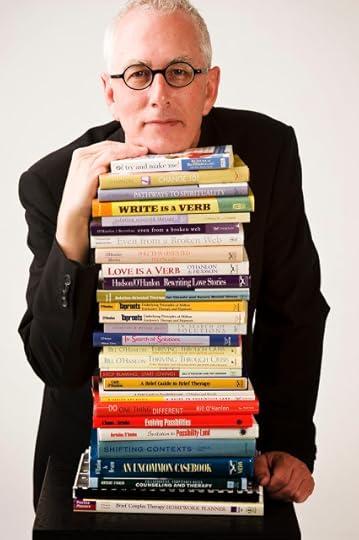
How I wrote over 30 books (and how you can use the same methods to get your writing done)
I have just written my 36th book, to be published next year by W.W. Norton. When people find out I have written and published so many books, they are amazed and ask me how I have been so prolific.
I didn’t start out with ambitions to be a writer. I have met many authors and would-be authors who knew from an early age that they wanted to write, but not me. I did like reading, but never imagined I would write a book someday.
I started writing for one simple reason: I was profoundly and deeply pissed off!
I was trained as a psychotherapist and even before I became officially licensed and finished my graduate degree, I met and studied with an eccentric psychiatrist in the Phoenix area named Milton Erickson. (I was actually Dr. Erickson’s part-time gardener while in graduate school, since I had no money to pay him for his teaching and mentoring, and we agreed we would barter.)
Dr. Erickson was almost psychotically optimistic in his belief that anyone could change. He developed weird and creative ways to help his most challenging patients to overcome their serious emotional, psychological, behavioral and relationship problems. (You can read about his inspiring work in the books An Uncommon Therapist by Jay Haley and My Voice Will Go With You by Sidney Rosen.)
At the same I was studying with Dr. Erickson, I was finishing my graduate studies and hearing some of my professors express a more pessimistic view of the change process.
“Nobody wants to change but a wet baby,” intoned one of them.
I dismissed these discouraging views since most of my professors were academics who weren’t doing any actually psychotherapy with people – they only knew the theories.
But I became more disturbed when I got my first job in a community mental health center. We would have weekly clinical staff meetings in which we would talk about and get help with our psychotherapy cases.
In those meetings, I began to hear some of my more burned out or seasoned colleagues say things like: “People love to be miserable. They don’t want to get better, because then they would have nothing to complain about.” Or “People are getting secondary gains from being sick. They won’t give up their problems because they get some goodies from them. Or, even worse in my book, “This person is too damaged to change.”
I was, at the time, a peaceful long-haired post-hippie type, but hearing these comments, it was all I could do to restrain myself from standing up, running across the room and throttling these colleagues when they said this stuff.
I wisely decided that doing so would only land me in jail and wouldn’t fundamentally change their views, but I found I couldn’t sit still another minute while these kind of discouraging views were so common in my field.
“Who do they listen to?” I thought. Experts. Of course, they listen to the people who teach seminars, give lectures and write books.
And right there, I knew I had to write a book.
No matter that I didn’t have a clue how to write or publish a book. Or that I wasn’t a very good writer.
What pulled me through the early years of my writing and publishing career was that I had an abiding passion and energy for getting my book out into the world to change the views of my negative thinking colleagues – to show them a different way.
Lee Boudreaux, former Senior Editor, at Random House said: “Passion for a book is like an electrical impulse traveling down a wire, and that electrical impulse has to be strong enough to affect a lot of people, from the writer to the agent to the editor. Then from the editor to the publicist who needs to get the book reviewed, the art director who is responsible for coming up with the right cover, the sales reps who sell the book to the store buyers. Then from the store’s main buyer to the individual booksellers and, eventually, to the customer.” [quoted in The Making of a Bestseller, Brian Hill and Dee Power, Dearborn Trade Publishing, Chicago, IL, 2005]
I now coach people to write and publish and I start with the energy, the passion, that they have for their topic or their book.
It’s damn hard to sustain one’s energy through the writing, the pitching, the many edits your book will go through, and then, when it is published, to do what needs to be done to get the word out about it to interested readers that if you don’t start with a great and abiding, almost unstoppable energy, you will likely stop somewhere along the line.
I just wouldn’t stop until I got my book written and published.
Okay, that explains one book, but 36?
Well, that is a different story. I find that it is much easier to write a book now for several reasons.
1. I sell my books before I write them. I write nonfiction and one of the joys of nonfiction is that one doesn’t have to, really shouldn’t, write the whole book before a publisher buys it. All I have to do is to put together a proposal and some sample writing and I know whether my book idea is a go or not.
2. Because I sell my books before I write them, they also come with an advance. That is, the publisher pays me money and I promise to deliver a finished manuscript by a certain date.
I have found this is highly motivating. First, if I promised myself I would write a book, I might or might not keep my promise. I have made many promises to myself through the years, mostly having to do with being a better person, eating more healthily and exercising more regularly and vigorously, yet I notice I have broken many of those promises I made with such good intentions.
But I break fewer promises to others, especially those that have signed legal contract and an exchange of money attached to them.
3. Like anything, one gets better the more one does it. My first book took me three years and thirty-eight revisions.
My last book took one month to write and a few days to edit twice.
It’s nice to get paid to write and get better at writing.
So, what are the takeaways for you as a writer (or as an artist)?
· Find that deep well of passion within you for your art. I think there are four strains of energy and passion: Blissed (what you love and what brings you alive), Blessed (what others recognize and encourage in you), Dissed (where you have been sensitized by being wounded, disrespected or hurt) and Pissed (my specialty – righteous indignation against injustice or wrongs turned into art – not AK47s at school or work).· Find a way to get paid for doing your art. It is no surprise that many novelists (Neil Gaiman; Carl Hiassen; Michael Connelly; to name a few) started as journalists.
· Trap yourself into due dates and promises that mean something to deliver your book or your art. Author Seth Godin calls this “having a ship date,” from his experience in the software industry in which the techies would endlessly add features and tweaks to the product until the company finally announced a firm ship date on which the product would be released. Godin noticed the product always got done, miraculously, by that date.
He has been published by such mainstream publishers as HarperCollins, Penguin, John Wiley and Sons, Pearson, Rodale, W.W. Norton and others. He was featured on Oprah with his book Do One Thing Different. He now coaches and teaches people how to write their books in record time and get them published despite the odds.
I met Bill last year at a writer's convention. He was absolutely fascinating in person and I wanted to know more. I signed up for his mailing list, which consistently delivers inspiring and useful information, on topics related to writing and otherwise. Click here to become a part of his mailing list or here to receive his free report on how to focus your book and find the right title, something we could all benefit from.
Bill has published an insane amount of books and is truly an insider when it comes to writing and publishing. Thank you so much, Bill, for agreeing to share your knowledge with us today.
And now, Bill!
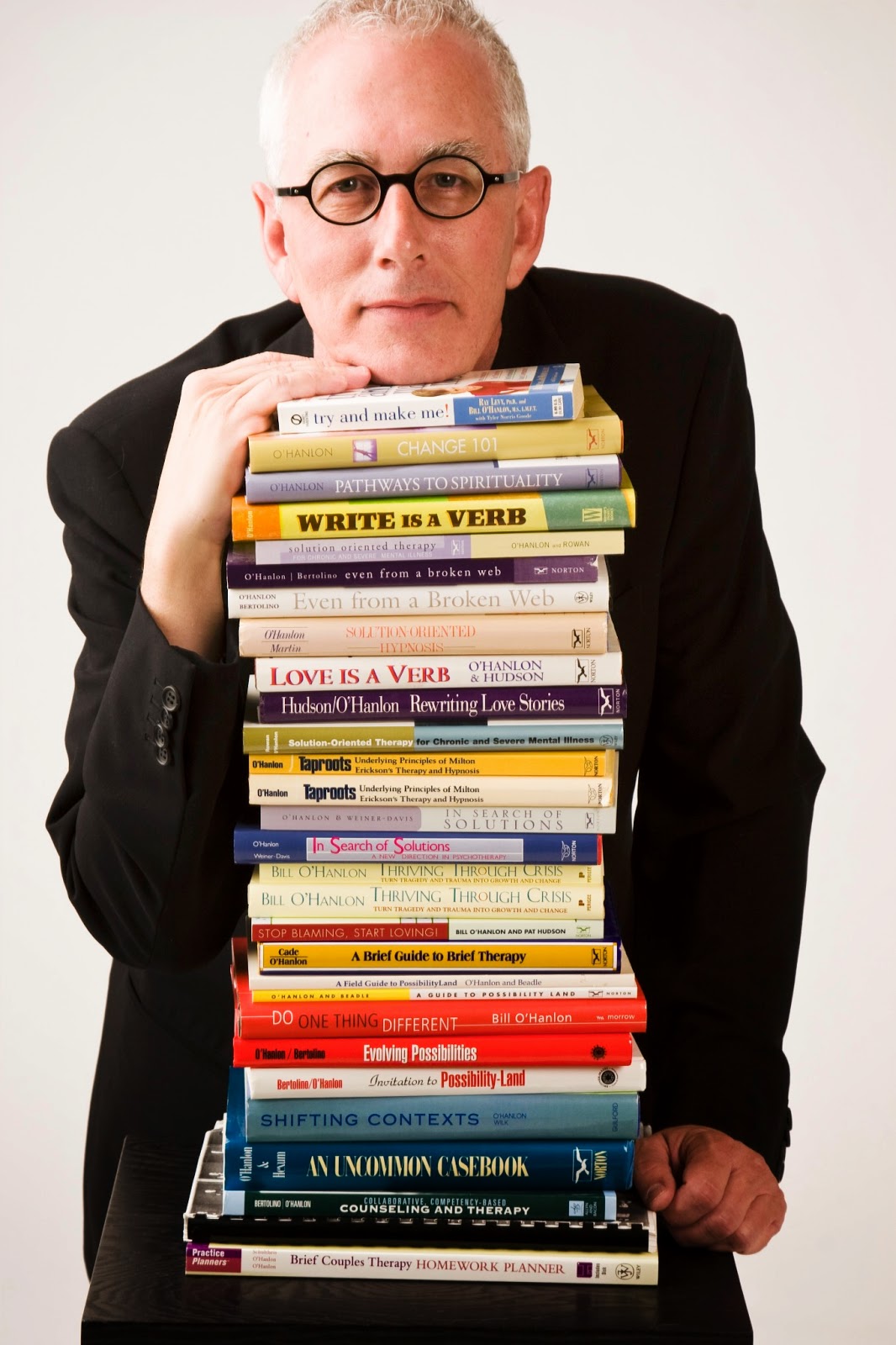
How I wrote over 30 books (and how you can use the same methods to get your writing done)
I have just written my 36th book, to be published next year by W.W. Norton. When people find out I have written and published so many books, they are amazed and ask me how I have been so prolific.
I didn’t start out with ambitions to be a writer. I have met many authors and would-be authors who knew from an early age that they wanted to write, but not me. I did like reading, but never imagined I would write a book someday.
I started writing for one simple reason: I was profoundly and deeply pissed off!
I was trained as a psychotherapist and even before I became officially licensed and finished my graduate degree, I met and studied with an eccentric psychiatrist in the Phoenix area named Milton Erickson. (I was actually Dr. Erickson’s part-time gardener while in graduate school, since I had no money to pay him for his teaching and mentoring, and we agreed we would barter.)
Dr. Erickson was almost psychotically optimistic in his belief that anyone could change. He developed weird and creative ways to help his most challenging patients to overcome their serious emotional, psychological, behavioral and relationship problems. (You can read about his inspiring work in the books An Uncommon Therapist by Jay Haley and My Voice Will Go With You by Sidney Rosen.)
At the same I was studying with Dr. Erickson, I was finishing my graduate studies and hearing some of my professors express a more pessimistic view of the change process.
“Nobody wants to change but a wet baby,” intoned one of them.
I dismissed these discouraging views since most of my professors were academics who weren’t doing any actually psychotherapy with people – they only knew the theories.
But I became more disturbed when I got my first job in a community mental health center. We would have weekly clinical staff meetings in which we would talk about and get help with our psychotherapy cases.
In those meetings, I began to hear some of my more burned out or seasoned colleagues say things like: “People love to be miserable. They don’t want to get better, because then they would have nothing to complain about.” Or “People are getting secondary gains from being sick. They won’t give up their problems because they get some goodies from them. Or, even worse in my book, “This person is too damaged to change.”
I was, at the time, a peaceful long-haired post-hippie type, but hearing these comments, it was all I could do to restrain myself from standing up, running across the room and throttling these colleagues when they said this stuff.
I wisely decided that doing so would only land me in jail and wouldn’t fundamentally change their views, but I found I couldn’t sit still another minute while these kind of discouraging views were so common in my field.
“Who do they listen to?” I thought. Experts. Of course, they listen to the people who teach seminars, give lectures and write books.
And right there, I knew I had to write a book.
No matter that I didn’t have a clue how to write or publish a book. Or that I wasn’t a very good writer.
What pulled me through the early years of my writing and publishing career was that I had an abiding passion and energy for getting my book out into the world to change the views of my negative thinking colleagues – to show them a different way.
Lee Boudreaux, former Senior Editor, at Random House said: “Passion for a book is like an electrical impulse traveling down a wire, and that electrical impulse has to be strong enough to affect a lot of people, from the writer to the agent to the editor. Then from the editor to the publicist who needs to get the book reviewed, the art director who is responsible for coming up with the right cover, the sales reps who sell the book to the store buyers. Then from the store’s main buyer to the individual booksellers and, eventually, to the customer.” [quoted in The Making of a Bestseller, Brian Hill and Dee Power, Dearborn Trade Publishing, Chicago, IL, 2005]
I now coach people to write and publish and I start with the energy, the passion, that they have for their topic or their book.
It’s damn hard to sustain one’s energy through the writing, the pitching, the many edits your book will go through, and then, when it is published, to do what needs to be done to get the word out about it to interested readers that if you don’t start with a great and abiding, almost unstoppable energy, you will likely stop somewhere along the line.
I just wouldn’t stop until I got my book written and published.
Okay, that explains one book, but 36?
Well, that is a different story. I find that it is much easier to write a book now for several reasons.
1. I sell my books before I write them. I write nonfiction and one of the joys of nonfiction is that one doesn’t have to, really shouldn’t, write the whole book before a publisher buys it. All I have to do is to put together a proposal and some sample writing and I know whether my book idea is a go or not.
2. Because I sell my books before I write them, they also come with an advance. That is, the publisher pays me money and I promise to deliver a finished manuscript by a certain date.
I have found this is highly motivating. First, if I promised myself I would write a book, I might or might not keep my promise. I have made many promises to myself through the years, mostly having to do with being a better person, eating more healthily and exercising more regularly and vigorously, yet I notice I have broken many of those promises I made with such good intentions.
But I break fewer promises to others, especially those that have signed legal contract and an exchange of money attached to them.
3. Like anything, one gets better the more one does it. My first book took me three years and thirty-eight revisions.
My last book took one month to write and a few days to edit twice.
It’s nice to get paid to write and get better at writing.
So, what are the takeaways for you as a writer (or as an artist)?
· Find that deep well of passion within you for your art. I think there are four strains of energy and passion: Blissed (what you love and what brings you alive), Blessed (what others recognize and encourage in you), Dissed (where you have been sensitized by being wounded, disrespected or hurt) and Pissed (my specialty – righteous indignation against injustice or wrongs turned into art – not AK47s at school or work).· Find a way to get paid for doing your art. It is no surprise that many novelists (Neil Gaiman; Carl Hiassen; Michael Connelly; to name a few) started as journalists.
· Trap yourself into due dates and promises that mean something to deliver your book or your art. Author Seth Godin calls this “having a ship date,” from his experience in the software industry in which the techies would endlessly add features and tweaks to the product until the company finally announced a firm ship date on which the product would be released. Godin noticed the product always got done, miraculously, by that date.


June 12, 2013
Your focus is a little fuzzy
People often ask me very specific questions about social media. Exactly how I did certain things, or which button to click. I don't mind sharing this information, and in fact, I'm in the process of writing something to share with all of you (for free, of course) that will explain some of those things, but I'm sticking to my guns on this one -
the concepts are much more important than the specifics.

Why do I say that?
Anyone can look up things on Google. For reals. ANYONE. This is not the challenging part. The challenging part, in regard to social media and in rest of your life for that matter, is figuring out what is valuable to you, and then learning to apply those notions regularly and effectively in your life.
I beg you. Please stop focusing so much on the specifics and start with the concepts.
The concepts include making decisions about your goals and how you will interact with people, and this is where the nitty gritty lives. This is where the seeds of success or failure begin to sprout.
Elevate your creative work and the promotion of that work to a higher place in your life. It should permeate your conversations, and haunt most of your interactions with people. I don't mean that you should try to sell your latest e-pub to all your co-workers in the break room. Please don't do that.
Move away from self-serving promotion, and adopt a mindset that goes something like this:
The more I interact with other creative people, the more inspired I become. When I help others to promote their efforts and works, I am strengthening myself as a person and the industry as a whole. I am moving further along in my creative journey.
Try this for a while and see what happens.
For me, everything moves along more smoothly. The ideas come hard and thick. I feel buoyed by the encouragement and support of the community, and this makes me braver and more capable creatively. Enthusiasm bubbles up in my life, and this carries over into every part of my life, even the parts which have nothing to do with art or creative writing. I find that I have started an avalanche of awesomeness in my life.
Don't worry so much about selling. Worry more about self-actualizing. Put more effort into making the world a better place. Find others who need some help in this area and drag them along with you.
This is the new paradigm of marketing. This is how you will find success.
the concepts are much more important than the specifics.
Why do I say that?
Anyone can look up things on Google. For reals. ANYONE. This is not the challenging part. The challenging part, in regard to social media and in rest of your life for that matter, is figuring out what is valuable to you, and then learning to apply those notions regularly and effectively in your life.
I beg you. Please stop focusing so much on the specifics and start with the concepts.
The concepts include making decisions about your goals and how you will interact with people, and this is where the nitty gritty lives. This is where the seeds of success or failure begin to sprout.
Elevate your creative work and the promotion of that work to a higher place in your life. It should permeate your conversations, and haunt most of your interactions with people. I don't mean that you should try to sell your latest e-pub to all your co-workers in the break room. Please don't do that.
Move away from self-serving promotion, and adopt a mindset that goes something like this:
The more I interact with other creative people, the more inspired I become. When I help others to promote their efforts and works, I am strengthening myself as a person and the industry as a whole. I am moving further along in my creative journey.
Try this for a while and see what happens.
For me, everything moves along more smoothly. The ideas come hard and thick. I feel buoyed by the encouragement and support of the community, and this makes me braver and more capable creatively. Enthusiasm bubbles up in my life, and this carries over into every part of my life, even the parts which have nothing to do with art or creative writing. I find that I have started an avalanche of awesomeness in my life.
Don't worry so much about selling. Worry more about self-actualizing. Put more effort into making the world a better place. Find others who need some help in this area and drag them along with you.
This is the new paradigm of marketing. This is how you will find success.
May 31, 2013
What the heck is a social media platform anyway?
I interact with creative people every day, both in real life and in cyberspace. Hardly a day goes by without at least one person lamenting that they need to learn how to go online and build their business, but they have no idea how to begin. They need to build a successful social media platform. This is not uncommon. In fact, it's so common that I can now predict the conversation and it goes a little something like this.
First, there is the desire to self-promote, which can take many forms:
I really need to drive more traffic to my Amazon page.I want to sell my art online.I need to have a platform in order to compete in today's market.
Next there are expectations:
I want to quit my job and make all my money blogging.I tweeted every day last week, and I still haven't sold a thing.I published a book using CreateSpace and expected great things, but so far I haven't sold any books, except the one that my Mom bought.
And then there is reality:
Let's establish realistic expectations right up front. Networking and promoting via social media will not make you rich or famous overnight. It's actually a rather slow process in most cases. Building an effective platform will require long-term commitment.
As you may already know, Ink & Alchemy and More Ink were begun with the intention of helping creative people find success online. I'd like to actively focus on that goal more in the future, and your input and feedback would be very helpful to me.
What do YOU want to learn? Where are your biggest struggles? What are your social media goals?
Some of you may be a little overwhelmed by how fast everything is moves online. You may be wondering - what the heck is a social media platform anyway? Your social media platform is simply the series of sites that you build around yourself and your work to be used to interact with the world.
We're going to do this together, intentionally, and in small steps. You can do it - I promise!
Please take a moment to drop me a line right now so that we can work toward your success.
If you want to make sure you don't miss anything, you can sign up for my mailing list.

First, there is the desire to self-promote, which can take many forms:
I really need to drive more traffic to my Amazon page.I want to sell my art online.I need to have a platform in order to compete in today's market.
Next there are expectations:
I want to quit my job and make all my money blogging.I tweeted every day last week, and I still haven't sold a thing.I published a book using CreateSpace and expected great things, but so far I haven't sold any books, except the one that my Mom bought.
And then there is reality:
Let's establish realistic expectations right up front. Networking and promoting via social media will not make you rich or famous overnight. It's actually a rather slow process in most cases. Building an effective platform will require long-term commitment.
As you may already know, Ink & Alchemy and More Ink were begun with the intention of helping creative people find success online. I'd like to actively focus on that goal more in the future, and your input and feedback would be very helpful to me.
What do YOU want to learn? Where are your biggest struggles? What are your social media goals?
Some of you may be a little overwhelmed by how fast everything is moves online. You may be wondering - what the heck is a social media platform anyway? Your social media platform is simply the series of sites that you build around yourself and your work to be used to interact with the world.
We're going to do this together, intentionally, and in small steps. You can do it - I promise!
Please take a moment to drop me a line right now so that we can work toward your success.
If you want to make sure you don't miss anything, you can sign up for my mailing list.

May 19, 2013
Cate Macabe on the Process of Writing
Cate Macabe
It is my honor to share with you today the words of Cate Macabe. She is the author of This New Mountain, a member of the Board of Directors for SouthWest Writers, and editor of the SouthWest Sage. You can read Cate's complete biography here. I asked Cate to speak to us about her creative process.

CATE: I imagine that the creative process has both similarities and differences in every individual, but I think creativity itself has three basic needs for everyone: exercise, stimulation, and an outlet.
A child at play is the perfect example of exercising creativity or imagination. My first memory of such things is of using my hands to interact as characters instead of using dolls. Later, crazy-haired trolls, GI Joe and Barbie became super heroes. The rocky mesa surrounding my elementary school was the surface of Mars and the swings were my rocket ships. When Star Trek (the tv show) came along, my brother and I took turns playing Kirk and Spock, because they were, you know, the coolest characters in the show.
Outside of play, books were my entertainment early on and, with time, my escape. These stories came alive in my mind, everything playing out as the words formed their images. Then as a young adult in the military – to counter the all-out, flatline boredom of endless hours of waiting – I mastered the art of visualization in creating worlds in my mind filled with characters and their adventures. If you knew me at that time, you probably thought I was merely staring mindlessly into space like everyone else, bored senseless. But I was, instead, living in my waking dreams.
My mind still goes off on its own sometimes, then I’ll blink and realize I’ve been out there in another “dream world.” Piles of books wait at my bedside every night; bookmarks evidence my involvement in each of these worlds. I also have a Kindle that’s filling up nicely. And I love to play with my eight-year-old granddaughter, though I have to stop myself from directing her imagination. Where I want a band of Lego pirates to move through a story from beginning to middle to end, she still delights in throwing her people into one adventure after another without regard to logic or order.
As far as stimulation goes, if given the chance, a child will play for hours with dolls or Legos or sticks and dirt. A new toy, a shiny rock, or a storybook can ignite a whole new creative world.
I find the simplest things spark my creativity, and usually when I’m not looking for inspiration. While going through my junk mail several years ago, I read about a ministry in the Philippines that addresses the needs of orphans who live in a cemetery. I began to wonder about their lives, and that led to my newest fantasy world and the trilogy I’m working on now called The Last Bonekeeper. I’m also writing a collection of short stories in the same Bonekeeper universe that was sparked by a simple creative exercise in one of Betsy James’ writing classes.
From a writer’s point of view, life experience adds dimension to our creative endeavors. After a certain number of years we all know what rage feels like, and heartbreak. We’ve been hungry and alone. We’ve known the joy of love. Watched people die. For everything in between, observation and study can fill in the gaps. Listening to coffee shop conversations. Walking in the rain. Volunteering at hospitals. Visiting a firing range. Eating new kinds of food. Traveling. Life can stimulate our creativity in practical and immediate ways or at a more subconscious and subtle level. And sometimes, for me, all the brain needs is a bit of rest. I often wake up in the morning with the best story ideas.
And then there’s the creative outlet. If you give young children crayons, they will create something, whether or not you recognize the outcome. They might tell you one of their squiggles is a dog, another is their binky, and a third is Mommy. Maybe in their minds that’s exactly what they see or maybe it’s what they meant to draw.
An artist just starting out might have an idea in her mind of what she wants to create, but when she goes to sculpt it or draw it or paint it, it doesn’t come out the way she imagines. She might not be ready for years to create that thing she sees in her mind, but she keeps practicing and working at it until one day, there it is emerging from her fingertips.
I think writing often works the same way. When we first start out, what we put on the page isn’t always what we have in mind. There’s something missing, but the more we practice the better we get at translating what we see through our mind’s eye into something someone else can see. There are times when I have to stop writing because I don’t know how to create a particular scene or portray a character arc. I have to put the manuscript away and come back to it later when time has changed me or practice has improved my technique. Or I’ve studied how other authors approach the same problem.
What makes one person more creative than another?
Maybe we’re all creative in our own way. Some people write, some invent practical gadgets or new ways of doing things. Others take a pile of ingredients and form them into a wonderful meal – actually make it look appetizing and taste great, and enjoy the process while they’re at it. I’m not one of those people. I like to color coordinate my food: baked chicken + boiled potatoes + corn = yellow!
Creativity can be nourished (and starved). And I think the ability to express creativity can be taught and learned. When I sit down to create worlds, visualization is my foundation. I see characters move through their world, hear their conversations, feel their emotions, and then transfer it onto the page.
Thinking about my own creative process has made me wonder how other writers and artists deal with theirs. What does your creative process look like? How does it differ from mine?
 Like most private investigators, AJ Jackson has more than one foot in the fire to make ends meet – driving a tow truck and serving legal documents for local law firms. But not every PI is a mother of four, a grandmother of ten, an ex-gun dealer and former mental patient, or a descendant of a great Choctaw chief. This New Mountain is a memoir of Vinnie Ann “AJ” Jackson, a country girl with a go-to-hell attitude who must face her fears in order to keep her sanity and make a future for herself.
I'm looking forward to Cate's upcoming trilogy, Bonekeeper, which is coming soon!
I want to thank Cate for generously sharing her time and wisdom with us. If you'd like to learn more about Cate, or her work, pay her a visit at her blog. She'd love to have you!
If you have a story that you'd like to share, drop me a line.
It is my honor to share with you today the words of Cate Macabe. She is the author of This New Mountain, a member of the Board of Directors for SouthWest Writers, and editor of the SouthWest Sage. You can read Cate's complete biography here. I asked Cate to speak to us about her creative process.
CATE: I imagine that the creative process has both similarities and differences in every individual, but I think creativity itself has three basic needs for everyone: exercise, stimulation, and an outlet.
A child at play is the perfect example of exercising creativity or imagination. My first memory of such things is of using my hands to interact as characters instead of using dolls. Later, crazy-haired trolls, GI Joe and Barbie became super heroes. The rocky mesa surrounding my elementary school was the surface of Mars and the swings were my rocket ships. When Star Trek (the tv show) came along, my brother and I took turns playing Kirk and Spock, because they were, you know, the coolest characters in the show.
Outside of play, books were my entertainment early on and, with time, my escape. These stories came alive in my mind, everything playing out as the words formed their images. Then as a young adult in the military – to counter the all-out, flatline boredom of endless hours of waiting – I mastered the art of visualization in creating worlds in my mind filled with characters and their adventures. If you knew me at that time, you probably thought I was merely staring mindlessly into space like everyone else, bored senseless. But I was, instead, living in my waking dreams.
My mind still goes off on its own sometimes, then I’ll blink and realize I’ve been out there in another “dream world.” Piles of books wait at my bedside every night; bookmarks evidence my involvement in each of these worlds. I also have a Kindle that’s filling up nicely. And I love to play with my eight-year-old granddaughter, though I have to stop myself from directing her imagination. Where I want a band of Lego pirates to move through a story from beginning to middle to end, she still delights in throwing her people into one adventure after another without regard to logic or order.
As far as stimulation goes, if given the chance, a child will play for hours with dolls or Legos or sticks and dirt. A new toy, a shiny rock, or a storybook can ignite a whole new creative world.
I find the simplest things spark my creativity, and usually when I’m not looking for inspiration. While going through my junk mail several years ago, I read about a ministry in the Philippines that addresses the needs of orphans who live in a cemetery. I began to wonder about their lives, and that led to my newest fantasy world and the trilogy I’m working on now called The Last Bonekeeper. I’m also writing a collection of short stories in the same Bonekeeper universe that was sparked by a simple creative exercise in one of Betsy James’ writing classes.
From a writer’s point of view, life experience adds dimension to our creative endeavors. After a certain number of years we all know what rage feels like, and heartbreak. We’ve been hungry and alone. We’ve known the joy of love. Watched people die. For everything in between, observation and study can fill in the gaps. Listening to coffee shop conversations. Walking in the rain. Volunteering at hospitals. Visiting a firing range. Eating new kinds of food. Traveling. Life can stimulate our creativity in practical and immediate ways or at a more subconscious and subtle level. And sometimes, for me, all the brain needs is a bit of rest. I often wake up in the morning with the best story ideas.
And then there’s the creative outlet. If you give young children crayons, they will create something, whether or not you recognize the outcome. They might tell you one of their squiggles is a dog, another is their binky, and a third is Mommy. Maybe in their minds that’s exactly what they see or maybe it’s what they meant to draw.
An artist just starting out might have an idea in her mind of what she wants to create, but when she goes to sculpt it or draw it or paint it, it doesn’t come out the way she imagines. She might not be ready for years to create that thing she sees in her mind, but she keeps practicing and working at it until one day, there it is emerging from her fingertips.
I think writing often works the same way. When we first start out, what we put on the page isn’t always what we have in mind. There’s something missing, but the more we practice the better we get at translating what we see through our mind’s eye into something someone else can see. There are times when I have to stop writing because I don’t know how to create a particular scene or portray a character arc. I have to put the manuscript away and come back to it later when time has changed me or practice has improved my technique. Or I’ve studied how other authors approach the same problem.
What makes one person more creative than another?
Maybe we’re all creative in our own way. Some people write, some invent practical gadgets or new ways of doing things. Others take a pile of ingredients and form them into a wonderful meal – actually make it look appetizing and taste great, and enjoy the process while they’re at it. I’m not one of those people. I like to color coordinate my food: baked chicken + boiled potatoes + corn = yellow!
Creativity can be nourished (and starved). And I think the ability to express creativity can be taught and learned. When I sit down to create worlds, visualization is my foundation. I see characters move through their world, hear their conversations, feel their emotions, and then transfer it onto the page.
Thinking about my own creative process has made me wonder how other writers and artists deal with theirs. What does your creative process look like? How does it differ from mine?
Like most private investigators, AJ Jackson has more than one foot in the fire to make ends meet – driving a tow truck and serving legal documents for local law firms. But not every PI is a mother of four, a grandmother of ten, an ex-gun dealer and former mental patient, or a descendant of a great Choctaw chief. This New Mountain is a memoir of Vinnie Ann “AJ” Jackson, a country girl with a go-to-hell attitude who must face her fears in order to keep her sanity and make a future for herself.I'm looking forward to Cate's upcoming trilogy, Bonekeeper, which is coming soon!
I want to thank Cate for generously sharing her time and wisdom with us. If you'd like to learn more about Cate, or her work, pay her a visit at her blog. She'd love to have you!
If you have a story that you'd like to share, drop me a line.
May 18, 2013
Betony Coons
Betony Coons


Find her website at Gray Sparrow and her Etsy store here. You can also click on the artwork above to visit her website.
Find her website at Gray Sparrow and her Etsy store here. You can also click on the artwork above to visit her website.
Robin Kalinich's Blog

- Robin Kalinich's profile
- 20 followers
Robin Kalinich isn't a Goodreads Author
(yet),
but they
do have a blog,
so here are some recent posts imported from
their feed.

