
Martine Bailey's Blog, page 2
June 19, 2015
Song of the Sea Maid: Rebecca Mascull on science, gender and the Georgians
Rebecca Mascull is the talented author of The Visitors, a poignant and lyrical novel about deaf blind Adeliza Golding and her coming of age at the time of the Boer war. Now Rebecca has written another highly original novel, Song of the Sea Maid, a life of foundling Dawnay Price. It is set in the 1740s so I was especially intrigued by locations such as Coram’s Hospital in London, which houses a museum describing the lives and origins of foundling children. I’ve also become aware of the Enlightenment passion for fossils and classification and the work of Joseph Banks and Linnaeus as collectors, but cannot say I’ve come across any women I would call scientists (or natural philosophers). Here are the questions I asked Rebecca after reading her highly thought-provoking novel: 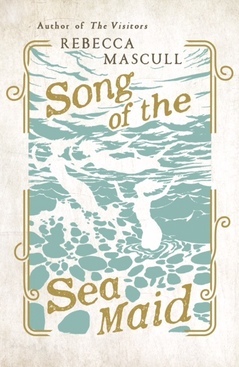 1. Do you have scientific interests yourself? Did you look at early experiments, fossils, and so on? How difficult was it to 'un-know' what we find self-evident today?
I’ve always had a fascination with science, but just not a very scientific mind to go with it! I try to fathom scientific theories and I do my best with my arty-type brain! Yet I’m just as interested in the history of science and how individuals came to their breakthroughs. I have collected fossils myself on Charmouth beach and have had a great interest in Darwin for many years, largely due to my mum who is a bit of an expert on him. Your third question is a brilliant thought and I know exactly what you mean. I found it quite difficult to discover research texts that would allow me to understand where the 18th-century mind was in relation to scientific endeavour. I read contemporary texts yet also I found a wonderful book by chance in a second-hand bookshop all about the history of the search for early human evidence; it went through all the theories people have come up with since ancient times about where we come from. This gave me an excellent grounding in how my character Dawnay could have been educated and how her contemporary thinkers would have been discussing human origins. I learned so much! All of the theories and thinkers mentioned in the novel are real, early attempts to grope towards some kind of theory of evolution. I was so surprised to find that people like Leonardo da Vinci had thought about the origin of fossils so long ago. Our study of human origins certainly did not begin with Charles Darwin!
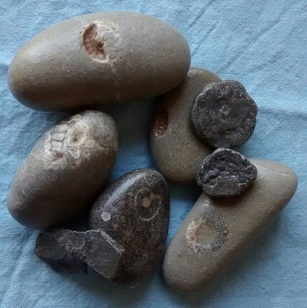 Fossils found on Charmouth Beach 2. There are aspects of the novel that made me wonder if it is speculative fiction, because it is more intentionally inventive with history (for example the cave), than most historical fiction. What do you think?
Mm, well, I would say it’s not really speculative at all, certainly that wasn’t my intention. Let me qualify that, but it will be tricky without using spoilers! From my point of view as author, as the person who did all the research, there is nothing in this novel that I believe would be impossible in Dawnay’s lifetime. Reading the Author’s Note at the end of the book should give readers a good insight into what was really happening in science and women’s lives at that time. There were female scientists doing brilliant work, but we just don’t know about them because they are not trumpeted or taught extensively. I have taken some poetic licence with Dawnay’s discoveries, but they are all based on real evidence of other finds at other times and places. Just because something hadn’t been found by the 18th-century, doesn’t mean it couldn’t have been found! Of course, ancient finds have been lying around undiscovered for thousands if not millions of years until someone lucky enough stumbles across them. Dawnay was lucky, yet so were those in more recent times who have found fossils, bones and evidence of early human culture. But it’s not just luck – someone who wants to find these things has to have an obsession and a determination to look for them and never give in. Dawnay is a person like this, so if anyone was going to find such a thing, it would be her!
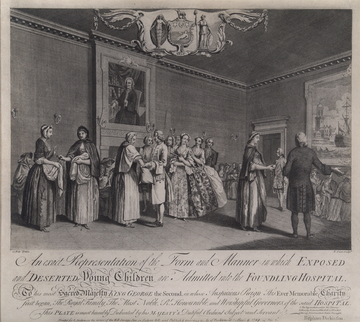 Admission to the Foundling Hospital of 'Deserted Young Children' 3. What first interested you in foundlings? What research did you do into the institutions and their inmates?
I felt strongly from very early on in the writing of this book that Dawnay should come from the meanest of origins i.e. that she should have lots of obstacles to overcome. I wanted her to have to battle against not only prejudice against women but also against the poor. It really was felt by some of the gentry and aristocracy that the poor were a different species and that all of their misfortune was brought on their own heads by their own innate lowliness. I thought it would be doubly fascinating to follow a character who was as poor as poor could be, as well as being a girl, and see how she would fare in her aspiration to become a scientist, or a natural philosopher, in the parlance of the time. And so she begins her story as an orphan living on the streets stealing pies! The orphanage she is taken to is very much based on asylums – as they were called – that sprang up all over London and further afield in the 18th-century, by benefactors wanting to improve the social and moral lot of the poor. I visited the Coram Foundling Museum and learnt a lot about the everyday life of the orphans there. Yet, my asylum is an amalgam of different institutions around the time, using some of the nice bits and the not so nice bits of the real 18th-century orphan’s experience.
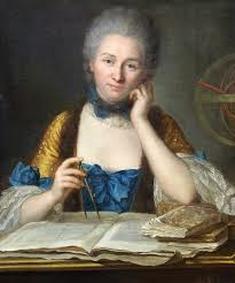 Émilie du Châtelet 4. Dawnay appears to have been born with a remarkable intellect. Can you tell us about any other people of the time on whom she was based?
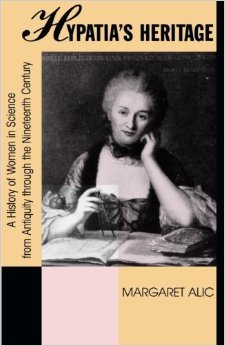
You’d be amazed how many female scientists there have been over the years, yet as I said earlier, they are not part of our general knowledge. I was particularly inspired by Émilie du Châtelet, who was a scientific genius, responsible for translating Newton, carrying out experiments into a range of disciplines and devoting her life to mathematics and science. She also loved her jewellery and fancy frocks! I remember reading a marvellous description of someone who visited her, to find her most dishevelled amidst piles of papers and crazy tangles of experimental equipment and yet decked out in all her finest jewels! I loved that image! Although my scientist has no interest in fashion, I certainly kept that dishevelment and enjoyed shocking her contemporaries by her plain and unruly dress sense! There was a mathematician called Sophie Germain who also inspired Dawnay’s character, in particular, her determination to learn against all odds. Sophie’s parents were dead against her learning mathematics, so they banned her from reading and writing in her room and stopped her fire being lit to keep her in bed, only to find her wrapped in blankets asleep at her desk in the mornings. Sophie also took it upon herself, having been banned from attending lectures due to being female, to write to experts of the day and share ideas that way. I have a huge respect for anyone who is determined enough to circumvent the pointless strictures of their own society and question every time somebody tells them No without a darned good reason for it!There are many other female scientists throughout history - a great book on this is Hypatia’s Heritage by Margaret Alic, a must read for anyone interested in the subject.
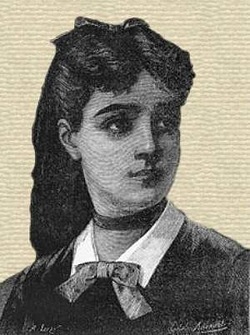 Sophie Germain 5. You take a different view to mine in The Penny Heart, that most women from the bottom of society were doomed to a fairly desperate life, however clever or lucky they seemed to be. What are your thoughts?
I do agree that this is true for the majority of poor women at that time. I just happen to be writing about one who escaped that trap. It was the age of the Enlightenment after all, and one in which benefactors did exist and did indeed save some children from a fate worse than death on the streets and in the workhouses. I don’t believe it was impossible to do it, I just think very few did. I’ve chosen to write about one of the lucky ones, but to me that does not diminish her struggles. Her life as told in the novel has some periods of easy living, yet I think these are balanced by other experiences she has that are very trying, difficult and at some points tragic. She has many losses to contend with throughout the story and one of my themes is the conflict between heart and mind. One of the things I wanted her to learn was that people need each other to survive and I think she goes through some tough times in learning that lesson.
6. I’m curious about why you set the novel as early as the 1740s, more than one hundred years before the ideas Dawnay speculates about were published. What was it that attracted you to that decade?
Firstly, I wanted to imagine a scientist working a good few generations before Darwin, in order to explore the idea of where scientific theories come from. It is sometimes assumed that there are these lone geniuses who have a stupendous lightbulb moment and come up with these brilliant theories out of nowhere. Perhaps that has happened in history, but to me, it’s far more likely that all great thinkers are highly influenced by the thinkers that have come before them. Beyond that, there was a mixture of reasons for choosing that period. Firstly, I knew I wanted one of the characters at least to be involved in a war around that time, and I noticed that there were already quite a few novels and films set in the late 18th and early 19th century i.e. during the Napoleonic wars, so I wanted to avoid that period. Also, without giving away any spoilers, there were a couple of major events that happened during Dawnay’s time that I wanted to include and this pinned the novel down to a very specific couple of decades. I’m sure you know what I’m talking about! But readers will have to read the book itself to find out!
 7. Women's aspirations versus their biology seems to lie at the heart of the book. Is that an important theme for you?
Absolutely. I’ll always remember reading the poem by Lynn Peters, WHY DOROTHY WORDSWORTH IS NOT AS FAMOUS AS HER BROTHER, where she is too busy finding socks and boiling eggs to write about daffodils!It always stuck with me, that until very recently the fabric of women’s everyday lives mitigated against so many endeavours, from striding out into the world on heroic adventures to literally having enough space in your head to think of anything vaguely profound at all. Anyone who has had young children to look after will know that feeling! My agent once talked to me about the idea of women writers “writing in the corner of the kitchen table”. I love that image and I think for many it is still true today. Let me make it clear, I am absolutely not saying that it is easy for men to achieve their aspirations. Life is hard and full of traps for everyone, male or female, writer or scientist or otherwise. ‘Jude the Obscure’ is the ultimate novel all about that woeful subject. But I think you’re right that women’s biology has at various points proved difficult for them to achieve in other areas. Dawnay has to grapple with this and I would say there are many places in the world where women have to face this on a daily basis, so we are not out of the woods yet…
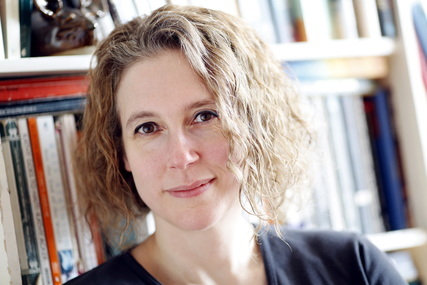 Author Rebecca Mascull The SONG OF THE SEA MAID is launched on 20 June 2015 (Hodder & Stoughton).
1. Do you have scientific interests yourself? Did you look at early experiments, fossils, and so on? How difficult was it to 'un-know' what we find self-evident today?I’ve always had a fascination with science, but just not a very scientific mind to go with it! I try to fathom scientific theories and I do my best with my arty-type brain! Yet I’m just as interested in the history of science and how individuals came to their breakthroughs. I have collected fossils myself on Charmouth beach and have had a great interest in Darwin for many years, largely due to my mum who is a bit of an expert on him. Your third question is a brilliant thought and I know exactly what you mean. I found it quite difficult to discover research texts that would allow me to understand where the 18th-century mind was in relation to scientific endeavour. I read contemporary texts yet also I found a wonderful book by chance in a second-hand bookshop all about the history of the search for early human evidence; it went through all the theories people have come up with since ancient times about where we come from. This gave me an excellent grounding in how my character Dawnay could have been educated and how her contemporary thinkers would have been discussing human origins. I learned so much! All of the theories and thinkers mentioned in the novel are real, early attempts to grope towards some kind of theory of evolution. I was so surprised to find that people like Leonardo da Vinci had thought about the origin of fossils so long ago. Our study of human origins certainly did not begin with Charles Darwin!
Fossils found on Charmouth Beach 2. There are aspects of the novel that made me wonder if it is speculative fiction, because it is more intentionally inventive with history (for example the cave), than most historical fiction. What do you think?Mm, well, I would say it’s not really speculative at all, certainly that wasn’t my intention. Let me qualify that, but it will be tricky without using spoilers! From my point of view as author, as the person who did all the research, there is nothing in this novel that I believe would be impossible in Dawnay’s lifetime. Reading the Author’s Note at the end of the book should give readers a good insight into what was really happening in science and women’s lives at that time. There were female scientists doing brilliant work, but we just don’t know about them because they are not trumpeted or taught extensively. I have taken some poetic licence with Dawnay’s discoveries, but they are all based on real evidence of other finds at other times and places. Just because something hadn’t been found by the 18th-century, doesn’t mean it couldn’t have been found! Of course, ancient finds have been lying around undiscovered for thousands if not millions of years until someone lucky enough stumbles across them. Dawnay was lucky, yet so were those in more recent times who have found fossils, bones and evidence of early human culture. But it’s not just luck – someone who wants to find these things has to have an obsession and a determination to look for them and never give in. Dawnay is a person like this, so if anyone was going to find such a thing, it would be her!
Admission to the Foundling Hospital of 'Deserted Young Children' 3. What first interested you in foundlings? What research did you do into the institutions and their inmates?I felt strongly from very early on in the writing of this book that Dawnay should come from the meanest of origins i.e. that she should have lots of obstacles to overcome. I wanted her to have to battle against not only prejudice against women but also against the poor. It really was felt by some of the gentry and aristocracy that the poor were a different species and that all of their misfortune was brought on their own heads by their own innate lowliness. I thought it would be doubly fascinating to follow a character who was as poor as poor could be, as well as being a girl, and see how she would fare in her aspiration to become a scientist, or a natural philosopher, in the parlance of the time. And so she begins her story as an orphan living on the streets stealing pies! The orphanage she is taken to is very much based on asylums – as they were called – that sprang up all over London and further afield in the 18th-century, by benefactors wanting to improve the social and moral lot of the poor. I visited the Coram Foundling Museum and learnt a lot about the everyday life of the orphans there. Yet, my asylum is an amalgam of different institutions around the time, using some of the nice bits and the not so nice bits of the real 18th-century orphan’s experience.
Émilie du Châtelet 4. Dawnay appears to have been born with a remarkable intellect. Can you tell us about any other people of the time on whom she was based?You’d be amazed how many female scientists there have been over the years, yet as I said earlier, they are not part of our general knowledge. I was particularly inspired by Émilie du Châtelet, who was a scientific genius, responsible for translating Newton, carrying out experiments into a range of disciplines and devoting her life to mathematics and science. She also loved her jewellery and fancy frocks! I remember reading a marvellous description of someone who visited her, to find her most dishevelled amidst piles of papers and crazy tangles of experimental equipment and yet decked out in all her finest jewels! I loved that image! Although my scientist has no interest in fashion, I certainly kept that dishevelment and enjoyed shocking her contemporaries by her plain and unruly dress sense! There was a mathematician called Sophie Germain who also inspired Dawnay’s character, in particular, her determination to learn against all odds. Sophie’s parents were dead against her learning mathematics, so they banned her from reading and writing in her room and stopped her fire being lit to keep her in bed, only to find her wrapped in blankets asleep at her desk in the mornings. Sophie also took it upon herself, having been banned from attending lectures due to being female, to write to experts of the day and share ideas that way. I have a huge respect for anyone who is determined enough to circumvent the pointless strictures of their own society and question every time somebody tells them No without a darned good reason for it!There are many other female scientists throughout history - a great book on this is Hypatia’s Heritage by Margaret Alic, a must read for anyone interested in the subject.
Sophie Germain 5. You take a different view to mine in The Penny Heart, that most women from the bottom of society were doomed to a fairly desperate life, however clever or lucky they seemed to be. What are your thoughts?I do agree that this is true for the majority of poor women at that time. I just happen to be writing about one who escaped that trap. It was the age of the Enlightenment after all, and one in which benefactors did exist and did indeed save some children from a fate worse than death on the streets and in the workhouses. I don’t believe it was impossible to do it, I just think very few did. I’ve chosen to write about one of the lucky ones, but to me that does not diminish her struggles. Her life as told in the novel has some periods of easy living, yet I think these are balanced by other experiences she has that are very trying, difficult and at some points tragic. She has many losses to contend with throughout the story and one of my themes is the conflict between heart and mind. One of the things I wanted her to learn was that people need each other to survive and I think she goes through some tough times in learning that lesson.
6. I’m curious about why you set the novel as early as the 1740s, more than one hundred years before the ideas Dawnay speculates about were published. What was it that attracted you to that decade?
Firstly, I wanted to imagine a scientist working a good few generations before Darwin, in order to explore the idea of where scientific theories come from. It is sometimes assumed that there are these lone geniuses who have a stupendous lightbulb moment and come up with these brilliant theories out of nowhere. Perhaps that has happened in history, but to me, it’s far more likely that all great thinkers are highly influenced by the thinkers that have come before them. Beyond that, there was a mixture of reasons for choosing that period. Firstly, I knew I wanted one of the characters at least to be involved in a war around that time, and I noticed that there were already quite a few novels and films set in the late 18th and early 19th century i.e. during the Napoleonic wars, so I wanted to avoid that period. Also, without giving away any spoilers, there were a couple of major events that happened during Dawnay’s time that I wanted to include and this pinned the novel down to a very specific couple of decades. I’m sure you know what I’m talking about! But readers will have to read the book itself to find out!
7. Women's aspirations versus their biology seems to lie at the heart of the book. Is that an important theme for you?Absolutely. I’ll always remember reading the poem by Lynn Peters, WHY DOROTHY WORDSWORTH IS NOT AS FAMOUS AS HER BROTHER, where she is too busy finding socks and boiling eggs to write about daffodils!It always stuck with me, that until very recently the fabric of women’s everyday lives mitigated against so many endeavours, from striding out into the world on heroic adventures to literally having enough space in your head to think of anything vaguely profound at all. Anyone who has had young children to look after will know that feeling! My agent once talked to me about the idea of women writers “writing in the corner of the kitchen table”. I love that image and I think for many it is still true today. Let me make it clear, I am absolutely not saying that it is easy for men to achieve their aspirations. Life is hard and full of traps for everyone, male or female, writer or scientist or otherwise. ‘Jude the Obscure’ is the ultimate novel all about that woeful subject. But I think you’re right that women’s biology has at various points proved difficult for them to achieve in other areas. Dawnay has to grapple with this and I would say there are many places in the world where women have to face this on a daily basis, so we are not out of the woods yet…
Author Rebecca Mascull The SONG OF THE SEA MAID is launched on 20 June 2015 (Hodder & Stoughton).


May 31, 2015
In Conversation: Iona Grey and Martine Bailey
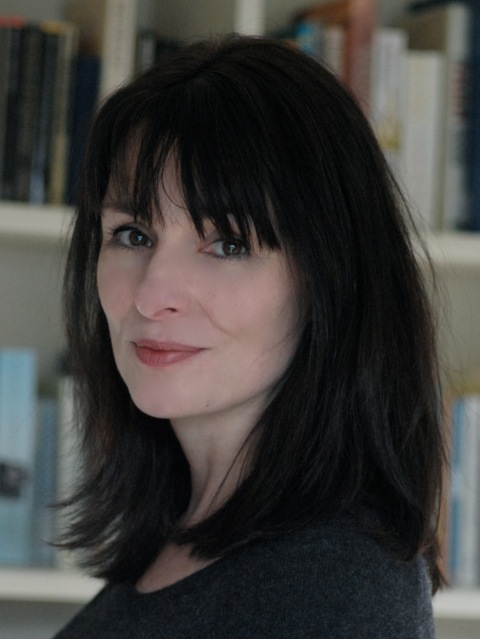

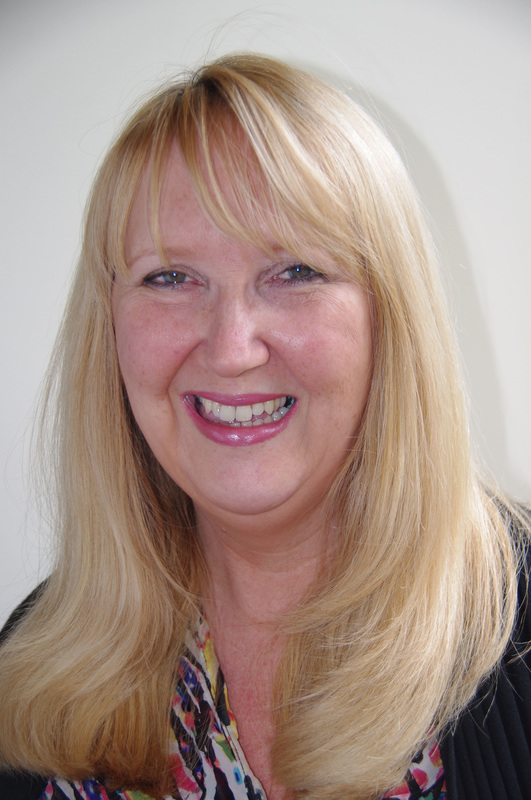 It was happenstance, or that lovely word, serendipity, that led me to meet fellow writer Iona Grey on Twitter – and discover we shared not only homes in Cheshire, one of England's most beautiful counties, but imminent publication by the same publisher, St Martin's press in the United States.
In January 2015, An Appetite For Violets was published in the United States, shortly followed by Letters From The Lost by Iona Gray in May 2015. A meeting over coffee in the historic county town of Chester was hastily arranged to compare notes on our shared sense of history and how we strive to bring the past to life in fiction.
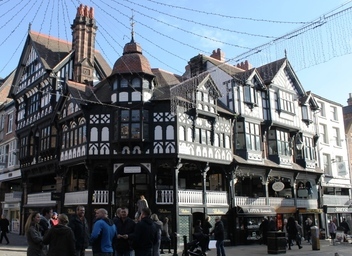 Chester, county town of Cheshire 1. Cheshire is famed for its historic beauty, its leafy lanes and distinctive black and white buildings. Does Cheshire play any part in your writing?
Martine: In An Appetite For Violets I imagined Mawton Hall to be in the borderlands between Cheshire and Wales. That is where the real-life Erddig Hall that inspired me is, and its wonderful 18th-century kitchen. Cheshire's landscape is particularly soft and green and it's easy to half -close your eyes and imagine the past. In the village where I live nothing much has changed over the centuries; as I write I have a long view of the tower of Chester Cathedral over fields of dairy cattle, while to the south I can gaze at the distant Welsh hills.
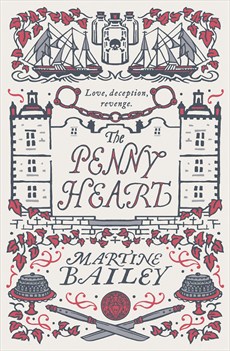
My new novel, The Penny Heart, also has a Chester link. When I was living and writing in New Zealand and Australia, I discovered that the best account of the early European settlement was written by a Chester soldier named Watkins Tench. He tells such a sympathetic and humane story about the early convicts, the aboriginal people and the desperate starvation years that I think there should be statue erected to him in Chester! I also based some aspects of Delafosse Hall on a once abandoned Jacobean house called Plas Teg, near where I live, though other great houses contributed the Hunting Tower, summerhouse and tunnels.
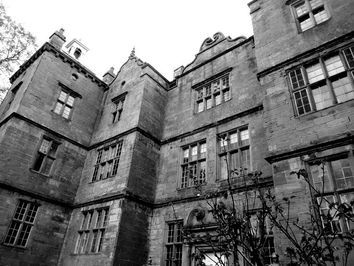 Plas Teg, on Cheshire's border with Wales Iona: My first novel, Letters to the Lost, is mostly set in London so is very urban in atmosphere! It’s a dual time-frame novel, and I did manage to squeeze a little bit of Cheshire in later on in the book when one of the characters has to come to Crewe for business reasons, but sadly that didn’t give me a chance to write about Cheshire’s beautiful countryside or black and white timbered villages. However, the book I’m writing now is set partly in rural Cheshire, so I’m making up for it, and really enjoying writing about familiar places. Compared to counties like Cornwall and Norfolk, I think Cheshire has been relatively left out of literature so it feels good to put it on the page. (It was also a huge thrill for me to see my own very small home town appear in An Appetite for Violets. Now that’s something that hasn’t happened before!)
 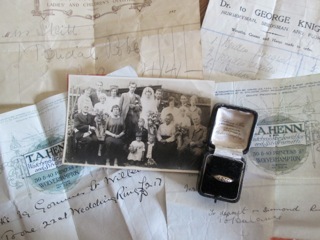 Family documents discovered by Iona 2. Both Letters to the Lost and An Appetite for Violets are partly written in the form of letters that also express the writer's character. Did you look at any old letters as part of your research?
Iona: About six months before I started writing the book my very much-loved godmother died and, since she had no children of her own, my brother and I were in charge of sorting out her house. We came across some tins in the garage that were stuffed with all sorts of paperwork – everything from photographs and birthday cards to receipts and property deeds and death certificates. There were a few letters in there too, which were both poignant and intriguing. There’s something intensely personal about a handwritten letter, and even though they were sent by strangers half a century ago, it still felt very odd to read them – almost like an intrusion. I loved how each one was only half of a conversation, and the fact that the other half had been lost to time left a space for me to fill from my own imagination.
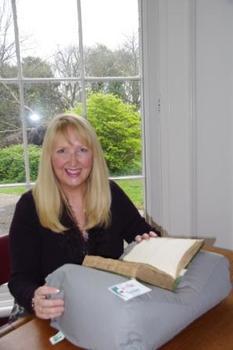 Martine at Hawarden Records Office, home of the Erddig papers Martine: That is a another coincidence – I also inherited some old family letters written by my great grandmother. Two of my great grandmothers were keen amateur cooks: one had a lodging house in Much Wenlock, Shropshire, and the other was a confectioner specialising in wedding cakes. The letters from Much Wenlock were beautifully warm and spontaneous, and their affectionate phrasing forms the basis of a few of Mrs Garland's letters, the cook in An Appetite For Violets.
I also read a great many travellers letters from the 18th-century. In the end I had to edit out some observations about Europe to speed the pace of the book. But I'm glad that some remained, for example Mr Pars' waspish descriptions of foreigners are a toned down version of the bullish British attitudes of the time.
3. Why did you choose to write about your chosen era in your novel? What is it about that time that appeals to you?
Iona: I think I grew up steeped in WW2 stories. As the happy product of parents who divorced and both remarried when I was very young, I had twice the usual allocation of grandparents, all with a wealth of wartime tales to tell and experiences to share, which I never grew tired of hearing. I was born in the 1970s which seemed to be the time when the war started to filter into children’s fiction on a significant scale, and I remember devouring books like When the Siren Wailed (Noel Streatfeild) and Carrie’s War (Nina Bawden) and being utterly enthralled by a time of danger and disruption that was only just past but felt light years away from the world I lived in. Over the years my interest in the war never waned, so by the time I came to write the book it felt very natural to set it during that era.
 Martine: After the mountains of research I did for An Appetite for Violets I did question whether to return to the 18th-century, but I couldn't stay away! The Penny Heart is set a little later, as the effects of the French Revolution are being felt in Britain. Like Iona, I was drawn to a time of 'danger and disruption' when a dark period loomed over Britain. In some ways there are parallels to situations today – unsettling technological change, civilized behaviour breaking down in France during the The Terror, and fears of a rising criminal underclass. Diaries and accounts of the time show that people genuinely feared for the stability of their world.
I wanted to show how these larger developments affected the personal lives of two women, one of them caught up in the great experiment to transport the criminal class to Australia, and the other preyed upon because the new technology of machines suddenly made her land more attractive to suitors.
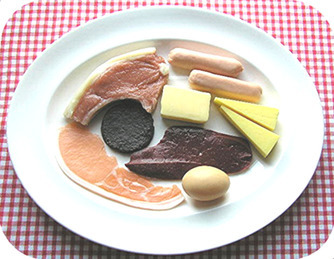 Weekly ration for an adult in World War II 4. Both novels use recipes and household items to evoke the past. Where did you get these ideas (and taste descriptions) from?
Iona: Again, because the past I was writing about was within living memory (unlike the historical period Martine brings so vividly to life in An Appetite for Violets and The Penny Heart) I think most of my information came simply from listening to my grandparents and parents. My mum was born in 1940, so her earliest memories are set against the backdrop of wartime. As such a small child she was oblivious to many aspects of the war, but food was the way in which it made itself felt most strongly in her young life. (She still shudders when you say the words ‘powdered egg’ to her.) My grandmothers and godmothers talked often about the impact of rationing and the difficulty of feeding a family in the face of such shortages. They were all excellent cooks – I suppose because they had to be – and none of them ever lost their horror of wastefulness! That extended from food to other aspects of their lives, so the things in their kitchens were the ones they’d had for decades; wooden spoons and rolling pins worn smooth with use, chipped enamel dishes and ridged bone-handled cutlery, china tea sets that never lost their bloom by being put in a dishwasher. Nothing was ever replaced because it got old or fell out of fashion, and I loved how those ordinary, everyday domestic items seemed to tell the stories of their lives, as they must have done for countless women down the ages.
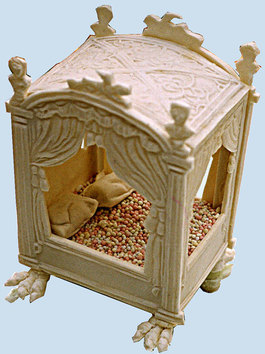 Suparpaste tester bed to be placed on a bride-cake Martine: I love that continuity in women's lives, passing down favourite kitchen items. Such is the length of memories of food that I also used some old family recipes in The Penny Heart. The Apple Pie that the convict women fantasise about is from my well-remembered grandmother's recipe. Like Iona, I'm fascinated by the process by which women pass down recipes as a form of 'love on the plate '. When learning more about period sugarwork with Ivan Day I learned about tiny sugar devices made from wooden moulds, such as this exquisite miniature bed designed to be placed on a bride-cake. I could imagine people treasuring them as we keep a 'cake-topper' from a wedding or celebration.
 I also looked at the very ancient history of women making secret charms and remedies from the plants growing around them. In The Penny Heart, Delafosse Hall's old servant Nan exemplifies a wise woman's use of nature, making hedgerow recipes like rosehip jelly and herb pottage. Mary, on the other hand, hoards the recipes of quacks and charlatans who prey on the ignorant, befuddling their senses with alcohol and toxins. It's no surprise that in the US the novel will be called A Taste for Nightshade, reflecting Mary's sinister interest in food.
LETTERS TO THE LOST by Iona Grey, is a stunning, emotional love story. Set in a dual timeline, of 1943 in Blitzed London and seventy years later, it is a remarkable debut. Iona has an obsession with history and the lives of women in the twentieth century. She lives in rural Cheshire with her husband and three daughters. She tweets as @iona_grey
THE PENNY HEART by Martine Bailey, is a historical novel of suspense set in the late 18th century. Inspired by eighteenth-century recipes, Martine also lives in Cheshire after spending 20 months house-swapping and researching in New Zealand and Australia. THE PENNY HEART is her second novel after AN APPETITE FOR VIOLETS, about a cook taken on a murderous journey to Italy.
January 24, 2015
Interview with Martine Bailey by Rebecca Mascull
To celebrate January's UK paperback publication of AN APPETITE FOR VIOLETS, today I’m interviewing Martine Bailey about her delicious debut novel.
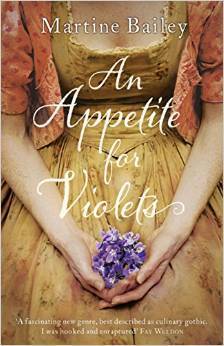 The UK pocket paperback of An Appetite for Violets [1] ‘An Appetite for Violets’ is such an intriguing and beautiful title. Can you explain how you came up with it and what it signifies in terms of the novel’sthemes?
The idea for the title began with the discovery of a recipe for Violet Pastilles in an old recipe book. It seemed such an old-fashioned and rather decadent flavour fashion, ideally representing Biddy’s secretive mistress, Lady Carinna and her addiction to sugar and fashion. Floral flavours were very fashionable in all sorts of confectionary at the time, so when Biddy makes ice creams using jasmine and honeysuckle she was absolutely on trend!
When Hodder were considering titles, I realised that violets also featured on Carinna’s violet-spangled dress that Biddy calls ‘a Parisian picture of a gown.’ (Spangles were little pieces of glass that sparkled in the candlelight, before sequins were invented).
Then in the final scenes the scent of violets returns, and when Biddy smells them she recalls a significant moment when she first met Carinna, and understands the scent’s other, more disturbing significance. I chose violets to symbolise the final twist in the novel, because there is something about the scent and flavour that many people find slightly sickly and unsettling:
‘There is something of burned blackened sugar, of overcooked sweetness in their pulsing fragrance.’
So the taste and flavour of violets is something corrupt, that the reader finally understands lies at the heart of the mystery.
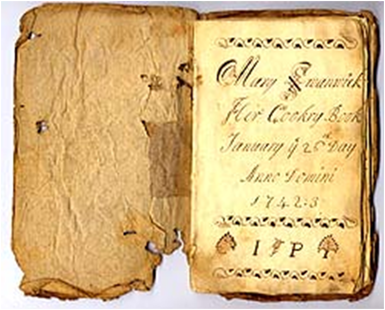 [2] The idea of the recipes at the beginning of some chapters is such an interesting one. Could you explore the reasons why you chose to use that as a narrative framing device? How important are these recipes to the atmosphere of the novel?
The recipes were the starting point of the book, from when I first saw them in the kitchen of a National Trust property, Erddig Hall, near Chester. I picked up a few hand-written recipes for dishes such as venison pasty and plum pudding, and felt they brought the past vividly to life. I wondered how a young servant who worked there might react if she was taken from that tranquil setting to cook and learn about different foods in foreign countries and eventually be forced to use her talents to survive.
What especially fascinated me was the rambling, poetic language of those early recipes, before methods and instructions had become codified as they are now. Many of them are highly individual and personalised – such as ‘Mary Jones, Her Best Way,’ and of course lack all temperatures and instructions, just stating ‘till enough’ or ‘to your taste’.
With no recipe illustrations, there are occasionally Biblical references, such as ‘heap like the Shew Bread in the Bible’ or commonplace references such as, ‘use as much butter as will cover a penny’. One of my favourite instructions is to use prayers to time a process: ‘boil for one Hail Mary’, meaning 15 -20 seconds.
I especially love recipes that guided women through different rites of passage in their lives. Old recipes tell us there were hot drinks or caudles to help give birth, sweet and spicy goods for festivals, bride cakes for marriage and funeral cakes at the end of life – and a lot of other regional specialties in between. I especially find it poignant that recipes are often the only surviving marks on paper left by unvoiced women. So I wanted to convey the way recipes transmitted women’s pleasures down the generations, passing on moments of happiness in hard-won lettering and precious ink.
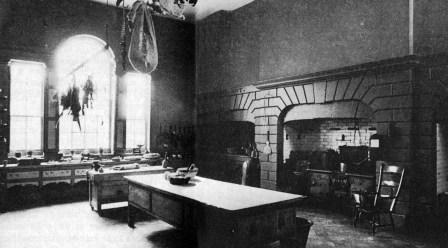 The kitchen at Erddig Hall that inspired the novel [3] Could you share with us some of the cookery research you did in preparation for writing about an C18th cook?
As soon as I knew what I wanted to write about I applied to learn about Georgian cookery with TV food historian Ivan Day. It was thrilling to learn how to cook on an open fire with a jack that turns the spit, to make wafers with irons in the fire, stitch lard into meat with a larding needle, boil a pudding in a cloth, and many other things I’d read about but didn’t understand. It was also the quince season, so as well as making dishes like quince and marrow tart I discovered the recipes for Taffety Tart in his wonderful collection of old recipe books.
Last year I went back to Ivan’s farm in Cumbria and learned more about sugarwork, using forgotten techniques and attempting the amazing sugarwork skills that confectioners developed in the 18th century, when sugar temples and gardens were created as grand table decorations. I am especially interested in the history of gingerbread as it features in The Penny Heart; it intrigued me to find it was made in all sorts of fancy shapes such as carriages and ‘husbands and wives’ in special moulds, and really was gilded with gold leaf. In my researches not everything has worked – I tried to make boiled wheat furmenty at home and however long I cooked it, it was still as hard as pebbles!
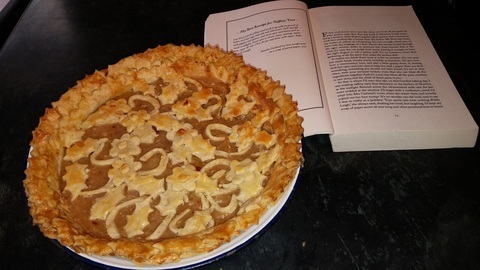 My interpretation of Taffety Tart I also did some 18th century re-enactment, dressing up in an extremely unflattering corset, bum-roll and big skirts (though I did learn that the stiff corsets work like a back support for a working woman). Re-enactment helped me understand day to day activities like making fire with a tinderbox, writing with a quill feather, gutting and plucking poultry and just how smoky and hot cooking over a fire can be.
 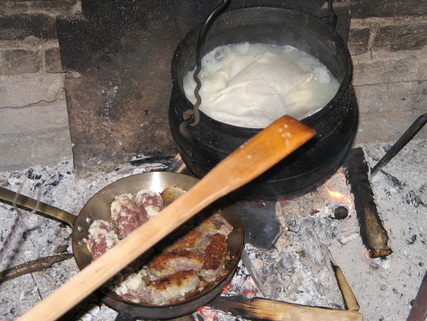 Boiling a pudding in a cloth on an open fire 4] The novel employs a variety of narrators, including 3rd and 1st person, as well as as the aforementioned recipes and also a variety of letters. Why did you decide on this range of styles and did this choice develop gradually in the planning stages?
In fact at first it was even more fragmented. I had the idea of a sort of metafiction, a series of texts related to a journey – inventories, accounts, recipes, snatches of journals, and letters. I would have liked maps, too, and clues buried in them – so fairly ambitious! My idea was to weave a narrative through them, based on those early epistolary novels such as Richardson’s Clarissa. I also loved the idea of the Household books given to wealthy women when they first married, and written in different handwriting by mothers, servants, friends, like scrapbooks of prayers, dowry lists, remedies, recipes, household instructions and accounts.
I had to rein in that idea to get a strong narrative moving, and when I found an agent and publisher it naturally became more conventional as it moved towards publication. But there are still traces of the early attempt, for example in Biddy’s list of possessions and of course the recipes and changes of narrator. I think a journey lends itself to multiple viewpoints, and of course it was an opportunity to bury clues in the text so that no single character could be aware of the entire story.
 The German edition 'The Cook's Treasure Book' emulates a Household Book [5] Your next book, The Penny Heart, is coming up in May 2015. Can you tell us a little about your exciting new novel to whet our appetites?
The Penny Heart is the narrative of two women with hugely different backgrounds and sensibilities. Much of it is written in alternating viewpoints, firstly by Grace, a sensitive and artistic young wife who finds herself at isolated Delafosse Hall, horribly attracted to her indifferent and selfish husband, Michael. The alternate strand follows Peg, her housekeeper, a clever cook and - the reader realises - a talented confidence trickster. When Grace finds The Penny Heart, an old penny engraved to commemorate a departing convict, it represents the collision point between the two women, proof of Peg’s past-life as a Botany Bay convict and also a darker secret.
Like Grace, I love the Gothic novels of Ann Radcliffe, so I did enjoy exploring the Gothic tropes of a mouldering, isolated Hall, a sinister servant, an underground tunnel and the legend of a ghost. I also wanted to recreate the uneasy 1790s, when the French, American and Industrial Revolutions were threatening the stability of the English class system. Propertied but legally powerless women such as Grace were vulnerable to the material greed of their partners. Working class criminals broke the law to take what they could of Britain’s fabulous new wealth. As an ‘out and out fly-girl’, Peg takes an oath to follow what was called The Life – learning the secret canting language of rogues and wearing secret tattoos as part of a vibrant Georgian underclass.
I’m not sure if I can whet your actual appetite, because it explores the darker aspects of food – starvation, adulteration, and poison! A fascinating aspect of the era is the world of secret ‘remedies’ and elixirs peddled by criminal quacks and charlatans. This potential danger surrounding food within the home led me to write Grace’s opening warning:
‘I fancy you think little of who makes the food you eat. Thrice a day it appears; you ingest it with more or less pleasure. Do you honestly know whose fingers touched it? Do you give a moment’s attention to the mind that devised your dish, its method and ingredients?’
As I was living in New Zealand when I began the book, the research took me to locations such as Sydney Cove and the wilder shores of New Zealand. Though there are some fine puddings and pies in the novel, I did eat some delicious food at a Maori Hangi, as well as kangaroo, crocodile, paua (black sea snails), campfire damper and grubs!
 Inspiration in New Zealand Many thanks to Rebecca Mascull, author of The Visitors (2014) and The Song of the Sea Maid (2015) both published by Hodder & Stoughton. This interview was first published online at:
http://rebeccamascull.tumblr.com/
The UK pocket paperback of An Appetite for Violets [1] ‘An Appetite for Violets’ is such an intriguing and beautiful title. Can you explain how you came up with it and what it signifies in terms of the novel’sthemes?The idea for the title began with the discovery of a recipe for Violet Pastilles in an old recipe book. It seemed such an old-fashioned and rather decadent flavour fashion, ideally representing Biddy’s secretive mistress, Lady Carinna and her addiction to sugar and fashion. Floral flavours were very fashionable in all sorts of confectionary at the time, so when Biddy makes ice creams using jasmine and honeysuckle she was absolutely on trend!
When Hodder were considering titles, I realised that violets also featured on Carinna’s violet-spangled dress that Biddy calls ‘a Parisian picture of a gown.’ (Spangles were little pieces of glass that sparkled in the candlelight, before sequins were invented).
Then in the final scenes the scent of violets returns, and when Biddy smells them she recalls a significant moment when she first met Carinna, and understands the scent’s other, more disturbing significance. I chose violets to symbolise the final twist in the novel, because there is something about the scent and flavour that many people find slightly sickly and unsettling:
‘There is something of burned blackened sugar, of overcooked sweetness in their pulsing fragrance.’
So the taste and flavour of violets is something corrupt, that the reader finally understands lies at the heart of the mystery.
[2] The idea of the recipes at the beginning of some chapters is such an interesting one. Could you explore the reasons why you chose to use that as a narrative framing device? How important are these recipes to the atmosphere of the novel?The recipes were the starting point of the book, from when I first saw them in the kitchen of a National Trust property, Erddig Hall, near Chester. I picked up a few hand-written recipes for dishes such as venison pasty and plum pudding, and felt they brought the past vividly to life. I wondered how a young servant who worked there might react if she was taken from that tranquil setting to cook and learn about different foods in foreign countries and eventually be forced to use her talents to survive.
What especially fascinated me was the rambling, poetic language of those early recipes, before methods and instructions had become codified as they are now. Many of them are highly individual and personalised – such as ‘Mary Jones, Her Best Way,’ and of course lack all temperatures and instructions, just stating ‘till enough’ or ‘to your taste’.
With no recipe illustrations, there are occasionally Biblical references, such as ‘heap like the Shew Bread in the Bible’ or commonplace references such as, ‘use as much butter as will cover a penny’. One of my favourite instructions is to use prayers to time a process: ‘boil for one Hail Mary’, meaning 15 -20 seconds.
I especially love recipes that guided women through different rites of passage in their lives. Old recipes tell us there were hot drinks or caudles to help give birth, sweet and spicy goods for festivals, bride cakes for marriage and funeral cakes at the end of life – and a lot of other regional specialties in between. I especially find it poignant that recipes are often the only surviving marks on paper left by unvoiced women. So I wanted to convey the way recipes transmitted women’s pleasures down the generations, passing on moments of happiness in hard-won lettering and precious ink.
The kitchen at Erddig Hall that inspired the novel [3] Could you share with us some of the cookery research you did in preparation for writing about an C18th cook?As soon as I knew what I wanted to write about I applied to learn about Georgian cookery with TV food historian Ivan Day. It was thrilling to learn how to cook on an open fire with a jack that turns the spit, to make wafers with irons in the fire, stitch lard into meat with a larding needle, boil a pudding in a cloth, and many other things I’d read about but didn’t understand. It was also the quince season, so as well as making dishes like quince and marrow tart I discovered the recipes for Taffety Tart in his wonderful collection of old recipe books.
Last year I went back to Ivan’s farm in Cumbria and learned more about sugarwork, using forgotten techniques and attempting the amazing sugarwork skills that confectioners developed in the 18th century, when sugar temples and gardens were created as grand table decorations. I am especially interested in the history of gingerbread as it features in The Penny Heart; it intrigued me to find it was made in all sorts of fancy shapes such as carriages and ‘husbands and wives’ in special moulds, and really was gilded with gold leaf. In my researches not everything has worked – I tried to make boiled wheat furmenty at home and however long I cooked it, it was still as hard as pebbles!
My interpretation of Taffety Tart I also did some 18th century re-enactment, dressing up in an extremely unflattering corset, bum-roll and big skirts (though I did learn that the stiff corsets work like a back support for a working woman). Re-enactment helped me understand day to day activities like making fire with a tinderbox, writing with a quill feather, gutting and plucking poultry and just how smoky and hot cooking over a fire can be. Boiling a pudding in a cloth on an open fire 4] The novel employs a variety of narrators, including 3rd and 1st person, as well as as the aforementioned recipes and also a variety of letters. Why did you decide on this range of styles and did this choice develop gradually in the planning stages?In fact at first it was even more fragmented. I had the idea of a sort of metafiction, a series of texts related to a journey – inventories, accounts, recipes, snatches of journals, and letters. I would have liked maps, too, and clues buried in them – so fairly ambitious! My idea was to weave a narrative through them, based on those early epistolary novels such as Richardson’s Clarissa. I also loved the idea of the Household books given to wealthy women when they first married, and written in different handwriting by mothers, servants, friends, like scrapbooks of prayers, dowry lists, remedies, recipes, household instructions and accounts.
I had to rein in that idea to get a strong narrative moving, and when I found an agent and publisher it naturally became more conventional as it moved towards publication. But there are still traces of the early attempt, for example in Biddy’s list of possessions and of course the recipes and changes of narrator. I think a journey lends itself to multiple viewpoints, and of course it was an opportunity to bury clues in the text so that no single character could be aware of the entire story.
The German edition 'The Cook's Treasure Book' emulates a Household Book [5] Your next book, The Penny Heart, is coming up in May 2015. Can you tell us a little about your exciting new novel to whet our appetites?The Penny Heart is the narrative of two women with hugely different backgrounds and sensibilities. Much of it is written in alternating viewpoints, firstly by Grace, a sensitive and artistic young wife who finds herself at isolated Delafosse Hall, horribly attracted to her indifferent and selfish husband, Michael. The alternate strand follows Peg, her housekeeper, a clever cook and - the reader realises - a talented confidence trickster. When Grace finds The Penny Heart, an old penny engraved to commemorate a departing convict, it represents the collision point between the two women, proof of Peg’s past-life as a Botany Bay convict and also a darker secret.
Like Grace, I love the Gothic novels of Ann Radcliffe, so I did enjoy exploring the Gothic tropes of a mouldering, isolated Hall, a sinister servant, an underground tunnel and the legend of a ghost. I also wanted to recreate the uneasy 1790s, when the French, American and Industrial Revolutions were threatening the stability of the English class system. Propertied but legally powerless women such as Grace were vulnerable to the material greed of their partners. Working class criminals broke the law to take what they could of Britain’s fabulous new wealth. As an ‘out and out fly-girl’, Peg takes an oath to follow what was called The Life – learning the secret canting language of rogues and wearing secret tattoos as part of a vibrant Georgian underclass.
I’m not sure if I can whet your actual appetite, because it explores the darker aspects of food – starvation, adulteration, and poison! A fascinating aspect of the era is the world of secret ‘remedies’ and elixirs peddled by criminal quacks and charlatans. This potential danger surrounding food within the home led me to write Grace’s opening warning:
‘I fancy you think little of who makes the food you eat. Thrice a day it appears; you ingest it with more or less pleasure. Do you honestly know whose fingers touched it? Do you give a moment’s attention to the mind that devised your dish, its method and ingredients?’
As I was living in New Zealand when I began the book, the research took me to locations such as Sydney Cove and the wilder shores of New Zealand. Though there are some fine puddings and pies in the novel, I did eat some delicious food at a Maori Hangi, as well as kangaroo, crocodile, paua (black sea snails), campfire damper and grubs!
Inspiration in New Zealand Many thanks to Rebecca Mascull, author of The Visitors (2014) and The Song of the Sea Maid (2015) both published by Hodder & Stoughton. This interview was first published online at: http://rebeccamascull.tumblr.com/
December 21, 2014
A PIE TO MAKE US MERRY – in Honour of the Christmas Pie
My favourite symbol of Georgian Christmas abundance has to be the Christmas Pie. Not to be confused with small minced pies of mostly dried fruit, this pie is a monster – a battlemented fantasy of plenty weighing as much as 15 stones. Stuffed with increasing sizes of game, from small birds to rabbits to geese and turkeys, it was built to feed famished crowds. And in times when Christmas could last twelve days or longer it was baked to last, thanks to an airtight layer of butter poured in through its spout-hole.
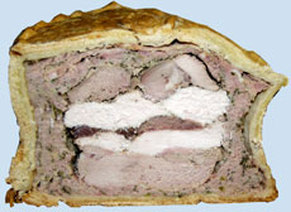 A slice through A Christmas Pie made on Ivan Day’s Taste of Christmas Past course The earliest recipes reflect the medieval mix of meat, spice and fruit and give directions for artful pastry decorations of leaves, birds and animals. Some pies must have been of gargantuan size, as legend tells of Geoffrey of Monmouth encountering one and ‘sheltering within its capacious crust’. When the Puritans banned the Christmas Pie they didn’t mince their words, according to Pimlott’s The Englishman’s Christmas. It was denounced as ‘an invention of the scarlet whore of Babylon, an hodge podge of supersition, Popery, the Devil and all his works,’ recalled The Gentleman’s Magazine of 1733. By the late eighteenth century there was talk of its decline as sophisticated city dwellers disdained the old traditions. But in the countryside the annual ‘open house’ at country estates could still be found, with old and young gathering at groaning boards to feast and drink at their landlord’s expense. Like the gathering for Father Giles’s feast of 1800, the Christmas Pie was fat, generous and rustic, created for sharing at a long table and eating with gusto. In 1770 a pie had been baked in Newcastle that was said to be nearly nine feet in circumference and was ‘neatly fitted with a case and four small wheels to facilitate its use to every guest that inclines to partake of its contents at table.’ That sounds like a rather handy edible hostess trolley to me...
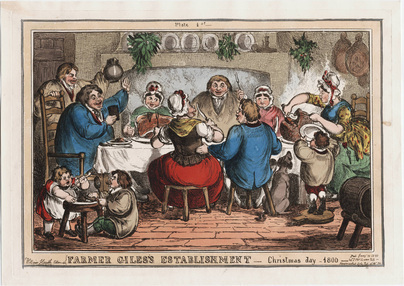 Farmer Giles’s Establishment – Christmas Day 1800 In An Appetite for Violets my cook heroine Biddy Leigh repeats a common saying of the day, that ‘Nothing is busier than English ovens at Christmas.’ In the book I recreate a Christmas feast for fifty people; a communal task undertaken on fiery spits, peppered with mishaps (scalding fat, fire and falls) and sweetened with traditions (kissing boughs and singing carols in rounds). The early drafts needed a ruthless diet before publication, so carried away did I become by a menu of lost delights such as Yule cakes, crucifix engraved cheeses and plum pottage.
By the Victorian era giant pies merited a feature in the newspapers, a sure sign that the old tradition was dying. The magnificent pie baked for a Royal Banquet at Windsor castle in 1857, was borne by four bewhiskered footmen and preceded by another medieval relic, the boar’s head on a platter. An accompanying illustration showed the larder at Windsor, replete with shelves of hanging game and white-coated male chefs.
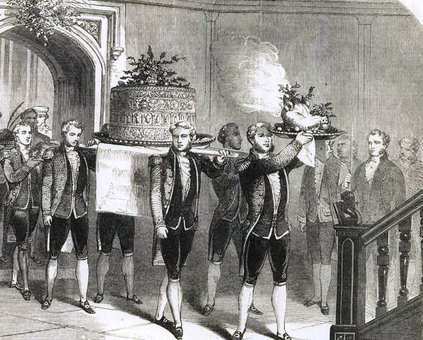 The Illustrated Times 1857 - The Boar’s Head and Christmas Pie for the Royal Banquet at Windsor Castle Nowadays vast Christmas Pies seem only to be found in historic recreation, for instance at www.historicfood.com. No longer do we say, ‘He hath eaten many a Christmas Pie’ - presumably an early variant of ‘Who ate all the pies?’
In ending I’d like to offer some advice from seventeenth century poet George Wither’s Christmas Carol:
Without the door let sorrow lie,
And if for cold it hap to die,
We'll bury it in a Christmas pie,
And evermore be merry.
May all your sorrows be buried in good Christmas eating and have a very Merry Christmas!
Christmas Pie
Make a standing crust of 24 pounds of the finest flour, six pounds butter, half a pound rendered suet and raise in an oval with very thick walls and sturdy bottom. Bone each of a turkey, a goose, a fowl, a partridge and a pigeon and lay one inside the other along with mace, nutmeg, salt and pepper. Then have a hare ready stewed in joints along with its gravy, woodcocks, more game and whatsoever wild birds you can get. Lay them as close as you can get and put at least four pounds of butter in the pie. Make your lid pretty thick and lay on flowers or such Christmas shapes as you wish on the lid around a hole in the middle. Rub it all over with yolks of egg and bind it round with paper and lay the same over the top. It will take four hours baking in a bread oven. When it comes out melt two pounds of butter in the gravy that come from the hare and pour it hot in the pie through the hole.
From ‘An Appetite for Violets’ by Martine Bailey
(This blog article was first published on History Lives 2014)
A slice through A Christmas Pie made on Ivan Day’s Taste of Christmas Past course The earliest recipes reflect the medieval mix of meat, spice and fruit and give directions for artful pastry decorations of leaves, birds and animals. Some pies must have been of gargantuan size, as legend tells of Geoffrey of Monmouth encountering one and ‘sheltering within its capacious crust’. When the Puritans banned the Christmas Pie they didn’t mince their words, according to Pimlott’s The Englishman’s Christmas. It was denounced as ‘an invention of the scarlet whore of Babylon, an hodge podge of supersition, Popery, the Devil and all his works,’ recalled The Gentleman’s Magazine of 1733. By the late eighteenth century there was talk of its decline as sophisticated city dwellers disdained the old traditions. But in the countryside the annual ‘open house’ at country estates could still be found, with old and young gathering at groaning boards to feast and drink at their landlord’s expense. Like the gathering for Father Giles’s feast of 1800, the Christmas Pie was fat, generous and rustic, created for sharing at a long table and eating with gusto. In 1770 a pie had been baked in Newcastle that was said to be nearly nine feet in circumference and was ‘neatly fitted with a case and four small wheels to facilitate its use to every guest that inclines to partake of its contents at table.’ That sounds like a rather handy edible hostess trolley to me... Farmer Giles’s Establishment – Christmas Day 1800 In An Appetite for Violets my cook heroine Biddy Leigh repeats a common saying of the day, that ‘Nothing is busier than English ovens at Christmas.’ In the book I recreate a Christmas feast for fifty people; a communal task undertaken on fiery spits, peppered with mishaps (scalding fat, fire and falls) and sweetened with traditions (kissing boughs and singing carols in rounds). The early drafts needed a ruthless diet before publication, so carried away did I become by a menu of lost delights such as Yule cakes, crucifix engraved cheeses and plum pottage.By the Victorian era giant pies merited a feature in the newspapers, a sure sign that the old tradition was dying. The magnificent pie baked for a Royal Banquet at Windsor castle in 1857, was borne by four bewhiskered footmen and preceded by another medieval relic, the boar’s head on a platter. An accompanying illustration showed the larder at Windsor, replete with shelves of hanging game and white-coated male chefs.
The Illustrated Times 1857 - The Boar’s Head and Christmas Pie for the Royal Banquet at Windsor Castle Nowadays vast Christmas Pies seem only to be found in historic recreation, for instance at www.historicfood.com. No longer do we say, ‘He hath eaten many a Christmas Pie’ - presumably an early variant of ‘Who ate all the pies?’In ending I’d like to offer some advice from seventeenth century poet George Wither’s Christmas Carol:
Without the door let sorrow lie,
And if for cold it hap to die,
We'll bury it in a Christmas pie,
And evermore be merry.
May all your sorrows be buried in good Christmas eating and have a very Merry Christmas!
Christmas Pie
Make a standing crust of 24 pounds of the finest flour, six pounds butter, half a pound rendered suet and raise in an oval with very thick walls and sturdy bottom. Bone each of a turkey, a goose, a fowl, a partridge and a pigeon and lay one inside the other along with mace, nutmeg, salt and pepper. Then have a hare ready stewed in joints along with its gravy, woodcocks, more game and whatsoever wild birds you can get. Lay them as close as you can get and put at least four pounds of butter in the pie. Make your lid pretty thick and lay on flowers or such Christmas shapes as you wish on the lid around a hole in the middle. Rub it all over with yolks of egg and bind it round with paper and lay the same over the top. It will take four hours baking in a bread oven. When it comes out melt two pounds of butter in the gravy that come from the hare and pour it hot in the pie through the hole.
From ‘An Appetite for Violets’ by Martine Bailey
(This blog article was first published on History Lives 2014)
October 29, 2014
A Soul Cake for Hallowe'en
It is the end of October, the fields are bare, the leaves have been blown from the trees, and the nights are growing longer. The darkness is coming. At this time of year we celebrate the end of summer and the cycle of death and rebirth. From as far back as anyone can remember, on one special night we gather together to share food and drink, play tricks and games. It is a time to connect with our ancestors, and honor the dead.
In my home county of Cheshire this gathering has long had a unique name – Souling or Soul-caking. ‘An Appetite for Violets’ begins on Souling Night, a time when mischief is rife and the world can turn upside down. It is 1774 and the household is baking to welcome a band of mummers with blackened faces and outlandish costumes who demand entry at the door and sing:
A soul, a soul, a soul-cake,
Please good missus, a soul cake…’
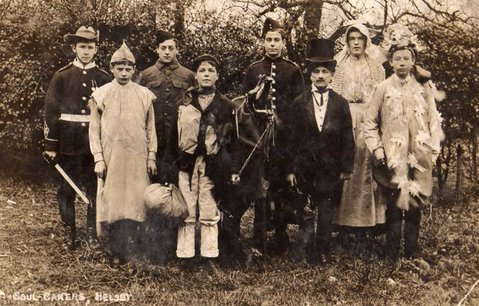 Soul-cakers from Helsby, Cheshire in the 1920s Later they perform a mumming play in return for food and drink. Just how ancient Cheshire Souling might be is suggested by the ritual of a horse’s head led by a man in a white sheet, a performance called ‘hodening’ thought to be an echo of the Norse god Odin. Other characters can include a Hero, Saint George or King George, a Blackamoor or Saladin, Kings, Fools, Devils, and a Doctor who magically brings the hero back to life in a way that echoes many rituals of death and renewal. The rhyming couplets of the play are passed on orally, so characters emerge like ‘Bellsie Bob’, a corruption of ‘Beelzebub’. But then none of it is serious - it’s about slapstick, taunting, and free-flowing beer.
So what are soul cakes and why are they handed out? Even in the fourteenth century the idea of Soul Cakes was ancient, as John Mirk wrote in Festial ‘wherefore in olden time good men and women would this day buy bread and deal (give) it for the souls that they loved, hoping with each loaf to get a soul out of purgatory’.
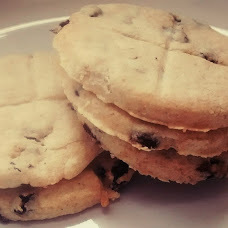 Soul Cakes made using modern methods In pre-Reformation England these cakes were given to the poor as alms to try to free dead souls from Purgatory. Later, in one of those mixing ups of pagan and Christian traditions, the poor village Soulers conferred a blessing on rich households in return for food and drink - suggesting the rich had better pay up or risk a bad harvest, or worse.
Surviving recipes for Soul Cakes vary, but they are generally small, round, spicy and sweet. Sugar and spice and dried fruit were for centuries the mark of festival food, a welcome relief from bland everyday food. Recipes describe a ‘cross’ design that hints at two crossed bones rather than a crucifix. When I baked them as research for An Appetite for Violets they were quite delicious spiced biscuits. An ancient ‘serving suggestion’ from a pre-literate age was to lay the cakes ‘in a tall heap like the picture of the Shew Bread in the Bible’.
These days a few groups of Cheshire Soulers keep the ritual alive and next weekend I’ll be looking for a performance in local pubs. On Souling Night (or All Hallow’s Eve or Hallowe’en) it seems history does indeed live, in our instinct to walk the streets in outlandish costumes and eat and drink special foods, and bless or curse (trick or treat) our neighbours…
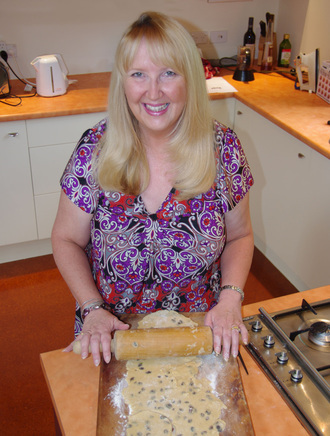 ~ Historic Recipe To Make Soul Cakes ~
Work 4lb fresh butter with your hand to a cream. Beat in the same of loaf sugar pounded and sifted fine. Take two dozen egg yolks beaten and add by degrees. Then put in flour 8 lb with salt, allspice and mace as you wish. Add your currants 2 lb picked and dried well. Lay saffron as you have it in a churn of milk and lay next to the fire. Mix your dough with the warm milk strained and make flat rounds marking each with Crossed Bones in remembrance of Dead Souls. When done enough in a quick oven lay in a tall heap like the picture of the Shew Bread in the Bible. All who knock for entry and chant the rhyme may eat from the board to keep the blessings on the house.
A MODERN INTERPRETATION OF SOUL CAKES
8oz butter softened at room temperature
5oz caster sugar
2 egg yolks
12 oz plain flour
2 oz cornflour (this makes the cakes shorter)
A pinch of salt
2-3 teaspoons of spices as you have them: allspice, nutmeg, mace, cinnamon, ginger
1 teaspoon baking powder
4oz currants
Cream together the softened butter and sugar in a mixing bowl until pale and fluffy. Gradually add the yolks to the mixture.
Sift in the flour, cornflour, salt, spices and baking powder.
Add the currants and mix together with your hands to make a smooth dough. Refrigerate for 30 minutes.
Preheat the oven to 180/350/gas mark 4.
Roll the dough out on a floured surface to about ¼ inch and stamp out circles.
Mark with crosses with a sharp knife.
Bake on baking sheets for about 15 minutes until golden.
Remove and cool for a few minutes, then transfer to a wire rack to cool completely.
In my home county of Cheshire this gathering has long had a unique name – Souling or Soul-caking. ‘An Appetite for Violets’ begins on Souling Night, a time when mischief is rife and the world can turn upside down. It is 1774 and the household is baking to welcome a band of mummers with blackened faces and outlandish costumes who demand entry at the door and sing:
A soul, a soul, a soul-cake,
Please good missus, a soul cake…’
Soul-cakers from Helsby, Cheshire in the 1920s Later they perform a mumming play in return for food and drink. Just how ancient Cheshire Souling might be is suggested by the ritual of a horse’s head led by a man in a white sheet, a performance called ‘hodening’ thought to be an echo of the Norse god Odin. Other characters can include a Hero, Saint George or King George, a Blackamoor or Saladin, Kings, Fools, Devils, and a Doctor who magically brings the hero back to life in a way that echoes many rituals of death and renewal. The rhyming couplets of the play are passed on orally, so characters emerge like ‘Bellsie Bob’, a corruption of ‘Beelzebub’. But then none of it is serious - it’s about slapstick, taunting, and free-flowing beer.So what are soul cakes and why are they handed out? Even in the fourteenth century the idea of Soul Cakes was ancient, as John Mirk wrote in Festial ‘wherefore in olden time good men and women would this day buy bread and deal (give) it for the souls that they loved, hoping with each loaf to get a soul out of purgatory’.
Soul Cakes made using modern methods In pre-Reformation England these cakes were given to the poor as alms to try to free dead souls from Purgatory. Later, in one of those mixing ups of pagan and Christian traditions, the poor village Soulers conferred a blessing on rich households in return for food and drink - suggesting the rich had better pay up or risk a bad harvest, or worse.Surviving recipes for Soul Cakes vary, but they are generally small, round, spicy and sweet. Sugar and spice and dried fruit were for centuries the mark of festival food, a welcome relief from bland everyday food. Recipes describe a ‘cross’ design that hints at two crossed bones rather than a crucifix. When I baked them as research for An Appetite for Violets they were quite delicious spiced biscuits. An ancient ‘serving suggestion’ from a pre-literate age was to lay the cakes ‘in a tall heap like the picture of the Shew Bread in the Bible’.
These days a few groups of Cheshire Soulers keep the ritual alive and next weekend I’ll be looking for a performance in local pubs. On Souling Night (or All Hallow’s Eve or Hallowe’en) it seems history does indeed live, in our instinct to walk the streets in outlandish costumes and eat and drink special foods, and bless or curse (trick or treat) our neighbours…
~ Historic Recipe To Make Soul Cakes ~Work 4lb fresh butter with your hand to a cream. Beat in the same of loaf sugar pounded and sifted fine. Take two dozen egg yolks beaten and add by degrees. Then put in flour 8 lb with salt, allspice and mace as you wish. Add your currants 2 lb picked and dried well. Lay saffron as you have it in a churn of milk and lay next to the fire. Mix your dough with the warm milk strained and make flat rounds marking each with Crossed Bones in remembrance of Dead Souls. When done enough in a quick oven lay in a tall heap like the picture of the Shew Bread in the Bible. All who knock for entry and chant the rhyme may eat from the board to keep the blessings on the house.
A MODERN INTERPRETATION OF SOUL CAKES
8oz butter softened at room temperature
5oz caster sugar
2 egg yolks
12 oz plain flour
2 oz cornflour (this makes the cakes shorter)
A pinch of salt
2-3 teaspoons of spices as you have them: allspice, nutmeg, mace, cinnamon, ginger
1 teaspoon baking powder
4oz currants
Cream together the softened butter and sugar in a mixing bowl until pale and fluffy. Gradually add the yolks to the mixture.
Sift in the flour, cornflour, salt, spices and baking powder.
Add the currants and mix together with your hands to make a smooth dough. Refrigerate for 30 minutes.
Preheat the oven to 180/350/gas mark 4.
Roll the dough out on a floured surface to about ¼ inch and stamp out circles.
Mark with crosses with a sharp knife.
Bake on baking sheets for about 15 minutes until golden.
Remove and cool for a few minutes, then transfer to a wire rack to cool completely.
October 17, 2014
Triumphs of the table – in honour of the Great British Bake-off Final
This week it is the ultimate test on the Great British Bake-Off – the grand final between three astonishing bakers, Richard, Luis and Nancy. The challenges have not been announced, but there is little doubt it will involve something very large and architectural. We may think the trend for man-size towers of croquembouche or gingerbread houses you could happily inhabit, are new phenomenon – but as ever, history is merely repeating itself.
In Britain a fashion for sculptural food can be traced back to Medieval Royal feasts and the use of sotelties moulded in the shapes of people, animals, and mythical creatures in wax, marzipan or sugar. These in-between courses showstoppers were accompanied by texts or verses that revealed their allegorical nature, for example an angel accompanied by a text: ‘Thanke all, god, of this feste’.
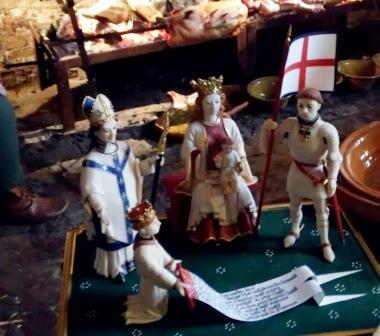 Medieval soteltie depicting royal figures made for ‘Food Odyssey’, KBS More surreal were the Italian food festivals of Renaissance Italy, often referred to as Cuccagna, a term related to ‘Cockayne’ or the mythical land of plenty. At their centre were extraordinary architectural fantasies constructed of cheeses and hams; in fact gigantic pavilions built of food. Provided by local nobles, the amusement lay in watching the poor and homeless destroy these edifices in a ravenous rampage - it seems the entertainment value of watching others eat is nothing new.
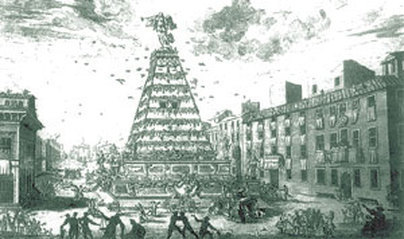 Cuccagna Festival, Livorno, (1739) in which architectural food was devoured en masse On a more modest scale, the eighteenth century saw the height of elegant sugar architecture. Classical temples, military monuments and ornate gardens were constructed to form the centrepieces of breathtaking banquets. The secret to constructing so many edible buildings was the use of carved moulds that allowed sugarpaste to be ‘mass-produced’ and then assembled. To conquer the inherent problems of food architecture – wobble and collapse – many decorations were not intended for consumption, strengthened by rice flour, plaster, starch and ground marble. Furthermore, to prevent slumping, buildings were often supported by wires and armatures.
By the nineteenth century such ostentatious trionfi di tavola (triumphs of the table) were deemed excessive. Urbain Dubois, chef de cuisine to Wilhelm I of Prussia, created sculptures that reflected the Kaisers two greatest passions: warfare and hunting. A sculpture depicting the pleasures of the hunt in the form of a boar’s head and miniature stags, made from fat, must be one of the most ghastly food sculptures ever made. More attractive were the huge Gothic sugar centrepieces, such as that recreated by food historian Ivan Day at www.historicfood.com
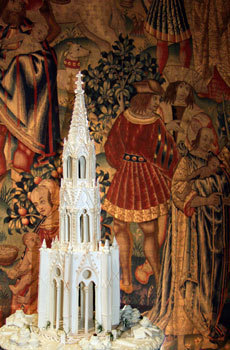 Neo-Gothic sugar sculpture based on design by Urbain Dubois On a more modest scale, in my novel The Penny Heart, even the more aspirational Georgian households hankered after something architectural on their dining tables. The Wedgewood potteries, ever alert to customers’ aspirations, created a dessert mould in the form of a small turreted ‘Solomon’s Temple’ to be filled with flummery, similar to blancmange. Extremely wobbly and rather ridiculous, this seemed to me the perfect dish to illustrate my heroine Jane’s apprehensions at her wedding feast and her concerns about the dysfunctional family she is marrying into.
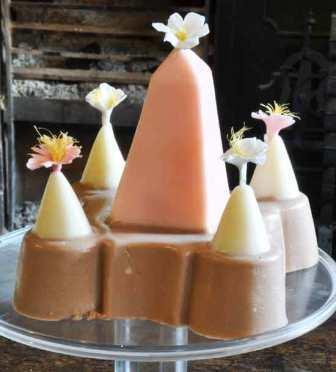 A Solomon’s Temple made of flummery Looking ahead to the Bake-Off final, it does look as if Richard, master builder by trade and devotee of pencil and ruler, enters with a clear advantage. However, unlike the food sculptures of the past, I hope that ‘the proof of the pudding is in the eating’ and sheer ‘scrumminess’, as Mary would say, will win the day.
~ How to Make A Solomon’s Temple in Flummery ~
Take a quart of stiff flummery and divide into three parts. Make one a pretty pink colour with a little cochineal, bruised and steeped in brandy. Scrape an ounce of chocolate and mix with another part of flummery to make a stone colour. The third part must be white. Then fill your mould first with pink flummery for the tower and then white for the turrets. Fill the base with chocolate flummery and let it stand for one day. Then loosen it round with a pin and shake it out gently. When you set it out, stick a small sprig of flowers into each tower, which will strengthen it and also give it a genteel appearance.
Extracted from THE PENNY HEART by Martine Bailey, to be published by Hodder & Stoughton in 2015.
Martine Bailey’s debut historical novel, AN APPETITE FOR VIOLETS, is available now in trade paperback and as an eBook from Hodder & Stoughton. Find out more on the Hodder website here , by visiting Martine Bailey’s website and by following her on Twitter .
In Britain a fashion for sculptural food can be traced back to Medieval Royal feasts and the use of sotelties moulded in the shapes of people, animals, and mythical creatures in wax, marzipan or sugar. These in-between courses showstoppers were accompanied by texts or verses that revealed their allegorical nature, for example an angel accompanied by a text: ‘Thanke all, god, of this feste’.
Medieval soteltie depicting royal figures made for ‘Food Odyssey’, KBS More surreal were the Italian food festivals of Renaissance Italy, often referred to as Cuccagna, a term related to ‘Cockayne’ or the mythical land of plenty. At their centre were extraordinary architectural fantasies constructed of cheeses and hams; in fact gigantic pavilions built of food. Provided by local nobles, the amusement lay in watching the poor and homeless destroy these edifices in a ravenous rampage - it seems the entertainment value of watching others eat is nothing new. Cuccagna Festival, Livorno, (1739) in which architectural food was devoured en masse On a more modest scale, the eighteenth century saw the height of elegant sugar architecture. Classical temples, military monuments and ornate gardens were constructed to form the centrepieces of breathtaking banquets. The secret to constructing so many edible buildings was the use of carved moulds that allowed sugarpaste to be ‘mass-produced’ and then assembled. To conquer the inherent problems of food architecture – wobble and collapse – many decorations were not intended for consumption, strengthened by rice flour, plaster, starch and ground marble. Furthermore, to prevent slumping, buildings were often supported by wires and armatures. By the nineteenth century such ostentatious trionfi di tavola (triumphs of the table) were deemed excessive. Urbain Dubois, chef de cuisine to Wilhelm I of Prussia, created sculptures that reflected the Kaisers two greatest passions: warfare and hunting. A sculpture depicting the pleasures of the hunt in the form of a boar’s head and miniature stags, made from fat, must be one of the most ghastly food sculptures ever made. More attractive were the huge Gothic sugar centrepieces, such as that recreated by food historian Ivan Day at www.historicfood.com
Neo-Gothic sugar sculpture based on design by Urbain Dubois On a more modest scale, in my novel The Penny Heart, even the more aspirational Georgian households hankered after something architectural on their dining tables. The Wedgewood potteries, ever alert to customers’ aspirations, created a dessert mould in the form of a small turreted ‘Solomon’s Temple’ to be filled with flummery, similar to blancmange. Extremely wobbly and rather ridiculous, this seemed to me the perfect dish to illustrate my heroine Jane’s apprehensions at her wedding feast and her concerns about the dysfunctional family she is marrying into. A Solomon’s Temple made of flummery Looking ahead to the Bake-Off final, it does look as if Richard, master builder by trade and devotee of pencil and ruler, enters with a clear advantage. However, unlike the food sculptures of the past, I hope that ‘the proof of the pudding is in the eating’ and sheer ‘scrumminess’, as Mary would say, will win the day.~ How to Make A Solomon’s Temple in Flummery ~
Take a quart of stiff flummery and divide into three parts. Make one a pretty pink colour with a little cochineal, bruised and steeped in brandy. Scrape an ounce of chocolate and mix with another part of flummery to make a stone colour. The third part must be white. Then fill your mould first with pink flummery for the tower and then white for the turrets. Fill the base with chocolate flummery and let it stand for one day. Then loosen it round with a pin and shake it out gently. When you set it out, stick a small sprig of flowers into each tower, which will strengthen it and also give it a genteel appearance.
Extracted from THE PENNY HEART by Martine Bailey, to be published by Hodder & Stoughton in 2015.
Martine Bailey’s debut historical novel, AN APPETITE FOR VIOLETS, is available now in trade paperback and as an eBook from Hodder & Stoughton. Find out more on the Hodder website here , by visiting Martine Bailey’s website and by following her on Twitter .
September 6, 2014
CHOCOLATE CHALLENGE PART 3 - WHITE CHOCOLATE
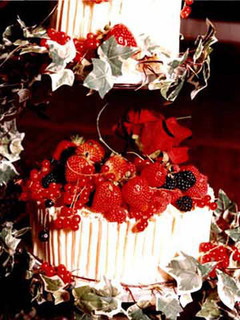 My White Chocolate Wedding Cake White chocolate is often derided as not being true chocolate, but I love it so much I chose it for my wedding cake. Firstly it looks so beautiful, like solid cream, and then the luxurious flavour complements delicious summer fruits so well. I also used this heavenly combination to win my title as UK Dessert Champion with this easy but delicious recipe.
WHITE CHOCOLATE RECIPE
White Chocolate and Cassis Soaked Summer Fruits Cheesecake
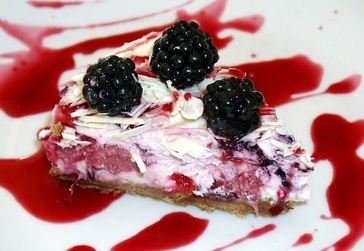 For the base:
110 g digestive biscuits
50 g butter
For the filling:
250 g quark or curd cheese
286 ml double cream, whipped to soft peaks
1 sachet gelatine, dissolved in 3 tablespoons hot water
350 g best quality white chocolate
500 g any variety berry fruits (fresh or frozen)
100 ml creme de cassis
150 g icing sugar 1 teaspoon arrowroot
Preparation:
Melt the butter gently in a pan or microwave and stir in the biscuit crumbs. Line an 8’’ pre-buttered tin, pressing the mixture down with the back of a spoon. Chill.
Place the fruit in a sieve over a bowl. Pour over the cassis and lightly crush with a spoon to encourage the juices to drip below. Allow to thaw fully if using frozen fruit.
Melt the white chocolate in a bowl over a pan of simmering water. Spread about one fifth in a thin layer across a clean kitchen worktop or marble slab with a spatula. Leave until barely set.
Blend the quark in food mixer. Gently fold in the whipped cream , remaining melted chocolate and dissolved gelatine. Retain a few of the best fruits as decoration and fold in the cassis steeped fruits from the sieve.
Pour the mixture over the biscuit base, cover with foil and chill for about 3 hours.
Using the sharp edge of a knife make long splinters from the white chocolate. Decorate the cheesecake with white chocolate splinters and the retained fruit.
BOOK REVIEW - A White Chocolate Read
One Hundred and One Dalmations by Dodie Smith
The levels of sugar in white chocolate suggest a sweeter read, and my choice is Dodie Smith’s One Hundred and One Dalmations. I first read it as a little girl, when I was told that Dodie Smith had once lived in my home town of Whitefield, a suburb of Manchester. This was astonishing news, and although I later discovered that the adult Dodie had the good sense to relocate to Beverley Hills, this tiny piece of knowledge gave me hope that a real writer could live in a place as mundane as Whitefield.
Forget the Disney film, the book is a miracle of characterization, of both dogs and humans. Set in 1930s England, the story has some stirringly romantic notions, such as The Twilight Barking, whereby all dogs can gossip and communicate across country, thereby helping each other rescue the ‘dognapped’ puppies.
Naturally I’m going to mention food: most dramatic is Cruella De Ville’s peculiar diet of purple soup, black ice cream and pepper on everything. Reportedly, she was expelled from school for drinking ink!
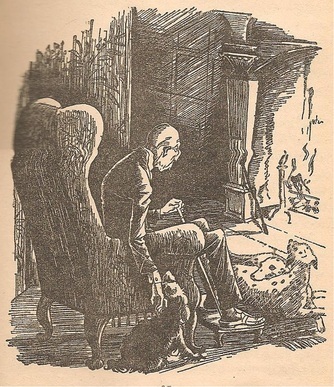 The ghostly dalmations rest by the fireside Later, when the puppies are smuggled across the beautifully rendered English countryside, timid Missis goes in search of safety while her husband Pongo lies wounded. In a scene that has been compared to a doggy version of Du Maurier’s Rebecca:
 ‘She could see no house ahead of her because the drive twisted. It was overgrown with weeds… so wild and neglected that it seemed more like a path through a wood than the approach to a house. And it was so strangely silent… suddenly she was out in the open, with the house in front of her… very old, built of mellowed red brick… with many little diamond-paned windows and one great window that stretched to the roof.’
Inside the crumbling Jacobean Manor the very elderly gentleman ‘pet’ of an ancient King Charles spaniel makes buttered toast for himself and his canine guests in front of the open fire. Touchingly, he believes that Pongo and Missis are the much missed ghosts of long-dead carriage dogs. It is a beautiful scene and I admit to the influence of the manor on my latest book, The Penny Heart, set in dilapidated creeper-choked Delafosse Hall. An enjoyable book is one that leaves deep memories, and to me Dodie Smith wrote a sweet and stylish masterpiece.
A huge thank you to Rebecca Mascull, author of The Visitors, for inviting me to take part in the The Chocolate Challenge.
Take a look at Rebecca’s Chocolate blog post at:
http://rebeccamascull.tumblr.com/post/86149066018/chocolate-book-challenge
I have tagged two new writers to take on the Chocolate Challenge, firstly Louisa Treger, author of The Lodger:
https://www.facebook.com/louisatregerwriter
And secondly, Tessa Arlen, who has posted her super Chocolate Challenge at:
http://www.tessaarlen.com/iyntwood-chocolate-challenge/
This brings me to the end of The Chocolate Challenge; its been a great deal of fun and a lot of fun making the recipes and rediscovering my book choices.
July 27, 2014
CHOCOLATE CHALLENGE WEEK 2 - MILK CHOCOLATE
THE CHOCOLATE CHALLENGE PART 2
MILK CHOCOLATE
THREE TYPES OF CHOCOLATE, THREE RECIPES,
THREE DELICIOUS BOOKS
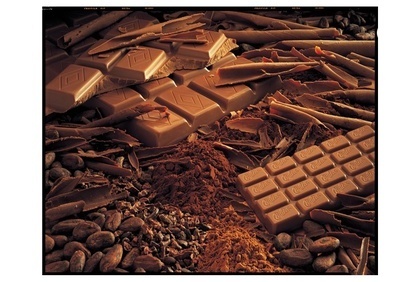 Milk chocolate is not generally believed to have been invented until the nineteenth century, by clever Swiss chocalatier M Daniel Peter. He combined a form of Nestle condensed milk with chocolate to produce the first stable (and deeply addictive) chocolate bar. But in 1689, Sir Hans Sloane, Irish physician, botanist and founder of the British Museum, visited Jamaica where he observed the locals drinking Spanish chocolate mixed with spices and water. Finding this ‘nauseous’, he developed a popular recipe for ‘drinking chocolate’ by adding milk. It was at first manufactured and sold by apothecaries as a medicine but, by the nineteenth century, Cadbury’s Brothers themselves sold tins of Sloane’s Drinking Chocolate.
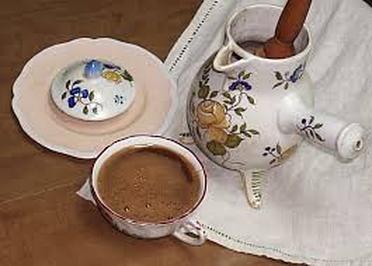 Eighteenth century chocolate pot with wooden mill to mix the chocolate and water MILK CHOCOLATE RECIPE
~ Mars Bar Sauce ~
(I understand a Mars Bar is called a Milky Way in the United States)
This very easy sauce is perfect for hot weather, as a topping for either ice cream or as a dip for fresh fruit. Take one chopped Mars Bar and about 35ml of cream per adult. Place in a pan over a very low heat until the Mars Bars melt. Continue to heat until it turns shiny. Serve over ice cream, cake or fruit. The same method also makes a thinner but healthier sauce using milk.
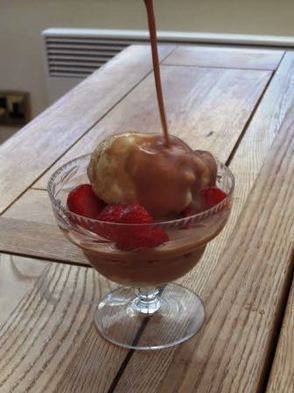 BOOK REVIEW - Milk Chocolate
A Fatal Inversion by Barbara Vine
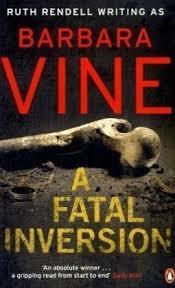 My choice for a Milk Chocolate read is a wonderfully enjoyable summer book, Ruth Rendell writing as Barbara Vine’s A Fatal Inversion. Set in the idyllic hot summer of 1976, a summer I remember vividly, it is about a group of young people who experiment with freedom and moral boundaries in a manor house deep in the English countryside. When nineteen year old Adam inherits isolated Wyvis Hall he invites a motley group of drifters to share his inheritance with chilling consequences. We meet Adam, Rufus, Shiva, Vivien and Zosie as carefree naïve teenagers, and twelve years later, those who survive have become careworn, guilt-ridden adults.
Vine’s plotting is masterly, psychologically astute and utterly surprising to the very last page. With echoes of Milton’s Paradise Lost and More’s Utopia (the Hall is nicknamed ‘Ecalpemos’, an anagram of ‘Someplace’) the dénouement is a beautiful series of twists that comment slyly on justice and fate. As for the food, the era is perfectly rendered by bottles of cheap Bulgarian wine, hash cakes and ‘the 1976 version of a takeaway, a couple of meat pies, apples, Coke’. A shocking murder takes place, but I believe the greatest fictional pleasures are amplified by a frisson of fear…
PART 3 – WHITE CHOCOLATE – NEXT WEEK….
A huge thank you to Rebecca Mascull for inviting me to take part in the The Chocolate Challenge.
Take a look at Rebecca’s Chocolate blog post at:
http://rebeccamascull.tumblr.com/post/86149066018/chocolate-book-challenge
http://rebeccamascull.tumblr.com/
https://twitter.com/rebeccamascull
https://www.facebook.com/RebeccaMascull
THE CHOCOLATE CHALLENGE MOVES ON…
I have tagged two new writers to take on the Chocolate Challenge, and will tweet and post their links when they are ready. They are:
LOUISA TREGER, author of THE LODGER, The first biographical novel about Dorothy Richardson, peer of Virginia Woolf, lover of H.G. Wells, and central figure in the emergence of modernist fiction. The Lodger is a beautifully intimate novel that is at once an introduction to one of the most important writers of the 20th century and a compelling story of one woman tormented by unconventional desires.
http://louisatreger.com
https://www.facebook.com/louisatregerwriter
https://twitter.com/louisatreger
TESSA ARLEN, is author of a mystery series set in Britain before the Great War. The first in the series, DEATH OF A DISHONOURABLE GENTLEMAN, is a story of revenge, blackmail and betrayal. In this enchanting debut sure to appeal to fans of Downton Abbey, Tessa Arlen draws readers into a world exclusively enjoyed by the rich, privileged classes and suffered by the men and women who serve them.
http://tessaarlen.com/
https://www.facebook.com/TessaArlen
https://twitter.com/TessaArlen
MILK CHOCOLATE
THREE TYPES OF CHOCOLATE, THREE RECIPES,
THREE DELICIOUS BOOKS
Milk chocolate is not generally believed to have been invented until the nineteenth century, by clever Swiss chocalatier M Daniel Peter. He combined a form of Nestle condensed milk with chocolate to produce the first stable (and deeply addictive) chocolate bar. But in 1689, Sir Hans Sloane, Irish physician, botanist and founder of the British Museum, visited Jamaica where he observed the locals drinking Spanish chocolate mixed with spices and water. Finding this ‘nauseous’, he developed a popular recipe for ‘drinking chocolate’ by adding milk. It was at first manufactured and sold by apothecaries as a medicine but, by the nineteenth century, Cadbury’s Brothers themselves sold tins of Sloane’s Drinking Chocolate. Eighteenth century chocolate pot with wooden mill to mix the chocolate and water MILK CHOCOLATE RECIPE~ Mars Bar Sauce ~
(I understand a Mars Bar is called a Milky Way in the United States)
This very easy sauce is perfect for hot weather, as a topping for either ice cream or as a dip for fresh fruit. Take one chopped Mars Bar and about 35ml of cream per adult. Place in a pan over a very low heat until the Mars Bars melt. Continue to heat until it turns shiny. Serve over ice cream, cake or fruit. The same method also makes a thinner but healthier sauce using milk.
BOOK REVIEW - Milk Chocolate A Fatal Inversion by Barbara Vine
My choice for a Milk Chocolate read is a wonderfully enjoyable summer book, Ruth Rendell writing as Barbara Vine’s A Fatal Inversion. Set in the idyllic hot summer of 1976, a summer I remember vividly, it is about a group of young people who experiment with freedom and moral boundaries in a manor house deep in the English countryside. When nineteen year old Adam inherits isolated Wyvis Hall he invites a motley group of drifters to share his inheritance with chilling consequences. We meet Adam, Rufus, Shiva, Vivien and Zosie as carefree naïve teenagers, and twelve years later, those who survive have become careworn, guilt-ridden adults. Vine’s plotting is masterly, psychologically astute and utterly surprising to the very last page. With echoes of Milton’s Paradise Lost and More’s Utopia (the Hall is nicknamed ‘Ecalpemos’, an anagram of ‘Someplace’) the dénouement is a beautiful series of twists that comment slyly on justice and fate. As for the food, the era is perfectly rendered by bottles of cheap Bulgarian wine, hash cakes and ‘the 1976 version of a takeaway, a couple of meat pies, apples, Coke’. A shocking murder takes place, but I believe the greatest fictional pleasures are amplified by a frisson of fear…
PART 3 – WHITE CHOCOLATE – NEXT WEEK….
A huge thank you to Rebecca Mascull for inviting me to take part in the The Chocolate Challenge.
Take a look at Rebecca’s Chocolate blog post at:
http://rebeccamascull.tumblr.com/post/86149066018/chocolate-book-challenge
http://rebeccamascull.tumblr.com/
https://twitter.com/rebeccamascull
https://www.facebook.com/RebeccaMascull
THE CHOCOLATE CHALLENGE MOVES ON…
I have tagged two new writers to take on the Chocolate Challenge, and will tweet and post their links when they are ready. They are:
LOUISA TREGER, author of THE LODGER, The first biographical novel about Dorothy Richardson, peer of Virginia Woolf, lover of H.G. Wells, and central figure in the emergence of modernist fiction. The Lodger is a beautifully intimate novel that is at once an introduction to one of the most important writers of the 20th century and a compelling story of one woman tormented by unconventional desires.
http://louisatreger.com
https://www.facebook.com/louisatregerwriter
https://twitter.com/louisatreger
TESSA ARLEN, is author of a mystery series set in Britain before the Great War. The first in the series, DEATH OF A DISHONOURABLE GENTLEMAN, is a story of revenge, blackmail and betrayal. In this enchanting debut sure to appeal to fans of Downton Abbey, Tessa Arlen draws readers into a world exclusively enjoyed by the rich, privileged classes and suffered by the men and women who serve them.
http://tessaarlen.com/
https://www.facebook.com/TessaArlen
https://twitter.com/TessaArlen
July 13, 2014
THE CHOCOLATE CHALLENGE PART 1
THE CHOCOLATE CHALLENGE PART 1
THREE TYPES OF CHOCOLATE, THREE RECIPES,
THREE DELICIOUS BOOKS Plain, bitter chocolate is said to be the best chocolate; the closest to the bitter fruit of the cacao nut, a pleasure-giving blend of the bitter and the sweet.
 In An Appetite for Violets, Chocolate Ice Cream is featured as an accompaniment to a romantic love scene, playing on the sensual allusions of both ice cream and chocolate. During the early part of the eighteenth century, chocolate was largely taken as a rich nutritious drink, but in time cooks began to develop chocolate desserts and confectionary. This historic recipe creates an ice cream very similar to our modern day equivalent, though the churning is done by hand, rather than with an electric machine.
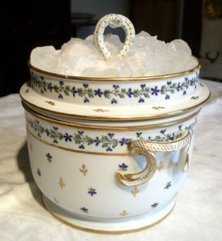 Ice cream pot, Derby 1790, courtesy historicfood.com ~
An Unrivalled Chocolate Ice Cream ~
Take a pint of good cream, a heaped spoonful of best chocolate scraped, put it in when the cream boils, stir them well together, beat the yolks of two eggs and stir it into the cream, sweeten it to your taste, let the eggs have a boil to thicken it. When cold put it in your freezing pot of pewter, put the lid on and plunge into the wooden pail. Pack about entirely with pounded ice and salt. A quarter hour afterwards when the mixture begins to be firm about the sides stir it about with the spaddle or small spade so that all may be equally congealed. From time to time stir it about again until all is smooth and frozen.
Ice cream pot, Derby 1790, courtesy historicfood.com ~
An Unrivalled Chocolate Ice Cream ~
Take a pint of good cream, a heaped spoonful of best chocolate scraped, put it in when the cream boils, stir them well together, beat the yolks of two eggs and stir it into the cream, sweeten it to your taste, let the eggs have a boil to thicken it. When cold put it in your freezing pot of pewter, put the lid on and plunge into the wooden pail. Pack about entirely with pounded ice and salt. A quarter hour afterwards when the mixture begins to be firm about the sides stir it about with the spaddle or small spade so that all may be equally congealed. From time to time stir it about again until all is smooth and frozen.
BOOK REVIEW - A Bittersweet Read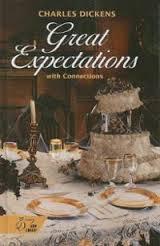 Great Expectations is my choice as a bittersweet tale. It is bitter because a fully lived life, battling the illusory rewards of society, contains hard lessons. The sweetness derives from the gentle comedy of the tale and the wisdom gained by its hero, Pip, in his long journey of self-knowledge. Many of the novel’s most powerful images are of food, and in the book Dickens appears to explore his obsessions with guilt, starvation, class and aspiration. One of our most powerfully symbolic foods is the bride or wedding cake, shared by a community to bestow good fortune on the newly married. With Miss Havisham’s mouldering uneaten cake, crawling with spiders and masked in cobwebs, Dickens creates the Gothic shadow to the traditional food of celebration. Throughout, the novel is a tour de force of food observation, from Joe and Pip’s meagre suppers of bread and butter, Pip’s excruciating embarrassment at his old pal Joe’s table rustic manners, to the convict Magwitch’s threat to tear out Pip’s heart and liver to be roasted and devoured.
 PART 2 – MILK CHOCOLATE – NEXT WEEK….
A huge thank you to Rebecca Mascull for inviting me to take part in the The Chocolate Challenge. Rebecca’s beautiful debut novel, THE VISITORS. Here is a snippet of my review:
‘In a world of formulaic copycat novels THE VISITORS is refreshingly original and free of predictable clichés. In some ways, it is like a grown-up version of those delicate Edwardian tales I used to love by E Nesbit, such as The Railway Children. Heart-warming, fine writing, a bit of magic, but with a core of gritty emotional realism.’
Take a look at Rebecca’s Chocolate blog post at:
http://rebeccamascull.tumblr.com/post/86149066018/chocolate-book-challenge
http://rebeccamascull.tumblr.com/
https://twitter.com/rebeccamascull
https://www.facebook.com/RebeccaMascull
THE CHOCOLATE CHALLENGE MOVES ON…
I have tagged two new writers to take on the Chocolate Challenge, and will tweet and post their links when they are ready. They are:
LOUISA TREGER, author of THE LODGER, The first biographical novel about Dorothy Richardson, peer of Virginia Woolf, lover of H.G. Wells, and central figure in the emergence of modernist fiction. The Lodger is a beautifully intimate novel that is at once an introduction to one of the most important writers of the 20th century and a compelling story of one woman tormented by unconventional desires.
http://louisatreger.com
https://www.facebook.com/louisatregerwriter
https://twitter.com/louisatreger
TESSA ARLEN, is author of a mystery series set in Britain before the Great War. The first in the series, DEATH OF A DISHONOURABLE GENTLEMAN, is a story of revenge, blackmail and betrayal. In this enchanting debut sure to appeal to fans of Downton Abbey, Tessa Arlen draws readers into a world exclusively enjoyed by the rich, privileged classes and suffered by the men and women who serve them.
http://tessaarlen.com/
https://www.facebook.com/TessaArlen
https://twitter.com/TessaArlen
THREE TYPES OF CHOCOLATE, THREE RECIPES,
THREE DELICIOUS BOOKS
Plain, bitter chocolate is said to be the best chocolate; the closest to the bitter fruit of the cacao nut, a pleasure-giving blend of the bitter and the sweet. In An Appetite for Violets, Chocolate Ice Cream is featured as an accompaniment to a romantic love scene, playing on the sensual allusions of both ice cream and chocolate. During the early part of the eighteenth century, chocolate was largely taken as a rich nutritious drink, but in time cooks began to develop chocolate desserts and confectionary. This historic recipe creates an ice cream very similar to our modern day equivalent, though the churning is done by hand, rather than with an electric machine. Ice cream pot, Derby 1790, courtesy historicfood.com ~
An Unrivalled Chocolate Ice Cream ~
Take a pint of good cream, a heaped spoonful of best chocolate scraped, put it in when the cream boils, stir them well together, beat the yolks of two eggs and stir it into the cream, sweeten it to your taste, let the eggs have a boil to thicken it. When cold put it in your freezing pot of pewter, put the lid on and plunge into the wooden pail. Pack about entirely with pounded ice and salt. A quarter hour afterwards when the mixture begins to be firm about the sides stir it about with the spaddle or small spade so that all may be equally congealed. From time to time stir it about again until all is smooth and frozen.
BOOK REVIEW - A Bittersweet Read
Great Expectations is my choice as a bittersweet tale. It is bitter because a fully lived life, battling the illusory rewards of society, contains hard lessons. The sweetness derives from the gentle comedy of the tale and the wisdom gained by its hero, Pip, in his long journey of self-knowledge. Many of the novel’s most powerful images are of food, and in the book Dickens appears to explore his obsessions with guilt, starvation, class and aspiration. One of our most powerfully symbolic foods is the bride or wedding cake, shared by a community to bestow good fortune on the newly married. With Miss Havisham’s mouldering uneaten cake, crawling with spiders and masked in cobwebs, Dickens creates the Gothic shadow to the traditional food of celebration. Throughout, the novel is a tour de force of food observation, from Joe and Pip’s meagre suppers of bread and butter, Pip’s excruciating embarrassment at his old pal Joe’s table rustic manners, to the convict Magwitch’s threat to tear out Pip’s heart and liver to be roasted and devoured. PART 2 – MILK CHOCOLATE – NEXT WEEK….A huge thank you to Rebecca Mascull for inviting me to take part in the The Chocolate Challenge. Rebecca’s beautiful debut novel, THE VISITORS. Here is a snippet of my review:
‘In a world of formulaic copycat novels THE VISITORS is refreshingly original and free of predictable clichés. In some ways, it is like a grown-up version of those delicate Edwardian tales I used to love by E Nesbit, such as The Railway Children. Heart-warming, fine writing, a bit of magic, but with a core of gritty emotional realism.’
Take a look at Rebecca’s Chocolate blog post at:
http://rebeccamascull.tumblr.com/post/86149066018/chocolate-book-challenge
http://rebeccamascull.tumblr.com/
https://twitter.com/rebeccamascull
https://www.facebook.com/RebeccaMascull
THE CHOCOLATE CHALLENGE MOVES ON…
I have tagged two new writers to take on the Chocolate Challenge, and will tweet and post their links when they are ready. They are:
LOUISA TREGER, author of THE LODGER, The first biographical novel about Dorothy Richardson, peer of Virginia Woolf, lover of H.G. Wells, and central figure in the emergence of modernist fiction. The Lodger is a beautifully intimate novel that is at once an introduction to one of the most important writers of the 20th century and a compelling story of one woman tormented by unconventional desires.
http://louisatreger.com
https://www.facebook.com/louisatregerwriter
https://twitter.com/louisatreger
TESSA ARLEN, is author of a mystery series set in Britain before the Great War. The first in the series, DEATH OF A DISHONOURABLE GENTLEMAN, is a story of revenge, blackmail and betrayal. In this enchanting debut sure to appeal to fans of Downton Abbey, Tessa Arlen draws readers into a world exclusively enjoyed by the rich, privileged classes and suffered by the men and women who serve them.
http://tessaarlen.com/
https://www.facebook.com/TessaArlen
https://twitter.com/TessaArlen
May 25, 2014
Countdown to a Brilliant Book Launch
Countdown to a Brilliant Book Launch 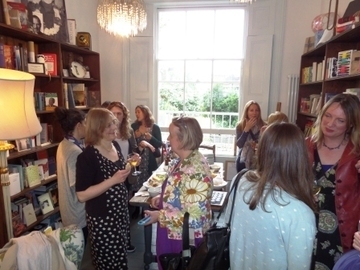 Guests arrive at Book and Kitchen 1 Venue
Size, location, food and drink are all important. But the essential quality must be ambience. Book and Kitchen, a literary café in London’s Notting Hill had style, friendliness and a touch of literary glamour. Send email invites out as soon as the venue is booked and ask for a RSVP – though there are bound to be surprises right up to the last minute.
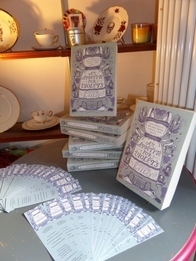 Book display and bookmarks 2 Books
Now is your big chance to show-off your book, so make sure there are a few artful displays, including the shop window for passing custom. Someone needs to make sure there are lots of copies to sign and a till to take the cash. The Appetite for Violets bookmarks also proved popular - all of them disappeared on the night.
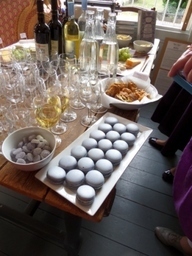 Macaroons and violet pastilles 3 Food and Drink
If you have a theme, go for it. Book and Kitchen supplied gorgeous cheese and breads but we also laid on lavender macaroons and 18th century Soul Cakes along with explanatory leaflets. The wine and fruit juices were well chilled and flowed liberally…
 Speech practice 4 Nerves
After sitting in a solitary room for years it can feel pretty overwhelming to face your audience en masse. Write your speech early, get feedback from friends and do a few practice runs. It is far easier to speak ‘off the cuff’ if you have virtually learned your words by heart. Consider listening to a Public Speaking audio guide from the library to visualize the scene and calm the inevitable nerves.
 Ready for launch 5 Feeling Good
Now is the time to reward yourself for all that hard work. Get your hair fixed, wear a new outfit and get a good night’s sleep. If you are away from home, stay somewhere that makes you feel good and pampered. Face powder should keep the inevitable shininess at bay. Be wary of too much alcohol before you speak and sign your books - but you can let yourself go afterwards! You deserve it.
 Martine & Editor Laura MacDougall 6 Speech
You will probably be introduced by your publisher and then all eyes are on you. You are an author not an after-dinner speaker so clutching notes is fine (in fact bring a spare set, too.) The audience might be expecting to hear what inspired the book, what the title means and how you set about researching and writing it – briefly. A short extract will also give a flavour of your work. It is also your big chance to thank the many people who helped create your book and remind everyone of what a terrific team helped you to publication.
 Book signing 7 Book Signing
Bring along a few reliable pens and it also helps if you’ve practised signing your name – especially if it’s a pen name! Your book buyers may want very specific dedications along with difficult name spellings, so book signing can be more demanding than you might expect. But it is also massively rewarding to meet and thank your fans in person.
 With Nick Sayers, Publisher at Hodder and his wife 8 Photos
Ideally, ask someone to take charge of photography. It probably isn’t possible to have all the photos you’d like of you with every person in the room, but a good selection for blogs, twitter and facebook should ensure your fabulous event stays alive in people’s memories long after the book hits the shops.
Martine Bailey’s An Appetite for Violets was launched on 22 May 2014 thanks to Andrew Nurnberg Associates and Hodder & Stoughton. The venue was Book & Kitchen, All Saints Road, Notting Hill. Photography and stationery by Martin Bailey.
Guests arrive at Book and Kitchen 1 VenueSize, location, food and drink are all important. But the essential quality must be ambience. Book and Kitchen, a literary café in London’s Notting Hill had style, friendliness and a touch of literary glamour. Send email invites out as soon as the venue is booked and ask for a RSVP – though there are bound to be surprises right up to the last minute.
Book display and bookmarks 2 BooksNow is your big chance to show-off your book, so make sure there are a few artful displays, including the shop window for passing custom. Someone needs to make sure there are lots of copies to sign and a till to take the cash. The Appetite for Violets bookmarks also proved popular - all of them disappeared on the night.
Macaroons and violet pastilles 3 Food and DrinkIf you have a theme, go for it. Book and Kitchen supplied gorgeous cheese and breads but we also laid on lavender macaroons and 18th century Soul Cakes along with explanatory leaflets. The wine and fruit juices were well chilled and flowed liberally…
Speech practice 4 NervesAfter sitting in a solitary room for years it can feel pretty overwhelming to face your audience en masse. Write your speech early, get feedback from friends and do a few practice runs. It is far easier to speak ‘off the cuff’ if you have virtually learned your words by heart. Consider listening to a Public Speaking audio guide from the library to visualize the scene and calm the inevitable nerves.
Ready for launch 5 Feeling GoodNow is the time to reward yourself for all that hard work. Get your hair fixed, wear a new outfit and get a good night’s sleep. If you are away from home, stay somewhere that makes you feel good and pampered. Face powder should keep the inevitable shininess at bay. Be wary of too much alcohol before you speak and sign your books - but you can let yourself go afterwards! You deserve it.
Martine & Editor Laura MacDougall 6 SpeechYou will probably be introduced by your publisher and then all eyes are on you. You are an author not an after-dinner speaker so clutching notes is fine (in fact bring a spare set, too.) The audience might be expecting to hear what inspired the book, what the title means and how you set about researching and writing it – briefly. A short extract will also give a flavour of your work. It is also your big chance to thank the many people who helped create your book and remind everyone of what a terrific team helped you to publication.
Book signing 7 Book SigningBring along a few reliable pens and it also helps if you’ve practised signing your name – especially if it’s a pen name! Your book buyers may want very specific dedications along with difficult name spellings, so book signing can be more demanding than you might expect. But it is also massively rewarding to meet and thank your fans in person.
With Nick Sayers, Publisher at Hodder and his wife 8 PhotosIdeally, ask someone to take charge of photography. It probably isn’t possible to have all the photos you’d like of you with every person in the room, but a good selection for blogs, twitter and facebook should ensure your fabulous event stays alive in people’s memories long after the book hits the shops.
Martine Bailey’s An Appetite for Violets was launched on 22 May 2014 thanks to Andrew Nurnberg Associates and Hodder & Stoughton. The venue was Book & Kitchen, All Saints Road, Notting Hill. Photography and stationery by Martin Bailey.


