Donny Swords's Blog, page 3
September 7, 2014
Morgod: Characters I: A Ways of the Stygia feature
Ways of the Stygia
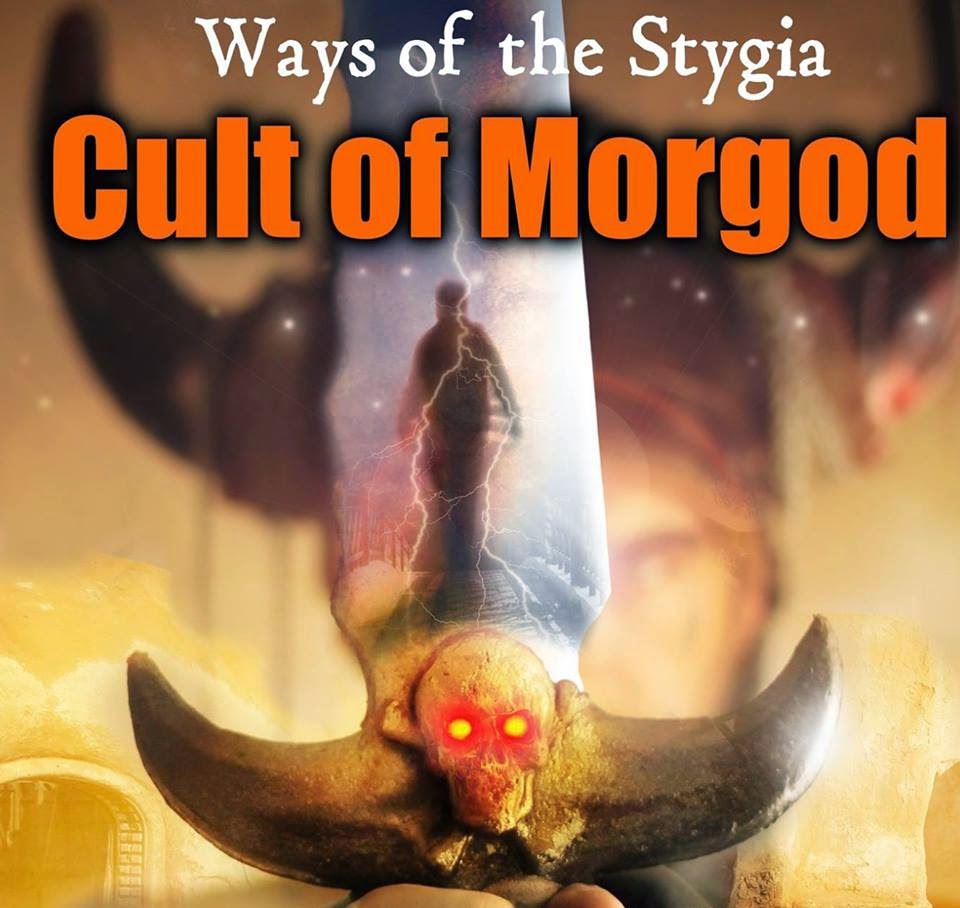
Cult of Morgod
Characters I
In my last WotS article I promised to cover some of the characters in the next article.
Tada! It’s the new post!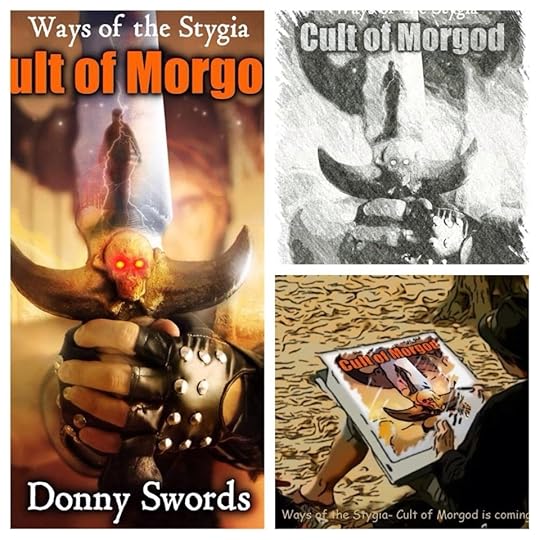
So what about the characters?
Everything in a Ways of the Stygia novel begins here. I write from a different standpoint than some of my peers. I am not putting my work on a higher shelf, I just feel that I take a somewhat different approach than many authors- it’s even a bit unorthodox.
I actually think I’ve taken such an approach because of who I am. I’m a pretty sensitive person. Intense emotions are felt more intensely and the things others wouldn’t even react to wound me inside. Some call what I go through depression. Though I am not sure I would be doing anyone any good to act like I am special when so many wonderful people suffer from darker days than I have.
Besides, I’m an author. Dark days help my creative mind. Right? I know I like to exploit feelings I am having, and assign them to wilder realities- like the feelings Thomas experiences early on in Fallen Song , when he suffers a terrible loss. Banner feels different from everyone within his reality. How many of us have felt that one?
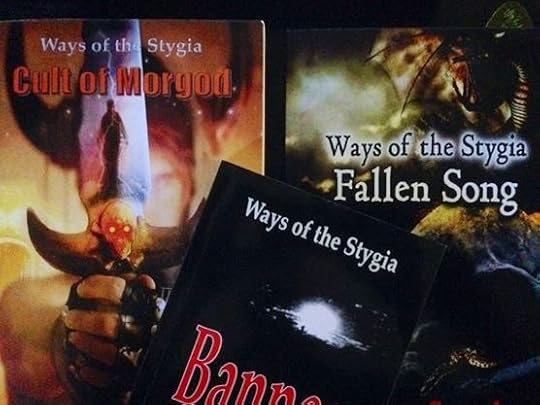
In Cult of Morgod, Henry constantly feels like he is not doing enough- even though he carries more than his share of the load…
Behind my sometimes straight fantasy characters are driving emotions- cool. To me this is the story… Plots present themselves when you understand your characters and the worlds or situations you place them in. Take Thomas Van Pelt for example. Here is a complicated guy. In Fallen Song, you will find that Thomas is as lost as you in the beginning- you are in it together- Trying to figure out if he is good or evil. His inner struggle is like so many people go through- blown into god-sized dimensions.
At one point within Fallen Song, Banner appears to Thomas. Something in that inner dialogue struck me. I kept wondering How come this one night stalker is peaceful?
Because not everything is static in Ways of the Stygia.
While Banner is not at all alike his species- who are harvested from the void by one of three Harvesters, Loki, Nonyl, or Kain, he is still a night stalker. It is important to point out that Tyrrell, who once governed Purgatory and the Barrens (see Fallen Song) never had the power to harvest souls from the unmaker (the void).
While Culvex, a demonkin, serves Kain, he hates Loki- and loves Quantanost? Exactly. Here is a demon that thinks for himself.
Oh and then there’s Kain. What if Genesis 4 is a lie? Sit with that. Often Kain’s actions are overtly evil- on the surface. Who remembers what Kain did in Fallen Song? You know with a certain sword… well what if there was information pointing another direction… that Kain might have been duty-bound? While Kain’s intentions are not always clear, he wears that bad boy image well. But is he?
Thomas is extremely headstrong- and sensitive.
But these are just a few of the more well-known characters within WotS. Even if you take the books one novel at a time, it might be easy to get confused. Fact is, the casting in Cult of Morgod alone is extensively vast. I’m not going to name them all today, but I am going to give you an inside look at the types of players involved in the novel. Keep in mind, I develop my characters- and you will know how they feel about their situations and actions…
Here are a few definitions to help out.
Revels
An archangel from another galaxy, in service to Morgod and the great Abyss. Revel souls are housed in host bodies by Morgod’s twisted powers. They are murderous, scheming souls, with powers to transfer soul energy to their Lord, Mor. As the Revel grows in destructive potential and indestructability- so in turn does Morgod.
Suttgars
Angelic souls, born of the old cosmos, who once served Mor, before his downfall to darkness. Beautiful and complex the Suttgars believe in light and balance. They have hidden for vast spans of time for Morgod wants their souls the most and will stop at nothing to gain them.
Demons
The demonic generally have Stygian blood, and in some capacity serve the abyss. Though not all of them. There are several types of WotS demons.
Stalkers
The night stalker, born of the abyss is humanoid, possessing ebon skin, eyes, hair, & nails… Most rejoice in Purgatory and its history of suffering, living to bring torture and darkness. They have the power to devour souls, and prosper from their energy, and some can shift into whatever they desire themselves to be, but this is a rare ability. Many possesses magical prowess- as demonstrated in Feromin’s Magi. Again, not all of them are evil. Many serve Kain, and many more Loki. None know how many serve Nonyl, though all bow to Lucifer.
Vampires & Lycans
In Ways of the Stygia, no two vampires are the same, nor any pair of lycans. The origination of the curse comes from Kain’s blood. All vampires and werewolves are ultimately of his lineage. As the curse affects each individual differently, it grants different blessings, and curses upon its various subjects. I/e some may walk in the sun freely, while others would burst into flames.
Trollkin
Trolls exist mainly with the Barrens until the events of Fallen Song transpire. They are an highly intelligent alien race, gifted in architecture and maintaining a structural society. Most trolls are not evil, though they have served Loki, and Tyrrell solely throughout their stay in the Barrens, where they are chiefly responsible for building Sistinal, Loki’s keep.
Angelic
Jehovah’s children, who dwell in Havendell. Some think they are entirely mad- others see them as angry. The truth is hardly known.
Name dropping:
Here’s a few of the characters you will find within Ways of the Stygia- Cult of Morgod:
The Few:
Thomas Van Pelt, Franco Birat Oni, & Henry
The Revels
Sangul, Balfren, Vex, Dina, Zassul, Byron, Abyx, Melkin, & Tangas
Vampires:
Faus, Brennan
An excerpt from Ways of the Stygia Cult of Morgod: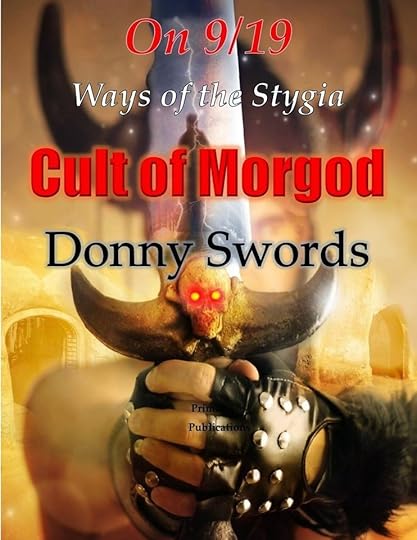
Beware
Drums sound in the night. Even as I carve these runes, I do so hastily, knowing I am not long for this world. Around me the village burns and for some matter of divinity, I sit, frightened beyond terror by the hearth, my own home unencumbered by flames as the fiery furnace of the death god razes my settlement asunder.
They came silently from the sea in large numbers. Our scouts picked them up right away. The first of the vessels were large and blockish on the water and seemed to hold cargo. King Ragnar advised us to prepare for battle just the same. I silently hoped they were a distant group of traders or the like. I gave the proper orders, placing the men under my command on high alert. They went to it immediately, archers lining the fortress walls, swordsmen at the gate.
They waited us out. More ships arrived, as men grew restless and weary, relaxing their grips on axes and pole-arms. Ragnar also grew wearisome and impatient. He ordered fires lit under pots on the walls and filled with brass. The metal became molten, and the order given to pour the pots onto any on rushers. He ordered every man, woman and child to the arsenal for outfitting and placed them in specific groups to defend in the upcoming attack.
As more and more ships arrived, it became evident that our force was too smallish to ward off whatever curses they held. The King sent scouts to the rear of our compound, to see if retreat was an option. They returned them to us, full in flame and arrows. The bodies rained onto the homes of a few, burning uncontrollably. This was the start of the fires in our village, and the panic. I looked around and a realization came with full impact, none of us was prepared for this! I sapped at the sight of children holding blades for the first time; their weak faces positively flush with fear. I felt it too.
I can now say with true conviction that a man or all men are no match for these things. The fires of doomsday would not hinder them. I fought a few, but found no hope in winning the day against so many. They came all at once and from everywhere. Most of us died in that initial assault. Those who lived were not long for life. Divinity came once more for me when I fought a fiend, slipping in the muck under my heel, impaling it on a hayfork that hung in an angle from the cart I fell beneath; demon blood dripped and spattered on the ground nearest my left ear, reminding me of the death surrounding me. I watched the creatures, (for that is what they are, for they are not men) burning buildings and slaughtering livestock before me. Then against the burning street, I witnessed cold murder. I could not move. I did not. I lay there hidden from sight for a time, until the street cleared before me, at which point I rolled and sprinted for my door.
Now to the message at hand: King Ragnar is dead. His head hangs from a pike in front of Castle Randaar. He fought as a man possessed… until the one called Morgod arrived. The fiends who faced my beloved majesty he reduced to bits and pieces by sword and axe. I fought hard as well, until the aforementioned point of my escape and witnessing the death of my King. Even though I know I could not have changed the outcome, I still feel a coward for lying there, doing nothing. I tried, but I could not move. My body felt like stone… I could not close my eyes.
This is all I remember:
The fearsome Ragnar, riveted in place, rooted so deeply as to appear more model than man. I was riveted as well, my eyes forced into an unblinking state such as they were. I saw the entire thing. Morgod, tyrannical, terrible to behold, un-killable by any weapons our warriors held, clutching a gigantic two-handed axe, which he seldom used. His eyes were distant and dead; they committed murder. With a glance, he froze beating hearts in weaker men, and rendered stronger ones weak. Next to him was a fiend three times his size- yet Morgod loomed larger, the true terror.
When Morgod was near enough for Ragnar to strike him, he said, “Do you yield?"
Ragnar said nothing.
"Now you do."
The horned fiend took Ragnar's head.
"Well there is the smell of war for my reward, even if his majesty was no more than the others."
“Indeed," The fiend returned.
I fell into a blind rage… I do not know how my rational mind held me in check. I wonder now if self-preservation transformed me into a frozen body with trapped open eyes… I will never know.
The screams have stopped. It confirms my worst fear. The end is here. Death has come. Take heart anyone who finds…
Just now, I saw a brilliant white flash behind Castle Randaar… there is still a faint glow there. Perhaps I am dreaming… I feel I must go to it and I will.
Let he who finds this prevail against Morgod and his army of fiends. Let there still be hope, this is my last request. I am going now, to investigate the light. I am sure I will not return.
Fight Morgod- Hagane Shreve*
*This tablet, which took me to a deity to decipher- is the only written record of Morgod during the time he raised his armies on Earth. From everything I have ascertained, the ancient civilizations Morgod destroyed were not rivaled for many centuries after, this was a time when gods walked the Earth, sharing inventions with humanity that would not be seen again, such as iron, steel, wheels and language for lifetimes. Perhaps the world would be different now had these ancestral humans been left alone to prosper, war as I am told was a rarity then… until The Army of the Haunted Eye came to the world. Whatever became of the rubble was lost. This period is not discernable by any modern records, ancient accounts, or artifacts. When Morgod came to power remains a mystery –Banner
I hope this article has begun to shed so light on things;
Continue reading to find links to my work,
Donny Swords
Other pertinent Ways of the Stygia articles:
Concerning Ways of the Stygia I (click here to read)
Concerning Ways of the Stygia II (click here to read)
Cult of Morgod Concepts (click here to read)
Donny Swords author ( Facebook ) (Blog)
Primal Publications ( Facebook ) (Blog)
The Indie Collaboration ( web )
Novels & Links
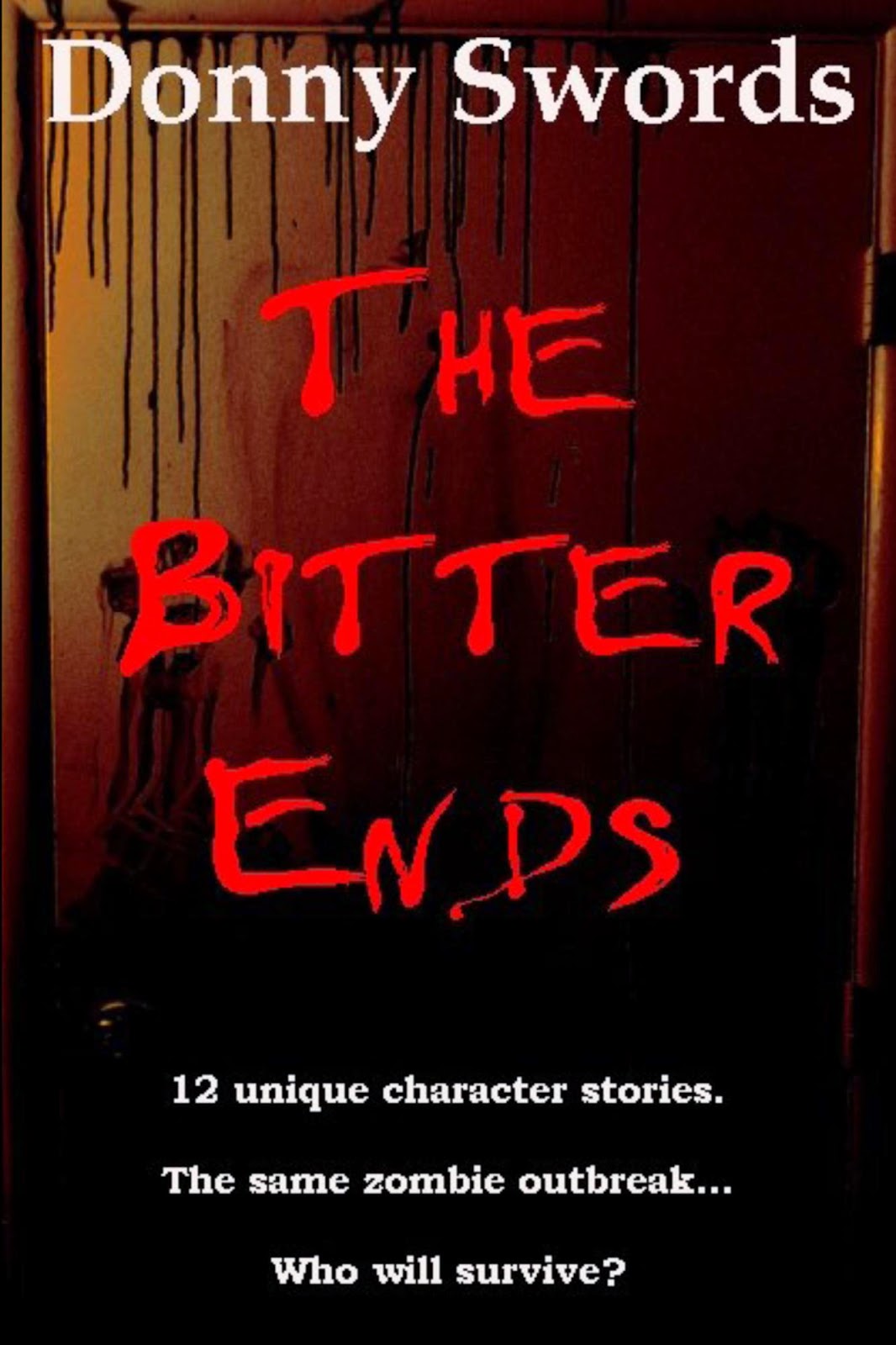
The Bitter Ends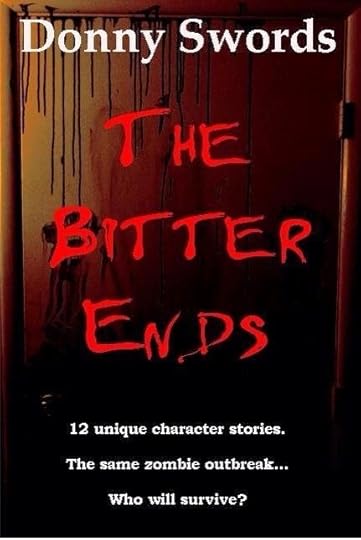 Somewhere in the Bible Belt Gateway has gone insane. Who knew what would come? Thrust into the end of times, Gateway’s citizens attempt to outrun the zombie outbreak…
Discover 12 unique stories, and see how Gateway’s main cast fares against the deadheads. See how they live. Watch lives expire and people become heroes or villains. The Bitter Ends is more than just a book about zombies. It is about the characters, like Anna. It is seeing what ordinary people might do in a zombie apocalypse and unordinary ones too.
Will any of them survive? Or Will They All Meet Their Bitter Ends?
(Amazon) (Facebook) (iBooks) (B&N) (Kobo)
Ways of the Stygia (Facebook)
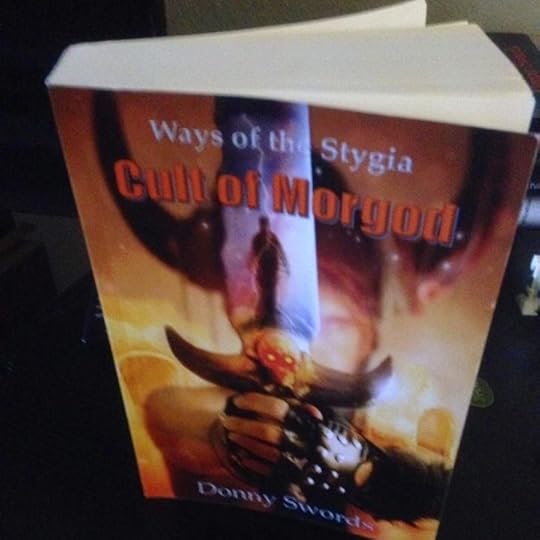 Ways of the Stygia- Cult of Morgod
(Book 1
) Releases September 19th 2014
Ways of the Stygia- Cult of Morgod
(Book 1
) Releases September 19th 2014
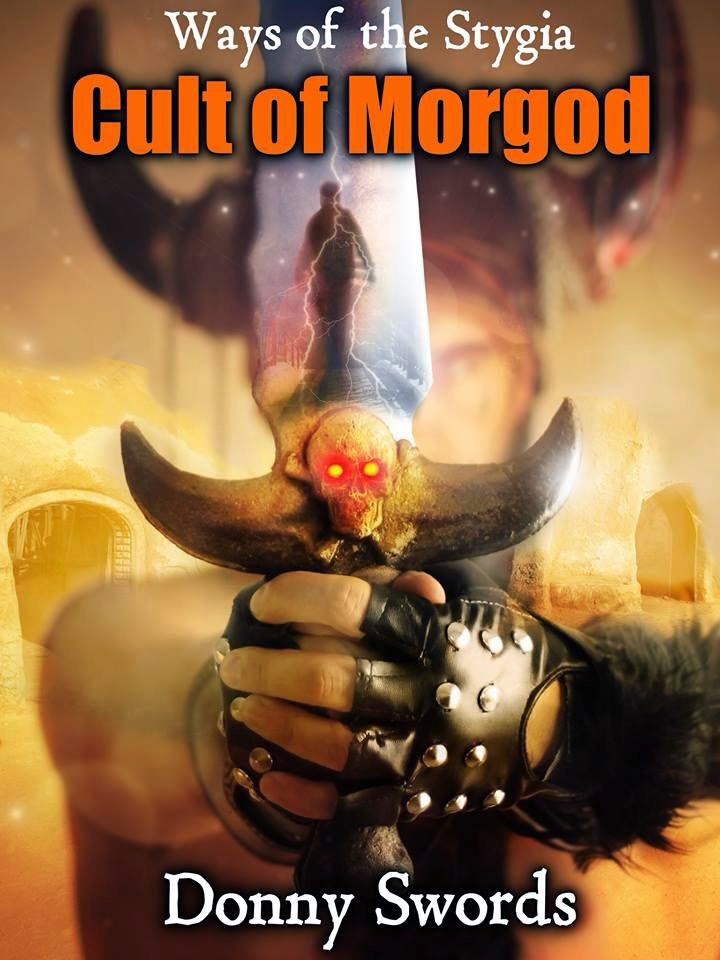
Destruction. To see something destroyed, gone. None can deny its appeal. To the abyss, nothing is forever. To the World-Eater creation is flawed… Flesh is weak. Souls are fodder- fuel. Power is endless. The Stygia grants unlimited strength to the daring… Slavery and death are a means to an end… For Morgod , everything must burn. Ruination must reign immaculate.
Heroes come in many forms. For who is truly evil? There are shades of light and dark. Left with two choices, survival or total annihilation, the cosmos displays signs of harmony…
They face a common foe.
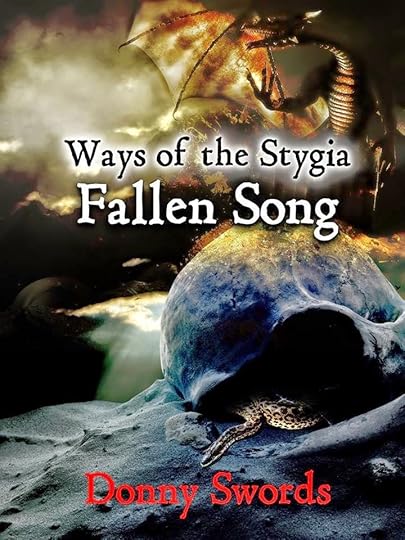 Ways of the Stygia- Fallen Song
(Book 2 )
Thomas Van Pelt lived a normal life. On one dreary raining evening that all changed. His work as a CSI investigator had led him to yet another crime scene, and there, prompted by his primal senses he discovered the ancient artifact that would that day forward alter his own life and the fate of the universe itself. The ancient weapon Fallen Song summons Thomas, and reawakens his forgotten past. He embarks on his new calling- bringing justice to the guilty, the ones who would otherwise remain free to perpetrate their vile acts on the unsuspecting.
Thomas is reunited with past allies and embarks on an epic adventure involving demons, necromancers, deities, vampires, sorcerers and the terrorists of Purgatory itself, the night stalker. Get pulled away to new lands, terrible enough to cost you sleep and see what ends Thomas will go to in his quest to bring a new era of light to an ailing universe.
Ways of the Stygia- Fallen Song is intended for mature audiences.
( Facebook ) (.99 Nook ) ( B&N ) ( Amazon) (.99 Kobo )
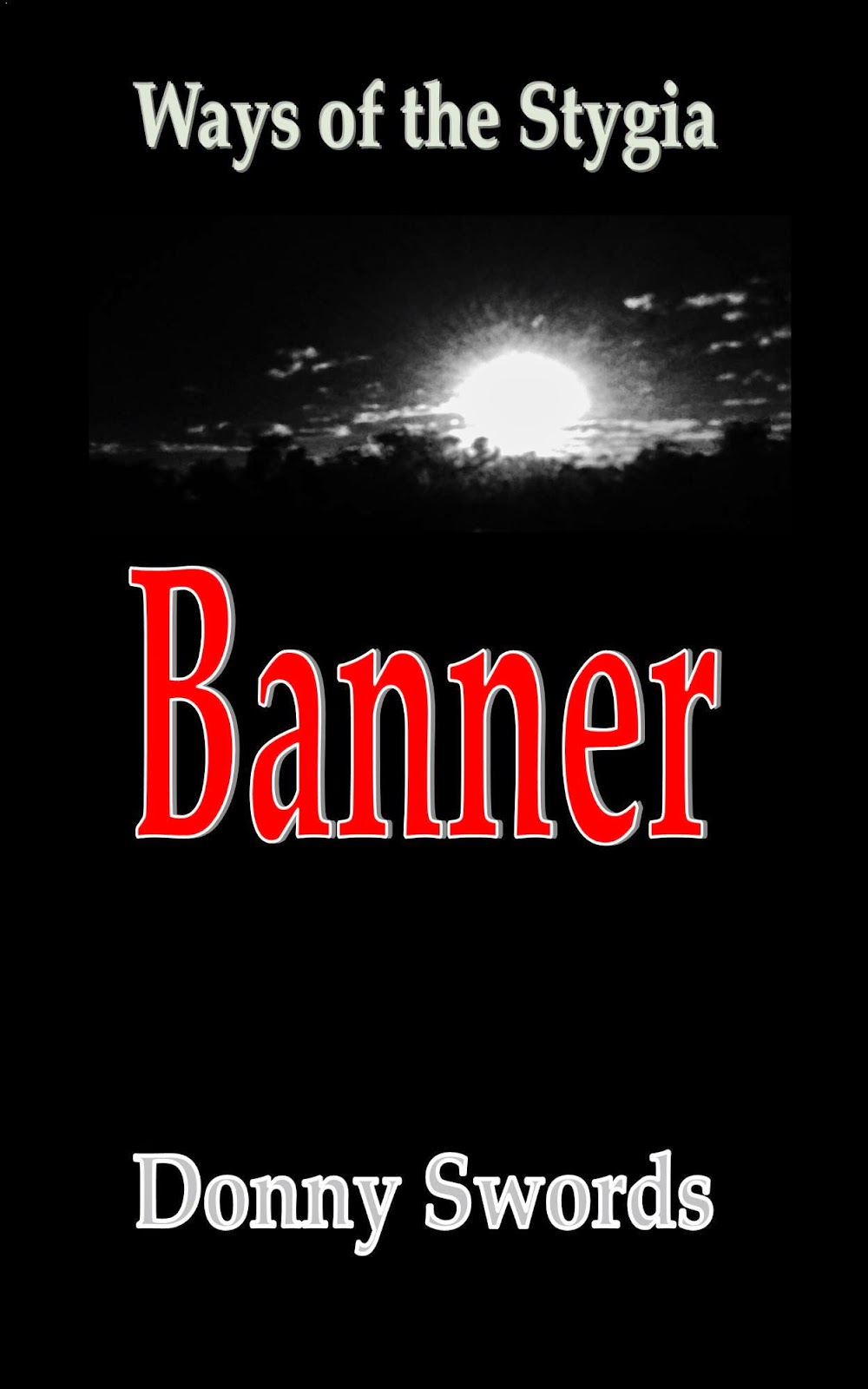
 Ways of the Stygia- Banner (Character Novella 1)
In Purgatory, there is one law. It is damnation.
The abyss plots as the gods use its powers to suit themselves. Born of the void, to the hostile landscapes of Purgatory, not as a child, and not as a man, Banner must overcome his roots. The realm of Purgatory does not forgive so easily, suffering is ceaseless. It is a realm where death grants rebirth so suffering can begin anew. Those of his race are bred killers, evil, and cold to their marrows.
Banner, a night stalker set apart from his peers in extremity faces an uncertain future as he attempts to leave Purgatory and the nightmares behind.
He cannot do it alone...
(B&N) (Amazon)
Anthologies:
Free on Smashwords across all e-reader platforms.
The Indie Collaboration Presents:
Snips, Snails, & Puppy Dog Tales
(The Wacky Adventures of Bob & Dill, Case of the Missing Ghost & Barracuda Blast by D. Swords)
Summer Shorts (Boots by Donny Swords) Spectacular Tales (Sparks by Donny Swords) Tales from Darker Places Releases October 25th, 2013 3 stories by Donny Swords
Coming Soon:
Ways of the Stygia- Cult of Morgod- Street date September 19, 2014
The Bitter Ends_ Other Side of Town- Tentative street date Oct 25th, 2014
7 Slices - November 2014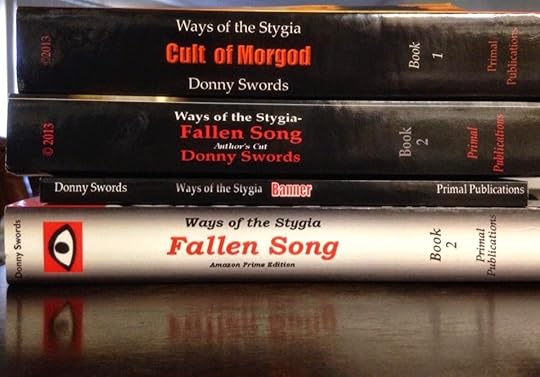
Cult of Morgod
Characters I
In my last WotS article I promised to cover some of the characters in the next article.
Tada! It’s the new post!
So what about the characters?
Everything in a Ways of the Stygia novel begins here. I write from a different standpoint than some of my peers. I am not putting my work on a higher shelf, I just feel that I take a somewhat different approach than many authors- it’s even a bit unorthodox.
I actually think I’ve taken such an approach because of who I am. I’m a pretty sensitive person. Intense emotions are felt more intensely and the things others wouldn’t even react to wound me inside. Some call what I go through depression. Though I am not sure I would be doing anyone any good to act like I am special when so many wonderful people suffer from darker days than I have.
Besides, I’m an author. Dark days help my creative mind. Right? I know I like to exploit feelings I am having, and assign them to wilder realities- like the feelings Thomas experiences early on in Fallen Song , when he suffers a terrible loss. Banner feels different from everyone within his reality. How many of us have felt that one?
In Cult of Morgod, Henry constantly feels like he is not doing enough- even though he carries more than his share of the load…
Behind my sometimes straight fantasy characters are driving emotions- cool. To me this is the story… Plots present themselves when you understand your characters and the worlds or situations you place them in. Take Thomas Van Pelt for example. Here is a complicated guy. In Fallen Song, you will find that Thomas is as lost as you in the beginning- you are in it together- Trying to figure out if he is good or evil. His inner struggle is like so many people go through- blown into god-sized dimensions.
At one point within Fallen Song, Banner appears to Thomas. Something in that inner dialogue struck me. I kept wondering How come this one night stalker is peaceful?
Because not everything is static in Ways of the Stygia.
While Banner is not at all alike his species- who are harvested from the void by one of three Harvesters, Loki, Nonyl, or Kain, he is still a night stalker. It is important to point out that Tyrrell, who once governed Purgatory and the Barrens (see Fallen Song) never had the power to harvest souls from the unmaker (the void).
While Culvex, a demonkin, serves Kain, he hates Loki- and loves Quantanost? Exactly. Here is a demon that thinks for himself.
Oh and then there’s Kain. What if Genesis 4 is a lie? Sit with that. Often Kain’s actions are overtly evil- on the surface. Who remembers what Kain did in Fallen Song? You know with a certain sword… well what if there was information pointing another direction… that Kain might have been duty-bound? While Kain’s intentions are not always clear, he wears that bad boy image well. But is he?
Thomas is extremely headstrong- and sensitive.
But these are just a few of the more well-known characters within WotS. Even if you take the books one novel at a time, it might be easy to get confused. Fact is, the casting in Cult of Morgod alone is extensively vast. I’m not going to name them all today, but I am going to give you an inside look at the types of players involved in the novel. Keep in mind, I develop my characters- and you will know how they feel about their situations and actions…
Here are a few definitions to help out.
Revels
An archangel from another galaxy, in service to Morgod and the great Abyss. Revel souls are housed in host bodies by Morgod’s twisted powers. They are murderous, scheming souls, with powers to transfer soul energy to their Lord, Mor. As the Revel grows in destructive potential and indestructability- so in turn does Morgod.
Suttgars
Angelic souls, born of the old cosmos, who once served Mor, before his downfall to darkness. Beautiful and complex the Suttgars believe in light and balance. They have hidden for vast spans of time for Morgod wants their souls the most and will stop at nothing to gain them.
Demons
The demonic generally have Stygian blood, and in some capacity serve the abyss. Though not all of them. There are several types of WotS demons.
Stalkers
The night stalker, born of the abyss is humanoid, possessing ebon skin, eyes, hair, & nails… Most rejoice in Purgatory and its history of suffering, living to bring torture and darkness. They have the power to devour souls, and prosper from their energy, and some can shift into whatever they desire themselves to be, but this is a rare ability. Many possesses magical prowess- as demonstrated in Feromin’s Magi. Again, not all of them are evil. Many serve Kain, and many more Loki. None know how many serve Nonyl, though all bow to Lucifer.
Vampires & Lycans
In Ways of the Stygia, no two vampires are the same, nor any pair of lycans. The origination of the curse comes from Kain’s blood. All vampires and werewolves are ultimately of his lineage. As the curse affects each individual differently, it grants different blessings, and curses upon its various subjects. I/e some may walk in the sun freely, while others would burst into flames.
Trollkin
Trolls exist mainly with the Barrens until the events of Fallen Song transpire. They are an highly intelligent alien race, gifted in architecture and maintaining a structural society. Most trolls are not evil, though they have served Loki, and Tyrrell solely throughout their stay in the Barrens, where they are chiefly responsible for building Sistinal, Loki’s keep.
Angelic
Jehovah’s children, who dwell in Havendell. Some think they are entirely mad- others see them as angry. The truth is hardly known.
Name dropping:
Here’s a few of the characters you will find within Ways of the Stygia- Cult of Morgod:
The Few:
Thomas Van Pelt, Franco Birat Oni, & Henry
The Revels
Sangul, Balfren, Vex, Dina, Zassul, Byron, Abyx, Melkin, & Tangas
Vampires:
Faus, Brennan
An excerpt from Ways of the Stygia Cult of Morgod:
Beware
Drums sound in the night. Even as I carve these runes, I do so hastily, knowing I am not long for this world. Around me the village burns and for some matter of divinity, I sit, frightened beyond terror by the hearth, my own home unencumbered by flames as the fiery furnace of the death god razes my settlement asunder.
They came silently from the sea in large numbers. Our scouts picked them up right away. The first of the vessels were large and blockish on the water and seemed to hold cargo. King Ragnar advised us to prepare for battle just the same. I silently hoped they were a distant group of traders or the like. I gave the proper orders, placing the men under my command on high alert. They went to it immediately, archers lining the fortress walls, swordsmen at the gate.
They waited us out. More ships arrived, as men grew restless and weary, relaxing their grips on axes and pole-arms. Ragnar also grew wearisome and impatient. He ordered fires lit under pots on the walls and filled with brass. The metal became molten, and the order given to pour the pots onto any on rushers. He ordered every man, woman and child to the arsenal for outfitting and placed them in specific groups to defend in the upcoming attack.
As more and more ships arrived, it became evident that our force was too smallish to ward off whatever curses they held. The King sent scouts to the rear of our compound, to see if retreat was an option. They returned them to us, full in flame and arrows. The bodies rained onto the homes of a few, burning uncontrollably. This was the start of the fires in our village, and the panic. I looked around and a realization came with full impact, none of us was prepared for this! I sapped at the sight of children holding blades for the first time; their weak faces positively flush with fear. I felt it too.
I can now say with true conviction that a man or all men are no match for these things. The fires of doomsday would not hinder them. I fought a few, but found no hope in winning the day against so many. They came all at once and from everywhere. Most of us died in that initial assault. Those who lived were not long for life. Divinity came once more for me when I fought a fiend, slipping in the muck under my heel, impaling it on a hayfork that hung in an angle from the cart I fell beneath; demon blood dripped and spattered on the ground nearest my left ear, reminding me of the death surrounding me. I watched the creatures, (for that is what they are, for they are not men) burning buildings and slaughtering livestock before me. Then against the burning street, I witnessed cold murder. I could not move. I did not. I lay there hidden from sight for a time, until the street cleared before me, at which point I rolled and sprinted for my door.
Now to the message at hand: King Ragnar is dead. His head hangs from a pike in front of Castle Randaar. He fought as a man possessed… until the one called Morgod arrived. The fiends who faced my beloved majesty he reduced to bits and pieces by sword and axe. I fought hard as well, until the aforementioned point of my escape and witnessing the death of my King. Even though I know I could not have changed the outcome, I still feel a coward for lying there, doing nothing. I tried, but I could not move. My body felt like stone… I could not close my eyes.
This is all I remember:
The fearsome Ragnar, riveted in place, rooted so deeply as to appear more model than man. I was riveted as well, my eyes forced into an unblinking state such as they were. I saw the entire thing. Morgod, tyrannical, terrible to behold, un-killable by any weapons our warriors held, clutching a gigantic two-handed axe, which he seldom used. His eyes were distant and dead; they committed murder. With a glance, he froze beating hearts in weaker men, and rendered stronger ones weak. Next to him was a fiend three times his size- yet Morgod loomed larger, the true terror.
When Morgod was near enough for Ragnar to strike him, he said, “Do you yield?"
Ragnar said nothing.
"Now you do."
The horned fiend took Ragnar's head.
"Well there is the smell of war for my reward, even if his majesty was no more than the others."
“Indeed," The fiend returned.
I fell into a blind rage… I do not know how my rational mind held me in check. I wonder now if self-preservation transformed me into a frozen body with trapped open eyes… I will never know.
The screams have stopped. It confirms my worst fear. The end is here. Death has come. Take heart anyone who finds…
Just now, I saw a brilliant white flash behind Castle Randaar… there is still a faint glow there. Perhaps I am dreaming… I feel I must go to it and I will.
Let he who finds this prevail against Morgod and his army of fiends. Let there still be hope, this is my last request. I am going now, to investigate the light. I am sure I will not return.
Fight Morgod- Hagane Shreve*
*This tablet, which took me to a deity to decipher- is the only written record of Morgod during the time he raised his armies on Earth. From everything I have ascertained, the ancient civilizations Morgod destroyed were not rivaled for many centuries after, this was a time when gods walked the Earth, sharing inventions with humanity that would not be seen again, such as iron, steel, wheels and language for lifetimes. Perhaps the world would be different now had these ancestral humans been left alone to prosper, war as I am told was a rarity then… until The Army of the Haunted Eye came to the world. Whatever became of the rubble was lost. This period is not discernable by any modern records, ancient accounts, or artifacts. When Morgod came to power remains a mystery –Banner
I hope this article has begun to shed so light on things;
Continue reading to find links to my work,
Donny Swords
Other pertinent Ways of the Stygia articles:
Concerning Ways of the Stygia I (click here to read)
Concerning Ways of the Stygia II (click here to read)
Cult of Morgod Concepts (click here to read)
Donny Swords author ( Facebook ) (Blog)
Primal Publications ( Facebook ) (Blog)
The Indie Collaboration ( web )
Novels & Links
The Bitter Ends
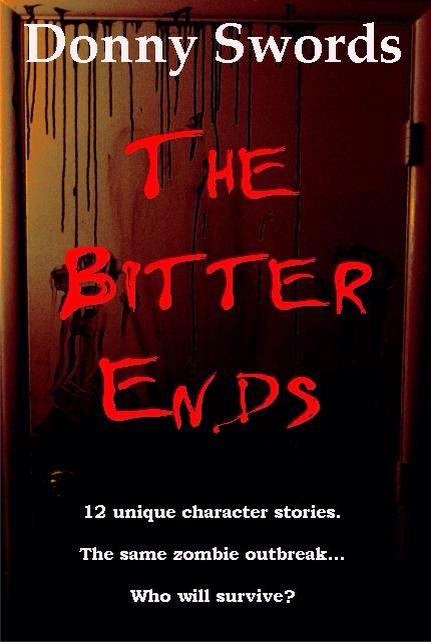 Somewhere in the Bible Belt Gateway has gone insane. Who knew what would come? Thrust into the end of times, Gateway’s citizens attempt to outrun the zombie outbreak…
 Discover 12 unique stories, and see how Gateway’s main cast fares against the deadheads. See how they live. Watch lives expire and people become heroes or villains. The Bitter Ends is more than just a book about zombies. It is about the characters, like Anna. It is seeing what ordinary people might do in a zombie apocalypse and unordinary ones too.
Will any of them survive? Or Will They All Meet Their Bitter Ends?
(Amazon) (Facebook) (iBooks) (B&N) (Kobo)
Ways of the Stygia (Facebook)
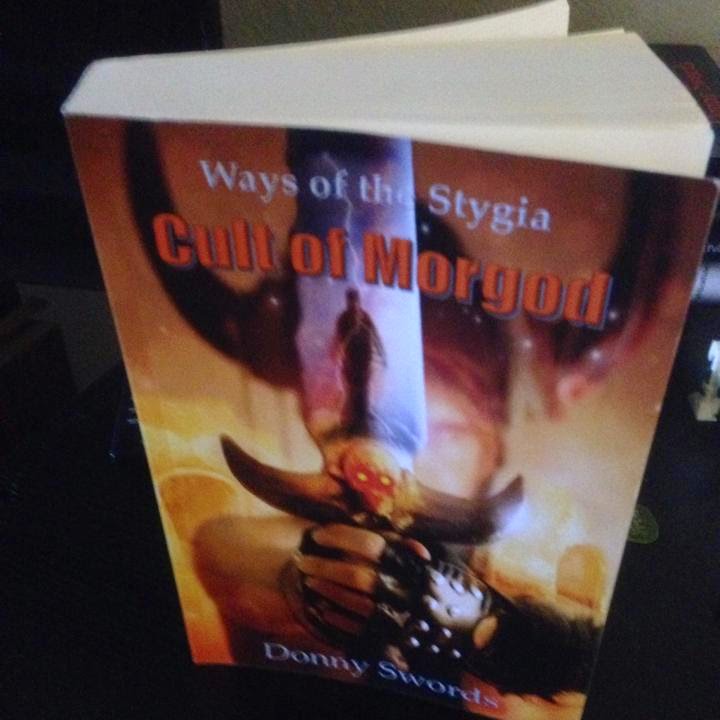 Ways of the Stygia- Cult of Morgod
(Book 1
) Releases September 19th 2014
Ways of the Stygia- Cult of Morgod
(Book 1
) Releases September 19th 2014Destruction. To see something destroyed, gone. None can deny its appeal. To the abyss, nothing is forever. To the World-Eater creation is flawed… Flesh is weak. Souls are fodder- fuel. Power is endless. The Stygia grants unlimited strength to the daring… Slavery and death are a means to an end… For Morgod , everything must burn. Ruination must reign immaculate.
Heroes come in many forms. For who is truly evil? There are shades of light and dark. Left with two choices, survival or total annihilation, the cosmos displays signs of harmony…
They face a common foe.
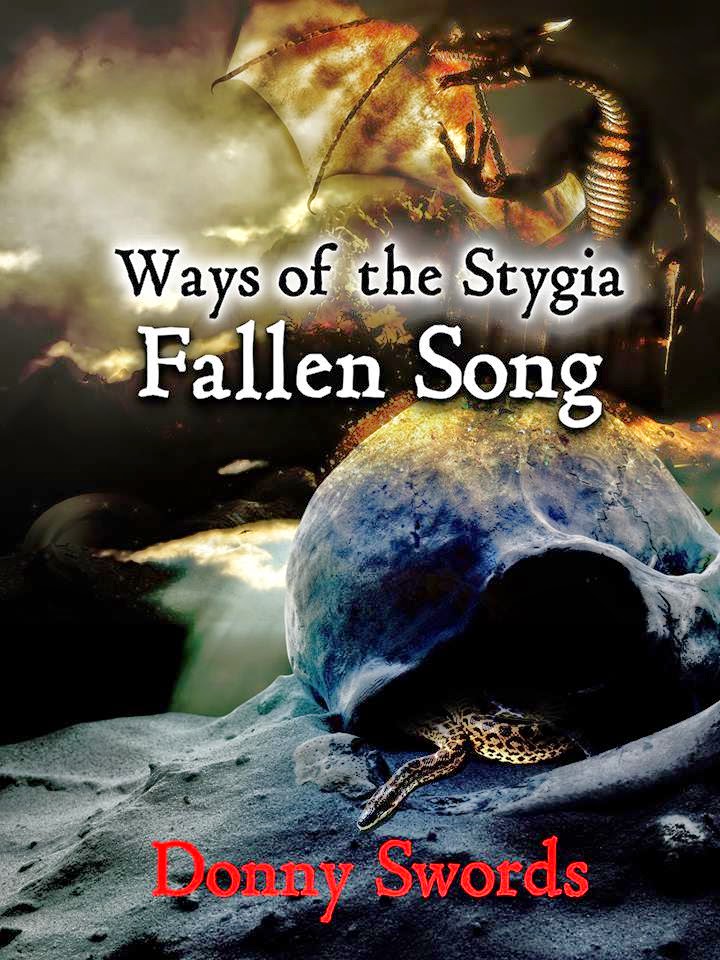 Ways of the Stygia- Fallen Song
 (Book 2 )
Thomas Van Pelt lived a normal life. On one dreary raining evening that all changed. His work as a CSI investigator had led him to yet another crime scene, and there, prompted by his primal senses he discovered the ancient artifact that would that day forward alter his own life and the fate of the universe itself. The ancient weapon Fallen Song summons Thomas, and reawakens his forgotten past. He embarks on his new calling- bringing justice to the guilty, the ones who would otherwise remain free to perpetrate their vile acts on the unsuspecting.
Thomas is reunited with past allies and embarks on an epic adventure involving demons, necromancers, deities, vampires, sorcerers and the terrorists of Purgatory itself, the night stalker. Get pulled away to new lands, terrible enough to cost you sleep and see what ends Thomas will go to in his quest to bring a new era of light to an ailing universe.
Ways of the Stygia- Fallen Song is intended for mature audiences.
( Facebook ) (.99 Nook ) ( B&N ) ( Amazon) (.99 Kobo )
 Ways of the Stygia- Banner (Character Novella 1)
In Purgatory, there is one law. It is damnation.
The abyss plots as the gods use its powers to suit themselves. Born of the void, to the hostile landscapes of Purgatory, not as a child, and not as a man, Banner must overcome his roots. The realm of Purgatory does not forgive so easily, suffering is ceaseless. It is a realm where death grants rebirth so suffering can begin anew. Those of his race are bred killers, evil, and cold to their marrows.
Banner, a night stalker set apart from his peers in extremity faces an uncertain future as he attempts to leave Purgatory and the nightmares behind.
He cannot do it alone...
(B&N) (Amazon)
Anthologies:
Free on Smashwords across all e-reader platforms.
The Indie Collaboration Presents:
Snips, Snails, & Puppy Dog Tales
(The Wacky Adventures of Bob & Dill, Case of the Missing Ghost & Barracuda Blast by D. Swords)
Summer Shorts (Boots by Donny Swords) Spectacular Tales (Sparks by Donny Swords) Tales from Darker Places Releases October 25th, 2013 3 stories by Donny Swords
Coming Soon:
Ways of the Stygia- Cult of Morgod- Street date September 19, 2014
The Bitter Ends_ Other Side of Town- Tentative street date Oct 25th, 2014
7 Slices - November 2014


September 3, 2014
The Void Features- Cult of Morgod
Waysof the Stygia Cult of Morgodconcepts…
 Destruction. To see something hated destroyed- Gone.No one can deny its appeal.To the abyss, nothing is forever.To the World-Eater creation is flawed… Flesh is weak. Souls are fodder- fuel. Power is endless. The Stygia grants unlimited strength to the daring… Slavery and death are a means to an end. For Morgod, everything must burn. Ruination must reign immaculate. Heroes come in many forms.For who is truly evil? There are shades of light and dark. Left with two choices, survival, or total annihilation, The cosmos shows signs of harmony… They face a common foe.
 Hello J
This is actually my third Ways of the Stygia article. If you read the other two you may have either lost interest all together, or now you’re intrigued, possibly you are still confused. I can understand. The WotS universe is anything but small. There is a ton of lore
 involved in the development of each character, realms, even weapons… Hell, some of them even have names- one weapon even has a novel entitled after it,
Fallen Song
. Ring a bell? I thought so. Another extremely important weapon, wielded by Oban first, and another character later on is entitled Mishanoamay, the reaper of souls… You can learn how Mishanoamay was forged next year in the first volume of my new series
Ways of the Stygia- Barrens: Beyond Sistinal.
Suffice to say it is no ordinary blade. But this only covers Fallen Song’s mentions, if you add in the demonkin Hiratchi’s Black Blade.
involved in the development of each character, realms, even weapons… Hell, some of them even have names- one weapon even has a novel entitled after it,
Fallen Song
. Ring a bell? I thought so. Another extremely important weapon, wielded by Oban first, and another character later on is entitled Mishanoamay, the reaper of souls… You can learn how Mishanoamay was forged next year in the first volume of my new series
Ways of the Stygia- Barrens: Beyond Sistinal.
Suffice to say it is no ordinary blade. But this only covers Fallen Song’s mentions, if you add in the demonkin Hiratchi’s Black Blade.Speaking of the demon Hiratchi, he happens to have a prominent role in my new release, Ways of the Stygia- Cult of Morgod …
So where and when does Morgod take place?
Earth. Before recorded history… The World-Eater (Mor) has come to Earth after being
 (B&N) resurrected from, and with the aid of the Stygia to do the bidding of the abyss. Jehovah is absent, and Lucifer wages war in the Barrens and another yet unexplored realm from the series. If you read article two, you would know that the Ways of the Stygia universe consists of Seven Realms, Earth, the Barrens, Quantanost, the Fringe, Purgatory, Havendell, and the Underworld- while the void is integral to the series it is not considered a realm. Some may enter the void of their own accord and even leave intact, but such a feat is only accomplished by higher deities. Even so one could hardly call the abyss inhabitable.
What happens?
Death- wanton destruction, mayhem, demonic rituals, betrayal, love, loss, friendship heroism and redemption… the angelic purge… Morgod feeds off the souls gathered through the inescapable ambushes, assaults and slaughters performed by his armies, and especially from his Revels. What is a Revel?
An archangel, born under Mor when he was benevolent, and loyal long after the ebon void claimed his, and their souls in kind. Revels are the unholy- and their powers run the gamut of skill, methods, and incredulity. These are enemies unstoppable by Earth’s primitive, human tribes.
Enter Quantanost, led by its Black Guard General- Henry… When the war ensues pandemonium is prevalent, and the horrors Morgod brings with his warring and rule are as detestable as I could manage. He is a World-Eater. Since Cult of Morgod details a massive war, I took extra care with the battle scenes- they are about as heroic as any battle could get. I loved every second of writing them. Like Book 2: Fallen Song (Cult of Morgod precedes Fallen Song as far as time period), Morgod has a massive cast- in my next article I will discuss them… And remember; Ways of the Stygia Cult of Morgod Releases on September 19, 2014 , but you can read Fallen Song or Banner today. They are available on Barnes & Noble and Amazon’s websites.
Thanks for reading, Donny Swords
 All things Donny Swords Donny Swords author (
Facebook
) (Blog) Primal Publications (
Facebook
) (Blog) The Indie Collaboration (
web
) Novels & Links The Bitter Ends
All things Donny Swords Donny Swords author (
Facebook
) (Blog) Primal Publications (
Facebook
) (Blog) The Indie Collaboration (
web
) Novels & Links The Bitter Ends
 Somewhere in the Bible Belt Gateway has gone insane. Who knew what would come? Thrust into the end of times, Gateway’s citizens attempt to outrun the zombie outbreak…
 Discover 12 unique stories, and see how Gateway’s main cast fares against the deadheads. See how they live. Watch lives expire and people become heroes or villains. The Bitter Ends is more than just a book about zombies. It is about the characters, like Anna. It is seeing what ordinary people might do in a zombie apocalypse and unordinary ones too. Will any of them survive? Or Will They All Meet Their Bitter Ends? (Amazon) (Facebook) (iBooks) (B&N) (Kobo) Ways of the Stygia ( Facebook )
 Ways of the Stygia- Cult of Morgod
(Book 1
) Releases September 19th2014 Destruction. To see something destroyed, gone. None can deny its appeal. To the abyss, nothing is forever. To the World-Eater creation is flawed… Flesh is weak. Souls are fodder- fuel. Power is endless. The Stygia grants unlimited strength to the daring… Slavery and death are a means to an end… For Morgod , everything must burn. Ruination must reign immaculate. Heroes come in many forms. For who is truly evil? There are shades of light and dark. Left with two choices, survival or total annihilation, the cosmos displays signs of harmony… They face a common foe. Ways of the Stygia- Fallen Song
(Book 2)
Ways of the Stygia- Cult of Morgod
(Book 1
) Releases September 19th2014 Destruction. To see something destroyed, gone. None can deny its appeal. To the abyss, nothing is forever. To the World-Eater creation is flawed… Flesh is weak. Souls are fodder- fuel. Power is endless. The Stygia grants unlimited strength to the daring… Slavery and death are a means to an end… For Morgod , everything must burn. Ruination must reign immaculate. Heroes come in many forms. For who is truly evil? There are shades of light and dark. Left with two choices, survival or total annihilation, the cosmos displays signs of harmony… They face a common foe. Ways of the Stygia- Fallen Song
(Book 2)
%2B(538x750).png) Thomas Van Pelt lived a normal life. On one dreary raining evening that all changed. His work as a CSI investigator had led him to yet another crime scene, and there, prompted by his primal senses he discovered the ancient artifact that would that day forward alter his own life and the fate of the universe itself. The ancient weapon Fallen Song summons Thomas, and reawakens his forgotten past. He embarks on his new calling- bringing justice to the guilty, the ones who would otherwise remain free to perpetrate their vile acts on the unsuspecting. Thomas is reunited with past allies and embarks on an epic adventure involving demons, necromancers, deities, vampires, sorcerers and the terrorists of Purgatory itself, the night stalker. Get pulled away to new lands, terrible enough to cost you sleep and see what ends Thomas will go to in his quest to bring a new era of light to an ailing universe. Ways of the Stygia- Fallen Song is intended for mature audiences. (
Facebook
) (.99
Nook
) (
B&N
) ( Amazon) (.99
Kobo
) Ways of the Stygia- Banner (Character Novella 1)
In Purgatory, there is one law. It is damnation.
Thomas Van Pelt lived a normal life. On one dreary raining evening that all changed. His work as a CSI investigator had led him to yet another crime scene, and there, prompted by his primal senses he discovered the ancient artifact that would that day forward alter his own life and the fate of the universe itself. The ancient weapon Fallen Song summons Thomas, and reawakens his forgotten past. He embarks on his new calling- bringing justice to the guilty, the ones who would otherwise remain free to perpetrate their vile acts on the unsuspecting. Thomas is reunited with past allies and embarks on an epic adventure involving demons, necromancers, deities, vampires, sorcerers and the terrorists of Purgatory itself, the night stalker. Get pulled away to new lands, terrible enough to cost you sleep and see what ends Thomas will go to in his quest to bring a new era of light to an ailing universe. Ways of the Stygia- Fallen Song is intended for mature audiences. (
Facebook
) (.99
Nook
) (
B&N
) ( Amazon) (.99
Kobo
) Ways of the Stygia- Banner (Character Novella 1)
In Purgatory, there is one law. It is damnation.The abyss plots as the gods use its powers to suit themselves. Born of the void, to the hostile landscapes of Purgatory, not as a child, and not as a man, Banner must overcome his roots. The realm of Purgatory does not forgive so easily, suffering is ceaseless. It is a realm where death grants rebirth so suffering can begin anew. Those of his race are bred killers, evil, and cold to their marrows. Banner, a night stalker set apart from his peers in extremity faces an uncertain future as he attempts to leave Purgatory and the nightmares behind.
He cannot do it alone... (B&N) (Amazon) Anthologies: Freeon Smashwords across all e-reader platforms. The Indie Collaboration Presents: Snips, Snails, & Puppy Dog Tales (The Wacky Adventures of Bob & Dill, Case of the Missing Ghost & Barracuda Blast by D. Swords) Summer Shorts (Boots by Donny Swords) Spectacular Tales (Sparks by Donny Swords) Tales from Darker PlacesReleases October 25th, 2013 3 stories by Donny Swords Coming Soon: Ways of the Stygia- Cult of Morgod- Street date September 19, 2014 The Bitter Ends_ Other Side of Town- Tentative street date Oct 25th, 2014 Slices - November 2014
August 29, 2014
Reviews From the Void: Reader of Acheron- Walter Rhein
Buy
A brilliant novel!!! Read it while you still can. January 30, 2014*5/5 Stars
By Donny Swords- Author (Glendale, Arizona) - See all my reviews
*This is not a recent review. Older reviews are just now beginning to make their way to my blogs....
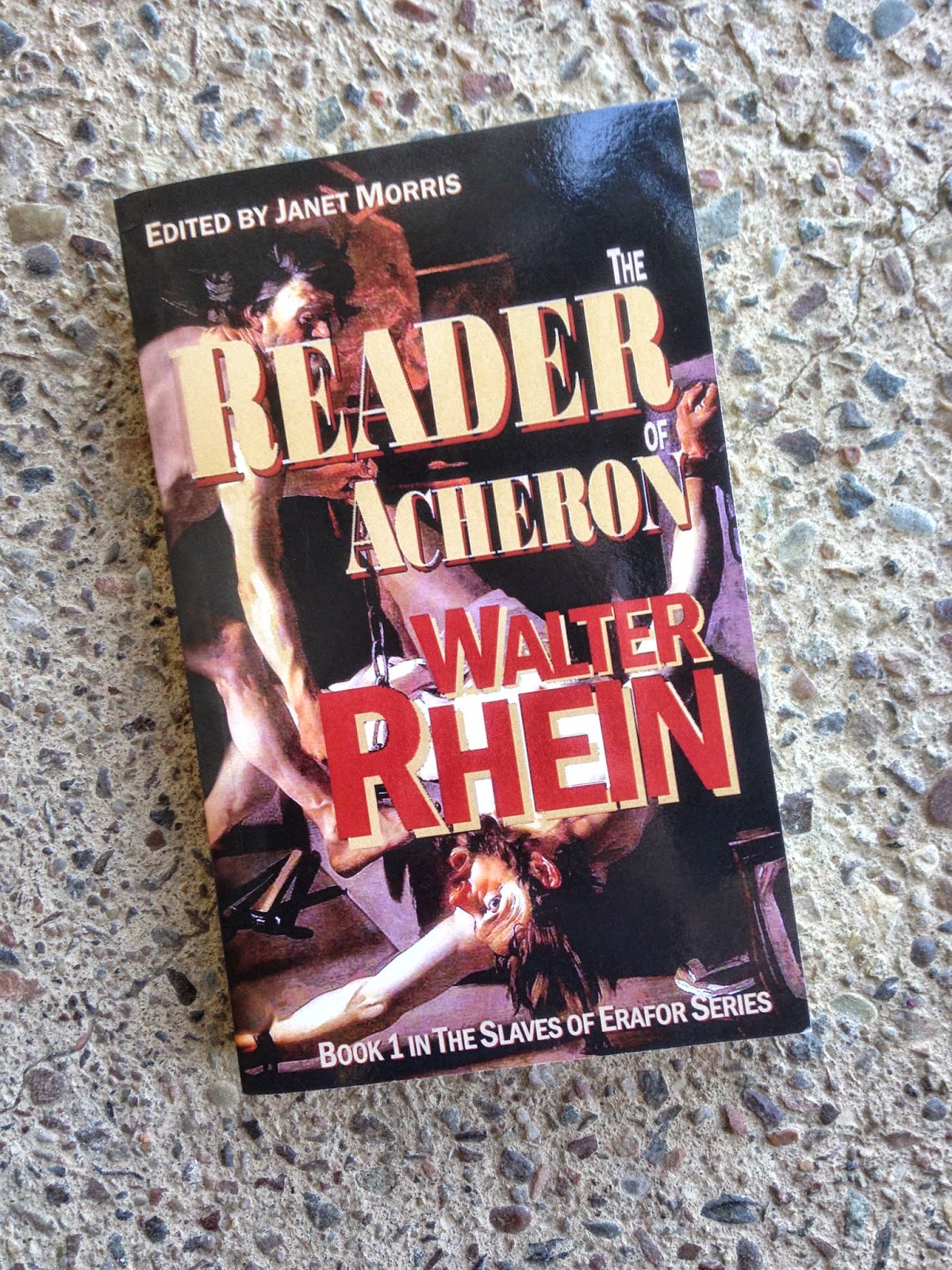
This review is from: The Reader of Acheron (The Slaves of Erafor Book 1) (Kindle Edition) The reader of Acheron, (The slaves of Erafor, Vol 1)
Here, Walter Rhein delivers a tale that tells a story both with the printed word, and in between the lines. This is a dystopian fantasy where reality has shifted, and a new power structure has asserted themselves over the populace in a manner that while disturbing, is still an echo of what we find today. So many of the author's thoughts could have been my own. It raised questions I have often asked of myself. What drives another human to enslave another, either by the overt means of shackles, or by clouding their minds? Why do the masses allow oppression in any form when they know in their hearts that it is wrong to do so?
This is not a horror novel, but nonetheless, I was horrified. The idea that one day reading could be a crime punishable by death haunted me almost as much as the lives I imagined in such a world. A world where the upper echelons of power did as they pleased, and the populace followed them like blind sheep. Sound familiar? It should. We are all slaves to something, and those who run our lives are just as unforgiving as Captain Tark or Cassius of Edentown.
But some do not accept their fates as readily as others. Enter Kikkan, a slave who has learned that slavery, on any level is not acceptable. Whose heart is filled with a rage I identified with on a personal level. I could not help but root for Kikkan, even if some of his actions were dark. I honestly hope that in his situation I would act somewhat the same. I found him to be brave, and very near the beginning of the book tears came down my cheek during one of the scenes where others tormented him. To face his problem head on and to address it, even while facing an uncertain future.
Quillion is another very intriguing character, a true survivalist, a leader in some aspects, a free-thinker... Poor Cole is more the follower type, and their interaction keeps the read interesting.
Walter does a fantastic job of weaving back and forth between plotlines and making them merge into an outstanding ending. I loved this novel, every page. Read "Reader of Acheron" while they will still let you. Keep your mind open, you might just learn something.
Highly Recommended-D. Swords
August 26, 2014
Concerning Ways of the Stygia II
Ways of the Stygia
The Stygian Tongue: Hardly speak Stygian?
Susteni- (sus- tin- A) Of Substance. Matter. Life energy.
Volta- (vul- ta) Lightning, electricity- shock
Example: Susteni Volta! (Spell: Electrocute. Phrase definition: substance to lightning)
 If you read my last article, you’re probably thoroughly confused. If you haven’t read either Ways of the Stygia- Banner or
Fallen Song
yet, don’t worry. I’m not giving away spoilers- per say. I would prefer to think of them as offerings- or Easter eggs.If you keep reading, you are definitely going to learn more about Ways of the Stygia.I’m going to start out by saying I have big plans for the WotS universe. First up are these articles, which I will try to keep up with indefinitely. I don’t plan to flog myself weekly for facts regarding the progressing WotS universe, but I am hoping to not keep you in the dark going forward- pun intended.
If you read my last article, you’re probably thoroughly confused. If you haven’t read either Ways of the Stygia- Banner or
Fallen Song
yet, don’t worry. I’m not giving away spoilers- per say. I would prefer to think of them as offerings- or Easter eggs.If you keep reading, you are definitely going to learn more about Ways of the Stygia.I’m going to start out by saying I have big plans for the WotS universe. First up are these articles, which I will try to keep up with indefinitely. I don’t plan to flog myself weekly for facts regarding the progressing WotS universe, but I am hoping to not keep you in the dark going forward- pun intended.
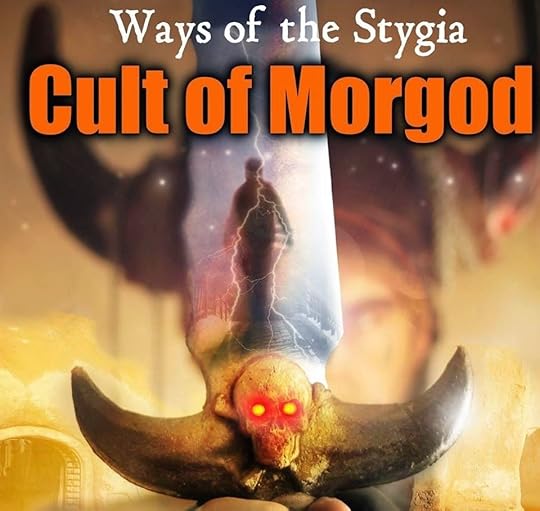
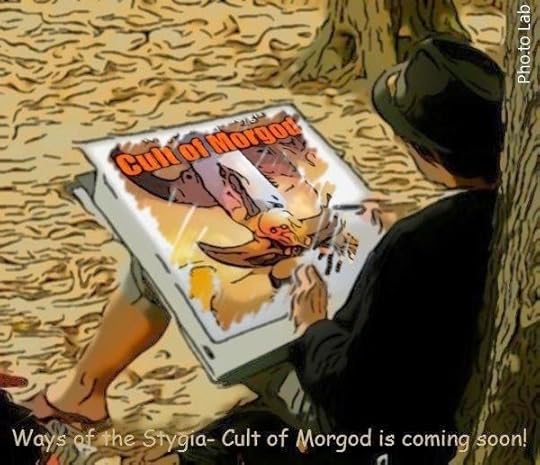 The big news is Book one, the previously unreleased
Cult of Morgod
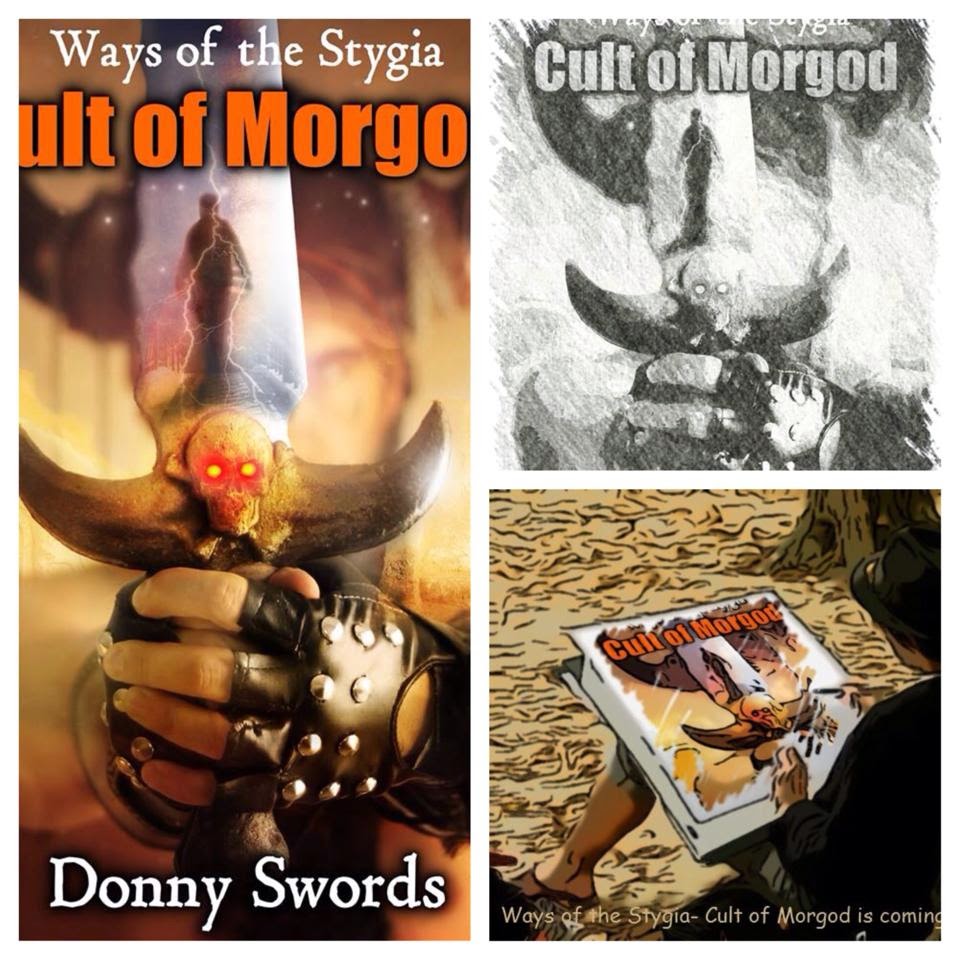
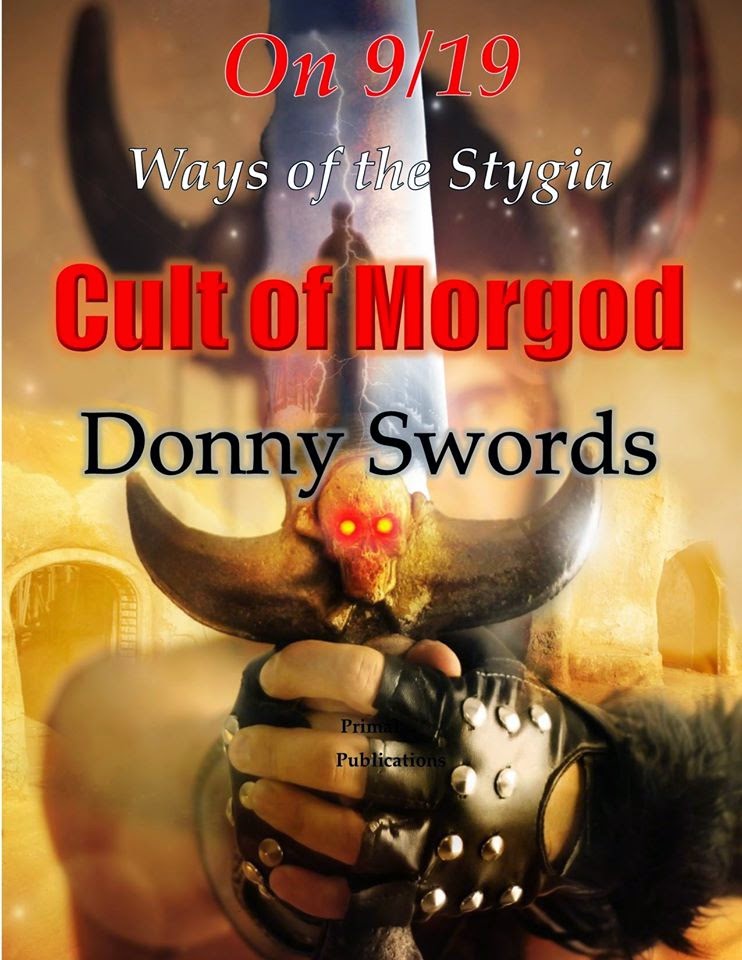
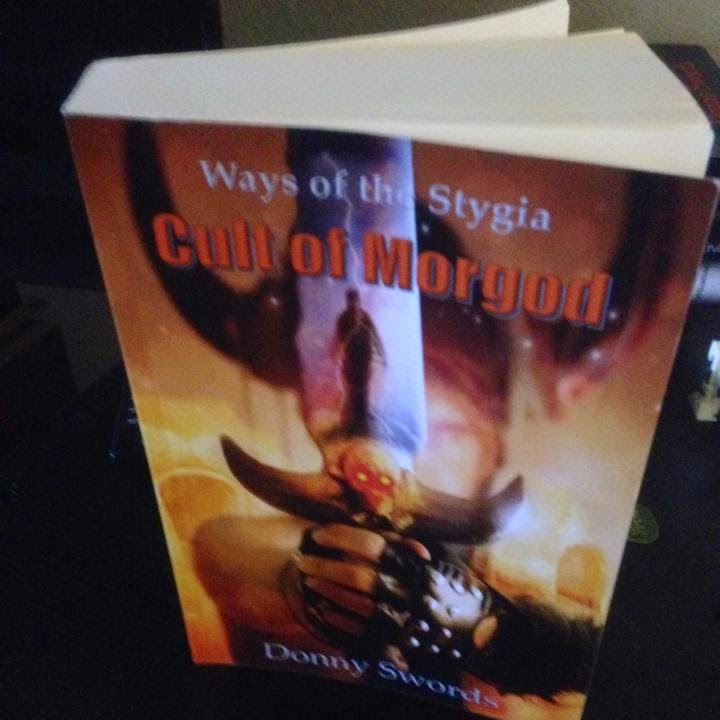
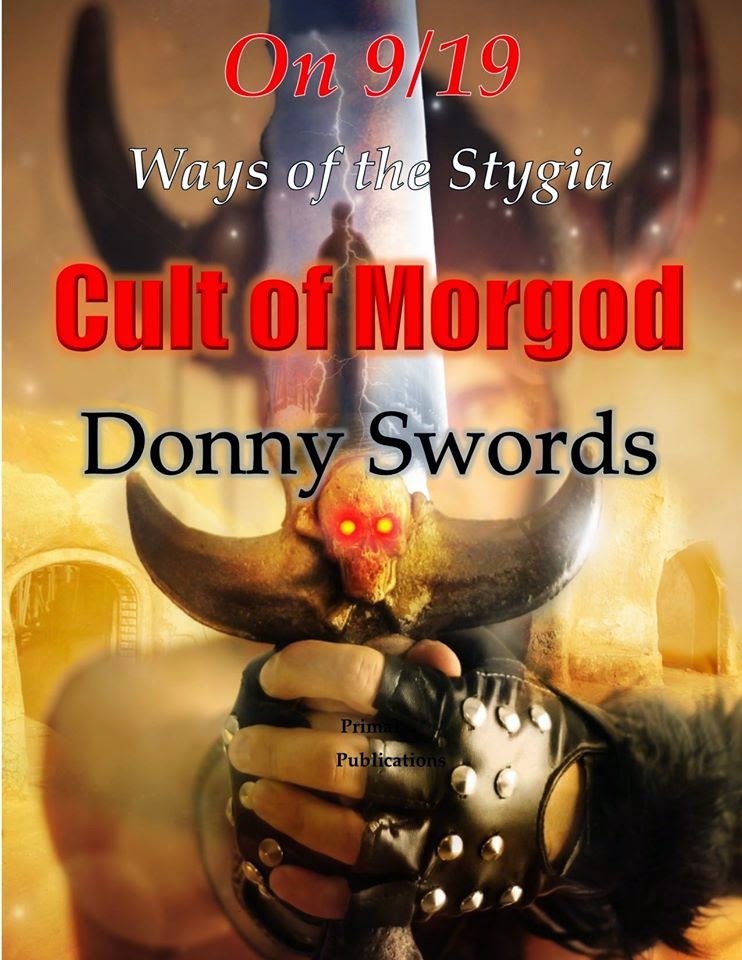
is completed. The interior for the paperback is complete- the cover is immaculate… I couldn’t be prouder of this novel. It is absolutely one of my largest achievements in my personal life. I’m also going to go out on a limb and say something here- it makes me sad to release Morgod. I almost want to keep it for myself. Because I am selfish. I was selfish when I wrote it. I wasn’t going to let someone tell me what to do in my own story. Even if one of the largest publishers on Earth wanted Ways of the Stygia as a series whole, I would have to retain the freedoms I have given myself when writing these novels. With my goal accomplished, in having Cult of Morgod unrestricted by any input other than my own, I have a finished product… So why am I sad?Because most of you have never heard of me, a lot of you will not read Morgod. I believe in this book- the plot, the characters. I hope you check it out.
The big news is Book one, the previously unreleased
Cult of Morgod
is completed. The interior for the paperback is complete- the cover is immaculate… I couldn’t be prouder of this novel. It is absolutely one of my largest achievements in my personal life. I’m also going to go out on a limb and say something here- it makes me sad to release Morgod. I almost want to keep it for myself. Because I am selfish. I was selfish when I wrote it. I wasn’t going to let someone tell me what to do in my own story. Even if one of the largest publishers on Earth wanted Ways of the Stygia as a series whole, I would have to retain the freedoms I have given myself when writing these novels. With my goal accomplished, in having Cult of Morgod unrestricted by any input other than my own, I have a finished product… So why am I sad?Because most of you have never heard of me, a lot of you will not read Morgod. I believe in this book- the plot, the characters. I hope you check it out.
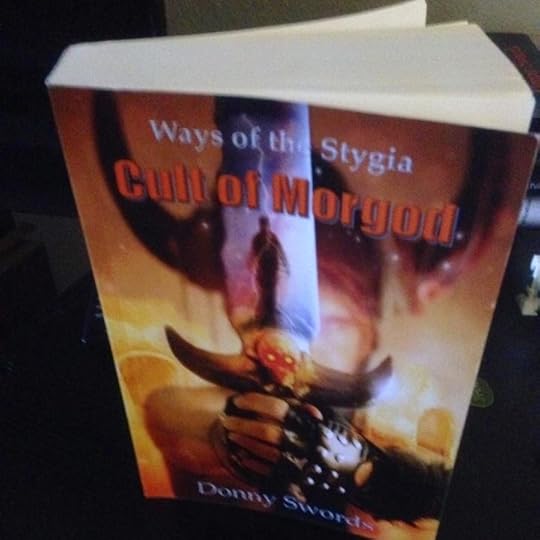 Cult of Morgod has a diverse cast of characters, some recurring, and others, new to readers. Some returning characters from the series are, Thomas Van Pelt, Henry, Franco Birat Oni, Banner, Kain, Loki, Saverus, and Lucifer. These characters have several story threads within the novel, which takes place before Fallen Song, before recorded history. Hell, if the events in this book had actually occurred it would have delayed written records… Here’s some of the goings on:Morgod is a gruesome foe. He spends energy well maintaining his image. Thomas is young. Franco’s a thinker. Henry is Henry. Many dynamics are different. Loki sits on the Barren Throne, and Lords over Purgatory. Saverus is bloodthirsty- but just, heroic even? Banner is sent to deliver a message in a perilous mission, in a place once holy. Hiratchi, the demon lord in Fallen Song shows the reader how he earned his reputation. The first vampire, a lady I wrote a book about is born to the night… Morgod, and his Revels (arc angels born in another galaxy) continue to decimate life on Earth… Lucifer- ah the devil, well he has his own agendas… You will see Kain in way you never have- Thomas too- You’ll meet Maku- the grandmaster…
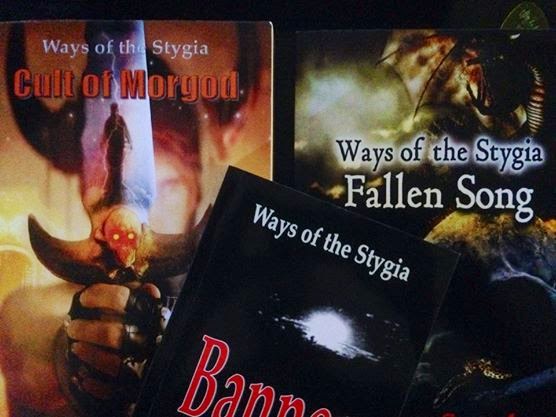
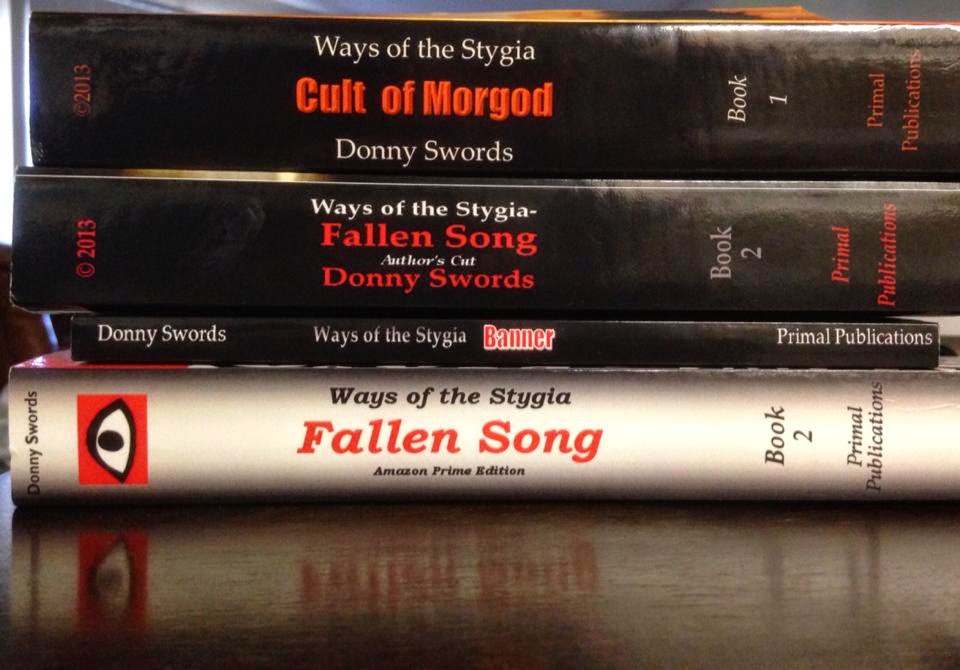
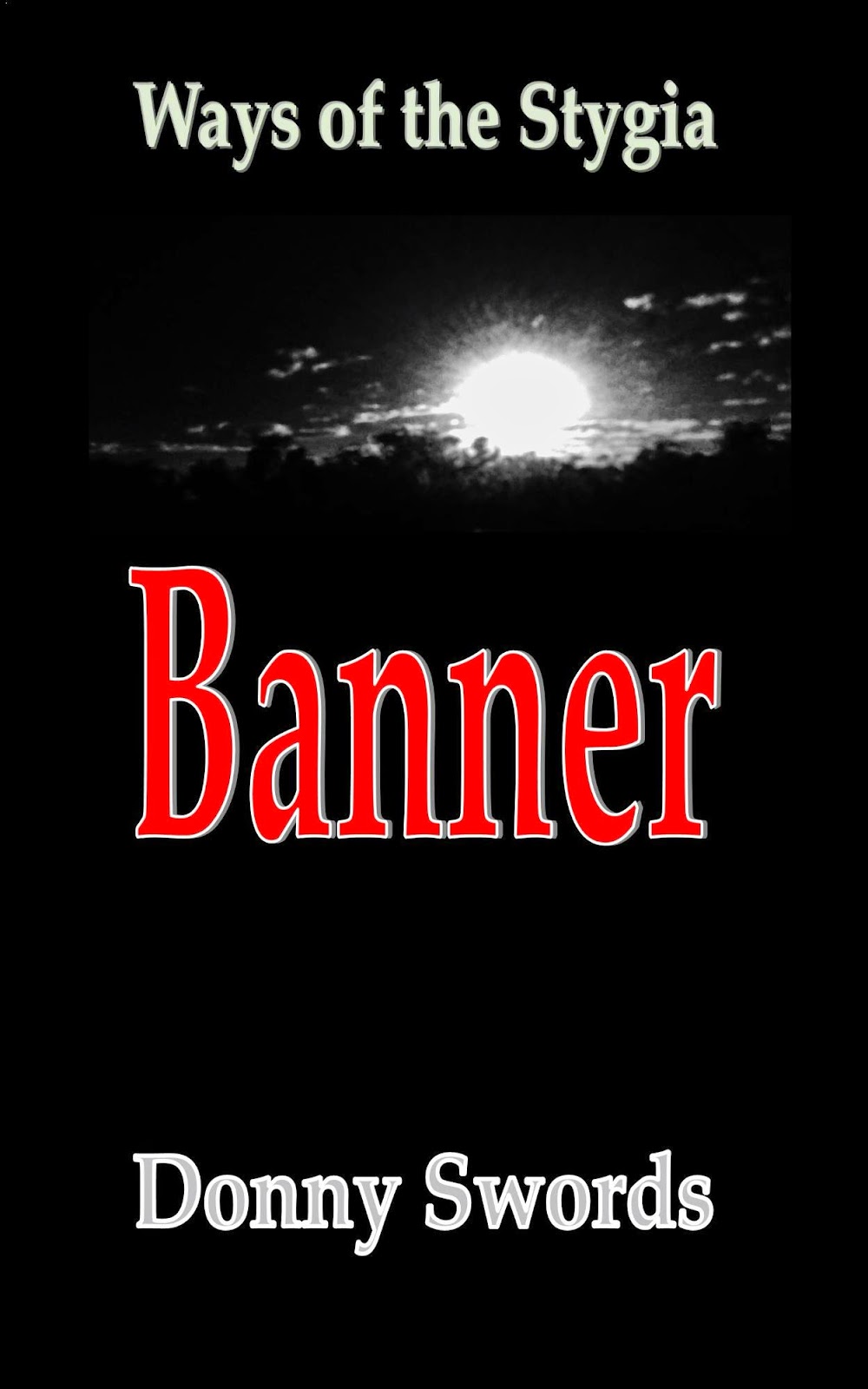
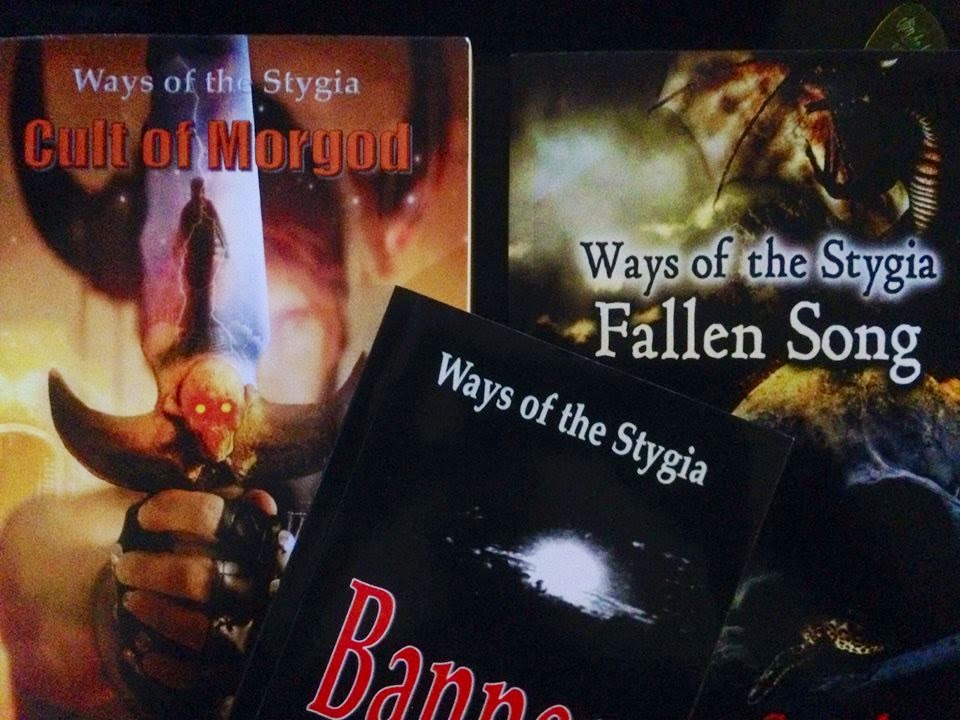
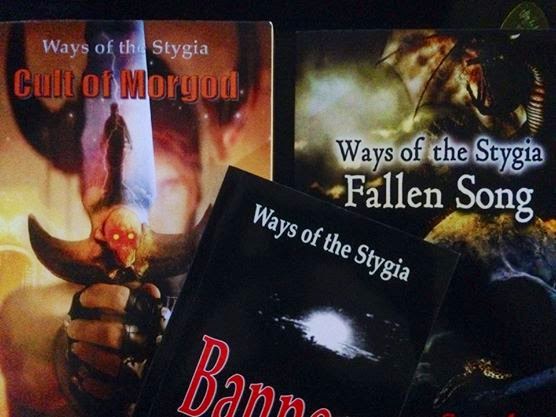
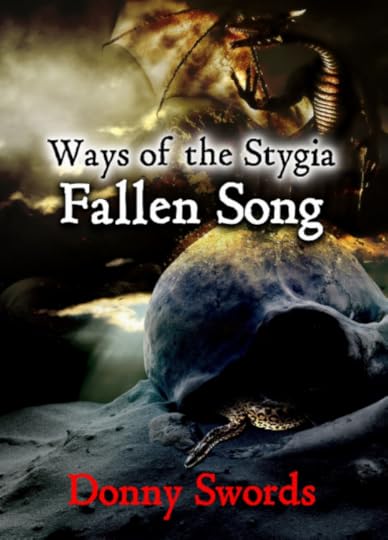
Iwanted this to be a special release. I have put out several novels in paperback this year (purchase here) but Morgod, like Faus is special to me. More articles will follow this one leading up to release day, and there will be a .99 Ways of the Stygia sale beginning on Sept 17th. The sale includes both the Ways of the Stygia- Fallen Song (Amazon Prime Edition) (eBook) (Paperback) and Banner. The last sale day for Fallen Song (Amazon Prime Ed) is 9/21. Bannergets an extra sale day ending on 9/22. This is a great way to get the entire series at once. If the series interests you, I would encourage you to get ‘em while they’re hot. As a side note, you might be wondering something about Fallen Song, why two covers? My answer: The Amazon Prime Edition, the one with the B&W eyeballs, is not going to stick around. It will be unpublished when the paperback reaches a particular sales mark, or by the original date Fallen song was published. As for content, the Prime edition features the same story- unaltered- and a sample of Cult of Morgod. Both the paperback and eBook have extra images not found in the author’s cut. Thanks for reading- more is still to come.
Donny Swords
Cult of Morgod will be live on the Amazon website September 19, 2014.
Follow Ways of the Stygia on Facebook
PrimalPublications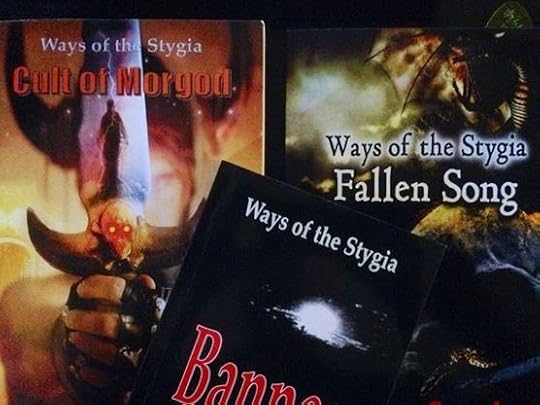
The Stygian Tongue: Hardly speak Stygian?
Susteni- (sus- tin- A) Of Substance. Matter. Life energy.
Volta- (vul- ta) Lightning, electricity- shock
Example: Susteni Volta! (Spell: Electrocute. Phrase definition: substance to lightning)
 If you read my last article, you’re probably thoroughly confused. If you haven’t read either Ways of the Stygia- Banner or
Fallen Song
yet, don’t worry. I’m not giving away spoilers- per say. I would prefer to think of them as offerings- or Easter eggs.If you keep reading, you are definitely going to learn more about Ways of the Stygia.I’m going to start out by saying I have big plans for the WotS universe. First up are these articles, which I will try to keep up with indefinitely. I don’t plan to flog myself weekly for facts regarding the progressing WotS universe, but I am hoping to not keep you in the dark going forward- pun intended.
If you read my last article, you’re probably thoroughly confused. If you haven’t read either Ways of the Stygia- Banner or
Fallen Song
yet, don’t worry. I’m not giving away spoilers- per say. I would prefer to think of them as offerings- or Easter eggs.If you keep reading, you are definitely going to learn more about Ways of the Stygia.I’m going to start out by saying I have big plans for the WotS universe. First up are these articles, which I will try to keep up with indefinitely. I don’t plan to flog myself weekly for facts regarding the progressing WotS universe, but I am hoping to not keep you in the dark going forward- pun intended.
 The big news is Book one, the previously unreleased
Cult of Morgod
is completed. The interior for the paperback is complete- the cover is immaculate… I couldn’t be prouder of this novel. It is absolutely one of my largest achievements in my personal life. I’m also going to go out on a limb and say something here- it makes me sad to release Morgod. I almost want to keep it for myself. Because I am selfish. I was selfish when I wrote it. I wasn’t going to let someone tell me what to do in my own story. Even if one of the largest publishers on Earth wanted Ways of the Stygia as a series whole, I would have to retain the freedoms I have given myself when writing these novels. With my goal accomplished, in having Cult of Morgod unrestricted by any input other than my own, I have a finished product… So why am I sad?Because most of you have never heard of me, a lot of you will not read Morgod. I believe in this book- the plot, the characters. I hope you check it out.
The big news is Book one, the previously unreleased
Cult of Morgod
is completed. The interior for the paperback is complete- the cover is immaculate… I couldn’t be prouder of this novel. It is absolutely one of my largest achievements in my personal life. I’m also going to go out on a limb and say something here- it makes me sad to release Morgod. I almost want to keep it for myself. Because I am selfish. I was selfish when I wrote it. I wasn’t going to let someone tell me what to do in my own story. Even if one of the largest publishers on Earth wanted Ways of the Stygia as a series whole, I would have to retain the freedoms I have given myself when writing these novels. With my goal accomplished, in having Cult of Morgod unrestricted by any input other than my own, I have a finished product… So why am I sad?Because most of you have never heard of me, a lot of you will not read Morgod. I believe in this book- the plot, the characters. I hope you check it out.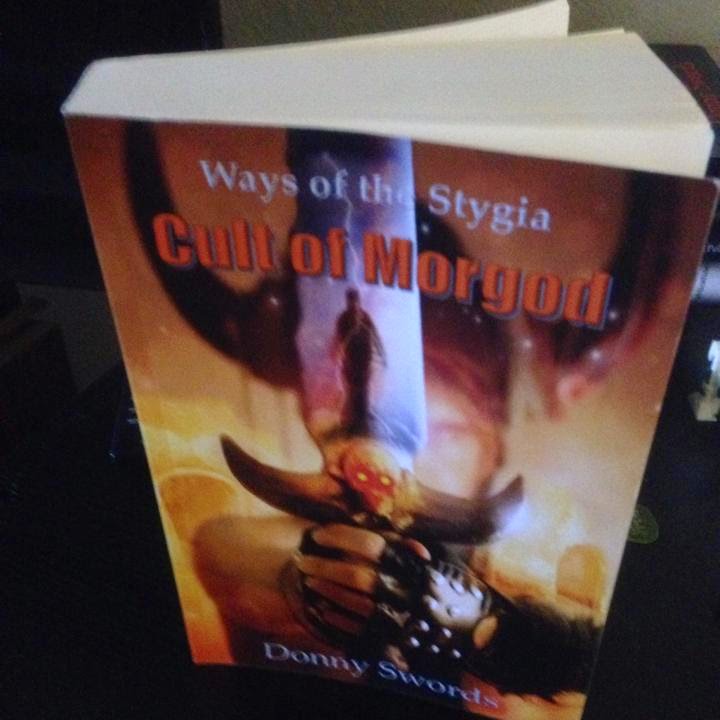 Cult of Morgod has a diverse cast of characters, some recurring, and others, new to readers. Some returning characters from the series are, Thomas Van Pelt, Henry, Franco Birat Oni, Banner, Kain, Loki, Saverus, and Lucifer. These characters have several story threads within the novel, which takes place before Fallen Song, before recorded history. Hell, if the events in this book had actually occurred it would have delayed written records… Here’s some of the goings on:Morgod is a gruesome foe. He spends energy well maintaining his image. Thomas is young. Franco’s a thinker. Henry is Henry. Many dynamics are different. Loki sits on the Barren Throne, and Lords over Purgatory. Saverus is bloodthirsty- but just, heroic even? Banner is sent to deliver a message in a perilous mission, in a place once holy. Hiratchi, the demon lord in Fallen Song shows the reader how he earned his reputation. The first vampire, a lady I wrote a book about is born to the night… Morgod, and his Revels (arc angels born in another galaxy) continue to decimate life on Earth… Lucifer- ah the devil, well he has his own agendas… You will see Kain in way you never have- Thomas too- You’ll meet Maku- the grandmaster…
Iwanted this to be a special release. I have put out several novels in paperback this year (purchase here) but Morgod, like Faus is special to me. More articles will follow this one leading up to release day, and there will be a .99 Ways of the Stygia sale beginning on Sept 17th. The sale includes both the Ways of the Stygia- Fallen Song (Amazon Prime Edition) (eBook) (Paperback) and Banner. The last sale day for Fallen Song (Amazon Prime Ed) is 9/21. Bannergets an extra sale day ending on 9/22. This is a great way to get the entire series at once. If the series interests you, I would encourage you to get ‘em while they’re hot. As a side note, you might be wondering something about Fallen Song, why two covers? My answer: The Amazon Prime Edition, the one with the B&W eyeballs, is not going to stick around. It will be unpublished when the paperback reaches a particular sales mark, or by the original date Fallen song was published. As for content, the Prime edition features the same story- unaltered- and a sample of Cult of Morgod. Both the paperback and eBook have extra images not found in the author’s cut. Thanks for reading- more is still to come.
Donny Swords
Cult of Morgod will be live on the Amazon website September 19, 2014.
Follow Ways of the Stygia on Facebook
PrimalPublications
August 20, 2014
Features from the Void- Concerning Ways of the Stygia I
Features From The Void:
Concerning Ways of the Stygia I…
1. Definition of Stygian (adj)Bing Dictionaryo Styg·i·ano [ stíjjee ən ]3. pitch-black: unremittingly dark and frightening, as hell is imagined to be4. of Styx: relating to the Styx, the river in Greek mythology that the souls of the dead were ferried across into Hades5. binding: eternally binding, as were promises sworn on the banks of the river Styx in Greek mythology
 BuyThe creation of Purgatory was a part of my conception all along.
Ways of the Stygia Fallen Song
delves into Thomas Van Pelt’s personal damnation. His is a tough journey where the only way through is full of self-discovery, and blood.Ways of the Stygia is a series that has its own set of rules, governed by dynamics that run opposite of this world. The series contains graphic violence and depictions of some rather gruesome events. I am not going to compromise my stories for the sake of a few. I also am not out to capitalize on violence for the sake of violence. I did not come wired that way. The things within the series that offend some people only do so because violence should be disturbing.The realities I create tell a broad story, over a vast array of possible settings, full of several interesting and well-developed characters. After reading Ways of the Stygia- Fallen Song, they would eventually come to understand each character in the series is part of a vast universe.I may choose and do write about any character I choose, and I like to write with depth. If you are reading about Darrel, then he is going to get as much attention as Henry does. Fallen Song revolves around certain characters more than others- as does Cult of Morgod. Ways of the Stygia- Banner is a short Novella about the night stalker and his escape from Purgatory- inside and out.
Ways of the Stygia- Cult of Morgod
reveals much about the realms Thomas Van Pelt ventures. Morgod employs the Stygia- the power of the destructor- the abyss and his Revels to decimate life…Back to Purgatory. This is where it begins folks- with Kain and Purgatory, and the abyss that hangs at the borders of the realm, where not annexed by the Barren Lands. The Barrens has a unique history as Kain created the realm. Though Eliza and Jehovah created the rest of the Seven Realms, there would have been only five- Quantanost, Havendell, Purgatory, Earth, and the Underworld. Kain created the Fringe to enter Earth… Few know how he accomplished what he did to achieve the feat of creating the spectral gate known as The Fringe- let alone the Barrens- later lorded over by Loki and Tyrrell respectively. These are some of the underlying dynamics within Ways of the Stygia. Where Thomas Van Pelt creates balance, others create chaos. As Kain and Van Pelt both know, the Stygia speaks. All you need to do is understand its language.One question raised is if both Kain and Thomas hear the void speak, then why is one evil, and not the other? Perhaps then you would ask the same question I often do…Is Kain evil? Is Thomas
?
BuyThe creation of Purgatory was a part of my conception all along.
Ways of the Stygia Fallen Song
delves into Thomas Van Pelt’s personal damnation. His is a tough journey where the only way through is full of self-discovery, and blood.Ways of the Stygia is a series that has its own set of rules, governed by dynamics that run opposite of this world. The series contains graphic violence and depictions of some rather gruesome events. I am not going to compromise my stories for the sake of a few. I also am not out to capitalize on violence for the sake of violence. I did not come wired that way. The things within the series that offend some people only do so because violence should be disturbing.The realities I create tell a broad story, over a vast array of possible settings, full of several interesting and well-developed characters. After reading Ways of the Stygia- Fallen Song, they would eventually come to understand each character in the series is part of a vast universe.I may choose and do write about any character I choose, and I like to write with depth. If you are reading about Darrel, then he is going to get as much attention as Henry does. Fallen Song revolves around certain characters more than others- as does Cult of Morgod. Ways of the Stygia- Banner is a short Novella about the night stalker and his escape from Purgatory- inside and out.
Ways of the Stygia- Cult of Morgod
reveals much about the realms Thomas Van Pelt ventures. Morgod employs the Stygia- the power of the destructor- the abyss and his Revels to decimate life…Back to Purgatory. This is where it begins folks- with Kain and Purgatory, and the abyss that hangs at the borders of the realm, where not annexed by the Barren Lands. The Barrens has a unique history as Kain created the realm. Though Eliza and Jehovah created the rest of the Seven Realms, there would have been only five- Quantanost, Havendell, Purgatory, Earth, and the Underworld. Kain created the Fringe to enter Earth… Few know how he accomplished what he did to achieve the feat of creating the spectral gate known as The Fringe- let alone the Barrens- later lorded over by Loki and Tyrrell respectively. These are some of the underlying dynamics within Ways of the Stygia. Where Thomas Van Pelt creates balance, others create chaos. As Kain and Van Pelt both know, the Stygia speaks. All you need to do is understand its language.One question raised is if both Kain and Thomas hear the void speak, then why is one evil, and not the other? Perhaps then you would ask the same question I often do…Is Kain evil? Is Thomas
?
Perspective changes everything.
 BuyI am a different person after writing Ways of the Stygia. But then, I have always been different. I admit that I am biased towards certain characters. The Conduit (Van Pelt) and the Void Master (Kain) receive a fair amount of attention, as do Franco, Henry, Banner, Pye, Piron, Noga, Lucifer, & Loki… Should I go on?
The main purpose of the Stygia is to grow within reality, until it is unreality- nothing- a part of the abyss. It works through its generals, as well as its foot soldiers- otherwise known as Black Marks. A Black Mark serves the Stygia without knowing they are doing so- think serial killers, murderous cutthroats and molesters- that unsavory element which helps to “lower the bar” for morality. As the violent acts of the Black Marks desensitize the masses to violence, and other dark or darker deeds, the shadows slide in, spreading obsidian and abysmal slumbering nights upon the populace. Black Marks are not the worst fiends the Stygia employs in its quest- and some of them are fully aware. Think of them as a beast, with several heads (overlords) possessing a singular motive—uncreation. As Darrel says; “Everything is black in the end- everything.”So in both Cult of Morgod and Fallen Song the Conduit sets out to achieve balance- and to be victorious for the light… Well, that’s totally the end for this article. I bet it did little to clear things it up for you… lol. Then again, I promise I will explain much more about Ways of the Stygia and its many mechanics in future articles.
Stay tuned,
Donny Swords
Follow Ways of the Stygia by Donny Swords on Facebook (Here)
Concerning Ways of the Stygia I…
1. Definition of Stygian (adj)Bing Dictionaryo Styg·i·ano [ stíjjee ən ]3. pitch-black: unremittingly dark and frightening, as hell is imagined to be4. of Styx: relating to the Styx, the river in Greek mythology that the souls of the dead were ferried across into Hades5. binding: eternally binding, as were promises sworn on the banks of the river Styx in Greek mythology
BuyThe creation of Purgatory was a part of my conception all along.
Ways of the Stygia Fallen Song
delves into Thomas Van Pelt’s personal damnation. His is a tough journey where the only way through is full of self-discovery, and blood.Ways of the Stygia is a series that has its own set of rules, governed by dynamics that run opposite of this world. The series contains graphic violence and depictions of some rather gruesome events. I am not going to compromise my stories for the sake of a few. I also am not out to capitalize on violence for the sake of violence. I did not come wired that way. The things within the series that offend some people only do so because violence should be disturbing.The realities I create tell a broad story, over a vast array of possible settings, full of several interesting and well-developed characters. After reading Ways of the Stygia- Fallen Song, they would eventually come to understand each character in the series is part of a vast universe.I may choose and do write about any character I choose, and I like to write with depth. If you are reading about Darrel, then he is going to get as much attention as Henry does. Fallen Song revolves around certain characters more than others- as does Cult of Morgod. Ways of the Stygia- Banner is a short Novella about the night stalker and his escape from Purgatory- inside and out.
Ways of the Stygia- Cult of Morgod
reveals much about the realms Thomas Van Pelt ventures. Morgod employs the Stygia- the power of the destructor- the abyss and his Revels to decimate life…Back to Purgatory. This is where it begins folks- with Kain and Purgatory, and the abyss that hangs at the borders of the realm, where not annexed by the Barren Lands. The Barrens has a unique history as Kain created the realm. Though Eliza and Jehovah created the rest of the Seven Realms, there would have been only five- Quantanost, Havendell, Purgatory, Earth, and the Underworld. Kain created the Fringe to enter Earth… Few know how he accomplished what he did to achieve the feat of creating the spectral gate known as The Fringe- let alone the Barrens- later lorded over by Loki and Tyrrell respectively. These are some of the underlying dynamics within Ways of the Stygia. Where Thomas Van Pelt creates balance, others create chaos. As Kain and Van Pelt both know, the Stygia speaks. All you need to do is understand its language.One question raised is if both Kain and Thomas hear the void speak, then why is one evil, and not the other? Perhaps then you would ask the same question I often do…Is Kain evil? Is Thomas
?
Perspective changes everything.
 BuyI am a different person after writing Ways of the Stygia. But then, I have always been different. I admit that I am biased towards certain characters. The Conduit (Van Pelt) and the Void Master (Kain) receive a fair amount of attention, as do Franco, Henry, Banner, Pye, Piron, Noga, Lucifer, & Loki… Should I go on?
The main purpose of the Stygia is to grow within reality, until it is unreality- nothing- a part of the abyss. It works through its generals, as well as its foot soldiers- otherwise known as Black Marks. A Black Mark serves the Stygia without knowing they are doing so- think serial killers, murderous cutthroats and molesters- that unsavory element which helps to “lower the bar” for morality. As the violent acts of the Black Marks desensitize the masses to violence, and other dark or darker deeds, the shadows slide in, spreading obsidian and abysmal slumbering nights upon the populace. Black Marks are not the worst fiends the Stygia employs in its quest- and some of them are fully aware. Think of them as a beast, with several heads (overlords) possessing a singular motive—uncreation. As Darrel says; “Everything is black in the end- everything.”So in both Cult of Morgod and Fallen Song the Conduit sets out to achieve balance- and to be victorious for the light… Well, that’s totally the end for this article. I bet it did little to clear things it up for you… lol. Then again, I promise I will explain much more about Ways of the Stygia and its many mechanics in future articles.
Stay tuned,
Donny Swords
Follow Ways of the Stygia by Donny Swords on Facebook (Here)
August 15, 2014
Reviews from the Void: Nine Heroes
Reviews From the Void: A review of Heroic Fantasy’s Nine Heroes...
 Click to Buy
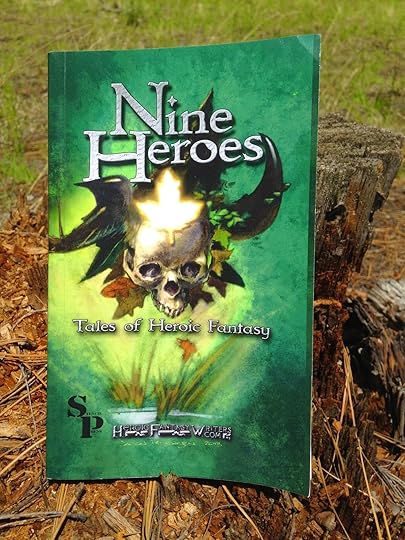
Nine Heroes is a collection of stories by several well-known and lesser-known authors. The collection was born from the Heroic Fantasy group on Facebook, moderated by Walter Rhein. The purpose of the novel is to help spread the get the work of these fine authors into reader’s hands- a great mission. Discovering any one of these authors is a godsend, but having them meet in a collaboration is bliss. Profits promote Nine Heroes, and the Heroic Fantasy Facebook group.This is an astounding collection.Here is my review, story by story.
B lack Sword by Janet Morris/Chris Morris
Anyone who has read a Ways of the Stygia novel would know I love black steel. Regardless of the gods who forge it, it is a fascination of mine. Anybody who has read my blog would also have a comprehension of my respect for Janet & Chris Morris. Here, armed with her new hero Rhesos, and he with his black blade, Janet Morris pierces the imagination, delivering a classic hero. The story was engaging. It smacked of brilliance. When I finished all I wanted was more. Thank the gods there will be a full-length novel soon starring Rhesos, child of gods, red-haired, with a temperament that reminds me a little of Robert E. Howard’s Conan, or El Borak… The troubled adventurer who is more than meets the eye… a hero steeped in myths and substantially viable for the ages.If you are a Morris fan, do not miss Rhesos’ first story.
Verdict: Fantastic!
T he Act of Sleepless Nights by Walter Rhein
Kinter is an unlikely hero. This story delves into the moralities of violence, and the responsibilities of leadership. It is a good read, with an unexpected twist near the ending. The tale left me thinking, which is good, about the framework of violence. When is violent action of use, and when is it not?
Verdict: Noteworthy.
T o kill a myth by Jesse Duckworth
Enter the tale of Mattock & Delilah. The author writes with gripping, razor intensity, weaving an instant classic. What can I say? It is hard to say anything when one is awestruck. Using few words, Jesse Duckworth awoke the imagery in my brain, excited my imagination, and gave me one or two unexpected chills.After one of the villagers meets with an unsettling death, Mattock sets out to face a mythical beast, and the odds are low. I had to find out how he fared.I was not let down.
Verdict: Amazing!
N o life too small by Douglas R. Brown
Rasi is a classic hero, caught in a rich tale involving surviving and bravery. I enjoyed this story a lot, though I often thought the tale might be richer if I was familiar with the author’s other work. Spoilers would abound if I said much more, so I will leave you my verdict.
Verdict: Solid
T o Live by Tom Barczak
This is the shortest, most obscure story of the bunch, involving a wizard, and a man reborn. In the paperback, this story takes about 11/4 pages. I could not help but find To Live lacking in comparison to the other stories here. While the language is well spoken, the tale itself said very little to me.
Verdict: Lacking
D ozen by Shane Porteous
This action packed story stars Seutzingol, a participant in a tournament gone wrong. I really enjoyed this story, which had me imagining such heroes as Robin Hood, or Legolas from the Lord of the Rings. The author was truly attempting to make a genuine effort to this volume- and did so. His language works well, and I found myself able to see the story in my mind’s eye- the mark of a powerful author.
Verdict: Bullseye
J ust one mistake by A.L. Butcher
Placed within her Light Beyond the Storm Chronicles, this story is an absolute gem. A.L. Butcher turns a phrase like a pro. Coel commits an act that opens up an adventure worth reading.
Verdict: Brilliant
Witness to death by Teel James GlennA hunting party has gone missing. Captain Uvan enlists Reverend Lord Enrique Shoutte’s council… and together they face a horrific circumstance. This story is well fleshed out and is an entertaining read. The author used descriptive phrases, interesting characters, and dark events well- in places I felt chills. This thirty plus page story kept me going until the end… A fun read.
Verdict: Entertaining
Through the Sting of Fairy Smoke by R.A. McCandless
This story, centered on Pel Rogue is a fantastic story, written with savvy and style. I particularly enjoyed that this was the closing story, because it had the strength to end the Nine Heroes collection on a high note. This author, like the company he keeps should have a bright future.
Verdict: Stylish
In closing, I simply have to recommend this book. For me, Black Sword is enough to justify the purchase, but there is so much more in store for the heroic fantasy reader. Based on the varying strengths of the stories I am giving Nine Heroes a four of five stars rating. Don’t let the missing star dissuade you, as many collections rated as a five are not nearly as enthralling.
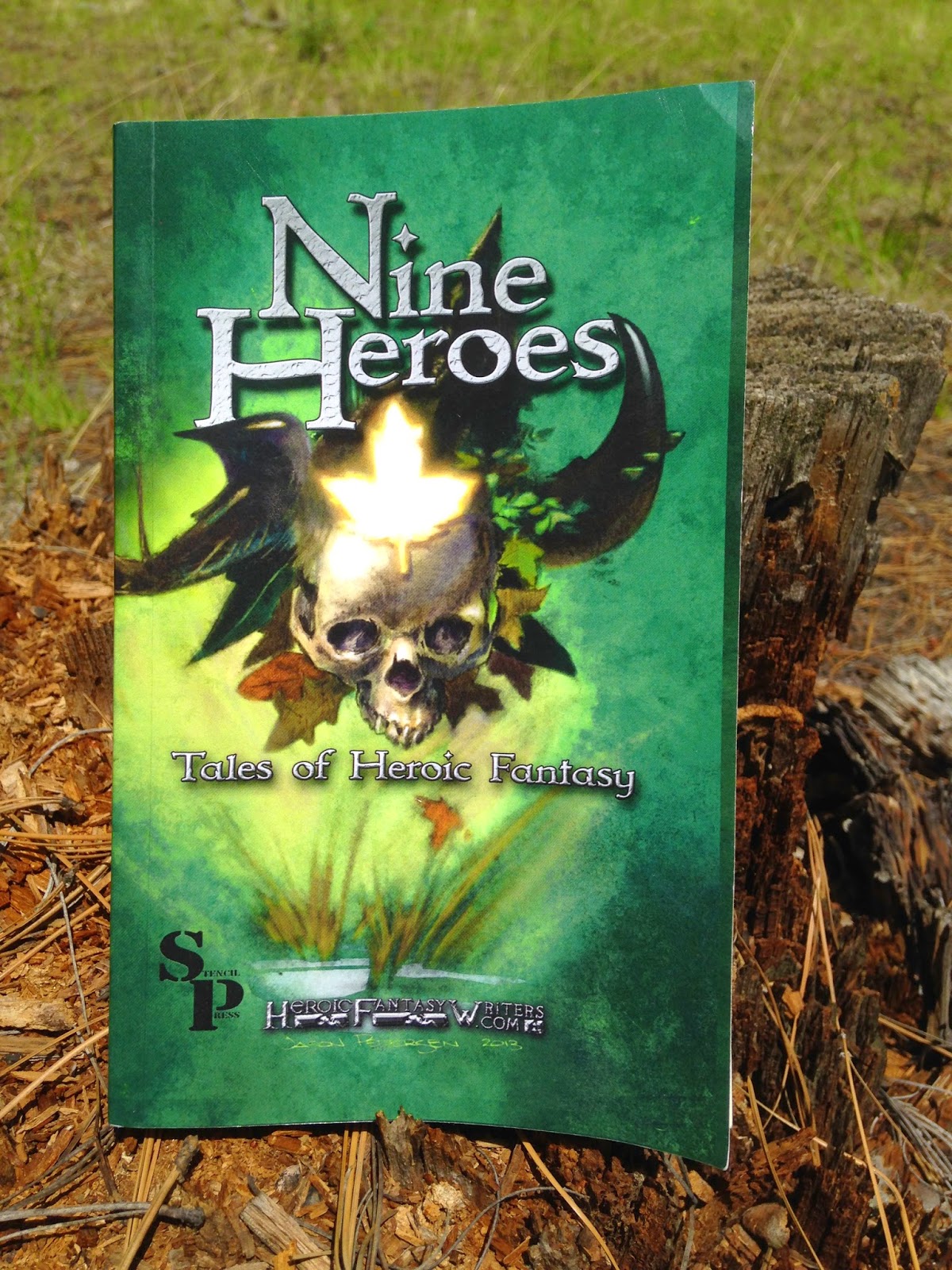 Click to Buy
Nine Heroes is a collection of stories by several well-known and lesser-known authors. The collection was born from the Heroic Fantasy group on Facebook, moderated by Walter Rhein. The purpose of the novel is to help spread the get the work of these fine authors into reader’s hands- a great mission. Discovering any one of these authors is a godsend, but having them meet in a collaboration is bliss. Profits promote Nine Heroes, and the Heroic Fantasy Facebook group.This is an astounding collection.Here is my review, story by story.
B lack Sword by Janet Morris/Chris Morris
Anyone who has read a Ways of the Stygia novel would know I love black steel. Regardless of the gods who forge it, it is a fascination of mine. Anybody who has read my blog would also have a comprehension of my respect for Janet & Chris Morris. Here, armed with her new hero Rhesos, and he with his black blade, Janet Morris pierces the imagination, delivering a classic hero. The story was engaging. It smacked of brilliance. When I finished all I wanted was more. Thank the gods there will be a full-length novel soon starring Rhesos, child of gods, red-haired, with a temperament that reminds me a little of Robert E. Howard’s Conan, or El Borak… The troubled adventurer who is more than meets the eye… a hero steeped in myths and substantially viable for the ages.If you are a Morris fan, do not miss Rhesos’ first story.
Verdict: Fantastic!
T he Act of Sleepless Nights by Walter Rhein
Kinter is an unlikely hero. This story delves into the moralities of violence, and the responsibilities of leadership. It is a good read, with an unexpected twist near the ending. The tale left me thinking, which is good, about the framework of violence. When is violent action of use, and when is it not?
Verdict: Noteworthy.
T o kill a myth by Jesse Duckworth
Enter the tale of Mattock & Delilah. The author writes with gripping, razor intensity, weaving an instant classic. What can I say? It is hard to say anything when one is awestruck. Using few words, Jesse Duckworth awoke the imagery in my brain, excited my imagination, and gave me one or two unexpected chills.After one of the villagers meets with an unsettling death, Mattock sets out to face a mythical beast, and the odds are low. I had to find out how he fared.I was not let down.
Verdict: Amazing!
N o life too small by Douglas R. Brown
Rasi is a classic hero, caught in a rich tale involving surviving and bravery. I enjoyed this story a lot, though I often thought the tale might be richer if I was familiar with the author’s other work. Spoilers would abound if I said much more, so I will leave you my verdict.
Verdict: Solid
T o Live by Tom Barczak
This is the shortest, most obscure story of the bunch, involving a wizard, and a man reborn. In the paperback, this story takes about 11/4 pages. I could not help but find To Live lacking in comparison to the other stories here. While the language is well spoken, the tale itself said very little to me.
Verdict: Lacking
D ozen by Shane Porteous
This action packed story stars Seutzingol, a participant in a tournament gone wrong. I really enjoyed this story, which had me imagining such heroes as Robin Hood, or Legolas from the Lord of the Rings. The author was truly attempting to make a genuine effort to this volume- and did so. His language works well, and I found myself able to see the story in my mind’s eye- the mark of a powerful author.
Verdict: Bullseye
J ust one mistake by A.L. Butcher
Placed within her Light Beyond the Storm Chronicles, this story is an absolute gem. A.L. Butcher turns a phrase like a pro. Coel commits an act that opens up an adventure worth reading.
Verdict: Brilliant
Witness to death by Teel James GlennA hunting party has gone missing. Captain Uvan enlists Reverend Lord Enrique Shoutte’s council… and together they face a horrific circumstance. This story is well fleshed out and is an entertaining read. The author used descriptive phrases, interesting characters, and dark events well- in places I felt chills. This thirty plus page story kept me going until the end… A fun read.
Verdict: Entertaining
Through the Sting of Fairy Smoke by R.A. McCandless
This story, centered on Pel Rogue is a fantastic story, written with savvy and style. I particularly enjoyed that this was the closing story, because it had the strength to end the Nine Heroes collection on a high note. This author, like the company he keeps should have a bright future.
Verdict: Stylish
In closing, I simply have to recommend this book. For me, Black Sword is enough to justify the purchase, but there is so much more in store for the heroic fantasy reader. Based on the varying strengths of the stories I am giving Nine Heroes a four of five stars rating. Don’t let the missing star dissuade you, as many collections rated as a five are not nearly as enthralling.
July 28, 2014
News from the Void 7/28/2014
News from the Void 7/28/2014
 What’s happening Donny Swords?
Everything. Life has been as full of ups and downs as my book sales- maybe a tad thrifty on the ups. Jen and I have found a temporary home, which has translated into a nightmarish experience. It seems our unscrupulous management here at Meadow Glenn Apartments in sunny Glendale, Arizona have no interest in disclosing that the building a tenant is about to move into is infested with roaches and bed bugs. At present, we are debating throwing our bed frame out, and I have not had 2 decent nights’ worth of sleep in a row. They have “treated” the bugs several times, but I am still seeing them.
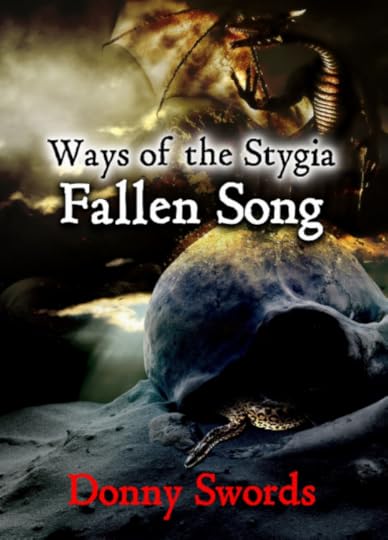 That’s the bad stuff. There has been a bunch of good stuff too. Here’s some of the highlights- Jen Herring and I are now working hard at Primal Publications to put all my writing out in the best possible eBook & Print editions we can muster.
I have finished writing The Vampire Faus- Dragon Stone, and Jen has completed her edit, after I proofread it a final time, I will send it over to Janet Morris @ Perseid Press for her consideration.
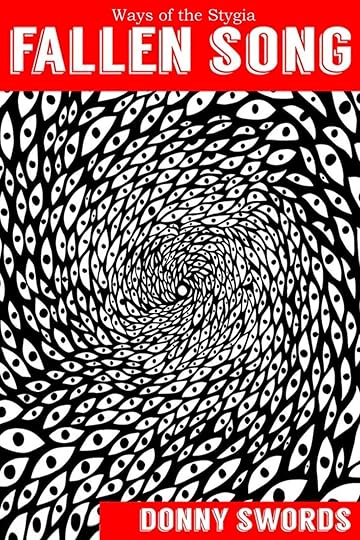 Ways of the Stygia- Fallen Song is available in print in two different editions, The Author’s Cut, featuring Shardel’s artwork and the full revised novel. The Amazon Prime Edition features Justin Harris’s artwork, the revised novel, & a sample of Ways of the Stygia Cult of Morgod. Both editions of Fallen Song look stupendous inside and out.
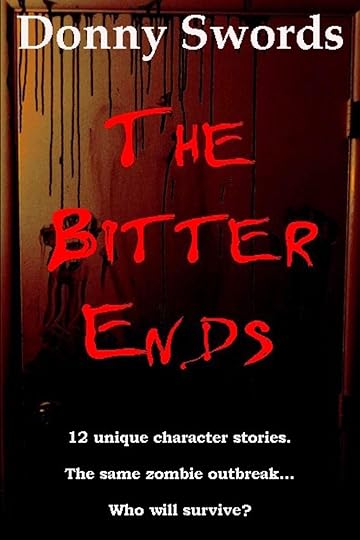 The Bitter Ends is out in print as well. I am so proud of this novel. It has done better in the past two months, but that is not why. It is a fine read, one of my best & the print edition looks and reads amazing.
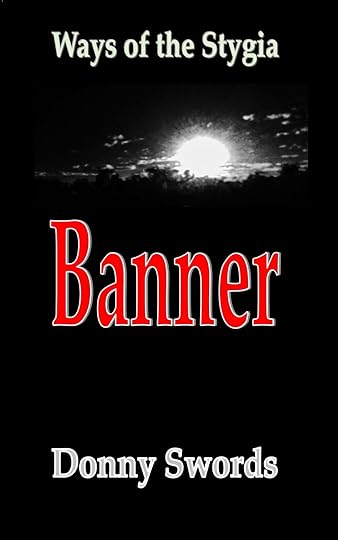 Today I received print copies of my character novella, Ways of the Stygia- Banner. It is a dream. The cover is very eye catching and the interior is gorgeous. The main story is an easy read, providing a different take on the WotS universe. Links are provided within this article, but if you want a signed copy of any of my novels please contact primalpublications@gmail.com.
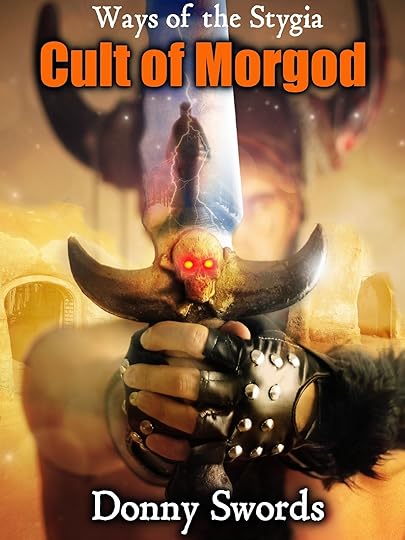 It's coming i swear--->
The Bitter Ends (signed) $10 + shippingWays of the Stygia- Banner (signed) $6.00 + shippingWays of the Stygia- Fallen Song/Author’s Cut (signed) $15.00 + shippingWays of the Stygia- Fallen Song/Amazon Prime Edition $15.00 + shippingPrimal Publications accepts paypal payments or cash via US mail.
Ways of the Stygia- Cult of Morgod, will be available in August or early September. I know I keep saying its coming, and it is, I have just had so much work to finish.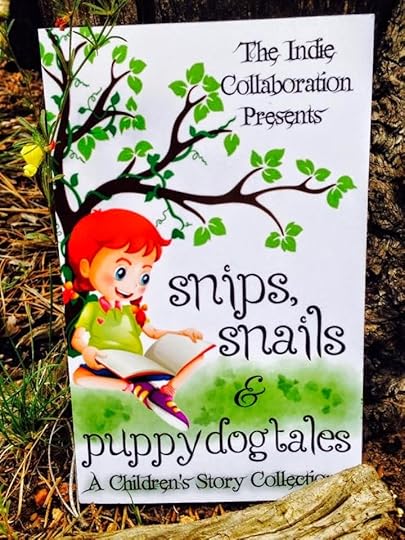 My work with The Indie Collaborationhas turned into a fun venture. I took part in the children’s book
Snips, Snails, & Puppy Dog Tales,
and the adult fiction offering
Summer Shorts
. These stories are free for all devices on Smashwords. I have four more stories planned to release over two volumes for
The Indie Collaboration
, including Tales from Darker Places- the follow up to the well-received
Dark Places
, which I will be editing/producing with a little help from my friends. So that nearly covers what’s out there. Much more is on its way, including a mountain of new Ways of the Stygia novellas, divided into four series/categories, Characters, Barrens, Haven, & Covens. I found that the sequel to Fallen Song faced too many plotlines to make a great, detailed novel, so I have divided those story threads into Barrens, Haven, & Covens. These books will feature characters from all the Ways of the Stygia novels- I’m stoked. I am working on The Bitter Ends- Other Side of Town now, along with getting Morgod ready for print, and writing Ways of the Stygia/Barrens-Beyond Sistinal.Well that’s everything- sort of. I will try to be more faithful to my blog posting in the future, thanks for reading this article. If you would like to review my work, drop me a message through Facebook, I might have a print copy or two to offer you.
My work with The Indie Collaborationhas turned into a fun venture. I took part in the children’s book
Snips, Snails, & Puppy Dog Tales,
and the adult fiction offering
Summer Shorts
. These stories are free for all devices on Smashwords. I have four more stories planned to release over two volumes for
The Indie Collaboration
, including Tales from Darker Places- the follow up to the well-received
Dark Places
, which I will be editing/producing with a little help from my friends. So that nearly covers what’s out there. Much more is on its way, including a mountain of new Ways of the Stygia novellas, divided into four series/categories, Characters, Barrens, Haven, & Covens. I found that the sequel to Fallen Song faced too many plotlines to make a great, detailed novel, so I have divided those story threads into Barrens, Haven, & Covens. These books will feature characters from all the Ways of the Stygia novels- I’m stoked. I am working on The Bitter Ends- Other Side of Town now, along with getting Morgod ready for print, and writing Ways of the Stygia/Barrens-Beyond Sistinal.Well that’s everything- sort of. I will try to be more faithful to my blog posting in the future, thanks for reading this article. If you would like to review my work, drop me a message through Facebook, I might have a print copy or two to offer you.
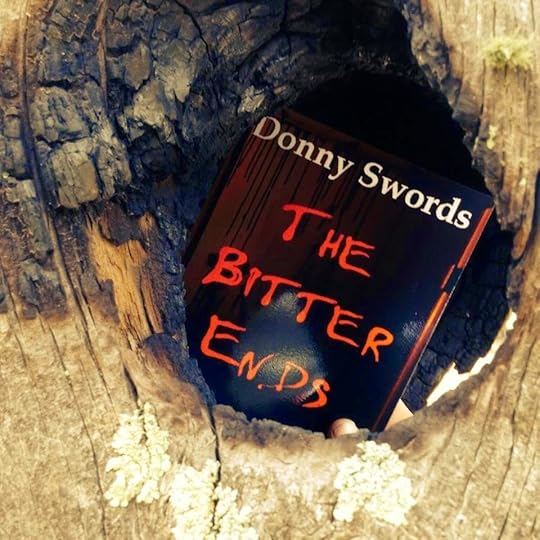 Thanks, I love you all-
Donny Swords
Donny Swords Product Links:
Amazon (Print editions- eBooks)Barnes & Noble (Print editions- eBooks)Lulu (Bitter Ends eBook)Kobo (.99 eBooks)
 What’s happening Donny Swords?
Everything. Life has been as full of ups and downs as my book sales- maybe a tad thrifty on the ups. Jen and I have found a temporary home, which has translated into a nightmarish experience. It seems our unscrupulous management here at Meadow Glenn Apartments in sunny Glendale, Arizona have no interest in disclosing that the building a tenant is about to move into is infested with roaches and bed bugs. At present, we are debating throwing our bed frame out, and I have not had 2 decent nights’ worth of sleep in a row. They have “treated” the bugs several times, but I am still seeing them.

+(538x750).png) That’s the bad stuff. There has been a bunch of good stuff too. Here’s some of the highlights- Jen Herring and I are now working hard at Primal Publications to put all my writing out in the best possible eBook & Print editions we can muster.
That’s the bad stuff. There has been a bunch of good stuff too. Here’s some of the highlights- Jen Herring and I are now working hard at Primal Publications to put all my writing out in the best possible eBook & Print editions we can muster.I have finished writing The Vampire Faus- Dragon Stone, and Jen has completed her edit, after I proofread it a final time, I will send it over to Janet Morris @ Perseid Press for her consideration.
.jpg) Ways of the Stygia- Fallen Song is available in print in two different editions, The Author’s Cut, featuring Shardel’s artwork and the full revised novel. The Amazon Prime Edition features Justin Harris’s artwork, the revised novel, & a sample of Ways of the Stygia Cult of Morgod. Both editions of Fallen Song look stupendous inside and out.
Ways of the Stygia- Fallen Song is available in print in two different editions, The Author’s Cut, featuring Shardel’s artwork and the full revised novel. The Amazon Prime Edition features Justin Harris’s artwork, the revised novel, & a sample of Ways of the Stygia Cult of Morgod. Both editions of Fallen Song look stupendous inside and out. 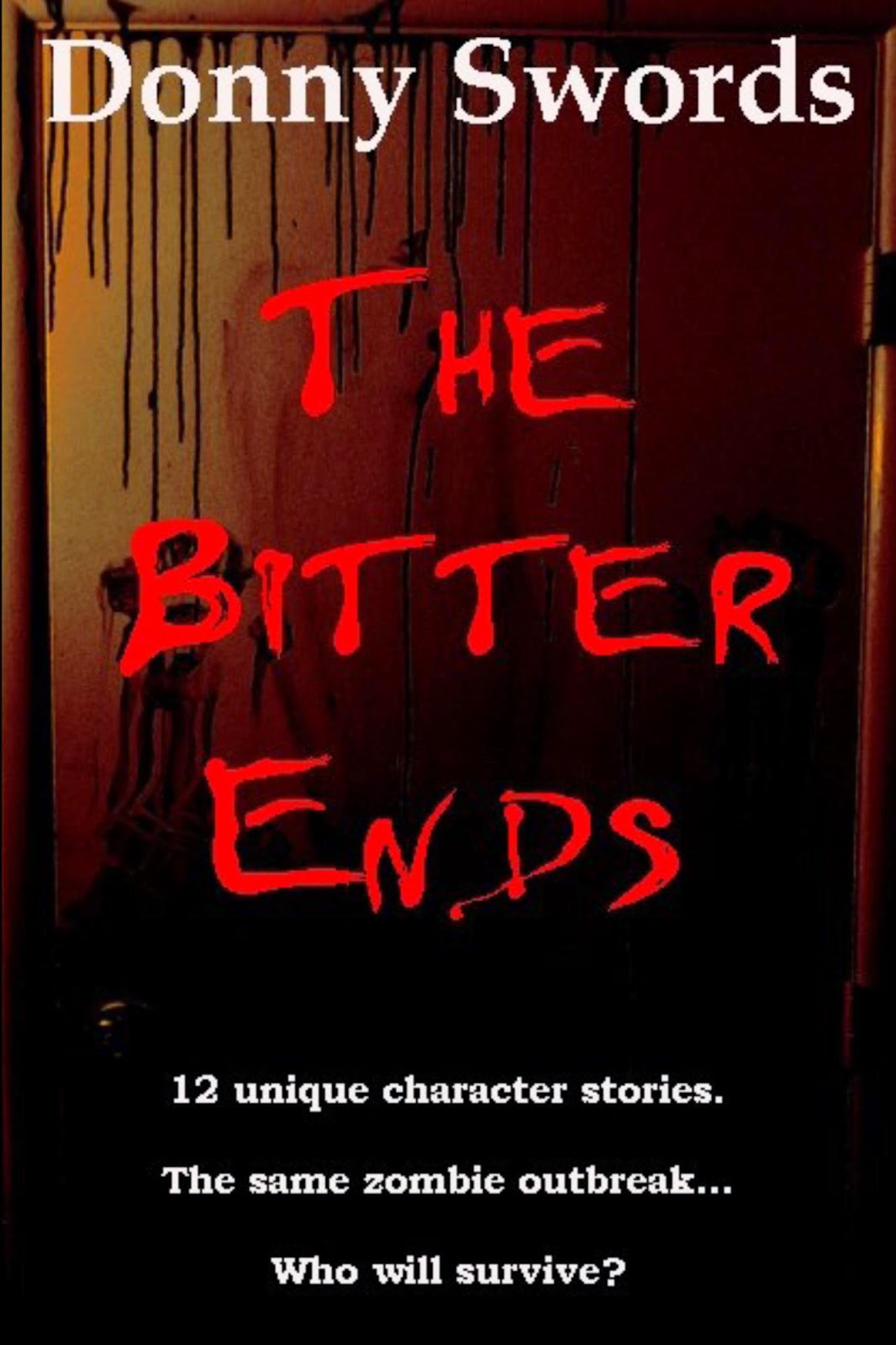 The Bitter Ends is out in print as well. I am so proud of this novel. It has done better in the past two months, but that is not why. It is a fine read, one of my best & the print edition looks and reads amazing.
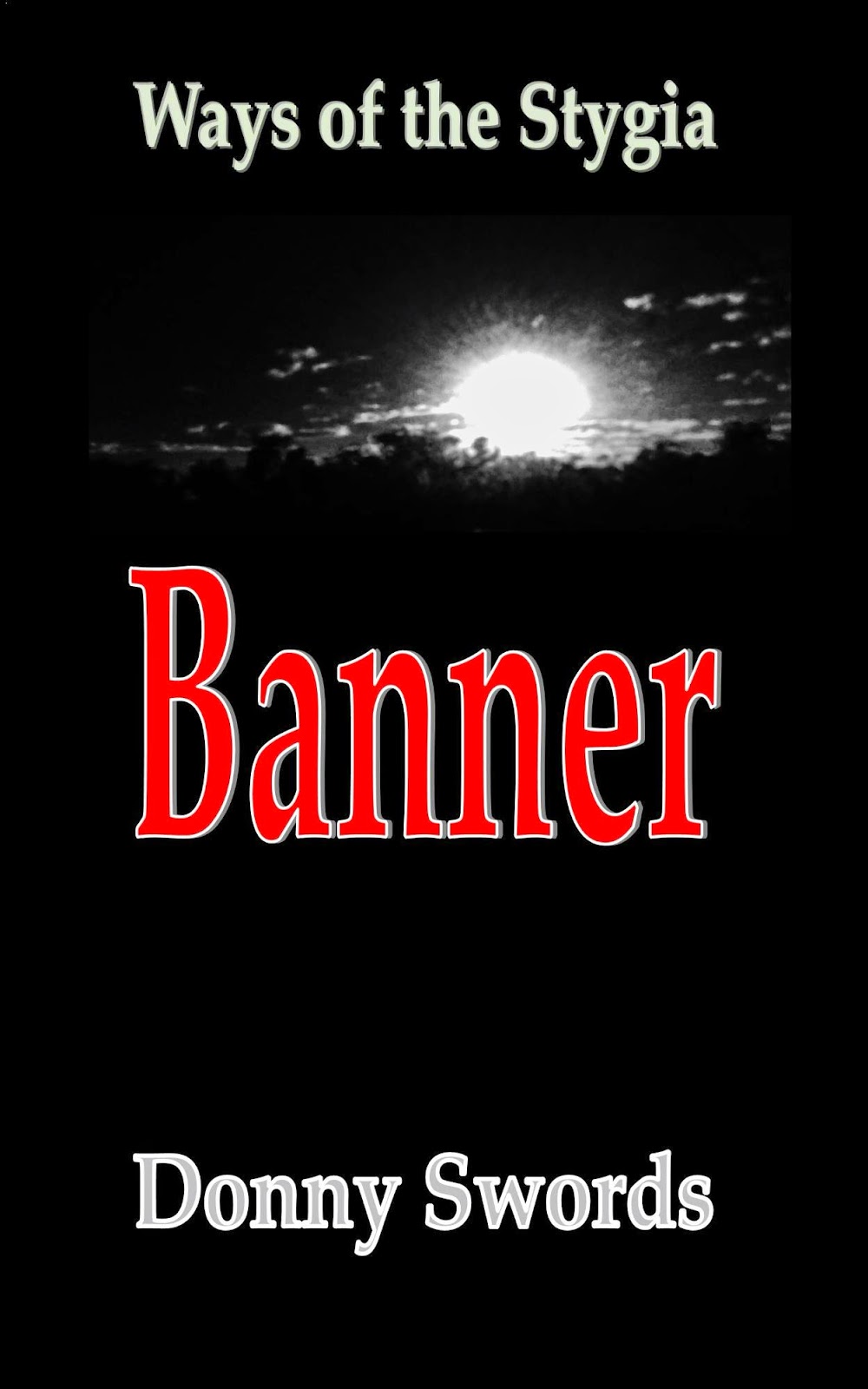 Today I received print copies of my character novella, Ways of the Stygia- Banner. It is a dream. The cover is very eye catching and the interior is gorgeous. The main story is an easy read, providing a different take on the WotS universe. Links are provided within this article, but if you want a signed copy of any of my novels please contact primalpublications@gmail.com.
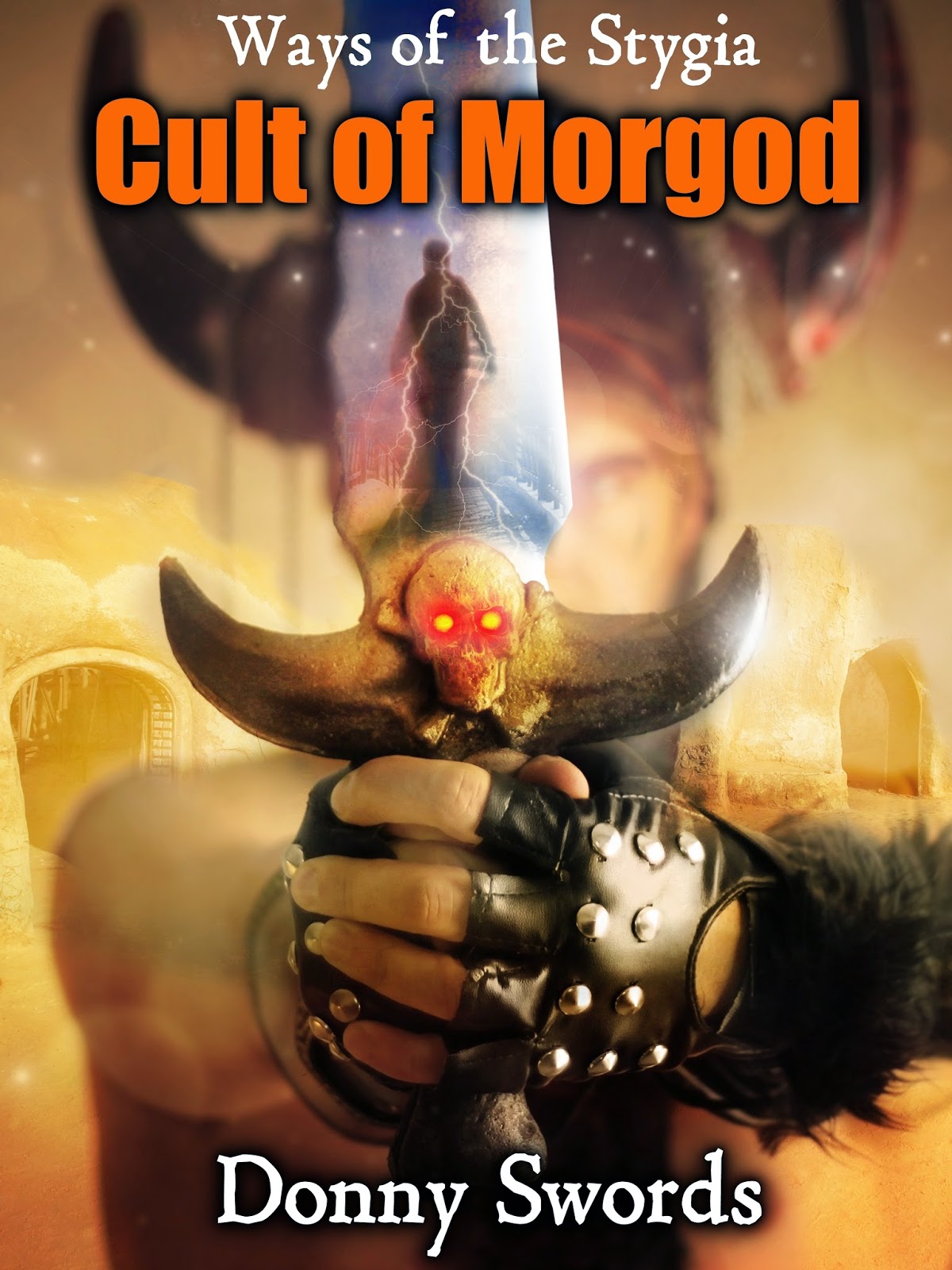 It's coming i swear--->
The Bitter Ends (signed) $10 + shippingWays of the Stygia- Banner (signed) $6.00 + shippingWays of the Stygia- Fallen Song/Author’s Cut (signed) $15.00 + shippingWays of the Stygia- Fallen Song/Amazon Prime Edition $15.00 + shippingPrimal Publications accepts paypal payments or cash via US mail.
Ways of the Stygia- Cult of Morgod, will be available in August or early September. I know I keep saying its coming, and it is, I have just had so much work to finish.
.jpg) My work with The Indie Collaborationhas turned into a fun venture. I took part in the children’s book
Snips, Snails, & Puppy Dog Tales,
and the adult fiction offering
Summer Shorts
. These stories are free for all devices on Smashwords. I have four more stories planned to release over two volumes for
The Indie Collaboration
, including Tales from Darker Places- the follow up to the well-received
Dark Places
, which I will be editing/producing with a little help from my friends. So that nearly covers what’s out there. Much more is on its way, including a mountain of new Ways of the Stygia novellas, divided into four series/categories, Characters, Barrens, Haven, & Covens. I found that the sequel to Fallen Song faced too many plotlines to make a great, detailed novel, so I have divided those story threads into Barrens, Haven, & Covens. These books will feature characters from all the Ways of the Stygia novels- I’m stoked. I am working on The Bitter Ends- Other Side of Town now, along with getting Morgod ready for print, and writing Ways of the Stygia/Barrens-Beyond Sistinal.Well that’s everything- sort of. I will try to be more faithful to my blog posting in the future, thanks for reading this article. If you would like to review my work, drop me a message through Facebook, I might have a print copy or two to offer you.
My work with The Indie Collaborationhas turned into a fun venture. I took part in the children’s book
Snips, Snails, & Puppy Dog Tales,
and the adult fiction offering
Summer Shorts
. These stories are free for all devices on Smashwords. I have four more stories planned to release over two volumes for
The Indie Collaboration
, including Tales from Darker Places- the follow up to the well-received
Dark Places
, which I will be editing/producing with a little help from my friends. So that nearly covers what’s out there. Much more is on its way, including a mountain of new Ways of the Stygia novellas, divided into four series/categories, Characters, Barrens, Haven, & Covens. I found that the sequel to Fallen Song faced too many plotlines to make a great, detailed novel, so I have divided those story threads into Barrens, Haven, & Covens. These books will feature characters from all the Ways of the Stygia novels- I’m stoked. I am working on The Bitter Ends- Other Side of Town now, along with getting Morgod ready for print, and writing Ways of the Stygia/Barrens-Beyond Sistinal.Well that’s everything- sort of. I will try to be more faithful to my blog posting in the future, thanks for reading this article. If you would like to review my work, drop me a message through Facebook, I might have a print copy or two to offer you.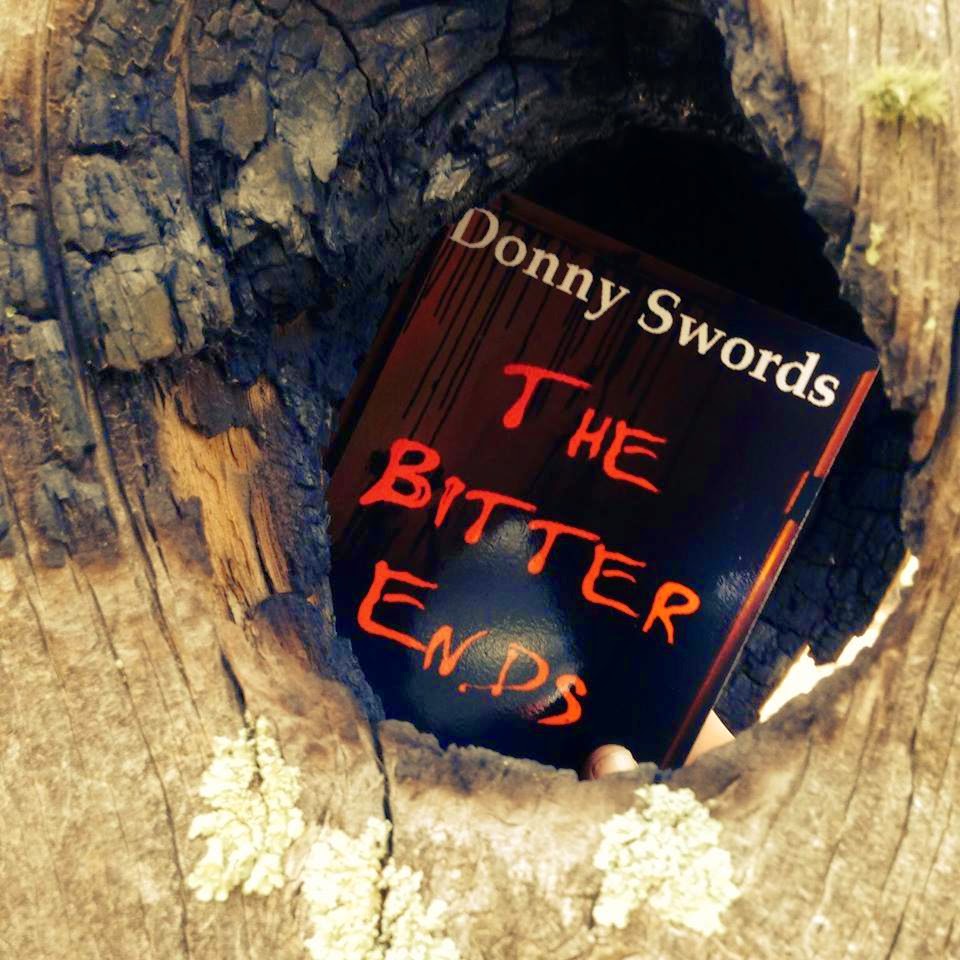 Thanks, I love you all-
Donny Swords
Donny Swords Product Links:
Amazon (Print editions- eBooks)Barnes & Noble (Print editions- eBooks)Lulu (Bitter Ends eBook)Kobo (.99 eBooks)
March 9, 2014
Interviews from the Void: Janet Morris
Interviews from the Void: Janet Morris
Greetings, Donny here:
T his interview is a dream come true for me. Janet Morris is here to answer some questions from the Void. Janet has been an author since the early 70’s and has inspired many authors with her prolific prose since her first series, “Silistra.” She is infamous for her contributions to “Thieves World” has written novels that live and breathe better than humans do, spanning across genres with a masterful skill unparalleled by most, and unlike any. Her recent novel “Outpassage” is receiving avid praise, while her “Sacred Band of Stepsons” series continues to prove that well-told tales of heroes, deities, love, war and steel do not have to be tired attempts to copy greats like Robert E. Howard, rather she takes off where he left off… And this is not all, Janet has written historical fiction that is as vivid as any story ever told as in her tale of the Hittite king, Suppiluliuma, “I, the Sun.”
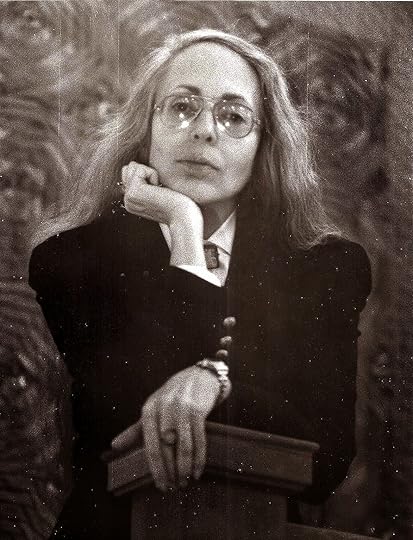 Janet, could you tell us about yourself?
Here is my Wikipedia bio. That’s the official story (grin). That bibliography is a “select” one, it isn’t all inclusive, but it has most of the novels listed, some of the short fiction, and a bit of the nonfiction.
Janet Morris Quotes Ranker
The beginning of your career began with the Silistra series. How did this come about?
Silistra actually began with dissatisfaction: I couldn’t find the book I wanted to read in any store. There wasn’t much written about women in science fiction that wasn’t “woman’s movement” diatribe or immature, or both. I had been reading Edward O. Wilson’s “Sociobiology, a New Synthesis” and become intrigued with the impact that genetics might have on behavior and culture. So I wrote the book I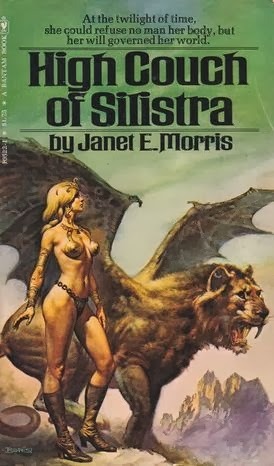 wanted to read, “High Couch of Silistra,” and shared it in single-space with my friends. The heroine, Estri, is a courtesan of renown in a world where reproduction is the most important goal because misuse of science has had adverse effects on population. Given that premise, this book tackled sexual roles and hard-wired behaviors and the negatives and positives of unbridled power: in Silistra, the saying goes, “We are all bound, the greatest as much as the weakest.” Sex roles were different, society was different; the book was science fantasy and unabashedly erotic. And different: full of hard questions about ethics, emotions, and based on the heroic model, but with a female taking the role of hero, but doing so differently – as a woman, sometimes as a picara, not as a man in a girl-suit. My friends loved it. So did I. They, and I, wanted to read more, so then I wrote “The Golden Sword,”
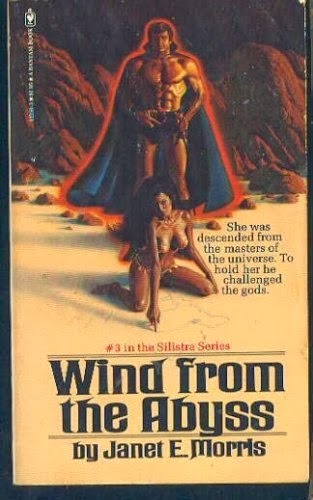 “Wind from the Abyss,” and “The Carnelian Throne,” still circulating the one extant single-spaced copy of each. Many of my works, looking back, begin with a similar longing to read something that isn’t available. I knew nothing about the book business, had no friends who were writers; I was playing music in my husband’s fusion band and writing song lyrics. One of my friends said she knew a literary agent and offered to send the book to the agent if I’d have it properly typed. This was expensive, and so it took perhaps a year for me to pay to have High Couch typed. The agent who first read High Couch was Perry Knowlton, president of Curtis Brown, Ltd. He called me and we agreed he would represent not only High Couch, but the entire Silistra series. He sold them to Bantam and that gave me money enough to quit my day job. I stayed with Perry Knowlton until his death, and still have titles with Curtis Brown, Ltd, now under his son Tim’s stewardship.
Your current novel is “ Outpassage .” It seems to be an intelligent return to good old, Sci-fi, the kind that has been missing for decades. What inspired the story?
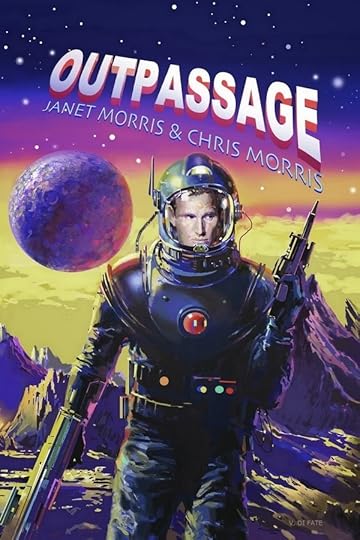 I always write the book I want to read, and I wanted to read “Outpassage.” I missed the adventure tales I had read as a youngster; I missed good old-fashioned sf: the excitement, the pacing, the meld of fact and fiction, the pure fun of space adventure. I couldn’t find solid adventure stories among new books being published. “Outpassage” is an experiment in pacing, character, and structure: very lean prose, very fast-paced, with a metaphysical core, but using vocabulary appropriate to the story’s protagonists. “Outpassage” is paced somewhat like a movie: lots of dialogue, a storyline that owes as much to nineteenth-century adventure novels such as “Robinson Crusoe” as to sf or heroica; strong characters from different strata of society who define themselves by words and actions. I loved writing Det Cox and Paige Barnett. I loved creating Frickey, the female Ranger – even today, women can’t get into Ranger school, but in our story, a female Ranger is plausible. The book also allows me to talk about prejudice, about corporate and government collusion, about humans meeting an alien presence that makes earthly science seem like flat-earth pipedreams. I had a great time writing this one; we’ll do another one of these, we think.
Outpassage trailer Buy: Outpassage trade paperback/kindle Buy: Outpassage @ Barnes and Noble
I recently read “ Beyond Sanctuary: The Sacred Band of Stepson’s – Author’s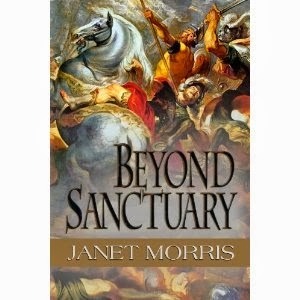 Cut Edition
.” You created a moving, viable world, with characters that I believed in. I will not ask if you believe in them too. From the outset, this was apparent; no one could create such magnificent breathing personalities without feeling at least a smidgeon the same as they did. When you write, are you living that world? For instance, when your characters cry, do you sometimes brush away a tear or two of your own?
Cut Edition
.” You created a moving, viable world, with characters that I believed in. I will not ask if you believe in them too. From the outset, this was apparent; no one could create such magnificent breathing personalities without feeling at least a smidgeon the same as they did. When you write, are you living that world? For instance, when your characters cry, do you sometimes brush away a tear or two of your own?
The Sacred Band consumes me when I write their stories. For me, they are supernatural, and the process of writing them is exhausting: one surrenders to these plotlines, rather than constructs them. I laugh with them, cry with them; when my editor/husband reads the draft out loud, if they’re in the midst of tragedy, I can hear the tears in his voice. With the exception of “I, the Sun,” their books are my favorites because they transport me completely into a world as real as this one.
Wikipedia Sacred Band of Stepsons page Buy: Sacred Band Kindle and Amazon Trade Paperback
Buy: Sacred Band hardback, trade paperback, Nook on B&N Beyond Sanctuary series trailer
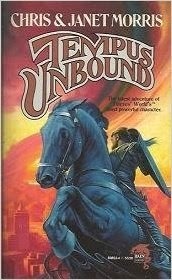 It is not an easy thing to make me love a character as much as I did Tempus Thales or Niko. I imagine them being quite demanding to their author. Do you find it difficult to put them aside to work on other projects?
When Tempus wants a book or story, eventually I give in and write it. I had done everything but confront the issue of the Sacred Band of Thebes. I didn’t want to write the historical tale of their obliteration: too sad. But finally, having created my own Sacred Band of Stepsons and lived with that set of truths for many years, Tempus convinced me we could rescue the twenty three pairs whose skeletons are missing from SBT’s mass grave at Chaeronea. So began The Sacred Band, the best of the Stepson novels, the most demanding, which begins August 2nd, 338 BCE, the night before the historic Battle of Chaeronea. Mixing this much history with myth and fantasy is demanding, so I had avoided it for many years. I couldn’t write around it: if I was going to write more with Tempus and Niko, this was the next book. And so Chris and I wrote it, to please Tempus, the Band, and the gods.
Sacred Band Ethos quotes Sacred Band music/book video sacredbander.com
I am fascinated with world history. When I discovered that you are too, I felt as if you were a godsend, an inspiration. I read that you went through deep research to write “I, the Sun.” Could you tell us about it?
“I, the Sun” was conceived when I read part of the Annals of Suppiluliumas I, in the mid 1970s, after I’d sold Silistra. Some of the texts were in first person; some supposedly written by his son, Mursili. But Suppiluliumas grabbed me by the throat and wouldn’t let go. There was no internet then; no easy way to get the necessary information to write a biographical novel of the (then) nearly forgotten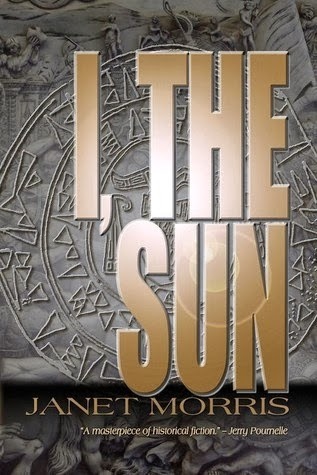 Hittite king. Research was difficult and costly. I took the money I’d made with Silistra and hired Calvert Watkins, professor emeritus of linguistics and classics at Harvard, to give me tutorials as needed, answer questions, provide a short course, reference materials (and translate some tablets previously unread that dealt with sorcery, since I needed that element for my story). I still have some of his translations done specifically for me, in pencil on lined paper. I used and still prefer the long chronology, and Kitchen’s relative chronology, “Suppiluliuma and the Amarna Pharaohs” was my bible. “I, the Sun” took several years to complete; in the middle of it I sold the Dream Dancer series before I wrote it, to keep the money flowing. But the story of Suppiluliumas is like no other. Not only did I have his own words, I had diplomatic correspondence from the Amarna letters; I had a conquering hero that puts fiction heroes to shame, from ancient times until modern. In a way, I had a lover – though my husband didn’t mind. I have considered doing the obvious sequel to “I, the Sun,” but to watch his sons struggle to become half of what their father was – I haven’t the heart for some of what would need to be in that book. I might yet write Muwatalli and the Battle of Kadesh, since his grandson did in some ways fulfill Suppiluliumas’ design. We’ll see. “I, the Sun” taught me so much about kingship and the gods, about international diplomacy in ancient times, and about love in the midst of war, I credit this book as having generated Tempus, another Favorite of the Storm-god, and my Sacred Band. I needed a new hero when “I, the Sun” was finished, but what was I to do? I had just chronicled one of the greatest ancient heroes who ever lived. It wasn’t a far step to mix together what “I, the Sun” taught me, plus mythology and fantasy… As Tempus and Herakleitos say: everything flows.
Suppiluliuma I Wiki Buy: I, the Sun trade paperback Nook on B&N Buy on: Amazon & Kindle
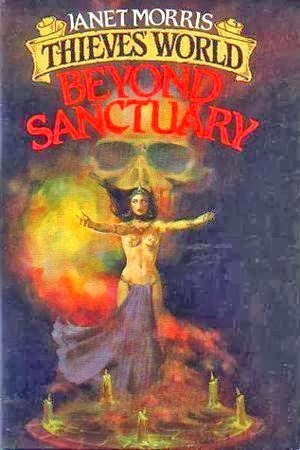 Why do you write?
I cannot fail to write. I can choose not to publish, which I did with only one book, but I must write. My body needs to write; my mind needs to solve; my heart needs to beat; I need to see three-hundred sixty degrees of my story. In story is wisdom: it is our species’ way of transferring what we can share about the human condition – the only condition we ever truly know, but cannot easily understand.
When you write a story or novel, do you keep the word count in mind? I have written many pieces to order; these often have a word requirement: up to 15K words; 10K words or under; a thousand words for an op/ed. I have accepted a number of book contracts before the books were written, which specified not more than 100K, or some other specific length. If I know that I am pacing for a market or a contract that has a word cap, I want the first plot turn to occur about ten per cent in; I try to minimize the middle and have the catastasis start about seventy-five per cent in. At this point in my career, something inside me deals with the issues of length and story elements. If I commit to a length, once I have a reasonable idea of what must be in that story, I can write that length without much thinking about length as a factor: only so much story will fit in so many pages.
Do you start with an outline? Or do you just wing it?
I resist writing formal outlines: they suck the life out of stories. I have done it, once or twice, when selling a trilogy, with the understanding that if the book went another way, I would throw out the outline and the editor would be content with a book that breathed better than an outline could predict. However, I spend more time organizing the book before I write than do many who construct formal outlines: I define my characters; my settings; my historical, scientific, or mythical referents, if any; I know where my story will begin and end and how – and I know what the point of the story is; why I am telling that tale. Since my work requires characters who come to life, I let them do that, and get from point to required point howsoever they decide. “I, the Sun” was my greatest challenge in that regard: the historical battles are mapped, a good bit of my subject’s history known (more now, even, than when I wrote “I, the Sun”), and some events occurred at specific times relative to other events in other empires of the day. In that book, I really learned to work with givens and keep freshness, and use that outlining style to this day, to the extent that I have one: in each section, not simply in the book, I decide what must happen, what must be foreshadowed, what must climax, and make it so. The rest I leave to my muse and the characters who inhabit me.
Your “ Hell Series ” is a shared universe that is a collaboration with other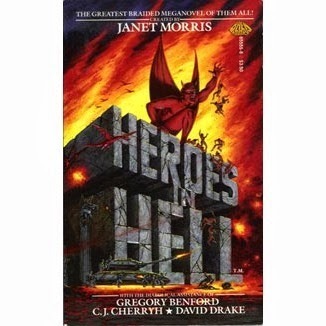 authors, how does this work?
“Heroes in Hell” (HIH)is a shared universe, as well as the title of the first book in that anthology series. HIH worked differently in the 20th century than it does in the 21st, because now we have a secret FaceBook group where authors can exchange ideas, arrange plot hand-offs and tight collaborations, and share portions of ongoing draft works. I give the writers a long arc, a medium arc, and a choice of shorter arcs for each volume. They write and post to the group a two or three line synopsis; before they are permitted to write. They request the use of characters from my character pool, or ask to start new characters. All characters who come to my Hell stay in my Hell, and can be used by other writers if I choose. So once characters are requested, they are approved or denied by me: characters must be legendary, mythical, or historical; characters must be dead and have died before 1900, except by special permission. They cannot use other writers’ fictional characters or milieus. In 20th century Hell books, we allowed some use of more contemporary characters, but seldom allow it now. In the 20th century, a phone call or two was used to define who would write what; now we can collaborate much more closely. Chris Morris and I write two or three short stories for each volume, sometimes to act as guide stories if a new arc is being introduced, but sometimes we write later if we need to see what the writers have done in order to make sure the book has a strong beginning and ending. The volume currently in preparation for 2014 is “Poets in Hell”; after Poets comes Doctors.
Buy: Lawyers in Hell trade paperback/nook hardcover/trade paperback/Kindle Watch Trailer/LIH
Buy: Rogues in Hell trade paperback/nook trade paperback/Kindle
Buy: Dreamers in Hell trade paperback/B&N Nook trade paperback/Kindle
Since you began as a published author, how have things changed?
Let’s see: electric typewriters; computers; word processors; fax machines;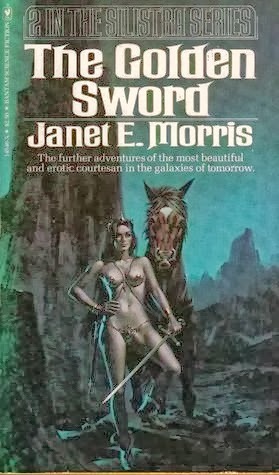 conference calls; internet; video tie-ins; gaming; e-books… just a bit different, today. There are good changes: a vast array of source materials and classical works at one’s disposal; books coming back into print and electronic publishing formats. There are many disturbing trends toward the bottom of the markets, but there have always been those. When I get disgusted, I reread Henry James’ preface to “The Figure in the Carpet”: James coined the term ‘trash triumphant’ at the end of the 19th century, and he reassures me that no matter how much things change, they stay the same. There may be more room for the good book today, but perhaps less room for the great. The biggest issue for everyone involved in contemporary publishing is the rise of the illiterati: the arrogant and uneducated who insist that the uninformed opinion have equal value to the informed opinion. Although these folk always have been around, they are an ever-present danger, even going so far as to single out words or thoughts as unacceptable.
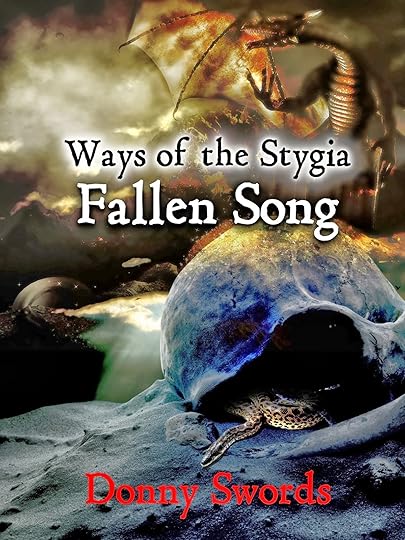 As a self-published author, I have my limitations, especially where it comes to marketing. What do you do to help get your novels into first the hands, then the minds and hearts of readers?
Anyone who can answer that question and be correct could dominate publishing. One tries to make people aware of a particular title, and attempts to get the book wide visibility. People have always striven to make their books stand out. Now we have better than seven billion people, and one response to the need to find a market seems to be genre-fictation, which labeling we abhor. I think the writer should do some internet time, be accessible if they dare. Since my books have long pedigrees, it’s easier to get people to look at my work than, for example, to look at some of the younger writers we’re publishing. But we are publishing these writers for a reason: to help them reach readers. We hope this will become increasingly apparent, and people will agree that these writers should be read. We are trying various online publicity houses, testing the waters, to support these goals but really it is the satisfied reader who sells your books for you.
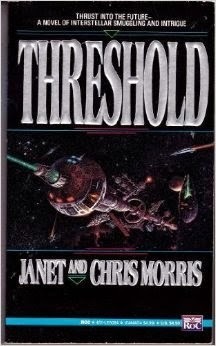 You and your husband Chris are a team, how does that dynamic play out when you are developing a novel? When it is underway?
We talk about everything before, during, and after. I type the first draft; he reads that draft aloud; we add or remove or change text or elements. We do this several times for each section, each day’s work. We try for transparency, total immersion in character and story. We get that by extremely close collaboration, sometimes spending a half hour on one important sentence. We’ve been doing this together for so long I no longer know who wrote what final line or chose what word. Or care.
Who are your favorite authors?
Homer, Hesiod, Sappho, Thales, Heraclitus, Anaximander, Euripides, Xenophon, Virgil, Seneca, Marcus Aurelius, Plato, Plutarch. Marlowe, Shakespeare, Spenser. Hawthorne. The Shelleys. Byron. T.E. Lawrence. Henry James, Evelyn Waugh, P.G. Wodehouse, Marguerite Yourcenar. Jules Verne, Daniel DeFoe, H. Rider Haggard, Joseph Conrad, C.S. Lewis, George Orwell, Harold Bloom.
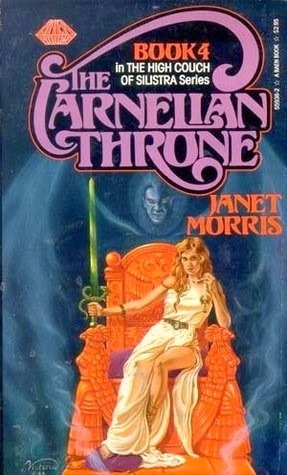 Tell us about your publishing house.
Our house is The Perseid Press (theperseidpress.com). Our main mission is to publish books for experienced readers, books worth reading; our books are literate but not necessarily literary, and have the edge that purpose brings: we hope people give us serious consideration who want a book with substance, no matter the genre.
Perseid Press video Perseid Press Website
In “ Nine Heroes ” you introduced us to Rhesos. You mentioned in one of our chats that you are working on a full novel starring your new hero. What would you like to share with us about Rhesos and the new novel?
Rhesos…. When I did a charity story for a book called “Nine Heroes” recently, by the time I was a thousand words into the story I admitted to myself that I had a much bigger fish on my hook than the 5K words desired could contain. I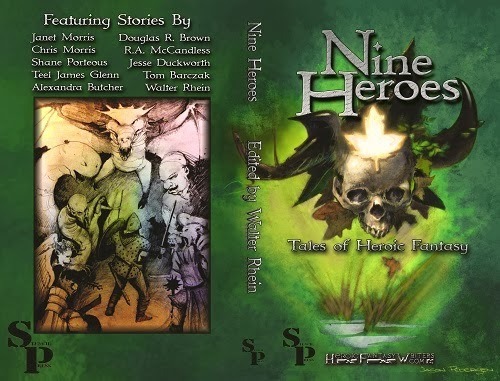 have long loved this mythic person and “Nine Heroes” gave me a chance to see if Rhesos and I could connect, with one eye on the short story and one eye on a longer work. So I wrote the story, “Black Sword,” as a first section for a new novel in such a way that it would serve as an heroic short story. However, doing this created a style for the book to come, with a special sort of pacing: the story begins a novel, but the novel treats its elements in somewhat the same form that the short piece accomplished, at least for the first draft. Rhesos, according to the Iliad and to Euripides “Rhesus,” was the reason Athene urged the night hunt upon Odysseus and Diomedes in the “Iliad”: omens predicted that if Rhesos came to Ilion (Troy) and pastured his horses there and drank from the Scamander, then the Trojans would win their war. In the Rhesus by Euripides, as myths will, the threat is told differently: I used this quote from Euripides (Richmond Lattimore, trans) to begin my story:
Athena to Diomedes and Odysseus: Where are you going? Why do you leave the Trojan camp biting your very hearts for disappointed spite because the god will not allow you to kill their Hector or their Paris? Have you not heard of the ally Rhesus, who has come to Troy in no mean circumstance? For if he survives this night and is alive tomorrow, not even Achilles, and not Ajax with his spear, can keep him from destroying all the Argive fleet, smashing, demolishing your walls and storming in to fight with level spears. Kill him, and all is won. ––Euripides, Rhesus; Richmond Lattimore, translator.
N ow since the best date for Odysseus’ return to Ithaca is April 16, 1178 BCE, an approximate date for this night hunt is possible. But no date shows you the quality or the nature of this hero, Rhesos: that is where story comes in. I’ve long wanted to tell his story, someday, but it requires great command of the detail that has been left to us. And yet, think of it: a hero so powerful that not Akhilleos nor any of the Argives could best him, if the fight was fair; so much a threat that Athene herself contrives his murder; a youngling king who could have changed the result of the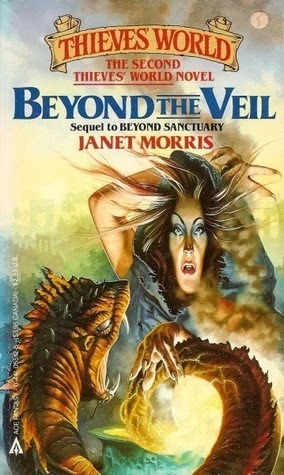 Trojan War, had Pallas Athene not interfered. A hero-cult develops around him, much later, but we’ll get to that as the tale plays out. His story is fascinating when all the divergent myths and what history we know are taken into account. Rhesos is a demigod, son of Strymon the river god and the Muse Kalliope. By the time our story opens, he’s long ago been murdered by Diomedes and reanimated at his mother’s demand – yet imprisoned in exchange for resurrection. He has spent many years in the silver-veined caves of Rhodope. So we’ll tell this story of the reborn hero Rhesos, long after his murder, about the hero lost and the hero still to come. In Rhesos of Thrace, we’re treating myth as history and history as novel, and we have a character who not only inspires a hero-cult, but draws to him famous females of mythos: Salmakis the fountain nymph; Theano, priestess of Pallas Athene; Tisiphone the Erinys; Pallas Athene herself; Kalliope the Muse, and, in flashbacks, his beloved hunting partner, Arganthone of Kios. The story of Rhesos and Arganthone itself could have made a wonderful novel. I chose a bigger canvas for this storied hero; it’s a tale to test a writer’s mettle.
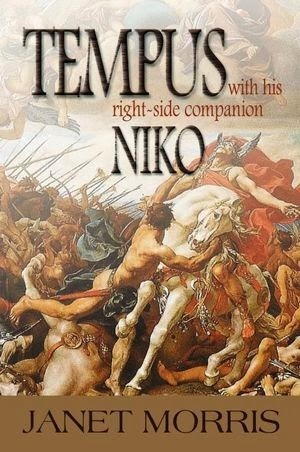 What inspires you?
The human condition. Nature. Animals. Song. Mythopoeic thought. Philosophy. History. Life, really.
For readers new to your novels, which three would you recommend?
“I, the Sun.” “The Sacred Band.” “Outpassage.”
If you could make one statement to potential readers to convince them to hop aboard and to read your work, what would you say?
Like no others, we write a door and take you through it, into pleasure and pathos and passion, worlds away.
How important are reviews to you? For marketing? For sales?
Reviews mean both more and less now than they did in the 20th century, so far as Author's Cut Editions, better than ever, Exclusive content!the greater publishing industry goes. I love getting a perceptive review. I like the idea of reader reviews, although I am aware that the purpose can be twisted and fakery abounds. But fakery and purposeful twisting existed in the 20th century as well. So, really, what is the difference? I’ve had good Kirkus and Publishers Weekly and Library Journal reviews when that mattered, and standards were different. As for the genre press reviews: we don’t fit in any genre, ever, so those reviewers were never comfortable with us, years ago. Now, with a broader group of reviewers, we’re finding a more comfortable place among those who still read for pleasure. The reader reviews are interesting, and the blogger reviews, because the reviewers are self-selecting. I’ve considered putting some reader reviews or blogger reviews on ‘praise’ pages in certain books, since these are surely as honest as anything from previous times.
 Someone will do so, soon enough, if we don’t. So far as sales: sales by word of mouth are the best result, and reader reviews may actually be a way of doing that. What’s left of pro-publishing reviews are suspect with good reason: those reviews are, after all, paid through subscription to the reviewing publications. The online magazine reviewers and blog reviewers, in general, are even more interesting yet, since these online entities often take a specific portion of the market as their own: knowing their audience, they are able to better satisfy their reading public; some of the reviews I like best have come from places such as Black Gate, which have reviewers deeply literate in their area of specialty. As for what drives sales, we put our efforts to drive sales into two things: manuscripts that are well produced in trade paper and as e-books; covers of quality that represent the story they enwrap and are respectful of it. Volume sales, such as we were accustomed to in the 20th century, exist, but no formula except broad exposure of a title is apparently working. We’d dearly love to have a worldwide bestseller in the 21st century – but for the books we like, to an audience who can appreciate those books; we’ll not publish a book we don’t like for a market segment we don’t respect because we think some book will sell well. This will probably keep us a small independent publisher for a long time, but it allows us to do projects such as we’ve discussed above, and do them with respect for individual works and authors. That is, or should be, what publishing is about.
I would like to thank Janet Morris not only for taking the time to be interviewed by the Void, but also for her notable contributions to writing and the world at large. And a very special thanks to Chris Morris for taking the time to edit this interview. It is my hope that he will come on The Void soon for his own interview, as his contributions are just as notable and deserve their own interview time.
I hope you enjoyed the interview,
I love you all,
Donny Swords
Buy: The Bitter Ends Buy: Ways of the Stygia-Fallen Song Like my Author page on Facebook
Visit: Ways of the Stygia- Donny Swords: Visit: The Bitter Ends on Facebook
Next Time:
Tom Barczak: Author of “Veil of the Dragon” and the “Evarun series”
 About Tom- taken from his Amazon author page: My background is an Artist, turned Architect, who's finally getting around to finishing those stories I started writing long ago, when I sat on my front porch as a kid. I write because I can't not. I write because I want to finish the story that I started, in my paintings, in my poetry, and even before then, when I sat around a table with my friends, slaying dragons.
Veil of the Dragon Synopsis: Chaelus, Roan Lord of the House of Malius, is raised from the dead by the hand of a child. His kingdom stolen by the evil dragon, Gorond, Chaelus' only hope to reclaim his throne rests with the child knight who saved him, the heretical order to which the child belongs, and the truth about Chaelus that they alone protect.
Greetings, Donny here:
T his interview is a dream come true for me. Janet Morris is here to answer some questions from the Void. Janet has been an author since the early 70’s and has inspired many authors with her prolific prose since her first series, “Silistra.” She is infamous for her contributions to “Thieves World” has written novels that live and breathe better than humans do, spanning across genres with a masterful skill unparalleled by most, and unlike any. Her recent novel “Outpassage” is receiving avid praise, while her “Sacred Band of Stepsons” series continues to prove that well-told tales of heroes, deities, love, war and steel do not have to be tired attempts to copy greats like Robert E. Howard, rather she takes off where he left off… And this is not all, Janet has written historical fiction that is as vivid as any story ever told as in her tale of the Hittite king, Suppiluliuma, “I, the Sun.”
 Janet, could you tell us about yourself?
Here is my Wikipedia bio. That’s the official story (grin). That bibliography is a “select” one, it isn’t all inclusive, but it has most of the novels listed, some of the short fiction, and a bit of the nonfiction.
Janet Morris Quotes Ranker
The beginning of your career began with the Silistra series. How did this come about?
Silistra actually began with dissatisfaction: I couldn’t find the book I wanted to read in any store. There wasn’t much written about women in science fiction that wasn’t “woman’s movement” diatribe or immature, or both. I had been reading Edward O. Wilson’s “Sociobiology, a New Synthesis” and become intrigued with the impact that genetics might have on behavior and culture. So I wrote the book I
 wanted to read, “High Couch of Silistra,” and shared it in single-space with my friends. The heroine, Estri, is a courtesan of renown in a world where reproduction is the most important goal because misuse of science has had adverse effects on population. Given that premise, this book tackled sexual roles and hard-wired behaviors and the negatives and positives of unbridled power: in Silistra, the saying goes, “We are all bound, the greatest as much as the weakest.” Sex roles were different, society was different; the book was science fantasy and unabashedly erotic. And different: full of hard questions about ethics, emotions, and based on the heroic model, but with a female taking the role of hero, but doing so differently – as a woman, sometimes as a picara, not as a man in a girl-suit. My friends loved it. So did I. They, and I, wanted to read more, so then I wrote “The Golden Sword,”
  “Wind from the Abyss,” and “The Carnelian Throne,” still circulating the one extant single-spaced copy of each. Many of my works, looking back, begin with a similar longing to read something that isn’t available. I knew nothing about the book business, had no friends who were writers; I was playing music in my husband’s fusion band and writing song lyrics. One of my friends said she knew a literary agent and offered to send the book to the agent if I’d have it properly typed. This was expensive, and so it took perhaps a year for me to pay to have High Couch typed. The agent who first read High Couch was Perry Knowlton, president of Curtis Brown, Ltd. He called me and we agreed he would represent not only High Couch, but the entire Silistra series. He sold them to Bantam and that gave me money enough to quit my day job. I stayed with Perry Knowlton until his death, and still have titles with Curtis Brown, Ltd, now under his son Tim’s stewardship.
Your current novel is “ Outpassage .” It seems to be an intelligent return to good old, Sci-fi, the kind that has been missing for decades. What inspired the story?
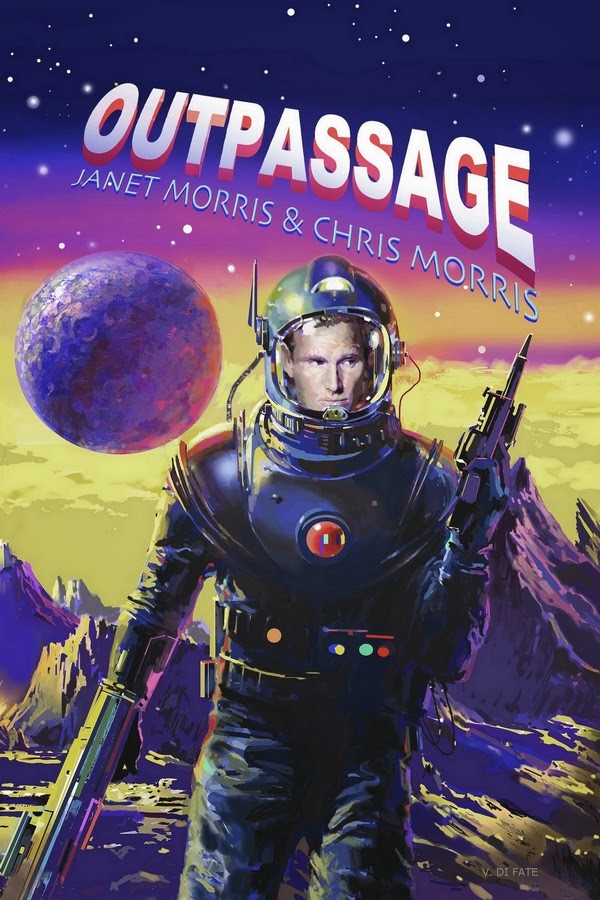 I always write the book I want to read, and I wanted to read “Outpassage.” I missed the adventure tales I had read as a youngster; I missed good old-fashioned sf: the excitement, the pacing, the meld of fact and fiction, the pure fun of space adventure. I couldn’t find solid adventure stories among new books being published. “Outpassage” is an experiment in pacing, character, and structure: very lean prose, very fast-paced, with a metaphysical core, but using vocabulary appropriate to the story’s protagonists. “Outpassage” is paced somewhat like a movie: lots of dialogue, a storyline that owes as much to nineteenth-century adventure novels such as “Robinson Crusoe” as to sf or heroica; strong characters from different strata of society who define themselves by words and actions. I loved writing Det Cox and Paige Barnett. I loved creating Frickey, the female Ranger – even today, women can’t get into Ranger school, but in our story, a female Ranger is plausible. The book also allows me to talk about prejudice, about corporate and government collusion, about humans meeting an alien presence that makes earthly science seem like flat-earth pipedreams. I had a great time writing this one; we’ll do another one of these, we think.
Outpassage trailer Buy: Outpassage trade paperback/kindle Buy: Outpassage @ Barnes and Noble
I recently read “ Beyond Sanctuary: The Sacred Band of Stepson’s – Author’s
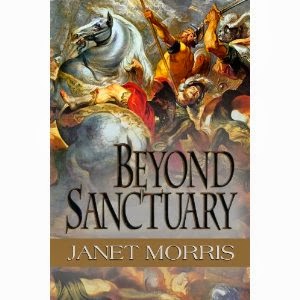 Cut Edition
.” You created a moving, viable world, with characters that I believed in. I will not ask if you believe in them too. From the outset, this was apparent; no one could create such magnificent breathing personalities without feeling at least a smidgeon the same as they did. When you write, are you living that world? For instance, when your characters cry, do you sometimes brush away a tear or two of your own?
Cut Edition
.” You created a moving, viable world, with characters that I believed in. I will not ask if you believe in them too. From the outset, this was apparent; no one could create such magnificent breathing personalities without feeling at least a smidgeon the same as they did. When you write, are you living that world? For instance, when your characters cry, do you sometimes brush away a tear or two of your own?
The Sacred Band consumes me when I write their stories. For me, they are supernatural, and the process of writing them is exhausting: one surrenders to these plotlines, rather than constructs them. I laugh with them, cry with them; when my editor/husband reads the draft out loud, if they’re in the midst of tragedy, I can hear the tears in his voice. With the exception of “I, the Sun,” their books are my favorites because they transport me completely into a world as real as this one.
Wikipedia Sacred Band of Stepsons page Buy: Sacred Band Kindle and Amazon Trade Paperback
Buy: Sacred Band hardback, trade paperback, Nook on B&N Beyond Sanctuary series trailer
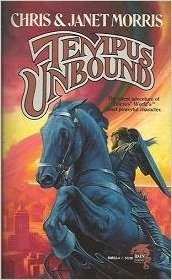 It is not an easy thing to make me love a character as much as I did Tempus Thales or Niko. I imagine them being quite demanding to their author. Do you find it difficult to put them aside to work on other projects?
When Tempus wants a book or story, eventually I give in and write it. I had done everything but confront the issue of the Sacred Band of Thebes. I didn’t want to write the historical tale of their obliteration: too sad. But finally, having created my own Sacred Band of Stepsons and lived with that set of truths for many years, Tempus convinced me we could rescue the twenty three pairs whose skeletons are missing from SBT’s mass grave at Chaeronea. So began The Sacred Band, the best of the Stepson novels, the most demanding, which begins August 2nd, 338 BCE, the night before the historic Battle of Chaeronea. Mixing this much history with myth and fantasy is demanding, so I had avoided it for many years. I couldn’t write around it: if I was going to write more with Tempus and Niko, this was the next book. And so Chris and I wrote it, to please Tempus, the Band, and the gods.
Sacred Band Ethos quotes Sacred Band music/book video sacredbander.com
I am fascinated with world history. When I discovered that you are too, I felt as if you were a godsend, an inspiration. I read that you went through deep research to write “I, the Sun.” Could you tell us about it?
“I, the Sun” was conceived when I read part of the Annals of Suppiluliumas I, in the mid 1970s, after I’d sold Silistra. Some of the texts were in first person; some supposedly written by his son, Mursili. But Suppiluliumas grabbed me by the throat and wouldn’t let go. There was no internet then; no easy way to get the necessary information to write a biographical novel of the (then) nearly forgotten
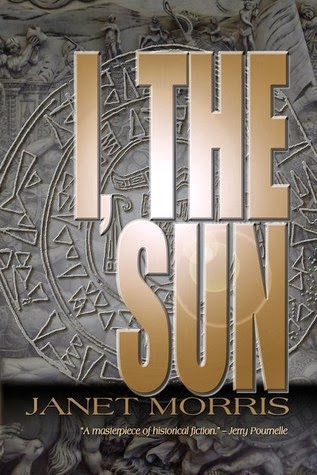 Hittite king. Research was difficult and costly. I took the money I’d made with Silistra and hired Calvert Watkins, professor emeritus of linguistics and classics at Harvard, to give me tutorials as needed, answer questions, provide a short course, reference materials (and translate some tablets previously unread that dealt with sorcery, since I needed that element for my story). I still have some of his translations done specifically for me, in pencil on lined paper. I used and still prefer the long chronology, and Kitchen’s relative chronology, “Suppiluliuma and the Amarna Pharaohs” was my bible. “I, the Sun” took several years to complete; in the middle of it I sold the Dream Dancer series before I wrote it, to keep the money flowing. But the story of Suppiluliumas is like no other. Not only did I have his own words, I had diplomatic correspondence from the Amarna letters; I had a conquering hero that puts fiction heroes to shame, from ancient times until modern. In a way, I had a lover – though my husband didn’t mind. I have considered doing the obvious sequel to “I, the Sun,” but to watch his sons struggle to become half of what their father was – I haven’t the heart for some of what would need to be in that book. I might yet write Muwatalli and the Battle of Kadesh, since his grandson did in some ways fulfill Suppiluliumas’ design. We’ll see. “I, the Sun” taught me so much about kingship and the gods, about international diplomacy in ancient times, and about love in the midst of war, I credit this book as having generated Tempus, another Favorite of the Storm-god, and my Sacred Band. I needed a new hero when “I, the Sun” was finished, but what was I to do? I had just chronicled one of the greatest ancient heroes who ever lived. It wasn’t a far step to mix together what “I, the Sun” taught me, plus mythology and fantasy… As Tempus and Herakleitos say: everything flows.
Suppiluliuma I Wiki Buy: I, the Sun trade paperback Nook on B&N Buy on: Amazon & Kindle
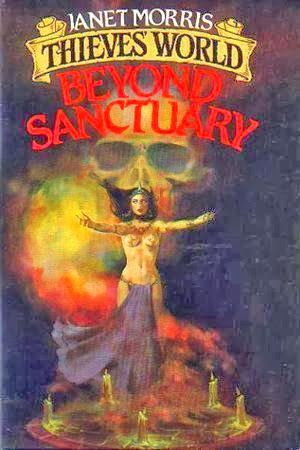 Why do you write?
I cannot fail to write. I can choose not to publish, which I did with only one book, but I must write. My body needs to write; my mind needs to solve; my heart needs to beat; I need to see three-hundred sixty degrees of my story. In story is wisdom: it is our species’ way of transferring what we can share about the human condition – the only condition we ever truly know, but cannot easily understand.
When you write a story or novel, do you keep the word count in mind? I have written many pieces to order; these often have a word requirement: up to 15K words; 10K words or under; a thousand words for an op/ed. I have accepted a number of book contracts before the books were written, which specified not more than 100K, or some other specific length. If I know that I am pacing for a market or a contract that has a word cap, I want the first plot turn to occur about ten per cent in; I try to minimize the middle and have the catastasis start about seventy-five per cent in. At this point in my career, something inside me deals with the issues of length and story elements. If I commit to a length, once I have a reasonable idea of what must be in that story, I can write that length without much thinking about length as a factor: only so much story will fit in so many pages.
Do you start with an outline? Or do you just wing it?
I resist writing formal outlines: they suck the life out of stories. I have done it, once or twice, when selling a trilogy, with the understanding that if the book went another way, I would throw out the outline and the editor would be content with a book that breathed better than an outline could predict. However, I spend more
 time organizing the book before I write than do many who construct formal outlines: I define my characters; my settings; my historical, scientific, or mythical referents, if any; I know where my story will begin and end and how – and I know what the point of the story is; why I am telling that tale. Since my work requires characters who come to life, I let them do that, and get from point to required point howsoever they decide. “I, the Sun” was my greatest challenge in that regard: the historical battles are mapped, a good bit of my subject’s history known (more now, even, than when I wrote “I, the Sun”), and some events occurred at specific times relative to other events in other empires of the day. In that book, I really learned to work with givens and keep freshness, and use that outlining style to this day, to the extent that I have one: in each section, not simply in the book, I decide what must happen, what must be foreshadowed, what must climax, and make it so. The rest I leave to my muse and the characters who inhabit me.
Your “ Hell Series ” is a shared universe that is a collaboration with other
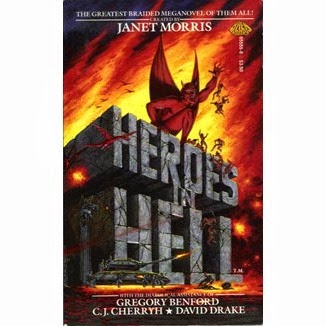 authors, how does this work?
“Heroes in Hell” (HIH)is a shared universe, as well as the title of the first book in that anthology series. HIH worked differently in the 20th century than it does in the 21st, because now we have a secret FaceBook group where authors can exchange ideas, arrange plot hand-offs and tight collaborations, and share portions of ongoing draft works. I give the writers a long arc, a medium arc, and a choice of shorter arcs for each volume. They write and post to the group a two or three line synopsis; before they are permitted to write. They request the use of characters from my character pool, or ask to start new characters. All characters who come to my Hell stay in my Hell, and can be used by other writers if I choose. So once characters are requested, they are approved or denied by me: characters must be legendary, mythical, or historical; characters must be dead and have died before 1900, except by special permission. They cannot use other writers’ fictional characters or milieus. In 20th century Hell books, we allowed some use of more contemporary characters, but seldom allow it now. In the 20th century, a phone call or two was used to define who would write what; now we can collaborate much more closely. Chris Morris and I write two or three short stories for each volume, sometimes to act as guide stories if a new arc is being introduced, but sometimes we write later if we need to see what the writers have done in order to make sure the book has a strong beginning and ending. The volume currently in preparation for 2014 is “Poets in Hell”; after Poets comes Doctors.
Buy: Lawyers in Hell trade paperback/nook hardcover/trade paperback/Kindle Watch Trailer/LIH
Buy: Rogues in Hell trade paperback/nook trade paperback/Kindle
Buy: Dreamers in Hell trade paperback/B&N Nook trade paperback/Kindle
Since you began as a published author, how have things changed?
Let’s see: electric typewriters; computers; word processors; fax machines;
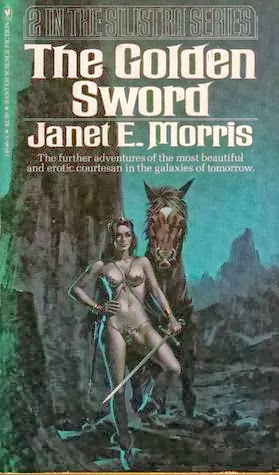 conference calls; internet; video tie-ins; gaming; e-books… just a bit different, today. There are good changes: a vast array of source materials and classical works at one’s disposal; books coming back into print and electronic publishing formats. There are many disturbing trends toward the bottom of the markets, but there have always been those. When I get disgusted, I reread Henry James’ preface to “The Figure in the Carpet”: James coined the term ‘trash triumphant’ at the end of the 19th century, and he reassures me that no matter how much things change, they stay the same. There may be more room for the good book today, but perhaps less room for the great. The biggest issue for everyone involved in contemporary publishing is the rise of the illiterati: the arrogant and uneducated who insist that the uninformed opinion have equal value to the informed opinion. Although these folk always have been around, they are an ever-present danger, even going so far as to single out words or thoughts as unacceptable.
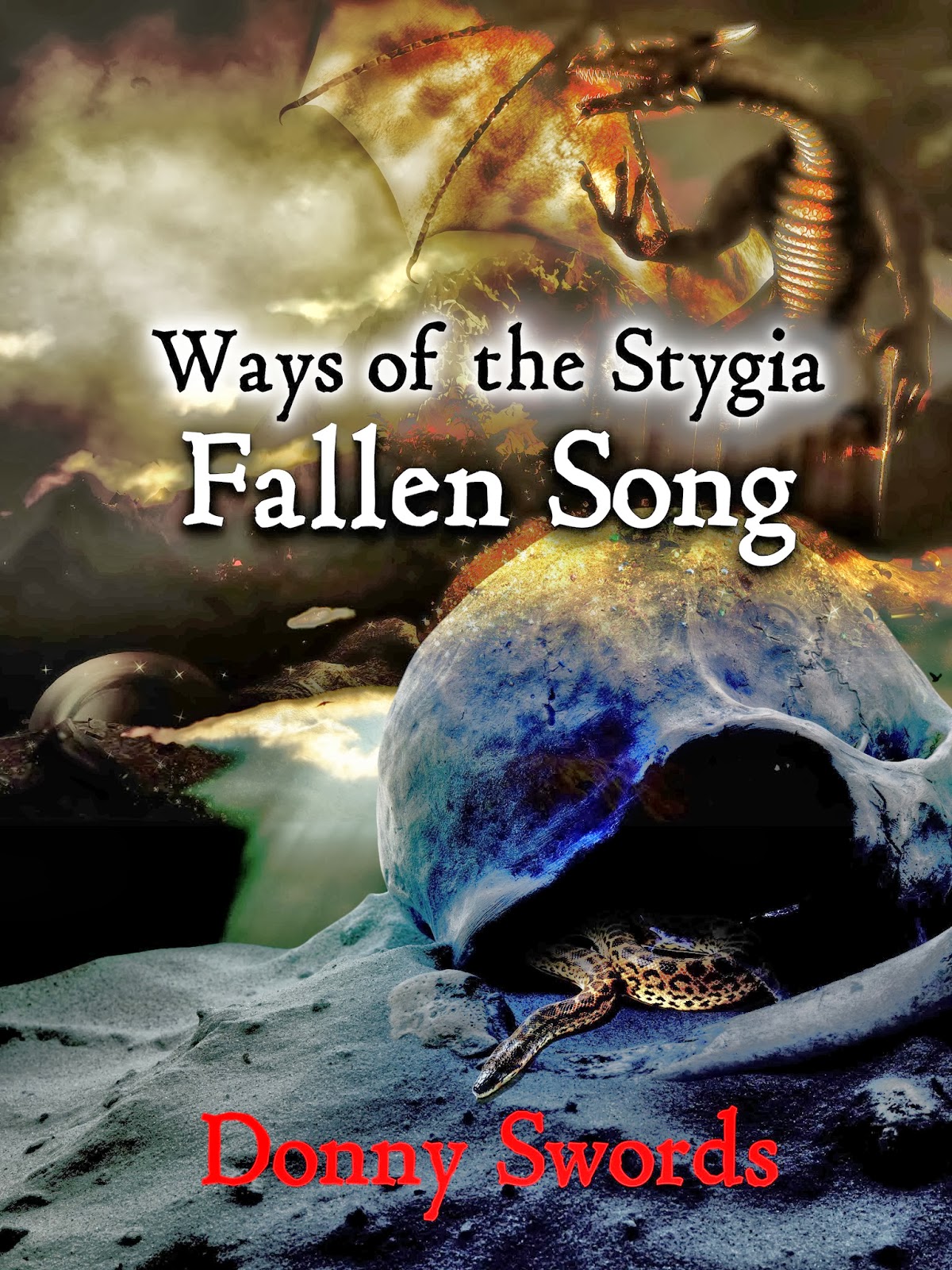 As a self-published author, I have my limitations, especially where it comes to marketing. What do you do to help get your novels into first the hands, then the minds and hearts of readers?
Anyone who can answer that question and be correct could dominate publishing. One tries to make people aware of a particular title, and attempts to get the book wide visibility. People have always striven to make their books stand out. Now we have better than seven billion people, and one response to the need to find a market seems to be genre-fictation, which labeling we abhor. I think the writer should do some internet time, be accessible if they dare. Since my books have long pedigrees, it’s easier to get people to look at my work than, for example, to look at some of the younger writers we’re publishing. But we are publishing these writers for a reason: to help them reach readers. We hope this will become increasingly apparent, and people will agree that these writers should be read. We are trying various online publicity houses, testing the waters, to support these goals but really it is the satisfied reader who sells your books for you.
 You and your husband Chris are a team, how does that dynamic play out when you are developing a novel? When it is underway?
We talk about everything before, during, and after. I type the first draft; he reads that draft aloud; we add or remove or change text or elements. We do this several times for each section, each day’s work. We try for transparency, total immersion in character and story. We get that by extremely close collaboration, sometimes spending a half hour on one important sentence. We’ve been doing this together for so long I no longer know who wrote what final line or chose what word. Or care.
Who are your favorite authors?
Homer, Hesiod, Sappho, Thales, Heraclitus, Anaximander, Euripides, Xenophon, Virgil, Seneca, Marcus Aurelius, Plato, Plutarch. Marlowe, Shakespeare, Spenser. Hawthorne. The Shelleys. Byron. T.E. Lawrence. Henry James, Evelyn Waugh, P.G. Wodehouse, Marguerite Yourcenar. Jules Verne, Daniel DeFoe, H. Rider Haggard, Joseph Conrad, C.S. Lewis, George Orwell, Harold Bloom.
 Tell us about your publishing house.
Our house is The Perseid Press (theperseidpress.com). Our main mission is to publish books for experienced readers, books worth reading; our books are literate but not necessarily literary, and have the edge that purpose brings: we hope people give us serious consideration who want a book with substance, no matter the genre.
Perseid Press video Perseid Press Website
In “ Nine Heroes ” you introduced us to Rhesos. You mentioned in one of our chats that you are working on a full novel starring your new hero. What would you like to share with us about Rhesos and the new novel?
Rhesos…. When I did a charity story for a book called “Nine Heroes” recently, by the time I was a thousand words into the story I admitted to myself that I had a much bigger fish on my hook than the 5K words desired could contain. I
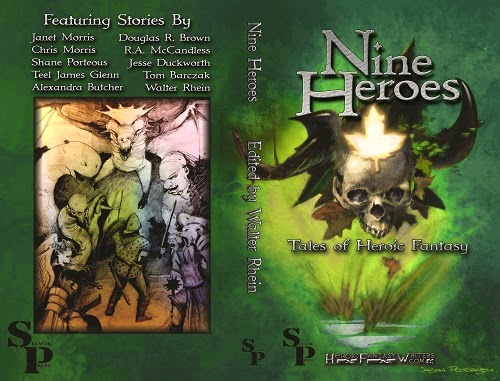 have long loved this mythic person and “Nine Heroes” gave me a chance to see if Rhesos and I could connect, with one eye on the short story and one eye on a longer work. So I wrote the story, “Black Sword,” as a first section for a new novel in such a way that it would serve as an heroic short story. However, doing this created a style for the book to come, with a special sort of pacing: the story begins a novel, but the novel treats its elements in somewhat the same form that the short piece accomplished, at least for the first draft. Rhesos, according to the Iliad and to Euripides “Rhesus,” was the reason Athene urged the night hunt upon Odysseus and Diomedes in the “Iliad”: omens predicted that if Rhesos came to Ilion (Troy) and pastured his horses there and drank from the Scamander, then the Trojans would win their war. In the Rhesus by Euripides, as myths will, the threat is told differently: I used this quote from Euripides (Richmond Lattimore, trans) to begin my story:
Athena to Diomedes and Odysseus: Where are you going? Why do you leave the Trojan camp biting your very hearts for disappointed spite because the god will not allow you to kill their Hector or their Paris? Have you not heard of the ally Rhesus, who has come to Troy in no mean circumstance? For if he survives this night and is alive tomorrow, not even Achilles, and not Ajax with his spear, can keep him from destroying all the Argive fleet, smashing, demolishing your walls and storming in to fight with level spears. Kill him, and all is won. ––Euripides, Rhesus; Richmond Lattimore, translator.
N ow since the best date for Odysseus’ return to Ithaca is April 16, 1178 BCE, an approximate date for this night hunt is possible. But no date shows you the quality or the nature of this hero, Rhesos: that is where story comes in. I’ve long wanted to tell his story, someday, but it requires great command of the detail that has been left to us. And yet, think of it: a hero so powerful that not Akhilleos nor any of the Argives could best him, if the fight was fair; so much a threat that Athene herself contrives his murder; a youngling king who could have changed the result of the
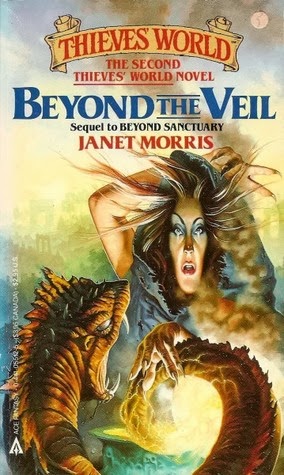 Trojan War, had Pallas Athene not interfered. A hero-cult develops around him, much later, but we’ll get to that as the tale plays out. His story is fascinating when all the divergent myths and what history we know are taken into account. Rhesos is a demigod, son of Strymon the river god and the Muse Kalliope. By the time our story opens, he’s long ago been murdered by Diomedes and reanimated at his mother’s demand – yet imprisoned in exchange for resurrection. He has spent many years in the silver-veined caves of Rhodope. So we’ll tell this story of the reborn hero Rhesos, long after his murder, about the hero lost and the hero still to come. In Rhesos of Thrace, we’re treating myth as history and history as novel, and we have a character who not only inspires a hero-cult, but draws to him famous females of mythos: Salmakis the fountain nymph; Theano, priestess of Pallas Athene; Tisiphone the Erinys; Pallas Athene herself; Kalliope the Muse, and, in flashbacks, his beloved hunting partner, Arganthone of Kios. The story of Rhesos and Arganthone itself could have made a wonderful novel. I chose a bigger canvas for this storied hero; it’s a tale to test a writer’s mettle.
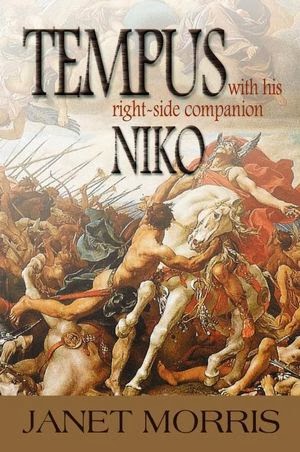 What inspires you?
The human condition. Nature. Animals. Song. Mythopoeic thought. Philosophy. History. Life, really.
For readers new to your novels, which three would you recommend?
“I, the Sun.” “The Sacred Band.” “Outpassage.”
If you could make one statement to potential readers to convince them to hop aboard and to read your work, what would you say?
Like no others, we write a door and take you through it, into pleasure and pathos and passion, worlds away.
How important are reviews to you? For marketing? For sales?
Reviews mean both more and less now than they did in the 20th century, so far as
 Author's Cut Editions, better than ever, Exclusive content!the greater publishing industry goes. I love getting a perceptive review. I like the idea of reader reviews, although I am aware that the purpose can be twisted and fakery abounds. But fakery and purposeful twisting existed in the 20th century as well. So, really, what is the difference? I’ve had good Kirkus and Publishers Weekly and Library Journal reviews when that mattered, and standards were different. As for the genre press reviews: we don’t fit in any genre, ever, so those reviewers were never comfortable with us, years ago. Now, with a broader group of reviewers, we’re finding a more comfortable place among those who still read for pleasure. The reader reviews are interesting, and the blogger reviews, because the reviewers are self-selecting. I’ve considered putting some reader reviews or blogger reviews on ‘praise’ pages in certain books, since these are surely as honest as anything from previous times.
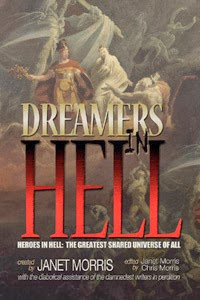 Someone will do so, soon enough, if we don’t. So far as sales: sales by word of mouth are the best result, and reader reviews may actually be a way of doing that. What’s left of pro-publishing reviews are suspect with good reason: those reviews are, after all, paid through subscription to the reviewing publications. The online magazine reviewers and blog reviewers, in general, are even more interesting yet, since these online entities often take a specific portion of the market as their own: knowing their audience, they are able to better satisfy their reading public; some of the reviews I like best have come from places such as Black Gate, which have reviewers deeply literate in their area of specialty. As for what drives sales, we put our efforts to drive sales into two things: manuscripts that are well produced in trade paper and as e-books; covers of quality that represent the story they enwrap and are respectful of it. Volume sales, such as we were accustomed to in the 20th century, exist, but no formula except broad exposure of a title is apparently working. We’d dearly love to have a worldwide bestseller in the 21st century – but for the books we like, to an audience who can appreciate those books; we’ll not publish a book we don’t like for a market segment we don’t respect because we think some book will sell well. This will probably keep us a small independent publisher for a long time, but it allows us to do projects such as we’ve discussed above, and do them with respect for individual works and authors. That is, or should be, what publishing is about.
I would like to thank Janet Morris not only for taking the time to be interviewed by the Void, but also for her notable contributions to writing and the world at large. And a very special thanks to Chris Morris for taking the time to edit this interview. It is my hope that he will come on The Void soon for his own interview, as his contributions are just as notable and deserve their own interview time.
I hope you enjoyed the interview,
I love you all,
Donny Swords
Buy: The Bitter Ends Buy: Ways of the Stygia-Fallen Song Like my Author page on Facebook
Visit: Ways of the Stygia- Donny Swords: Visit: The Bitter Ends on Facebook
Next Time:
Tom Barczak: Author of “Veil of the Dragon” and the “Evarun series”
 About Tom- taken from his Amazon author page: My background is an Artist, turned Architect, who's finally getting around to finishing those stories I started writing long ago, when I sat on my front porch as a kid. I write because I can't not. I write because I want to finish the story that I started, in my paintings, in my poetry, and even before then, when I sat around a table with my friends, slaying dragons.
Veil of the Dragon Synopsis: Chaelus, Roan Lord of the House of Malius, is raised from the dead by the hand of a child. His kingdom stolen by the evil dragon, Gorond, Chaelus' only hope to reclaim his throne rests with the child knight who saved him, the heretical order to which the child belongs, and the truth about Chaelus that they alone protect.
February 24, 2014
Reviews from the Void: Beyond Sanctuary - Janet Morris
Reviews From the Void: Beyond Sanctuary- Janet Morris
Buy Beyond Sanctuary
 Author Janet Morris said this when I inquired which of her novels to start with, "Read Beyond Sanctuary, but I warn you it is not for the faint of heart."
How right she was.
The depth of the plot line and characters is immersive and bold. The universe she has created is constantly moving, urging the mind and heart to react. The world is so real I could taste it at times... I felt like I was there.
But the Heroes, Tempus Thales and Nikko are so captivating, so riveting that when I set the book down I still daydreamed about their situations. Cime is enthralling, and the gods make me shake my head in wonder. How Janet found balance between deities and the other characters within Beyond Sanctuary is awe inspiring. They never outshine the other characters, but instead leave the reader identifying with them on a human level.
I cannot go on and on about Beyond Sanctuary without spoilers, but I can say this: Tempus has won my heart, taken a place
alongside my favorite heroes, even those I create. This is a book written by a master, for intelligent readers who want, no scratch that, HAVE to be challenged and engaged. Beyond Sanctuary is more than a masterpiece, it is a timeless tome, full of wit, action, wizardry, love, betrayal, and most of all steel.
Out of every novel I have read within the past decade, Beyond Sanctuary exceeds them all.
Do yourself a favor read it-
Donny Swords-
Author of the "Ways of the Stygia" series.
Buy Beyond Sanctuary
 Author Janet Morris said this when I inquired which of her novels to start with, "Read Beyond Sanctuary, but I warn you it is not for the faint of heart."
How right she was.
The depth of the plot line and characters is immersive and bold. The universe she has created is constantly moving, urging the mind and heart to react. The world is so real I could taste it at times... I felt like I was there.
But the Heroes, Tempus Thales and Nikko are so captivating, so riveting that when I set the book down I still daydreamed about their situations. Cime is enthralling, and the gods make me shake my head in wonder. How Janet found balance between deities and the other characters within Beyond Sanctuary is awe inspiring. They never outshine the other characters, but instead leave the reader identifying with them on a human level.
I cannot go on and on about Beyond Sanctuary without spoilers, but I can say this: Tempus has won my heart, taken a place
alongside my favorite heroes, even those I create. This is a book written by a master, for intelligent readers who want, no scratch that, HAVE to be challenged and engaged. Beyond Sanctuary is more than a masterpiece, it is a timeless tome, full of wit, action, wizardry, love, betrayal, and most of all steel.Out of every novel I have read within the past decade, Beyond Sanctuary exceeds them all.
Do yourself a favor read it-
Donny Swords-
Author of the "Ways of the Stygia" series.
February 22, 2014
Ways of the Stygia- Fallen Song FREE this weekend.
This is the last free promotion for Ways of the Stygia- Fallen Song. Take advantage while you can.
http://www.amazon.com/Ways-Stygia--Fa...
http://www.amazon.com/Ways-Stygia--Fa...