Matthew C. Mitchell's Blog, page 59
January 14, 2018
[Matt's Messages] "The Temptation of Jesus"
 “The Temptation of Jesus”
The Gospel of Matthew
January 14, 2017 :: Matthew 4:1-11
For today’s message, I’m going to ask you to pretend something with me.
Let’s all pretend that we don’t know how this story turns out. Okay?
We’re looking at the story in Matthew chapter 4, verses 1 through 11, which we can call, “The Temptation of Jesus.”
Not that this is the only time that Jesus was ever tempted, but this is the big test right before He begins His public ministry.
It’s like the final exam before you graduate into real life.
It’s like the clinical trials you need before you become a nurse.
It’s like the decisive test to determine if you are ready to go.
That’s what Jesus is heading into.
And we all know this story. At least most of us do, I think.
But pretend with me that you don’t. Okay?
Try to imagine what it would be like to be there and watch the drama unfold.
Try to imagine what it would be like to read this or hear this story for the very first time. And you don’t know what the ending is.
Now, I’ve known this story for very long time.
And it has a very dear place in my heart because exactly twenty years ago, I preached on this passage, Matthew chapter 4, and the sermon was recorded on audiotape (remember those?), and I sent a copy of that sermon to the search committee of an Evangelical Free Church in Lanse, Pennsylvania. Twenty years ago.
I don’t know that there are any copies of that message still in existence.
But I remember it well. Think about this: I had probably preached less than a dozen times when I sent Wally Kephart that tape!
And now, I’ve preached over 800 times, and I’m still excited about sharing this story!
I’ve preached Mark’s version, and I’ve preached Luke’s version here. But I don’t think I’ve ever got to preach Matthew’s version from this pulpit. So here we go.
We’ve reached chapter four in The Gospel of Matthew, but Jesus has not yet begun His public ministry.
We’ve learned about His genealogy and what it says about Him.
We’ve learned about the unique circumstances that surrounded His birth. His miraculous conception. The meaning of His name.
We’ve learned about the search for Him after He was born. A search by Gentile wisemen to worship Him and a search by an evil king to attempt to assassinate Him.
And last week, we learned about His baptism. How His forerunner announced His coming and then “to fulfill all righteousness,” He identified with us going down in to the water and then coming back up out of the Jordan River.
And remember what happened then? It was very important. Look at the last verse of chapter 3. It’s very important.
“At that moment heaven was opened, and he saw the Spirit of God descending like a dove and lighting on him. And a voice from heaven said, ‘This is my Son, whom I love; with him I am well pleased.’”
Now pretend you don’t know what is going to happen next.
What would you guess will happen next?
I would guess that the people around Him would begin worshiping Him and the Kingdom of God would come rushing in.
But that’s not what happens.
No, with the voice of God the Father Himself ringing in His ears, Jesus was sent into the wilderness to take a great test.
Matthew chapter 4, verse 1.
“Then Jesus was led by the Spirit into the desert to be tempted by the devil.”
That’s what’s next.
Boy, there’s a lot in that sentence, isn’t there?
Who sent Jesus into the desert? It was God’s Spirit. The same Spirit that rested on Him like a dove.
Marks tells us that the Spirit drove Jesus into the wilderness. He pushed Him out there to take this test.
That’s important to notice. God is sovereign over this testing. He doesn’t tempt. He doesn’t try to trip up His children. But He does allow their testing. And even ordain their testing.
Which is important to remember if you are being tested. Just because you’re being tested doesn’t mean that you aren’t loved.
Was Jesus loved? “This is my Son whom I love.”
And yet He’s tested. For His good and for God’s glory. And for our salvation. As we shall soon see.
And where does this test take place?
In “the desert” or in “the wilderness.”
What does that remind you of? Who else was tested in the wilderness?
The nation of Israel was. Right?
And how did they do? Listen to Deuteronomy chapter 8, verse 2.
“Remember how the LORD your God led you all the way in the desert these forty years, to humble you and to test you in order to know what was in your heart, whether or not you would keep his commands.”
How did Israel do with that test?
Not so good.
And now Jesus comes to take a similar test. How do you think He’ll do?
Pretend you don’t know! V.2
“After fasting forty days and forty nights, he was hungry.”
You think? That sounds like an award-winning understatement to me.
What does that forty days and forty nights remind you of.
Well, Moses and Elijah had famous forty days and forty nights. So it’s a pattern that reappears.
But I think it’s supposed to remind you of those forty years that Israel was tested in the desert.
And Jesus is hungry.
Have you ever been hungry? I mean really hungry?
How are your defense against temptation when you are really hungry?
That’s one of my worst times for temptation.
And Jesus was fully human. Do you see that? “He was hungry.” It doesn’t say that Jesus acted hungry. Or that Jesus pretended to be hungry.
No the incarnation meant that Jesus was (and is!) fully human. The miracle of Christmas worked. And the baby was real. And now the man is real.
And He’s really hungry, and He’s going to be really tempted...by the tempter himself. V.3
“The tempter came to him and said, ‘If you are the Son of God, tell these stones to become bread.’”
Do you think that was tempting to Jesus?
You bet it was.
He was hungry.
And He was the Son of God.
He had all of the power and all of the authority to turn those rocks into bread. To turn the desert into a bakery.
Is your mouth watering at the idea of the smell of bread? All I’m doing is saying, “the smell of bread,” and you mouth is watering?
Imagine having had nothing to eat for forty days and somebody saying, “The smell of bread.”
Now, notice that the tempter (We have no idea what form he took. It doesn’t matter. The tempter...) says that Jesus is the Son of God.
That “if” in verse 3 can translated, “since.”
“Since you are the Son of God...” prove it! Use it. Act on it. Show it!
Remember what just happened at the end of chapter 3.
God the Father has claimed Jesus as His own beloved Son, with whom He is well pleased.
“Well, what good is that if you can’t even use it to fill your belly?”
You know, this is only tempting if He can really do it.
There’s no temptation here if He isn’t the Son of God and doesn’t have the power of God at His command.
The temptation is very real. It’s excruciatingly real.
But Jesus says, “No.”
Verse 4. “Jesus answered, ‘It is written: 'Man does not live on bread alone, but on every word that comes from the mouth of God.'’”
You know where that’s from? Deuteronomy chapter 8. The very next verse from the one I read to you a minute ago. Deuteronomy 8:3.
It is written! The LORD will provide. When He wants to.
And it would be wrong to disobey and to use divine power to short-circuit the Lord’s plan and serve Yourself.
There are more important things than food!
Jesus hungered and thirsted for righteousness.
Jesus had food that other people knew nothing of.
His food was to do the will of Him who sent Him and to finish His work (John 4:34).
And that was enough.
Notice that Jesus said, “It is written.” That’s important.
Jesus knew His Bible and He relied on it. He believed it and He entrusted Himself to what it says. We’re going to come back to that, because He does again and again.
Of course, the devil knows his Bible, too. And he’s not done yet. V.5
“Then the devil took him to the holy city and had him stand on the highest point of the temple. ‘If you are the Son of God,’ he said, ‘throw yourself down. For it is written: ‘'He will command his angels concerning you, and they will lift you up in their hands, so that you will not strike your foot against a stone.'’”
The devil says, “Two can play at that game. I can quote Scripture, as well.”
He takes Jesus up to Jerusalem and has him stand on the highest point of the temple. We don’t know if this a visionary experience or diabolical miracle or what. Whichever it is, it’s real, and it was a real temptation to Jesus.
It’s possible that this was on the corner of the temple that overlooked the Kidron Valley and was about a 300 foot drop the rocks below.
Now the rocks aren’t potential bread. They are potential knives to tear His body to pieces.
And the devil says, “Jump! Since you’re the Son of God, you don’t have anything to worry about. I mean it is written in Psalm 91 that the godly one won’t be hurt. God Himself will “command his angels concerning you, and they will lift you up in their hands, so you will not strike [even] your foot against a stone.”
I don’t think that’s how Psalm 91 is supposed to be interpreted and applied. Do you?
But it was tempting to Jesus.
Maybe because it would show the world that Jesus is God’s Son in a spectacular way.
It definitely meant that He would not have to suffer.
This would an easy way of getting followers.
But it’s all wrong.
This is the prosperity gospel of so many television preachers.
“God doesn’t want you to suffer. God doesn’t want you to be poor or unhealthy or even to die. Just name it and claim it!”
“Claim God’s word!”
But Jesus says, “No.” v.7
“Jesus answered him, ‘It is also written: 'Do not put the Lord your God to the test.'’”
That’s Deuteronomy chapter 6, verse 16.
You don’t manipulate God. You don’t twist God’s arm by quoting and claiming Scripture out of context.
You obey God even if it means that you suffer and you die.
It’s lie that says that God is only faithful when He rescues you from trouble.
No, God is faithful all the time. Even if you die trusting Him!
“It is also written: 'Do not put the Lord your God to the test.'”
Did you see how He did that?
There He goes again with Bible.
But the devil isn’t done yet. Verse 8.
“Again, the devil took him to a very high mountain and showed him all the kingdoms of the world and their splendor. ‘All this I will give you,’ he said, ‘if you will bow down and worship me.’”
Now, pretend you don’t know what happens next.
Was this tempting to Jesus?
I’m sure it was.
Not that He gave in. Not even for a millisecond.
And not that He wanted to worship Satan. As if.
But imagine being offered all of the kingdoms of the world that are rightfully yours and not having to go to the Cross.
Skip the Cross. Go right to the Crown.
Sounds good, doesn’t it?
I’m sure it sounded good to Jesus, too.
But He also saw right through it.
He saw that even though Satan is called the “prince of this world,” these kingdoms were not his to give away.
And He saw that to bow down and worship the devil would be to go against every single thing that He knows is true about the world. V.10
“Jesus said to him, ‘Away from me, Satan! For it is written: 'Worship the Lord your God, and serve him only.'’”
Jesus said, “No way.”
And He quoted Scripture yet again. This time again from Deuteronomy 6. Verse 14.
“It is written: 'Worship the Lord your God, and serve him only.'”
There is Only one Who is worthy of all of our worship.
And that is the LORD Himself.
And the LORD Himself will give Jesus all of the nations.
He promised them to Him in Psalm 2, and we are winning them for Him right now as we fulfill the Great Commission from Matthew 28.
Jesus just had to go to the Cross to get them.
And with that third “it is written,” the devil had to run away with his tail between his legs. V.11
“Then the devil left him, and angels came and attended him.”
And my guess is that they brought Him a big picnic lunch.
Now, what does this story mean for us today?
Why is it in our Bibles? Why do Matthew, Mark, and Luke all tell us about how the Spirit of God led Jesus into the wilderness where He had to be tempted by Satan?
Let me make three points.
#1. JESUS TRUSTED GOD’S WORD.
You can’t miss that.
Every time Satan threw his temptations at Jesus, Jesus pulled out the Scripture like a big shield of faith and the fiery darts just bounced off.
Bwing, bwing, bwing.
Jesus knew His Bible. He knew what God’s word said.
What God had promised and what God had commanded.
And He believed it.
And that’s how He survived the temptations.
I think that we can learn something from that for ourselves today.
If you are being tempted (and we all are) God’s Word is the way to go.
“It is written.”
“It is written.”
“It is written.”
Do you know what is written?
Imagine getting shot and having no shield.
You’re exposed.
You’re out there in the devil’s crosshairs if you don’t know God’s Word.
That’s why we memorize it.
That’s why we read it.
That’s why we build all of our ministries around it.
Because God’s Word is where it’s at!
“It is written.”
“It is written.”
“It is written.”
Jesus trusted God’s Word. He thought of God’s word as life itself.
“Man does not live by bread alone, but on every word that comes from the mouth of God.”
Jesus knew that that’s where life is.
What do you need to do to get into God’s Word and to have God’s Word get into you?
Do you see the spiritual power that Jesus has? The devil has to flee! The devil gets resisted, and he’s the one who backs down.
Because of God’s Word.
I want to know God’s Word like that. And believe God’s Word like that.
Jesus trusted God’s Word.
And when He did that, He proved that He is God’s Son.
#2. JESUS PROVED HE IS GOD’S SON.
Which is an even deeper point of this story.
Remember what had just happened right before He was led out into the desert?
The Spirit had rested on Him. And the Father had said, “That’s my boy!”
And the devil keeps playing on it. Did you see that in verse 3 and verse 6?
“Prove it! Show it!”
And Jesus proves it and shows it, not by some flashy miracle done in His own power but in loyal obedience to the Father in the power of the Spirit.
Jesus proved that He is God’s Son.
That the Father was justified in saying, “With Him I am well pleased!”
In saying, “No” to Satan’s temptations, Jesus showed that He truly is God’s obedient Son.
And that makes Him worthy of all of our worship.
Yes, He’s a model for us in resisting temptation.
But even more, He is the Son of God and God the Son!
And He’s shown it by defeating the devil at his own game.
We should worship Jesus.
You know I know a lot of people who worship God but don’t worship Jesus.
I call them, “Godlians.”
But that’s not enough. We need to be Christians. We need to give Jesus His proper place.
“Worship the Lord your God, and serve Him only.”
But that’s Jesus! He is the Son of God and God the Son.
Worthy of all of our worship forever.
Here’s why.
#3. JESUS PASSED GOD’S TEST.
Jesus beat the devil.
Did you see that coming?
This is why I asked you to pretend you didn’t know what was going to happen.
So often in the Bible, when the testing came, they failed, right?
Adam in the garden? He didn’t pass the test.
How many are reading their Bible through this year? I’m in Genesis chapter 30 right now. And I can’t believe how many failures there are so far.
Adam, Abraham, Isaac, Jacob. You name it. They crashed and failed so often.
The whole Old Testament is a story of repeated failure.
Israel in the wilderness. They didn’t pass the test.
Even great leaders like King David. When Satan came knocking? Down they went.
So many thumbs down, right?
And now Jesus comes along and he goes out in the desert, and what happens?
He wins!
Jesus beats the devil!
When I preached this on that audiotape, I think I set it up like a boxing match. “In this corner, we have Satan, the undefeated and reigning champion. You can win against this guy sometimes, but he’s always getting in his shots.
Ever since Genesis 3, he’s been taking down humans.
‘He will strike your heel!’
But in this corner stands...the Son of God.
Fully human. Fully temptable. Fully hungry.
And victorious!
Sorry, Satan. ‘He will crush your head!’”
Jesus beat the devil.
Jesus succeeded where Adam and Israel had failed.
Jesus fulfilled all righteousness.
Jesus passed the test.
And you know what that means?
That means that He could go to the Cross.
And win our salvation for us.
If He had given in, for just a millisecond to any of these temptations (or any of the ones still to come), then we would not have a sinless Savior to rescue us.
But Jesus passed the test!
And that gives all who trust in Him, the victory.
He didn’t bypass the Cross to get the Crown.
The Son of God went to the Cross to win the Crown and to save us from our sins.
***
Previous Messages in This Series:
01. The Genealogy of Jesus
02. The Birth of Jesus Christ
03. The Search for Jesus Christ
04. The Baptism of Jesus


January 13, 2018
Book Review: "The Problem of God" by Mark Clark
 The Problem of God: Answering a Skeptic’s Challenges to Christianity by Mark Clark
My rating: 5 of 5 stars
A new "go-to" book to share with skeptics of Christianity.
I thoroughly enjoyed this new apologetics book by Pastor Mark Clark. Clark tackles some of the toughest challenges thrown at Christianity with reasonable, thoughtful, and readable(!) answers. It's definitely written for skeptics, not for the already-convinced (though we can profit from reading it, too). And there is a good dose of self-deprecating humor.
The thing I liked the best about "The Problem of God" was how up-to-date and relevant it is. Some of the skeptical arguments were ones that I've never seen addressed in a book-length treatment before. (ex. theories about the "Christ myth"). But I hear young people asking these very questions. It doesn't feel like "your father's apologetics book."
I also appreciated that Clark didn't just deal with evidential or philosophical objections--but also personal roadblocks to belief like hypocrisy among Christians. One of the longest and best chapters is the one on Christianity and sex.
Highly recommended. Give it to a skeptic you love.
View all my reviews
Book Review: "A Theology of Matthew" by Charles Quarles
 A Theology of Matthew: Jesus Revealed as Deliverer, King, and Incarnate Creator by Charles L. Quarles
My rating: 5 of 5 stars
The discipline of biblical theology at its best.
Quarles does a masterful job of showing you what you already know but couldn't articulate about the Who Jesus is in the Gospel of Matthew. In successive chapters he shows how Jesus is revealed as the New Moses (deliverer), New David (king), New Abraham (founder and promise-fulfiller), and New Creator (God incarnate) as well as how His amazing identity applies to us today.
Quarles has a knack for bringing out the subtleties that lie on top of the text--things that are demonstrable (not made up or merely speculative) yet not obvious to the casual reader. He turns Matthew from SD to HD for a careful reader.
Useful! I am going to use the scripture index in the back as I study for every single sermon in my current series on the Gospel of Matthew. Highly recommended.
View all my reviews
January 7, 2018
[Matt's Messages] “The Baptism of Jesus”
 “The Baptism of Jesus”
The Gospel of Matthew
January 7, 2017 :: Matthew 3:1-17
We are just a few steps into our journey through this theological biography of Jesus Christ called “The Gospel of Matthew.”
So far in chapters 1 and 2, we’ve read about the genealogy of Jesus, the birth of Jesus, and the search for Jesus after he was born (by both the Gentile Magi and the evil King Herod).
In chapter 3, Matthew leapfrogs over more than 25 years of Jesus’s life and lands at the time when Jesus, now an adult, gets Himself baptized.
“The Baptism of Jesus”
Which, knowing what baptism means, is kind of shocking!
Now, obviously, Matthew leaves a lot of stuff out. Unlike Luke who tells a story about Jesus when he was about 12, Matthew doesn’t give us anything about Jesus’ life growing up in Nazareth in the home of a carpenter named Joseph.
Matthew is selective. He has things that he thinks we need to know, and those are the ones that he tells us. The other gospel writers are the same! Mark starts his gospel right at this place. And John, when he gets into the action, picks up even a bit later!
We aren’t told everything we might want to know, but we are told everything that we need to know.
Jesus has not yet gone public with His ministry. That will happen in the next chapter, chapter four. He’s still living in obscurity. He’s still preparing and being prepared for His mission.
And one of the things He has to do to be prepared, apparently, is to be baptized.
And who better to do it than his relative, John the Baptizer?
Matthew chapter 3, verse 1.
“In those days John the Baptist came, preaching in the Desert of Judea and saying, ‘Repent, for the kingdom of heaven is near.’”
And so the action begins!
After 400 years of prophetic silence, there is a genuine prophet of God on the scene once again.
And not just any prophet of God, but the forerunner of the Messiah. The man who links the Old Testament to the New Testament. The man who serves as a bridge from the Old Covenant to the New Covenant and points everybody to the Messiah who was to come. V.3
“This is he who was spoken of through the prophet Isaiah: ‘A voice of one calling in the desert, 'Prepare the way for the Lord, make straight paths for him.'’”
That’s Isaiah chapter 40, verse 3. Matthew recognizes that John the Baptist was the fulfillment of the promise of “a voice of one calling in the desert...‘Here He comes’!”
John was definitely a prophet. He looked like one. V.4
“John's clothes were made of camel's hair, and he had a leather belt around his waist. His food was locusts and wild honey.”
This guy looked like Elijah? Remember Elijah from the books of Kings? 2 Kings 1, verse 8 said that Elijah the Tishbite wore, “a garment of hair and with a leather belt around his waist.”
John dressed like this on purpose to signal to everyone that he was a prophet.
He didn’t go into town for his meals. He ate locusts, which were a kind of large, wild grasshoppers, and he ate the honey he could grab out of wild beehives.
He was totally committed to his prophetic message.
And what was his message? V.2 again.
“Repent, for the kingdom of heaven is near.”
#1. REPENT!
That’s our first application point of only two this morning. Repent.
What does that mean?
It literally means, “a change of mind.”
It means to turn around.
It means to make a U-turn.
Anybody make a U-turn in a car this week?
You were going down the street headed towards what you thought was your destination, and then something came to your mind and you said, “This is the wrong way. I need to be going in the exact opposite direction.”
To repent is to make a 180 degree turn with your life.
And that’s what John the Baptist was calling people to do. Why?
What did he say?
“Repent, FOR the kingdom of heaven is near.”
That’s really important. That’s really big. That’s really huge.
“The kingdom of heaven,” another name for the kingdom of God, “is near.”
That idea that there is this Kingdom of Heaven, this kingdom where God rules, is one of the biggest ideas and most important themes in the Gospel of Matthew.
We’re going to encounter it again and again and again.
It’s one of Jesus’ favorite things to talk about!
The kingdom of heaven.
And it’s “near.”
It’s at hand, it’s on the way, it’s come, it’s right here. We’re on the cusp of it!
And so, you better repent!
That was John’s message. And there were a whole lot of people who were receiving that message. V.5
“People went out to him from Jerusalem and all Judea and the whole region of the Jordan. Confessing their sins, they were baptized by him in the Jordan River.”
Massive crowds. The time had come for the message to be received.
People were repenting. They were coming to John and taking the first step of repentance. They were confessing their sins.
They were owning their sinfulness. They were agreeing with God about where they had gone wrong. And they were turning from those sins and getting baptized.
This is why John is called “John the Baptist.”
Because he preached repentance and he baptized those who were repentant.
Now this was pretty much a new thing John was doing.
There were ceremonial washings in the Old Testament and some religious communities like the Qumran community practiced their own ceremonial washings.
And later on, the Jews will practice baptism for new converts. If a Gentile wanted to become a Jew, they could get baptized to join. And it’s possible that there were already doing some of that at this time.
But John was baptizing JEWS. John was baptizing folks who already were at least on some level a part of the covenant people.
He was telling everybody that everybody needed to repent. It didn’t matter who they were.
And those that did, he baptized.
But those who didn’t repent, he didn’t baptize. Verse 7.
“But when he saw many of the Pharisees and Sadducees coming to where he was baptizing, he said to them: ‘You brood of vipers! Who warned you to flee from the coming wrath?”
He knew that they weren’t coming out to get baptized. And if they were, it was false pretenses. They had come out to judge him, not to confess their sins and indicate their repentance.
They showed no fruit in keeping with repentance.
Interestingly, the Pharisees and the Sadducees were normally enemies. They were normally opponents of one another, but they were getting together to see what was going on out in the wilderness, at the John the Baptist show.
And what they got was an earful:
“You brood of vipers! Who warned you to flee from the coming wrath?”
“You crafty, dangerous sons of snakes! Who told you that you could find safety here?”
“Produce fruit in keeping with repentance.”
“You say you’re repentant? Show us. Act like it.” v.9
“And do not think you can say to yourselves, 'We have Abraham as our father.' I tell you that out of these stones God can raise up children for Abraham.”
You see what he’s saying?
They were trusting in their ethnic identity.
They were trusting in their family identity.
They were taking it for granted that because they shared DNA with Abraham, they could live like the devil.
And John says, “No way. That’s not how it works. And you will soon find out for yourselves.” v.10
“The ax is already at the root of the trees, and every tree that does not produce good fruit will be cut down and thrown into the fire. [Judgment is coming. But it’s not John that will bring it. V.11] ‘I baptize you with water for repentance. But after me will come one who is more powerful than I, whose sandals I am not fit to carry. He will baptize you with the Holy Spirit and with fire. His winnowing fork is in his hand, and he will clear his threshing floor, gathering his wheat into the barn and burning up the chaff with unquenchable fire.’”
Those are such powerful words!
That last picture is so sobering.
The farmer grabs his winnowing fork and he sticks it into the wheat and he tosses the wheat into the air.
And there is this great sifting. This great sorting.
The heavy good full healthy wheat falls back down and gets put safely in the barn.
And the nearly weightless worthless chaff floats up and out and what doesn’t fly away gets used for fuel. It’s only good for the fire.
And those are two kinds of people. The repentant wheat and the unrepentant chaff.
And just to be clear, the chaff is burned in an unquenchable, unending fire.
It never goes out.
So John says, “Repent!”
And that’s what God is saying to us today.
Make the U-Turn.
If you have never confessed your sins and turned to God, then know that God is calling you to do that today.
Repentance is not optional.
And it’s not just something for back then.
Repentance is for everyone. The Bible says that God calls everyone everywhere to repent (Acts 17:30).
And don’t think that you’re exempt because you come from a good family.
It doesn’t matter if your Grandma is a Christian. Or if your Dad is.
It matters if you are.
Repent.
Now, John was primarily talking about the once-for-all repentance that comes at the beginning of the Christian life.
Turning from sin to the Lord.
And symbolized by water baptism. V.11 “I baptize you for repentance.”
Because you have repented, you have been baptized.
But, in this life, we’re never quite done with repentance.
Until we’re perfected in glory, we still have repentance work to do.
Martin Luther called the Christian life “a race of repentance.”
Repenting is not just something we do at the beginning of the Christian life, it’s something that we have to do every day.
Make the U-Turn.
Make the course correction.
Head in a different direction.
Repent.
Of what sins do you need to repent these days?
Where is the Lord working on you?
What sins is He putting His finger on and asking you to confess and turn away from?
If you answer, “I’m not repenting of anything these days,” then I’m worried for you.
What needs to change in your life?
I’m not talking about new year’s resolutions here, though if one of your resolutions is to grow in repentance, I think that’s a great idea!
But what needs to change in your life?
I love the word picture that Matthew quotes from Isaiah in verse 3.
This is what repentance is, “Prepare the way for the Lord, make straight paths for him.”
Isaiah was saying that the King was coming to town. And if the King is coming to town, then the city planners get together and improve all of the roads, don’t they?
We can’t have the king come bumping into town!
He has to arrive smoothly in style.
So where are the low spots in the road? Where are the bumps that need smoothed out?
What needs to change so this a road fit for a King?
In Isaiah 40 it says, “Every valley shall be raised up, every mountain and hill made low; the rough ground shall become level, the rugged places a plain.”
We’ll do whatever it takes to get ready for this King!
What needs changed in your life?
Recently, I had to repent of a foolish decision that I had made. I made a hasty and unwise decision that affected other people. It seemed right at the time, but it wasn’t.
And I had a buddy who took the time to confront me on my foolish decision and point out where I had gone wrong. He was a John the Baptist for me.
I’m sure it wasn’t easy for him, but I am really thankful that he confronted me.
Now. Here’s the thing. I needed to change.
I needed to confess my sin to God (v.6), and I needed to do verse 8, “Produce fruit in keeping with (my) repentance.”
It wasn’t good enough to just agree that I had done wrong. I had to go and make it right. And there were several steps I had to take to make it right. I had to do an about-face. I had to do an U-turn. I needed to change.
How about you?
What in your life needs to change?
What in your heart needs to change?
It might seem like a small thing, but it’s not.
It might seem like too big a thing, but it’s not.
“Repent, for the kingdom of heaven is near.”
Now, did you catch that John was predicting the Messiah here?
John isn’t just a baptizer, he’s a forerunner.
John loves to talk about the Coming One. V.11 again.
“I baptize you with water for repentance. But after me will come one who is more powerful than I, whose sandals I am not fit to carry. He will baptize you with the Holy Spirit and with fire.”
Did you know that Jewish slaves didn’t have to untie or carry their master’s sandals?
Carrying your master’s footwear was considered below the slave level!
What is John saying?
“This One Who is to come? I’m not worthy to be his servant. I’m not worthy to be someone lower than His servant.”
“My baptism is nothing compared to His. My baptism is water. It is external. It is symbolic of repentance. His baptism is Spirit and fire. It is internal and effective and transformational.”
I think that word “fire” means both refining fire and the fire of judgment.
For those who are repentant and know the Lord, the fire is a purifying and powerful fire that was symbolized by the tongues of fire over the apostle’s heads at Pentecost.
But in the context, there is also the unquenchable fire of judgment. You don’t want that kind of baptism.
Do you see how fixated John is on this Coming One?
And then He comes! V.13
“Then Jesus came from Galilee to the Jordan to be baptized by John.”
Isn’t that...strange?
I mean, from everything we just read about baptism and repentance?
Why would Jesus want to be baptized?
That’s what John says. V.14
“But John tried to deter him, saying, ‘I need to be baptized by you, and do you come to me?’”
“I’m just not sure we’ve got this right, Lord?
I need your Spirit and fire baptism. You don’t need my little water baptism.
You don’t have anything to repent of!”
John knew that this was the Messiah. This was the One to come.
This was the Lamb of God who comes to take away the sin of the world.
Here. He. Is!
But why would he get baptized? V.15
“Jesus replied, ‘Let it be so now; it is proper for us to do this to fulfill all righteousness.’ Then John consented.”
Jesus doesn’t say, “You’re right. Let’s not do that.”
He also doesn’t say, “I am sinful and need to repent.”
That’s not why Jesus gets baptized.
Jesus doesn’t get baptized for repentance. He gets baptized for righteousness.
Do you see that in verse 15?
“...it is proper for us to do this to fulfill all righteousness.”
There’s that favorite word of Matthew, “Fulfill.”
To fill up. To bring to fullness. To actualize.
Jesus says that His baptism will fulfill all righteousness.
And think He’s saying more than just that it’s the “right” thing to do.
He’s saying that His baptism will bring righteousness to fullness.
Now, I think to understand that, we have to understand another thing about baptism than what we’ve seen so far.
And that is that baptism is an identification with something or someone else.
You are getting immersed into something that stands for something.
You’re being included, absorbed, connected, identified in your baptism.
When Christians get baptized, we are identifying with Jesus.
We are identifying ourselves as sinners who need washing.
And we also know that we are actually identifying with Jesus’s death and resurrection.
Buried with Jesus in death, raised with Jesus to new life.
With what or whom do you think Jesus was identifying with when He got baptized?
With us, right?
He is identifying with us and with our sin.
He’s giving the official stamp of approval to John’s ministry, and He’s proclaiming His solidarity with us sinful humans whom He has come to save.
And talk about that word fulfill? Listen to this from Isaiah 53, verses 11 and 12.
“...by his knowledge my righteous servant will justify many, and he will bear their iniquities. Therefore I will give him a portion among the great, and he will divide the spoils with the strong, because he poured out his life unto death, and was numbered with the transgressors. For he bore the sin of many, and made intercession for the transgressors.”
I think that’s what it means for Jesus to fulfill all righteousness!
Jesus was baptized at the beginning of His ministry to inaugurate His mission to be numbered with us, to bear our sin as our substitute, to go to the Cross, and to give us His righteousness!
And watch what happened. V.16
“As soon as Jesus was baptized, he went up out of the water. At that moment heaven was opened, and he saw the Spirit of God descending like a dove and lighting on him. And a voice from heaven said, ‘This is my Son, whom I love; with him I am well pleased.’”
Wow!
I don’t really know what that means. But I see the Trinity here. Father, Son, and Spirit perfectly unified yet also distinct.
I see the Spirit of God descending like a dove(?), like how He hovered over the waters of creation and now resting on Jesus like Isaiah 11 promised. “The Spirit of the LORD will rest on him–the Spirit of wisdom and of understanding, the Spirit of counsel and of power, the Spirit of knowledge and of the fear of the LORD–and he will delight in the fear of the LORD.”
And I hear the voice of God the Father saying, “That’s my boy!”
“This is my Son, whom I love; with him I am well pleased.”
One of the key questions that is asked and answered again and again and again in the Gospel of Matthew is “Who is this Person? Who is Jesus?”
And here is God’s own answer!
“This is my Son, whom I love; with him I am well pleased.”
“It was right for Him to get baptized. It fulfills all righteousness.
Everything He does makes me happy! I sure love Him!”
“This is my Son.”
That picks up language from the Old Testament. Psalm 2, Isaiah 42.
There is Son language in the Old Testament.
But this ratchets it up to the highest level.
Jesus is the Son of God!
#2. REJOICE!
Rejoice that this is who Jesus is!
And rejoice that you know who Jesus is!
And rejoice that you know this Jesus!
And rejoice that this Jesus got baptized...for you.
He didn’t need to repent.
But you needed Him to identify with you and your sins.
Rejoice!
***
Previous Messages in This Series:
01. The Genealogy of Jesus
02. The Birth of Jesus Christ03. The Search for Jesus Christ
January 6, 2018

December 31, 2017
[Matt's Messages] “The Search for Jesus Christ”
 “The Search for Jesus Christ”
The Gospel of Matthew
December 31, 2017 :: Matthew 2:1-23
We’ve only just begun our series on the Gospel of Matthew last month. I expect we’ll be in this series for at least a year, and I expect it to be a very fruitful time of learning about our Lord Jesus Christ and what He has wants for us and what he wants from us.
The Lord Jesus is the most important person Who ever lived, and this is one of His authorized theological biographies. And it’s a manual for our discipleship.
In chapter 1, Matthew presented Jesus’s pedigree. He genealogy was one form of valid identification to tell us Who Jesus really is. He is the Son of Abraham, the Son of David, the Messiah.
And in the last half of chapter 1, Matthew told us how Jesus’ birth came about. His origin story. And, boy, is it a wonder! Jesus was miraculously conceived and born of a virgin. And He was named Jesus and titled Immanuel because He would “save his people from their sins” and be “God with us.”
And that’s what we celebrated this last week. That’s what Christmas is all about.
Matthew chapter 2 is about what happened next.
We don’t always hear about what happens next, especially because some of it is downright evil and ugly and bloody. We tend to shy away from that stuff.
But Matthew didn’t, and neither today, will we.
Here’s what happened next: there was a great search for the newborn king.
They was a great search for Jesus Christ.
Really, in many ways, a hunt for this newborn king.
And many of those people hunting for Him did not have good motives at all.
That’s the story of Matthew chapter 2.
Now, before we begin reading this fairly familiar story, I want to give you some things to search for as we read it. Some things to notice.
Here are four themes that I want you to try to track as we go along.
First, ROYALTY. Jesus is presented in this passage as a king. A newborn king but a great king, nonetheless. Watch for how this royalty is presented. That’s because of what saw about his relationship to David in chapter 1.
Second, PROTECTION. This king is going to be hunted – and not just in a good way. There are evil people who want to take His life.
What’s the name of the worst of them? King...Herod. An evil old man.
But does King Herod get King Jesus? No way! You know that already. Look for how God protects the newborn king. It’s quite remarkable.
Third, FULFILLMENT. There’s that word again! One of Matthew’s very favorite words is “fulfill.” He uses it again and again in this chapter. Take note of of where God keeps His promises and fulfills, fills up, the prophecies of the Old Testament.
Fourth, SUFFERING. Just because the King is protected doesn’t mean that He and those around Him don’t suffer. There is great evil in this chapter, and it leads to great suffering. So, search for that theme, as well, as we read it.
The Gospel of Matthew, chapter 2, verse 1.
“After Jesus was born in Bethlehem in Judea, during the time of King Herod, Magi from the east came to Jerusalem and asked, ‘Where is the one who has been born king of the Jews? We saw his star in the east and have come to worship him.’”
Notice that this happened after Christmas.Verse 1 says it happened “after Jesus was born in Bethlehem.”
We don’t know exactly how long after. It could be up to 2 years later based on what else happens in this chapter.
It happens during the time that King Herod ruled over Israel. He is called Herod the Great but not because He was a good person. King Herod was not a Jew. He had been made the king by the Roman empire. And he was a very efficient and productive ruler. He built the great temple. He provided excellent famine relief.
And he was very evil. By the end of his life, he did just about anything to protect his kingship–including killing anyone that he thought threatened him–including one of his wives and at least two of his very own sons!
We know who King Herod was.
But we don’t know much about these “Magi” mentioned in verse 1.
The King James calls them “wise men.”
And they are very mysterious. They come onto the scene here in Matthew 2 and go off of the scene in Matthew 2...and they aren’t heard from ever again.
Who were those strange men?
We don’t really know. A couple of centuries earlier, there were a group of Medes who were priests called “the Magi,” and they apparently had some powers to interpret dreams and that sort of thing. We would have called them “magicians.”
And in fact, we get our English word “magic” from the word “Magi” here. I tend to think they were from Babylon and were related to the magicians mentioned in the book of Daniel
The Magi are mysterious people who are apparently also astrologers because they have seen some astrological phenomenon, “a star”, and discerned (how, we don’t know!) that a great king worthy of honor and worship[!] has been born in Israel to be King over the Jews.
We don’t know how they knew this! The Bible doesn’t say. And anything we come up with is conjecture. I tend to think that they had come upon the prophecy of Balaam from Numbers chapter 24 and saw a miraculous star that they associated with the “star that would come out of Jacob.”
The Bible never promotes astrology. But God is king over the stars!
And these mysterious men have been led by the stars from “the East” (wherever that is!) to Jerusalem to search for (v.2) “the one who has been born king of the Jews.”
Were these guys kings themselves? “We Three Kings?”
The Bible doesn’t call them kings. But they clearly got Herod’s attention! Herod is going to pay attention to these guys, so I think they must be royal personages of some kind. Maybe court astrologers. Maybe more. We just don’t know.
How many were there?
We don’t know that either! Tradition has 3 Magi, but only because they brought three gifts. There could have a whole camel train of these guys. Maybe 50, who knows?! That would have gotten Herod’s attention.
These Magi are almost a complete mystery. But what they are about is not mysterious.
They are searching for a king.
Do you see that Royalty theme here? They are searching for a king.
And that leads someone else to search for a king. Someone who isn’t happy that He has been born. V.3
“When King Herod heard this he was disturbed, and all Jerusalem with him. [Why? Because He is king of the Jews! Or so he pretended.] When he had called together all the people's chief priests and teachers of the law, he asked them where the Christ was to be born.[He knew that the people he ruled expected a messianic ruler. From where?] ‘In Bethlehem in Judea,’ they replied, ‘for this is what the prophet has written: [What Prophet? Micah. Matthew paraphrases Micah 5:2-5. Which I read to us on Christmas Eve.] 'But you, Bethlehem, in the land of Judah, are by no means least among the rulers of Judah; for out of you will come a ruler who will be the shepherd of my people Israel.' Then Herod called the Magi secretly and found out from them the exact time the star had appeared. He sent them to Bethlehem and said, ‘Go and make a careful search for the child [There’s our word.].As soon as you find him, report to me, so that I too may go and worship him.’”
We see the fulfillment theme here. Micah’s prophecy was fulfilled perfectly. Jesus was born in Bethlehem and will be the shepherd of His people.
But Herod isn’t happy about that, and he’s trying to turn the Magi into his intelligence agents to find the newborn king.
He is careful to find out the exact time the star had appeared? Why?
He wants to know how old the boy is.
And then he lies through his teeth. Herod says that he wants to worship the newborn king, as well. V.8
“As soon as you find him, report to me, so that I too may go and worship him.”
You can just about see him rubbing his hands together in evil delight.
Apparently, the Magi don’t yet know enough to distrust Herod and go off to do exactly what he says. V.9
“After they had heard the king, they went on their way, and the star they had seen in the east went ahead of them until it stopped over the place where the child was. When they saw the star, they were overjoyed.”
Wow! Apparently, the star (whatever that is! Who ever heard of a moving star?! This is a miracle, too! It moves kind of like the pillar of fire in the book of Exodus. The star) had vanished and now reappears to these mystery men and leads them right to Bethlehem, and even right to the place where the child was.
This was no ordinary star.
And they became deliriously happy. The King James says, “they rejoiced with exceeding great joy.”
Woohoo! They had found him! Their search was over. V.11
“On coming to the house [notice that some time has passed, Jesus’ family is now in a house], they saw the child [maybe a toddler by now] with his mother Mary, and they bowed down and worshiped him. Then they opened their treasures and presented him with gifts of gold and of incense and of myrrh.”
Now, here, I think, is another reason to believe that the Magi were at least tied to royalty, if not kings themselves. These are gifts of royalty to royalty.
Jesus is a great king.
And He deserves great honor and worship with treasure.
You know, that’s one of the reasons why we take an offering in our worship services.
Because we are offering our treasures as a statement of our worship of Jesus.
The royalty theme is here. And so is the protection theme. V.12
“And having been warned in a dream not to go back to Herod, they returned to their country by another route.”
There are going to be a lot of protective dreams like that.
The Magi are given new marching orders directly from God and they bypass Herod and go home a different way.
And then they fade off into obscurity...
What mystery men! They have achieved their goal, however. They found the newborn king and they worshiped Him just as He deserved.
But that’s just one search. There is another search that is still on. And it’s a nefarious one.
But God is going to protect His Son. V.13
“When they had gone, an angel of the Lord appeared to Joseph in a dream. ‘Get up,’ he said, ‘take the child and his mother and escape to Egypt. Stay there until I tell you, for Herod is going to search for the child to kill him.’ So he got up, took the child and his mother during the night and left for Egypt, where he stayed until the death of Herod. And so was fulfilled what the Lord had said through the prophet: ‘Out of Egypt I called my son.’”
Now, which of our four themes do you see here?
Is there is royalty? Yes. V.15 calls Jesus, God’s Son. That’s a term of royalty!
Is there protection? Yes. There is one of those protective dreams in verse 13.
Is there fulfillment? Yes! V.15 says, “and so was fulfilled” Hosea 11:1 “Out of Egypt I called my Son.” Which turns out to be prophetic pattern.
How about suffering? Yes, that’s there, too....
Think about Joseph and Mary fleeing in the night with young Jesus to Egypt, of all places.
Jesus and His family became refugees.
Think about that for a second. At one time in his young life, our Lord was a refugee.
I think that tells us something about God’s love for displaced people. At one time our Lord was a refugee.
Suffering. I believe that the Magi’s gifts of gold, frankincense, and myrrh are what got Joseph’s little family through this ordeal. They funded the flight to Egypt.
And they just barely escaped!
They had to take off at night because Herod’s SWAT Team was on the way. V.16
“When Herod realized that he had been outwitted by the Magi, he was furious, [“Those Magi haven’t come back. What’s going on?”] and he gave orders to kill all the boys in Bethlehem and its vicinity who were two years old and under, in accordance with the time he had learned from the Magi. Then what was said through the prophet Jeremiah was fulfilled: ‘A voice is heard in Ramah, weeping and great mourning, Rachel weeping for her children and refusing to be comforted, because they are no more.’”
The Search for the Newborn King Killed All of the Boys of Bethlehem.
Can you imagine how terrible this was for Bethlehem?
The word “suffering” doesn’t really do this justice.
Every little boy in that town.
How many boys in this room 2 years old and under?
At one point all three of my boys were age 2 and under. There is only 2 and a half years between all three of them.
The King’s soldiers broke in and took their lives. There were maybe 20 or 30 of them at that time.
There is great suffering that comes with being associated with Jesus.
Jesus was protected this time, yes, but these boys were not. And Rachel wept.
Did you notice the fulfillment theme in verses 17&18?
Rachel was always associated with Bethlehem. She was buried near there back in Genesis.
And Jeremiah prophesied that great mourning would come with great suffering at the time of the exile.
And that prophetic pattern was fulfilled again when these boys lost their lives for Jesus’ sake.
Herod was horribly wicked.
And, eventually, he died and had to face the justice of God. V.19
“After Herod died, an angel of the Lord appeared in a dream to Joseph in Egypt and said, ‘Get up, take the child and his mother and go to the land of Israel, for those who were trying to take the child's life [those searching for the newborn king] are dead.’ So he got up, took the child and his mother and went to the land of Israel. [But not Bethlehem, not again.] But when he heard that Archelaus was reigning in Judea in place of his father Herod [and he knew that Archelaus was just as bad], he was afraid to go there. Having been warned in a dream, he withdrew to the district of Galilee, and he went and lived in a town called Nazareth [probably his hometown]. So was fulfilled what was said through the prophets: ‘He will be called a Nazarene.’”
Again, the theme of protection. Two dreams here (v.19 and v.22) to protect Jesus.
God wants this boy to grow up!
And the theme of fulfillment. “He will be called a Nazarene.”
That is, He will be despised because He came from nowheresville.
Which is a kind of suffering in itself.
“Can anything good come out of Nazareth? I doubt it.” He was rejected because of the obscurity of his hometown. “He came to that which was his own, but his own did not receive him...”
So...that’s what happened after Christmas.
The Search for Jesus Christ.
We’ve seen royalty ‘the one born king of the Jews” worthy of golden treasure.
We’ve seen protection. Dreams and midnight escapes to makes sure that this King lives to manhood.
And we’ve seen fulfillment. Ancient prophecies and typologies and prophetic patterns being filled up in the life of this little boy.
And we’ve seen suffering. Terrible suffering coming from terrible evil.
Now, how does this apply to us today?
As I’ve studied this chapter, I’ve been struck by three different kinds of people in this story.
#1. THOSE WHO SEARCHED FOR HIM TO WORSHIP HIM.
The Magi, of course.
They sought Him out to worship Him.
Then came a great distance.
They spared no expense.
They believed that He was the King.
And they bowed before Him.
And while I don’t think that we’re supposed to learn anything from the stars, these stargazers got it right.
And we’re supposed to follow their example.
Do we seek to worship Jesus?
The bumper-sticker says, “Wise men still seek Him.”
And that’s right!
Wise men search after Jesus to worship Him.
They do whatever it takes.
They spare no expense.
They believe that He is the king.
And they bow before Him.
Worship.
As followers of Jesus, we are called to live lives of worship and honor for our Great King.
That’s why we’re here this morning! I wondered how many people would come to church the Sunday after Christmas. If you’re here, chances are, you’re here to worship the King.
That’s why we had our offering today. It may not be gold, incense, or myrrh. But it’s our treasures, laid out as a gift before Him–to worship Him as our supreme treasure!
That’s how we’re supposed to live our lives.
Quiet devotional times.
Hard decisions.
A lifestyle of worship.
Following Jesus as King!
Because Jesus is worth it.
He’s worth searching to worship Him as our King.
How are you doing at worshiping Jesus?
Do you worship Jesus every day?
Do worship Jesus with your work?
Do worship Jesus with your time and talent and treasures?
Do worship Jesus with your relationships?
Do worship Jesus with your words?
Did you notice that these Magi were Gentiles?
I think that’s a great point. They were not Jews. They were from elsewhere, but they recognized that Jesus was not just the king of the Jews but worthy of their worship as Gentiles.
That’s going to be a theme that comes up again and again in the Gospel of Matthew.
Matthew is s written first to the Jews! But one of the messages to those Jews is that Jesus is for the Gentiles, too.
In fact, Gentiles were among the first to recognize Who He truly is!
And we’re Gentiles, right?
Who are we in this story? Who do you identify with?
I’m not an astrologer, and I’m not a magician, but I am a Gentile who wants to worship Jesus.
A second kind of person.
#2. THOSE WHO SEARCHED FOR HIM TO KILL HIM.
Herod’s soldiers, of course, but more despicably, Herod himself.
Herod hated Jesus. He pretended to want to worship Him.
That’s a scary thing. Don’t pretend to want to worship Jesus if you hate Him inside.
And Herod might have actually believed that Jesus was the rightful king!
He consulted the prophecies!
But he wanted to kill Him anyway.
He was searching for Jesus, not worship but to kill.
We’ve seen the theme of protection here.
Herod failed.
But the hate that filled Herod didn’t die with Herod. Did it?
Eventually, that hate grew and grew, and Jesus finally succumbed to its power.
Eventually, Jesus did die at the hands of the rulers of Israel.
Another Herod was there that day.
And Jesus suffered and bled and died. There were no miraculous escapes that day.
Jesus died on the Cross.
But that was not the end!
The evil of those who hunt the King does not triumph in the end!
No matter what it seems like. No matter if it seems like evil will win in this world.
Pharoah.
The Third Reich.
Idi Amin.
Joseph Stalin.
And whatever personal hell you might be going through right now.
Jesus came back from the dead. And no Herod on Earth can stop Him!
And those that believe in Him and worship Him will live with Him forever.
His resurrection took the sting out of sin and death and He will reign forever and ever!
Some searched for Jesus to worship Him.
Some searched for Jesus to kill Him.
Those are really the only two sides there are.
But reading this story, I am struck again by other group of people that are in this passage, however briefly. They are in verse 3.
“When King Herod heard this he was disturbed, and all Jerusalem with him.”
Now, maybe that’s hyperbole, but everybody in Jerusalem is buzzing with the news of these mysterious guys who have appeared from the East and are talking about a king and the chief priests and the teachers of the law name the place as Bethlehem...
And who goes to check it out?
Only the Magi.
None of the priests? None of the teachers of the law?
None of the people?
As far as we know.
I am struck by #3. THOSE WHO DIDN’T BOTHER TO SEARCH FOR HIM AT ALL.
They didn’t even bother.
They didn’t even bother to check it out.
And that apathy cost many of them their eternal lives.
Because there is no neutral when it comes to Jesus.
You are either on the Magi’s side or Herod’s side.
And if you think you can walk the fence, you’re on Herod’s side.
You might as well kill the babies yourself.
Are you sitting on the fence?
Are you just going through the motions, but you aren’t worshiping Jesus?
Are you just trying to mind your own business and hope that God doesn’t mess with it?
I invite you to get down off of the fence and come bow before the Lord Jesus.
He is the great king. Worthy of all worship!
And one day, He will come again and all of those who sought Him now will sing, “Praise the Lord! Praise the Lord! Let the earth hear His voice! Praise the Lord! Praise the Lord! Let the People Rejoice! Great things He has done.”
Don’t be ambivalent about Jesus.
He is the fulfillment of the whole Old Testament.
He is the King of Kings and Lord of Lords.
He is worthy of all of our worship.
And He will reign for ever and ever. Amen.
***
Previous Messages in This Series:
01. The Genealogy of Jesus
02. The Birth of Jesus Christ
***
[For those interested in that sort of thing, I was pleasantly surprised to find out how much of my 2009 sermon on this same text was helpful and re-usable in 2017!]
December 30, 2017

December 29, 2017
Books I Read in 2017
This week, I've been posting about my top books and other really good books that I read in 2017.
Today, I'm posting the full list of books I completed* this year.
1. Hillbilly Elegy by J.D. Vance2. Quick Service by P.G. Wodehouse3. Sister Pelagia and the Red Cockerel by Boris Akunin4. Dr. Doctrine’s Christian Comix on the Christian Life by Fred Sanders5. The Triune God by Fred Sanders6. The Mistletoe Murder by P.D. James7. Talking About Detective Fiction by P.D. James8. Dr. Doctrine’s Christian Comix on Biblical Images by Fred Sanders9. Hannah Coulter by Wendell Berry10. Christian History Made Easy by Timothy Paul Jones11. Something New by P.G. Wodehouse12. The Promise of Jesse Woods by Chris Fabry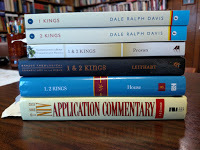 13. 2 Kings: The Power and the Fury by Dale Ralph Davis14. 1 & 2 Kings (NIBC) by Iain W. Provan15. 1 & 2 Kings (NAC Vol. 8) by Paul R. House16. 1 & 2 Kings (NIVAC) by August H. Konkel17. 1 & 2 Kings (Brazos TCOTB) by Peter Leithart18. On Being a Theologian of the Cross by Gerhard O. Forde19. Dogwood by Chris Fabry20. The Whistler by John Grisham21. Murder Must Advertise by Dorothy Sayers22. American Evangelicals and Modern Israel: A Plea for Tough Love by Frederic Martin23. Between Heaven and the Real World by Steven Curtis Chapman24. Gluten Freedom by Alessio Fasano25. Twelve Ways Your Phone Is Changing You by Tony Reinke26. Death Comes for the Deconstructionist by Daniel Taylor27. Delighting in the Trinity by Michael Reeves 28. Hot Water by P.G. Wodehouse29. From Church to Church by Benjamin Vrbicek30. The Boy Who Invented the Bubble Gun by Paul Gallico (2x)31. Nine Tomorrows by Isaac Asimov32. The Storytelling God by Jared Wilson33. Dandelion Fire by N.D. Wilson34. The Man in the Queue by Josephine Tey35. A Shilling for Candles by Josephine Tey36. The Nine Tailors by Dorothy L. Sayers37. Miss Pym Disposes by Josephine Tey38. How to Be an Atheist by Mitch Stokes39. Strong and Weak by Andy Crouch40. Brat Farrar by Josephine Tey41. You Are What You Love by James K.A. Smith42. The Franchise Affair by Josephine Tey43. To Love and Be Wise by Josephine Tey44. The Daughter of Time by Josephine Tey45. The Singing Sands by Josephine Tey46. Marriage and the Mystery of the Gospel by Ray Ortlund47. The Vanishing American Adult by Ben Sasse48. A Small Book about a Big Problem by Ed Welch49. Thick As Thieves by Megan Whalen Turner50. Jayber Crow by Wendell Berry51. Onward by Russell Moore52. Finding Grace in the Face of Dementia by John Dunlop53. The Rooster Bar by John Grisham54. Galatians (NAC) by Timothy George55. Galatians (BECNT) by Douglas Moo56. Be Free by Warren Wiersbe57. Galatians (ZECNT) by Thomas Schreiner58. The Message of Galatians (BST), by John Stott59. Traveling Light by Eugene Peterson60. The Girl on the Boat by P.G. Wodehouse61. A World Lost by Wendell Berry 62. The Tech-Wise Family by Andy Crouch63. Seeking Allah, Finding Jesus by Nabeel Qureshi64. Andy Catlett Early Travels by Wendell Berry65. Pass It On by Champ Thornton66. A Legacy of Spies by John LeCarre 67. The Wild Man Fable by Zeke Pipher68. Descriptions and Prescriptions by Mike Emlet69. Murder in the Dispensary by Jolyon Carr (early pen-name for Edith Pargeter)
* These are books I finished reading in 2017, not the ones I started or the ones I didn't get done. That list is a LOT longer! I read a bunch of them for escapist fun, a few for/with my family, and a lot of them just to learn and grow. They aren't listed (perfectly) in the order I read them. Some of them I am reading for a second or third time (or more!).
As I say each and every year --I'm not endorsing these books just because they are listed here. Some of them are really good and some are really bad. Most are somewhere in between. Read with discernment.
Here's the article where I explain why I post these.
Lists from previous years:
2016
2015
2014
2013
2012
2011
2010
2009
2008 (first half, second half)
2007 (first half, second half)
2006 (first half, second half)
2005 (first half, second half)
Today, I'm posting the full list of books I completed* this year.
1. Hillbilly Elegy by J.D. Vance2. Quick Service by P.G. Wodehouse3. Sister Pelagia and the Red Cockerel by Boris Akunin4. Dr. Doctrine’s Christian Comix on the Christian Life by Fred Sanders5. The Triune God by Fred Sanders6. The Mistletoe Murder by P.D. James7. Talking About Detective Fiction by P.D. James8. Dr. Doctrine’s Christian Comix on Biblical Images by Fred Sanders9. Hannah Coulter by Wendell Berry10. Christian History Made Easy by Timothy Paul Jones11. Something New by P.G. Wodehouse12. The Promise of Jesse Woods by Chris Fabry
 13. 2 Kings: The Power and the Fury by Dale Ralph Davis14. 1 & 2 Kings (NIBC) by Iain W. Provan15. 1 & 2 Kings (NAC Vol. 8) by Paul R. House16. 1 & 2 Kings (NIVAC) by August H. Konkel17. 1 & 2 Kings (Brazos TCOTB) by Peter Leithart18. On Being a Theologian of the Cross by Gerhard O. Forde19. Dogwood by Chris Fabry20. The Whistler by John Grisham21. Murder Must Advertise by Dorothy Sayers22. American Evangelicals and Modern Israel: A Plea for Tough Love by Frederic Martin23. Between Heaven and the Real World by Steven Curtis Chapman24. Gluten Freedom by Alessio Fasano25. Twelve Ways Your Phone Is Changing You by Tony Reinke26. Death Comes for the Deconstructionist by Daniel Taylor27. Delighting in the Trinity by Michael Reeves 28. Hot Water by P.G. Wodehouse29. From Church to Church by Benjamin Vrbicek30. The Boy Who Invented the Bubble Gun by Paul Gallico (2x)31. Nine Tomorrows by Isaac Asimov32. The Storytelling God by Jared Wilson33. Dandelion Fire by N.D. Wilson34. The Man in the Queue by Josephine Tey35. A Shilling for Candles by Josephine Tey36. The Nine Tailors by Dorothy L. Sayers37. Miss Pym Disposes by Josephine Tey38. How to Be an Atheist by Mitch Stokes39. Strong and Weak by Andy Crouch40. Brat Farrar by Josephine Tey41. You Are What You Love by James K.A. Smith42. The Franchise Affair by Josephine Tey43. To Love and Be Wise by Josephine Tey44. The Daughter of Time by Josephine Tey45. The Singing Sands by Josephine Tey46. Marriage and the Mystery of the Gospel by Ray Ortlund47. The Vanishing American Adult by Ben Sasse48. A Small Book about a Big Problem by Ed Welch49. Thick As Thieves by Megan Whalen Turner50. Jayber Crow by Wendell Berry51. Onward by Russell Moore52. Finding Grace in the Face of Dementia by John Dunlop53. The Rooster Bar by John Grisham54. Galatians (NAC) by Timothy George55. Galatians (BECNT) by Douglas Moo56. Be Free by Warren Wiersbe57. Galatians (ZECNT) by Thomas Schreiner58. The Message of Galatians (BST), by John Stott59. Traveling Light by Eugene Peterson60. The Girl on the Boat by P.G. Wodehouse61. A World Lost by Wendell Berry 62. The Tech-Wise Family by Andy Crouch63. Seeking Allah, Finding Jesus by Nabeel Qureshi64. Andy Catlett Early Travels by Wendell Berry65. Pass It On by Champ Thornton66. A Legacy of Spies by John LeCarre 67. The Wild Man Fable by Zeke Pipher68. Descriptions and Prescriptions by Mike Emlet69. Murder in the Dispensary by Jolyon Carr (early pen-name for Edith Pargeter)
* These are books I finished reading in 2017, not the ones I started or the ones I didn't get done. That list is a LOT longer! I read a bunch of them for escapist fun, a few for/with my family, and a lot of them just to learn and grow. They aren't listed (perfectly) in the order I read them. Some of them I am reading for a second or third time (or more!).
As I say each and every year --I'm not endorsing these books just because they are listed here. Some of them are really good and some are really bad. Most are somewhere in between. Read with discernment.
Here's the article where I explain why I post these.
Lists from previous years:
2016
2015
2014
2013
2012
2011
2010
2009
2008 (first half, second half)
2007 (first half, second half)
2006 (first half, second half)
2005 (first half, second half)
December 28, 2017
More Good Books from 2017
Yesterday, I named my "top books of 2017." Today, I want to share some of the other good books that I had the privilege of reading in the last twelve months. Like yesterday's list, most of these books pushed me in significant directions, either with new perspectives or new levels.
On Being a Theologian of the Cross by Gerhard O. Forde
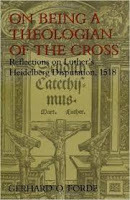 In 2017, we celebrated the 500th anniversary of the Protestant Reformation. To go deeper in that vein, I re-read significant portions of Luther: Man Between God and the Devil by Heiko Oberman and Luther's own commentary on Galatians (for my sermon series). I also attended the EFCA Theology Conference which looked closer at the theology of the Reformation. One of my friends recommended that to understand Lutheran theology, I ought to read works by Gerhard Forde. I chose On Being a Theologian of the Cross because it is an explanation of and elaboration on the Heidelberg Disputation, a work of Luther's that I did not know nearly enough about. Between Forde's writing and the conference lecture from David Luy I now have a much better understanding of the antithesis that Luther was teaching.
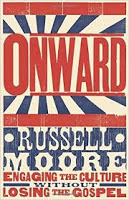 Onward by Russell Moore
I've been wanting to read this book by Moore since it came out, but only got around to it this year. It is an excellent presentation of his theology of cultural engagement: "engaging the culture without losing the gospel." I found myself nodding in agreement and reading it out loud to Heather again and again. I'm not very good at engaging the wider culture (and feel less competent as time goes on and culture grows so wildly challenging), but Onward gives me a direction in which to point.
Hillbilly Elegy by J.D. Vance
Speaking of culture, this book was all the rage a year ago and rightly so. It tells the story of an often forgotten segment of the American populace, one that I can relate to both in my own family of origin and among the people whom I minister now.

American Evangelicals and Modern Israel: A Plea for Tough Love by Frederic Martin
Martin, an EFCA pastor, attempts to look at the story of modern Israel with a loving but critical eye. He shows a whole other side to both the history and the theology of our engagement with the current nation of Israel than gets presented by some popular Bible teachers. Frankly, I don't know what I think of some of these things, but I'm much better informed for having read this.
Death Comes for the Deconstructionist by Daniel Taylor
Taylor's book is actually a novel, but as a work of fiction it was teaching truth. In fact, it was teaching that there is truth. I thoroughly enjoyed this book, as my gushing review reveals.
Speaking of fiction that teaches, in 2017 I visited Port William, Kentucky the literary world of Wendell Berry for the first time. I read Hannah Coulter and joy-cried through the last third. As the year progressed I also read A World Lost, Andy Catlett Early Travels, and Jayber Crow. I'll be visiting Port William again and again.
Descriptions and Prescriptions by Michael Emlet
Michael Emlet, one of my wise biblical counseling professors from CCEF and WTS, wrote an excellent (yet short!) book on better understanding the role of psychiatric labels and medications from a biblical counseling perspective, trying to be neither too hot nor too cold but just right. When it came out, I got to publish an interview with Mike on his book. I draw on the framework he lays out every week in pastoral ministry.
 The Wild Man Fable and Wild Mountain Tribe by Zeke Pipher
This Spring, my friend Zeke Pipher published a unique little story about a "Wild Man" to teach young men about biblical masculinity. I'm a fan. He also published a small group guide which our youth boys' class is working through on Wednesday nights at our church. Here's my interview with Zeke about these new resources.
Pass It On by Champ Thornton

Another one of my friends also had a new book out this Fall. Here's what I said in my endorsement:
The Storytelling God by Jared C. Wilson
While I'm telling you about books that have been directly helpful in my pastoral ministry, I've got to mention The Storytelling God. This was my first Jared Wilson book, but it won't be my last. This year at LEFC's Family Bible Week, I taught on how to read, understand, and apply the parables of Jesus. I found Wilson's book to be one of the most helpful introductions to the parables--pithy, radical, orienting, and quotable. Because of reading this one, our small group has picked up The Imperfect Disciple to read over the course of this school year. Good stuff!
Christian History Made Easy by Timothy Paul Jones
Speaking of our small group, our last big study was an overview of church history something I had never taught through in my nearly two decades of pastoral ministry. Timothy Jones' Christian History Made Easy was indispensable! He distilled two millennia of names, dates, ideas, and movements into a handy little handbook--with pictures! We used the discussion guide in the back including the weekly "quizzes" to keep things fun. I highly recommend it, especially if history is not your forte.
And to round out this list, I have to mention the excellent commentaries on the Books of Kings and the Letter to the Galatians that were my constant companions all year. I am so grateful to pastor a church that allows me to buy helpful tools like that to do my job.
Tolle lege!
On Being a Theologian of the Cross by Gerhard O. Forde
In 2017, we celebrated the 500th anniversary of the Protestant Reformation. To go deeper in that vein, I re-read significant portions of Luther: Man Between God and the Devil by Heiko Oberman and Luther's own commentary on Galatians (for my sermon series). I also attended the EFCA Theology Conference which looked closer at the theology of the Reformation. One of my friends recommended that to understand Lutheran theology, I ought to read works by Gerhard Forde. I chose On Being a Theologian of the Cross because it is an explanation of and elaboration on the Heidelberg Disputation, a work of Luther's that I did not know nearly enough about. Between Forde's writing and the conference lecture from David Luy I now have a much better understanding of the antithesis that Luther was teaching.
Onward by Russell MooreI've been wanting to read this book by Moore since it came out, but only got around to it this year. It is an excellent presentation of his theology of cultural engagement: "engaging the culture without losing the gospel." I found myself nodding in agreement and reading it out loud to Heather again and again. I'm not very good at engaging the wider culture (and feel less competent as time goes on and culture grows so wildly challenging), but Onward gives me a direction in which to point.
Hillbilly Elegy by J.D. Vance
Speaking of culture, this book was all the rage a year ago and rightly so. It tells the story of an often forgotten segment of the American populace, one that I can relate to both in my own family of origin and among the people whom I minister now.
American Evangelicals and Modern Israel: A Plea for Tough Love by Frederic Martin
Martin, an EFCA pastor, attempts to look at the story of modern Israel with a loving but critical eye. He shows a whole other side to both the history and the theology of our engagement with the current nation of Israel than gets presented by some popular Bible teachers. Frankly, I don't know what I think of some of these things, but I'm much better informed for having read this.
Death Comes for the Deconstructionist by Daniel Taylor
Taylor's book is actually a novel, but as a work of fiction it was teaching truth. In fact, it was teaching that there is truth. I thoroughly enjoyed this book, as my gushing review reveals.
Speaking of fiction that teaches, in 2017 I visited Port William, Kentucky the literary world of Wendell Berry for the first time. I read Hannah Coulter and joy-cried through the last third. As the year progressed I also read A World Lost, Andy Catlett Early Travels, and Jayber Crow. I'll be visiting Port William again and again.
Descriptions and Prescriptions by Michael Emlet
Michael Emlet, one of my wise biblical counseling professors from CCEF and WTS, wrote an excellent (yet short!) book on better understanding the role of psychiatric labels and medications from a biblical counseling perspective, trying to be neither too hot nor too cold but just right. When it came out, I got to publish an interview with Mike on his book. I draw on the framework he lays out every week in pastoral ministry.
The Wild Man Fable and Wild Mountain Tribe by Zeke PipherThis Spring, my friend Zeke Pipher published a unique little story about a "Wild Man" to teach young men about biblical masculinity. I'm a fan. He also published a small group guide which our youth boys' class is working through on Wednesday nights at our church. Here's my interview with Zeke about these new resources.
Pass It On by Champ Thornton
Another one of my friends also had a new book out this Fall. Here's what I said in my endorsement:
In Pass it On, Champ Thornton has created another unique resource for assisting Christian parents to extract the precious wisdom from the endless goldmine of the Book of Proverbs and impart its righteous riches to their children. I will be using it with my kids and urge others to dig in, too.I also got to interview Champ about Pass It On. I highly recommend it, especially for the short chapter on how to read the Book of Proverbs. I teach from Proverbs every Wednesday with my youth boys, and this is the kind of thing I'm always telling them!
The Storytelling God by Jared C. Wilson
While I'm telling you about books that have been directly helpful in my pastoral ministry, I've got to mention The Storytelling God. This was my first Jared Wilson book, but it won't be my last. This year at LEFC's Family Bible Week, I taught on how to read, understand, and apply the parables of Jesus. I found Wilson's book to be one of the most helpful introductions to the parables--pithy, radical, orienting, and quotable. Because of reading this one, our small group has picked up The Imperfect Disciple to read over the course of this school year. Good stuff!
Christian History Made Easy by Timothy Paul Jones
Speaking of our small group, our last big study was an overview of church history something I had never taught through in my nearly two decades of pastoral ministry. Timothy Jones' Christian History Made Easy was indispensable! He distilled two millennia of names, dates, ideas, and movements into a handy little handbook--with pictures! We used the discussion guide in the back including the weekly "quizzes" to keep things fun. I highly recommend it, especially if history is not your forte.
And to round out this list, I have to mention the excellent commentaries on the Books of Kings and the Letter to the Galatians that were my constant companions all year. I am so grateful to pastor a church that allows me to buy helpful tools like that to do my job.
Tolle lege!
December 27, 2017
My Top Books of 2017
The flood-tide of 2017 events has crested (I sure hope), and it's time again to share some of the good things I've had the privilege of reading this year.
It's been a great year for reading for me though I haven't gotten to write about it much. I didn't read very many books (less than 70 and a bunch of them were escapist fiction), but a goodly percentage were great books that really challenged me. In fact, if I had to name a theme for the year, it was that I read great books that strongly pushed me in directions I needed to go.
What I Mean By "Top Books"
As in past years [2013, 2014, 2015, 2016], my "Top Books" list is not necessarily the best books that were published that particular year or the most enjoyable either. I intend it to be a list of the Christian nonfiction books I read:
- that had the most personal impact on me, my thinking, my heart.
- that I was the most consistently enthusiastic about.
- that I kept coming back to again and again.
- that I couldn't help recommending to others (and recommend without reservations and significant caveats).
Choosing which books to name as "the top" ones was really hard this year. I think that most years I've named five. This year I barely whittled it down to seven (and that by sneaking in some "honorable mentions"). Tune in tomorrow for even more great books.
My Top Books Read in 2017
 1. The Triune God by Fred Sanders
Sander's newest book on the Trinity in the "New Studies in Dogmatics" series from Zondervan pushed me in a whole lot of directions not the least of which was stretching my mind to read on an higher academic level.
As for the content, this is what I said to LifeWay Pastors when they asked about it:
 2. How to Be an Atheist by Mitch Stokes
Stoke's book was also a bit beyond my intellectual abilities to fully comprehend, but I still thoroughly enjoyed the watching his mind work. In How To Be An Atheist, Mitch Stokes shines a skeptical light on skepticism. After taking on David Hume and showing the limits of skepticism, he turns to science (which has not disproven God, perhaps quite the opposite) and then morality (making the moral argument--which I have always found so compelling since I was introduced to it by C.S. Lewis--in new sophisticated ways in the current climate of militant atheist skepticism).
Stokes is well qualified with his Phd in philosophy and his MS in engineering and his clever and mischievous sense of humor. He does a wonderful job of presenting the best arguments for the other side and then interacting respectfully but sharply with them. I need to read it again soon.
Speaking of presenting the best arguments of the other side, I finally got to finish the series of apologetic books by Nabeel Qureshi by reading Seeking Allah, Finding Jesus which turned out to be my favorite of them all. Qureshi is the most sympathetic apologist I've ever been exposed to. It was strange to start reading a book while the author was living and then, sadly, to finish it after he had passed. I pray that his books stay in print for a very long time and reach many people for Christ.
 3. Twelve Ways Your Phone Is Changing You by Tony Reinke
This book was no fun to read. Reinke pushed me to reevaluate my use of technology (the smartphone being just the pinnacle of personal tech in our day) in significant ways.
Reinke is no enemy of technology. He does a wonderful job of celebrating it as a gift of God. But he is a shrewd observer of how our sinful hearts twist around any technology and take it in unhealthy directions. [See these EFCA Now reviews I got to coordinate for more.] I need to read it again soon and will be handing it to my kids as they get phones of their own.
In a very similar vein, Andy Crouch's The Tech-Wise Family was a very good short read on how to put technology in its proper place (hint: not the center).
 4. A Small Book about a Big Problem by Ed Welch
My one sentence review:
This book is small like a "ghost pepper" is small.
I published a longer review this Fall when I ran a contest giving away a copy. This book pushed me to identify my anger problem when it isn't coming out as rage.
I love how Ed has gotten really good at packing pungent thoughts into short conversational meditations. My only criticism is that the title doesn't say what the book is about! I need to read it again soon.
 5. Marriage and the Mystery of the Gospel by Ray Ortlund
This book pushed me towards beauty.
Ortlund's book wasn't an academically challenging read nor did it challenge me to love Heather in a different way, but it did sweetly remind me of what I know about marriage--marriage has always been a beautiful picture of the gospel.
Ray uses carefully chosen words to pull together and powerfully present how marriage fits into the grand storyline of the Bible. It's imminently quotable (Tweetable!) and rich. It encouraged me to continue to love my wife as I've been learning to do for the last 24 years and to love her for the glory of Jesus. I need to read it again.
 6. The Vanishing American Adult by Ben Sasse
I expected to be challenged by Sasse's book (and I was), but I was surprised by how encouraged I was by reading it.
The challenge is that Senator Sasse is an uber-talented intellectual who sets a rigorously high bar for raising up the next generation of American citizens. I can't relate to his achievements (aside from getting jealous) and could feel like many of his illustrative examples are unattainable. I also expected to be depressed by some of the trends he was observing (vanishing adulthood is not a positive thing!)
But I was actually encouraged. My biggest encouragement was that I recognized the broad outlines of his philosophy of parenting as being the same as Heather and mine. "Yes! That's what we're trying to do with our kids!" was the thought that regularly reoccurred as I read it. I enjoyed reading his engaging (often humorous) prose. I dog-eared a bunch of pages, especially the ones with list-like practical suggestions and began loaning it out to other parents.
 7. Finding Grace in the Face of Dementia by John Dunlop
Dunlop's book pushed me to love people more skillfully and to face my impending mortality.
Interestingly, Dr. Dunlop used to be our physician when I was a young seminarian. I'm glad he's focused on geriatrics now because he's shown a deep understanding of what it feels like to grow weak with age and infirmity.
The greatest strength of this book was describing what dementia is like from the perspective of both the person suffering from it and a person caring for someone who has it. Everyone who reads it (and I've read multiple reviews of it as the book review coordinator for EFCA Now) says the same thing.
So many people are affected by this that a book like this needed written. Our copy is getting passed all the way around our little church. I'm glad that this one is so rich with theological insight and practical counsel.
It was hard to read because just as there is a good chance Dr. Dunlop will eventually suffer from dementia himself (and his letter to his family at the end is a beautiful meditation on such), there is a good chance that either Heather or I or both of us will suffer similarly as we get old. As a preview of coming attractions, it was a difficult but salutary harbinger to consider. I need to read it again.
It's been a great year for reading for me though I haven't gotten to write about it much. I didn't read very many books (less than 70 and a bunch of them were escapist fiction), but a goodly percentage were great books that really challenged me. In fact, if I had to name a theme for the year, it was that I read great books that strongly pushed me in directions I needed to go.
What I Mean By "Top Books"
As in past years [2013, 2014, 2015, 2016], my "Top Books" list is not necessarily the best books that were published that particular year or the most enjoyable either. I intend it to be a list of the Christian nonfiction books I read:
- that had the most personal impact on me, my thinking, my heart.
- that I was the most consistently enthusiastic about.
- that I kept coming back to again and again.
- that I couldn't help recommending to others (and recommend without reservations and significant caveats).
Choosing which books to name as "the top" ones was really hard this year. I think that most years I've named five. This year I barely whittled it down to seven (and that by sneaking in some "honorable mentions"). Tune in tomorrow for even more great books.
My Top Books Read in 2017
1. The Triune God by Fred SandersSander's newest book on the Trinity in the "New Studies in Dogmatics" series from Zondervan pushed me in a whole lot of directions not the least of which was stretching my mind to read on an higher academic level.
As for the content, this is what I said to LifeWay Pastors when they asked about it:
I want to understand, as much as I can, the deepest mysteries of Who God is, and what is more mysterious than the Tri-Personal-Unity of God? Sanders is taking me deeper than I’ve ever gone without rabbit-trailing into unhealthy and unhelpful speculation.I have also spent several hours watching the video course companion to the book. There is still so much I don't understand about this fundamental doctrine of the Christian faith, but I feel that, with Fred's help (and other good books such as Delighting in the Trinity by Michael Reeves), I'm making progress. I need to read it again.
2. How to Be an Atheist by Mitch StokesStoke's book was also a bit beyond my intellectual abilities to fully comprehend, but I still thoroughly enjoyed the watching his mind work. In How To Be An Atheist, Mitch Stokes shines a skeptical light on skepticism. After taking on David Hume and showing the limits of skepticism, he turns to science (which has not disproven God, perhaps quite the opposite) and then morality (making the moral argument--which I have always found so compelling since I was introduced to it by C.S. Lewis--in new sophisticated ways in the current climate of militant atheist skepticism).
Stokes is well qualified with his Phd in philosophy and his MS in engineering and his clever and mischievous sense of humor. He does a wonderful job of presenting the best arguments for the other side and then interacting respectfully but sharply with them. I need to read it again soon.
Speaking of presenting the best arguments of the other side, I finally got to finish the series of apologetic books by Nabeel Qureshi by reading Seeking Allah, Finding Jesus which turned out to be my favorite of them all. Qureshi is the most sympathetic apologist I've ever been exposed to. It was strange to start reading a book while the author was living and then, sadly, to finish it after he had passed. I pray that his books stay in print for a very long time and reach many people for Christ.
3. Twelve Ways Your Phone Is Changing You by Tony ReinkeThis book was no fun to read. Reinke pushed me to reevaluate my use of technology (the smartphone being just the pinnacle of personal tech in our day) in significant ways.
Reinke is no enemy of technology. He does a wonderful job of celebrating it as a gift of God. But he is a shrewd observer of how our sinful hearts twist around any technology and take it in unhealthy directions. [See these EFCA Now reviews I got to coordinate for more.] I need to read it again soon and will be handing it to my kids as they get phones of their own.
In a very similar vein, Andy Crouch's The Tech-Wise Family was a very good short read on how to put technology in its proper place (hint: not the center).
4. A Small Book about a Big Problem by Ed WelchMy one sentence review:
This book is small like a "ghost pepper" is small.
I published a longer review this Fall when I ran a contest giving away a copy. This book pushed me to identify my anger problem when it isn't coming out as rage.
I love how Ed has gotten really good at packing pungent thoughts into short conversational meditations. My only criticism is that the title doesn't say what the book is about! I need to read it again soon.
5. Marriage and the Mystery of the Gospel by Ray OrtlundThis book pushed me towards beauty.
Ortlund's book wasn't an academically challenging read nor did it challenge me to love Heather in a different way, but it did sweetly remind me of what I know about marriage--marriage has always been a beautiful picture of the gospel.
Ray uses carefully chosen words to pull together and powerfully present how marriage fits into the grand storyline of the Bible. It's imminently quotable (Tweetable!) and rich. It encouraged me to continue to love my wife as I've been learning to do for the last 24 years and to love her for the glory of Jesus. I need to read it again.
6. The Vanishing American Adult by Ben SasseI expected to be challenged by Sasse's book (and I was), but I was surprised by how encouraged I was by reading it.
The challenge is that Senator Sasse is an uber-talented intellectual who sets a rigorously high bar for raising up the next generation of American citizens. I can't relate to his achievements (aside from getting jealous) and could feel like many of his illustrative examples are unattainable. I also expected to be depressed by some of the trends he was observing (vanishing adulthood is not a positive thing!)
But I was actually encouraged. My biggest encouragement was that I recognized the broad outlines of his philosophy of parenting as being the same as Heather and mine. "Yes! That's what we're trying to do with our kids!" was the thought that regularly reoccurred as I read it. I enjoyed reading his engaging (often humorous) prose. I dog-eared a bunch of pages, especially the ones with list-like practical suggestions and began loaning it out to other parents.
7. Finding Grace in the Face of Dementia by John DunlopDunlop's book pushed me to love people more skillfully and to face my impending mortality.
Interestingly, Dr. Dunlop used to be our physician when I was a young seminarian. I'm glad he's focused on geriatrics now because he's shown a deep understanding of what it feels like to grow weak with age and infirmity.
The greatest strength of this book was describing what dementia is like from the perspective of both the person suffering from it and a person caring for someone who has it. Everyone who reads it (and I've read multiple reviews of it as the book review coordinator for EFCA Now) says the same thing.
So many people are affected by this that a book like this needed written. Our copy is getting passed all the way around our little church. I'm glad that this one is so rich with theological insight and practical counsel.
It was hard to read because just as there is a good chance Dr. Dunlop will eventually suffer from dementia himself (and his letter to his family at the end is a beautiful meditation on such), there is a good chance that either Heather or I or both of us will suffer similarly as we get old. As a preview of coming attractions, it was a difficult but salutary harbinger to consider. I need to read it again.