Matthew C. Mitchell's Blog, page 116
August 13, 2014
The LORD Is My Rock
 The LORD is My Rock - The Message of 2 Samuel
00. "How the Mighty Have Fallen!"
01. King David
02. David's Kingdom
03. The Right Way to Worship
04. "I Will Build a House for You."
05. The Rule of King David
06. David's Scandal
07. Why Is This Sordid Story in the Bible?
08. Absalom's Conspiracy
09. “O Absalom, My Son, My Son!”
10. The Return of the King
11. Worthy of Praise
12. Learning from the Heart of King David


August 10, 2014
[Matt's Messages] "Learning from the Heart of King David”
 “Learning from the Heart of King David”
The LORD Is My Rock: The Message of 2 Samuel
August 10, 2014 :: 2 Samuel 23:1-24:25
This morning, we are going to finish our sermon series on 2 Samuel. This is the last message in that series.
We started 1st Samuel on September 1, 2013. So, for about a year (a total of 33 messages), we’ve been studying these 2 books of God’s Word.
The first series we called “A Heart for the Heart of God.” And the key idea there was seeing what God saw in David, what God delighted to see in David. A heart for His own heart. David far from perfect, but he did love God.
The second series, we have called “The LORD is My Rock.” And the key idea there was seeing what David saw in God, what David delighted to know about His Lord.
In the last chapter (chapter 22), David said, “The LORD is my rock, my fortress, and my deliverer; my God is my rock in whom I take refuge, my shield and the horn of my salvation.” Even though David’s kingly rule was marred by his sin and its consequences, David knew that God had been good to him over and over again, and gave Him praise.
As we study these last two chapters, I want us to take one more long look at the heart of David.
I’m going to call this message, “Learning from the Heart of King David.”
As we said last time, these last four chapters are a different kind of ending than we would probably come up with.
Chapter 21 was out of chronological order and so is chapter 24, the last chapter. Chapters 22 and 23 are from later in David’s rule. Chapter 23 says that it starts with David’s last words, meaning, not the last thing he ever said, but the last public statement he ever wrote.
His last psalm. His last time going “on the record.”
And then, there is kind of a hall of fame list of David’s “mighty men.”
And then, in chapter 24, a story from somewhere in the middle of David’s reign when he made a tragic error with tragic consequences.
I wouldn’t put these thing at the end of my book, if I were writing 2 Samuel.
Aren’t you glad I didn’t write 2 Samuel? God is.
These are what He wants for us to get at the end of 2 Samuel, and what I think I need to point out is what we see and hear from the heart of David in these last two chapters.
What does David say and sing and do that reveals to us what a godly heart is like?
Let’s take one more time to learn from the heart of King David.
Let’s look at verse 1 of chapter 23.
“These are the last words of David: ‘The oracle of David son of Jesse, the oracle of the man exalted by the Most High, the man anointed by the God of Jacob, Israel's singer of songs:”
No question about who these next words are written by, is there?
“David son of Jesse.” He’s been (after God) the main character of these two books. “Son of Jesse.” Exalted by the Most High. He’s been made king. “Anointed” not just by Samuel in the presence of his brothers, but by God, the God of Jacob, the God of the promises.
And a songwriter. “Israel’s singer of songs.”
The King James has, “The Sweet Psalmist of Israel.”
What is his last psalm all about?
It’s prophetic. Verse 2.
“The Spirit of the LORD spoke through me; his word was on my tongue. The God of Israel spoke, the Rock of Israel said to me: 'When one rules over men in righteousness, when he rules in the fear of God, he is like the light of morning at sunrise on a cloudless morning, like the brightness after rain that brings the grass from the earth.’”
He’s singing about being a righteous ruler.
It’s a message he got from God himself. Again, he calls God “the Rock.” A trustworthy place to stand. Something solid to hold onto in a shifting world.
God said to him, “When one rules over men in righteousness, when he rules in the fear of God, he is like the light of morning at sunrise on a cloudless morning, like the brightness after rain that brings the grass from the earth.’”
Sounds good, doesn’t it?
When you have a righteous ruler that fears God then it is so good! It is pure blessing.
Beautiful like light at dawn and refreshing like how everything is after a life-giving rain.
And that’s the kind of rule that David has sought to provide for his kingdom.
He has done it IM-perfectly, that’s for sure.
But it’s been what his heart has desired.
And now, looking forward, David trusts that God has good things in store for his kingdom. He has promised it. V.5
“Is not my house right with God? Has he not made with me an everlasting covenant, arranged and secured in every part? Will he not bring to fruition my salvation and grant me my every desire?”
The answer to all of those rhetorical questions is “Yes.”
His house is right with God.
God has made an everlasting covenant with David. Remember 2 Samuel 7?
And God will bring fruition to David’s salvation and grant his desires.
Yes, He will.
Here’s what we learn from the heart of David’s last psalm:
#1. BELIEVING IN THE PROMISES OF GOD.
David believes that God is going to do everything that He promised that He would do.
“Has he not made with me an everlasting covenant, arranged and secured in every part?”
David exults in God’s promises. His covenant. He makes a song about it.
David knows that God will keep His promises. He always does. V.6
“But evil men are all to be cast aside like thorns, which are not gathered with the hand. Whoever touches thorns uses a tool of iron or the shaft of a spear; they are burned up where they lie.’”
Evil men are the opposite of righteous rulers.
David has always opposed them, and He knows that God will, too.
I would love for my last song to be so confident and joyful, too.
To know and to proclaim not just how good God has been all of my life (like the last chapter), but to lay down to the sleep of death knowing and proclaiming how good God will be to me and to those I love.
Have you ever noticed how often the applicational point of an Old Testament passage is to trust that God will always keep His promises?
How many times have I said that as we’ve gone through Genesis, Exodus, Numbers, Joshua, Judges, Ruth, and now the books of Samuel?
Do you think that God is trying to get it across to us that He is faithful?
And wherever David has failed, His great great great great grandson will not fail.
King Jesus’ rule will be the light of morning at sunrise on a cloudless morning, and like the brightness after rain that brings the grass from the earth.
Amen?
Now, this next section is often called “David’s Mighty Men” because it’s a long list of the best warriors in David’s armed forces. These guys are special forces of the special forces!
And it’s clearly important that they be honored for their service to, for, and with David.
But there’s a little detail that gets easily overlooked when we read their stories, and it just pokes out from behind the scenes in a couple of verses. We don’t want to miss where their victories came from. V.8
“These are the names of David's mighty men: Josheb-Basshebeth, a Tahkemonite, was chief of the Three; he raised his spear against eight hundred men, whom he killed in one encounter.”
Wow! Can you imagine? This guy would scare Chuck Norris! V.9
“Next to him was Eleazar son of Dodai the Ahohite. As one of the three mighty men, he was with David when they taunted the Philistines gathered at Pas Dammim for battle. Then the men of Israel retreated, but he stood his ground and struck down the Philistines till his hand grew tired and froze to the sword. [Here it is!] The LORD brought about a great victory that day. The troops returned to Eleazar, but only to strip the dead.
Next to him was Shammah son of Agee the Hararite. When the Philistines banded together at a place where there was a field full of lentils, Israel's troops fled from them. But Shammah took his stand in the middle of the field. He defended it and struck the Philistines down, and [here it is again] the LORD brought about a great victory.”
Here is the lesson learned.
#2. REJOICING IN THE VICTORY OF GOD.
These are great battles fought by courageous men, but the victory was, ultimately, from God.
And David knew that. V.13
“During harvest time, three of the thirty chief men came down to David at the cave of Adullam, while a band of Philistines was encamped in the Valley of Rephaim. [This is probably before he was even king.] At that time David was in the stronghold, and the Philistine garrison was at Bethlehem [his hometown].
David longed for water and said, ‘Oh, that someone would get me a drink of water from the well near the gate of Bethlehem!’
[And a trio of his guys, said, ‘Alright, let’s do it.]
So the three mighty men broke through the Philistine lines [fighting all the way!], drew water from the well near the gate of Bethlehem and carried it back to David.
But he refused to drink it; instead, he poured it out before the LORD. ‘Far be it from me, O LORD, to do this!’ he said. ‘Is it not the blood of men who went at the risk of their lives?’ And David would not drink it. Such were the exploits of the three mighty men.”
Was David throwing that water away?
No, he (v.16), “poured it out before the LORD” like a drink offering sacrifice.
He honored those men and the risk they took, and He worshipped God in the act.
David rejoiced in the victory of God.
Do you and I rejoice in God in the victories that He gives us?
Often I ask God for help. I don’t know if you do this, too, but often I ask God for help and then I steal the glory when the good things roll in.
Or I thank other people but I don’t thank God for answered prayer.
Not enough.
If you have a heart for the heart of God, you give God the credit when the victories come.
David was good at that. He poured out that water as a statement of honor of the mighty men and worship of the God who gives victory.
Verses 18-39 are a further list of these mighty men. The Bible loves lists like this and it reminds us that people are important to God and that even nobodies who no one even remembers except that they were on this list matter to God.
And God knows your name and my name, too. And we aren’t that mighty. V.18
“Abishai the brother of Joab son of Zeruiah was chief of the Three. He raised his spear against three hundred men, whom he killed, and so he became as famous as the Three. Was he not held in greater honor than the Three? He became their commander, even though he was not included among them.
Benaiah son of Jehoiada was a valiant fighter from Kabzeel, who performed great exploits. He struck down two of Moab's best men. He also went down into a pit on a snowy day and killed a lion. And he struck down a huge Egyptian. Although the Egyptian had a spear in his hand, Benaiah went against him with a club. He snatched the spear from the Egyptian's hand and killed him with his own spear. Such were the exploits of Benaiah son of Jehoiada; he too was as famous as the three mighty men. He was held in greater honor than any of the Thirty, but he was not included among the Three. And David put him in charge of his bodyguard.
Among the Thirty were: Asahel the brother of Joab, Elhanan son of Dodo from Bethlehem, Shammah the Harodite, Elika the Harodite, Helez the Paltite, Ira son of Ikkesh from Tekoa, Abiezer from Anathoth, Mebunnai the Hushathite, Zalmon the Ahohite, Maharai the Netophathite, Heled son of Baanah the Netophathite, Ithai son of Ribai from Gibeah in Benjamin, Benaiah the Pirathonite, Hiddai from the ravines of Gaash, Abi-Albon the Arbathite, Azmaveth the Barhumite, Eliahba the Shaalbonite, the sons of Jashen, Jonathan son of Shammah the Hararite, Ahiam son of Sharar the Hararite, Eliphelet son of Ahasbai the Maacathite, Eliam son of Ahithophel the Gilonite, Hezro the Carmelite, Paarai the Arbite, Igal son of Nathan from Zobah, the son of Hagri, Zelek the Ammonite, Naharai the Beerothite, the armor-bearer of Joab son of Zeruiah, Ira the Ithrite, Gareb the Ithrite and Uriah the Hittite. There were thirty-seven in all.”
It’s hard to read that last one, isn’t it?
It reminds us that even though David loved the Lord, he had feet of clay. And he sinned greatly.
But it also reminds us of God’s grace, doesn’t it? That even though David sinned so greatly, He could still be forgiven and used of God.
That’s what happens in the next chapter again. Chapter 24, verse 1.
“Again the anger of the LORD burned against Israel, and he incited David against them, saying, ‘Go and take a census of Israel and Judah.’ So the king said to Joab and the army commanders with him, ‘Go throughout the tribes of Israel from Dan to Beersheba and enroll the fighting men, so that I may know how many there are.’”
Now, verse 1 is confusing. It seems to say that God commanded David to take a census, which we’re going to read in a few sentences is a really really really bad idea.
Well, that’s about what it says, and I don’t know that I can easily explain it.
Israel has made God angry with some unstated sinful behavior. And God has decided to use David’s foolishness to bring judgment on Israel.
So, God stirs up David to take this census–now the book of 1 Chronicles makes it a little more complicated but perhaps clearer to say that Satan incited David to do this foolish thing.
I think that probably means that God in His sovereign wisdom permits Satan tempt David into doing something very wrong so that God’s ultimate purpose is achieved.
And the author of 1 Samuel is just cutting out the middleman in the story.
Any way about it, David shouldn’t do this thing.
Do you know what I say so? Because even Joab is worried about it.
And Joab, as we’ve seen is no stickler for ethics. He thinks it’s a bad idea. V.3
“But Joab replied to the king, ‘May the LORD your God multiply the troops a hundred times over, and may the eyes of my lord the king see it. But why does my lord the king want to do such a thing?’
[We don’t why this particular census was evil. Perhaps it was so that David could rest and trust in his armies instead of in the Lord. Or perhaps he wasn’t following the Law to the letter as he should have. Or perhaps he was acting like all of the other kings of the nations. Acting like Saul did. We’re not sure. V.4]
The king's word, however, overruled Joab and the army commanders; so they left the presence of the king to enroll the fighting men of Israel. After crossing the Jordan, they camped near Aroer, south of the town in the gorge, and then went through Gad and on to Jazer. They went to Gilead and the region of Tahtim Hodshi, and on to Dan Jaan and around toward Sidon. Then they went toward the fortress of Tyre and all the towns of the Hivites and Canaanites. Finally, they went on to Beersheba in the Negev of Judah.
After they had gone through the entire land, they came back to Jerusalem at the end of nine months and twenty days. Joab reported the number of the fighting men to the king: In Israel there were eight hundred thousand able-bodied men who could handle a sword, and in Judah five hundred thousand. [1.2 million soldiers.]”
And all of a sudden, David had an attack of conscience.
“What have I done?” v.10
“David was conscience-stricken after he had counted the fighting men, and he said to the LORD, ‘I have sinned greatly in what I have done. Now, O LORD, I beg you, take away the guilt of your servant. I have done a very foolish thing.’”
You know what that is?
That’s a man after God’s own heart.
We want David to be sinless and to never do anything stupid or sinful.
I wish he didn’t.
But this is where he owns it.
David repents.
‘I have sinned greatly in what I have done...I have done a very foolish thing.’”
No excuses.
No half-hearted apology.
No justifications and explanations.
Just repentance.
And looking to God for mercy.
That’s a man after God’s own heart.
Now, don’t hear me say that God loves those who run out and sin all the more so that grace may abound.
God sure loves people who sin a lot and then ask for forgiveness.
No, we are people who sin a lot. God loves those who repent. Who own their sin and turn away from it and look to God for mercy.
Here’s what happened. Remember, God is using this as a time to discipline Israel. V.11
“Before David got up the next morning, the word of the LORD had come to Gad the prophet, David's seer: ‘Go and tell David, 'This is what the LORD says: I am giving you three options. Choose one of them for me to carry out against you.'’
So Gad went to David and said to him, [Pick your poison!] ‘Shall there come upon you three years of famine in your land? Or three months of fleeing from your enemies while they pursue you? Or three days of plague in your land? Now then, think it over and decide how I should answer the one who sent me.’
What would you have chosen? Learn from David’s heart. V.14
“David said to Gad, ‘I am in deep distress. Let us fall into the hands of the LORD, for his mercy is great; but do not let me fall into the hands of men.’”
#3. TRUSTING IN THE MERCY OF GOD.
David knew His God.
He knew that he deserved wrath. He deserved death. His nation deserved judgment.
But David also knew that God was rich in mercy.
We look at this passage and see a severe God. An angry God who brings plague.
And He is. God is holy, holy, holy!
But He is also rich in mercy.
“Let us fall into the hands of the LORD, for his mercy is great; but do not let me fall into the hands of men.’”
And David was right to trust in God’s mercy. V.15
“So the LORD sent a plague on Israel from that morning until the end of the time designated, and seventy thousand of the people from Dan to Beersheba died. When the angel stretched out his hand to destroy Jerusalem, the LORD was grieved because of the calamity and said to the angel who was afflicting the people, ‘Enough! Withdraw your hand.’ The angel of the LORD was then at the threshing floor of Araunah the Jebusite.
[Mercy!]
When David saw the angel who was striking down the people, he said to the LORD, ‘I am the one who has sinned and done wrong. These are but sheep. What have they done? Let your hand fall upon me and my family.’
On that day Gad went to David and said to him, ‘Go up and build an altar to the LORD on the threshing floor of Araunah the Jebusite.’ So David went up, as the LORD had commanded through Gad. When Araunah looked and saw the king and his men coming toward him, he went out and bowed down before the king with his face to the ground.
Araunah said, ‘Why has my lord the king come to his servant?’ ‘To buy your threshing floor,’ David answered, ‘so I can build an altar to the LORD, that the plague on the people may be stopped.’ [I expect mercy! And we’re going to worship God right here.]
Araunah said to David, ‘Let my lord the king take whatever pleases him and offer it up. Here are oxen for the burnt offering, and here are threshing sledges and ox yokes for the wood. O king, Araunah gives all this to the king.’ Araunah also said to him, ‘May the LORD your God accept you.’
But the king replied to Araunah, ‘No, I insist on paying you for it. I will not sacrifice to the LORD my God burnt offerings that cost me nothing.’ So David bought the threshing floor and the oxen and paid fifty shekels of silver for them. David built an altar to the LORD there and sacrificed burnt offerings and fellowship offerings. Then the LORD answered prayer in behalf of the land, and the plague on Israel was stopped.”
This is not how I would end the books of Samuel.
But God wants the books to end on this note of mercy and sacrifice.
God wants this book to end with a picture of a holy God who becomes angry at sin and mysteriously uses even the foolish sinfulness of men to accomplish His purposes.
But also a picture of a merciful God who can be approached with genuine repentance in your heart and a costly sacrifice for your sin.
What does that remind you of?
I hope it reminds you of the Cross of Jesus Christ.
Trusting in the mercy of God.
Paul said, “[W]e were by nature objects of wrath. But because of his great love for us, God, who is rich in mercy, made us alive with Christ even when we were dead in transgressions–it is by grace you have been saved.”
Rich in mercy.
Have you trusted in the mercy of God extended to you through Jesus Christ?
I’d hate to leave my eternal destiny in the hands of men. “Do note let me fall into the hands of men.”
But my eternal destiny is safe because it’s in the hands of the God and Father of our Lord Jesus Christ. And those are merciful hands.
Christ died to make me alive through the richness of God’s mercy.
Have you trusted in the mercy of God extended to you through Jesus Christ?
I invite you to do so today.
One thing more as we close. It’s kind of hidden here.
But the Chronicler tells us that this spot where David built his altar is the spot where Solomon is going to build His temple.
That place where justice and mercy meet.
That place where God meets with His people.
The temple.
Which is also a picture of Christ.
John Newton wrote:
Let us wonder grace and justice
Join and point to mercy's store
When through grace in Christ our trust is
Justice smiles and asks no more
He who washed us with his blood
Has secured our way to God
May we have a heart like David’s heart when he was at his best:
Believing in the Promises of God
Rejoicing in the Victory of God
Trusting in the Mercy of God.
***
Messages in This Series
00. "How the Mighty Have Fallen!"
01. King David
02. David's Kingdom
03. The Right Way to Worship
04. "I Will Build a House for You."
05. The Rule of King David
06. David's Scandal
07. Why Is This Sordid Story in the Bible?il This
08. Absalom's Conspiracy
09. “O Absalom, My Son, My Son!”
10. The Return of the King
11. Worthy of Praise12. Learning from the Heart of King David
August 9, 2014

August 7, 2014

August 6, 2014
Upcoming Resisting Gossip Seminar at Crossway Church
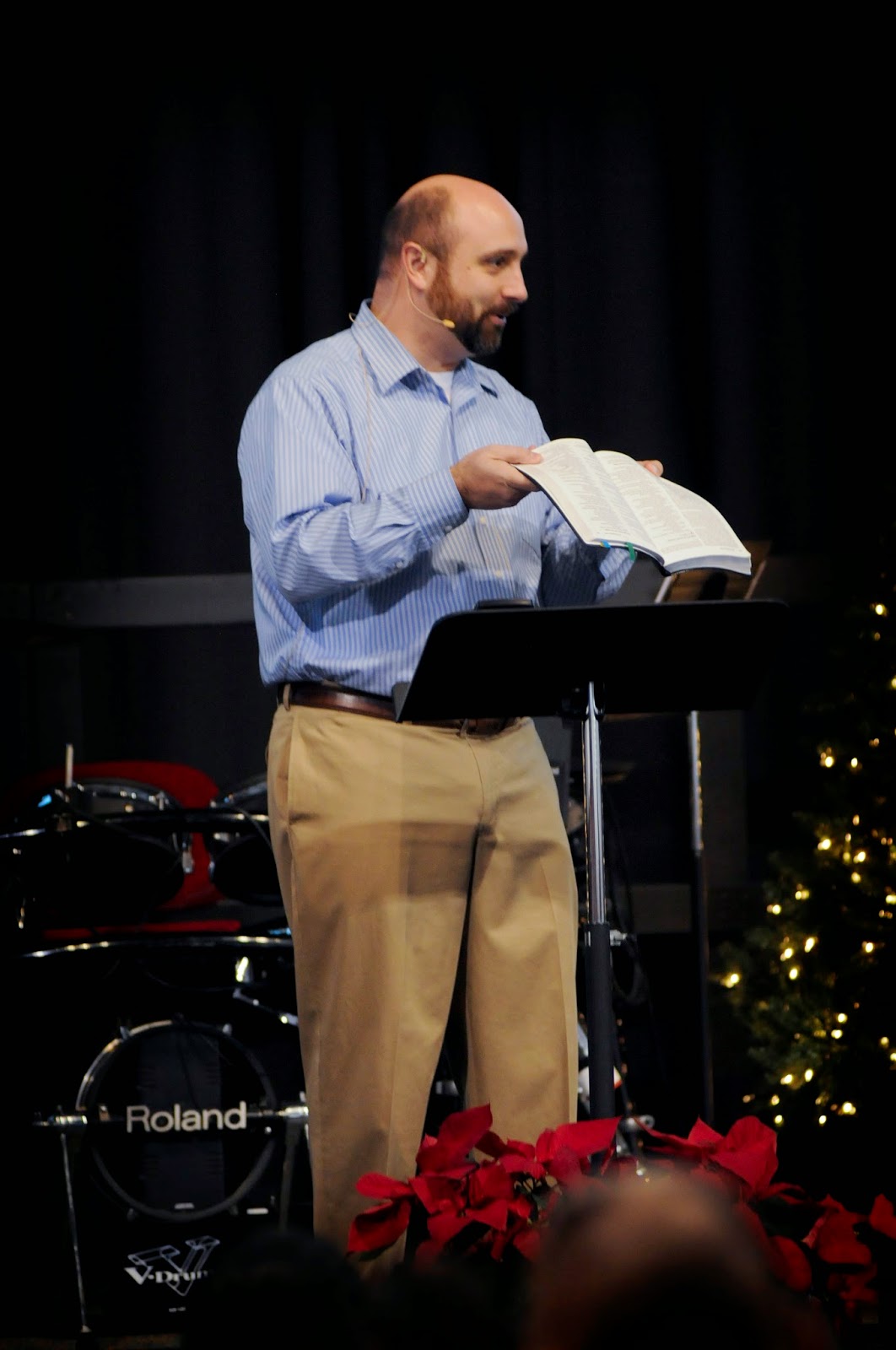
I'm looking forward to speaking about Resisting Gossip at Crossway Church on Saturday morning, October 18th.
Registration is now open to the public.

August 2, 2014

July 30, 2014
17 Recommended Resources on Same-Sex Attraction
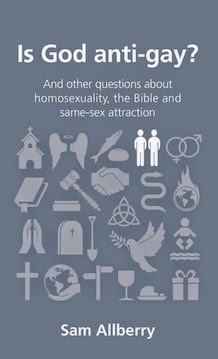
The Biblical Counseling Coalition has just published my list of the resources that were the most helpful to me as I prepared to talk about homosexuality at the Challenge Conference earlier this month.
Previous posts about the conference and holy sexuality:
Help! How Do I Think About Homosexuality?
Restored: Challenge Report to Lanse Free Church
Help! How Do I Think About Homosexuality? Teaching Notes
Hope for Holy Sexuality
July 27, 2014
[Matt's Messages] "My Lord and My God!"
 “My Lord and My God!”
The Gospel in the Gospels :: Family Bible Week 2014
John 20:1-31 :: July 27, 2014
This is our last class together on what we’ve called this week “Matthew, Mark, Luke, and John - The Gospel in the Gospels.”
Our Family Bible Week adult class has been learning all about what a gospel is.
There are four gospels in the Bible, and the gospels are like biographies of Jesus Christ.
But they are unlike any other biographies of any other person in history.
Because almost all other biographies don’t spend between 25% and 50% of their word-count and page-count on one week of the subject’s life.
And there is a twist at the end of this biography that is different from all other biographies.
And we’re going to celebrate that big twist in today’s message.
On Monday night, we learned that there are four gospels and that they are each different from one another. Matthew, Mark, and Luke are the most similar to each other, but they, too, cover different things from each other and in different ways.
But they all agree, as well, that Jesus is the most compelling person in all of human history.
And together they paint the most amazing portrait of the most compelling person there ever was.
On Monday night we learned about His birth from the book of Matthew. The promises and signs that were fulfilled. The names that He was to be given. Those that sought Him out to kill Him and those who sought Him out to worship Him.
On Tuesday night, our class studied one of Jesus’ miracles in the book of Mark. Mark tells us Who Jesus is by showing us what Jesus did. Mark is an action book, and it was exciting to see Jesus heal someone in love and how that showed us Who He really is.
On Wednesday night, we studied what Jesus taught in the book of Luke. We read and analyzed one of Jesus’ parables. Luke was the consummate historian who researched in Jesus’ life and teaching. No one ever taught like Jesus. No one ever lived like Jesus. No was so gracious yet so holy at the same time like Jesus.
On Thursday night, we studied the death of Jesus in the gospel of John. Jesus was crucified. Nails piercing His hands and feet. Death by slow asphyxiation. His lifeless corpse was placed in a new tomb by bold disciples. And the one who claimed to be God in the flesh...was now dead.
I’m so glad there’s a big twist in this story!
Are you ready for the twist? Jesus didn’t stay dead!
John chapter 20.
“Early on the first day of the week, while it was still dark, Mary Magdalene went to the tomb and saw that the stone had been removed from the entrance. So she came running to Simon Peter and the other disciple, the one Jesus loved [we believe he is John the gospel-writer himself], and said, ‘They have taken the Lord out of the tomb, and we don't know where they have put him!’
So Peter and the other disciple started for the tomb. Both were running, but the other disciple outran Peter and reached the tomb first. He bent over and looked in at the strips of linen lying there but did not go in.
Then Simon Peter, who was behind him, arrived and went into the tomb. He saw the strips of linen lying there, as well as the burial cloth that had been around Jesus' head. The cloth was folded up by itself, separate from the linen.
Finally the other disciple, who had reached the tomb first, also went inside. He saw and believed. (They still did not understand from Scripture that Jesus had to rise from the dead.)
Then the disciples went back to their homes, but Mary stood outside the tomb crying. As she wept, she bent over to look into the tomb and saw two angels in white, seated where Jesus' body had been, one at the head and the other at the foot. They asked her, ‘Woman, why are you crying?’
‘They have taken my Lord away,’ she said, ‘and I don't know where they have put him.’ At this, she turned around and saw Jesus standing there, but she did not realize that it was Jesus. ‘Woman,’ he said, ‘why are you crying? Who is it you are looking for?’ Thinking he was the gardener, she said, ‘Sir, if you have carried him away, tell me where you have put him, and I will get him.’
Jesus said to her, ‘Mary.’ She turned toward him and cried out in Aramaic, ‘Rabboni!’ (which means Teacher). Jesus said, ‘Do not hold on to me, for I have not yet returned to the Father. Go instead to my brothers and tell them, 'I am returning to my Father and your Father, to my God and your God.'’ Mary Magdalene went to the disciples with the news: ‘I have seen the Lord!’ And she told them that he had said these things to her.”
I love that line, “I have seen the Lord!”
Jesus did not stay dead.
The tomb was empty and there were eyewitnesses to say so.
And Jesus appeared to Mary.
I love that moment when Jesus says, “Mary.” And she knows Who He is.
And then He says, “Go tell my brothers.”
And she becomes the first evangelist.
The first with the good news on her tongue – “I have seen the Lord!”
He’s alive. He’s alive again.
Yes, He did die. But He’s alive again. “I have seen the Lord.”
Mary was an unlikely witness for Jesus. In those days, the testimony of a woman was not admissible in a court of law. And Mary was known to be a real sinner, she had had 7 demons cast out of her by the Lord. This sin-stained woman was the first to see with her own eyes the Risen Jesus and the first to be sent on the mission of sharing the good news of His resurrection!
How about you?
You might feel like a unlikely witness, too–but you are who God wants to use to spread the truth of Jesus’ resurrection, to cause others to believe that Jesus is Lord!
Go and tell.
And then Jesus appears to all of the disciples on that first Resurrection Sunday, shows them His hands and side, and they are overjoyed. Look at verse 19.
“On the evening of that first day of the week, when the disciples were together, with the doors locked for fear of the Jews, Jesus came and stood among them and said, ‘Peace be with you!’ After he said this, he showed them his hands and side. The disciples were overjoyed when they saw the Lord. Again Jesus said, ‘Peace be with you! As the Father has sent me, I am sending you.’ [Go and Tell!] And with that he breathed on them and said, ‘Receive the Holy Spirit. If you forgive anyone his sins, they are forgiven; if you do not forgive them, they are not forgiven.’
Jesus is giving a form of the great commission.
I think He’s predicting the coming of the Spirit at Pentecost with His breath.
And I think that verse 23 is all about the gospel.
"If you forgive anyone his sins, they are forgiven; if you do not forgive them, they are not forgiven." I don’t think He’s talking here about your personal forgiveness of someone who hurts you.
He's talking about sharing the Gospel--the message of forgiveness. If you don't tell someone that they can be forgiven by God because of Jesus' Cross and Jesus' Resurrection, they will die in their sins.
BUT, if you do share the message of forgiveness, that they can be forgiven of their sins by God if they put their faith in Jesus, and they believe, then they WILL BE forgiven! We have a mission to share the message of forgiveness.
Go and tell.
That’s what we’ve been up to all week here at Family Bible Week and what we want to do with the Good News Cruise.
But even more importantly than those events, we want to do it in every day life.
Go and tell.
Jesus is alive. Let’s get out the word.
Of course there was one of Jesus’ disciples who wasn’t there that first Sunday.
We don’t know where he was, but he wasn’t there when Jesus appeared to the rest of the disciples.
And because he wasn’t there, it was very hard for him to believe.
What was his name?
Thomas, right?
We often call him, “Doubting Thomas,” right?
Well, I like to call him, “Missouri Thomas.”
I’ve told you before that when I was boy, we liked to play a game in the car on vacation where we spotted license plates from all the different states.
Did you ever play that game?
I wanted to turn pro at the license plate game!
I loved to recognize a licence plate from half a mile away and rack up the points ahead of my family!
It was very competitive. In fact, I don’t think I saw very many of the sights on our vacations, I was too busy trying to rack up the points at the licence plate game.
Grand Canyon? No, I must have missed that. But I saw an Alaska license plate!
Playing that game, we got to know license plates pretty well.
And each state’s plate had its own motto.
I was from the humble state of Ohio whose motto was, “Ohio - the Heart of It All!” Very humble weren’t we?!
I always loved Pennsylvania’s. I didn’t know that I was going to grow up to be Pennsylvanian, but I loved the PA license plate.
Both the keystone shape and the motto, “You’ve got a friend in Pennsylvania,” right?!
Okay, here’s a test for you. What was the motto of the state of Missouri on their license plate?
What state are they?
The “Show Me State.”
Now, I always thought that meant, “Show me all the wonderful things in Missouri. All the great things to see.”
But it turns out, I later found, to mean, “I'm from Missouri, and I won't believe I thing you tell me until I see it with my own eyes!” I guess they're famous for the attitude, “seeing is believing.”
I think that Thomas could have been from Missouri. So, I call him, “Missouri Thomas.”
Because the other disciples tried to explain to Thomas that Jesus is alive, but he didn’t believe it. He doubted. He chose, in fact, to not believe unless he was given first-hand evidence.
“Show me!” his license plate says. Missouri Thomas. Look at verses 24.
“Now Thomas (called Didymus), one of the Twelve, was not with the disciples when Jesus came. So the other disciples told him, ‘We have seen the Lord!’ But he said to them, ‘Unless I see the nail marks in his hands and put my finger where the nails were, and put my hand into his side, I will not believe it.’”
Now, let’s not be too hard on Missouri Thomas.
I mean, do you think that you or I would have done better?
Thomas was a very brave disciple. In John chapter 11, Thomas is the one who encourages the other disciples to follow Jesus into danger–being willing to die with him. Thomas didn’t keep that promise and go with Jesus into death, but neither did any of the other disciples, including Peter who had said that he would die with Jesus.
Thomas had just seen Jesus be betrayed, arrested, beaten, tortured, ridiculed, and killed.
Pardon me for not believing that He is alive!
It was easier for the other disciples to believe that Jesus had risen from the dead–they saw him with their own eyes.
So Missouri Thomas says, “Show me.” v.25
‘Unless I see the nail marks in his hands and put my finger where the nails were, and put my hand into his side, I will not believe it.’”
Now, I love this next part of the story in this gospel...
Jesus is alive, and He knows what Thomas has said.
And in grace and love, He brings the proof that Thomas had required.
He didn’t have to, but He does. V.26
“A week later his disciples were in the house again, and Thomas was with them [this time]. Though the doors were locked, Jesus came and stood among them and said, ‘Peace be with you!’ Then he said to Thomas, ‘Put your finger here; see my hands. Reach out your hand and put it into my side. Stop doubting and believe.’”
Wow!
It’s true! Jesus is alive. Death could not hold him. Doors could not keep him away. And he appears to the disciples with peace on his lips and to Thomas with an amazing invitation.
“‘Put your finger here; see my hands. Reach out your hand and put it into my side. Stop doubting and believe.”
Jesus knew exactly what Thomas had said, and now he lovingly holds out his hand to Thomas and invites him to believe.
No, it’s more than that, isn’t it?
He demands that Thomas believe.
Thomas demanded proof. Jesus demands faith.
“Stop Doubting and Believe.”
Jesus insists on faith. I like how the NASB translates this “Be not unbelieving but believing!” Here's your proof Thomas, now believe!
Jesus loves us, but he demands our faith.
He loves us and He does not allow us room to half-way believe, to disbelieve in Him, to not trust Him. He demands faith of all his followers.
And He is still inviting skeptics to consider his claims.
Is that you? Have you been dragged here against your will?
I’m glad you are here today even if you don’t want to be.
If you are here and you’re skeptical about the whole thing, I understand.
I’ve been there, too.
I’ve struggled many times with questions about the reality of the resurrection.
But I’ve come to believe that gospels present a compelling picture of an amazing and the true history of both His death and His resurrection!
There is evidence that demands a verdict. And Jesus will accept no middle ground.
He demands our faith. “Stop doubting and believe!”
Now, that might be a process for many of us. For many, many years (even after I had gone to Moody Bible Institute), I struggled with believing in the resurrection. But Jesus would not accept my unbelief.
He brought me again and again to consider the evidence in the gospels for the reality of His resurrection and insisted that I stop doubting and believe. And He does the same with you today.
How many took home one of those “The Case for Christ” books this Easter? How many have read it?
“Stop doubting and believe!”
Because Jesus is really alive.
Really!
Now, catch this. This is where we’re going.
Missouri Thomas stopped doubting immediately.
And then he uttered the fullest expression of the worship of Christ that anyone had ever said up till that point. v.28
“Thomas said to him, ‘My Lord and my God!’”
And he wasn’t swearing!
He was worshiping.
“My Lord and my God!”
Thomas was proclaiming his faith in Jesus.
He was proclaiming his worship of Jesus!
He understood what was happening now.
This Jesus is none other than the Lord. None other than God Himself.
And He deserves total worship. In my mind's eye, I see Thomas falling on his face before Jesus. Not even bothering to touch his hands or torso. Just falling down in worship of the Risen Jesus. “My Lord and My God!”
That’s what the gospels have been pointing us to all week.
“My Lord and My God!”
Notice those personal pronouns. My Lord and My God.
He’s not saying that He isn’t the Universal Lord and God of all things.
But it’s personal. He belongs to Jesus, and Jesus belongs to Him.
My Lord and My God.
He worshiped Him as truly as you and I have come this morning to worship Jesus!
We aren’t here to memorialize a great and dead saint. Saint Jesus.
No, no. We’re here to worship the risen and living Savior–Our Lord and Our God.
And notice what Jesus does NOT do here. This is so totally important.
He doesn't say, “O no, Tom, don't worship me. I'm not God. I'm not your Lord. Don't bow like that.”
NO! He receives his worship.
Jesus allows Thomas to ascribe deity to Him, to recognize him as his Lord and his GOD! The Risen Jesus receives total worship from Thomas.
And He wants our total worship today.
He not only demands faith from us but he receives our worship.
That’s why we’re here today.
Not just to worship some generic creator God. But to worship the God/Man Jesus Christ! We are Christians! We worship the Risen Lord Jesus, God Jesus!
We say, with all of our hearts and all of our minds and all our souls and with all of our money and with all of our strength, “Jesus! Our Lord and Our God!”
Now, notice what Jesus says next.
Jesus has been gracious enough to show himself to Thomas like Thomas had demanded.
But now He needs to gently rebuke Thomas and promise you and me a greater blessing. V.29
“Then Jesus told him, ‘Because you have seen me, you have believed; blessed are those who have not seen and yet have believed.’”
See who He’s talking about?
He’s talking about you and me.
You and I haven’t seen, yet we believe.
There is a special blessing for people like you and me.
You might get the idea that the most blessed people in the world were those who lived in the gospels.
Who had seen Jesus and believed: Matthew, Mark, and John.
But that's not what Jesus says! Jesus says that there is a blessing (a special gift of God's grace) to those who believe without seeing him yet!
And that’s you and me. We have not seen Jesus yet except with the eyes of faith. We know that He lives, but our eyes have not yet beheld His risen body.
We are waiting, waiting for that.
Think about that for a second, the disciples didn't have something (a blessing) that you and I can have by putting our faith in Jesus!
Jesus is promising us a special blessing because our faith has not yet become sight.
Peter, years later, reflected on this in his first letter, “Though you have not seen him, you love him; and even though you do not see him now, you believe in him and are (blessed!) filled with an inexpressible and glorious joy, for you are receiving the goal of your faith, the salvation of your souls” (1 Peter 1:8-9).
Someday we will see him. 1 John 3 promises, “...we know that when he appears, we shall be like him, for we shall see him as he is.” But not yet. Till then we hope and trust and obey and wait–and are blessed.
And John goes on to call it LIFE. Look at verses 30 and 31. What we called this week the purpose statement of John’s Gospel:
“Jesus did many other miraculous signs in the presence of his disciples, which are not recorded in this book. But these are written that you may believe that Jesus is the Christ, the Son of God, and that by believing you may have life in his name.”
Life!
Believe and be blessed with LIFE.
Abundant life.
Life to full.
Eternal life.
Forever life.
Blessed life!
I don’t know about you, but I’m tired of death.
I’m tired of our loved ones dying.
Just since Christmas I’ve done these funerals: Ann Neidrick, Darla Coble, Lloyd and Dora Hampton, Brenda Plisco, Tom Kerin, Dianna Moore, Bea Johnson, and Barry Bonsall.
Some of those were in their 90's.
But that doesn’t make death good. Death is an enemy.
It’s a part of the curse on this world.
Death is not the way things should be.
I’m tired of the sentence of death hanging over my life and the life of all of those I love.
And I’m waiting for death to die.
You know that death will die one day, right?
Death is going to be thrown into the lake of fire, the second death.
Death itself is going to come to an end.
We know, from the 4 gospels, that Jesus has conquered death and brought life.
He brings life to all who believe in Him. V.31
“These [things] are written that you may believe that Jesus is the Christ, the Son of God, and that by believing you may have LIFE in His name.”
LIFE!
Jesus has conquered death.
So, stop doubting and believe.
If you are here today and not yet a believer, I urge you to turn from your sins and put your trust in the Savior, Jesus Christ who died for your sins to bring you to God.
Stop doubting and believe.
And start believing and be blessed. Blessed with LIFE!
And going and telling the world that Jesus is alive!
The gospel from the gospels!
Worshiping Jesus our Lord and our God.
July 26, 2014

July 24, 2014
Help! How Do I Think About Homosexuality? :: Teaching Notes
 [A number of people have asked me for a rundown of what I was sharing with the students and youth leaders at the EFCA's Challenge Conference earlier this month. Elsewhere, I have provided a list of the resources that were the most helpful to me in preparing. Here is an annotated outline and report of what I tried to cover in the 90 minute interactive "equipping labs."]
Help! How Do I Think About Homosexuality?
Teaching Notes for Challenge 2014 Equipping Labs
I. Introduction (Why We’re Here Today)
II. The Bible’s Story (Creation, Fall, Gospel, New Creation)
III. The Elephant in the Room (Causality)
IV. Where Do We Go From Here? (Relating to People Who Experience Same Sex Attraction)
***
I. Introduction (Why We’re Here Today)
Welcome
I told the group that our time together was going to be serious and not a lot of fun. This is a very controversial topic, and it affects people's lives in important ways. So, if they wanted a fun 90 minutes, they might want to check out a different room. I told them how encouraged I was that we had such full rooms (325+ the first day and 350+ the second?) and that it said a lot about them to the good that they had chosen to spend the next 90 minutes thinking hard about this issue. And we prayed and then got right into the first small group discussion question.
Brainstorm/Discussion Questions: Why did you choose this equipping lab this afternoon? Why are you here?
After a few minutes on that, I asked them to share some of their reasons for being in our lab and asked for a show of hands for those who shared their reason. I was very encouraged to hear how many wanted to know what the Bible actually said about homosexuality and also how many wanted to grow in wisdom for relating to the people they love who experience same sex attraction.
During this time I made sure to welcome anyone in the room who experiences same sex attraction to any degree and told them, "We're glad you're here. We are not afraid of you. We are not angry at you. I want you to feel safe and loved in this room. This is not about politics today. This is about Jesus and the gospel and the story of the Bible and about love and holiness." I tried to set the tone as being respectful and welcoming even though I would be saying hard things for some to accept and not be affirming of homosexual desire or behavior. From reports and debriefing afterwards, I believe it was pretty successful.
Why I’m Leading This Equipping Lab
I told the group that it wasn't because I experience same sex attraction myself or that I'm some kind of an expert or even biblical scholar. I'm just a pastor who cares. I care about what God thinks and I care about real people in real situations.
Then I shared some stories (all identifying details masked and some details change to protect people and relationships) of real people I've interacted with through the years that lead me to care about this topic.
The next step was to get back into groups and talk about why this topic is especially hard right now--the stories the culture is telling.
Brainstorm/Discussion Questions: What stories about homosexuality is our culture telling right now? What are the arguments we are hearing? What stories does the culture think that we as the church are telling?
Some answers I got back and we interacted with a bit:
• Born that way.
• Why would God care?
• It’s all about love.
• Gay is the new Black.
• None of our business what consenting adults do in private.
• Jesus was silent on this issue.
Then I introduced the goal for our time together: Equip you to think biblically about homosexuality and how it relates to the Bible’s big story of the gospel and how to relate wisely and lovingly with those who experience same sex attraction.
II. The Bible’s Story (Creation, Fall, Gospel, New Creation)
I was really helped in this next section by the teaching coming from the mainstage at Challenge. In the course of the week, the speakers walked us through the God's Story of Creation, Separation, Promise, Silence, Rescue, and Restoration. It was so good, and even better, I didn't know they'd be doing that so it was God-thing (providence!) that my presentation dovetailed so nicely into what they were teaching us.
A. Creation
Large Group Question: Where in the Bible would you go to establish God’s design for human sexuality?
I taught from the following passages, drawing heavily from Trent Hunter's excellent article "Did God Actually Say?"
Genesis 1-2
Note:
God made 2 genders.
These 2 kinds of human being complement one another.
When a man and a woman come together, they multiply.
Marriage unites man and woman in a complementary, comprehensive, exclusive, and permanent union.
Gender, sexuality, and marriage are real, good, and beautiful.
Matthew 19:1-12, esp. 1-6
Note:
Jesus was not silent. He affirmed Genesis 1-2.
Ephesians 5:21-33
Note:
The mystery that marriage has been pointing to all along.
Homosexual union cannot achieve the picture of Christ and the church.
B. Fall
Large Group Q: Where in the Bible would you go to discover how we got into our mess?
Genesis 3 (More from Trent Hunter’s Article, Did God Actually Say?)
Note:
Adam’s sin changed everything.
Men and women after the Fall are ashamed.
Men and women are at odds.
Our good sexuality is now broken in so many ways. (Not just in homosexuality!)
Romans 1:18-32, Leviticus 18:20-23, 20:13, 1 Timothy 1:10
Homosexuality is a result of the Fall.
The mosaic law represented the moral law on this point.
The law of Christ in the New Testament reaffirms homosexuality as sinful.
C. Gospel
Large Group Q: Where in the Bible would you go to show someone the hope of the good news as it relates to homosexuality?
1 Corinthians 6:9-11 (Utilizing my message “The Surprising Truth of Homosexuality”)
Note:
1. Those who practice homosexuality (active and passive) will not inherit the kingdom.
2. Homosexual sin is not worse than other sins.
3. There is hope for change in the gospel (“washed”, “were”).
Yet, while we hold out hope for true change, it needs to not be a false hope.
• The goal is holy sexuality, not hetersexuality.
• Holy sexuality will look different for different people. (Celibacy for some, heterosexual marriage for others. Not necessarily quickly or easily.)
Then, as part of this section, I told the change stories of people I knew or are public spokespeople.
Brad Grammar (many years of exclusive same-sex attractions, years later happily biblically maried with kids)
Rosaria Butterfield (lesbian professor turned homeschooling mom)
Christopher Yuan (drugs, gay sex, prison .... now Bible professor)
Sam Allberry (livingout.org)
Jackie Hill (who was also at our conference sharing her poetry)
D. New Creation
Large Group Q: Where in the Bible would you go to get a picture of what the end of the story will be?
Revelation 21:1-9 (Again, utilizing Trent Hunter’s Article, Did God Actually Say?)
Note:
Heaven unifies us with God.
Heaven is filled with only good things.
Heaven will be utterly satisfying.
There is a direction and goal to history.
Brainstorm/Discussion Question: Now that we’ve surveyed the Big Story of the Bible what questions does that raise for you?
My strategy at that point was mainly to generate discussion. I didn't actually try to take their Bible questions at that point and answer them all. If we had, we would have run out of time and not gotten to the practical application. Hopefully, we had established a framework with the big story of the Bible within which the individual questions of details can get worked out.
III. The Elephant in the Room (Causality)
The biggest item we hadn't really talked about yet was from where homosexuality comes. So, I took a little bit of time to talk about that issue.
Note:
The Bible places homosexuality as a result of the Fall.
Things like biology, environment, and nurture can shape and express our fallenness but are not the ultimate or most central and important cause.
The science actually bears this out if you read it carefully.
This will shape our terminology and labels (attraction, orientation, identity, gay).
The Bible’s story is different than the story the world (and some in the church) is telling.
IV. Where Do We Go From Here? (Relating to People Who Experience Same Sex Attraction)
Brainstorm/Discussion Questions: So what? How should we relate to people who experience same sex attraction? What is biblical, wise, and loving?
In this last section, we interacted with their answers to this question. Lots of great thoughts from students and leaders!
I tried to make sure to hit these points along the way:
• Become courageous and confident. Know what you believe and why and live it out.
• Speak the truth in love. No hate words. Don’t use “gay” or “faggot” as a slur.
• Become a safe person. Love people without affirming their sin. It's difficult but do-able.
• Normalize their sin and recognize your sinfulness.
• Walk with people where they are. Listen. Treat them as you would want to be treated.
• Hold out hope. It’s unloving to not tell people about Jesus and invite them to follow Him. He’s worth it!
• Be ready to be reviled. Don’t be a hater, but be ready to be called one.
I also brought out these 5 points from Sam Allberry:
• Make it easy to talk about.
• Honor singleness.
• Remember the church is family.
• Deal with biblical models of masculinity and femininity, not cultural stereotypes.
• Provide good pastoral support.
I ended with stories of people I know who have spoken the truth in love and the responses they have seen, both positive and negative.
Then I stood around afterwards and talked to a line up of people to interact with their questions. I was very encouraged to hear stories back of how they'd been helped--even those who heard something they didn't want to hear.
If you were one of the people praying for me that week, I really appreciate it. I'm glad I spent the months preparing, super-glad I was able to interact with these precious people, and super-duper-glad that it's over.
One of my biggest highlights from the whole experience was being prayed over by the teens of our group from church. I had a splitting headache and was ungodly worried about my presentation. They laid their hands on my head and each prayed for me. When they were done, God answered with a clear head and heart at peace. Praise Him!
I pray that God will use the little bit of thinking and speaking into this issue that I've done to bring glory to Himself and good to His people through the gospel of Jesus Christ.