Matthew C. Mitchell's Blog, page 109
November 8, 2014



November 7, 2014
Bytes His Tongue
 "A man of knowledge uses words with restraint,
and a man of understanding is even-tempered."
- Proverbs 17:27 (NIV 1984)
***
Thanks to Kerry Doyal for the title of this post.
New Blog Series: Toward a Definition of Gossip
I believe that one of the most helpful features of
Resisting Gossip
is the definition of sinful gossip found in the first chapter: bearing bad news behind someone's back out of a bad heart.
However imperfect and imprecise that definition may be, I believe that it basically captures the biblical teaching and encapsulates it into a form that is fairly memorable and practical. I'm grateful to have been able to study the biblical data thoroughly and formulate this definition to share with others. One of the main reasons I studied gossip in the Bible was to be able to define it for myself. Gossip can be slippery and elusive to define.
I'd like to explain to you how I came to that definition. Over the next few weeks, I'm going to post excerpts from my doctoral project that "show my work" in the biblical research. We'll call it, "Toward a Definition of Gossip." In my doctoral project, it was the second chapter "Biblical and Theological Foundations."
It begins with this introduction:
Recognizing Gossip
The goal of this project is to help God’s people in recognizing sinful gossip, resisting its lure, and responding in faith and love when personally affected by it. This chapter will focus on the first of these three aims–recognizing gossip. Discerning certain talk to be sinful gossip is often the most difficult part of the problem. It is very hard to resist or respond to something you cannot properly identify. What, exactly, is gossip?
The Bible does not offer, in one place, a simple definition of gossip, but it is not silent on this important topic! In this chapter, we will survey the Bible’s teaching on gossip with the overarching purpose of offering a functional definition that can be utilized in our personal lives.
We will start in the Old Testament. Proverbs, especially, bulges with warnings about sinful talk and offers more wisdom about gossip than any other book in the Bible. We will study the main Hebrew words that are regularly translated “gossip” in the best English versions and each of their occurrences in the Old Testament. Then we will consider passages of Scripture that address the phenomenon of gossip without using the word itself.
Similarly, in the New Testament, we will survey the Greek words regularly translated “gossip” in our English versions and attempt to understand the context and teaching surrounding those words. At the same time, we will consider other New Testament passages that touch on the phenomenon of gossip.
To truly grasp a biblical theology of gossip, we also have to consider a larger theology of words and story. Two particular aspects of that broader theology have significant ramifications for identifying sinful gossip.
At the end of the chapter, I will suggest a functional definition of sinful gossip that weaves all of these biblical and theological elements together, and hopefully, helps Christians to properly recognize sinful gossip as they are tempted to offer or to receive it.

However imperfect and imprecise that definition may be, I believe that it basically captures the biblical teaching and encapsulates it into a form that is fairly memorable and practical. I'm grateful to have been able to study the biblical data thoroughly and formulate this definition to share with others. One of the main reasons I studied gossip in the Bible was to be able to define it for myself. Gossip can be slippery and elusive to define.
I'd like to explain to you how I came to that definition. Over the next few weeks, I'm going to post excerpts from my doctoral project that "show my work" in the biblical research. We'll call it, "Toward a Definition of Gossip." In my doctoral project, it was the second chapter "Biblical and Theological Foundations."
It begins with this introduction:
Recognizing Gossip
The goal of this project is to help God’s people in recognizing sinful gossip, resisting its lure, and responding in faith and love when personally affected by it. This chapter will focus on the first of these three aims–recognizing gossip. Discerning certain talk to be sinful gossip is often the most difficult part of the problem. It is very hard to resist or respond to something you cannot properly identify. What, exactly, is gossip?
The Bible does not offer, in one place, a simple definition of gossip, but it is not silent on this important topic! In this chapter, we will survey the Bible’s teaching on gossip with the overarching purpose of offering a functional definition that can be utilized in our personal lives.
We will start in the Old Testament. Proverbs, especially, bulges with warnings about sinful talk and offers more wisdom about gossip than any other book in the Bible. We will study the main Hebrew words that are regularly translated “gossip” in the best English versions and each of their occurrences in the Old Testament. Then we will consider passages of Scripture that address the phenomenon of gossip without using the word itself.
Similarly, in the New Testament, we will survey the Greek words regularly translated “gossip” in our English versions and attempt to understand the context and teaching surrounding those words. At the same time, we will consider other New Testament passages that touch on the phenomenon of gossip.
To truly grasp a biblical theology of gossip, we also have to consider a larger theology of words and story. Two particular aspects of that broader theology have significant ramifications for identifying sinful gossip.
At the end of the chapter, I will suggest a functional definition of sinful gossip that weaves all of these biblical and theological elements together, and hopefully, helps Christians to properly recognize sinful gossip as they are tempted to offer or to receive it.
November 6, 2014
Which Mouth Today?
"The mouth of the righteous is a fountain of life,
but the mouth of the wicked conceals violence."
- Proverbs 10:11 (NIV 2011)
but the mouth of the wicked conceals violence."
- Proverbs 10:11 (NIV 2011)
November 2, 2014
[Matt's Messages] "Justified"
 “Justified”
All Roads Lead to Romans
November 2, 2014 :: Romans 3:21-26
And we’ve finally made it to the good stuff.
Verse 21 begins, “But now.”
We’re turning the corner from the “Bad News” section of Romans to the “Best of News” section of Romans.
“But now.”
This paragraph, these 6 verses, contain some of the most precious sentences in the whole Bible.
Some have said that they are the heart of the gospel. They are the heart of this letter and even the most important paragraph in the whole New Testament!
Whether or not that’s true, and I don’t know how you can tell, they are incredibly important and incredibly sweet and precious. This paragraph just drips with spiritual honey and eternal life-changing truth.
If you thought the last several messages on the Bad News, the Even Worse News, and the Worst News were depressing, this paragraph more than makes up for them.
And it does it in large part because of one main word, “Righteousness.” In Greek, dikaiosunay.
That word or a form of that Greek word appears seven times in these 6 verses!
And one of the problems we have in going from Greek to English is that we tend to use different words to translate that Greek word depending on what we mean. So, you might miss that Paul uses that word 7 times in 6 verses. Sometimes the English versions translate it, “Righteousness,” but other times it is “justice.” Basically the same idea, different words in English.
I’m going to read this to you, and I’m going to emphasize to underline every word that has that dikaios root in Greek so you can hear it with your own ears.
“But now a righteousness from God, apart from law, has been made known, to which the Law and the Prophets testify. This righteousness from God comes through faith in Jesus Christ to all who believe. There is no difference, for all have sinned and fall short of the glory of God, and are justified [same root word, justified] freely by his grace through the redemption that came by Christ Jesus. God presented him as a sacrifice of atonement, through faith in his blood. He did this to demonstrate his justice, because in his forbearance he had left the sins committed beforehand unpunished–he did it to demonstrate his justice at the present time, so as to be just and the one who justifies those who have faith in Jesus.”
This is a very precious paragraph.
You can hear how it picks up where Paul left off in Romans 1:16-17.
Remember back to Paul’s statement that he is not ashamed of the gospel?
Look back at Romans 1:16 and 17.
“I am not ashamed of the gospel, because it is the power of God for the salvation of everyone who believes: first for the Jew, then for the Gentile. [We memorized that. Why is the gospel so powerful?] For in the gospel a righteousness [dikaiosunay] from God is revealed, a righteousness that is by faith from first to last, just as it is written: ‘The righteous will live by faith.’”
Do you hear that righteous word in there?
That’s really important.
Because we have a righteousness problem.
That’s what Romans 1:18 said. Next verse.
“The wrath of God is being revealed from heaven against all the godlessness and wickedness of men who suppress the truth by their wickedness,”
And that word “wickedness” is “adikia.” Un-righteousness.
The bad news that we have seen over and over again is that the wrath of God is coming because of our unrighteousness.
And that’s true for Gentiles even though they don’t have the Law. Because deep down they know enough to condemn them.
And it’s true for the Jews even though they do have the Law because they do not keep it.
Jew and Gentiles are all under the power of sin.
And we learned last week that there is no wiggling out of this unrighteousness problem. And there is no working ourselves out of this unrighteousness problem, either.
Chapter 3, verse 20.
“No one will be declared righteous in his sight by observing the law; rather, through the law we become conscious of sin.”
We ended last week by saying on our own we are doomed.
“But now.”
Something has changed.
Something has happened that changes everything.
And by it, we are “Justified.”
That should be one of your favorite words.
We don’t have an English word “righteousified,” but maybe we should!
To be justified means to be declared righteous.
To have the status of being righteous, to be found in the right.
And it’s a glorious thing to be justified!
Because for people who are justified, it means the end of God’s wrath.
God’s wrath comes on those who are declared un-righteous.
But it does not come on those who are declared righteous.
Those who are justified.
Do you see how important that concept is?
And actually, there are two different ones who are justified in some sense in this passage. And today, we’ll talk about both of them.
The first is US.
#1. US.
Those of us who belong to Jesus are justified.
That’s what this precious passage teaches.
Let’s look at the details. V.21
“But now a righteousness from God, apart from law, has been made known, to which the Law and the Prophets testify. This righteousness from God comes through faith in Jesus Christ to all who believe.” Stop there for a second.
I love that “but now.”
That’s a seismic shift from what we’ve seen so far in Romans 1-3.
So far, we’ve seen that all of humanity deserves the wrath of God. We have asked for it by exchanging God for stuff. For suppressing what we know about God and worshiping God-substitutes. For pretending and playing at being good but actually being bad. For being unrighteous.
“But now.”
But now a righteousness from God, apart from law, has been made know (v.21) and (v.22) it comes to those who have faith in Jesus Christ.
This is precious.
How precious?
At least six ways.
First, it comes “apart from law.”
Now, what does that mean? It could mean that it comes apart from law-keeping. That would fit with verse 20 is saying that no one will be declared righteous by works of the law. And that is definitely true. This is righteousness does not come through our law-keeping, our works. We’ll see that more in a second.
But it probably means “being learned about apart from the Old Testament Law.” Meaning that something new has happened. This righteousness of God has come on the scene in a way that you need a new revelation to get. It’s not in the Old Testament.
But at the same time Paul doesn’t want us to think that it wasn’t hidden in the Old Testament. It was there, too. V.21 again, “apart from law, has been made known, to which the Law and the Prophets testify.” They pointed towards this new thing in shadows and signs, but now that the new thing is here for us to clearly see.
And here’s what it is v.22
“This righteousness from God comes through faith in Jesus Christ to all who believe.”
How precious is that?
It comes “through faith.”
Not through works! It does come by our hard efforts.
It doesn’t come through our self improvement.
It doesn’t come through our being good people.
It doesn’t come by works. It comes by rest. By our resting on this person Jesus Christ.
And more than that, this righteousness comes through faith...
“To all who believe.”
Paul uses the same word for faith or belief twice in that one verse. Pistis is the word.
“Through faith in Christ Jesus to all who believe.”
Why does he repeat himself? Because he wants to emphasize that’s faith.
And it’s faith for ALL who believe. He says (v.21), “There is no difference.”
Difference between what?
What do you think? By now you should think, “Jew and Gentile,” right?
There is no difference between Jew and Gentile.
No difference between Israeli and Palestinian. Just as lost. V.23
“...for all have sinned and fall short of the glory of God,”
So if all have sinned, all have been found in this state of sin, then there is no difference between Jew and Gentile.
We are all in the same sinful boat, and we can all, with no difference, enter into the same saved boat and be justified. V.24
“...and are justified freely by his grace through the redemption that came by Christ Jesus.”
To all who believe.
Justified.
In Greek, “dikaioumenoi.” Being justified. Being declared righteous.
That’s one the most important Bible words for everyone to know.
It’s so precious.
Here’s another reason why. It’s free!
“justified freely by his grace...”
Justification is not something we earn.
It’s not something that Christians work their way up to.
It’s free. It’s a gift. It’s by grace.
Grace is unmerited favor. It’s blessings that we don’t deserve.
Justification is by grace.
That’s what all the fuss was about between Martin Luther and the medieval church back at the Reformation.
It’s been just about 500 years since Martin Luther pounded his 95 Theses on the church door at Wittenburg. He did it on October 31st.
And he kicked off the Protestant Reformation which was, in large part, a rediscovery of Paul’s gospel of grace.
Justification by grace alone through faith alone in Christ alone.
V.24, “justified freely by his grace.”
Justification does not come through your good works or my good works.
Your righteousness is not enough.
You need God’s righteousness.
And that is enough!
“justified freely by his grace.” How precious.
It’s free to you and me.
But it was costly to Him. V.24
By his grace “through the redemption that came by Christ Jesus.”
Do you see how every word is precious?
“Through the redemption.”
What’s that mean?
The word here means to be pay a price to free something or someone. To buy back. To redeem means to pay a cost for something to go free, to be liberated.
It was often used of slaves that were paid for to set them free.
In the New Testament, this payment, this cost was not paid to Satan or to some other cosmic force but it was paying the debt that our sin had incurred. Basically, to God’s own justice.
Our salvation is free to us, but it cost Jesus so much!
What did it cost Him? V.25
“God presented him as a sacrifice of atonement, through faith in his blood.”
Some of your versions have “propitiation” where the NIV has “sacrifice of atonement.”
The Greek word is “hilasterion.”
And that words is connected in the Greek version of the Old Testament with the mercy seat. With the atonement cover on the ark of the covenant.
With the day of atonement when a sacrifice was made to make atonement the sin of the people.
In other words, Jesus Christ had to die as a sacrifice to satisfy the righteous wrath of God.
It’s the Cross.
You know, I told Heather last night that it was difficult to prepare this message, not because the news in it was bad, but because we’re so familiar with it.
I think that I preach this message every single week. I try to! It’s the gospel. I try to make this gospel clear every single week and show how it ties to every single passage that we study together.
But here it is in a pure, undistilled, form.
Jesus died on the Cross as a propitiation for our sins.
He absorbed the wrath of God.
That’s what it took for us to be justified. To be declared righteous.
It took the death of Jesus Christ.
“God presented him as a sacrifice of atonement, through faith in his blood.”
How precious is this!
Redemption through Propitiation.
By Grace Through Faith.
To All Who Believe.
Apart from the Law.
Justified!
What a gospel! What good news!
Justified!
That’s how God solves our righteousness problem.
And it’s also how God solves His righteousness problem.
#2. GOD.
Does God have a problem with righteousness?
Not any more!
He was never unrighteous, but it might have looked like it. V.25
“God presented [Jesus] as a sacrifice of atonement, through faith in his blood. He did this to demonstrate his justice [same word, righteousness, dikaiosunay], because in his forbearance he had left the sins committed beforehand unpunished–he did it to demonstrate his [righteousness, dikaiosunay] justice at the present time, so as to be just and the one who justifies those who have faith in Jesus.”
Think about this for second.
Do you like it when criminals get away unpunished?
Neither does God.
It offends God when the guilty go unpunished.
Listen to these three passages from the Old Testament.
Exodus 23:7 “Have nothing to do with a false charge and do not put an innocent or honest person to death, for I will not acquit the guilty.”
Proverbs 17:15, “Acquitting the guilty and condemning the innocent–the LORD detests them both.”
Proverbs 24:24&25, “Whoever says to the guilty, ‘You are innocent’–peoples will curse him and nations denounce him. But it will go well with those who convict the guilty, and rich blessing will come upon them.”
That’s justice.
People getting what they deserve for their crimes.
But God, in His wise forbearance, had left the sins before the Cross unpunished.
That’s talking about those who belonged to God before Jesus.
Their sins were passed over. They were forgiven. And there wasn’t a sacrifice great enough to pay for their sins!
The blood of bulls and goats won’t do it. Not really.
The blood rams and lambs won’t do it. Not really.
So the question is was God truly righteous? Was He truly just?
Sometimes we wonder if God is just to blast us when we do wrong.
The real question is why doesn’t God blast us when we do wrong?
Why didn’t God blast everyone from Adam to John the Baptist?
Is that wrath of God really coming? Is it trustworthy?
Or does everyone just get a pass?
No, God is just. He is righteous. He is unswervingly committed to His glory.
He always does what is right. He never does what is wrong.
He is holy, holy, holy, and the wrath of God must come on unrighteusness.
So to demonstrate His righteousness, God used the Cross.
God presented Jesus as a propitiation to satisfy His own justice. Jesus took our place. He died in our place and paid the penalty for our sin.
And He gave us His righteousness.
His righteous status.
Not as a legal fiction, but now as a legal fact.
We are declared righteous because of what Jesus did for us.
V.25. “He did this to demonstrate his [righteousness] because in his forbearance he had left the sins committed beforehand unpunished–he did it to demonstrate his [righteousness] at the present time, so as to be just [right] and the one who justifies [declares right] those who have faith in Jesus.”
He grants us His saving righteousness.
He is just. He is justified, and rightly so.
Isn’t that glorious?
Here’s the big question. Who gets justified?
V.26
“Those who have faith in Jesus.”
Do you have faith in Jesus?
Have you put your faith, your belief, your hope squarely down on Him?
John 1 says “to all who received him, to those who believed [had faith] in his name, he gave the right to become children of God.”
“Those who have faith in Jesus” are the ones who are justified.
Not just believing things about Jesus.
But believing in Jesus.
Not trusting in our good works, our church affiliation, our baptisms, our religiosity, our charity, our family, our familiarity with spiritual things.
But faith in Jesus and Jesus alone.
That’s who gets justified.
***
Messages in this Series
01. All Roads Lead to Romans
02. I Am Not Ashamed of the Gospel
03. The Bad News
04. Hope for Holy Sexuality
05. The Even Worse News
06. The Worst News07. Justified
November 1, 2014

October 30, 2014
2 Sermons on Resisting Gossip by Jim Stewart
I love this!
This week while running the logsplitter to get us ready for Winter, I listened to two really good messages on resisting gossip by Pastor Jim Stewart of North Avenue Alliance Church, in Burlington Vermont:
Gossip: A Community Killer
Gossip: Don't Pass It On
Both messages are part of his ongoing series on being "Lonely in a Crowd." People are more technologically connected to each other than ever before and yet report feeling more lonely than ever before. Pastor Jim explains how Jesus is the answer to this problem. In these two messages, he identifies gossip as a community killer, defines it in terms recognizable to readers of Resisting Gossip with a focus on motivation, and lays out strategies for resisting this temptation ranging from very direct to very indirect.
Pastor Jim has read and recommends Resisting Gossip , but he doesn't merely repeat it. He has studied the biblical teaching and presents it in his own words, with his own stories, and in his own very engaging style. I especially enjoyed his unpacking and application of these phrases from 1 Corinthians 13 for resisting gossip: "Love does not delight in evil but rejoices with the truth. It always protects, always trusts, always hopes, always perseveres." I also thought his explanation of idolatry in our gossip motivations was really well put, "Gossip serves as a substitute for God at that moment."
What a privilege it is to hear how Resisting Gossip is being used! I'm so encouraged that pastors are reading my work and then teaching their flocks what the Bible says about gossip. I pray that churches would be strengthened and biblical community flourish as we grow in our understanding of God's Word.
Today is the last day for Westminster Bookstore's fantastic sale on resources for resisting gossip.

This week while running the logsplitter to get us ready for Winter, I listened to two really good messages on resisting gossip by Pastor Jim Stewart of North Avenue Alliance Church, in Burlington Vermont:
Gossip: A Community Killer
Gossip: Don't Pass It On
Both messages are part of his ongoing series on being "Lonely in a Crowd." People are more technologically connected to each other than ever before and yet report feeling more lonely than ever before. Pastor Jim explains how Jesus is the answer to this problem. In these two messages, he identifies gossip as a community killer, defines it in terms recognizable to readers of Resisting Gossip with a focus on motivation, and lays out strategies for resisting this temptation ranging from very direct to very indirect.
Pastor Jim has read and recommends Resisting Gossip , but he doesn't merely repeat it. He has studied the biblical teaching and presents it in his own words, with his own stories, and in his own very engaging style. I especially enjoyed his unpacking and application of these phrases from 1 Corinthians 13 for resisting gossip: "Love does not delight in evil but rejoices with the truth. It always protects, always trusts, always hopes, always perseveres." I also thought his explanation of idolatry in our gossip motivations was really well put, "Gossip serves as a substitute for God at that moment."
What a privilege it is to hear how Resisting Gossip is being used! I'm so encouraged that pastors are reading my work and then teaching their flocks what the Bible says about gossip. I pray that churches would be strengthened and biblical community flourish as we grow in our understanding of God's Word.
Today is the last day for Westminster Bookstore's fantastic sale on resources for resisting gossip.
October 29, 2014
The Definition of Gossip and the Art of Pastoring
Recently, I had an email conversation with a wise pastor who had some good practical questions about how to use my definition of gossip in pastoring people. Our interaction demonstrated a few things to me. First, that this is an important thing to be thinking about because it involves real people in real situations. Second, sometimes there are no easy answers. It's an art not a science. Third, pastoring is a terrific privilege and worth the hard work of learning to love people well.
I asked my new friend if I could post our conversation for others to read, and he said yes so long as we kept it anonymous. We don't want to gossip about those who might be gossiping! Below is a lightly edited version. Chime in, too, if you like, in the comments below.
***
Hi, Pastor Matt,
I have a read and watched many of your resources and am thankful for your ministry to the church. I have a couple questions on gossip and would love to hear your thoughts if you have some time:Is it gossip for people to tell me (as a pastor) things in a counseling session? If not why would that be different than one friend coming to another friend to receive counsel? For that matter is sharing things in counseling, or in small group settings when people share their personal history or testimony in general about family history, conflict, etc. gossip? Is it gossip to share parts of our story that involve others negatively? A woman in our church often talks with other gals sharing her experience of abuse by her ex-husband. But is she gossiping about him in order to minister to others? Is it gossip to tell someone to watch out for another person because of danger? Paul seems to do this with various people. If it’s not gossip does that mean one single gal telling another single gal “I wouldn’t date that guy because he did…”? Can spouses share everything with one another since they are one or is that still gossip? Last one: if there is distance of relationship does it not counted as gossip? For instance, if someone shares with their friend about how they struggle with their Mom’s trying to be involved in their parenting is it okay to share that since the friend doesn’t know the mom at all and it doesn’t become divisive. If your able, thank you in advance, if not no worries.
Pastor Anonymous
***
Pastor Anon,
Great questions! Thanks for asking.
The short answer to all of them is, "It depends." It could be sinful gossip in any of those cases, but it might not be, especially depending upon motivations and how the information sharing was conducted (carefully and in love or carelessly, recklessly, and divisively?).
I've written a brief article about this on my blog, "So, Is This Gossip?" that might be helpful to you.
After reading that, let me know what you think.
Blessings,
-Matt
***
Hi Matt,
Thanks for the quick response. I appreciate it.
I had read that blog and I think I’m still left with questions. I’m sure I’m looking for a hard fast rule that simply doesn’t exist.
Most all of the instances I listed are done in a hidden way so that part of the definition is present. However, the “bad heart” seems hard to define. I think many times the way people defend their (potential) gossip is by saying “I wasn’t doing it to harm anyone I just needed counsel.” While that may be true it can still cause harm. In addition “bad heart” might not be trying to harm another person but rather trying to make ourselves look, appear, feel good, etc. So…I guess maybe a follow up question would be how would you define bad heart in these contexts? And isn’t it possible to do something that’s not from a bad heart but still has bad effects and thus we should refrain to begin with? I don’t know the answers to these…want to help folks not gossip, and not participate in it in my role as a pastor but also don’t want to draw unnecessary and even harmful lines in the sand.
Thanks for listening,
Pastor Anonymous
***
Dear Anony,
I understand. I went looking for those hard and fast rules when I did my biblical research and was disappointed to not find them.
The hard and fast rule we do have is that if we are loving those whom we are talking about and loving those to whom we are talking then we aren't going to be gossiping. What's difficult about that is that we can fool and justify ourselves and others can fool and justify themselves to us.
For ourselves, the more we are aware of our sinful tendencies and the biblical truth that undoes them, the more able we can be to see our own sin and turn away from it. That's the focus of my book. It's written to those who want to resist gossip in their own lives.
In ministry to others, we have to both (1) try not to judge others motives when they are doing something that looks, at first glance, unloving and sinful, and at the same time, (2) be discerning of possible motives that would be sliding a conversation into a dangerous place. We can really tell a lot about why someone is talking about someone else negatively by how they do it. Does it appear to be just someone running someone else down? Do we get facts and story that doesn't help anyone? Is there an attempt to provide alternate explanations for someone else's behavior or do they seem to be jumping to conclusions? Are the warnings being offered to others careful and nuanced based on facts or cutting and rash and based on feelings or hearsay? Is there evidence of the Golden Rule at work in this conversation or is it one-sided? In a conflict, has person A gone to person B, or are they talking about it with people C through Z who don't reasonably need to know any of these facts? Is there an obvious true, constructive, loving purpose to this conversation or is it aimless, careless, entertaining? You're right that our bad hearts may not be malicious to the one we are talking about but they might be careless and not thinking about the one we are talking about. That's a lack of love, as well.
Our pastoral response needs to be in proportion to what we discern is going on. If someone is spreading bad information, it's more cut and dried. If someone is calling families one-by-one in the church about a conflict to make sure that everyone knows all the details and won't go directly to the subjects of the talk, that's more obvious. But a few of your case studies call for more discernment.
Is that helpful? I could write more, but I'm trying to give the principle and let you work it out in your own practice.
-Matt
***
This is good Matt, thanks for helping me to continue to think through this. Appreciate the time very much so.
- Anonymous
***
You're welcome. It's a privilege to have gotten to study this on this level and share with others what I've been learning.
Blessings on you and your church family.
-Matt
Westminster Bookstore's fantastic sale on all resources for Resisting Gossip ends tomorrow.
I asked my new friend if I could post our conversation for others to read, and he said yes so long as we kept it anonymous. We don't want to gossip about those who might be gossiping! Below is a lightly edited version. Chime in, too, if you like, in the comments below.
***
Hi, Pastor Matt,
I have a read and watched many of your resources and am thankful for your ministry to the church. I have a couple questions on gossip and would love to hear your thoughts if you have some time:Is it gossip for people to tell me (as a pastor) things in a counseling session? If not why would that be different than one friend coming to another friend to receive counsel? For that matter is sharing things in counseling, or in small group settings when people share their personal history or testimony in general about family history, conflict, etc. gossip? Is it gossip to share parts of our story that involve others negatively? A woman in our church often talks with other gals sharing her experience of abuse by her ex-husband. But is she gossiping about him in order to minister to others? Is it gossip to tell someone to watch out for another person because of danger? Paul seems to do this with various people. If it’s not gossip does that mean one single gal telling another single gal “I wouldn’t date that guy because he did…”? Can spouses share everything with one another since they are one or is that still gossip? Last one: if there is distance of relationship does it not counted as gossip? For instance, if someone shares with their friend about how they struggle with their Mom’s trying to be involved in their parenting is it okay to share that since the friend doesn’t know the mom at all and it doesn’t become divisive. If your able, thank you in advance, if not no worries.
Pastor Anonymous
***
Pastor Anon,
Great questions! Thanks for asking.
The short answer to all of them is, "It depends." It could be sinful gossip in any of those cases, but it might not be, especially depending upon motivations and how the information sharing was conducted (carefully and in love or carelessly, recklessly, and divisively?).
I've written a brief article about this on my blog, "So, Is This Gossip?" that might be helpful to you.
After reading that, let me know what you think.
Blessings,
-Matt
***
Hi Matt,
Thanks for the quick response. I appreciate it.
I had read that blog and I think I’m still left with questions. I’m sure I’m looking for a hard fast rule that simply doesn’t exist.
Most all of the instances I listed are done in a hidden way so that part of the definition is present. However, the “bad heart” seems hard to define. I think many times the way people defend their (potential) gossip is by saying “I wasn’t doing it to harm anyone I just needed counsel.” While that may be true it can still cause harm. In addition “bad heart” might not be trying to harm another person but rather trying to make ourselves look, appear, feel good, etc. So…I guess maybe a follow up question would be how would you define bad heart in these contexts? And isn’t it possible to do something that’s not from a bad heart but still has bad effects and thus we should refrain to begin with? I don’t know the answers to these…want to help folks not gossip, and not participate in it in my role as a pastor but also don’t want to draw unnecessary and even harmful lines in the sand.
Thanks for listening,
Pastor Anonymous
***
Dear Anony,
I understand. I went looking for those hard and fast rules when I did my biblical research and was disappointed to not find them.
The hard and fast rule we do have is that if we are loving those whom we are talking about and loving those to whom we are talking then we aren't going to be gossiping. What's difficult about that is that we can fool and justify ourselves and others can fool and justify themselves to us.
For ourselves, the more we are aware of our sinful tendencies and the biblical truth that undoes them, the more able we can be to see our own sin and turn away from it. That's the focus of my book. It's written to those who want to resist gossip in their own lives.
In ministry to others, we have to both (1) try not to judge others motives when they are doing something that looks, at first glance, unloving and sinful, and at the same time, (2) be discerning of possible motives that would be sliding a conversation into a dangerous place. We can really tell a lot about why someone is talking about someone else negatively by how they do it. Does it appear to be just someone running someone else down? Do we get facts and story that doesn't help anyone? Is there an attempt to provide alternate explanations for someone else's behavior or do they seem to be jumping to conclusions? Are the warnings being offered to others careful and nuanced based on facts or cutting and rash and based on feelings or hearsay? Is there evidence of the Golden Rule at work in this conversation or is it one-sided? In a conflict, has person A gone to person B, or are they talking about it with people C through Z who don't reasonably need to know any of these facts? Is there an obvious true, constructive, loving purpose to this conversation or is it aimless, careless, entertaining? You're right that our bad hearts may not be malicious to the one we are talking about but they might be careless and not thinking about the one we are talking about. That's a lack of love, as well.
Our pastoral response needs to be in proportion to what we discern is going on. If someone is spreading bad information, it's more cut and dried. If someone is calling families one-by-one in the church about a conflict to make sure that everyone knows all the details and won't go directly to the subjects of the talk, that's more obvious. But a few of your case studies call for more discernment.
Is that helpful? I could write more, but I'm trying to give the principle and let you work it out in your own practice.
-Matt
***
This is good Matt, thanks for helping me to continue to think through this. Appreciate the time very much so.
- Anonymous
***
You're welcome. It's a privilege to have gotten to study this on this level and share with others what I've been learning.
Blessings on you and your church family.
-Matt
Westminster Bookstore's fantastic sale on all resources for Resisting Gossip ends tomorrow.
October 28, 2014
Gospel-Centered Counseling by Bob Kellemen
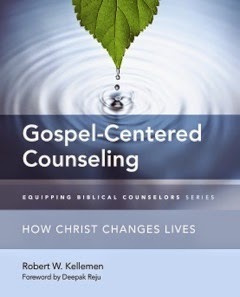 I'm currently reading the new book from Bob Kellemen,
Gospel-Centered Counseling: How Christ Changes Lives
.
I'm currently reading the new book from Bob Kellemen,
Gospel-Centered Counseling: How Christ Changes Lives
.So far, it's really good. Bob, the executive director of the Biblical Counseling Coalition, and a prolific author is well-suited to write this entry-level textbook for equipping biblical counselors.
In the book, he addresses the biblical counselor’s foundational question:
“What would a model of biblical counseling look like that was built solely upon Christ’s gospel of grace?”
And then he breaks that question into 8 ultimate life questions and briefly unpacks how the Bible answers them:
1. The Word: “Where do we find wisdom for life in a broken world?”
2. The Trinity/Community: “What comes into our mind when we think about God?” “Whose view of God will we believe—Christ’s or Satan’s?”
3. Creation: “Whose are we?” “In what story do we find ourselves?”
4. Fall: “What’s the root source of our problem?” “What went wrong?”
5. Redemption: “How does Christ bring us peace with God?” “How does Christ change people?”
6. Church: “Where can we find a place to belong and become?”
7. Consummation: “How does our future destiny with Christ make a difference in our lives today as saints who struggle against suffering and sin?”
8. Sanctification: “Why are we here?” “How do we become like Jesus?” How can our inner life increasingly reflect the inner life of Christ?”
I think this book would serve well those who don't know where to start in both understanding what biblical counseling is and how to practice it. I think that counseling students in Bible colleges and seminaries would especially benefit from reading it. Recommended.
October 27, 2014
More Sweet Tweets
As the fantastic Westminster Bookstore sale continues, I've seen some more neat tweets about our Resisting Gossip resources--so encouraging!
Our staff is reading #ResistingGossip, a helpful book on a tricky subject. Discounted at WTS with new study guide: http://t.co/brwqBCSnYP
— Kevin DeYoung (@RevKevDeYoung) October 16, 2014
Every church would be blessed by a series on "Resisting Gossip." A great resource: http://t.co/AyqTGJx7FL @ResistingGossip
— Barry McCarty (@barrymccarty) October 24, 2014
Fun fact: "Resisting Gossip" by Matthew Mitchell began life as a DMin project at Westminster Theological Seminary @WestminsterTS
— WestminsterBookstore (@wtsbooks) October 24, 2014
Finally, this looks like an important book for the church today. http://t.co/1kcJnJcnco
— Matt Haines ن (@haines_matt) October 23, 2014
"The foolish people of the world do not exist for my entertainment." ~ Matthew Mitchell // @ResistingGossip
— Brian Dempsey (@BrianDempsey) October 23, 2014
Especial por esta semana en la Librería Westminster — material sobre el chisme y su poder destructivo en la iglesia. http://t.co/icNGFq8gI5
— Salvador Gomez (@GomezDickson) October 23, 2014