
Virendra S. Rathore's Blog, page 2
June 24, 2021
The tricky road of medieval letters – Maharana Pratap, Shivaji and the Kachwahas
Introduction
The importance of words in executing propaganda cannot be overstated. Do they always mean what they say? Are they always authentic?
Words are the most important means for us to understand history. When studying medieval history, do we believe every word that is written in the sources?
How does one assess what is reliable and what isn’t?
Personally, we prefer to consider the following:
Such questions must be asked introspectively by all. Otherwise we risk slipping into a dangerous slope where many people already have. By perceiving and propagating highly polarized conclusions that the facts of history don’t even support.
This extreme and fringe thinking was previously found only in the religious groups. It has now percolated in the mainstream discussions of history. This development should be a cause of worry and sadly neither the political elite nor the social leadership or intellectuals have paid any attention to the poison simmering under their noses. Worse, they’re at times seen provoking it for selfish gains.
The results have started to show up as no historical personality is free from slander now. Not even the likes of Maharana Pratap and Shivaji, what to speak of other personalities. For example, this tweet claims that the leader of Mewar had expressed shame and repentance to Akbar for being unable to serve under the Mughals.
 Abul Fazl’s Akbarnama vol III, Pg 92
The basis of this claim is Abul Fazl’s Akbarnama which also says that after repenting so, much Maharana had sent his son to pay homage to Akbar.
If Maharana had indeed done both of these, Akbar would have happily accepted this submission and history would have taken a different turn. It beats logic as to why there is no record of such a consequence and why Mewar still kept defying the Mughals.
This lone tale of Abul Fazl stands discredited once we start looking for corroboration. Neither the contemporary and comprehensive muslim histories of Badayuni, Nizamuddin Ahmad etc record such a submission. Nor any Hindu sources speak of it.
But assume that we didn’t have the authority of other sources to compare and deduce. In that situation we recourse to the golden rule of studying a man by his actions and not what some random words claim to quote of him.
I will not waste our time in explaining the actions of the Mewari Maharana as they shine on their own like the Sun. Today we take the case of someone else.
Words for slander of the Kachwahas
The house of Kachwahas has since long been the favorite target of similarly nefarious bile.
A letter from Haft Anjuman is often flashed to vilify the Amber Maharaja Jai Singh as bearing hatred and harm towards Shivaji.
Why the letter in question can’t be taken as credible evidence and why the efforts to vilify the Kachwaha King lack substance, has already been detailed at the pdf (twitter thread) below.
MirzaRaja_Jai_SinghDownloadWords on Shivaji
We wanted to put forth further explanation on why and how words, specially when it is only words, can become deceptive.
This time we will take the example of Shivaji as most of us agree on who he was and what he did. Just as we do on the illustrious Maharana Pratap. Let us walk through some medieval letters that pertain to Shivaji.
1658 AD, Shivaji repents to prince Aurangzeb and makes requests. Shivaji promises his loyalty and service to Aurangzeb:

Aurangzeb in turn pardons him and asks him to be loyal henceforth:


 Adab-i-Alamgiri, contemporary source
Shivaji’s rise needs to be seen in the light of where his ancestors stood in the era’s political hierarchy.
Shivaji’s ancestors used to serve Deccani Sultanates who in turn used to nominally and sometimes practically operate under Mughal control.
His grandfather Muloji was granted the title of Raja by the Ahdamnagar Sultanate. The Nizamshahis of Ahmadnagar are known for their taxes like Butfaroshi levied on the Hindu devotees. Other Sultanates like Bijapur and Golconda also were no lesser tough on the Hindus of south, including the devastation of Vijaynagar. We will not repeat the well known and obvious.
Shivaji’s father Shahaji Bhonsle served in military campaigns of the Adilshahis (Bijapur) who subdued numerous Hindu principalities of the south, including the last chieftain of Vijaynagar called ShriRanga Rayala.
Even up to the days of Purandar treaty the Adil Shahis were expecting Shivaji to send his nephew in their service just as he had committed his son to the Mughal service.
So, Shivaji’s family starts from being in the third ring and moves toward the second ring i.e. directly under the Mughal Emperor. No intermediary bosses.
Individually for Shivaji, his interactions with Mughals began in the true sense with him offering to join the latter into Deccan in 1649 AD. This was for help against Adil Shahis who were bearing heavy on his father Shahaji Bhonsle.

One of the multiple occasions that make this upward thrust of Shivaji clear is the famous Agra episode whose casus belli revolved around the file in which Shivaji was made to stand.
Another instance is when Shivaji proclaims himself to be a servant of the Mughal Emperor and a direct one, rejecting any intermediaries like Afzal Khan. It aligns to his approach of attaining local sovereignty even if it came at the cost of submitting to the Imperial power of Mughal Emperor. This approach was a product of its era and similar to what many other Hindu Kings adopted then.

This is Shivaji after the Purandar treaty had been concluded, confessing for disloyal acts against the Mughal Emperor:
 Manuscript 7 of Insha-Haft Anjuman, contemporary source
Should we in blind faith on words, now start saying; that not only Maharana but the Chatrapati also expressed “shame” and “repentence” for absence from service to Imperial throne?
May 1666 AD. One day after storming out of the Agra court and casting the mansab off. Shivaji is now conciliatory and agrees to report back to the Emperor.
 Rajasthani letter no. 16, Parkaldas to Amber Diwan Kalyandas, May 15th 1666 AD
Due to lack of data it is obscure as to what exactly transpired between Maharaja Jai Singh and Shivaji in private conversations back in Deccan. But we see consistent signals that Shivaji was supposed to be eventually conferred a Mughal Mansabdari during that Agra visit. Signals come from the correspondence that flew in those very days of the visit and from the very same city of Agra.
First indication is when Shivaji was rightly indignant and storming out of the Imperial court. What he rejects in his profuse declaration is “I cast off your mansab”.
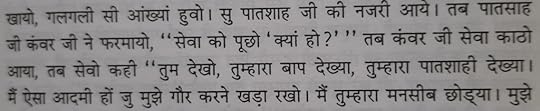 Rajasthani letter no. 16, Parkaldas to Amber Diwan Kalyandas, May 15th 1666 AD
Next occurence is when the Amber officials posted in Agra show hope of repairing the situation. The agenda is – “When Shivaji reports back to the Emperor. He (Aurangzeb) will confer the mansab to Shivaji”.
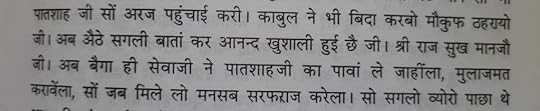 Rajasthani letter no. 18, Parkaldas to Amber Diwan Kalyandas, May 20th 1666 AD
After Agra episode and Maharaja Jai Singh’s death, Shivaji requests the Emperor for him to be pardoned again. He repeats his offer to submit to the Emperor and send his son with a force to serve under the Mughal banner.
When Aurangzeb ignores this request, Shivaji now turns to Maharaja Jaswant Singh to have the Emperor pardon him and commits that his son will serve the Empire as its “Mansabdar”.
 Nuskha-i-Dilkush of Pandit Bhimsen, a contemporary source
Shivaji’s own words while assuring Aurangzeb of his loyalty and service:
 Manuscript 7, Royal Asiatic Society, London
English Factory, a contemporary source aptly summarizes the 1667-70 AD Shivaji. That he was laying low and following orders as a Mughal vassal after securing the Emperor’s pardon:
 English Factory Records
To the self appointed judges who ascribe some words of a letter to the purpose of handing guilty verdict to Maharaja Jai Singh. We must ask why Shivaji the man who from the beginning had in his heart the dream of Hindavi Swaraj, pleads for the grant of a mansab on one occasion, for forgiveness on another and so on.
To this I know we must respond by saying that Shivaji was in a tight spot on these occasions. That he didn’t mean these words etc.
While I don’t disagree with such explanations. What I fail to understand is why this line of thinking touting political expediency vanishes when heavily biased elements ridicule many Hindu rulers like Maharaja Jai Singh.
He too was in a tight spot at the time when that Haft Anjuman letter is supposed to have been written (that is, if you assume it has intact integrity in terms of both – content and intent).
We can on some other day throw light on how the Kachwaha rulers protected their Hindu populace and advanced the interests of their religion, despite being in alliance with Mughals. But beyond the petty fights of what is written and what is credible out of what is written. We should remind the readers that in the end it is the actions that matter more than the ink.
Which brings us to address why did we go through all these letter excerpts of Shivaji above. It is to clarify an important aspect of history.
Imagine that you know nothing of Shivaji. That you had just read these letters regarding Shivaji and aren’t aware of anything else that Shivaji did. What impression will you make of him?
Completely opposite to how we know him. The slander of other Hindu Kings follows the same trajectory.
But why this contradiction between perception and facts?
It is because while forming the said perception folks went merely by the words of some letters, that is, selective observation of facts.
If we only focus on words written in letters, we are bound to profile people in a wrong manner.
Because it is rather the actions that are always the portal of truth. They hold more ground value and effect in churning the wheel of history than some words ever have, specially when actions don’t corroborate them.
To shorten the long story – you judge a man by his actions, not what the ink claims to quote from him.
Actions of Rajputs including Maharaja Jai Singh are that at least four times they saved Shivaji’s life (already detailed in the pdf embedded). In one of those four occasions it was Jai Singh ji himself and in two it was his son. One last was by Rathores.
When the Kachwaha royals have prevented Shivaji’s murder repeatedly, even by risking their own lineage. It baffles that some would even believe the bile spewed by the viciously anti-Kachwaha and Aurangzeb-sponsored Munshi. This is where the judging factors listed at the start, like ‘involvement of the writer’ become crucial.
Moreover, History tells us that Aurangzeb had liking for such cunning tactics of pen. He once similarly and successfully drew a wedge between his rebellious son Akbar and the Rajputs by the twin device of:
a) sending a letter to his son applauding him for trapping the Rajputs in his web.
b) killing Quli Khan the bridge between prince Akbar and the Rajputs.


Prince Akbar’s own words in his letter to Shambhaji:
 History of Aurangzib vol III
When we know that Aurangzeb always suspected all Rajputs for being staunch Hindus. And that his suspicion reached its peaks after the Agra episode. It was pretty run of the mill for the Emperor to abet any plans for dividing the Marathas and Rajputs at that crucial juncture via such subtle injections of false data, within the layers of otherwise accurate facts and figures.
It wasn’t just Aurangzeb who used such devious devices. Sher Shah Suri adopts the same tactic while facing the formidable Marwar army under Rao Maldeo and his generals. Here’s how Islamic writers like Abbas Sarwani and Ferishta narrate that Suri wriggled out of the tough situation.
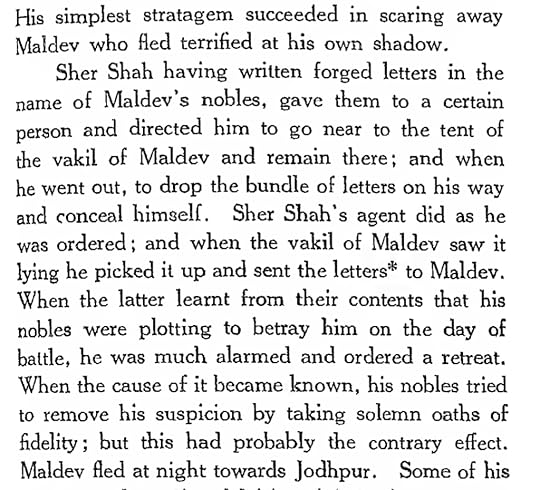
Instead of vile and often basless demonization. What makes for authentic criticism is the fact that Rajputs repeatedly fell for such gimmicks.
It is also alleged that Jai Singh was harsh on the (Hindu) population of Shivaji’s lands.
How the Kachwaha King prevented unnecessary violence, specially on civilians. Is clear from the same Haft Anjuman where Jai Singh first advocates for use of policy when it can give the same results that are desired via violence. Later he also informs Aurangzeb that he had removed the soldiers who were excessing on the public.
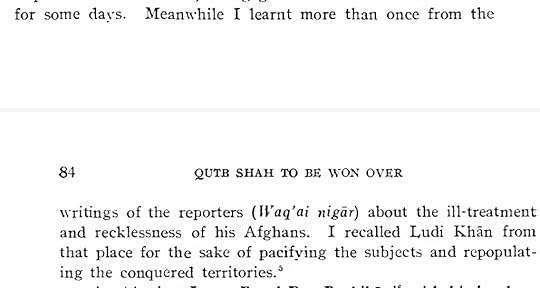
We must remind the friends who view everything in the Hindu-Muslim lense, that Shivaji was secretly also negotiating with the Adil Shahis a muslim power with Deccan Hindu blood on its hands. He had received material help and encouragement from the Adil Shahis to ward off the Mughals. Adil Shahi aim naturally being that Shivaji should remain and function as a buffer between them and Mughals.
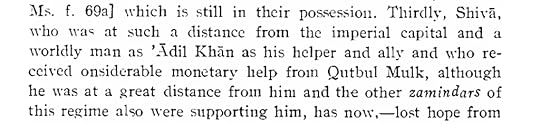 Insha-i-Haft Anjuman folio 69a, contemporary source
It comes from the same Haft Anjuman used to vilify Jai Singh.
It was in this backdrop and the context given on page 2 of attached pdf, that Jai Singh had to ensure that Shivaji appears on the negotiation table swiftly. The instances of excessive/indiscriminate violence and squeezing of the peasantry appear in Shivaji’s reign as well. But we faithfully fly over, as them being the norms of the wild era that it was.
Some examples…
The army of Shivaji plundered Karnatak in late 1670s, the characteristics of which have been listed by the English (Madras factory records) and the French (Francois Martin’s memoirs).
 Francois Martin’s memoirs, contemporary source
Not just Karnatak plains, on other campaign like Madras and against Siddis it was no different in terms of severe collateral damage to civilians:


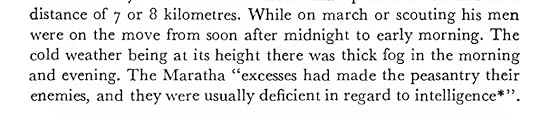
The peasantry was being crushed everywhere due to wars and the constant need of plunder to fund those wars. This is what happened in the Bijapuri region south of Goa.

It was not without reason that despite Shivaji being a known local son of the soil and not some foreign invader. Wherever his army turned in the Deccan, all lands in the path would be emptied by panicked civilians. It seems his reputation and his army’s profile in public eyes weren’t in full overlap. This is from the narration of Ratnagiri campaign 1661 AD.
 Shiva Bharat / Anupuran Suryavansham of Kavi Bhushan, contemporary source
Contrary to how some of the social media zealots perceive all under the Sun from the lenses of Hindutva. Every matter can’t and hasn’t been settled in history merely by religion. Notice below, how villagers in enemy lands were fair play. It takes no great mental faculties to deduce which religion majority of the victims subscribed to.


This painful though understandable medieval norm, forms a very contrasting picture to our memories of ancient kshatriya battles.
That was when armies would clash while farmers in the fields near-by would be sowing their fields un-perturbed. The peculiarity has been faithfully documented by Chinese travellers. Perhaps too obvious for Indians to mention much on.
Coming back to medieval age. The extortion by Maratha officials often went unchecked even after assurances from Shivaji’s office that it shall not be so.
 Francois Martin’s Memoirs
More than a century later, while writing home to the Lord Provost of Glasgow. The following words are used by Sir Thomas Munro of EIC for Maratha rule, specially the part after Shivaji.
 Life Of Sir Thomas Munro Vol. 3, G. R. Gleig
 Life Of Sir Thomas Munro Vol. 3, G. R. Gleig
There are similar contradictions around Shivaji’s religious policy.
When we see him writing secular letters to Aurangzeb and historians note him giving grants for mosques. We praise such credentials as desirous qualities of a grandly beneficial and divine ruler.
 Shivaji’s letter to Aurangzeb, manuscript no. 7, Royal Asiatic Society, Lo
Yet when some contemporary sources claim that he defiled mosques and killed Christian padres. Our folks’ heart fills with Hindutva pride and we say “Oh those secular words must be political necessities of the moment”. English Factory (a contemporary) records thus-
 English Factory Records
Questions are often raised around Shivaji in such context by various ideological camps. Where they try to forcefit him in a spectrum ranging from uber secular to hindutva fanatic variety.
It is however stranger than those questions, that while many of us want to rightly understand the nuances of or reconcile with these contradictions around Shivaji. Yet lend no intent to similarly understanding any other Hindu rulers?
We don’t know what it is, if not some bias chipping off the regional narratives.
It needs to be re-iterated that the people we speak of in such low veins i.e. the Kings and Chiefs. They were the political leadership of their times. With that position comes the need of taking steps as per political expediency. It reflects in the comparison of words and actions of Shivaji (explained above), as it does with all other rulers as well. Every King/chief from their own unique circumstances did what they figured was the best possible for their people, their Kingdom.
Now that we’ve understood the point of political expediency. Of how circumstances forced the rulers to take steps not suiting the taste of some 21st century fringe down the line.
It is time to explore as to what was the unique political expediency of the Kachwahas’ Amber Kingdom.
Did Amber not fight the latest mlechhas of the Chaghatai variant?
They did, but they failed. Just as Shivaji’s father Shahaji Bhonsle tried to fight Nizamshahis but forced by circumstances, failed and ended up serving them while latter went on subjugating Deccani hindu powers.
Anyway, the Kachwahas though never had a huge Kingdom. Yet they are known for crossing swords with invaders from the times of first successful muslim invasions of mainland India in the 12th and 13th century. Kachwaha genealogies clearly mention of their paying homage to the Ajmer Chauhan Kings and even weddings are recorded. Their contribution in Chauhan’s struggle against Muslim powers is a given.
From then up to the battle of Khanwa 1527 AD under Maharana Sanga of Mewar. The Kachwahas are seen serving as vassals of whichever paramount Hindu power was clashing with the muslim invaders.
The vassalage of Amber under Mewar is indicated in the Kumbhgarh inscription 1460 AD of the reign of Maharana Kumbha. Here in the long list of Maharana’s conquests we find the humbled Amber hill as Amrad-Adri-Dalana.
Amber’s Kachwaha ruler Prithviraj Raj, was a Krishna devotee and vassal of Maharana Sanga (Sangram Singh). It was during his reign that Galta peeth was installed for the Ramanuj sect.
The king and his army fought alongside the Maharana in the battles of Bayana 1526 AD and Khanwa March 1527 AD against Babur. It was Prithviraj Kachwaha of Amber, Rao Maldeo Rathore of Marwar and Rao Akhairaj Devda (Chauhan) of Sirohi who together paved the way for pulling the heavily wounder Maharana out of the thick battle flanks.
This is as per the folios 136 and 141 from AkshayNath’s (descendant of a Khanwa martyr) collection of daily diaries of the Mewari Ranas, as well as from the data of Baburnama.
Shortly after this battle, not during it as is popular, the Kachwaha king died (even before the Maharana himself).
But then how did Amber come about in alliance with descendants of Babur?
For that we need to dive in the three decades, starting from the immediate aftermath of Khanwa up to 1554 AD.
And even before that, we need to dip in the often neglected and crucial swing factor of history which tipped the scales. One upon which we’ve also stressed in the book on Prithviraj Chauhan.
Resistance and Geography
Throughout the medieval centuries we find four main examples of exo Himalayan Indian powers that admirably held on against waves of invasions by Muslim powers. Their muslim adversaries were in most if not all cases much stronger than these Indian Kingdoms. These are:
Mewar of Guhilots & SisodiasOrissa/Odisha of GajapatisMaratha state of ShivajiAssam of AhomsOther than the well known psychological stamina of these Kingdoms to withstand Islamic attacks. There is one factor common in all of them – Geography, a very tough Geography.
All four regions offer a very hostile terrain for any invasive force to work through.
Mewar is where the Aravali mountain range is at its finest. Mewar’s western and southern half is composed of decidious forests, moors, shrubs and narrow valleys. The state was studded with forts resting on hills and their approach welcomed by ravines, valleys and forests. This was the strategic depth to which the Mewari Maharanas fell back whenever the many times larger Muslim armies swept in to overwhelm their defenses.
Orissa/Odisha is adorned with uneven rocky terrain, thick forests and a wet soil with higher than usual content of clay and humus.
All these geographical features are basically a hellhole for cavalry i.e. horses. They also provide ample spots for locals to hide for guerrilla warfare as well as to trap their enemy (in narrow valleys).
Assam not only has forests but plenty of water bodies making a chequered terrain. It knocks down the momentum of any invasion and offers to splinter the whole theatre of war into separate sporadic and smaller engagements where the local defense can inflict severe damage at minimal cost.
None of these states was conquerable in the fabled dreamrun manner how Islamic cavalries swept into the Indo-Gangetic plains like lightning, winning all they trampled their horseshoes on. That whole region is 1000 miles of fertile plains with literally no geographic barriers. Right from Multan-Lahore in west to Bhagalpur in the East.
Compare to that the geographic advantage of the four Kingdoms mentioned above. It enabled the locals (born and brought up in that terrain to become one with its ways) to fight off big invasions and even mount the longest rounds of resistance.
Owing to western ghats the newly risen Maratha state of Shivaji had a similar geographical advantage of hills, hilly forts, ravines and narrow valley and passes apt for surprise attacks. Of these Shivaji is seen boasting to his enemies as part of psychological warfare. Multiple contemporary letters attest to this.
Excerpts from Shivaji’s taunting letter to the Mughals stationed in Deccan:


 Drafted by Nila Prabhu Munshi 1664 AD
Later when Shivaji was going to surrender to Maharaja Jai Singh. Diler Khan reminds himself and Shivaji of these geographical challenges in an equally taunting letter:

 Insha-i-Haft-Anjuman, contemporary source
Thus it should not surprise us that these states employed guerilla warfare tactics against their enemy. These states were facilitated by geography to use such methods.
But not everybody was lucky to have such cushion. Now that we’ve seen the geography of successful defenders. Let us return to the geography of Amber who had to ally with Mughals.
This state was barely 140 miles away, as the crow files, from the Mughal capital. To give perspective, the straight-line distance from Rajgarh to Delhi is 800 miles and from Mewar it is 300 miles.
This proximity is a double edged sword. If yours is a smaller state, the edge on your side tends to cut more often.
Traversing the Aravali in the northeast orientation towards Delhi, by the time we reach Amber it (the Aravali range) almost runs into the ground and presents only few tiny hillocks here and there. Most of the landscape is plain, medium vegetation, medium rainfall.
So, not only is Amber at peril by distance. It gets very little protection by geography unlike Mewar and the Maratha state etc.
With the geography understood. It is time to re-visit Amber’s political scenario after Khanwa.
Amber after Khanwa
Post the fateful loss of Rajput confederacy at Khanwa 1527 AD. The smaller states like Amber that used to be under Mewari umbrella, were exposed to a new political reality.
Their leader i.e. the now wounded paramount Hindu power of Mewar had retreated into survival mode.
Their foe (based only 140 miles away) was now entrenched from Lahore to Bengal.
Their foe had gunpowder to which the Rajputs at that time had no better response.
In the grim scenario Prithviraj Kachwaha’s son Puranmal ascends Amber throne in Nov 1527 AD. [Source -Koormavilas, official Kachwaha genealogy, Pg 153]
After Babur died in 1530 AD, successor Humayun had a different temperament from his father. Nor he commanded the same respect/discipline from his vassals/generals. He remained pre-occupied with Afghans on east and BahadurShah in Gujarat.
In the northwest, Humayun’s brother Hindal and other Mughal generals started from Alwar and invaded Amber.
It was this Mughal army that Puranmal clashed with and died in battle 1534 AD. The battle is described sufficiently in Koormavilas and Chand Rao Jait Si Ro.


 Koormavilas, official Kachwaha genealogy, Pg 154-55
अलवरी सेन चढिया अथाह।
सोवन्न लूटि बंधिया साह ।।
लागुअ गमिय मेवात लोप ।
कछवाहा साम्हउ कियउ कोप।।
आमेर धणीआहवी अच्चल।
मुगले मारि पूरणमल्ल ।।
सेखावत कहता सारि सण्ड।
दलिया खड्ग हिक लिया दण्ड।।
नीरबाण गया भाजिय नरिंद।
पतिसाह भये सेवहिं पुलिंद।।
डूंगरा धणी गा दण्ड देय ।
संग्रही सारि सांभर सवेय।।
[Chand Rao Jait So Ro, near contemporary source. Excerpt received with gratitude from Shri Madan Singh Shekhawat (Jhajhar)]
Not only Kachwahas lost their King, this campaign humbled the local powers like Nirvans, Meenas as well who fled into the hills.
But it can be observed that even after the jolt of Khanwa the battered and small state of Amber had not surrendered to either Afghans or the Mughals.
At the same time elsewhere in Rajputana, in south a weakened Mewar faced Bahadur Shah’s invasion from Gujarat. And in west Rao Maldeo of Marwar was preparing for his expansion spree.
In the years after Puranmal’s death the state of Amber was thrown in further political quagmire. Multiple claimants were in the fray and the throne was switching from one weak ruler to another every few years. Political conspiracies ran course into fratricide and severe infighting.
The scenario outside Amber remained the same.
Mughals were locked with Afghans.
Mewar was yet to make a comeback as they saw similar political instability with weak rulers and short reigns i.e. throne frequently changing hands.
Finding it an opportunity, two entities threw their weight in:
The Meenas, a tribe that dominated parts of the erstwhile Dhundhar region (within Amber kingdom) before the Kachwahas, now began to revolt in the state.From west the Rathores under Rao Maldeo started expanding in all directions with indiscriminate warfare, where they spared none – friends or foes.The possibility of another Hindu confederation being dim already. These threats forced the Amber rulers to seek help from Afghans who had overpowered the Mughals for time being.
In 1540s the Afghans were finally brought under control (though not finished) with Persian help.
But Amber had no respite. Weak and unstable throne led to land grabs by powerful samants.
In June 1547 AD the throne passed on to Raja Bharmal who was in his late 40s then.
The situation was far from a simple hindu vs muslim polar fight that many like to imagine.
Hindus states like Marwar and Amber were at odds with each other. Among Muslims, the Mughals and Afghans had been clashing with each other.
In the initial years of his reign Bharmal ji was not only invaded by Rao Maldeo of Marwar. But Amber’s recently deposed claimant and his nephew Askaran Kachwaha went to Afghans for help.
Bharmal ji was a smart diplomat. He turned the Afghans away with money and installed Askaran in Narwar which used to be held by their parent clan Kachhapaghatas. There were no problems from the Narwar side after this.
Bharmal’s diplomacy and mediations gradually made him a known figure for both Afghans and Mughals. But the problems weren’t over. Few years later another nephew (Puranmal’s son) Surajmal rose as claimant of the throne.
In 1558 AD Surajmal reached Akbar’s Mewat governor Sgarfuddin for help. It is unclear what agreement or conditions were reached between the two but Sharfuddin’s forces came in for Surajmal and sieged Amber. After skipping this attack by retreating in hills, Bharmal realized that he won’t be able to hold fort on his own like this for long. It was time to make big decisions and seal political loose ends.
When Sharfuddin himself came in 1561 AD, Bharmal ji had to commit for paying a huge ransom at later date and as guarantee/collateral Sarfuddin took away with him three male members of Kachwaha royalty including the King’s son. Surajmal was still unsatisfied. At the same time Meena revolt reached its peak.
Among invasions, fratricide, revolts, land grabs and ransoms. No Kachwaha ruler was able to command the full support of his samants, administration and resident tribes.
In this disheartening saga of three decades. It was crystal clear that Amber’s throne was in dire need of a final and long term solution to the wrestling going on for decades now.
The Bharmal-Sharfuddin situation wasn’t a solution but a pause/impasse. It was a matter of time before the subject came to Akbar’s attention. Before Akbar’s weighs in and picks a side to make matters worse, it was imperative for Bharmal to execute his moves.
He utilized this time to finish the problem forever. As there was no solution available from within the Kingdom. He sought it outside. He pre-emptively restored his liaison with Akbar which culminated in a wedding in 1562 AD.
This is how Bharmal came under Akbar’s sphere.
We leave it to some other day to frame the religious profile of Kachwaha rulers and how it reflected in their actions as Kings.
Takeaway
Our behaviour with history needs serious reforms. Like broken records we have collectively failed to transact with history in any manner other than the two – of glorifying the historic personalities into heroes and of vilifying the historic personalities into scoundrels.
The vilification of Indian rulers has become an infectious tragedy. It started with the baseless profiling of Gahadavala King Jaichandra as a traitor; and has now threatened the memory of Maharana Pratap and Shivaji.
This vicious urge of building extreme caricatures out of historic personalities has the potential to destroy our social fabric. It challenges the idea of India as a modern nation state.
Such loss of objectivity and tunneled thinking will cost us dearly in the long run.


The tricky road of medieval letters
Introduction
The importance of words in executing propaganda cannot be overstated. Do they always mean what they say? Are they always authentic?
Words are the most important means for us to understand history. When studying medieval history, do we believe every word that is written in the sources?
How does one assess what is reliable and what isn’t?
Personally, we prefer to consider the following :
Such questions must be asked introspectively by all. Otherwise we risk slipping into a dangerous slope where many people already have. By perceiving and propagating highly polarized conclusions that the facts of history don’t even support.
This extreme and fringe thinking was previously found only in the religious groups. It has now percolated in the mainstream discussions of history. This development should be a cause of worry and sadly neither the political elite nor the social leadership or intellectuals have paid any attention to the poison simmering under their noses. Worse, they’re at times seen provoking it for selfish gains.
The results have started to show up as no historical personality is free from slander now. Not even the likes of Maharana Pratap and Shivaji, what to speak of other personalities. For example, this tweet claims that the leader of Mewar had expressed shame and repentance to Akbar for being unable to serve under the Mughals.
Abul Fazl’s Akbarnama vol III, Pg 92The basis of this claim is Abul Fazl’s Akbarnama which also says that after repenting so, much Maharana had sent his son to pay homage to Akbar.
If Maharana had indeed done both of these, Akbar would have happily accepted this submission and history would have taken a different turn. It beats logic as to why there is no record of such a consequence and why Mewar still kept defying the Mughals.
This lone tale of Abul Fazl stands discredited once we start looking for corroboration. Neither the contemporary and comprehensive muslim histories of Badayuni, Nizamuddin Ahmad etc record such a submission. Nor any Hindu sources speak of it.
But assume that we didn’t have the authority of other sources to compare and deduce. In that situation we recourse to the golden rule of studying a man by his actions and not what some random words claim to quote of him.
I will not waste our time in explaining the actions of the Mewari Maharana as they shine on their own like the Sun. Today we take the case of someone else.
Words for slander of the Kachwahas
The house of Kachwahas has since long been the favorite target of similarly nefarious bile.
A letter from Haft Anjuman is often flashed to vilify the Amber Maharaja Jai Singh as bearing hatred and disdain towards Shivaji.
Why the letter in question can’t be taken as credible evidence and why the efforts to vilify the Kachwaha King lack substance, has already been detailed at the pdf (twitter thread) below.
MirzaRaja_Jai_SinghDownloadWords on Shivaji
We wanted to put forth further explanation on why and how words, specially when it is only words, can become deceptive.
This time we will take the example of Shivaji as most of us agree on who he was and what he did. Just as we do on the illustrious Maharana Pratap. Let us walk through some medieval letters that pertain to Shivaji.
1658 AD, Shivaji repents to prince Aurangzeb and makes requests. Shivaji promises his loyalty and service to Aurangzeb:
Aurangzeb in turn pardons him and asks him to be loyal henceforth:
The House of ShivajiShivaji’s rise needs to be seen in the light of where his ancestors stood in the era’s political hierarchy.
Shivaji’s ancestors used to serve Deccani Sultanates who in turn used to nominally and sometimes practically operate under Mughal control.
His grandfather Muloji was granted the title of Raja by the Ahdamnagar Sultanate. The Nizamshahis of Ahmadnagar are known for their taxes like Butfaroshi levied on the Hindu devotees. Other Sultanates like Bijapur and Golconda also were no lesser tough on the Hindus of south, including the devastation of Vijaynagar. We will not repeat the well known and obvious.
Shivaji’s father Shahaji Bhonsle served in military campaigns of the Adilshahis (Bijapur) who subdued numerous Hindu principalities of the south, including the last chieftain of Vijaynagar called ShriRanga Rayala.
Even up to the days of Purandar treaty the Adil Shahis were expecting Shivaji to send his nephew in their service just as he had committed his son to the Mughal service.
So, Shivaji’s family starts from being in the third ring and moves toward the second ring i.e. directly under the Mughal Emperor. No intermediary bosses.
Individually for Shivaji, his interactions with Mughals began in the true sense with him offering to join the latter into Deccan in 1649 AD. This was for help against Adil Shahis who were bearing heavy on his father Shahaji Bhonsle.
One of the multiple occasions that make this upward thrust of Shivaji clear is the famous Agra episode whose casus belli revolved around the file in which Shivaji was made to stand.
Another instance is when Shivaji proclaims himself to be a servant of the Mughal Emperor and a direct one, rejecting any intermediaries like Afzal Khan. It aligns to his approach of attaining local sovereignty even if it came at the cost of submitting to the Imperial power of Mughal Emperor. This approach was a product of its era and similar to what many other Hindu Kings adopted then.
This is Shivaji after the Purandar treaty had been concluded, confessing for disloyal acts against the Mughal Emperor:
May 1666 AD. Day after storming out of the Agra court, Shivaji is conciliatory and agrees to report back to the Emperor.
Rajasthani letter, a contemporary despatch from AgraAfter Agra episode and Maharaja Jai Singh’s death, Shivaji requests the Emperor for him to be pardoned again. He repeats his offer to submit to the Emperor and send his son with a force to serve under the Mughal banner.
When Aurangzeb ignores this request, Shivaji now turns to Maharaja Jaswant Singh to have the Emperor pardon him and commits that his son will serve the Empire as its “Mansabdar”.
Nuskha-i-Dilkush of Pandit Bhimsen, a contemporary sourceShivaji’s own words while asking pardon from Aurangzeb:

English Factory, a contemporary source aptly summarizes the 1667-70 AD Shivaji. That he was laying low and following orders as a Mughal vassal after securing the Emperor’s pardon:
English Factory RecordsTo the self appointed judges who ascribe some words of a letter to the purpose of handing guilty verdict to Maharaja Jai Singh. We must ask why Shivaji the man who from the beginning had in his heart the dream of Hindavi Swaraj, pleads for the grant of a mansab on one occasion, for forgiveness on another and so on.
To this I know we must respond by saying that Shivaji was in a tight spot on these occasions. That he didn’t mean these words etc.
While I don’t disagree with such explanations. What I fail to understand is why this line of thinking touting political expediency vanishes when heavily biased elements ridicule many Hindu rulers like Maharaja Jai Singh.
He too was in a tight spot at the time when that letter is supposed to have been written (that is, if you consider it to not have any fake words).
We can on some other day throw light on how the Kachwaha rulers protected their Hindu populace and advanced the interests of their religion, despite being in alliance with Mughals. But beyond the petty fights of what is written and what is credible out of what is written. We should remind the readers that in the end it is the actions that matter more than the ink.
Which brings us to address why did we go through all these letter excerpts of Shivaji above. It is to clarify an important aspect of history.
Imagine that you know nothing of Shivaji. That you had just read these letters regarding Shivaji and aren’t aware of anything else that Shivaji did. What impression will you make of him?
Completely opposite to how we know him. The slander of other Hindu Kings follows the same trajectory.
But why this contradiction between perception and facts?
It is because while performing the said perception folks went merely by the words of some letters, that is, selective observation of facts.
If we only focus on words written in letters, we are bound to profile people in a wrong manner.
Because it is rather the actions that are always the portal of truth. They hold more ground value and effect in churning the wheel of history than some words ever have, specially when actions don’t corroborate them.
To shorten the long story – you judge a man by his actions, not what the ink claims to quote from him.
Actions of Rajputs including Maharaja Jai Singh are that at least four times they saved Shivaji’s life (already detailed in the pdf embedded). In one of those four occasions it was Jai Singh ji himself and in two it was his son. One last was by Rathores.
When the Kachwaha royals have prevented Shivaji’s murder repeatedly, even by risking their own lineage. It baffles that some would even believe the bile spewed by the viciously anti-Kachwaha and Aurangzeb-sponsored Munshi.
Moreover, History tells us that Aurangzeb had liking for such cunning tactics of pen. He once similarly and successfully drew a wedge between his rebellious son Akbar and the Rajputs by the twin device of:
a) sending a letter to his son applauding him for trapping the Rajputs in his web.
b) killing Quli Khan the bridge between prince Akbar and the Rajputs.
Prince Akbar’s own words in his letter to Shambhaji:
History of Aurangzib vol IIIWhen we know that Aurangzeb always suspected all Rajputs for being staunch Hindus. And that his suspicion reached its peaks after the Agra episode. It was pretty run of the mill for the Emperor to abet any plans for dividing the Marathas and Rajputs at that crucial juncture via such subtle injections of false data, within the layers of otherwise accurate facts and figures.
But was also alleged that Jai Singh was harsh on the (Hindu) population of Shivaji’s lands. We must remind our people who view everything in the Hindu-Muslim lense, that Shivaji was secretly also negotiating with the Adil Shahis a muslim power with Deccan Hindu blood on its hands. He had received material help and encouragement from the Adil Shahis to ward off the Mughals.
Insha-i-Haft Anjuman folio 69a, contemporary sourceIt comes from the same Haft Anjuman used to vilify Jai Singh.
It was in this backdrop and the context given on page 2 of attached pdf, that Jai Singh had to ensure that Shivaji appears on the negotiation table swiftly. The instances of excessive/indiscriminate violence and squeezing of the peasantry appear in Shivaji’s reign as well. But we faithfully fly over, as them being the norms of the wild era that it was.
Some examples…
The army of Shivaji plundered Karnatak in late 1670s, the characteristics of which have been listed by the English (Madras factory records) and the French (Francois Martin’s memoirs).
Francois Martin’s memoirs, contemporary sourceNot just Karnatak plains, on other campaign like Madras and against Siddis it was no different in terms of severe collateral damage to civilians:
The peasantry was being crushed everywhere due to wars and the constant need of plunder to fund those wars. This is what happened in the Bijapuri region south of Goa.
It was not without reason that despite Shivaji being a known local son of the soil and not some foreign invader. Wherever his army turned in the Deccan, all lands in the path would be emptied by panicked civilians. It seems his reputation and his army’s profile in public eyes weren’t in full overlap. This is from the narration of Ratnagiri campaign 1661 AD.
Shiva Bharat / Anupuran Suryavansham of Kavi Bhushan, contemporary sourceWe must press that contrary to how some of the social media zealots perceive all under the Sun from the lenses of Hindutva. Every matter can’t and hasn’t been settled in history merely by religion. Notice below, how villagers in enemy lands were fair play. It takes no great mental faculties to deduce which religion majority of the victims subscribed to.
This painful though understandable medieval norm forms a very contrasting picture to our memories of ancient kshatriya battles.
That was when armies would clash while farmers in the fields near-by would be sowing their fields un-perturbed. The peculiarity has been faithfully documented by Chinese travellers. Perhaps too obvious for Indians to mention much on.
Coming back to medieval age. The extortion by Maratha officials often went unchecked even after assurances from Shivaji’s office that it shall not be so.
Francois Martin’s MemoirsMore than a century later, while writing home to the Lord Provost of Glasgow. The following words are used by Sir Thomas Munro of EIC for Maratha rule, specially the part after Shivaji.
Life Of Sir Thomas Munro Vol. 3, G. R. Gleig
Life Of Sir Thomas Munro Vol. 3, G. R. GleigThere are similar contradictions around Shivaji’s religious policy.
When we see him writing secular letters to Aurangzeb and historians note him giving grants for mosques. We praise such credentials as desirous qualities of a grandly beneficial and divine ruler.
Shivaji’s letter to AurangzebYet when some contemporary sources claim that he defiled mosques and killed Christian padres. Our folks’ heart fills with Hindutva pride and we say “Oh those secular words must be political necessities of the moment”. English Factory (a contemporary) records thus-
English Factory Records, contemporary sourceQuestions are often raised around Shivaji in such context by various ideological camps. Where they try to forcefit him in a spectrum ranging from uber secular to hindutva fanatic variety.
It is however stranger than those questions, that while many of us want to rightly understand the nuances of or reconcile with these contradictions around Shivaji. Yet lend no intent to similarly understanding any other Hindu rulers?
We don’t know what it is, if not some bias chipping off the regional narratives.
It needs to be re-iterated that the people we speak of in such low veins i.e. the Kings and Chiefs. They were the political leadership of their times. With that position comes the need of taking steps as per political expediency. It reflects in the comparison of words and actions of Shivaji (explained above), as it does with all other rulers as well. Every King/chief from their own unique circumstances did what they figured was the best possible for their people, their Kingdom.
Now that we’ve understood the point of political expediency and how circumstances forced the rulers to take steps not suiting the taste of some 21st century zealots down the line.
It is time to explore as to what was the unique political expediency of the Kachwahas’ Amber Kingdom.
Did Amber not fight the latest mlechhas of the Chaghatai variant? They did, but they failed. Just as Shivaji’s father Shahaji Bhonsle tried to fight Nizamshahis but forced by circumstances, failed and ended up serving them while latter went on subjugating Deccani hindu powers.
Anyway, the Kachwahas though never had a huge Kingdom. Yet they are known for crossing swords with invaders from the times of first successful muslim invasions of mainland India in the 12th and 13th century. Kachwaha genealogies clearly mention of their paying homage to the Ajmer Chauhan Kings and even weddings are recorded. Thus their contribution in Chauhan’s struggle against Muslim powers is a given.
From then up to the battle of Khanwa 1527 AD under Maharana Sanga of Mewar. The Kachwahas are seen serving as vassals of whichever paramount Hindu power was clashing with the muslim invaders.
The vassalage of Amber under Mewar is indicated in the Kumbhgarh inscription 1460 AD of the reign of Maharana Kumbha. Here in the long list of Maharana’s conquests we find the humbled Amber hill as Amrad-Adri-Dalana.
Amber’s Kachwaha ruler Prithviraj Raj, was a Krishna devotee and vassal of Maharana Sanga (Sangram Singh). It was during his reign that Galta peeth was installed for the Ramanuj sect.
The king and his army fought alongside the Maharana in the battles of Bayana 1526 AD and Khanwa March 1527 AD against Babur. It was Prithviraj Kachwaha of Amber, Rao Maldeo Rathore of Marwar and Rao Akhairaj Devda (Chauhan) of Sirohi who together paved the way for pulling the heavily wounder Maharana out of the thick battle flanks.
This is as per the folios 136 and 141 from AkshayNath’s (descendant of a Khanwa martyr) collection of daily diaries of the Mewari Ranas, as well as from the data of Baburnama.
Shortly after this battle, not during it as is popular, the Kachwaha king died (even before the Maharana himself).
Then how did Amber come about in alliance with descendants of Babur?
For that we need to dive in the three decades, starting from the immediate aftermath of Khanwa up to 1554 AD.
And even before that, we need to dip in the often neglected and crucial swing factor of history. One upon which we’ve also stressed in the book on Prithviraj Chauhan.
Resistance and Geography
Throughout the medieval centuries we find four main examples of exo Himalayan Indian powers that admirably held on against waves of invasions by Muslim powers. Their muslim adversaries were in most, if not all, cases much stronger than these Indian Kingdoms.
Mewar of Guhilots & SisodiasOrissa/Odisha of GajapatisMaratha state of ShivajiAssam of AhomsOther than the well known psychological stamina of these Kingdoms to withstand Islamic attacks. There is one factor common in all of them – Geography.
All four regions offer a very tough terrain for any invasive force to work through.
Mewar is where the Aravali mountain range is at its finest. Mewar’s western and southern half is composed of decidious forests, moors, shrubs and narrow valleys. The state was studded with forts resting on hills and their approach welcomed by ravines, valleys and forests. This was the strategic depth to which the Mewari Maharanas fell back whenever the many times larger Muslim armies swept in to overwhelm their defenses.
Orissa/Odisha is adorned with uneven rocky terrain, thick forests and a wet soil with higher than usual content of clay and humus.
All these geographical features are basically a hellhole for cavalry i.e. horses. They also provide ample spots for locals to hide for guerrilla warfare as well as to trap their enemy (in narrow valleys).
Assam not only has forests but plenty of water bodies making a chequered terrain. It knocks down the momentum of any invasion and offers to splinter the whole theatre of war into separate sporadic and smaller engagements where the local defense can inflict severe damage at minimal cost.
None of these states was conquerable in the fabled manner how Islamic cavalries swept into the Indo-Gangetic plains like lightning, winning all they trampled their horseshoes on. That is 1000 miles of fertile plains with literally no geographic barriers. From Multan-Lahore in west to Bhagalpur in the East.
Such geographic advantage enables the locals (born and brought up in that terrain to become one with its ways) to fight off big invasions and even mount a long duel of resistance.
Owing to western ghats the newly risen Maratha state of Shivaji had a similar geographical advantage of hills, hilly forts, narrow valley passes apt for surprise attacks. Of these he is seen boasting to his enemies as part of psychological warfare (multiple contemporary letters attest to this).
Excerpts from Shivaji’s taunting letter to the Mughals stationed in Deccan:
Drafted by Nila Prabhu Munshi 1664 ADLater when Shivaji was going to surrender to Maharaja Jai Singh. Diler Khan reminds himself and Shivaji of these geographical challenges in an equally taunting letter:
Insha-i-Haft-Anjuman, contemporary sourceThus it should not surprise us that these states employed guerilla warfare tactics against their enemy. These states were facilitated by geography to use such methods.
But not everybody was lucky to have such cushion. Now that we’ve seen the geography of successful defenders. Let us return to Amber who had to ally with Mughals.
This state was barely 140 miles away, as the crow files, from the Mughal capital. To give perspective, the straight-line distance from Rajgarh to Delhi is 800 miles and from Mewar it is 300 miles.
This proximity is a double edged sword. If yours is a smaller state, the edge on your side tends to cut more often.
Traversing the Aravali, by the time we reach Amber it (Aravali range) runs into the ground and presents only few tiny hillocks here and there. Most of the landscape is plain, medium vegetation, medium rainfall.
So, not only is Amber at peril by distance. It gets no protection by geography unlike Mewar and the Maratha state etc.
With the geography understood. It is time to re-visit Amber’s political scenario after Khanwa.
Amber after Khanwa
Post the fateful loss of Rajput confederacy at Khanwa 1527 AD. The smaller states like Amber that used to be under Mewari umbrella, were exposed to a new political reality.
Their leader i.e. the now wounded paramount Hindu power of Mewar had retreated into survival mode.
Their foe (based only 140 miles away) was now entrenched from Lahore to Bengal.
Their foe had gunpowder to which the Rajputs at that time had no better response.
In the grim scenario Prithviraj Kachwaha’s son Puranmal ascends Amber throne in Nov 1527 AD. [Source -Koormavilas, official Kachwaha genealogy, Pg 153]
After Babur died in 1530 AD, successor Humayun had a different temperament from his father. Nor he commanded the same respect/discipline from his vassals/generals. He remained pre-occupied with Afghans on east and BahadurShah in Gujarat.
In the northwest, Humayun’s brother Hindal and other Mughal generals started from Alwar and invaded Amber.
It was this Mughal army that Puranmal clashed with and died in battle 1534 AD. The battle is described sufficiently in Koormavilas and Chand Rao Jait Si Ro.
Koormavilas, official Kachwaha genealogy, Pg 154-55अलवरी सेन चढिया अथाह।
सोवन्न लूटि बंधिया साह ।।
लागुअ गमिय मेवात लोप ।
कछवाहा साम्हउ कियउ कोप।।
आमेर धणीआहवी अच्चल।
मुगले मारि पूरणमल्ल ।।
सेखावत कहता सारि सण्ड।
दलिया खड्ग हिक लिया दण्ड।।
नीरबाण गया भाजिय नरिंद।
पतिसाह भये सेवहिं पुलिंद।।
डूंगरा धणी गा दण्ड देय ।
संग्रही सारि सांभर सवेय।।
[Chand Rao Jait So Ro, near contemporary source. Excerpt received with gratitude from Shri Madan Singh Shekhawat (Jhajhar)]
Not only Kachwahas lost their King, this campaign humbled the local powers like Nirvans, Meenas as well who fled into the hills.
But it can be observed that even after the jolt of Khanwa the battered and small state of Amber had not surrendered to either Afghans or the Mughals.
At the same time elsewhere in Rajputana, in south a weakened Mewar faced Bahadur Shah’s invasion from Gujarat. And in west Rao Maldeo of Marwar was preparing for his expansion spree.
In the years after Puranmal’s death the state of Amber was thrown in further political quagmire. Multiple claimants were in the fray and the throne was switching from one weak ruler to another every few years. Political conspiracies ran course into fratricide and severe infighting.
The scenario outside Amber remained the same.
Mughals were locked with Afghans.
Mewar was yet to make a comeback as they saw similar political instability with weak rulers and short reigns i.e. throne frequently changing hands.
Finding it an opportunity, two entities threw their weight in:
The Meenas, a tribe that dominated parts of the erstwhile Dhundhar region (within Amber kingdom) before the Kachwahas, now began to revolt in the state.From west the Rathores under Rao Maldeo started expanding in all directions with indiscriminate warfare, where they spared none – friends or foes.This forced the Amber rulers to seek help from Afghans who had overpowered the Mughals for time being.
In 1540s the Afghans were finally brought under control (though not finished) with Persian help.
But Amber had no respite. Weak and unstable throne led to land grabs by powerful samants.
In June 1547 AD the throne passed on to Raja Bharmal who was in his late 40s then.
The situation was far from a simple hindu vs muslim polar fight that many like to imagine.
Hindus states like Marwar and Amber were at odds with each other. Among Muslims, the Mughals and Afghans had been clashing with each other.
In the initial years of his reign Bharmal ji was not only invaded by Rao Maldeo of Marwar. But Amber’s recently deposed claimant and his nephew Askaran Kachwaha went to Afghans for help.
Bharmal ji was a smart diplomat. He turned the Afghans away with money and installed Askaran in Narwar which used to be held by their parent clan Kachhapaghatas. There were no problems from the Narwar side after this.
Bharmal’s diplomacy and mediations gradually made him a known figure for both Afghans and Mughals. But the problems weren’t over. Few years later another nephew (Puranmal’s son) Surajmal rose as claimant of the throne.
In 1558 AD Surajmal reached Akbar’s Mewat governor Sgarfuddin for help. It is unclear what agreement or conditions were reached between the two but Sharfuddin’s forces came in for Surajmal and sieged Amber. After skipping this attack by retreating in hills, Bharmal realized that he won’t be able to hold fort on his own like this for long. It was time to make big decisions and seal political loose ends.
When Sharfuddin himself came in 1561 AD, Bharmal ji had to commit for paying a huge ransom at later date and as guarantee/collateral Sarfuddin took away with him three male members of Kachwaha royalty including the King’s son. Surajmal was still unsatisfied. At the same time Meena revolt reached its peak.
Among invasions, fratricide, revolts, land grabs and ransoms. No Kachwaha ruler was able to command the full support of his samants, administration and resident tribes.
In this disheartening saga of three decades. It was crystal clear that Amber’s throne was in dire need of a final and long term solution to the wrestling going on for decades now.
The Bharmal-Sharfuddin situation wasn’t a solution but a pause/impasse. It was a matter of time before the subject came to Akbar’s attention. Before Akbar’s weighs in and picks a side to make matters worse, it was imperative for Bharmal to execute his moves.
He utilized this time to finish the problem forever. As there was no solution available from within the Kingdom. He sought it outside. He pre-emptively restored his liaison with Akbar which culminated in a wedding in 1562 AD.
This is how Bharmal came under Akbar’s sphere.
We leave it to some other day to frame the religious profile of Kachwaha rulers and how it reflected in their actions as Kings.
Takeaway
Our behaviour with history needs serious reforms. Like broken records we have collectively failed to transact with history in any manner other than the two – of glorifying the historic personalities into heroes and of vilifying the historic personalities into scoundrels.
This vilification of Indian rulers has become an infectious tragedy. It started with the baseless profiling of Gahadavala King Jaichandra as a traitor; and has now threatened the memory of Maharana Pratap and Shivaji.
This vicious urge of building extreme caricatures out of historic personalities has the potential to destroy our social fabric. It challenges the idea of India as a modern nation state.
This loss of objectivity and tunneled thinking will cost us dearly in the long run.
June 12, 2021
12th century Ajmer based Chauhans’ Genealogy/ 12वीं सदी में अजमेर के चौहानों की वंशावली

This genealogy chart was used at the session on Prithviraj Chauhan conducted with Sangam Talks, recorded May 01st 2021 and released June 07-08th 2021.
June 7, 2021
June 6, 2021
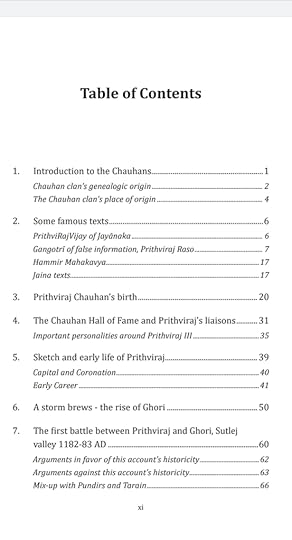
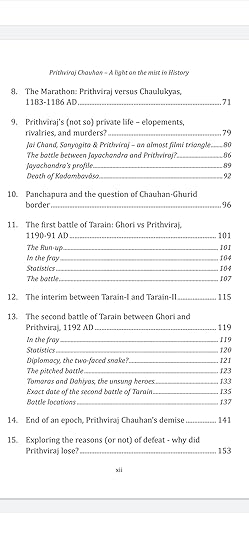
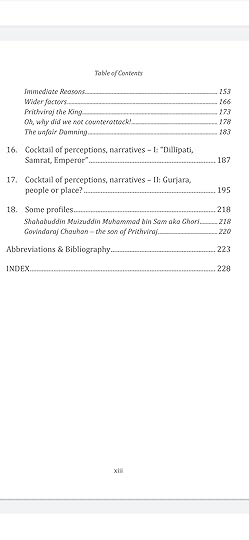
Prithviraj Chauhan- a light on the mist in history : Corrigendum शुद्धिपत्र

A list of errors in the book.
June 4, 2021
Understandings of the anarchic 18th century, misfires between Politics and Religion
An article recently published at Op India in the context of Panipat 1761 AD, Marathas and Hindu politics says that:
“Another criticism is that the Marathas antagonised fellow Hindus by extracting ‘Chauth’ from them and hence none came to help at Panipat. As we have already seen, there was no love lost among the various constituents who made up Abdali’s army at Panipat. Anyone – Rohillas, Shias, Afghans, Balochis could point to their co-religionist for some previous hurt and skip the battle. They could point to the sacking of Delhi or the previous three invasions and many other reasons to not join hands. But on 14th January 1761, it was time to ‘save Islam’ “
For the Rohillas(Najib) and Shias(Shuja) it wasn’t the time to save Islam, but to save their own political independence and Kingdoms. To this real reason the author eventually tumbles:
“and protect their extensive jagirs in north India”
Comparing Islam and Hinduism’s political applications is the same old apple and orange delusion. The difference in civilizations that these two have bred is an important aspect to understand why.
Loot, plunder is something that can spectacularly unite and also dismally splinter.
When a group comes together i.e. a coalition is formed with the objective of looting some other side and maintaining political independence, religion is an add-on.
It wasn’t just Islam which united these disparate muslim powers.
The prospect of loot is what mainly brought that unity for Khorasani tribes.
The main worry of so called Indian-muslim power centres like Rohillas and Shias in uniting was, as said earlier, more political than religious. It was that the weakened Mughal centre (good for them) was to be replaced by another upcoming power (Marathas) that would overshadow these regional rulers again.
Nobody denies the religious angle in Panipat. Issue is of branding the multi dimensional battle as a religious war.
Islam in the north does not finish with arrival of Marathas. If it were so, we would have seen the extermination of Muslim states in the south first, from where the Marathas came and had been living for centuries. That, we know, isn’t the case.
The argument that the Baloch and Afghans had shed their difference at the call of Jihad is a hogwash.
Baloch and Afghans had already mend their relations via the treaty of Kalat in 1758 AD. This was by Abdali’s initiative, and since then the Baloch armies had been aiding Abdali in various of his military campaigns including the one against Iranians in 1759 AD i.e. two years before Panipat.
Moreover, the Afghan tribes internal unity wasn’t a result of some recent call for Jihad either. Jihad was a motivating factor though, as it promised booty w/o guilt. Their unity was actually the result of political assimilation under Iranian threats on one side and on the other side the lucrative prospect of looting & expanding into India which had a weakened Imperial centre.
If we’re to tread on the speculative type ‘could have saved temples’, ‘should have saved temples’ track of frivolous assertions. One might as well surmise that a pan Hindu-Muslim India unity during Abdali invasions “should have” rooted out the problem forever. These imaginations don’t take us on any firmer grounds or clearer understanding of the past.
It is wrong to imagine religion in everything. Human life and politics of the middle age has been much sophisticated than the force fitting of history in this uni-dimensional model of Hindu vs Muslim.
It wasn’t the case then and it isn’t so today.
The unity of Abdali’s coalition is however less of a concern for modern Indians, than the disunity among the contemporary Hindu/Sanatani powers. So, that needs to be tackled.
When multiple kingdoms come together, a leader of the coalition is required.
It was Abdali on the other side. Why?
Answer lies in whether Abdali had been marauding the lands of all muslim powers including Rohillas and Shias of Awadh and been constantly milking them? No, that is not the case.
Well, then it wasn’t a tough choice for the muslim kings facing existential threat, was it.
But when it comes to Hindus. The power under which a Hindu re-union is now desired in retrospect. Was the very one who had mindlessly excessed against numerous Hindu kingdoms of the north.
This irony has no parallel with Islam and its contemporary politics. For they run on the greed of booty.
Abdali had a much cleaner slate among his co-religionists, especially the mainland ones.
But did the Marathas similarly patch up their relations with these Hindu Kingdoms they had been milking, like Abdali did with the Baloch? No; then why are we comparing?
Any warring states shedding their differences and coming together is still possible and has happened plenty in history.
However, over what background and among which civilization is the key to unlocking it.
After the amount of ruin that Marathas brought in the north for decades. It takes a radical shift and confidence-building to form trust in the beleaguered Hindu society.
Before talking of shedding differences, rises the question of how does one shed the deep wounds on their populace, of the rampant pillaging for decades and when the pillager shows no signs of relenting from extortion.
Some like to think it was the myopic elite (like Madho Singh?) of the north who came in the way of Hindu consolidation.
So far as the Jaipur royals are concerned. We would like to remind that when Madho Singh’s pre-decessor Ishwari Singh had gone upto Sarhind to fight the same Afghans in 1747 AD.
In his absence the Maratha armies invaded his Kingdom to facilitate a coup for Madho Singh. Quite a Hindu consolidator role played!
Pillaging, extracting chauth, rooting for the highest buyer, switching sides for more money, toppling Kings, extortion.
When Maratha powers worked hard to build such a reputation for decades. It painfully eroded the honourable memories that the north had of Shivaji and his illustrious kingdom.
This reputation of Marathas finds ample reflection in the literature. One of the things that our self-proclaimed saffronest Hindu power were called in the north is ‘Patels’ i.e. money minded tax collectors.
Consider an example from Koormavilas [Pratap Singh Varnan, Pg 468] :
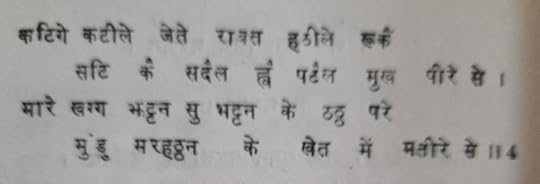
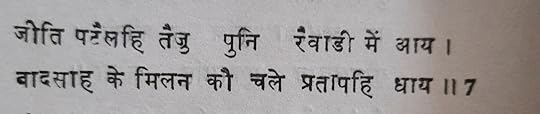
Why Marathas couldn’t lead a Hindu confederation ever, should be asked from the robbed, indignant and fed up civilians of the Amber state whose outburst was felt in the streets of its capital Jaipur in January 1750 AD.
Collecting 1000 dead bodies of their men in a never before incident should have forced the Maratha leadership to re-think and mend their ways. Alas!
It is of value to further ask, why such a civilian outburst never occurred during the Mughal rule. We’re talking of as authentic Hindus as any other in the nation.
That outburst is symbolic of the difference that north’s hindu population felt against Maratha excesses, compared to the past. Difference was due to the fact that the Hindu elite of the north had kept Mughals at an arm’s distance from rubbing into their population. But the rude and unexpected jolt of Marathas wasn’t just a politico-military norm of the age, supposed to be handled by the elite. It was equally felt by the population. Therein lies the kernel of Maratha failure.
Alienating Kings is part and parcel of the game, alliances keep forming and breaking, political relations go up and down. But alienating a society? That isn’t something one can overcome in a jiffy per their whims when they see the Afghan hordes approaching.

At the root of these modern delusions being artificially projected on the past, are two assumptions.
That any Hindu political power that has entered into any kind of alliance with a Muslim power, are essentially traitors who cannot and did not protect Hindu interests any longer.The fact that India continued to be a practising Hindu majority before and after the Maratha period, is enough to understand the truth. Provided one doesn’t have their head in the sand.
That the Hindu powers other than Marathas were utterly incapable of taking care of themselves (their hindus) against the muslim powers, Imperial or otherwiseLet us address this in detail.
Did any Hindu powers of the north not co-ordinate against the Mughals in the 18th century?
Did such coordination also didn’t run across the Narmada?
All of that happened, as explained below, till the Maratha pillaging hadn’t started.
The context is of few decades before Panipat. The post-Aurangzeb Mughals had declared to effectively and officially cancel the northern Hindu Kingdoms and usher direct muslim rule.
Consequence – a combined army of three northern Hindu states – Mewar, Marwar and Amber set out to exterminate the Mughals from their Kingdoms.
First they grabbed the Mughal treasury of Sambhar and distributed it to the local population.
Then they defeated and killed to the last man a Mughal Army including 4,000 cavalry at Sambhar in 1708 AD.
Thereafter this coalition’s outposts were located barely 45 miles from Delhi.
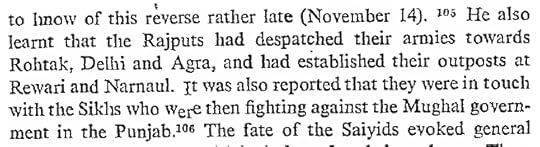
This is Amber’s ruler Sawai Jai Singh writing to Chhatrapati Shahuji in 1708 AD soon after the victory.
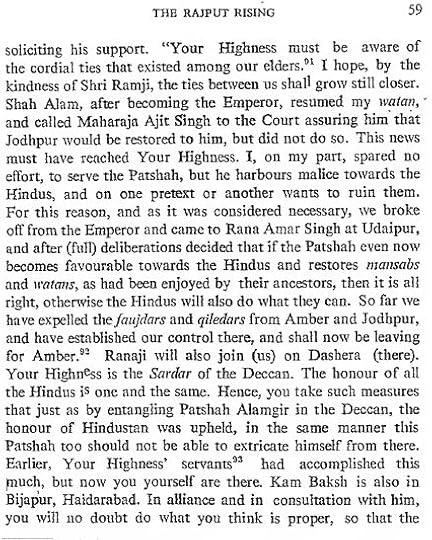
Apart from the content and sentiment. Note that when this letter was written, Jai Singh’s own Kingdom was secured from any Mughal threat, practical (Sambhar defeat) or official (Mughal offer to recognize his Kingdom). Yet he is campaigning for Hindu unity across the country.
In separate letters Jai Singh appealed for the same with another northern Hindu King Chhatrasal Bundela as well. Letter also shows how he was liaising with many other Hindu chieftains.

The Mewari Maharana Amar Singh, a visionary leading this coalition who died soon after, was in the same years in touch with the Sikhs via spies, reasons need not be guessed.
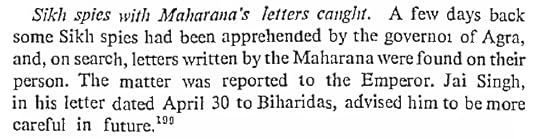
The oneness of mind in these separate Hindu Kingdoms well before the clash with Mughals can be gauged from the following letter of the Maharana to Jai Singh:
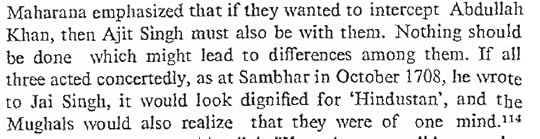
The potency of this unity gets acknowledged by the Mughal Emperor himself who appears worried and rushes back to the north. So warns to Jai Singh his minister from Amber:
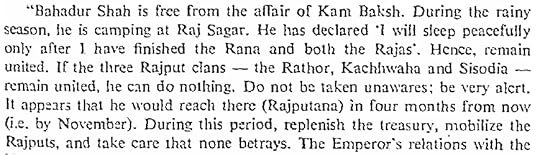
[Source for correspondence snippets above – life and times of Sawai Jai Singh: V S Bhatnagar]
All these correspondences and actions speak immensely of the Hindu Hurmat theme being an integral part of the Rajas and Ranas policy.
In the end I would just remind us of the fact that the contract of pan India Hindu leadership has been out for the past 2000 years. None has fit the bill yet.
Juxtaposing our biased little “what should be”s over the factual “what has been” does not fix any of it.
May 24, 2021
November 7, 2020
खांडा विवाह – ऐतिहासिकता और चरित्र
क्या आप जानते हैं-
— वीरेन्द्र सिंह राठौड़(मेड़तिया)卐 (@virendrarathore) October 6, 2020
राजपूतों में परंपरा है कि यदि विवाह के समय वर को युद्ध पर जाना पड़ जाए तो प्रतीक रूप में खांडे (तलवार) से वधू का विवाह संस्कार संपन्न होता है। pic.twitter.com/vUTtnG6jO3
https://twitter.com/virendrarathore/status/1313489525658791936
कुछ समय पूर्व खांडा विवाह के विषय में मेरी एक ट्वीट पर लोगों की कई प्रकार की आपत्तियाँ (निम्नलिखित) आई थी। आज समय निकालकर उनका निराकरण करने का प्रयास है।
[image error]
[image error]
[image error]
[image error]
[image error]
[image error]
[image error]
[image error]
पहले तो ये स्पष्ट कर दें कि खांडा विवाह अवश्य होते थे, पर कुछ दशक पूर्व बंद हो गए (एक-दो अपवाद स्वरुप यदा कदा अब भी होते हों ऐसा संभव है)। सो आशय ये नहीं था कि प्रथा अब भी प्रचलित है। अब बाकी बातें कि कब किससे होते थे क्यों होते थे इत्यादि।
आरंभ कुछ प्रमुख खांडा विवाह उदाहरणों से करते हैं।
सन् 1622 ई० में जोधपुर महाराजा गज सिंह प्रथम का खांडा विवाह कछवाहा जगरूप जगन्नाथोत की पुत्री कल्याणदेवी के साथ अकबराबाद में संपन्न हुआ।
18वीं सदी में महाराजा अजीत सिंह के अनेक विवाहों में से कछवाहों में हुआ विवाह खांडा रीति से हुआ।
सन् 1851 ई०, जोधपुर के महाराजा तख्त सिंह का आठवां विवाह जामनगर की राजकुमारी प्रतापकँवर जाड़ेची के साथ तय होता है। किन्तु महाराजा के स्थान पर उनका खांडा विवाह में भेजा गया। बारात भी गई और पूरी धूमधाम से सभी रीति नेकचार सहित विवाह होकर खांडे सहित वधू भी विदा हुई।
[image error]
अगला उदाहरण स्वयं एक ओसवाल जैन इतिहासकार का ही है। राजस्थानी इतिहास जगत में मुँहणोत नैणसी को कौन नहीं जानता। नैणसी जी का तीसरा विवाह बाड़मेर के कामदार की पुत्री से तय हुआ। व्यस्तता के चलते नैणसी जी ने खांडा विवाह करने की सोची और विवाह के लिए खांडा भेज दिया। बिना युद्ध के इस प्रकार का प्रबंध वधू पक्ष को अपमानजनक लगा। सो उन्होंने वधू के स्थान पर डोली में मूसल भिजवा दिया। जिसके बाद नैणसी प्रतिशोध लेने बाड़मेर पर चढ़ आए और आक्रमण से नगर को भारी हानि हुई।
खांडा विवाह केवल भारतीय धर्मों में ही नहीं अपितु मुस्लिम नवाबों में भी प्रचलित रहा जैसा की जलाल बूबना आदि लोककथाओं में वर्णित है। सिंध के नवाब की पुत्री बूबना से विवाह के लिए धटाबखर के सुल्तान ने अपनी तलवार भेजी थी।
इसी प्रकार बघेरा और उथेलिया जैसे ठिकानों व छोटे राज्यों के राजपरिवारों में भी परस्पर खांडा विवाह हुए। खांडा विवाह गुजरात, सिंध और सौराष्ट्र में प्रायः होता रहा है। इन तथ्यों की पुष्टि स्वयं बघेरा की रानी बाघेली जी ने की है।
क्या खांडे के साथ फेरे होते थे? बिलकुल होते थे, पर सभी चार नहीं। कुछ फेरे खांडे से और बाकी रहे फिर वधु लिए बारात के लौटने पर वर के साथ ही होते थे। विवरण के लिए तखत सिंह जी का खांडा विवाह ही ले लें।
[image error]
अनुवाद: फिर तीन फेरे खांडे से लिए गए, जिनमें आगे तो राणी जी सा (वधू) और पीछे खांडा लिए महिला वाकयानवीस (गृह सचिव जैसा पद) थी।
चौथे फेरे से पहले पूरे विवाह के सभी रीति प्रथाओं आदि में जहाँ जहाँ वर की आवश्यकता थी, वहाँ वहाँ खांडा प्रयुक्त हुआ। तोरण के लिए हाथी के हौदे में खांडा ही विराज रहा था, खांडे को ही तिलक किया गया, पूजा में वधू के साथ वर की ओर से बैठी ब्राह्मणी गुरुपत्नी के हाथ में खांडा रखा गया। यहाँ तक कि वर पक्ष के डेरे को भी खांडे का डेरा कहा जाता था।
[image error]
[image error]
[image error]
खांडा विवाह के हमारे सभी उदाहरण संभ्रांत परिवारों की राजकन्याओं के हैं। इनमें न तो कोई ‘दाशी’ थी और ना ही कोई ‘आप समझ गए होंगे’ थी।
तो क्यों होते थे खांडा विवाह?
1. यदि वर किसी सुदूर प्रांत में युद्ध रत हो और समय पर विवाह हेतु पहुंचना संभव न हो तो खांडा भेजा जाता था।
2. मध्यकाल में विवाह के लिए बारात का सुदूर प्रांतों में जाना बहुत समय लेता था। उसपर स्वयं विवाह और लौटने का समय जोड़ दें तो इतनी लम्बी अवधि तक किसी का अपने राज्य/भूमि से दूर रहना सुरक्षा संकट को न्यौता देने के समान था।
3. लम्बी यात्राओं में पथ कई बार अनेकों राज्यों से होकर निकलते थे जहाँ शत्रु द्वारा घात की आशंका होती थी।
4. वधू पक्ष की आर्थिक स्थिति पर्याप्त न होने की स्थिति में विवाह में अनावश्यक खर्च कम करने की भी ये एक युक्ति होती थी।
खांडा विवाह की ऐतिहासिकता पर संदेह का कोई प्रश्न ही नहीं क्योंकि इतिहास को जीने समझने वाले कई विद्वान इस विषय को पूरी तरह स्पष्ट करते हैं।
[image error]
[image error]
जानकारी के स्त्रोत:
– पद्मश्री लक्ष्मी कुमारी चूंडावत के लेख।
– जोधपुर रियासत की खांडा विवाह को ही समर्पित एक बही।
– श्री रतन सिंह शेखावत (ज्ञान दर्पण) के लेख।
समय मिला तो आगे खांडा विवाह पर और जानकारी साझा करूँगा।


![[image error]](https://agrippedsoul.files.wordpress.com/2020/11/khanda1.png)
![[image error]](https://agrippedsoul.files.wordpress.com/2020/11/khanda3.png)
![[image error]](https://agrippedsoul.files.wordpress.com/2020/11/khanda4.png)
![[image error]](https://agrippedsoul.files.wordpress.com/2020/11/khanda2-1.png)
![[image error]](https://agrippedsoul.files.wordpress.com/2020/11/khanda5.png)
![[image error]](https://agrippedsoul.files.wordpress.com/2020/11/khanda6.png)
![[image error]](https://agrippedsoul.files.wordpress.com/2020/11/khanda7.png)
![[image error]](https://agrippedsoul.files.wordpress.com/2020/11/khanda8.png)
![[image error]](https://agrippedsoul.files.wordpress.com/2020/11/khanda-takhat-summary.jpeg)
![[image error]](https://agrippedsoul.files.wordpress.com/2020/11/khanda-bahi-phere.jpeg)
![[image error]](https://agrippedsoul.files.wordpress.com/2020/11/image-6.png)
![[image error]](https://agrippedsoul.files.wordpress.com/2020/11/image-7.png)
![[image error]](https://agrippedsoul.files.wordpress.com/2020/11/image-8.png)
![[image error]](https://agrippedsoul.files.wordpress.com/2020/11/khanda-bahi-mahendra-nagar-closing-comments.jpeg)
![[image error]](https://agrippedsoul.files.wordpress.com/2020/11/khanda-lakshmikumari-foreword.jpeg)