
Janine Donoho's Blog, page 9
October 7, 2013
11 Points of View & What to Do with Them – Part 2

Since my last post, I’ve had several writers asking for the final six POVs. It turns out you’re a voracious crew needing little time to digest what you learn. Since withholding wasn’t my intent, here they are:
6. Detached autobiography = writing about past events with a change in perspective
Up until I learned my lesson in a very bitter way, I never had more than one friend at a time, and my friendships, though ardent, were short….After the scandal died down, I got into the Campfire Girls. It was through pull, of course, since Stella had been a respected member for two years and my mother was a friend of the leader….Even Muff did not miss our periods of companionship, because about that time she grew up and started having literally millions of kittens. (From “Bad Characters” by Jean Stafford)
7 . Memoir (observer narration) = imitation of first hand reporting
During the whole of a dull, dark, and soundless day in the autumn of the year, when the clouds hung oppressively low in the heavens, I had been passing alone, on horseback, through a singularly dreary tract of country, and at length found myself, as the shades of the evening drew on, within view of the melancholy House of Usher. (From “The Fall of the House of Usher” by Edgar Allan Poe)
8. Biography/anonymous narration via single POV = physical vantage point & personal perception of events
As soon as he and Patricia and Edith set off for the park, it began to snow. Big flakes unexpectedly fell on the rocky hill, and the sky grew dark as dusk though it was only three in the afternoon. (From “Patricia, Edith, and Arnold” by Dylan Thomas)
9. Anonymous narration via dual POV = inner life of two characters
The thoughtful serious state of mind in which Mary found herself had been induced in her by a conversation had with her father on the evening before….In the road stood Duke Yetter…‘She doesn’t want to be seen walking with me,’ he had told himself, ‘that’s all right. She knows well enough I’ll follow…’ (From “Unlighted Lamps” by Sherwood Anderson)
10. Anonymous narration via multiple POVs = POVs as framed by the author’s
Mrs. Mooney: counted all her cards again before sending Mary up to Mr. Doran’s room to say that she wished to speak with him…..Polly knew that she was being watched, but still her mother’s persistent silence could not be misunderstood….Mr. Doran: All his long years of service gone for nothing! (From “The Boarding House” by James Joyce)
11. Anonymous narration via no character POV = no inner life presented (e.g. fairytales, legends, myths)
The sexton stood in the porch of Milford meetinghouse, pulling busily at the bell rope. The old people of the village came stooping along the street. Children, with bright faces, tripped merrily beside their parents, or mimicked a graver gait, in the conspicuous dignity of their Sunday clothes. (From “The Minister’s Black Veil” by Nathaniel Hawthorne)
Now go play with POV, you wild creatives. Allow me to wish you joy in your journey.



October 6, 2013
11 Points of View & What to Do with Them – Part 1
 Let me share a joyful secret from my romp toward my biology degree. Peripheral coursework fed my spirit even as I stuffed my brain with cool science. Classes on writing craft counted as my favorite tangents.
One of those traversed the intricate dance of point of view (POV). With my core curriculum overfull, Carol Orlock’s offering cemented POV as one of the most important choices a writer can make. Here’s why.
POV: 1. A manner of viewing things; an attitude. 2. a. A position from which something is observed or considered; a standpoint. b. The attitude or outlook of a narrator or character in a piece of literature, a movie, or another art form.
What this tells us? Characters emerge dependent upon their vantage point and perceptions of events. Who decides what POV to use? Why, we writers do.
Drumroll please! Now the first 5 POVs complete with short story excerpts that show them in action.
1. Interior monologue = overhearing the writer’s thoughts
I knew it. I knew if I came to this dinner, I’d draw something like this baby on my left. They’ve been saving him up for me for weeks. Now, we’ve simply got to have him—his sister was so sweet to us in Longdon; we can stick him next to Mrs. Parker—she talks enough for two. (From “But the One on the Right” by Dorothy Parker)
2. Dramatic monologue = overhearing someone speaking to another person
Eleven o’clock. A knock at the door.…I hope I haven’t disturbed you, madam. You weren’t asleep—were you? But I’ve just given my lady her tea, and there was such a nice cup over, I thought, perhaps… (From “The Lady’s Maid” by Katherine Mansfield)
3. Letter narration = a collection of spontaneous letters
September 16th, 1879
My dear Mother
Since I last wrote to you I have left that hotel, and come to live in a French family. It’s a kind of boardinghouse combined with a kind of school; only it’s not like an American boardinghouse, nor like an American school either. (From “A Bundle of Letters” by Henry James)
4. Diary narration = writer reacting to events as they happen
Dr. Strauss says I shud rite down what I think and evrey thing that happins to me from now on. I dont know why but he says its importint so they will see if they will use me. I hope they use me. (From “Flowers for Algernon” by Daniel Keyes)
5. Subjective narration = told by characters after events (e.g. an untrustworthy narrator)
I know what is being said about me and you can take my side or theirs, that’s your own business. It’s my word against Eunice’s and Olivia-Ann’s, and it should be plain enough to anyone with two good eyes which one of us has their wits about them. (From My Side of the Matter” by Truman Capote)
Yes, I’ve served up a geek’s view of POV—deeper and more detailed than many how-to versions. Once you play with these and learn how varied and unique they can make your tales, you may succumb to spontaneous laughter, dancing, then invite them into your story process. Don’t be shy and please share your ah-ha moments. Next week we’ll cover the final six POVs.

September 23, 2013
That (@*#^ Edit Cycle
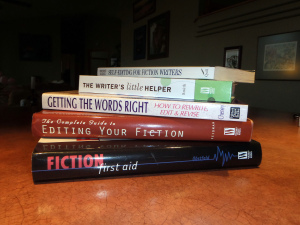
A few editing books that help
Let’s start with a confession–of sorts. My greatest joy in writing comes with the hot, fast gallop of first drafts. By then the story’s bones and sinews have developed enough so that each session equates with a joyous fleshing out of details. During this phase I can’t wait to leap from bed each morning–and hit the pillow enthralled by story each night.
Then looms the dragging, nagging edit. Some otherworldly creatures find this stage fun; I find it excruciating.
This is different than the macro-edit housekeeping accomplished while writing draft. Reviews of previous day’s work cover structure, plot, tone, pace, etc. I almost wrote ‘theme’, but that’s not always clear in the early stages. Along the way, I deepen conflict and sharpen reversals.
Worse yet, my après draft edits rarely clear the high jumps, much less the double ‘oxers‘, although I do fine over ditches and logs. What’s missing? Well, the heart pounding excitement’s gone, baby, gone. Only a plodding satisfaction remains. Which should be enough, right?
Self talk: “This isn’t my first rodeo. I’m disciplined and well-read. Both sides of my brain receive high quality nourishment and play well together. I can do this.”
Beyond the analysis of editing books, then applying what I learn, I’ve tried other ballyhooed remedies to make this work. The manuscript, hereinafter known as ‘mss’, rests like a freshly broasted chicken while I work on other projects. I do yoga–breathe–meditate–breathe–take long hikes–breathe. Then I go through the mss and ruthlessly scribble editing and proofreading marks learned in the aforementioned tomes. At that point I return to my computer and make these changes.
Then it’s time to surrender fully to the left brain for reviewing content, consistency in style, clarity and flow. I crawl ant-like over scenes for grammar, word usage and accuracy. Finally I read it aloud–or try. After a few pages, I realize I’ve gone silent again–and again–and again.
 By this time I find nothing to like about my story and would rather walk barefoot in a prickly pear patch than read through it once more. My aversion signals the next stage. The mss goes to one or two first readers–published authors with whom I trade this boon.
They always find misspellings and points of unintended confusion. Yes, actual gnashing of teeth and clenched jaws transpire. How did I miss these obvious errors?
So I put on my big girl panties and fix them. The story’s deemed the best that it can be. It’s released into the world.
Then I swear, a few days, weeks or months later? A misspelling here, verb confusion there, dropped words, a formatting error that slipped beneath the motion-activated fence. Dissatisfaction plagues me. For what good is editing if it fails to make your story the best that it can be?
So next time I complete a new project, I’m considering a professional editor–one worthy of manna, dark chocolate, and ambrosia drenched in morning dew from hummingbird wings. Oh, and one who won’t break my fragile piggy-bank.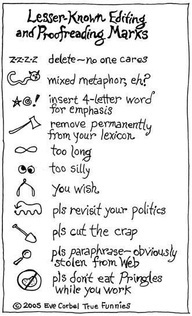

September 16, 2013
Build the Foundation & Story Will Come
 Since joining online communities, then enjoying the first steps of writers new to their craft, I delight in their growth. The freshness of their vision and their infatuation with words reveal elements leading to stories I want to read.
I suspect that’s how many of us writers begin. Then if we want to publish, we dig deeper and learn more about craft. One of my early ‘ah-ha’ moments occurred thanks to seasoned critique partners and great library systems.
With that in mind, let me share a simple technique for building story foundations. Since many grandmasters have gone out-of-print and indeed, gone elsewhere, here’s what I distilled from their works. Prepare to be dazzled:
Okay, dazzled may be too strong a word. Yet on longer projects, applying this method calmed my pre-project jitters so I could begin. Often I view story as scenes leading to chapters leading to a completed novel or even as scenes leading to acts with a progression of rising and falling actions. Here’s how I apply necessary groundwork:
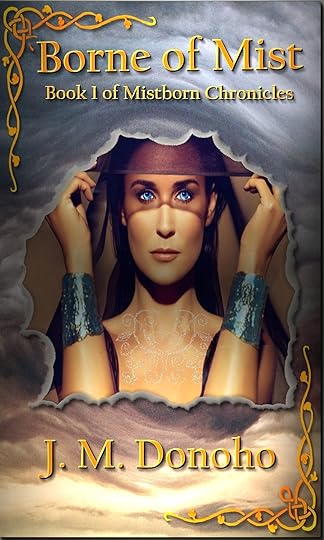 Take the first chapter from Book 1 of MISTBORN CHRONICLES*, Borne of Mist:
Goal: Introduce the world’s increasing strangeness via Zenadon MelʹChaime, who must accept the challenge to save his world.
Obstacle: Zen doesn’t want to believe that what’s happening has anything to do with him–he’s happy and comfortable as Master Merchant.
Resolution: He chooses to meet with the Mist-Spawn.
I know, I know. It’s clunky. That’s not the point. After beginning, then finishing a dozen novels, this process alleviates my boggles. Boggles, you ask? Well, the trepidation that there’s not enough story to grow a novel, a series–or even a short story, for that matter.
You can also use this technique for developing character arc. Here’s an example for Elishandra ser Danche′ sere Jillian:
Goal: Her survival depends upon placing Morchem on the defensive, then neutralizing him.
Obstacle: He’s stronger than she and obsessed with her; their last conflict ended with her teacher dead and Lisha crippled.
Resolution: Motivated by her commitment to this world and others, she discovers the strength to rebuild her magic within the confines of the world’s natural systems.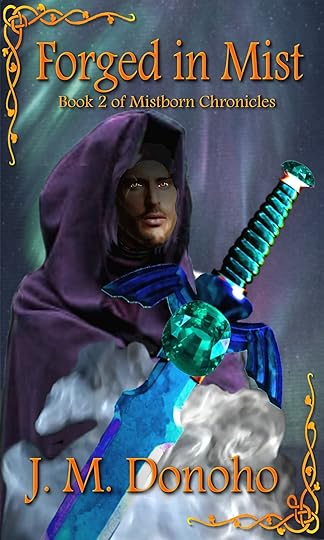
Don’t judge me. I lifted these directly from my early visions of MISTBORN*, circa 1998. With the series complete, it’s surprising how much of the original structure endured–a matter of modifying framework versus carving stone.
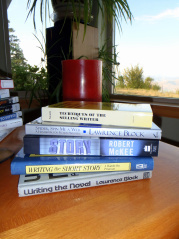
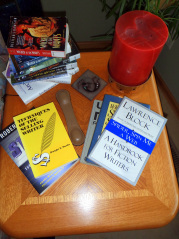
Here are a few keepers from my private shelves: Techniques of the Selling Writer by Dwight V. Swain, Writing the Novel from Plot to Print and Spider, Spin Me a Web by Lawrence Block, Story – Substance, Structure, Style, and the Principles of Screenwriting by Robert McKee, Writing the Short Story by Jack M. Bickham. Yes, yes, lots of boys in this club–but also master storytellers. You can take what you choose from them and crystallize your process.
Let me know if this helps or hinders you in your quest for story. I wish you joy in your writing.
*Caveat: I originally called my series MISTBORN TRILOGY, which my then-agent sent to TOR, who had another series in the pipeline and passed on mine. Lo and behold–Brandon Sanderson’s MISTBORN TRILOGY, which except for the series title is nothing like mine. So there.

September 3, 2013
Adjust Your Mind & Own Your Title: Author
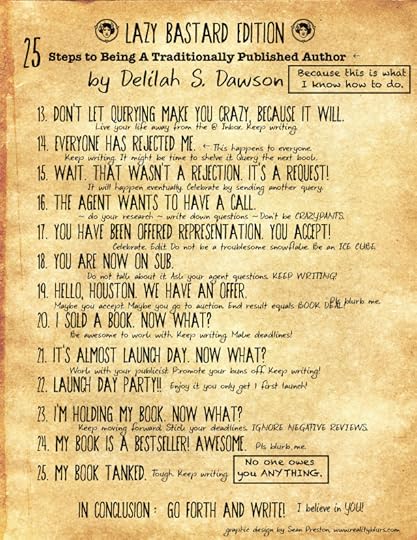
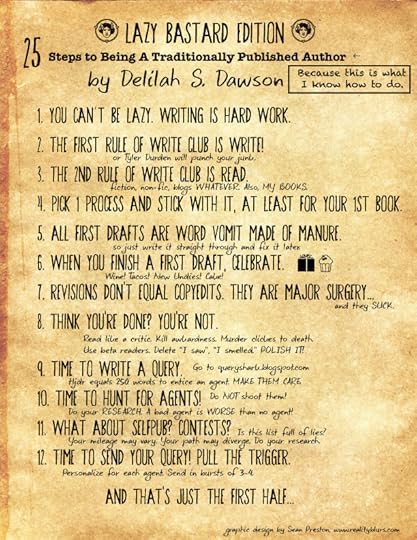 Read this great blog ‘25 Steps to becoming a Self-Published Author’ from Chuck Wendig via Delilah S. Dawson and her mighty unicorn. It covers ‘self’-publishing, adjusting your mind to rock the process, and how we own our ‘Author’ title. Here’s the link and I wish you belly laughs, insightful chuckles and renewed joy in your writing adventures.

August 25, 2013
Worlds within Worlds
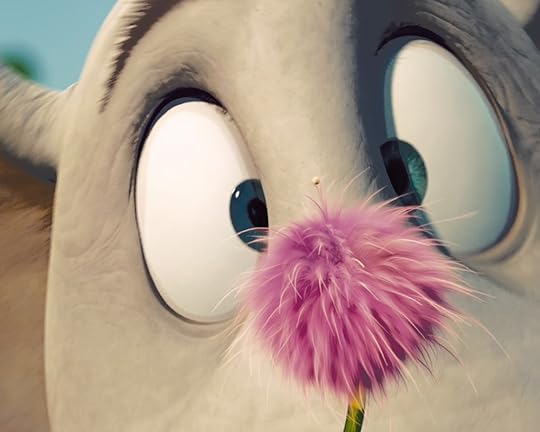 Don’t you simply love Dr. Seuss’s HORTON HEARS A WHO? For me the story served as a watershed event as I grappled with string theory and quantum mechanics. HORTON also informs my approach to storytelling.
We writers yearn to create places that we’ll miss when we’re away. To finish our stories, our worlds need to cause a relentless itch that brings us back each and every day. Once we finish our stories, we intend that our readers find our world-building irresistible, too.
To engage our audience, certain features prove vital. Primarily our readers need to suspend their disbelief. That means seamlessly arranging entire worlds of physical systems, societal taboos and mores throughout a complex landscape. Let’s make this our starting point.
My foundation in MISTBORN CHRONICLES? A bucolic world lacking in magic and advanced science. When the curtain 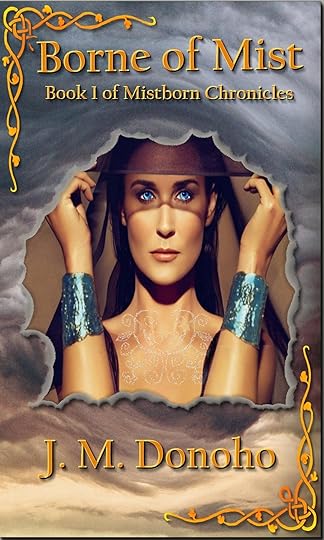 between worlds rips open, wild magic invades like a viral attack. Ah, you recognize ‘the call to adventure’? Rather than revisit what others like Joseph Campbell and Vogler explain so well, let me focus on the aspect that proves most interesting to me—the ‘what if’ game.
So my friends, time to put on your critical-thinking-hats. Begin with the magical influx…
What if certain species and individuals prove genetically sensitive to transformation? What if some cannot mentally or biologically handle the change? What if the one person who understands the linkage between science and magic has lost her abilities and is trapped in this world? What if her skills make her suspect? What if she cannot diagnose the harm done to her without cueing a rapacious predator to her location? What if a master merchant, who sees himself as average and anything but heroic, finds himself a repository of the extraordinary?
You see how this process works? This drama continued for over 1500 manuscript pages. Yes, a series was born. The trick? How to apply this ‘what if’ practice to each level of conception, including species’ physiology and cultures along with suites of universes bumping up against each other.
We writers set the rules, then play within those parameters. Otherwise our readers cannot suspend their disbelief. If we fail, they’ll toss our stories across the room in exasperation. As an abused reader, I learned this response firsthand.
Many books take us into their worlds, shape us, then ensnare us as return visitors. For me, Tolkien’s LORD OF THE RINGS, Guy Gavriel Kay’s FIONAVAR TAPESTRY, Orson Scott Card’s ENDER’S GAME, Anne McCaffrey’s DRAGONRIDERS OF PERN, Patricia McKillip’s RIDDLEMASTER OF HED and George R. R. Martin’s A SONG OF ICE AND FIRE (1st three novels) exemplify mastery. First came my appreciation for these stories along with a willingness to immerse myself in them. Later I returned to read them more analytically. Even now, I lose myself in their preeminence.
So what’s your key approach to world-building? How do suspend your reader’s disbelief?

August 21, 2013
Visual Journeys with Yours Truly
Since I’m visually driven by seasonal changes and travel with eyes wide open, you’re invited into glimpses of my textured and colorful writer’s journey. Simply click on the link and enjoy. Feedback is always welcome.
My Writer’s World = Readers Welcome

July 14, 2013
A Quality of Light
 Do color and texture equate with sound for you? Consider the warbling vireo…
 If we allow ourselves to do so, we humans revel in sensory input. Then there’re those extreme moments when our survival depends upon paying attention to our environment. As writer and fledgling artist, I try to capture sensory qualities. This presents an ongoing challenge.
For whatever reason, today’s hike focused on visuals accompanied by sound. Have you allowed yourself to become  fully engaged within properties of illumination? At different times sunlight through leaves captivate as a zephyr
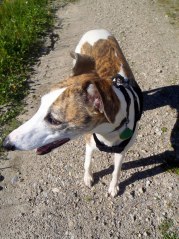
 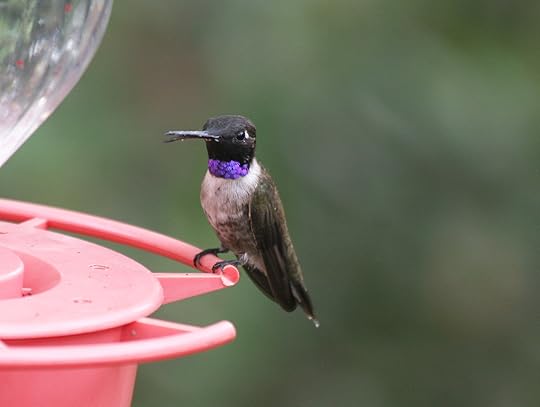 rustles an aspen branch. Or the sheen off my whippet’s brindle spots or my greyhound’s tortoiseshell coloration enchants me even as their panting ripples light along their coats. Then there’s the bending of light that gives feathers their iridescence as a black-chinned hummingbird shrilly claims his territory. Texture combines with color and sound to draw me. When that happens, my breath catches and the pace falters.
During my final edit of CHOSEN BY MIST, book 3 of the MISTBORN CHRONICLES, I attempt to infuse detail into story without losing pace or scene focus. Sometimes it works. How do you incorporate sensory detail into your writing and visual art?

June 22, 2013
Feeding Hope
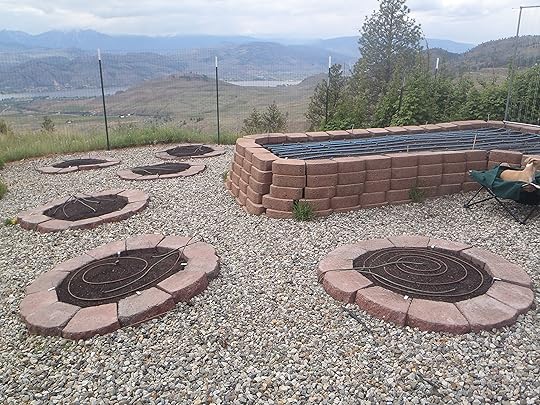 Each spring I plant my annual fruit and vegetable gardens. While winter offers the joy of seed catalogs and visions of succulent melons, eggplant and tomatoes dance through my mind’s eye, the real application starts once frost’s threat ends. During the planning stage, I dream big–think Mediterranean shoreline big.
Then I get a grip and narrow my choices to the reality of intense gardening-by-the-square-foot. At this stage companion plants come into play. That denotes matching cucumber with pole beans and radishes, which belly up to peas and carrots before leading into tomatoes, basil and…
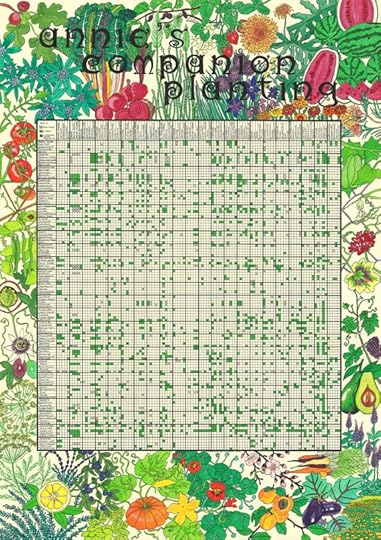 Well, you get the idea. Separate mounds hold my hopes for watermelon, honeydew and cantaloupe, and brassicas. Since I love kale, beets and mescuns, you’ll find those, too. I mix basils, nasturtiums, and marigolds among plantings that benefit from their association. You’ll find spinach amid my strawberries, too.
So what do I relearn each growing season? Why how much groundwork, planting and harvesting a garden has in common with writing. It becomes a litany:
Plan
Amend
Plant
Revise
Harvest.
Yes, a garden benefits from editing much as stories do. In the final stages I force myself to be ruthless in both while taking the useful and transplanting it elsewhere for superior impact. It’s how I approach my current edit of MISTBORN CHRONICLES, book 3.
As often happens my process makes me curious about yours. How do your life practices move your writing from here to there? Is your life shaped more by how you approach writing? Or does writing mold your life choices?

June 19, 2013
Guest Post with a Reiki Master
 A few months ago Reiki Master and sublime writer Imogen Knight, author of The Reiki Circle, and I connected via an author site. She invited me into her world for a guest blog and I thought, ‘This could be fun’. Today my blog The Writer’s Cave goes live. You’re invited to visit Imogen’s site, read my blog and take a virtual walkabout at her site. Let us know what you think.

Sending love to deviant artists


