
Robert Sheppard's Blog: Robert Sheppard's Literary Blog & World Literature Forum , page 225
June 16, 2013
THE TALE OF GENJI BY LADY MURASAKI SHIKIBU, THE WORLD’S FIRST NOVEL & LEADER OF THE GLOBAL VERNACULAR REVOLUTION IN WORLD LITERATURE—-FROM THE WORLD LITERATURE FORUM RECOMMENDED CLASSICS AND MASTERPIECES SERIES VIA GOODREADS—-ROBERT SHEPPARD, EDITOR-IN-CHI
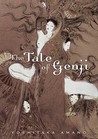 The Tale of Genji by Murasaki Shikibu
My rating: 5 of 5 stars
THE TALE OF GENJI BY LADY MURASAKI SHIKIBU, THE WORLD’S FIRST NOVEL & LEADER OF THE GLOBAL VERNACULAR REVOLUTION IN WORLD LITERATURE—-FROM THE WORLD LITERATURE FORUM RECOMMENDED CLASSICS AND MASTERPIECES SERIES VIA GOODREADS—-ROBERT SHEPPARD, EDITOR-IN-CHIEF
“The Tale of Genji,” the 11th Century classic tale of love and intrigue amoungst the high courtiers and noble ladies-in-waiting of the Japanese Heian Imperial Court holds a remarkable place in the history of World Literature as arguably the first novel in human history, the first psychological novel, the first novel by a woman–Lady Murasaki Shikibu, and one of the earliest exemplary works of the Global Vernacular Revolution.
Set in the Japanese Heian Imperial Court in Kyoto at the turn of the first millennium, this moving work centers on the life of Genji, born a lesser son of the Japanese Emperor, refined, handsome and full of romantic adventure, who for political reasons is relagated to the status of a commoner and takes up life on coming of age as a minor Imperial offical at court. While painting a vast panorama of Japanese high court society and its refined culture it follows Genji’s intricate and convoluted loves and sexual affairs, changing political fortunes from exile to the highest offices in the land, and his growing spiritual maturity leading to realization of the transience, melancholy and illusory nature of much of human experience.
WHAT WAS THE FIRST NOVEL IN WORLD HISTORY?
Is “The Tale of Genji” the first novel in human history? As with most sweeping questions of this kind, the answer you get depends on how you ask the question, and how you define its critical term “novel.” Certainly in terms of chronology, The Tale of Genji, finished in its present form by 1021 AD, far predates Western claimants to the title of the world’s first novel, such as Defoe’s “Robinson Crusoe” of 1719, “The Princess of Cleves” (1678), by Mme de La Fayette, and Cervantes’ “Don Quixote de la Mancha” (1605, 1615),considered by many critics to be the most important single progenitor of the modern novel. What then is a novel? The most likely definition you will get from the standard textbooks would be: “a sustained work of prose fiction a volume or more in length.” Some would add substantive required elements such as sustained continuity of character and plot, organic wholeness and closeness to the experience and language of actual life—a work of imaginative fiction grounded in reality, others demurring. Yet implicit in this very inclusive definition focused on length is also the notion of what a novel is not, which may be controversial, such as its not being a short story, not an epic poem, not a collection of unrelated stories, not a history or pure biography and other contradistinguished genres. Accordingly, Boccaccio’s “Decameron” and Chaucer’s “Canterbury Tales” are often excluded as a series of unrelated stories rather than an organically whole novel. Additionally, suradded to our theoretical diffiuculties may be the problem of a differing definition of the novel in different cultures and literary traditions, as well as the shifting evolution of the concept of the genre over time.
Certainly by any definition of a novel the Tale of Genji should qualify. It is a sustained prose narrative of 54 Chapters with continuity of psychology and charater of the figures depicted over a lifetime, rooted in the lived experience of individuals in society over a generation, and has been treated as a novel in the literary traditions of Japanese Literature and in World Literature. The more perplexing dimension of the question of what is the first novel lies in the inclusion or exclusion of its earlier competitors for the title within the genre of the novel. Some would say Homer’s Odyssey should be regarded as the first novel, others excluding it by virtue of its verse and status as an epic. Others would counter that the genre of the novel contains “novels in verse” such as Byron’s “Don Juan” and Pushkin’s “Eugene Onegin” or recent attempts such as Vikram Seth’s “The Golden Gate,” and that “epic” and “novel” are not mutually exclusive categories, citing Tolkien’s “The Lord of the Rings” or Tolstoy’s “War and Peace” as “epic novels.” Other quite legitimate contenders to unseat “The Tale of Genji” from the title to the world’s first novel in my opinion would include the classic narratives of Western Literature such as Petronius’s “Satyricon” (1st cent. A.D.) a vivid portrait of life in Nero’s Rome satirizing its corruption, and “The Metamorphoses” or “Golden Ass” (2d cent. A.D.) of Lucius Apuleius describing the fantastic adventures of a young man who is transformed into an ass, as well as “Daphnis and Chloë” (3d cent. A.D.), attributed to Longus,a love story about a goatherd and a shepherdess. So you may take your pick, but nonetheless the “Tale of Genji” is increasingly regarded as the conventional consensus answer to the question of what is the first novel in World Literature, alongside “Don Quixote,” regarded as the first modern Western novel.
THE TALE OF GENJI AND THE GLOBAL VERNACULAR REVOLUTION
Another important dimension of the place of “The Tale of Genji” in World Literature, worthy of note before looking into its content and story, is its place as a leading work of “The Global Vernacular Revolution.” For a millennia or more, from late antiquity until around 1200 AD, almost all the world’s literature was composed in Elite or Classical Languages, far removed from the speech of ordinary people. Literacy itself was the privilege of a small educated elite, usually of royal courts, church and temple circles, lawyers and government administrators or a few professional scholars. Their goal was most often to preserve and elaborate long-established literary traditions rather than express and reflect the life and language of the people. Thus, until the 1500′s most serious books in the West were written in Latin, or possibly Classical Greek for an international elite audience, and very few in English, French, Spanish or German. Classical Chinese (Wen Yan Wen), incomprehensible to the common contemporary Chinese speaker, was the medium of officials and scholars not only in China but also in countries such as Japan and Korea, part of the Chinese cultural sphere of influence. In India Sanskrit, incomprehensible to Indian dialect speakers, was used as the vehicle for literature from the Ramayana, Mahabharata, Hindu Vedas, mantras, Buddhist sutras, and the plays of Kalidasa. In the Muslim world, classical Arabic of the Koran was often memorized without any understanding of of the words mouthed, and Hebrew was lost as a living and preserved as one of the “dead languages.”
This situation began to change between 1000 AD and 1300 AD as a “Vernacular Revolution” took place across much of the world following the urge to draw literature closer to the life and language of living people, largely reflectingg the global rise of cities and the middle-classes. “The Tale of Genji” was one of the forerunners in this global revolution. In Heian Japan the educated elite, mostly men of the aristocracy or professions, wrote poetry, read literature, and conducted affairs of state not in the Japanese vernacular but in Classical Chinese, just as their contemporaries in Europe in the church, universities and public adinistration were using Latin instead of their local tongues. In this regard it is no accident that Murasaki Shikibu the author of Genji was a woman. The Genji was written by a woman and read mostly by courtly noble women who for the most part were excluded from the Classical Chinese education of the Japanese men, just as very few women in the West could study Latin or Greek, being excluded from grammar schools and universities. For this reason they turned to the spoken vernacular of the people rather than the elite classical languages.
In fact, at the time in Japan and in China the vernacular novels were not regarded as “literature” at all, but rather as “pulp or junk fiction” which no educated person should dirty his hands on, either in the writing or the reading. The prominence of women writers even in the West in the rise of the novel, such as Jane Austen, Aphra Behn, de Lafayette and others reflected also the fact that serious scholars, men, would be utilizing the elite Latin and Greek and would consider it demeaning to focus on the vernacular local language. Students would hide novels from their schoolmasters just as they might hide pornography, it being seductive and entertaining but unworthy of a respectable gentleman. The rise of vernacular writing across the world also reflected the rise of the educated middle classes, who were literate in their vernacular spoken languages but uneducated in the elite classical languages, and the translations of the Bible into the vernacular languages, the English of the King James Version or the German of Luther’s Bible, reflected an oncoming middle-cass social revolution in the making that would ultimately lead to the Puritan, American, French and Russian Revolutions that would topple the aristocratic ancien regime and clear the way for universal education, literacy and democracy, within widely disparate timeframes across the world’s civilizations. This also later reflected the “Gutenberg Revolution” of the printed word noted by Marshall McLuhan.
In Europe the Renaissance and Reformation followed this tidal wave of popular consciousness. Dante was one of the first leaders of the revolution, defending his composition of “The Divine Comedy” not in Latin as might have been expected, but rather in the local Italian dialect, claiming he wished to reach the people of all classes, men and women, rich and poor. The shift was also associated with the rise of Nationalism,and sometimes had the negative effect of making literature less international. The Provencal poets, Troubadours, Minnisingers, bards and balladeers followed suit. In India, prose writing shared by the merchant classes saw Classical Sanskrit give way to prose works in Tamil and Telugu. Persian Ghazals rose amoungst the Arabic nations.
English literature really begins with the rise of the vernacular with the Renaissance and Reformation. Sir Thomas More wrote his famous Utopia in Latin, and it had to be translated by another into his native English, but by the time of Milton, though he was a court Latin scholar and diplomatic Latin correspondent, he composed his great works of poetry such as “Paradise Lost” in his spoken tongue. From Shakespeare on, with his “Little Latin” the primary medium of English Literature would be written English, and after the play, the vernacular novel would soon rise to the throne of prominence within English Literature.
In China, seat of the Classical Chinese tradition which even in Japan marginalized the Genji, the transformation to a “Literature of the People” would only come on the fall of the Emperor in the 1911 Revolution of Sun Yat Sen followed by the “May 4th Movement” of 1919 in which Lu Xun and Hu Shi first began to write in spoken Chinese, abandoning the scholarly and classical “Wen Yan Wen” of the literary elite for the language of the people. In all cases the Global Vernacular Revoltion and its attendant revolution in public consciousness would prove to be social nitro-glycerin, ultimately bringing in it wake not only a literary revoution but a policical revolution spreading from the middle-classes to the working classes and reshaping, for better or for worse, the face of the Modern world.
THE TALE OF GENJI: THE STORY
Genji, the principal hero of the novel, was the second son of Emperor Kiritsubo and a low-ranking but beloved concubine, Lady Kiritsubo. Genji’s mother dies when he is three years old, but the Emperor, deeply in love, cannot forget her. Emperor Kiritsubo then hears of a woman, Lady Fujitsubo, formerly a princess of the preceding emperor, who is the living image of his deceased beloved, and arranges for her to become one of his wives. Genji loves her first as a stepmother, but later as he grows to be a man, falls in love with her sexually as a woman. Hopelessly in love with each other, they continue their clandestine forbidden affair. Genji thus finds himself frustrated in his forbidden love for Lady Fujitsubo and on bad terms with his wife Aoi no Ue. He then engages in a series of unfulfilling love affairs, escapades and adventures with other women. In most cases, his advances are rebuffed, his lover dies suddenly during the affair, or he finds his lover to become dull and tiresome as his feelings change. In one case, he sees a beautiful young woman through an open window, enters her room without permission, and proceeds to seduce her. Recognizing him as a man of unchallengeable power, she makes no resistance.
In his restlessness Genji visits Kitayama, the northern rural hilly suburban area of the capital Kyoto, where he finds a beautiful ten-year-old girl. He is uncannily fascinated by this youthful girl, Murasaki, and discovers that she is a niece of his clandestine lover Lady Fujitsubo. Yielding to an irresistable impulse he kidnaps her, brings her to his own palace and undertakes a passion-driven project to raise and educate her to be his ideal lady; that is, to be an idealized rejuvenated image of the Lady Fujitsubo and his deceased mother. During this time Genji also meets Lady Fujitsubo secretly, and continues to make love to her until she bears his son, Reizei. Everyone except the two lovers believes the father of the child is the Emperor Kiritsubo. Later, the boy becomes the Crown Prince and Lady Fujitsubo becomes the Empress, but Genji and Lady Fujitsubo swear to keep their secret.
Genji and his wife, Lady Aoi, reconcile and she gives birth to a son but dies soon after. Genji is sorrowful, but finds consolation in Murasaki, whom he then marries, consummating his Pygmalion-like project of creating his sexually ideal woman and mate. Genji’s father, the Emperor Kiritsubo, dies. He is succeeded by his son Suzaku, whose mother Kokiden, together with Kiritsubo and Genji’s political enemies including the Minister of the Right takes power in the court. Then another of Genji’s secret love affairs is exposed: Genji and a favorite concubine of the new Emperor Suzaku, Genji’s brother, are discovered in flagrante delicto when they meet in secret. The Emperor Suzaku confides his personal amusement at Genji’s exploits with the woman, but to maintain face and discipline at court he is duty-bound to punish his half-brother. Genji is thus exiled, Ovid-like to the faraway town of Suma in rural Harima province. There, a prosperous man known as the Akashi Novice entertains Genji, and Genji has a love affair with Akashi’s daughter. She gives birth to Genji’s only daughter, who will later become the Empress.
In the Capital, the Emperor Suzaku is troubled by dreams of his late father, Kiritsubo, and something begins to affect his eyes. Meanwhile, his mother, Kokiden, grows ill, which weakens her powerful sway over the throne. Thus in a fit of remorse the Emperor orders Genji pardoned, and he returns to Kyoto. His son by Lady Fujitsubo, Reizei, becomes the emperor, and Genji finishes his imperial career. The new Emperor Reizei knows Genji is his real father, and raises Genji’s rank to the highest possible.
However, when Genji turns 40 years old, his life begins to decline and he falls into melancholy and drift. His political status does not change, but his love and emotional life slowly deteriorate. He marries another wife, the Third Princess. Genji’s nephew, Kashiwagi, later forces himself on the Third Princess and she bears Kaoru who, in a similar situation to that of Reizei, is legally known as the son of Genji. Genji’s new marriage changes his relationship with Murasaki, who becomes a Buddhist nun, or bikuni.
Genji’s beloved Murasaki finally dies. In the following chapter, entitled Maboroshi or Illusion, Genji contemplates how fleeting life is, transient, empty and illusory. Immediately after Maboroshi, there is a chapter entitled Kumogakure or “Vanished into the Clouds”) which is left blank, but implies the death of Genji. The narrative then continues a short time further after Genji’s death, detailing the rivalry of Kaoru, Genji’s legal son and his best friend Niou, the royal prince who is the son of Genji’s daughter the Emperess, as they compete to attract beautiful court women. The book ends, like the Satyricon in the middle of an unfinished sentence, with Kouru pondering if Niou has tricked him to steal a lover from him. Kouru is often seen as the first Anti-hero in World Literature.
It is thought that “The Tale of Genji” was composed in a serialized fashion, with each chapter being hand-copied, circulated and re-copied after its completion within a small aristocratic court circle as a form of upper-class entertainment. The disparate chapters would then be collected into a whole at a later time. Thus it would have been similar to many of the Western novels such as those of Dickens and Dumas which were published in installments in newspapers and circulars such as Dickens’ “Household Words” before being collected into a finished book for for final publication, although Genji would have been circulated bit in hand-copies chapter by chapter in elite circles. Thereafter it became one of the central and beloved classics of Japanese Literature over the centuries. Its archaid Kyoto court language was unreadable to the larger public even a hundred years after its composition and was only translated into modern Japanese in the 19th century, being read with extensive annotations.
The Tale of Genji influenced the composition of my own recent novel Spiritus Mundi, in the emphasis on the voices of women in the text. Murasaki Shikibu, the Genji author also wrote an extensive Diary which has been preserved. In Spiritus Mundi, two of the principal characters, Eva Strong and Japanese artist-clairevoyante Yoriko Oe write in their own voices in their diary-like Blog Journals which appear in alternate chapters of the novel, giving vivid life to the inner world of women. Their Blogs reflect also their melancholy, sometimes illusory and disappointing sexual affairs, just as in the Tale of Genji. Like the Tale of Genji, its protagonists are followed through a wide range of experiences, social and sexual, sometimes in triumph, sometimes in defeat and despair, sometimes in a shared spiritual melancholy at the transience and illusory character of much of human experience. Spiritus Mundi also contains a comprehensive series of dialogues by the characters in the novel on the nature and canon of World Literature, including the place of The Tale of Genji in that canon. Spiritus Mundi shares common themes with The Tale of Genji in the linkage of sexuality and spirituality and the possibility of spiritual transcendence,and Book I of Spiritus Mundi, like the Satyricon ends in an unfinished mid-sentence.
For a fuller discussion of the concept of World Literature you are invited to look into the extended discussion in the new book Spiritus Mundi, by Robert Sheppard, one of the principal themes of which is the emergence and evolution of World Literature:
For Discussions on World Literature and Literary Criticism in Spiritus Mundi:
http://worldliteratureandliterarycrit…
Robert Sheppard
Editor-in-Chief
World Literature Forum
Author, Spiritus Mundi Novel
Author’s Blog:
http://robertalexandersheppard.wordpr…
Spiritus Mundi on Goodreads:
http://www.goodreads.com/book/show/17…
Spiritus Mundi on Amazon, Book I:
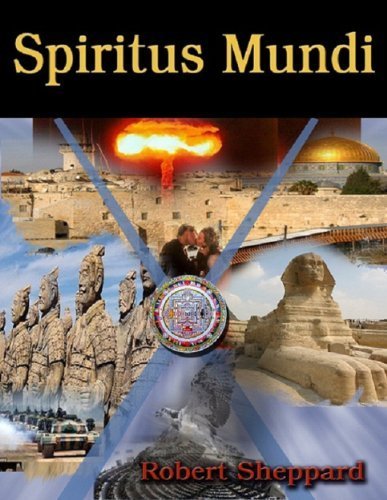
Amazon.com: Spiritus Mundi – Book I: The Novel eBook: Robert Sheppard: Kindle Store

Copyright Robert Sheppard 2013 All Rights Reserved


THE TALE OF GENJI BY LADY MURASAKI SHIKIBU, THE WORLD’S FIRST NOVEL & LEADER OF THE GLOBAL VERNACULAR REVOLUTION IN WORLD LITERATURE—-FROM THE WORLD LITERATURE FORUM RECOMMENDED CLASSICS AND MASTERPIECES SERIES VIA GOODREADS—-ROBERT SHEPPARD, EDITOR-IN-CHI
The Tale of Genji by Murasaki Shikibu
My rating: 5 of 5 stars
THE TALE OF GENJI BY LADY MURASAKI SHIKIBU, THE WORLD’S FIRST NOVEL & LEADER OF THE GLOBAL VERNACULAR REVOLUTION IN WORLD LITERATURE—-FROM THE WORLD LITERATURE FORUM RECOMMENDED CLASSICS AND MASTERPIECES SERIES VIA GOODREADS—-ROBERT SHEPPARD, EDITOR-IN-CHIEF
“The Tale of Genji,” the 11th Century classic tale of love and intrigue amoungst the high courtiers and noble ladies-in-waiting of the Japanese Heian Imperial Court holds a remarkable place in the history of World Literature as arguably the first novel in human history, the first psychological novel, the first novel by a woman–Lady Murasaki Shikibu, and one of the earliest exemplary works of the Global Vernacular Revolution.
Set in the Japanese Heian Imperial Court in Kyoto at the turn of the first millennium, this moving work centers on the life of Genji, born a lesser son of the Japanese Emperor, refined, handsome and full of romantic adventure, who for political reasons is relagated to the status of a commoner and takes up life on coming of age as a minor Imperial offical at court. While painting a vast panorama of Japanese high court society and its refined culture it follows Genji’s intricate and convoluted loves and sexual affairs, changing political fortunes from exile to the highest offices in the land, and his growing spiritual maturity leading to realization of the transience, melancholy and illusory nature of much of human experience.
WHAT WAS THE FIRST NOVEL IN WORLD HISTORY?
Is “The Tale of Genji” the first novel in human history? As with most sweeping questions of this kind, the answer you get depends on how you ask the question, and how you define its critical term “novel.” Certainly in terms of chronology, The Tale of Genji, finished in its present form by 1021 AD, far predates Western claimants to the title of the world’s first novel, such as Defoe’s “Robinson Crusoe” of 1719, “The Princess of Cleves” (1678), by Mme de La Fayette, and Cervantes’ “Don Quixote de la Mancha” (1605, 1615),considered by many critics to be the most important single progenitor of the modern novel. What then is a novel? The most likely definition you will get from the standard textbooks would be: “a sustained work of prose fiction a volume or more in length.” Some would add substantive required elements such as sustained continuity of character and plot, organic wholeness and closeness to the experience and language of actual life—a work of imaginative fiction grounded in reality, others demurring. Yet implicit in this very inclusive definition focused on length is also the notion of what a novel is not, which may be controversial, such as its not being a short story, not an epic poem, not a collection of unrelated stories, not a history or pure biography and other contradistinguished genres. Accordingly, Boccaccio’s “Decameron” and Chaucer’s “Canterbury Tales” are often excluded as a series of unrelated stories rather than an organically whole novel. Additionally, suradded to our theoretical diffiuculties may be the problem of a differing definition of the novel in different cultures and literary traditions, as well as the shifting evolution of the concept of the genre over time.
Certainly by any definition of a novel the Tale of Genji should qualify. It is a sustained prose narrative of 54 Chapters with continuity of psychology and charater of the figures depicted over a lifetime, rooted in the lived experience of individuals in society over a generation, and has been treated as a novel in the literary traditions of Japanese Literature and in World Literature. The more perplexing dimension of the question of what is the first novel lies in the inclusion or exclusion of its earlier competitors for the title within the genre of the novel. Some would say Homer’s Odyssey should be regarded as the first novel, others excluding it by virtue of its verse and status as an epic. Others would counter that the genre of the novel contains “novels in verse” such as Byron’s “Don Juan” and Pushkin’s “Eugene Onegin” or recent attempts such as Vikram Seth’s “The Golden Gate,” and that “epic” and “novel” are not mutually exclusive categories, citing Tolkien’s “The Lord of the Rings” or Tolstoy’s “War and Peace” as “epic novels.” Other quite legitimate contenders to unseat “The Tale of Genji” from the title to the world’s first novel in my opinion would include the classic narratives of Western Literature such as Petronius’s “Satyricon” (1st cent. A.D.) a vivid portrait of life in Nero’s Rome satirizing its corruption, and “The Metamorphoses” or “Golden Ass” (2d cent. A.D.) of Lucius Apuleius describing the fantastic adventures of a young man who is transformed into an ass, as well as “Daphnis and Chloë” (3d cent. A.D.), attributed to Longus,a love story about a goatherd and a shepherdess. So you may take your pick, but nonetheless the “Tale of Genji” is increasingly regarded as the conventional consensus answer to the question of what is the first novel in World Literature, alongside “Don Quixote,” regarded as the first modern Western novel.
THE TALE OF GENJI AND THE GLOBAL VERNACULAR REVOLUTION
Another important dimension of the place of “The Tale of Genji” in World Literature, worthy of note before looking into its content and story, is its place as a leading work of “The Global Vernacular Revolution.” For a millennia or more, from late antiquity until around 1200 AD, almost all the world’s literature was composed in Elite or Classical Languages, far removed from the speech of ordinary people. Literacy itself was the privilege of a small educated elite, usually of royal courts, church and temple circles, lawyers and government administrators or a few professional scholars. Their goal was most often to preserve and elaborate long-established literary traditions rather than express and reflect the life and language of the people. Thus, until the 1500′s most serious books in the West were written in Latin, or possibly Classical Greek for an international elite audience, and very few in English, French, Spanish or German. Classical Chinese (Wen Yan Wen), incomprehensible to the common contemporary Chinese speaker, was the medium of officials and scholars not only in China but also in countries such as Japan and Korea, part of the Chinese cultural sphere of influence. In India Sanskrit, incomprehensible to Indian dialect speakers, was used as the vehicle for literature from the Ramayana, Mahabharata, Hindu Vedas, mantras, Buddhist sutras, and the plays of Kalidasa. In the Muslim world, classical Arabic of the Koran was often memorized without any understanding of of the words mouthed, and Hebrew was lost as a living and preserved as one of the “dead languages.”
This situation began to change between 1000 AD and 1300 AD as a “Vernacular Revolution” took place across much of the world following the urge to draw literature closer to the life and language of living people, largely reflectingg the global rise of cities and the middle-classes. “The Tale of Genji” was one of the forerunners in this global revolution. In Heian Japan the educated elite, mostly men of the aristocracy or professions, wrote poetry, read literature, and conducted affairs of state not in the Japanese vernacular but in Classical Chinese, just as their contemporaries in Europe in the church, universities and public adinistration were using Latin instead of their local tongues. In this regard it is no accident that Murasaki Shikibu the author of Genji was a woman. The Genji was written by a woman and read mostly by courtly noble women who for the most part were excluded from the Classical Chinese education of the Japanese men, just as very few women in the West could study Latin or Greek, being excluded from grammar schools and universities. For this reason they turned to the spoken vernacular of the people rather than the elite classical languages.
In fact, at the time in Japan and in China the vernacular novels were not regarded as “literature” at all, but rather as “pulp or junk fiction” which no educated person should dirty his hands on, either in the writing or the reading. The prominence of women writers even in the West in the rise of the novel, such as Jane Austen, Aphra Behn, de Lafayette and others reflected also the fact that serious scholars, men, would be utilizing the elite Latin and Greek and would consider it demeaning to focus on the vernacular local language. Students would hide novels from their schoolmasters just as they might hide pornography, it being seductive and entertaining but unworthy of a respectable gentleman. The rise of vernacular writing across the world also reflected the rise of the educated middle classes, who were literate in their vernacular spoken languages but uneducated in the elite classical languages, and the translations of the Bible into the vernacular languages, the English of the King James Version or the German of Luther’s Bible, reflected an oncoming middle-cass social revolution in the making that would ultimately lead to the Puritan, American, French and Russian Revolutions that would topple the aristocratic ancien regime and clear the way for universal education, literacy and democracy, within widely disparate timeframes across the world’s civilizations. This also later reflected the “Gutenberg Revolution” of the printed word noted by Marshall McLuhan.
In Europe the Renaissance and Reformation followed this tidal wave of popular consciousness. Dante was one of the first leaders of the revolution, defending his composition of “The Divine Comedy” not in Latin as might have been expected, but rather in the local Italian dialect, claiming he wished to reach the people of all classes, men and women, rich and poor. The shift was also associated with the rise of Nationalism,and sometimes had the negative effect of making literature less international. The Provencal poets, Troubadours, Minnisingers, bards and balladeers followed suit. In India, prose writing shared by the merchant classes saw Classical Sanskrit give way to prose works in Tamil and Telugu. Persian Ghazals rose amoungst the Arabic nations.
English literature really begins with the rise of the vernacular with the Renaissance and Reformation. Sir Thomas More wrote his famous Utopia in Latin, and it had to be translated by another into his native English, but by the time of Milton, though he was a court Latin scholar and diplomatic Latin correspondent, he composed his great works of poetry such as “Paradise Lost” in his spoken tongue. From Shakespeare on, with his “Little Latin” the primary medium of English Literature would be written English, and after the play, the vernacular novel would soon rise to the throne of prominence within English Literature.
In China, seat of the Classical Chinese tradition which even in Japan marginalized the Genji, the transformation to a “Literature of the People” would only come on the fall of the Emperor in the 1911 Revolution of Sun Yat Sen followed by the “May 4th Movement” of 1919 in which Lu Xun and Hu Shi first began to write in spoken Chinese, abandoning the scholarly and classical “Wen Yan Wen” of the literary elite for the language of the people. In all cases the Global Vernacular Revoltion and its attendant revolution in public consciousness would prove to be social nitro-glycerin, ultimately bringing in it wake not only a literary revoution but a policical revolution spreading from the middle-classes to the working classes and reshaping, for better or for worse, the face of the Modern world.
THE TALE OF GENJI: THE STORY
Genji, the principal hero of the novel, was the second son of Emperor Kiritsubo and a low-ranking but beloved concubine, Lady Kiritsubo. Genji’s mother dies when he is three years old, but the Emperor, deeply in love, cannot forget her. Emperor Kiritsubo then hears of a woman, Lady Fujitsubo, formerly a princess of the preceding emperor, who is the living image of his deceased beloved, and arranges for her to become one of his wives. Genji loves her first as a stepmother, but later as he grows to be a man, falls in love with her sexually as a woman. Hopelessly in love with each other, they continue their clandestine forbidden affair. Genji thus finds himself frustrated in his forbidden love for Lady Fujitsubo and on bad terms with his wife Aoi no Ue. He then engages in a series of unfulfilling love affairs, escapades and adventures with other women. In most cases, his advances are rebuffed, his lover dies suddenly during the affair, or he finds his lover to become dull and tiresome as his feelings change. In one case, he sees a beautiful young woman through an open window, enters her room without permission, and proceeds to seduce her. Recognizing him as a man of unchallengeable power, she makes no resistance.
In his restlessness Genji visits Kitayama, the northern rural hilly suburban area of the capital Kyoto, where he finds a beautiful ten-year-old girl. He is uncannily fascinated by this youthful girl, Murasaki, and discovers that she is a niece of his clandestine lover Lady Fujitsubo. Yielding to an irresistable impulse he kidnaps her, brings her to his own palace and undertakes a passion-driven project to raise and educate her to be his ideal lady; that is, to be an idealized rejuvenated image of the Lady Fujitsubo and his deceased mother. During this time Genji also meets Lady Fujitsubo secretly, and continues to make love to her until she bears his son, Reizei. Everyone except the two lovers believes the father of the child is the Emperor Kiritsubo. Later, the boy becomes the Crown Prince and Lady Fujitsubo becomes the Empress, but Genji and Lady Fujitsubo swear to keep their secret.
Genji and his wife, Lady Aoi, reconcile and she gives birth to a son but dies soon after. Genji is sorrowful, but finds consolation in Murasaki, whom he then marries, consummating his Pygmalion-like project of creating his sexually ideal woman and mate. Genji’s father, the Emperor Kiritsubo, dies. He is succeeded by his son Suzaku, whose mother Kokiden, together with Kiritsubo and Genji’s political enemies including the Minister of the Right takes power in the court. Then another of Genji’s secret love affairs is exposed: Genji and a favorite concubine of the new Emperor Suzaku, Genji’s brother, are discovered in flagrante delicto when they meet in secret. The Emperor Suzaku confides his personal amusement at Genji’s exploits with the woman, but to maintain face and discipline at court he is duty-bound to punish his half-brother. Genji is thus exiled, Ovid-like to the faraway town of Suma in rural Harima province. There, a prosperous man known as the Akashi Novice entertains Genji, and Genji has a love affair with Akashi’s daughter. She gives birth to Genji’s only daughter, who will later become the Empress.
In the Capital, the Emperor Suzaku is troubled by dreams of his late father, Kiritsubo, and something begins to affect his eyes. Meanwhile, his mother, Kokiden, grows ill, which weakens her powerful sway over the throne. Thus in a fit of remorse the Emperor orders Genji pardoned, and he returns to Kyoto. His son by Lady Fujitsubo, Reizei, becomes the emperor, and Genji finishes his imperial career. The new Emperor Reizei knows Genji is his real father, and raises Genji’s rank to the highest possible.
However, when Genji turns 40 years old, his life begins to decline and he falls into melancholy and drift. His political status does not change, but his love and emotional life slowly deteriorate. He marries another wife, the Third Princess. Genji’s nephew, Kashiwagi, later forces himself on the Third Princess and she bears Kaoru who, in a similar situation to that of Reizei, is legally known as the son of Genji. Genji’s new marriage changes his relationship with Murasaki, who becomes a Buddhist nun, or bikuni.
Genji’s beloved Murasaki finally dies. In the following chapter, entitled Maboroshi or Illusion, Genji contemplates how fleeting life is, transient, empty and illusory. Immediately after Maboroshi, there is a chapter entitled Kumogakure or “Vanished into the Clouds”) which is left blank, but implies the death of Genji. The narrative then continues a short time further after Genji’s death, detailing the rivalry of Kaoru, Genji’s legal son and his best friend Niou, the royal prince who is the son of Genji’s daughter the Emperess, as they compete to attract beautiful court women. The book ends, like the Satyricon in the middle of an unfinished sentence, with Kouru pondering if Niou has tricked him to steal a lover from him. Kouru is often seen as the first Anti-hero in World Literature.
It is thought that “The Tale of Genji” was composed in a serialized fashion, with each chapter being hand-copied, circulated and re-copied after its completion within a small aristocratic court circle as a form of upper-class entertainment. The disparate chapters would then be collected into a whole at a later time. Thus it would have been similar to many of the Western novels such as those of Dickens and Dumas which were published in installments in newspapers and circulars such as Dickens’ “Household Words” before being collected into a finished book for for final publication, although Genji would have been circulated bit in hand-copies chapter by chapter in elite circles. Thereafter it became one of the central and beloved classics of Japanese Literature over the centuries. Its archaid Kyoto court language was unreadable to the larger public even a hundred years after its composition and was only translated into modern Japanese in the 19th century, being read with extensive annotations.
The Tale of Genji influenced the composition of my own recent novel Spiritus Mundi, in the emphasis on the voices of women in the text. Murasaki Shikibu, the Genji author also wrote an extensive Diary which has been preserved. In Spiritus Mundi, two of the principal characters, Eva Strong and Japanese artist-clairevoyante Yoriko Oe write in their own voices in their diary-like Blog Journals which appear in alternate chapters of the novel, giving vivid life to the inner world of women. Their Blogs reflect also their melancholy, sometimes illusory and disappointing sexual affairs, just as in the Tale of Genji. Like the Tale of Genji, its protagonists are followed through a wide range of experiences, social and sexual, sometimes in triumph, sometimes in defeat and despair, sometimes in a shared spiritual melancholy at the transience and illusory character of much of human experience. Spiritus Mundi also contains a comprehensive series of dialogues by the characters in the novel on the nature and canon of World Literature, including the place of The Tale of Genji in that canon. Spiritus Mundi shares common themes with The Tale of Genji in the linkage of sexuality and spirituality and the possibility of spiritual transcendence,and Book I of Spiritus Mundi, like the Satyricon ends in an unfinished mid-sentence.
For a fuller discussion of the concept of World Literature you are invited to look into the extended discussion in the new book Spiritus Mundi, by Robert Sheppard, one of the principal themes of which is the emergence and evolution of World Literature:
For Discussions on World Literature and Literary Criticism in Spiritus Mundi:
http://worldliteratureandliterarycrit…
Robert Sheppard
Editor-in-Chief
World Literature Forum
Author, Spiritus Mundi Novel
Author’s Blog:
http://robertalexandersheppard.wordpr…
Spiritus Mundi on Goodreads:
http://www.goodreads.com/book/show/17…
Spiritus Mundi on Amazon, Book I:
Amazon.com: Spiritus Mundi – Book I: The Novel eBook: Robert Sheppard: Kindle Store
Copyright Robert Sheppard 2013 All Rights Reserved
THE TALE OF GENJI BY LADY MURASAKI SHIKIBU, THE WORLD’S FIRST NOVEL & LEADER OF THE GLOBAL VERNACULAR REVOLUTION IN WORLD LITERATURE—-FROM THE WORLD LITERATURE FORUM RECOMMENDED CLASSICS AND MASTERPIECES SERIES VIA GOODREADS—-ROBERT SHEPPARD, EDITOR-IN-CHI
The Tale of Genji by Murasaki Shikibu
My rating: 5 of 5 stars
THE TALE OF GENJI BY LADY MURASAKI SHIKIBU, THE WORLD’S FIRST NOVEL & LEADER OF THE GLOBAL VERNACULAR REVOLUTION IN WORLD LITERATURE—-FROM THE WORLD LITERATURE FORUM RECOMMENDED CLASSICS AND MASTERPIECES SERIES VIA GOODREADS—-ROBERT SHEPPARD, EDITOR-IN-CHIEF
“The Tale of Genji,” the 11th Century classic tale of love and intrigue amoungst the high courtiers and noble ladies-in-waiting of the Japanese Heian Imperial Court holds a remarkable place in the history of World Literature as arguably the first novel in human history, the first psychological novel, the first novel by a woman–Lady Murasaki Shikibu, and one of the earliest exemplary works of the Global Vernacular Revolution.
Set in the Japanese Heian Imperial Court in Kyoto at the turn of the first millennium, this moving work centers on the life of Genji, born a lesser son of the Japanese Emperor, refined, handsome and full of romantic adventure, who for political reasons is relagated to the status of a commoner and takes up life on coming of age as a minor Imperial offical at court. While painting a vast panorama of Japanese high court society and its refined culture it follows Genji’s intricate and convoluted loves and sexual affairs, changing political fortunes from exile to the highest offices in the land, and his growing spiritual maturity leading to realization of the transience, melancholy and illusory nature of much of human experience.
WHAT WAS THE FIRST NOVEL IN WORLD HISTORY?
Is “The Tale of Genji” the first novel in human history? As with most sweeping questions of this kind, the answer you get depends on how you ask the question, and how you define its critical term “novel.” Certainly in terms of chronology, The Tale of Genji, finished in its present form by 1021 AD, far predates Western claimants to the title of the world’s first novel, such as Defoe’s “Robinson Crusoe” of 1719, “The Princess of Cleves” (1678), by Mme de La Fayette, and Cervantes’ “Don Quixote de la Mancha” (1605, 1615),considered by many critics to be the most important single progenitor of the modern novel. What then is a novel? The most likely definition you will get from the standard textbooks would be: “a sustained work of prose fiction a volume or more in length.” Some would add substantive required elements such as sustained continuity of character and plot, organic wholeness and closeness to the experience and language of actual life—a work of imaginative fiction grounded in reality, others demurring. Yet implicit in this very inclusive definition focused on length is also the notion of what a novel is not, which may be controversial, such as its not being a short story, not an epic poem, not a collection of unrelated stories, not a history or pure biography and other contradistinguished genres. Accordingly, Boccaccio’s “Decameron” and Chaucer’s “Canterbury Tales” are often excluded as a series of unrelated stories rather than an organically whole novel. Additionally, suradded to our theoretical diffiuculties may be the problem of a differing definition of the novel in different cultures and literary traditions, as well as the shifting evolution of the concept of the genre over time.
Certainly by any definition of a novel the Tale of Genji should qualify. It is a sustained prose narrative of 54 Chapters with continuity of psychology and charater of the figures depicted over a lifetime, rooted in the lived experience of individuals in society over a generation, and has been treated as a novel in the literary traditions of Japanese Literature and in World Literature. The more perplexing dimension of the question of what is the first novel lies in the inclusion or exclusion of its earlier competitors for the title within the genre of the novel. Some would say Homer’s Odyssey should be regarded as the first novel, others excluding it by virtue of its verse and status as an epic. Others would counter that the genre of the novel contains “novels in verse” such as Byron’s “Don Juan” and Pushkin’s “Eugene Onegin” or recent attempts such as Vikram Seth’s “The Golden Gate,” and that “epic” and “novel” are not mutually exclusive categories, citing Tolkien’s “The Lord of the Rings” or Tolstoy’s “War and Peace” as “epic novels.” Other quite legitimate contenders to unseat “The Tale of Genji” from the title to the world’s first novel in my opinion would include the classic narratives of Western Literature such as Petronius’s “Satyricon” (1st cent. A.D.) a vivid portrait of life in Nero’s Rome satirizing its corruption, and “The Metamorphoses” or “Golden Ass” (2d cent. A.D.) of Lucius Apuleius describing the fantastic adventures of a young man who is transformed into an ass, as well as “Daphnis and Chloë” (3d cent. A.D.), attributed to Longus,a love story about a goatherd and a shepherdess. So you may take your pick, but nonetheless the “Tale of Genji” is increasingly regarded as the conventional consensus answer to the question of what is the first novel in World Literature, alongside “Don Quixote,” regarded as the first modern Western novel.
THE TALE OF GENJI AND THE GLOBAL VERNACULAR REVOLUTION
Another important dimension of the place of “The Tale of Genji” in World Literature, worthy of note before looking into its content and story, is its place as a leading work of “The Global Vernacular Revolution.” For a millennia or more, from late antiquity until around 1200 AD, almost all the world’s literature was composed in Elite or Classical Languages, far removed from the speech of ordinary people. Literacy itself was the privilege of a small educated elite, usually of royal courts, church and temple circles, lawyers and government administrators or a few professional scholars. Their goal was most often to preserve and elaborate long-established literary traditions rather than express and reflect the life and language of the people. Thus, until the 1500′s most serious books in the West were written in Latin, or possibly Classical Greek for an international elite audience, and very few in English, French, Spanish or German. Classical Chinese (Wen Yan Wen), incomprehensible to the common contemporary Chinese speaker, was the medium of officials and scholars not only in China but also in countries such as Japan and Korea, part of the Chinese cultural sphere of influence. In India Sanskrit, incomprehensible to Indian dialect speakers, was used as the vehicle for literature from the Ramayana, Mahabharata, Hindu Vedas, mantras, Buddhist sutras, and the plays of Kalidasa. In the Muslim world, classical Arabic of the Koran was often memorized without any understanding of of the words mouthed, and Hebrew was lost as a living and preserved as one of the “dead languages.”
This situation began to change between 1000 AD and 1300 AD as a “Vernacular Revolution” took place across much of the world following the urge to draw literature closer to the life and language of living people, largely reflectingg the global rise of cities and the middle-classes. “The Tale of Genji” was one of the forerunners in this global revolution. In Heian Japan the educated elite, mostly men of the aristocracy or professions, wrote poetry, read literature, and conducted affairs of state not in the Japanese vernacular but in Classical Chinese, just as their contemporaries in Europe in the church, universities and public adinistration were using Latin instead of their local tongues. In this regard it is no accident that Murasaki Shikibu the author of Genji was a woman. The Genji was written by a woman and read mostly by courtly noble women who for the most part were excluded from the Classical Chinese education of the Japanese men, just as very few women in the West could study Latin or Greek, being excluded from grammar schools and universities. For this reason they turned to the spoken vernacular of the people rather than the elite classical languages.
In fact, at the time in Japan and in China the vernacular novels were not regarded as “literature” at all, but rather as “pulp or junk fiction” which no educated person should dirty his hands on, either in the writing or the reading. The prominence of women writers even in the West in the rise of the novel, such as Jane Austen, Aphra Behn, de Lafayette and others reflected also the fact that serious scholars, men, would be utilizing the elite Latin and Greek and would consider it demeaning to focus on the vernacular local language. Students would hide novels from their schoolmasters just as they might hide pornography, it being seductive and entertaining but unworthy of a respectable gentleman. The rise of vernacular writing across the world also reflected the rise of the educated middle classes, who were literate in their vernacular spoken languages but uneducated in the elite classical languages, and the translations of the Bible into the vernacular languages, the English of the King James Version or the German of Luther’s Bible, reflected an oncoming middle-cass social revolution in the making that would ultimately lead to the Puritan, American, French and Russian Revolutions that would topple the aristocratic ancien regime and clear the way for universal education, literacy and democracy, within widely disparate timeframes across the world’s civilizations. This also later reflected the “Gutenberg Revolution” of the printed word noted by Marshall McLuhan.
In Europe the Renaissance and Reformation followed this tidal wave of popular consciousness. Dante was one of the first leaders of the revolution, defending his composition of “The Divine Comedy” not in Latin as might have been expected, but rather in the local Italian dialect, claiming he wished to reach the people of all classes, men and women, rich and poor. The shift was also associated with the rise of Nationalism,and sometimes had the negative effect of making literature less international. The Provencal poets, Troubadours, Minnisingers, bards and balladeers followed suit. In India, prose writing shared by the merchant classes saw Classical Sanskrit give way to prose works in Tamil and Telugu. Persian Ghazals rose amoungst the Arabic nations.
English literature really begins with the rise of the vernacular with the Renaissance and Reformation. Sir Thomas More wrote his famous Utopia in Latin, and it had to be translated by another into his native English, but by the time of Milton, though he was a court Latin scholar and diplomatic Latin correspondent, he composed his great works of poetry such as “Paradise Lost” in his spoken tongue. From Shakespeare on, with his “Little Latin” the primary medium of English Literature would be written English, and after the play, the vernacular novel would soon rise to the throne of prominence within English Literature.
In China, seat of the Classical Chinese tradition which even in Japan marginalized the Genji, the transformation to a “Literature of the People” would only come on the fall of the Emperor in the 1911 Revolution of Sun Yat Sen followed by the “May 4th Movement” of 1919 in which Lu Xun and Hu Shi first began to write in spoken Chinese, abandoning the scholarly and classical “Wen Yan Wen” of the literary elite for the language of the people. In all cases the Global Vernacular Revoltion and its attendant revolution in public consciousness would prove to be social nitro-glycerin, ultimately bringing in it wake not only a literary revoution but a policical revolution spreading from the middle-classes to the working classes and reshaping, for better or for worse, the face of the Modern world.
THE TALE OF GENJI: THE STORY
Genji, the principal hero of the novel, was the second son of Emperor Kiritsubo and a low-ranking but beloved concubine, Lady Kiritsubo. Genji’s mother dies when he is three years old, but the Emperor, deeply in love, cannot forget her. Emperor Kiritsubo then hears of a woman, Lady Fujitsubo, formerly a princess of the preceding emperor, who is the living image of his deceased beloved, and arranges for her to become one of his wives. Genji loves her first as a stepmother, but later as he grows to be a man, falls in love with her sexually as a woman. Hopelessly in love with each other, they continue their clandestine forbidden affair. Genji thus finds himself frustrated in his forbidden love for Lady Fujitsubo and on bad terms with his wife Aoi no Ue. He then engages in a series of unfulfilling love affairs, escapades and adventures with other women. In most cases, his advances are rebuffed, his lover dies suddenly during the affair, or he finds his lover to become dull and tiresome as his feelings change. In one case, he sees a beautiful young woman through an open window, enters her room without permission, and proceeds to seduce her. Recognizing him as a man of unchallengeable power, she makes no resistance.
In his restlessness Genji visits Kitayama, the northern rural hilly suburban area of the capital Kyoto, where he finds a beautiful ten-year-old girl. He is uncannily fascinated by this youthful girl, Murasaki, and discovers that she is a niece of his clandestine lover Lady Fujitsubo. Yielding to an irresistable impulse he kidnaps her, brings her to his own palace and undertakes a passion-driven project to raise and educate her to be his ideal lady; that is, to be an idealized rejuvenated image of the Lady Fujitsubo and his deceased mother. During this time Genji also meets Lady Fujitsubo secretly, and continues to make love to her until she bears his son, Reizei. Everyone except the two lovers believes the father of the child is the Emperor Kiritsubo. Later, the boy becomes the Crown Prince and Lady Fujitsubo becomes the Empress, but Genji and Lady Fujitsubo swear to keep their secret.
Genji and his wife, Lady Aoi, reconcile and she gives birth to a son but dies soon after. Genji is sorrowful, but finds consolation in Murasaki, whom he then marries, consummating his Pygmalion-like project of creating his sexually ideal woman and mate. Genji’s father, the Emperor Kiritsubo, dies. He is succeeded by his son Suzaku, whose mother Kokiden, together with Kiritsubo and Genji’s political enemies including the Minister of the Right takes power in the court. Then another of Genji’s secret love affairs is exposed: Genji and a favorite concubine of the new Emperor Suzaku, Genji’s brother, are discovered in flagrante delicto when they meet in secret. The Emperor Suzaku confides his personal amusement at Genji’s exploits with the woman, but to maintain face and discipline at court he is duty-bound to punish his half-brother. Genji is thus exiled, Ovid-like to the faraway town of Suma in rural Harima province. There, a prosperous man known as the Akashi Novice entertains Genji, and Genji has a love affair with Akashi’s daughter. She gives birth to Genji’s only daughter, who will later become the Empress.
In the Capital, the Emperor Suzaku is troubled by dreams of his late father, Kiritsubo, and something begins to affect his eyes. Meanwhile, his mother, Kokiden, grows ill, which weakens her powerful sway over the throne. Thus in a fit of remorse the Emperor orders Genji pardoned, and he returns to Kyoto. His son by Lady Fujitsubo, Reizei, becomes the emperor, and Genji finishes his imperial career. The new Emperor Reizei knows Genji is his real father, and raises Genji’s rank to the highest possible.
However, when Genji turns 40 years old, his life begins to decline and he falls into melancholy and drift. His political status does not change, but his love and emotional life slowly deteriorate. He marries another wife, the Third Princess. Genji’s nephew, Kashiwagi, later forces himself on the Third Princess and she bears Kaoru who, in a similar situation to that of Reizei, is legally known as the son of Genji. Genji’s new marriage changes his relationship with Murasaki, who becomes a Buddhist nun, or bikuni.
Genji’s beloved Murasaki finally dies. In the following chapter, entitled Maboroshi or Illusion, Genji contemplates how fleeting life is, transient, empty and illusory. Immediately after Maboroshi, there is a chapter entitled Kumogakure or “Vanished into the Clouds”) which is left blank, but implies the death of Genji. The narrative then continues a short time further after Genji’s death, detailing the rivalry of Kaoru, Genji’s legal son and his best friend Niou, the royal prince who is the son of Genji’s daughter the Emperess, as they compete to attract beautiful court women. The book ends, like the Satyricon in the middle of an unfinished sentence, with Kouru pondering if Niou has tricked him to steal a lover from him. Kouru is often seen as the first Anti-hero in World Literature.
It is thought that “The Tale of Genji” was composed in a serialized fashion, with each chapter being hand-copied, circulated and re-copied after its completion within a small aristocratic court circle as a form of upper-class entertainment. The disparate chapters would then be collected into a whole at a later time. Thus it would have been similar to many of the Western novels such as those of Dickens and Dumas which were published in installments in newspapers and circulars such as Dickens’ “Household Words” before being collected into a finished book for for final publication, although Genji would have been circulated bit in hand-copies chapter by chapter in elite circles. Thereafter it became one of the central and beloved classics of Japanese Literature over the centuries. Its archaid Kyoto court language was unreadable to the larger public even a hundred years after its composition and was only translated into modern Japanese in the 19th century, being read with extensive annotations.
The Tale of Genji influenced the composition of my own recent novel Spiritus Mundi, in the emphasis on the voices of women in the text. Murasaki Shikibu, the Genji author also wrote an extensive Diary which has been preserved. In Spiritus Mundi, two of the principal characters, Eva Strong and Japanese artist-clairevoyante Yoriko Oe write in their own voices in their diary-like Blog Journals which appear in alternate chapters of the novel, giving vivid life to the inner world of women. Their Blogs reflect also their melancholy, sometimes illusory and disappointing sexual affairs, just as in the Tale of Genji. Like the Tale of Genji, its protagonists are followed through a wide range of experiences, social and sexual, sometimes in triumph, sometimes in defeat and despair, sometimes in a shared spiritual melancholy at the transience and illusory character of much of human experience. Spiritus Mundi also contains a comprehensive series of dialogues by the characters in the novel on the nature and canon of World Literature, including the place of The Tale of Genji in that canon. Spiritus Mundi shares common themes with The Tale of Genji in the linkage of sexuality and spirituality and the possibility of spiritual transcendence,and Book I of Spiritus Mundi, like the Satyricon ends in an unfinished mid-sentence.
For a fuller discussion of the concept of World Literature you are invited to look into the extended discussion in the new book Spiritus Mundi, by Robert Sheppard, one of the principal themes of which is the emergence and evolution of World Literature:
For Discussions on World Literature and Literary Criticism in Spiritus Mundi: http://worldliteratureandliterarycrit…
Robert Sheppard
Editor-in-Chief
World Literature Forum
Author, Spiritus Mundi Novel
Author’s Blog: http://robertalexandersheppard.wordpr…
Spiritus Mundi on Goodreads: http://www.goodreads.com/book/show/17…
Spiritus Mundi on Amazon, Book I: http://www.amazon.com/dp/B00CIGJFGO
Spiritus Mundi, Book II: The Romance http://www.amazon.com/dp/B00CGM8BZG
Copyright Robert Sheppard 2013 All Rights Reserved
THE TALE OF GENJI BY LADY MURASAKI SHIKIBU, THE WORLD’S FIRST NOVEL & LEADER OF THE GLOBAL VERNACULAR REVOLUTION IN WORLD LITERATURE—-FROM THE WORLD LITERATURE FORUM RECOMMENDED CLASSICS AND MASTERPIECES SERIES VIA GOODREADS—-ROBERT SHEPPARD, EDITOR-IN-CHI
The Tale of Genji by Murasaki Shikibu
My rating: 5 of 5 stars
THE TALE OF GENJI BY LADY MURASAKI SHIKIBU, THE WORLD’S FIRST NOVEL & LEADER OF THE GLOBAL VERNACULAR REVOLUTION IN WORLD LITERATURE—-FROM THE WORLD LITERATURE FORUM RECOMMENDED CLASSICS AND MASTERPIECES SERIES VIA GOODREADS—-ROBERT SHEPPARD, EDITOR-IN-CHIEF
“The Tale of Genji,” the 11th Century classic tale of love and intrigue amoungst the high courtiers and noble ladies-in-waiting of the Japanese Heian Imperial Court holds a remarkable place in the history of World Literature as arguably the first novel in human history, the first psychological novel, the first novel by a woman–Lady Murasaki Shikibu, and one of the earliest exemplary works of the Global Vernacular Revolution.
Set in the Japanese Heian Imperial Court in Kyoto at the turn of the first millennium, this moving work centers on the life of Genji, born a lesser son of the Japanese Emperor, refined, handsome and full of romantic adventure, who for political reasons is relagated to the status of a commoner and takes up life on coming of age as a minor Imperial offical at court. While painting a vast panorama of Japanese high court society and its refined culture it follows Genji’s intricate and convoluted loves and sexual affairs, changing political fortunes from exile to the highest offices in the land, and his growing spiritual maturity leading to realization of the transience, melancholy and illusory nature of much of human experience.
WHAT WAS THE FIRST NOVEL IN WORLD HISTORY?
Is “The Tale of Genji” the first novel in human history? As with most sweeping questions of this kind, the answer you get depends on how you ask the question, and how you define its critical term “novel.” Certainly in terms of chronology, The Tale of Genji, finished in its present form by 1021 AD, far predates Western claimants to the title of the world’s first novel, such as Defoe’s “Robinson Crusoe” of 1719, “The Princess of Cleves” (1678), by Mme de La Fayette, and Cervantes’ “Don Quixote de la Mancha” (1605, 1615),considered by many critics to be the most important single progenitor of the modern novel. What then is a novel? The most likely definition you will get from the standard textbooks would be: “a sustained work of prose fiction a volume or more in length.” Some would add substantive required elements such as sustained continuity of character and plot, organic wholeness and closeness to the experience and language of actual life—a work of imaginative fiction grounded in reality, others demurring. Yet implicit in this very inclusive definition focused on length is also the notion of what a novel is not, which may be controversial, such as its not being a short story, not an epic poem, not a collection of unrelated stories, not a history or pure biography and other contradistinguished genres. Accordingly, Boccaccio’s “Decameron” and Chaucer’s “Canterbury Tales” are often excluded as a series of unrelated stories rather than an organically whole novel. Additionally, suradded to our theoretical diffiuculties may be the problem of a differing definition of the novel in different cultures and literary traditions, as well as the shifting evolution of the concept of the genre over time.
Certainly by any definition of a novel the Tale of Genji should qualify. It is a sustained prose narrative of 54 Chapters with continuity of psychology and charater of the figures depicted over a lifetime, rooted in the lived experience of individuals in society over a generation, and has been treated as a novel in the literary traditions of Japanese Literature and in World Literature. The more perplexing dimension of the question of what is the first novel lies in the inclusion or exclusion of its earlier competitors for the title within the genre of the novel. Some would say Homer’s Odyssey should be regarded as the first novel, others excluding it by virtue of its verse and status as an epic. Others would counter that the genre of the novel contains “novels in verse” such as Byron’s “Don Juan” and Pushkin’s “Eugene Onegin” or recent attempts such as Vikram Seth’s “The Golden Gate,” and that “epic” and “novel” are not mutually exclusive categories, citing Tolkien’s “The Lord of the Rings” or Tolstoy’s “War and Peace” as “epic novels.” Other quite legitimate contenders to unseat “The Tale of Genji” from the title to the world’s first novel in my opinion would include the classic narratives of Western Literature such as Petronius’s “Satyricon” (1st cent. A.D.) a vivid portrait of life in Nero’s Rome satirizing its corruption, and “The Metamorphoses” or “Golden Ass” (2d cent. A.D.) of Lucius Apuleius describing the fantastic adventures of a young man who is transformed into an ass, as well as “Daphnis and Chloë” (3d cent. A.D.), attributed to Longus,a love story about a goatherd and a shepherdess. So you may take your pick, but nonetheless the “Tale of Genji” is increasingly regarded as the conventional consensus answer to the question of what is the first novel in World Literature, alongside “Don Quixote,” regarded as the first modern Western novel.
THE TALE OF GENJI AND THE GLOBAL VERNACULAR REVOLUTION
Another important dimension of the place of “The Tale of Genji” in World Literature, worthy of note before looking into its content and story, is its place as a leading work of “The Global Vernacular Revolution.” For a millennia or more, from late antiquity until around 1200 AD, almost all the world’s literature was composed in Elite or Classical Languages, far removed from the speech of ordinary people. Literacy itself was the privilege of a small educated elite, usually of royal courts, church and temple circles, lawyers and government administrators or a few professional scholars. Their goal was most often to preserve and elaborate long-established literary traditions rather than express and reflect the life and language of the people. Thus, until the 1500′s most serious books in the West were written in Latin, or possibly Classical Greek for an international elite audience, and very few in English, French, Spanish or German. Classical Chinese (Wen Yan Wen), incomprehensible to the common contemporary Chinese speaker, was the medium of officials and scholars not only in China but also in countries such as Japan and Korea, part of the Chinese cultural sphere of influence. In India Sanskrit, incomprehensible to Indian dialect speakers, was used as the vehicle for literature from the Ramayana, Mahabharata, Hindu Vedas, mantras, Buddhist sutras, and the plays of Kalidasa. In the Muslim world, classical Arabic of the Koran was often memorized without any understanding of of the words mouthed, and Hebrew was lost as a living and preserved as one of the “dead languages.”
This situation began to change between 1000 AD and 1300 AD as a “Vernacular Revolution” took place across much of the world following the urge to draw literature closer to the life and language of living people, largely reflectingg the global rise of cities and the middle-classes. “The Tale of Genji” was one of the forerunners in this global revolution. In Heian Japan the educated elite, mostly men of the aristocracy or professions, wrote poetry, read literature, and conducted affairs of state not in the Japanese vernacular but in Classical Chinese, just as their contemporaries in Europe in the church, universities and public adinistration were using Latin instead of their local tongues. In this regard it is no accident that Murasaki Shikibu the author of Genji was a woman. The Genji was written by a woman and read mostly by courtly noble women who for the most part were excluded from the Classical Chinese education of the Japanese men, just as very few women in the West could study Latin or Greek, being excluded from grammar schools and universities. For this reason they turned to the spoken vernacular of the people rather than the elite classical languages.
In fact, at the time in Japan and in China the vernacular novels were not regarded as “literature” at all, but rather as “pulp or junk fiction” which no educated person should dirty his hands on, either in the writing or the reading. The prominence of women writers even in the West in the rise of the novel, such as Jane Austen, Aphra Behn, de Lafayette and others reflected also the fact that serious scholars, men, would be utilizing the elite Latin and Greek and would consider it demeaning to focus on the vernacular local language. Students would hide novels from their schoolmasters just as they might hide pornography, it being seductive and entertaining but unworthy of a respectable gentleman. The rise of vernacular writing across the world also reflected the rise of the educated middle classes, who were literate in their vernacular spoken languages but uneducated in the elite classical languages, and the translations of the Bible into the vernacular languages, the English of the King James Version or the German of Luther’s Bible, reflected an oncoming middle-cass social revolution in the making that would ultimately lead to the Puritan, American, French and Russian Revolutions that would topple the aristocratic ancien regime and clear the way for universal education, literacy and democracy, within widely disparate timeframes across the world’s civilizations. This also later reflected the “Gutenberg Revolution” of the printed word noted by Marshall McLuhan.
In Europe the Renaissance and Reformation followed this tidal wave of popular consciousness. Dante was one of the first leaders of the revolution, defending his composition of “The Divine Comedy” not in Latin as might have been expected, but rather in the local Italian dialect, claiming he wished to reach the people of all classes, men and women, rich and poor. The shift was also associated with the rise of Nationalism,and sometimes had the negative effect of making literature less international. The Provencal poets, Troubadours, Minnisingers, bards and balladeers followed suit. In India, prose writing shared by the merchant classes saw Classical Sanskrit give way to prose works in Tamil and Telugu. Persian Ghazals rose amoungst the Arabic nations.
English literature really begins with the rise of the vernacular with the Renaissance and Reformation. Sir Thomas More wrote his famous Utopia in Latin, and it had to be translated by another into his native English, but by the time of Milton, though he was a court Latin scholar and diplomatic Latin correspondent, he composed his great works of poetry such as “Paradise Lost” in his spoken tongue. From Shakespeare on, with his “Little Latin” the primary medium of English Literature would be written English, and after the play, the vernacular novel would soon rise to the throne of prominence within English Literature.
In China, seat of the Classical Chinese tradition which even in Japan marginalized the Genji, the transformation to a “Literature of the People” would only come on the fall of the Emperor in the 1911 Revolution of Sun Yat Sen followed by the “May 4th Movement” of 1919 in which Lu Xun and Hu Shi first began to write in spoken Chinese, abandoning the scholarly and classical “Wen Yan Wen” of the literary elite for the language of the people. In all cases the Global Vernacular Revoltion and its attendant revolution in public consciousness would prove to be social nitro-glycerin, ultimately bringing in it wake not only a literary revoution but a policical revolution spreading from the middle-classes to the working classes and reshaping, for better or for worse, the face of the Modern world.
THE TALE OF GENJI: THE STORY
Genji, the principal hero of the novel, was the second son of Emperor Kiritsubo and a low-ranking but beloved concubine, Lady Kiritsubo. Genji’s mother dies when he is three years old, but the Emperor, deeply in love, cannot forget her. Emperor Kiritsubo then hears of a woman, Lady Fujitsubo, formerly a princess of the preceding emperor, who is the living image of his deceased beloved, and arranges for her to become one of his wives. Genji loves her first as a stepmother, but later as he grows to be a man, falls in love with her sexually as a woman. Hopelessly in love with each other, they continue their clandestine forbidden affair. Genji thus finds himself frustrated in his forbidden love for Lady Fujitsubo and on bad terms with his wife Aoi no Ue. He then engages in a series of unfulfilling love affairs, escapades and adventures with other women. In most cases, his advances are rebuffed, his lover dies suddenly during the affair, or he finds his lover to become dull and tiresome as his feelings change. In one case, he sees a beautiful young woman through an open window, enters her room without permission, and proceeds to seduce her. Recognizing him as a man of unchallengeable power, she makes no resistance.
In his restlessness Genji visits Kitayama, the northern rural hilly suburban area of the capital Kyoto, where he finds a beautiful ten-year-old girl. He is uncannily fascinated by this youthful girl, Murasaki, and discovers that she is a niece of his clandestine lover Lady Fujitsubo. Yielding to an irresistable impulse he kidnaps her, brings her to his own palace and undertakes a passion-driven project to raise and educate her to be his ideal lady; that is, to be an idealized rejuvenated image of the Lady Fujitsubo and his deceased mother. During this time Genji also meets Lady Fujitsubo secretly, and continues to make love to her until she bears his son, Reizei. Everyone except the two lovers believes the father of the child is the Emperor Kiritsubo. Later, the boy becomes the Crown Prince and Lady Fujitsubo becomes the Empress, but Genji and Lady Fujitsubo swear to keep their secret.
Genji and his wife, Lady Aoi, reconcile and she gives birth to a son but dies soon after. Genji is sorrowful, but finds consolation in Murasaki, whom he then marries, consummating his Pygmalion-like project of creating his sexually ideal woman and mate. Genji’s father, the Emperor Kiritsubo, dies. He is succeeded by his son Suzaku, whose mother Kokiden, together with Kiritsubo and Genji’s political enemies including the Minister of the Right takes power in the court. Then another of Genji’s secret love affairs is exposed: Genji and a favorite concubine of the new Emperor Suzaku, Genji’s brother, are discovered in flagrante delicto when they meet in secret. The Emperor Suzaku confides his personal amusement at Genji’s exploits with the woman, but to maintain face and discipline at court he is duty-bound to punish his half-brother. Genji is thus exiled, Ovid-like to the faraway town of Suma in rural Harima province. There, a prosperous man known as the Akashi Novice entertains Genji, and Genji has a love affair with Akashi’s daughter. She gives birth to Genji’s only daughter, who will later become the Empress.
In the Capital, the Emperor Suzaku is troubled by dreams of his late father, Kiritsubo, and something begins to affect his eyes. Meanwhile, his mother, Kokiden, grows ill, which weakens her powerful sway over the throne. Thus in a fit of remorse the Emperor orders Genji pardoned, and he returns to Kyoto. His son by Lady Fujitsubo, Reizei, becomes the emperor, and Genji finishes his imperial career. The new Emperor Reizei knows Genji is his real father, and raises Genji’s rank to the highest possible.
However, when Genji turns 40 years old, his life begins to decline and he falls into melancholy and drift. His political status does not change, but his love and emotional life slowly deteriorate. He marries another wife, the Third Princess. Genji’s nephew, Kashiwagi, later forces himself on the Third Princess and she bears Kaoru who, in a similar situation to that of Reizei, is legally known as the son of Genji. Genji’s new marriage changes his relationship with Murasaki, who becomes a Buddhist nun, or bikuni.
Genji’s beloved Murasaki finally dies. In the following chapter, entitled Maboroshi or Illusion, Genji contemplates how fleeting life is, transient, empty and illusory. Immediately after Maboroshi, there is a chapter entitled Kumogakure or “Vanished into the Clouds”) which is left blank, but implies the death of Genji. The narrative then continues a short time further after Genji’s death, detailing the rivalry of Kaoru, Genji’s legal son and his best friend Niou, the royal prince who is the son of Genji’s daughter the Emperess, as they compete to attract beautiful court women. The book ends, like the Satyricon in the middle of an unfinished sentence, with Kouru pondering if Niou has tricked him to steal a lover from him. Kouru is often seen as the first Anti-hero in World Literature.
It is thought that “The Tale of Genji” was composed in a serialized fashion, with each chapter being hand-copied, circulated and re-copied after its completion within a small aristocratic court circle as a form of upper-class entertainment. The disparate chapters would then be collected into a whole at a later time. Thus it would have been similar to many of the Western novels such as those of Dickens and Dumas which were published in installments in newspapers and circulars such as Dickens’ “Household Words” before being collected into a finished book for for final publication, although Genji would have been circulated bit in hand-copies chapter by chapter in elite circles. Thereafter it became one of the central and beloved classics of Japanese Literature over the centuries. Its archaid Kyoto court language was unreadable to the larger public even a hundred years after its composition and was only translated into modern Japanese in the 19th century, being read with extensive annotations.
The Tale of Genji influenced the composition of my own recent novel Spiritus Mundi, in the emphasis on the voices of women in the text. Murasaki Shikibu, the Genji author also wrote an extensive Diary which has been preserved. In Spiritus Mundi, two of the principal characters, Eva Strong and Japanese artist-clairevoyante Yoriko Oe write in their own voices in their diary-like Blog Journals which appear in alternate chapters of the novel, giving vivid life to the inner world of women. Their Blogs reflect also their melancholy, sometimes illusory and disappointing sexual affairs, just as in the Tale of Genji. Like the Tale of Genji, its protagonists are followed through a wide range of experiences, social and sexual, sometimes in triumph, sometimes in defeat and despair, sometimes in a shared spiritual melancholy at the transience and illusory character of much of human experience. Spiritus Mundi also contains a comprehensive series of dialogues by the characters in the novel on the nature and canon of World Literature, including the place of The Tale of Genji in that canon. Spiritus Mundi shares common themes with The Tale of Genji in the linkage of sexuality and spirituality and the possibility of spiritual transcendence,and Book I of Spiritus Mundi, like the Satyricon ends in an unfinished mid-sentence.
For a fuller discussion of the concept of World Literature you are invited to look into the extended discussion in the new book Spiritus Mundi, by Robert Sheppard, one of the principal themes of which is the emergence and evolution of World Literature:
For Discussions on World Literature and Literary Criticism in Spiritus Mundi: http://worldliteratureandliterarycrit…
Robert Sheppard
Editor-in-Chief
World Literature Forum
Author, Spiritus Mundi Novel
Author’s Blog: http://robertalexandersheppard.wordpr…
Spiritus Mundi on Goodreads: http://www.goodreads.com/book/show/17…
Spiritus Mundi on Amazon, Book I: http://www.amazon.com/dp/B00CIGJFGO
Spiritus Mundi, Book II: The Romance http://www.amazon.com/dp/B00CGM8BZG
Copyright Robert Sheppard 2013 All Rights Reserved
THE TALE OF GENJI BY LADY MURASAKI SHIKIBU, THE WORLD’S FIRST NOVEL & LEADER OF THE GLOBAL VERNACULAR REVOLUTION IN WORLD LITERATURE—-FROM THE WORLD LITERATURE FORUM RECOMMENDED CLASSICS AND MASTERPIECES SERIES VIA GOODREADS—-ROBERT SHEPPARD, EDITOR-IN-CHI
The Tale of Genji by Murasaki Shikibu
My rating: 5 of 5 stars
THE TALE OF GENJI BY LADY MURASAKI SHIKIBU, THE WORLD’S FIRST NOVEL & LEADER OF THE GLOBAL VERNACULAR REVOLUTION IN WORLD LITERATURE—-FROM THE WORLD LITERATURE FORUM RECOMMENDED CLASSICS AND MASTERPIECES SERIES VIA GOODREADS—-ROBERT SHEPPARD, EDITOR-IN-CHIEF
“The Tale of Genji,” the 11th Century classic tale of love and intrigue amoungst the high courtiers and noble ladies-in-waiting of the Japanese Heian Imperial Court holds a remarkable place in the history of World Literature as arguably the first novel in human history, the first psychological novel, the first novel by a woman–Lady Murasaki Shikibu, and one of the earliest exemplary works of the Global Vernacular Revolution.
Set in the Japanese Heian Imperial Court in Kyoto at the turn of the first millennium, this moving work centers on the life of Genji, born a lesser son of the Japanese Emperor, refined, handsome and full of romantic adventure, who for political reasons is relagated to the status of a commoner and takes up life on coming of age as a minor Imperial offical at court. While painting a vast panorama of Japanese high court society and its refined culture it follows Genji’s intricate and convoluted loves and sexual affairs, changing political fortunes from exile to the highest offices in the land, and his growing spiritual maturity leading to realization of the transience, melancholy and illusory nature of much of human experience.
WHAT WAS THE FIRST NOVEL IN WORLD HISTORY?
Is “The Tale of Genji” the first novel in human history? As with most sweeping questions of this kind, the answer you get depends on how you ask the question, and how you define its critical term “novel.” Certainly in terms of chronology, The Tale of Genji, finished in its present form by 1021 AD, far predates Western claimants to the title of the world’s first novel, such as Defoe’s “Robinson Crusoe” of 1719, “The Princess of Cleves” (1678), by Mme de La Fayette, and Cervantes’ “Don Quixote de la Mancha” (1605, 1615),considered by many critics to be the most important single progenitor of the modern novel. What then is a novel? The most likely definition you will get from the standard textbooks would be: “a sustained work of prose fiction a volume or more in length.” Some would add substantive required elements such as sustained continuity of character and plot, organic wholeness and closeness to the experience and language of actual life—a work of imaginative fiction grounded in reality, others demurring. Yet implicit in this very inclusive definition focused on length is also the notion of what a novel is not, which may be controversial, such as its not being a short story, not an epic poem, not a collection of unrelated stories, not a history or pure biography and other contradistinguished genres. Accordingly, Boccaccio’s “Decameron” and Chaucer’s “Canterbury Tales” are often excluded as a series of unrelated stories rather than an organically whole novel. Additionally, suradded to our theoretical diffiuculties may be the problem of a differing definition of the novel in different cultures and literary traditions, as well as the shifting evolution of the concept of the genre over time.
Certainly by any definition of a novel the Tale of Genji should qualify. It is a sustained prose narrative of 54 Chapters with continuity of psychology and charater of the figures depicted over a lifetime, rooted in the lived experience of individuals in society over a generation, and has been treated as a novel in the literary traditions of Japanese Literature and in World Literature. The more perplexing dimension of the question of what is the first novel lies in the inclusion or exclusion of its earlier competitors for the title within the genre of the novel. Some would say Homer’s Odyssey should be regarded as the first novel, others excluding it by virtue of its verse and status as an epic. Others would counter that the genre of the novel contains “novels in verse” such as Byron’s “Don Juan” and Pushkin’s “Eugene Onegin” or recent attempts such as Vikram Seth’s “The Golden Gate,” and that “epic” and “novel” are not mutually exclusive categories, citing Tolkien’s “The Lord of the Rings” or Tolstoy’s “War and Peace” as “epic novels.” Other quite legitimate contenders to unseat “The Tale of Genji” from the title to the world’s first novel in my opinion would include the classic narratives of Western Literature such as Petronius’s “Satyricon” (1st cent. A.D.) a vivid portrait of life in Nero’s Rome satirizing its corruption, and “The Metamorphoses” or “Golden Ass” (2d cent. A.D.) of Lucius Apuleius describing the fantastic adventures of a young man who is transformed into an ass, as well as “Daphnis and Chloë” (3d cent. A.D.), attributed to Longus,a love story about a goatherd and a shepherdess. So you may take your pick, but nonetheless the “Tale of Genji” is increasingly regarded as the conventional consensus answer to the question of what is the first novel in World Literature, alongside “Don Quixote,” regarded as the first modern Western novel.
THE TALE OF GENJI AND THE GLOBAL VERNACULAR REVOLUTION
Another important dimension of the place of “The Tale of Genji” in World Literature, worthy of note before looking into its content and story, is its place as a leading work of “The Global Vernacular Revolution.” For a millennia or more, from late antiquity until around 1200 AD, almost all the world’s literature was composed in Elite or Classical Languages, far removed from the speech of ordinary people. Literacy itself was the privilege of a small educated elite, usually of royal courts, church and temple circles, lawyers and government administrators or a few professional scholars. Their goal was most often to preserve and elaborate long-established literary traditions rather than express and reflect the life and language of the people. Thus, until the 1500′s most serious books in the West were written in Latin, or possibly Classical Greek for an international elite audience, and very few in English, French, Spanish or German. Classical Chinese (Wen Yan Wen), incomprehensible to the common contemporary Chinese speaker, was the medium of officials and scholars not only in China but also in countries such as Japan and Korea, part of the Chinese cultural sphere of influence. In India Sanskrit, incomprehensible to Indian dialect speakers, was used as the vehicle for literature from the Ramayana, Mahabharata, Hindu Vedas, mantras, Buddhist sutras, and the plays of Kalidasa. In the Muslim world, classical Arabic of the Koran was often memorized without any understanding of of the words mouthed, and Hebrew was lost as a living and preserved as one of the “dead languages.”
This situation began to change between 1000 AD and 1300 AD as a “Vernacular Revolution” took place across much of the world following the urge to draw literature closer to the life and language of living people, largely reflectingg the global rise of cities and the middle-classes. “The Tale of Genji” was one of the forerunners in this global revolution. In Heian Japan the educated elite, mostly men of the aristocracy or professions, wrote poetry, read literature, and conducted affairs of state not in the Japanese vernacular but in Classical Chinese, just as their contemporaries in Europe in the church, universities and public adinistration were using Latin instead of their local tongues. In this regard it is no accident that Murasaki Shikibu the author of Genji was a woman. The Genji was written by a woman and read mostly by courtly noble women who for the most part were excluded from the Classical Chinese education of the Japanese men, just as very few women in the West could study Latin or Greek, being excluded from grammar schools and universities. For this reason they turned to the spoken vernacular of the people rather than the elite classical languages.
In fact, at the time in Japan and in China the vernacular novels were not regarded as “literature” at all, but rather as “pulp or junk fiction” which no educated person should dirty his hands on, either in the writing or the reading. The prominence of women writers even in the West in the rise of the novel, such as Jane Austen, Aphra Behn, de Lafayette and others reflected also the fact that serious scholars, men, would be utilizing the elite Latin and Greek and would consider it demeaning to focus on the vernacular local language. Students would hide novels from their schoolmasters just as they might hide pornography, it being seductive and entertaining but unworthy of a respectable gentleman. The rise of vernacular writing across the world also reflected the rise of the educated middle classes, who were literate in their vernacular spoken languages but uneducated in the elite classical languages, and the translations of the Bible into the vernacular languages, the English of the King James Version or the German of Luther’s Bible, reflected an oncoming middle-cass social revolution in the making that would ultimately lead to the Puritan, American, French and Russian Revolutions that would topple the aristocratic ancien regime and clear the way for universal education, literacy and democracy, within widely disparate timeframes across the world’s civilizations. This also later reflected the “Gutenberg Revolution” of the printed word noted by Marshall McLuhan.
In Europe the Renaissance and Reformation followed this tidal wave of popular consciousness. Dante was one of the first leaders of the revolution, defending his composition of “The Divine Comedy” not in Latin as might have been expected, but rather in the local Italian dialect, claiming he wished to reach the people of all classes, men and women, rich and poor. The shift was also associated with the rise of Nationalism,and sometimes had the negative effect of making literature less international. The Provencal poets, Troubadours, Minnisingers, bards and balladeers followed suit. In India, prose writing shared by the merchant classes saw Classical Sanskrit give way to prose works in Tamil and Telugu. Persian Ghazals rose amoungst the Arabic nations.
English literature really begins with the rise of the vernacular with the Renaissance and Reformation. Sir Thomas More wrote his famous Utopia in Latin, and it had to be translated by another into his native English, but by the time of Milton, though he was a court Latin scholar and diplomatic Latin correspondent, he composed his great works of poetry such as “Paradise Lost” in his spoken tongue. From Shakespeare on, with his “Little Latin” the primary medium of English Literature would be written English, and after the play, the vernacular novel would soon rise to the throne of prominence within English Literature.
In China, seat of the Classical Chinese tradition which even in Japan marginalized the Genji, the transformation to a “Literature of the People” would only come on the fall of the Emperor in the 1911 Revolution of Sun Yat Sen followed by the “May 4th Movement” of 1919 in which Lu Xun and Hu Shi first began to write in spoken Chinese, abandoning the scholarly and classical “Wen Yan Wen” of the literary elite for the language of the people. In all cases the Global Vernacular Revoltion and its attendant revolution in public consciousness would prove to be social nitro-glycerin, ultimately bringing in it wake not only a literary revoution but a policical revolution spreading from the middle-classes to the working classes and reshaping, for better or for worse, the face of the Modern world.
THE TALE OF GENJI: THE STORY
Genji, the principal hero of the novel, was the second son of Emperor Kiritsubo and a low-ranking but beloved concubine, Lady Kiritsubo. Genji’s mother dies when he is three years old, but the Emperor, deeply in love, cannot forget her. Emperor Kiritsubo then hears of a woman, Lady Fujitsubo, formerly a princess of the preceding emperor, who is the living image of his deceased beloved, and arranges for her to become one of his wives. Genji loves her first as a stepmother, but later as he grows to be a man, falls in love with her sexually as a woman. Hopelessly in love with each other, they continue their clandestine forbidden affair. Genji thus finds himself frustrated in his forbidden love for Lady Fujitsubo and on bad terms with his wife Aoi no Ue. He then engages in a series of unfulfilling love affairs, escapades and adventures with other women. In most cases, his advances are rebuffed, his lover dies suddenly during the affair, or he finds his lover to become dull and tiresome as his feelings change. In one case, he sees a beautiful young woman through an open window, enters her room without permission, and proceeds to seduce her. Recognizing him as a man of unchallengeable power, she makes no resistance.
In his restlessness Genji visits Kitayama, the northern rural hilly suburban area of the capital Kyoto, where he finds a beautiful ten-year-old girl. He is uncannily fascinated by this youthful girl, Murasaki, and discovers that she is a niece of his clandestine lover Lady Fujitsubo. Yielding to an irresistable impulse he kidnaps her, brings her to his own palace and undertakes a passion-driven project to raise and educate her to be his ideal lady; that is, to be an idealized rejuvenated image of the Lady Fujitsubo and his deceased mother. During this time Genji also meets Lady Fujitsubo secretly, and continues to make love to her until she bears his son, Reizei. Everyone except the two lovers believes the father of the child is the Emperor Kiritsubo. Later, the boy becomes the Crown Prince and Lady Fujitsubo becomes the Empress, but Genji and Lady Fujitsubo swear to keep their secret.
Genji and his wife, Lady Aoi, reconcile and she gives birth to a son but dies soon after. Genji is sorrowful, but finds consolation in Murasaki, whom he then marries, consummating his Pygmalion-like project of creating his sexually ideal woman and mate. Genji’s father, the Emperor Kiritsubo, dies. He is succeeded by his son Suzaku, whose mother Kokiden, together with Kiritsubo and Genji’s political enemies including the Minister of the Right takes power in the court. Then another of Genji’s secret love affairs is exposed: Genji and a favorite concubine of the new Emperor Suzaku, Genji’s brother, are discovered in flagrante delicto when they meet in secret. The Emperor Suzaku confides his personal amusement at Genji’s exploits with the woman, but to maintain face and discipline at court he is duty-bound to punish his half-brother. Genji is thus exiled, Ovid-like to the faraway town of Suma in rural Harima province. There, a prosperous man known as the Akashi Novice entertains Genji, and Genji has a love affair with Akashi’s daughter. She gives birth to Genji’s only daughter, who will later become the Empress.
In the Capital, the Emperor Suzaku is troubled by dreams of his late father, Kiritsubo, and something begins to affect his eyes. Meanwhile, his mother, Kokiden, grows ill, which weakens her powerful sway over the throne. Thus in a fit of remorse the Emperor orders Genji pardoned, and he returns to Kyoto. His son by Lady Fujitsubo, Reizei, becomes the emperor, and Genji finishes his imperial career. The new Emperor Reizei knows Genji is his real father, and raises Genji’s rank to the highest possible.
However, when Genji turns 40 years old, his life begins to decline and he falls into melancholy and drift. His political status does not change, but his love and emotional life slowly deteriorate. He marries another wife, the Third Princess. Genji’s nephew, Kashiwagi, later forces himself on the Third Princess and she bears Kaoru who, in a similar situation to that of Reizei, is legally known as the son of Genji. Genji’s new marriage changes his relationship with Murasaki, who becomes a Buddhist nun, or bikuni.
Genji’s beloved Murasaki finally dies. In the following chapter, entitled Maboroshi or Illusion, Genji contemplates how fleeting life is, transient, empty and illusory. Immediately after Maboroshi, there is a chapter entitled Kumogakure or “Vanished into the Clouds”) which is left blank, but implies the death of Genji. The narrative then continues a short time further after Genji’s death, detailing the rivalry of Kaoru, Genji’s legal son and his best friend Niou, the royal prince who is the son of Genji’s daughter the Emperess, as they compete to attract beautiful court women. The book ends, like the Satyricon in the middle of an unfinished sentence, with Kouru pondering if Niou has tricked him to steal a lover from him. Kouru is often seen as the first Anti-hero in World Literature.
It is thought that “The Tale of Genji” was composed in a serialized fashion, with each chapter being hand-copied, circulated and re-copied after its completion within a small aristocratic court circle as a form of upper-class entertainment. The disparate chapters would then be collected into a whole at a later time. Thus it would have been similar to many of the Western novels such as those of Dickens and Dumas which were published in installments in newspapers and circulars such as Dickens’ “Household Words” before being collected into a finished book for for final publication, although Genji would have been circulated bit in hand-copies chapter by chapter in elite circles. Thereafter it became one of the central and beloved classics of Japanese Literature over the centuries. Its archaid Kyoto court language was unreadable to the larger public even a hundred years after its composition and was only translated into modern Japanese in the 19th century, being read with extensive annotations.
The Tale of Genji influenced the composition of my own recent novel Spiritus Mundi, in the emphasis on the voices of women in the text. Murasaki Shikibu, the Genji author also wrote an extensive Diary which has been preserved. In Spiritus Mundi, two of the principal characters, Eva Strong and Japanese artist-clairevoyante Yoriko Oe write in their own voices in their diary-like Blog Journals which appear in alternate chapters of the novel, giving vivid life to the inner world of women. Their Blogs reflect also their melancholy, sometimes illusory and disappointing sexual affairs, just as in the Tale of Genji. Like the Tale of Genji, its protagonists are followed through a wide range of experiences, social and sexual, sometimes in triumph, sometimes in defeat and despair, sometimes in a shared spiritual melancholy at the transience and illusory character of much of human experience. Spiritus Mundi also contains a comprehensive series of dialogues by the characters in the novel on the nature and canon of World Literature, including the place of The Tale of Genji in that canon. Spiritus Mundi shares common themes with The Tale of Genji in the linkage of sexuality and spirituality and the possibility of spiritual transcendence,and Book I of Spiritus Mundi, like the Satyricon ends in an unfinished mid-sentence.
For a fuller discussion of the concept of World Literature you are invited to look into the extended discussion in the new book Spiritus Mundi, by Robert Sheppard, one of the principal themes of which is the emergence and evolution of World Literature:
For Discussions on World Literature and Literary Criticism in Spiritus Mundi: http://worldliteratureandliterarycrit…
Robert Sheppard
Editor-in-Chief
World Literature Forum
Author, Spiritus Mundi Novel
Author’s Blog: http://robertalexandersheppard.wordpr…
Spiritus Mundi on Goodreads: http://www.goodreads.com/book/show/17…
Spiritus Mundi on Amazon, Book I: http://www.amazon.com/dp/B00CIGJFGO
Spiritus Mundi, Book II: The Romance http://www.amazon.com/dp/B00CGM8BZG
Copyright Robert Sheppard 2013 All Rights Reserved
THE TALE OF GENJI BY LADY MURASAKI SHIKIBU, THE WORLD’S FIRST NOVEL & LEADER OF THE GLOBAL VERNACULAR REVOLUTION IN WORLD LITERATURE—-FROM THE WORLD LITERATURE FORUM RECOMMENDED CLASSICS AND MASTERPIECES SERIES VIA GOODREADS—-ROBERT SHEPPARD, EDITOR-IN-CHI
The Tale of Genji by Murasaki Shikibu
My rating: 5 of 5 stars
THE TALE OF GENJI BY LADY MURASAKI SHIKIBU, THE WORLD’S FIRST NOVEL & LEADER OF THE GLOBAL VERNACULAR REVOLUTION IN WORLD LITERATURE—-FROM THE WORLD LITERATURE FORUM RECOMMENDED CLASSICS AND MASTERPIECES SERIES VIA GOODREADS—-ROBERT SHEPPARD, EDITOR-IN-CHIEF
“The Tale of Genji,” the 11th Century classic tale of love and intrigue amoungst the high courtiers and noble ladies-in-waiting of the Japanese Heian Imperial Court holds a remarkable place in the history of World Literature as arguably the first novel in human history, the first psychological novel, the first novel by a woman–Lady Murasaki Shikibu, and one of the earliest exemplary works of the Global Vernacular Revolution.
Set in the Japanese Heian Imperial Court in Kyoto at the turn of the first millennium, this moving work centers on the life of Genji, born a lesser son of the Japanese Emperor, refined, handsome and full of romantic adventure, who for political reasons is relagated to the status of a commoner and takes up life on coming of age as a minor Imperial offical at court. While painting a vast panorama of Japanese high court society and its refined culture it follows Genji’s intricate and convoluted loves and sexual affairs, changing political fortunes from exile to the highest offices in the land, and his growing spiritual maturity leading to realization of the transience, melancholy and illusory nature of much of human experience.
WHAT WAS THE FIRST NOVEL IN WORLD HISTORY?
Is “The Tale of Genji” the first novel in human history? As with most sweeping questions of this kind, the answer you get depends on how you ask the question, and how you define its critical term “novel.” Certainly in terms of chronology, The Tale of Genji, finished in its present form by 1021 AD, far predates Western claimants to the title of the world’s first novel, such as Defoe’s “Robinson Crusoe” of 1719, “The Princess of Cleves” (1678), by Mme de La Fayette, and Cervantes’ “Don Quixote de la Mancha” (1605, 1615),considered by many critics to be the most important single progenitor of the modern novel. What then is a novel? The most likely definition you will get from the standard textbooks would be: “a sustained work of prose fiction a volume or more in length.” Some would add substantive required elements such as sustained continuity of character and plot, organic wholeness and closeness to the experience and language of actual life—a work of imaginative fiction grounded in reality, others demurring. Yet implicit in this very inclusive definition focused on length is also the notion of what a novel is not, which may be controversial, such as its not being a short story, not an epic poem, not a collection of unrelated stories, not a history or pure biography and other contradistinguished genres. Accordingly, Boccaccio’s “Decameron” and Chaucer’s “Canterbury Tales” are often excluded as a series of unrelated stories rather than an organically whole novel. Additionally, suradded to our theoretical diffiuculties may be the problem of a differing definition of the novel in different cultures and literary traditions, as well as the shifting evolution of the concept of the genre over time.
Certainly by any definition of a novel the Tale of Genji should qualify. It is a sustained prose narrative of 54 Chapters with continuity of psychology and charater of the figures depicted over a lifetime, rooted in the lived experience of individuals in society over a generation, and has been treated as a novel in the literary traditions of Japanese Literature and in World Literature. The more perplexing dimension of the question of what is the first novel lies in the inclusion or exclusion of its earlier competitors for the title within the genre of the novel. Some would say Homer’s Odyssey should be regarded as the first novel, others excluding it by virtue of its verse and status as an epic. Others would counter that the genre of the novel contains “novels in verse” such as Byron’s “Don Juan” and Pushkin’s “Eugene Onegin” or recent attempts such as Vikram Seth’s “The Golden Gate,” and that “epic” and “novel” are not mutually exclusive categories, citing Tolkien’s “The Lord of the Rings” or Tolstoy’s “War and Peace” as “epic novels.” Other quite legitimate contenders to unseat “The Tale of Genji” from the title to the world’s first novel in my opinion would include the classic narratives of Western Literature such as Petronius’s “Satyricon” (1st cent. A.D.) a vivid portrait of life in Nero’s Rome satirizing its corruption, and “The Metamorphoses” or “Golden Ass” (2d cent. A.D.) of Lucius Apuleius describing the fantastic adventures of a young man who is transformed into an ass, as well as “Daphnis and Chloë” (3d cent. A.D.), attributed to Longus,a love story about a goatherd and a shepherdess. So you may take your pick, but nonetheless the “Tale of Genji” is increasingly regarded as the conventional consensus answer to the question of what is the first novel in World Literature, alongside “Don Quixote,” regarded as the first modern Western novel.
THE TALE OF GENJI AND THE GLOBAL VERNACULAR REVOLUTION
Another important dimension of the place of “The Tale of Genji” in World Literature, worthy of note before looking into its content and story, is its place as a leading work of “The Global Vernacular Revolution.” For a millennia or more, from late antiquity until around 1200 AD, almost all the world’s literature was composed in Elite or Classical Languages, far removed from the speech of ordinary people. Literacy itself was the privilege of a small educated elite, usually of royal courts, church and temple circles, lawyers and government administrators or a few professional scholars. Their goal was most often to preserve and elaborate long-established literary traditions rather than express and reflect the life and language of the people. Thus, until the 1500′s most serious books in the West were written in Latin, or possibly Classical Greek for an international elite audience, and very few in English, French, Spanish or German. Classical Chinese (Wen Yan Wen), incomprehensible to the common contemporary Chinese speaker, was the medium of officials and scholars not only in China but also in countries such as Japan and Korea, part of the Chinese cultural sphere of influence. In India Sanskrit, incomprehensible to Indian dialect speakers, was used as the vehicle for literature from the Ramayana, Mahabharata, Hindu Vedas, mantras, Buddhist sutras, and the plays of Kalidasa. In the Muslim world, classical Arabic of the Koran was often memorized without any understanding of of the words mouthed, and Hebrew was lost as a living and preserved as one of the “dead languages.”
This situation began to change between 1000 AD and 1300 AD as a “Vernacular Revolution” took place across much of the world following the urge to draw literature closer to the life and language of living people, largely reflectingg the global rise of cities and the middle-classes. “The Tale of Genji” was one of the forerunners in this global revolution. In Heian Japan the educated elite, mostly men of the aristocracy or professions, wrote poetry, read literature, and conducted affairs of state not in the Japanese vernacular but in Classical Chinese, just as their contemporaries in Europe in the church, universities and public adinistration were using Latin instead of their local tongues. In this regard it is no accident that Murasaki Shikibu the author of Genji was a woman. The Genji was written by a woman and read mostly by courtly noble women who for the most part were excluded from the Classical Chinese education of the Japanese men, just as very few women in the West could study Latin or Greek, being excluded from grammar schools and universities. For this reason they turned to the spoken vernacular of the people rather than the elite classical languages.
In fact, at the time in Japan and in China the vernacular novels were not regarded as “literature” at all, but rather as “pulp or junk fiction” which no educated person should dirty his hands on, either in the writing or the reading. The prominence of women writers even in the West in the rise of the novel, such as Jane Austen, Aphra Behn, de Lafayette and others reflected also the fact that serious scholars, men, would be utilizing the elite Latin and Greek and would consider it demeaning to focus on the vernacular local language. Students would hide novels from their schoolmasters just as they might hide pornography, it being seductive and entertaining but unworthy of a respectable gentleman. The rise of vernacular writing across the world also reflected the rise of the educated middle classes, who were literate in their vernacular spoken languages but uneducated in the elite classical languages, and the translations of the Bible into the vernacular languages, the English of the King James Version or the German of Luther’s Bible, reflected an oncoming middle-cass social revolution in the making that would ultimately lead to the Puritan, American, French and Russian Revolutions that would topple the aristocratic ancien regime and clear the way for universal education, literacy and democracy, within widely disparate timeframes across the world’s civilizations. This also later reflected the “Gutenberg Revolution” of the printed word noted by Marshall McLuhan.
In Europe the Renaissance and Reformation followed this tidal wave of popular consciousness. Dante was one of the first leaders of the revolution, defending his composition of “The Divine Comedy” not in Latin as might have been expected, but rather in the local Italian dialect, claiming he wished to reach the people of all classes, men and women, rich and poor. The shift was also associated with the rise of Nationalism,and sometimes had the negative effect of making literature less international. The Provencal poets, Troubadours, Minnisingers, bards and balladeers followed suit. In India, prose writing shared by the merchant classes saw Classical Sanskrit give way to prose works in Tamil and Telugu. Persian Ghazals rose amoungst the Arabic nations.
English literature really begins with the rise of the vernacular with the Renaissance and Reformation. Sir Thomas More wrote his famous Utopia in Latin, and it had to be translated by another into his native English, but by the time of Milton, though he was a court Latin scholar and diplomatic Latin correspondent, he composed his great works of poetry such as “Paradise Lost” in his spoken tongue. From Shakespeare on, with his “Little Latin” the primary medium of English Literature would be written English, and after the play, the vernacular novel would soon rise to the throne of prominence within English Literature.
In China, seat of the Classical Chinese tradition which even in Japan marginalized the Genji, the transformation to a “Literature of the People” would only come on the fall of the Emperor in the 1911 Revolution of Sun Yat Sen followed by the “May 4th Movement” of 1919 in which Lu Xun and Hu Shi first began to write in spoken Chinese, abandoning the scholarly and classical “Wen Yan Wen” of the literary elite for the language of the people. In all cases the Global Vernacular Revoltion and its attendant revolution in public consciousness would prove to be social nitro-glycerin, ultimately bringing in it wake not only a literary revoution but a policical revolution spreading from the middle-classes to the working classes and reshaping, for better or for worse, the face of the Modern world.
THE TALE OF GENJI: THE STORY
Genji, the principal hero of the novel, was the second son of Emperor Kiritsubo and a low-ranking but beloved concubine, Lady Kiritsubo. Genji’s mother dies when he is three years old, but the Emperor, deeply in love, cannot forget her. Emperor Kiritsubo then hears of a woman, Lady Fujitsubo, formerly a princess of the preceding emperor, who is the living image of his deceased beloved, and arranges for her to become one of his wives. Genji loves her first as a stepmother, but later as he grows to be a man, falls in love with her sexually as a woman. Hopelessly in love with each other, they continue their clandestine forbidden affair. Genji thus finds himself frustrated in his forbidden love for Lady Fujitsubo and on bad terms with his wife Aoi no Ue. He then engages in a series of unfulfilling love affairs, escapades and adventures with other women. In most cases, his advances are rebuffed, his lover dies suddenly during the affair, or he finds his lover to become dull and tiresome as his feelings change. In one case, he sees a beautiful young woman through an open window, enters her room without permission, and proceeds to seduce her. Recognizing him as a man of unchallengeable power, she makes no resistance.
In his restlessness Genji visits Kitayama, the northern rural hilly suburban area of the capital Kyoto, where he finds a beautiful ten-year-old girl. He is uncannily fascinated by this youthful girl, Murasaki, and discovers that she is a niece of his clandestine lover Lady Fujitsubo. Yielding to an irresistable impulse he kidnaps her, brings her to his own palace and undertakes a passion-driven project to raise and educate her to be his ideal lady; that is, to be an idealized rejuvenated image of the Lady Fujitsubo and his deceased mother. During this time Genji also meets Lady Fujitsubo secretly, and continues to make love to her until she bears his son, Reizei. Everyone except the two lovers believes the father of the child is the Emperor Kiritsubo. Later, the boy becomes the Crown Prince and Lady Fujitsubo becomes the Empress, but Genji and Lady Fujitsubo swear to keep their secret.
Genji and his wife, Lady Aoi, reconcile and she gives birth to a son but dies soon after. Genji is sorrowful, but finds consolation in Murasaki, whom he then marries, consummating his Pygmalion-like project of creating his sexually ideal woman and mate. Genji’s father, the Emperor Kiritsubo, dies. He is succeeded by his son Suzaku, whose mother Kokiden, together with Kiritsubo and Genji’s political enemies including the Minister of the Right takes power in the court. Then another of Genji’s secret love affairs is exposed: Genji and a favorite concubine of the new Emperor Suzaku, Genji’s brother, are discovered in flagrante delicto when they meet in secret. The Emperor Suzaku confides his personal amusement at Genji’s exploits with the woman, but to maintain face and discipline at court he is duty-bound to punish his half-brother. Genji is thus exiled, Ovid-like to the faraway town of Suma in rural Harima province. There, a prosperous man known as the Akashi Novice entertains Genji, and Genji has a love affair with Akashi’s daughter. She gives birth to Genji’s only daughter, who will later become the Empress.
In the Capital, the Emperor Suzaku is troubled by dreams of his late father, Kiritsubo, and something begins to affect his eyes. Meanwhile, his mother, Kokiden, grows ill, which weakens her powerful sway over the throne. Thus in a fit of remorse the Emperor orders Genji pardoned, and he returns to Kyoto. His son by Lady Fujitsubo, Reizei, becomes the emperor, and Genji finishes his imperial career. The new Emperor Reizei knows Genji is his real father, and raises Genji’s rank to the highest possible.
However, when Genji turns 40 years old, his life begins to decline and he falls into melancholy and drift. His political status does not change, but his love and emotional life slowly deteriorate. He marries another wife, the Third Princess. Genji’s nephew, Kashiwagi, later forces himself on the Third Princess and she bears Kaoru who, in a similar situation to that of Reizei, is legally known as the son of Genji. Genji’s new marriage changes his relationship with Murasaki, who becomes a Buddhist nun, or bikuni.
Genji’s beloved Murasaki finally dies. In the following chapter, entitled Maboroshi or Illusion, Genji contemplates how fleeting life is, transient, empty and illusory. Immediately after Maboroshi, there is a chapter entitled Kumogakure or “Vanished into the Clouds”) which is left blank, but implies the death of Genji. The narrative then continues a short time further after Genji’s death, detailing the rivalry of Kaoru, Genji’s legal son and his best friend Niou, the royal prince who is the son of Genji’s daughter the Emperess, as they compete to attract beautiful court women. The book ends, like the Satyricon in the middle of an unfinished sentence, with Kouru pondering if Niou has tricked him to steal a lover from him. Kouru is often seen as the first Anti-hero in World Literature.
It is thought that “The Tale of Genji” was composed in a serialized fashion, with each chapter being hand-copied, circulated and re-copied after its completion within a small aristocratic court circle as a form of upper-class entertainment. The disparate chapters would then be collected into a whole at a later time. Thus it would have been similar to many of the Western novels such as those of Dickens and Dumas which were published in installments in newspapers and circulars such as Dickens’ “Household Words” before being collected into a finished book for for final publication, although Genji would have been circulated bit in hand-copies chapter by chapter in elite circles. Thereafter it became one of the central and beloved classics of Japanese Literature over the centuries. Its archaid Kyoto court language was unreadable to the larger public even a hundred years after its composition and was only translated into modern Japanese in the 19th century, being read with extensive annotations.
The Tale of Genji influenced the composition of my own recent novel Spiritus Mundi, in the emphasis on the voices of women in the text. Murasaki Shikibu, the Genji author also wrote an extensive Diary which has been preserved. In Spiritus Mundi, two of the principal characters, Eva Strong and Japanese artist-clairevoyante Yoriko Oe write in their own voices in their diary-like Blog Journals which appear in alternate chapters of the novel, giving vivid life to the inner world of women. Their Blogs reflect also their melancholy, sometimes illusory and disappointing sexual affairs, just as in the Tale of Genji. Like the Tale of Genji, its protagonists are followed through a wide range of experiences, social and sexual, sometimes in triumph, sometimes in defeat and despair, sometimes in a shared spiritual melancholy at the transience and illusory character of much of human experience. Spiritus Mundi also contains a comprehensive series of dialogues by the characters in the novel on the nature and canon of World Literature, including the place of The Tale of Genji in that canon. Spiritus Mundi shares common themes with The Tale of Genji in the linkage of sexuality and spirituality and the possibility of spiritual transcendence,and Book I of Spiritus Mundi, like the Satyricon ends in an unfinished mid-sentence.
For a fuller discussion of the concept of World Literature you are invited to look into the extended discussion in the new book Spiritus Mundi, by Robert Sheppard, one of the principal themes of which is the emergence and evolution of World Literature:
For Discussions on World Literature and Literary Criticism in Spiritus Mundi: http://worldliteratureandliterarycrit…
Robert Sheppard
Editor-in-Chief
World Literature Forum
Author, Spiritus Mundi Novel
Author’s Blog: http://robertalexandersheppard.wordpr…
Spiritus Mundi on Goodreads: http://www.goodreads.com/book/show/17…
Spiritus Mundi on Amazon, Book I: http://www.amazon.com/dp/B00CIGJFGO
Spiritus Mundi, Book II: The Romance http://www.amazon.com/dp/B00CGM8BZG
Copyright Robert Sheppard 2013 All Rights Reserved
June 14, 2013
THE JOURNEY TO THE WEST, THE CHINESE WIZARD OF OZ, THREE MUSKETEERS, DON QUIXOTE AND PILGRIM’S PROGRESS—-FROM THE WORLD LITERATURE FORUM RECOMMENDED CLASSICS AND MASTERPIECES SERIES VIA GOODREADS—-ROBERT SHEPPARD, EDITOR-IN-CHIEF
 The Journey to the West, Volume 1 by Wu Cheng’en
My rating: 5 of 5 stars
THE JOURNEY TO THE WEST, THE CHINESE WIZARD OF OZ, THREE MUSKETEERS, DON QUIXOTE AND PILGRIM’S PROGRESS—-FROM THE WORLD LITERATURE FORUM RECOMMENDED CLASSICS AND MASTERPIECES SERIES VIA GOODREADS—-ROBERT SHEPPARD, EDITOR-IN-CHIEF
“The Journey to the West” (西遊記, Xi You Ji) is perhaps the most beloved book in China. It is once a great action, travel and adventure story, a mythic and phantasmagorical Odyssey and Quest, an epic of Buddhist pilgrimage and devotion, a comic classic, a tale of brotherhood and loyalty in the Musketeers tradition and a humanist allegory of the striving of disparate dimenbsions of the human condition, the organic-physical, the imaginative-intellectual, the quotidian-realistic and the aspirational-spiritual, towards human wholeness and unity. It is one of the four great classical novels of Chinese Literature, alongside the Dream of the Red Chamber, The Romance of the Three Kingdoms and the Water Margin, and is beloved in popular culture across East Asia outside of China, being the object of films, television, cartoons, video games and graphic novels from Japan to India.
The Journey to the West, in broad outline, tells the story of the long,arduous and dangerous pilgrimage of the Buddhist monk Xuanzang, or Tripitaka of Tang Dynasty of China across the wastes and mountain barriers of Central Asia to obtain and translate the sacred scriptures of Buddhism (sutras) from India and bring them to enlighten the people of China and East Asia. This High Quest and Pilgrimage is joined by an extraordinary league of heroes, without whose aid the monk’s mission would be doomed: The magical-mischievous Monkey-King Sun Wukong, the physically awesome and insatiable “Eight Precepts Pig” Zhu Bajie or Pigsy, the gritty and down-to-earth monk Sandy or Sha Wujing and the monk’s faithful White Horse, Yujing, all recruited by Guanyin, the “Buddhist Virgin Mary” helping maternal spirit who overwatches them through their many trials and adventures. Together, this band of diverse heroes must overcome the perils of the arduous journey across the Himalayas, especially the demons, beasts and devils en route that wish to defeat their mission of bringing enlightenment to the peoples of China and the world. The most engaging and dominant of these questing heroes however, is the sly, mischievous and magically super-empowered Monkey-King Sun Wukong, who has become the immortal beloved central figure of the classic, such that many translations, such as Arthur Waley’s early edition, was simply entitled: “Monkey.”
From our Western experience, then, how can we get an initial handle on and approach The Journey to the West? One of the first notional points of contact is to compare its characters with the group dynamics of the band of journeying fellows of Yellow Brick Road: the Scarecrow, Tin Man and Cowardly Lion alongside Dorothy in Frank Baum’s fantasy classic “The Wizard of Oz.” Both classics of fantasy are beloved by children across the world. In the Wizard of Oz the Tin Man lacks a heart, the Scarecrow lacks a brain and the Cowardly Lion lacks courage, while Dorothy, although endowed with each in an immature form must grow and mature in each direction. In the Journey to the West, in contrast, each character is overindowed in one dimension—-The Monkey-King has immensely precocious powers of intelligence and cunning, yet lacks the discipline, spiritual wisdom and maturity to make his intelligence and pluck more than a nuisance; Pigsy has immense physical strength accompanied by gargantuan appetites, both culinary and sexual, yet lacks the intelligence, self-control and either human or spiritual inslight to turn his lust for life towards a love and service of life; Sandy is practical, down to earth and even tempered, yet lacks the inspiration of either intelligence and imagination, carnal appetite or spiritual aspiration to make his life meaningful; Xuanzang the Tang Monk, has spirituality and humanity, yet they, like Dorothy are powerless and helpless in their brave new world, unable to cope with challenge unless aided by outside powers.
The key point is that the four together, either as a group or as symbolic representatives of the internal “organs of human potential” of any human personality, may unite to constitute human wholeness and the capacity for transcendent growth and sustainability. We see other echoes of complementarity in other familiar works of our classical heritage: Don Quixote is a paragon of nobility and the spirituality of knightly aspiration, yet lacks any grasp of the real world or the perspective of reason that would make him more than a charicature of his aspirations; Sancho Panza, has the peasant’s down-to-earth practicality and resourcefulness, yet lacks the aspirational nobility of soul and spirituality that would make his life meaningful. Together, however, they can aspire to whole human personality and potential.
In the Three Musketeers saga of Dumas, Porthos, like Pigsy and Rabelais’ Gargantuan * Pantagruel, is endowed with gigantic physical strength and appetite for life, Athos has a keen sense of honor and glory, Aramis has a religious and spiritual calling and the young D’Artagnan, like Dorothy has innate courage, uprightness, pluck and intelligence, but only in an immature and weak state that must benefit from greater experience, insight and growth to be capable of dealing with the challenges,complexity and evils of the real world. It is again, only working together that they may in full complementarity grow to human wholeness and the human potential for stregnth in life and capacity for positive transcendence. We could even find the same dynamics in the comic trio, the Three Stooges, with the physical excesses of Curly Joe, the practical worldliness of Larry and the overly sadistically over-repressive Moe, who yet still exhibits some fortitude and leadership potential. Though mere buffoons, they show the power to complement each other to grow towards greater wholeness of spirit, a potential fusion of a charicatured outline of Freud’s id, ego and superego, that ultimately evokes our deeper affection. Similarly in the Chinese traditional spiritual cosmology, neither the female nor the male principle in isolation, the Yin and the Yang, can attain the wholeness and sustainability in life but by creative and fruitful interfusion with the other.
In Volume I of this edition of the “Journey to the West” our story begins with an account of the origins and precocius life of that miraculous and beloved being, Sun Wukong, the Monkey-King. The Monkey-King is in effect half-human and half-simian, miraculously born from a stone nourished by the Five Elements, and like all homo sapiens chagrinned at the dilemma of his finding himself betwixt and between—-too endowed with the intelligence and imaginative energies of the gods to be a mere animal, yet too flawed and immature in their development to take a fruitful place in the divine order of things. Sun Wukong thus quickly rises to become the King of the Monkeys by virtue of his innate abilities, yet leaves his kingdom behind to embark on a quest in search of enhanced powers and immortality. In doing so he studies with a Taoist Grand Master, or Patriarch who gives to him from his esoteric lore immense magical powers and abilities. Under the Taoist (Daoist) Sage he learns the Proteus-like shape-shifting power of “The 72 Transformations,” the Secret of Immortality, invincible powers of combat through advanced Taoist Kung Fu and Martial Arts and the abiility of “Cloud-Hopping” which enables him in a single somersault to traverse one-hundred and eight thousand miles flying through the sky! He acquires a special weapon, an iron rod which is infinitely expandable and contractible, varying at his will from a chopstick carried behind his ear to an immense clubbing staff capable of subdoing giants and demons. He is the Great Sage’s most adept student, finally attaining the status of Qitian Dasheng (齐天大圣)or “Great Sage Equal to Heaven.” Yet for all these precocious powers, Sun Wukong remains an immature adolescent given to mischievous monkey-shines and without wisdom or enlightenment. Thus, the Taoist Patriarch, tired of his disorderly shenanigans, in the end banishes Wukong from the monestery telling he must seek his destiny elsewhere.
Sun Wukong then journeys to the Celestial Court of the Emperor of Heaven. But to his immense irritation he is only appointed as a menial in the heirarchy of heaven. Thereupon ensues one of the most famous episodes of the novel “Making Havoc in Heaven” in which Sun Wukong rebels, steals the Divine Nectar and Peaches of Heaven and sets himself at war with all of the divine forces of the Celestial Order who attempt but fail to apprehend and control him. But much to the Emperor of Heaven’s chagrin, they are unable to control the Monkey-King’s unprecedented magical powers and he remains at mischief. Here the Monkey-King joins in the Archetype of the Rebel Against the Gods, and the Trickster, in common with others of the Western heritage such as Prometheus and Milton’s Satan. Like Prometheus he has misappropriated divine powers and prerogatives, such as invincibility and immortality. Prometheus, hero of Aeschulus’and Shelley’s dramas “Prometheus Bound” and “Prometheus Unbound” is also a prodigy of intelligence and creative ability, a Titan who had aided Zeus in his own celestial Civil-War against Chronos and the old celestial order to become the King of the Greek gods, then audaciously misappropriated the power of fire and conferred it as a benefactor on man, also having had the hubris, emulating the God of Genesis, to create man from clay and endow life upon him, for which transgresions he was condemned to have his liver torn out daily by an eagle on a rock in Hades. Milton’s Satan also rebelled against the divine order, but in his case by refusing to serve man, God’s beloved creation, and enviously attempting to supplant Him in heaven. Sun Wukong also demands that he should replace the Emperor of Heaven as ruler of the heavenly order, resolving to war against him until he resigned. Nonetheless, the Monkey-King has none of Satan’s propensity for pure Evil, but is rather compelled by his innocent adolescent pride and exuberance, egotism and native mischievousness.
His punishment thus, as a juvenile offender is commensurately less. Order is resatored when the Emperor of Heaven enlists an even higher authority and power in the Chinese pantheon, Buddha. Buddha intercedes in the celestial war by calling a parley with the Monkey-King, seeking to convince him or the error of his ways, proving to him the much higher merits of the Emperor to claim the Throne of Heaven. To resolve the impasse he proposes a wager to test Sun Wukong’s powers. He extends his divine hand and bets the Monkey-King that with all his “Cloud-Hopping” magic he cannot even travel far enough to leave the palm of his hand, with the Throne of Heaven as the high stakes. Sun Wukong accepts the wager, confident he can travel to the ends of the Earth in a single somersault. He sets off flying through the sky until he comes to the end of the world where appear five pillars. To preserve the evidence of his feat he has the audacity to piss on the base of the central pillar and inscribe a graffiti: “The Great Sage Sun Wukong, Equal of Heaven, was here.” Returning to Buddha he demands the throne. Buddha extends his hand and shows that the Monkey-King had never left its limits,showing how the graffiti was but inscribed on his middle finger and cursing the smell of the monkey-piss he had left between his fingers! Realizing his delusions of grandeur and his own smallness, Sun Wukong accepts defeat and departs. Later he is further punished for additional transgressions by having an iron band placed around his forehead and is sealed by Buddha beneath a great mountain for 500 years to contemplate his wrongdoing. It is at this point that Sun Wukong joins the Tang monk Xuanzang, as Guanyin, the “Buddhist Virgin Mary” in her mercy, arranges his release from confinement on condition that he do penance for his past errors by guiding and protecting Xuanzang on his mission to India to obtain the holy scriptures.
Each of the Pilgrim brothers also is recruited to perform the pilgrimage and quest an Act of Penance through guiding and protecting the Holy Monk Xuanzang on his holy mission to India. Pigsy, or Zhu Bajie, was formally the Commander of the Heavenly Naval Forces, but was banished to mortal life for his transgression in attempting to seduce the Moon Goddess, Chang’e. A reliable fighter, he is characterised by his insatiable appetites for food and sex, and is constantly looking for a way out of his duties, which causes significant conflict with Sun Wukong. Sandy, or Sha Wujing, was formerly a Celestial Court retainer, but was banished to mortal life for breaking a priceless crystal goblet of the Queen Mother of the West. He is a quiet but generally dependable character, who serves as the “straight man” foil to the comic relief of Sun and Zhu. The White Horse was formerly a Prince, who was sentenced to death for setting fire to his father’s great pearl, but saved by the mercy of Guanyin.
The bulk of the novel is then the account of innumerable adventures of the pilgrim brothers, the Monkey-King, Pigsy, Sandy, Xuanzang and the White Horse on the high road to India. Each chapter or episode is generally a formulaic set-scene in which some shape-shifting demons, beasts or other opponents of the Pilgrims attempt to capture the Tang Monk. As devouring the Tang Monk can bring the demons immortality, they often seek to capture and eat him. His rescuer is generally the magically gifted Sun Wukong. The encounters are often grusome or action-packed with combat and Kung Fu, and many times humorous, as some demon-monster shape-shifts into the form of a beautiful seductress to entice the Tang Monk or Pigsy as part of their nefarious plot. It is generally the Monkey-King who sees through such disguises and adopts some hilarious counterstrategy. The episodes are always lively and entertaining, but as the novel progresses interest can flag as the formulaic situations repeat themselves. The repetition often comes from the original oral storytelling tradition of the saga, but also because Xuanzang must undergo the “81 Tribulations” which are requisite before one may attain Buddhahood.
At the end of the saga after fourteen years the Pilgrims successfully return to the Tang Court in China and establish a monestery for translating and publishing the holy sutras. Xuanzang and Sun Wukong attain Buddhahood, and Sandy becomes an Arhat, while the White Horse is delivered from his sentence. Pigsy, Zhu Bajie, because even his good deeds have always been tainted by his ulterior motives of greed and sexual desire, fails to attain the high state of his brothers, but is made an altar cleaner, priviliged to eat the leftover offerings at the temple.
The story of the Journey to the West is based on historical fact, albeit with considerable fantastic embellishment. In actual history the monk Xuanzang of the Tang Dynasty (596-664 AD) did in fact journey to India to obtain sutras, the Buddhist holy scripture, to translate them into Chinese, publish and popularize them. The Chinese invention of printing was most probably an evolution from the previous Buddhist woodblock printing of India, associated with the spread of Buddhism in China, and the historical Xuanzang made a considerable contribution to the spread of literacy and printing in Chinese civilization. Like many other works such as the Faust tales and the Iliad and Odyssey, for centuries they were the subject of oral storytelers before being rendered in classical written form. It is thought that Wu Cheng’en the probable author of the classic novel in 1592, thus a contemporary of Shakespeare and Cervantes, adapted these rough oral tales passed on by professional storytellers into a consummately crafted novel. The star character, the Monkey-King, was based on the character Hanuman, the Monkey-King magician of the Indian classic, The Ramayana, of Valmiki, which probably circulated in the oral tales of itinerant storytellers into China, but which Wu Cheng’sn crafted into a magnificantly original creation. Although a Buddhist classic, the Journey to the West is largely free of religious didacticism and presents itself a a vivid and exciting narrative of adventure and fantasy.
The Journey to the West influenced the composition of my own latest work Spiritus Mundi, the contemporary and futurist epic of the modern world in several ways. First, in Book II, Spiritus Mundi, The Romance which is more mythically oriented, The Monkey-King appears as a character in aid of the Quest of the social activist heroes to save the world from WWIII by acquisition of the Sylmaril Crystal. Sun Wukong thus joins Goethe and the African God-Hero Ogun as counselors and aiders of the Quest on the journey through the Center of The Earth and their visit to the Temple of the Mothers on the Island of Omphalos where they may access the Cosmic Wormhole through Einsteinian Space-Time to visit the Council of the Immortals at the Black Hole at the center of the Milky Way Galaxy.
Spiritus Mundi also shares the universal Archetype of the Quest with the Journey to the West, along with other works such as the Epic of Gilgmesh, The Divine Comedy of Dante, The Ramayana of Valmiki and the Aeneid of Vergil, as well as modern fantasy epics such as the Lord of the Rings by Tolkien. It thus addresses the powerful forces of the universal Collective Unconscious transcending and uniting all human cultures and civilizations as delineated by the famous spiritual psychologist C.G.Jung and other literary and cultural critics such as Joseph Campbell in his work “The Hero With a Thousand Faces.”
In conclusion, I would highly recommend that you take a look at The Journey to the West by Wu Chengen, as it is a work absolutely central to Chinese culture and to that of Southeast Asia. No educated person can live in and undersand the modern world, especially with the rise of China and Asia, without having some basic familiarity with this foundational Classic of Chinese and Asian culture. I also invite you to explore its themes and characters shared in the modern contemporary and futurist epic Spiritus Mundi, by Robert Sheppard.
For a fuller discussion of the concept of World Literature you are invited to look into the extended discussion in the new book Spiritus Mundi, by Robert Sheppard, one of the principal themes of which is the emergence and evolution of World Literature:
For Discussions on World Literature and Literary Criticism in Spiritus Mundi: http://worldliteratureandliterarycrit…
Robert Sheppard
Editor-in-Chief
World Literature Forum
Author, Spiritus Mundi Novel
Author’s Blog: http://robertalexandersheppard.wordpr…
Spiritus Mundi on Goodreads: http://www.goodreads.com/book/show/17…
Spiritus Mundi on Amazon, Book I: http://www.amazon.com/Spiritus-Mundi-…
Spiritus Mundi, Book II: The Romance http://www.amazon.com/dp/B00CGM8BZG
Copyright Robert Sheppard 2013 All Rights Reserved


June 12, 2013
THE WOLF TOTEM & THE CALL OF THE WILD: CIVILIZATION AND ITS DISCONTENTS—-FROM THE WORLD LITERATURE FORUM RECOMMENDED CONTEMPORARY WORLD AUTHORS SHOWCASE SERIES VIA GOODREADS—-ROBERT SHEPPARD, EDITOR-IN-CHIEF
 Wolf Totem by Jiang Rong
My rating: 4 of 5 stars
THE WOLF TOTEM & THE CALL OF THE WILD: CIVILIZATION AND ITS DISCONTENTS—-FROM THE WORLD LITERATURE FORUM RECOMMENDED CONTEMPORARY WORLD AUTHORS SHOWCASE SERIES VIA GOODREADS—-ROBERT SHEPPARD, EDITOR-IN-CHIEF
The savage heart and the human heart are the same heart. And they must live together in the same world. Alas poor humanity!
As Goethe puts it for us in Faust:
Zwei Seelen wohnen, ach! in meiner Brust,
die eine will sich von der andern trennen:
Die eine hält in derber Liebeslust
sich an die Welt mit klammernden Organen;
die andre hebt gewaltsam sich vom Dust
zu den Gefilden hoher Ahnen.
Faust 1, Vor dem Tor.
Two souls alas! are dwelling in my breast;
And each would cut free from its brother.
The one, fast clinging, to the world adheres
With clutching organs, in love’s insistant lust;
The other strongly lifts itself from dust
To yonder high, ancestral spheres.
Oh, are there spirits hovering near,
That ruling weave, twixt earth and heaven are rife,
Descend! come from the golden atmosphere
And lead me hence to new and varied life!
The Call of the Wild is as eternal as the call to Civilization, and the two pulling at our heartstrings leave us with an abiding Love-Hate relationship of profound ambivilance towards both. Both “The Wolf Totem” by Chinese contemporary writer Jiang Rong and the American classic, “The Call of the Wild” by Jack London take us on an Odyssey of exploration across the continental divide between the confined life of modern civilization and the realm of instinctual unrestraint in the harsher yet vital realm of the wild and wilderness. Each embraces the archetype of the freely savage instinctual life of the predatory wolf as a vehicle for the exploration of the human condition. Each in its own fashion has lessons to teach us on that journey about who we are and the nature of the world we inhabit.
Jiang Rong’s “Wolf Totem” is a story set in the time of the Maoist Cultural Revolution of China during which schools were closed and students and city youth were sent to the countryside for years to “learn from the peasants” and to “build Socialism in New China.”
That generation shared something in common with the prior generation who went off to war and revolution, in that both found themselves in an environment in which the old rules did not apply and in which they had to struggle to adapt to a new environment with changed imperatives and come to a new definition of themselves within it.
Wolf Totem thus commences following the life of Chen Zhen, a young student from the city who finds himself drafted to join a group of nomadic Mongolian herdsmen and horsemen in the Olonbulag, a region of the endless grassland and steppe on the borders of China between Inner and Outer Mongolia. He and a small group of city-bred youth thus find themselves living in yurts on the open grassland and even on the first night are caught up in a wolf pack attack on their encampment’s flocks of penned sheep which is driven off only through the staunch physical courage of the Mongolian men and women battling eyeball to eyeball with the savage predators.
Wolf Totem, in addition to giving us such compelling accounts of action and survival in the wild, is also however a “Bildungsroman” in Goethe’s sense of a tale of the education, coming of age and character formation of a young man through formative experiences through which he sheds immature illusions, acquires a more sustainable knowledge of the world and acheives some greater maturity and moral growth. Here, in the tradition of the Bildungsroman, the youthful Chen Zhen also finds a mentor to guide his steps and instill a deeper understanding of the world about him in the person of Old Bilgee, a seasoned Mongolian herdsman and hunter who is also a sometimes elder leader of his nomadic community. Helping Chen overcome his fear of the wolves, he takes him to observe them in their habitat, teaching him their ways, character and habits as well as how the herdsmen have devised ways to combat them and even hunt them down for their valuable pelts and the honor of having defeated a worthy and fierce opponent. He also introduces Chen to the age-old culture and wisdom of the Mongolian herdsmen and hunters, which has enabled them to survive and participate for millennia in the harsh but vital life of the endless steppe grasslands.
Surprisingly, Chen learns from his experiences with Bilgee that the Mongolian herdsmen do not regard the wolves as simply hated enemies, though they at times ravage their flocks and even whole herds of their horses, but that they have come to regard them as spiritual guides and brothers—-”best of enemies” grounded in a mutual respect that takes on a mythic and quasi-religious dimension, the Mongols taking the wolves as their tribal totem and affirming the spiritual bond between the free-roving animals and themselves. Both share the fierce independent spirit of hunters and sovereign powers of the steppe, a spirit profoundly unlike the subservient spirit of the feudal Chinese peasant-farmer tied to the soil and broken to social control, a spirit that quite literally prefers death to loss of freedom and the fierce vitality of the wild.
Another important dimension of Wolf Totem in our age of environmental awaremenss is that of its concern with the fragile balance of nature on which all life depends. Chen Zhen is brought face to face with this issue, a prime concern in modern China as rapid industrialization and heavy population pressure has scarred the natural landscape and ecosystem, when he participates in saving the life of a pregnant gazelle mother wounded in a wolf attack:
“Chen approached the gazelle slowly and looked into her eyes. He didn;t see a gazelle; he saw a docile deer about to become a mother. She possessed motherly beauty in her big, tender eyes. He rubbed the top of her head; she opened her eyes wide, now seeming to beg for mercy…Why did they not strive to protect these warm, beautiful, peace-loving herbivores, instead of gradually moving closer to the wolves, whose nature was to kill? Having grown up hearing tales that demonize wolves, he said without thinking, ‘These gazelles are such pitiful creatures. Wolves are evil, killing the innocent, oblivious to the value of a life. They deserve to be caught and skinned.’”
“Glaring at Chen, the old man said angrily, ‘Does that mean the grass doesn’t constitute a life” Out here, the grass and the grassland are THE life, the Big Life. All else is little life that depends on the big life for survival. Even wolves and humans are little life. Creatures that eat grass are worse than creatures that eat meat….Grass is the big life yet it is the most fragile, the most miserable life. Its roots are shallow, the soil is thin, and though it lives on the ground it cannot run away….The yellow gazelles are the deadliest, for they can end the lives of the people here….Half of a Mongol is a hunter. If we could not hunt, our lives would be like meat with no salt, tasteless. We Mongols go crazy if we can’t hunt, partly because that safeguards the big life of the grassland. We hunt animals that eat our grass many times more than we hunt animals that eat meat.’”
“Chen who had been a skilled debater, could say nothing. Much of his worldview, based on Han agrarian culture, crumbled in the face of the logic and the culture of the grassland. The nomadic inhabitants safeguarded the “big life”—–the survival of the grasslands and of nature were more precious than the survival of people. Tillers of owned land, on the other hand, safeguarded ‘little lives”—the most precious of which were people, their survival was the most important. But, as Bilgee had said, without the big life, the little lives were doomed.”
Both the Wolf Totem and Jack London’s Call of the Wild focus in their narrative on the interwoven lives of wolves and dogs as a window on the human heart and condition. In the Call of the Wild the narrative as a whole is told from the point of view of Buck, a powerful Saint Bernard-Scottish Collie who is stolen from his benign California home and sold as a dog-sled animal destined for the harsh snow-driven environment Alaskan Klondike Gold Rush. He is abused by ignorant and heedless adventurers driven by their greed for gold but is rescued by a true frontiersman, Thornton, and together they live in the wilderness, surviving and prospering successfully, coming to love one another with a powerful bond. Thornton is treacherously killed by Indians, however, and Buck then encounters and joins a wolf pack, requiring him to revert to his more savage instincts for hunting and fighting, until his overall strength and intelligence leads him to become the leader of the pack. He returns each year, however, to the grave of his dead master Thornton, whom he notwithstanding all, still loves. Buck becomes a kind of Nietzschean “Ubermensch” or “Superman,” or shall we say “Uberhund” or “Supercanine” by combining the civilized strength, character and intelligence of the dog bonded with his woodsman master, with the more vital instinctive strength of the wolf.
Such a superior individual as Buck also fulfulls a Darwinian role in leading the onward and upward process of evolution towards fitter and stronger species. The dog as a species is said to have originally evolved from the wolf in a symbiotic bond with civilizing humans. Yet while sharing the boons of civilization first as hunting then herding helpmates, then as simply as pets the domesticated dog as a species lost a great deal of its savage strength, even as it may have gained in social bonding and intelligence, a process of degeneration of powers ending in breeds of lapdogs and foppish poodles and Pekinese.
It is part of London’s worldview and implicit lesson that not only the dog but man himself degenerates and weakens under conditions of civilization and that the evolution of truly superior dogs and men require a hybrid combination of the strengths of the wild and the strengths of civilization, accessible to over-civilized weakened man or dog through hearkening to the “Call of the Wild,”
reuniting intimately with the both the “outer wilds” of the wilderness frontier, but also the “inner wilds” of revitalized instinct and primal life.
Though the Wolf Totem is not primarily told from the point of view of either a dog or a wolf as in London’s classic, the interaction of dogs and wolves is a central focus. Chen Zhen adopts a stray half-breed dog, half dog and half wolf named Erlang, the name of a famous Chinese warrior, and who like Buck combines the strengths of the wild with those of civilization. Erlang has lived both with men and with the wolves in the wild and becomes the best wolf-hunting dog of the Mongols, killing many wolves with his bared fangs yet protecting the herds and men faithfully.
A second animal at the center of the story is “Little Wolf” a wolf cub which is stolen from its mother’s den by Chen Zhen in an act of bravado to prove his manhood, and then taken back to the encampment where he attempts to raise the cub and study the characteristics of the wolf “scientifically.” In this respect “Little Wolf” parallels the dynamic of London’s sequel to Call of the Wild, “White Fang,” an inverted mirror image of Buck’s progress towards immersion in the wild, in which a wolf-dog is taken from the wolf pack and gradually adapts his wildness to civilization and men, finally enjoying a blessed existence and fathering many generations of pups on an idyllic California farm after having saved his master’s life through his bravery, strength and loyalty. Little Wolf’s destiny is not to be so benign however and has no Californian happy ending. Chen Zhen raises Little Wolf who is befriended by the formiddable Erlang. However as the wolf cub grows from adolescence to maturity he becomes a threatening danger to the Mongol encampment’s men and animals and must be kept chained to a stake. Little Wolf as he gains adult strength however cannot accept such restraint. When other wolves surround the encampment and bay into the night he goes wild trying to break loose and join them. Bilgee, having originally advised the wolf cub be killed and not raised in the encampment, renews his advice that Chen Zhen should kill or release the cub. Little Wolf finally injures himself fatally by wildly struggling to break free from the steel chain and collar, and the wound becoming infected Chen is forced to kill him. Bilgee admonishes him, stating that for all of his “scientific” study of the wolf he has never understood his spirit—that a wolf would literally rather die than be deprived of freedom and the life of the wild.
As in the Call of the Wild, Jiang Rong’s saga of wolves, dogs, and the Mongolian huntsmen-herdsmen of the steppes becomes an implicit symbolical critique of civilization, human and psrticularly Chinese society, incorporating many of the same Neo-Darwinian elements:
“‘Since I’ve been herding horses’ Zhang said, ‘I’ve felt the difference in temperament between Chinese and the Mongols. I did everything I could think of to make myself strong, and now I find that there’s something lacking in us…..’
Chen sighed again. ‘That’s it exactly!’ he said. ‘China’s small-scale peasant economy cannot tolerate peaceful labor. Our Confucian guiding principle is emperor to minister, father to son, a top-down philosophy, stressing seniority, undonditional obedience, eradicating competition through autocratic power, all in the name of preserving imperial authority and peaceful agriculture. In both an existential and an awareness sense, China’s small-scale peasant economy and Confucian culture have weakened the people’s nature, and even though the Chinese created a brilliant ancient civilization, it came about at the cost of the race’s character and has led to the sacrafice of our ability to develop. When world history moved beyond the rudimentary stage of agrarian civilization, China was fated to fall behind.’”
“A fighting spirit is more important than a peaceful laboring spirit. The world’s greatest engineering feat, in terms of labor output, our Great Wall, could not keep out the mounted warriors of one of the smallest races in the world. If you can work but you can’t fight, what are you? You’re like a gelding, you work for people, you take abuse from them and you give them rides. And when you meet up with a wolf, you turn tail and run. Compare that with one of those stallions that uses its teeth and hooves as weapons.”
Chen continued:
“The wolf totem has a much longer history than Han Confucianism with greater natural continuity and vitality. It should be considered one of the truly valuable spiritual heritages of all humanity. There’d be hope for China if our national character could be rebuilt by cutting away the decaying parts of Confucianism and grafting a wolf totem sapling onto it. It could be combined with such Confucian traditions as pacifism, an emphasis on education, and devotion to study. It’s a shame the wolf totem is a spiritual system with a scant written record. The fatal weakness of the grassland is its backwardness in written culture.”
Thus Wolf Totem sees Chinese salvation from a recovery and renaissance of instinctive vitality and a renewal of its “fighting spirit” from drawing on its frontier heritage on the steppes. Other writers from Rousseau to D.H. Lawrence have made similar cultural prescriptions from a “return to nature” of the Romantics to Lawrence’s call to return to a primordial sexually-rooted spiritulity in rejection of overly cerebral, mechanical and rational Western culture, and even Marshall McLuhan celebrated the “retribalization” of the electronic media in rejection of the over-linearity of Gutenberg culture. Jack London also celebrated the American frontier heritage, and most of his books were forays into the wild, either the wilderness of the frontier or at sea. Some have read a Nietzschean ethic of the “Superman” into his works, seeing a potential of a triumph of Social Darwinism in those extraordinary individuals whose encounter with the wild gives them the hybrid strength of both the wild and civilization. At the same time it is well to remember that London was a committed Socialist, having run for the mayor of Oakland on a socialist platform, and many see London as criticizing predatory capitalism in his portrayals. Other commentators on London on the contrary see a drift into possible fascism, as they did with Nietzsche and such writers as Carlyle who also emphasized the “great man” theory of history, Ezra Pound, D.H. Lawrence and even Darwin, when twisted into the form of “Social Darwinism” and the cultivation of a fascist “fighting spirit” for “Lebensraum” and survival of the fittest race or nation. The Sinologist Wolfgang Kubin has focused on such dangers in harshly criticizing Wolf Totem for its ‘fascist” tendencies.
It is also worthwhile to mark the differences in the primitivist prescription and Neo-Darwinian aspects of Call of the Wild and Wolf Totem. London celebrates such extraordinary individuals as Thornton or Wolf Larsen of his “Sea Wolf,” reminiscent of the strengths and idiosyncracies of Captains Nemo and Ahab. Jiang Rong’s novel, on the other hand does not develop such a cult of the superior individual. If it is informed by Darwinism it is the Darwinism of the species or collective, not the indivuidual. Darwin’s evolution, even in its progressive version, was never about the survival of the individual but of the species or tribe. Wolf Totem’s wolves survive by working, hunting and fighting together. The Mongols and other humans also struggle and survive by strong social cohesion. Nomadic tribal society was communistic before Communism.
The theme of renewal through reintegrating the wild also informed the composition of my own work in my recent contemporary and futurist epic Spiritus Mundi. After degenerating through failure, despair and loss of faith, drugs, alcoholism and attempted suicide, its protagonist Robert Sartorius recoups his strength through a scuba-diving adventure in the Maldives islands in which he saves the life of his friend Teddy Zhou, battles sharks and Later, after he falls in love with and marries Eva Strong, their lives are strenthened by a honeymoon of several months traveling from Kenya to South Africa, where Sartorius and Eva climb Mr. Kilamanjaro together and he saves her life from the world’s most deadly snake with a machete. Similar to Hesse’s “Steppenwolf” Sartorius overcomes self-destructive instincts in a renewal of sexuality, love and spirituality. In Spiritus Mundi however, the return to the primal is less the Freudian version of revisiting the homicidal instincts of “Totem and Taboo” and the Oedipus Complex, but more of the Jungian variety, in returning to the archetypal spirituality of the collective unsconscious of C.G. Jung and D.H. Lawrence.
For a fuller discussion of the concept of World Literature you are invited to look into Spiritus Mundi, by Robert Sheppard, one of the principal themes of which is the emergence and evolution of World Literature:
For Discussions on World Literature and Literary Criticism in Spiritus Mundi: http://worldliteratureandliterarycrit…
Robert Sheppard
Editor-in-Chief
World Literature Forum
Author, Spiritus Mundi Novel
Author’s Blog: http://robertalexandersheppard.wordpr…
Spiritus Mundi on Goodreads: http://www.goodreads.com/book/show/17…
Spiritus Mundi on Amazon, Book I: The Novel: http://www.amazon.com/Spiritus-Mundi-…
Spiritus Mundi, Book II: The Romance http://www.amazon.com/dp/B00CGM8BZG
Copyright Robert Sheppard 2013 All Rights Reserved


June 10, 2013
THE POPUL VUH, CLASSIC OF MAYAN MYTH & HEROIC SAGAS—-FROM THE WORLD LITERATURE FORUM RECOMMENDED CLASSICS AND MASTERPIECES SERIES VIA GOODREADS—-ROBERT SHEPPARD, EDITOR-IN-CHIEF
 The Popul Vuh: The Mythic and Heroic Sagas of the Kiches of Central America by Lewis Spence
My rating: 5 of 5 stars
THE POPUL VUH, CLASSIC OF MAYAN MYTH & HEROIC SAGAS—-FROM THE WORLD LITERATURE FORUM RECOMMENDED CLASSICS AND MASTERPIECES SERIES VIA GOODREADS—-ROBERT SHEPPARD, EDITOR-IN-CHIEF
The “Popul Vuh” is one of the very few remaining books of the ancient Mayan culture that escaped destruction in the collapse of indigenous cultures in the wake of the Spanish Conquest and Christianization of the peoples inhabiting Latin America before Columbus. As such it is of great interest to us as a “Window on the World” or picture of what those cultures in their independent evolution of milennia prior to colonization might have been like, as well as a rich piece of mythological literature evidencing universal archetypes of the human collective unconscious.
The title, “Popul Vuh” translates as “Book of the Community”, “Book of the Council”, or more literally as “Book of the People.” It is a diverse classic of the Mayan people beginning with its creation myth, its invocation of the universal archetypal myth of The Flood, its epic tales of the Hero Twins Hunahpú and Xbalanqué, and its later civic histories, accounts of how the community expanded geographically, fell into divisions and disintegrated. It was also held to be a divinely inspired book of prophecy and revelations that could guide the community and its leaders as to the past, the present and the future, being a book of recorded history, a guide to ritual practice, and an aid to divination. The Popul Vuh itself gives an account of how the book was revered and used by the founders of the culture:
“They were the great Lords, they were people of genius…..Whether there would be death, or whether there would be famine, or whether quarrels would occur, they knew it for certain, since there was a place to see it, there was a book: the Council Book—Popul Vuh—was their name for it.”
The word “book” however may be misleading as the Mayans had no alphabetic writing prior to adoption of the Roman alphabet from the Spanish. Most likely the Popul Vuh was memorized and passed down orally, aided by picture books on dried bark containing glyphic pictureboards, something like a graphic novel, with the pictoral glyphs being prompts to memory to aid in the oral recitation of the saga.
Before exploring the rich content of the Popul Vuh it may be well to set the stage by recounting the general history of Mesoamerica and how the Mayan peoples and their culture fits into that timescape. The Europeans first encountering the American natives, once they got beyond Columbus’s initial error of imagining them part of India or Indonesia and conferring upon them the misnomer “Indians,” were hard put to account for who they were and where they may have come from. Some speculated they might be the “Lost Tribes of Israel” or other mythic peoples such as those of Atlantis. Or had they simply been there from the beginning of the world? Modern science and archaeology gradually put together a more coherent picture of their origins. Roughly speaking they are thought to have originated in East Asia and crossed in small groups from Siberia into Alaska during the last Ice Age when the glacial ice would have created a land bridge between the two continents across the Bering Strait, perhaps 10,000 to 20,000 years ago. From thence they slowly over millennia migrated southward and eastwards, populating the two continents of the Americas. Their ascent to higher civilizaation and agriculture was slow and less speedy than across Eurasia and thus their civic history begins to emerge and evolve at a later period.
Settled agriculture thus began about 6000 BC, several millennia later than in Eurasia, and large towns and cities centered on pyramid temples may have evolved from 1000 BC to the time of Christ, utilizing cultivation of maize corn, tomatoes, chili, chocolate,squashes and beans as a basis. Farther south in Peru an agriculture centered on potato cultivation supported a similar evolution.
The early evolution of these settled areas and proto-empires collapsed around 900 AD, most likely due to some combination of climate change, overpopulation and endemic warfare. The two empires encountered by the Spanish, the Aztecs and Incas were of much more recent origin, though they drew on the cultural heritage of the earlier collapsed cultures, the Mayans and Aztecs sharing roughly the same gods, perhaps similarly to Greece and Rome. The Aztecs rose from an obscure small tribe that migrated southwards into the Valley of Mexico in the 13th century, then rose to dominance in the 1400′s before being toppled by the Spanish in 1521. The Mayans had been reduced to subject peoples under the Aztecs. The Incas were similarly short-lived as an empire, though also inheriting from earlier precursors.
Roughly speaking, there are three main parts of the Popul Vuh: the creation myths and sagas, the sagas of mythic heroes including the Divine Twin Heroes Hunahpu and Xbalanque, and the civic histories detailing the founding of colonies and the later discords and divisions of the Mayan peoples.
The Creation Myth, or “Mayan Genesis” bears some similarities to the Biblical account, albeit without a single monotheistic Creator:
“This is the first account, the first narrative. There was neither man, nor animal, birds, fishes, crabs, trees, stones, caves, ravines, grasses, nor forests; there was only the sky. The surface of the earth had not appeared. There was only the calm sea and the great expanse of the sky. There was nothing brought together, nothing which could make a noise, nor anything which might move, or tremble, or could make noise in the sky. There was nothing standing; only the calm water, the placid sea, alone and tranquil. Nothing existed. There was only immobility and silence in the darkness, in the night. Only the creator, the Maker, Tepeu, Gucumatz, the Forefathers, were in the water surrounded with light. [...] Then Tepeu and Gucumatz came together; then they conferred about life and light, what they would do so that there would be light and dawn, who it would be who would provide food and sustenance. Thus let it be done! Let the emptiness be filled! Let the water recede and make a void, let the earth appear and become solid; let it be done. Thus they spoke.
Let there be light, let there be dawn in the sky and on the earth! There shall be neither glory nor grandeur in our creation and formation until the human being is made, man is formed. [...] First the earth was formed, the mountains and the valleys; the currents of water were divided, the rivulets were running freely between the hills, and the water was separated when the high mountains appeared. Thus was the earth created, when it was formed by the Heart of Heaven, the Heart of Earth, as they are called who first made it fruitful, when the sky was in suspense, and the earth was submerged in the water.”
Next, as in Genesis, is given an account of the creation of men in which the gods attempted to create living beings so that they may be praised and venerated by their creation. This differs from Genesis in that a more collaborative and experimental process occured including divine trial-and-error, with some botched aspects of the Creation being discarded and replaced with improved models. At first the gods, headed by the Sovereign Plumed Serpent, attempted to fashion man out of earth and clay, as in the case of Adam (Red Man of Red Clay.) This failed, however as the beings so fashioned lacked speech, souls, and intellect and quickly deteriorated. A Great Flood washed and dissolved the Botched Creation and the failed proto-humans away and the slate was wiped clean for another attempt, going “back to the drawing board.” The gods tried different materials, such as wood, but once again the created beings were too crude and were consigned to the “ashcan of history.” Finally, the gods, The Maker, Modeler, Bearer and Begetter, hit upon the perfect material out of which to fashion man—–corn, which was also the life-sustaining staple of Mayan and later Aztec agriculture:
“This the Forefathers did, Tepeu and Gucumatz, as they were called. After that they began to talk about the creation and the making of our first mother and father; of yellow corn and of white corn they made their flesh; of cornmeal dough they made the arms and the legs of man. Only dough of corn meal went into the flesh of our first fathers, the four men, who were created. [...] And as they had the appearance of men, they were men; they talked, conversed, saw and heard, walked, grasped things; they were good and handsome men, and their figure was the figure of a man. Women were created later while the first four men slept.”
A “fourfold” orientation of the creation reflected the sacred place the Four Directions had in the mindset of the Mayans. One Adam & Eve pair were created for each of the four directional realms: North, South, East and West.
The second section of the classic deals with the sagas of the Mayas most beloved heroes, including in the fourfold pattern two sets of twins who struggle at odds with the forces of evil and the underworld.
The hero saga begins with the demise of Hun Hunahpú and Vucub Hunahpú, the defeated father twins who are succeeded by their ultimately triumphant offspring, Hunahpú and Xbalanqué. The ill fated fathers are summoned to the underworld of Xibalbá for playing their ball game too noisily. They are tricked and killed by Xibalba, the Lord of Death and ruler of the Underworld; Hun Hunahpú’s head is placed in a calabash tree where the skull nevertheless later impregnates Xquic, daughter of the Underworld Lord, by spitting into her folded hands. She flees the Underworld lords and lives with the mother of the demised twins in the Overworld where she gives birth to “Hero Twins” Hunahpú and Xbalanqué. Mistreated by their half-brothers Hunbatz and Huchouén, Hunahpú and Xbalanqué trick them into climbing a tree where Hunbatz and Huchouén are transformed into monkeys.
The reversal of heroic fate begins on the Divine Twins coming of age and their rediscovery of ball game and defeat of their fathers by the lords of Xibalbá. Upon finding their fathers’ ballgame equipment suspended from the ceiling, Hunahpú and Xbalanqué resolve to revive the game and play joyfully until they are also summoned to Xibalbá by the Lord Death for playing too boisterously, “disturbing the peace.” The Lord of the Underworld repeats the strategem used on the fathers, inviting the new twins to a ball game against the team of the Underworld, with the concealed intention of also luring them to their deaths. Each day a new set of trials, ambushes and tricks are devised to bring about their end.
The game of the first day ends in a draw, after which the hero Twins are given a banquet and bid to retire for the night. They are given a cigar each and told they must stay locked in the charnel house smoking them all night but return the cigars one-hundred percent intact in the morning, on penalty of death, and that they will be watched all night to insure their compliance. In the Trickster tradition, however, Hunahpú and Xbalanqué find a solution. They have brought some supplies with them to the Underworld, including a jar of honey with which to refresh themselves from the exertions of the ball game. They smear the cigars-tips with honey which attracts the fireflies during the night. Observing from a distance, the Underworld guards see the lit-up cigar-tips covered with fireflies and believe the Twins are smoking them all night. In the morning they wipe the honey from the intact cigars and return them to the Lord Death, crying out in triumph “Let’s play ball!” to his chagrin.
Next, the Underworld team insists they must use a new ball. Concealed within the ball is a knife which should kill the twins. The Twins are tipped off, however and deflect the ball into a wall, where the knife is dislodged and exposed. The Twins then denounce the Lord of the Underground as a cheat for playing unfairly and as a coward afraid of losing a fair game. They threaten to return home in protest. The Lord Death relents and tells them if they stay and continue they can use their own ball.
Once again at the end of the day the ball game ends in a draw and the Twins are treated to a dinner banquet. On retiring for the night, however they face their third trial. They are locked in a cage with an assortment of man-eating monsters, beasts and demons. The Twins are up to the trick however, as in their ponchos they have concealed a collection of bones and scraps from the charnel house of the previous evening. They feed the demons and monsters with the bones and scraps and satiated they fall asleep instead of devouring them. Once again the next morning the Lord Death is chagrinned and outraged by their survival.
In the next trial the Twins are tricked and chopped to pieces, the remains being dumped in the river of the Underworld. The Twins’ remains, miraculously however, are transformed into catfish in the river which then are further metamorphosized back into the Twins’ original form. The Twins then miraculously reappear to win the ball game but the Lord Death, being a sore loser invites them again to a farewell dinner. There he congratulates them on their trick of being transformed into fish and back into humans, resurrected from death. He insists they must perform the same stunt on the Underworld figures, and if they fail they will die. The twins then begin to repeat the performance on the Underworld minions, putting them to death but this time refusing to to revive them. Blackmailing the Lord Death, they then demand that the Underworld must free humanity of the overworld from the dominion and tribute of death, except as punishment of human evildoers. Thus they return to the overworld and humanity having as a great boon delivered them from their prior subjugation to the power of evil and death.
The final part of the Popul Vuh deals then with the historical chronicles of the earthly Mayan people, including the building of temples and cities by a lineage of great kings, the expansion of their domains, and later the decay and disintegration of their empire. The colonies of their heyday break away and gradually even their languages evolve in different directions until in different colonies they cannot any longer understand the mother tongue and cooperate together, a sort of horizontal “Tower of Babel.”
The once flourishing civilization then sees its Golden Age disappear and ever more debased ages of war and conflict ensue. The final sections, suradded after their conquest by the European Christians, gloomily lament the loss of their traditions, identity and suppression of the book itself as a just punisment of God or the gods for their sins, weaknesses and shortcomings but urges their history and the book not be entirely lost. This final syncretistic apologia is found in common with other similar attempts to preserve elements of pre-Christian cultures in a Christianized universe, such as the “Prose Edda” of Snorri Sturluson of Iceland, which seeks to preserve the sagas of the Norse Gods and Heroes, later celebrated in such works as Wagner’s operas, by transforming the former gods into myth in the tradition of preservation of the Greek and Roman Gods in cultural tradition as part of Western Civilization even after being superceded in religion by the Christian God. Some aspects of the prior tradition even survive in hybrid form within Latin American Christiantiy, as in the atavistic elements of the Mayan mother goddess incorporated in the cult of the Mexican “Virgin of Guadalupe.”
As it happened, the text of the Popul Vuh was only preserved by the thinnest of chances. Around 1700 a Catholic friar, Francisco Ximenez assigned as Padre to the area who had an anthropolicical avocation discovered the existence of the Popul Vuh, clandestinely preserved by some of the elders of the community, and he arranged for the transcription of a near complete Kiche language text using the Roman alphabet, alongside a Spanish translation. The Popul Vuh was then completely lost amoung the indigenous population, but Ximenez’s text and translation were preserved in the local archives of the University of San Carlos in Guatamala City and were rediscovered by German scholars in the 1850′s while visiting Guatamala and Mexico, and they made a copy which was later published in Europe. This itself was little known until a revival of interest in the 20th Century caused the text to come to popular attention, including its use in his works by the Guatamalan Nobel Prize winning author Miguel Angel Asturias. It has since been featured in numerous literary and artistic works, including Werner Herzog’s film Fata Morgana.
Other works that may give an introduction to the literary heritage of Pre-Columbian Mesoamerica would include “The Legend of the Suns,” another version of the Mayan and Aztec Creation Myth, comparable to those contained in such sources as Genesis of the Bible, the Babylonian “Enuma Elish,” the Norse “Prose Edda,” “The Sacrafice of the Primal Man” of the Indian Rig Veda, Hesiod’s “Theogony” and “The Memphite Theology” of Egypt. The “Cantares Mexicanos” or “Songs of the Aztec Nobility” (1550)also give a picture of the mind of the Aztec aristocracy before and after the Conquest.
The Popul Vuh also influenced and was featured in the composition of my own recent contimporary and futurist epic novel, Spiritus Mundi. In Spiritus Mundi the Popul Vuh is at the center of the chapter “The Volcano’s Underworld” in the section “Teatro Magico” which is a surreal account of the alcholic and drug-induced crisis in the life of protagonist Robert Sartorius in Mexico City as he contemplates suicide on his fiftieth birthday. There he undergoes multiple sexual adventures, including the performance of cross-gendered nightclub singer Tiresias/Theresa at the Cafe Paradiso on the Mexican “Day of the Dead.” There Sartorius visits the “Teatro Magico” or Magic Theater in which he undergoes the hallucinagenic experience of being transported back in Cultural Timespace and where he and Tiresias surreally reenact the adventures of the Divine Twins Hunahpú and Xbalanqué in their ball game in the Underworld, along with scenes of Aztec human sacrafice involving the Aztec High Lord Tlacaelel and mythic sexual encounter with the Love and Fertility Goddess Xochiquetzal. These scenes draw on and echo many archetypes and motifs of World Literature, including those embodied Hermann Hesse’s Steppenwolf, Frazer’s Golden Bough and the visit of Odysseus to the Underworld of Hades in the Odyssey to visit the seer and prophet Tiresias.
For a fuller discussion of the concept of World Literature you are invited to look into the extended discussion in the new book Spiritus Mundi, by Robert Sheppard, one of the principal themes of which is the emergence and evolution of World Literature:
For Discussions on World Literature and Literary Criticism in Spiritus Mundi: http://worldliteratureandliterarycrit…
Robert Sheppard
Editor-in-Chief
World Literature Forum
Author, Spiritus Mundi Novel
Author’s Blog: http://robertalexandersheppard.wordpr…
Spiritus Mundi on Goodreads: http://www.goodreads.com/book/show/17…
Spiritus Mundi on Amazon, Book I: The Novel: http://www.amazon.com/http://www.good…
Spiritus Mundi, Book II: The Romance http://www.amazon.com/dp/B00CGM8BZG
Copyright Robert Sheppard 2013 All Rights Reserved


Vote for Your Favorite Actor to Play the Role of Pablo, Mystic Jazz Musician, in the Movie Version of the New Futurist Adventure Novel Spiritus Mundi, by Robert Sheppard !!!---------------------------Enrique Iglesias, Jeremy Ray Valdez, Mario Lopez, Tenoch
 Reblogged from Robert Sheppard Literary Blog & World Literature Forum:
Related Links and Websites: Spiritus Mundi, Novel by Robert Sheppard
For Introduction and Overview of the Novel and Movie: https://spiritusmundinovel.wordpress.com/
For Author’s Blog: https://robertalexandersheppard.wordpress.com/
To Read a Sample Chapter from Spiritus Mundi: https://spiritusmundisamplechapters.wordpress.com/
To Read Fantasy, Myth and Magical Realism Excerpts from Spiritus Mundi: https://spiritusmundifantasymythandmagicalrealism.wordpress.com/
To Read Sexual Excerpts from Spiritus Mundi: The Varieties of Sexul Experience: …
Robert Sheppard's Literary Blog & World Literature Forum

The Blog also containss posts from the World Literature Forum, of which Ro ...more
- Robert Sheppard's profile
- 98 followers

