David Orrell's Blog, page 7
July 16, 2017
Time for critics of economics critics to move on!
There is a growing trend for economists to write articles criticising the critics of economics. These articles follow a similar pattern. They start by saying that the criticisms are “both repetitive and increasingly misdirected” as economist Diane Coyle wrote, and might complain that they don’t want to hear one more time Queen Elizabeth’s question, on a 2008 visit to the London School of Economics: “Why did nobody see it coming?”
Economist Noah Smith agrees that “blanket critiques of the economics discipline have been standardized to the point where it’s pretty easy to predict how they’ll proceed.” Unlike the crisis then! “Economists will be castigated for their failure to foresee the Great Recession. Some unrealistic assumptions in mainstream macroeconomic models will be mentioned. Economists will be cast as priests of free-market ideology, whose shortcomings will be vigorously asserted.” And so on.
The articles criticising critics then tell critics it is time to adopt a “more constructive tone” and “focus on what is going right in the economics discipline” (Smith) because “only if today’s critics of economics pay more attention to what economists are actually doing will they be able to make a meaningful contribution to assessing the state of the discipline” (Coyle). If the critics being criticised are not economists, the articles often point out or imply that they don’t know what they are talking about, are attacking a straw man, etc., or even compare them to climate change deniers.
Speaking as an early adopter of the Queen Elizabeth story (in my 2010 book Economyths, recently re-released in extended form), allow me to say that I agree completely with these critic critics. Yes, economists failed to predict the most significant economic event of their lifetimes. Yes, their models couldn’t have predicted it, even in principle, based as they were on the idea that markets are inherently self-stabilising. And yes, economists didn’t just fail to predict the crisis, they helped cause it, through their use of flawed risk models which gave a false sense of security.
But it is time for us critics to move on, and accentuate the positive. Only by doing so can we make a meaningful contribution. And as Smith points out, calls for “humility on the part of economists” are getting old (Tomáš Sedláček, Roman Chlupatý and I wrote Bescheidenheit – für eine neue Ökonomie five years ago). It’s like asking Donald Trump to admit that he once lost at something.
Of course, some people might say that it isn’t up to economists to tell everyone else when they should stop talking about economists’ role in the crisis, or bring up what the former head of the UK Treasury memorably called in 2016 their “monumental collective intellectual error.”
Some stick-in-the-muds note that “No one took any responsibility or blame for a forecasting failure that led to a policy disaster” and have called for a public inquiry into their role in the crisis. Instead of telling everyone else to move on, they argue, it is time for economists to own their mistakes. Well guess what, people – it’s not going to happen! And stop asking for a public apology. Let’s focus on what is going right and hand out some gold stars.
For example, there is the “data revolution” heralded by Smith. As he notes, “econ is paying a lot more attention to data these days.” Sure, economists are literally the last group of researchers on earth to have realised the usefulness of data. In physics the “data revolution” happened back when astronomers like Tycho Brahe pointed their telescopes at the sky and began to question the theories of Aristotle. But better late than never!
Oh, here’s a data point – all the theories failed during the crisis! But you knew that.
Or there is behavioral economics, which Coyle notes is “one of the most popular areas of the discipline now, among academics and students alike.” Critics again might note that progress in this area has been painfully slow and has had little real impact. Tweaks such as “hyperbolic discounting” are equivalent to ancient astronomers appending epicycles to their models to make them look slightly more realistic. But that rational economic man thing is so over – straw man walking.
Admittedly, there has been less progress on a few things. The equilibrium models used by policy makers, for example, still rely on the concept of equilibrium – and so have nothing to say on the cause or nature of financial crises. Risk models used by banks and other financial institutions still view markets as governed by the independent actions of rational economic man investors, and are more useful for hiding risk than for estimating it, as quant Paul Wilmott and I have argued.
As Paul Krugman noted in 2016, “we really don’t know how to model personal income distribution,” even though social inequality – along with financial instability – is one of the biggest economic issues of our time. Some insiders such as World Bank chief economist Paul Romer – who compared a chain of reasoning in the field of macroeconomics to “blah blah blah” – describe the area as “pseudo-science”. And economics education still concentrates almost solely on the discredited neoclassical approach, complete with rational economic man, according to the student authors of The Econocracy.
But these are details. As Coyle notes, some economists are finally getting to grips with ideas from areas such as “complexity theory, network theory, and agent-based modeling” which of course are exactly those areas that critics have long been suggesting they learn from.
Or the UK’s Economic and Social Research Council recently let it be known that it is setting up a network of experts from different disciplines including “psychology, anthropology, sociology, neuroscience, economic history, political science, biology and physics,” whose task it will be to “revolutionise” the field of economics. Again, that is nice, since Economyths called in its final chapter for just such an intervention by non-economists back in 2010.
So, yes, it is time to celebrate the new dawn of economics! But critics of critics – do try to move on from the same criticisms, we’ve heard it all before, in fact for about ten years now.


April 13, 2017
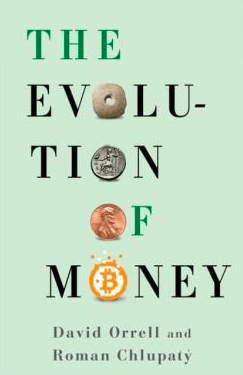
Review of The Evolution of Money
The Evolution of Money is reviewed in News Weekly by Colin Teese, former deputy secretary of the Australian Department of Trade:
“Who would have thought of linking money and quantum physics? Well, Orrell and Chlupaty have done just that in The Evolution of Money, perhaps the best book on money I have ever read …
The authors have set themselves the dauntingly difficult task of explaining money, as it were, from the ground up, cutting the cant that has surrounded the subject for centuries. Blending a happy combination of skills and experience, they have recorded a satisfying and entertaining account of how money has impacted, of course, on economics, but no less on politics and society. But that is not the end of it. They make a persuasive case, at least to this reader’s satisfaction, on how the evolution of money has tracked that of science …
A reasonable and benign dictator might demand that those engaged in activities relating to economic management should, as a condition of employment, be compelled to read The Evolution of Money and pass a written examination based on an understanding of its contents.”
Read the full review at News Weekly.


April 4, 2017
The Money Formula – New Book By Paul Wilmott And David Orrell

OUT NOW!!!
BUY ON AMAZON.COM BUY ON AMAZON.CO.UK
Explore the deadly elegance of finance’s hidden powerhouse
The Money Formula takes you inside the engine room of the global economy to explore the little-understood world of quantitative finance, and show how the future of our economy rests on the backs of this all-but-impenetrable industry. Written not from a post-crisis perspective – but from a preventative point of view – this book traces the development of financial derivatives from bonds to credit default swaps, and shows how mathematical formulas went beyond pricing to expand their use to the point where they dwarfed the real economy. You’ll learn how the deadly allure of their ice-cold beauty has misled generations of economists and investors, and how continued reliance on these formulas can either assist future economic development, or send the global economy into the financial equivalent of a cardiac arrest.
Rather than rehash tales of post-crisis fallout, this book focuses on preventing the next one. By exploring the heart of the shadow economy, you’ll be better prepared to ride the rough waves of finance into the turbulent future.
Delve into one of the world’s least-understood but highest-impact industries
Understand the key principles of quantitative finance and the evolution of the field
Learn what quantitative finance has become, and how it affects us all
Discover how the industry’s next steps dictate the economy’s future
How do you create a quadrillion dollars out of nothing, blow it away and leave a hole so large that even years of “quantitative easing” can’t fill it – and then go back to doing the same thing? Even amidst global recovery, the financial system still has the potential to seize up at any moment. The Money Formula explores the how and why of financial disaster, what must happen to prevent the next one.
PRAISE FOR THE MONEY FORMULA
“This book has humor, attitude, clarity, science and common sense; it pulls no punches and takes no prisoners.”
Nassim Nicholas Taleb, Scholar and former trader
“There are lots of people who′d prefer you didn′t read this book: financial advisors, pension fund managers, regulators and more than a few politicians. That′s because it makes plain their complicity in a trillion dollar scam that nearly destroyed the global financial system. Insiders Wilmott and Orrell explain how it was done, how to stop it happening again and why those with the power to act are so reluctant to wield it.”
Robert Matthews, Author of Chancing It: The Laws of Chance and How They Can Work for You
“Few contemporary developments are more important and more terrifying than the increasing power of the financial system in the global economy. This book makes it clear that this system is operated either by people who don′t know what they are doing or who are so greed–stricken that they don′t care. Risk is at dangerous levels. Can this be fixed? It can and this book full of healthy skepticism and high expertise shows how.”
Bryan Appleyard, Author and Sunday Times writer
“In a financial world that relies more and more on models that fewer and fewer people understand, this is an essential, deeply insightful as well as entertaining read.”
Joris Luyendijk, Author of Swimming with Sharks: My Journey into the World of the Bankers
“A fresh and lively explanation of modern quantitative finance, its perils and what we might do to protect against a repeat of disasters like 2008–09. This insightful, important and original critique of the financial system is also fun to read.”
Edward O. Thorp, Author of A Man for All Markets and New York Times bestseller Beat the Dealer


April 2, 2017
Why Toronto house prices keep going up
Ever wonder why prices in cities such as Toronto keep going up? The reasons given are many – foreign buyers, low interest rates, lack of supply, and so on – but while these are all contributing factors, the real reason is much simpler.
It’s because there is more money.
[image error]
The solid line shows the Teranet 6-city index which goes back to 1999, the dashed line is a broad measure of money supply (M2++).
And why is there more money? It’s because house prices have gone up. Most of the money in our economy is generated by bank loans, usually against real estate – and when prices go up, they can make larger loans.
Thus house prices and money supply increase in tandem. Of course, at some point they can also go down in tandem …


February 7, 2017
Big data versus big theory
The Winter 2017 edition of Foresight magazine includes my commentary on the article Changing the Paradigm for Business Forecasting by Michael Gilliland from SAS. Both are behind a paywall (though a longer version of Michael’s argument can be read on his SAS blog), but here is a brief summary.
According to Gilliland, business forecasting is currently dominated by an “offensive” paradigm, which is “characterized by a focus on models, methods, and organizational processes that seek to extract every last fraction of accuracy from our forecasts. More is thought to be better—more data, bigger computers, more complex models—and more elaborate collaborative processes.”
He argues that our “love affair with complexity” can lead to extra effort and cost, while actually reducing forecast accuracy. And while managers have often been seduced by the idea that “big data was going to solve all our forecasting problems”, research shows that even with complex models, forecast accuracy often fails to beat even a no-change forecasting model. His article therefore advocates a paradigm shift towards “defensive” forecasting, which focuses on simplifying the forecasting process, eliminating bad practices, and adding value.
My comment on this (in about 1200 words) is … I agree. But I would argue that the problem is less big data, or even complexity, than big theory.
Our current modelling paradigm is fundamentally reductionist – the idea is to reduce a system to its parts, figure out the laws that govern their interactions, build a giant simulation of the whole thing, and solve. The resulting models are highly complex, and their flexibility makes them good at fitting past data, but they tend to be unstable (or stable in the wrong way) and are poor at making predictions.
If however we recognise that complex systems have emergent properties that resist a reductionist approach, it makes more sense to build models that only attempt to capture some aspect of the system behaviour, instead of reproducing the whole thing.
As an example, consider the question of predicting heart toxicity for new drug compounds, based on ion channel readings. One technique is to employ teams of researchers to build an incredibly complicated mechanistic model of the heart, consisting of hundreds of differential equations, and use the ion channel inputs as inputs. Or you can use a machine learning model. Or, most complicated, you can combine these in a multi-model approach. However my colleague Hitesh Mistry at Systems Forecasting found that a simple model, which simply adds or subtracts the ion channel readings – the only parameters are +1 and -1 – performs just as well as the multi-model approach using three large-scale models plus a machine learning model (see Complexity v Simplicity, the winner is?).
Now, to obtain the simple model Mistry used some fairly sophisticated data analysis tools. But what counts is not the complexity of the methods, but the complexity of the final model. And in general, complexity-based models are often simpler than their reductionist counterparts.
I therefore strongly agree with Michael Gilliland that a “defensive” approach makes sense. But I think the paradigm shift he describes is part of, or related to, a move away from reductionist models, which we are realising don’t work very well for complex systems. With this new paradigm, models will be simpler, but they can also draw on a range of techniques that have developed for the analysis of complex systems.


October 10, 2016
More quantum money
New discussion paper at Economic Thought is called A Quantum Theory of Money and Value, Part 2: The Uncertainty Principle.
Here is the abstract:
Economic forecasting is famously unreliable. While this problem has traditionally been blamed on theories such as the efficient market hypothesis or even the butterfly effect, an alternative explanation is the role of money – something which is typically downplayed or excluded altogether from economic models. Instead, models tend to treat the economy as a kind of barter system in which money’s only role is as an inert medium of exchange. Prices are assumed to almost perfectly reflect the ‘intrinsic value’ of an asset. This paper argues, however, that money is better seen as an inherently dualistic phenomenon, which merges precise number with the fuzzy concept of value. Prices are not the optimal result of a mechanical, Newtonian process, but are an emergent property of the money system. And just as quantum physics has its uncertainty principle, so the economy is an uncertain process which can only be approximated by mathematical models. Acknowledging the dynamic and paradoxical qualities of money changes our ontological framework for economic modelling, and for making decisions under uncertainty. Applications to areas of risk analysis and economic forecasting are discussed, and it is proposed that a greater appreciation of the fundamental causes of uncertainty will help to make the economy a less uncertain place.
Download the paper here.


October 7, 2016
Notes on the quantum theory of money and value
Following the publication in Economic Thought of my paper “A Quantum Theory of Money and Value” I have received a number of interesting comments and questions from readers, and this post is an attempt to clarify some of the points which came up. For a description of the theory, please see the paper, or The Evolution of Money for a fuller description.
What is a money object?
The theory defines money objects to be objects – either real or virtual – which have a fixed numerical value in currency units. A US dollar bill is worth 1 dollar; a money transfer in bitcoins is worth the specified number of bitcoins. Money objects are unique in that they have a fixed numerical price. Other objects or services attain their price by being traded for money objects in markets.
How is a bitcoin an object?
Just as quantum objects have dual real/virtual properties, so do money objects. Bitcoins don’t seem like objects, until you lose the hard drive they are located on.
Is money an emergent phenomenon?
Money objects are designed to have a set price, for example by the state, or in the case of cybercurrencies by the currency’s inventor. For other kinds of things, their prices emerge as the by-product of money-based markets, which themselves emerge into being as money objects become commonly used. Therefore prices and markets can be viewed as emergent phenomena, but money itself is better seen as a carefully designed technology.
What does money measure?
Nothing. Because prices emerge from the use of money objects, one consequence is that price should not be viewed as an accurate measure of “labor”, “utility”, “economic value”, or any other quantity. Money is a way of attaching numbers to things, which is not the same as measuring them in some way. Of course market forces tend to align prices with some vague idea of value, but the process is far from exact (which is one reason CEOs in the US earn over 300 times the median wage of their employees).
Why quantum?
The comparison with quantum theory comes about because money is treated as a fundamental quantity (from the Latin quantum); and money objects are a way of attaching numbers to the notion of value, which are as different from one another as the dual wave/particle properties of matter. For example, number is stable, while value varies with time. Money objects are therefore fundamentally dualistic.
As mentioned in The Evolution of Money, the term “quantum” has been widely applied in many areas including economics. One example is Charles Eisenstein’s Sacred Economics, where in an appendix called “Quantum Money and the Reserve Question” he notes “the similarity between fractional-reserve money and the superposition of states of a quantum particle,” in the sense that money can seem to exist in more than one place at the same time. The quantum macroeconomics school, also known as the theory of money emissions, which dates to the 1950s, gained its name from the idea that production is an instantaneous event that quantizes time into discrete units. A completely different concept is quantum money, which exploits quantum physics in an encryption technique.
How does this differ from the usual understanding of the role of money?
One consequence of the theory is that it inverts the usual narrative of mainstream economics. Since the time at least of Adam Smith, economists have downplayed the importance of money, seeing it as a kind of neutral chip that emerged as a way of facilitating barter. But instead of money emerging from markets, it is more accurate to say that the use of money (jumpstarted by the state) prompted the emergence of markets. And far from being an inert chip, money is an active, dualistic substance with powerful and contradictory properties.
What is the mathematical map or connection between price and value?
In general there is no such map. Price is an emergent property, which means it need not be computable at all.
What are the implications for economic modelling?
Economic analysis usually assumes that price and value (in the sense of e.g. utility) are one and the same, and then go on to base economic models on ideas such as utility maximization. But according to the theory presented here, prices do not perfectly measure value or anything else. Instead, prices are fundamentally indeterministic. This introduces a profound uncertainty into any kind of economic calculation.


June 28, 2016


June 27, 2016
Evolution of Money featured at CUP
This week (June 27-July 1) the Columbia University Press blog will be featuring content from or about The Evolution of Money, starting with a book giveaway – you can enter the competition for a free copy here.


May 31, 2016
The Evolution of Money
Latest book The Evolution of Money with Roman Chlupatý is published this week by Columbia University Press. Gives the story of money from clay tablets to bitcoins, and describes how it continues to evolve.