Anne Vize's Blog, page 3
March 3, 2015
Reading aloud success for children who struggle
Some children love to read aloud - they embrace the challenge of an audience, and relish the opportunity to show what they know and how far their reading skills have progressed. But for other children, the mere thought of reading aloud creates high levels of stress and anxiety. For these children, reading aloud is something they see as 'to be avoided at all costs', and they will often use a whole range of strategies to share this information with you! So when you see a behaviour such as


Avoiding costly mistakes as a writer
I've been reflecting recently on how the word 'writer' can sometimes become a red flag, attracting businesses who misinterpret 'writer' as meaning 'customer'. In fact, nothing could be further from the truth. If we see the writing and publishing process as a business model which ultimately involves a transaction of money in return for words, then we need to consider carefully exactly what the role of the writer is in that transaction. The writer is the person in the equation who creates the content - they are the content producer. Without the writer, there would be no end product - be it a book, article, blog post or multi media resource. But for some businesses, the model sees the writer as the end customer and the goal is for the transaction of dollars to move from the writer's pocket to that of the business, often calling themselves a publisher. This is the shady area of the industry, where enthusiastic writers may decide to invest surprisingly large quantities of their own money in producing an end product in the hopes that they will be able to sell it. Before you embark on this path, do yourself a favour and cost out carefully things such as the price of obtaining an ISBN, the cost of printing a paperback book in various formats and layouts, the cost of a page designer to do internal and cover design, and the cost of postage / freight. These are the main cost outlays in producing a book, and knowing what these are will help you better understand any offers which come your way to publish your book. For in most instances, it does not make good business sense for the writer to be the customer of their own work.
(author: Anne Vize) is the author of 'Your writing futures - writing for the digital natives generation'Your writing futures - writing for the digital natives generation
(author: Anne Vize) is the author of 'Your writing futures - writing for the digital natives generation'Your writing futures - writing for the digital natives generation
February 8, 2015
Writing well for students who don't read easily
Writing is something educators need to do fairly frequently for young people with additional learning needs. They may need to adapt a piece of text, write a case study, communicate a task or assessment requirement or provide feedback about some work the student has handed in. Writing in a way which is meaningful and useful for the student is clearly an important part of any written exchange between an educator and a student. But how often do we stop to think about just how we convey the message
February 4, 2015
Building a love of nature - with positive outcomes for children with ADHD
Natural play spaces for children with ADHD ADHD is a condition which affects a large number of children and adults around the world. It presents as difficulties with maintaining attention, controlling hyperactivity and impulsivity. Some children experiences quite severe symptoms, others less so. Not all children with ADHD experience difficulties with the stereotypical hyperactive behaviour however. For some children with ADHD, symptoms are more about problems with maintaining attention and
February 1, 2015
Making maths relevant to real life for students with learning differences
For young people who find maths challenging, the prospect of spending hours every week stuck inside a maths classroom can be a daunting prospect. The same teaching approach which seems to work for everyone else, the same activities which don’t really quite make sense, the same feeling of failure which can begin surprisingly early in the year – it can all add up to a learning experience that is negative, demoralizing and destined to fail. For some young people, there is a good argument to turn
January 29, 2015
Anzac Day Activities for Primary School - Strategies for children with Specific Learning Differences
The 2015 teaching year is likely to see many teachers searching for relevant Anzac Day activities for primary school and strategies for teaching about Anzac Day, Gallipoli, World War One and the Centenary of Anzac. These concepts align closely with several outcomes of the Australian Curriculum, and require teachers to provide content and information which supports children in learning about what commemorations mean, how we remember and honour people who have served in war time and how we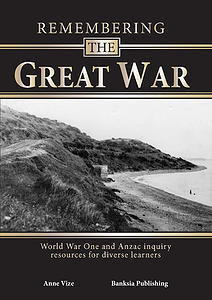
Learning about Anzac Day and World War One with Children with Specific Learning Differences
The 2015 teaching year is likely to bring with it discussions and learning which relate to the Anzac commemorations, Gallipoli and World War One. These concepts align closely with several outcomes of the Australian Curriculum, and require teachers to provide content and information which supports children in learning about what commemorations mean, how we remember and honour people who have served in war time and how we research, think about and share information about Australian history. For
January 14, 2015
Working memory - what teachers need to know
Sometimes kids can come unstuck in subjects like Maths and English for reasons which have more to do with working memory than anything else. Let's take a quick look at working memory, and think about how it might affect young people and their learning. What is working memory? Working memory has been described as being a bit like a little note pad where important information is placed and referred back to during a task. Information is taken in from the environment, processed and stored in the
January 12, 2015
Understanding dyslexia for teachers
Understanding dyslexia Dyslexia is a specific learning disability which can create many and varied difficulties in accurately reading and spelling words. Dyslexia affects around 8-10-% of the population, although research findings vary around the world. Dyslexia is thought to have a genetic basis, as there is a tendency for it to run in families. Where does the word 'dyslexia' come from? The term ‘dyslexia’ comes from the suffix ‘dys’ – meaning ‘difficulty’ or ‘inability’ + ‘lexia’ –
April 1, 2014
Incursions for children with learning differences
For some students, accessing learning experiences at school are restricted by a learning difference such as dyslexia, dyspraxia or ADHD. They might experience difficulty with specific learning tasks such as reading, writing, spelling and numeracy, and may be less able than their peers to use good judgment and decision making when dealing with social situations. Sometimes accessing excursion type activities with this group of students can be problematic, and can cause significant stress for