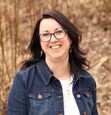
Jen Cudmore's Blog, page 40
June 3, 2013
Understand Birth Order, Understand Your Child
Do you agree that everyone possesses a unique personality? For my part, I always understood I’m a driven person. I like to learn, and to some extent, I like to lead. In childhood, I often bossed around my younger siblings. In high school I excelled in my classes, not only because of the fulfillment if gave me but also because I knew I’d need a good GPA to earn scholarships for college. After my wedding, I read resources on marriage and parenting so I could foster a positive, healthy environment at home. On the job, I work diligently to be present as often as possible, stay within the required schedule, get along with other employees, and be someone others can count on to accomplish a task.
But why do I have this personality? I used to believe it was just the way God made me. But a few years ago I discovered there are certain patterns for personalities, and part of that is based on where you fit in your family. Dr. Kevin Leman, psychologist and best-selling author, states “Birth order powerfully influences who you are, who you marry, the job you choose, and the kind of parent you are.” He explains why your parents and siblings are so influential in who you become.
My intent when reading the Birth Order Book was to better understand myself. However, I found that I learned a great deal about other people in my life: my siblings, parents, friends, and coworkers. This book promises to “help you understand yourself, get along better with others, overcome ingrained tendencies you never though you could get rid of, and be more successful in the workplace.”
I got all that and more! The information has helped me better relate to my children. I understand why my daughter is a “daddy’s girl” and why my son and I tend to clash so much. This is another book I highly recommend for parents!


May 30, 2013
Guest: Evan Swensen – How to get two books out of one idea
Guest post from Evan Swensen, author and former president of the Alaska Writers Guild. His company, Publication Consultants, has established a legacy of providing authors opportunities for expression, preserving histories and stories, and bringing joy to readers and writers; and, doing so in an atmosphere of mutual respect and integrity. If you’ve written a book, if you’re writing a book, if you’re thinking about writing a book, or if you know someone who is writing a book go to <http://www.publicationconsultants.com>.
I Can Get Two Books Out of One Idea?
Of course you can get two books out of one idea. If our young author Heather Johnson can think up a variety of trans-media ways to get her stories out into the world, you yourself can learn how to make two books out of one.
It’s even been done before. For instance, Michael Pollan, who wrote the bestselling Omnivore’s Dilemma, published a young readers edition of his book in 2009.
Let’s take a look at your most recent book—perhaps it’s a memoir of your years as a baker that you have written for adults. There are some photographs. Your readers enjoy this, and it sells well.
So let’s say you strip the text down to the most elemental points of your story, somewhere between 800 and 1000 words. You storyboard and plan out 28-32 illustrated pages. Now you have a children’s picture book that tells a true story, your story, to an entirely new group of readers.
That’s how you get two books out of one idea. And that’s how you can reach out and double your number of readers.
Making two books out of one idea also doubles your possible book readings and events. Everyone enjoys having a real-live author visit schools and classrooms, and read to kids. The more often children are read to, the likelier it is that they will learn to love books, and will end up learning to read. It’s a win-win for everybody.
And don’t worry about doing the illustrations if you’re not an artist. That’s never been a requirement for a children’s book manuscript. On the other hand, one of our authors, Becky Clement, illustrates her children’s books with her great photographs. Another author, Shawn Rogers, created her illustrations by using construction paper on simple watercolor backgrounds.
If your photographic skills and crafts skills aren’t up to the needs of this second book from one of your ideas, I know some good artists and illustrators, so that detail can be worked out.
I look forward to seeing you create a second book from one of your existing books. It will be fun.
May 28, 2013
Review: The Blue Enchantress by MaryLu Tyndal
Title & Author: The Blue Enchantress by MaryLu Tyndall
Short summary:
When Hope Wescott boarded her fiancé’s ship, she had no idea it would lead to her being handed over to the captain and sold as a slave. Fortunately, Nathaniel Mason was there to save her and escort her home. Along the way, they suffer a series of misfortunes and after being stranded on an island for weeks, their rescue comes in the form of a ship full of pirates. While Nathaniel struggles with his attraction to Hope, she just wants to feel loved, but he can’t give his heart to an excessive flirt. Keeping her safe turns out to be much harder than he anticipated and he’s not so sure she’s worth the trouble.
What I liked about the story:
So many girls can relate to Hope’s feelings of worthlessness. Shaped by several unfortunate events in her past, she’s grown more hungry for affection through the years and doesn’t realize she’s seeking affirmation the wrong way. MaryLu does a masterful job of showing the inner struggle with Hope’s desire to be a good girl and her desire for the approval of men. I was also impressed with how she expressed Nathaniel’s struggles with trying to be a godly man in the midst of all the trials they endure in the story. The characters and their relationship struggles were very realistic and applicable for women today. I hope this story encourages women who feel insignificant to look to God for their worth.
What I liked about the writing:
MaryLu always does a fantastic job of taking the reader on a “swashbuckling” adventure. Her stories are always packed with action and intense romantic scenes. She understands well how to draw the reader into the story and entice emotional involvement in the plot and characters. Although her characters always make mistakes, their faith in God is evident throughout the book and yet she’s not afraid to address tough issues. MaryLu is at the top of my favorite authors list!
May 27, 2013
Historical Research for The Lawmen Series
Research for The Lawmen of Clayton County:
When I first started writing this series, I knew it had to be set in the Pacific Northwest. As I wrote each scene, I could picture the area in my mind based off childhood memories of growing up in Klickitat County. But while I remember much of the terrain, I didn’t know much of the history.
As any historical fiction writer knows, the facts must be correct or the story will lose credibility. Convinced research wouldn’t be much fun, I braced myself for a boring venture.
I started off with a general internet search and discovered HistoryLink.org, an amazing website with an outline of Washington State History. I used this site as my starting point. From there I looked through other websites with more detail about people and places. I don’t recall all the sites I visited but it must’ve been dozens, from the Oregon Trail to the Long Beach Peninsula.
The internet is a wonderful tool but I still love the old-fashioned style of holding a book! I read through several books to get a feel for the old west and the expansion of settlers along the Columbia River. Later, as I delved into research on logging and Native Americans, I discovered many more interesting books. Two resources I found especially helpful were The American West by Dee Brown and Columbia River Gorge: Natural Treasure on the Old Oregon Trail by Cher Dohnal.
I was surprised to find I actually enjoyed myself! Now I don’t dread doing research. While I always feel the itch to get started on my story, I know I can’t proceed until I have my facts straight. And it’s more fun to write when you know what to say and don’t have to go look up a particular fact!
May 24, 2013
How To Really Love Your Child
It’s been ten years since I first found this treasure and over that time I’ve loaned it out to several people. Right now I’m not sure who even has it and I’m thinking of purchasing another copy. It was the first parenting book I ever read and probably the most influential. I was simply astounded at the advice Dr. Ross Campbell gives! Similar to the concepts presented in the Five Love Languages, the truths in this book helped me set a foundation as a mom.
Just because parents love their children doesn’t mean the child actually feels loved.
So many parents today feed and clothe their children and then send them off to play video games or roam the streets with their friends. Dr. Campbell explains the importance of human interaction with babies and cited studies that proved children needed a loving adult to thrive. He explains different temperaments and how affirmation, physical touch, and focused attention are essential for every child. He also shares insight on how to tell when a child’s “love tank” is running low.
I quickly became determined that my children would never doubt my affection for them. For me the most influential concept in the book was the value of eye contact. I realized how quick I was to look my children in the eye when I was upset with them so I could drive home the point of my displeasure. But all too often I neglected to look them in the eye when I told them how much I loved them. Now whenever I compliment or thank them, I make sure they are looking right at me.
Does your child know you genuinely and unconditionally love them?
May 23, 2013
5 Tips for Submitting Professional Correspondence
Credibility is often determined by how well a person corresponds with others. I first learned this truth in college. When I worked as an assistant to the psychology department, one professor frequently brought me items to ‘critique’ before he sent them. He knew his grammar skills were weak and wanted a second opinion before he submitted anything with his name on it.
For nearly ten years I’ve worked in the back office of a medical clinic. In that time I’ve seen some very well written letters, emails and policies. I’ve also seen some not-so-good ones. By the way people write, they set the level of professionalism, and thus earn an element of trust over how effectively they can do their job.
For example, I was amazed at the difference in emails I received from two ladies at the state medical board. One wrote in complete sentences and I never saw a typo. The other had either a spelling or grammar error in every sentence. I chose to deal with the first person on all future questions. I felt certain her professionalism would most likely transfer into every other aspect of her job.
If you want people to take you seriously as a novelist, follow these tips every time you send any type of correspondence:
1. Know the rules of grammar and spelling. Find a good grammar guide and familiarize yourself with the concepts. I recommend Write and Wrong by Marthy Johnson, a wonderful lady I met at a local conference.
2. Open with a proper greeting. Saying “hey” or “what’s up” is too friendly business. Use the person’s name whenever possible.
3. Close with a polite salutation and your full contact information. I often see professionals closing with “Thanks,” or “Regards,”. I personally use “Blessings,” at the end of my emails. The recipient also needs to know your full name and your business title, if you have one, as well as your phone and social media connections.
4. Proofread before sending. Typos happen to all of us, so review everything, and better yet, get a second opinion. When I first developed my website, I asked my sister to review each section to make sure there were no typos. Sure enough – she found a duplicate word!
5. Take a break. Walk away and find something else to do for a few minutes. Every time I sent a query I got tense and anxious because I wanted to make it perfect. In order to relax I often stepped away and took a few deep breaths, or even slept on it. I found when I returned I could focus easier.
Bottom line: Be careful what you submit – you want to give off a positive and professional impression.
May 21, 2013
Review by Kayla: Flirting with Disaster
Title & Author: Flirting with Disaster (London Confidential, book 4) by Sandra Byrd
Short Summary: Fifteen year old Savannah Smith is an advice columnist for her school. She helps a shop that helps single moms. She gets baptized at her new church and then tested. She likes a boy named Tommy. Savannah likes to be called Savvy.
What I liked about the story: Just when things start to fall into place, disaster strikes. You never expect what happens next.
What I liked about the writing: The book takes place in London, England, so Savvy uses British phrases. There are lots of details to describe things.
Submitted by: Kayla, age 10
From the official website: http://www.sandrabyrd.com/teens-london-confidential.php
Where British fashion, friendships, and guys collide, and where an all-American girl learns to love life and live out her faith.
In a shocking turn of events, all writers for the Wexburg Academy Times will cast their votes for next year’s editor – and it looks like Savvy’s vote will be the tie breaker! She must choose between a nasty-girl-turned-nice, with a sudden interest in letting Savvy get what she wants, and the prickly Hazelle, who promises nothing at all. Savvy then finds herself wrapped up in a new, seemingly innocent but potentially dangerous activity. It’s all at risk in this book: her position on the paper, the boy she likes, the ministry she wants to go well. At a critical moment, Savvy must figure out how to rely on God rather than luck and to overcome temptation before it is too late.
Review by Nate: Curse of the Spider King
Title & Author: The Curse of the Spider King (the Berinfell Prophecies, book 1) by Wayne Thomas Batson & Christopher Hopper
Short Summary: Seven lords go missing. Seven kids appear on the adoption lists. After 13 years, the missing lords are ready to return to Berinfell, save their people from oppression and reclaim their lost home. Meanwhile, the Spider King’s assassins prepare to go after the lords. When they’re ambushed before entering their world, one is injured and almost killed. How long with the lords survive? Can they save their people?
What I liked about the story: The plot weaves and quickly changes direction to keep you on your toes.
What I liked about the writing: The author must have a map of each room. It’s described in so much detail, it’s near impossible to not see the world the way he sees it.
Submitted by: Nate, 12 years old
Taken the official website: http://www.heedtheprophecies.com/ About the books: The Seven succeeding Elven Lords of Allyra were dead, lost in the Siege of Berinfell as babes. At least that’s what everyone thought until tremors from a distant world known as Earth, revealed strange signs that Elven blood lived among its peoples. With a glimmer of hope in their hearts, sentinels are sent to see if the signs are true. But theirs is not a lone errand. The ruling warlord of Allyra, the Spider King, has sent his own scouts to hunt down the Seven and finish the job they failed to complete many ages ago.
Now 13-year-olds on the brink of the Age of Reckoning when their Elven gifts will be manifest, discover the unthinkable truth that their adoptive families are not their only kin. With mysterious Sentinels revealing breathtaking secrets of the past, and dark strangers haunting their every move, will the young Elf Lords find the way back to the home of their birth? Worlds and races collide as the forces of good and evil battle. Will anyone escape the Curse of the Spider King?
May 20, 2013
In the Beginning: Where Does the Journey Start?
Are all authors born with a passion to write? In my case, no. While I was one of those weird kids who liked writing book reports and term papers, I never considered writing a book. All through school my plan was to earn a degree in either music or counseling. But once I married and started a family, my husband and I decided to put career plans on hold so I could focus on raising our children.
I wish I had started at a younger age, but that’s not my story. The beginning for me was 2006. Since I’d done very little reading for pleasure while my children were toddlers, I spent one summer catching up on all the novels stacked on my bookshelf. That was so much fun! But what I didn’t expect is that all that reading would activate my imagination. After jotting down a scene in a notebook, I stashed the pages under a pile of mail and forgot about them. I’m not sure what would’ve happened if my husband hadn’t discovered my notes and encouraged me to type them into our computer.
From there my first novel was born, a story about a young lady who, after the death of her mother, must discover her place in this world. I haven’t looked at that manuscript in a couple years. Most professionals will tell you that an author’s first book is rarely published. I don’t know if that will be the case with me, but I certainly learned a lot while working on it.
Each author has a unique journey. No matter where that journey begins, the most important thing is to just keep learning and writing.
May 16, 2013
Crafting Climactic Conversation
One of my favorite things about being an author is writing dialogue, and it’s one of the first areas I attempted to master. So much of the story hinges on what characters say, how they say it, and who they say it to. Feelings are shared or hidden. Truth is revealed or repressed. Tension mounts and recedes.
The first writing class I ever attended was a session on dialogue taught by Renni Brown. I was captivated as she explained mistakes like detailing how the character spoke when the words themselves were enough to convey the feeling. She talked about the overuse of attributions other than the word ‘said’, and reminded us that sometimes attributions aren’t needed at all. Adverbs (cut the ‘ly‘ words!) aren’t needed nearly as often as they’re used and beats (what on earth was a beat?) should be varied in length and style. And most important of all, the conversation must further the plot; there must be a purpose for the dialogue.
That day I discovered there was much more to characters’ conversations than just saying a few words back and forth. I was so enthralled with her session that I immediately bought her book Self-editing for Fiction Writers. I’ve never heard anyone explain the ins and outs of dialogue better.
Crafting climactic conversation is tricky business but essential for good story-telling. What resources have helped you to write better dialogue?