Michael J. Bowler's Blog, page 2
July 13, 2017
Middle Grade Fiction: Increasingly Inappropriate?
[image error]
Is this scene at all inappropriate? An eleven-year-old boy and an eleven-year-old girl feel awkward after the girl compliments the boy, and they don’t know what to say as they look at each other with uncertainty. The boy’s eleven-year-old friend says, “Get a room.” As everyone knows, “Get a room” is a euphemism for “go make out or have sex” in private.
This exchange occurs in a very popular middle grade book I bought for my then-ten-year-old Little Brother mentee. As any responsible parent or mentor should, I read the book first. When I got to that line, I threw it into the trash, something I never do with books.
This book has rave reviews from parents on Amazon. If those parents actually read the book and think eleven-year-olds having sex or even hinting at such behavior or joking about it is cute, there’s something wrong with those parents. Sadly, pushing the envelope in middle grade fiction is happening, just as it did long ago when teen lit was christened “Young Adult” (even though young adulthood, according to psychologists, and the law, ranges from age eighteen to twenty-five.) Thirteen years olds are young adults? According to the book industry they are. In reality, they are far from young adulthood. These are middle school kids, still adolescents, still children. Not young adults. Not even close. Even at eighteen, legal adults are still teens. But pushing kids to leapfrog over necessary developmental stages seems to be the current intent of all media, including books.
On Amazon, a middle grade book featuring twelve or thirteen year olds is listed as suitable for eight-year-olds. Why? To make more money for the publisher and Amazon. Anyone who’s ever raised children or taught them knows that a twelve-year-old is way ahead of an eight-year-old on the developmental scale, and no conscientious parents would allow their eight-year-old to pal around with twelve or thirteen-year-olds. So why is it suitable for eight year olds to read books aimed at twelve and thirteen-year-olds? It isn’t.
The excuse has been that children are demanding books about kids older than themselves. Not true. Children are curious about everything. If you put age-inappropriate material in front of them, they will watch it or read it, and then their brains will have been rewired so that they want more inappropriate stuff. That’s how our brains work, and it’s the essence of addiction. It’s bad enough that Hollywood seems bound and determined to rob children of their innocence, but the book industry used to take its job more seriously. Way too many TV shows aimed at children depict ten, eleven, twelve-year-olds on the prowl for a boyfriend or girlfriend, and the on-screen kids lament that they’re not in a relationship. Children haven’t changed. What they’re exposed to has. Especially social media. No child under high school age should have a smartphone, but millions do.
I often see what middle school kids post on social media, and it’s not good. A ten-year-old once told me he wanted a girlfriend. I asked why, and he didn’t know. But I know. That boy already has a smartphone and is on social media, where the message is loud and clear – if you’re not in a relationship, you’re a worthless failure and have no value in your own right, no matter your age.
I know twelve-year-olds with babies. This is a bad situation, for them and the babies they produce. Encouraging children and teens to have sex—even in wink, wink, nudge, nudge ways—is beyond disturbing, and I can’t understand this agenda to adultify children at younger and younger ages. It makes no sense. How often do you see boys and girls as young as eight or nine referred to as young men or young women in the news or on social media? Attune yourself to that notion and you’ll see it everywhere. Labelling children “young adults” defies all common sense and rationality. And it damages the children more than anyone else.
Check out the image I used to lead off this post. It’s a real ad for a child’s Peter Pan costume that purports to make your little boy look “sexy.” Clothes for little girls are already disturbing enough, but now little boys are being advertised as “sexy?” That’s sickening! If you tell children they are young adults, and allow them to access age-inappropriate media that calls them young adults, they are going to think they can engage in adult activities, like sex or drinking alcohol, to name two. And they will most certainly post inappropriate photos on social media so they can look “sexy” like the young Peter Pan above, except they are more likely to be wearing less clothing. Is there anyone out there who thinks this is a healthy trend?
An acclaimed middle grade book is called Wonder. In most ways, this is a terrific book with positive messages about acceptance. However, in this story, ten-year-olds are depicted as partying like teens, pairing up in boy-girl romantic relationships, and dating. And the worst part? These behaviors are presented as normative. Only one parent in the entire book tells her son he’s too young to date. At ten, he’s too young to date? Ya think? Of course, he is!
The fact that editors and publishers allow such messages to be sent to children brings me back to the agenda question. What is the agenda, and who stands to gain by it? I know who stands to lose – the children. They are sent so many mixed messages by media and society these days, it’s no wonder the number of adolescent mental health cases in America has skyrocketed in recent years. https://www.sovteens.com/mental-health/mental-illness-increasing-among-adolescents/
As authors, I believe it is our responsibility to present developmentally appropriate stories for children and teens. Books should be a more conscientious form of entertainment than Hollywood and social media, which seek to suck children into the addiction trap. Middle grade fiction should be for eleven, twelve, and thirteen year olds only, since they are middle schoolers, and the publishing industry needs to stop telling Amazon and other sites to list them as suitable for eight-year-olds. In addition, books with thirteen-year-olds can certainly involve skittishness on the part of boys and girls with each other, because that is reality, but nothing more is needed. Just as violence is kept at bay in middle grade fiction, romance/sex should be even more so.
As parents, we have so much to do without having to police the books our kids read like we police the media they pursue. But for the sake of children going through their natural developmental stages, we must be vigilant, and at least skim through any books our preteens want to read. At the very least, check the book out on LitPick.com, an online review site wherein teens and children review books aimed at their age group. They rate the books and provide content warnings, under the supervision of adults – https://litpick.com/. Commonsensemedia.org also has content ratings for children and teen books that are well-articulated, written by both parents and kids – https://www.commonsensemedia.org/. Also, if a book on Amazon is rated for age eight to twelve, it’s important to read the “What’s Inside” preview and the reviews. Check the negative reviews and look for clues to inappropriate content.
Childhood is already too short. If we allow Hollywood, social media, and now books to steal it away, that’s a crime of insurmountable proportions. Unplugging our kids from media, and making sure they have good books with positive, age-appropriate themes and messages, is an essential step toward molding them into healthy teens and decent adults.
The post Middle Grade Fiction: Increasingly Inappropriate? appeared first on Michael J. Bowler.


February 16, 2017
Making Memes is Fun!
I thought I’d devote a post to the fun of meme-making. I LOVE making memes to promote my books or precepts I live by. I use Photoshop to create my memes and feel I’ve gotten better over time at creating images that look reasonably professional. However, I’m not anywhere near a professional and that is obvious, but I have fun making them. Feel free to share any that you like, but please give me the credit. I’ll go in the order of book release dates, even though I might have created some memes after a book came out. You can learn more about all these books here on my website.
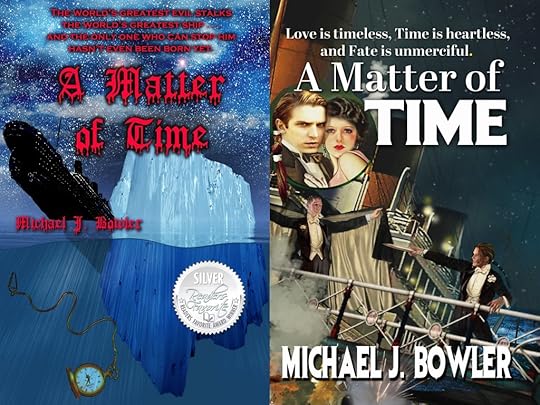
A MATTER OF TIME was my second book that mashed up several genres and time periods. This meme presents my original cover art from 2012 and one by a professional artist named Howard David Johnson created in 2016. The difference is, well, obvious. LOL
The CHILDREN OF THE KNIGHT series, published throughout 2013-2014, is more relevant now than when it came out, dealing with numerous social justice issues facing America today, especially those that impact marginalized children and teens. The target audience is high school youth and adults due to mature language and themes.
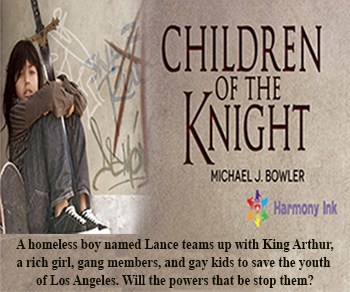
An ad I created for YA Books Central.
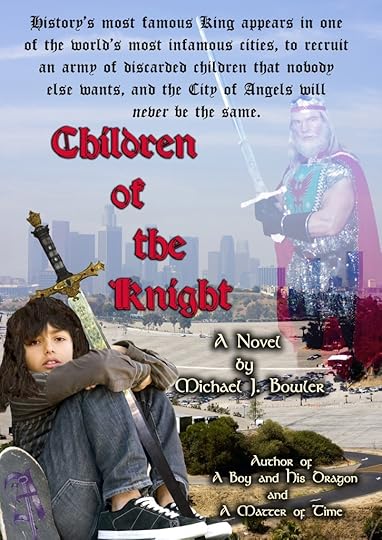 [image error]A poster I used for promotion that incorporates some of the final cover elements.
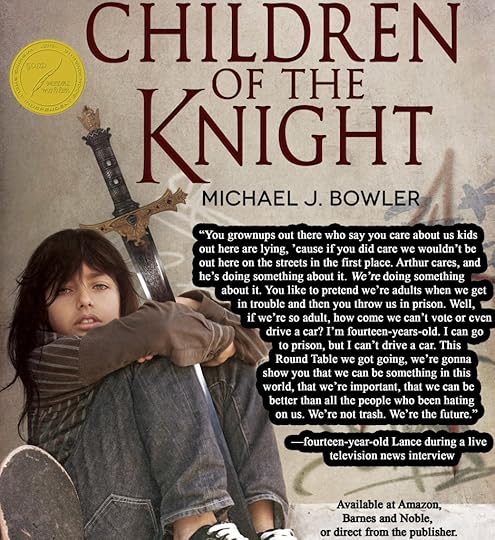
A meme that incorporates one of the primary themes.
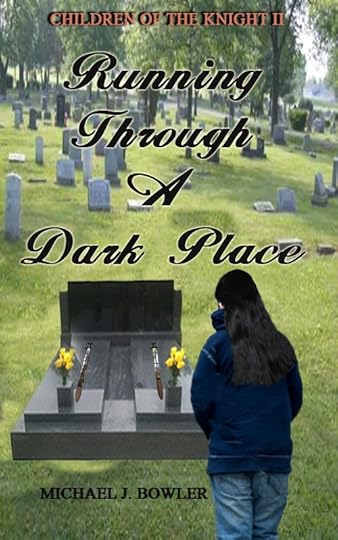
An alternate take on possible cover art that I used to promote the second book. It teases a major revelation from the first chapter.
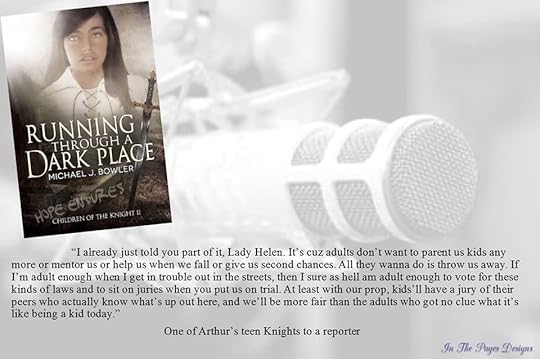
This meme was created by the assistant to a fellow author who was helping me promote this book.

Michael is a teen teetering on the edge of madness who leads Lance down a path toward imminent self-destruction.

This one is pretty self-explanatory, especially for readers of the books. Lance becomes a beloved figure worldwide who is invited to both the White House and Congress.
 Again, this scene explains itself. If you want to learn more about the Children’s Bill of Rights, you’ll have to read the books.

Lance graduates high school. I made this to celebrate the graduation of a boy who loved the Children of the Knight series and admired Lance as a character. I posted this pic on his FB wall along with my congratulations.
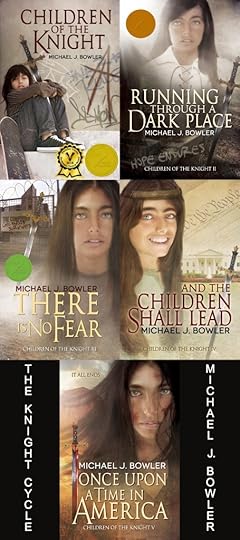
I made this to promote the series. I even have a poster of it just in case I have the opportunity to attend an author event.
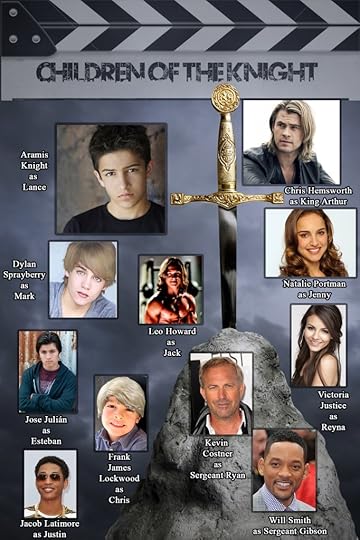
This is a Dream Cast poster I created for a CHILDREN OF THE KNIGHT blog tour in 2013. Obviously, the cast would change if the book were to be filmed now, but I think these actors would have been stellar.
SPINNER is a teen horror thriller that some reviewers have compared to Stephen King’s “It,” which I find very flattering. This book features teen protagonists who have disabilities and modeled on kids I taught for many years in my career as a high school teacher. I went overboard on the memes for this one. LOL Here are some that I used to promote this 2015 release. Enjoy!
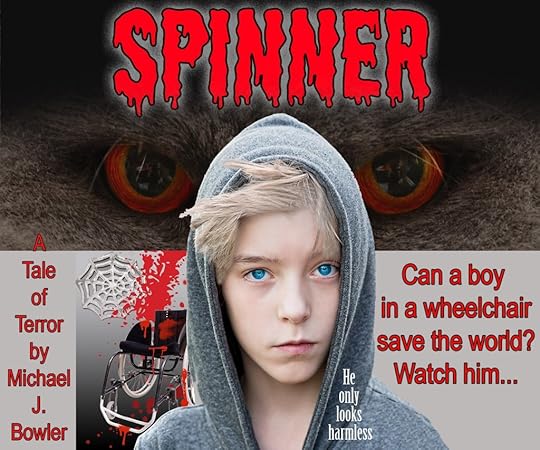
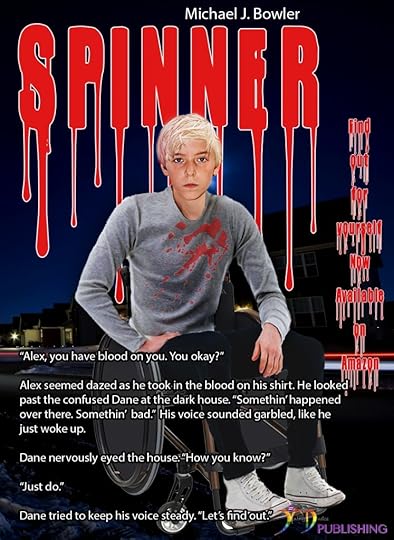
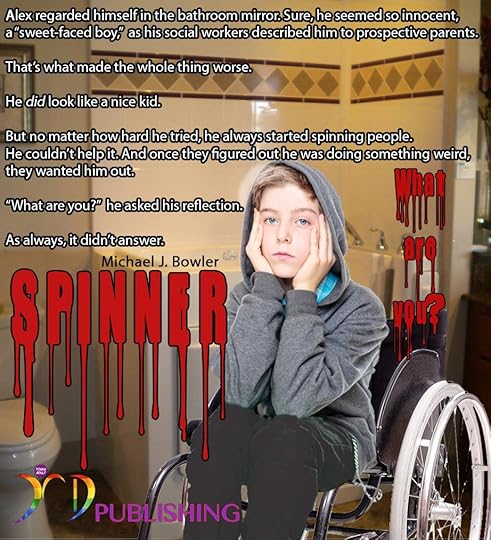
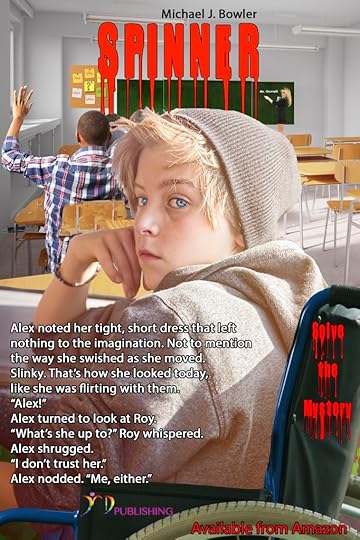
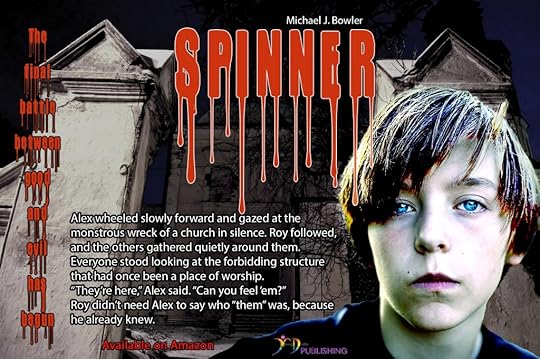
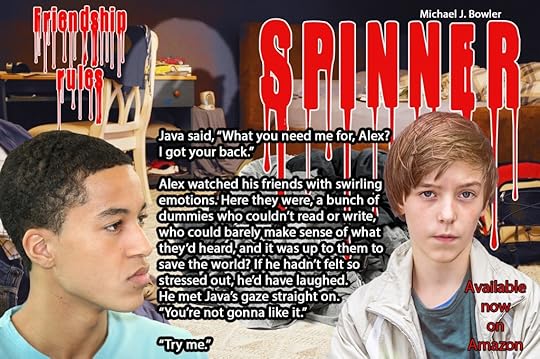
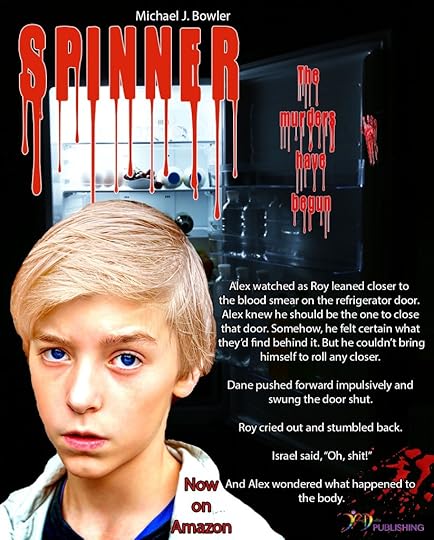
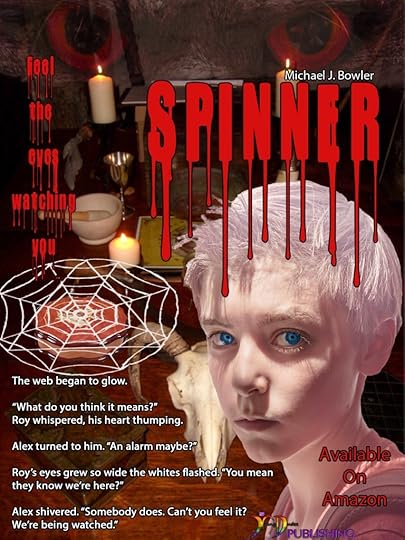
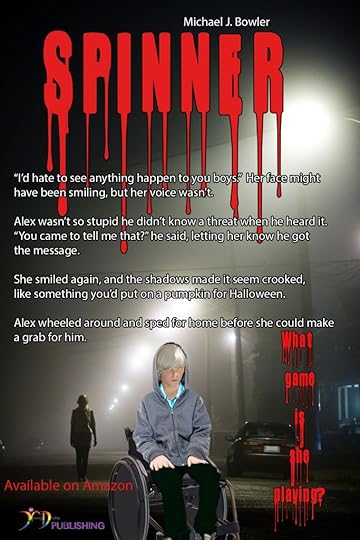
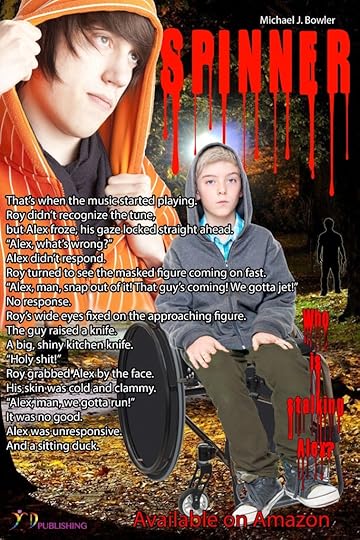

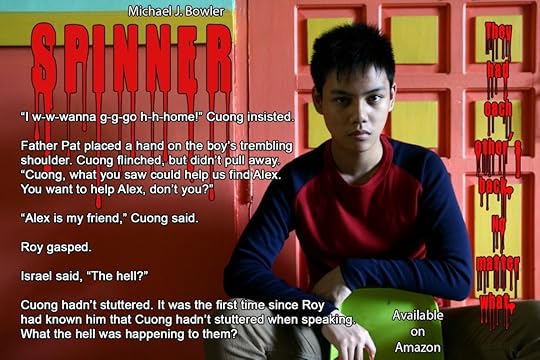
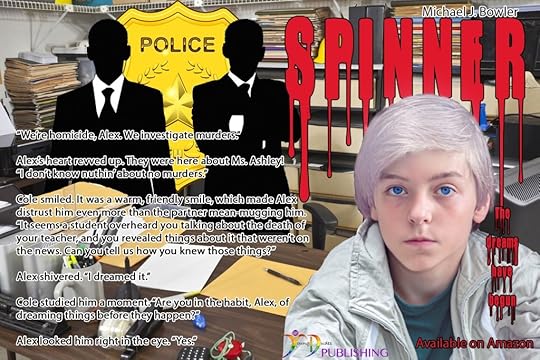
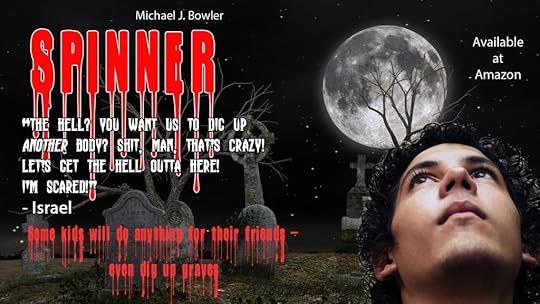
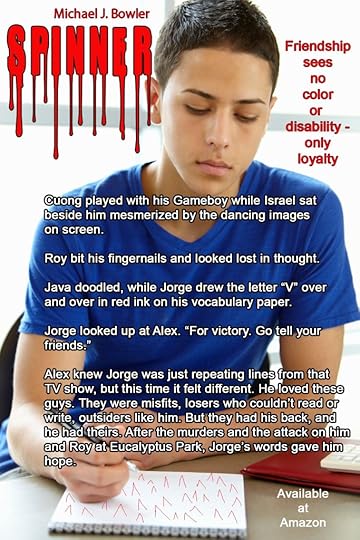
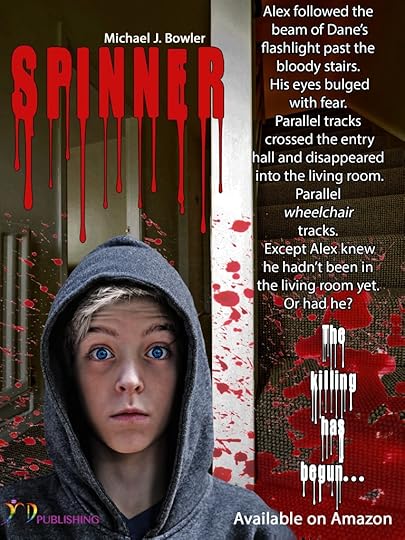
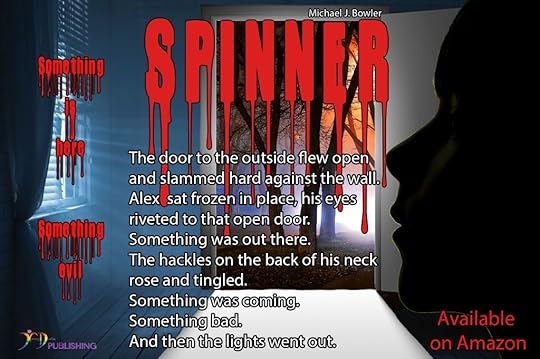
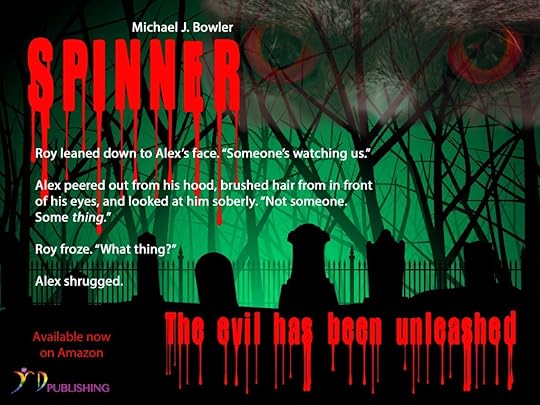
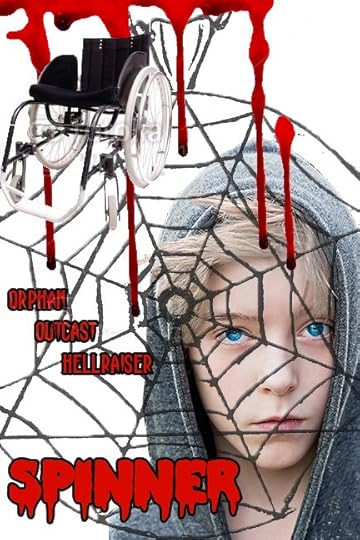
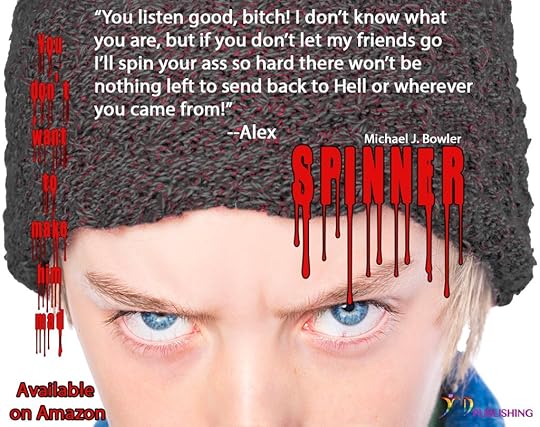
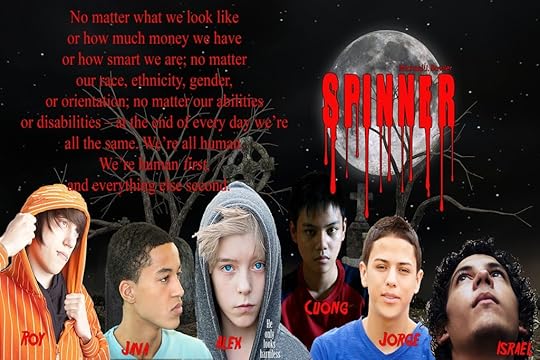
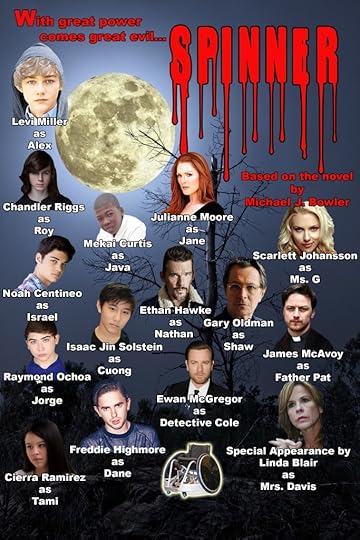 I was asked to create a Spinner Dream Cast presentation for a YA Author Scavenger Hunt last fall. This is the result.
WARRIOR KIDS: A TALE OF NEW CAMELOT is my last published book and is a standalone sequel to the Children of the Knight Series aimed at Middle Grade and High School readers. It deals with the often contentious issue of climate change and can be safely used in school classrooms to teach kids about environmental concerns. There are extension activities at the back and, unlike the other Children of the Knight books, the language isn’t “street.” It does, however, depict how racism, the venal pursuit of fame, and “group think” prevent real progress toward fixing all human dilemmas. Here are the memes I’ve used to promote this book. BTW, for teachers, the book is available for free at https://sharemylesson.com/teaching-re....
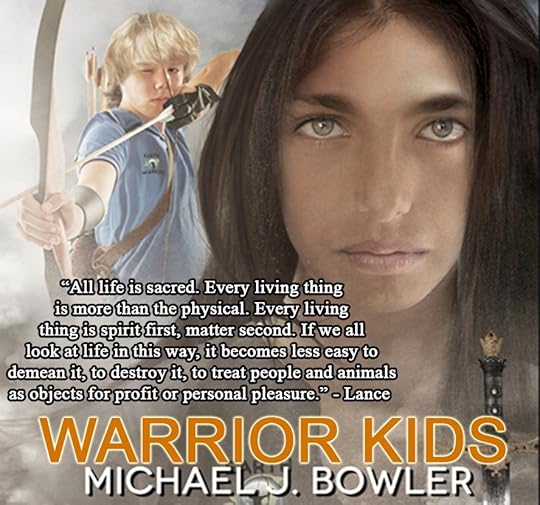

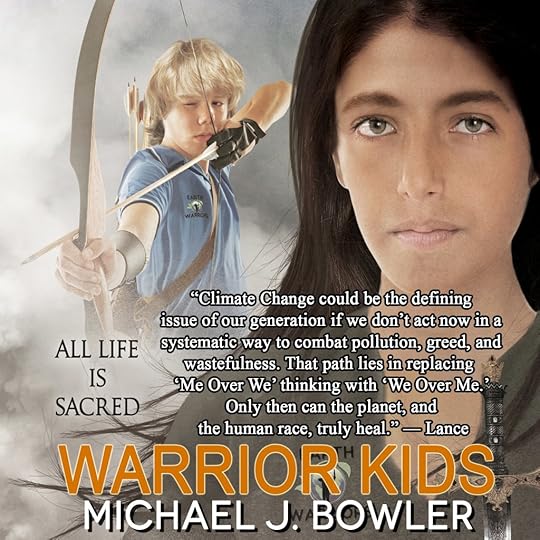


This is the logo I created that the kids in the book wear on their shirts and beanies.
Lastly, here are some random memes I made that deal with important precepts, themes I write about, or what I think is important for people to consider.

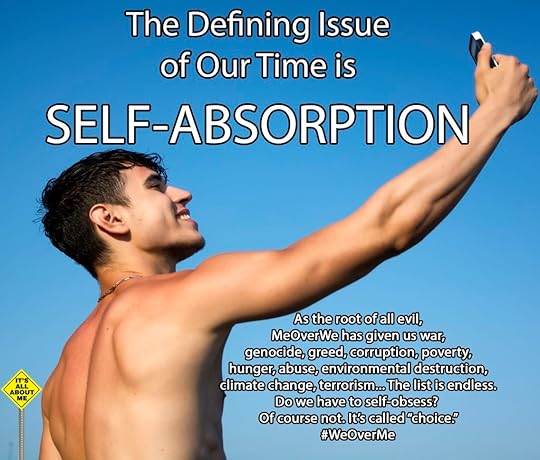
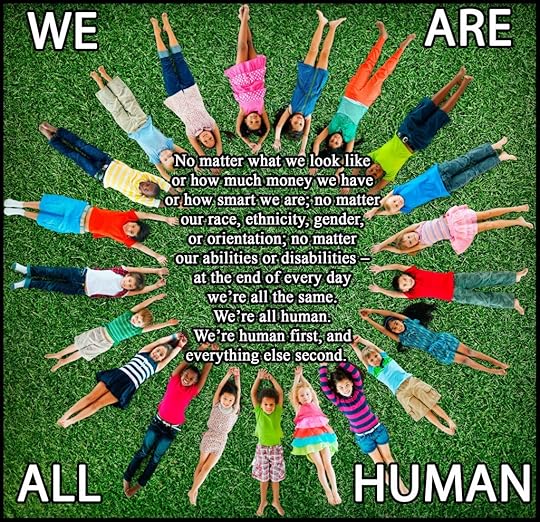
So these are most of the memes I’ve created, but there are some I know I’ve forgotten because I’ve made so many. LOL Feel free to comment on any that you like or don’t like and, as I said before, feel free to share (but please give me credit. Thanks.) I hope you’ve enjoyed these images and the messages they contain as much as I enjoyed creating them. Meme-making rocks! Don’t you want to rush right to your computer and start meming? I do. Onward and upward!
October 10, 2016
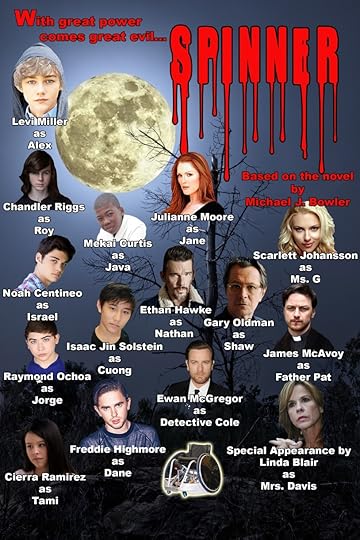
All-Star Dream Cast for SPINNER
As part of the YA Scavenger Hunt, I was asked to create a Dream Cast if my book, Spinner, was made into a film. Since the Hunt is over, I can share this on my own blog along with an “interview” written for the fictional Mark Twain High School newspaper created to support the initial release of the book. The interview introduces the main protagonists and reveals the ignorance special ed kids face on a daily basis. Feel free to comment on either the Dream Cast or the interview, especially if you have read the book or know kids we label “special ed.” Labels belong on food products, not people. I think all of us want to be seen as ourselves with unique qualities and abilities, but this country has an obsession with labels. Spinner is a horror thriller aimed at teens and adults who like a page-turning story featuring protagonists seldom seen as heroic because they have been slapped with a label that narrowly defines them. Check out the book on Amazon or Barnes and Noble and meet some unforgettable characters.
A Revealing Interview
by Karina Martinez for
The Daily Cougar
It is a somber day as I approached the lunch table. This group of SPED students (Special Education) has experienced a tragic loss – their teacher was killed last night, run down by a truck outside her apartment. We’ve never had such a tragedy at Mark Twain High. Ms. Lorna Ashley had been teaching Special Education for four years and her class was always self-contained. That means the students were with her the whole day, for every class. Her current group consists of six male students, all gathered around the most beat-up of the lunch tables not far from their classroom. I have my faithful photographer with me – Jasmine Rodriguez – and we both try to look professional as we stop at their table. These kids have a reputation around campus for being weird and usually nobody ever goes near them. One of the boys is in a wheelchair, but the others look normal. You’d never know they were Special Ed.
I introduce Jasmine and myself. The boys stare at us like we’re from Mars or something. The white haired boy, Alex, the one in the wheelchair, has these amazing blue eyes that almost make me forget what I was there for. I explain that I write for the school paper and we’re doing a story on Ms. Ashley’s death.
“Why?” That comes from the light-skinned black kid named Java. He glowers and looks suspiciously at the camera Jasmine holds.
“Well, we’ve never had anything like this happen before,” I explain, “and it’s big news when a teacher gets killed.”
Israel, dark hair, really handsome, blurts out, “What the hell?”
That catches me off-guard. “Well, I just mean, it’s something the school paper can’t ignore.”
Jorge, tall and thin with unkempt black hair, hands me a piece of paper with no expression on his face. It has a big red “V” scrawled on it. I exchange a nervous glance with Jasmine, who stifles a giggle, and then turn back to Jorge.
“What’s this for?”
“We’ve never had anything like this happen before,” Jorge says in a monotone voice, repeating my words to me. I confess, I’m feeling creeped out.
Roy, the skinny white kid with snakebite piercings in his lower lip brushes hair from in front of his eyes. Those eyes look sad to me. “Ms. Ashley was a great teacher. She was like a mom to us. That’s all you gotta write.”
There’s a Vietnamese kid named Cuong at the table, but he just plays with a Gameboy like we’re not even there. Alex stares at me with those blue eyes and I feel like he’s looking right through me. I shiver. He’s the one our readers most want to hear from because he’s the most disabled kid we have at Mark Twain, being in a wheelchair and all. So I focus on him.
“So, um, Alex, do you have anything to say about Ms. Ashley?”
Alex’s intense look doesn’t let up at all. His white blond hair falls across his forehead and back over his collar. His serious expression doesn’t hide his good looks. If he weren’t crippled he’d be hot enough to date.
“Like Roy said, Ms. Ashley was the best teacher I ever had,” Alex answers, his voice filled with sadness. “She never got mad at us when we couldn’t do something. She just helped us find some other way. She loved us.”
I take notes as he speaks, still feeling those deep blue eyes looking through me. “So, you guys are Special Ed, right?”
“Yeah, so?” Java says. He’s big and buff and wears one of those tight shirts like pro football players. He looks scary.
“Well, our readers don’t know much about being special ed. Are you guys like, retarded?”
I ask it innocently because that’s usually what special ed means, but Java’s face turns stormy.
“We are not f***ing retarded!” Israel shouts. Other kids milling about look over curiously. Now I feel embarrassed.
“Sorry,” I say. “It’s just, well, that’s what normal kids think about special ones.”
“We are normal,” Roy says. “For us. Right, Alex?”
Java looks ready to explode so I turn to Alex.
“Roy’s right,” Alex says, his voice tight with anger. “We don’t read or write good, but we’re the same as you.”
“Except you can’t walk?”
“The hell?” Roy blurts. He stands and towers over me. “Get outta here! You don’t know nothing!”
Alex places one hand on Roy’s arm and that calms him a little. He looks at Alex and Alex shakes his head slightly. Still angry, Roy re-seats himself.
“No, I can’t walk,” Alex replies, those eyes fixed intently on me.
I try to steer this interview into a non-threatening direction. “What’s it like, not to walk?”
“Shut up!” Israel says loudly. He can’t seem to speak in any tone other than loud. He draws more attention to me than I want.
Then Jorge says, “Shut up,” and sounds eerily like Israel. I shiver again.
“It’s okay, Izzy,” Alex says. I think he’s probably been asked that question a lot because he just sighs and looks up at me from his wheelchair. “What’s it like to walk? I never have so I don’t know.”
That answer floors me and I have no response.
“See?” Alex goes on. “Normal is different for everybody. Maybe you could print that and the kids around here might stop talking crap about us and calling me Roller Boy all the time. We’re not losers like everybody says. Roy could fix anything in this school that breaks down. And Java could kick ass on the football team ‘cept people keep calling him a dummy. He’s not. Not of us are. We’re just different.”
I’m trying to write down every word because it’s all so amazing and so unlike what I thought these kids were like. I guess I thought they were dumb because that’s what I always heard. I realize that this is the first time I ever interacted with them. Alex stops talking and I stop writing. The others are staring at me and I feel like I should say something, but don’t know what. Then it hits me.
“Could I try out your wheelchair?”
“The hell?” Israel blurts, even louder.
Alex looks at me with open-mouthed surprise and I realize I didn’t ask the question very well. “I, uh, I just thought I could write a better story about what it’s like to be crippled if I sat in your chair and, you know, wheeled around a little.”
Roy leaps to his feet again. “Get lost. We’re not freaks and Alex ain’t crippled! He can do anything you can and more!”
Jasmine giggles beside me and I nudge her, trying to salvage this interview.
“It’s okay, Roy,” Alex says quietly. “Let her try.”
“Alex! She’s just messing with you.”
“No, I’m not, really,” I answer quickly. “I just want to feel what it would be like to sit all the time.”
Roy’s angry look makes me realize I said the wrong thing again. I’m really wishing Ms. Jacobs hadn’t given me this assignment. Alex touches Roy’s arm again in a calming way and pushes himself up and out of his wheelchair onto the bench so easily I think I gasped. His arms and upper body look pretty buff, but he moved so easily I’m shocked.
“Go ahead,” he says. “Try it out.”
I feel all of them mad-dogging me as I step forward and uncertainly sit in the chair. I try to push forward, but my feet on the ground get in my way.
“Your feet go on the footrest,” Alex says and points to it.
I look down and see where he’s pointing and place my feet there. Then I start wheeling around. It’s fun, I find myself thinking, almost like riding in a Go-Kart. Jasmine snaps some pictures of me in the chair and the SPED kids watching.
“How is it?” Jasmine asks.
Before I can stop myself, I say, “It’s fun.”
I spin around and head back toward her. Other kids standing nearby laugh and point.
“Let me try,” Jasmine says.
I hop out of the chair and she plops into it. Wheeling herself around in circles, she makes like she’s going to run into another kid standing off to the side. The kid lurches back and Jasmine laughs. All the students standing around laugh and point to Alex and his friends. I hear one of them say, “Hey, it’s Roller Girl.”
“This is so cool,” Jasmine gushes, and I catch Alex’s facial expression when she does. He looks like someone punched him. Those blue eyes look so hurt I almost feel like crying. I hurry to Jasmine.
“Give him back the chair.”
Reluctantly, she steps out of it and I wheel the chair back to Alex. He gives me a look that pierces my heart and I realize how hurtful what we just did is to him. He slides himself deftly into the chair and pulls his feet onto the footrest.
Roy steps up to me. He’s really mad. “You had your fun, now get the hell outta here and leave us alone!”
I step back as all of them stand up to mad-dog me. Even the Vietnamese kid stops playing his game to glower. I exchange a nervous glance with Jasmine, who hurriedly snaps a few more pictures.
“I, uh, well, thanks for talking to me,” I say uncertainly. “I’m, well, sorry about your teacher and all.”
Jasmine grabs my arm to pull me away. I can’t help but look into Alex’s blue eyes one last time. He looks so wounded. “I’m sorry, Alex, about the chair thing. See ya around.”
Alex doesn’t answer, so I turn to follow Jasmine away into the crowd. The other kids are still laughing.
Note: This is how I wrote up the article, but Ms. Jacobs decided not to run it. She felt it would embarrass Alex and his friends, and then she spent an entire period teaching us proper ways to ask difficult questions during an interview. I know I blew it, but at least I now understand that the kids we call Special Ed are just as human as I am, and I plan to treat them that way from now on.
http://www.barnesandnoble.com/w/spinner-michael-j-bowler/1122482576?ean=9781511943086
September 24, 2016
2016 Fall YA Scavenger Hunt

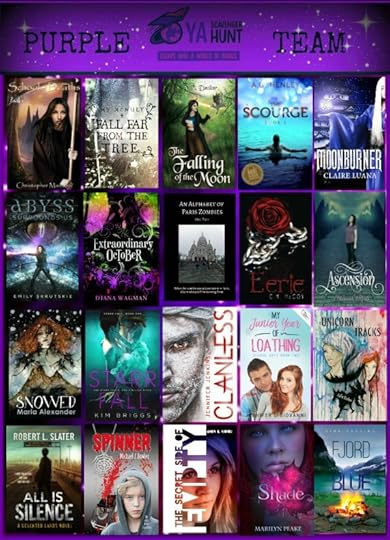
NOTE: This is NOT the official Hunt Post – the Official post about Jennifer Jenkins is dated October 4th.
Michael J. Bowler and SPINNER are part of Team Purple. I’m so excited to be part of my first scavenger hunt. Yay for purple! Hunt runs from October 4-9. Keep reading so you can play the game. Have fun and good hunting!
(Content that follows borrowed from YA Scavenger Hunt website.)
If you have never participated in a YA Scavenger Hunt before than this post is for you.
We are so glad that you have joined us! Hunting is so much fun and I always discover new authors and their books. It’s also fun to get to know each author and have access to exclusive content that each author offers. Oh, and I can’t neglect to mention all the amazing chances at prizes!
HOW DO I PARTICIPATE? WHAT DO I DO? I’M A NEWBIE! HELP!!!
The YA Scavenger Hunt is run twice a year. Once in April and once in October. It runs from Thursday to Sunday. So you have just three full days to participate.
We open author registration 6-8 weeks before each hunt. If you have a favorite YA author, this is the best time to reach out to them through twitter or Facebook or email and encourage them to sign up.
Author registration closes and teams are announced 1-2 weeks before the hunt begins. This gives everyone enough time to get their posts together and we can hopefully work out any kinks beforehand.
On Thursday at noon (pacific time) all authors posts go live and the hunt can begin. Then this is the part where you come in.
Pick a team or a specific author. Start there. Go to their site (we link to each author’s sites here at YA Scavenger Hunt).
Find their YA Scavenger Hunt post. It should be super easy to tell which one it is because it will have our graphic on it.
Read their post which will include an author bio, book info, exclusive content, (not always but in most cases) a giveaway, and a link to another author’s webpage.
Look for a number on the post. This could be big and colored. It could be “you need to know…” It should be pretty easy to figure out which number you need to know. Write this number down.
Click the link at the bottom of the post so you can continue the hunt within that same team.
Repeat steps 2-5 until you have visited all the authors for one team.
Add up the numbers that you collected from all the authors of one team. Visit our ENTER HERE page, find the appropriate Rafflecopter, and submit your entry.
Repeat for every team that you want.
Optionally, watch your TO BE READ list grow and grow.
Need just a bit more help? Here’s a sample scenario. Do not use these numbers for the actual hunt as they are just a sample.
Let’s say Colleen Houck, Tera Lynn Childs, and Beth Revis are all on Team Yellow. I choose to start with Colleen Houck and go to her page. Colleen Houck is hosting Tera Lynn Childs so on Colleen’s page I will find information about Tera Lynn Childs, her book, and her exclusive content. The number I find is 7. The giveaway I will find is hosted by Colleen Houck though so if I enter the giveaway here, I’m entering to win a book from Colleen Houck.
Colleen Houck links to Tera Lynn Childs so I head there next. Tera Lynn Childs is hosting Beth Revis so I get to read about Beth Revis, her book, and her exclusive content. The number I see is 23. If I see a giveaway, this is for something from Tera Lynn Childs.
Tera Lynn Childs links to Beth Revis who is hosting Colleen Houck. I’ll read about Colleen Houck, her book, and her exclusive content with a giveaway by Beth Revis. The number here is 3. The link at the end of the post will go back to Colleen Houck at which point I know I am done with Team Yellow.
I take the three numbers I have collected (7, 23, and 3) and add them together (33). I head to the ENTER HERE page on YA Scavenger Hunt, find the rafflecopter for Team Yellow and enter the number 33 to be entered to win a book from all three authors on that team.
Last tips and hints!
Not all authors are going to host personal giveaways.
If you can’t find where you should be going, you can always visit our STUCK page for help.
If you need help, you can leave a comment on this site, post on the YA Scavenger Hunt Facebook page, or tweet @YAScavengerHunt on twitter.
August 11, 2016
Transmigration of Souls and Oddities About Titanic

As a child, I felt a strong connection to the Titanic disaster from the first moment I read about it, and then proceeded to devour every book published on the subject. I don’t quite know where that “pull” came from, but it was almost as if I’d been there in 1912 on that cold April night, even though such a thing would have been impossible. Or would it? Many people believe that after we die our souls transmigrate into others just being born. If each of us is unique with a distinctive soul all our own, how could this work? Maybe it’s what the Church refers to as Purgatory or Limbo – our souls are housed within other, distinctly unique people, until it’s our time to permanently move on. The distinctly unique person then feels an attachment to a past he or she was not a part of because of the other soul housed within. One character in A Matter of Time—Dan—takes offense at this notion when it’s postulated by the main character, Jamie. “I am not a bus stop,” he asserts indignantly. But what if we are? Could that explain why I, as a child, became obsessed with an event that happened decades before my birth? Or why I always felt an intense affinity for Native American culture? Was I at some time in the past also Native American? It’s a tantalizing concept and one I play with in A Matter of Time.
Some other “oddities” about Titanic and her fateful journey added fuel to my imagination and melded into the fanciful plot that became my story. Fifteen minutes before Titanic took her final plunge into the sea, Captain Smith relieved the two wireless officers of duty, telling them there was nothing more they could do. These men had been frantically calling for help on the Marconi wireless and had missed all but one of the lifeboats. Jack Phillips and Harold Bride exited the wireless cabin, which was located very near the already submerged bow of the ship. At that point, there was only one collapsible lifeboat left, strapped down very close to the rapidly rising seawater, and some crewmen were struggling to float it off into the ocean before it could be pulled under with the sinking ship.
As would be expected, Bride rushed forward to assist, since that final boat would be his only hope for survival. But Phillips did something odd and counterintuitive – he turned and headed aft, towards the sloping stern of Titanic! Why? Why go towards certain death when your salvation lay a few feet away? That anomalous behavior led me to create a reason for his choice, a fantastical reason, to be sure, but a reason that evolved into the basic plot of my book.
There was another little known fact I glommed on to because I was always fascinated by everything supernatural. Titanic was carrying that night, in her cargo hold, the mummy of an Egyptian priestess, from the temple of Amon Ra. This mummy had already gained a reputation for being cursed – several of its owners had died mysteriously and photographs of the wrapped corpse displayed a living woman with glaring eyes. Even the photographer who’d taken those pictures died suddenly. There were so many mishaps and deaths associated with this mummy that the British museum finally sold the cursed object to an American buyer. The buyer packed it up, sarcophagus and all, and shipped it off to New York—aboard Titanic.
Later, after the sinking, some of the more superstitious people of the day attributed the collision and sinking to the mummy’s presence on board the ship, another casualty of the same curse that had killed so many others. In my book, the sarcophagus, not the mummy, does play a major role in how events unspool on April 15th, 1912, and in fact, does contribute to the circumstances which lead to the collision. How? Well, that would be a spoiler, wouldn’t it? Suffice to say that the person using the sarcophagus previously inspired one of the evilest characters in literary history. To say more would ruin the voyage of discovery.
A Matter of Time is available as an eBook, an Audible download read by the super-talented Aaron Landon, and in paperback.
![A MATTER OF TIME [ cover print format] smaller](https://i.gr-assets.com/images/S/compressed.photo.goodreads.com/hostedimages/1476115776i/20803784.jpg)
July 21, 2016
Sports and the Hard of Hearing Child
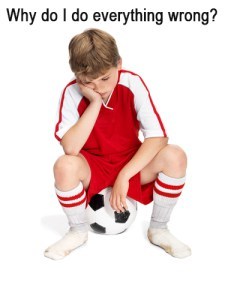
As a child growing up with a significant sensorineural hearing loss and no hearing aids to assist me, I found life confusing and often embarrassing. Most of my humiliations came in the arena of team sports, whether it was little league, peewee basketball, or just a pick-up football games with the neighborhood kids.
I recently attended the Angel City Games in Los Angeles—track and field events for kids and adults with physical challenges. Some of the participants were in wheelchairs, some wore prosthetic legs and some were developmentally delayed. I was heartened to see how far we’ve come in making sports for kids with disabilities both accessible and enriching. I know there are also sports teams specifically for deaf kids, where the coaching is done via sign language, but I got to wondering if there have been accommodations made for hard-of-hearing kids who want to participate in team sports with non-hearing impaired kids, so I did some Internet searching.
Within the public school setting—in theory, anyway—there are assistive devices available. For example, in basketball, a red light can be installed behind each backboard that signals the end of a quarter. Portable loop systems with the coach using a microphone and the kid wearing a hearing device can facilitate communication between the two. These are similar to auditory trainers used in classrooms to augment the hearing of HOH students. The teacher wears a microphone and the child wears the headphone and in this way the teacher’s voice goes straight into the student’s ear. For football, there can even be a hearing aid within a modified helmet so the player can hear the coach more clearly. These are a few of the adaptations that are obtainable, assuming a school district will pay for them.
Having used auditory trainers with students, I saw that most kids don’t like to wear the headphones, especially if they are in a co-taught or a general education classroom because—no surprise here—they don’t want to stand out as “different.” I can attest from experience that kids tend to treat “different” as though it were some kind of disease, which is why kids who are “different” don’t want to call attention to their “differentness.” Sadly, the school system and our society still push conformity and sameness and “one size fits all,” so is it any wonder kids are reluctant to accept differentness in their peers?
Fifteen per cent of children between six and nineteen have a measurable hearing loss in at least one ear—approximately thirteen million kids. They have significant hearing loss, but are not deaf or otherwise “special needs.” Do neighborhood sports programs like the kind I was involved in as a child make any accommodations for these kids to play on their teams with non-disabled peers? That’s the more relevant question, I think, for parents who have a HOH child, because those are the kinds of programs most readily available.
My experiences as a child athlete were miserable. I probably misheard every instruction a coach ever gave me, especially if I was on the basketball court or out in right field for little league. In mishearing the command, I did something counter to what I was told to do and got royally chewed out for messing up. Needless to say, I was not popular on these teams because I always did everything wrong. A sensorineural hearing loss, in particular, makes human speech unclear or even, at times, garbled. In that regard, it’s not unlike an auditory processing deficit where the brain scrambles up words that enter through the ear and causes the child to respond in a way that might seem non sequitur, defiant, or outright stupid. I got the “stupid” tag a lot. And here’s the crazy part—I believed it. I believed I was stupid and inept because I did everything wrong. And I never associated my “ineptness” with my hearing loss because it was “invisible” and hardly ever mentioned by the adults in my life.
I doubt much would’ve been changed to accommodate me even if people were more cognizant of my disability because “one size fits all” was even stronger back then. So I simply came to the conclusion that I was stupid and clumsy and sucked at athletics and I ended up hating sports with a passion. Only in college did I become somewhat athletic. I took up running and weight lifting and swimming—activities I could do by myself or with a friend that didn’t involve a large team or an angry coach demanding to know why I did this or that stupid thing.
This brings me back to sports programs at local parks and YMCA’s and other venues that are not part of the public school system. In my Internet search, I found summer camps for deaf and hearing-impaired children, but could not find local sports programs or little league teams promoting accommodations for HOH kids. It’s possible that they will make such accommodations if a parent asks, but it seems to me such an important aspect of the program should be advertised, especially given the large number of children with hearing loss.
Even if a child has hearing aids, that doesn’t mean they will be effective for an outfielder, a lineman, defensive midfielder, or the power forward in a noisy, echo-filled gym surrounded by screaming fans. Most sports, especially baseball, have numerous hand signals coaches flash to players to bunt or run or hold up on a base. These are perfect for the HOH player. Even more specific gestures can be worked out between the player and the coach (and/or other team members) to ensure proper communication. It really isn’t difficult for a HOH kid to play sports as long as the coaching staff and other players remember that communication doesn’t have to be verbal.
Colored flags could help. For example, a red flag could mean move closer. To an outfielder this would mean move closer to the infield. For an infielder, it would mean move closer to the bag. A blue flag could mean the opposite—move farther into the outfield or away from the bag. Colored flags could work in most sports to mean whatever the coach and player decide they mean. Trust me when I say how much better my failed sporting life might have been if I’d had even this one simple accommodation.
I think parents advocate more for their HOH kids than in my childhood. It wasn’t that my parents intentionally ignored my disability. It was just that the disability was invisible and easy to forget about. As noted above, I forgot about it myself, even as a coach or my mom chewed me out for not doing something right, or for not listening. I was told more than once, “You can hear when you want to.” This was not true. A HOH child only hears what his or her limited hearing allows. Nothing more or less. Even “listening harder” won’t clarify speech if the other person is too far away or there is background noise or the other person isn’t facing the child. Sometimes just the pitch of a person’s voice makes clarity problematic. Like all kids with disabilities, I instinctively compensated—which for me meant reading lips. I did this unconsciously and became so good at it I could almost follow a TV show with the volume off and still understand most of the dialogue. As long as the actor faced the screen, I “heard” him or her.
Hearing loss is a physical disability—it just doesn’t involve visible damage to the body or limbs. Yes, hearing aids are helpful. But they are limited. Parents and coaches and team members can easily make the small accommodations I mentioned, and many others of their own devising, that will guarantee the HOH child has a positive experience. The child will not only feel like an equal member of the team, but might also blossom into an outstanding athlete. I doubt I ever had such innate ability, but my experiences were so demoralizing I never attempted to find out. As events like the Angel City Games prove, we have gotten better at including disabled children in athletic competitions. However, let’s not forget the invisible disabilities like hearing loss or auditory processing. These kids want to play, too.
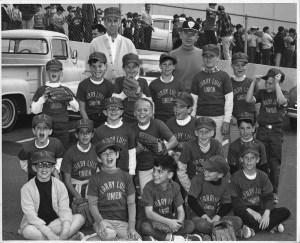 My first year in little league. I’m in the back row on the far right and I look happy at starting this new adventure.
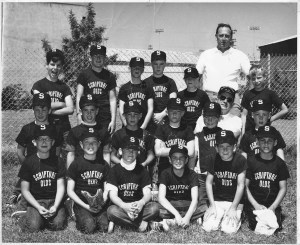 Here I am with my second (and thankfully final) little league team. I’m in the back row, fourth from the left, much bigger, but with the same hearing loss that made the first season so abysmal. As you can plainly see, I look like I want to be anywhere else but on this team.
July 11, 2016
The Path To Hope
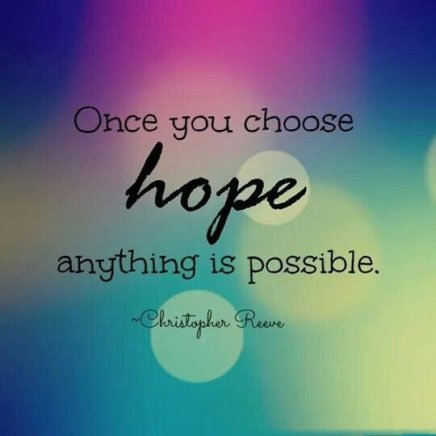
Hope. It comes in many forms and from many sources. It is the cornerstone of a positive, productive life. It is an essential ingredient for all of us, especially kids. Adults must model it. Adults must share it. Adults must embrace it if kids are ever going to. Sadly, our media, for the most part, disdains hope. There are serious problems in our communities, our cities, our country, and our world, but the media is like a flock of vultures feeding off the carrion of human self-absorption, greed, and aggression. It purposely deprives viewers and readers of the most essential ingredient to life—hope. Humans have serious issues that need solutions, but if the populace is constantly fed the message that the sky is falling, that everyone and everything is corrupt, that there is no hope of redemption for the human species, then life might as well be over on this planet because there’s little reason to keep on living. Too many groups make too much money and acquire too much fame with doom and gloom scenarios, from the climate change movement to people in academia to our justice system and, obviously, within the political arena.
There are two things people can do to keep hope alive in their hearts—tune out the media except in small doses, and spend as much time as possible volunteering.
I had the pleasure of helping as a volunteer this past weekend at the Angel City Games held on the UCLA campus in Los Angeles. This event was four days of clinics and coaching and then actual track and field events for people with physical disabilities, mostly children and teens. It was a truly heartening experience to see so many kids un-stacking the deck that life tried unsuccessfully to stack against them and turning their disabilities into very impressive abilities. I saw toddlers throwing the javelin and discus and putting the shot. But the high jump and some of the track events were the highlight of my volunteer time. One seven-year-old named Antonio competed in the 100m, the 400m, and the 1500m in a regular street wheelchair (there were racing chairs available, but he didn’t use one). We clapped and cheered as he finished every race he entered. He came in last, of course. He had short arms and the wrong chair. But he pushed and huffed and puffed his way across that finish line every time. There was no way he was going to quit. It just wasn’t in him. I felt honored to shake Antonio’s hand. That’s a boy who will never allow life to beat him down in any way. There’s no “sky is falling” in him, only hope and the will to succeed. The same can be said of all the child and teen athletes. Badass to the bone!
When I mentioned to a friend that I was volunteering at this event, the first question was, “Do you have someone disabled in your family?” I told him no, though I do have a disability of my own that made participation in sports as a child nearly impossible. But that will be the subject of my next post. Admittedly, most people tend to become involved in “causes” and volunteerism based on someone in their family or circle of friends who draws them in. Thus, there is a vested interest, as it were, to be involved in this or that arena. The Angel City Games were started by the family of a boy who has had a prosthetic leg since he was a toddler and who loves to compete in these kinds of events. They finally decided, rather than travel out of state to have him compete, that they’d start their own annual event, not just for him, but for other disabled children. Awesome. Kudos to this family for starting something that will benefit so many.
But do we always have to have a personal stake to get involved and make some situation better? I argue no. In fact, I strongly advise people to step out of their comfort zones and volunteer in areas they would never encounter in their daily lives. I did this over thirty years ago with incarcerated children, and I’m still there today volunteering my time and meager talents toward helping those desperately needy kids.
Volunteering is a fantastic family activity, too. I saw numerous parents and their kids volunteering at the games over the weekend. People are inherently self-centered, and children will stay that way—they can eventually become egomaniacal selfie kings and queens—unless they are brought out of themselves to see and be part of a larger world. That’s why volunteering at events like this is the perfect family weekend. Kids who may whine about something in their own lives will see other children who have struggled with far worse and rose above that issue or difficulty to triumph and be happy. Watching people work together, and helping those people work together for the betterment of others, is a fundamental key to hope, and it fosters gratitude in both children and adults.
Another aspect of hope the Angel City Games instilled in me was how much “good” technology has created. There’s too much doom and gloom, especially from some the environmental activist crowd, about how technology is destroying the planet (challenge one of those activists, especially a young American, to give up his or her cell phone and Wi-Fi and you’ll likely get the pronouncement that other people are the problem, not him/her). Seeing the incredible prosthetics these athletic children were using at the Games, not to mention the impressive racing chairs, all of which enable them to have full, productive lives, reminded me that technological advances are always more of a help than a hindrance. Despite the activists’ lament, it’s technology that’s the key to reversing the effects of pollution, and technology will allow us to heal the earth, at least as much as humans can ever truly “control” nature, of course. To listen to some in the “activist” crowd, we’re already doomed. If we’re already doomed, why do such organizations keep asking for more and more of our money? I wrote one of my books about the environment and the need for balance on this issue. Not just balance, either, but volunteerism—people voluntarily recycling and using less gas and not throwing away anything useful because it might be outdated, and, number one, sharing their time and material goods with others. It’s working together as a community that solves problems, not donating to this group or that or asking the government to fix everything.
Volunteerism is the key. In the Los Angeles area there are myriad volunteer opportunities every weekend and even on weeknights. It’s not hard to find them – a simple Internet search will do that job. And if there is something you feel passionate about—like beach cleanups or tutoring or visiting elderly people or helping the homeless or visiting incarcerated kids or mentoring children in park programs or within church groups—gather some of your friends together and make it happen. If no one is willing to help, do it yourself and you’ll meet other like-minded people who think about the big picture like you do. I met some very cool people over the weekend, as I always do when I volunteer. I learned about their backgrounds and they about mine. Volunteering breaks down barriers between groups of people and that’s something we need far more of in this country.
I call this path to hope and change “We Over Me” because that is how problems are solved – each one of us has to put our ego aside, stop seeking fame, fortune, and self-aggrandizement, and work hands-on with fellow citizens, no matter what they look like or how different they may appear. This is a major theme in my writing because I know that all of us working together—rather than groups pointing the finger at each other—is the only way our species and our planet will ever heal. The primary ingredient in that healing is hope.
So please, turn off the news, spend minutes, rather than hours, on social media, and get out in your community to volunteer anywhere you can. Bring your children and your friends. Bring your heart and your compassion. Bring an open mind. Let yourself be filled with hope for a change, instead of despair. You will never regret your decision. You and your children will be better for giving of yourselves without expecting anything in return. You won’t become famous. You won’t get rich. But you’ll feel rejuvenated, as I did this past weekend. You’ll have hope in your hearts that humanity isn’t doomed, and you’ll have helped in some small way toward a better future, not just for the people you served, but for all of us.
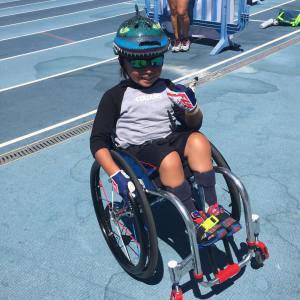 Antonio, seven years old
July 7, 2016
Is Screenwriting or Novel Writing the Better Path to Success?
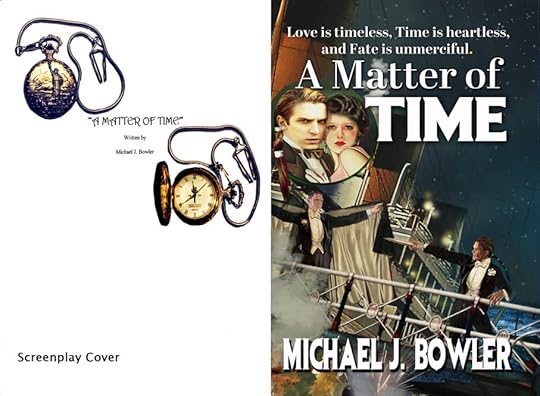
I always knew I wanted to be a writer. I wrote short stories as a kid and read voraciously and loved telling tall tales to anyone who would listen. But I also loved movies and thought screenwriting might be an easier entrée into a writing career. Not so fast, young padawan…
In college I chose to double major in English literature and theater arts. In both arenas I did lots of creative writing. I wrote short stories and plays and directed plays and acted in plays, all of which gave me insights into how to tell stories and write dialogue that actors could actually speak without sounding stilted or twisting their tongues into knots. Any of you actors out there know what I’m talking about.
For graduate school, I enrolled at Loyola Marymount University in Los Angeles to pursue my dream of becoming a scriptwriter. I learned television and film writing formats, as well as all the technical aspects of making a film. I wrote and directed some shorts, wrote television scripts, and submitted a final “thesis” screenplay that I never did anything with except utilize its themes in later stories.
After graduation, I partnered with two fellow film majors to make low budget direct to video horror movies. You can find me on IMDB and all those films aren’t as bad as I remember them (though some are real stinkers. Ha!). In fact, one of my low-budget “gems”—Hell Spa (later retitled Club Dead and sporting a different beginning and ending featuring former Disney child star Tommy Kirk)—is soon to get a new release on DVD and VHS, bigger than it ever got before. Apparently there’s some nostalgia for those old films from the 80’s. LOL The story of how that film is resurfacing is quite fascinating, but since it’s all still unfolding I’ll share it down the line in a new post.
In any case, each of those films was a learning experience. Whether I wrote, directed, produced, acted in, handled sound or some other technical function, each endeavor helped me understand writing a little better. As well-made as most Hollywood films are today, the weakest aspect is usually the script, and that angers me. It’s not difficult to get a screenplay right before going into production. Sometimes aspects of a script change or dialogue shifts due to realities of filming, especially if a film is low budget like mine were. But with the massive budgets these films have today, there’s no excuse for a bad script. Sorry, folks. There isn’t.
Most film schools today provide internship opportunities in the industry for their students, opportunities I didn’t have back in the day when I attended LMU. Having said that, breaking into the business via screenwriting is still probably the most difficult pathway. Everybody and their pit bull have a screenplay idea or an actual script already written. However, getting that script to someone who can actually move it forward is almost like winning the lottery.
I wrote a number of screenplays after grad school and tried numerous creative avenues to get those scripts to agents or producers. I even scaled the walls of the Burbank Studios one time to get a script to some producer, but never found his office. I finally began teaching high school and put writing aside. I continued to enter my scripts in screenplay competitions, but never won any of them. Those competitions are about the only way an un-agented writer can get his or her script in front of people who might be able to move it forward. So if you write a script, that avenue might be your best shot. Francis Ford Coppola, director of the Godfather movies, has a big screenplay contest via Zoetrope Studios, and there are many others, large and small, to choose from. Google “screenplay competitions” and they will all pop up. There is, of course, an entry fee, but the fee rule applies to book award competitions, too. For that fee there is the possibility someone significant will read your work. All it takes is one person and you could be on your way. Alas, I have never found him or her.
I wrote my first book in the early years of teaching and attempted to interest agents and publishers. No dice. Years later, with the advent of self-publishing, I did release that book – a middle grade+ urban fantasy set in Northern California in 1970 entitled A Boy and His Dragon. Of course, with no budget for promotion, the book never went anywhere. But I had a number of screenplays in my file cabinet at home and decided maybe I should turn some of them into novels. After all, I already had the templates, so why not flesh them out? With small press publishers springing up, I thought maybe one of those stories might get noticed. I started with my longest screenplay, A Matter of Time. It was a time travel romance set in 1985 and 1912 and involved the sinking of Titanic. With the 100th anniversary of Titanic’s sinking approaching in 2012, I set about turning that script into a novel. Once complete, I actually found an agent willing to shop it around, but no publisher wanted it. So I self-published in early 2012 to coincide with the anniversary of the sinking and the book went nowhere, just like my first.
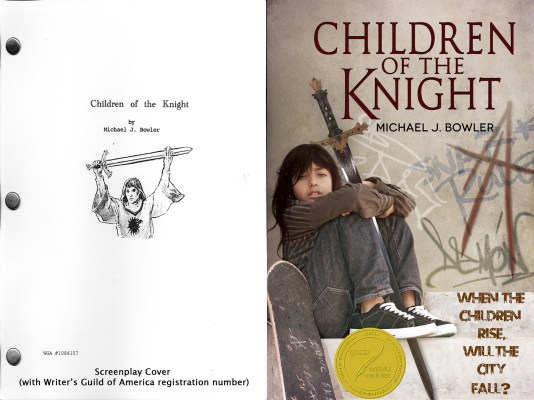
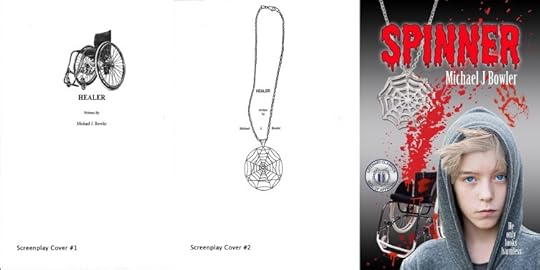
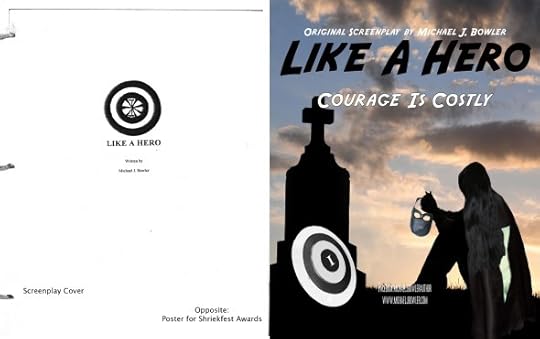
Since then, I converted my scripts Children of the Knight and Healer (which became Spinner) into novels that were published by small press publishers, and I’m currently shopping around the novelization of Like A Hero, a finalist in the Shriekfest Screenplay Competition. Like A Hero was a decent script, but I fleshed it out into what I’ve been told by beta readers is an excellent book. So far not a single agent or indie publisher has agreed with those betas, but it hasn’t been rejected by everyone I sent it to. Yet.
So, how do the two art forms differ? Quite a lot, actually, which is why beloved books seldom feel the same when transferred to the screen.
The one essential element that’s necessary for both formats is “showing,” rather than “telling.” Obviously, film is a visual medium and the screenwriter has no option for “telling” the audience anything unless it’s via voice over narration, a lazy technique that seldom works. No, in a script the writer has to convey with action and dialogue everything important about a character and everything needed for the plot to make sense. Descriptions are kept to a minimum because the director will visualize the story however he or she sees fit. The writer provides a very basic outline of a character, i.e. “he’s fifteen years old, surfer blond hair, vibrant blue eyes, in a wheelchair, dresses emo style.” That’s the description of Alex, my main teen protagonist in the screenplay Healer (which begat the novel Spinner.) Such a description would never wash in a book. In a novel, the reader should get a general picture of a character at first, with further details added in along the way. Long paragraph descriptions of what characters look like constitute “telling,” rather than “showing” a character through setting or action or even dialogue, i.e. another character: “I love your eyes. They look so blue, like the earth from space.” Showing is always better than telling.
Another essential requirement for both mediums is a dynamic opening, specifically the first ten pages. They have to be good. If the reader, or the viewer, isn’t hooked right away you’re likely to lose him or her for good. Agents and publishers are no different than film executives – they want to be drawn into your story immediately and feel excited about continuing. So start off with a bang whenever possible. Spinner begins with Alex dreaming that his favorite teacher is pushed in front of a truck after being mauled by cats. Children of the Knight begins with the police breaking up a large gang brawl in a barrio section of Los Angeles. Like A Hero begins with a hostage standoff at a middle school graduation. You get the idea.
Writing a script requires a screenwriting program like Final Draft or Movie Magic Screenwriter because the parameters are very specific. Scripts not adhering to the proper format won’t even be accepted in competitions. Each scene is established by a scene location and time of day. Character names appear in the middle of the page with dialogue in narrow margins beneath. Action blocks use the full margins and should be detailed enough for a reader to know what’s happening, but not as descriptive as in a book. If some object or person is very important to the story, you can use “CU” for Close Up” or write “Close On” to highlight it. Otherwise, it’s best to avoid too much “directing” in a spec script, i.e. including camera angles and such. Spec scripts are those you were not hired to write, but have written on your own and submitted somewhere in the hopes it will be acquired by a producer. Most screenplays are approximately one hundred twenty pages, with the generally accepted notion that one page equals one minute of screen time. Obviously, this varies. Most competitions will accept scripts up to one hundred thirty pages.
Because of its limitations, screenwriting will feel restrictive to anyone who started out writing novels. However, the format teaches us writers how to think differently, more visually, with a greater degree of cleverness if we want to get our ideas across to a viewing audience. I began as a screenwriter and filmmaker and both of those helped me as a novelist, I think. Reviewers have often commented that when reading my books they feel like they’re watching a film. They can visualize everything in more than enough detail, but don’t feel bogged down by unnecessary descriptive information or too much “telling” of what characters are thinking or feeling. They get to “experience” what the characters do and feel and seem to like that style of writing.
Converting a script into a book allows for more information and greater depth of characterization and character interaction. You can have lengthy conversations between characters in a book (though I try not to do this often) whereas on screen dialogue scenes should be relatively short and always peppered with action or something visual to hold the attention of the audience. Obviously in a book, the author can share the thoughts and inner feelings of a character to give readers more insight. This cannot be done in a film. Much of that is left to the actor to convey, and good actors play subtext masterfully. Case in point – I found the character of Katniss Everdeen rather dull and almost entirely reactive in the Hunger Games books. However, Jennifer Lawrence brought astounding depth to that character and said more with a single facial expression than any author could do in pages of description. So yes, good actors truly bring your characters to life.
As an interesting sidelight, after I turned the screenplay Healer into the novel Spinner and added quite a bit to the storyline, I decided to turn the novel back into a screenplay to enter it into competitions. Even though I’d written the book, and had previously written the script, I found the task challenging, as I’d never adapted a book before. Character scenes that advanced relationships often had to fall by the wayside because the book was long and I couldn’t have a three hundred-page screenplay. Such scenes also slowed down the pacing. The pacing of a script is different than a novel because an audience will be sitting through the film all at once, as opposed to putting down a book and returning to it.
I also had to figure out how to visualize important information, like Alex’s backstory, into a format so the audience would not be bored. Turning key thoughts and feelings of characters into dialogue or action also proved tricky. Spinner is a very visual book with lots of spooky scenes (the kids creeping around a graveyard at night) and action sequences (Alex in his wheelchair hanging onto the back of a speeding pickup truck while the bad guys pursue in a car) that translated well to script format. But the supernatural “connection” Alex had with his friends, as well as his “spinning” ability, were less easy to “show,” rather than “tell.” The novel is four hundred sixty-one pages and the screenplay came out to one hundred sixty-one, so you can see I had to cut a lot, including a couple of subplots that enhanced the novel but were not essential to the script. I entered the screenplay in three competitions. It achieved semi-finalist status in one, and I’ve not heard back from the other two.
So, you want to be a writer, right? Here’s my take on novels versus screenplays: both are very difficult to market to the right people. Books are easier to get published these days, especially since you can self-publish, as I’ve done with most of my books. Did having a small press publisher help with the two books that had one? Not at all. Sadly, they have no greater access to the big journals than I do. And by big journals, I mean School Library Journal, Booklist, Library Journal, Publisher’s Weekly, to name a few. Especially with books aimed at teenagers or kids, without reviews and promotion from those journals, it’s almost impossible for an author to reach the target audience. If a writer pens books for adults, the field is wider and the chances for success are greater.
Promotion is left to the author whether the book is small press or self-published. There are a number of virtual online blog tours that can help raise exposure and interest level for a book (Tribute Books Blog Tours and Sage’s Blog Tours being two excellent choices), but again, these are mainly successful with books aimed at adults. For screenplays, as noted above, there are really just “competitions” that might showcase your script to industry professionals. If you actually know someone in the film industry who would read your script, then by all means write it. But make sure you have others beta read it and help you polish it so the script is the best it can be. You will only get one shot at impressing that person you know.
So there you have my experiences writing screenplays and books and attempting to market both to the appropriate people. I hope I haven’t discouraged anyone out there. Yes, it’s an uphill battle in either arena, and will require a lot of time and effort on your part. But your dream is to be a writer, right? So isn’t your dream worth all that effort? Only you can decide. But one thing I know from reading lots of books and seeing lots of films – we NEED good writers, especially those who think outside the box and don’t imitate the same old formula or try to create the next carbon copy of Hunger Games or Twilight. So please, if you have an original story to tell, tell it. Share it. Someone will appreciate it, even if you don’t become a best-selling author or six-figure screenwriter. Your story will change someone’s life. Even mine have, and I’m an author no one has ever heard of. But that’s another story for some other time. For now, keep writing!
June 30, 2016
If I Were A Literary Agent Seeking Teen Lit
I confess I don’t understand literary agents and don’t aspire to become one. And this is not a rant against them, either. I’d love a sit down with an agent or two so I could pick their brains about how that side of the business works. Since I don’t have that option, I can only speculate on what I would do if I were to become an agent myself.
I read horror, mystery, fantasy, science fiction, and teen lit (erroneously referred to as YA.) Those are the only genres in which I would seek submissions because I feel I know the target demographic for each. And, as I suspect every literary agent does, I would look for quality of writing and strength of storytelling.
I would represent teen lit because I read and write it. Having said that, I don’t always like what’s popular with teens today and might miss a golden opportunity to represent a best seller if I simply judged it by my taste alone. I won’t list titles, but I have read several hit teen books that my niece or nephew recommended that I hated. I found the writing and/or characters un-involving. These books I reference are HUGE, made into hit movies and everything. Had they been submitted to me as an agent, I would’ve turned them down based on my own personal taste. However, for books aimed at teens, if I were an agent I would do what I currently do as an author—I’d give the manuscript or sample chapters to teens to evaluate.
I did this with one of my newest manuscripts, Like A Hero. It’s a contemporary action-adventure tale that deals with some serious social issues. I contacted a website on which only teens, or children, review books aimed at them and their age bracket, and asked for two beta readers to assess my work. For those who don’t know, a beta is a reader who evaluates a manuscript before it’s submitted to publishers or agents. In my case, Like A Hero was assigned to a seventeen-year-old girl and a fourteen-year-old boy. I was shocked that both of them loved it. Prior to submitting it for feedback, I was lukewarm to the story and was thus floored by how much these kids liked it. They provided very thorough evaluations on plot, characterization, and pacing that helped me enormously during the editing process in which I worked with a professional editor.
As I’ve been submitting this manuscript to various agents who seek teen lit, I’ve included a few comments from these two target-audience beta readers. I also provided the link and email address of the site coordinator to access the full evaluations. So far as I know, none of the agents have requested those evaluations, nor have any who responded to my query even commented on the excerpts I provided. Yes, I know they’re busy. That’s not my point. And their replies are always very respectful and very professional. My point is that in their rejection emails, the agents politely state that my writing doesn’t appeal to them, even though they like the storyline. If I were an impolite person, which I’m not, I’d be tempted to remind them that they are not the target audience – their teenage sons and daughters are. Or their nieces and nephews. Or their neighbor’s kids. Or… well, you get the idea.
If I ever have occasion to chat with a literary agent, I will ask her or him how they determine what might be a hit with teens. Do they ever do what I just suggested? Do they have teen beta readers they consult for input on teen lit submissions? Does anyone out there know the answer to that question? Since I’m no longer a teenager (though I spend most of my time around teens and young adults, i.e. college-age youth), it’s difficult for me to know what will appeal to today’s teens unless I ask them. Does this seem like a logical approach or am I way off the mark? Granted, if a manuscript is amateurish and poorly edited, that’s an automatic rejection. But if the writing simply doesn’t appeal to me—the agent who isn’t the target audience—couldn’t I be missing out on something big by rejecting it outright? Trust me, if I told you some of the books I’d have rejected you’d call me crazy. That’s how big these books were in the marketplace. I don’t want to disrespect anyone’s writing, so I’ll keep those titles to myself.
If anyone out there has experience with literary agents who seek teen lit or who may be a literary agent, I’d love some feedback in this area. Thanks for reading.
April 22, 2016
Kids Need Hope More Than Fear
 Wants versus needs. We humans seem to want everything, but actually need very little. Children need love, safety, security, shelter, clothing, and food. They need to be engaged in character-building activities. They need to be taught how to be decent human beings who accept as an axiom that all life is sacred. They need to be taught that life doesn’t revolve around them, that they are part of a larger world – family, neighborhood, community, city, country, planet – and that they are not entitled to have everything they want. Healthy fear is also a need. It helps protect us from making dangerous choices. However, scaring kids is never a good idea. Irrational “the sky is falling,” “we are doomed,” kind of fear is unhealthy and leads to destructive, rather than constructive, behaviors in kids.
Years ago, many states instituted “Scared Straight” programs as a result of a famous documentary wherein wayward teens were taken to a maximum security prison and threatened by the inmates. They were told horrible things would happen to them should they end up in prison. Several of those teens later ended up incarcerated, one for twenty-five to life in the very same prison where the documentary was filmed. The “scared straight” program didn’t work anywhere it was tried in the country and often proved harmful, likely because it created a self-fulfilling prophesy in the minds of kids who’d already been labeled “bad.” Those kids needed hope, but they were given fear. And it didn’t work.
In some cities, teens are taken to the morgue to view the corpses of drunk driving victims in the hope that they will be scared enough to avoid driving drunk or riding with someone who had been drinking. These programs also proved ineffective, as did all the “Red Asphalt” videos shown to kids in driver’s education classes. Across the board, adults think that scaring kids, and sometimes each other, is the best way to generate positive results. But how can a negative lead to a positive? They are opposites, after all. Kids at all stages of their development need hope much more than they need fear. And so do adults.
Which brings me to the environmental movement, the backdrop of my novel, Warrior Kids. Our careless destruction of the environment and its ancillary effects – climate change – are immense areas encompassing all walks of human life. There’s shifting climate patterns, GMOs, poisoned water, fracking, land fills, oil spills, air pollution, CO2 levels – the list goes on and on. Too often, the environmental movement is about doom and gloom – the sky is falling and we need to act now by donating money to this group or that one. Almost every non-profit involved in the environmental arena says to give money to them because they have the inside track and all the answers. Sadly, people are profiting off of environmental destruction, and I don’t mean the obvious beneficiaries – fossil fuel companies, paper mills, coal producers, natural gas extractors and other industries. I mean people supposedly on the “right” side of the issue. They’re making bank, too, and scaring people in the process.
Climate changes fueled by our abuse of the environment could be the defining issue of the millennium, but just this year a new poll indicated that one-third of Americans don’t think there is any climate change at all, and even if it is happening, they don’t believe anything serious will affect them during their lifetime so they don’t care. It’s the usual selfish, shortsighted aspect of human nature that is the root of all human problems – putting “me” over “we.” And in the case of environmental abuse, adults are putting themselves and their personal comfort zones over the needs of their children and grandchildren. It’s disheartening to say the least, but real solutions seldom come from the generation that created the problem. Real solutions come from the generation inheriting the problem. In our time, it’s the millennial generation stepping up to defend and restore the planet. Worldwide, kids are standing up for the environment and their generation. But we need to engage and encourage more young people to take an interest in the big picture. We can only do this by giving them hope, not fear.
Kids need to know the sky isn’t falling. They need to know they can help ensure a better future for themselves and their own children yet to be born. This is the message of my novel. The book presents facts about environmental abuse and pollution, presents tangible solutions to some of the issues, and empowers kids to take real action in their homes, schools, communities, and on a national level by mobilizing via social media.
My goal as a lifelong youth leader, mentor, teacher, coach, volunteer has always been to empower kids, to give them hope for a better future, one they can help bring about by their own choices and actions. Scaring kids with environmental tales of doom and gloom over climate change will just paralyze them and lead many to seek out destructive, self-absorbed hedonism because they figure, why not? The world is crumbling and there’s nothing I can do about it, so I might as well have self-serving fun, right? Wrong. There’s plenty kids and adults can do. The most significant action adults can take is to lead by example, to show kids what real power they have, and give them hope, ideas, and motivation to step up and be leaders in their own right.
Kids rule social media. If they wanted, they could crash the congressional servers with demands for action. They can work within their schools to make them more environmentally friendly. They can do the same in their communities. They can petition their mayors and city council people to take real action on issues that affect them now and will impact them in the future.
Youth have an innate capacity for hope. I’ve worked with so many kids over the years whose childhoods have been hell on earth. You wouldn’t wish their lives on the most evil of humans. And yet they still have hope that the future can be better, that they can still have happy, productive lives. They continually remind me that life is sacred and all life is a gift. Hope needs to be nurtured in children and teens, not scared out of them because adults have an agenda they want to push or profit from. Even when the motives of adults are pure, if the methodology is wrong, the adult is wrong. Period.
It comes back to wants versus needs. Too many people want to be celebrities and be famous. Some are using the environmental crisis as a springboard to fame and self-aggrandizement. Conversely, many in the environmental arena are genuinely concerned and seek not to profit from the problem, nor become famous as a result of it. But people need to closely examine each organization they consider supporting, especially where their kids are concerned. Parents should make sure that their kids are not following “It’s all about me” environmentalists or they will lose even more hope because they’ll see selfishness and greed that isn’t any different from that exhibited by big industry and big government. Hypocrisy in arenas that impact the lives of children is beyond disturbing, but sadly it exists across the board. Between the self-absorbed environmentalists and the fear-mongering ones, kids can feel overwhelmed and paralyzed and hopeless.
Parents and honorable adults must lead by example and direct kids toward real solutions to all of life’s problems. In my fictional story, the adults do this – they lead by example, they model “we” over “me” thinking, and they refuse to allow the “cause” to be all about them. As a result, the millions of children and teens who follow them do the same. It’s not difficult to choose “we” over “me,” but it might take daily practice to shift one’s consciousness in that direction.
Try this experiment for yourself and your family: commit to one day per week – the same day every week – during which you will consciously choose “we” over “me” from the moment you wake up until you go to sleep that night. In other words, throughout that day look for every opportunity to serve the needs of others in some fashion. This could translate into being more focused on recycling, not using Styrofoam cups, not throwing away food or useful items – all of these and every other environmentally friendly action clearly helps other people by helping the planet. Or you could commit to helping individual people in some way – people in the community, school, or the workplace. There is always someone who has less than we do and always someone who needs assistance of some kind. For you kids, it could be reaching out to that student who is super shy, or even super annoying, and extending a hand of friendship. The possibilities are endless. If everyone on the planet adopted this idea – to not self-obsess one day per week – can you envision how much better the world would become overnight? It would be transformative. Please try this out for yourself. Commit to this experiment for one month. My guess is that you will find such innate joy and hope in choosing “we” over “me” that you will continue well beyond that month. And I predict you will add more days of “we” over “me” to your weekly schedule.
Hope. It comes in many forms and from many sources. It is the cornerstone of a positive, productive life. It is an essential ingredient for all of us, especially kids. Adults must model it. Adults must share it. Adults must embrace it. I have always done my best to share hope with even the most damaged kids I know. And they continue to share their hope with me. It’s that “we” over “me” mentality. When we look out for the needs of each other, everybody wins.