
Devon Trevarrow Flaherty's Blog, page 60
September 11, 2015
Series Review: The Land of Stories
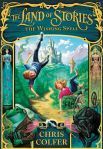
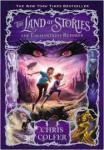
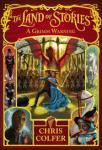
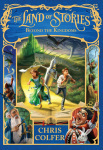
 The Land of Stories series, by Chris Colfer, published from 2012-2015 by Little Brown. The series consists of four books so far, and Colfer says the series will end with the fifth book, assumed to be published in 2016. I read the series because my daughter–and just about every other kid her age–is in to the series, and there was no way she was waiting until next year to read the first four.
The series is:
The Wishing Spell
The Enchantress Returns
A Grimm Warning
Beyond the Kingdoms
An un-announced fifth book
At least three spin-offs, coming out later this year
I really don’t like giving scathing reviews. But I don’t know if there is any other way for me to do this. I want to be all nice and give Chris Colfer a pat on his talented back, but for this, I can not. Absolutely. Can. Not.
I’m not exactly sure what it is about this series: the idea, the cover art, the marketing… but you want to like it. In fact, even as you are reading it, you still want to like the story. But there are so many obstacles, so many many obstacles, which begin with predictable and been-done. I knew almost all of the outcomes from near the beginning. I love the GoodReads review from Brett Axel, that asks, “What if C.S. Lewis, instead of honing his writing skills, watched lots of Shrek and Hoodwinked movies?” We are already getting to the point where we’ve seen way too much fractured fairy tale, and this one takes the been-done cake.
Which in itself would not be terrible. Doing something “old” well justifies itself if you do it well enough. But this one, not even close. Let’s just jump right in.
 My daughter mentions frequently that mostly girls are drawn to the series. It doesn’t take a rocket scientist to figure out that only girls are going to tolerate all the outfit descriptions. Every time we encounter a new character, action pauses and Colfer gives a straight-forward, bland description. Example: “The Snow Queen was a tall woman with a large white fur coat, a snowflake crown, and a cloth wrapped around her eyes. Her skin was so pale and frostbitten it was practically blue. She had a strong jaw and tiny jagged teeth.” (By the way, where are the serial commas in that?) Mostly what a reader gets from this book series are prompts to imagine the story along with the writer. Mostly girls are going to enjoy this type of visual, especially about skin tone, clothing, and hair, not to mention the castles, throne rooms, and thrones. Then couple all that with the terrible action scenes. No, really terrible, and boys just aren’t going to be quite as interested.
But that’s just the tip of the iceberg, a random introduction to the issues with this series. Here’s a list of some of the many, many things that constantly distracted me from enjoying the books (and yes, I read every word of the available books):
Remedial writing. I just couldn’t get past it. I would swear Colfer wrote this as a teenager, or even a junior-higher.
Distracting and over-used adverbs
Slang. Modern, timely phraseology and expressions
Dangling pronouns
Inconsistencies
Misused words, like “got ahold of” and “dived”
Terrible action scenes (which don’t always make spatial sense)
Abbreviated heightened-tension areas and drawn out other areas
Confusion
Swear words? (Colfer has intimated that this series is for the kid in us grown-ups, but it is clearly written for a middle grades audience)
Geographical issues
Hyperbole! Lots of “always,” “never,” mixed with “almost never,” and “nearly always,” etc.
Telling, not showing: like the worst I’ve seen
Passive verbs
Passive language
Coincidences! not obstacles
Mixed prepositions
Complete lack of flow (writing intuition)
Jarring perspective shifts
Unrealistic reactions
Timing issues (especially while characters are conversing)
Hackneyed conversation
A blatant lack of editing, including obvious spelling and grammar mistakes. Chandler is printed as “chandelier”?!?
Flat and inconsistent characters, esp. main characters (Red may be the only exception)
Bizarre choices in structuring the books and also in ending them
If you name a writing rule, it was broken ten ways.
I have to mention it again–and I also want to point out that I have company in this opinion–that I really felt like I was reading the work of a very determined teenager. And while I applaud the effort, I would rather see the content in someone’s more capable hands. Or not at all… I mean, this story has been told before, and it wasn’t nearly as cheesy the first time around.
What I really wonder–and was even distracted by the thought as I read–was if Colfer should have written this series as a screenplay, instead. Especially when you read sentences like this: “Reruns of a dramatic television show set in outer space did nothing to stop his procrastination.” Or, “The Enchantress forced out a theatrical laugh that did little to comfort him.” Dramatic television show? Theatrical laugh? This would be great for staging direction.
And the thought is furthered by all the telling, instead of showing. Like this: “The Evil Queen looked down at him coldly. She had no sympathy left inside her for anyone.”
By the time I got to the second book, I was hoping the writing had drastically improved with the series’ popularity. Even the first couple paragraphs have you going. But then right there, near the beginning, I was sad to be submitted to a terrible (and slightly insulting), in-no-way-covert attempt at arguing with his critics. Colfer highjacks a character to argue for him that writing does not need to be “high” writing, as long as it has passion. But let’s be honest. Simple writing includes the likes of Ernest Hemingway and William Carlos William’s wheelbarrow poem. The distinction between “simple” writing and “high” writing is not one between “good” and “bad,” or even between “passion” and “dispassion,” so Colfer is arguing oranges and apples, and doing it in the wrong place, besides. Passion may be a boon, but it does not make up for other things, like hard work, practice, education, natural talent, quality, etc. It’s like Colfer’s arguing for the participation award. Let’s compare these “simple” sentences:
“so much depends / upon // a red wheel / barrow // glazed with rain / water // beside the white / chickens.” -William Carlos Williams, “The Red Wheelbarrow”
“‘They’ll keep out of my way,’ she insisted. ‘It takes two to make an accident’” -F. Scott Fitzgerald, The Great Gatsby
“‘Fish,” he said softly, aloud, ‘I’ll stay with you until I’m dead.'” -Ernest Hemingway, The Old Man and the Sea
“Aunty had a way of declaring What Is Best For The Family, and I suppose her coming to live with us was in that category.” -Harper Lee, To Kill a Mockingbird
And I’ll have you know, as beautiful as all this writing is, Colfer has better ratings just about anywhere. Oh. My. Goodness.
I was so frustrated at one point, reading the book, that I stopped on the sentence I was at and asked, how would I re-write this? The sentence then went from “What had once been an imposing structure was just a massive pile of stone bricks and pieces of wood now,” to: What was once a majestic fortress had been reduced to a mountain of broken stone and splintered wood. Do you need me to walk you through the problems with the first sentence? It’s weak, imprecise, choppy, anachronistic (dimension-speaking), and distracting. I could do this to any sentence in the whole series, except for (maybe) the first paragraph of the third book, which Colfer seems to have polished up especially well… that is, until a carriage is shooting “like a cannonball” through a dense forest with a narrow, curvy path.
The real battle here is NOT whether or not Colfer’s style is simple, but whether it’s bad or worse and whether or not that means we should avoid reading it and discourage our children as well. Should we swallow a very popular book and all its bad art with its vaguely intriguing story and color-matching faeries in order to have some entertainment? One of the things that can really drive a person crazy in the arts biz is just this quandary. Because, while people swallow bad art in the name of being entertained (or titillated) every day, there are so many artists out there willing and trying to provide a product that is both beautiful and entertaining. In this sense, it matters more who holds the keys to the kingdom and not who’s making royalty-worthy art.
And why aspire to great, or even good art, anyhow? What if no one wants it? Is the aesthetic a value unto itself? Is it a question of truth? Or reality? Or physicality: symmetry and alliteration? Or a Platonic form or God-ward longing? Are truth and beauty their own rewards? And am I in the position to encourage others to find the gems among the rough and discourage the fool’s gold?
Yes, I suppose that is exactly why I write reviews. After all, I don’t get paid for telling you if a book series stinks or if a novel deserves a standing ovation. And not that I am always correct in my reading. But while on one hand I want to be gentle and kind, I also feel excited to exalt the worthy or to push the mediocre to rise to the occasion.
So in the end, I find this extremely popular series to be terrible to a fault. My daughter reads it. No, she loves it. She is ten, and she anxiously awaits the next book, which I will buy for her. I would not say that reading bad literature is exactly harmless fun, but I will point out that I survived far worse than Land of Stories, and I expect my daughter to–through a life of reading and conversations with myself and others–eventually see the series for what it really is. She’ll probably fall in line with the rest of us, War and Peace under one arm and a battered old copy of The Wishing Spell under the other.



September 8, 2015
Best Books: Nonfiction and Journalism
Continuing to list the Best Books and breaking it up by genre, we have now made our way to nonfiction and journalism. Actually, I compiled this one long ago, but the length of the list intimidated me into procrastinating on it. Plus, I would much rather be reading fiction, right? Maybe not. I have read some really awesome nonfiction books, and some that have changed my life.
Please excuse any repeats (or just let me know in the comments), and also note that this list is very American-centric, by no design of my own. Feel free to make more global suggestions.
The Elements of Style, William Strunk Jr.

In Cold Blood, Truman Capote
I Know Why the Caged Bird Sings, Maya Angelou
Fast Food Nation, Eric Schlosser
The Omnivore’s Dilemma, Michael Pollan
Maus, Art Spiegelman
On Writing, Stephen King
Silent Spring, Rachel Carson
Guns, Germs, and Steel, Jared DiamondHiroshima, John Hersey
A Walk in the Woods, Bill Bryson
The Autobiography of Malcolm X, Malcolm X

Zen and the Art of Motorcycle Maintenance, Robert M. Pirsig
A Heartbreaking Work of Staggering Genius, Dave Eggers
Nickel and Dimed, Barbara Ehrenrich
A Room of Ones Own, Virginia Woolf
Bury My Heart at Wounded Knee, Dee Brown
A Brief History of Time, Stephen Hawking
Out of Africa, Karen Blixen
All the President’s Men, Carl Bernstein
A People’s History of the United States, Howard Zinn
Our Bodies, Ourselves
Black Boy, Richard Wright

The Feminine Mystique, Betty Friedan
The Selfish Gene, Richard Dawkins
And the Band Played On, Randy Shilts
The Rise and Fall of the Third Reich, William L. Shirer
What Color Is Your Parachute?, Richard N. Bolles
A Moveable Feast, Ernest Hemingway
The Hero With a Thousand Faces, Joseph Campbell
Dreams from My Father, Barak Obama
The Electric Kool-Aid Acid Test, Tom Wolfe
Mastering the Art of French Coking, Julia Child
The Joy of Sex, Alex Comfort

The Gnostic Gospels, Elaine PagelThe Beauty Myth, Naomi Wolfe
The Double Helix, James D. Watson
How to Win Friends and Influence People, Dale Carnegie
Homeage to Catalonia, George Orwell
Baby and Childcare, Benjamin Spock
The Fatal Shore, Robert Hughes
No Logo, Naomi Klein
The Executioner’s Song, Normal Mailer
Alcoholics Anonymous Big Book
Slouching Towards Bethlehem, Joan Didion
Let Us Now Praise Famous Men, James Ages

The Making of the President 1960, Theodore H. White
The Power Broker, Robert A. Caro
Speak, Memory, Vladimir Nobokov
The Naked Ape, Desmond Morris
Notes of a Native Son, James Baldwin
Working, Studs Terkel
The Lives of a Cell, Lewis Thomas
The Autobiography of Alice B. Toklas, Gertrude Stein
The Best and the Brightest, David Halberstam
The Civil War, Shelby Foote
An Eternal Golden Braid, Douglas R. Hofstadter

Coming of Age in Somoa, Margaret Meade
Capitalism and Freedom, Milton Friedman
Manchild in the Promised Land, Claude Brown
Emporer of All Maladies, Siddhartha Mukherjee
A Supposedly Fun Thing I’ll Never Do Again, David Foster Wallace
The Structure of Scientific Revolutions, Thomas S. Kuhn
The Looming Tower, Lawrence Wright
Why We Can’t Wait, Martin Luther King Jr.
Ball Four, Jim Bouton
Unsafe at Any Speed, Ralph Nader

Animal Liberation, Peter Singer
Orientalism, Edward W. Said
The General Theory of Employment, Interest, and Money, John Maynard Keyes
The Closing of the American Mind, Allan Bloom
God and Man at Yale, Buckley
The Other America, Michael Harrington
The Origins of Totalitarianism, Hannah Arendt
Dispatches, Michael Herr
The American Way of Death Revisited, Jessica Mitford
The Clash of Civilizations and the Remaking of the World Order, Samuel P. Huntingdon
The Last Lion, William R. Manchester
The End of History and the Last Man, Francis Fukuyama

Syntactic Structures, Noam Chomsky
On Human Nature, Edward O. Wilson
The Paranoid Style in American Politics and Other Essays, Richard Hofstadter
The Conscience of a Conservative, Barry M. Goldwater
The Death and Life of Great American Cities, Jane Jacobs
Carry Me Home, Dianne McWhorter
The Nature and Destiny of Man, Volume 1, Reinhold Neibur
The Story of Art, E.H. Gombrich
How to Cook a Wolf, M.F.K. Fisher
A Theory of Justice, John Rawls
The American Cinema, Andrew Sarris
A Child of the Century, Ben Hecht

Sexual Behavior in the Human Male, Alfred Kinsey
What It Takes, Richard Ben Kramer
Understanding Media, Marshall McLuhan
Within the Context of No Context, George W.S. Trow
Mystery Train, Griel Marcus
The Sweet Science, A.J. Liebling
The Great War and Modern Memory, Paul Fussell
Imagined Communities, Benedict Anderson
The Education of Henry Adams, Henry Adams
The Varieties of Religious Experience, William James
Up from Slavery, Booker T. Washington
A Room of One’s Own, Virginia Woolf

Silent Spring, Rachel Carson
Selected Essays 1917-1932, T.S. Eliot
The American Language, H.L. Mencken
The Frontier in American History, Frederick Jackson Turner
Aspects of the Novel, E.M. Forster
The Guns of August, Barbara Tuchman
The Proper Study of Mankind, Isaiah Berlin
The Nature and Destiny of Man, Reinhold Niebuhr
Notes of a Native Son, James Baldwin
The Elements of Style, Strunk and White
An American Dilemma, Gunnar Myrdal
Principia Mathematica, North and Russell

The Mismeasure of Man, Stephen Jay Gould
The Mirror and the Lamp, Meyer Howard Abrams
The Art of the Soluble, Peter B. Medawar
The Ants, Bert Hoelldobler
A Theory of Justice, John Rawls
Art and Illusion, Ernest H. Gombrich
The Making of the English Working Class, E.P. Thompson
The Souls of Black Folk, W.E.B. Du Bois
Principia Ethica, G.E. Moore
Philosophy and Civilization, John Dewey
On Growth and Form, D’Arcy Thompson

Ideas and Opinions, Albert Einstein
The Age of Jackson, Arthur Schlesinger Jr.
The Making of the Atomic Bomb, Richard Rhodes
Black Lamb and Grey Falcon, Rebecca West
Autobiographies, W.B. Yeats
Science and Civilization in China, Joseph Needham
Goodbye to All That, Robert Graves
The Autobiography of Mark Twain, Mark Twain
Children of Crisis, Robert Coles
A Study of History, Arnold J. Toynbee
The Affluent Society, John Kenneth Galbraith
Present at the Creation, Dean Acheson
The Great Bridge, David McCullough

Patriotic Gore, Edmund Wilson
Samuel Johnson, Walter Jackson Bate
The Autobiography of Malcolm X, Alex Haley
The Right Stuff, Tom Wolfe
Eminent Victorians, Lytton Strachey
Working, Studs Terkel
Darkness Visible, William Stryon
The Liberal Imagination, Lionel Trilling
The Second World War, Winston Churchill
Out of Africa, Isak Dinesen
Jefferson and His Times, Dumus Malone
In the American Grain, William Carlos Williams
Cadillac Desert, Marc Reisner

The House of Morgan, Ron Chernow
The Sweet Science, A.J. Liebling
The Open Society and Its Enemies, Karl Popper
The Art of Memory, Frances A. Yates
Religion and the Rise of Capitalism, R.H. Tawney
A Preface to Morals, Walter Lippman
The Gate of Heavenly Peace, Jonathan D. Spence
The Strange Career of Jim Crow, Vann Woodward
The Rise of the West, William H. McNeill
James Joyce, RIchard Ellmann
Florence Nightengale, Cecil Woodham-Smith
The City in History, Lewis Mumford

Battle Cry of Freedom, James M. McPherson
The Rise of Theodore Roosevelt, Edmund Morris
Studies in Iconology, Erwin Panofsky
The Face of Battle, John Keegan
The Strange Death of Liberal England, George Dangerfield
Vermeer, Lawrence Going
A Bright Shining Lie, Neil Sheehan
West with the Night, Beryl Markham
This Boy’s Life, Tobias Wolff
A Mathematician’s Apology, G.H. Hardy
Six Easy Pieces, Richard P. Feynman
Pilgrim at Tinker Creek, Annie Dillard
The Golden Bough, James George Frazer

Shadow and Act, Ralph Ellison
The Power Broker, Robert A. Caro
The Contours of American History, William Appleman Williams
The Promise of American Life, Herbert Croly
The Journalist and the Murderer, Janet Malcolm
The Taming of Chance, by Ian Hacking
Operating Instructions, Anne Lamott
Melbourne, Lord David Cecil
The Shock of the New, Robert Hughes
The Story of Art, Ernst Gombrich
Ways of Seeing, John Berger
Notes on Camp, Susan Sontag
Mythologies, Roland Barthes

The Revenge of Gaia, James Lovelock
The Journalist and the Murderer, Janet Malcolm
Dispatches, Michael Herr
The Lives of the Poets, Samuel Johnson
An Image of Africa, Chinua Achebe
The Uses of Enchantment, Bruno Bettelheim
Confessions, Jean-Jacques Rousseau
Narrative of the Life of Frederick Douglass, Frederick Douglass
De Profundis, Oscar Wilde
The Seven Pillars of Wisdom, T.E. Lawrence
The Story of My Experience with Truth, Mahatma Gandhi
The Man Died, Wole Soyinka
The Periodic Table, Primo Levi
Bad Blood, Lorna Sage

The Interpretation of Dreams, Sigmund Freud
The Romantic Generation, Charles Rosen
The Symposium, Plato
Meditations, Marcus Aurelius
Essays, Michel de Montaigne
The Anatomy of Melancholy, Robert Burton
Meditations on First Philosophy, Rene Descartes
Dialogues Concerning Natural Religion, David Hume
Critique of Pure Reason, Immanuel Kant
Phenomenology of Mind, G.W.F. Hegel
Walden, H.D. Thoreau
On Liberty, John Stuart Mill

Thus Spake Zarathustra, Friedrich Nietzshe
The Art of War, Sun Tzu
The Prince, Niccolo Machiavelli
Leviathan, Thomas Hobbes
The Rights of Man, Thomas Paine
A Vindication of the Rights of Woman, Mary Wollstonecraft
The Communist Manifesto, Karl Marxx
The Second Sex, Simone de Bouviour
The Wretched of the Earth, Franz Fanon
The Medium is the Message, Marshall McLuhan
The Female Eunuch, Germaine Greer
Manufacturing Consent, Noam Chomsky
Here Comes Everybody, Clay Shirky

The Golden Bough, James George Frazer
The Varieties of Religious Experience, William James
On the Origin of Species, Charles Darwin
The Character of Physical Law, Richard Feynmann
The Double Helix, James Watson
The Selfish Gene, Richard Dawkins
A Brief History of Time, Stephen Hawking
The Book of the City of Ladies, Christine de Pisan
Praise of Folly, Erasmus
Letters Concerning the English Nation, Voltaire
Suicide, Emile Durkheim
Economy and Society, Max Weber

Let Us Now Praise Famous Men, James Agee
The Feminine Mystique, Betty Friedan
The Gulag Archipelago, Aleksandr Solzhenitsyn
Discipline and Punish, Michel Foucault
News of a Kidnapping, Gabriel Garcia Marquez
Columbine, Dave Cullen
The American Paradox, David G. Myers


September 5, 2015
Writer’s Fatigue
Causes of writer’s block include:
the work itself does not work or is not conducive to being written
the pairing of writer and work is not a productive one
distractions (from immediate to long-term)
poor work environment
physical illness
mental illness
external stress or change
internal stress, ie. pressure, fear of failure, defeat
previous work’s reception (good or bad)
And now that I’ve said all that, I want to tell you what I inevitably say when someone asks me about writer’s block.
“I don’t believe in it.”
But now that I see that it has a definition, causes, and even studies, I accept that I’m going to have to re-word that for you. So here goes.
“I don’t like the concept of ‘writer’s block.’ I like to call it writer’s fatigue. Because I believe that there are roads around the issues associated with so-called writer’s block, and that most of the time those roads are quite passable (simple, accessible, and short).” I also believe that writer’s block has become a scapegoat, a handy excuse, a woe is me. No more!
What I really don’t believe in is this mystical idea that somehow the muse comes and goes and that we as writers have to sit around waiting for it and wringing our hands. Perhaps inspiration does come and go, but not only can we do things to encourage our muse (and likewise, discourage it), we can also write without it. What?!? Are you nuts?!? No, I assure you I’m not-more-than-the-average. I just believe that dealing with writer’s fatigue involves the qualities that being successful in any endeavor does: hard work, determination, commitment, perseverance, practice, self-control, and a dash of talent.
Let’s think of our solution to writer’s fatigue in two veins. The first is learning how to process what is happening to you (or me). The second is learning how to explore and generate ideas.
When you think you are suffering from writer’s block, it would be a good thing to take a look at a list of the causes, like the one above. Make a chart and write any causes you think apply to you in the left column. Be specific. (Don’t write “distractions,” write “Facebook” or “video games.” Don’t write “external stress.” Write “divorce.”) Then label some other columns, like “details,” “possible solutions,” and “actions to take.” I would encourage you to seek advice from trusted friends and possibly also to seek professional help (from an organizer to a job coach, from a self-help book to a psychiatrist to a 12-step program). You are going to have to be open and honest, even if the truth is painful. Then you’re going to have to be realistic and thorough with your solutions. Now, follow through.
Deal with it. And I don’t mean the conventional, like, “Deal with it, okay?” I don’t want you to just deal with anything, I want you to deal with it! To take that bull by the horns. To stand up and be a man or a woman. To put one foot in front of the other all the way up that mountain. And never take writer’s block laying down!
But when all that’s said and done, I think one of the simplest ways to deal with all this onslaught of writer’s block is to open ourselves up to just writing. I see this all the time when I discuss journaling with other people (including my elementary-age son). Journaling intimidates the heck out of normal people the way writer’s block scares the poo out of us writers. Why? Often because we have this convoluted, collective idea that thinking of things to write about is hard. It’s not! Thinking of Shakespeare-worthy stuff to write about is hard. But actually writing something down is almost as easy as thinking. I encourage journalers to grasp at whatever is in front of them. What do you like? What would you like to complain about? What did you do today? What are you doing later? What is sitting on the table in front of you? What’s in your pocket? What’s your favorite whatever? Use idea journals, idea books, idea websites. Have a chat with someone about what you’re writing and where you’re stuck. Go for a walk. Take a shower. Drive a car. Take a writing class or go back to school. Read writing magazines and books which specifically teach you how to generate ideas and also how to work with the ones you already have.
The world will never run out of things for each of us to write about. The problem is getting ourselves to let go. We have to learn to let go of the idea that the next sentence we write will be part of the final product. It will be part of something–but that something may only be the process, the journey. Or maybe it will become part of the final product once it is tamed and molded. The point is to get something on the page. You can write junk (you’d be surprised), just keep writing, and do it worry-free.
So here are our thoughts when we face writer’s fatigue:
Process the causes and their solutions
Learn how to explore your current ideas and generate new ones
Embrace the transient nature of your next sentence, therefore removing the great pressure
After all, you’re blockage is not insurmountable, it just needs navigating.


September 3, 2015
Best Books: Graphic Novels
I have long been intrigued by graphic novels. I have many times wandered to their section in the bookstore and run my finger along their spines, wondering which one I might like, pulling them out and flipping through the intense illustrations. But I have so little exposure to them, I really wouldn’t know where to begin. And when I consider their price in light of how long it would take me to read them… I walk away. So far, I’ve only managed to read Smile, Sisters, and Drama, all YA by Raina Telgemeier.
Since I am reading through the best literature in the world, I thought it would make sense to include a genre I would like to get to know better.
I also have a suspicion I would like to write one of my own, one day.
Now, I am not exactly sure, but there are probably some titles here that I won’t end up reading because they are outside of my genres-for-review. In other words, if it is graphic novel erotica or graphic novel horror, I will be skipping along to the next title. Otherwise, I am really looking forward to threading these titles into my Best Books list.
The Underwater Welder, Jeff Lemire

100 Bullets, Azzarello and Risso
Batman, The Dark Knight Returns, Frank Miller
Daytripper, Moon and Ba
Asterios Polyp, David Mazzuccelini
Tank Girl, One, Hewlett and Martin
Scott Pilgrim, 1 Scott Pilgrim’s Precious Little Life, Bryan Lee O’Halley
Daredevil, Man Without Fear, Miller and Romita
Astro City, 1, Life in the Big City, Kurt Busiek
Saga of the Swamp Thing, 1, Alan Moore
New Avengers, 1, Breakout, Brian Michael Bendis
Batman, The Long Halloween, Loeb and Sale
We3, Morrison and Quitely

Astonishing X-Men, Omnibus, Wheedon and Cassaday
Punisher Max, 1, In the Beginning, Garth Ennis
Kingdom Come, Mark Waid
All Star Superman, 1, Morrison and Quitely
Authority, 1, Relentless, Bryan Hitch
Wanted, Mark Millar
Blankets, Craig Thompson
The Walking Dead, 1, Days Gone Bye, Robert Kirkman
DMZ, 1, On the Ground, Brian Wood
Ex Machina, 1, The First Hundred Days, Vaughan and Harris
Powers, 1, Who Killed Retro Girl?, Bendis and Oeming
Batman, The Killing Joke, Moore and Bolland
Palomar, The Heartbreak Soup Stories, Gilbert Hernandez

Violent Cases, Gaiman and McKean
Y the Last Man, 1, Unmanned, Brian K. Vaughan
Fables, 1, Legends in Exile, Bill Willingham
Invisibles, 1, Say You Want a Revolution, Grant Morrison
The Tale of One Bad Rabbit, Bryan Talbot
100 Bullets, 1, First Shot Last Call, Brian Azzarello
Criminal, Omnibus, Brubaker and Phillips
300, Frank Miller
Transmetropolitan, 1, Back on the Street, Ellis and Robertson
Ultimates, 1, Super-Human, Millar and Hitch
Preacher, 1, Gone to Texas, Garth Ennis
Batman, Year One, Frank Miller
Hellblazer, 1, Original Sins

Sandman, 1, Preludes and Nocturnes, Neil Gaiman
The League of Extraordinary Gentlemen, 1, Moore and O’Neill
Hellboy, 1, Seed of Destruction/Wake the Devil, Mike Mignola
Marvels, Busiek and Ross
Batman, Arkham Asylum, Morrison and McKean
Alice in Sunderland, Bryan Talbot
2000 AD,Judge Dredd, Complete Case Files, 1
Maus, The Complete Maus, Art Spiegeman
From Hell, Campbell and Moore
V for Vendetta, Moore and Lloyd
Watchmen, Moore and Gibbons
Batman, The Dark Night Returns, Frank Miller
Madman, 1, Michael Allred

The Invisibles, Say You Want a Revolution
All-Star Superman, 1, Morrison and Quitely
The Nightly News, Jonathan Hickman
Alias, Bendis and Gaydos
Black Hole, Charles Burns
The Girl from H.O.P.P.E.R.S., A Love and Rockets Book, Jaime Hernandez
Summer Blonde, Adrian Tomaine
The Last Man, Deluxe 1, Brian K. Vaughan
Depths, Paul Chadwick
Bad Night, Brubaker and Phillips
Pyongyang, Guy Delisle

Heavy Liquid, Paul Pope
La Perdida, Jessica Abel
Safe Area Gorazde, Joe Sacco
Fell, 1, Feral City, Ellis and Templesmith
It’s a Good Life If You Don’t Weaken, Seth
Super Spy, Matt Kindt
Bottomless Belly Button
Tekonkinkreet, Black & White, Taiyo Matsumoto
Puma Blues, Murphy and Zulli
Multiple Warheads, Brandon Graham
Berlin, Jason Lutes
Onward Toward Our Noble Deaths, Shigeru Mizuki
100 Bullets, Azarello and Risso

You’ll Never Know, C. Tyler
Usagi Yojimbo, Stan Sakai
Hark! A Vagrant, Kate Beaton
Finder, Carla Speed McNeil
Pluto, Naoki Uruasawa
Sex Criminals, Fraction and Zdarsky
Saga, Vaughan and Staples
Stray Bullets, David Lapham
Paying for It, Chester Brown
Journey, WIlliam Messner-Loebs
Unterzakhan, Leela Corman
Dal Tokyo, Gary Panter
Mister X, Dean Motter

Diary of a Teenage Girl, Phoebe Gloekner
The Incal, Jodorowsky and Moebius
Preacher, Garth Ennis
What It Is, Linda Barry
Curses, Kevin Huizenga
Freak Angels, Ellis and Duffield
Our Cancer Year, Peaker, Brabner and Stack
The Cowboy Wally Show, Kyle Baker
Twisted Sisters, 1, Various
Akira, Katshuiro Otomo
King Cat, John Porcellino
A Contract With God, Will Eisner
Cerebus, Dave Sim
Achewood, Chris Onstad

The Adventures of Tintin, Herge
Hicksville, Dylan Horrocks
Alec, The Years Have Pants, Eddie Campbell
Persepolis, Marjane Satrapi
Ghost World, Daniel Clowes
Epileptic, David B.
The Invisibles, Grant Morrison
From Hell, Moore and Campbell
The Complete Robert Crumb, Robert Crumb
Fun Home, Alison Bechdel
Jimmy Corrigan, the Smartest Boy on Earth, Chris Ware
To check out Wizard Magazine’s 100 Best Graphic Novels, including lots of superheros, click HERE.


August 31, 2015
The Bad Comma
I am real good at literature. I read it well. I write it well. I thoroughly enjoy it. I intuit it well. I went to school for English literature. I was editor-in-chief of my college literary magazine. I was an assistant editor for a big publishing company. I was a freelance editor. I’m a writer, down to the marrow of my bones.
It took me thirty years to realize that I suck at grammar and spelling.
I was taken quite off guard. I was struggling through the editing process of my second novel when I had a conversation with my aunt, who was legitimately an awesome editor for something like twenty-five years and who is my business partner, personal editor, and has been there through it all for my whole life. She has always been my cheer-leader, someone to encourage me to be a writer (or a photographer or a painter). Somehow we were having a conversation about spelling and she mentioned off-hand that she remembers my spelling woes beginning when I was in early elementary school. Say what?!? Spelling woes? What I remember is being singled out as a creative prodigy, sent to a special school, winning Young Laureate, put into honors English, and acing all my English classes, forever and ever.
How could I be bad at spelling?
Perhaps “suck” is a too-harsh word. But somehow, I had assumed that all this English-y stuff came as a package and I was an English-y person. Deep down, I had the bizarre belief that to be great at English, you had to have an in-born ability to easily master the English language (or whatever language is yours), one that came completely from the wells of talent. I have said before that I took this idea with me to college, where I balked at a writing program or a writing degree. If I don’t have it in me already, I thought, I will never have it. So I studied philosophy because that was a gas.
Then I grew up. I realized there are many reasons that you want to study your art, not the least of these being so that you improve your technical skills. Like spelling and grammar. Yes, I also believe that to be a truly great writer you have to have some spark–or even blaze–of literary talent just curled up and waiting there. Yes, I realize that editors (and publishers) function to assist with all the nuts and bolts things, like spelling and grammar. However, I have also learned these things:
This is a competitive field. I mean really competitive. Anything I can do to make my writing more appealing to editors, agents, and readers is a step in the right direction. (Except maybe selling out.)
Practice makes perfect. Many of the talents of great writers were honed–and even acquired–over a lifetime doing their craft. There is a ton to learn about writing and the writing process. I don’t completely agree that anyone can learn to be a great writer, but certainly anyone can learn to write much better, including writers.
In order to do my job, I need to have the right tools. This is what would later make me scoff at my own idea that I shouldn’t have studied writing in college. Just as with any other job, I need to have a whole chest full of tools to do it well. And with better tools, I can do better.
I want to get better at what I do. Like better and better. Which is sort of the same as what I just said, except that I’m emphasizing here the I want. Do you want to be better at your job? Do you want to be a better writer? What on earth could your objections to improvement be?
There’s always someone better than me. So I want to catch up. I want to run the best race that’s in me.
Writing takes teamwork. So yes, I am going to have to rely on others to fill in the gaps where I am weak. But I also want to be the strong link in the chain, not the one about to break. Plus, understanding the various roles of other team members (like publicity, book design, promotions, agents, etc.) makes a great team. For example, if I understand the whys and wherefores of a particular editorial suggestion (like a weak verb or improper usage of a comma), I can make better decisions about my book.
And last, but certainly not least, I am thankful that I have the spark (or perhaps the blaze) of literary talent. My naturally poor spelling or grammar is not a reflection of my failings as a writer. Only my inability to recognize my shortcomings and my refusal to become better would be that.


August 27, 2015
(The Collective) Imagination
There is nothing new under the sun, is there? And with ever-advancing technology and a growing (and growing) world population, there’s less new under the sun now more than ever. We are exposed to more than ever before, and there are just more options! And more options! More options worldwide and yes, more options in your own backyard.
It’s a thing that has its comfort at times. There’s nothing new under the sun. But for the modern writer, it holds much terror, as well. It can kick us right up into a frenzy when we see the impending legal storm coming, or get our toes on the line of publication only to find out that what we’re doing has just been done.
I’ve published two novels already, am working on a publication project which should finish up this month, and have a back-log of over thirty novels and series. Already, I’ve encountered those moments of frustration and panic when I come across some deal-crushing information. Like when my soon-to-be new novel’s main character’s name belongs to the main character of a runaway series… Or when my two-year-old novel gets it’s title stolen (sic) by an erotic romance… Or two of my future series gets their titles stolen (sic again) by two popular series… (Let’s face it, we are going to run out of titles, and soon.)
Until all my novels are published and copyrighted, I can be expected to sleep the sleep of sinners.
And you know what else haunts me?: all the books I haven’t had time to read or movies I haven’t watched. I mean, I might blissfully publish book X, all the while the same theme–even down to a nearly identical character–was booming at the box office, last year. I’d never see the lawsuit, or the disgrace, coming. And I wouldn’t even deserve it.
 Why am I moaning about this, at this particular moment? Because it happens with increasing regularity? Because I am sitting on so many ideas and notes it’s bound to happen to me repeatedly? Or because I innocently rented a random kids movie from a few years ago (for Friday pizza night) and found myself looking at a spiritual sister of my next novel, which I am hoping to publish before the new year.
Let it be known, right here, right now, that the majority of The Journey of Clement Fancywater was written long before I had ever seen an image or read a page of City of Ember. (I do plan on reading the books, eventually, though, because I liked the tone of the movie.) I also assure you that I came up with the giant lightbulbs out of a need to express the plight of Hollow Earth in a sort of pseudo-scientific way which also smacked of magic. As I sat in my family room, pizza cheese dangling from my hanging jaw, kids bouncing around me saying they were bored (the movie was not that great, but you’ll hear that later in another review), my stomach swooped to that low-low level of this-could-ruin-my-life. I tend to overreact to plan changes, and later that evening my husband talked me (and Clement) off the ledge of a novelistic suicide.
So here are the plots:
The Journey of Clement Fancywater (my upcoming novel):
A 30-year-old, live-at-home video-gamer is pushed down a hole into Hollow Earth. He discovers that he might be the key to saving the Uplanders from a menacing plot of the Hollow Earth queen. As he journeys toward the queen’s fortress, he–among other things–discovers that the Hollow Earth light sources are failing , that only the people of the Wide World have what it will take to renew Hollow Earth’s unrenewable light, and that humanity is destined to lose its sight and its freedom to do so.
Light is a main theme of the book, and I use a combination of eyes and a set of giant light bulbs to symbolize it .
The City of Ember (the 2008 movie and the first book):
“The city of Ember was built [underground] as a last refuge for the human race. Two hundred years later, the great lamps that light the city are beginning to flicker . When Lina finds part of an ancient message, she’s sure it holds a secret that will save the city. She and her friend Doon must decipher the message before the lights go out on Ember forever!”
The book cover is a graphic of a lightbulb with the filament spelling out “ember,” and the lightbulbs are a symbol throughout the story.
See? Disgraceful, Distasteful. Disappointing. Alarming.
I am an INFJ. Which means, among other things, I thrive on uniqueness. So part of what disappoints me about a scenario like this is: 1) I realize I have not come up with a brand-new idea; 2) I am afraid other people will think I copied. The second part, yes, can have financial and reputational repercussions, but I think I more worry about the impressions of others. Who wants people to dislike them? To slander them? To write bad reviews accusing them of plagiarism?
But I didn’t. And I don’t. And there’s simply nothing new.
In conclusion, I think that if Shark Week can keep airing despite a rash of shark attacks off the Carolina coast, so then can I keep writing what I was writing. I can roll with the punches. I can find a place between self-sabotage, and acceptance that nothing I create is completely new. It can’t be. Every time a new invention rolls out, someone somewhere says, “Hey, that was my idea,” or “Hey, I made that and it’s in my garage.”
In the end, it’s the journey, the package, and the voice that makes my art mine. Truth and beauty don’t change. Clement will still go bravely crashing down into Hollow Earth–which was chosen precisely because of its universality in story-telling. I join the march of storytellers. I embrace the universal narrative. I sing the song that’s given me.
_______________
 Sometimes fantasies are for real.
Clement is living with his parents, working as an administrative assistant by day, and playing video games all by himself by night, when he is orphaned at age thirty. One cardboard box and backpack later, he winds up on a park bench where a bizarre two-faced man points him down a rabbit hole toward the Hollow Earth. Is Clement the hero the world needs to save it from a power so insidious the Uplanders don’t yet know of its approach? Will he find his way through a colorful, subterrestrial world to confront the Wizard Queen? Or is this all some kind of a joke?


August 17, 2015
Book Review: Japanese Soul Cooking
 Japanese Soul Cooking, by Tadashi Ono and Harris Salat, published in 2013 by Ten Speed Press.
This book is the first that I am reviewing from the Best Books: Food and Cookbooks list. I will try to review these books as cookbooks, but also as books. Capice?
I just purchased this book with birthday money, then spent the week after between Anne of Green Gables (re-read) and this one. Yes, I do read cookbooks, like from front to back. I don’t read all the instructions until I get to the cooking part, but I do read things like front matter, notes, ingredients, explanations, etc.
A book like this one is good because of its clear direction and its consistent results, but is made great by its interesting facts and history, clear writings, fun anecdotes, and relevant notes. So when all’s said and done here, this is a great cookbook.
It has it all, including journalistic photos as well as photos that show you your end result. My only complaint, I suppose, is that Ono and Salat are not natural-born writers, from what I can tell, so yes, their writing could have been better. But as two chef/foodies, they have a grasp of how their recipes fit into the world, a friendly tone, and an interesting-enough style.
And boy are their recipes accessible and consistent! Anybody cooking from this book will need to make a trip to a specialty grocer, but not without first being told by Ono and Salat exactly what it is they are looking for. And once the cook has the ingredients in hand, they are almost guaranteed an authentic and tasty result, thanks to to the perfect directions and the simplicity of all the (somewhat slow) processes. This is supremely accessible ethnic food at its best.
One of the keys to any good cookbook (or any book, really) is how excited they make the reader. With the photos and the writing in Japanese Soul Cooking, it would be hard not to catch their infectious enthusiasm for the cuisine as a whole and the recipes individually.
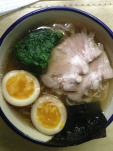
Okay, so one other complaint: the book is broken down into individual recipes for recipe components, much like Mastering the Art of French Cooking (and other books). In other words, you don’t just flip to “Shoyu Ramen” and make shoyu ramen, You must first flip to “Shoyu Ramen,” then to “Soy Sauce Marinade,” then “Soy Sauce Eggs,” then “Ramen Soup and Chasu,” then back to “Shoyu Ramen.” I hate doing that, but I also acknowledge that it makes complete sense to produce the book this way, from the authors’ end. It remains a pain for the reader/cook.
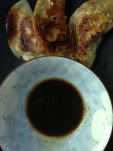
I have made five random recipes from this book, at this time, and we were very pleased with all of them. That’s saying a lot. I highly recommend the Pork Gyoza and the Kitsune Udon, as well as the fascinating evolution of Japanese soul food.



_______________
“In Japan, the type of noodle used in ramen is serious business” (p8).
“Loud slurping is important” (p14).
“It seems that everybody in Japan absolutely loves curry” (44).
“And don’t forget, navy curry isn’t navy curry without salad on the side and a glass of milk” (p49).
“…in the land of raw food that is Japan, oysters are usually eaten cooked” (p78).
“In Japanese cuisine the producers do most of the work” (p95).
“Get it wrong, and you’re venturing into corn dog territory” (p109).
“Use toothpicks to spear these suckers and pop them into your mouth” (p137).
“Japanese have been slurping soba for hundreds of years” (p160).
“Try sauteing anything with soy sauce and butter–steaks, green beans, mushrooms, chicken breast, or, yes, pork loin–it’ll blow your mind” (p222).
“And what you eat as a kid, of course, is what you crave as an adult, and thus Napolitan happily entered the cuisine” (p225).


August 14, 2015
Book Review: Go Set a Watchman
 Go Set a Watchman, by Harper Lee. I read a Kindle copy given to me on the day the book was released, in July 2015.
For further comments and articles on this book, Harper Lee, and the hype surrounding all of it, see these blog entries: Haven Kimmel Month Postponed; What? Harper Lee Is Back on the Horse?; Book Review for To Kill a Mockingbird; The First Line is Wonderful.
Obviously, I did not find this book on the Best Books list, because it had absolutely no time to get there. But Harper Lee’s other and only other book–To Kill a Mockingbird–is an absolute classic. And, as the articles mentioned above state in more detail, there was so much hubub about the release of this new book, Go Set a Watchman, that any self-respecting literary blogger would have to jump on the bandwagon. So jump I did.
Officially, as I understand it (through all the rumors), Watchman was written before Mockingbird, but was set aside and never meant to be published. But after fifty years of gathering dust, Lee’s lawyer/publisher convinced her to release Watchman, which acts as a sort of sequel to Mockingbird. It is this written first/taking place second dichotomy which causes some of the issues with this book.
Let me jump in here with my first recommendation: do not read these books in quick succession. I read Mockingbird (review HERE) because I hardly remembered anything about it from my high school days, and then settled into Watchman the next day. Although you might think this would make sense, it just doesn’t work out. The writing between the two books is quite different (maturity- and skill-wise), as is the tone and even the topics and age-identity. But more than that, there is way too much repeated information. I highly suspect that when Lee decided to set aside her first novel, she yanked entire sections from it when it suited her to place in the second, never thinking the first would see the light of day. Oddly enough, the editors decided to keep the original manuscript as is. There are literally whole sentences and even paragraphs which are carbon copies of sentences and paragraphs (check out the beginning of chapter three and part two) in the companion book. Odd, odd decision. And so disappointing when you have just read the other book.
Now for a general statement before more critiques. I liked this book. It was a pretty good read. It never would have made it like it did without the allure of Harper Lee’s life and the brilliancy of her one other book. I am waffling between a three and a four (stars), and I feel sad that the three stars could have been totally avoided by more editing. Was someone somewhere determined to keep this book like the original manuscript? Was it rushed to press? Did Lee just not have the edits in her? Unknown. Lee is clearly a writing genius, but this particular book reeks of an earlier attempt at saying the same things she crystallized in Mockingbird.
And that leads me here: critique of Watchman is always going to beg comparison with Mockingbird. It’s both inevitable and irritating. It’s irritating because absolutely no one can be expected to write up to a nearly pristine American classic. So when cast in the light of Mockingbird, Watchman is almost always going to land itself in the shadows. It’s just not as great of a book, and like I pointed out earlier, it’s a very different book, despite its similarity of author, characters, and place.
Problems:
This book is not as fluid, clean, or articulate as the other. This can probably be attributed to her growing as a writer between the writing of each.
There is more dry history about Maycomb, which just seems to drag on and on, telling and not showing. This was an issue I had with the other book, as well.
Not much happens in this book. Almost all the action (besides walking around town and falling asleep) takes place in the flashbacks, which are few and far between. There’s no problem or mystery to solve, no big event we’re building up to. At most, we’re wondering vaguely if Scout will marry Henry and if she’ll move back to town. Like my notes say, the real tension in this book is in Scout’s decisions. (Yes, I know her name is Jean Louise, but it’s easier to say “Scout.”) That makes it an internal novel, which some readers will really like, but so very different from what people expected.
Trying to avoid spoilers here, but one of the main characters from the first book is killed off in an off-handed sentence in this book. It was like, oh yeah by the way, he/she died. Big problem.
I might be wrong about this, but I thought there were some discrepancies in the infamous court case, between the books.
Watchman gets a lot preachy. It seemed even more preachy to me, since I read Jean Louise as rash, disrespectful, and maybe even going actual crazy. I think it loses its nuance and its sense of humanity, at least for a few chapters.
Speaking of which, the climax was not handled deftly. It was clunky and I found all the characters to be out of sync with themselves, like the climax was being forced on us, forced into a preconceived idea. They say that in good writing the characters take over and the ending becomes inevitable based on them. This felt like the opposite of that, to me. Then we had the conclusion, which I thought was too brilliant followed by too tidy.
Um, what was Jean Louise’s job? Did I just miss a sentence somewhere, or what? That’s some basic information.
As for the positives, I truly enjoyed Scout’s internal drifts, especially when Lee would mess with time and place, and the reader was sort of caught between her reality and her memory and bearings were lost. It was sort of Alice in Wonderland-ish, but not unless the reader was paying close attention. Also, I don’t dislike a protagonist-centric novel, and this novel is very protagonist-centric. And the elliptical paragraphs are super funny. Love ’em. I could have done with more of both the internal drifts and the elliptical paragraphs.
And we have to deal with the “Atticus is a racist” thing, which is what I keep seeing plastered across reviews. Personally, I think this book is much more about variations and shadings of human character than it is about racism. It’s about maturing in the sense that we all have to swallow reality in the same gulp as our ideals. Jean Louise wasn’t right to overreact, but she was right to keep her own North star even when her shrines were desecrated. Yes, the racist issues are there, but to me the book spoke more to say there is no perfect view of life and that no one person could posses that view if there were. Even our own current ideas–as a culture–may not be–heaven forbid!–perfect. On top of that, both these books are historical, and judging Atticus as a modern reader may be anachronistic. I love the idea of learning from history, but I also love the idea of doing that without too harshly judging it. Lord knows we have our blind spots, now, and what they are we can not, by definition, tell.
In conclusion, Watchman has some truly awkward moments, but Lee’s writing power is evident even if she wouldn’t hit her stride until Mockingbird. Why didn’t they edit more? Unknown. I recommend reading Watchman if you are curious, but not immediately following Mockingbird, for heaven’s sake, and not expecting too much.
_______________
QUOTES
“If you did not want much, there was plenty.”
“She was a person who, when confronted with an easy way out, always took the hard way.”
“‘I’m not familiar with the author,’ she said, thus condemning the book forever.”
“When she looked thus, only God and Robert Browning knew what she was likely to say.”
“If the folks in Maycomb don’t get one impression, they’ll get another.”
“‘She got my goat, Atticus.’ / ‘You shouldn’t have let her.'”
“No, they just like to look strange and mysterious. When you get past all the boa feathers, every woman born in this world wants a strong man who knows her like a book, who’s not only her lover but he who keepeth Israel.”
“Don’t push her. Let her go at her own speed. Push her and every mule in the country’d be easier to live with.”
“It might work after all, she thought. But I am not domestic. I don’t even know how to run a cook. What do ladies say to each other when they go visiting? I’d have to wear a hat. I’d drop the babies and kill them.”
“…a choir of repressed soloists…”
“…telephone manners: he viewed such instruments with deep anger and his conversations were monosyllabic at best.”
“It was on the tip of her tongue to tell him, to shift her burden to him, but she was silent.”
“‘Ain’t anything in this world so bad you can’t tell it,’ she said.”
“Don’t you study about other folk’s business till you take care of your own.”
“…you ain’t called upon to contradict ’em, just don’t pay ’em any attention…”
“‘Good morning. You look like pale blue sin,’ he said.”
“What was this blight that had come down over the people she loved? Did she see it in stark relief because she had been away from it? Had it percolated gradually through the years until now?”
“Now we are both lonely, for entirely different reasons, but it feels the same, doesn’t it?”
“She glanced down the long, low-ceilinged livingroom at the double row of women, women she had merely known all her life, and she could not talk to them five minutes without drying up.”
“I hope the world will little note nor long remember what you are saying here.”
“…as sure as man is man, history is the last place he’ll look for his lessons, I hope to God it’ll be a comparatively bloodless Reconstruction this time.”
“The only thing in America that is still unique in this tired world is that a man can go as far as his brains will take him or he can go to hell if he wants to, but it won’t be that way much longer.”
“Do? I expect you to keep your gold-plated ass out of citizen’s’ councils! I don’t give a damn if Atticus is sitting across from you, if the King of England’s on your right and the Lord Jehovah’s on your left–I expect you to be a man, that’s all!”
“We-ll, some men who cheat their wives out of grocery money wouldn’t think of cheating the grocer. Men tend to carry their honesty in pigeon-holes, Jean Louise.”
“Jean Louise, I’m only trying to tell you some plain truths. You must see things as they are, as well as they should be.”
“Why didn’t you show me, why weren’t you careful when you read me history and the things that I thought meant something to you that there was a fence around everything marked ‘White Only?'”
“When it came we didn’t give an inch, we just ran instead. When we should have tried to help ’em live with the decision, it was like Bonaparte’s retreat we ran so fast.”
“He had declined to be angry. Somewhere within her she felt that she was no lady but no power on earth would prevent him from being a gentleman, yet the piston inside drove her on.”
“You deny that they’re human.'” / ‘How so?’ / ‘You deny them hope. Any man in this world, Atticus, any man who has a head and arms and legs, was born with hope in his heart.'”
“How they’re as good as they are now is a mystery to me, after a hundred years of systematic denial that they’re human, I wonder what kind of miracle we could work with a week’s decency.”
“Every man’s island, Jean Louise, every man’s watchman, is his conscience. There is no such thing as a collective conscious.”
“…just like you, child. You turned and tackled no less than your own tin god…”
“That’s the one thing about here, the South, you’ve missed. You’d be amazed if you knew how many people are on your side, if side’s the right word.”
“…the time your friends need you is when they’re wrong, Jean Louise. They don’t need you when they’re right.”
“You’re not by yourself, Jean Louise. You’re no special case.”


August 12, 2015
Literary Eats: Lane Cake
 “Miss Maudie Atkinson baked a Lane cake so loaded with shinny it made me tight.” Scout Finch, in To Kill a Mockingbird.
I am a foodie. I am also, as you know, a writer, publisher, avid reader, and reviewer. Therefore, it is only too appropriate that I dot this literary blog every once in a while with a peek at the foodie side of reading. (I will actually be reviewing a cookbook fairly soon. And if you don’t understand because you don’t actually read cookbooks, well then it is possible that you just don’t understand.)
It is a well-worn bit of writing advice that the writer should be engaging all of the reader’s senses. In important scenes and throughout the book, the reader should see, hear, feel, smell, and even taste what is happening. Taste tends to be the least utilized sense (in writing and reading), but food–obviously–provides the readiest way of engaging this sense (unless you are writing vampire novels, in which case the mention of blood and the frequent throwing of garlic could do it for you). Let’s turn to–you guessed it!–Harry Potter to see about this. One of the things J.K. Rowling has done so brilliantly in this enduring series is to touch on oh-so-many interests and points. From sports (Quidditch!) to academics, from humanitarianism (Elf Rights!) to humor, the series has something for everyone. Likewise, she is a master at engaging all of the senses. Just ask any Potter fan about Butterbeer or Every Flavor Beans, and you’re likely to unlock a much longer conversation. Harry, Ron, and Hermione are frequently engaged with food (as are we all), much of which is described.
 And Rowling joins a long history of writers including foods in their writing. Dickens does it. L.M. Montgomery does it. Lewis Carroll does it. Who doesn’t do it? (Note: since human taste is so interlinked with the other senses, especially smell, we as writers can also engage a reader’s sense of taste simply through smells (or memories), from walking past a coffee shop to–yes–mowing the grass or sleeping on a pine needle pillow.)
I would hardly call To Kill a Mockingbird a literary feast for the foodie. But it does mention cakes and other meals that Calpurnia cooks for Scout or Aunt Alexandra cooks for ladies’ events. It’s the neighbors, though, that supply the Lane Cake. Miss Maudie is fond of using sweets to induce her younger neighbors to hang with her or to fatten them up (literally and emotionally). It is through her that we hear about the Lane Cake–the king of all domestic accomplishments and excesses in 1930s Alabama. And since Lane Cake is a real, true part of the history of the South and also sounds so alluringly tasty and challenging to make, it has acted as a sort of siren song for foodie readers.
Thus, this blog entry.
This time, though, I am on pace with what must be hundreds or even thousands of other closet-foodie readers. Because we are talking the positively buzzing To Kill a Mockingbird and the cake that it made famous: Lane Cake.
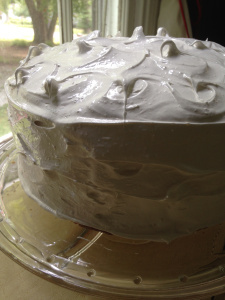
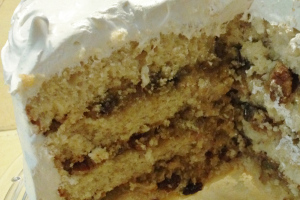
Note: This is really, truly the Lane Cake that I made for my husband’s birthday. I am pretty much an experienced cake maker, and baking this cake needs all the experience it can get. I found the original recipe (and changed it just a bit) from an online Saveur article.
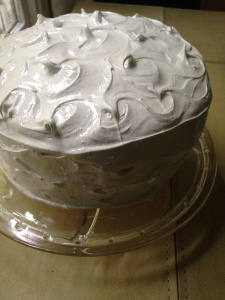
LANE CAKE
Preheat your oven to 350F. Grease 2 9-inch cake pans with coconut oil, then fit them with 2 rounds of parchment paper, then grease again and flour. Set aside.
In the bowl of a stand mixer, beat together 1 cup unsalted butter, 1 2/3 cups granulated sugar, and 1 teaspoon vanilla extract until pale and fluffy.
In a large mixing bowl, sift or whisk together 3 1/2 cups all purpose or cake flour, 4 teaspoons baking powder, and 1/2 teaspoon salt.
To the butter mixture, add 1 cup milk and the flour mixture, alternating between them as you mix. Move the firm batter to the large mixing bowl and set aside, then clean and re-assemble your stand mixer, making sure the bowl is cool and free from all debris.
With the whisk attachment, beat on medium-high 8 egg whites with 1/2 teaspoon cream of tartar until soft peaks form. Slowly add in 1/3 cup granulated sugar and continue beating until firm peaks form.
Gently (and awkwardly) fold the egg whites into the cake batter just until it is generally combined. Pour this mixture evenly into the cake pans and carefully smooth the tops.
Bake for 40 minutes, until a toothpick comes out clean. Turn off the oven and let cool 30 minutes then un-mold the cakes and set on a cooling rack.
Meanwhile, in a small, heavy-bottomed sauce pan, whisk together 1 cup granulated sugar and 8 egg yolks (which you have saved from step 5). Stir in 1/2 cup cubed, unsalted butter and 1/2 cup bourbon (or brandy). Heat over medium heat, whisking constantly, until 2 minutes after it comes to a simmer. Set aside.
In your (now cleaned) mixing bowl, combine 1 cup chopped pecans, 1 cup grated coconut, and 1 cup raisins. Mix in the egg yolk mixture and 3/4 teaspoon salt (unless your pecans are very salty–if so, omit the salt).
Using a long, serrated knife, cut the cakes in half long-ways (like a hamburger bun). Set your bottom cake layer on a platter or cake stand, and spread with 1/3 pecan mixture. Do next two layers the same, then end with the last cake layer (and no filling).
Meanwhile, clean out that stand mixer again and make sure its cool and debris-clean again.
When your cake is cool, mix 1 1/2 cups granulated sugar, 2 tablespoons light corn syrup, 1/4 teaspoon salt, and 4 egg whites (yes, more) in the stand mixer bowl.
Fill a sauce pan with an inch or two of water and bring it to a simmer. Set the stand bowl over the simmering water so that the bottom of the bowl does not touch the water. Insert a candy thermometer into the mixture and whisk until the temperature reaches 140F.
Immediately move the bowl back to the stand and whisk on medium-high until very stiff peaks form.
Frost the layer cake with the white, fluffy clouds of frosting. Smooth it all down and then swirl it up into whatever patterns come to your imagination.
Chill 30 minutes before serving, with coffee.
Options: some people include candied cherries in their filling or on top of the cake, and some people use pecan filling on the top instead of white frosting, just frosting the sides. Also, some recipes do not use any coconut. I also acknowledge that this cake would do well with omitting some butter and using coconut oil instead. However, I wanted to keep it real classic.
“Mr. Avery will be in bed for a week—he’s right stove up. He’s too old to do things like that and I told him so. Soon as I can get my hands clean and when Stephanie Crawford’s not looking, I’ll make him a Lane cake. That Stephanie’s been after my recipe for 30 years, and if she thinks I’ll give it to her just because I’m staying with her she’s got another think coming.” Miss Maudie, in To Kill a Mockingbird.


July 29, 2015
Book Review: To Kill a Mockingbird
 To Kill a Mockingbird, by Harper Lee and published in 1960. I read the paperback Grand Central Publishing version.
I read this book, right now, for all the obvious reasons. It is a classic and won the Pulitzer Prize, but I could barely remember anything about my high school reading of it. (It’s also very likely that I didn’t even finish it). Harper Lee published her new book–the first in over 50 years–which is a sort of sequel to To Kill and Mockingbird a couple weeks back, and I would like to read it. I have a Kindle copy that I will be starting tomorrow on an all-day car trip. I have written more than one blog about the Harper Lee news and new book.
Now, I really didn’t have much in the way of expectation when I began reading this book. From what feelings I recall from high school, it just “wasn’t my type.” Plus, courtroom drama? (I’ll get to that more in a sec.) Then again, everyone seems to love this book, as evidenced by the literary orgy that happened a few years ago at the 50th anniversary of its publication. It truly is a classic.
I’m going to start with the little that I have to say negative about this book, and get it over with. It’s a little preachy. Sure, we all nod our heads as Atticus spouts something true and honest, but sometimes I felt the preachiness. If you don’t know what I mean, see the quotes below. We don’t just see the Finches being model citizens and moral examples, we hear/read the father (and other characters, like Miss Maudie and Reverend Sykes) telling Scout and Jem, and therefore us, the things they (and we) need to know to grow up straight. When Harper Lee said, “I already said everything I needed to say,” I long questioned how talent like hers could dry up so quickly (both in application and in will). I now recognize this statement as more of a moral one, and while what she has said is incredibly important, I would have liked more doing, less saying. (Then again, I would have missed Atticus’ one-liners and the gentler side of the adult world.)
I also found the plot to be a little slow? Or maybe just disjointed. I was like all interested in Boo Radley, and then I suddenly realized I was knee-deep in Tom Robinson with no Boo to be seen for like 100 pages. The story often follows a summer-to-summer routine, then on page 340, we’re all of a sudden in a Halloween story. While the whole thing definitely comes full circle and ties up in its way, I was distracted by not knowing what I was looking for next or by feeling like I was being pulled in two or three different directions. Perhaps if they had been weaved together a little more? By the end, I was like, “Mrs. Dubose? Was that a short story I read some time?”
But that’s all I can possibly complain about with this book.
It is written so cleanly, and that is one of the highest compliments I can pay to a piece of writing. I’m not sure there is much I can even expound on here. The writing is incredibly clean. It seldom distracts or loses you. And even though Lee is writing from a different time and place and a very difference perspective, you never lose pace with her. She’s not being flowery, but she is both lyrical and beautiful in her expression while also being sparse.
She is also a master at portraying a time and a place. It happens to be a time and place that she experienced, so I have no idea how she would write portraying more fantastical things, but she certainly yanks the reader into the world of Macomb County, Alabama in the 1930s and plops you into the body and school desk of Jean Louise. The spell is complete, and you never leave the time or place, which you see so clearly that you also taste it, feel it, and hear it.
And speaking of the fine touch and the enchantment of great writing, the characters are extremely well-drawn. With only a few gestures and words, the reader gets a very full impression of one of the about twenty characters in the book. While Lee’s characters are a little too good-or-bad for me, I really felt I was walking among complex people, both peculiar and universal at the same time (which we all are) and both in the world of a child and the adult world. (As a side note: I have heard it said that authors should never write in dialect. However, there are many exceptions to this rule, and Mockingbird is easily one of them. The dialect only acts to enhance the story, not distract.) The interaction between children and adults is so correct and subtle, I have hardly ever seen it written so well.
I really thought I would be bored with the court scenes, and dreaded coming up on them. However–and I’m not at all sure how she did it–I was not bored in the least. Even when reading long speeches, I felt riveted and wanted to keep reading. In fact, the only thing that bored me from time to time was the town and county history. I’m not saying she should have cut it, exactly, but it did make me zone out, or set the book down and finally nod off for the night.
Let’s be honest: what Lee has said in To Kill a Mockingbird is very important. And not just in a morally-forward-thinking (for the time) way (or in just racial relations, but also in coming-of-age and womanhood among other things), but as an historical document. Historical?, you ask. Yes. I believe in the truth and honesty of some fiction, and this book captures the truth and honesty of a particular history better than any textbook. And I also believe that we don’t glaze over or sweep away history, but learn from it through a humility to its authenticity (as best as we can, anyhow). I’m sure that this book can’t be read by some people without a certain amount of pain. I’m just saying that if you want to learn from the American South in the early twentieth century (and apply it to any given time or situation), this is a great place from which to move forward.
_______________
 MOVIES
There is, of course, a very famous and highly lauded film from 1963, starring Gregory Peck. Currently, it’s available for $3 as a rental from iTunes, so I intend to check it out but I want to read Go Set a Watchman first. I just would prefer not to put any actor’s faces in my head before I continue with the Scout and Atticus I have created in my imagination. I will review it later.
_______________
QUOTES
“That boy’s yo’ comp’ny and if he wants to eat up the table cloth you let him, you hear?” (p32).
“…anybody sets foot in this house’s yo’ comp’ny, and don’t you let me catch you remarkin’ on their ways like you was so high and mighty!” (p33).
“Atticus told me to delete the adjectives and I’d have the facts” (p79).
“There are no clearly defined seasons in South Alabama; summer drifts into autumn, and autumn is sometimes never followed by winter, but turns into days-old spring that melts into summer again” (p79).
“”s what everybody at school says.’ / ‘From now on it’ll be everybody less one–‘” (p99).
“Simply because we were licked a hundred years before we started is no reason for us not to try to win” (p101).
“Had I ever harbored the mystical notions about mountains that seem to obsess lawyers and judges, Aunt Alexandra would have been analogous to Mount Everest: through-out my early life, she was cold and there” (p103).
“She hurt my feelings and set my teeth permanently on edge, but when I asked Atticus about it, he said there were already enough sunbeams in the family and to go about my business, he didn’t mind me much the way I was” (p109).
“When stalking one’s prey, it is best to take one’s time. Say nothing, and as sure as eggs he will become curious and emerge” (p110).
“…baby, it’s never an insult to be called what somebody thinks is a bad name. It just shows you how poor that person is, it doesn’t hurt you” (p145).
“I wanted you to see what real courage is, instead of getting the idea that courage is a man with a gun in his hand. It’s when you know you’re licked before you begin but you begin anyway and you see it through no matter what” (p149).
“…both kept in an unhealthy state of tidiness” (p169).
“…one must lie under certain circumstances and at all times when one can’t do anything about them” (p171).
“Aunty had a way of declaring What Is Best For The Family, and I suppose her coming to live with us was in that category” (p171).
“Somewhere, I had received the impression that Fine Folks were people who did the best they could with the sense they had, but Aunt Alexandra was of the opinion, obliquely expressed, that the longer a family had been squatting on one patch of land the finer it was” (p173).
“Through my tears I saw Jem standing in a similar pool of isolation, his head cocked to one side” (p178).
“He could add and subtract faster than lightning, but he preferred his own twilight world, a world where babies slept, waking to be gathered like morning lilies” (p12).
“He says as far as he can trace back the Finches we ain’t, but for all he knows we mighta come straight out of Ethiopia durin’ the Old Testament” (p216).
“All the little man on the witness stand had that made him any better than his nearest neighbor was, that if scrubbed with lye soap in very hot water, his skin was white” (p229).
“You know the truth, and the truth is this: some Negroes lie, some Negroes are immoral, some Negro men are not to be trusted around women–black or white. But this is a truth that applies to the human race and to no particular race of men” (p273).
“We know that all men are not created equal in the sense some people wold have us believe… and in our courts all men are created equal” (p274).
“I don’t know, but they did it. They’ve done it before and they did it tonight and they’ll do it again and when they do it–seems that only children weep” (p285).
“‘Tellin’ the truth’s not cynical, is it?’ / ‘The way you tell it, it is'” (p287).
“…can’t any Christian judges an’ lawyers make up for heathen juries” (p289).
“He told me havin’ a gun around’s an invitation to somebody to shoot you” (p292).
“You couldn’t, but they could and did …. The one place where a man ought to get a square deal is in a courtroom, be he any color of the rainbow, but people have a way of carrying their resentments right into a jury box” (p295).
“Atticus told me one time that most of this Old Family stuff’s a foolishness because everybody’s family’s just as old as everybody else’s” (p303).
“Naw, Jem, I think there’s just one kind of folk. Folks” (p304).
“There was no doubt about it, I must soon enter this world, where on its surface fragrant ladies rocked slowly, fanned gently, and drank cool water. But I was more at home in my father’s world” (p313).
“People up there set ’em free, but you don’t see ’em settin’ at the table with ’em” (p313).
“…the handful of people with enough humility to think, when they look at a Negro, there but for the Lord’s kindness am I” (p316).
“Jem, how can you hate Hitler so bad an’ then turn around and be ugly about folks right at home–” (p331).
“Atticus said that Jem was trying hard to forget something, but what he was really doing was storing it away for awhile, until enough time passed” (p331).



