Peter Hogenkamp's Blog, page 2
December 13, 2020
The Story behind the Story: The Origins of The Vatican Conspiracy
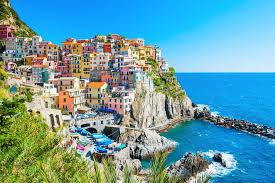
“What am I supposed to do in the meantime?” I asked. Dr. McGrath rubbed his long chin, pondering this question. He had just had the misfortune of telling me I wouldn’t be realizing my dream of becoming a doctor—not yet, anyway—advising me to take some time off from my studies before applying to medical school. And his ‘advice’ was a big deal, because I couldn’t complete my application without a letter from him. “You’ve talked about going to Europe? Why don’t you give that a try?” Although I wasn’t sure what kind of plan ‘going to Europe’ was, I was sure my parents—who had paid most of the bill for my undergraduate education—were going to think it was a bad one. “Yeah, that’s it,” he said, with finality. “Go to Europe, and when you get a back, I’ll write you a letter that will get you in to medical school.” He ushered me out the door before I could think of something to say. On the way back to my dorm, I tried to think of some clever way to break this to my mother, who had been telling everyone that her son ‘was going to be a doctor’ ever since I had signed up for Organic Chemistry. Luckily, my father answered the phone, and his response was both a huge relief and a huge surprise. “Dr. McGrath is right, Peter, you’re too immature to go to medical school right now. You have to grow up a little.” I was immature? Stunned by the revelation that both my father and my premedical advisor thought I needed to grow up, I took Dr. McGrath’s advice and went to the career office and made out some applications to teach chemistry in Austria. Now, I know that sounds pretty random, but what else was I going to do? A few months later, I trotted off to Salzburg, Austria, with two brown duffels stuffed with just about everything I owned to begin my three-year stint as a Chemistry and Math teacher at the Salzburg International Preparatory School. And things started off auspiciously, by which I mean that I left my un-listened to German tapes on the plane, slept through my train connection and ended up in Graz, and missed the first faculty meeting because I miscalculated the time change. Immature? Huh, me? But things did get better… a lot better. The next three years unfolded like some kind of dream, the kind where you wake up and try to fall back asleep and keep the dream going. I hiked and skied the Alps, rode my bike through the rolling hills, strolled the cobbled streets of Salzburg’s epic old city, and enjoyed coffee and torte at the cafes. I also drank a lot of beer, but don’t tell Dr. McGrath that! And I travelled, extensively, visiting nearly every country in Europe. I will always remember my trip to the Cinque Terre, a UNESCO World Heritage Site on the rugged seacoast of Liguria, Italy. We got off the train in Vernazza and I remember staring at the landscape, as if such rugged beauty had to be a figment of my imagination. But it wasn’t. On that trip as well as several others I have taken to the Cinque Terre over the years, I took extensive notes, convinced I would someday incorporate the ‘five lands’ into a novel of some sort, not just as a setting for the novel, but as a character in it as well. There is a sentence in the very first chapter of The Vatican Conspiracy that comes more or less straight from my notes: “Marco had stood there many times, mesmerized by the splashes of bright color in the harbor—the pink and orange buildings squeezed against the gray sandstone, and the blue and yellow rowboats littered along the winding path to the water—letting the words to a sermon drop into his head.” In those days, the area was still pretty isolated and unknown, and I felt like an art lover touring the Louvre by himself, gawking at the mountains erupting straight out of the Ligurian Sea as if they were the Mona Lisa. I will never forget the smell of the place, the nose-pleasing aroma of sea salt, caper blooms and frying sardines. Its sound is just as memorable, the crashing of the breakers against the rocks, the continual arguing of the gulls, and the whisper of the wind through the olive trees growing on the terraced slopes above the sea. With Salzburg and Vernazza in mind as the setting, I just needed a story. And it turns out that, although I didn’t come up with the premise for the story until 2009, more than twenty years after I graduated from the College of the Holy Cross, the seeds for that premise were actually sewn during my years on the hill overlooking Worcester, Massachusetts. Holy Cross is a Jesuit college, which means that Jesuit priests not only teach there, but live there as well, many of them in the same dormitories as the students. As I interacted with them in their roles as professors, dormitory heads, and chaplains, I was so impressed by their intelligence, their thoughtfulness, and most especially their humanity. Fast forward to 2009. I had just abandoned my first manuscript and sat down to begin my second, mulling over everything I had learned in the process, the general gist of which was that, in order to be publishable, a manuscript from a debut author had to bring something new and different to the table. No ex-FBI agents battling old demons and substance issues; no former Navy Seals haunted by the dead lovers they failed to save. Something new and different. And that’s when the idea hit me, to put a thoughtful, peace-loving Jesuit priest into the role usually occupied by the aforementioned stereotypical main character. The other big lesson I learned from my first attempt to write—and publish—a manuscript is that tension and conflict are the flesh and bones of a story; without tension and conflict, there is no story. As I mulled this over, the skeleton of the plot formed in my head. A young priest is visited in the confessional by his former lover who has unwittingly gotten into trouble with a group of violent men. He tries to talk her into going to the police but she is unwilling; he wants to alert the authorities but he is unable, bound by the seal of the confessional. When my chest tightened and my breath stuck as I typed out that first chapter, I knew I had the beginnings of a real novel. I’ll leave it at that, but just in case you are wondering, I have kept in touch with Dr. McGrath over the years. Without him—and the courage it took to say no to me at a time in my life when I needed to be told no—I don’t think The Vatican Conspiracy would ever have come to be. And I still made it to medical school, three years later. When I received a box of books from the publisher, guess who one of the copies went to? You guessed it, Mike McGrath. In the letter I sent with the book, I thanked him for helping me get started with both of my careers. If you would like to take a look at the book (and you didn't click on the two links above) here is the link to the book's Amazon page: Check out The Vatican Conspiracy
Cheers, peter
:)
,
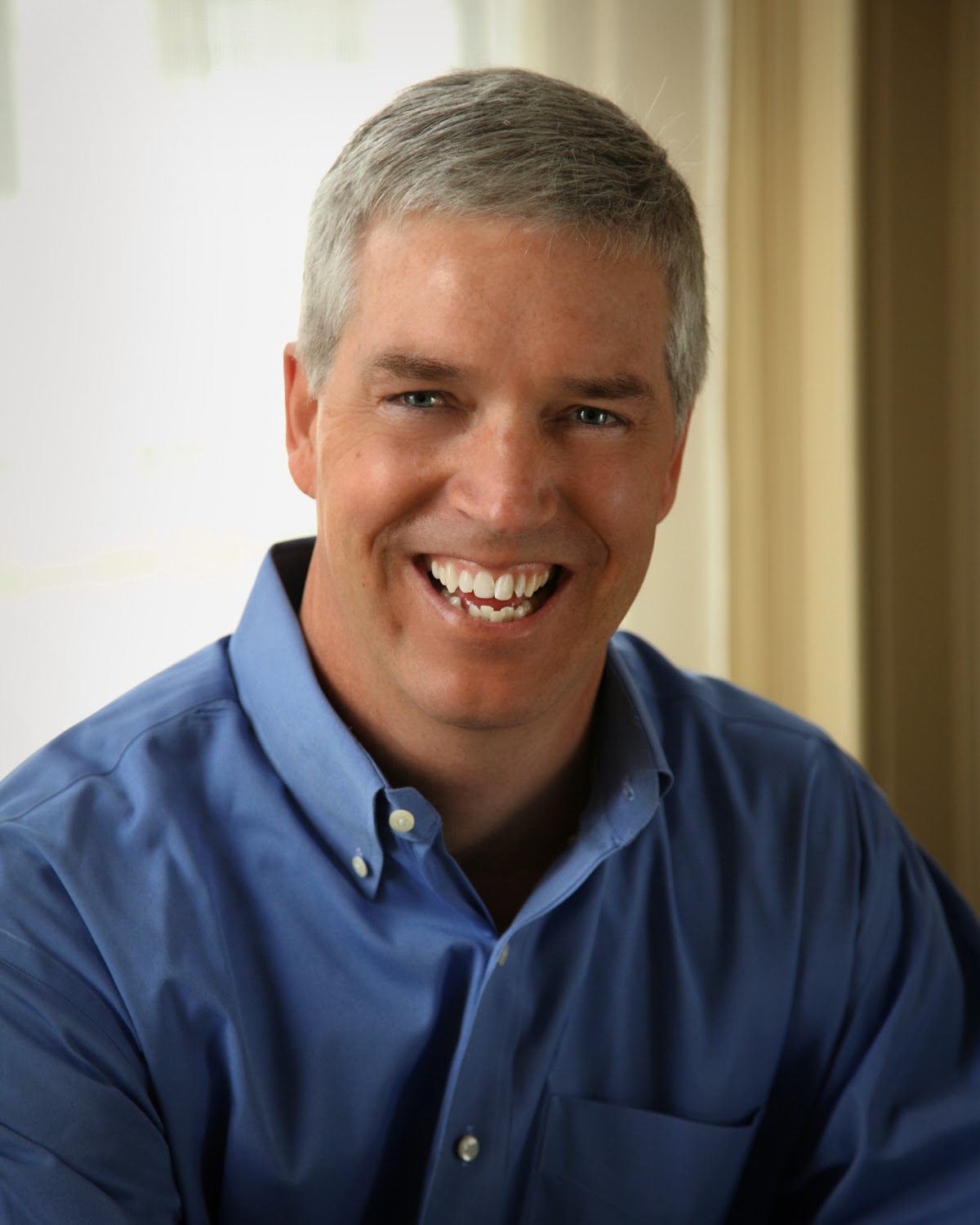 Peter Hogenkamp is a practicing physician, public speaker and author living in Rutland, Vermont. Peter's writing credits include The Intern, TouchPoint Press, 4/2020; The Vatican Conspiracy, the first book in the Marco Venetti thriller series, October 2020, Bookouture/HachetteUK; The Vatican Secret, Marco Venetti #2, April 2021; and THE LAZARUS MANUSCRIPT, a stand-alone medical thriller; Peter can be found on his Author Website as well as his personal blog, PeterHogenkampWrites, where he writes about most anything. Peter is the founder and editor of The Book Stops Here, the literary blog for readers and writers written by authors, editors, agents, publishers and poets. Peter is the creator, producer and host of Your Health Matters, a health information program, which airs on cable television, streams on YouTube and sounds off on podcast. Peter tweets--against the wishes of his wife and four children--at @phogenkampvt and @theprosecons. Peter can be reached at peterhogenkampbooks@gmail.com or on his Facebook Page.

November 19, 2020
The One (And Only) One Reason to Write A Book Is...
I was going though some old posts this morning, and I found this one (2014) gathering dust. It was written after I had been writing for just over a decade, and yet was still, despite having signed with a top literary agent, not published. I love this post because despite ten years of frustration, rejection and beating my head against the wall, you can see why I do this to myself--it's because I like to write. I would say I need to write, but that sounds too melodramatic (and my wife says I need to be less melodramatic.)
In the interim, many of my dreams have come true. I have published or won the following awards:
The Vatican Conspiracy, (Bookouture/HachetteUK, 10/2020)
The Intern (TouchPoint Press, 4/2020)
Finalist, 2019 Killer Claymore Award
Top Finalist, 2020, Vermont Writer's Prize
Doubt, the sequel to The Vatican Conspiracy, (Bookouture/HachetteUK, 4/2021)
The Woman From Death Row, hopefully coming out in October 2021.
So, I've had some success, and I appreciate you letting me talk about it, but, in my defense, I have been very transparent about my previous lack of success and the large amount of time and energy I have spent in the process. But, again, that's not why I write: If you want to do know why I write, keep reading. I hope you do, because i think it's worth the three minutes, and it's funny, as well. I also hope you buy one of the two books that are now available, and not just because I love watching my Amazon rank improve. It's because there is nothing more important to an author than a reader loving his or her book (and writing a good review?) Enjoy
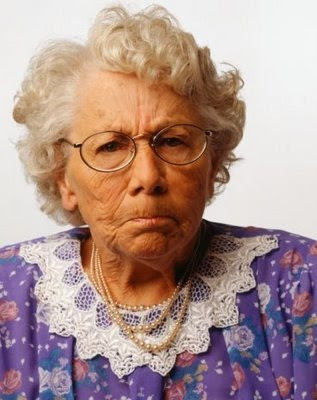
The person sitting next to me was just the person you didn't want to be sitting next to on a five-hour flight; overly curious, just old enough not to care about what anyone thought about her, and slightly redolent of cat urine. She pointed an alabaster finger at my computer as the captain announced we had reached cruising altitude, meaning we only had four-and-a-half hours flying time left.
"Whatya doing?"
In truth, I was trying to finish up the edits on my latest manuscript, but I just shrugged, hoping she would go back to staring out the window, below which the green majesty of the Northern Forest crawled past.
"Looks like you're writing a book?"
I nodded.
"You some kind of author?"
Indeed I was, the unpublished kind, the kind of author I was going to remain if I didn't get these edits into my literary agent.
"Trying to be."
She pushed her pince-nez glasses back against her sharp, thin face and leaned against me to get a better view of my screen.
"This isn't erotica, is it?"
I assured her it wasn't.
"My friend Mabel reads erotica, but I don't touch it."
She reached over my lap and twisted the laptop toward her, squinting as if she had just sucked on a lemon. After a few minutes she straightened back up in her seat.
"It's not half bad, although I don't think Mabel would like it, not steamy enough for her."
I went back to my editing, conscious of her gazing over my shoulder at the computer.
"Have I read anything of yours?"
I explained to her that I was still unpublished, after a solid decade of writing, editing and querying. Her thin purple lips curled into a snarl; or maybe she was smiling. It was hard to tell.
"Can I ask you something?"
A hundred responses tumbled through my head; I didn't utter any of them, nodding instead.
"Why are you bothering?"
It was the same question I used to get all the time, before people stopped asking me anything at all about my writing. My wife has asked me this question--many, many times--my friends have asked me, and my patients have grumbled it, sour-faced, usually after having had to see one of the other providers in my office.
"You say you've been doing this for more than ten years, and you're still not published?"
I nodded; the angle of her lips steepened, giving her a look of sheer incredulity.
"Why don't you just give up and do something else?"
I'll give her one thing; she wasn't afraid to say what was on her mind. I had a strong suspicion she was going to recommend I take up Canasta, but she lapsed into silence instead, and fell asleep a moment later, her breath coming in soft snorts and chortles.
Letting out a sigh of relief, I opened my laptop and got back after it--or tried to get back after it, that is, as her words reverberated in my skull. Why don't you just give up and do something else?
In truth, I've tried to give up a handful of times, usually after a flurry of rejections or--even worse--no responses from the agents and/or publishers to whom I had sent material. One rejection is bad enough, but five in a few day's time? That's soul-sucking.
But I don't stay away too long. The truth is, I like to write. That's pretty much all there is to it. If you are wondering why I woke up at 4:30 am for an entire year to write my first manuscript, it's because I enjoyed doing it. I thought things had changed after I signed with a top-notch literary agent back in 2013, but they hadn't, I was just hoping they had. (I hoped that) Writing had become a profession for me, something I was doing because I had to or because I had been somehow ordained to. But this was merely a fanciful notion, one that was dispelled for me by the score or so editors who passed on my manuscript.
One of the editors (who worked for a major, Big 5 publishing house) was enthusiastic enough about the book to pass it up the chain, but in the end it was still a no. There were other positive signs as well: the first being that the concept and pitch had garnered as much interest as it did, having been requested by more than two dozen mid and major houses; the second was the significant amount of optimistic feedback the manuscript had garnered along with the rejections--an unusual thing and a very good omen according to Liz, my agent.
But in the end it was still a no, and I remained a guy who enjoys writing, not a published author. It was a distinction of which I was acutely aware for several months, and one that kept me from lifting the lid of my MacBook for a good long while.
When I finally got back on the horse to start working on an idea that had been flitting around in my head, it wasn't that I had thought of a story that just needed to be written, or created a character so real and so original it just had to be fleshed out on paper. Rather, I realized I missed the process of developing a story and creating characters by writing words down on paper. And so I got back on the horse and started writing what has now become my third novel, which I have tentatively named The Intern.
Why do I continue? You know the answer. I enjoy the process of writing. The only piece of advice I have for people who are considering taking up writing is just that: By all means do write, but write because you enjoy the process of writing (and editing and re-writing etc.). Don't write because you think you need to, or because you have to tell a certain story, or because your style is so original or unique, or any other reason than you enjoy the process.
Think of it this way: If you really, truly enjoy the process, you can never be unhappy with the outcome. Was I over-joyed that my last manuscript didn't clear the last hurdle prior to being published? No, I wasn't; but was I glad I spent countless hours creating it? You bet, and I would do it again. (In point of fact, I am doing it again.)
"Did you finish?"
My friend has awoken; she's staring at me with the same look, the one I can't tell if it's a smile or a sneer.
"Yup."
"Good, I'm getting tired of the same old authors."
Cheers, peter
:)
,
Peter Hogenkamp is a practicing physician, public speaker and author living in Rutland, Vermont. Peter's writing credits include The Intern, TouchPoint Press, 4/2020; The Vatican Conspiracy, the first book in the Marco Venetti thriller series, October 2020, Bookouture/HachetteUK; Doubt, Marco Venetti #2, April 2021; and THE LAZARUS MANUSCRIPT, a stand-alone medical thriller; Peter can be found on his Author Website as well as his personal blog, PeterHogenkampWrites, where he writes about most anything. Peter is the founder and editor of The Book Stops Here, the literary blog for readers and writers written by authors, editors, agents, publishers and poets. Peter is the creator, producer and host of Your Health Matters, a health information program, which airs on cable television, streams on YouTube and sounds off on podcast. Peter tweets--against the wishes of his wife and four children--at @phogenkampvt and @theprosecons. Peter can be reached at peterhogenkampbooks@gmail.com or on his Facebook Page.November 4, 2020
Vermont Bound: Interview with Storyteller Peter Hogenkamp
I started writing when I was ten (46 years ago!) and in that time I have spent a lot of time thinking about how cool it would be to be interviewed about my craft as a writer. Well, bucket list check time.
I would love for you to watch the interview; I would also love for you to read The Vatican Cospiracy which, by the way, is available on e-book for 99cents at this time.
Cheers, peter
:)
,
Peter Hogenkamp is a practicing physician, public speaker and author living in Rutland, Vermont. Peter's writing credits include The Intern, TouchPoint Press, 4/2020; The Vatican Conspiracy, the first book in the Marco Venetti thriller series, October 2020, Bookouture/HachetteUK; Doubt, Marco Venetti #2, April 2021; and THE LAZARUS MANUSCRIPT, a stand-alone medical thriller; Peter can be found on his Author Website as well as his personal blog, PeterHogenkampWrites, where he writes about most anything. Peter is the founder and editor of The Book Stops Here, the literary blog for readers and writers written by authors, editors, agents, publishers and poets. Peter is the creator, producer and host of Your Health Matters, a health information program, which airs on cable television, streams on YouTube and sounds off on podcast. Peter tweets--against the wishes of his wife and four children--at @phogenkampvt and @theprosecons. Peter can be reached at peterhogenkampbooks@gmail.com or on his Facebook Page.
July 15, 2020
May 20, 2020
America's Youth Obsession (and Why We Need to Get Over It.)
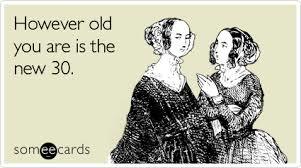
We have all heard it before, Sixty is the new Forty, and now, the recent corollary, Fifty is the new thirty. Well, having turned 56 this past March, I am taking objection. Yes, that's right, you heard me: I am fifty-six, dammit, and I don't want to be thirty again. Being thirty again would mean I would have to give away 25+ years of hard-earned experience, and I am not willing to do that. Being 30 again would also mean I have to: Throw out two-and-a-half decades of learning and knowledge. Hell NO! Wipe clean nearly a quarter century of memories, both good and bad. Nahhhh. I earned every grey hair and wrinkle, and I am going to keep them. There is a greater point here, though, and sooner or later I am going to get around to making it. (But I'm 56, so it takes me a while.)
We live in a culture that is dominated by youth. If you need evidence of this, just turn on the TV. In less than one program, you will be assaulted by advertisements promising you that you can look younger, feel younger, and, yes, even be younger. (Just order before midnight tonight.) Not convinced? Try checking out of the grocery store. Look ten years younger in just a week! Who do you see on the cover of those glossy magazines?

Yup, you guessed it, a half-dozen supermodels and actresses, all in their teens or twenties. Still not convinced? Turn on your computer, switch on your radio, read the paper, and think younger, dress younger, act younger.
The question is: Why? Why are we so obsessed with youth? I have my guesses, as I am sure you do, but I wanted to focus on something else, namely, what we are giving up on when we focus so much on youth. There is a sacrifice inherent in our culture's youth obsession, and that sacrifice is that we don't rely on experience, wisdom, and knowledge as much as we should. This is a steep price to pay, and the sad fact is that many people don't even realize we are paying it.
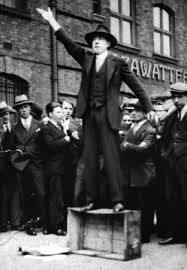
I could go on, but the soap box I am standing on is teetering (my balance isn't that good anymore) so I will make just one last point. I am fifty-six, and I want to be fifty-six (until next March when I turn fifty-seven.) I had less grey hair and fewer wrinkles when I was thirty, but I had less perspective, and I find the added perspective lends itself to being more content in my own (more wrinkled) skin. And that's the biggest problem, really, with our youth obsession: since there is neither a cure for aging nor even a way to slow it down, our inexorable climb to getting older becomes an inexorable climb to discontent, unhappiness, and frank depression. But, unlike the climb to being older, the climb to discontent is a climb we can abandon. All we have to do is to give experience and wisdom the respect they deserve, and the climb in years is something we can accept and appreciate, even look forward to.
And, although I would love to see us do this as a society, you don't have to wait for that: you can do it on a personal level. That's how you effect a culture change, from the grassroots level. One person does it, then the next, and soon enough our depressing obsession with youth will just be another ill-advised fad in the rear-view mirror.
On another note, check out The Intern (TouchPoint Press, 4/2020) on Amazon (and write a review if you want.)
Cheers, peter
:)
,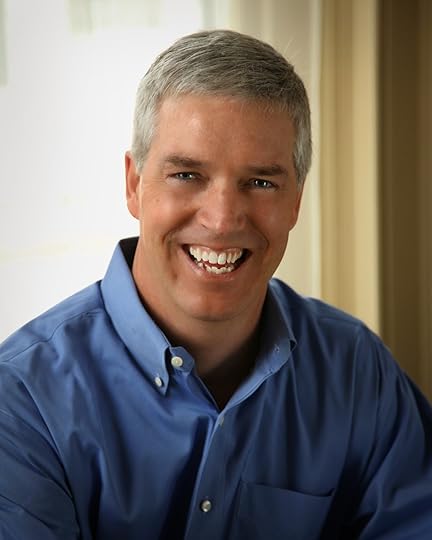 Peter Hogenkamp is a practicing physician, public speaker and author living in Rutland, Vermont. Peter's writing credits include The Intern, coming April 2020 from TouchPoint Press; Absolution, coming October 2020 from Bookouture, an imprint of Hachette UK; and THE LAZARUS MANUSCRIPT, a stand-alone medical thriller; Peter can be found on his Author Website as well as his personal blog, PeterHogenkampWrites, where he writes about most anything. Peter is the founder and editor of The Book Stops Here, the literary blog for readers and writers written by authors, editors, agents, publishers and poets. Peter is the creator, producer and host of Your Health Matters, a health information program, which airs on cable television, streams on YouTube and sounds off on podcast. Peter tweets--against the wishes of his wife and four children--at @phogenkampvt and @theprosecons. Peter can be reached at peter@peterhogenkamp.com or on his Facebook Page.

We live in a culture that is dominated by youth. If you need evidence of this, just turn on the TV. In less than one program, you will be assaulted by advertisements promising you that you can look younger, feel younger, and, yes, even be younger. (Just order before midnight tonight.) Not convinced? Try checking out of the grocery store. Look ten years younger in just a week! Who do you see on the cover of those glossy magazines?

Yup, you guessed it, a half-dozen supermodels and actresses, all in their teens or twenties. Still not convinced? Turn on your computer, switch on your radio, read the paper, and think younger, dress younger, act younger.
The question is: Why? Why are we so obsessed with youth? I have my guesses, as I am sure you do, but I wanted to focus on something else, namely, what we are giving up on when we focus so much on youth. There is a sacrifice inherent in our culture's youth obsession, and that sacrifice is that we don't rely on experience, wisdom, and knowledge as much as we should. This is a steep price to pay, and the sad fact is that many people don't even realize we are paying it.

I could go on, but the soap box I am standing on is teetering (my balance isn't that good anymore) so I will make just one last point. I am fifty-six, and I want to be fifty-six (until next March when I turn fifty-seven.) I had less grey hair and fewer wrinkles when I was thirty, but I had less perspective, and I find the added perspective lends itself to being more content in my own (more wrinkled) skin. And that's the biggest problem, really, with our youth obsession: since there is neither a cure for aging nor even a way to slow it down, our inexorable climb to getting older becomes an inexorable climb to discontent, unhappiness, and frank depression. But, unlike the climb to being older, the climb to discontent is a climb we can abandon. All we have to do is to give experience and wisdom the respect they deserve, and the climb in years is something we can accept and appreciate, even look forward to.
And, although I would love to see us do this as a society, you don't have to wait for that: you can do it on a personal level. That's how you effect a culture change, from the grassroots level. One person does it, then the next, and soon enough our depressing obsession with youth will just be another ill-advised fad in the rear-view mirror.
On another note, check out The Intern (TouchPoint Press, 4/2020) on Amazon (and write a review if you want.)
Cheers, peter
:)
,
Peter Hogenkamp is a practicing physician, public speaker and author living in Rutland, Vermont. Peter's writing credits include The Intern, coming April 2020 from TouchPoint Press; Absolution, coming October 2020 from Bookouture, an imprint of Hachette UK; and THE LAZARUS MANUSCRIPT, a stand-alone medical thriller; Peter can be found on his Author Website as well as his personal blog, PeterHogenkampWrites, where he writes about most anything. Peter is the founder and editor of The Book Stops Here, the literary blog for readers and writers written by authors, editors, agents, publishers and poets. Peter is the creator, producer and host of Your Health Matters, a health information program, which airs on cable television, streams on YouTube and sounds off on podcast. Peter tweets--against the wishes of his wife and four children--at @phogenkampvt and @theprosecons. Peter can be reached at peter@peterhogenkamp.com or on his Facebook Page.April 15, 2020
The Three 'R's of Getting Published, Rejection, Rejection, Rejection: My Path to Becoming a Published Author, Part 2

I know what you're thinking. Why put up with all that rejection? Wouldn't I have been better off sometime after the first fifty rejections to just take up Canasta? After a hundred rejections try to fine tune my German pronunciation? Close to the two-hundred-and-fifty mark, shouldn't I have have attemtped to learn the didgeridoo, the King of Aboriginal instruments? (FYI, I haven't had 250 rejections, although I am getting close and it feels like a thousand.)
The answer, of course, is Nein; I wouldn't have been better off. And there is a simple reason why. My gut instinct is to tell you that if I had, then (insert shameless plug here) my first published novel, The Intern, would never have been made it to print. And while that is very good incentive for a guy that has been writing for a long time, it's not what I am getting at.
I started my first manuscript fifteen years ago, about a year after I turned 40. The manuscript was good, too, or, at least I thought so at the time. I attracted the attention of a few literary agents with it, and I wisely accepted their invitation to revise and re-submit. And although they both passed on the revision, something important happened. The manuscript got better, quite a bit better, actually.
The same thing happened for my second manuscript, Absolution. The original manuscript netted more than thirty requests for full manuscripts from agents, and I ended up with a half-dozen R&R requests. Again, I wisely accepted the invitations, and this manuscript also got better, a lot better, good enough, in fact, to get offers from more than a handful of agents. If you're thinking that this was my big break--that is certainly what I was thinking--you'd be wrong as I was. Despite a lot of attention from Big 5 editors, including some of my favorite imprints such as Atria, Tor and Minotaur, it was all passes.
But... along with the passes I got some great advice. And I revised again, and modified my writing style as well (which is way harder than revising the plot, btw.) And now you are thinking: He finally got his big break? And you are wrong again.
Nope, not yet. Because (point#1 about publishing) this is a tough business. But I was close, and I never stopped believing in the book, so, while I started on the next manuscript which would become (insert shameless plug #2 here) my first published novel, The Intern, I submitted Absolution to a few writing contests, and, lo and behold, it was named a finalist in a major, nationwide writing competition. And while it didn't win, the Finalist title got the book the attention it needed, and I signed with an imprint of Hachette UK months later (point #2 about the publishing industry; it grinds like a snail-driven gear in desperate need of oil) which is when the real improvement began.
I have now had the good fortune of signing with two different publishers and working with two different editors, and I am here to tell ya that this is what every writer should be aspiring to do. The process of working with an commissioning editor--the one who has signed your book--is the best learning experience an author can get. Why? Because the point is anything but moot, that's why. The editor is investing a lot of time and money into you and the manuscript she signed. The gloves are coming off, my friend, and that's a good thing. Having done a bunch of editing myself, I can tell you that it's all fun and games until there is a signed contract on the table and the presses are warming up to print. There's a lot of money riding on the success of the book; the time to worry about sparing someone's feelings is long gone. And that's when the learning takes place. That's when you become an even more accomplished writer. That's when you take your writing to the next level.
The point? Dust off that short story you slaved over and then shelved. Extract that manuscript from the depths of your computer, you know, the one you intended to be the next great American novel. Enter a contest. Submit to a publisher or a literary agent. The worst thing that can happen is a No, and that's also the best thing that can happen, because you are now on the road to become a better writer.
And if you need a break from #quarantine and #corona (and we all do) give The Intern a try. #theintern is a compelling tale of a doctor’s love for a dying boy and the effect it has on her life and happiness, set in the dusty hallways of an inner-city charity hospital in Spanish Harlem, surrounded by a cast of quirky but memorable characters, and told with clear prose and professional detail.
Cheers, peter
:)
,
Peter Hogenkamp is a practicing physician, public speaker and author living in Rutland, Vermont. Peter's writing credits include The Intern, coming April 2020 from TouchPoint Press; Absolution, coming October 2020 from Bookouture, an imprint of Hachette UK; and THE LAZARUS MANUSCRIPT, a stand-alone medical thriller; Peter can be found on his Author Website as well as his personal blog, PeterHogenkampWrites, where he writes about most anything. Peter is the founder and editor of The Book Stops Here, the literary blog for readers and writers written by authors, editors, agents, publishers and poets. Peter is the creator, producer and host of Your Health Matters, a health information program, which airs on cable television, streams on YouTube and sounds off on podcast. Peter tweets--against the wishes of his wife and four children--at @phogenkampvt and @theprosecons. Peter can be reached at peter@peterhogenkamp.com or on his Facebook Page.March 15, 2020
More than Twenty Years in the Making: The Genesis of The Intern
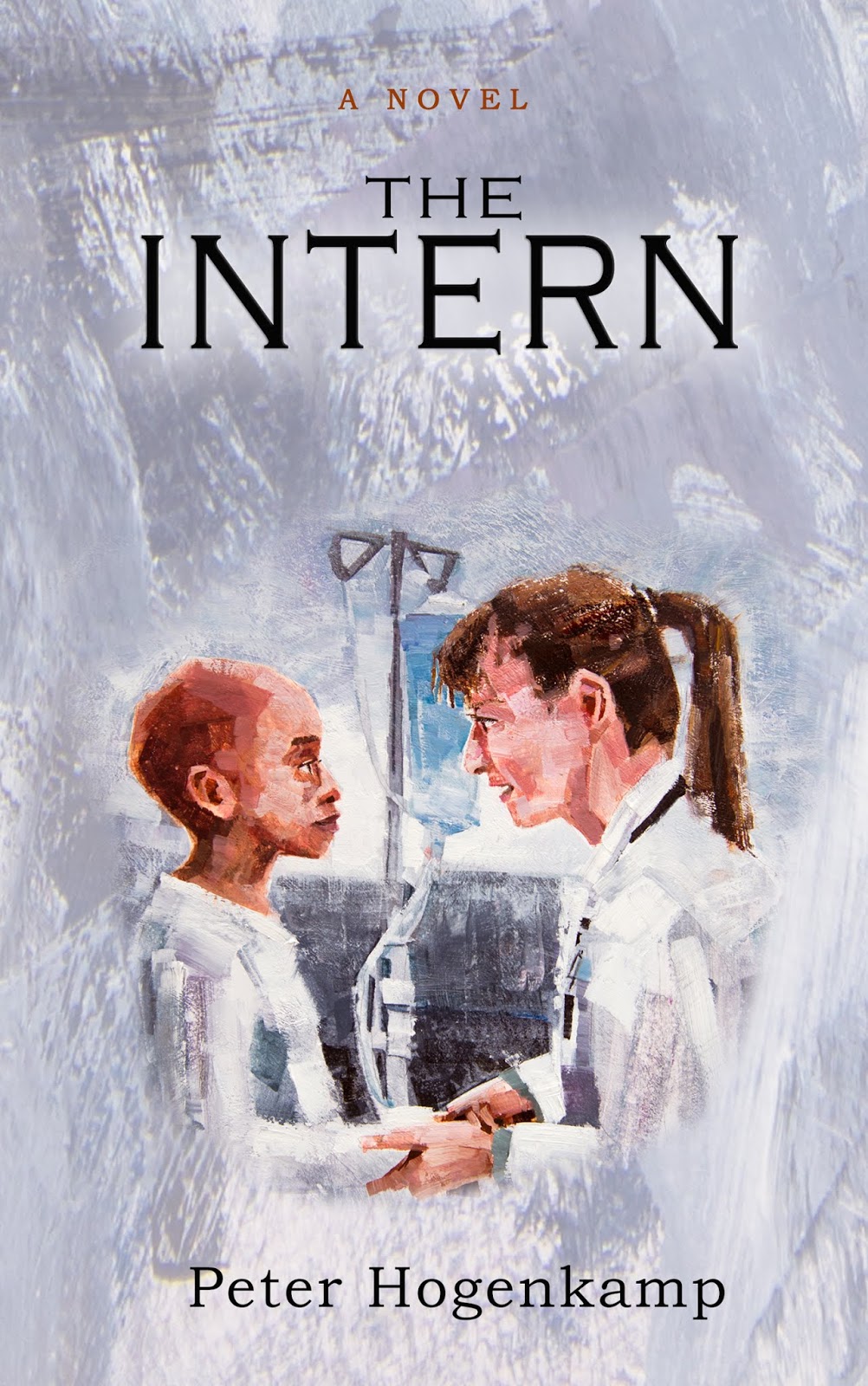
It was 2015 by the time I sat down to write the book that would eventually become my first published novel (The Intern, TouchPoint Press, April 13, 2020) a solid twenty years after meeting the twelve-year-old boy who inspired me to write his story. Maya Angelou said that “people will forget what you said, people will forget what you did, but people will never forget how you made them feel,” and she was dead on, because I can’t remember many of the things he said and did, but I can remember, with complete and absolute clarity, the way he made me feel, the punched-in-the-gut feeling that has stayed with me all these years.
It was the spring of my internship, April, 1994, and the skies in Syracuse, New York were leaden and grey, doing nothing to improve my mood which had become dour with the long hours, lack of sleep and the never-ending scutwork. I was on Pediatric call for the weekend, meaning that the never-ending scutwork had now been multiplied by four, and I’d just gotten over a stomach virus that had ransacked my intestines like a horde of angry Vikings. One of the attendings—a private physician who only called the interns on a case when it mostly involved busywork—had asked me to admit a twelve-year-old boy dying of cancer. As I trudged down to the Emergency Department to get the task done, my attitude was at an all-time low.
It was a straightforward enough case, a patient with refractory Acute Lymphoblastic Leukemia being admitted to the hospital so that his family didn’t have to watch him die at home. No, there wouldn’t be much to do, IV fluids and comfort medications, but that also meant there wouldn’t be much to learn, and learning is the intern’s compensation for doing all the paperwork, all the scutwork, and anything else the attending physicians don’t want to do. In this case, there wouldn’t be any learning at all (or so I thought at the time) meaning there would be no payoff for doing all the monotonous tasks. Grrrrrr.
I arrived in the Emergency Department, a place the interns called “the asshole of the hospital,” and located the patient’s room, which was not really a room but more of a recess in the hall walled off by a pair of curtains on wheels. I narrowly avoided an orderly carrying a freshly used bedpan, squeezed between the curtains and introduced myself to the patient’s parents, who were kneeling on the dilapidated tiles, holding their son’s hands. They nodded hello and went back to watching their son, who was lying on the stretcher on his back, his torso covered by a thin sheet. The chemotherapy, which had been unsuccessful in killing the cancer cells in his body, had been successful in wiping out the hair follicles on his head, leaving his scalp bare and his skin the color of a dirty athletic sock. He looked up at me with big eyes and smiled as best he could given the amount of pain he was in. At a loss for anything else to say, I asked him how he was.
“I’m good, thanks,” he said, despite the fact that he would die in less than twenty-four hours.
“Do you have any pain?”
“No, I’m okay.”
His body language and facial expression said otherwise, so I asked again, rephrasing the question as I’d learned to do in some forgotten class at some remote point in my previous training, which felt a long time off and far away from kneeling next to this dying boy in a hallway in the bowels of an old hospital with the staccato chorus of alarm bells and bellowing drunks in the background and the smell of burnt coffee and stale urine floating in the air.
“On a scale from one to ten, with one being just a mild discomfort and ten being the worst pain you’ve ever had, how would you rate your pain?”
“One or two, maybe. I’m not sure. I'm fine really.”
He stopped talking to rest his breathing, and I flipped open the chart I’d brought with me from the Nurses’ station. His labs were a mess. The leukemia had completely overwhelmed his bone marrow, which had stopped producing red blood cells, white blood cells, and the platelets his body used to control bleeding. He'd been getting transfusions of all three blood products for several months, but he’d recently decided enough was enough, and had refused any further transfusions. His parents, however, were still not ready to let him die; in a hand-written note at the front of the chart, his mother begged me to convince him to resume the transfusions. My hands started to shake so badly that the chart rattled; I set it down on the bed before I dropped the damn thing.
“I can order some blood for you? It will make you feel better.”
He shook his head. “No, thank you, let someone else have it.”
My pager buzzed but I ignored it. All I could think about was this courageous twelve-year-old boy who was looking death square in the eye and not flinching, who was lying about his pain so that his parents didn’t have to bear the additional burden of his suffering, as if his dying wasn’t enough.
“Are you sure?”
He nodded, wiping away the blood that trickled out of the corner of his eyes.
A large crater opened up inside of my stomach, spewing hot lava inside my abdomen. I tried to speak, to say something to make the situation better, but no words issued from the dry barrens of my mouth. He reached over with his right arm (his left had been amputated because his chemotherapy had withered it away) and grabbed my hand, staring into my face, which must be wearing all the angst I was feeling. “It’s going to be okay, doctor.”
What was he talking about? Of course, it wasn’t going to be okay. He was twelve and he was bleeding out of his eyeballs. There was nothing okay about any of this. It was terribly, horribly wrong and there didn’t seem to be anything I could do about it. And how was it that he was trying to comfort me? Shouldn’t it be the other way around? I tried to pull my hand away to write orders (as if that was going to accomplish something) but he hung on to it with a strength that belied his cancer-pillaged body, so I let the orders alone for a while and held his hand, which was cool and clammy from his poor circulation. And so there we were, the four of us, the patient lying on the stretcher with his parents on one side, and me on the other, all of us holding on to each other for dear life.
There are times in life when logic and reason take a back seat. (In what calculus, I ask you, does a twelve-year-old boy suffer and die as his parents and his doctor look helplessly on?) This was one of those times, one of those moments in which only emotion exists. Sadness and grief swirled like a mist in front of me and anger germinated from some dark abyss. And, strangely, hope blossomed, weakly at first but gaining vigor and sharp color even as the color in his cheeks faded and ultimately went out. Yes, cancer did ravage his body (he weighed less than fifty pounds when he died) but it never blemished his spirit, which remained resilient and courageous and strong to his last breath. That’s cause for hope.
It’s a hope I still feel, twenty-five years later. I like to regard it as his legacy, for which I am forever thankful. I think of him from time to time, when life's twists and turns bring me to a low point, and I remember the twelve-year-old boy who tried to ease my burden as he lay dying. The juxtaposition of the problems he faced with those that I am facing always gives me perspective; the mopey look on my face is replaced by a smile, and I press on. It's happening again right now, as COVID-19 rips through our country, closing and cancelling almost everything--including at least one of my scheduled book signings--in its wake; I think about his courage and his resilience and some of it leaks into my veins. My shoulders don't sag, my chin lifts, my smile broadens.
Which brings me back to The Intern, coming out April 13, 2020. I can only hope the tale I told about him, written more than twenty years after I met him, does him justice. I think it does, but I will let you be the judge. Keep in mind that his character has been influenced by dozens of other people--patients I have treated, people I have known, characters I have met in books and several editors who have worked on the book--but that original boy is still there.
May he rest in peace.
Link to the Amazon page to pre-order the Kindle Edition of The Intern
Link to the TouchPoint Press Website to Pre-Order the paperback edition of The Intern
Cheers, peter
:)
,
Peter Hogenkamp is a practicing physician, public speaker and author living in Rutland, Vermont. Peter's writing credits include The Intern, coming April 2020 from TouchPoint Press; Absolution, coming October 2020 from Bookouture, an imprint of Hachette UK; and THE LAZARUS MANUSCRIPT, a stand-alone medical thriller; Peter can be found on his Author Website as well as his personal blog, PeterHogenkampWrites, where he writes about most anything. Peter is the founder and editor of The Book Stops Here, the literary blog for readers and writers written by authors, editors, agents, publishers and poets. Peter is the creator, producer and host of Your Health Matters, a health information program, which airs on cable television, streams on YouTube and sounds off on podcast. Peter tweets--against the wishes of his wife and four children--at @phogenkampvt and @theprosecons. Peter can be reached at peter@peterhogenkamp.com or on his Facebook Page.November 7, 2019
The 10 Most Important Things You Need to Know About Your Thyroid Gland
Hope you enjoyed the program.
Cheers, peter
:)
,
Peter Hogenkamp is a practicing physician, public speaker and author living in Rutland, Vermont. Peter's writing credits include The Intern, coming in 2019 from TouchPoint Press; ABSOLUTION, the first book of The Jesuit thriller series, which was a finalist for the 2019 Killer Nashville Claymore award; and THE LAZARUS MANUSCRIPT, a stand-alone medical thriller; Peter can be found on his Author Website as well as his personal blog, PeterHogenkampWrites, where he writes about most anything. Peter is the founder and editor of The Book Stops Here, the literary blog for readers and writers written by authors, editors, agents, publishers and poets. Peter is the creator, producer and host of Your Health Matters, a health information program, which airs on cable television, streams on YouTube and sounds off on podcast. Peter tweets--against the wishes of his wife and four children--at @phogenkampvt and @theprosecons. Peter can be reached at peter@peterhogenkamp.com or through his literary agent (Liz Kracht of Kimberely Cameron & Associates) at liz@kimberleycameron.com.November 3, 2019
Why I Write, Part II: Writing and the Discovey of Self
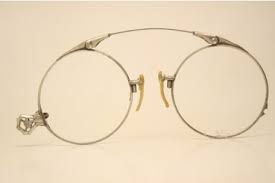
I’d just settled into my seat when she sat down, the same lady who’d sat next to me on the same flight exactly one year ago. It had to be her; the pince nez glasses, the narrow, pinched face, the slightly blue tint to her tight perm. I grabbed desperately at the in-flight magazine to shield my face, but it was too late. She recognized me.
“You, eh...”
Her tone implied I had stolen her recipe for homemade ginger snaps, tromped on her parent’s grave or kidnapped her favorite cat.
“Yes, it’s me.”
She slid into the open seat next to me, depositing the world’s largest purse on the floor in front of me.
“You don’t mind, do you?”
I minded, but my head shook of its volition and she patted me on the shoulder.
“I just don’t like anything near my feet... in case we have to make an emergency landing.” (But it was okay with her if I got tangled up and burned in the wreckage.) “You’re the writer, aren’t you?”
With no other recourse, I nodded, confirming it. Her lips curdled into a sneer. “The unpublished one.”
This was it, my moment of triumph. After years of going unpublished, I’d received several offers for publication, and my most recent novel (The Intern, TouchPoint Press) was soon to be in print (December, 2019.) But she didn’t even give me a chance.
“I thought I told you to do something else.”
She had, of course; I refer you to my blog of last year documenting the conversation. Why I Write; Part 1. I shrugged.
“You’re just gonna have to face facts... It’s not happening.”
I suppose I could have interjected here, but I could see she was revving herself up for a diatribe.
“Evvvvery one thinks they’re a writer. Evvvveryone has a story to tell.”
She twirled her alabaster index fingers around and mouthed, “WhhhhuuuupppppyyyyttttyyyyDooooo.”
“For heaven’s sake, even my friend Mabel is writing a book.”
She turned to fix me in her stare, using her index finger to push her glasses back up her nose.
“Mabel, of all people.”
Now, sometimes having a memory for details is a good thing, and sometimes it isn’t, because she’d told me last year that her friend Mable liked to read erotica, and I had spent the better part of the year trying—unsuccessfully—to purge the image of Mable reading 50 Shades of Grey from my cerebral files.
“Erotica?”
She nodded emphatically; the glasses slid very close to the end of her long, angular nose, where they came to rest on a small mole with three white hairs sticking out of it.
“Of course, and do you know what?”
I did not know what. I did not want to know what.
“She asked me to read it over.”
“Did you?”
“What was I going to do? Mabel and I go way back.”
This was a conundrum. My first instinct was to change the subject, to something more pleasant, like ogres eating puppies or 12-year-old bourbon being poured down the drain, but I was possessed of a morbid curiosity I couldn’t exorcise.
“And?”
“It was alright, but I think she went a bit too far with that scene with the foursome in the elevator.”
I was taking the stairs from now on. My hand lunged for the roll of TUMS in my pocket.
“Anyway, I wish Mabel would go back to Canasta... I haven’t used that many Nitro pills since my husband died.”
She lapsed into silence and I almost told her about my book, almost... In the end, I decided to keep quiet, surprising even myself. You’d think that after spending fifteen years writing and trying to get published, I’d want to celebrate finally getting to the finish line. But that’s not why I write.
I’ve said this before, but I’ll say it again, because—now that I have a book coming out—it’s no longer a rhetorical question. I write because I’m convinced there is great value in writing (which isn't to stay I’m not going to enjoy being published.) I already am, and I look forward to getting a box of galleys in the mail and reading reviews on line and watching my sales figures on Amazon. But those things are bonuses.
I believe there is value in writing, in the struggle to express oneself. I’m always amazed at how much I learn about myself when I write. In the process of revising The Intern, I realized what I’d been trying to write about when I started the book a few years earlier. The Intern is the story of a young doctor struggling to make it through her first year of residency at an inner-city hospital in Spanish Harlem, and the relationship she develops with a twelve-year-old boy dying of cancer, but that isn’t the driving force behind the book. The Intern is really about the transformational power of love and its ability to bring about meaning and happiness in life.
I have to say I was a little surprised when the theme of the book dawned on me; I guess I’d never thought about it that much, but there it was, literally in black and white. And then I thought about many of the books that have made the biggest impression on me and I realized they were thematically similar. But only in the writing and revising of The Intern was I able to see that, to realize the importance of this theme in my life. That’s what I mean when I say that writing leads to self-discovery, to understanding your true self. And that’s why I think everyone should write. What could be more important than learning who you really are, what actually makes you tick? And it’s free, all you need is a keyboard, or a pencil and paper (which is how I started, only switching to the keyboard after a hundred pages of my first manuscript ended up in my sister-in-law’s pool.)
That’s enough from me, because there’s something else I’ve learned from writing; Keep it short and concise. Besides, my friend next to me has fallen asleep and I want to use the time to do some editing, BECAUSE I HAVE A BOOK COMING OUT!
Cheers, peter :)
,
Peter Hogenkamp is a practicing physician, public speaker and author living in Rutland, Vermont. Peter's writing credits include The Intern, coming in 2019 from TouchPoint Press; ABSOLUTION, the first book of The Jesuit thriller series, which was a finalist for the 2019 Killer Nashville Claymore award; and THE LAZARUS MANUSCRIPT, a stand-alone medical thriller; Peter can be found on his Author Website as well as his personal blog, PeterHogenkampWrites, where he writes about most anything. Peter is the founder and editor of The Book Stops Here, the literary blog for readers and writers written by authors, editors, agents, publishers and poets. Peter is the creator, producer and host of Your Health Matters, a health information program, which airs on cable television, streams on YouTube and sounds off on podcast. Peter tweets--against the wishes of his wife and four children--at @phogenkampvt and @theprosecons. Peter can be reached at peter@peterhogenkamp.com or through his literary agent (Liz Kracht of Kimberely Cameron & Associates) at liz@kimberleycameron.com.September 22, 2019
Forget about Great: Let's Make America Decent Again

Almost 250 years into our nationhood, the United States of America is mired in a morass of massive proportions. It would be nice to say that the morass is of a strictly political nature, but it would be inaccurate. Our morass is political—let there be no doubt—but it is also physical, ethical, academic, economic, social and environmental. (Add just about any other adjective here.) As we approach our sestercentenial, our roads, bridges and cities are in an appalling state of disrepair; a significant number of our elected officials are either under investigation for ethical breaches or have already been expelled; our primary and secondary schools are failing at an unprecedented rate and our colleges and universities—although still strong—are prohibitively expensive. Worse still, the disparity between rich and poor grows daily, and our leaders (word used with great misgiving) seem more focused on the stock market than stagnant wages, gender and race inequalities, and catastrophic climate change.
My father used to say that if you want to get the mud out of the water, you need to get the hog out of the spring. Of the many hogs in our spring, the biggest and fattest hog—the one most responsible for the mud that flows thick and murky in our water—is the lack of governing taking place at the federal level. How is it possible, I ask you, for any of these problems to be fixed when our national government, paralyzed as it is by partisanship, egoism, and the complete absence of listening, does nothing but breathe hot air and vitriol?
The answer is to turn on its head the usual paradigm of leadership; instead of leading from the top down we need to lead from the bottom up. Our people remain our strength and the only path forward. We live in a democracy, albeit one gravely threatened by the influence of power and wealth, but still a democracy, in which our elected congressmen, senators and executive officers are a mere election away from irrelevancy.
Leading from the bottom up needs to involve more than just voting, however. We need to listen to one another, especially to people with views that oppose are own; we need to respect one another, and to treat every person with dignity; we need to look out for another, especially for the people at the margins of our society; and, above all, we need to shake off the complacency that has led to inaction. Acknowledgement of the problem is the necessary first step to resolving it.
If you are not ready to merely shrug your shoulders and accept the status quo, you can lead us to becoming the country in which you want your children and your children’s children to live. Open your mind to what someone else has to say and, more importantly, to what they do, ignoring his or her gender, race, creed, sexual orientation, and political persuasion. In this day and age of sound bites and social media, it is the walk we walk that defines us. That said, action begins with talk: words matter. Speak carefully and post with caution; one hateful comment, retweeted and amplified by the incredible power of social media, can be a potent and destructive force. Social media is a tool, and, like any other tool, it can be used for a variety of purposes, good or bad. You choose.
Leading from the bottom up is not going to be an easy or quick task, but many hands make light work, and the more hands we have the, the faster we'll be able to get that hog out of the spring.
Cheers, peter
:)
,
Peter Hogenkamp is a practicing physician, public speaker and author living in Rutland, Vermont. Peter's writing credits include The Intern, coming in 2019 from TouchPoint Press; ABSOLUTION, the first book of The Jesuit thriller series, which was a finalist for the 2019 Killer Nashville Claymore award; and THE LAZARUS MANUSCRIPT, a stand-alone medical thriller; Peter can be found on his Author Website as well as his personal blog, PeterHogenkampWrites, where he writes about most anything. Peter is the founder and editor of The Book Stops Here, the literary blog for readers and writers written by authors, editors, agents, publishers and poets. Peter is the creator, producer and host of Your Health Matters, a health information program, which airs on cable television, streams on YouTube and sounds off on podcast. Peter tweets--against the wishes of his wife and four children--at @phogenkampvt and @theprosecons. Peter can be reached at peter@peterhogenkamp.com or through his literary agent (Liz Kracht of Kimberely Cameron & Associates) at liz@kimberleycameron.com.