Becky Robinson's Blog, page 55
July 21, 2016
Three Tips to Bring Your Team Out of a Slump

This post is part of our 2016 Team Buzz Builder Guest Blogger series. Today we are pleased to introduce you to Sonia Di Maulo, Author and Founder of Harvest Performance.
When you’re in a Slump,
you’re not in for much fun.
Un-slumping yourself
is not easily done.
― Dr. Seuss, Oh, The Places You’ll Go!
After 10 straight losses, the team was getting desperate. You could feel the hopelessness once they lost the lead, made an error or struck out. Every unsuccessful action (or successful action by the other team) brought their energy and positive outlook down. It was thick. Everyone could sense it. No one said a word.
As a baseball team of young teens, they knew something was wrong. They felt defeat before the first pitch was thrown. Until…one of them decided that they could do it. And do it they did. The time for action was now.
Whether on the field or in the office, slumps can take a toll on productivity, effectiveness and performance. Here are three tips to bring your team out of a slump.
1. Act and turn it around!
“If you wait, all that happens is you get older.” — Larry McMurtry
If your team is sluggish and dragging their feet, the most important thing you can do is the opposite. Pick up the energy. As a leader, your energy can turn things around. Be aware of the current state of things and then bring hope, gratitude, and positive energy into the mix. It’s contagious if it’s done authentically and is a powerful way to break the slump.
Our baseball team had one such leader. He decided that this game would be different. His positive energy persevered. He chanted and encouraged, and the hope started to spread. Two chanted, then three, then four and soon the players were in the game in a way they had never known before. No more errors were made. They were in sync. There was a connection. And it was powerful as it spread.
2. Take a step back!
Looking at a problem too intently can make it hard to see the solution. Take a step back to observe, without wanting to look for solutions. Become solution-agnostic. When you stop looking to solve the problem and you become an objective observer, it’s easier to see the improvement opportunities.
Back to our baseball team: Parents are often these objective observers, removed from the details of the strategy. One parent was able to identify quick gaps, when no one else could. These observations were shared and the practices and strategy was adjusted every so slightly which gave those boys a significant boost. Small changes can sometimes influence great improvements.
3. Be daring!
It’s time to bring out those crazy ideas. At this point, it’s time to mix things up. Solicit crazy ideas and get the team into the action. Shake up the rhythm and encourage out-of-the-box innovative thinking. Doing this as a team and implementing these ideas can bring a team together in ways you could not imagine.
Hugs! The boys starting hugging each other and high-fiving after every good play. One boy (who had a hard time connecting with the group) started dancing while at third base to taunt the pitcher… and it worked (he even got respect from the group after that)! The coaches changed the batting line-up and started the game strong. A feeling that they were all in this together was created and they understood that passion was at the core of this slumped team.
Getting out of a slump is not based on a single act… but a series of actions that transform low energy into confident actions. Believing in every contributor’s abilities and verbalizing this belief will boost individual sparks. These sparks will then connect to cause a strong flame.
Acting from a place of heart will always prevail and victory will be yours.
Be brave. Bring home the win.
And will you succeed?
Yes! You will, indeed!
(98 and 3/4 percent guaranteed.)
― Dr. Seuss, Oh, The Places You’ll Go!
 Sonia Di Maulo MA, CRP, is a Global Leadership Performance Strategist specializing in conflict resolution for teams. She is Founder of Harvest Performance and Author of the Ken Blanchard approved book, The Apple in the Orchard. Sonia helps leaders grow their influence using living systems thinking principles. She is a proud mom of two and appreciates yoga, dark chocolate and family time. Connect with her at sonia@harvestperformance.ca.


July 19, 2016
50 Shades of Public Relations: How to Measure the Value of PR
How do you answer when people ask you what you do? Do you have an elevator pitch? Do you feel as if you can accurately communicate the significance of your work?
When I was a TV anchor and reporter, there was no need to explain what I did. People already knew—or assumed they knew—what my day entailed. Since I’ve made the switch to public relations, I’ve found it a lot harder to explain my career and its impact.
This has to do in part to the difficulty of actually measuring PR’s value. The profession takes a lot of effort and requires tremendous patience to see a payoff. And most likely, that payoff doesn’t appear in black and white but in shades of grey. There isn’t an easy way to draw a line between a story that ran and the number of increased book sales, for example.
Still, there are some ways to get an idea of the value of your earned media. Here are some methods:
Use Online Tools: Create alerts for yourself, your business or book, and specific keywords in search engines like Google or Yahoo! for free. This will allow you to monitor what people are saying about you and where. It’s also wise to create keywords about your competitors and industry to track what’s going on in your business space. One drawback to using search engines, however, is that they don’t capture broadcast coverage unless the video and script are posted online.
Sign up for a Clipping Service: Clipping services like Cision or Critical Mention scan thousands of media outlets and deliver reports that capture all types of coverage, including broadcast and social media. Some will even report on the tone of the coverage. (If you have been a PR client with Weaving Influence, then you’ve likely seen an example of these reports following a press release distribution.) They’re fast and efficient, but — a word of warning — they include everything; so if someone has the same name as you do, you’ll get their news too.
Run an Advertising Value Equivalency: Now that you have an idea of who covered you and how, you can run something called an “advertising value equivalency” (AVE). AVE assesses the value of an article by weighing it against the cost of related advertising space. The dollar figure is based on the publication’s rate card. For example, a large front-page ad is generally more expensive than a small mid-publication ad. However, this method isn’t perfect for a number of reasons. First, it fails to recognize the tone of the news. Second, it’s only really useful for traditional media. It fails to recognize the power of influencers —those all-important, well-connected content creators who carry great clout amongst niche audiences (like Team Buzz Builder).
Unlike being an on-camera reporter, PR professionals work behind-the-scenes to create results. Their subtle art can’t be measured by quantitative data alone. But by keeping track of who is talking about you and how, you’ll have a better idea of PR’s influence on your brand and business.
Image Credit: deyangeorgiev / 123RF Stock Photo
July 15, 2016
Featured On Friday: The #remarkablepodcast by @TheKEGroup
Over the past month or so, we have been making some exciting updates to the Lead Change Group, a division of the Weaving Influence that boasts one of the most highly trafficked leadership blogs on the web. We are so proud to support this fantastic community of thought leaders with new initiatives, including the creation of a sponsorship program which allows us to partner with top individuals and organizations to expand our community and reach.
This July, we are officially launching the Lead Change Sponsor program with fellow Lead Changer and long-time friend of Weaving Influence, Kevin Eikenberry. For the rest of the month, the LCG will be celebrating Kevin’s new podcast, The Remarkable Leadership Podcast, which features some of Leadership’s top voices today.
The Remarkable Leadership Podcast
In the podcast, Kevin hand-picks and speaks with guests who will share powerful advice and stories thatvwill help leaders see the world differently, lead more confidently and make a bigger difference for those they lead. He’s got a great lineup of experts and practitioners including Jim Kouzes, Jon Gordon, Dave Kerpen, Tim Sanders, Bob Burg and so many others.
Here’s how you can listen in & learn more:
Dive in with the inaugural episode, Learning Leadership with Jim Kouzes and subscribe to stay up to date!
Learn more about the podcast on the RemarkablePodcast.com website.
Don’t forget to check out Kevin’s amazing work by visiting his website.
We are so excited to support the #remarkablepodcast through our sponsorship program. Contact us to learn how you can become a sponsor!
July 14, 2016
Pokémon Go: A New Category of Social Media?

Pokémon Go is taking over the world, and that’s not hyperbole. The game was released last Wednesday and since that time, it has become the top downloaded free app on both Apple and Android stores, is on more phones than Tinder, and is close to having the same number of daily users as Twitter. The app is so popular that servers have failed a few times under the volume of new accounts.
Pokémon Go has been credited with helping some people who suffer with depression and social anxiety, it’s helped increase traffic and sales for restaurants and small businesses, and it even has players exploring and learning about our national parks and monuments. So what exactly is this sorcery called Pokémon Go?
It’s a game developed by Niantic with the goal of getting people together in real life as they try to catch imaginary Pokémon. CEO John Hanke told Business Insider that the game is “intended to facilitate the real-life stuff. The reward is the encouragement and opportunity to go out and have new experiences.” And it’s working — just check out this massive gathering in California.
There are clear implications for the gaming world, but I think social media should sit up and listen too. While Pokémon Go is technically a game, it has a lot in common with our favorite social media platforms. Players can collect followers (in addition to Pokémon), they can chat, share photos and check-in with their real-life locations. Sound familiar? It’s like Facebook, Snap Chat and Foursquare collided with little monsters thrown in for good measure.
The enthusiastic embrace of the game is proof that people are hungry for a new way to communicate, to form community and be entertained. So what does this mean for social media? I don’t have the answers, but I’m intrigued by the question and am eager to see what innovative designers make of this phenomenon.
Pokémon Go’s lasting legacy could be a new category of social media that gets us to combine our screen time with real-life interaction, while building true community. That would be an app worth downloading.
In the meantime, there are Pokémon to catch. Has anyone seen a Pikachu?
Image credit: StartupStockPhotos
July 12, 2016
Big Time Onions – the Entrepreneur Version

There’s a colorful term coined by a Chicago Bulls announcer for a player attempting a 3-point shot: “big time onions.”
I’ve been thinking a lot lately about how entrepreneurs tend to have big time onions. It takes a special person to quit or reject a comfortable, safe job for someone else in favor of a scary, dangerous one for yourself. Some people get so addicted to this thrill that they leave a startup as soon as it’s established (or as soon as it’s clear that it’s failing), only to jump into another endeavor. Sometimes businesses are born out of necessity, and others for fun.
Lean In and many other books like it talk about how women seem to have a hard time making this leap, but I got curious about how race might impact someone’s courage when it comes to making this leap. So I set out to get answers in the form of an informal, unscientific poll from a few friends with side jobs: What is your heritage? Why did you start your side gig? Were you afraid?
One of my goals was to explore minority entrepreneurship, since black women are the fastest growing group of entrepreneurs. President Obama has addressed the issue directly and, according to the Senate Small Business Committee, minorities started more than half of new businesses enterprises in the last decade. This trend can’t be ignored, especially by leadership and business writers.
An interesting side issue that came up was the relationship between business and friendship. Often, encouragement from friends is integral to starting a business, or referrals are vital to keeping the business going. But sometimes, as you’ll read from Adrain’s story, the line between client and friend can get a little blurry.
Four business owners agreed to help me out. Here are some of their answers, edited for length and clarity. Two business owners are black, two are white; three are women; and one grew up overseas. Two are still working full-time and pursuing their ‘gig’ on the side, and two are blending an at-home business with parenting. All of them live in the Washington, DC, metro area.
I hope you enjoy musing over these responses as much as I did—and be sure to click over to the websites linked!
First, introductions. What is your racial and ethnic heritage? Do you have a history/heritage of small business owners in your family?
Adrain Moorer, home childcare provider: I am black American. I don’t refer to myself as African American because my mom’s grandmother was full Cherokee. I have my uncle who owns his own embroider shop, my aunt who owned her own laundry mat and beauty shop (she died 2 years ago). Another uncle owns his own restaurant.
Austin Graff , social media strategist: I am a Caucasian-American who grew up overseas in Russia/Kazakhstan and attended boarding school in Germany. My family/heritage is a unique blend of good-hearted blue-collar workers, missionaries, and a few small business owners.
La’Shawna Saint-Preux, travel agent: Black, non-Hispanic. I do have a history of small business owners. My grandfather owned a trucking business for decades, and my family members have done smaller ventures such as Avon.
Maria Keffler , writer: Caucasian, of predominantly German heritage. I can’t think of anyone [in my family] who started their own business, really. We’re kind of a safe-and-sane family. Work hard, save up, have insurance, retire comfortably. Fortunately my husband is doing those things, so I have the freedom to be a little riskier.
When and why did you decide to launch your business?
Adrain: I decided to change career paths because I had recently moved to Virginia, didn’t really know anybody but my husband and I was about to have my third child; working at the police department as a 911 operator, third shift was not ideal with a new baby on the way. So I decided to stay home and people started to ask me to watch their children and the rest is history. Seven years later, I have a successful childcare business.
Austin: I love a good challenge and every new client brought a unique challenge to solve. I love to learn and that’s what still motivates me to do consulting work in addition to my full-time job at Honest Tea, America’s #1 organic bottled iced tea company.
La’Shawna: I first launched my business in January 2015, because I wanted to earn more money to travel, as well as to create a tax shelter to help me when filing my taxes.
If your goal is to be profitable, is the business bringing in profit yet?
Adrain: My goal was to get my child in school and make some extra money, and I am happy to say, it has fulfilled my every goal and more.
La’Shawna: The business did not bring in a profit for the first year, as I learned more about the industry. It has now started to bring in a small profit.
Maria: I don’t really have any outlay or capital, since my books are currently only digital, so every dollar I bring in is profit. But I’m nowhere near paying the rent or going out to dinner more than once a month (and also taking another person with me). But each year I do end up with a larger balance at the bottom of the spreadsheet than I did before, so I’m hopeful that trend will continue.
Has it been hard to find clients? What were your original expectations for finding clients — did you think clients would be plentiful, or were you nervous about finding them?
Adrain: I was nervous at first, but it’s been mostly word-of-mouth and the longevity of my clients. Learning the proper way to run a successful business and keeping friendship and business on two separate levels — which is hard sometimes when we both have a common goal that we love, the child.
Austin: It hasn’t, only because I am not doing my side business full-time. It’s all been word of mouth… if a client feels well served, they’ll refer you to their friends.
La’Shawna: It has been difficult to find new clients. Most clients are found through word-of-mouth, friends, and family members. It has been much easier to find clients than I had previously anticipated. Most clients see my personal travel experiences, and then ask for more information.
Maria: Yes, generating an audience is hard. There’s so much out there to read now, and so much of it is free, that it’s hard to get people to part with even a couple of dollars for a book from an author they’re not sure they’ll like.
Was there a network of people encouraging and supporting your launch, or did you strike out on your own? How long did you take to ‘weigh the options’ before doing so?
Austin: I struck out on my own; but I did have a network of friends, family, and other social media professionals who gave me advice, support, and even clients.
La’Shawna: There was definitely a network of people supporting my cause. I have almost given up on my business a few times due to time constraints, but they kept me motivated. I absolutely did weigh the options before starting the business, until I realized how beneficial it could be for me.
Maria: I feel very alone in this venture. Being unable to get a traditional publishing house or agent to take a chance on me led me to become an indie author, which has its benefits and drawbacks. One positive is that I get about 70% of the sale price of every book that’s purchased… but one of the drawbacks of indie publishing is I have no one on my side.
Do you consider yourself to be a bold person, willing to take on risks, or do you consider yourself a more cautious person, weighing risks before making a decision?
La’Shawna: I am definitely a bold person, who loves to take risks on a regular basis.
Austin: In small life decisions like skydiving or whitewater rafting, I am drawn to risk. I’ll do anything! However, in major life decisions like jobs, moving, etc,, I am very cautious. Perhaps that’s why I am still doing a stable, full-time job on top of my side business.
Adrain: I’m dead smack in the middle… I will take a risk, but with caution.
Maria: I’m more of a cautious, think-it-through person… If I had to be the breadwinner for my family I certainly wouldn’t be pursuing a writing career, at least not primarily. I’d find a serious, reliable, 9-5 job that brought in a steady paycheck, and try to eke out some writing on the side.
What advice would you give to recent graduates (especially Generation Z) who are thinking about starting a business?
Adrain: Stop thinking the world owes you something, put down your cell phone, and work for what you want. You would be surprised to see what else is out there besides Twitter and Snapchat.
La’Shawna: Generation Z business owners should definitely market to their peers and use social media to market their business. Also, don’t be afraid to ask older business owners for advice or assistance.
Tell me something! Have you ever attempted something that required “big time onions”? If so, we’d love to hear your story!
Image credit: aravind91
July 8, 2016
Featured On Friday: The #LeadershipGenius of Julius Caesar @pabarlag
Though I studied writing and literature in college, I have never been the biggest fan of fiction. I much prefer poetry, non-fiction, news, almost anything to a novel. I like practicality—I would call myself a “realistic” person. One exception is historical fiction. I love how well some gifted writers are able to bring history to life with relatable characters and gripping plot lines.
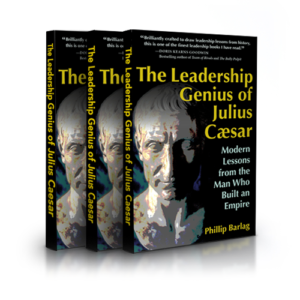
Phillip Barlag, author of The Leadership Genius of Julius Caesar, is able to do something I have rarely seen in business/leadership books, but absolutely love. His book is what I would call “historical nonfiction” and, as Doris Kearns Goodwin writes, is “brilliantly crafted to draw leadership lessons from history.” This may be my new favorite genre!
And so, I am pleased to present the new microsite for Phillip Barlag—an interactive platform for engaging with the author and the book. We enjoyed working with Phillip to develop this beautiful new site.
 The Book
The Leadership Genius of Julius Caesar emphasizes how history is littered with leaders hopelessly out of touch with their people and ruthlessly pursuing their own ambitions. But Caesar had an amazing ability to generate loyalty, to turn enemies into allies and allies into devoted followers.
Central to Barlag’s argument is the distinction between force and power. His supporters followed him because they wanted to, not because they were compelled to. Over 2,000 years after Caesar’s death, this is still the kind of loyalty every leader wants to inspire.
The Author
Phillip Barlag is an executive director at World 50, which initiates and facilitates the most interesting and influential business conversations in the world. He has the enormous privilege of serving remarkable leaders from some of the most well-respected companies around the globe.
More from the Author
Of course, visit his new site.
Read Phillip’s articles on Fast Co.Exist.
July 5, 2016
The Power of Patience

I have laughingly said to fellow 5K participants, repeatedly, “Yeah, I’ve finished last many times. What matters is that you’re here.”
While it is true that I have finished last many times and that what does matter is the fact they’re there, at the race I participated in on Independence Day this year what mattered most as I closed out the race, brought up the rear, played the caboose (pick your term of choice), was the fact that someone else was there with me.
How Things Used To Be
There was a time when my son, who is now 17, participated in running and multi-sports events routinely. As the draw of online gaming took over, his running shoes got nudged to the back of his closet and I resigned myself to the fact that he was no longer interested.
Over the past year or so, Wayne has asked to walk 5Ks with me. Even though we were walking instead of running, I was ecstatic to have him on the pavement instead of the keyboard, so I registered us for 5Ks whenever I could. He rarely wanted to run, which I accepted, again being grateful that we were even on a race course. I have to admit I harbored a secret hope that these outings would evolve into a desire on his part to run again. Having been a pushy running parent in his earlier childhood, though, I knew I could not force him.
The Independence Day Running Moment
He and I got into such a groove of walking 5Ks that I started changing my routines. I didn’t worry so much about wearing some of the running-specific gear I usually wore. I didn’t take the beta-blocker I have to take before running a half hour before a race to keep my tachycardia in check. It was just a walk, right?
This past Saturday he announced, “Maybe I’ll run a little bit.” He announced this in time for me to gulp down my beta blocker. I was secretly thrilled!
At about the 1.5 mile mark of the race, he said, “Let’s run.” He took off and I couldn’t keep up. Pretty rapidly, my tachycardia issues started kicking in. He stopped running after a bit, but remained ahead of me as he finished the race, which was fine. I was just disappointed that my body was failing me at a time I wanted to share a special moment with my son.
After trying to keep walking and deal with the tachycardia in the usual ways, I decided I had to sit down for a few minutes. This was when I lost a few minutes and began working my way to my eventual designation as “last finisher.”
Once my heart rate went down, I started walking again. Everything was fine, health-wise.
I had the finish line in sight when things started going awry again. I am not sure why … I think finish line adrenaline is always there for me whether I am sprinting, running slowly, walking, or crawling … but all of a sudden my heart rate spiked precipitously.
I could see the finish line, staffed by a crew of my best running community buddies.
A volunteer standing there started conversing with me.
He was a gentle and kind young man.
I expected to hear what I usually do from the volunteer who gets stuck with the last finisher, things like:
A report by walkie-talkie to the race organizers saying something like “yep, the last one’s with me.”
An admonition to “give it all you’ve got — you’re almost there!”
A worried-sounding query like “ma’am, are you okay?”
The Finish Line Could Wait
It turns out the young man was named Rigel (I don’t know if I’ve spelled it right, but it was like “Nigel” with an “R”). I explained that I was having HR problems and did something I have never done before in decades of running: conceded to my health and sat down within sight of the finish line, taking care of myself instead of stressing about what everyone was thinking.
Rather than any of the things I feared Rigel would say, we discussed:
How to get involved with TeamRWB, which is an organization that helps veterans (I was wearing a Team RWB jersey).
The fact that he doesn’t race because he has so much anxiety (I laughed and said you never have that kind of anxiety about keeping up/the frenetic start when you’re a back of the packer).
The fact that he does like running, when it’s just for fun.
The biggest thing running through my mind was the parallel with how I deal with my elderly father-in-law, who has a condition which results in him being very shaky when he stands up too fast (and which always seems to manifest itself when we are in a hurry [I am one of his primary caregivers]). I’l be honest: even though I know he can’t help it, I feel frustrated, wonder why we can’t just get. where. we. need. to. be, and ask if he’s ready to walk yet, probably not in the kindest of tones.
At a time when I’ve read so much about the self-centeredness of the younger generations and seen plenty of it with my own eyes, this moment humbled me and reminded me there are times when we all need someone to help us discard worries about others’ expectations, take life on at our own pace, and share pieces of our souls.
The printed finish time on the results did not tell the whole story of this race.
I am happy for my friends who excelled in the race, but when I see the winners’ names, I’ll also acknowledge another winner on this race day: Rigel’s Patience.
July 1, 2016
Featured on Friday: #LeadersReadyNow Co-Author Matt Paese @mattpaese
One of the most challenging classes I took in college was also the most rewarding. It was an upper-level Greek class, and our professor pushed us hard. I remember dreading that 8 AM hour more than any other in my college career — and yet, I learned more in that one class than I did in most of my other classes.
Learning fast in a career isn’t much different: you dive in headfirst and just pray you can keep your head above water. It’s exhilarating and terrifying at the same time. And your ultimate success (or failure) usually comes down to one major factor — not amount of resources or tools, not the skill levels or size of the team, but the energy you put into learning.
The fastest, most powerful learning experiences convert fear and uncertainty into pride and wisdom.
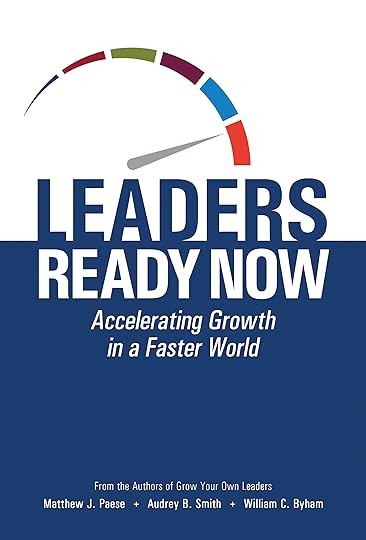
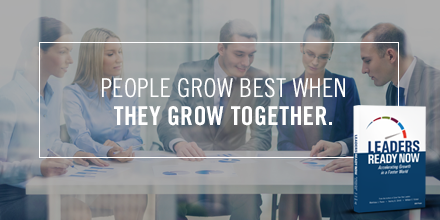
According to Matt Paese, co-author of the inspiring new book Leaders Ready Now, that energy is the thing we need to keep growing strong and moving forward, not just learning more quickly but taking carefully-calculated risks that ignite a spark of enthusiasm in those we are leading.
Meet Matt Paese

Matthew J. Paese, Ph.D., is Vice President of Succession and C-Suite Services for Development Dimensions International (DDI). Matt’s work has centered on the application of succession, assessment, and development approaches as they apply to boards, CEOs, senior management teams, and leaders across the pipeline. He consults, coaches, speaks, and conducts research around all those topics and more. He is coauthor of Leaders Ready Now and Grow Your Own Leaders, as well as many other articles and research papers.
Matt lives in St. Louis, MO, with his wife and children. He currently is attempting to accelerate his growth as a husband, father, fly fisherman, pianist, and barista. He hopes to one day be “ready now” in one or more of those areas.
Connect with Matt on Social
Follow Matt on Twitter @mattpaese.
Connect with him on LinkedIn.
Visit the DDI website.
Learn more about building Ready Now leaders in the webinar!
Discover Leaders Ready Now:
“Growing the pipeline of future leaders is key to economic competitiveness. Based on DDI’s work with over 1000 organizations, Leaders Ready Now provides a road map for companies who want to accelerate that growth. Any business leader seeking a competitive advantage in today’s complex global economy would do well to heed this compelling call for acceleration and initiate the types of learning journey opportunities for their future leaders described by the authors.”
—John McKernan, Former Governor of Maine and Senior Advisor, U.S. Chamber of Commerce
From Amazon:
Better leaders, ready now. It’s what successful businesses need to stay viable and what most are unable to achieve. The problem is not the absence of tools, technology, or processes. The problem is a lack of energy.
Growing leaders at the speed of business should be exhilarating, and even scary at times. Some organizations have figured this out, and are showing how more aggressive approaches rally business performance. It doesn’t take slick new technology or a clever tool. It takes boldness.
Leaders Ready Now challenges CEOs and Talent Management leaders to rethink lackluster approaches to accelerating leadership growth and to change the equation so that tools and processes don’t rob energy from the organization but, instead, create it. The authors take a fundamentally different angle and clearly illustrate how to transform your existing succession and development systems and grow the leaders your business needs fast and fully enough to gain the advantage in a complex world.
Check out what some of our Buzz Builders have to say about Leaders Ready Now…
“Once you pick up this book you won’t be able to put it down. From the feel of the cover and pages as you first leaf through this book, you’ll sense the flow of knowledge.” {Read the rest of Paul McConaghey‘s review on Amazon}
“If you have a hand in selecting, growing, and mentoring leaders in your business you will gain insight and an increased appetite for accelerating the growth of upcoming leaders in your business and coaching them to be ready by reading Leaders Ready Now.” {Lisa Kosak shares more of what she learned in her review on Green Thumb Leadership}
“Are you taking responsibility for your team’s leadership development or leaving it to some off the shelf product or leaving it to someone else to do for you? I would suggest to you to take responsibility yourself and get the thrill and inspiration of this important leadership responsibility. Leaders Ready Now will prepare you for this journey with your team. {See what else Byron Ernest has to share in his Amazon review}
“A fantastic and practical guide to help leaders be more nimble and effective in leading their organizations … A book you will want to read and refer to many times, packed with great information, advice, and strategies to transform your organization.” {Read the rest of Paul LaRue‘s review on Amazon}
Support the Launch
First of all – if you haven’t already – buy the book! (Amazon: US | Canada | UK | Australia)
Then leave a review – we love reviews, and can never see enough of them show up on Amazon!
Write about it on your blog and send us the link so we can share it.
Share the graphics & send the tweets from DDI’s website through your social channels.
Add it to your Goodreads shelf for others to find.
June 28, 2016
What Live Video Can Do for Your Thought Leadership

Live video has been available on social media for just over a year now, and it’s only becoming more powerful. Case in point: the House of Representatives sit-in, staged by Democrats, wasn’t broadcast live on television. C-Span’s cameras were forced off. So members and attendees took to their smartphones and streamed the speeches on Periscope and Facebook Live.
It was a seminal moment for social streaming.
Just days afterwards, YouTube made live video available on its mobile app. Facebook believes so strongly in live video that it gives those streams expanded reach and presence in the newsfeed. Periscope, one of the early options, is stumbling a bit, but still draws thousands of viewers per day.
Are you sold yet? Maybe these numbers will help. In its first year, Periscope hosted more than 200 million live streams, and had 10 million users in its first 3 months. Facebook Live hasn’t released user stats but it’s quickly overtaking Periscope in popularity, if that offers some perspective. Millions of people are using and watching live video streams. If you want to connect with these people, you might want to consider live video too.
The fun thing about social video is you can go live anywhere, anytime. If you’re giving a motivating talk, stream it, and bring your fans along. Share a few moments of your day, some thoughts you had on a current event, or schedule a Q&A session. Connecting in this very personal way with your social tribes builds community and brand loyalty, and can even help deepen thought leadership.
If you want to give live social video a try, keep these best practices in mind:
Use a tripod, if at all possible. Nothing is harder to watch than shaky video.
Lighting is everything. Check your lighting first before hitting the ‘live’ button. You want to be clearly visible: no harsh shadows, glare, or back-lighting.
Be your authentic self.
Keep the videos on the shorter side. No longer than 15 minutes unless you’re sharing very compelling material—a live news event or something along those lines.
Promote your stream in advance, but don’t be afraid to launch a spur-of-the-moment stream either.
Check your hair, make-up, and teeth first. You want to look your best.
Respond to people posting questions and comments. Be as interactive as possible.
Remember, viewers watch because they benefit. It’s not about you–it’s about them.
Have fun. If you have a great time (and great content), your viewers will come back!
Just like any tool or platform, don’t give it a try because everyone else is–try live video if it makes sense for your brand, and as a way to connect with your audience. Choose your live platform the same way. Go where you can reach the most people in the most comfortable way. Right now, I think Facebook Live is the best option for most thought leaders and brands, but I’m eager to see how YouTube streaming performs.
Tell me something! Are you ready to go live with your thought leadership?
Image credit: weedezign / 123RF Stock Photo
June 24, 2016
Featured on Friday: Meet Team Member John Marcello
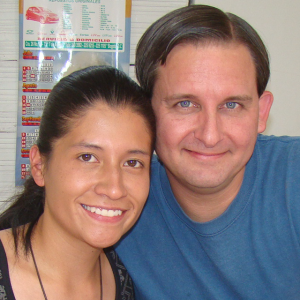
Weaving Influence is a diverse team from diverse places! On a daily basis, I will connect with people in Michigan, California, Washington, D.C., Texas, Florida, and more. Though I am currently the only team member living abroad (in Jerusalem), that was not always the case. Today’s featured team member, web developer John Marcello, currently resides in Florida, but was living in Bogota, Columbia when we first connected about a year ago. Often, John and I would discuss a new web project with a mixture of Spanish and Hebrew conversations going on in the background.
Let’s learn a little about John and what makes him tick.
Tell us a bit about your personal life and interests. I was born in Akron, Ohio and lived in Cuyahoga Falls for many years. I moved and later grew up between the my Mom’s horse farm in Newbury, Massachusetts and the sun and surf of Boca Raton, Florida. Because of this I spent every day of my summers riding horses and training animals. This would come in handy as I would later raise 4 dogs to become Guide Dogs For The Blind. My favorite things to do outside of work are hiking, skiing and snorkeling.
 Tell us about how you connected with Weaving Influence. In 2008, as the real estate market crashed (my current field), I moved to Bogota, Colombia to meet my wife (we have now been happily married 6.5 years). It was at this time that I started by freelance web development part of my career. A chance introduction to Becky Robinson through our mutual colleague Susan Mazza, led to my current relationship with Weaving Influence. This phase of my life has truly been one of the most satisfying times in my career. Not only do I get to do something love, but I get to do it with an amazing group of talented, caring individuals. I wouldn’t trade this experience for the world.
What is your favorite part of working remotely? I have worked remotely from two continents and too many cities to count. That is one of the things that I love that most about having a virtual work opportunity – being able to travel freely. This means I get to spend a lot of quality time with my family, because they are always near by, and this adds a lot of value to my daily life.
What is one of your favorite websites you have done for WI and why? One piece of work I am particularly proud of is a site we recently completed for Bill Treasurer’s Giant Leap Consulting. For me I think it is a good representation for where we are at currently in the web development and branding space.
How can people get in touch with you? Admittedly, I am probably not as social as I should be so you most likely won’t find me on the traditional channels, like Facebook or Twitter. If you’d like to contact me, I have an open door and can be reached directly at john.marcello@yahoo.com. To to find out about hiring the Weaving Influence web team, click here or email Margy Kerr-Jarrett, our web team development director. It would be great to hear from you!