Becky Robinson's Blog, page 49
February 9, 2017
New Year, New Website

As the Web Projects Manager for Weaving Influence, I have the privilege of helping our clients though each phase of the web development process. From the first design conversation through the launch of the site, it can sometimes feel like there are a million moving parts to getting a website ready for the world.
Over the past number of months, the Weaving Influence team has been working hard to bring our vision for a new company website to life. From branding and strategy meetings, to rounds and rounds of mock-ups, to writing and editing copy, we have poured our hearts and souls into creating a website that we believe is a true reflection of our work and the amazing clients we support.
With our new website, we wish to be . . .
Your Strategic Digital Marketing Partner
Did you know that Weaving Influence has launched over 80 books since we opened shop in 2012? From our years of experience, we have developed a deep and strategic knowledge about what it takes to grow your online influence, resulting in more business and engagement with your brand. Visit our Services page to learn about how we can set you up for success, then get in touch to schedule a time to chat about your goals and how we can help you reach them.
Your Source for Professional Development
We are constantly expanding our offerings in order to help you achieve your professional development goals through cutting-edge learning opportunities. As always, we continue to offer regular free webinars on a variety of professional topics. The Weaving Influence blog continues to be an unmatched resource for book marketing tips, social media tutorials, public relations insights, and more. And our new platform for showcasing our Leaders allows event planners and others learn about potential partners.
A Crucial Part of Your Network
Weaving Influence is more than just digital marketing. We are a network of online communities that work together to support and provide valuable content for companies, leaders, authors, and other professionals interested in growth and networking. Visit our networks page to learn about how you can get connected with our book launch support team; Team Buzz Builder; our Corporate Champions program for continuing education in organizations; and our top-ranked leadership blog, Lead Change Group.
A Showcase of Top Authors and Speakers
We are proud to represent some of the top names in leadership and professional development. Our new platform for showcasing our Leaders is designed for event-planners, executives, and others who are looking for speakers, trainers, facilitators, or books for their organization. Interested in seeing who’s on the roster? Visit our Leaders page (we are adding our Leaders over the next few weeks, so check back!). Looking for someone to represent you as a speaker or author? Contact us!


February 3, 2017
Featured on Friday: Expensive Sentences by @JackQuarlesJQ
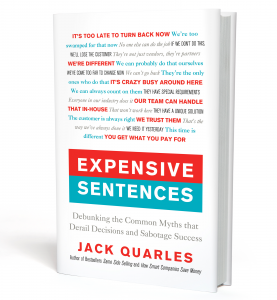
Making a decision takes one moment, but living a decision takes a lifetime. Would you agree? If we all take an honest inventory, I think we can all agree that some of our decisions have created a ripple effect on the trajectory of our lives. And think about it, you make hundreds…well, more like thousands of decisions daily!
Not only do we make decisions that impact our own lives, but each decision we make will play a part in the lives of many other people. On the home front, we dedicate substantial efforts to teach our children to make “good” decisions. With our significant other, we pair with them to make decisions about the future. In the workplace, managers teach employees to make responsible decisions to benefit the company. Each angle of our lives is entwined in decision-making!
In his new book that launched on January 31st, our featured author seeks to provide clarity on common decision making pitfalls that often lead to lost opportunity – such pitfalls create an “expensive” sentence in our lives.
 Meet Jack Quarles
Jack Quarles is the founder of Buying Excellence® which leads clients through a structured process of defining value, increasing options, and then selecting the right solution. Over the last 13 years, Jack has helped dozens of organizations make better buying decisions and save tens of millions of dollars. As Director of Corporate Procurement at Sallie Mae, Jack led sourcing initiatives for software, services, and information central to the company’s core business. As a founding principal of Invoice Insight (later renamed Xigo), Jack implemented software and BPO solutions with Fortune 500, federal, and state government clients.
He helps mission-driven leaders have greater impact with their resources through wise stewardship, smart negotiations, and value-driven RFPs. He trains teams to consistently get greater return for the dollars they spend, and is a bestselling author, speaker, board member, consultant, husband, dad, and friend.
Discover ‘Expensive Sentences’
“A thoroughly engaging read that will improve your decision making, both professionally and personally.”
— Scott McKeon, Professor of Economics, Stanford University
“This book shines a light on the shaky reasoning behind many team decisions; thankfully it also provides extremely useful tools and language to move to more solid ground.”
— David Ruud, President, DTE Power and Industrial
“Challenging, convicting, and ultimately encouraging. Expensive Sentences is packed with practical wisdom for veteran and new leaders alike.”
— Dale Pyne, CEO, Peacemaker Ministries
“Perfect for an office book club, highly readable and actionable. Applies to every function in the organization.”
— Doug Pontsler, VP Operations & Sustainability, Owens Corning
From Amazon: Conversations have consequences. Discussions lead to decisions that shape the future for individuals, families, companies, and nations. Too often these decisions are derailed by faulty logic and false constraints. These pitfalls are not simply hidden, but deviously veiled in the guise of wisdom, truth, and common sense.
This book exposes the clichéd wisdom that leads to lost time, money, and opportunity. Readers will discover how to hear decision-making traps in real time, and learn to guide teams back to fact and logic that will lead to better outcomes.
Through historic examples, business stories, and personal anecdotes drawn from decades of experience, the author illustrates the prevalence and impact of flawed reasoning. Equally important, the book includes a clear path to improvement: sample text to upgrade conversations and exercises to correct assumptions and clarify solutions.
Learn more about Expensive Sentences
The best place to go to learn more about this inspiring book is on the book’s website. There you can find a free sample chapter, more information about the book’s origins, and beautiful share graphics to spread the word about his book.
Buy Expensive Sentences on Amazon or Barnes & Noble.
Watch Jack’s webinar, which identifies three common traps that sabotage decision making.
You can follow Jack on Facebook, Twitter @JackQuarlesJQ, or on LinkedIn.
You can also enter Jack’s hashtag contest on Twitter, and win some great prizes! Learn more about the #ExpensiveSentence contest by visiting his book site.
What’s your expensive sentence?
January 31, 2017
What To Do After You Land A Media Interview

Congratulations! You’ve just landed a media interview.
Now what?
Whether you hired PR services from a company like Weaving Influence or a reporter called you out of the blue, there’s a reason your expertise has caught their eye. It’s always good to do a little digging and find out why that is.
A Few Questions to Ask Right Off the Bat:
Where does this journalist work? Usually this will be obvious, but sometimes a freelancer might contact you from a @gmail.com or other address. It doesn’t mean they’re not legitimate, but it’s always good to verify their publication or station, and do a little research into circulation or listenership.
What are the last few stories the reporter has written? Or if a producer is contacting you, who were the show’s last few guests? If you have time, listen to or watch some of their interviews so you can get a feel for the program—and what you might be asked on air.
What are the logistics? You want to be prepared, especially for radio and TV.
For Radio Interviews:
What is the host’s name, and how is it pronounced?
Is the show taped or live?
Is it a phone interview or live in-studio? In-studio is always better—both for audio quality, and to get some facetime with the host. (Remember, it’s all about being asked back! Bring freebies like mugs, if you can, and also ask if you can send a book ahead of time.)
Will you be expected to call in, or are you to wait for a producer to call you? Either way, what’s the right backup number to use in case the first one is jammed or you don’t receive a phone call?
Will the host be willing to “plug” you, your book, or your social media accounts? Most are happy to mention that you have a book coming out—or how to reach you after the interview. (Frankly, it saves them time not to have listeners calling and writing to the station after the fact, asking for that information.)
For TV Interviews:
Where should you park?
How early will you need to arrive in order to get through security?
Will the show provide makeup services for you, or should you arrive camera-ready?
What does the host look like? What is their name, and how is it pronounced?
Just like for radio—will the host be willing to “plug” your new book, twitter handle, or whatever project you’re working on? Ask ahead of time and make sure they have correct spellings for web addresses and social media accounts, so that these can be used in an onscreen graphic.
Would the program like a copy of your book ahead of time, or a .jpeg of the cover to use onscreen?
Beyond this initial ‘homework’ when first contacted, you can sit back and relax. You’re the subject matter expert and this is not a test!
Sometimes a guest might request questions from a journalist ahead of the interview. Most of the time, this is not a good idea. For one thing, it makes you look a little bit nervous and high strung, and a high maintenance guest is not likely to be asked back on the show. Unless you’re running for political office, don’t worry—you’re probably not going to be asked any “gotcha” questions.
Clarify everything you need to clarify, but try to resist asking for anything more than general show topics. The show will be more conversational if you’re not glued to a set of talking points, and the person scheduling you for the interview may not be the one writing the questions anyway.
This is another reason why it’s so important to have a strong online presence. Journalists or producers will look for information about you online even before asking for an interview, especially for your biography/resume and any published works. What will they find?
On the day of the interview, show up or call in a few minutes early. Use a landline instead of a cell phone to ensure that the call doesn’t get dropped. Smile and stand up while you talk, if you can—both will make you sound more energetic and confident, and will keep you away from the distraction of your computer screen.
Standing up will also, according to some experts, cause you to keep the call shorter. Which is the last and best advice I can impart: be concise! Neither hosts nor listeners want to listen to someone ramble on and on. It even makes life hard for a print reporter, who then has to wade through 30 minutes of a transcript or notes (in addition to all of the other interviews they are conducting for their story) in order to find the best one or two short quotes you gave them.
If the host doesn’t bring up your book, website, or company name, try to work it into the conversation naturally so that listeners can at least Google you after the fact. But always, keep your answers short and sweet, and let the host or journalist ask follow-up questions if they want. Everyone will appreciate you for it. And a guest that is appreciated is a frequent guest!
Image Copyright: macor / 123RF Stock Photo
January 27, 2017
Featured On Friday: New Website for Bonnie Hathcock

The Weaving Influence team values our partnership with corporate leader and author Bonnie Hathcock, and we are thrilled to showcase the new website that we’ve designed and developed for her at BonnieHathcock.com.
Bonnie’s message is one of hope, inspiring people to look beyond their current circumstances, to choose joy and dream big, no matter what.
Meet Bonnie Hathcock
Bonnie C. Hathcock has over 35 years of experience in corporate America. For most of those years, she held C-suite positions at the top of Fortune 100 and 200 corporations. Bonnie began her career at Xerox Corporation, where she spent a decade learning world-class marketing concepts.
Her business and marketing acumen eventually caught the attention of a high-ranking executive from Siemens A.G., who promoted Bonnie to the position of vice president of human resources for one of the largest Siemens companies in the United States. Bonnie would eventually be promoted to vice president of Human Resources for US Airways, and senior vice president of Human Resources for Humana Inc.
Bonnie’s work ethic and drive for excellence awarded her the distinction as one of the Top 25 Most Influential Women in Human Resources in 2005. In 2007, Bonnie was named Human Resources Executive of the Year, a national award presented by HR Executive Magazine. In 2010, Bonnie was inducted as a fellow into the National Academy of Human Resources.
Bonnie has an MBA and has completed post-graduate studies at the Stanford University School of Business. She resides in Tennessee with her husband, Lee, and her Cavalier King Charles Spaniel, Cubby.
Lilac Dreams – Coming March 6!
 Bonnie Hathcock never wanted anyone to know how humble her roots really were. As she sat in the mahogany boardroom of one of the largest corporations in the country, she worried about being worthy enough to be there. She had made it to the top as one of the highest ranking officers of a Fortune 100 corporation. She kept her background out of view, because she feared being looked down on.
That was until the day she chose joy. Bonnie realized she was suspending the presence of joy in her life. She thought joy was something off in the future, when she wasn’t working and when she didn’t have so much pressure. Through a series of encounters with special people in her life, she realized she could be happy most of the time. She boldly embraced the pathway to unlocking her inner joy. It took work and practice. She began by confronting her shame: shame about her humble beginnings, her mistakes, and her limitations.
In confronting her shame, she made a discovery that changed her life’s perspective. Her past made her who she is and actually created the success she attained. In her struggles, she learned to overcome. In her disappointments, she learned how to hope. In the mistakes, she discovered how to be better.
Bonnie wrote Lilac Dreams to share the story of her youth… with its mistakes, hardships, and struggles. Despite her circumstances, Bonnie still had her dreams. Dreams of making something of her life and of going beyond her own limitations. Lilac Dreams is a book that will move you to look beyond your current circumstances, help you to push past your limitations, and affirm your worth in this world. Bonnie believes if she can do it, you can do it.
Check out Bonnie’s site to learn more!
Start reading her blog.
Sign up to participate in her book launch!
Connect with Bonnie on Facebook or LinkedIn.
Interested in our book design or web design/development services? Contact us to learn more!
January 26, 2017
The Gaps to Happiness

This post is part of our 2017 Team Buzz Builder Guest Blogger series. Today we are pleased to introduce you to author, consultant, and boy-mom Brandi Walerius.
My husband reminds me often that the key to happiness is a short-term memory and low expectations. He says this jokingly, but not really. Seeing that he’s typically in a good mood, not stressed, and rarely disappointed, I suppose he may be onto something.
Reading Hyrum W. Smith’s (you may recognize this name, he’s the co-founder of Franklin Covey) book, The 3 Gaps: Are You Making a Difference?, reinforces my husband’s thoughts.
The Belief Gap: A Picture Perfect Story
Last Christmas, I had this perfect vision in my head of what our family Christmas would look like. My nine-year-old and three-year-old cuddled together in their matching plaid pajamas, taking turns opening the presents I so carefully chose for each one. I would be in the background sipping on coffee, capturing the picture-perfect scene on my new Canon camera. This did not happen. Not even close. My three-year-old’s diaper malfunctioned and we had to change his plaid bottoms out. For whatever reason he would only agree to put on Tennessee orange sweatpants. The whole taking-turn thing? Ha, the three-year-old once again had other plans. Overwhelmed and stimulated, he decided he would open one present an hour. Our Christmas morning turned into a 12-hour ordeal.
This is what Smith would refer to as a Beliefs Gap. I believed that a meaningful “successful” Christmas morning could only look one way. And when it didn’t happen? I have a choice to be disappointed, frustrated, and annoyed–or I could realize this is an incorrect belief and change my thinking. I can get creative and adopt a new belief. This past Christmas, I changed my belief. Christmas will be a fun-filled day with my children and all that matters is that we get to spend the day together. I lowered the expectation and put the energy and focus on what belief is really important. I closed the gap.
The Values Gap: Prioritize What Is Important
The recent death of my grandmother caused a pause in my life. Like most when a major life event occurs, you stop, pause, self-reflect, and ask yourself what really matters? I realized there was a painful gap between what I really value and what I’m doing. I value quality time with my husband, but find myself booking meetings at night and missing the heck out of him. I value being in shape, but keep erasing workouts from my calendar because I’m just too busy. I’m investing too much time, resources, and energy in things that don’t top my value chart. In 2017, I plan to prioritize those things that really matter. I will close the the Values Gap.
The Time Gap: Timing is Everything
Last but not least, Smith talks about the Time Gap. Time is a tricky thing, isn’t it? We think we can receive more of it, save it somehow. We can’t. That’s why it’s so important that we aren’t expending our time on bad habits, and value our time. For me, this means limiting mindless social media dumps, spending time with those who deserve my time, and investing 15 minutes to plan out my day and noting priorities. Yes, I’m closing the time gap.
So Much Truth
Hyrum W. Smith states that “inner peace comes from having serenity, balance, and harmony in our lives and can be achieved through the disciplined closing of the Three Gaps.” My husband says the key to happiness is “short-term memory (stop focusing on the past) and lower expectations (if your belief doesn’t meet your basic needs over time it is an incorrect belief).”
It seems like these two are really on to something.
 Brandi Walerius, MBA, PHR, established Black & White Consulting where she serves as a Human Resources & Development Consultant. In addition, Brandi is a published writer and has written materials for magazines, online publications, commercial and film, and corporate content. When she’s not transforming her ideas and thoughts into printed words, she’s living happily ever after drowning in testosterone with her husband and two sons in northwest Ohio.
Image credit: gustavofrazao
January 24, 2017
Is Technology Helping Us Get More – or Less – Personal in Public Relations?

The big promise of technology offers brands the ability to be more social, to personalize, and communicate better with their various audiences.
But is technology really making communication more personal, or it is really resulting in simply more communication?
Is technology allowing communications pros the ability to reach mass markets quicker and far more often? To spread the same message across that many more platforms?
If so, that’s not the way it’s supposed to be.
The ease of communication has made it too easy for communications professionals to play the numbers game. Tweet enough tweets, send enough pitches, email enough prospects, and you’ll get enough of a positive reply to justify that approach.
But it’s not long-term thinking, and frankly, it’s disrespectful to your audiences.
The ease of today’s technology and a little time investment really does make it far easier to know your audience and personalize your communication. For example, let’s look at public relations.
Today, there are so many “media outlets” available for PR pros to target for possible exposure for your client or employer. These include everything from traditional consumer and trade outlets, digital-only media, podcasts, Internet-only radio stations, to bloggers and other influencers.
With so many to choose from, it’s tempting to essentially spam them all.
But don’t.
Don’t forsake long-term relationships and benefits for a singular potential short-term hit.
So, how can you personalize your media outreach to develop productive, long-term media relationships?
Don’t play the numbers game: Whether you use Cision, Meltwater, MuckRack, or another media list tool, don’t play the numbers game and essentially “reply all” when sending news releases. Your media list should include reporters, bloggers, assignment editors, etc., who would really have an interest in your news. You can use beats, media outlet profile, blog focus, and the types of stories, posts, or videos the “outlet” publishes as your guide.
Play the numbers game: Very rare is the time when one or two media outlets are totally must-have for your story. As I noted above, there are so many media outlets today that you don’t need any one for a “hit.” You have plenty of media outlets from which to select for your media list – and many, many of them are hungry for your stories (i.e., content).
Know thy media: Once you have your list, use tools like Feedly, Twitter lists, Pocket, and simple subscribing to stay current on your key reporters, bloggers, and nearly every media outlet you might want to pitch.
Fake it: Use mail merge. You have a news release or pitch that you’re sending to a large yet targeted media list? Don’t worry. Your media contacts are not naïve. They’ll assume they’re not the only one to receive your news release. Still, when you can, at least make it look like you sent that email personally. The extra effort will be appreciated.
In the end, as with any relationship, it takes time and effort, not technology, to have it bear fruit.
Image Credit: ra2 studio
January 20, 2017
Featured on Friday: A Leadership Kick in the Ass by @btreasurer
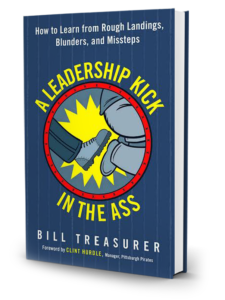
What makes a great leader? Some say it’s success, money, fame, or recognition. Well, on a deeper level, a true leader is someone who can rise above their mistakes and grow in those moments. It is easy to find a book with guidance on how to become a great leader, but growing through your mess-ups is a topic rarely covered in the leadership world. Until now…
In his new book released on January 16th, our featured author has taken this very concept, what he calls “a leadership kick in the ass,” and provided guidance to leaders on how to capitalize on leadership “blunders.”
Meet Bill Treasurer

Bill Treasurer is the Founder & Chief Encouragement Officer at Giant Leap Consulting, a courage-building company that exists to help people and organizations live more courageously. He is considered the originator of the new organizational development practice of courage-building and is the author of Leaders Open Doors, the internationally bestselling book Courage Goes To Work, as well as the comprehensive off-the-shelf training program, Courageous Leadership: Using Courage To Transform The Workplace.
For over two decades, Bill has designed and delivered leadership and succession planning programs for experienced and emerging leaders for clients such as NASA, Accenture, CNN, Saks Fifth Avenue, Hugo Boss, UBS Bank, Walsh Construction, the Pittsburgh Pirates, the Centers for Disease Control, the National Science Foundation, and the U.S. Department of Veterans Affairs.
Bill’s insights have been featured in over 100 newspapers, including The Washington Post, The NY Daily News, The Chicago Tribune, Atlanta Journal Constitution, Boston Herald, and Investor’s Business Daily. Bill’s insights have also appeared in such magazines as Leader to Leader, Leadership Excellence, Business-to-Business, Parents Magazine, Redbook, Women’s Day, Fitness, and The Harvard Management Update.
Discover A Leadership Kick in the Ass
“This book’s title may have grabbed your attention, but its core topic—the human ego—is dear to my heart. Using candor and humor in equal measure, Bill Treasurer gets real about the leadership advantages of what I’ll just call effective redirection. Ha! This book is not just a fun read—it’s a wake-up call for leaders at every level.”
— Ken Blanchard, coauthor of The New One Minute Manager® and Collaboration Begins with You
“Failure may not be fun. But, as Treasurer has proven in his rich, in-the-trenches experience in business, you can learn more from one failure than from untold wins. A Leadership Kick in the Ass is exactly what you need to pick yourself up, find out what went wrong, and move on, smarter and stronger than ever!”
— Marshall Goldsmith, The Thinkers 50 #1 Leadership Thinker in the World.
“Bill artfully describes the harsh, if somewhat humbling, reality that leaders do learn some of the most valuable lessons through “mess ups!” The approach Bill takes in taking the reader through poignant examples, while offering guidance to seize learning opportunities as they occur, are but a couple of the elements which combine to make this a great read!”
— Mark Brasher, CEO, John Varvatos
“The greatest lessons in life don’t come from success. They come from our missteps, setbacks and screw-ups. This book will help you turn them into invaluable lessons that you’ll one day look back on with gratitude for all they taught you. An invaluable resource for any person who wants to be a truly extraordinary leader.”
— Margie Warrell, Bestselling author, Stop Playing Safe.
From Amazon: Even the best leaders—in fact, most of the best leaders—start out as decidedly bad ones. And sooner or later they reach a moment of reckoning that leadership expert Bill Treasurer calls the leadership kick in the ass. When it happens, it feels like it’s all over. But Treasurer says that with the right attitude, that kick can be a new beginning. Based on his work with thousands of leaders, this book reveals how to turn those ego-bruising events into the kind of transformative experiences that mark the paths of great leaders. As Steve Jobs famously said, “Getting fired was the best thing that ever happened to me.” This book is a survival guide, coach, and morale booster to help you use that kick to move forward instead of fall down. If you succeed, the next place you get kicked might be upstairs.
Learn more about A Leadership Kick in the Ass
The the best place to go to learn more about this inspiring book is on Bill Treasurer’s website. There you can find a free sample chapter, more information about the book’s origins, and beautiful share graphics to spread the word about his book.
Buy A Leadership Kick in the Ass is on Amazon or add to your Goodreads shelf.
Watch Bill’s webinar, also featuring Marshall Goldsmith, on Leadership and the Power of Being Humble.
You can follow Bill on Facebook, Twitter @btreasurer, , or on Instagram @billtreasurer.
Have you ever experienced a leadership kick?
January 17, 2017
Can I Have Your Attention Please?

In November 2016, I read an article posted in a Facebook group of social media lovers. This article, Quit Social Media. Your Career May Depend On It, was written by Cal Newport, author of several books including Deep Work and So Good They Can’t Ignore You: Why Skills Trump Passion in the Quest for Work You Love.
After reading the article about quitting social media, as well as the book Deep Work, I did not believe it was necessary to quit social media (this is a good thing, since my work here at Weaving Influence involves me utilizing social media for the majority of my work time). I did, however, take to heart Dr. Newport’s admonition to readers to be deliberate about their attention, their time, and the priceless gift of intellect.
As 2017 begins, I plan to apply these three components of that admonition most tenaciously: attention, the vital few, and brain health.
Respect Your Attention
Dr. Newport believes our attraction to digital devices to be nearly fatal to our attention spans.
Our attraction to digital devices has created a permanent fracturing of our attention, affecting our ability to maintain focus and be present. ~ Cal Newport
Eight years ago, I read an article that discussed how people’s minds were getting re-wired by their dependence on their digital devices.
“Not me,” I thought. “How could that happen?”
Once I got a smartphone and became active on more social media sites like Twitter and Instagram, I began a precipitous slide into attention fragmentation.
When Time Magazine cites Microsoft research about the affects of an “increasingly digitalized lifestyle on the brain” and explains that “people now generally lose concentration after eight seconds,” which is shorter than the goldfish’s nine-second attention span, I wonder how I found myself on the less attentive side of a goldfish.
In his TEDx talk, Dr. Newport implores viewers to “treat your attention with respect.” He is right.
For many of us, choosing not to have a digital device is not much of an option. We may need it for work, juggling the logistics of a busy family, or reasons of personal security. Dr. Newport says he was smartphone-free until his first child was due, at which point his wife insisted (I’m with her on that!).
I am not a good person to give advice on this front. My phone is with me at virtually all times. Besides being asleep or having a medical procedure done, the longest I have gone without my phone is when I did a six-hour silent retreat last year.
But in the interest of starting 2017 off well, here are three suggestions:
Create “smart phone free” zones like the family dinner table (find other ideas in this article from NPR).
Allot designated times to respond to emails, messages, and texts (one person’s experience here).
Prioritize eye contact over screen contact. Screens will always be here; there’s no guarantee our loved ones will. Put the phone down or take your eyes off the laptop screen when you are with someone in person.
Pay Attention to the Vital Few
I have a good friend who, frequently, when I am fretting about the cacophony of responsibilities and demands of my life, reminds me to pay attention to the vital few rather than the trivial many.
An expression of the Pareto principle, also referred to as the “80/20” rule, the law of the vital few reminds us that 80% of our results come from 20% of our efforts. Dr. Newport concisely summarizes it by explaining “contributions to an outcome are not evenly distributed.”
For Dr. Newport, that means eliminating the use of social media on the premise that devoting time and energy to social media doesn’t even come close to contributing to 80% of his productivity.
While eliminating social media has clearly worked beautifully for him, it is not what I plan to do, nor do I think it is the best option for many people.
What we do owe ourselves, though, is an honest assessment of which of our choices regarding how to spend time and where to direct attention are making an impact on our productivity and the world.
Suggestions for honoring your vital few:
Get your email under control. Apps such as Sanebox, Mailstrom, and Unroll.me may help.
Audit your current social media choices to eliminate the ones that no longer serve you. For example, I stopped entering my workouts in DailyMile after years of meticulous tracking. The community is less important to me; I need the time back.
Write down your goals. As Brian Tracy said, “Only 3% of people have written goals and the other 97% work for them.” This isn’t about being a captain of industry; it’s about committing your goals to paper and designing a strategy to achieve them.
Remember Your Mind is a Muscle
I have grown more and more frustrated with my inability to remember the smallest of details over the last few years. I know the stress of caregiving is probably not helping, but 2017 is going to be my year to intentionally work on improving brain components like memory, speed, flexibility, attention, and problem solving.
A study called Advanced Cognitive Training for Independent and Vital Elderly (ACTIVE, referenced here) found that short mental workouts improved performance and was sustained even five years later. It certainly can’t hurt.
Suggestions for exercising the muscle of the mind:
Just like our physical bodies need exercise, our minds do also. I use Lumosity but there are many other options, including working crossword puzzles or learning new languages.
Practice your memory. There’s a great example in this Lifehack post about famous choreographer Twyla Tharp, who forces herself to remember a certain number of corrections she plans to give her dancers rather than writing them down.
Write by hand, regularly. As this Neurorelay piece shares, “The physical act of writing brings the information to the forefront and triggers your brain to pay close attention.”
Have you made a decision related to your attention, time management, or mental capabilities for 2017? I’d love to hear about it!
Image credit: daliu
January 13, 2017
Featured On Friday {Fanfare}: New Website for @MarkDYoungblood
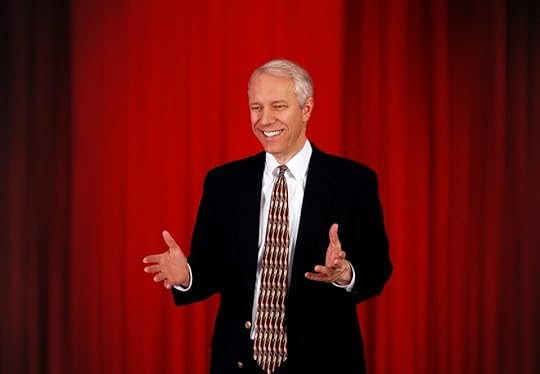
The Weaving Influence team values our partnership with executive leadership coach Mark Youngblood, and we are thrilled to showcase the new website that we’ve designed and developed for him at MyInnerMastery.com.
Mark’s message is one of hope and possibility – specifically, that everyone has the power within them to create a successful and fulfilling life.
Mark Youngblood
Mark Youngblood is a lifelong student, teacher, and facilitator of Inner Mastery. His life purpose is to elevate human consciousness and promote spiritual growth, individually and collectively. He founded his company, Inner Mastery, Inc., over twenty years ago to promote personal and organizational transformation. His outreach presently includes executive coaching with top management, the Inner Mastery learning community, Dear Human series of books, public speaking, special workshops, and life coaching.
Mark began his career as a Certified Public Accountant and it took him about 18 minutes to realize this path did not appeal to him. After a few years, he transitioned into consulting to implement enterprise-wide software systems and lead large-scale organizational change efforts. He then transitioned into transformational coaching, which he has been practicing for nearly two decades. Mark is a Master Practitioner and Trainer of Neuro-Linguistic Programming who has read, studied, and practiced extensively in the art and science of personal transformation and spiritual growth.
Mark is a proud father and step-father, and is married to his high school sweetheart after 35 years apart. He is an avid traveler, a singer/songwriter, and an avid fine arts photographer.
Inner Mastery
 Mark founded Inner Mastery, Inc., to help develop exceptional people, leaders, and organizations. Their work with individuals helps develop the understanding, mindsets, and life skills to transform life for the better. The benefits include better health, improved relationships, greater success, and a profound sense of spiritual connection. Their work with leaders helps them become exceptional operators at the top 80 percentile of leaders, producing results that are 200-400% greater than average leaders.
The behaviors and outcomes demonstrated by the executive team predict what is also happening throughout the organization. So, the highest leverage for improving organizational performance is to improve the executive team’s performance. They help executives achieve peak performance through their Exceptional Leader Coaching Program for top management, intensive team-building workshops, life coaching, and other special workshops for teams or individuals. They also host an online learning community, which offers an extraordinary personal and spiritual development experience in a loving, supportive, community environment.
Check out Mark’s new site to learn more:
Browse the Executive Coaching & Workshop Services
Join the Inner Mastery Community
Learn about Mark’s Book & Speaking Opportunities
Start reading the Inner Mastery Blog
Sign up for a free sample chapter of his new book!
Connect with Mark on Facebook, Twitter, LinkedIn — or send him a message here.
Interested in our book design or web design/development services? Contact us to learn more!
January 10, 2017
Will Live Video Save Twitter?

Twitter has been holding on for dear life for more than a year now. You can find article after article claiming the end is near. Even Donald Trump, possibly one of the most active Twitter users, left the social platform out of his tech summit — a snub that further demonstrated the hard times the company is facing.
Those who love Twitter are looking with hope to the newly rolled-out Twitter live video. Twitter live video is streamed via Periscope, but users no longer must download the app or have a Periscope account. This is an attempt to compete with Facebook, which has seen a resurgence in users, engagement, and dollars since rolling out Facebook Live last January.
The live option is only available on the mobile app. It’s easy to use: just click to tweet and you’ll have options to add a photo, video, or go live. Right now, it’s getting sporadic use, primarily from news outlets.
The Golden Globes gave it a test-drive Sunday night, broadcasting red-carpet arrivals and the awards ceremony live via Twitter. Numbers for the live Twittercast aren’t available yet, but the high-profile partnership was certainly a shot in the arm for the struggling platform.
Will live video be enough to keep people on Twitter? Probably not, but it’s a sign that Twitter’s leaders haven’t given up and are actively fighting for relevance in the ever-changing social space.
As for Periscope, Twitter has said publicly it’s committed to it — but it’s unclear if Periscope will have a future on its own, or if it will evolve into a support-only role for Twitter live. Twitter dismantled its previous video service, Vine, in 2016.
Are you ready to give Twitter live a chance?
Image credit: georgejmclittle