
Greg Mitchell's Blog, page 15
January 8, 2015
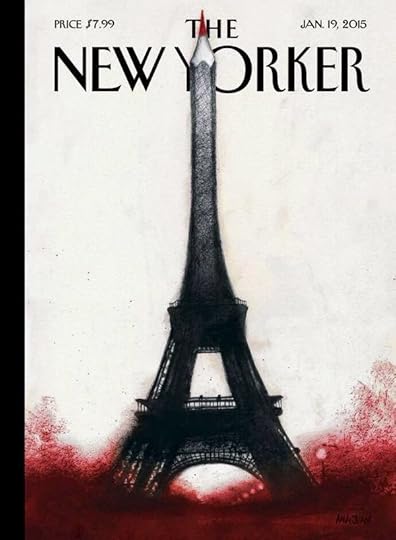
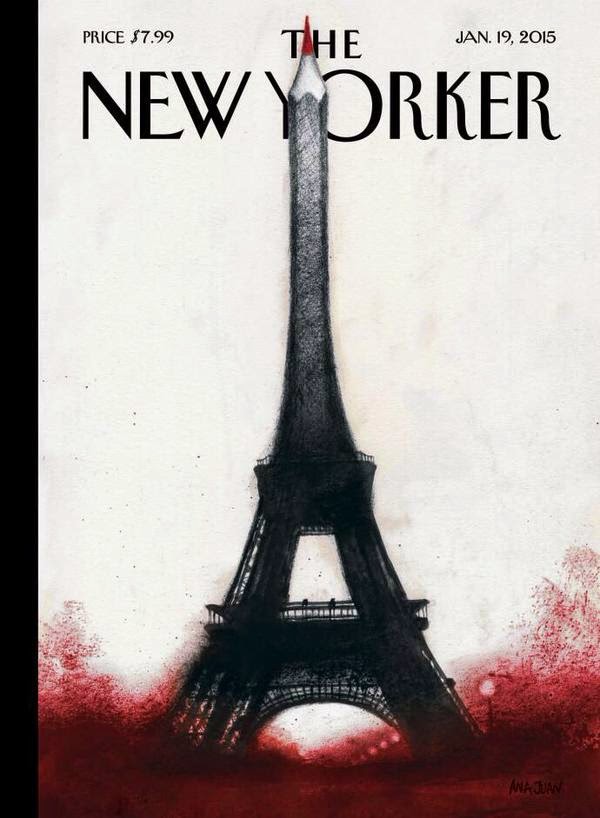
Tower of Wrong
Next week's New Yorker cover. They always rise to the occasion for such events.


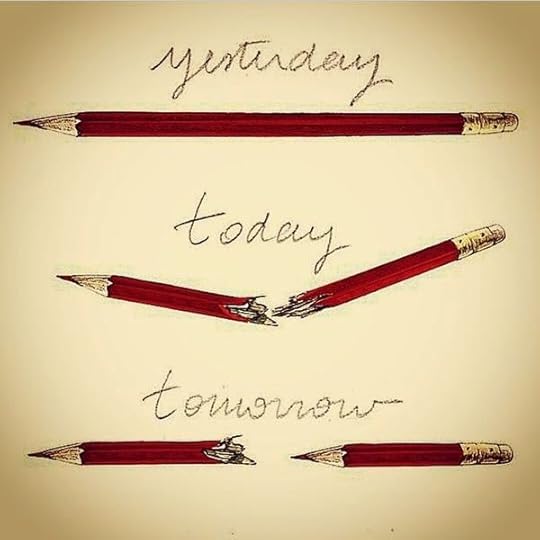
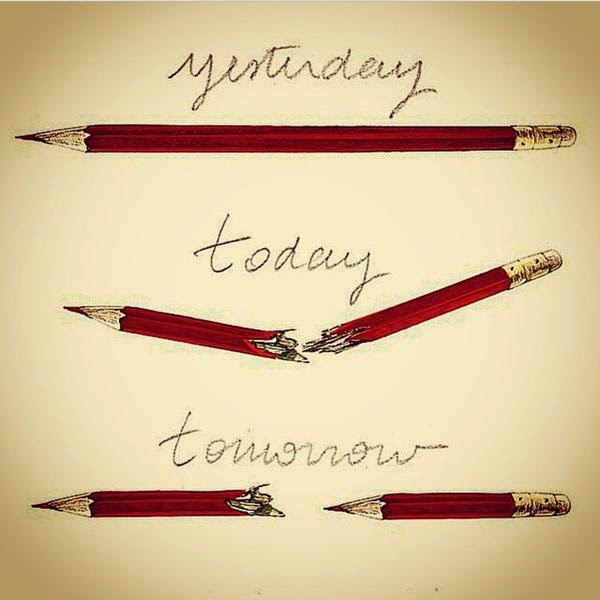
No, This Was Not Banksy's Image
This appeared on his Instagram page yesterday and most (including yours truly) presumed he had produced it--and it gained very wide attention. Turns out, no. Here's update with name of actual illustrator.
New Video on Cleveland Shooting
After a media request, police finally released an extended version of the now famous brief video showing cops shooting Tarir Rice, 12, who was armed with a toy pellet gun. Early on it shows the cops wrestling Rice's sister, 14, to the ground and handcuffing her in the snow as she tried to rush to him, and also reveals how long it took for EMS to arrive (8 minutes)--he would die later in the hospital. Cops had administered no first aid for four minutes until an FBI agent appeared.
January 7, 2015
Others on That Hit List
Media have often referred to Charlie editor being on this al-Qaeda hit list. Might have nothing to do with the shootings. But who else on it? Few here in USA, but list does includeL Salman Rushdie, Molly Norris (who organized the "draw Mohammed" day after the South Park censorship); preacher Terry Jones and writer Ayaan Hirsi Ali.
Slaughter in France
Details still emerging on gunmen killing 12 at satirical newspaper--plus this cop (and one other) executed on the Paris street, warning, graphic. Below that, second video from rooftop shows gunmen firing as they escape.
January 6, 2015
'Psychotic' Nixon
 Poking around online digitized archives for the JFK Library in Boston--for my book on Berlin Wall tunnels--I stumbled a real gem. Kennedy famously recorded many of his meetings starting in 1962 but also taped some of his phone calls on a dicta-belt--but not all that often. One call he did tape happened just after Pat Brown defeated former Vice President Richard Nixon in the 1962 race for governor of California. This led to what became known as "Nixon's last press conference," when he told the reporters that, boo hoo, they wouldn't have Nixon to kick around anymore.
Of course, Nixon went on to be elected president six years later.
Anyway, I was shocked to find both Brown and JFK eager to label Nixon as a nut job, even "psychotic." And then, as a bonus, dad puts young son Jerry on the phone for his first chat with JFK. Here we are, 53 years later, and Jerry is still governor of the state.
Listen here. Partial transcript of first part of talk follows. Jerry then got on the horn and promised to help JFK carry California in 1964 by ten times his previous margin. And he sounds exactly like...Jerry.
JFK: I will tell you this. You reduced him to the nut house.
Brown: But you gave me instructions and I follow your orders.
JFK: I understand. God, that last farewell speech of his . . . Wasn't that terrible?
Brown: It shows that he belongs right on the couch...
JFK: What is going to happen to him now?
Brown: I don't see how he can ever recover. They really didn't want him, the leaders
JFK: Yeah.
Brown: Knight walked out on him, Shell told me he walked out on him. He is a peculiar fellow, this is a very peculiar man. I really think that he is psychotic. He's an able man, but he's nuts.
JFK: Yeah.
Brown: Like a lot of these paranoiacs there. ...
Colbert on Christie
Another classic, exactly one year ago:
January 2, 2015
Miller Williams, Poet, Dies
Miller Williams has reportedly passed away in Fayetteville. He was the well-known poet in Arkansas, publisher, reader of one of his poems at Bill Clinton inaugural and, oh yeah, father of Lucinda Williams. On her latest album--really, the best of the year--she opened with one of his poems set to music, below. And, here, from a poem he wrote about turning 50:
Year in, year out, most of us do our bestA good deal about Miller in this Bill Bruford profile of Lucinda in The New Yorker. Also his close connection to mythic young poet Frank Stanford, a lover of Lucinda's (and manhy others) who killed himself at age 29, inspiring her songs "Sweet Old World" and "Pineola."
To make a hundred, perfect on the test.
The problems get harder, the teachers don’t grade fair,
But hell, the bell ain’t rung and you’re halfway there.
January 1, 2015
62 Years On: The Death of Hank Williams
One of the great tragedies of modern music, the sudden death of Hank Williams at the age of 29--in the back seat of a Caddy, the cause still disputed (see recent Steve Earle novel)--happened 62 years ago today. Well, as Hank sang, he did not get out of this world alive. Here are few links and videos marking the day.
Radio announcement of his death. A small part of his funeral service, including Roy Acuff and Bill Monroe and others singing Hank's "I Saw the Light." A fuller part of the service. Trailer for recent movie The Last Ride starring Henry Thomas of E.T. fame and great song about that ride from Emmylou Harris. Hank (and Emmylou) doing one of his greatest, "Alone and Forsaken." Some home movies of Hank as he sings "Long, Gone Lonesome Blues." Rare TV clip as Hank does "Hey Good Lookin.'" Alan Jackson's hit tribute, "Midnight in Montgomery." Waylon's classic, "Are You Sure Hank Done It This Way?"
Below, June Carter introduces sister Anita singing duet with Hank on his "I Can't Help It (If I'm Still in Love With You)."
Radio announcement of his death. A small part of his funeral service, including Roy Acuff and Bill Monroe and others singing Hank's "I Saw the Light." A fuller part of the service. Trailer for recent movie The Last Ride starring Henry Thomas of E.T. fame and great song about that ride from Emmylou Harris. Hank (and Emmylou) doing one of his greatest, "Alone and Forsaken." Some home movies of Hank as he sings "Long, Gone Lonesome Blues." Rare TV clip as Hank does "Hey Good Lookin.'" Alan Jackson's hit tribute, "Midnight in Montgomery." Waylon's classic, "Are You Sure Hank Done It This Way?"
Below, June Carter introduces sister Anita singing duet with Hank on his "I Can't Help It (If I'm Still in Love With You)."
December 31, 2014
The Atom Bowl
 The famed biologist Jacob Bronowski revealed in 1964 that his classic study Science and Human Values was born at the moment he arrived in Nagasaki in November 1945, three months after the atomic bombing (which killed at least 75,000 civilians) with a British military mission sent to study the effects of the new weapon.
Arriving by jeep after dark, he found a landscape as desolate as the craters of the moon. That moment, he wrote, “is present to me as I write, as vividly as when I lived it.” It was “a universal moment…civilization face to face with its own implications.” The power of science to produce good or evil had troubled other societies. “Nothing happened in 1945,” he observed, “except that we changed the scale of our indifference to man…“
When Bronowski returned from Japan he tried to persuade officials in the British government and at the United Nations that Nagasaki should be preserved exactly as it was. He wanted all future conferences on crucial international issues “to be held in that ashy, clinical sea of rubble…. only in this forbidding context could statesmen make realistic judgments of the problems which they handle on our behalf.” His colleagues showed little interest, however; they pointed out delegates “would be uncomfortable in Nagasaki,” according to Bronowski.
One of the most bizarre episodes in the entire occupation of Japan took place less than two months later, on January 1, 1946, in Nagasaki. (For more on this critical period, see my book, Atomic Cover-up .)
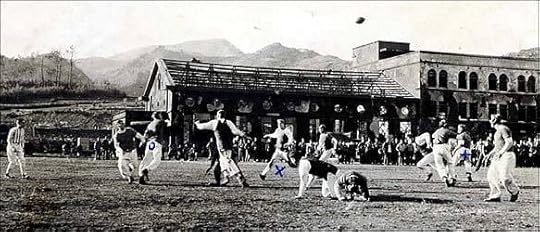
Back in the States, the Rose Bowl and other major college football bowl games, with the Great War over, were played as usual on New Year’s Day. To mark the day in Japan, and raise morale (at least for the Americans), two Marine divisions faced off in the so-called Atom Bowl, played on a killing field in Nagasaki that had been cleared of debris. It had been “carved out of dust and rubble,” as one wire service report put it.
Both teams had enlisted former college or pro stars for their squads. The “Bears” were led by quarterback Angelo Bertelli of Notre Dame, who won the Heisman Trophy in 1943, while the “Tigers” featured Bullet Bill Osmanski of the Chicago Bears, who topped pro football in rushing in 1939. Marines fashioned goal posts and bleachers out of scrap wood that had been blasted by the A-bomb. Nature helped provide more of a feel of home, as the day turned unusually chilly for Nagasaki and snow swirled.
More than 2000 turned out to watch. A band played the fight song, “On Wisconsin!” The rules were changed from tackle to two-hand touch because of all the glass shards remaining on the turf.
Press reports the next day claimed some Japanese observed the game—from the shells of blasted-out buildings nearby.
More than 9,000 Allied POWs were processed through Nagasaki, but the number of occupation troops dropped steadily every month. By April 1946, the US had withdrawn military personnel from Hiroshima, and they were out of Nagasaki by summer. An estimated 118,000 military personnel passed through the atomic cities at one point or another. Some of them were there mainly as tourists, and wandered through the ruins, snapping photos and buying artifacts.
When the servicemen returned to the US, many of them suffered from strange rashes and sores. Years later some were afflicted with disease (such as thyroid problems and leukemia) or cancer (such as multiple myeloma or forms of lymphoma) associated with radiation exposure. More on this and related issues here.


