
Chris Baty's Blog, page 26
March 24, 2022
How to Get Your Friends to Do NaNo with You and Keep You Accountable

With Camp NaNoWriMo coming up, it’s important to make some great writing friends that keep you accountable and motivated. How do you do that? Roni Vayre, who’s been participating (and winning) NaNoWriMo since 2019, has some advice. She’s drafted 3 different novels through NaNo, and it’s all because her friend introduced it to her.
In 2019, I had been mulling over the idea of writing a novel, when a friend texted me about a writing challenge that happened every November. I hadn’t heard of National Novel Writing Month before, but intrigued and motivated by my friend, I signed up immediately. That first year, I won NaNoWriMo with a few days to spare!
All of my writing efforts and accomplishments over the past few years are thanks to that friend, who kindly invited me to be a part of a writing challenge. I don’t think she realized how impactful that invitation was, but participating in NaNo has helped me grow into a more confident writer. It’s given me motivation to write and the momentum to keep writing. Something compelled her to share the organization with me and I’m forever grateful she did.
Here are some tips to getting your friends to do NaNo and keep each other accountable!
Invite a friendIf you’re a NaNo fan, having friends to write with is so helpful! Writing with friends will help you stay accountable to your word count goal, give you motivation to keep going, and give you someone to moan and groan with when writing is hard. But best of all, it gives you someone to celebrate with when you reach your final word count!
Send a text to a friend you think might be interested or post on a social channel to invite anyone to join in our beloved writing challenge. You can also use the forums and regional groups in the NaNo dashboard to connect with people who are already planning to write and want to find new writing buddies!
Plan Write-Ins and Word SprintsOnce you’ve recruited your people, plan daily or weekly write-ins together. These can be in-person or virtual! Write-ins are great for keeping everyone accountable to their writing for a specified amount of time. Say your hellos, then set a timer, and get writing. Even if you get stuck after 10 minutes, writing with others will help you keep trying until the time is up! And if you’re writing with someone who you trust with your creative ideas, you have someone to brainstorm with at the end.
A fun way to write with others is to head over to Twitter for @nanowordsprints and challenge each other to a couple sprints each day! Word sprints with friends are great if you don’t have a lot of time for writing and you enjoy some friendly competition.
Humans are social creatures (even us introverts!) and we thrive on interaction with others, so invite a friend or two to write with you for Camp NaNoWriMo this year! They may discover they love the challenge and will be hooked on NaNo for years to come!

Roni Vayre is a not-yet-published author, freelance writer, and Marketing Director. When she’s not writing, copy-editing, or making episodes of The Plan to Eat Podcast , she can be found in the mountains with her husband and their English Mastiff, Animas. You can connect with her online through her website: www.ronivayre.com or Instagram: @ronivayre
Photo by Dylan Gillis on Unsplash


March 22, 2022
3 Unconventional Ways to Make More Time to Write

Camp NaNoWriMo is quickly approaching, but fear not! Seasoned author, editor, and NaNoWriMo editor, Lewis Jorstad, has 3 tips on making more time to write…without having to wake up at 4 a.m.
If you’re setting out to write a novel—whether for National Novel Writing Month, Camp NaNo, or otherwise—you’re going to need time. For many, this is the hardest part of writing. Carving out extra time in our already busy schedules isn’t always easy, and without that dedicated space, your writing can quickly fall by the wayside.
Luckily, there are ways to hit that coveted 50k, even with a packed schedule—and no, I’m not going to tell you to wake up at 4:00AM! So, let me walk you through my three top tips for making more time to write.
1. Write in smaller chunks throughout the day.Even with a busy schedule, you probably have more time than you think.
Writers often believe they need at least an hour to make meaningful progress on their novels, but this isn’t always true. If you’re struggling to block out large chunks of time, you could instead write for ten minutes on your lunch break, fifteen minutes before bed, or even twenty minutes (via dictation) on your drive to work. While these smaller writing sessions might not look like much on the surface, they add up throughout the week, and can easily net you thousands of words in a month.
Of course, not everyone can adjust to such small writing sessions—myself included. In these cases, don’t be afraid to ignore your novel on your busiest days, and then go all in the rest of the time. Personally, I often write for eight hours straight on my free days, and then set my story aside until later in the week. If you’re the type to prefer a marathon rather than a sprint, this could be a better option.
2. Get your priorities in order.With that said, you should also be prepared to make some sacrifices.
This is the news few people want to hear, but it’s true. Writing a novel is a major undertaking, and writing one in a month is even harder. Still, if you want to take this seriously, you need to consider your priorities:
Could you give up your nightly TV time in order to write a few hundred words each day?Perhaps you can enlist the help of a babysitter to free up your Saturdays?Maybe you could go without your weekend art classes for just this month?Basically, what are you willing to give up in exchange for writing time?The good news is that, whatever you do give up, you only have to do so for one month. As annoying as it may be—and trust me, I love my nightly shows—it is only temporary, and the final reward will be so worth it.
3. Experiment with new writing tools.Finally, a quick and easy way to supercharge your writing is to invest in some writing tools. These tools can help you stay organized and focused, among many other things. Here are a few of my favorites:
Dictation software for writing during long commutesWriting programs like Scrivener for organizing your draftA Pomodoro timer for scheduling writing sprintsYou could also experiment with new writing techniques like skeleton drafts or character interviews. Whatever you try, the goal is to make writing easier. These tools should help you find your creative zone, work more efficiently, and enjoy each writing session to the fullest.
Your novel is worth it!At the end of the day, the most important thing to remember is that your story is worth it. While writing a novel will require a lot of hard work, that work pales in comparison to the final result. Getting to hold your finished novel in your hands is an amazing feeling, and even better is the moment you finally share that story with the world.
Fortunately, you can find time! Carve out small writing sessions where you can, make writing a priority, and grab some helpful writing tools if you need a boost. By the time you’re done, you’ll be well on your way to finishing your novel.

Lewis Jorstad is an author and developmental editor who helps up-and-coming writers hone their writing craft over at The Novel Smithy. When he isn’t working on the next book in his Writer’s Craft series, you can find him playing old Gameboy games and sailing somewhere around the eastern half of the US. You can also check out his free ebook, The NaNoWriMo Survival Guide, and grab a copy for yourself!
https://twitter.com/thenovelsmithyhttps://www.pinterest.com/thenovelsmithy/https://www.instagram.com/thenovelsmithy/March 18, 2022
10 Tips to Keep You Writing

Camp NaNoWriMo is almost here! It’s an exciting time, but it can feel a bit intimidating to tackle a new project head-on. Today, Camp NaNoWriMo Participant Shalom Goodrich offers some helpful hints on how to keep writing when you feel stuck:
Are you positively out of creative popsicles? No more new goggles to try? Well, here are ten tips on how to snap out of that catnap and start fighting for writing!
1. Take a walk. No matter how boring it may sound, it really will help. Just breathe deeply and take in the nature (or city sights) around you.
2. Read a chapter of a book. Some good ones I’ve found to inspire creativity are The Hunger Games, Under the Lilacs, or Insignificant Events In the life of a Cactus (one of my personal favorites).
3. Write about your day, good or bad, for at least ten minutes. Then make up a word and then write a story that includes the word. Then go back to your writing.
4. Play a board game with a friend. Boggle, Stratego, and any memory game are all good brain teasers.
5. Watch a video on how to make an origami bookmark. Then try making a bookmark or three!
6. Paint or draw a picture of a scene in your book. If you feel like it, keep drawing more!
7. Do something else and let your brain rest.
8. Take a nap. If you are tired, that can really affect your writing (sometimes it can be good, more often than not it’s bad).
9. Listen to the Pirates of Penzance soundtrack on either Spotify or YouTube. It’s really funny and interesting, something to take your mind off writing and leave it refreshed. If you can, watch the movie.
10. Take a bike ride, go swimming, or run around the neighborhood. Similar to taking a walk, use up some energy and refresh your brain.
After finishing a large event in my writing, I’ve encountered writer’s block a lot when starting a novel or a new chapter. For me, it’s so hard to start, but the best way to cope with this is to start writing and don’t stop. You can always go back and edit it again. Drawing or painting a scene from whatever you are writing helps a lot, and it exercises your inner artistic self.
Shalom Goodrich lives in Salt Lake City, Utah. She is the oldest child out of six and currently enjoys writing, baking all kinds of stuff, and going on pointe at ballet well as biking two and a half miles there and back. She self-published one novel, Jewelvaria, which is available at lulu.com
Photo by photo-nic.co.uk nic on Unsplash
March 15, 2022
Announce Your Camp NaNoWriMo Project!
The official Camp NaNoWriMo challenge starts on April 1! Camp NaNoWriMo is a virtual writing retreat where you can set your own focused writing goal for the 30 days of April.
Join the official challenge with a new writing project today.(Want to participate in the Camp NaNoWriMo challenge with a project you’re already tracking on the site? Check out our FAQ.)
Why join the official challenge?
1. It’s a great way to participate in the community spirit of an official challenge, while still getting to set your own writing goal. It’s solid practice for the 50K challenge in November!
2. You’ll receive a special badge on the website for participating in Camp NaNoWriMo, and another for achieving your official goal.
3. You’ll earn a winner’s certificate and other rewards (including discounts on writing software like Scrivener, etc.) for reaching an official Camp NaNoWriMo goal.
What else happens during Camp NaNoWriMo?
Published authors will act as your Camp Counselors, sending advice in Camp Care Packages throughout April. Plus, keep an eye on HQ’s virtual events for a packed schedule of Virtual Write-Ins, webcasts, and more.
Find out more about Camp NaNoWriMo.
Share what you’ll be working on during Camp NaNoWriMo this April!
March 11, 2022
Introducing Our 2022 Programs Fellow, Riya Cyriac!
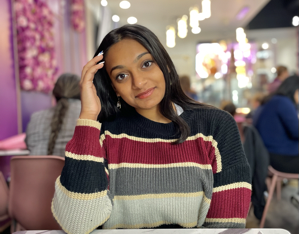
We feel super lucky here at NaNo HQ to meet and work with some incredibly talented people. Today, meet our first-ever NaNoWriMo Programs Fellow, Riya Cyriac! Riya is a long-time NaNoWriMo participant and the founder of The Young Writers Initiative. If you join our upcoming Virtual Write-Ins, you’ll be getting to know her better throughout our Camp NaNoWriMo sessions, but today she’s here to tell you a little bit about herself:
In elementary school, I was married to my little notebook, in which I would scribble down a string of words that slightly resembled a sentence. I refused to divorce my little notebook for the shinier, more logical computer until 8th grade. By making this transition, I found the glory of the online writing community. I also found out about NaNoWriMo.
I watched from the sidelines for years. 50,000 words seemed daunting, not because I was incapable, but because the fear of failure was overwhelming. Then finally, a young, 15-year-old version of myself sat nervously in front of her computer, creating her first NaNoWriMo account.
While I can’t say that I’ve actually written 50,000 words in the month of November, I can proudly say that I’ve tried. Sure, I may have bent some rules here and there, but I believe the essence of NaNoWriMo is to do the best you can and then some. To me, NaNoWriMo, and writing, are about consistency, discipline, and challenging yourself. But NaNo means something different to everyone, and that’s what makes it so beautiful and universal. There is no “failing” NaNoWriMo as long as you started. After all, every novel starts off as nothing but an empty page and an idea.
I’m excited to be NaNo’s first Programs Fellow, and through my work, I hope to help inspire fellow Wrimos (especially young Wrimos) to write their stories and challenge themselves. Outside of NaNo, I’m the Executive Director of The Young Writers Initiative, where we provide free resources, education, and services to young writers all over the world. I’m also a freshman at the University of Texas at Austin studying Business, Plan II Honors, and International Relations. This year, I’ll try NaNo again. I can’t promise that I won’t break any rules, but I do promise to push myself, and I hope you’ll join me!
Riya Cyriac is a student at The University of Texas at Austin who is joining NaNoWriMo as a Program fellow this spring and summer. She believes that anyone can write, and has a particular passion for encouraging and supporting young writers. She is the Executive Director of The Young Writers Initiative and is excited to continue empowering writers through her work with NaNoWriMo.
March 8, 2022
Author Interview: Liz Keller Whitehurst on Turning a Podcast Into a Book
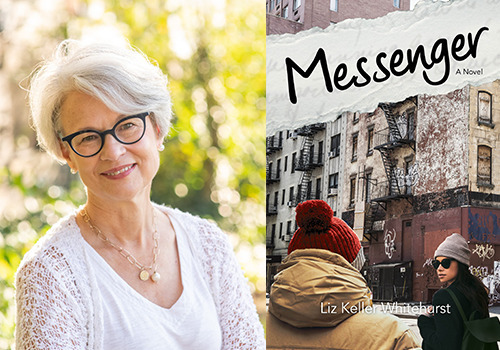
Ever thought of writing a story in one storytelling medium, then translating it into another? In today’s author interview, author Liz Keller Whitehurst talks about the process of creating her debut novel as both a podcast and a print book:
Author Liz Keller Whitehurst first released her debut novel, Messenger, as a riveting 16 episode podcast series in 2020, the timing perfect amid the pandemic that had many people searching for encouraging messages to hang on to.
Liz adapted her podcast into a novel, with the same pivotal themes of initiation, connection, relationship, and mystery. This book reminds us that we are all messengers for each other, and that empathy and connection can come from the most unexpected places. Liz has answered a few questions about the story, her writing process, and turning a podcast into a novel.
Q: What’s the story of Messenger, in a nutshell?
While searching for a new, intriguing story among the competitive media world of New York City, young journalist Alana Peterson finds Messenger, an old woman who gives life-changing messages to strangers all over the city. Alana thinks she’s found her big break with Messenger’s story, but soon realizes there is much more to Messenger than meets the eye. Through a series of mistakes, Alana bends the trajectory of the story to tragic results, only then realizing Messenger’s bigger plans.
Q: What’s one message you received that changed your life?
A: On the morning before my birthday, April 2020, with the COVID-19 epidemic surging, I awoke with a clear and urgent message: Messenger’s time has come. Figure out a way to get Messenger’s story out.
Q: When did you start putting together the story for Messenger?
A: The seeds of Messenger began in 2013, when, during a time of great need, I begged for a message, for the answer to an undiagnosable health challenge my college-aged daughter faced. I went to New York City, where she was a student, to help. Every day while she was in class, I walked the cold, gray streets, stared into the faces of the multitude of people I passed, and wondered if they were desperate for a message, too. To distract myself, I journaled descriptions of faces, interesting people, physical locations, sounds, smells. I had no idea I was working on a new book.
Q: How would you describe your writing process? What made you choose to write multiple narrative forms?
A: I am definitely a pantser (write by the seat of my pants) versus a plotter (planner and outliner) and I “see” and “hear” scenes organically. I strive to get them down as best I can while having no idea how the puzzle parts fit together. I’m also quite influenced by my life and particularly by what I’m reading. Messenger’s multiple narrative forms were really inspired by, believe it or not, Moby Dick! Of course I’m not comparing Messenger to Melville’s tour-de-force, but that’s where I got the idea to use multiple narratives, journals, and lists as a structure to tell the story The character of Messenger came first but I knew I needed another character to form a relationship with her and to create some action. Then I read The Immortal Life of Henrietta Lacks, the wildly successful and amazing non-fiction book by Rebecca Skloot. My character Alana, inspired by Rebecca, was born.
Q: The book being released as a podcast first is such a fun, unique twist! What made you decide to release Messenger first as a podcast?
A: I finally finished Messenger mid-2019, it made the rounds of traditional publishers, thanks to my wonderful agent, April Eberhardt, got reads, but no traction. Then the holidays and 2020 came and everything changed with the pandemic. After I received the message to find a way to get Messenger out, my first idea was to create a website and release the book in episodes, as a serial novel. I queried some trusted friends, especially creative extraordinaire, Rachel Pater, and received another message from them: make Messenger a podcast. Thanks to our talented podcast team, we launched MESSENGER: A NOVEL IN 16 EPISODES in July, 2020. It’s still free and available on my website and at messengerthenovel.com or wherever you get your podcasts.
Q: What would you like readers to take away from your book?
A: My hope is that Messenger readers will find light, comfort, hope, perspective, motivation and inspiration in its pages, will sense the underlying connection we all share, and will believe that a slight swerve can change everything. I also hope readers will wake up and watch for messages coming their way and look for opportunities to be messengers for others.
Q: A writer always loves hearing from readers, but you asked your podcast listeners whether they’ve ever received a message from an unexpected source? What was the response?
A: We received so many messages from this request we created two bonus episodes of real-life messages from listeners. The messages people shared were diverse and intriguing, inspiring and mysterious. Though all very different, one aspect was key to all the messages—timing. Just like Messenger’s messages!
Q: You use the term clinamen in the novel and define it as a slight swerve that changes everything. What do you mean? What is its significance to the novel as a whole?
A: There are many definitions for the term clinamen but in this novel it refers to the underlying theme that a slight swerve—in a life, a city, the world—can change everything. Messenger teaches Alana that a mysterious underlying web connects everyone and everything. Because of this interconnectedness, what happens to any one life affects the whole. That’s how Messenger works.
Liz Keller Whitehurst is the author of the novel, Messenger, and author/creator of the serial podcast MESSENGER: A NOVEL IN 16 EPISODES, which she launched in 2020. Her short stories have appeared in many literary magazines and journals, including Gargoyle, The Portland Review, Five Fingers Review and Nimrod International Journal. She was a finalist in Nimrod International Journal’s Short Story Competition. She earned an MA in English from The University of Virginia. In addition to fiction writing, Liz has spent her professional life writing and teaching.
March 1, 2022
Music Playlists as Story Inspiration

Do you use music to inspire your writing? Have you ever thought about trying different genres to see whether that affects your story? Today, writer A.S. Axeman shares how exploring YouTube videos helped inspire their novel:
For NaNoWriMo 2021, I chose synthwave and ambient genres as my writing music. While most of us write to music, some of us may have a rough time writing with singing in the background. I’m also an 80s kid so when I think of action or hard science fiction, synth music is in my head.
The fantasy and space opera movies of the 80s were voiced by a massive orchestras and produced great music to write to. Growing up I used to listen to the Blade Runner soundtrack and all John Carpenter music just as much as the John Williams scores. As I have aged, most of the time I write with big movie scores playing in the background due to the sheer volume of them available. This year, though, I ignored the sweeping epic scores and shifted solely to synthwave. YouTube is full of synthwave and its sub genres chillwave, darkwave, horrorwave, and retrowave. Springboarding off those, I also added ambient videos with great visuals to my general play list.
The first few days were easy writing, but around 10k words I was really stretching my imagination. I was stalling with my initial idea and I had to give my characters a kick in the pants. I was flipping through synthwave tiles to find just the right one when I saw a silhouetted traveler looking at the expansive skyline of a futuristic city. I though “put Axe and his crew right where that guy is standing”. Suddenly I different problem set for my amnesia-plagued team to deal with.
I typed a few paragraphs then looked at the image again for another dose of inspiration. 700 words later and halfway through that video, I was hunting for another video that seemed like it could connect. I found it among the hundred or so titles of just one content creator.
When I paid attention to the screen images for each synthwave or ambient video, I began stitching together a very different narrative than my intended course. Instead of Axe, Mac, and Quartermas dealing with gritty rough problems, they were on a trippy, cosmic journey.
Music lights up my brain (probably yours too) and images can be worth hundreds to thousands of words. Why not use them as your force multiplier? Think of the time you’ve slogged your way through a dull but awesome looking movie. I’ve sat through many boring but visually stunning and beautiful sounding movies. Choosing instrumental music videos with majestic animations as your writing companion can push you and your words in different directions that you weren’t prepared to go but might actually like better.
A.S Axeman is the pseudonym of a professional rabbit-holer and over thinker who enjoys general woodworking, guitar foot pedals, holiday baking, dark beers, and being retired from the Air Force.
Photo by Don Daskalo on Unsplash
February 25, 2022
It’s Project for Awesome Time!
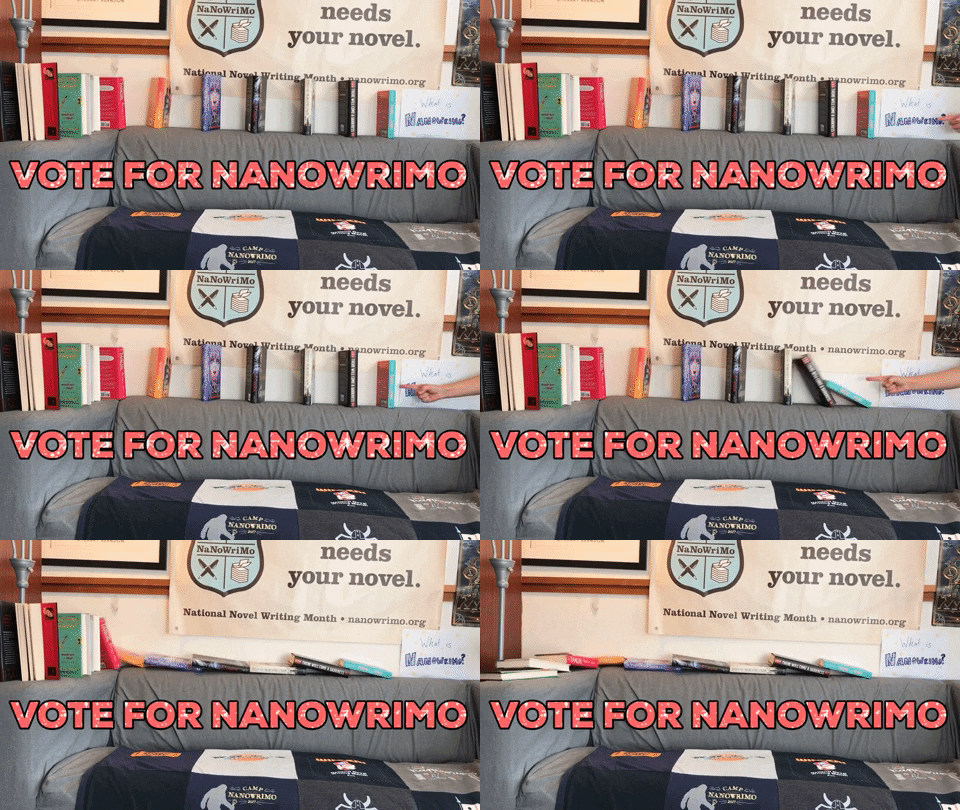
It’s Project for Awesome time! Project for Awesome, or P4A, is an annual fundraiser that raises money and awareness for all kinds of nonprofit organizations. We’re in the running for a grant of some of the money raised through P4A, and your vote can help us win.
It’s simple:
Go to the NaNoWriMo page on the Project for Awesome site.Click on each video.Select the “I’m not a robot” check box, then click the big VOTE box.Please vote for ALL the NaNoWriMo videos—voting is cumulative!
February 18, 2022
Top 10 Essential Copy-Editing Tips
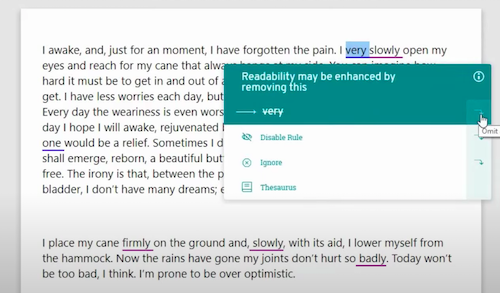
Every year, we’re lucky to have great sponsors for our nonprofit events. ProWritingAid, a 2022 NaNo sponsor, helps you turn your rough first draft into a clean, clear, publish-ready manuscript. Today, Hayley Milliman, Head of Education at ProWritinAid, shares some tips on how to successfully copy-edit. For more in-depth explanation, catch the webcast on Wednesday, February 23!
The Writer’s Goal: keep your readers immersed in the world, characters, and story you’ve created.
Your imagination, understanding of story, and ability to write to the human experience will help you achieve that goal in part. Your work also needs to be reader-friendly, clear, and free of errors.
Why Do I Need to Copy-Edit?Clunky, error-filled work sabotages your efforts. Readers will give up if they keep having to untangle unclear thoughts or stumble on grammatical errors or poorly structured sentences and phrases.
Remember, “the pen is mightier than the sword.” Use it not just to create characters and their universes, but for copy-editing those universes and giving your reader a rich, engaging, un-put-downable experience.
Follow these 10 tips to help you through the copy-editing process.
1. Checking Grammar (and More!)A worthy grammar checker will catch those grammar mistakes you might not even know you made! Grammar can be tricky, but producing grammatically accurate work doesn’t have to be when you recruit the help of a reliable grammar-checking program.
The best program won’t stop at grammar mistakes. It also alerts you to problems with sentence structure and style, repeated words, usage errors and more. Once you’re ready to refine your work, the program can take some pressure off you during the editing process.
2. Let Your Brain ResetThe period–full stop–at the end of your completed draft should also signal you to stop thinking about your work.
If you’re operating under a deadline, and most are, set aside time in your schedule for putting your work away and allowing your brain to reset. Doing this will give you more energy and a fresh perspective when it’s time to edit.
3. Do a Swift First Read-ThroughGive your draft an express-version read through. Focus on discovering big-picture issues you need to adjust; don’t worry about fine-tuning every sentence just yet.
Here are some questions to answer:
Do you have extraneous information slowing down the pace of your work–details or descriptions that may be beautifully expressed but contribute little to your character development or plot? Do you have inconsistencies in style or voice? Do your paragraphs flow smoothly from one to the next?As you observe, take notes! In those notes, identify the problem. If you have an idea for a solution, include that too. Your notes will guide you through your revisions later.
4. Don’t Be Afraid to DeleteUse your mighty pen (or delete button) to strike that story-slowing content! Words, phrases, sentences, and paragraphs are all potential offenders, but your delete key can stand up to them all. Every word you include should have a purpose.
You may have written a beautiful sentence. But it might not be the right sentence for this work. You don’t have to let go entirely. Create a document where you collect these “misplaced but fabulous” sentences. Maybe they’ll have a place in your next project.
5. Read Your Work AloudBetter yet, have someone else read your work aloud to you. Someone else doesn’t know your intentions and can only read the text as it appears. Sometimes, what we mean doesn’t match what we write.
Sometimes, what sounds like a perfectly executed phrase in our brains turns into word salad on the page. Listen carefully, and note where you need to make adjustments.
6. Fact CheckIf you’re including sources or historical events, make sure you’re representing them accurately.
Don’t stop there–check your own “invented facts.” The facts of your characters, their lives, and the world they live in must be consistent throughout your work. Loose ends and facts that don’t fit will leave your readers confused and frustrated.
7. Read Your Work AgainAfter you’ve made big-picture changes and deletions, worked out inconsistencies and made other needed adjustments, read your work again, this time with an eye for every line.
This is a good time to put your grammar (and more) checker into action. Your eyes, paired with the program’s electronic eyes, make a productive, thorough team.
8. Learn as You EditLearn about yourself as a writer from your own editing observations and the feedback from your grammar checker.
I think it’s safe to say every writer has bad habits. Observe yours. Do you repeat “pet” words to a level of distraction? Do you overuse adverbs? Do you use “filler” words (really, very, etc) that don’t add value to your sentences?
Once you recognize those habits, you can change them. Use your copy-editing time as an opportunity to improve not just your current work, but your future efforts.
9. Respect Copy-Editing as Part of the Writing ProcessWriting is physically, emotionally, and mentally strenuous. It makes sense to want to be “done” after creating your characters and their world, and writing their story. But you aren’t done.
Editing is as important to the writing process as creating and drafting. Don’t treat it as an afterthought and don’t just edit once. Give your work the careful editing attention it, and your readers, deserves.
10. Finalize your FormatKnow your publisher’s formatting requirements and follow them. By respecting those guidelines, you show respect for your publisher’s process. First impressions matter! Present your finished (or ready for fine-tuning) work so the focus is on the content, not incorrect formatting.
What Comes After Copy-Editing?With that, you’re done. Well, almost. Once you’ve completed your own copy-edit, it’s a good idea to turn your work over to a professional editor to help spot the things you might have missed.
If you can’t or don’t want to work with an editor, don’t worry. But do seek out opportunities for others to read your work, and listen to their feedback. Doing this after your copy-edit will help them focus on your ideas and storytelling—not the typo you made in the first line.
And, remember, editing software is always there to help you out. It won’t do the hard work of editing for you, but it will help you notice patterns and avoid unnecessary mistakes. Happy editing!

As Head of Education at ProWritingAid, Hayley focuses on building engaging, helpful learning content for the millions of users who rely on ProWritingAid to make their writing clear and effective. Hayley has a robust writing portfolio and has written for dozens of publications on topics related to education, marketing strategy, history, entrepreneurship, and more. She has also published several books related to writing and history, one of which hit the Amazon bestseller list. When not working, Hayley loves hiking, skating of all kinds, and correcting people on Star Wars trivia.
February 15, 2022
Win an Introduction to an Agent or Publisher During Pitchapalooza
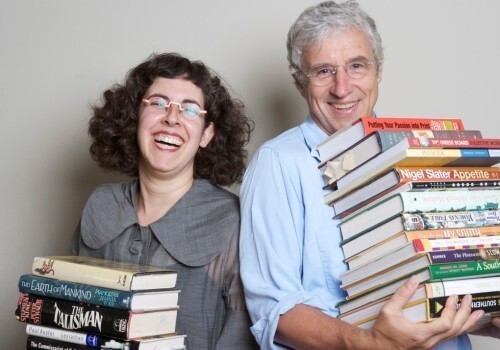
Ready to pitch your novel to the pros? Here’s a message from The Book Doctors to tell you how!
You wrote your 50,000 words (or close!). You’re a winner. You felt the high. Now what are you going to do with your precious manuscript? That’s where we, The Book Doctors, come in. Join us for our twelfth annual NaNoWriMo Pitchapalooza to learn how to catch the attention of publishers and readers.
For those of you unfamiliar with Pitchapalooza, here’s the skinny: You get 250 words to pitch your book. Twenty pitches will be randomly selected from all submissions. We will then critique the pitches during a live webinar on April 2, 12PM PT, so you get to see what makes a great pitch. At the end of the webinar, we will choose one winner from the group. The winner will receive an introduction to an agent or publisher appropriate for their manuscript.
We will also crown a Fan Favorite who will receive a free one-hour consultation with us (worth $250). On April 3, 2022, the 20 random pitches will be posted on our website, www.thebookdoctors.com. Anyone can vote for a fan favorite, so get your social media engine running as soon as the pitches go up! Connecting with your future readers is a vital part of being a successfully published author, and this is a great way to get some practice. Voting closes at 11:59PM PT on April 25, 2022. Fan Favorite will be announced on April 26, 2021.
Here’s how to enter:Beginning February 15, 2022, you can email your pitch to nanowrimo@thebookdoctors.com. Do not attach your pitch, just embed it in the email.You get up to 250 words to pitch your book.Include your title and your name at the top of your pitch. These don’t count toward your 250 words.All pitches must be received by 11:59PM PT on March 15, 2022.Where are they now? NaNoWriMo Pitchapalooza Success StoriesIt’s been a great year for past NaNoWriMo Pitchapalooza winners:

In 2016, May Cobb ran away with NaNoWriMo Pitchapalooza. She’s been capturing attention ever since. In 2019, it was a “heated six-publisher auction” that ended with Berkley winning the rights to publish her novel The Hunting Wives, which was pitched as In a Dark, Dark Wood meets Mean Girls. The Hunting Wives launched in May 2021 with buzz from The Skimm, Cosmopolitan, SheReads, PopSugar, BuzzFeed, Goodreads, E! Online, Crime Reads, Book Riot, Bustle, and more. In September 2021, May announced another two-book deal with Berkley. First up, My Summer Darlings hits bookstores in May 2022: three lifelong friends plus a dangerous, sexy new stranger in town add up to a scorching summer of manipulation, obsession, and murder.

Gloria Chao won the 2015 NaNoWriMo Pitchapalooza with the novel that would become her critically-acclaimed debut American Panda. Her award-winning books have been featured on the “Best of” lists of Seventeen, Bustle, Barnes & Nobles, PopSugar, Paste Magazine, and more. American Panda received four starred trade reviews, was on the Amelia Bloomer list, and was a Junior Library Guild Selection, Indie Next Pick, and YALSA Teens’ Top 10 Pick. Her second novel, Our Wayward Fate, came out in 2019 and her third novel, Rent a Boyfriend, is out now from Simon & Schuster Books for Young Readers.
But that’s not all. Fools in Love, an anthology released December 7, 2021 (Running Press Kids/Hachette), features Gloria and fourteen bestselling, award-winning, and up-and-coming authors as they reimagine some of the most popular themes in the romance genre that are sure to steal your heart. Gloria’s work graces Game On: 15 Stories of Wins, Losses, and Everything in Between that released last month from Viking/Penguin. And coming from Viking Penguin in Fall 2022 is When You Wish Upon a Lantern, a YA romance that sold in a heated auction! In Spring 2023, look for Freshman Orientation, a YA anthology of linked stories set on the first day at a small college, from the perspective of teens moving into their dorms, making new friends, avoiding old ones, and trying to fit in (Candlewick).
Gloria is giving back to aspiring authors by being a 2022 We Need Diverse Books YA mentor.

Stacy McAnulty has been on fire since she won our third NaNoWriMo Pitchapalooza, publishing twenty-eight books and counting. Her latest novel, Millionaires for the Month, is out now from Random House Books for Young Readers. Kirkus calls it “cinematic, over-the-top decadence, a tense race against time, and lessons on what’s truly valuable.” Stacy also signed a deal with Random House to publish another middle grade novel, A Penny Doubled, pitched as How to Steal a Dog meets Brewster’s Millions. She also published three picture books in 2021: A Small Kindness (February 2), Mars! (February 9), and Brains! Not Just a Zombie Snack (August 31). And Little, Brown recently won at auction rights to publish her debut nonfiction middle grade Save the People! Halting Human Extinction, a look at our potential demise with a side of humor and a powerful remedy: scientific knowledge. In April 2022, look for Our Planet! There’s No Place Like Earth, and in August, Blood! Not Just a Vampire Drink.
Important NaNoWriMo Pitchapalooza DatesTuesday, February 15, 2022 — Pitch submission opensTuesday, March 15, 2022 — Final day to submit pitchesSaturday, April 2, 2022 — NaNoWriMo Pitchapalooza live on YouTubeSunday, April 3, 2022 — Voting for Fan Favorite begins at www.thebookdoctors.com Monday, April 25, 2022 — Final day to vote for Fan FavoriteTuesday, April 26, 2022 — Fan Favorite announced at www.thebookdoctors.com NaNoWriMo Pitchapalooza FAQs
“Winning Pitchapalooza gave me confidence and the courage to keep fighting. It also helped bring my manuscript to the next level.”
–Gloria Chao
Q: May I submit more than one pitch?
A: Yes, you may submit multiple pitches. Please include your book’s title and your name at the top of each pitch.
Q: How are the 20 pitches selected?
A: The 20 pitches are randomly selected; however, we read all the pitches.
Q: Are the choices for Fan Favorite also randomly selected?
A: Yes. They are the same 20 pitches that we read during the webinar.
Q: Will a recording be available?
A: Yes. You’ll be able to view the recording at www.thebookdoctors.com and on YouTube.
Q: Where can I learn more about writing my pitch?
A: We offer resources on our YouTube channel. We recommend that you watch “The Art of the Book Pitch”, last year’s NaNoWriMo Pitchapalooza, and our Pitch Tips playlist. Hungry for more examples? Check out our Pitchapalooza playlist. You can find Gloria Chao’s pitch tips here.
Are you feeling a little unsure about exactly how to craft your pitch? We’ve got you covered.
10 Tips for Pitching Your NovelA great pitch is like a poem. Every word counts.Make us fall in love with your hero. Whether you’re writing a novel or memoir, you have to make us root for your flawed but lovable hero.Make us hate your villain. Show us someone unique and dastardly whom we can’t wait to hiss at.Just because your kids love to hear your story at bedtime doesn’t mean you’re automatically qualified to get a publishing deal. Make sure to include only relevant information in your pitch.If you have any particular expertise that relates to your novel, tell us. Establishing your credentials will help us trust you.Your pitch is your audition to show us what a brilliant writer you are, so it has to be the very best of your writing.Don’t make your pitch a book report. Make it sing and soar and amaze.A pitch is like a movie trailer. You start with an incredibly exciting/funny/sexy/romantic/etc. close-up with intense specificity, then you pull back to show the big picture and tell us the themes and broad strokes that build to a climax.Leave us with a cliffhanger. The ideal reaction to a pitch is, “Oh my God, what happens next?”Show us what’s unique, exciting, valuable, awesome, unexpected, about your project, and also why it’s comfortable, familiar and proven.Join our newsletter to receive more tips on how to get published.
Arielle Eckstut and David Henry Sterry have appeared everywhere from NPR’s Morning Edition to The New York Times to The Wall Street Journal to USA Today. They have taught everywhere from Stanford University to the Miami Book Festival to the granddaddy of American bookstores, Strand Books in New York City.
Their book, The Essential Guide to Getting Your Book Published, is the go-to book on the subject, and contains all the information you’ll ever need, taking you through the entire process of conceiving, writing, selling, marketing and promoting your book.
Chris Baty's Blog

- Chris Baty's profile
- 63 followers

