
Chris Baty's Blog, page 205
October 11, 2013
Roadtrip to NaNo: Of Research & Local History
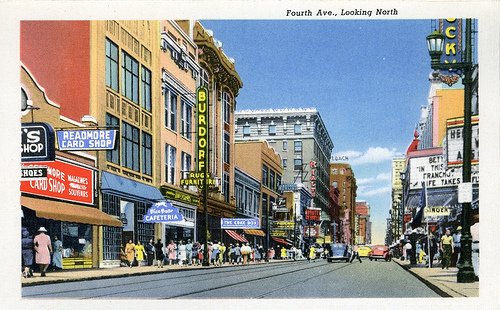
November is coming. To get ready, we’re taking a Road Trip to NaNoWriMo. On the way, we’ll hear from writers about how their cities can inspire your novel. Today, volunteer Municipal Liaison Angela in Louisville, Kentucky touts the importance of research:
Did you know that “Happy Birthday” was written by two Louisvillian sisters in the nineteenth century? Or that the Kentucky Derby is nicknamed the Run for the Roses, because of the garland of roses that gets placed around the winning horse’s neck? Or that it is also affectionately referred to as the Greatest Two Minutes In Sports?
You may not be writing something that takes place in the real world or present time, but local history can be useful in ways you don’t expect. You never know when some aspect of your local environment can make your novel feel real. While I don’t usually plan my novels out, I do love to research beforehand so that I have a plethora of facts to work with when my novel’s plot reveals itself to me.
I’m from Louisville, Kentucky—a city that is both larger and smaller than most people think. Despite Louisville’s seemingly never-ending associations with sports (ahem, Louisville Slugger baseball bats) we don’t actually have any major league teams. This type of local contradiction that speaks so deeply to the fabric of a city is exactly the type of thing you can discover more about by researching regional history.
A simple trip to the Kentucky Derby Museum will result in boxes full of photographs documenting the fashions of wealthy men and women since the very first Derby in 1875! Seeing floral artisans at the Derby Festivals construct garlands of roses for the winning horses makes flower arrangement a visceral and exciting activity to imagine.
You can always find historical sites in your town to spice up every kind of novel. For example, if you’re researching something historical, medical, or spooky, Louisville is home to the Waverly Hills Sanatorium, one of the most haunted spots on earth. Or a visit to the Louisville Slugger Museum & Factory will show you every step of the infamous bat-making process, including woodworking techniques for ensuring the proper weight and balance.
These details may sound random, but when you are in a novel and trying to describe processes, whether they be historical or manual, there is no better way to talk about them convincingly than actually understanding them.
Knowing how a bat is made can help you when you are writing about your character’s Little League game: it’s really hot out and your character’s little sister is practicing her swing, three bats before she gets up to the base, when suddenly a loud crack fills the air, and you realize that she accidentally knocked all the bats right into the metal fencing. How fast did the bats have to be going for them to actually crack upon impact? How strong does your little sister have to be? And how long were the bats?
Thanks to your research, you can write this scene inside and out, with pitch-perfect accuracy. Throw in a spooky tuberculosis-ridden ghost and some perfectly arranged rose garlands, and you’ve got yourself a chapter!
You never know what unusual things you might find when you look at the world around you. No matter where you live, explore your city’s history. Feel the facts that live around you. Delve deeper.

Angela Szalay has participated in NaNoWriMo nine times, and won eight of them. She has been an ML for 6 years, and is known for her last minute finishes. Weather is no deterrent to a true Louisville Cardinals fan, nor is sleep a requirement for the faithful concert-goer. Her scrunchies, like her pens and her website, are color-coordinated. StarAndrea wrote this bio for her.
Photo by Flickr user Olivander.


October 10, 2013
Roadtrip to NaNo: How to Explore Time and Space
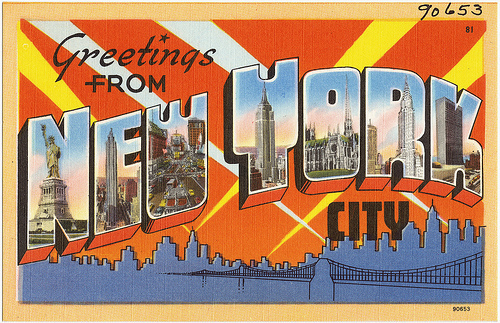
November is coming. To get ready, we’re taking a Road Trip to NaNoWriMo. On the way, we’ll hear from writers about how their cities can inspire your novel. Today, Margaret in New York City, NY dares you to reorient your writerly perspectives:
New York: The City That Never Sleeps. It’s a common phrase, but it means a lot more than last calls at 4 a.m. and a 24-hour subway system. This town doesn’t run on one schedule, it runs on over 8 million.
Bodegas, hot dog carts and $1 pizza places line the streets of Midtown Manhattan and the Village, catering to this continual flux of pedestrian traffic. Trains full of 9-to-5ers pour out of Grand Central Station, giving way to tourists, then pre-curtain-call diners, then club-goers and night shift workers, on to the late-night partiers and night owls, until, as dawn breaks, early-shift workers and audition-goers pass through, re-starting the cycle all over again.
Space is reinvented each moment, both by the time of day and the people who populate it. On the same day, a single street corner hosts millionaires, dog walkers, artists, students, and charity workers, each in their own time.
The cute, homey bar in Alphabet City changes completely once college students decide it’s the happening place to be. When I was apartment hunting, the most popular question I got was “Have you been there at night?” A lively street can become a desolate wasteland come nightfall and, conversely, a quiet day-time street can bustle with life after dark.
When we write about a place, it’s easy to think of it only through the eyes of one person: usually through the eyes of the main character, or the eyes of one of their peers.
I challenge you to let your characters and readers see common places in new ways. Let someone forget their keys at work and return to the eerie quiet of their empty office building. Watch how things change when commuters have to take a different train at 2 a.m. because of construction, or get stranded in a transit strike and have to walk across a bridge to get home to another borough. Examine a busy Chinatown market through the eyes of a lost child, or an uncertain adult, or an adventurous teen.
You have the freedom to explore time and space when you write: take risks and change the feeling of a place as time goes on and as it is populated with new faces. You have the opportunity for all kinds of adventures in your writing. Try this one out and you may start seeing new ideas all around you, at any time of day—in your writing and perhaps even in your life!

Margaret has been living and writing in NYC for 10 years, and has been a part of NaNoWriMo since 2009. She writes professionally in addition to her fiction habit and blog. She’s also an avid crafter and loves knitting and sewing (especially stitching those NaNo achievement badges on!). Her favorite genres to work with are sci-fi and adventure, and New York offers her plenty of both everyday.
October 9, 2013
Roadtrip to NaNo: The Endless Possibility of Your Characters

November is coming. To get ready, we’re taking a Road Trip to NaNoWriMo. On the way, we’ll hear from writers about how their cities can inspire your novel. Today, Crystal in Edmonton, Alberta challenges you to throw contradictions at your characters:
Welcome to Edmonton, the City of Champions!
Well, that’s what the sign says when you drive in from Highway 2. I think it hearkens back to the storied days when Edmonton sports teams actually won sporting competitions… but I’m not here to talk about that. I’m here to tell you why Edmonton is inspiring. Because it truly is.
Nowhere in the world (at least in my experience) is there a place as ripe with colorful contradiction as Edmonton, Alberta. It was founded as a fur-trading fort in the 1800’s—nothing speaks to my romantic imagination quite as strongly as images of cold Canadian winters, mercenary immigrants with long rifles, and thick sweltering piles of fur. Flash forward to 2013, and things are a little different. Farmers markets cluster in empty parking lots, Art museums await exploration, and the North Saskatchewan River snakes its way alongside the city, claiming its title as the longest urban river in North America.
Edmonton is full of contradictions that work perfectly together, so consider contradictions while you work on your NaNo-novel. Think about your character’s past and the past of the place he or she comes from. Think about Edmonton: a city that was settled by Ukrainian hunters, and now boasts some of the most exciting and international summer festivals in Canada!
But there is more that Edmonton has to offer your characters: Want to explore the different climates your character could live in? Head on over to the Muttart Conservatory. Does your character need that perfect one-of-a-kind gift? Take a stroll down Whyte Avenue for loads of unique shops. Want to find the perfect time period for your character to live in? Visit Fort Edmonton Park, which celebrates Edmonton’s history up to the 1930s, take a tour of the Legislature building or visit the Ukrainian Cultural Heritage Museum. Need some help thinking of quirky physical characteristics for your character? Then head to the West Edmonton Mall for some great people-watching.
Be inspired when drawing your characters. The possibilities within them are endless, just like they are in Edmonton.

Crystal is a romance novelist and historical costumer who has lived in Edmonton for more than 20 years. She has two extremely affectionate cats and drinks far too much tea.
Photo by Flickr user 66197572@N00.
October 8, 2013
Road Trip to NaNo: Lend Duality to Your Characters
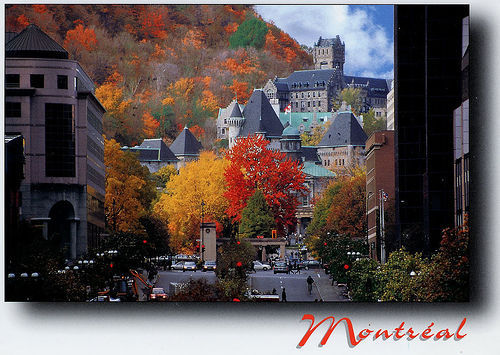
November is coming. To get ready, we’re taking a Road Trip to NaNoWriMo. On the way, we’ll hear from writers about how their cities can inspire your novel. Today, R.J., Municipal Liaison for Montreal, Quebec discusses how to get your character into—and out of—trouble:
Entering downtown Montreal is like stepping through a time machine. The old port brings you straight to the 1600s: where architectural elegance usurped function, and everything was made of stone. And these stones have stories to tell—showing the stains of floodwaters from as far back as 1642. The port looms on the shores of the St. Lawrence River, where the industrial and colonial eras meet in old basilicas, war-scarred hospitals, and a sense of antiquity that can charm and delight.
By moving a few blocks up the hill, you move in time and place. Chinatown is guarded by pairs of noble lions gifted to the city by China. The smell of fresh Italian pasta and spices waft through the air. One only needs to look up the hill to find a vibrant Portuguese community. Antique crosses, synagogues, and historic cathedrals litter the streets as evidence of historic Jewish and Catholic communities.
One of the most inspiring things about Montreal is how diverse its culture and people are. Located in the French province of Quebec, it has the romantic attitude of Paris. However, unlike France, English is spoken commonly, making it a place many American tourists feel welcomed. This duality (so familiar, yet, so foreign) makes for an ideal setting for characters to get into—and out of—trouble.
If you allow Montreal to take you in, you will come away full of the tastes and sounds of the past 500 years. Borrow the spirit of the City of Festivals when everything feels lackluster and monochrome in your story. Borrow the lights, borrow the snowfall, borrow the diversity and borrow the magic.

RJ Blain suffers from a Moleskine journal obsession, a pen fixation, and a terrible tendency to pun without warning. When she isn’t playing pretend, she likes to think she’s a cartographer and a sumi-e painter. In her spare time, she daydreams about being a spy. Should that fail, her contingency plan involves tying her enemies to spinning wheels and quoting James Bond villains until satisfied.
Photo by Flickr user Alessandro Venet.
October 7, 2013
In Which We Welcome Whim-Followers, Intern Man, and a First-Time Fiction Writer
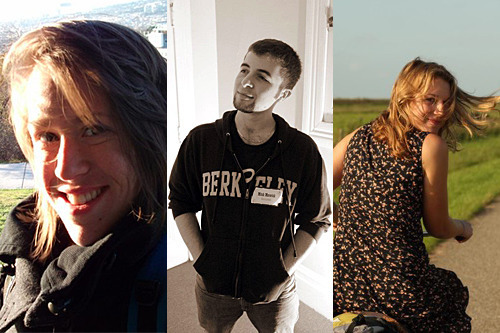
We’re incredibly proud to present our wonderful team of interns for NaNoWriMo 2013! Their first duty? To stand up, introduce themselves, and get amped for the noveling adventure to come. Above, from left to right: Lauren, Steven, and Hannah.
Lauren Harsma, Programs Intern
Hello. I’m Lauren, and I am a serial bad-decisionist. A follower of whims, a shooter of moons, so familiar with the knee-jerk reaction that I don’t even spill my coffee anymore when making a sudden movement.
In my senior year of college, I fled to England to study literature at the University of Leeds. Two years ago, I moved to California with no job prospects and only an elementary understanding of the avocado. I fully intend to make my dog, Sir Percival, wildly famous through a combination of my own cunning and a bit of bargaining with circus ringleaders, then retire early on the profits and move to Alaska so I can wear sunglasses twenty-four hours a day without being judged for it.
(So far everything is working out swimmingly. Negotiations with Barnum & Bailey are in progress, and I have bought four pairs of Ray-Bans and a polar bear farm in Juneau.)
While I await the imminent explosion of Sir Percival’s career as a sword-swallower, I’ve been taken on at the Office of Letters and Light as a Programs Intern—an uncharacteristically good decision for a self-declared reprobate. To say I’ve been looking forward to this since I was a wee lass might be exaggerating, but only by a little. Along with a penchant for literature and a collection of comically over-sized character mugs, I have a degree in Creative Writing from the State University of New York at Oswego.
I like thinking creatively, learning creatively, and living creatively, and I love encouraging others to do that same. It will take some practice to balance training the dog for his tightrope routine and working on the Young Writers Program, but where would the fun be without a little risk? This particular decision is turning out to be a very, very good one, and I’m excited to contribute everything I can to the team over the next few months.
— Lauren
Steven Genise, Development Intern
Dear much beloved and hopefully caffeinated readers,
My name is Steven Genise, and for the first time in my tenure as a Wrimo, I will be experiencing the magic that is the Office of Letters and Light from the other side of the computer screen. It is possibly the most exciting thing to happen to me since that one time I realized that I lived a mile away from Clay Aiken.I hail from a faraway land called Pittsburgh, where the sun is always shining (approximately seventy days out of the year), and driving directions can only be understood by native speakers of the local language.
By day, I am merely a student, existing on a diet of oatmeal, ramen, and coffee; however, when duty calls, and a distressed denizen shines the “Steve Symbol” into the clouds (it’s a spotlight on the roof of the Berkeley English Department), I tear away the clothes of my alter-ego and become Intern Man, a Wrimo with a love of all things rowing, a keen knowledge of dead languages, and… I guess still a student.
I have been a Wrimo in theory for six years, and in practice for three, and I plan on making this year lucky number seven (or four). Whether it’s blogging, organizing events, or guzzling coffee, I hope to provide as much aid as I can to the beleaguered NaNo crew as the staggering monolith that is November approaches. Hopefully, a wave of coffee and energy drinks will help me ride out the month on the back of a completed novel, but only time shall tell. Rest assured, regardless of the state of my novel, if the good citizens of NaNoLand should call, Intern Man shall be there for them.
— Steve
Hannah Rubin, Editorial Intern
Hey NaNoVerse,
My name is Hannah and I am excited to join this hustlin’ and bustlin’ community as your fall editorial intern! I just graduated from Wesleyan University in Middletown, CT (always promising when a town is named for its geographical relation to other towns…), where I did American Studies and Studio Art: a combination that lent itself very well to long nights spent pondering the human condition (and subsequent hours of scrubbing dark room chemicals from my nail beds).
Today marks my second week in Oakland— a land of late-night sun, stucco walls strewn with crawling ivy, and real bike lanes. I’m looking forward to spending the rest of the season here and have it not become winter.
I have a lot of experience with journalism and magazine editing, and am looking forward to channeling my writerly impulses to the big bad world of fiction. So, yes, I will admit it. This is my first fiction endeavor. I am almost as excited as I am nervous, primarily because of you all: how nice to have 500,000 other people also trying to figure out how to make up plots, characters, story arcs, and climactic scenes that are both beautiful and believable. (Can you tell that I have already started my research?)
Here’s to the coffee-fueled-finger-pounding-nights ahead, as we all work together to reach our 50,000 word nirvanas!
— Hannah
October 4, 2013
Road Trip to NaNo: Entering New Realms, Together
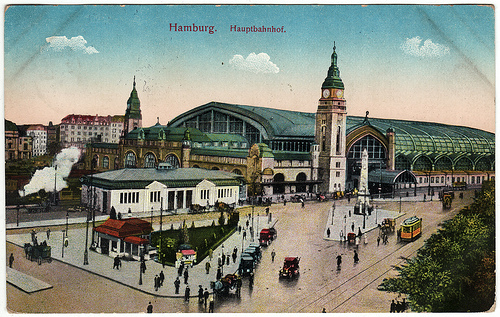
November is coming. To get ready, we’re taking a Road Trip to NaNoWriMo. On the way, we’ll hear from writers about how their cities can inspire your novel. Today, Johanna in Hamburg, Germany celebrates new stories and new beginnings:
It is Sunday in Hamburg. Six o’clock in the morning and everything is quiet. Most people are sleeping peacefully in their beds, but not me. I’ve been awake all night. Waiting for this special moment.
I feel tired but push on: there is nothing better than the beauty of a new dawn and the breeze of freedom it holds. Soon, I will go to the one place where people who lived through the night can meet those who are first to welcome the morning.
It is loud and hectic, when I arrive at the Fish Market. My mouth waters. The market criers are fully awake, trying to sell their goods, a thousand different kinds of fish. I like the smell.
I buy a fish roll, enjoy the view over the river Elbe and listen to the conversations that are floating around me, many of them taking place in languages that I don’t understand. This is life: a new beginning with every new day.
I follow the river to the next ferry station and take one of the boats across the river. I stand at the railing and look down at the water—the movement of the frothy whiteness as the ferry breaks through the waves. At the other side, a newly built aircraft climbs into the sky. They say that after a few more test flights it will travel around the world.
This is it. The moment I’ve waited for. I feel ready, ready to start my own journey. I don’t know where I’m headed, but I know it will be some place I’ve never been to before. There are the literal journeys to new horizons and then there are the journeys that take place at our keyboards and in our notebooks and with each passing day. They are equally life-changing.
We are about to embark on one, together, as November approaches. As you sit down to write, close your eyes and think of Hamburg and its spirit. Think of salty air and slimy fish and the vast open-ness of a seemingly never-ending sea. With every new beginning there is this beauty and freedom. Join me in entering new realms of the world.

Johanna is 25 years old and has always lived near Hamburg. She started writing at 14 and focused on telling fantasy stories. But it wasn’t until her first NaNoWriMo in 2009 that it was possible for her to finish one of her stories. Since then, she has participated successfully in every NaNo; she became an ML for Germany in 2012. The best part about NaNoWriMo for her is meeting other people with the same interests. Her NaNoWriMo username is “Federkiel" which is the German word for "quill".
Photo by Flickr user jphillipson.
October 3, 2013
Road Trip to NaNo: Why You Need a Conflict Trap
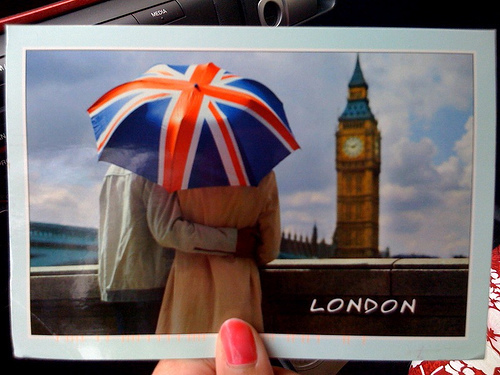
November is coming. To get ready, we’re taking a Road Trip to NaNoWriMo. On the way, we’ll hear from writers about how their cities can inspire your novel. Today, Claire in London, UK reintroduces you to the plot wrench:
Like a lot of Londoners, I’m in a love-hate relationship with the underground.
It’s fast and convenient, a thing of complex, urban beauty, with a world-renowned map that even made its way to Albus Dumbledore’s left knee. But it’s also a pricy, overcrowded, grubby would-be sauna that often makes me wish Apparition were a real thing.
No one wants to be stuck on a train that has stopped mid-tunnel during rush hour, caught between bickering lovers gesturing overzealously and an elderly lady with a drooling dog. But what about our characters? Do we want them stuck on that train? With their nemesis? Who has a gun? Pointed at a basket of puppies? You bet we do.
It would make a great scene: Our charismatic lead and her brainy sidekick need to trick the baddy into putting the gun down, deliver him to the police, and get the puppies safely to a shelter, all before they can get on with their journey. That’s at least 2,000 words right there—and more if you have your heroes adopt the puppies and argue over what to name them. Plus, the dogs can help track down the super villain when he inevitably breaks out of jail.
See where I’m going with this? Have your character plan a journey, and then throw a wrench in the works. It could be a literal wrench, or something altogether wackier.
If you set your story in London, have your character miss the last train and be faced with a five-night-buses slog home, or have them get on at the last second, only to realise they’ve boarded an empty train headed for a spooky, disused station.
The mishap could completely define your story—if say, your daring protagonist stowed away on the wrong spaceship and ended up in the Horsehead Nebula without his passport. Or it could spark an argument (and maybe something more) if your heroine were forced to endure sharing a carriage with that pompous yet handsome duke she can’t seem to get along with.
You could get your main character in a lot of trouble at work by having him turn up late to a very important meeting—it’s not his fault he had to take a convoluted route to avoid driving past his ex-girlfriend’s house!
Take the silly route, with a 3 a.m. trip to the supermarket that results in having to carry home an unexpectedly heavy and slippery frozen turkey; or take the scenic route, when a motorway pile-up forces your characters onto smaller and more interesting roads.
We’ve all had travel plans gone awry, and our characters should have them too. If only because by week two of NaNoWriMo, you’ll feel a strong inclination to hurt them, and messing with their commute is really good for that.

Claire moved to London and discovered NaNoWriMo in 2008. She has been an enthusiastic Wrimo ever since, and is currently one of London’s four MLs. She also runs the geeky online magazine Many A True Nerd and spends too much time on Twitter. She is always up for baking, and is quite possibly a future crazy cat lady.
You can keep up with Claire on Twitter and on her blog.
Photo by Flickr user wendyness.
October 2, 2013
Road Trip to NaNo: Stories You'll Always Remember
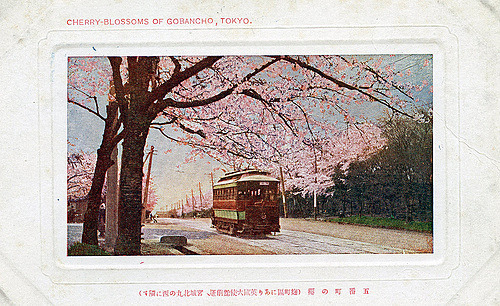
November is coming. To get ready, we’re taking a road trip to NaNoWriMo. On the way, we’ll hear from writers about how their cities can inspire your novel. Today, Japan Municipal Liaison Sabrina asks you to look, feel, listen:
The needle-like silhouette of Tokyo Sky Tree spirals above the glittering skyline. I am standing in front of a convenience store where I just bought a doughnut that has been frosted to look like a tiny cat. Across the street, a group of young women dressed in a mixture of yukata and day-glo 80’s fashion walk out of a traditional restaurant and into a Starbucks. I can see a blonde woman on the TV screen in the café window, talking about laundry detergent that turns pillows into marshmallows, or something like that.
Art is a mirror held up to real life, so why not have real life inform your writing? It’s amazing how much inspiration for settings, situations, and characters you can find just by going outside and seeing what happens. And there is nowhere in the world so filled with strange contradictions as Tokyo.
It’s a city where the high-tech “electric town” of Akihabara sits beside businesses that still use fax machines as their primary mode of communication. Traditional fashions like kimono are coupled with contemporary Hello Kitty prints and neon hair extensions. Cell phones cost a small fortune, but almost all come equipped with free email. Technology and tradition, public face and private lives, trying your best while blending into the crowd… even the strangest of fiction set in Tokyo is surprisingly spot-on, and why not?
Whether it’s an elderly man growing his own rice while singing professional opera, a fashionable high school student who can name all of the animals the Pokémon characters are based on, or a convenience store cashier who dances in festivals in his spare time, Japan is a land brimming with more stories than can possibly be told. Finding inspiration is as simple as walking through your own front door.
It might be easier to do in Tokyo than some other cities but no matter where you are, take one day to simply take in everything about your own setting. Setting up with your laptop and a bunch of friends in a karaoke room for a couple of hours can give you enough conversations and silly antics to occupy your characters for days. People-watching with a pen and notepad in an all-hours family restaurant while the salary men, students, and late-night socializers kill time after missing the last train can inspire you to create characters and situations you might never have thought of on your own. Even getting lost on the local trains and subways for a day can lead to a lifetime’s worth of random encounters to feed every genre: from sci-fi settings to romance to coming-of-age musings and beyond.
Walk down the street slowly, linger in the parking lot of a high-tech car wash, sit on the bench outside of an all-hours hair salon. Look, feel, listen. I guarantee you’ll end the day with stories you’ll always remember and others will never tire of hearing—or reading.

Sabrina Zirakzadeh is a singer-songwriter and English teacher currently based out of a small town in rural Okayama, Japan. She holds a master’s of popular music performance from the University of Glasgow in Scotland and released her first album, “Awakenings,” in 2012. Known to the NaNoWriMo community as Jupiter Star, Sabrina is currently the ML for Japan. She wrote the song “50,000 Words” about NaNoWriMo; all proceeds from the song benefit the nonprofit behind NaNoWriMo.
Email her, find her on Facebook, or follow her on Twitter at Jupiter_Star or NihonWriMo!
Photo by Flickr user tigerzombie.
October 1, 2013
Road Trip to NaNo: The Art of Writing Monsters
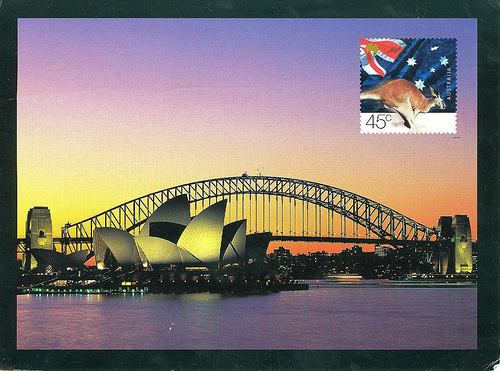
November is coming. To get ready, we’re taking a road trip starting in Sydney, Australia, and winding our way back to Berkeley, CA. On the way, we’ll hear from Wrimos about how their cities can inspire your writing. Today, Sydney Municipal Liaisons Nick and Hong challenge you to create a specific kind of character:
Mention Sydney, Australia and the usual images come to mind: the elegant sails of the Opera House shining white and bright in the midday sun, or vast hordes swarming to sandy beaches with beers and towels in hand. With our iconic arched bridge spanning a crystalline harbour, it’s easy to think Sydney is far removed from the dangers associated more readily with Australia’s ‘outback’ or ‘bush’.
That’s your first mistake.
Never mind the tales of bunyips, dropbears, and magpies— we have a creature even more troubling. A creature so potent and deadly that you can’t find a doctor’s office that doesn’t hoard copious amounts of anti-venom to protect against it. Thinking of a snake? That’s mistake two; this one you’ll never see coming.
If you’ve ever wondered why arachnophobia is so common, you haven’t met the Sydney Funnel Web Spider, the deadliest spider in the world. When they rear up on hind legs poised to attack, your fate is fully in luck’s hands. Their venom is extremely toxic to all primates, including us, and they bite between thirty to forty people per year in Sydney alone.
The only reason that this species has been held back from invading the rest of the world is due to a constant vigil by Australian spider-watchers. But, disturbingly, our stocks of anti-venom are running dangerously low, and it may only be a matter of time before they run out.
Then, nothing can stop them.
While the common folk may quiver at the thought of such a ferocious arachnid, we writers can take this fear and turn it into a token of inspiration. Dangerous creatures can be found all over fiction—whether true to life or exaggerated to preposterous levels, the possibilities are only as limited as the author’s imagination. Why not take some of this inspiration for your upcoming novel?
Take a page out of the Aussie book and challenge yourself to design the most fearsome creature you can imagine.
Consider the ways in which your characters will react to an encounter with this creature and write about the repercussions of their meeting. (For those writing in a setting in which such an encounter may not be possible/realistic, remember that monsters come in all forms—including the metaphorical, like a bad memory or an intense phobia. Monsters that don’t possess the immediate shock value of a shiny black spider can be be the most terrifying and dangerous of them all!)
In crafting your monster, think of the many ways they could possibly pose a threat: Is it their sheer size that lets them overpower anything that stands in their way, or do they have giant snapping fangs filled with deadly neurotoxin? Think of what this creature could look like and paint a picture for the reader. Fluorescent colouring, a mean, pinched face, inch-long spikes from head to foot, or maybe, like the funnel web spider, it’s just an overall mean-looking package of angry black limbs and oversized fangs. Work in some weaknesses to balance it out and make sure to give it a memorable trait (think a gurgling war cry or frothing pink saliva).
Have fun with your creation! Don’t be afraid to get a little crazy with your ideas—let yourself loose and don’t hold back, because at the end of the day we all know that the biggest monster we have to face is our own self-doubt. Overcoming that is a very big part of what NaNoWriMo is about.

Hong is an industry pharmacist by day and a wannabe artist and writer by night. She enjoys stories that deal with weird science and outrageous characters, and is increasingly dabbling in the biopunk genre. Other hobbies include playing video games, digital photography and getting distracted by puppies on Tumblr. She is a volunteer Municipal Liaison for NaNoWriMo in Sydney, Australia.

Nick is a Sydney-based writer in his spare time, and maintains a writing blog, Fictioner’s Net, as well as engaging in other random acts of fiction. He predominantly writes science fiction, loves all things writing-related, and is a first-time Municipal Liaison for the region.
September 30, 2013
No Plot? No Problem!: How to Schedule Time for Writing
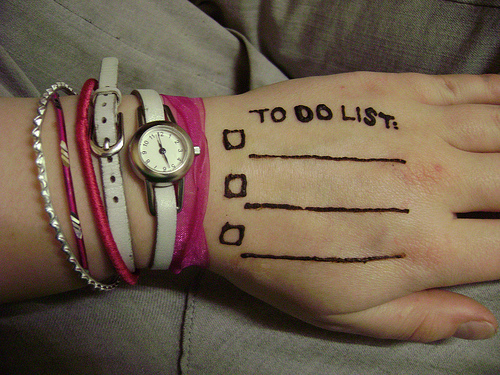
September is officially the month for NaNo Prep! To celebrate, we’re excerpting what some might call the NaNoWriMo Bible: No Plot? No Problem! by founder Chris Baty:
Writing 50,000 words of fiction really doesn’t take that much time. Slow writers find they can write about 800 words of novel per hour; a speedy writer (and good typist) can easily do twice that. Which means that the whole novel, from start to finish, will take and average writer about 55 hours to write.
If you had the luxury of writing eight hours a day, seven days a week, you could begin on a Monday morning and be wrapping up your epilogue in time for brunch on Sunday.
The truth is, though, that few of us have the luxury of writing eight hours a day, seven days a week. In fact, between school, jobs, and the host of other daily events that fill our lives, carving 55 hours of quiet time, however small that number looks on paper, ends up being quite a challenge.
The chief tactic in formulating a winning battle plan for your noveling schedule is to try a variety of approaches early on, discover what works best for you, and use it relentlessly thereafter.
My personal technique is to write for two hours per night, three or four weeknights per week. I follow that up on weekends with three, two-hour sessions on either Saturday or Sunday.
Why do I do this? Habit. And because it seems to work. It also gives me one or two weeknights and one entire weekend day to relax and hang out with friends. This makes it exponentially less likely that I’ll kill myself or those around me, and I still tend to arrive at the 50,000-word point a couple of days before the month ends.
Some NaNoWriMo participants do all of their writing in the morning before work, taking advantage of the relative quiet and the pleasant caffeine rush of the predawn hours. Still others make a point of nabbing half the day’s word-count quota on their lunch break and typing out the rest on their train ride home.
The best way to approach your scheduling is with a light heart and an open mind. Because inevitably over the course of the month, you’ll encounter a variety of emergencies at work and home that will curtail your chapters and muffle your muse. Friends will pick your noveling month to have relationship meltdowns. Your three favorite bands will come to town on the one night you’d set aside to finally get caught up on your word count. And your computer, which has worked flawlessly for the past five years, will explode in an apocalyptic series of error screens and electronic moans.
When this happens, just go with it. Sometimes taking a night off to go to that concert is the best thing you can do for your novel. And other times, you’ll need to ask your friends to nail two-by-fours across your study door to make sure you have no way of fleeing your writing responsibilities. Having a ready supply of concert tickets and three-inch nails on hand, depending on your progress and mood, is the surest path to scheduling success.
Excerpted by Michael Adamson, with permission from Chronicle Books.
Photo by Flickr user *Nom & Malc.
Chris Baty's Blog

- Chris Baty's profile
- 63 followers

