
Chris Baty's Blog, page 193
March 7, 2014
5 Ways To Keep Me Reading Your First Chapter

Camp NaNoWriMo 2014 has officially launched! Whether you’re writing a new novel, tackling a screenplay, or finishing an existing piece of work, Camp is a writing free-for-all. For those of you still on your publishing journey before Camp, Blair Thornburgh, assistant editor at Quirk Books, explains what makes her stop reading a manuscript:
I was recently at a conference where an editor detailed her method for critiquing a first draft. The complicated process was as follows:
Start reading it.
When it stops being compelling, stop reading it.
When you stop reading it, draw a line on the page and write “This is where I stopped reading”.
Brash. Ballsy. Take-no-prisoners.
But what specifically makes an editor grind to a halt and refuse to go on? Opinions differ, of course, but as far as I’m concerned there are some pretty basic “don’t”s that make me want to close a document while I’m reading a sample chapter:
Flat-out, naked, untempered exposition.
A first chapter is tricky because there is so much to explain about your characters, setting, stakes, etc., and no elegant way to do it. It’s hard! But as a reader, it’s even harder to choke down a straight-up list of facts. Lists are boring.
Here’s a litmus test: if dialogue, internal monologue, or narrative can be prefaced with “as you know,…” it’s too obvious.
Try mashing the bitter pill of info-dumping into some juicy narrative applesauce: to show a character’s temperament, have the other characters praise (or trash) her. To set the physical scenery, have your narrator fume about the weather. To show the horrors of the decades-long robot-human civil war that’s ravaged your novel’s planet, write about the screams of starving cyborg orphans.
Enough description to fill a travel guidebook.
Sort of a corollary to the first: waxing poetic about the loveliness of your verdant meadows or the sweatiness of your jungle prison for sentence after sentence will lose my attention fast. Description has the onus of not being dialogue, which is snappy and fast-moving, and not being action, which is bone-crunchingly urgent.
A good rule of thumb is to hit three senses in three sentences and then get on with it (though, as with all writing rules, this one is made to be bent: you can do a little more or a little less if your prosody demands it).
And if you just have to keep all those descriptions in, filter them through the lens of your character: how does she feel about the halls of her high school, the inside of her boyfriend’s car, the woods behind her house?
Too many above-the-shoulders observation phrases.
Here’s what I mean: if we’re in a character’s POV (first or third person), you can almost always cut verbs that occur above the shoulders: see, think, feel, smell, notice, and so on.
“The streets of London stank like rotten fish” is much stronger writing than “Will noticed that the streets of London stank like rotten fish.”
Being cagey.
This is the prizewinning, never-fail, guaranteed way to make me stop reading. Concealing details from the reader just for the sake of manufacturing narrative tension does not work. If your character knows a piece of information, then she would think about it in specific, concrete, detailed terms.
She should not press her hand to her head in a swoon and think, “That was the day that everything changed. That was the day of betrayal.”
She should grit her teeth and think, “That was the day Mom left me at the gas station on Front Street with two dollars in change and a black eye.”
Do you see the difference? Barring Memento-like amnesia stories, it’s weak and cheap to have the forward motion of your novel depend on a character just getting more and more specific about the past she’s known all along. Reveal the truth, or don’t even reveal that there is a truth, but please, never tease me in order to get me to read more.
Wild inconsistencies.
Novels are just very, very, very long lies. That is to say, you’ve got to get your story straight! If a character goes from being Sarah to Sasha, or suddenly grows six inches, or changes hair color without going near a bottle of dye, I’m going to get fed up and quit. Your reader trusts you to know and show what’s going on, and even the smallest mistake will betray that trust.
This list is far from exhaustive, but it is getting long, so I’d invite you to draw your own line, right here, right now (though not directly on your computer screen).
This is where you stopped reading. Now go write.

Blair Thornburgh is an editorial assistant at Quirk Books by day and a Young Adult novelist by night and by very early morning. She loves Shakespeare, sea chanties, and other things that begin with sibilant fricatives.
Top photo by Flickr user bJORk(D)mAN.


March 6, 2014
Camp NaNoWriMo 2014 is almost here! What makes Camp different?...
Camp NaNoWriMo 2014 is almost here! What makes Camp different? You can set your own word-count goal, and tackle any writing project you can think of, including scripts, revisions, or theses. It’s a virtual writing retreat where your pen can run wild.
Graphic by Dominic Flask for Camp NaNoWriMo.
March 5, 2014
Thinking of Your Book As A Gift

Camp NaNoWriMo 2014 has officially launched! Whether you’re writing a new novel, tackling a screenplay, or finishing an existing piece of work, Camp is a writing free-for-all. Want to make sure you publish your own work before starting to write anew? Karima Cammell and Clint Marsh, authors of self-publishing workbook, Publishing a Children’s Book , share why you should think of your book as a gift:
Chances are that when you set upon your NaNoWriMo journey, you were dreaming of holding an actual book in your hands—not just scrolling through an epic word processor file. Take solace in the new reality that there is nothing standing in the way of you publishing your book! You can actually do it yourself: all the tools and skills those traditional publishers use are also available to us as self-publishers.
For a growing number of readers and authors, the stigma surrounding self-publishing is gone. It has either been obliterated by runaway success stories on Kickstarter, or playfully turned on its head by upstart independents such as Cory Doctorow. Even best-selling giants have embraced self-publishing for some of their projects.
After years of working with other publishers and by ourselves, we have come to see self-publishing as part of “the gift economy,” an exchanges done for the worth inherent in the process itself, not in how much money it might generate. Lewis Hyde explores this philosophy eloquently in his book, The Gift.
Shifting to this way of thinking eases the pressure to compromise your vision. And in a roundabout way, thinking of your book as a gift for an intended audience (your child, for example, or single fathers, or people who like space operas and zombies) helps answer many of the editorial and marketing questions asked by successful publishers. It can also help you sidestep many of the snares self-publishers face.
By creating your book with a specific person or group in mind, you help focus its target market, and this in turn helps you make decisions about how to sell it. You might be making your book with only one person in mind, in the same way you would conceive of a birthday present. And if your book is a gift for the whole world? Start thinking like Santa and you’re on your way.
Sometimes when you’ve got a special gift to give someone, you can’t help but tell others about it. How would you describe your gift—your story—to a third party? If you can boil it down to one or two compelling sentences, then you’ve just written your book’s elevator pitch, a summary you can rattle off whenever anyone asks, “What’s your book about?”
A little side-note on talking about your own work: This is often very difficult for self-publishers to do. It’s easy to defeat yourself when you feel too close to your work. Either you’re so fixated on its flaws that you point them out to potential readers (turning them off in the process), or you become too protective, guaranteeing no rejection—and no sales—by not telling a soul about it. Instead of engaging in this type of self-sabotage, try to live by the advice a good friend gave us recently: Authors should never say an unkind word about their own work. It’s your gift to give, and why would you give a flawed gift, or talk it down? And in terms of promotion, if you can’t stand behind your creation 100 percent, how can you expect anyone else to?
With the right knowledge and enough follow-through, you can give your gift to the world. You can also distribute it through any of the channels used by major publishers—bookshops, specialty stores, print-on-demand, and direct download among them.
But in the end, what matters most is showing yourself that you’re capable of creating a gift that can be shared, no matter the size of the readership. And who knows? You might even grow and have fun along the way. Isn’t that why we’re doing all this in the first place?
Award-winning authors Karima Cammell and Clint Marsh are Dromedary Press, the publishing arm of Castle in the Air, a shop and resource for artists and writers in Berkeley, California. Their guide, Publishing a Children’s Book, will take you from start to finish, covering topics including initial concept, writing, illustrations, layout, ISBNs, barcodes, copyright, marketing, funding, printing, and distribution. Learn more about their work at www.dromedarypress.com .
Photo by Flickr user planetttelex.
March 3, 2014
The Author/Agent Conversations: Why the "Iceberg Theory" Is Key to World-building
As the "Now What?" Months continue, we’ll be hearing from agents, editors, self-publishers, and authors about the road towards sharing your work. We’ve asked several authors to interview their agents for a peek behind the curtain at what it takes to write and sell a book. Today, Lee Kelly talks with her editor, Navah Wolfe, about world-building, collaboration, and the iceberg theory:
Navah Wolfe (Editor at Simon & Schuster’s Saga Press): What was the most challenging part of our editorial process for you?
Lee Kelly (Author, City of Savages): I think letting go of my book in its previous form, and really digging in and doing the full-scale revisions the book needed to get to that next level. I knew the book so well that I could recite certain parts of it, so it felt so odd and unsettling to rework substantial portions that had been static for so long.
Navah: What about the most fun part?
Lee: Ironically, it was those “gut renovations”—where I really stripped parts of the novel and rebuilt them from the ground up again—that ended up being the most fun! I feel like I learned so much as a writer from the process.
We had a lot of touch points during our revisions—frequent calls and emails—, which was incredibly helpful for me in terms of brainstorming story and plot, and made me feel like I really had a partner during this (sometimes scary) process! Is this “collaborative” style typical for you as an editor?
Navah: I try to follow my authors’ leads for this one. Some of my authors prefer to take their edit letter, hide in their revision cave, and come out a month later with a new draft. If that works for you, that’s awesome.
But for the authors who are interested, I very much believe in making the revision process a conversation. I am always available to discuss revision ideas, either over email or over the phone. I think any job, especially a creative one, thrives on collaboration, and especially when you’re struggling with a thorny edit, it can be immensely helpful to talk it out.
I don’t always have all the answers from the start, but I often find that when I have an editorial conversation with an author, by the time we get off the phone we’ve tossed enough ideas around that we’ve found the solution—and that feels great.
Lee: What about your edit letter process? What does that first letter you send to an author typically include?
Navah: Generally I like to do a micro-edit and a macro-edit at the same time. I focus on big picture problems:
Does this plot point make sense?
Is this character acting like himself?
Is the plot arc satisfying?
Does this backstory work?
But I also look at smaller, line-by-line issues. I find that doing a line edit, even on a first draft, can help hone in on specific examples of the big picture problems, and draw a map to fix them.
Lee: Is there a particular aspect of story that you think you focus on the most on when you’re editing a novel?
Navah: I’m a big believer in solid world-building—whether it’s in fantasy, science fiction, or even contemporary fiction! No matter what kind of book you’re writing, a solidly established setting will inform the tone of the entire novel. And I generally assume that the writer knows a lot more about it than ends up on the page, so if something’s missing, it’s not because the writer doesn’t know what it is, it’s because it’s not translating properly.
It’s what I like to call the iceberg theory—it’s all there under the surface, and it’s my job as an editor to help the writer tease it out so readers can see it, too.
Lee: And I love that term: the iceberg theory. That was a great guiding principle for my revisions—especially the last third where things get… sinister, to say the least! Bad guys need a backstory, too.

Lee Kelly has wanted to write since she was old enough to hold a pencil. An entertainment lawyer by trade, Lee has practiced law in Los Angeles and New York. She lives with her husband and son in Millburn, New Jersey. Her first novel, City of Savages, is forthcoming from Simon & Schuster in Spring 2015.

Navah Wolfe is an editor at Saga Press, Simon & Schuster’s imprint publishing fantasy and science fiction that appeals to teens and adults. Navah loves books with characters that steal your heart, and stories that stay with you long after the last page is turned. She is always on the lookout for fresh, innovative genre fiction, character-driven novels with a commercial hook, clever, gorgeous books that get under your skin, and stories that make us question our place in the world.
February 28, 2014
11 Steps to Check Off Before Self-Publishing
Curious about striking out on your own, and tackling the world of self-publishing? Miral Sattar, CEO of NaNoWriMo sponsor BiblioCrunch, shares her 11-step checklist for self-publishing success:
Interested in self-publishing that NaNo novel you just spent all month editing? Before you begin, I’ve compiled a handy check-list that no self-published author should do without. From defining your goals, to remembering to convert your files, to making a marketing plan: this list covers it all. So go out there in the world with your book, and good luck!
Define your goals
Before you start your self-pub journey you should make a list of your goals.
Are you looking to get more readers?
Or looking to sell books? (It’s easy to get more readers if you’re a first-time author, but it’s much harder to sell books.)
Do you want just an e-book?
A print book?
Work with an editor
Once you’ve written your book, an editor is important. If your book needs a lot of work a developmental editor will evaluate and critique your manuscript, suggest and provide revisions and shape it into a smooth, workable piece.
Next, you might want to get a copy editor to catch any typos and to make sure the style is consistent.
Leverage beta readers
A beta reader will generally read your work (for free, or for a small fee) with a critical eye. A beta reader typically reads your manuscript and gives you feedback before you send it out into the world.
Work with a cover designer
It doesn’t sound fair, but most people do judge a book by a cover. They will judge how it looks on a black and white Kindle, and how it looks on an iPhone, and how it looks on thumbnail. It’s important that your cover design catch the reader at first sight.
Before you hire a designer, check out the designer’s portfolio to make sure your vision and your designer’s vision are the same.
Come up with a good title
Your book’s title should match the content of your book. I’ve read titles where I thought it was a self-help book, but the book ended up being a thriller instead.
Pick your retailers
Do you just want to sell your book on Amazon? Do you want to publish an ebook? Or a print book?
The biggest retailers are Amazon, Barnes & Noble, iBookstore, and Kobo.
The largest print on demand retailer is CreateSpace (also an Amazon company).
Get your manuscript file converted
Amazon, Barnes & Noble, iBookstore, Sony, Kobo allow authors to directly upload their books.
To upload to Amazon you need to convert your story to a MOBI/AWZ file.
To upload to the other retailers you need to convert your story to an EPUB file.
Do your research on vendors
Before you choose a vendor or press, make sure you Google “[Name of Press/Vendor] Reviews” or “[Name of Press/Vendor] Bad Reviews.” That will tell you what you need to know about the press or vendor before you sign up. There are a lot of companies that take advantage of first-time authors.
Proof your book
Once you have the final digital or print version of your book, give it a thorough read to make sure it’s free of errors. If there are errors, you want to catch them pre-publication.
Consider print-on-demand
Don’t spend money on a print run if you don’t already have a distribution deal. Without a deal, you might just end up with a few hundred books sitting in your garage.
If you have already found someone to distribute your books for you, you might want to opt for a print-on-demand service like CreateSpace or Lightning Source where the book is printed and sent to the reader when they buy it.
Have a marketing plan
It’s essential to have a marketing plan around your book. Books don’t just sell themselves. This is probably where you’ll spend a lot of time. Does your plan include giving away your book for free? Blog tours? A KDP Promotion?
As a self-published author it’s really important to do your research before making any vendor, retail, or editorial services decisions. It’s a lot of work, but thinking through all the pieces will prevent you from wasting money, time, and effort, and help you publish the best book possible.

Miral Sattar is the CEO of BiblioCrunch, an award-winning author services marketplace that matches authors with quality book publishing professionals. She has worked in the media industry for 11 years, and her writing has been featured in PBSMediaShift, TIME, CNN, and the NY Daily News. Miral wrote her first NaNoWriMo novel in 2012 and loved it. Follow her on Twitter @miralsattar.
Top photo by Flickr user cathredfern.
February 26, 2014
NaNoWriMo Pitchapalooza and 10 Tips for Pitching Your Novel!
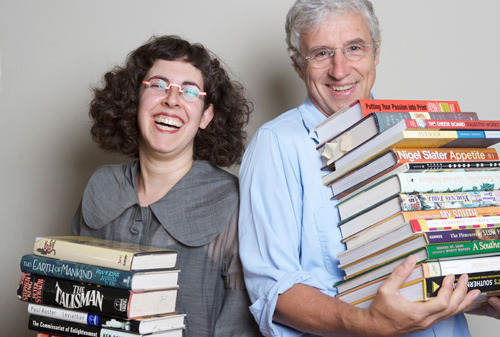
The NaNoWriMo Pitchapalooza is back! Get your novel pitches ready, and blow away the Book Doctors:
You wrote your 50,000 words (or got pretty close!). You’re a winner. You felt the high. Now what are you going to do with your precious manuscript? That’s where we, The Book Doctors, come in.
For those of you not familiar with Pitchapalooza, here’s the skinny:
You get 250 words to pitch your book. Twenty-five pitches will be randomly selected from all submissions. We will then critique the pitches online so you get to see what makes a great pitch.
Finally, we’ll choose one winner from the group. The winner will receive an introduction to an agent or publisher appropriate for his/her manuscript. We will also crown a fan favorite who will receive a free one-hour consult with us (worth $250).
Beginning February 7, 2014, you can email your pitch to nanowrimo@thebookdoctors.com. Please do not attach your pitch; just embed it in the email. All pitches must be received by 11:59 PST on March 7, 2014. More details below:
The 25 random pitches will be posted on March 15, 2014. Winners will be announced on March 31, 2014. Anyone can vote for fan favorite, so get your social media engine running as soon as the pitches go up!
Like last year, we’re offering free 20-minute consultations (worth $100) to anyone who buys a copy of The Essential Guide To Getting Your Book Published. Just attach a copy of your sales receipt to your email and we’ll set up your consultation.
Our first Pitchapalooza winners, Nura Maznavi and Ayesha Mattu, published a book, Love, InshAllah, that is now in its fifth printing. Their new book, Salaam, Love, has just hit the shelves. Then there’s Pitchapalooza winner and NaNoWriMo veteran, Gennifer Albin. After she won Pitchapalooza, one of New York’s top agents sold her dystopian novel in a three-book, six-figure deal. Her second book, Altered, just came out this past fall. Judith Fertig, our latest winner, just signed a two-book deal for a baking-inspired mystery series with Penguin. And these are just a very few of our many success stories!
Are you feeling a little unsure about exactly how to craft your pitch? We’ve got 10 Tips for Pitching:
A great pitch is like a poem. Every word counts.
Make us fall in love with your hero. Whether you’re writing a novel or memoir, you have to make us root for your flawed but lovable hero.
Make us hate your villain. Show us someone unique and dastardly whom we can’t wait to hiss at.
Just because your kids love to hear your story at bedtime doesn’t mean you’re automatically qualified to get a publishing deal. So make sure not to include this information in your pitch.
If you have any particular expertise that relates to your novel, tell us. Establishing your credentials will help us trust you.
Your pitch is your audition to show us what a brilliant writer you are, it has to be the very best of your writing.
Don’t make your pitch a book report. Make it sing and soar and amaze.
A pitch is like a movie trailer. You start with an incredibly exciting/funny/sexy/romantic/etc. close-up with intense specificity, then you pull back to show the big picture and tell us the themes and broad strokes that build to a climax.
Leave us with a cliffhanger. The ideal reaction to a pitch is, “Oh my God, what happens next?”
Show us what’s unique, exciting, valuable, awesome, unexpected, about your project, and why it’s comfortable, familiar and proven.
February 24, 2014
3 Things Authors Might Not Know Agents Are Looking For
Today, Haley Radford, president of the former NaNoWriMo sponsor and agent matchmaking service LitFactor, shares three things authors might not know literary agents want:
Communication is king in 21st century publishing, and yet, there so often exists a frustrating breakdown between those who work in the business of books and those who are producing the glorious stories that sustain it. The mismatch between what literary agents really want and what writers think they want is a perfect example of this peculiar industry disconnect.
(That’s partly why I co-founded LitFactor, which is designed to help authors and agents communicate their needs more effectively with one another, making it easier for authors to secure representation if they want it, and for agents to be freed from the slush pile.)
What today’s best and brightest literary agents want to see in new authors—and wished that all authors knew—are:
Agents want authors who are commercially aware and industry savvy.
Agents often make their selections based on genuine sales potential, knowing whether or not something is marketable, and on emerging industry trends.
If you can demonstrate efficiently that you are already busy cultivating an audience who are now ready and waiting to buy your books, it’ll help them feel more confident about the commercial viability of you and your work. You become a surer, safer bet and a more attractive new client, one the agent will be more willing to go above and beyond the call of duty for. That leads me to my next point:
Agents want authors who are fairly well networked and can prove they are already building an audience.
I introduced an author to an agent last year who signed her up solely on the strength of her social media numbers: 250,000 followers was just too good to resist. It might not all translate into sales, but the author already had a captive audience, ready to be sold to.
Agents want authors who are absolutely committed to supporting all aspects of their book’s journey, from page through to publisher and finally, to the palms of readers’ hands.
One agent told me that he’s looking for authors who can be, in effect, business partners, both to him and to the publisher to whom he will endeavor to sell their work. By and large, publishers and agents think in terms of medium to long-term commitments, and actively search for talent with which they can see themselves still collaborating with ten books and ten years down the line.
So if you want an agent, try to think like one. Make sure that your submission is tailored, targeted, commercially- and industry-aware and that you demonstrate the value you have to offer, not only as a writer, but also as a long-term partner in this sometimes tough industry.
Hayley Radford is co-founder of LitFactor, the matchmaking service for authors and literary agents, and Authoright, the leading author editorial and marketing services company. She is also the organizer of the London Author Fair on February 28th, 2014.
Top photo by Flickr user Book Madam.
February 21, 2014
4 Ways to Find Your Book's Audience
Today, our sponsors at Smith Publicity share how to build a great marketing platform for your novel—when it’s ready, of course. (And if your novel is ready to find an audience, Smith Publicity is offering a chance for one Wrimo to win a free hour with one of their marketing gurus. Find more details here.)
Veteran authors often say writing the book is the easy part. Creating an effective marketing and publicity plan to gain attention for your book is often the hardest part.
Make no mistake, the competition is fierce and methods to enhance discoverability—the ways readers are finding new books—are constantly evolving. Here is an overview of action items to start promoting your book:
List your book on Amazon and other sites.
In order to make it as easy as possible for people to buy your book, list your book at familiar retail outlets such as Amazon and Barnes and Noble.
Make your pages as robust as possible by uploading your book cover, author photo, author bio, and detailed book description. Utilize the “look inside” feature to give potential readers a sense of your writing. Invite as many friends and family as possible to post reviews. Visit your favorite authors in similar genres for ideas.
Perfect your author website.
Author websites are a great way to introduce audiences to you and your book(s), and provide different ways for you to interact with potential readers, fans, and reviewers. It’s your book headquarters. Some information to have on your website:
Links to buy your book. Let readers know all the formats available (hardcover, e-book, etc.). Have simple “buy now” buttons on every page.
About the Author. Feature your bio to help the reader get to know you and your author brand.
About the Book/Bonus Material. Offer sample chapters, which are key for novels. Testimonials, professional reviews and reader reviews add credibility to your book. Give people a reason to visit your website with sign ups for newsletters, events, insider information, contests/giveaways, etc.
Media. List links to radio, television, newspaper, magazine, online and blog placements.
Appearances and Events. Make sure the upcoming events you will be at are current.
Blog. Showcase your personality, provide insights into your writing process, share opinions about other books (keep it positive!), and comment on topics related to your book or expertise. But remember, fresh content—some say weekly or more—is key to a successful blog.
Introduce yourself to your local library and bookstores.
Introduce yourself to the managers of your local bookstores. Ask them to display your book in the local author section, find out how to host a book signing, and offer autographed copies of your book (which increases the value).
Libraries are excellent resources to help promote your book. Once on board, librarians can hand-sell books, just like bookstores do. Libraries host book groups and author events, and may feature a review of your book on their website. Some libraries post a list of what the librarians were reading each month, which is often a key resource for patrons looking for new book recommendations. Visit your library to ask how to begin.
Create a book pitch.
Whether you hire a professional or contact media on your own, securing book reviews, feature stories, interviews, blog tours, and other publicity is a great way to attract attention for you and your novel. Local media often features local authors and books, especially when tied to a local bookstore or library event.
When contacting media (start with an email), briefly explain your book, its genre, why it is different, then include links to retail pages and your website, your contact information, and offer a review copy. Be polite and, when possible, show a connection with the outlet or journalist’s past work.
If your background is related to the theme of your book, work that into your pitch. Think of current events, trends, breaking news… anything that you can tie your novel and/or your experience and background to—and grab media attention.
Writing the book is just the beginning! Building an author brand takes time. Set a plan, discover the tasks you enjoy doing, and start connecting with readers and influencers.
Sandra Poirier Diaz is the president of Smith Publicity, Inc., an international book marketing company dedicated to helping authors create awareness about their books and expertise through media coverage. Smith Publicity has promoted thousands of authors/publishers since 1997—from New York Times best sellers to first time, self-published books.
Top photo by Flickr user im_on_tambourine.
February 19, 2014
The Agent/Author Conversations: How to Make the Most of Your One Chance
As the "Now What?" Months continue, we’ll be hearing from agents, editors, self-publishers, and authors about the road towards sharing your work. We’ve asked several authors to interview their agents for a peek behind the curtain at what it takes to write and sell a book. Today, Stacey Lee and her agent Kristin Nelson discuss the long road between rejection and redemption:
Stacey Lee: You’ve said that the one word that sums up your inbox in December is NaNoWriMo. Any words of advice for those coming off of their NaNo drafts?
Kristin Nelson: Your novel isn’t 100% ready at the end of November. Get your beta readers on board to read and critique. Revise until you think it’s the best it can possibly be for you as a writer at that moment. Then query us!
Sadly, that’s not usually the path many writers take. We get a ton of queries in December. If we ask for pages and they aren’t ready, it’s just going to be a “No”, and there won’t be another chance with us for that project—unless it radically changes and we don’t recognize it in a later incarnation.
Stacey: I have the opposite problem. I have a hard time letting go of a project. There’s always one more thing to do, one more comma to unhook.
After nine months of writing Under a Painted Sky (working title), I still wasn’t sure it was ready. I decided to take it for a test drive at a Society of Children’s Book Writers and Illustrators conference, where, to my shock, it won the Golden Gate Award. When I heard them announcing my name, my first thought was, there’s someone else here named Stacey Lee.
You don’t have to wait until you win an award to start querying, but if you query before your manuscript is watertight, you blow your one chance, and many agents don’t do R&R’s (revise and resubmits).
Kristin: Both Sara and I used to read R&R’s, but sadly time constraints make that tough these days.
Stacey: Have you sold any books that started off as NaNoWriMo projects?
Kristin: Yes, but I usually don’t find out that they were NaNo projects until years later! NaNoWriMo is powerful because it’s a great motivator and goal. Most writers will never finish a first draft, and that’s a huge hurdle. You have to finish what you start, even if that is not a novel that will get published. Just the act of finishing is the biggest first step a writer can take.
There is so much camaraderie, too! You aren’t in it alone. Even published writers are doing first drafts during NaNoWriMo. It’s a community.
Stacey: Taking on a client is a big decision for you because you are a career agent—you take clients on for the length of their careers. Outside of the manuscript, how do you know if you’re going to have chemistry with your client?
Kristin: I actually don’t know if I will have chemistry with a client or not when I offer representation. That’s impossible to discern in an initial Skype or phone conversation. But interestingly enough, if I love the writing, it just seems to work out that the author and I are simpatico.
Stacey: I remember when you first called me. You were at the annual Romance Writer’s of America conference in Chicago.
Kristin: With so many meetings and events at RWA, one tends to get a little ramped up, and I couldn’t fall asleep. So I started reading your novel. By two in the morning, I was in trouble because I just wanted to finish it! I had to get up five hours later to attend a breakfast event.
Stacey: I loved your enthusiasm for my book, which never waned even when it was raining rejections. Were you ever afraid you weren’t going to sell it?
Kristin: As an agent, there is always the fear that something wonderful won’t sell. In my mind it’s ludicrous that editors would pass something that I love. Seriously though, we did have 26 passes during submission.
Stacey: I don’t think I knew it was that bad. Pardon me for a moment, while I go put a cone on my head.
Kristin: Yes, that’s hard on you and me. It means we are running out of places to send it and the reality is that a lot of good young adult novels don’t sell—despite our passion for them. But once your editor Jen Besser called to say how much she enjoyed it, I knew we were on the right track and that it was just a matter of time before we said “Sold!”
Stacey: You have great instincts. And I secretly think you like challenges.
Kristin: Well in my mind, I never call it a challenge! For me, I don’t want to sell a redux of whatever is currently hot. I want something I haven’t seen before. I want to create the next trend. And trust me, a Chinese girl on the run with a former slave in the American West was definitely something that wasn’t crowding my inbox at the time it came in.
I love multicultural stories. Stories that take a bit of history that we think we know and give us a whole new lens in which to see it. And it was a great romance. Now I’m not sure stories set in the gold rush American West will be the next hot thing mind you. But it’s a great story. It’s history that’s not remotely boring to read.
Stacey: Thanks Kristin, I’ll do my best to start gold rush trending. (Psst: #goldrush – you heard it here.)

Stacey Lee is a fourth generation Chinese-American whose people came to California during the heydays of the cowboys. She still has a bit of cowboy dust in her soul. A native of southern California, she graduated from UCLA then got her law degree at UC Davis King Hall. She plays classical piano, raises children, and writes YA fiction. Under a Painted Sky is her first book, debuting in Winter 2015 from G.P. Putnam’s Sons. You can find her on Twitter at @staceyleeauthor.

Kristin Nelson is President and Senior Literary Agent at Nelson Literary Agency. She is equally happy reading a Pulitzer prize-winning literary novel for her book club as she is reading a sexy historical-romance. She established Nelson Literary Agency, LLC, in 2002 and over the last decade of her career has represented over thirty New York Times bestselling titles and many USA Today bestsellers. When she is not busy selling books, Kristin plays tennis and also enjoys playing bridge. She can also be found hiking in the mountains with her husband and their dog, Chutney.
Kristin is looking for a good story well told. How you tell that story doesn’t need to fit in a neat little category. For specifics, check out her examples on our Submission Guidelines page and read about Kristin’s latest sales at Publishers Marketplace.
February 17, 2014
Why Editing Matters... Even If You Never Share Your Novel

The “Now What?” Months are here! In 2014, we’ll be bringing you advice from authors who published their NaNo-novels, editors, agents, and more to help you polish November’s first draft until it gleams. Today, Hannah Rubin, writer and NaNoWriMo intern , shares why it’s important to edit, even if you don’t plan on sharing your novel with anyone else:
At some point, I imagine that I will one day set my sights on the world of publishing—but for now, I am still caught in the indulgent honeymoon phase of simply writing because it is enjoyable, and challenging, and heartbreaking and, at the end of the day, one of the few activities that I can completely lose myself in.
I’ve spent the last two months slowly meandering through edits: first confronting the metaphysical barrier of convincing myself to print the thing out, and then the physical barrier of actually reading through it. It took me nearly three weeks just to make it through that first part.
As we dive deeper and deeper into these months of editing and revision, you might be wondering: why am I choosing to edit? Why do I continue to work my story over and over, read through old paragraphs with garish highlighters, pull my hair out over stale dialogue? Jot down possible character descriptions as I ride the train to work? Why not just press SAVE and stick the whole immaterial file somewhere deep into the codings of my computer; why not get started on something new and un-imagined?
Because editing is how you grow as a writer.
In the same way that sketching isn’t drawing and mixing colors isn’t painting: first drafts merely scratch the surface of what it means to really write. Editing is part of writing—they aren’t two separate processes, but rather, one in the same.
If I leave my manuscript untouched I will never learn about myself as a writer. I won’t learn about the things I do that need work, the traps I fall into, the words I overuse. I also won’t learn about the ways in which I write well: the emotions I am able to capture, the sentences that feel like poetry. Editing is how you give yourself feedback on what you’ve done. Think of it as your mind processing your mind.
Allow yourself to be happily surprised by the way you shape words, the images you create, the sensitivities your characters embody. And also allow yourself to be critical, to work through sticky moments, to move things around.
A lot of the time, I think we are afraid to edit because we are afraid of what we might find: afraid that it won’t be as good as we remembered when we were in the throes of imagining it. But, try to remember that just because every word you write isn’t gold doesn’t mean your writing is worthless.
Of course it isn’t easy. Reading back over earlier writing is an eerie task sometimes—revisiting mindsets and mental spaces that were once so vivid. It’s living and re-living the moments of your character’s life, and seeing the forgotten people of your past jump off pages unexpectedly. It means fleshing out every detail, every last shiver, flicker, breath; it’s more than just the color of her bedroom: it’s the stuff of souls.
A teacher once told me that every writer has one story to tell, a story that they tell over and over again in different formulations. How are you supposed to learn what it is that transfixes you if you never give yourself the time and attention to dig into it? Editing is about spending time with your writing. It is how we come to see what our writing is all about, and, by extension, what we are all about.
So, even though the story that I currently have has no beginning, middle, or end—I will continue to work through it day by day, at a pace all my own. Somewhere in that pile of papers is a little kernel of me, of what I’m trying to say. It is only through endless writing and re-writing that I will be able to figure out exactly what that thing is and how best to express it.

Hannah Rubin is a recent graduate of Wesleyan University where she studied writing, theory, and the theory of writing. At least that’s what it says on her Facebook.
Top photo by Flickr user Karenee Art.
Chris Baty's Blog

- Chris Baty's profile
- 63 followers

