
Chris Baty's Blog, page 115
October 30, 2017
NaNo Prep: Create Your Personal NaNo Prize
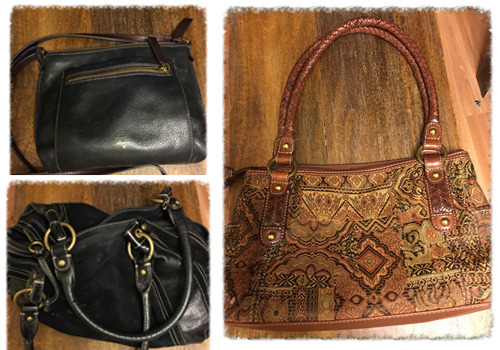
NaNoWriMo is almost here! As we wrap up our NaNo Prep season and start getting ready to write, we’ve talked to some participants about their tips and tricks for staying motivated. Today, author Jacqui Jacoby shares the personal reward system she’s come up with:
“Mom, you have to try this new program. You write 50,000 words in November.”
I doubted the logic of what my daughter proposed, but was interested enough to look into it. That was October 2001—and I now have sixteen NaNoWriMos and nine wins under my belt.
These days, I’m a professional author. I’ve written millions of words that ended up going some place for some reason. Sometimes there was a payment, sometimes not. I was still doing what I wanted to be doing.
That fall, in my car, when my daughter suggested I try NaNoWriMo, it seemed incredibly hard. But it wasn’t long before it became an intrinsic part of my writing process. I wasn’t published at the time, but eventually writing became my profession, not just my dream.
In fact, NaNoWriMo became my annual vacation.
Every January when I fill out the new day planner, the first thing I do is head on over to November to block out the month for fun. Though I have published several books that started as NaNo Projects, publishing them was never my goal. I use the month to play, to develop ideas I might otherwise ignore if I was working on a set assignment.
I read No Plot, No Problem every year starting on October 1st as a refresher course and to get me in the mood. When I have finished that, I begin to fill out Ready. Set. Novel. I buy myself a new mechanical pencil to use in my notes and workbooks. It’s usually just a step above the pencils I normally buy, in a pretty color to set it apart.
All this is a good start, a place to find direction. However, direction isn’t the only challenge in NaNo. Sometimes, the challenge is showing up on a day you would really rather watch a Friends rerun. I needed to find that edge that would get me through the hard days.
I came up with the ‘NaNo Purse Program,’ or as I call it, the NNPP.
The NNPP is simple. I like purses, but I rarely buy. I have a designer I like that I can find used on eBay and I like to have something that I can look at and say “I earned that because…” In October, I start looking for the purse that will be my prize. It doesn’t have to be expensive and it doesn’t have to be fancy. In fact, it doesn’t have to be a purse. It could be anything you collect, something that you can look at later and associate with your accomplishment.
My rules are simple:
I have to have my NNPP before November 1st.The NNPP is unpacked and set in a position where I can see it from my chair when I type.
The NNPP is not touched while I am writing.
The final rule…
I only get the purse if I hit 50,000 words.If I miss the mark for whatever reason, I have to give the NNPP to someone who I will see use it on a daily basis. I will see it and understand that maybe I should have typed faster.
I have yet to type too slow to get my purse. Motivation screams at me when I picture Jane in Accounting carrying MY purse. This is what I do to propel me forward and it puts a smile on my face.
What will you use as your personal prize?

Award-winning author, Jacqui Jacoby lives and writes in the beauty of Northern Arizona. Currently adjusting to being an empty nester with her first grandchild to draw her pictures, Jacqui is a self-defense hobbyist. Having studied martial arts for numerous years she retired in 2006 from the sport, yet still brings strength she learned from the discipline to her characters. She is a working writer, whose career includes writing books, novellas & short stories, teaching online & live workshops and penning short nonfiction. Follow her on her website, blog, Twitter, Facebook, and Instagram.
Top photo: Winning purses, c/o Jacqui Jacoby
#1 Magic Man Victory, 2005
#2 Dead Men Seal the Deal Victory, 2013
#3 Aaden’s Hope Victory 2015


October 28, 2017
The Right Tools Make All the Difference
Every year, we’re lucky to have great sponsors for our nonprofit events. Dabble, a NaNoWriMo 2017 sponsor, is a writing platform designed to help you become a better novelist. Today, writer John Wilker shares his experience with searching for the “Holy Grail” of writing platforms:
The hunt for the perfect writing platform is right up there with The Holy Grail in terms of likelihood of ever being completed, but it’s still a worthy cause for those who take up the challenge.
I’ve tried my hand at NaNoWriMo for years, lots of years, using everything from Word and Open Office, to apps that are no longer on the market. Last year I won my first NaNoWriMo using Scrivener. Maybe I’d have won no matter what I used, maybe Scrivener was the secret sauce, who really knows? You might think that winning NaNo would mean my quest had come to an end, but you’d be wrong. The search is eternal, and like any good plumber it’s all about the breadth of tools at your disposal––not everything needs a plunger. (I assume plumbers believe this, but am not one hundred percent sure.)
Enter Dabble.
I first found Dabble because I know its creator, and in fact I’ve known him for many years. I had heard that he was working on a writing tool that focused on writing and getting words onto the screen above all else. His goal was to make an app that got out of the way and let you write. A lofty goal, oft shared by writing apps. Knowing Jacob helped: I knew he was a great developer and didn’t build bad or ugly apps. It’s easy to fall into the trap of ‘more is better’ when it comes to writing apps, at least for me, having tried nearly all the available tools at some point over the last decade or so. But there’s more than just a grain of truth in the opposite notion. Less truly can be more, and Dabble captures that excellently.
The moment I installed Dabble I fell in love. It’s beautiful in its simplicity. You open the app and you’re writing in no time. No complicated setup or onboarding before you can get down to writing. You start a new project and boom, you’re writing. However, being a text editor for writing is only one of Dabble’s charms––the other is being a great plot-lining tool, which to me is it’s biggest feature.
“I feel like my story is much richer, and the character and story interactions are much deeper, now that I can easily visualize where everyone else is in the story at a given point.”I stumbled onto plot-lining after NaNoWriMo 2016 and immediately liked the idea. I’ve always been an outliner when it comes to my more technical writing, but outlining never really fit for me and my creative writing; I’d either stay too top level and not be able to keep the story in mind, or end up outlining every other paragraph and getting far too granular. Plot-lining on the other hand, fits like a glove! I’m glad I found it now, and bummed I didn’t find it before. I’m head over heals for plot-lining.
Dabble has an awesome plot-lining interface. It allows me to work out the arc for each character in the story in a clear visual way. Each character gets a column and as I place their cards I can see where one character is compared to the rest at any point in the story. It’s great! I feel like my story is much richer, and the character and story interactions are much deeper, now that I can easily visualize where everyone else is in the story at a given point. Gone are the days of scrolling back through scenes and chapters to try and remember where I left someone: now I can look over at Dabble and see where they are at any point.
Being able to lay everything out in a rich and easy to use interface is a treat. Being able to open Dabble anywhere on any computer is the icing on that treat. Dabble syncs my projects in the cloud, so whether I’m on my laptop in a browser or using the desktop app, I can open it up, move things around, etc. all in an easy to understand interface.
Even when I’m not actively plotting, and just want to see where I need to be, it’s great to be able to pop in and view the plot-line.
Sometimes, even the best products are made horrible by a lack of support, or worse, terrible support. That’s not the case in the slightest with Dabble. In fact it’s been a real treat to interact with Jacob and provide feedback and ideas for improving Dabble. I’ll be sitting on the couch writing, and an idea will pop into my head and from within Dabble I can fire it off. Sometimes I even get a reply right back, if Jacob is sitting on his couch or at his desk working on Dabble, and we can discuss the idea and flesh out what I’m trying to ask for and what he can deliver. It’s nice knowing that when i find a problem, large or small, all it takes is a quick note in the built-in help center and the next time I open Dabble, there’s a note from Jacob with “fixed” or “thanks” or an explanation of the feature. That level of customer love is rare and refreshing.
I feel like my writing is much improved having had Dabble as part of my arsenal.

John Wilker is an independent event organizer by day and writer and doggy daddy by night. This will be his 12th(ish) NaNoWrimo. 2016 was his first NaNo win and that book is now available on Amazon. This will be his first year using Dabble as part of his writing workflow.
October 27, 2017
NaNo Prep: How to Go From Plotless to Polished

November is just around the corner, and as we gear up, we’re sharing advice on how you can best prepare for a month of writing. Today, author and designer Derek Murphy shares his advice on how to turn a messy work-in-progress into a polished draft in November:
NaNoWriMo is a
great opportunity to push your boundaries and see how much writing
you can get done in thirty days. If it’s your first time shooting for
50K, write whatever is easiest for you. However, if you’ve been
doing NaNoWriMo for a few years and have struggled to turn your newly
generated manuscript into an actual book that sells, here’s some advice that should help:
First of all, if
you started your story with very little plotting, it’s likely you
have dozens of powerful scenes but no backbone to hold it all
together. And it’s very difficult to go back and operate on
your manuscript after it’s finished. “Kill your darlings” is
good advice, but painful for a reason. It’s hard to cut the stuff
you love—but if it confuses the narrative or doesn’t need to be
there, it’s hurting the story.
Rather than spend
a month generating content and then months of frustration trying to
polish it into something that actually sees the light of day, it’s
much easier to plot before your start—at least loosely.
For most commercial fiction, I use a simplified
hero’s journey with 12 major plot points.
As long as I hit
most of those points in roughly the right places, I know my story
will stand strong even if the writing falters. You don’t have to
chronicle the exact details of every scene, and you shouldn’t worry
about writing beautiful prose, but having a rough idea of your
pivotal scenes will make it much easier for you to finish a powerful
story in record time.
If you get stuck
halfway through your NaNoWriMo novel, it’s usually because you’re
sinking into the muddy middle—where you didn’t plot enough events
to carry the story forward—so you invent a bunch of random and
increasingly incredible plot developments to span the gap, then rush
towards the epic conclusion. The problem with this is your story will
feel rushed and implausible.
A basic story
might look like this:
wants something but can’t get it. Something happens that forces
them on a new experience or journey. They resist, but are forced by
circumstances to move forward.
The
antagonists appear, showing danger and consequences. There is a
conflict or battle and the protagonist’s forces lose. More is
revealed, until the protagonist finally makes a deliberate choice to
fight back or take control.
The
protagonist makes a mistake; a failure that causes irreparable harm
to one of their allies. They feel guilt, fear, loss and almost give
up.
The
protagonist reaches into themselves, finds a new will to continue,
discovers a new power or ability, and overcomes the antagonist’s
forces… this time.
But how do you
fill it all in? And what do you add when your plot events are sparse? You can make your characters’ problems harder.
You might have already plotted something like:
Desire
→
problem
→
overcome problem
→
introduce new problem
But that’s too
easy.
You can extend
the sequence by adding steps:
Desire
→
problem 1
→
try to
overcome problem 1, meet problem 2
→
try to over come problem 2,
meet problem 3
→
try to overcome problem 3, meet problem 4…
That sequence can
go on until they have too many problems and are overwhelmed.
Eventually they succeed in one and go back through the sequence to
solve the original problem.
Characters shouldn’t succeed easily. You want them to
fail, again and again. So have them discover new problems and
setbacks at every turn. No matter what they want to do next, give
them three big and insurmountable problems that get in their way.
Don’t make them all accidental (the weather / a broken leg). Some
of them should come from opposition, either the antagonist’s forces
or the protagonist’s allies.
paths.
You don’t just want a happy band of comrades agreeing
with each other; your inner circle needs conflict, too. Each of your
main characters should have their own desires, agendas, and
problems to solve. They will have priorities that put them in direct
conflict with your main character. Even if they’re friends or
lovers, they will be forced into opposition based on their personal
desires, and each will be fighting their own dragons to get what they
want—leading to betrayal, jealousy, guilt, dishonesty and anger.
I recommend three main characters (protagonist + best friend + love interest), a
teacher or voice of wisdom, a hidden antagonist directing mayhem from
the shadows, and also a system of legal enforcers (who persecute the
protagonist but think they’re acting for the good of society). The
sides should not be clear cut, and everyone will have to wrestle with
moral decisions, like when it’s OK to break the law or do something
evil for the universal good.
If your book is getting boring, give your protagonists
a new, incredible setting and a reason to get there. It could be a
treasure hunt for a necessary item, or a shelter, or a lost city—make it epic and larger than life. Your story will keep readers
reading, but your settings and descriptions are what will stick in
their brains. I like to think of my scenes like a painting; a
dramatic backdrop and a central character doing something amazing.
Once you
have a basic plot outlined and have built in enough conflict, writing
a successful book will be easier, and take much less time to revise
and polish before it’s ready to be share. During
revision, add in more details like what characters are wearing,
improve the dialogue, strengthen the transitions and openings, and
fix any lackluster character motivations. Remember, adding conflict
is as easy as giving a character a different backstory (”your father
killed my father”) or withholding a secret (”you lied to me”).
Once your book is
ready, share it with beta readers, put it on Wattpad, or even get a
cheap cover and publish it on Kindle. It’s scary letting go, but
getting feedback is the best way to learn and improve.
If you take an hour to ask and answer these questions before November 1st, you’ll be able to win NaNoWriMo with more than 50,000 words of slush as a reward—you’ll have a clean rough draft you can polish up and publish, without ending up in editing purgatory forever.

Derek Murphy has
a PhD in Literature and now writes young
adult fiction. He’s renting a castle for NaNoWriMo, drinks too
much Coke Zero, and loves supporting indie authors—his publishing
resources and book design
templates have had over 20 thousand downloads.
Top image licensed under Creative Commons from Project 404 on Flickr.
October 26, 2017
NaNo Prep: Don’t Just Write a Novel — Tell an Amazing Story
November is fast approaching, and with it comes plenty of great advice from around the NaNo community on how to create your novel. Today, author Dinty W. Moore shares his thoughts on one of the most challenging questions asked of any writer: what’s your story really about?
Why do people read books? Why do people stream Netflix long into the evening? Why do people sit for hours in a coffee shop chatting about their co-workers?
The answer is simple: we love a good story.
With NaNoWriMo just days away, now might be the best time to remind ourselves what constitutes a good story—or better yet, what is it that makes a story absolutely compelling. The goal for our NaNoWriMo month shouldn’t be merely to write a novel in 30 days. The goal should be to write a novel that folks are clamoring to read.
Remember this: Stories which leave readers eager to follow along through each moment and every surprising turn did not begin with Shakespeare, Dickens, or Stephen King. Captivating storytelling goes back to the origins of language itself.
Long before printing presses and book clubs, our ancestors kept fear at bay by spinning tales of heroic hunts, of memorable victories, and of mysterious, powerful gods. These early stories mark the beginnings of imaginative fiction. How to explain thunder, floods, birth, death, the inexplicable movement of the sun? Our ancestors created stories to explain these. Stories that gave them both understanding and solace. Or, as author Barry Lopez puts it, stories are part mystery, part ministry, and absolutely indispensable.
“We need them, I believe, in the way we need water…” he writes. “The reason we tell stories … is to keep each other from being afraid.”
Novelist Ben Percy suggests that the most enduring stories reach readers at the deepest level by taking “a knife to the nerve of the moment.” Mary Wollstonecraft Shelley’s Frankenstein—the story of a mad doctor who uses electricity to create a superhuman monster—found its root power by reflecting people’s fears of the industrial revolution, while Jack Finney’s The Body Snatchers – later made into the movie Invasion of the Body Snatchers – connected directly to mid-20th-century fears of communist spies infiltrating small-town America.
“Stories revive us, challenge us, startle us, and offer us new ways to reflect upon our world and the current moment’s most perplexing questions.”Percy’s own book, Red Moon, begins with a man on a commercial jetliner inexplicably transforming into a werewolf and attacking his fellow passengers. This transformation is happening not just on the one plane, but simultaneously on two other airplanes, one of which crashes into a wheat field.
Does that sound at all familiar?
“We fear, more than anything, terrorism and disease,” Percy explains, “and I braided the two together.”
Not all stories are horror stories, of course, but all enduring stories find their power by addressing intrinsic human concerns, those vexing problems that keep us awake and thinking late into the night.
Consider these:
Jane Austen’s Pride and Prejudice features neither werewolves nor body snatchers. Instead, this tale of five unmarried daughters in 19th century England and the eligible bachelors who come calling enchanted readers by reflecting upon contemporary concerns about class, gender, and morality.The Harry Potter series is about more than schoolchildren and magic spells; it explores the power of self-sacrifice and the importance of tolerance.Alice Walker’s The Color Purple is, on the surface, the story of African-American women living a generation or two beyond slavery, but the underlying issues of prejudice and family violence resonate with readers of any race, any age, any time.This is why people tell stories, and why we listen to the good ones with such rapt attention. Stories revive us, challenge us, startle us, and offer us new ways to reflect upon our world and the current moment’s most perplexing questions.
Now, as you prepare for NaNoWriMo, is a good time to ask: How does your story touch “a knife to the nerve of the moment”?
What’s your story really about?

Dinty W. Moore is author of The Story Cure: A Book Doctor’s Pain-Free Guide to Finishing Your Novel or Memoir and many other books. He has his work in The Georgia Review, Harpers, The New York Times Sunday Magazine, The Normal School, and elsewhere, and has won numerous awards for his writing, including fellowship from the National Endowment for the Arts. You can find Dinty at www.dintywmoore.com and on Twitter as @brevitymag.
Top image licensed under Creative Commons from Dave Herholz on Flickr.
October 25, 2017
5 Tips for Writing a Bestseller with Ulysses

Every year, we’re lucky to have great sponsors for our nonprofit events. Ulysses, a NaNoWriMo 2017 sponsor, is a professional writing app for macOS and iOS. Today, New York Times bestselling author Lauren Layne shares her best tips for writing books that sell:
I’m what one might call a “process-junkie” Although I’ve been a full-time author since 2013, my
background is in the corporate world, and I was on an operations team. Figuring out the best way to
go about accomplishing tasks and goals was literally my day job.
And it’s a proclivity that’s carried over into my writing life. I’ve published over two-dozen books, and
in my early days, half the battle was figuring out how to write those books with the most effective,
stress-free system possible.
It took me a couple years and several writing programs, but I’ve finally found my Holy Grail of
systems: Ulysses.
I’ve been using the writing app since 2015, and it’s the first and only program that I’ve never
cheated on. In the past, I’d flit from program to program, convinced that the next one would make
the writing process easier. I’ve used Ulysses for two years now, and never once wavered in my
loyalty. Simply put, it works. Ulysses is built for writing quickly and writing well. Since switching to
Ulysses, I’ve signed multiple book deals, hit the USA TODAY bestseller list multiple times, and even
made the elusive New York Times list. Coincidence? I don’t think so.
Here are my 5 top tips for writing books that sell, as well as how I utilize Ulysses to achieve
them:
Looking to write a book that sells? It won’t matter how compelling your characters, how nuanced
your setting, how exquisite your prose if you don’t have a story—a plot. Bestsellers tend to be high-concept; they’re stories that can be described in 1-2 sentences, in what’s often known as an
“elevator pitch.”
Take a look at these examples: Orphan finds out he’s a wizard and gets sent to wizarding boarding school. Teen volunteers to take sister’s place in death match on live television. A Harvard professor
follows clues left in Da Vinci paintings to solve a two-thousand year old secret. Harry Potter, The
Hunger Games, and The Da Vinci Code. Three wildly successful books that pique reader interest right
from the very first: “It’s a story about …”
Even if you’re not a planner/outliner, it’s crucial to know what your story’s about before you write.
Luckily, Ulysses makes it extremely easy to keep your plot front-and-center as you begin the writing
process. Unlike traditional word processors where you have to work with one long scrolling
document, Ulysses allows you to create “sheets” within your book’s project folder/group. The first
thing I do before starting any book is to create a sheet that I label STORY. It’s where, in a single
sentence, I sum up the core of the book’s plot. I’ll use other sheets/features for more detailed
planning, but having a single sheet with a single sentence serves as a quick reminder of what the
story’s about when I start to lose my way.
When I first started writing, I used to picture my manuscript as one big entity (the book) chopped by
into random intervals (chapters). The result was a meandering, often boring, slog. My breakthrough
came when I moved beyond books on writing too books on screenplay writing. That’s when it
clicked. A book, just like a movie, is made up of scenes. Small, mini-stories, that are interesting in
and of themselves. Often, those scenes are contained neatly within one chapter, but not always!
Some scenes span multiple chapters, other chapters contain multiple scenes. Think of your book
like a movie—something should happen in each scene. It doesn’t have to be an action scene, per
say, but each scene must move the story forward in some way (even via dialog) in order to keep
readers turning the pages.
Ulysses is perfectly designed for this “scene” approach to writing. I set up all of my books so that
each scene gets a dedicated “sheet,” and the list of scenes sits along side the left side of my screen
as I write (or can be hidden, for distraction-free writing). If I want to access a particular scene, I need
only to click on it from the list. No scrolling through hundreds of pages to find “that one part …”
The hardest part about writing a book in a month (or writing a book at all!) is staying excited when
we get to what’s known as “the sagging middle”—that part of the story where the fresh newness
has worn off, and The End seems very far away. To combat this mid-book slump, I like to skim over
all of the scenes I’ve already written, as well as create placeholder sheets/scenes for whats to
come. As mentioned above, Ulysses makes it easy to organize your book by scene, but there’s
another trick that makes this even better: by putting two “plus signs” on either side of a piece of
text, you can create a note to yourself, that won’t show up in the final document. For example, I can
also remind myself what Chapter Twelve is about putting two plus signs around this chunk of text at
the top of my Ulysses sheet for that scene:
The above text will show up for me in Ulysses, but the plus signs tell Ulysses not to export that
particular “note to self” in the final Word document. Not only does this scene summary make for
easy quick reference looking back at what you’ve already written, but it can serve as motivation/
inspiration on future scenes! You can see the crux of that exciting climax scene waiting to be
written, even if you’re not quite there yet.
I used to think there was one “right way” to write a novel—that precise writing was good writing. I’d
agonize that all of my chapters had to be roughly the same length, and at least 2,000 words. I’d
think that if I did alternating POVs at the start of the book, I had to keep that going throughout the
entire book. I thought that one-sentence paragraphs weren’t allowed. Or that you could never ever
start a sentence with but or so, and that sentence fragments were completely off limits. I followed all
the rules, published a few books with a big publisher… and sold almost no books, and made
almost no money.
I figured if I wasn’t going to make much money from my books, I might as well have some fun with
it! So, I started breaking rules. If a particular scene ended up at 898 words, and I loved the idea of it
being its own chapter, I did that, even if the surrounding chapters were 3,000+. I once wrote a book
where 80% was the heroine’s POV in first person, 20% was the male POV in third- person. I’ve
written scenes made up primarily of text messages.
And you know what happened when I started breaking rules? I started hitting bestseller lists.
Breaking rules and trying something different doesn’t mean you’re a bad writer—it means you’re
developing your own style. This again, is where Ulysses really shines. Traditional word processors force
you to see your book in a very “finished” format, even in your earliest drafts. You may not realize it,
but this “formal” appearance can really hamper any creative innovation. Ulysses provides freedom
of structure, and because it’s a Markdown editor, you’ll be focused on what your words and stories
are, rather than whether they or not they adhere to the “rules.”
Lastly, and perhaps most importantly, don’t stop until you reach the end! This seems so obvious,
but it’s truly the most crucial advice I can give. A finished book is what separates authors from
writers. Writers write. They put words on a page. But they also sometimes stop. Authors push
through to the end so they have something to publish. Confession: my official story is that I wrote
my first book in 2011, but the truth is, I tried NaNoWriMo 3 times in the early 2000s. I’d always
start out November strong, excited about my new story, already envisioning the mansion I’d buy
when I edged out Stephen King in book sales. All three of those times, I quit before even reaching
30,000 words. But the strange thing: it was never a sudden stop. It’s not as though I was on an
inspired writing tear one day, and then would just abruptly abandon the book the next day. It was
slow. Subtle. I’d tell myself that I had writer’s block, and just needed to “reevaluate” my story, and
go back to fiddling with the my outline. Or tweaking my notes. I’d tell myself that I just needed a
little time away from my story, and would watch TV instead. Or I’d tell myself that my problem was
lack of organization. I’d spend hours (yes, hours) in my then-writing program, playing with formatting
and cork boards and style editors. Slowly, I’d fall further and further behind in my word count, until
finally I just… quit.
This is why Ulysses is so crucial. I know I sound like a broken record, but Ulysses is one of the few
programs that gets it right. It keeps the focus on what matters: words. But with just enough
organization prowess so that you don’t lose your way.

Lauren Layne is the New York Times bestselling author of over a dozen romantic comedies. A former e-commerce and web marketing manager from Seattle, Lauren relocated to New York City in 2011 to pursue a full-time writing career. She lives with her husband in midtown Manhattan.
October 24, 2017
NaNo Prep: How Understanding Conflict Will Make Your Plot Explode
November is almost upon us, and in the build up to NaNo, we’ve asked for guest contributors to share their advice on how to craft great stories that will engage writer and reader alike. Today, author Cari Noga tells us why “GMC” should be in everyone’s vocabulary, and how it’ll help drive your plot.
Fiction is
conflict.
You’ve probably
heard something like that before, and filed it away with other
writing advice. Take it out, shake it off, and prop it up it next to
your coffee mug. Besides caffeine, you won’t find a better buddy on
your NaNo odyssey.
First—a
definition. Conflict is the obstacle(s) between a character and his
or her desire. It varies with novel genre: the enemy agent out to
kill the hero; Mom’s new job that forces the middle-school kid to
move and change schools; the character’s yearning to spurn
expectations and do what she really wants. Conflict is fundamental to
advancing plot, setting it back, twisting and turning it, as the
characters wrestle with their particular nemeses. It’s also crucial
to reader engagement.
In the best stories, we become invested in a
character overcoming their conflict. We root for them to get what
they want, worry when they seem to succumb, and, above all, keep
turning pages to see which way it goes. Steven James, one of my
favorite writing coaches and a bestselling thriller author himself,
puts it this way: You don’t have a story until something goes
wrong.
Sold? Then how do
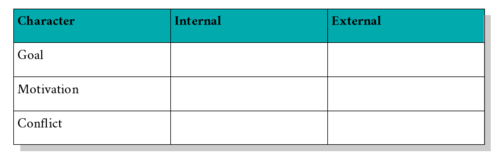
you insure conflict? Key to my two NaNo wins (out of four tries) were
the Goal, Motivation and Conflict (GMC) charts I created for each
character during prep week. (See Debra Dixon’s great book, Goal,
Motivation and Conflict: The Building Blocks of Good Fiction for
more on this.) The charts are a grid of nine squares.
Left column
contains the labels: Goal, Motivation, Conflict. Middle column
contains each character’s EXTERNAL goal, motivation and conflict.
In the right column goes each character’s INTERNAL goal,
motivation, and conflict. (Not all characters will have external and
internal, but your protagonist and other major characters likely
will.)
It’s a simple
way to approach what can be hard for new novelists. We typically like
our characters, at least our protagonists, so we want them to
get what they want. That leads to making their lives too easy, which
gets boring for the reader. In contrast, think of Star Wars. Nine
films and 40 years on, they’re still pulling in millions (people
and dollars) to watch the same basic conflict of good guys trying to
save the galaxy from bad guys. Since that conflict is compelling, and
because we care about the characters, we‘ll show up for No. 10,
too.
The GMC charts
help you create compelling conflicts because as you’ll likely see
in the grid, some goals are inherently at odds. In my first novel,
one character, Deborah, wanted to have a baby, badly. Her husband,
Christopher, wasn’t so sure. Presto, external conflict, and a
highly resonant one at that – a couple wants different things. When
I visit book clubs, the different reactions readers have to this
couple’s conflicts make for the liveliest discussion.
While not as
formal as an outline, I’ve found the GMC charts help keep me on
track, too. If (when) the story veers off course, the chart is a
touchstone. Is what’s happening on the page consistent with GMC? If
not, does the story need to change, or the GMC? Does someone’s
conflict need to intensify? Motivation made clearer? Goal denied
longer? Your original GMC decisions can guide the answers.
Your ultimate
goal as a Wrimo is to reach 50,000 words by Nov. 30. Your motivation
will vary. Your conflict: whatever dares to get between you and
those 1,667 words per day. There’s plenty. Armed with your GMC
charts, you’re ready to slay a big one.

Cari Noga is
the author of SPARROW MIGRATIONS (Lake Union, 2015), and the
forthcoming THE ORPHAN DAUGHTER (Lake Union, May 2018). First written
during NaNo 2010 and 2013, respectively, NaNo was instrumental in
transforming her from an aspiring to a published novelist. A
five-part miniseries adaptation of SPARROW is now in development as
well. She lives in Michigan with her family and enjoys writing haiku
on social media. Twitter: @carinoga
October 23, 2017
Road Trip to NaNo: Use Your Surroundings to Ground Your Novel

NaNoWriMo is an international event, and we’re taking a Road Trip to NaNo to hear about the stories being written every year in our hundreds of participating regions. Today, Mac Johnston, our Municipal Liaison in the Australia :: North Queensland region, shares how her region has shaped her writing:
I’m currently on a self-imposed writing retreat within my region as I try to write this article. I’ve left my phone at home to intentionally limit distractions, and my laptop is connected to a solar powered battery pack. Internet is patchy at best, which means I can’t be distracted by social media. I’ll admit that bringing a camera would have been useful, but I didn’t think that far ahead so you’re stuck with my description instead.
I’m leaning against a trunk as leaves sway above me, and my feet are curling in the sand with the sunlight sprinkling on me, the breeze wafting the gorgeous smell of the ocean to me as I hear the waves lapping gently against the shoreline. I’m on one of the islands within the Whitsundays, the gateway to the Great Barrier Reef. Later this week I’ll be traveling west to visit a friend on the fringes of the Australian Outback, and I’ve just come from the rainforest in the Daintree. I’m suddenly realizing that my region has a variety of different landscapes I can both write in and include in my writing.
I once heard that your story’s scenery is another character for you to write: it can make you smile, laugh, cry, and tremble. Just imagine Harry Potter without Hogwarts, The Three Broomsticks, Diagon Alley, or various other places JK Rowling mentions. The story would probably still be interesting, but nowhere near as compelling or as popular as it is. I’ll admit I have yet to base a story in my region, but that doesn’t mean that the landscape and the people haven’t leaked through to the settings that I’ve created.
Last year’s NaNo novel was a prime example, as I had gone away from my traditional fantasy theme and decided to go with a space theme. Now, being a pantser, I had planned nothing of this story and, in fact, I hadn’t even worked out the genre I was writing until 12:01am on November 1st. I suddenly had to create planets, space stations, spaceships, and different cultures to create a believable story.
The places that I’ve traveled to in North Queensland made their way into my story: there was the tropical island getaway planet (based on the Whitsundays and the Great Barrier Reef), the rainforest full of weird creatures and cannibals (based on the Daintree––the cannibals inspiration was crocodiles), a drought-stricken mining based planet (based on parts of Australian outback), and various other planets. It wasn’t until I started writing this that I even realized how much of Australia and, in particular, North Queensland was in my writing.
How do you place importance on the setting in your own writing? Does it become another character to your story, or is it something that you just simply gloss over? Is your setting influenced by places you’ve lived or hoped to live? A character is not just the hero, or the villain, but also the place they lay their heads. Why not try thinking of your setting as a living, breathing character that changes with personality or seasons? You’ll never know what it’ll turn into.
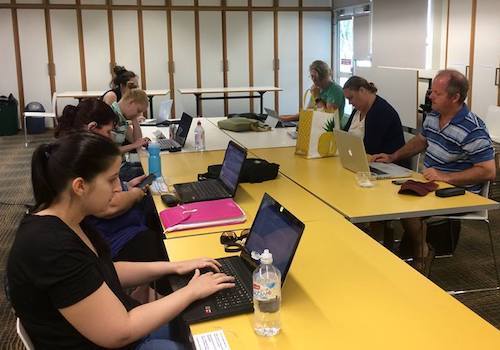
NaNoWriMo in Australia :: North Queensland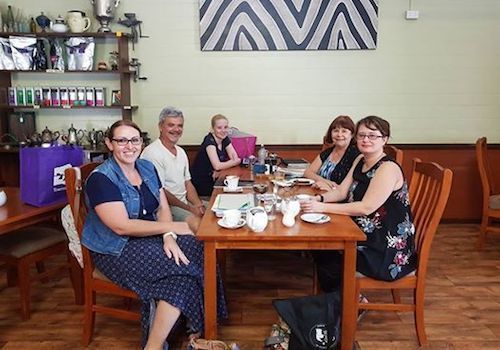
During her first year of school, Mac was introduced to writing books through her teacher who encouraged the pursuit. Over the years Mac stopped writing but continued to read, which lead to her career in law. A chronic pain condition halted Mac’s law career, but during a bored moment whilst in hospital she discovered NaNoWriMo and she re-discovered her love of writing. Mac now has a career as a writer and she couldn’t be happier.
Top image licensed under Creative Commons from descon7 on Flickr.
October 20, 2017
NaNo Prep: Four Character Archetypes that Can Help You Crush NaNoWriMo
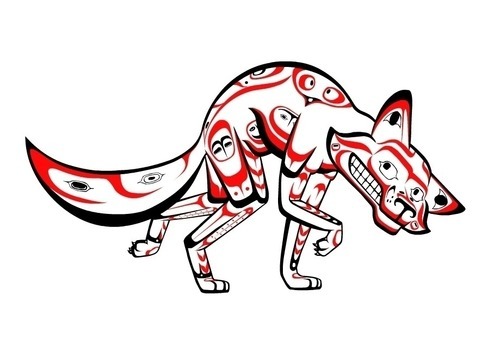
November is just around the corner, and as we gear up to hunker down and write, we’re sharing advice from guest writers on how you can best prepare for a month of writing. Today, editor, author, and life coach Kendra Levin shares her favorite tips on using the classic Hero’s Journey to your advantage:
If you’re embarking on NaNoWriMo, you probably already know your way around the storytelling model of the Hero’s Journey. (If not, you can find out more about it here.) It’s a useful craft tool that can help you build a skeleton of a plot, gauge your pacing, and create characters inspired by its building-block archetypes like Hero, Mentor, Shadow, and more.
But the Hero’s Journey is also an amazing resource for finding ways to cope with the emotional ups and downs a month of writing can bring. Here’s how four character archetypes from the Hero’s Journey can help you get through NaNoWriMo and feel like a Hero doing it:
The HeraldA messenger who issues the Hero’s call to adventure.
Prescription: The Herald is the patron saint of beginnings. Beginning can be the hardest part of writing a novel. I remember once asking a writer how his NaNoWriMo was going. “I’ve almost started!” he said brightly. It was Nov. 20.
Do this: On Oct. 31, set aside 15 minutes to sit or walk by yourself. Think about the project you plan to start the next day. What is your vision for it? Imagine a winged messenger appearing and telling you, “Here’s the story I need you to write: _________.” What would go in that blank? Jot down this vision for the project. While you’re at it, write a couple sentences of Chapter One. That way, when you sit down to start in earnest the next day, you won’t be facing that intimidating blank page—you’ll already have begun, with the help of the Herald.
The MentorA wise older character who gives the Hero advice, wisdom, and gifts.
Prescription: Tap into the Mentor when you reach a crossroads or a difficult decision in your writing or your process. Torn between plugging away at your novel and going outside and interacting with other humans for an evening? Two weeks into NaNo and unsure whether you can make it through the whole month? Ask the Mentor.
Do this: Take a moment to sit quietly. Ask yourself, What would my 90-year-old self say about this situation? Connecting with the older, wiser version of you can help you be your own Dumbledore.
The TricksterA trick-playing character who subverts expectations, often with humor.
Prescription: Tricksters are all about revealing the silliness and surreal nature of life when everybody is getting way too serious. Find your inner trickster when you catch yourself acting like the novel you’re writing is the bus from Speed and you’re Sandra Bullock.
Do this: Take a whole day off from your novel. You heard me. That day, write something totally different and silly—a comedy sketch about soup, a collection of satirical limericks inspired by the day’s headlines, the script for a webisode about anthropomorphized office supplies. Let yourself recapture the fun and sense of play in writing and, the next day, bring that spirit back to your novel. In the process, you just might come up with some new and surprising ideas for your main project.
Loyal friends and comrades who help and support the Hero.
Prescription: Nobody writes a novel alone—and there’s no reason you need to. It’s vital to have a community of Allies around you, whether online or IRL, fellow writers or just your personal cheerleaders, to help you get through the month.
Do this: Before November, find others who are participating in NaNoWriMo and set up a system for checking in with one another. If you don’t know anybody else who’s doing it, check out NaNo’s forums. Let other people in your life know that you’re doing NaNo, and don’t be afraid to ask them for support, encouragement, free babysitting—whatever you might need. When one of your Allies asks for your help, you’ll discover that doing NaNoWriMo is about more than just finishing your novel—it’s about being a Hero, to yourself and to others. And that’s a feeling that will last long after November ends.

Kendra Levin helps writers and other creative artists meet their goals and connect more deeply with their work and themselves. She is a certified life coach, as well as an executive editor at Penguin, a teacher, and author of The Hero Is You. Visit her at kendracoaching.com and follow her @kendralevin. To win a coaching session with Kendra by supporting NaNoWriMo, check out the Night of Writing Dangerously!
Top image by Hyrax Attax on DeviantArt.
October 18, 2017
30 Covers, 30 Days 2017: An Introduction
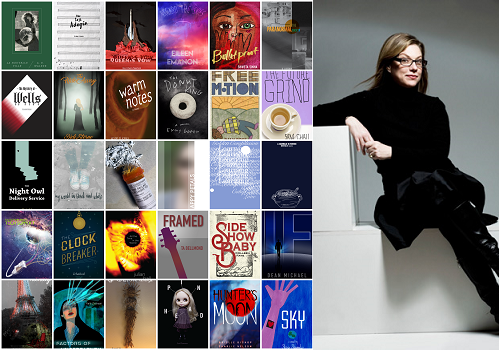
Recruiting all Wrimos! Fall is upon us, prep season is in full swing, and November is fast approaching—which means it’s time for one of our favorite parts of NaNoWriMo: 30 Covers, 30 Days!
What is 30 Covers, 30 Days?Thirty very lucky Wrimos will be chosen to have a cover for their 2017 NaNo novel designed by one of the many talented designers recruited by our wonderful coordinator, Debbie Millman.
Debbie is a writer, educator, artist, brand consultant and host of the radio show Design Matters—not to mention President of Sterling Brands for the last twenty years and President Emeritus of the American Institute of Graphic Arts. So don’t worry, your novel is in very capable hands.
We’ll be posting a new cover every day of November, both on this blog and on our forums. If you’d like to see what some of our previous covers were like, you can check them out here.
That sounds cool! Sign me up…er, how do I sign up?It’s easier than ever. All you have to do is submit your novel using this form.
A few things to know before you submit your novel:
1. Your form can’t be edited once you submit it—so please read the entire form carefully.
2. You do not have to use your real name. We celebrate and encourage pen names!
3. If your novel is selected, we’ll get in touch with you, and we can all jump for joy and hug and then all cry together (happy tears).
4. If you have any other questions about 30 Covers, 30 Days, feel free to post in the forum, or send me a NaNoMail.
In the meantime, check out NaNo Artisans on the forums to get a cover designed by a fellow Wrimo, or design some yourself.
Now go for it! Your cover is waiting…
––Nick Fierro, NaNoWriMo Intern
14-Time NaNoWriMo Winner Doubled His Output and Won Twice in One Month with ilys!
Every year, we’re lucky to have great sponsors for our nonprofit events. ilys, a NaNoWriMo 2017 sponsor, is a writing platform that helps you keep your Inner Editor far away from your creative process while you write. Today, Thomas Harper, a 14-time NaNoWriMo winner, shares his ilys success story:
Hello, my name is Thomas Harper and I have won every National Novel Writing Month (NaNoWriMo) since 2004. I’d like to share something that will help make your NaNoWriMo adventure a success.
One of the biggest challenges during any creation process is finding a consistent way to get into and stay in “the zone”––that magical place of consciousness where words and ideas flow from the brain like water from a powerfully gushing fire hydrant. In theory, getting there isn’t hard––all one needs to do is turn off all distractions. But in practice, silencing your biggest distraction (the dreaded Inner Editor) and letting your inner genius blossom forth can be quite difficult.
I often felt that way before 2014, when I discovered a program called ilys (which stands for “I Love Your Stories”) about a month before NaNoWriMo started. It was still in development at the time, but it’s most enduring feature had already been implemented.
Once a writing session was initiated, editing was turned off until the word count goal was met. No fixing typos, no waffling over word choice, no writing a sentence only to rewrite it a dozen times before switching back to the original one. You can only go forward.
I tried it and soon realized that ilys provided an effective way to silence the Inner Editor until after the initial burst of writing had taken place. It unlocked that magical state within me and my words began to flow effortlessly, easily.
Being the kind of writer who enjoys writing in public venues where I can people-watch to my heart’s content and take full advantage of the ever-changing tableau of inspirational vignettes playing out around me, I soon observed another amazing benefit of using ilys: Since only the last letter typed ever appeared on the screen, I no longer felt self-conscious that those around me could read, and thus judge, what I wrote. Instead I felt liberated and free.
Brimming with enthusiasm and optimism over the speed of my writing and the sheer quantity of words I’d been logging, I wanted to test what I and ilys were capable of during the upcoming NaNoWriMo event. Instead of writing one fifty thousand word novel during the month of November, I committed myself to writing two. Two unique stories, two unique plots, two unique novels with one hundred thousand words between them.
How did it go?
From the very first writing session of the event, to the final one where I typed “The End” for the second time that month, my NaNoWriMo 2014 experience was the most exciting, motivating, and high-speed writing endeavor I had ever undertaken.
I wrote over ten thousand words during my first session and I crossed the fifty thousand word mark on day 14. On day 15 my young protagonist, Mara, took off on a new adventure. I crossed the one hundred thousand word mark on day 29, a full day early even though I had written twice what I normally would write during November. Plus, between day 1 and day 29, I took four days off where I didn’t write anything at all.
So in reality, with ilys’s help, I wrote just over one hundred thousand words and two novels in only twenty-five days.
If you haven’t tried ilys yet, do it. You will be amazed at what you are able to accomplish and I promise that you won’t be disappointed.
Yours in Victory,
Thomas Harper

Thomas Harper has been using words since they were first invented in 1966. From the very beginning he enjoyed the sound, texture, and aroma of them so much that he dedicated his life to discovering new ways of incorporating them into conversations both with actual people and the figments of such living inside his head. One of his proudest achievements, besides successfully completing NaNoWriMo every year since 2004, was taking part in Haiku 365 and creating a haiku every day for a year. He may or may not also have climbed Mount Everest. The signs point pretty solidly toward NOT, though he very much likes to take liberties while writing creatively.
Chris Baty's Blog

- Chris Baty's profile
- 63 followers

