
Chris Baty's Blog, page 104
April 11, 2018
Letters From Camp: Week One
Camp NaNo can be thrilling, challenging, and revitalizing—sometimes all at once—but more than anything else, it’s fun. We’ve asked Campers to share their daily thoughts in a new series, Letters from Camp. Read about what your fellow Campers are thinking:
Dear Eudokia,
My sweet Muse, where have you gone? You dropped this story idea to me in a dream one night in February and I burned for some time as I started planning it. Now that fire seems to be gone and you along with it.Its April 1st now. Is this your idea of a prank? If so, it’s not funny. Honestly, I am hurt. Are you mad at me? Was it because I got busy with work and life and stopped planning? Is it because I never finished the outline like I promised? You are holding both my story and my cast of characters hostage. If you are scared of Critic, I have sent her away to join the Nano Kennels! She can’t be mean to you for a whole month! Please come back! I miss you! How will I ever get our ideas out there without you?
Love,
Gala
April 2Dear Jinny,
I’m finally doing it—telling your stories. You weren’t that good at telling them yourself, unfortunately, so I feel like all I have are the chapter titles and none of the dialogue. Still, it’s happening. I started writing two weeks ago, when I decided to come to camp, because I couldn’t wait, now that the door finally seems to be opening. My goal was 25,000 words, no matter how crappy, and “butt in the chair” at least 5 days out of 7. As of last night, I had made it to 22,000, and Camp hadn’t even started, so I’m feeling pretty good right now. Things are flowing, and the stories seem to be just writing themselves, almost… I can almost see you rolling your eyes as I write this. You would never have wanted to do something like this, solo artist that you always were, and you’d find my flights of fancy a waste of time. Hmm, you and my critic sound a lot alike, come to think of it.
Thanks, Mom. See you on the page.
Love, Chris
Dear mystical, magical art of writing,
There’s nothing I love better than you, and yet, there’s nothing I struggle with more than you. I know I’ve been inconsiderate of you and prioritized other things over you (when, really, prioritizing you is the same as prioritizing myself). But this Camp NaNo is going to change the game. And you know why? Because I say it is. And this time, I feel it’s different. because my resolve is not a loud roar that I want the world to hear—but a quiet promise that I am repeating like a sacred chant all throughout the day… writing, you are a delight. A door to myself. A portal to other selves. A key to other worlds. A gateway to this one. And I feel so privileged, especially as April has started, that I was touched by your magic once upon a time. I’ve been imprinted and charmed forever and there is nothing more I want than to live in the awareness and experience of this knowledge everyday.
yours on the good days and yours on the ‘bad’ ones,
Rainbow
Dear Cinderella,
It is time that you learned that “happily ever after” isn’t always happy, or for ever after. There are innumerable twists and turns along the way. There are those who do not wish to see you happy and will do everything they can to steal your joy. It is your time to realize that those people may succeed, if only for a time. You will see that “happily ever after” is not something that can be granted by a glass slipper or even by a fairy godmother; happily ever after is something you must take hold of for yourself. So, take hold of it, and hold it tightly.
Press onward, dear Cinderella, towards ever after.
SkyVoyager
April 3Dear Mom,
I know you always wanted to publish your stories, and never did. But I still read them and I am passing them on to your grandchildren, so don’t be sad, because Heaven should never be sad and you are not forgotten. Now it is my turn to try and get a publisher’s attention. But even if I don’t I’ll be happy if someone reads my stories and smiles.
I miss you. Love,
Malady
April 4Dear Camp Nano,
Help! I am lost in the woods trying desperately to find my way to camp so I can get to work. I’ve gotten stuck in traffic jams, detoured, called back home to help a friend, forced to repack twice, had doctor’s appts, birthday parties and Easter egg hunts. Every time I think I am FINALLY on my way, something rears its head and throws me off course. Now it looks like I might not even be able to get back on the road headed to camp until next week. I’m so frustrated I could cry…I really don’t want to give up before I even begin, but I’m feeling pretty discouraged. Hope to see you real soon.
Love, cryptwarmer
April 5Dear cabin,
I have never ever found a cabin so chatty and supportive like you are. Also, it’s the first time I’m feeling so comfortable to share my doubts and concerns on writing and other topics. I have never been this sociable and maybe sharing something in common has made me open up to you guys. I am really thankful. I hope that we can get to our respective goals by the end of this month. I also hope that others find a cabin that make them happy as mine does to me.
Love,
Kahitna
Dear Camp,
It’s my first time attending. I’m scared and nervous. There are so many people who know what is going on and I feel as if I am drowning in the ocean. But that’s okay, I’ll sort myself out soon. One story will shine its way to the forefront of the many I’ve tried to begin, and the looming assignments will pass. Then, when someone comes to save me from this icy grip and drag me back to the safety of land, the sun might just shine and words blossom across the page as I envision. Until that moment, I’ll keep my head above the tide and oxygen in my lungs, waiting for that story to break out and make a life all its own.
Sincerely,
Drowning Patience.


April 10, 2018
"Frequently when I’m drafting, I need to get rid of the garbage I’ve written and start with a clean..."
-

Helen Hoang is that shy person who never talks. Until she does. And the worst things fly out of her mouth. She read her first romance novel in eighth grade and has been addicted ever since. In 2016, she was diagnosed with Autism Spectrum Disorder in line with what was previously known as Asperger’s Syndrome. Her journey inspired The Kiss Quotient, which releases in June 2018. She lives in San Diego, California with her husband, two kids, and pet fish.
Your Camp Care Package is brought to you by Camp NaNoWriMo. Sign up to receive more Camp Care Packages at campnanowrimo.org.
April 9, 2018
51 Questions You’ve (Probably) Never Asked About Your Characters
At NaNo HQ, we’re big fans of long, detailed character questionnaires (like this one)! They’re invaluable when it comes to fleshing out our characters, exploring their secrets, and just killing time—but after hundreds of questions and dozens of quizzes, the questions all begin to look the same.
After careful research, rigorous testing, and three escaped typewriter monkeys, we’re proud to present the 51-Question NaNo Character Questionnaire 2.0, filled with questions you’ve probably never considered asking about your characters.
By the time you’ve finished this questionnaire, you’ll know more about your characters than you may know about yourself!
1. What does your character do when they think no one’s looking?
2. What’s the one thing your character would save in a fire (beyond the necessities)?
3. Who’s on speed dial?
4. Your character gets turned down for their dream job. What’s their second choice?
5. What would they tell their ten-year-old self?
6. Where would they want to go on a first date?
7. What’s the best advice they’ve ever received?
8. What’s the worst advice they’ve ever received?
9. What’s one physical detail they’d change about themselves?
10. When was the last time they were held? By who?
11. What’s their favorite thing about their favorite season?
12. Their wallet gets stolen. What do they do?
13. Prioritize: Love, money, power, knowledge?
14. What’s something nobody knows about them?
15. What’s in their fridge?
16. What (creature, object, substance) are they most disgusted by?
17. What’s their second worst habit?
18. What are the victory conditions for their life?
19. In the end, your character fails to save the day. Assuming they survive, what do they do?
20. Your character is charged with a crime they didn’t commit. What do they do?
21. Your character is charged with a crime they did commit. What was the crime?
22. What’s the 140-character version of your character’s life?
23. What important statistic would they want displayed above them?
24. What’s the first thing they would buy if they won the lottery?
25. What profession do they most respect?
26. What childhood injustice did they never get over?
27. How would they handle having a panic attack?
28. Your character is burdened with an inconvenient superpower. What is it?
29. If they died and could come back as any person, animal, or object, what would they be?
30. What’s the best meal they’ve ever had?
31. Where would they stand at a dinner party?
32. Who would they invite to the dinner party?
33. What makes a perfect day for your character?
34. If given the opportunity, would they want to know how and when they died?
35. What’s the one thing they’ve always wanted to do? Why haven’t they done it yet?
36. What do they tend to joke about?
37. What’s off limits?
38. Whose wedding would they cross the world to attend? Whose funeral?
39. What impossible choice did they make that turned out to be the right one? The wrong one?
40. Your character now has a hype man (or woman). What would they say to get everyone excited about your character?
41. What recurring dream does your character have?
42. What is the meaning of life to your character?
43. If your character wrote a NaNo novel, would they be a planner, pantser, or plantser?
44. What book does your character pretend to have read?
45. Someone takes undeserved credit for your character’s work. What do they do?
46. What controversial belief or view does your character hold? Why? Do they hide it?
47. Your character is at a theme park. Where do they go first?
48. What’s your character’s favorite name?
49. What’s the biggest compliment they’d give themselves?
50. How does your character feel about bugs?
51. If your character could hit a reset button on their life, would they?
You can find other prompts and pieces of inspiration at the NaNoWriMo Instagram, our Young Writers Program site, or the NaNoWriMo site! And don’t forget to start and update your project on the Camp NaNoWriMo website!
April 6, 2018
Camp Pep: Change Your World with Writing
Camp NaNoWriMo is nothing without you, our incredible participants. Today, Rylee Kazort, a fellow Camper and member of the Young Writers Program, offers you some pep:
Let me first say that writing a story, or anything at all, is not easy. I am a dyslexic teen writer with an anxiety disorder, so it’s safe to say that I can relate when writers say that just putting words down can be stressful. After all, as a writer, you spend half your time wondering if the words on the page are good enough—you constantly want to look over your writing and have it mean something to others. But don’t let the anxiety of worrying about what to write stop you from writing. I use writing as a powerful means of communication for things I might be afraid to say in person.
We use writing to portray our true thoughts and feelings. With anxiety it is hard for me to communicate who I am to everyone else; I am a kid who stays in a corner and doesn’t talk to many people. I don’t normally get the right words out when I am talking, and I often don’t know what point I’m trying to make, and I get flustered and frustrated.
Writing takes out the stress of saying the right thing—because you can craft sentences to fit the picture you have in mind. When I’m writing, I know I can take my time and think it through in a way people don’t normally allow for while talking. I see so many people around me writing, but they don’t feel like they’re really saying anything. Words have more power than people think. They changed my life. I can talk about the things I wouldn’t normally tell people through writing. I strongly believe every word has a purpose, no matter how small.
“Never underestimate the power of empathy; someone might be going through something very similar to you, and your story just might be what they need.”In writing, you can change perspectives and outcomes—you can even change reality itself. There is something so special about being able to craft characters and settings from scratch or inspiration. When you’re writing, the people and places don’t need to be perfect, because the world isn’t perfect. Don’t be afraid to show the darkness in your world or the world around you.
Then show everyone who lives in a world like that one that there is a character who can overcome the darkness. Writing is special and unique in that you can give your reader hope with only a few words.
As a writer, don’t be scared to get the first few words out—even if they don’t look perfect. If they are what you feel, they will be perfect. There is untapped power in the art of crafting a story, especially when you can influence people to do something. Change your world, like a character would in a book.
My advice to those of you who are starting to write your own stories? Don’t censor the world you decide to show your audience. The best writing comes from the heart. Don’t feel bad about it; it is what you feel, and writing should show just that. Never underestimate the power of empathy; someone might be going through something very similar to you, and your story just might be what they need. So don’t be afraid to create a story that gives the characters hope and gives you hope—you may just inspire your reader to do something great!
Rylee Kazort is a teen writer with dyslexia who started writing in freshman year of high school. In the three years since then, Rylee has written 14 stories, 11 of them being novel length, one of these being longer that 100,000 words. Rylee’s favorite book so far is Beautiful Creatures by Kami Garcia and Margaret Stohl.
April 5, 2018
“As with all writers, there will be days where you’re just...
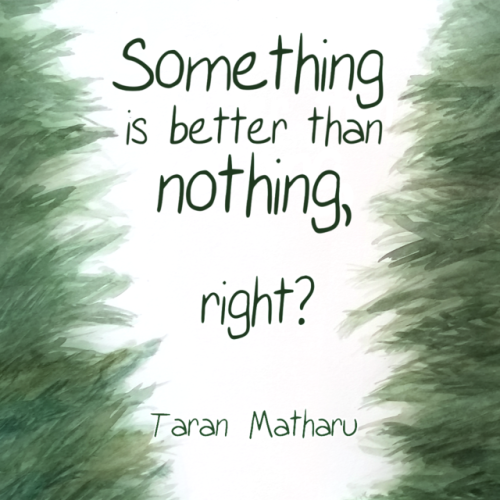
“As with all writers, there will be days where you’re just not in the mood. But what happens if you tell yourself that you’re only going to write a few sentences rather than skipping a day? Open up the manuscript and start writing, just for a few minutes. You will be shocked at how quickly you are pulled back in and the words mount up. Sometimes I go well above my daily target when starting like this. Even if you don’t, something is better than nothing, right?”
—Taran Matharu is a New York Times bestselling author. He was born in London in 1990 and began his first book at 9 years old. Taran wrote his bestselling Summoner series during NaNoWriMo in November 2013, at the age of 22. The book reached over 3 million reads on Wattpad.com in less than six months, and has since been translated into 15 languages around the world.
April 4, 2018
How Dabble Just Might Help You Write Literary Gold
Every year, we’re lucky to have great sponsors for our nonprofit events. Dabble, a Camp NaNoWriMo 2018 sponsor, is a writing platform designed to help you become a better novelist. Today, writer and educator Galadriel Mitchelmore shares her experience with dabbling in different writing platforms:
Dabble is “to try”. The dictionary definition implies a blasé application of effort. But the word “dabble” is often paired with “magic” and the “occult”—essentially, bringing out what is hidden. And isn’t that what writers do? Pull up characters, worlds, conflicts, stories—all mined from the mind. Writing is alchemy. It requires transmuting fragments of imagination, attenuating repeatedly until literary gold rises to the top.
Writing is hard. So, is there a way of not getting hopelessly lost in the process? Is there a crucible, of sorts, that the writer can tip all their story elements into? One place where ideas can be experimented with and the results clearly seen?
Paper Rafts Don’t Float, and Word is by No Means FinalIn the beginning was Microsoft Word. But Word does not appreciate the writerly mind. For me, story planning and writing is messy. There are myriad ways to create a map of intentions, and I’ve made many in lots of different places—which is probably why it took me several years to complete my first novel. I’m not blaming Word for my incompetence as a developing novelist, but the program has its limits.
I generated copious Word documents, saving different edits in several folders. When I wanted to return to a particular one, I could never find it.
Ditto that for my use of paper. I used reams of it: post-it notes, A4 plot grids, plain paper, lined paper, notebooks, index cards to hold on the spur ideas, web addresses, research sources, word counts, timelines, character files, story arcs.
Yes, I was being creative; my ideas were abundant, my research thorough. At the time, writing on paper was a comfort; it was helping me to organize my ideas. I thought I was getting on, getting ahead, succeeding.
But you know, paper makes for a poor life raft in a sea of paper. Sure, my ideas were organized—just organized all over the place. Somehow, everything required being neatly assimilated and tied up in Word. That’s what agents want—a coherent novel.
With much angst, I did it.
For the next novel, I needed to work quicker and smarter if I was going to get anywhere soon. I needed an outside pressure, so I joined NaNoWriMo.
I won. I had fifty thousand words of a new novel. As anyone will know with first draft material, any gold is buried in masses of dull prose and clunky sentences. Haunted by my previous novel and slightly sick at the thought of repeating old mistakes, I turned back to the NaNoWriMo pages for inspiration. That’s when I saw Dabble.
I was skeptical. How could a program make you better at writing novels?
Dabble’s subscription was very reasonable; it seemed ridiculous not to try it.
Dabble, and Dive DeepDabble’s website will tell you all you need to know. What I will say is, it’s revolutionized my writing process. I still use some paper, but it’s easier to keep notes together in Dabble. The cloud facility means I can work on any computer, anywhere. It’s made story-crafting so much easier.
For me, controlling scenes is paramount. In Word, scenes and chapters are in one, continuous, scrollable document, and things can get messy. In Dabble, each scene is a discrete document. If I want to try out a variation of that scene, I add a new scene, and because it won’t impact what I’ve already written, I can choose later which one I prefer. The drag and drop facility means it’s easy to move scenes and chapters around. If I need to make changes to my first novel, it’s going to be easier with Dabble. As for the work in progress, well, I haven’t cried yet and I did plenty of that with the first.
No Need to Dabble AloneDabble is new and evolving, and the roadmap is exciting. The online community is warm and inviting, and users can request features they think would benefit creative writers. The “Chat with Support” function is brilliant. I’ve really appreciated being able to fire off a question when I’ve needed to, and get a quick to response to my queries and issues.
Dabble is an excellent tool that enables you to focus on writing excellently. Jump in and Dabble! You may make enough ripples of sparkling prose for someone to notice.

Galadriel Mitchelmore taught English at Secondary Level for almost ten years. She now works from home, teaching herself the craft of writing. She’s currently seeking representation for her YA Gothic Horror. When she’s not writing, she can be found tackling her garden or out walking with her husband, Andy, on Dartmoor.
April 3, 2018
"It’s easy to convince yourself you’ve earned a break from writing, especially when you come..."
-

Taran Matharu is a New York Times bestselling author. He was born in London in 1990 and began his first book at 9 years old. Taran wrote his bestselling Summoner series during NaNoWriMo in November 2013, at the age of 22. The book reached over 3 million reads on Wattpad.com in less than six months, and has since been translated into 15 languages around the world.
Your Camp Care Package is brought to you by Camp NaNoWriMo. Sign up to receive more Camp Care Packages at campnanowrimo.org.
April 2, 2018
What Kind of NaNoWriMo Camper Are You?
Do you take the relaxed approach to writing? Or are you a hardcore writer who blasts through your writing goals? Do you love to write outside, or do you need to have your creature comforts? Take our handy quiz to find out what kind of NaNo Camper you are!
March 30, 2018
4 Tips on How to Run a Successful Camp NaNo Cabin
Camp NaNoWriMo is just around the corner! If you’re participating in Camp, you may have been sorted into a Cabin! But what does that mean? And what makes a cabin successful? Today, YWP writer Lilly Hallock shares her tips for how to run a great cabin:
It’s almost April! That means it’s time to roast marshmallows over the fire and write a great story. The problem is, no one goes camping on their own. That’s where Camp cabins come in.
Those who have been in a cabin in the past will quickly tell you about all the friends they made and the fun they had.
For those of you who don’t know, Camp NaNoWriMo cabins are a group of up to twenty writers who help support each other throughout the month (and beyond). You can be sorted into a cabin by genre, age group, word-count, or completely at random! You can also create or join a private abin and invite writers who are writing something more specific or writers that you already know. (If there is a cabin for LGBT+ teens writing a dystopian sci-fi adventure novel told from multiple points of view please let me know.)
Some campers might define a successful cabin as a place where everyone hits their word counts. Others may say that it is a place where Campers talk to each other to overall improve their writing skills. Most people will probably tell you that a successful cabin is a place where you have fun. So what are the key ingredients to having all three?
1. Push people to their limits.I understand that not everyone is comfortable with sharing their writing or giving others advice, but what’s the point of a cabin if you never talk to each other? Gently push other Campers to share their work, or specifically ask the quieter Campers a question about writing. Get in the habit of giving more positive comments than negative, especially to those who are afraid to share something they’ve written. A little push goes a long way.
2. Get time zones and schedules right from the beginning.The first thing I always ask my cabin mates is what time zone they live in. Keeping track of who lives where makes sure that everyone has a chance to participate in a word war or a character building session. Figure out what days work best for the most people and then go from there.
3. Activities are important.Sure, people will pop in when they have a minute to chat about characters, but the real fun comes from planned activities. Figure out what time works best and prepare some fun activities to do. Make sure that prompts can be applied to a large range of genres and aren’t too difficult to weave into a scene. Weird character and world questions could also be used for some good preparation before or at the beginning of April.
4. Engage outside of the Cabin.Postcard swaps, real-world contests, character pen-pal, and a Discord server can be great assets. I personally run a few contests, such as whoever writes the most in one day, or whoever can send me an excerpt from their novel that makes me laugh the hardest. Sometimes there can be a prize, like a gift card—but overall it’s just for fun!
In the end, the cabin is what you make it. But utilizing the tips and tricks here can make you come out of Camp NaNoWriMofeeling a lot more accomplished, even if you didn’t meet your word count.

Lilly Hallock is an amateur teen writer from Virginia, USA. She has been a part of the NaNoWriMo community since she was thirteen, and this upcoming Camp session will be her third Camp. This will be her second time running a LGBT+ teen cabin, and she cannot wait for April to begin. When she isn’t writing, she is attending high school or reading too many young adult fantasy novels.
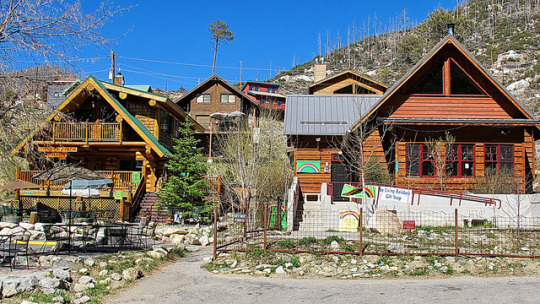
Top image licensed under Creative Commons from Al_HikesAZ on Flickr.
March 28, 2018
New is Scary... But Scary Can Be Good
Camp NaNoWriMo is a time to try out new, different, and fun types of writing. Today, author Tilia Klebenov Jacobs shares what she learned from trying her hand at an entirely new kind of story:
After publishing two crime novels, I decided to write something my kids were allowed to read.
They were in elementary school at the time, so I decided to pen a quick middle-grade fantasy, giving me a chance to trot out the carnivorous marshmallows I had invented in eighth grade, and to give my bad guys names like Princess Abattoir and Count Wilhelm Scream. My book would be short and fast-moving, with an emphasis on plot. How hard could it be?
Hahaha.
Writing Casper and Jasper and the Terrible Tyrant was difficult and frustrating and took much longer than anticipated—and I’m glad I did it. This is not only because I am (reasonably) pleased with the result, but also because there is much to be gained by trying something new and unnerving. I found pros and cons, and rediscovered the simple truth that regardless of genre, good writing is good writing.
The ProsDoing something new means you are challenging yourself artistically.
Don’t worry about being viewed as a dilettante: many well-regarded authors excelled in a variety of styles. Edgar Allen Poe didn’t just write horror; he also wrote poetry, short stories, literary criticism, early science fiction, and is even credited with creating detective fiction. Madeleine L’Engle is best known for YA fiction, but she also wrote memoir, poetry, ruminations on her deeply felt faith, and a picture book starring the love of her life, Franklin the poodle. J.K. Rowling of Harry Potter fame has written a gritty crime series (under the pen name Robert Galbraith) set in modern-day England that contains not a scintilla of wizardry, other than perhaps the magic of her prose.
Writing in a new genre may expand your audience.
My religiously conservative mother-in-law has supported my literary career with gusto, buying multiple copies of my books and gifting them to friends and libraries; but she has been so distressed by the amount of cursing in my first two books that I can only imagine her turning the pages with tongs. I was pleased to assure her that my upcoming book is pocked by precisely one “gosh dang it” and one “shucky darn.” Sighs of relief were breathed all around.
The ConsIt’s hard.
In my crime fiction, I do my best to craft conflicted characters whose dialogue is both modern and believable. Neither of these skills was particularly helpful in my current endeavor. How odd, you say; surely characters are characters, and plot is plot. And you are correct. The difficulty lies in the diverging demands of the genres.
My first book, Wrong Place, Wrong Time, is a hostage drama played out by people who all believe themselves justified. I like to think they are groping through a dense fog of moral uncertainty for much of the book.
Fantasy, by contrast, is characterized by a sharp division between good and evil. Motivations are often minor, and, as in fairy tales, characters tend to be psychologically and morally straightforward. The witch in “Hansel and Gretel” is hungry; stepmothers are jealous of youth and beauty; princes are besotted with same. We need nothing more. Since my fantasy novel was in that mold, I found myself constantly trimming my characters, stripping away anything extra in terms of psychology, motivation, and backstory. I came away from this process impressed by how little one actually needs.
The OverlapIn the end, good writing is good writing.
As you grow and develop as a writer, the process is almost guaranteed to become easier for the simple reason that you develop a skill set. Soon you intuitively know what works and what doesn’t, even if your editor occasionally needs to refresh your memory with howls of anguish in the margins. Some principles for reliably good prose are:
To quote The Elements of Style, “A sentence should contain no unnecessary words, a paragraph no unnecessary sentences, for the same reason that a drawing should have no unnecessary lines and a machine no unnecessary parts.” ‘Nuff said.Dialogue should reveal character and advance the plot. It must be consistent with the personalities of the speakers, and be varied enough that the reader can tell who is speaking without being told, at least most of the time.
Individual scenes should move the story forward. If a scene has no purpose, either give it one or cut it (for now) from your story.
Having now written three books, I can say that some come more easily than others. This one was not easy. But it was rewarding, and as it lurches through the publication process and I await its arrival in all its paginated goodness, I can say this: I really hope my kids like it.

Tilia Klebenov Jacobs is the author of Wrong Place, Wrong Time and Second Helpings at the Serve You Right Café as well as numerous short stories. Tilia is a reviewer for IndieReader.com, and a judge in the Soul-Making Keats Literary Competition in San Francisco. She serves on the board of Mystery Writers of America. When she is not writing, Tilia teaches classes for prison inmates. Her next book, Casper and Jasper and the Terrible Tyrant, will be published in the spring of 2018. Visit her website athttp://www.tiliaklebenovjacobs.com/.
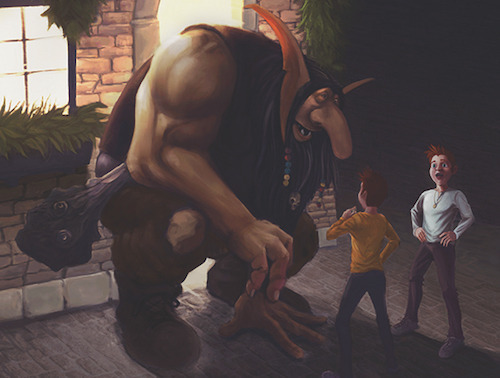
Top illustration for Casper and Jasper and the Terrible Tyrant by Matt Tames. Visit his website, Facebook, or Instagram.
Chris Baty's Blog

- Chris Baty's profile
- 63 followers

